❌

Reading view

GPS particle detectors track space radiation over two decades

Researchers in China have cross-calibrated radiation detectors on 25 navigation satellites. Data from two decades of measurements have been combined to create a record of the flux of relativistic electrons that impinges on Earth’s atmosphere. The technique can be applied to other satellite data, and could boost our understanding of the threat that this radiation poses to satellites and shed light on the solar processes that generate the electron flux.

The Global Positioning System (GPS) uses signals from a constellation of satellites to locate the position of receivers on the Earth’s surface to within several metres. There are currently 32 GPS satellites orbiting about 20,000 km above the Earth and each of them carries a radiation detector. These detectors allow scientists to observe changes in radiation levels in space. Much of this radiation comes in the form of high-energy electrons from the Sun, which can disrupt the operation of satellites and even damage them.

The electron flux rises and falls with the solar cycle. This has a period of about 11 years and involves the waxing and waning of sunspots, solar flares and coronal mass ejections.

For those who design and operate satellites, it is crucial to understand this electron flux. However, it has proven difficult to make full use of the data generated by these detectors because the instruments had not been cross calibrated. Indeed, measurement values of high-energy electrons can vary between satellites by several orders of magnitude when the flux is low. One important issue is that not all satellites use the same detectors – with two different instruments having been deployed.

Cross calibration

Now, researchers in China have done a cross-calibration of the particle detectors on 25 GPS satellites. The result is a calibrated dataset of relativistic-electron flux that spans two complete solar cycles (2000–2020).

To do this, the team looked at two different measurements made by the detectors. One is the differential electron flux at 2 MeV arriving from one specific direction. The other is the integral electron flux electrons arriving from all directions at energies greater than 2 MeV.

Because electron flux is affected by Earth’s magnetic field, the team had to consider its effect on measurements. This was done using a concept called magnetic local time, which accounts for the fact that Earth’s magnetic poles are offset from our planet’s axis of rotation.

The team used a satellite called NS59 as the reference for their study because its detector has produced a consistent set of data from 2004 – overlapping in time all other satellites in the study. By doing several statistical analyses, the team was able incorporate data from 24 of the 25 satellites. One detector, however, remained problematic and the researchers recommend that data from this satellite not be used.

The team says that their technique can now be used to cross-calibrate the detectors at other energies – there are 14 differential and 29 integral channels that can be also be analysed. They have already used the same techniques to cross-calibrate the GPS data with measurements made by satellites in  China’s BeiDou positioning system  and observations made by NASA’s two Van Allen Probes.

The research is described in Satellite Navigation.

The post GPS particle detectors track space radiation over two decades appeared first on Physics World.

  •  

Quarks and qubits: how quantum computing could transform particle physics

Simulating quantum systems is something that classical computers struggle with. Not surprisingly, quantum computers are expected to do a much better job – particularly when a quantum-computer’s architecture is designed to solve a specific type of physics problem.

My guest in this episode of the Physics World Weekly podcast is Ross Jenkinson of the UK’s University of Manchester. He talks about the challenges and rewards of using quantum computers in particle physics – a field where classical supercomputers can struggle to simulate simple systems.

We also explore how quantum information theory is being combined with Einstein’s general theory of relativity to shed light on the nature of space and time.

Courtesy: American ElementsThis podcast is supported by American Elements, the world’s leading manufacturer of engineered and advanced materials. The company’s ability to scale laboratory breakthroughs to industrial production has contributed to many of the most significant technological advancements since 1990 – including LED lighting, smartphones, and electric vehicles.

The post Quarks and qubits: how quantum computing could transform particle physics appeared first on Physics World.

  •  

Large physics models boost the performance of passenger cars

This episode of the Physics World Weekly podcast explores how artificial intelligence can be used to improve the aerodynamics of passenger cars and other vehicles. My guest is David Wheater, who is vice president automotive at UK and US-based PhysicsX.

An aeronautical engineer by training, Wheater spent much of his career using aerodynamics to improve the performance of Formula 1 racing cars for several F1 constructors.

Now, his focus is on using AI-based “large physics models” to improve the performance of mass-produced vehicles. This involves combining computational fluid dynamics simulations with wind-tunnel experiments and real-world testing. In this wide-ranging conversation, Wheater explains the need for high-quality training data and we also explore career opportunities for physicists in this multidisciplinary industry.

The post Large physics models boost the performance of passenger cars appeared first on Physics World.

  •  

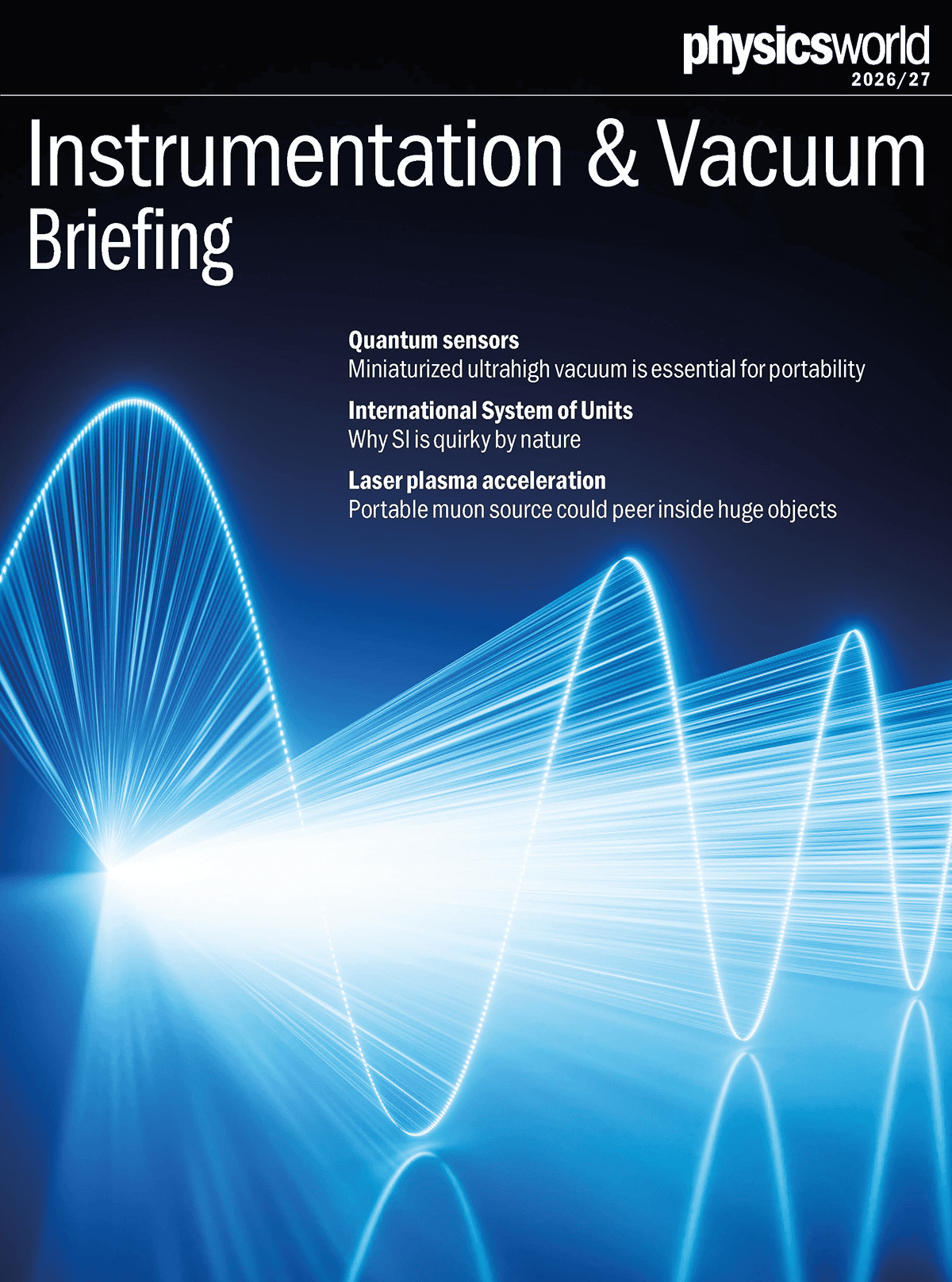
The 2026 Physics World Instrumentation & Vacuum Briefing is out now

The free-to-read Physics World Instrumentation and Vacuum and Briefing 2026 is now available. It includes R&D updates, interviews that explore technology commercialization, and a fun look at the quirky side of SI units.

One topic covered in the briefing is the world of quantum sensors. Over the years, physicists have developed some amazing quantum sensors, but many of the technologies have stayed in the lab because of the challenges of miniaturizing key components. With ultrahigh vacuum (UHV) playing an important role in quantum sensors based on cold atoms, Florence Concepcion of the UK-based firm Aquark talks about her mission to reduce the size and energy consumption of UHV systems.

Elsewhere in the issue, we look at how manipulating individual living cells plays an important role in biology and medicine. Trouble is, cells tend to stick together when grown in vitro and separating them often involves using harsh chemicals that can damage cells or modify their properties. In a special interview, Luke Cox, who co-founded the UK-based firm Impulsonics, discusses its system that uses ultrasound to gently separate living cells.

Physics World Instrumentation & Vacuum 2026 coverAnother entrepreneur featured in this briefing is Brian Pogue, co-founder of DoseOptics. The US-based company has developed a system that detects the extremely faint Cherenkov light that is emitted when a radiotherapy beam strikes a patient’s skin. This allows the radiotherapy to be monitored in real time, ensuring that the beam passes through the target tissue and avoids healthy areas of the body.

Also included is a look at the use of intense laser light to accelerate particles. Find out how researchers in the US have created a compact, free electron laser that is driven by a laser plasma accelerator (LPA) – and it has also been used to create a beam of muons.

Finally, you can explore some of the curiosities of the International System of Units (SI), which is the bedrock of metrology. Although SI and its predecessors have been honed and re-defined over the centuries, it still has some surprising quirks. Ben Stein from the US National Institute of Standards and Technology explores some of these oddities including how the candela was derived from the brightness of a candle made from whale fat and beeswax – and the ongoing debate about using the dimensionless radian as the SI derived unit for planar angle.

The post The 2026 <em>Physics World Instrumentation & Vacuum Briefing</em> is out now appeared first on Physics World.

  •  

Physics World’s Margaret Harris honoured for ‘Feature of the Year’

Congratulations to Margaret Harris for winning the “Feature of the Year – specialist audience” award from the Association of British Science Writers (ABSW). The Physics World online editor was cited for her article “The physics Nobel prizes you’ve never heard of”. The ABSW describes the article as: “A refreshing angle to Nobel prize reporting. It was an eye-opener, told a great story and gave some deep historical context to the murky world of who wins the Nobels and why.”

In the run-up to each year’s Nobel prize announcements, Physics World editors explore aspects of the award that have often been neglected. As well as her award-winning article from 2025, Harris has argued the case that Lise Meitner should have won a Nobel for her work on nuclear fission (“Overlooked for the Nobel: Lise Meitner”). On a lighter note, Harris has described an e-mail exchange with physics laureate Brian Josephson about his tongue-in-cheek “paper” on mattress rotation (“How to rotate your mattress like a physics Nobel prizewinner”).

The post <em>Physics World</em>’s Margaret Harris honoured for ‘Feature of the Year’ appeared first on Physics World.

  •  

Ken’ichi Nomoto and Stanford Woosley share the 2026 Shaw Prize in Astronomy

The 2026 Shaw Prize in Astronomy has been awarded to Ken’ichi Nomoto and Stanford Woosley. They share the prize “for their studies of stellar explosions and the origin of the elements”.

In this episode of the Physics World Weekly podcast, Woosley and Nomoto talk about the astrophysics of supernovae – exploding stars – and what these spectacular events tell us about the elemental composition of the universe and how it has expanded since the Big Bang.

Nomoto is emeritus professor and visiting senior scientist at the Kavli Institute for the Physics and Mathematics of the Universe, at Japan’s University of Tokyo. Woosley is professor of astronomy and astrophysics at the University of California, Santa Cruz in the US.

This podcast is sponsored by the Shaw Prize Foundation.

  • The Shaw Prize is an international prize based in Hong Kong. Currently, it consists of three annual awards. The Shaw Prize in Astronomy; The Shaw Prize in Life Science & Medicine; and The Shaw Prize in Mathematical Sciences. In 2027 a fourth prize will be awarded for work in computer science. Each prize carries a monetary award of $1.2m. The prize was established by Runrun Shaw, a media mogul and philanthropist. It was first awarded in 2004 and since then 121 prizes have been given individuals from across the world.


The post Ken’ichi Nomoto and Stanford Woosley share the 2026 Shaw Prize in Astronomy appeared first on Physics World.

  •  

‘Galactic archaeologists’ share the 2026 Kavli Prize in Astrophysics

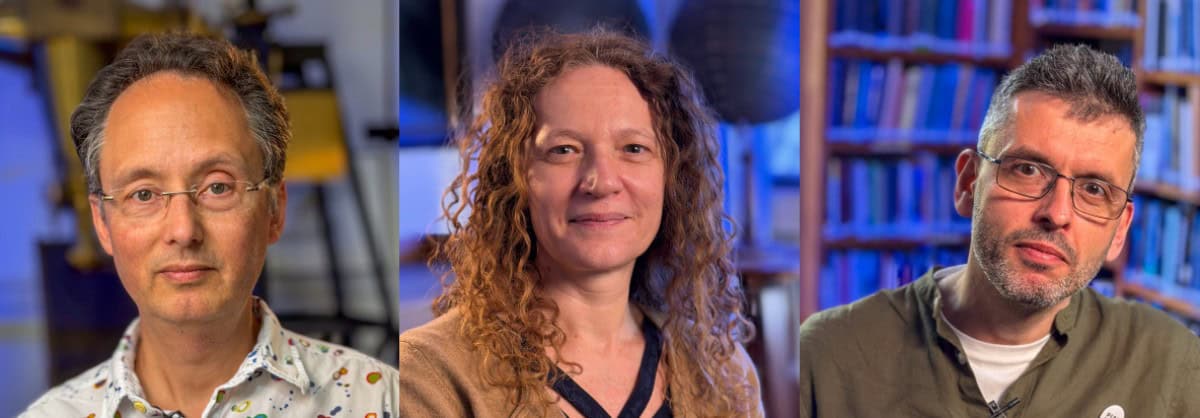
The 2026 Kavli Prize in Astrophysics is awarded to Vasily Belokurov, Amina Helmi and Rodrigo Ibata, “for uncovering the fossil evidence of past mergers proving that the Milky Way galaxy was built through hierarchical accretion”.

Belokurov is at the UK’s University of Cambridge; Helmi is at the Kapteyn Astronomical Institute at the Netherlands’ University of Groningen; and Ibata is at France’s University of Strasbourg.

Photo of the three Kavli laureates
Fossil hunters Left to right are Rodrigo Ibata, Amina Helmi and Vasily Belokurov. (Courtesy: The Kavli Prize)

This episode of the Physics World Weekly podcast features an interview with Helmi and Per Barth Lilje, who is chair of the Kavli Astrophysics Prize committee and is based at Norway’s University of Oslo.

In a wide-ranging conversation, we explore the history of the Milky Way and why the work of the Kavli laureates provides crucial evidence that our galaxy was formed by the merger of smaller dwarf galaxies. We talk about what hierarchical accretion tells us about dark matter and the Standard Model of cosmology – and we look forward to the future of the Milky Way.

  • Belokurov, Helmi and Ibata share the $1m prize money equally. The prize will be awarded in Oslo in September

This podcast is sponsored by The Kavli Prize.

The post ‘Galactic archaeologists’ share the 2026 Kavli Prize in Astrophysics appeared first on Physics World.

  •  

Open data: the benefits and challenges of sharing a precious resource

Data are at the core of science, but traditional journal articles normally deliver a distillation of the raw data gathered by the authors. While the movement towards open access to data is widely supported by researchers and funding agencies, a 2024 study by IOP Publishing revealed that many scientists still encounter a wide range of practical, ethical and technical barriers when it comes to sharing their data.

As a result, the publisher has launched a free online course that aims to give early-career researchers the practical skills and confidence they need to share and manage research data effectively.

To talk about the course and IOP Publishing’s open data policy I am joined by Laura Feetham-Walker, who is head of publishing strategy and performance at IOP Publishing.

IOP Publishing is a wholly owned subsidiary of the Institute of Physics and it publishes Physics World.

The post Open data: the benefits and challenges of sharing a precious resource appeared first on Physics World.

  •  

Un objet de 4 tonnes va s’écraser sur la Lune et creuser un cratère : comment suivre l’événement en direct ?

Un étage d’une fusée Falcon 9 devrait frapper la Lune à grande vitesse le 5 août 2026. Un événement rare, potentiellement observable depuis certains points du Globe et précieux pour les scientifiques.

  •  

Voters Are Being Inundated by a Barrage of AI-Generated Election Ads

AI is upending the way voters take part in the democratic process. The worst part? You might not even know you’ve been affected.

In the county of St. Charles, Missouri, a race for county executive has devolved into slop-slinging of the AI variety. According to local channel First Alert 4, conservative candidate Jason Law is flooding the airwaves with an AI-generated video depicting his two rivals Steve Ehlmann and Bill Eigel as co-conspirators in a nefarious plot against voters.

“Steve, wake up, I’ve been telling people for 12 years that I’ll cut their personal property taxes, and they still believe me” the AI-Eigel declares in a generic AI-generated voice, rubbing his palms in glee.

“Property taxes have risen by 300 percent over the past 20 years and I just tell people there’s nothing I can do about it!” a grinning Steve Ehlmann replies.

Near the end of the ad, Law himself appears — also as an AI-approximation, with a stock text-to-speech voice — to declare that “we need a fresh start.”

Per First Alert, Law says the noxious campaign ad was inspired by a similar AI-generated smearjob by conservative reality TV star-turned Los Angeles mayoral candidate Spencer Pratt. Those ads take a similar tone, painting a sloppified Pratt as a superhero, and his opponent as a cartoon villain.

These are far from the only examples. Back in May, similar deepfake attack ads emerged in the race between incumbent Republican congressman Thomas Massie and the Trump-backed candidate Ed Gallrein. Unlike the local races in Missouri and California, both candidates were the targets of AI commercials, which were funded by independent PACs, rather than the candidates directly.

In Massie’s case, AI deepfake ads depicted the long-time representative in fake CCTV footage checking into a hotel with progressive Democrats Alexandria Ocasio-Cortez and Ilhan Omar, declaring “Thomas Massie caught in a throuple!”

During the race, Massie raged that “it’s always the losing campaign that does the crazy crap,” adding that it’s “frankly an insult to older voters who don’t know that AI exists,” Louisville Public Media reported.

Unfortunately for Massie, the ads — not to mention the Trump endorsement — appear to have worked out in Gallrein’s favor, as the challenger triumphed with 54 percent of the vote.

More on AI: AI Companies Are Trying to Seize Control of Elections

The post Voters Are Being Inundated by a Barrage of AI-Generated Election Ads appeared first on Futurism.

  •  

Cambridge’s Diversity Poster Boy in Plagiarism Row

The youngest black professor in Cambridge University's history, Jason Arday, is at the centre of a plagiarism row after academics came forward claiming large parts of his work are copied almost verbatim from others.

The post Cambridge’s Diversity Poster Boy in Plagiarism Row appeared first on The Daily Sceptic.

  •  

Why is ChatGPT drinking bottles of fresh water to answer your questions, and who is actually paying for it?

Here’s the thing about the water going into ChatGPT. It’s real water. It’s fresh. It’s drinkable. And most of the time, it’s not coming from anywhere near the person typing the question.

You are not paying for that water. Neither is OpenAI. Neither is Google, Microsoft, Meta, or Amazon, at least not in any way that resembles what the water is actually worth to the communities losing it. Someone else is paying, and if you have never heard their names, that’s because they aren’t the sort of people the AI industry finds it useful to talk about.

The families in Montevideo

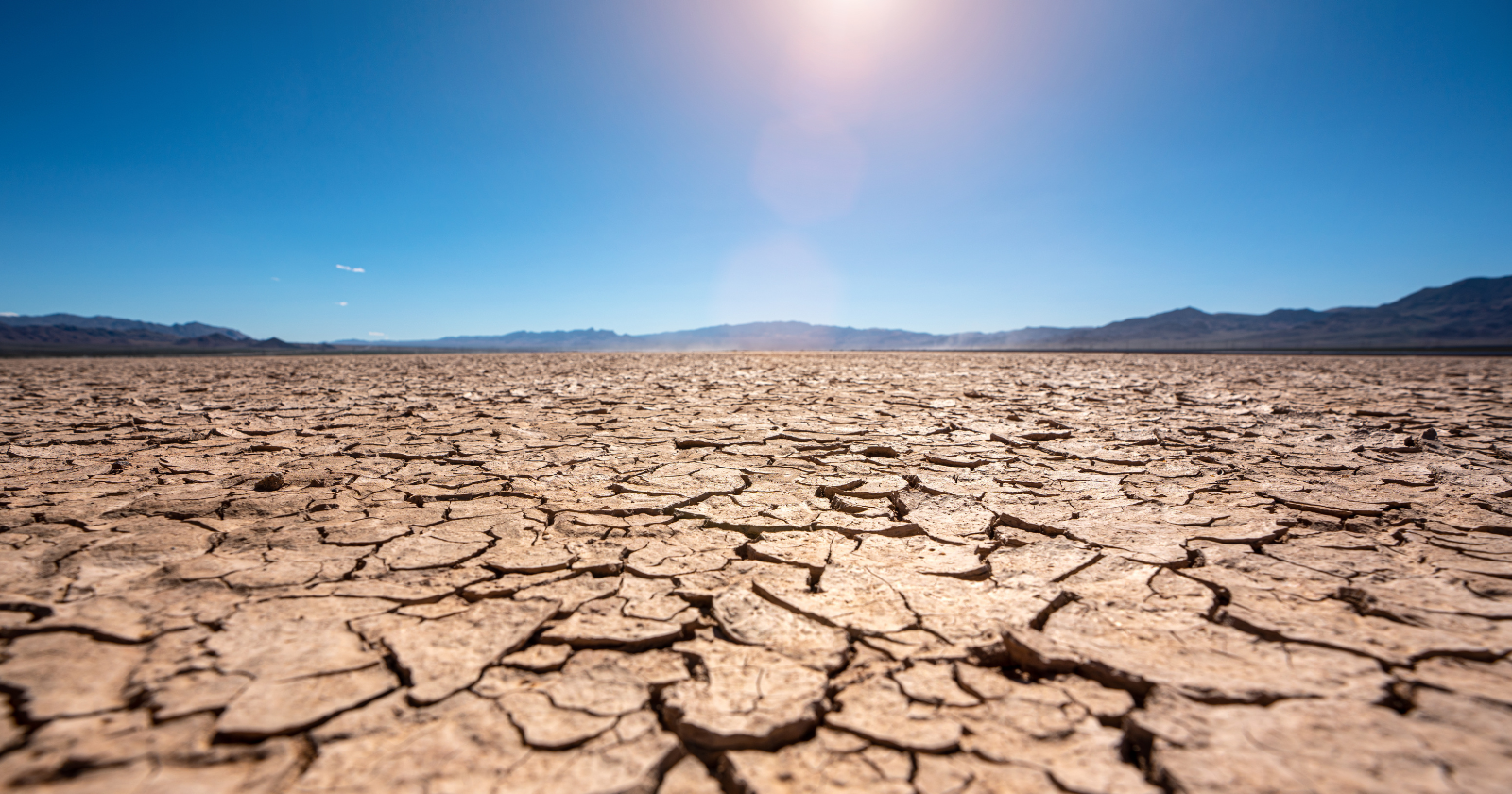
In the first half of 2023, Uruguay was living through its worst drought in more than seventy years. Reservoirs supplying the capital ran dry. According to a Project Syndicate analysis by researchers Friederike Rohde and Paz Peña, republished by the Heinrich Böll Stiftung in November 2025, the Uruguayan government’s response was to relax its drinking water standards and pump brackish water from the Río de la Plata estuary into the public supply.

For weeks, working-class families in Montevideo were boiling salty tap water and trying to make it drinkable for their children.

During those same weeks, the government granted Google permits to draw from the remaining fresh water reserves for a proposed data centre.

That is not a hypothetical. It is not a projection. It is what happened, in one specific city, in one specific year, to one specific set of families whose taps ran salt while a foreign tech company was licensed to take the fresh water they could not have.

The residents in Fayette County

Nothing about this pattern is limited to countries you might be tempted to describe as vulnerable. According to a Fortune investigation published in May 2026 by news editor Catherina Gioino, residents of an affluent subdivision in Fayette County, Georgia, spent most of 2024 noticing that their water pressure was tanking. Something was drawing enormous quantities of water from the same system that fed their homes.

The county utility eventually traced the problem to a 615-acre data centre campus called Project Excalibur, owned by a company that is itself owned by Blackstone. One of its water hookups had been installed without the utility even knowing it existed. Another was flowing unmetered and uncharged. By the time officials caught up, the developer had consumed 29 million gallons of local water without authorisation. The retroactive charge was roughly 147,000 dollars. No fine was imposed.

In Tucson, Arizona, where the city council had already voted unanimously to reject a proposed data centre because the region gets seven to ten inches of rain a year, a construction contractor obtained a permit for water inside the city’s service area, transported it outside city limits, and used approximately 650,000 gallons of it on the rejected project without authorisation. The city shut off the meter. Construction continued.

The women in Cerrillos

The most sustained resistance to any of this has come from a group of women in the working-class Cerrillos district of Santiago, Chile, who in 2019 formed a neighbourhood organisation called MOSACAT after learning that Google was planning to build a data centre in their community. The proposed facility was projected to consume 7.6 million litres of fresh water a day. That is roughly what their entire neighbourhood uses in a year.

MOSACAT read the environmental report themselves. They organised. They took the case to a Chilean court. And in September 2024, that court forced Google to redesign the cooling system and undergo a fresh environmental review.

They are still fighting.

Why is this happening?

The pieces that connect these stories, the reason the same arrangement keeps repeating from Montevideo to Fayette County to Santiago, the specific mechanism by which drought-stressed regions become attractive rather than off-limits to the world’s largest technology companies, and the actual scale of what is being taken, are the substance of the video attached to this piece.

It walks through where the water goes, how much of it never comes back, and the far larger number that almost nobody in the industry reports.

Click here to watch the short video.

The post Why is ChatGPT drinking bottles of fresh water to answer your questions, and who is actually paying for it? appeared first on Space Daily.

  •  

L’image qui a stupéfié le monde : derrière ce paysage irréel, 24 millions d’hectares sont partis en fumée

Pour les 25 ans de Futura, nos journalistes racontent une image qui a marqué leur regard sur ce premier quart de siècle. En 2019-2020, l’Australie traverse son terrible « été noir ». Pendant des mois, des incendies gigantesques dévorent le pays et donnent naissance à des images qui marqueront...

  •  

Civil Servants Face Sanctions if They ‘Misgender’ Trans Colleagues

Civil servants face being sanctioned if they fail to use the preferred name or gender of a transgender colleague, leaked Whitehall guidance has revealed.

The post Civil Servants Face Sanctions if They ‘Misgender’ Trans Colleagues appeared first on The Daily Sceptic.

  •  

New Parody Site Threatens to Replace CEOs With AI for Tiny Fraction of Their Bloated Salaries

By now, it should be pretty clear that the corporate executives of the world aren’t exactly into AI because they think it’ll cure cancer.

They’re making a different calculation, motivated by simple economics: pretty soon, they believe, AI will be efficient enough to do many or even all workers’ job, removing employee payroll from the corporate equation. That means more money for those at the top, and less time dealing with pesky annoyances like labor rights and health coverage.

For that to happen would take a series of technological miracles — as a recent study out of the University of California Berkeley shows, today’s cutting-edge AI tools are still incapable of completing the bulk of real-world tasks at a level comparable to humans.

Still, it’s clear executives are hungry for the kind of cost-savings AI could provide. Luckily, a new AI site offers a solution: OverpAId, a distinctly tongue-in-cheek project that facetiously claims to offer an AI-powered replacement for your company’s CEO — or as the site’s landing page puts it, the “world’s first Chief Executive Replacement Engine”.

“OverpAId is an Artificial Intelligence built from the ground up to do your CEO’s entire job — strategy, ‘vision,’ motivational all-hands emails — better, faster, and without ever once asking the board for a bigger jet,” the site exclaims.

The parodic offering claims to offer helpful features to help your team transition from an expensive human executive to a cheap AI equivalent. These include a “jargon bingo,” an AI-hype press release translator, a “talk to a real executive” chat widget (currently busted), and an ROI calculator that helps users distribute CEO pay packages equally across every remaining employee.

It hammers that point repeatedly, pointing out the fact that the average CEO-to-worker pay ratio is an astonishing 290 to 1 at large public companies (which is actually true, incredibly.)

While OverpAId is clearly a piece of satire, it gets at something very real: the fact that CEO pay has grown at an astonishing rate, while rank-and-file wages and salaries have crawled at a snails pace, in many cases not even keeping pace with inflation.

“Somewhere along the way, the story became: pay the person at the top enough, and the value will trickle down to everyone else,” the site explains. There’s just one problem with that telling: “It hasn’t. It doesn’t. It never really did.”

More on AI automation: AI Is Pushing Older Employees Straight Out of the Workforce, New Report Finds

The post New Parody Site Threatens to Replace CEOs With AI for Tiny Fraction of Their Bloated Salaries appeared first on Futurism.

  •  

Qual tipo de máquina de lavar gasta menos? Tampa frontal vs. tampa superior

Comprar uma máquina de lavar nova está longe de ser uma tarefa simples, especialmente quando é preciso escolher entre uma lavadora com tampa frontal (front load) e outra com tampa superior (top load). Entre os diversos fatores que pesam nessa decisão, o consumo de água e energia costuma ser um dos mais importantes na hora de adquirir o eletrodoméstico ideal.

Isso porque a questão vai muito além da localização da tampa da máquina. O design e o funcionamento dos dois modelos interferem diretamente no consumo desses recursos essenciais e até mesmo no desgaste das roupas.

Para te ajudar na escolha da lavadora, o Canaltech analisou dados oficiais do Inmetro sobre os cinco eletrodomésticos mais vendidos de cada categoria para descobrir qual tecnologia entrega maior eficiência no consumo de energia e água.

O segredo está no movimento do cesto

A diferença real no gasto dos modelos de máquina de lavar começa pelo entendimento de como funciona a mecânica de lavagem de cada um. As máquinas de tampa superior realizam a limpeza das roupas por meio de processos de agitação ou turbilhonamento.

Isso significa que essas lavadoras precisam utilizar um volume maior de água para que as peças possam ser agitadas. O batedor localizado no centro ou a hélice no fundo movimenta continuamente as roupas, gerando o atrito necessário para remover a sujeira.

Acontece que esse método é um pouco mais agressivo aos tecidos, o que pode acelerar o desgaste de peças mais delicadas.

Brastemp BWK13AB

Já os modelos com tampa frontal utilizam o sistema de lavagem por tombamento. Nesse sistema, o batedor central é dispensado, e o tambor gira em torno de um eixo horizontal, aproveitando a força da gravidade para elevar as roupas e deixá-las cair durante a lavagem.

Esse processo é mais suave, pois gera menos atrito entre as peças, tornando-se menos agressivo aos tecidos. Além disso, como não há necessidade de encher o tambor com um grande volume de água, o consumo é naturalmente menor.

Qual modelo gasta mais energia?

As máquinas de lavar com tampa frontal tendem a ser maiores do que aquelas com tampa superior, o que pode levar alguns consumidores a acreditar que o consumo de energia desses equipamentos também é muito maior.

Essa percepção também acontece porque grande parte das lavadoras front load vendidas no Brasil são modelos lava e seca, e a função de secagem por calor realmente eleva o consumo de energia.

Mas o cenário muda quando colocamos no papel apenas o ciclo de lavagem convencional com água fria. Isso porque o sistema de lavagem por tombamento proporciona maior eficiência, além de muitos desses aparelhos contarem com tecnologia Inverter.

Esse recurso ajusta automaticamente a potência de funcionamento de acordo com a necessidade de cada ciclo de lavagem, contribuindo para reduzir o consumo de energia.

Para facilitar a visualização desse comparativo, reunimos dados de consumo elétrico (medidos em kWh por ciclo de lavagem) dos cinco modelos mais vendidos de cada categoria. Essas informações foram coletadas da Etiqueta Nacional de Conservação de Energia (ENCE) do Inmetro de cada eletrodoméstico.

Modelo Categoria Capacidade Energia (kWh/ciclo)
Samsung WW11T4040BX/AZ Tampa frontal 11 kg 0,26
Midea MF201W110WB/GK-01 Tampa frontal 11 kg 0,27
Brastemp BNF10ABBNA Tampa frontal 10 kg 0,27
Midea MF200D130WB/GK-01 Tampa frontal 13 kg 0,28
Electrolux LFC12 Tampa frontal 12 kg 0,31
Electrolux LES11 Tampa superior 11 kg 0,34
Consul CWN14AB  Tampa superior 14 kg 0,36
Brastemp BWJ14ABBNA  Tampa superior 14 kg 0,40
Electrolux LED13 Tampa superior 13 kg 0,40
Electrolux LEC15 Tampa superior 15 kg 0,46

Como os dados oficiais demonstram, todas as lavadoras com tampa frontal mantêm médias de consumo inferiores em relação às de tampa superior. Elas operam sempre abaixo da marca de 0,31 kWh por ciclo e superam as máquinas tradicionais em eficiência energética.

Se compararmos os modelos de 13 kg da Midea e da Electrolux, a diferença é de 0,12 kWh por lavagem. Em uma residência que realiza três ciclos de lavagem por semana, isso pode representar uma economia aproximada de 1,6 kWh por mês que, apesar de modesta, se acumula ao longo do tempo e soma-se à economia de água proporcionada pelo sistema de lavagem por tombamento.

Samsung WW11T4040BX/AZ

A principal diferença está no consumo de água

A eficiência energética já coloca os eletrodomésticos que utilizam a lavagem por tombamento um pouco à frente, mas é o consumo de água que amplia realmente essa vantagem. Isso porque esse sistema utiliza menos água durante a lavagem, resultando em uma economia significativa em relação aos modelos com tampa superior.

Separamos o volume total de água consumido por ciclo de lavagem nos mesmos dez modelos mais vendidos para deixar essa comparação ainda mais clara.

Modelo Categoria Capacidade Água (litros/ciclo)
Samsung WW11T4040BX/AZ Tampa frontal 11 kg 53
Midea MF201W110WB/GK-01 Tampa frontal 11 kg 81
Brastemp BNF10ABBNA Tampa frontal 10 kg 85
Midea MF200D130WB/GK-01 Tampa frontal 13 kg 89,9
Electrolux LFC12 Tampa frontal 12 kg 92
Electrolux LES11 Tampa superior 11 kg 107
Consul CWN14AB  Tampa superior 14 kg 141
Electrolux LED13 Tampa superior 13 kg 150
Electrolux LEC15 Tampa superior 15 kg 160
Brastemp BWJ14ABBNA Tampa superior 14 kg 184

O contraste fica evidente quando colocamos frente a frente modelos com capacidades semelhantes. Por exemplo, enquanto a máquina de tampa frontal da Midea de 13 kg consome cerca de 90 litros de água, a lavadora da Electrolux de 13 kg com tampa superior (LED13) alcança 150 litros por ciclo.

E essa diferença de 60 litros por lavagem tem um grande impacto a longo prazo. Em uma residência que realiza três ciclos de lavagem por semana, a economia pode chegar a cerca de 780 litros de água por mês, o equivalente a mais de 9,3 mil litros ao longo de um ano.

Brastemp BNO11AB

Tampa frontal ou superior: qual modelo vale o investimento?

Ainda que os dados apresentados apontem que as máquinas de lavar com tampa frontal oferecem maior economia no consumo de energia e água, a decisão sobre qual modelo escolher depende principalmente do planejamento financeiro e das necessidades da rotina de cada consumidor.

Se o orçamento para adquirir uma nova lavadora estiver mais apertado, os modelos com tampa superior cumprem bem o papel por apresentarem um valor de aquisição mais acessível.

Mas, se a prioridade for reduzir os gastos ao longo do tempo e houver uma margem maior no orçamento, vale a pena investir em uma máquina com tampa frontal. Ainda que exijam um investimento inicial maior, esses modelos podem compensar essa diferença com a economia de água e energia, além de reduzirem o desgaste das roupas.

Outra dúvida que costuma surgir entre os consumidores é sobre qual modelo gasta mais: uma lavadora tradicional ou uma lava e seca. O Canaltech também reuniu as informações necessárias para ajudar nessa decisão.

{{WHATSAPP_CHANNEL}}

  •  

Southport Killer’s Attempts to Manipulate Doctors Exposed by Report

Southport killer Axel Rudakubana, whose move to Broadmoor psychiatric hospital this week has sparked public outcry, has a lengthy history of trying to "control and manipulate" medical professionals.

The post Southport Killer’s Attempts to Manipulate Doctors Exposed by Report appeared first on The Daily Sceptic.

  •  

Au cœur d’une supercellule, un drone filme une tornade emporter tout sur son passage dans une violence sidérante

À Tulliby Lake, au Canada, une équipe de chasseurs de tornades a capturé des images spectaculaires d’une tornade grâce à un drone conçu pour affronter les vents les plus violents. Derrière cette vidéo impressionnante se cache un projet scientifique qui pourrait améliorer notre compréhension de...

  •  
❌