❌

Reading view

Two pangolin traffickers in South Africa sentenced to eight years in prison

The Molopo Regional Court in Mahikeng, South Africa, sentenced two wildlife traffickers, Edward Motlatsi Phiri, 46, and Tlhoriso France Ralph, 51, to eight years in prison. They were convicted of smuggling a Temminck’s pangolin, a vulnerable species native to Southern and Eastern Africa, according to a statement released by the North West province’s environment agency. The judgment, delivered on May 26, 2026, followed the arrest of four suspects on June 2, 2023, when law enforcement authorities, acting on a tip, intercepted a vehicle in which they were traveling and seized a live female pangolin (Smutsia temminckii) intended for sale. During the court hearing three years later, charges against two accused traffickers were withdrawn while Phiri and Ralph were found guilty. “This sentence sends a strong message that wildlife crime is a serious offense with devastating environmental consequences,” said Bitsa Lenkopane, with the Economic Development, Environment, Conservation and Tourism in the North West province, in a statement. “Every operation, every investigation, and every successful prosecution strengthen our collective fight against illegal wildlife trafficking.” Pangolins are trafficked for their scales, worth thousands of dollars on the black market. They are falsely believed to have medicinal qualities in East Asia. The demand has driven steep declines in pangolin numbers worldwide: Six of the eight species are classified as endangered or critically endangered today. Pangolins are also consumed as bushmeat in parts of Africa. These mammals are protected under South African law, which prohibits their possession, sale, display or transportation. Their international commercial trade…This article was originally published on Mongabay

  •  

Untangling the cosmic web

There is a pattern found in nature. It is indeed the largest pattern there is. It is so vast that it spans the universe, filling up its observable volume. The pattern is made of individual units in the same way your body is made of cells — if each of your cells were a galaxyContinue reading "Untangling the cosmic web"

The post Untangling the cosmic web appeared first on Astronomy Magazine.

  •  

Ces mystérieuses « ceintures de trous » au Danmark vieilles de 2 500 ans refusent toujours de livrer leur secret

Depuis des décennies, des centaines de fosses alignées découvertes au Danemark défient les interprétations des chercheurs. Grâce à un projet d'archéologie expérimentale, de nouvelles pistes émergent sur la fonction de ces mystérieux aménagements datant de l'âge du fer.

  •  

A blueprint for effective activism 10 years after defeating a dam in Borneo (analysis)

In October 2015, Indigenous activists from Indonesia, Malaysia, the Philippines, Cambodia, Brazil, the United States, and Honduras, together with delegates from longhouse communities throughout the Malaysian state of Sarawak, gathered at Tanjung Tepalit, an Indigenous Kenyah village on the Baram River on the island of Borneo. They called the gathering WISER: the World Indigenous Summit on Environment and Rivers. Tanjung Tepalit hosted the gathering because the village, along with more than two dozen others along the river, was scheduled to be drowned. The Baram Dam, a 1,200-megawatt hydroelectric mega project backed by the Sarawak state government and aligned with a regional industrial development scheme called the Sarawak Corridor of Renewable Energy (SCORE), would have flooded an area of more than 400 square kilometers (more than 150 square miles) and displaced an estimated 20,000 Kenyah, Kayan, and Penan people. Muslims, Catholics, Evangelicals, Buddhists, agnostics, and people who followed traditional Indigenous religions were among the attendees. As we gathered, Peter Kallang, the Kenyah founder and chair of the local advocacy group SAVE Rivers, addressed the assembly: “We are people of many faiths,” he said, “but we are united in one mission. To protect our forest homes and our ways of life.” In one sense the WISER gathering was a strategy meeting to coordinate an international coalition against a state-corporate project. In another, and perhaps deeper sense, WISER was rooted in something older. It was an assertion that the values that hold communities to their land across generations — the sanctity of the…This article was originally published on Mongabay

  •  

Solar power hits new milestones in the US even as Trump boosts coal over clean energy

Even as President Donald Trump boosts coal over clean energy, solar power is hitting new milestones in the U.S. and remains the leading source of new power. New reports released Wednesday by global energy think tank Ember and the Solar Energy Industries Association show the continued growth of solar and decline of coal in the United States despite federal policy. Ember says in May, for the first time, solar supplied more of the nation’s electricity than coal, or 12.8%. Coal supplied 12.2%, its fourth-lowest monthly share ever. The Republican president has been helping the struggling U.S. coal industry while curtailing solar and wind. A Democratic California congressman says the coal industry is dying. By Jennifer McDermott, Associated Press Banner image: Solar panels operate on a farm with cattle Tuesday, April 28, 2026, in Christiana, Tenn. Image by Joshua A. Bickel via Associated PressThis article was originally published on Mongabay

  •  

New study suggests Ethiopia’s protected areas may be impacting local wellbeing

A new study published in the journal Nature shows that Ethiopia’s protected areas successfully slowed deforestation, limited agricultural expansion and helped maintain grasslands. But the study also suggests the same conservation gains may also be linked to declines in food security and wellbeing for nearby communities — while underlining some caveats in their findings. The study, conducted through collaboration between researchers in Ethiopia and the UK, and the Ethiopian Wildlife Conservation Authority, assessed both environmental and social outcomes across 25 protected areas in Ethiopia during the period 2000–2020. They measured forest cover, agricultural expansion, grasslands, food security, dietary diversity and material wellbeing. While protected areas were broadly effective at reducing environmental degradation despite mounting pressures from population growth, agricultural expansion, and land demand, the researchers found “trade-offs” between environmental and social outcomes in their assessments. Twelve of these protected areas experienced  positive environmental performance at the cost of social wellbeing. Meanwhile, five of the protected areas had “win-win” outcomes for biodiversity and social outcomes and three protected areas had “lose-lose” outcomes. “Ethiopia is exceptionally biodiverse, but also faces major challenges around poverty, food security and demand for land,” said Sophie Jago, lead author of the study and research assistant at the Royal Botanic Gardens, Kew in the UK. “The fact that protected areas are delivering measurable benefits for nature in this context is important … The difficult finding is that these environmental gains have come with costs for nearby communities, particularly around food security.” A ranger discusses with community members…This article was originally published on Mongabay

  •  

How silk caterpillars became a tool for conservation in Madagascar

When Catherine Craig first went to Gombe in 1972, she was not thinking about silk. She was an undergraduate in a four-seat plane with Jane Goodall, flying over the Tanzanian forest where Goodall’s work on chimpanzees was changing how scientists understood animals. Craig spent six months there, learning to recognize individual chimpanzees and helping track mothers and infants through the steep woodland above Lake Tanganyika. The forest stayed with her. So did the sight of people living nearby with few choices, and the later realization that even forests thought to be protected could disappear. Her path back to conservation was indirect. Craig became a biologist of spiders and silk, earning a Ph.D. in ecology and evolution from Cornell and later joining the biology faculty at Yale. For two decades, she studied webs, foraging behavior, insect flight, and the properties of silk. It was work at the level of fibers, mechanics, and evolution. Yet the question that had formed at Gombe remained: how could habitat be protected where people had few ways to earn money? The answer she pursued was both plain and difficult. If farmers could earn income from native silk-producing caterpillars and the plants that fed them, then habitat might become something worth tending. The idea drew on her scientific expertise, but it also required skills that science had not taught her: product design, marketing, patience, and the ability to listen across languages, cultures, and expectations shaped by past disappointments. Borocera cajani Vinson, 1863 family Lasiocampidae. Adult moth, caterpillar…This article was originally published on Mongabay

  •  

We managed to glean some interesting details about the Artemis III mission

On Tuesday, NASA announced the crew for the Artemis III mission, which is scheduled to be flown no earlier than summer 2027. As part of the announcement, space agency officials also discussed plans for the crew to dock with both a Blue Origin lander and a SpaceX Starship lander during the spaceflight in low-Earth orbit.

The presentation, although informative, still left open key questions about the landers' readiness and what exactly they'll look like. After the crew announcement, Ars sat down with Jeremy Parsons, NASA's Artemis program manager, to answer some of these questions.

This interview, conducted at NASA's Johnson Space Center, has been lightly edited for clarity.

Read full article

Comments

© NASA/Aubrey Gemignani

  •  

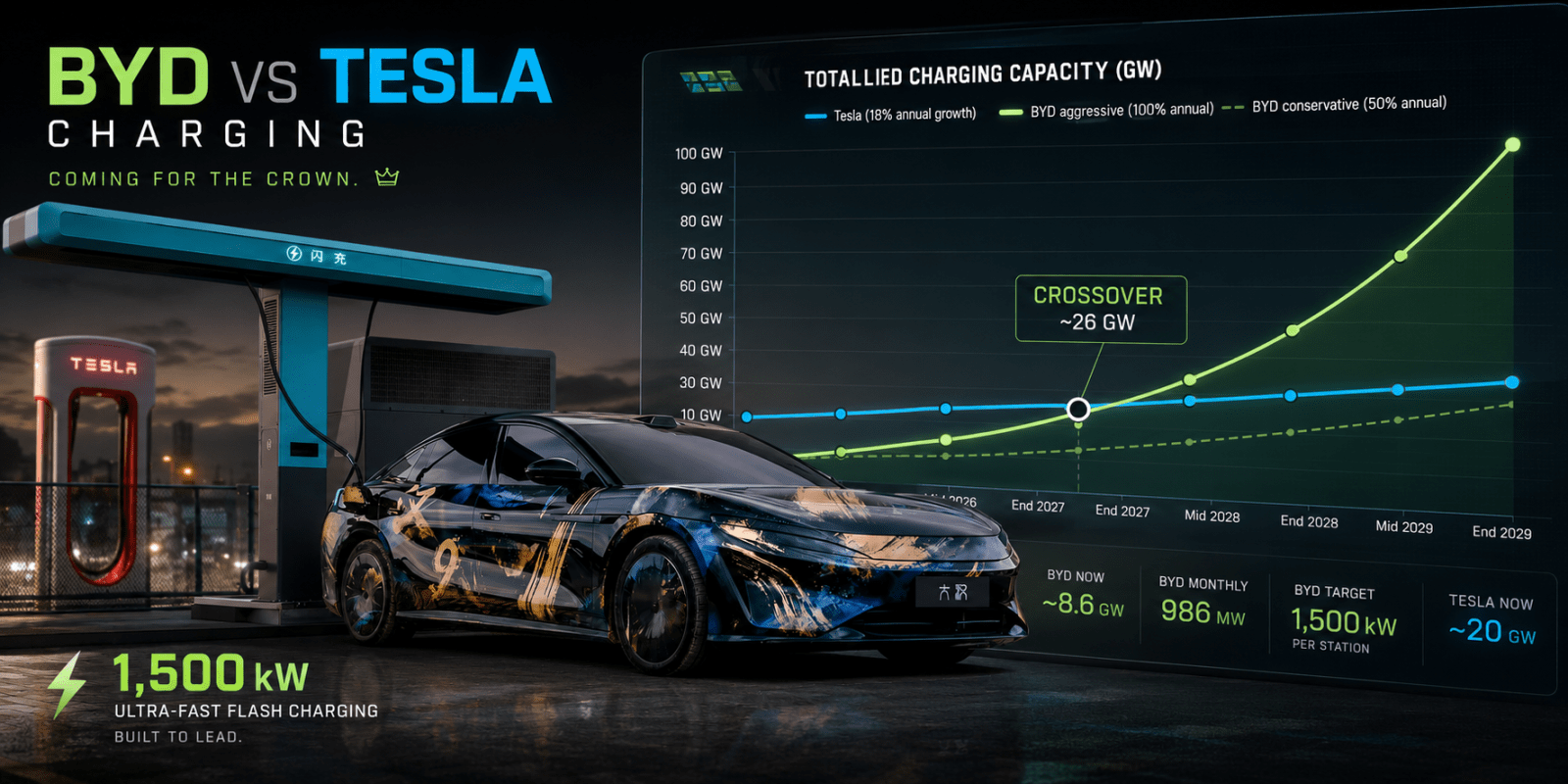
BYD is deploying 2.4x more charging power per month than Tesla

BYD is building a charging network that makes Tesla’s Supercharger look slow — and it’s deploying it at a pace that could see it surpass Tesla’s global network within two to three years.

The Chinese automaker has already deployed over 5,700 Flash Charging stations in China in just a few months and just opened its first overseas stations in Europe. The chargers deliver up to 1,500 kW of power — three times what Tesla’s latest V4 Superchargers can do.


  •  

Quels sont les meilleurs aspirateurs pour nettoyer des sols durs ?

Miettes, poussières, traces de pas... les sols durs n'accordent aucun répit. Aspirateurs balais ou laveurs, nous avons sélectionné les modèles les plus convaincants pour retrouver un intérieur propre sans transformer chaque séance de ménage en épreuve de fond.

  •  

21,000-sq-foot facility to keep US safe from threat of nuclear proliferation, boost clean energy goals

A new facility in the United States is set to keep the country safe from from the threat of nuclear proliferation. The new state-of-the-art 21,000-square-foot facility, at the Oak Ridge National Laboratory (ORNL), is also aimed at contributing to nuclear energy developments.

The Advanced Testbed and Operations Learning Laboratory (ATOLL) will develop critical workforce expertise and capabilities essential to monitoring foreign weapons-grade uranium production activities. The project is expected to be completed in the summer of 2028.

Initiative to advance energy dominance agenda

“It takes a weapons program to know a weapons program,” said Administrator Williams. “At NNSA, we deter adversaries by being experts in atomic science and weapons production, and the investment in ATOLL strengthens our understanding of both.”

The Department of Energy’s National Nuclear Security Administration (NNSA) has announced that the initiative will also advance President Trump’s energy dominance agenda and his executive orders on nuclear energy by contributing to the growing nuclear infrastructure being built in Tennessee, providing critical expertise that can be leveraged by American industry to revitalize domestic civil nuclear capabilities.

Detection of adversary nuclear programs and capabilities

“Our nation’s nuclear deterrent and the NNSA enterprise that maintains it serve as the foundation of our national defense. My highest priority as Chairman of the House Energy & Water Appropriations Subcommittee is ensuring this nuclear security enterprise is properly resourced,” said Congressman Fleischmann.

“DNN plays an essential defensive role within our deterrence architecture by enabling the detection and attribution of adversary nuclear programs and capabilities. The scientific and technological expertise of our national labs are critical enablers for NNSA’s national security missions.”

Fleischmann also underlined that the Advanced Testbed and Operations Learning Laboratory, being built at ORNL, will provide the cutting edge scientific facilities needed to perform critical nonproliferation missions, as the ability to monitor foreign nuclear production and weapons activities is essential to the country’s national defense and extended deterrence commitments.

“I was honored to participate in the groundbreaking for this important demonstration of these tremendous partnerships advancing U.S. national security,” added Fleischmann.

The project is part of the Nonproliferation Stewardship Program within NNSA’s Office of Defense Nuclear Nonproliferation. The program focuses on maintaining the scientific expertise, technical infrastructure, and specialized facilities necessary to address current and future nuclear security challenges.

As geopolitical tensions and concerns over nuclear proliferation continue to evolve, the development of ATOLL represents a strategic investment in America’s ability to detect, understand, and prevent the misuse of nuclear technology. The facility is expected to serve as a cornerstone of U.S. nonproliferation efforts while fostering innovation and expertise in the broader nuclear field for decades to come.

The new facility is expected to strengthen America’s ability to monitor nuclear activities globally and respond effectively to emerging proliferation risks.

By supporting research, workforce development, and advanced nuclear infrastructure, the laboratory will help reinforce domestic capabilities in both civilian nuclear power and national security applications.

  •  

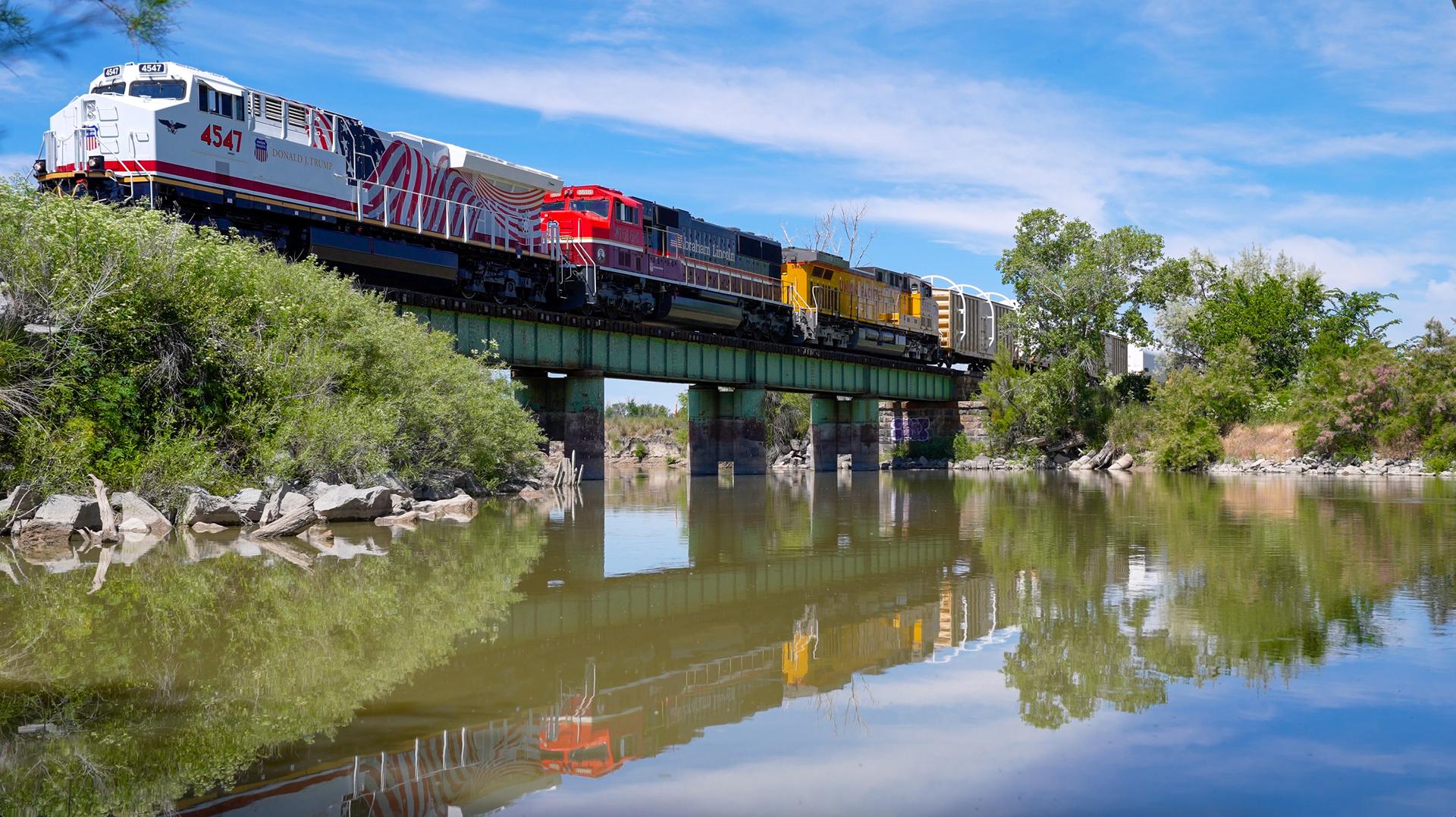
Train Ride to NASA Kennedy for Artemis III Booster Segments

A train with many different colored cars crosses a green bridge over a body of water. There are trees along the shoreline.
NASA/Brandon Hancock

The final booster motor segments for NASA’s SLS (Space Launch System) rocket that will help propel Artemis III astronauts on their journey to space shipped from Northrop Grumman’s Railyard Shipping Facility in Corinne, Utah on June 2. The eight booster motor segments are on their way to NASA’s Kennedy Space Center in Florida where they will form the SLS rocket’s twin, five-segment solid rocket boosters, which produce more than 75% of the total thrust at liftoff.

Follow the Artemis blog for updates on Artemis III and future missions.

Image credit: NASA/Brandon Hancock

  •  
❌