Login

Mothers’ Intrusive Thoughts Are Mostly Benign. Lindsay Clancy’s Case Is an Exception.
Experts say that after childbirth, intrusive thoughts are common and mostly benign. Lindsay Clancy’s story provides a disturbing exception.

Data centers don’t just undergird the avalanche of AI slop polluting our social media feeds — they’re spewing an awful lot of physical slop as well.
On top of the noxious air pollution, as well as the occasionally bacteria-laden wastewater discharge, data centers are responsible for a rising tide of forever chemicals, artificial substances which never degrade naturally.
According to new reporting by The Guardian, nearly all of the top ten global producers of forever chemicals, otherwise known as polyfluoroalkyl substances, or PFAS, plan to ramp up production quotas on the back of the data center boom.
There’s a clear market demand for this: PFAS play a huge role in data center construction, where they’re used in cooling systems, AI chips, circuit boards, and fire suppression systems — not to mention the coating on thousands of miles of cables used to connect these components together.
Though components laden with PFAS are found throughout the industrial world, their use in data centers is particularly troubling. Because these facilities run almost non-stop save for the rare pause for maintenance, their components break down remarkably quickly, which means data center owners are constantly scrapping old parts in favor of new ones.
When those old components are tossed to the curb, the PFAS will almost inevitably wind up in the environment, increasing the likelihood that they wind up in the food chain. When we eat contaminated plant and animal products, these forever chemicals accumulate in our body, where they may contribute to a laundry list of debilitating health problems.
“These companies’ expansion plans show that unless governments and regulators insist on a rapid phaseout, we will face a new tidal wave of forever chemicals,” Anne-Sofie Bäckar, executive director of Swedish chemical watchdog ChemSec, told The Guardian.
Of course, PFAS are far from the only toxic discharge attributable to the AI data center boom. On Monday, the Gothamist reported that nearly 5,000 gallons of diesel fuel had somehow spilled out of the Equinix Data Center in Secaucus, New Jersey, flowing directly into a tributary creek in the New Jersey Meadowlands.
As Climate Revolution Action Network executive director Ben Dziobek told the Gothamist, it’s proof that data centers harms extend far beyond their property lines.
“Leaving this [data centers] to individual towns doesn’t make any sense,” Dziobek said. “Data centers create problems that don’t stop at municipal boundaries, whether it’s pollution or straining the grid and driving up everyone’s electric bills.”
More on data centers: The Economics of Data Centers Creating Jobs Are So Bad That They Sound Like a Joke
The post Data Centers Are Causing a Huge Surge in Incredibly Toxic Chemicals Polluting the World appeared first on Futurism.

A Xiaomi lançou na China um novo aparelho pensado para deixar o banheiro mais confortável nos dias frios. Trata-se do Mijia Smart Bathroom Heater 2C, que é instalado no teto e reúne aquecimento, ventilação e iluminação em um único equipamento.
O destaque fica por conta de um módulo de aquecimento de grafeno com 3.000 W, acompanhado por um sistema de ventilação capaz de distribuir o ar quente pelo ambiente. O fluxo de ar pode oscilar em um ângulo entre 60° e 100°, enquanto um mecanismo de controle de temperatura ajusta o funcionamento para manter o ambiente aquecido de maneira mais constante.
O aparelho também permite usar aquecimento e ventilação ao mesmo tempo. Segundo as especificações divulgadas, a capacidade de exaustão chega a 180 m³/h, permitindo renovar o ar enquanto o sistema térmico continua funcionando.

Uma das funções mais interessantes do aquecedor está em um radar de 24 GHz integrado ao equipamento. O sensor consegue identificar a presença de pessoas e automatizar recursos como iluminação e ventilação, com possibilidade de ajustar tanto a sensibilidade quanto a distância de detecção.
O funcionamento também pode ser controlado pelo celular ou por comandos de voz, além de aceitar programações de horário. Na prática, é possível usar o aparelho para preparar o banheiro antes do banho ou configurar determinadas funções para serem acionadas em momentos específicos.
O equipamento ainda traz uma luminária LED de 1.600 lúmens e acompanha um painel Bluetooth que pode ser instalado na parede. O produto conta com proteção contra superaquecimento e curto-circuito, além de grau de proteção IPX2 contra água.
O Mijia Smart Bathroom Heater 2C começa a ser vendido na China no dia 21 de setembro, chegando ao mercado por 882 yuans (cerca de R$ 675 na cotação atual). Ainda não há informações sobre o lançamento do aparelho em outras regiões.
Achou esse lançamento interessante? Então você também vai gostar de conferir estes 4 eletros da Xiaomi para importar da China e viver em 2050.
{{WHATSAPP_CHANNEL}}

Across the stories today, a common thread emerges: the boundaries we once drew around “the environment” — between land and sea, sky and orbit, economy and ecology — keep dissolving, revealing how deeply intertwined these systems have become.
Start with the sky, in more ways than one. The US government’s confirmation that it has deployed a weapon in Earth’s orbit marks a genuine turning point, not just for defense policy but for how we think about the commons above our heads. Space has long been treated as neutral ground; now it’s becoming contested territory, raising quiet but urgent questions about debris, escalation, and what “environment” even means when it extends past the atmosphere. Meanwhile, back on solid ground, the UK’s climate advisers delivered a pointed message to Heathrow: a third runway cannot proceed unless airlines help pay for the emissions it would unleash, potentially through carbon removal costs. It’s a small but telling signal that growth and climate accounting are becoming inseparable in policy conversations — expansion is no longer a given, even for infrastructure long considered inevitable.
That tension between growth and limits runs through much of today’s coverage. A Guardian analysis found that the world’s twenty largest private equity firms back energy portfolios emitting more greenhouse gases than all but three countries on Earth — a stark reminder that climate accountability often hides behind layers of finance most people never see. In Venezuela, a US-backed push for “legitimate” mining and a new oil megadeal are drawing warnings from environmental and human rights groups who see familiar risks dressed in new language. And in Guinea-Bissau, industrial fishmeal factories are quietly hollowing out a food fish that coastal communities have relied on for generations. Behind the numbers are real communities adapting in real time — from Vietnamese fishers losing thousands of dollars per vessel to tangled plastic waste, to Dhaka residents like Yeasmin Begum, who has spent her life breathing the smoke of a landfill she never chose to live beside.
Yet alongside these pressures, the day’s coverage also points to growing momentum around resilience and repair. Ukrainians are turning to rooftop solar to keep homes running amid bombardment — a portrait of adaptation born from necessity. A Congolese NGO now co-manages a national reserve for the first time, a homegrown model of stewardship. Moon bears rescued from bile farms are stretching their limbs in Suffolk enclosures, and three wild dog brothers wandered 2,500 miles across Zambia in search of a mate, offering an unlikely note of hope for their species. Even Griffith Park’s mountain lion — photographed beneath the Hollywood sign — helped inspire the world’s largest wildlife crossing, proof that a single image can shift infrastructure decisions.
It’s a reminder that progress and pressure often arrive together. Some communities are innovating their way through crisis; others, like the land defenders now forming self-defense units amid rising violence, are simply trying to survive it. As Brazil’s upcoming election looms over the Amazon’s future, and Chief Raoni Metuktire — one of its most storied protectors — enters palliative care, the coming months may reveal whether today’s momentum toward stewardship can outpace the forces pulling the other way.
The post US Confirms Orbital Weapon, Essex Wildlife Habitat Threatened by Data Centre — Today’s Environmental Briefing for Wed, Sep 16 2026 first appeared on EnviroLink Network.
*Por Ronaldo Pedro da Silva
Nunca produzimos tantos dados. Ainda assim, uma parcela enorme deles permanece isolada dentro de empresas, hospitais, universidades e centros de pesquisa. A Comissão Europeia já estimou que 80% dos dados industriais coletados nunca chegam a ser utilizados. O problema, portanto, não é apenas gerar mais informação, mas criar condições para que dados dispersos possam gerar conhecimento e inovação sem exigir que todos sejam transferidos para um único lugar.
Essa fragmentação tem consequências concretas. Um hospital pode possuir milhares de exames capazes de contribuir para o desenvolvimento de um modelo de inteligência artificial, mas não pode simplesmente entregar sua base a uma empresa de tecnologia. Uma indústria farmacêutica pode dispor de resultados experimentais valiosos, mas compartilhar essas informações pode envolver propriedade intelectual, confidencialidade e requisitos regulatórios. Em outro ponto do ecossistema pode estar exatamente o algoritmo, a capacidade computacional ou o conhecimento científico necessário para resolver o problema.
O resultado é um paradoxo: os ativos existem, mas permanecem separados.
É nesse contexto que a computação federada ganha importância. Em vez de começar pela pergunta “como reunir todos os dados?”, a lógica muda para “como permitir que diferentes organizações colaborem mantendo maior controle sobre seus próprios ativos?”.
Em muitas arquiteturas federadas, o processamento ou o modelo pode ir até o ambiente onde os dados estão. Compartilham-se apenas informações, parâmetros ou resultados previamente autorizados. Aprendizado federado é uma das técnicas que podem fazer parte dessa arquitetura, mas o princípio é mais amplo: colaborar não precisa significar centralizar.
Para setores como saúde e indústria farmacêutica, essa diferença é decisiva. Não basta proteger os dados. É preciso saber quem pode acessá-los, onde podem ser processados, quais evidências devem ser registradas e quais regras se aplicam ao produto ou à tecnologia que será desenvolvida. Segurança, governança e regulação deixam de ser verificações feitas no final e passam a orientar a arquitetura desde o início.
A tecnologia, porém, resolve apenas parte do problema. Existe uma segunda fragmentação, menos visível: a das competências.
Quem conhece o desafio nem sempre possui os dados necessários. Quem possui os dados pode não ter o algoritmo. Quem desenvolve o algoritmo pode depender de infraestrutura computacional ou científica externa. Por isso, o desafio central passa a ser orquestrar organizações diferentes em torno de um problema comum.
Essa discussão está no centro do framework 3C, desenvolvido pelo World Economic Forum com a Capgemini. A primeira etapa é combinar tecnologias e capacidades; a segunda é fazê-las convergir para gerar novas soluções; a terceira é criar um efeito cumulativo, no qual conhecimento, padrões e relações construídos em um projeto reduzem o risco e aceleram os seguintes. Em 2026, o próprio Fórum reforçou que orquestrar pessoas, dados e fluxos de trabalho é crítico para transformar combinações tecnológicas em impacto real.
O avanço da inteligência artificial tende a exigir menos concentração e mais capacidade de coordenação. Em muitos casos, o valor estará em fazer tecnologias, dados e competências distribuídas trabalharem juntas com segurança, governança, validação científica e viabilidade regulatória. A próxima vantagem competitiva não está em possuir todos os ativos, mas na capacidade de conectá-los sem perder o controle sobre eles.
É essa lógica que orienta o ConvergeLab. Mais do que concentrar tecnologias ou dados em uma organização, a proposta é criar condições para que capacidades distribuídas possam trabalhar juntas com segurança, governança, validação científica e viabilidade regulatória.
Em um cenário no qual a inteligência artificial depende cada vez mais de dados de qualidade, talvez a próxima vantagem competitiva não esteja em possuir todos os ativos. Pode estar na capacidade de conectá-los sem perder o controle sobre eles.
Entenda também como a IA pode impactar até 37% dos trabalhadores e expõe lacuna digital no Brasil.

{{WHATSAPP_CHANNEL}}
O Google Tradutor começou a liberar tradução de conversas por voz em tempo real mesmo sem conexão com a internet. A novidade amplia o modo "Tradução instantânea", que já servia como intérprete entre duas pessoas, e pode ser útil em viagens, aeroportos ou locais com sinal ruim.
Até agora, o Google Tradutor já permitia baixar idiomas para traduzir textos e imagens offline. A diferença é que as conversas ao vivo ainda dependiam de internet para funcionar.
O usuário precisa baixar previamente os idiomas compatíveis no celular. Depois disso, basta abrir o Google Tradutor e acessar a opção Tradução instantânea.
No modo "Conversa", duas pessoas podem falar alternadamente e o aplicativo reproduz a tradução em voz alta. O microfone também consegue identificar automaticamente a mudança de idioma durante a conversa.
Há ainda um modo frente a frente, que divide a tela para que cada pessoa acompanhe a transcrição e a tradução no próprio lado do aparelho.
A novidade passa a permitir que esse processo continue funcionando sem internet, desde que os pacotes de idiomas tenham sido baixados antes.

Neste primeiro momento, a tradução instantânea offline funciona entre inglês e os seguintes idiomas:
português;
espanhol;
francês;
alemão;
italiano;
hindi;
indonésio;
japonês;
russo;
sueco.
Isso significa que a combinação precisa envolver inglês. Não é possível, por exemplo, fazer uma tradução instantânea offline diretamente de português para japonês.
A limitação mais importante está na disponibilidade. Segundo a documentação oficial do Google, a tradução instantânea offline está disponível atualmente apenas para Pixel 9, Pixel 10 e Pixel 11.
Ou seja, a novidade não chegou de forma geral ao Google Tradutor em qualquer celular Android. Mesmo aparelhos mais antigos da própria linha Pixel e modelos de outras fabricantes ficam de fora por enquanto.
No iPhone, o Google continua permitindo baixar idiomas para traduções offline de texto e câmera, mas a documentação não confirma o novo modo de conversação por voz offline para iOS.
O Google não informou se pretende ampliar o recurso para mais aparelhos.
Confira no Canaltech como usar o Google Tradutor para aprender inglês.
{{WHATSAPP_CHANNEL}}

Marine biologists have documented five species of wrasse in the western Atlantic using rocks, coral rubble and shells as makeshift anvils to crack open crabs, mollusks and other armored prey — a foraging technique already documented in fish from the Indo-Pacific but never before filmed in the Atlantic. A study published in Coral Reefs in March 2025 provides the first evidence of anvil use in three of the five species and the first video documentation of the behavior in the other two.
The research, led by Dr. Juliette Tariel-Adam of the Fish Lab at Macquarie University’s School of Natural Sciences in Sydney, focused on New World wrasses in the genus Halichoeres: the slippery dick (H. bivittatus), the Brazilian wrasse (H. brasiliensis), the yellowhead wrasse (H. garnoti), the black-ear wrasse (H. poeyi), and the puddingwife wrasse (H. radiatus), documented at Fernando de Noronha Island off Brazil’s northeast coast.
The paper lists co-authors Jaqueline G. Toledo, C. E. O’Brien, Sergio R. Floeter and Professor Culum Brown alongside Tariel-Adam. Anvil use in fish is not new to science. Since it was first documented in an orange-dotted tuskfish roughly fifteen years ago, researchers have logged the behavior in roughly two dozen of the more than 550 known wrasse species, almost all of them in the Indo-Pacific and Indian Ocean. What sets this study apart is geography and scale: it is the first systematic documentation of anvil use among wrasses native to the western Atlantic, and it draws on the largest video dataset yet assembled for the behavior in this ocean basin.
The team built that dataset by turning to citizen scientists. Divers, snorkelers and underwater photographers working across the Caribbean, the Caicos Islands and Brazil submitted footage and written accounts through a public call for observations, contributing 16 new records to the study. Combined with existing records, the dataset gave researchers close, repeated looks at details of the behavior that had previously been described only impressionistically.
Fish in the study grabbed a hard-shelled item — in most cases a crab, mollusk, sea urchin or hermit crab — and swam it to a chosen surface before repeatedly slamming it against that surface to crack it open. Successful cracking attempts required an average of six or more strikes and took at least a minute to complete, and prey was successfully accessed and consumed in 12 of the 19 documented events, according to the published paper. One of the study’s more striking findings involves anvil choice.
The wrasses used a range of materials as anvils — rock outcrops, coral rubble, reef platforms and shells — without sticking to a single preferred striking surface, switching anvils mid-attempt in 53 percent of observed strikes.
Researchers interpreted this flexibility as a sign the fish are actively assessing which surface will most efficiently break a given prey item rather than relying on a classic bite-and-swim mechanism regardless of the target.
Tariel-Adam framed the findings as part of a broader case for taking fish cognition seriously. “Tool use is typically associated with humans, but this behaviour is proof that fish are far cleverer than they get credit for,” she said, in comments reported by Phys.org. Senior author Culum Brown, who has spent much of his career studying fish behavior and welfare, added that the wrasses “demonstrate flexible and dexterous tool use, expanding our understanding of tool use evolution in the animal kingdom.”
The paper situates the discovery within debates over how and why tool use evolves. Because anvil use has now turned up independently in wrasse lineages on opposite sides of the globe, the behavior increasingly looks like a foraging strategy that several unrelated reef fish lineages have independently evolved — one that is easily missed by divers not specifically watching for it, which is part of why the researchers built their dataset largely around community-contributed footage, supplemented by only a handful of controlled observations.
Coverage of the paper by Scimex and Oceanographic magazine both note that the research team is continuing to solicit new footage from divers and underwater photographers, on the expectation that further observations will clarify how widespread the behavior is among western Atlantic reef fish and whether other genera beyond Halichoeres practice it as well.
Further detail on the study is available via the Macquarie University research profile and additional reporting from ZME Science.
The post Five species of wrasse fish in the western Atlantic have been filmed selecting a specific rock or coral slab as an anvil, smashing shellfish against it, and switching anvils depending on the prey — the first video evidence of the behavior in the western Atlantic, extending a foraging technique already known among Indo-Pacific fish to a new ocean basin appeared first on Space Daily.

On June 16, 1888, Alexander Friedmann was born in St. Petersburg, Russia. An keen student from a young age, Friedmann studied mathematics and meteorology at St. Petersburg State University and the Aerological Observatory in Pavlovsk. After air force service in World War I, Friedmann taught at several institutions and traveled to discuss his research. InContinue reading "Sept. 16, 1925: Death of Alexander Friedmann"
The post Sept. 16, 1925: Death of Alexander Friedmann appeared first on Astronomy Magazine.
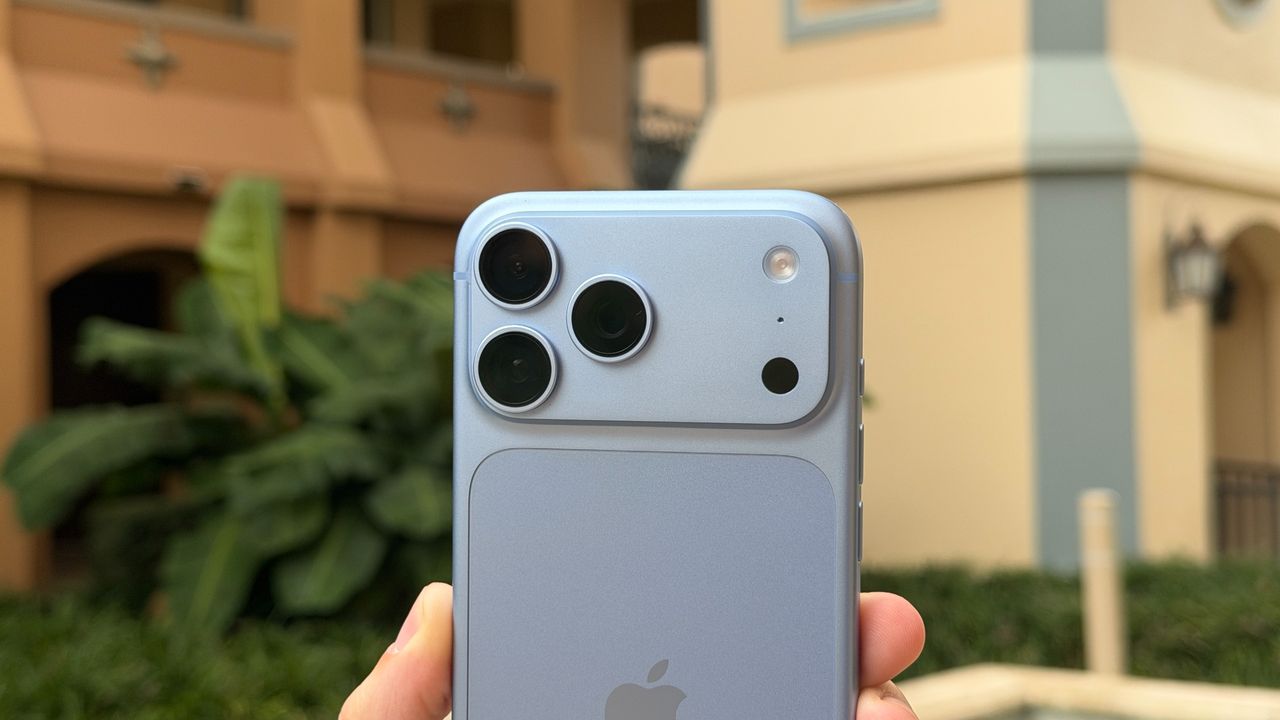
Sift through the press releases that Apple pushed out while announcing the new iPhone 18 Pro and iPhone 18 Pro Max, and you'll see some big battery life increases touted — including "the largest increase in battery life ever" on an iPhone with the Pro Max model (compared to the iPhone 17 Pro Max).
We know that the iPhone 18 Pro and iPhone 18 Pro Max come with 4,056 mAh and 5,391 mAh capacity batteries respectively (at least in Europe), but does that translate into much better battery life? We put both of these new handsets through their paces in the TechRadar labs (as part of our full iPhone 18 Pro review) to see if Apple's claims held up under some real-world testing.
Our standard test involves having the iPhone automatically cycle through a series of websites over a cellular connection, until the battery dies. Features like location services, Wi-Fi, and Bluetooth are all turned off while the test is being run, and the battery management features in iOS are disabled too.
The iPhone 18 Pro managed 16 hours and 17 minutes in the test, compared to 15 hours and 21 minutes on the iPhone 17 Pro, a boost of around 6% overall. The iPhone 18 Pro Max managed 18 hours and 27 minutes compared to 17 hours and 54 minutes on the iPhone 17 Pro Max, an increase of roughly 3% in total.
Those increases are of course welcome, but perhaps aren't quite as impressive as Apple is making out, though there are a lot of different variables (like screen brightness) involved. Apple's own figures usually make use of video playback time — as in how long a single battery charge lasts when you've watching a video.
For the iPhone 17 Pro and iPhone 17 Pro Max, Apple quotes 33 hours and 39 hours respectively, while for the iPhone 18 Pro and iPhone 18 Pro Max those numbers go up to 36 hours (a 9% increase) and 45 hours (a 15% increase). That last jump is indeed significant, but may only apply in quite a narrow set of scenarios.
"All battery claims depend on network configuration and many other factors," explains Apple in the small print on its comparison page. "Actual results will vary. Batteries have limited recharge cycles and may eventually need to be replaced. Battery life and charge cycles vary by use and settings."
We can safely say that you should see better battery life on the iPhone 18 Pro and Pro Max compared to the models that preceded them, but based on our own testing, don't expect the kind of improvements Apple is promising unless you're doing nothing but watching videos in long stretches between recharges.
We all love Steven Spielberg and his innumerable contributions to the art of cinema over the decades. His latest entry into the genre, "Disclosure Day", wasn't quite as warmly received by audiences, but it's nevertheless an entertaining sci-fi flick that's worth checking out. And good news on that front, because "Disclosure Day" will be streaming on Peacock from Oct. 9, 2026.
Produced by Universal Pictures and Amblin Entertainment for a cost of roughly $200 million (including marketing), "Disclosure Day" first touched down in cinemas on June 12, 2026. It had some of that old Spielberg magic, but ultimately felt a decade late to the UAP party; a story linked to another era where folks got all their news from local television stations.
Critics were tepid toward the alien conspiracy movie, with our own "Disclosure Day" review calling it a "close encounter with Spielberg's brilliance that doesn't quite make contact". Despite it not living up to the highs of "Close Encounters" or "E.T.", it's still a compelling thriller.
Word of mouth wasn't exactly overly enthusiastic either, and it ended its theatrical run collecting $241 million worldwide. By Hollywood's math, a movie needs to return 2.5 times its initial budget to break even, which means that "Disclosure Day" wasn't really the lucrative summer firecracker that the studio had hoped for.
"Disclosure Day" stars Emily Blunt, Josh O'Connor, Colin Firth, Eve Hewson and Colman Domingo in an often engaging but sometimes confusing cover-up plot about a Kansas City meteorologist and a tech whistleblower chased by a sinister group trying to sequester evidence that alien beings have been living amongst us on Earth.
Directed by Steven Spielberg from a screenplay by longtime collaborator David Koepp ("Jurassic Park," "The Lost World: Jurassic Park"), "Disclosure Day" will begin streaming exclusively on Peacock starting Oct. 9, 2026.

Watch Disclosure Day on Peacock:
Premium (Ads): $10.99/month or $109.99/year
Premium Plus (No Ads): $16.99/month or $169.99/year
Apple TV & Premium (Ads): $14.99/month
Apple TV & Premium Plus (No Ads): $19.99/month View Deal

The Corps of Discovery Expedition set out in 1804, directed by President Thomas Jefferson to survey the United States’ newly acquired Louisiana Purchase. The exploration forms a core piece of early U.S. history. Picture a scene from the journey: It’s a cool morning, the silence punctuated by birdsong and the rustle of the breeze through the cottonwood trees. To one side, Commander William Clark, his rifle leaning against a plum tree and his rucksack nearby, squats over a latrine pit, unceremoniously heeding the call of nature.
The Louisiana Purchase constituted a territory of around 828,000 square miles, which the U.S. had bought from France in 1803. This was, it is worth noting, largely without the consent of the Indigenous groups who had lived there for millennia. The purpose of the expedition was threefold: to find a practical trade route westward to the Pacific coast, to explore and document the territory, and to stake a claim to the area before any other European powers butted in. Led by Meriwether Lewis and William Clark, the 40-man team, plus their guide Sacagawea, spent more than two years trekking westward.
Believe it or not, the holes that were used as toilets along the march to the Pacific have been invaluable for archaeologists and historians. This is thanks especially to a type of treatment included in the expedition’s medical kit.
Everybody poops—it’s a universal human need. But most accounts of the Corps of Discovery’s journey leave out the details of how the Corps members dealt with bathroom business.
Each of the campsites where the expedition spent time had an accompanying latrine pit, situated well away from camp for sanitary (and privacy) reasons. The latrines would have seen a lot of use, because the Corps of Discovery’s diet wasn’t the best for gut health.

While the expedition members relied heavily on foraged and hunted food, they also carried backup rations. These included nearly 14,000 pounds of dry goods, including flour, salt, coffee, dried pork, and lard. All told, each member of the Corps ate around nine pounds of meat per day. All of that protein without lots and lots of fiber added up to frequent constipation. The untreated water they drank from rivers and creeks they encountered probably didn’t help their circumstances. Enter…Dr. Rush’s Bilious Pills.
In 1803, as preparation for the upcoming expedition, William Clark traveled to Philadelphia for a two-week medical crash course with Dr. Benjamin Rush. Rush was a prominent physician in his day, and a Founding Father of the United States. His signature is one of the 56 on the Declaration of Independence.
Rush taught Clark some basic field skills, such as bone-setting and wound treatment. Clark left Philadelphia with new skills and a well-stocked medical kit that included 50 dozen of Doctor Rush’s Bilious Pills. These were compounded tablets about the size of a raisin, composed of powerful laxative ingredients. The pills were nicknamed “thunderclappers” because of the speed with which they took effect. The main ingredient of the thunderclappers was calomel, or mercury chloride.
Mercury, historically also called quicksilver, has been thought to have curative effects for centuries. It’s a metal that is liquid at room temperature, which seems miraculous in and of itself.
It was also a popular treatment for syphilis. This is not to say it was an effective treatment for syphilis. When it was administered for that disease, slowly in low doses, patients were more likely to die from mercury poisoning than from the STI.

When taken in larger doses, though, as in the thunderclapper pills, it prompted a quick evacuation, the body’s way of ejecting poison. The men of the Lewis and Clark expedition used these pills freely as a way to compensate for their high-protein and low-fiber diet. As a result, all the latrine pits they used between the Midwest and the Pacific coast were laced with high concentrations of mercury.
As many an environmentalist will caution, mercury does not decompose when it’s in the ground. It stays put, and is detectable through modern soil testing techniques. The 600-plus latrines dug and used by the Corps of Discovery form a trail of their own, marked by mercury.
The expedition was a government-sanctioned military expedition, so Lewis and Clark both kept copious notes on every aspect of their travels. Historians have tried to pinpoint the locations of these camps based on the expedition journals, with minimal success.
The only campsite that archaeologists have been able to confirm so far is the Traveler’s Rest camp, just outside of Missoula, Montana. This is all thanks to the remains of Dr. Rush’s Bilious Pills, which left enough mercury in the ground to differentiate the remains of a latrine pit (or “sink” as they were called in the 1800s) from animal burrows or agricultural ditches.
Archaeology is all about reconstructing the lives of people in the past, and it’s worth remembering that this means all aspects of life. Our own bodily functions remind us that we all share complex and interwoven histories, and that even the most mundane parts of our lives can be important in the future.
In That Time When, Popular Science tells the weirdest, surprising, and little-known stories that shaped science, engineering, and innovation.
In the 1890s, the U.S. hired a team of globe-trotting plant hunters
In 1926, a Russian biologist tried to create a human-chimpanzee hybrid
During WWII, Great Britain poisoned sheep with anthrax on an idyllic Scottish island
After WWII, flying saucer-shaped houses almost filled American suburbs
The CIA once trained cats to be Cold War spies
When the U.S. almost nuked Alaska—on purpose
During WWII, a dress-wearing squirrel sold war bonds alongside FDR
The post Lewis and Clark’s mercury-laced poop helped archaeologists trace their expedition appeared first on Popular Science.

Canon introduced a new Dual Pixel CMOS-type sensor and autofocus system in the EOS R5 back in 2020, and a string of cameras have since inherited this tech, most recently the EOS R8 Mark II announced today. And it's these cameras that just got a free upgrade that can add another dimension to photos: Dual Pixel 3D.
The new software leverages "depth and phase-detection data captured in a single shot via Dual Pixel CMOS AF", says Canon, using "an exclusive algorithm to convert your photos into highly realistic 3D imagery", plus 3D models in OBJ or GLB formats, or as an MP4 video, "complete with rich photographic textures."
This depth-adding tech will come in the (free) Dual Pixel 3D Converter software, which will be available for Windows only (Windows 11 64-bit 24H2 or later), from October 3.
So what exactly can users expect from the software, and which cameras are compatible? Let's take a look.
Billed as 'simple 3D image generation technology', Dual Pixel 3D enables users to create immersive three-dimensional images and models from a single RAW photo, without needing specialized equipment or viewing devices. Canon also says the technology works with JPEGs captured by the new EOS R8 Mark II.
These files contain depth information from slightly different views, captured by each pixel's two photodiodes, which are then converted into 3D shape data.
Users will be able to fine-tune the degree of depth in the new software, for a more pronounced 3D effect or a subtler appearance. The depth information in Dual Pixel CMOS-captured photos also simplifies background removal, should users want to output a subject onto a plain background as a 3D model, or as a stereographic photo.
Can has shared tips for how to take photos designed to be converted for 3D on its YouTube channel (see below).
Photographers working in product and still life photography stand to benefit from the creative possibilities in particular. We'll be sure to try out the new software when it's released on October 3, and share our experience of making 3D imagery with it.
Here's every Canon mirrorless camera that features Dual Pixel CMOS AF and can, therefore, enjoy the new Dual Pixel 3D feature, provided images are captured with a compatible lens:
And you'll need to be using one of these lenses;
RF24-70mm F2.8 L IS USM
RF24-50mm F4.5-6.3 IS STM
RF24-105mm F4 L IS USM
RF24-105mm F4-7.1 IS STM
RF35mm F1.8 MACRO IS STM
RF50mm F1.8 STM
RF70-200mm F2.8 L IS USM
RF70-200mm F4 L IS USM
RF85mm F2 MACRO IS STM
RF100mm F2.8 L MACRO IS USM
RF-S18-45mm F4.5-6.3 IS STM
RF-S18-150mm F3.5-6.3 IS STM

If you wanted a telling example of how bad the cost of RAM is getting, the latest report on DDR5 pricing makes it crystal clear – and it reaches us as Dell moves to hike the price of its affordable XPS 13 laptop (in a roundabout way).
I'll come back to the ins-and-outs of what's happening with Dell, but first the DDR5 price jump, which has happened over in Germany.
3D Center keeps tabs on the monthly pricing of DDR5 memory in the German retail market – some 20 products are covered in this largest market in Europe – and as Wccftech flagged, the report for September shows this RAM is now 544% up on the price it was in July 2025 (the baseline level before the crisis began).
This is a big leap from 486% where the DDR5 price index sat in August, and since June, when it was at 419% having remained flat for much of the year. This obviously represents a depressingly hefty additional toll on the wallets of PC buyers or those upgrading their memory.
Meanwhile, as Mashable noticed, Dell has effectively upped the price of its XPS 13 laptop in the US, without actually increasing the baseline cost – instead of doing that, the laptop maker has introduced a new entry-level model with less storage.
So, previously the XPS 13 started from $699 in the US for the model with 8GB of RAM and 512GB of storage. What Dell has done is brought in a new model with 256GB of storage at that $699 level, so while technically the cheapest XPS 13 is still at that price, you're getting a lower spec for the money.
The old baseline model with 8GB RAM and a 512GB SSD is now $799, so it's been hiked by $100 – a pretty nasty bump in cost that moves this notebook into a distinctly less affordable price bracket.
If you want the XPS 13 with 16GB of system memory (and 512GB of storage), that's also gone up $100 so it's now at $999. Do note that these are student-targeted laptops, and students get a $100 discount on the XPS 13, so you will pay less in that case. However, while $599 (with $100 off) remains a tempting price in this climate, 256GB storage is cutting it thin.
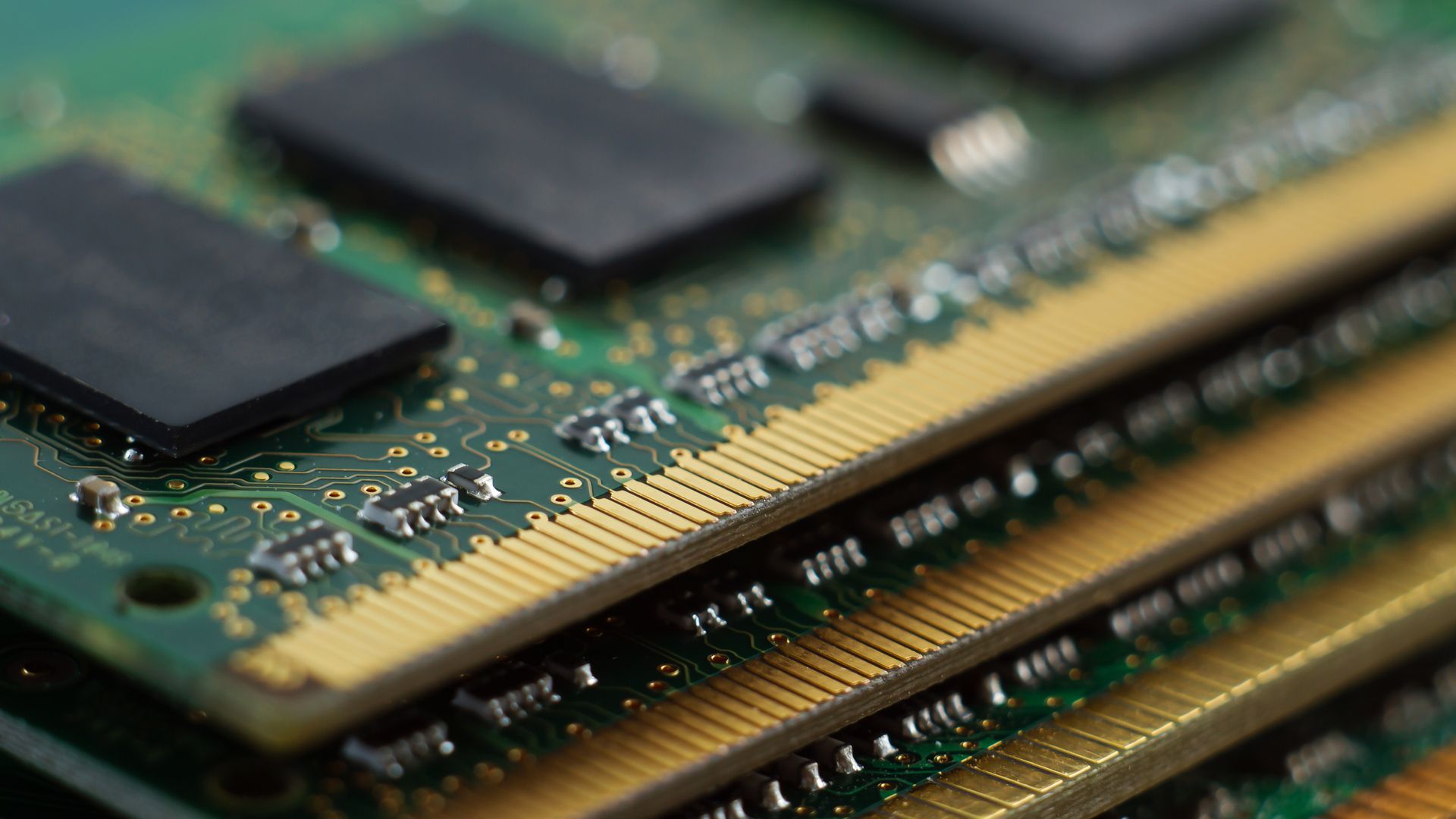
The DDR5 price spike is truly worrying in my opinion, simply because it's an acceleration of an already worsening picture. Yes, it's only one retail market and a snapshot of the overall landscape as such, but the same pattern is seen elsewhere. Just look at Tom's Hardware's price tracker that shows 32GB of DDR5-5600 RAM in the US is now $409 (at the time of writing) compared to $72, which was the lowest price seen before the memory crisis.
That's over a 5.5x price increase in the US market (mirroring the German level of RAM inflation in this particular case). The end result is that what used to be a no-brainer of future-proofing any desktop PC – particularly a gaming rig – with 32GB of RAM is now a difficult choice to make, as sticking with 16GB is saving you $200 (or the regional equivalent). Bearing in mind that you're battling all sorts of other component inflation if you're building a new PC, too (most notably with the likes of SSDs and increasingly GPUs).
We were told that the second half of 2026 would see more RAM price misery, and these German market figures illustrate exactly that. Since June, buyers in the country have witnessed an effective 30% increase in the cost of DDR5 (when it was already hugely overinflated). It's worse than I imagined it could get, frankly, and I fear that the most pessimistic predictions – which also forecast a very rough 2027 – are very much on the money.
All these RAM price hikes are eventually reflected in the cost of laptops, of course, and the Dell XPS 13 provides an apt illustration here. Interestingly enough, I recently wrote about Dell's revelation of its new 14S laptop – which was shown off at IFA, but without any price tag being attached – saying that this made me nervous about how much the notebook might cost.
Given this XPS 13 hike, it's easy to see why Dell was hesitant, and to be fair to the company, it isn't the only manufacturer that's reticent to pin launch prices on incoming devices. This is becoming a trend because the memory shortage, and its knock-on effects, are making life difficult for all device makers.

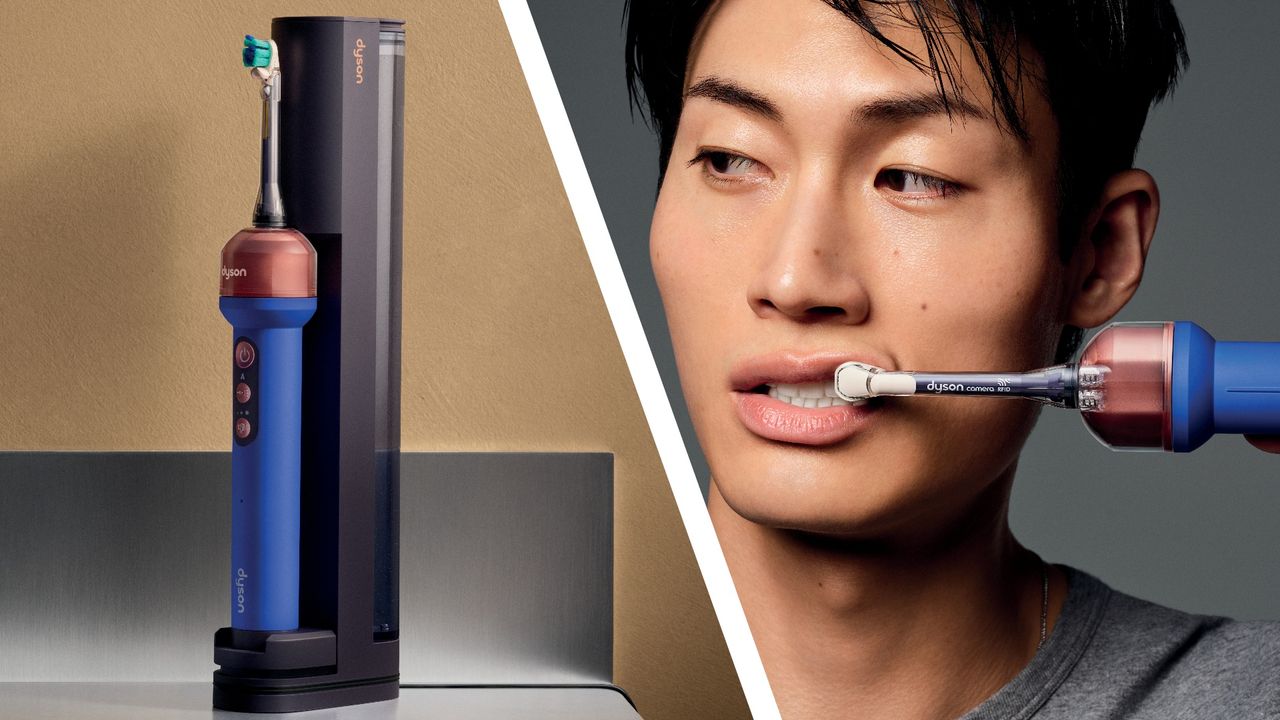
Dyson is known for doing the unexpected, and nothing in the brand's history has been quite as unexpected as its recent toothbrush launch. Well... perhaps the air-purifying headphones were more of a surprise. But still, this shift into oral care certainly wasn't on my 2026 bingo card.
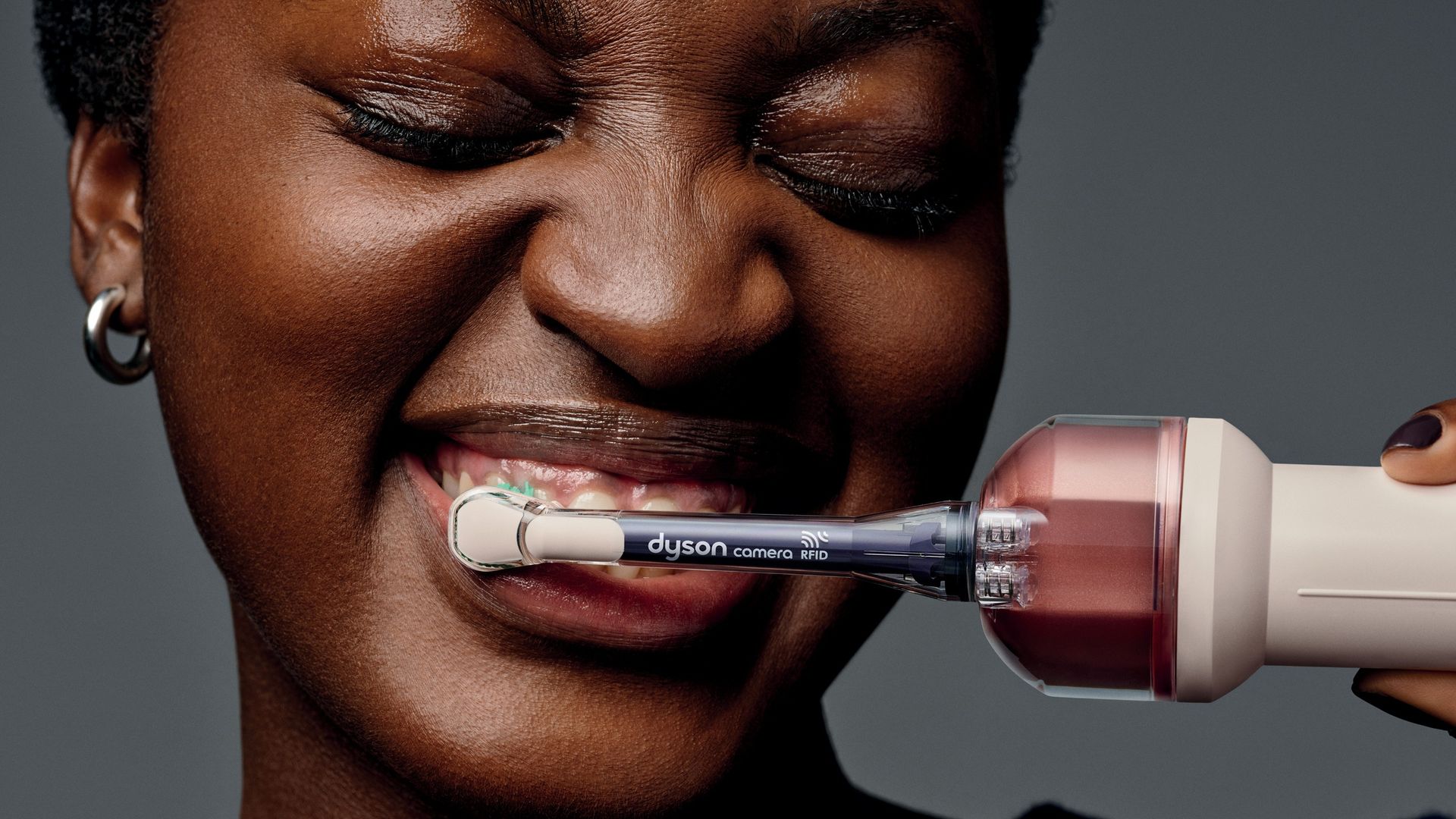
The Dyson CameraJet launched earlier this month. A toothbrush like no other, this chunky device made headlines with its integrated camera and gap-targeting mouthwash squirter. However, the launch has been dogged somewhat by multiple reports of new gadget breaking almost immediately. The toothbrush is also showing as out of stock in multiple territories, including the US, UK and Australia.
Dyson has issued a response, which reads:
"We have had a very positive reaction to the new Dyson CameraJet and are experiencing strong demand globally. We are seeing some shortages of supply as we are in the process of scaling up production.
Additionally, we are aware that a small number of early batches of Dyson CameraJet products may have experienced a component issue. We are isolating those batches and are taking all the necessary steps to support our customers."
Rocky start aside, it's an impressive piece of engineering, and assuming Dyson gets those problems fixed, it has plenty going for it (our tester was impressed enough to award it four stars in our Dyson CameraJet review). I got a demo at the Dyson Unveiled event, where I also had a chance to chat to Jake Dyson — Chief Engineer at the brand, and son of founder James — about the new product's development process. Here are seven interesting things I learned about the new CameraJet...
For avoidance of confusion, I'll use 'Jake' to mean the person, and 'Dyson' when I'm referring to the brand.
Oral care is a brand new category for Dyson, and getting it market-ready was a lengthy process. That's partly because it needed to, in Jake's words, "work perfectly" before it could be launched. The core feature — a 100k pixel macro lens camera that identifies gaps in your teeth, and delivers a targeted jet of mouthwash directly at them — was particularly tricky to get right.
"We probably could have launched [the CameraJet] two years ago, but it wouldn't have hit every gap perfectly, and that's not acceptable," says Jake. "You know, if you bought it, and it missed the gaps, and didn't do its job, you'd be really disappointed. So, it's got to work properly."

Getting the design just right (in theory, at least...) was a complicated process. "It genuinely took six years to train that camera, because of the variations in people's mouths. It's highly complex," says Jake. "You've got saliva, you've got things moving in front of the camera, you've got dark, shade, light. It's so many things the machine learning has to account for."
He adds: "It's a bit like a driverless car when it snows. If it completely loses its environment, how do you control it?"
"Six years ago, the camera, the chips that process within the machine, the compute power, probably would have been too expensive," says Jake. Luckily, within that lengthy development process, the cost of all those components dropped enough to make it feasible as a consumer product.
Relatively speaking, of course — it has a list price of $499.99 / £419.99 / AU$799, so its definitely more of an investment than your average toothbrush. Still, Jake is keen to impress that it's very much not your average toothbrush: "What you have there is essentially a $70,000 piece of lab equipment in a handheld consumer product."
3. The colors come from Dyson's beauty lineup
While it's a new product category, it's still very recognizably 'Dyson'. The brand Dyson has pulled its color combinations from its haircare gadget lineup. "The colors have come from our beauty products — so the hair dryers, the Airwraps. Because we think it's a beauty product too," says Jake.
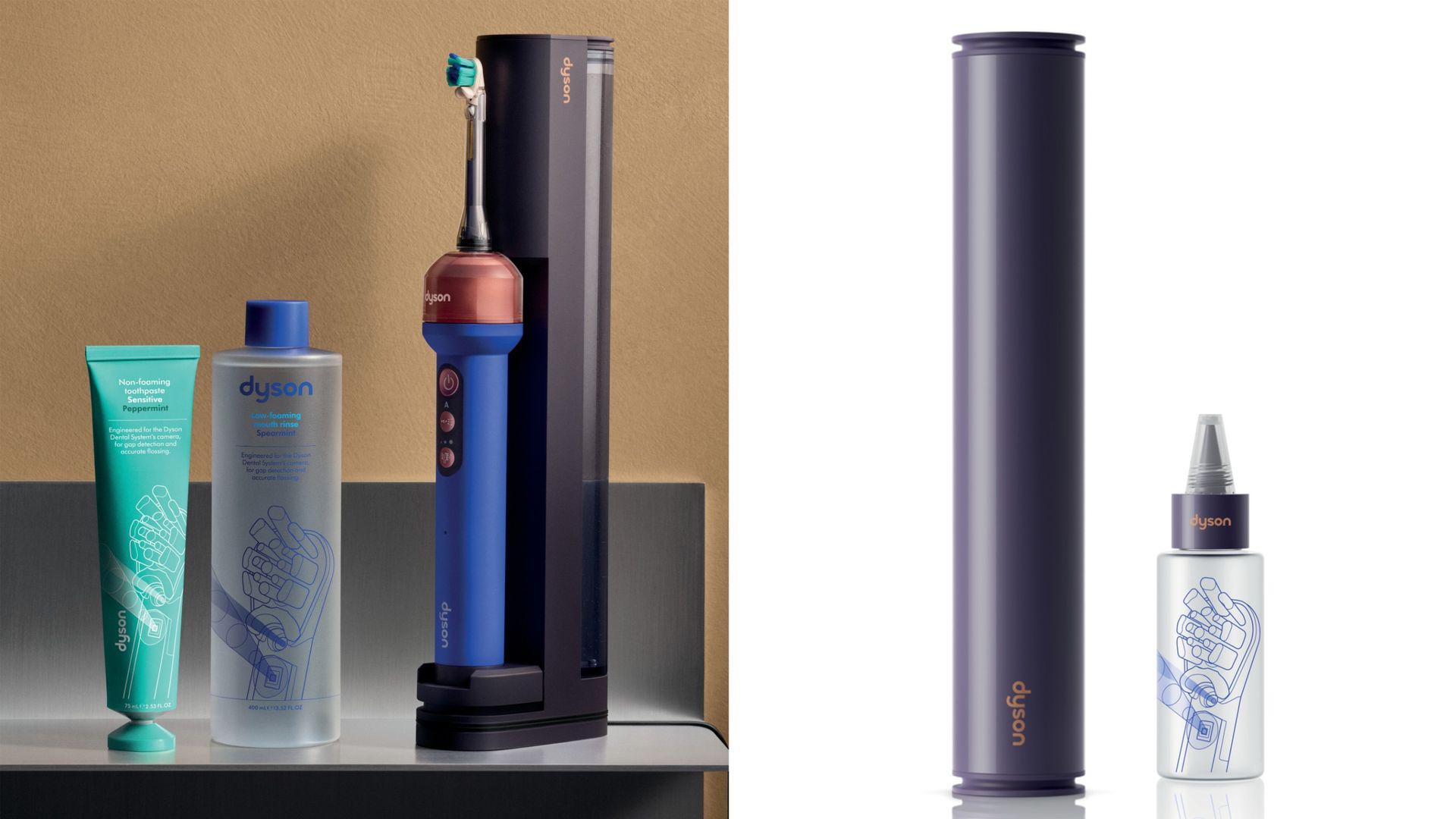
At launch, there are two color combos to choose between. On the 'Ceramic Ultra Blue' version, the toothbrush is an electric blue inspired by Yves Klein — an artist brand founder James Dyson is a fan of. ("He wasn't allowed to use the same blue, but we created our own," reveals Jake.) There's also a 'Ceramic Pink' colorway, with a blush pink toothbrush.

Both have detailing in rose gold, and a heather purple dock. As well as being familiar to anyone who has seen Dyson's recent haircare launches, the colorways benefit from being different to what you'll generally see in the oral care aisle. "Other toothbrushes are white, or black, or a nasty pink," comments Jake. "So it's quite nice to do something different, and… you know you look at it and recognize it as Dyson because of the colors."
"If we're going to go into a new area, then we'll do that knowing that we've got more products behind it," says Jake. He confirms that they'll start with a roadmap of multiple products and plan for "expansion in that category, quite quickly".
When pushed on if there's another toothbrush in the works, he responds, "We'd be crazy not to." If I had to make a prediction, I'd bet that — assuming the current component issue is sorted speedily — a second-gen version will be announced and unveiled this time next year, at an IFA-adjacent Unveiled event at the start of September 2027.
The CameraJet needed to be able to recognize the inside of any mouth. "It's taken two years to train it through imagery and mouths from around the world," says Jake. Said photos came from "images and libraries and probably some dental records too", if you're interested.
While AI was — and continues to be — involved, it's not the same AI you're using when you fire up, say, ChatGPT. "When you go on ChatGPT on your mobile phone, you're using AI live. When you use a toothbrush, you're not," clarifies Jake. "It's in-built machine learning. We used AI to reference all of the images of mouths to train the machine."
The learning will continue as you use the toothbrush, too. "We [continue to] improve it. It trains itself to be even better the more you use it, so it understands your mouth," says Jake.
Dyson is — probably justifiably — concerned about copycats. "We obviously patent areas of the product, if we can patent them, to prevent [dupes]," Jake says. "But we do that in every product, and they always find a way. They find a way, but the product isn't as good."
He continues: "You may well see a toothbrush six months to a year with a camera in it that fires a jet. But does it hit the right bit? The gap between your teeth?"
Dyson is also guarding against third-party brushheads. "There is a chip [in the brushhead]," says Jake. "If there are fake brush heads, it will detect it. In the same way, if you put a fake battery in the vacuum cleaners, and put a fake attachment on our hair dryers, it will detect it."
That's a cost worth factoring in if you're thinking of investing. Replacement heads don't come cheap: a pair will set you back $29.99 / £25 / AU$49.
On the suggestion that the Dyson CameraJet might be considered too chunky to travel with, Jake is adamant it's completely fine. "It's definitely to be travelled with. There's a travel case that just slips over."
He also points out that if you're traveling with a tube of toothpaste and a bottle of mouthwash as well as your toothbrush, that's going to take up a fair amount of space. The CameraJet can be filled up with those things before packing. It's a fair point, but I'm still not convinced.
Wondering if your teeth will work with the CameraJet? Jake says it can deal with all kinds of troublesome teeth... including his own. "I've been cleaning my teeth on a number of devices intermittently for about three months. I have very tight teeth in the back. So raspberry seeds, or Parma ham… They get stuck right there. And [the CameraJet] just blasts it out. It's really good."
In fact, his only real word of warning is the surprise you might get from seeing your molars captured on camera for the first time. "It is quite shocking seeing inside your mouth," he smiles.
The AI boom is becoming a materials challenge. As AI pushes computing into new territory, the materials behind that infrastructure are becoming just as crucial as the algorithms running on it. Semiconductors and data centers are approaching physical limits around performance, thermal management, electrical efficiency, and reliability, creating new demands for materials that can do more at once. At the same time, AI is giving materials scientists new ways to search the enormous universe of possible molecules and accelerate the development of solutions.
For Mike Finelli, chief technology and innovation officer and chief North America officer at Syensqo, that convergence is transforming what advanced materials can enable. “AI is now, from a material standpoint, really pushing semiconductors and the data centers to their physical limits,” he says.
As requirements accumulate, including high temperature, purity, electrical performance, chemical resistance, plasma resistance, and long-term stability, materials move toward what Finelli calls the “top of the pyramid.” Beyond supporting AI innovation, he contends that advanced materials are “actually increasingly defining what’s going to be possible.”
That challenge is playing out across the infrastructure powering the AI surge. Syensqo is developing materials for high-voltage data center architectures, advanced sealing materials for semiconductor manufacturing, and thermal-management solutions including fluids for direct immersion cooling. Some of those innovations can also cross industry boundaries. Materials developed for electric vehicles, for example, can help address the higher voltage and energy-density demands that are emerging in data centers.
The definition of performance is also changing. More customers are expecting materials to meet technical requirements while reducing environmental impact. “Our goal is to remove the trade-off between performance and sustainability,” Finelli says. That means considering sustainability at the beginning of the research process instead of treating it as an additional requirement once a material has been developed.
AI is changing how those materials are discovered, too. Syensqo is using AI agents to digitally synthesize millions of potential molecular combinations, predict their performance and sustainability characteristics, and narrow them to a much smaller group for laboratory testing. The result, Finelli says, is the ability to go “broader, deeper, and faster” while giving scientists more time to solve complex engineering problems.
Looking to the future, Finelli sees the possibility of a reinforcing cycle: AI helps develop materials that improve AI infrastructure, which in turn enables better AI to accelerate materials discovery. That feedback loop could create a cycle of innovation and expand what future technologies can achieve.
“You end up in this accelerated materials, innovative cycle of materials innovation,” says Finelli. “That really excites me, and it gives us the opportunity to continue enabling technologies that will shape the future.”
This episode of Business Lab is produced in partnership with Syensqo.
Full Transcript:
Megan Tatum: From MIT Technology Review, I’m Megan Tatum, and this is Business Lab, the show that helps business leaders make sense of new technologies coming out of the lab and into the marketplace.
This episode is produced in partnership with Syensqo.
Now asked to name the key enablers to AI advancement, many of us might list algorithms, data centers, or even computing power, but just as critical to the performance are the advanced materials that underpin each layer of that innovation. As AI continues to evolve, it’s pushing the likes of semiconductors and data centers to new physical limits, putting new pressure on the advanced material sector to keep pace. But the relationship goes both ways. As the sector rises to this challenge, AI is also emerging as a powerful tool for accelerating materials discovery and development, significantly shortening development timelines for new solutions.
Two words for you: materials innovation.
My guest today is Mike Finelli, chief technology and innovation officer and chief North America officer at Syensqo.
Welcome, Mike.
Mike Finelli: Thank you, Megan. Nice to be here.
Megan: Thank you so much for joining us. Mike, can I start by asking you to tell us a little bit more about Syensqo and the role it plays in developing advanced materials?
Mike: Yeah, absolutely. Syensqo is a global leader in specialty materials. Our job is to help customers solve their toughest technology challenges. We serve a lot of different markets, but the way I like to say it simply is if it flies, we’re on it. If it drives, we’re in it. In healthcare, our products literally are saving lives every day. And if you like your mobile devices, if you like AI, it’s our products that are actually enabling the advanced semiconductor chips that are required to produce all of this. Our role is to enable innovation through advanced chemistry. We develop materials that deliver higher performances, greater reliability, and increasingly more sustainable solutions. The way I would say this, it’s at the heart of our business. Actually, it’s in our name, Syensqo. And to put some numbers around it, 20% of our annual revenues come from new products and applications that we’ve launched in the last five years, which is really evidence of a really strong innovation engine.
Megan: Yeah, absolutely. And as you sort of described there, you’re in all sorts of different industries with an emphasis perhaps on electronics and semiconductors. Can you talk a bit more about that work and where those industries are headed perhaps?
Mike: Sure. So look, electronics and semiconductors have been strategic markets for Syensqo for literally decades. I don’t want to date myself, but 33 years ago when I started in the company, semiconductors were one of the first industries that I worked in. And we’ve supported successive waves of innovation from enabling smaller, more powerful mobile devices, helping the industry get to the smaller and smaller profiles and the chips. We’ve helped to advance hyperconnectivity, supporting increasingly sophisticated semiconductor manufacturing. And today we’re helping to advance the AI era.
We have one of the industry’s broadest portfolios of high performance polymers and advanced materials. We support applications across the entire electronics value chain from semiconductor fabrication, electronic components, to smart devices and telecommunications, even hyperconnectivity. And our materials are helping customers solve increasingly demanding challenges around miniaturization, thermal management, electrical performance, chemical resistance, higher and higher purities, and long-term reliability and sustainability. And today we work with leading semiconductor manufacturers and electronics companies all around the world.
Megan: Fantastic. And as you alluded to there in the last 30 years, we’ve seen huge evolutions in those sectors.
Mike: Oh my God, yes.
Megan: And now AI is putting these new demands on semiconductors and data centers. What does that mean for the materials they’re built from and to what extent will AI innovation be constrained or enabled by materials science finding a solution?
Mike: Yeah, so I mean, you’re absolutely right. But AI is now, from a material standpoint, really pushing semiconductors and the data centers to their physical limits, and materials are becoming a key enabler of that continued progress.
The way I try to describe it, think of a pyramid, I call it the performance pyramid. You have commodity materials at the bottom of the pyramid and you have high performing specialty materials at the top of the pyramid. At Syensqo, all we do is we operate at the top of the pyramid and we’re continually trying to raise the top of that pyramid by bringing newer and newer and more higher performing materials out.
Now you might say, okay, but why doesn’t a data center or a semiconductor manufacturing fab need a specialty versus something in the commodity space? Well, I call it the and, and, and principle. If you just need a polymer or a material that can sit at the table at room temperature and stay there for 10 years and not change, well, there’s a lot of commodity materials that will do that and you don’t have a problem. The minute you start adding requirements, and I call it the and, and, and so if you need a polymer that can handle high temperature and have to have high purity and electrical performance and chemical resistance and plasma resistance and it’s got to have long-term stability, all of these ands, you start moving to the top of the pyramid.
Now what AI is doing with semiconductors, because of the speed at which it’s advancing, it’s requiring semiconductor chips and data centers, the number of requirements are increasing the number of ands which is pushing the limits of the materials. That’s where we come in. And I really believe that advanced materials, they’re no longer just supporting AI innovation, we’re actually increasingly defining what’s going to be possible.
Megan: Right. That’s fascinating. And in terms of rising to that challenge of focusing on that top of the pyramid and that and, and, and principle you’re talking about, could you talk us through perhaps an example or two of those top of the pyramid solutions you’ve created or that you’re working on at the moment?
Mike: Like I said, our focus is enabling higher performance, but it’s also without compromising on reliability or safety. We develop advanced polymers, elastomers, specialty fluids, fluids meaning lubricants and heat transfer fluids, and they’re used throughout the semiconductor manufacturing process and also increasingly in AI data center infrastructure. One example of our work on specialty materials for next generation AI data centers is the work we’re doing around high voltage architectures. Data centers are moving towards high voltage architectures because they can enable greater computing power while also improving energy efficiency. We know that’s a big issue for that segment of the industry, and these high voltage architectures will help them reduce and improve energy efficiency because it reduces energy losses and they can ultimately help lower the environmental footprint of the data centers. And we’re developing new materials that can help them get there.
Another example is our high performing sealing materials found inside semiconductor fabs and wafer tools. If you can picture, many people have seen what a semiconductor looks like during processing. It’s a big, big silicon disc that’s then later diced into the tiny little chips that go into the computer. But that wafer is put inside a giant chamber where it has a very extreme environment, aggressive plasmas, reactive chemicals, and they need higher and higher performing materials. And all of the seals that are around that chamber to keep those gases in the environment inside have to be able to withstand that environment. And that’s what we’re developing and we’re pushing the limits. They’re asking for higher temperatures, more aggressive environment with lower out gassing and purity. And that’s what we’re developing for this industry to allow that next chip to be developed and produced industrial.
Megan: It’s so fascinating that people wouldn’t give much though necessarily to the seal in something like that. As you’re outlining, it’s just absolutely critical in terms of performance. And in developing those solutions, I understand you also looked across different markets to see what may be applicable perhaps in more than one space, and that includes an overlap between the automotive sector and data centers, I understand. Can you tell us a little bit more about that?
Mike: As I mentioned just previously, the data centers are shifting to higher voltage architectures. This is the next generation data center, which can be more energy efficient, but it’s got a higher energy density. The power density increases, which increases temperatures. And many of the material challenges that we will be facing there, we’ve already developed for the automotive industry in electric vehicles. I’ll give you an example of an application. I mean, think about an electric vehicle. The powerhouse in electric vehicle is no longer the motor, it’s the battery. That’s where all the energy sits. And when you’re putting a hundred kilowatts of energy, driving that to the electric motor through wires and through what they call bus bars, you got to get that car up to 60 miles an hour pretty quick. You’re driving massive amounts of energy that’s increasing temperatures dramatically.
And all the electrical connections are in these bus bars that there’s a polymer that’s an insulating polymer with copper in between for all the connections. That’s got to withstand that temperature increase, which could come pretty rapidly. We’ve developed new materials there and those materials will be translatable over to these data centers where they’re going to have the higher voltages with a higher energy density.
Another thing we’ve been doing in automotive, we have a lot of knowledge in both automotive and semiconductor around fluid circulation and how to use dielectric materials to do direct immersion cooling. That’s something that will be very valuable for data centers and server farms. Using air to cool semiconductors is really inefficient and energy intensive. If you could submerse them in a liquid, you have direct immersion cooling, that’s extremely efficient, so that’s another thing we’re working on.
Another thing we developed in automotive that will be translated over is battery energy storage systems. Inside the battery, we’ve developed a binder. It’s the highest performing binder on the market, which is using the cathode of a lithium ion battery, and it keeps all the ingredients doing its job working together so that battery can actually last for 10 years and perform. Now that’s moving over to the data centers because they’re moving more towards renewables and they need to have these energy storage systems to smooth the peak loads and provide resilient backup power. That’s one of the things that we’re doing. By transferring our knowledge across the markets, we can accelerate new power and new thermal management solutions while supporting reliability required by next generation AI infrastructure.
Megan: Fantastic. So many transferable applications there that necessarily wouldn’t have sprung to mind. And it isn’t only technical advancements that you need to contend with, of course. Companies today are also demanding the materials are developed and manufactured more responsibly too. So how is sustainability shaping your innovation process?
Mike: Yeah, you’re absolutely right. I will say performance is still the entry ticket. Our customers want performance. Now what’s changing is that definition of performance is now broader and it is including sustainability targets and requirements. Our customers expect materials that deliver outstanding technical performance while also being developed and manufactured more responsibly.
At Syensqo, we believe that operating as a responsible company means we’re providing true sustainable business solutions to our customers. And this is why we developed what we call the Sustainable Portfolio Management tool, SPM. It’s a matrix, and it defines what a sustainable solution is. For us, it’s a product that in a given application improves our product’s social and environmental performance while also demonstrating a lower environmental impact in its production, creating values for our customers. In short, we want to develop products, and this is where it starts. Every one of our research projects before we even start them is assessed on whether it’s going to be a sustainable product or not.
And 88% of our portfolio now is a sustainable product. We’re developing materials that are better for the environment, lower environmental footprint when we produce it, but also they contribute to improvements for our customers as well so they could operate with a lower carbon footprint or they can operate in a safer way or less water consumption. There’s a lot of different lists in there.
Another example is our longer-term development of next generation heat transfer fluids. Semiconductor manufacturing and data centers have become more powerful. I mentioned before the heat that they’re generating, especially when they move to the higher voltage architectures. Managing that heat is increasingly important. And again, I talked about direct immersion cooling. We’re developing those solutions because today there are fluids out there that will work, but they got high global warming. That’s not good for the environment. We’re developing the next generation heat transferred fluids that will reduce the potential environmental impact compared to the fluids today. In the end, our goal is to remove the trade-off between performance and sustainability. You notice that’s another and, we can be performing and sustainable.
Megan: That’s so important, isn’t it though, to think about sustainability in terms of performance? As you say, when we’re thinking about commercially scaling up these solutions, it’s such an important part of it. And as I talked about in the introduction, AI isn’t only a challenge, but it’s also an opportunity within the advanced material space. I’d love to explore how you’re using AI tools at Syensqo to inform and accelerate the development of solutions as well.
Mike: Absolutely. We embarked on this journey about two years ago, where we’re using AI in our research and development, and we’ve partnered with Microsoft and their Microsoft discovery tool, and it’s helping us to rapidly identify and evaluate promising molecular candidates.
Now, in the normal research approach, historically, you would design your experiment and you’d look at all the potential combinations of materials and chemicals that you could make all these different molecules. And the combinations of potential and molecules that you could develop to solve a problem could be in the millions, but it’s impossible to develop a million molecules or tens of millions of molecules in your laboratory and actually physically do that. But you have to select a small area based on your expertise and knowledge, based on the literature searches, based on the state of the art that’s out there and looking at patents, et cetera. And you pick a small area and you go through the process, you develop the materials, you test them, you learn something, you go back to the drawing board, you start again. Eventually you find something that works, but it doesn’t mean you found the best possible combination that’s out there.
But what we’re doing with AI is we have developed AI agents with Microsoft that are literally digitally synthesizing the entire millions and millions of combinations of potential molecules. And we have another AI agents that are using physics-based simulation to look at all those molecules and predict the performance of them, and not just performance on physical chemical properties, but also on toxicity, on sustainability, et cetera. Then we have another agent that takes all that information and ranks them all. In the end, we have explored all of the potential molecules out there. We understand roughly what the performance should be, and we end up with a priority list of maybe a hundred, instead of millions and millions, a hundred that we actually synthesize in the lab.
And at the end, you end up getting the solution faster, much, much faster. You’ve explored the entire space. I basically say it allows us to go broader, deeper, and faster. And the important thing is it’s not replacing our scientists, it’s not replacing our scientific expertise. In a way, it’s giving them superpowers. It’s allowing them to spend less time searching and more time solving the industry’s toughest engineering challenges.
Megan: Amazing. It sounds like it’s genuinely a really transformative tool by what you’re explaining.
Mike: Completely, completely.
Megan: I mean, just to finish, Mike, it’d be great to take a look ahead if we could, because there’s so much activity in both AI and the advanced material space. I wonder what is coming down the pipeline that you are most excited about next?
Mike: I’ve talked a lot about AI and how we’re using AI to develop new materials. I think to me, what’s really exciting, and I’m starting to see it actually happen, I’m just curious how fast this is going to go, is that we’re using AI to develop new materials that will enable AI to get better, and then that AI will use the new AI to develop new materials to get AI to go better. I see this loop of developing for AI, for AI to improve, and then we use that AI to improve ourselves. You end up in this accelerated materials, innovative cycle of materials innovation. That really excites me, and it gives us the opportunity to continue enabling technologies that will shape the future. That’s what we do at Syensqo.
Megan: Fantastic. Yeah, real sort of virtuous circle of innovation, it sounds like that. Amazing. Thank you so much, Mike.
Mike: Thank you.
Megan: Thank you so much. That was Mike Finelli, chief technology and innovation officer and chief North America officer at Syensqo, whom I spoke with from Brighton in England.
That’s it for this episode of Business Lab. I’m your host, Megan Tatum. I’m a contributing editor and host for Insights, the custom publishing division of MIT Technology Review. We were founded in 1899 at the Massachusetts Institute of Technology, and you can find us in print on the web and at events each year around the world. For more information about us and the show, please check out our website at technologyreview.com.
This show is available wherever you get your podcasts, and if you enjoyed it, we hope you’ll take a moment to rate and review us. Business Lab is a production of MIT Technology Review, and this episode was produced by Giro Studios. Thanks so much for listening. Goodbye.
This content was produced by Insights, MIT Technology Review’s custom content arm, not its editorial staff. It was researched and written by humans, with any AI tools that may have been used limited to production processes under human oversight.
 A lunar city sounds possible until you calculate how fast it would use its water
It's fair to say that the various iterations of Meta's smart glasses had been quite well received by users — as you'll see from our own reviews — but over time, the general public has become less and less comfortable with the idea of being secretly spied on through the cameras embedded in these wearables.
That might explain Meta's plans to release some spectacles with cameras on board, as reported by The Information. According to the outlet's sources, the glasses have the codename Luna, and will be available in two styles called Clubmaster and Burbank.
With no camera, the focus will be on the audio capabilities of the glasses, which will let you have conversations with Meta's own AI chatbot. The report says we could get a grand unveiling at the Meta Connect event next week, on September 23 and 24.
While Meta's smart specs have always been fitted with LED lights that show when they're recording, modders were finding ways around this, enabling more covert video and photo capture. While those mods have since been disabled and prevented by software updates, it's still left people with a general sense of unease.
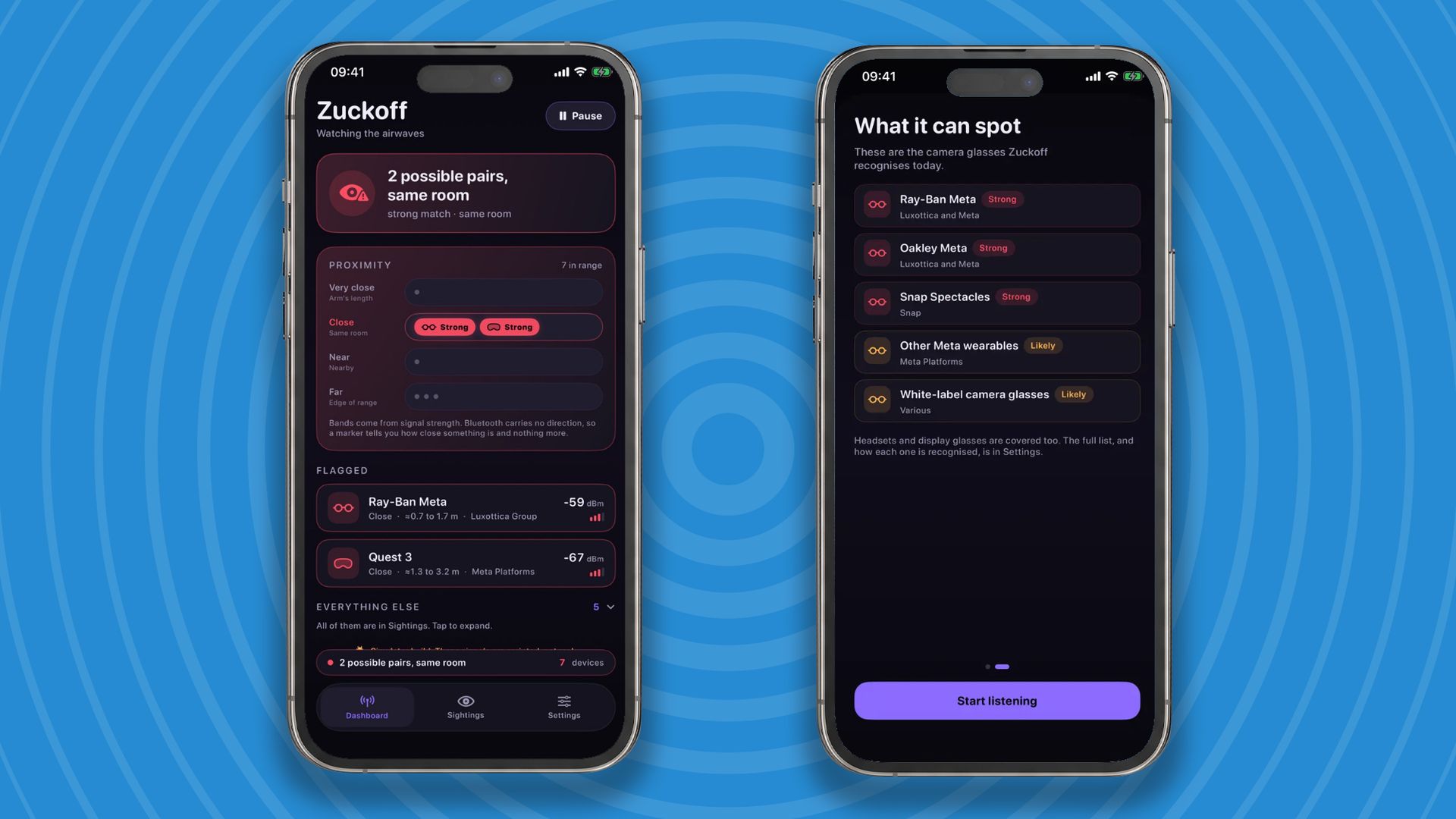
As Meta apparently preps its next pair of smart glasses, Wired reports on the ZuckOff app that takes a swing at the Meta CEO in its name, and alerts users when they might be in the presence of someone wearing Meta glasses. The app uses Bluetooth to scan the surrounding area for these wearables.
With several thousand downloads on both Android and iOS, the app is clearly proving popular. It's free to download and use in its basic form, with a pro version available for $9.99 / £9.99 / AU$14.99 a year that scans continuously and gives you scan histories.
It's not your only option either: if you're on Android, Nearby Glasses is open source and free to use, and does a similar sort of job as ZuckOff without the provocative name. That app has now racked up more than 100,000 downloads.
There's definitely been a shift in perception when it comes to glasses that can record, warning light or no warning light — even though these specs have been around for years. There's even talk of bans and government regulation coming in at some point, which Meta might be trying to get ahead of with its next pair of glasses.