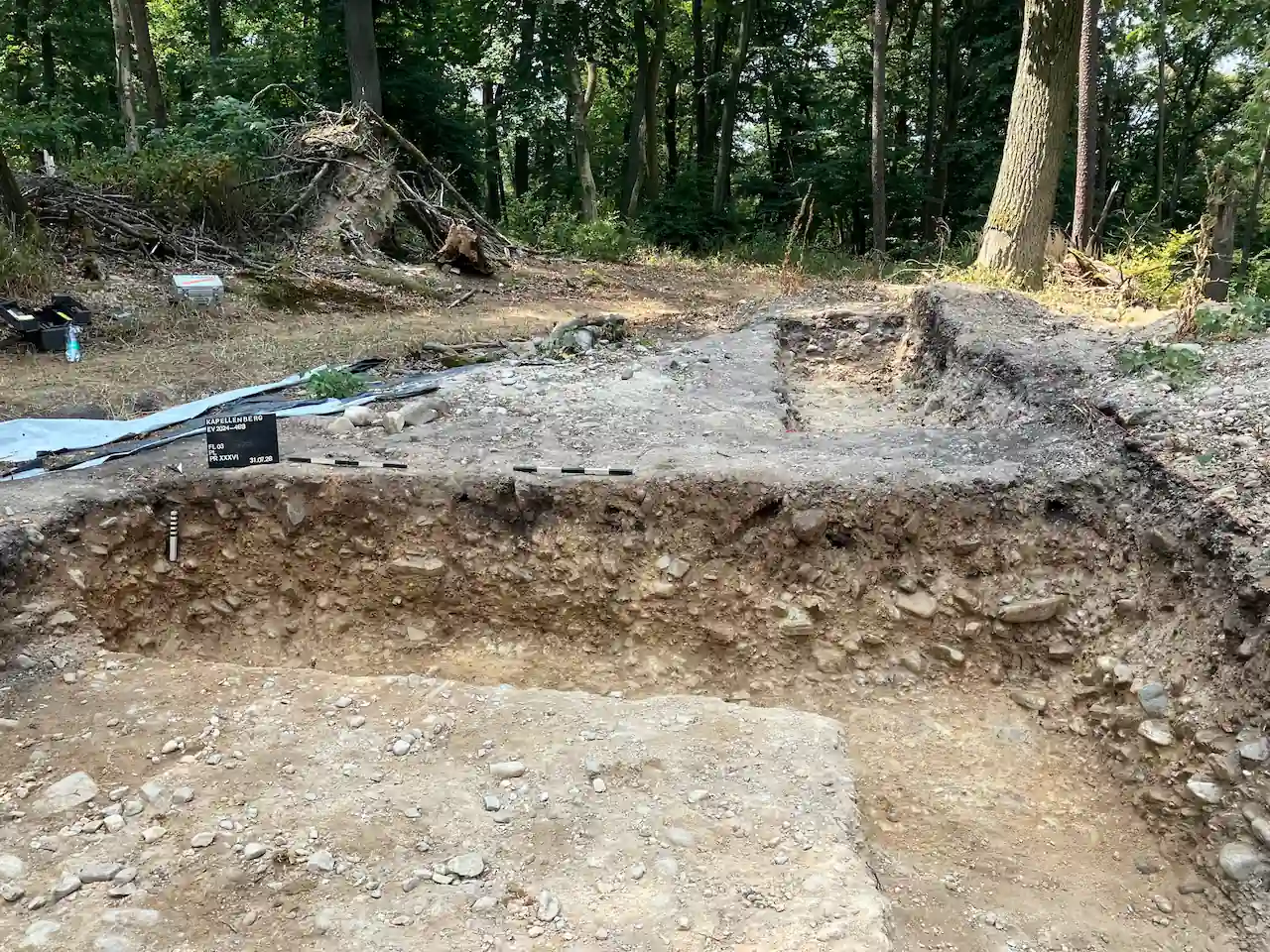
Las excavaciones arqueológicas que se están llevando a cabo en el Kapellenberg, en las cercanías de Hofheim am Taunus en Alemania, han proporcionado durante esta campaña estival nuevos indicios sobre la posible ubicación de la tumba central de un gran túmulo funerario que data de hace aproximadamente 6.000 años, según han confirmado los responsables del […]
Faquir es un término de origen árabe traducible como «pobre» y que designa a un morabito musulmán, un santón sufí, aunque desde la Era Mogol se aplica también a los sadhus o ascetas hindúes, generalmente indigentes sin hogar fijo que mortifican sus cuerpos por penitencia, para renunciar a los vínculos con lo terrenal, siendo capaces […]
El ministro de Cultura y Turismo de Turquía, Mehmet Nuri Ersoy, ha anunciado el descubrimiento en la antigua ciudad de Sardes, en la provincia de Manisa, de una escultura masculina de mármol de aproximadamente 2.500 años de antigüedad, una pieza que, por sus dimensiones monumentales y su inusual estado de conservación, se perfila como un […]
El cruce del Potniški center, en pleno corazón de Ljubljana, se ha convertido en estas últimas semanas en un auténtico hervidero de actividad arqueológica. Los trabajos de excavación, que se desarrollan a contrarreloj debido a los plazos de construcción previstos, han permitido documentar un sector extraordinariamente bien conservado del cementerio septentrional de Emona, la colonia […]
In the summer of 15 BC, Emperor Augustus’ two stepsons, Tiberius and Drusus, brought the Central Alps and the Swiss Plateau under Roman control. That campaign concluded decades of efforts to link the Gallic provinces with Illyricum and secure the routes between northern Italy and the Danube. However, while the western and eastern routes of […]
It takes a lot to get your typical white-bread American riled up enough that they’re willing to go to jail. Getting arrested is a massive pain, bringing court dates, fines, and a record that can shadow your job and housing prospects for the rest of your life.
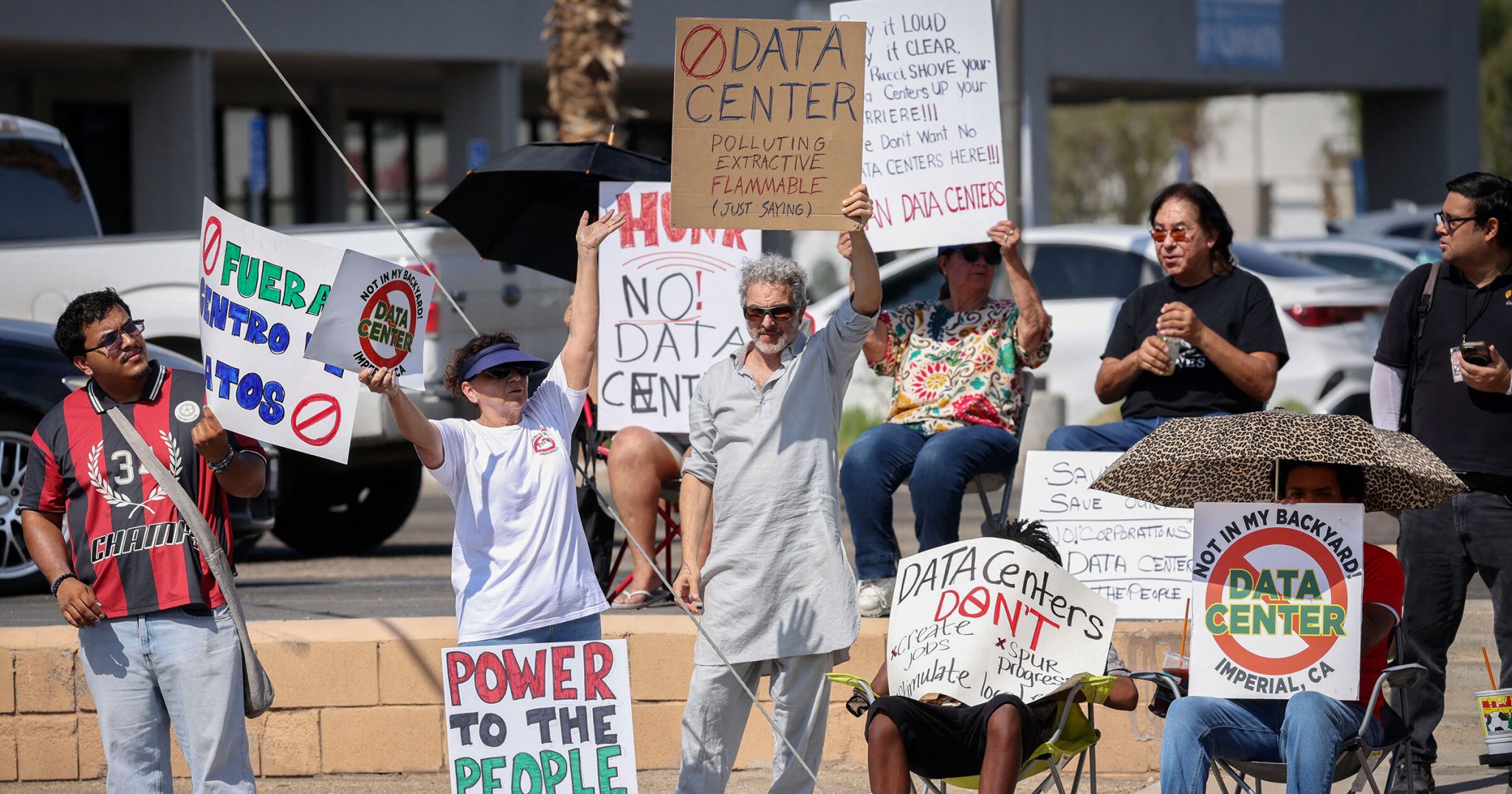
For most folks, just the threat of jail time is enough to keep them on their best behavior. Yet in 2026, data centers have become one of the rare issues pushing more and more of Americans to risk it anyway.
So far in the US, Futurism has counted at least 37 arrests stemming from protests related to data centers this year. There were an additional 12 cases where police intervened to prevent protestors or speakers from confronting civic leaders, though in reality that number is likely much higher, as these cases aren’t as likely to make the news.
Unlike in othermoments of political unrest in recent memory, it’s hard to pigeonhole these anti-data center activists demographically. They range from landowning farmers to physics teachers, zoomers to boomers, rural townspeople to suburban parents.
Despite their differences, the arrestees all have one thing in common: they each felt the actions of democratically elected officials are failing to reflect the wishes of their constituents, instead deferring to massive tech corporations.
Take the case of 42-year old Pablo Payan, a maintenance manager from Indiana. During a public meeting in May held to discuss plans to erect a massive Amazon data center in the city of Hobart, Payan refused to identify himself for the record before speaking, resulting in an attempted removal by police.
As officers were escorting him out, Payan says he asked why he was being removed, which prompted officers to place him under arrest for criminal trespass and disorderly conduct.
“In my opinion, I was kicked out to prove a point that the law is on their side and if people continue to try and express themselves and speak, they will also be intimidated or arrested by law enforcement,” Payan told Fox32 after the fact. “So I think it was a flex of power.”
Far from the “anti-tech extremism” that law enforcement agencies and the Trump administration have warned about, these demonstrations are overwhelmingly peaceful, escalating into physical confrontations only when police lay hands on a person to remove them. Many of the charges come when anti-data center activists break petty clerical rules, like going slightly over the allotted time for a public comment.
Lux Claridge, a physics teacher from Emporia, Kansas, is an exemplar of the absurd ways civic leaders can weaponize police to stifle dissent. At a public meeting earlier this month, Claridge was arrested after clapping in support of another community member speaking out against a proposed 1,000 acre data center campus — running afoul of a commissioner’s rule against “snapping” and “clapping.”
“I am fully of the notion that clapping is a First Amendment right that I have,” Claridge said in an interview with 404 Media after the fact. “I can exercise that as long as I’m not disrupting, and I still argue that I was not disrupting at all.”
“I have a right to clap,” Claridge continued, “and if you want me out, you’re going to have to drag me out.”
En el verano del año 15 antes de Cristo, los dos hijastros del emperador Augusto, Tiberio y Druso, sometieron los Alpes centrales y la meseta suiza al control de Roma. Aquella campaña cerró décadas de esfuerzos por unir las provincias galas con Iliria y asegurar las rutas entre el norte de Italia y el Danubio. […]
Author(s): Jerry C. Wang, Damian Sanchez, Santhosh Arul, Belda Gülsuyu, Adnan Gopinadhan, Tanzila Mukhtar, Joseph Kim, John P. Andrews, Marcus Alonso Cee Williams, Yewon Jung, Mana L. Hashimoto, Chang N. Kim, Shubhang Bhalla, Nathan A. Ewing-Crystal, John M. Bernabei, Vijay Letchuman, Alexander F. Haddad, Kafi Hemphill, Shantel M. Weinsheimer, Helen Kim
Author(s): Ricardo Barrientos, Billie Meadowcroft, Besaiz J. Sánchez-Sánchez, Brian M. Stramer, Ewa K. Paluch, Guillaume Charras, Shiladitya Banerjee, Anđela Šarić, Yanlan Mao
Author(s): Qiushuang Wu, Lara M. Seydlitz, Vladislav Iakimov, Dennis J. Hsu, Parham Habibzadeh, H. Heinrich Hoffmann, Philip B. Paty, Charles M. Rice, Sohail F. Tavazoie
Author(s): Alex C.Y. Chen, Keely Y. Ji, Cansu Yerinde, Nelson H. Knudsen, Kevin Bi, Shumeng Hao, Vasyl Zhabotynsky, Daniela Martinez, Thomas J. Carmona-LaSalle, Kazuhiro Taguchi, Katherine H. Xu, Elizabeth M. Seider, Marc A. Schwartz, Maria Zschummel, Linda T. Nieman, Kathleen B. Yates, Francesca S. Gazzaniga, Brian C. Miller, Thorsten R. Mempel, Robert T. Manguso
Author(s): Megan Wang, Kanta Yoneyama, Rimantė Žedaveinytė, Junichiro Ishikawa, Stephen Tang, Hoang C. Le, Tanner Wiegand, Josephine L. Ramirez, Naoto Nagahata, Yanzhe Ma, Dennis J. Zhang, Erick Helmeczi, Mirela Berisa, Marko Jovanovic, Masahiro Hiraizumi, Keitaro Yamashita, Hiroshi Nishimasu, Samuel H. Sternberg
Palantir moves AI computing from distant clouds directly into combat zones
Containerized data centers process battlefield intelligence without permanent cloud connectivity
Nvidia B300 accelerators power deployable AI systems for frontline operations
Palantir Technologies and its infrastructure partner Armada have begun deploying mobile data centers built inside standard shipping containers for combat zones.
Each unit carries its own computing hardware, storage arrays, networking gear, and cooling systems needed to run advanced artificial intelligence models.
The servers run on Nvidia's B300 AI accelerators, while Palantir's modular AIP platform links the models directly into operational workflows and other company tools.
Processing power without a constant cloud link
Chad Wahlquist, a Forward Deployed Architect at Palantir Technologies, appeared inside one containerised data center during the July 2026 announcement introducing the mobile computing platform.
Unlike conventional cloud-based systems, these containerized units can process information without maintaining any constant connection to public cloud infrastructure.
They can also be fully isolated from external networks whenever operational security requirements demand a stricter level of separation at all times.
The outcome is a self-contained computing node able to analyze intelligence and sensor data right at the point where it is collected.
Distributed computing also offers stronger resilience than depending entirely on one single, centralized data center to run every operation across a wide area.
Losing contact with the cloud, or even losing one mobile node entirely, would not necessarily shut down the whole system.
Other units could keep processing information locally, since the entire network does not depend on one central point of failure.
Bringing AI closer to the battlefield
For military users, the concept brings advanced artificial intelligence much closer to sensors, field commanders, and units already deployed on the ground.
This reduces dependence on communications links that remain vulnerable to jamming, interception, or outright physical destruction during active combat operations.
Instead of sending every piece of battlefield data back to a distant cloud, analysis can occur inside a deployable container placed close to the action.
Alex Karp, the billionaire co-founder and chief executive of Palantir, has praised Ukraine's wartime innovation cycle as instructive for allies.
He has argued that the war is exposing a widening gap between military theory and the reality of modern combat.
Karp credited Ukrainian engineers and soldiers with adapting battlefield technology at a pace unmatched by most peacetime institutions worldwide.
He suggested that this rapid development cycle is teaching the United States and Europe lessons unavailable in traditional laboratories or think tanks.
Whether these containerized AI systems truly perform as promised under sustained combat stress remains an open question.
As of the time of writing, there is no public independent verification of the technology's actual battlefield performance by Palantir, Armada, or any military partner.
Autistic children showed earlier and less age-related refinement in the brain signals involved in processing faces. A child looks at a face, and within milliseconds the brain begins sorting its features, expression, and identity. Researchers have now traced that process across the entire scalp in one of the most comprehensive studies of face perception in [...]
A new Google Earth tool allowed the creation of A.I. deepfake maps. The tech giant quickly pulled it back after a backlash and concerns about disinformation risks.

 Login