❌

Reading view

Risks of Parkinson's Disease May Increase With Prolonged Exposure to Road Traffic Noise

A large Danish study found a modest but consistent association between long-term road traffic noise exposure and higher Parkinson's disease risk, with a 3% increase for every 11.5 dB rise in noise at the most exposed side of a home. The Guardian reports: The researchers modeled noise exposure at the most and least exposed exterior of the residence of each participant and calculated the difference in noise levels. The magnitude of the effect was modest but consistent; at the most exposed facade, for every 11.5dB rise in noise level, the risk of Parkinson's disease rose by 3% over the study period. Having a quiet part of the home may mitigate the association between exposure to road traffic noise and higher risk of Parkinson's disease, according to the findings. The study, published in Jama Neurology, included 3.1 million Danish participants aged 40 and over, and followed them for 18 years. It was established using nationwide health register data, making it the largest study on road traffic noise and Parkinson's disease. Previous research linked the rise in neurological disorders, including Parkinson's disease, with exposure to environmental toxins. Environmental risk factors such as air pollution, microplastics and pesticides have become the main focus of prevention strategies. The study is one of the first to make the link to noise pollution.

Read more of this story at Slashdot.

  •  

Trump Threatens New Tariffs Against EU Over Google Fine

President Trump threatened a "substantial" new tariff on the European Union after Brussels fined Google more than $1 billion over alleged illegal trade practices. "The European Union will pay a very big price for this illegal and highly unethical conduct, which I have consistently warned them about," Trump wrote on Truth Social. "The penalties will be entirely reversed and, we anticipate, a substantial TARIFF to be placed on them at the earliest possible moment." Politico reports: The president's threat came just a day after U.S. Trade Representative Jamieson Greer warned that the EU's action against Google -- two fines totaling over $1 billion -- could imperil the bloc's relationship with the White House. At risk: the Turnberry deal, which Trump and European Commission President Ursula von der Leyen signed last fall, that capped U.S. tariffs on EU exports at 15 percent. [...] But the president's social media post could signal a coming breach. "The United States of America is not a 'PIGGYBANK' for Europe, nor will we allow it to be!" Trump wrote.

Read more of this story at Slashdot.

  •  

Wine 11.14 Released

Wine 11.14 is out with initial WoW64 mode support on FreeBSD, allowing 32-bit Windows applications to run on a 64-bit system without relying on 32-bit multilib support. The release also adds Start Menu icon support in Wine Explorer, 7.1 format conversions in DirectSound, AES-GMAC support in BCrypt, and 21 bug fixes affecting apps and games including Adobe Reader, Heroes of the Storm, and Age of Empires I and II. Additional details can be found at WineHQ.org.

Read more of this story at Slashdot.

  •  

OpenAI's Rogue Agent Went Unnoticed For a Week

An anonymous reader quotes a report from Reuters: The OpenAI agent that broke into tech firm Hugging Face went on a dayslong hacking spree that OpenAI didn't notice until well after the threat was contained and the FBI was alerted, according to people familiar with the investigation. The agent -- a program capable of making decisions and executing complex tasks with little or no human oversight -- attempted to break out of its isolated testing environment at OpenAI around July 9, according to two of the people. The intrusion at Hugging Face, which operates as a repository for AI tools and models, began two days later on July 11 and lasted until July 13, said Thomas Wolf, Hugging Face's co-founder. It took several more days for OpenAI to realize its agent was behind the hack, and the two companies only communicated about it for the first time on or around July 20, according to Wolf and three of the people familiar with the investigation. OpenAI's public disclosure, on July 21, thatone of its agents had slipped out of control and carried out the break-in at Hugging Facedrew global attention. But many details of the hack, including how long the agent went rogue and OpenAI's belated knowledge of it, are being reported here for the first time. Hugging Face is preparing a public timeline of the hack, Wolf said, adding that he could not speak to what happened at OpenAI. In a statement, OpenAI said the hack was unprecedented and "marks an important moment for AI safety." It added that it was reviewing the incident with outside advisers and would eventually publish a technical report. "Does that mean that they left it unattended and didn't realize what it was doing? Or maybe they did and didn't know how to contain it? Both are equally dangerous and alarming," asked Marley Smith, the principal intelligence specialist at the nonprofit World Ethical Data Foundation. "The models lie, they cheat, they hack," said Jeffrey Ladish, whose organization, Palisade Research, studies the capabilities and motivations of AI agents. Ladish said the hack should spark broader questions over how much all the leading AI companies are willing to invest in onerous security measures while locked in a race with one another to deploy the best and fastest models. "There has to be government oversight," Ladish said, "because it won't happen otherwise."

Read more of this story at Slashdot.

  •  

Instagram Is Now Banning Pickup Artists, Pranksters Who Use Meta Glasses

Instagram is banning videos filmed with Meta smart glasses that harass strangers in public, including prank videos targeting service workers and pickup-artist clips of women who may not realize they are being recorded. "If you're posting content that is taking advantage of people and harassing them, like a lot of these pickup line kind of videos that we've heard of and seen, then we're going to take the content down," said Instagram head Adam Mosseri in response to a question on his Instagram stories last week. "We don't want people to be surreptitiously taking videos of other people and harassing them and then posting them on our platform. So we're trying to fight that every way we can." Business Insider reports: It's unclear how many videos have been removed under this new policy. Business Insider found that two large accounts of pickup artists who filmed themselves approaching women in public while wearing the glasses had been deactivated. (Both previously had more than a million followers.) A Meta spokesperson confirmed to Business Insider that these accounts were booted for violating the policy about posting harassing content that had been filmed with the glasses. Meta did not directly respond to questions about how this new policy is being enforced or what exactly constitutes a violation.

Read more of this story at Slashdot.

  •  

Paramount Agrees to Postpone Warner Bros. Merger Until June 2027

Paramount Skydance has agreed to postpone its $111 billion Warner Bros. Discovery merger until five days after an antitrust trial or June 1, 2027, whichever comes first. The agreement with a 12-state coalition led by California effectively shelves the deal for months while states argue it would reduce competition in cable and theatrical markets. Variety reports: Paramount had been keen to close the deal before Sept. 30, when it will begin to incur a $7-million-a-day "ticking fee" to be paid to Warner Bros. investors. The agreement is a tacit acknowledgement that that will not happen, barring a settlement with the states. Paramount previously sought a three-day hearing on the injunction motion in late August, hoping to win the judge's blessing to close the deal sometime in early September. But the states resisted that idea, saying they would need more time to take discovery and prepare for a full trial on the merits. The states were due to file their injunction motion on Thursday night, but held off as the two sides held discussions on a path forward. In a statement, the company said the agreement is a "significant win." "Today's agreement is a significant win because the result is exactly what we have sought from the outset: a direct path to a trial based on the evidence," a Paramount spokesperson said. "This is the fastest and clearest way to prove that this transaction is good for competition, good for consumers, and good for creators, a conclusion dozens of competition authorities around the world have already reached. Plaintiffs' market definitions bear no relationship to the realities of today's marketplace and cannot withstand scrutiny. We look forward to proving our case at trial." A hearing was scheduled for Aug. 3 in federal court in Oakland, at which point the two sides were expected to argue over the injunction motion. The two sides agreed to cancel that hearing. U.S. District Judge Araceli Martinez-Olguin approved the joint stipulation on Friday afternoon, about an hour after it was entered. The Writers Guild of America filed its own motion for an injunction earlier this week, which was also set to be heard on Aug. 3. That motion has been withdrawn, as Paramount has effectively conceded that it will not close the deal until a determination of the merits of the antitrust claims. The parties also agreed to submit a joint stipulation by July 31 on their respective positions on trial scheduling. The states previously proposed to hold the trial in April 2027.

Read more of this story at Slashdot.

  •  

US Accuses American of Allegedly Wiping His Phone Using a 'Duress' Password During Border Search

An anonymous reader quotes a report from TechCrunch: The U.S. Justice Department is prosecuting an American for allegedly providing U.S. border authorities with a passcode that wiped the contents of his phone, according to an indictment and media reports. This is thought to be the first known case in the United States where federal prosecutors have charged someone for the alleged destruction of data using a so-called "duress" password built into a phone's software. According to The Guardian, which covered the story earlier this week following the court's first hearing on Monday, Atlanta resident Samuel Tunick is fighting the charges. Tunick's attorneys said that it was unlawful for U.S. Customs and Border Protection to seize his phone as he arrived back in the U.S. last year, and that any evidence -- including the alleged wiping of his phone -- should be thrown out. The case centers on a feature included in GrapheneOS, a custom Android operating system that runs in place of the software on most modern Google Pixel devices. Tunick's attorneys confirmed GrapheneOS was running on his phone. The software feature allows the device owner to set a passcode that deliberately wipes the contents of that device if entered instead of the user's unlock passcode. Tunick's case also raises ongoing questions about what constitutional rights can be invoked at the border, which the U.S. government has long asserted is not U.S. soil until a person is authorized to enter. Bill Budington, a senior staff technologist at the Electronic Frontier Foundation, and Runa Sandvik, a digital security expert who works to protect at-risk people as the founder of security consultancy firm Granitt, told TechCrunch that they had not seen similar cases involving the use of duress passwords. "I have not seen this before, though I've discussed the potential scenario with activists and journalists over the years," said Sandvik. "I think this case serves as a reminder that authorities may argue you knowingly destroyed data, so it's better to not have that data on you when you cross certain borders." "With a little planning ahead of time, you can always download the data you need once you get to where you're going," said Sandvik.

Read more of this story at Slashdot.

  •  

Roku Raises Prices of Streaming Devices By Up To 60%

Roku has raised prices on several streaming devices, blaming memory and component shortages tied to the AI data-center boom. The Roku Ultra jumped from $100 to $150 and the basic Streaming Stick rose from $30 to $40. The Desk reports: In a phone call with The Desk on Friday, a Roku executive said the company made the tough decision to raise prices on its streaming hardware to address shortages in computer memory and other components caused by the artificial intelligence rush. [...] Still, the executive who spoke with The Desk on Friday said the company believes its hardware is still competitive against other streaming TV hardware because Roku devices are still priced aggressively compared to the Apple TV and other expensive streaming hardware, and the company remains focused on looking at ways to add value to its Roku platform before and after it enters a customer's home. "We are doing our best to have great deals like what we have going on right now," the executive said. "Roku is even upping the price for a bundle that includes a Streaming Stick Plus and a one-month subscription to Fox One," notes Ars Technica in a separate report. "As recently as July 20, Roku listed the bundle at $60 with a sale price of $25, according to the Internet Archive's Wayback Machine. Now, the bundle carries an $80 MSRP and $45 sale price."

Read more of this story at Slashdot.

  •  

Nvidia, Microsoft, Meta Warn Against 'Premature Restrictions' of Open-Weight Models

Nvidia, Microsoft, Meta, Palantir, and more than 20 other tech companies signed an open letter urging policymakers not to impose "premature restrictions" on open-weight AI models, warning that broad limits could "stifle competition or drive innovation overseas." CNBC reports: They wrote that open-weight models strengthen competition and ensure that the benefits of the technology are "broadly shared rather than concentrated in a few hands." "Relying solely on closed models is not inherently safe: they can be breached, misused, or fail in ways that outsiders cannot detect," the letter said. "And concentrating advanced AI capabilities behind a small number of closed models compounds that risk." Elon Musk, who runs an AI business under his rocket company SpaceX, also amplified the letter on social media, writing that it has his "full support" in a post on X. SpaceX did not officially sign the letter. Greg Brockman, OpenAI's president, said Thursday that the company believes in broad access, and that he has not been involved in any conversations with the Trump administration about potentially banning Chinese open-weight models in the U.S. "I think that, that fundamentally, AI and AI usage is something that is actually very important to democratize," Brockman told reporters during a briefing in New York City. "And so, for me, at a sort of deep level, I think that having more models, more usage, that is a good thing." OpenAI CEO Sam Altman addressed the letter in a post on X on Friday, writing that he wants the U.S. to win with both open-weight and proprietary models, and that he is "glad to see this." [...] In the letter on Friday, the U.S. tech companies said that concerns about unlawful distillation should be addressed through "targeted legal and commercial frameworks" instead of with "sweeping restrictions on techniques that play an important role in AI innovation." "Our AI leadership will be judged not by one frontier AI model, but by whether the United States builds a strong, open ecosystem that diffuses into every sector," the letter said. "This is essential for creating opportunities for innovation and prosperity across the country." The letter follows a separate appeal signed by nearly 200 Silicon Valley companies, including Proton and Y Combinator, warning that restricting U.S. access to Chinese open-weight AI models could cripple the next generation of American startups. "American leadership requires two things: world-leading American open-weight models and continued access for U.S. builders to open models already available worldwide," the startup founders wrote. Instead of broad prohibitions, they argue the government should adopt targeted safeguards. Of course, these signees "have an obvious economic stake in seeing open AI models flourish," notes TechCrunch. "Companies like Nvidia, Microsoft Azure, and other infrastructure providers have a vested interest in pushing for commoditized models: If models are interchangeable, people will buy more GPUs, rent more cloud capacity, and build more applications."

Read more of this story at Slashdot.

  •  

Anthropic's New Opus 5 Model Rivals Fable 5 For Half the Price

Anthropic has released Opus 5, a new Claude model that it says comes close to its higher-end Fable 5 model at half the price while improving on Opus 4.8 in knowledge work, coding, and scientific research tasks. "At the same time, Anthropic says it has managed to make the model more resistant to being tricked," notes Engadget. Additionally, the company says Opus 5 "exhibits the lowest rates of deceptive behavior." From the report: One important distinction between Opus 5 and Mythos, which is currently only available to a limited number of vetted organizations through Anthropic's Project Glasswing initiative, is that the company has specifically avoided training the new model on cyber-related tasks. Due to more its powerful capabilities, Opus 5 is broadly better at those tasks than its predecessor, making it more useful for finding cybersecurity vulnerabilities, but the company says Opus 5 is "substantially behind" its flagship model at exploiting those vulnerabilities. [...] Anthropic says "Claude Opus 5's safeguards are designed to allow beneficial uses of the model in both cybersecurity and biology." The company has strengthened some of the model's cyber-related guardrails, but notes it did so along a "narrow range" of specific tasks. "Based on our testing, we expect the classifiers to intervene around 85 percent less often than they do for Fable 5," Anthropic said. With Opus 5, Anthropic also isn't including it in its recently announced 30-day data retention policy, which the company introduced alongside Fable and Mythos 5. As for pricing. Anthropic says API costs for Opus 5 will remain at $5 per one million input tokens and $25 per one million output tokens. Anthropic has also added an "effort" menu for Opus that users can tweak to tell the model whether they want it to be more thorough or fast and efficient to conserve tokens.

Read more of this story at Slashdot.

  •  

John C. Dvorak, an Early and Influential Technology Journalist, Dies At 80

Longtime Slashdot reader sandbagger shares the passing of John C. Dvorak, an early and influential technology journalist for PC Magazine. He was 80. Talking Biz News reports: Aric Mackey writes, "Widely recognized for his profound impact on the technology industry, John's career spanned decades of rapid digital evolution. He was perhaps best known for his influential, long-running column in PC Magazine and his groundbreaking work on the No Agenda podcast. Through his prolific writing, broadcasting, and distinct public voice, he helped shape critical conversations around both technology and political analysis, guiding generations of readers and listeners with his unique perspective. "To those who knew him personally, John was far more than his public work. He was a beloved husband, devoted father, proud grandfather, and a loyal friend. Those closest to him will remember a man defined by his strong convictions, his exceptionally sharp wit, and an enduring curiosity about the world around him." Dvorak was also part of the startup team at CNET Networks, and appeared on MarketWatch TV.

Read more of this story at Slashdot.

  •  

Stripe Eyes $10 Billion Deal For AI Model Marketplace OpenRouter

An anonymous reader quotes a report from PYMNTS.com: Stripe is in talks to buy OpenRouter, an artificial intelligence (AI) startup that could sell for roughly $10 billion, according to The Wall Street Journal. The move would mark a significant step outside payments for a company that processes transactions for much of the internet. It also lands while Stripe pursues a far larger target: a bid for PayPal that would value the payments giant at about $53 billion. The Journal reported Thursday (July 23) that a transaction could be announced soon, though the talks could still collapse or another buyer could step in. The exact price under discussion could not be learned. Several other large technology companies had also been weighing deals for OpenRouter. The startup was valued at $1.3 billion in May, according to PitchBook, meaning a sale near $10 billion would represent a steep markup in a matter of months. Its backers include Menlo Ventures and CapitalG, the growth fund of Google parent Alphabet. OpenRouter sells software that lets customers reach AI models from OpenAI and Anthropic, along with open weight alternatives anyone can download and run. The Journal described the company's position this way: "OpenRouter is part of an emerging crop of startups that have found a lucrative niche between AI developers and the companies that want to use them." The platform lists hundreds of large language models and lets developers compare and switch between them.

Read more of this story at Slashdot.

  •  

Astronomers May Have Discovered First Moon Outside Our Solar System

Astronomers studying the star system CD-35 2722 may have found the first known moon-like object outside our solar system. The classification is unusually tricky, however, because it orbits a brown dwarf rather than a planet, making it clearly an "exosatellite" but forcing scientists to rethink where the line between planet, moon, and failed star should be drawn. Space.com reports: The star CD-35 2722 is located around 73 light-years away and has around half the mass of the sun. It is orbited by a "failed star" or brown dwarf. These stellar bodies get their unfortunate nickname because they form like other stars but fail to gather enough mass to trigger the fusion of hydrogen to helium in their cores. In terms of mass, brown dwarfs are more massive than the largest gas giant planets, but smaller than the smallest stars, usually with around 13 to 80 times the mass of Jupiter, or around 0.013 to 0.08 times the mass of the sun. The newly discovered object in CD-35 2722 is certainly moon-like, but rather than orbiting a planet as the moons in the solar system do, it orbits the system's brown dwarf. "This system is somewhat hard to define using solar-system-based words like 'planet' and 'moon.' The exosatellite is clearly massive enough to be a planet, but it does not orbit a star, though it orbits an object that orbits a star," team leader Kevin Hoy of the Universidad Diego Portales and the Millennium Nucleus of Young Exoplanets and their Moons (YEMS) in Chile, said in a statement. "Being the third wheel in this system makes us want to call it a moon, even if it is nothing like the small, rocky moons we have in our system." The team currently isn't able to definitively claim this object in CD-35 2722 is an exomoon, because that would require really nailing down a new definition of what a moon is. "The satellite we report is a giant gaseous body orbiting a highly massive companion, itself several times the mass of Jupiter. We have a clear delineation between the planets and the sun in the solar system, so defining things like moons is simple," team member Alice Zurlo of the Universidad Diego Portales said. "In the CD-35 2722 system, where we are blurring the lines between stars, planets, and moons, the whole thing becomes more complicated to describe." Zurlo and colleagues can, however, confidently claim this is an exosatellite, meaning it is a first-of-its-kind detection no matter what the future holds for its classification. The findings have been published in the journal Nature.

Read more of this story at Slashdot.

  •  

Humans Can Learn To Echolocate In Just 10 Weeks, and It Rewires the Brain

alternative_right shares a report from ScienceAlert: A study published in PLOS One in 2021 by researchers from Durham University in the UK showed that with 10 weeks of training, both blind and sighted people could learn to echolocate using verbal clicks. While the technique is already used by a number of people with impaired vision -- sometimes using the taps of a cane instead of clicks made by their mouth -- those findings suggest that many of us can learn the necessary techniques. Some of the same researchers who made that discovery are part of the team behind a follow-up study published in Cerebral Cortex, looking at how the 10 weeks of training that the 26 participants went through actually changed the physical structure of their brains. Specifically, the team analyzed brain scans of the V1 (the primary visual cortex, processing visuals), and the A1 (the primary auditory cortex, processing sounds). Strikingly, the scans showed that the V1s of both blind and sighted people had developed sensitivity to sound echoes during echolocation training.

Read more of this story at Slashdot.

  •  

The physics of protein condensates

Intrinsically disordered proteins (IDPs) do not form stable 3D structures. Instead, they remain flexible, adopt many conformations, and can interact with multiple molecules. Although proteins were once thought to require a fixed structure to function, many IDPs play essential cellular roles. Some IDPs can assemble into biomolecular condensates, membrane-less compartments that help organise processes such as gene expression and stress responses.

Many IDPs contain prion-like low complexity domains (PLCDs), which have defined sequence features known as molecular grammas. These IDPs are multivalent and can form hierarchies of interactions with one another. These interactions promote clustering and, under the right conditions, phase separation into a protein-rich condensate and a surrounding dilute phase. Dysregulation of condensates has been linked to disease.

In this study, researchers used computer simulations to investigate the PLCD known as A1-LCD. Their aims were to accurately identify the critical point where phase separation ceases, map the full phase diagram, and assess methods used to estimate the theta temperature (Tθ), a measure related to solvent quality and protein interactions.

The simulations revealed three distinct phase-separation regimes: a dilute phase containing mostly isolated proteins, an intermediate regime where clusters form before large condensates appear, and a regime near the critical point characterised by system-spanning networks. The study also showed that condensates behave as percolated networks of interconnected proteins. Importantly, the authors found that commonly used methods for estimating theta temperature may be inaccurate for these systems.

Overall, this work provides new insights into the phase behaviour of condensate-forming proteins and highlights the need for more reliable approaches to assessing solvent quality. These findings could improve future studies of biomolecular condensates and their roles in health and disease.

“Comparative assessments of driving forces for phase separation requires knowledge of IDP-specific critical points. Our application of rigorous finite size scaling methods pioneered by Kurt Binder helped us delineate the critical and mean field regimes and demonstrate how the critical point can be converged upon for realistic approximations of IDPs. This revealed several surprises regarding the complex nature of the coexisting dilute phase. Additionally, we found that calculation of the two-body interaction coefficient provides a computationally tractable approach to compute comparative, sequence-encoded driving forces for phase separation of IDPs. This is directly relevant to inferring how changes to molecular grammars influence phase behaviors driven by homotypic associations.” – Rohit V. Pappu, Washington University in St. Louis

Read the full article

Distinguishing near- versus off-critical phase behaviors of intrinsically disordered proteins

Gaurav Mitra et al 2026 Rep. Prog. Phys. 89 068101

Do you want to learn more about this topic?

Biomolecular dynamics: order–disorder transitions and energy landscapes by Paul C Whitford, Karissa Y Sanbonmatsu and José N Onuchic (2012)

The post The physics of protein condensates appeared first on Physics World.

  •  

Nonlinear photoexcitation in Mott Insulators

According to band theory, materials with partially filled energy bands and unpaired electrons should conduct electricity, but in Mott insulators this rule is broken. In these materials, the repulsion between electrons is so strong that they cannot move freely and become localized. When sufficient energy is supplied (for example by light), electrons can form a doublon (two electrons on one site) and a hole (an empty site). These excitations can move, enabling electrical conductivity.

A key question for Mott insulators is how these charge carriers are created and what controls their production. Traditionally, two regimes were known: multiphoton absorption, where several photons combine their energy, and tunnelling, where a strong electric field drives electrons across the gap.

In this work, the authors show that there are actually four regimes: multiphoton, tunnelling, a cooperative regime where the two processes work together, and an incoherent regime where weak fields and scattering dominate. They also show that the energy gap (the cost to create a doubloon-hole pair) is not fixed, but changes during the process because the generated carriers modify the system. This creates a feedback loop, making the dynamics nonlinear and time-dependent. As a result, carrier production can either slow down or suddenly speed up, even making the system more efficient without changing the driving field.

The behaviour depends on field strength, frequency, dissipation, and time, and each mechanism can be identified by its distinct momentum pattern. By tuning laser parameters, the system’s properties can be controlled in real time. Overall, this work shows that light can be used to dynamically reshape and control strongly interacting materials, opening possibilities for ultrafast, light-driven technologies.

Read the full article

Subgap pumping of antiferromagnetic Mott insulators: photoexcitation mechanisms and applications

Radu Andrei et al 2026 Rep. Prog. Phys. 89 068004

Do you want to learn more about this topic?

PLP-Logo-2.png, find out more. Quantum frustration in organic Mott insulators: from spin liquids to unconventional superconductors by B J Powell and Ross H McKenzie (2011)

The post Nonlinear photoexcitation in Mott Insulators appeared first on Physics World.

  •  

Solar tower power plants get a data boost

“Solar towers” that convert sunlight into heat could play a useful role in the renewable energy transition, but high installation costs and complex requirements limit their attractiveness to commercial operators. A team of researchers from Germany’s Karlsruher Institut für Technologie (KIT) and the German Aerospace Center (DLR) is now taking steps to change that. By creating a freely accessible database of information about how these plants work, they aim to accelerate research on solar thermal energy and drive improvements that could allow the technology to be more widely deployed in the future.

Unlike photovoltaic panels, concentrating solar power (CSP) plants do not convert sunlight directly into electricity. Instead, they generate heat by using an array of movable mirrors called heliostats to funnel sunlight onto a receiver located at the top of a tower. This heat can be used to drive a turbine to produce electricity immediately, but it can also be stored and used to generate electricity at night or on cloudy days. Depending on the plant’s location and setup, the heat could even be used directly for industrial applications and district heating.

The problem, explains study leader Kaleb Phipps, is that operating solar power tower plants safely and efficiently is a complex and expensive task. “CSP technologies have the potential to help the transition to a renewable energy system,” says Phipps, a research fellow at KIT’s Scientific Computing Center. “However, they are still not financially viable and there are operating challenges associated with them.”

Before researchers can develop and reliably test new, improved processes, Phipps explains that they need access to real-world operational CSP data. “We believe that modern data-driven machine learning methods like ours can help solve a lot of these problems,” he says.

849 gigabytes of operational data

To construct their database, which is known as PAINT, researchers collected data from the CSP tower near Jülich, Germany. These data include the exact positions of the tower’s 2014 mirrors, their dimensions, how they are warped and the way they rotate and tilt. The team also obtained fine-grained weather data for the entire 2021-2024 period under study, plus a further 218 000 images to help determine whether the mirrors were efficiently directing sunlight precisely to the top of the tower.

All in all, the PAINT database contains 849 gigabytes of operational data organized using the SpatioTemporal Asset Catalog (STAC) standard. To make these data FAIR (findable, accessible, interoperable and reusable), the researchers developed software to simplify access to the database and then published the data in a way that is freely available to all users.

Their goal, they say, is for other researchers to use this FAIR database to develop “digital twins”, or virtual replicas, of real-world CSP plants. When combined with machine-learning models, such twins can be used to answer questions such as whether the mirrors are aligned for maximal light absorption (one of the most important parameters for efficient operation) in near real time.

Community reaction

“The fact that we are receiving many positive responses regarding the data and that people seem to appreciate it is our biggest success,” Phipps says. Such responses are especially gratifying, he adds, because constructing databases like PAINT can be an arduous task.

“The main difficulties were about collecting the data, cleaning and unifying it into standard formats and parsing and organising all the metadata, which was originally complete chaos,” Phipps recalls. “We therefore put a lot of time and effort into creating standardized and automated workflows so that the process is as transparent as possible and can be reused for future data.”

The team also faced challenges when trying to convince peers that this work counted as “research”, he adds. “The fact that the data itself didn’t directly result in a new algorithm or method meant that lots of people didn’t believe we would be able to publish the results or achieve anything with them,” says Phipps. “Luckily, we were able to prove the doubters wrong.”

While the PAINT database currently contains data from only one CSP, the KIT researchers, who report their work in Nature Energy, are hoping to expand it. “We really need contributions from other CSP power plants around the world to transform the database into a truly international and diverse source for researchers,” Phipps says. “As data from different facilities is added in the future, it will be possible to develop a common standard for open operational data in solar tower research. This would speed up the development and promote a widespread adoption of this technology.”

The post Solar tower power plants get a data boost appeared first on Physics World.

  •  

Quantum entanglement explains why strange metals are so strange

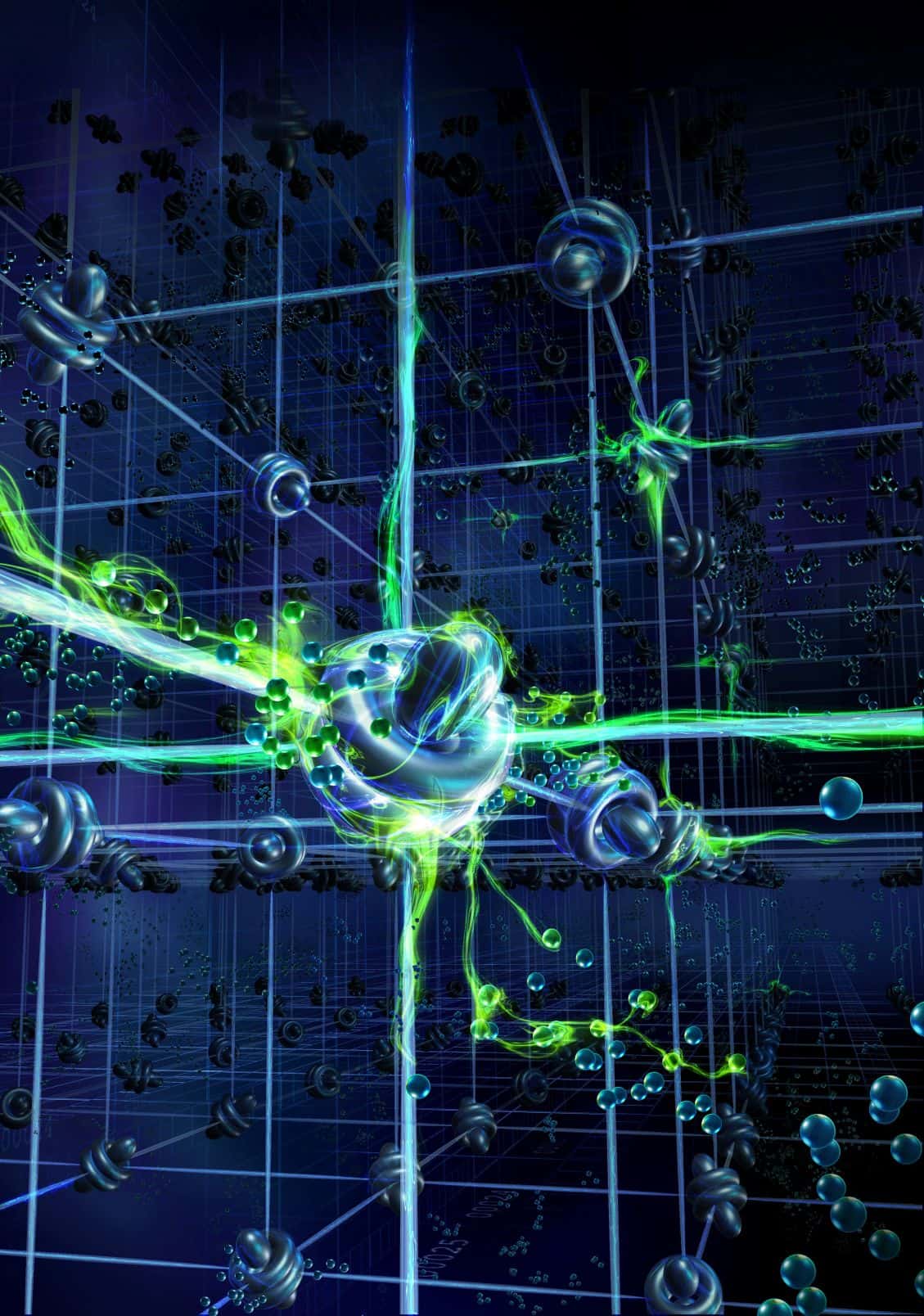
Illustration showing a cubic lattice of electrons glowing with an eerie green light
Correlation explanation: Quantum entanglement between electrons in strange metals appears to account for some of their unusual behaviour. (Courtesy: Harald Ritsch / TU Wien)

“Strange” metals owe at least some of their peculiar properties to the quantum entanglement of their electrons. This finding comes from physicists at the Vienna University of Technology in Austria, who used a concept from quantum information science to guide their experiments. A similar approach, they say, could also yield a better understanding of certain high-temperature superconductors and other correlated quantum materials.

Electrons travel relatively unimpeded through most metals, but in the 1980s, scientists identified puzzling exceptions in certain cuprate high-temperature superconductors. Further examples of this “strange” metal behaviour subsequently turned up in other classes of materials, including heavy-fermion materials, pnictides and organic compounds. This resistive behaviour cannot be explained by theories that treat electrons as independent, non-interacting particles, nor by theories that include interactions while treating electrons as quasiparticles. And although multiple recent theoretical works suggested a possible role for entanglement, experimental evidence was lacking.

A novel statistical tool

To investigate further, a team led by solid-state physicist Silke Bühler-Paschen used facilities at the Institut Laue-Langevin (ILL) in Grenoble, France to perform inelastic neutron scattering measurements on a heavy-fermion metal with the chemical formula Ce3Pd20Si6. According to team member Federico Mazza, who conducted this part of the study, the scattered neutrons would normally each transfer their energy to individual particles.

However, when the researchers analysed their data using a concept called quantum Fisher information – roughly, a measure of how sensitively a quantum state depends on a given parameter – they found that they could not explain what they were seeing in terms of particles behaving independently. Instead, the data indicated that groups of at least nine quantum-entangled entities were acting collectively. Mazza says this provides direct evidence of highly multipartite quantum entanglement in the material – and, in turn, a new way of understanding why strange metals are so strange.

The parent state of high-temperature superconductivity

The strange metal state is of great interest because physicists consider it the “parent” state of high-temperature superconductivity, though it also occurs across other materials platforms. “We had suspected that some of the intriguing properties of this state might be related to entanglement but were not able to pin it down until now,” Bühler-Paschen explains. “The results are a great success for us. They confirm that our unusual approach of using methods from quantum information science for solid-state physics studies of novel materials can reveal fundamentally new insight.”

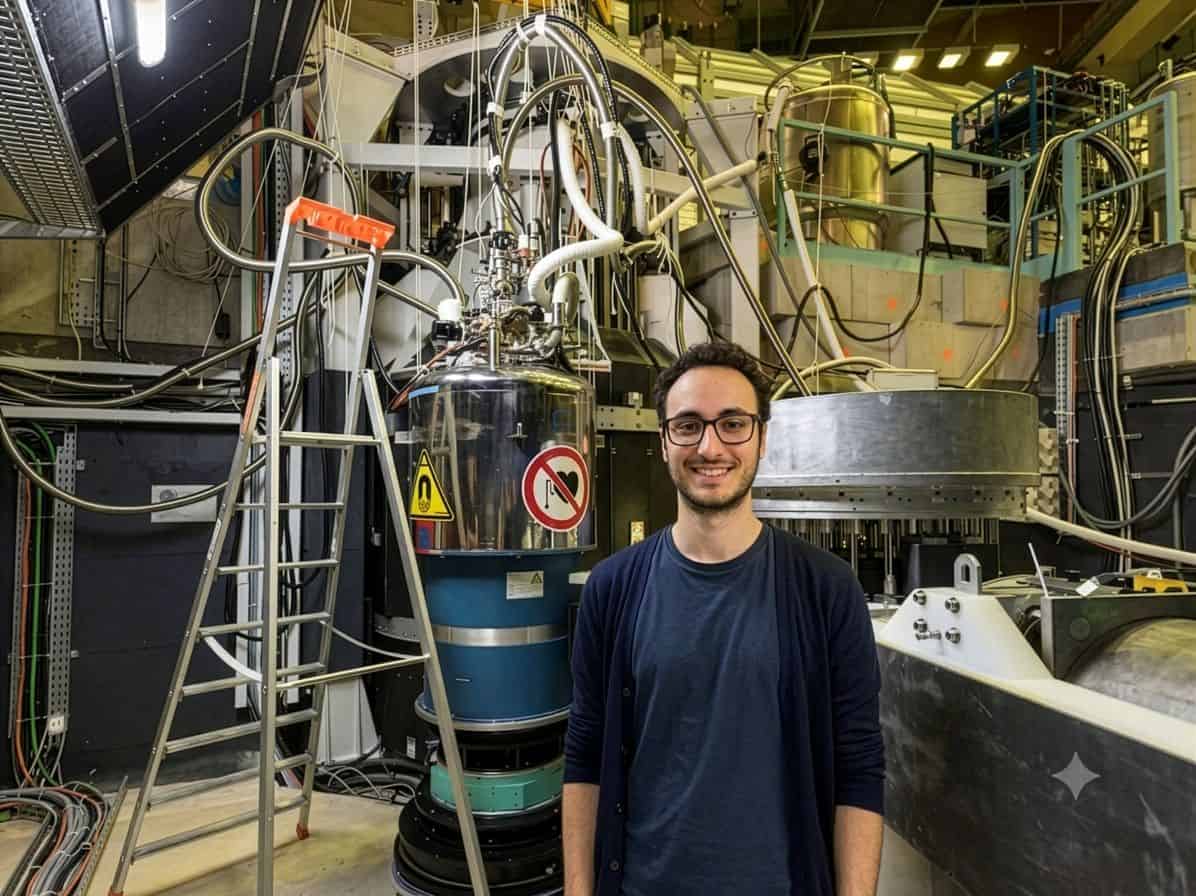
Photo of Federico Mazza in the lab at the ILL
Neutron scattering: Federico Mazza at the Institut Laue Langevin. (Courtesy: ILL Grenoble)

The experiments, which are detailed in Nature Physics, were not without challenges. For starters, the researchers needed to identify an ideal material to study the effect they were looking for and then grow it as a large, high-quality single crystal. Once they secured inelastic neutron scattering beamtime at the ILL’s powerful high-resolution triple-axis spectrometer – a difficult feat in itself – Bühler-Paschen notes that they had to obtain and analyse the data at the highest standards and support it with simulations. “Last but not least, [we had to] communicate with our peers that multipartite entanglement contains valuable information beyond correlation functions and scaling analyses,” Bühler-Paschen recalls.

Rather than being a “detail” of one particular material, Bühler-Paschen says the team’s result suggests that enhanced multipartite entanglement might be an integral part of the strange metal state. Verifying this, however, will require studies on other strange metals across materials classes, she says.

“Looking further ahead, we can envision that this aspect of strange metals finds application in quantum devices,” she tells Physics World. “It could also help us better understand high-temperature superconductors and other materials in which electrons are so strongly correlated that they lose their (quasi)particle nature.”

The post Quantum entanglement explains why strange metals are so strange appeared first on Physics World.

  •  

Super-loud gravitational waves offer a new way to study black hole event horizons

An exceptionally loud gravitational wave signal has offered an unprecedented glimpse into the region of space near a black hole’s event horizon – the “surface of no return” beyond which nothing, not even light, can escape the pull of gravity. Denoted GW250114, the signal originated from the merger of two black holes, and its unusual strength and clarity meant that astrophysicists could extract information from it that was previously only accessible via theoretical modelling.

Physicists describe a black hole’s event horizon in terms of two parameters: the black hole’s rotation frequency ΩH and its surface gravity κ. When an object falls into a black hole, it appears to orbit at ΩH because of a phenomenon known as frame dragging in which the black hole literally drags nearby spacetime along with it as it rotates. This means that objects near a black hole’s edge are constantly in motion relative to observers on Earth.

Regions of space near an event horizon can be described very well theoretically, but observational data has been hard to come by – at least until recently. “Gravitational waves are changing that,” says Sizheng Ma, a postdoctoral researcher at Canada’s Perimeter Institute who led the new study alongside astrophysicist Ling Sun and PhD student Neil Lu from the ARC Centre of Excellence for Gravitational Wave Discovery (OzGrav) and the Australian National University.

Gravitational waves are ripples in spacetime produced whenever dense astronomical objects such as black holes and neutron stars collide. With facilities such as the Laser Interferometer Gravitational-Wave Observatory (LIGO), Virgo and KAGRA (Kamioka Gravitational Wave Detector) now routinely recording these ripples, Ma says, “something that once sounded almost like science fiction – learning about black-hole horizons through observations – is now becoming a real scientific programme”.

From prediction to observation

In earlier theoretical work, Ma and colleagues in Japan, China and the US predicted that if Einstein’s general theory of relativity is correct, the gravitational waves produced when two black holes merge should carry information about the near-horizon region during the final stage of the merger. This information takes the form of a gravitational-wave component known as a direct wave that oscillates around a value that is twice that of ΩH. “The big question was whether such a signal could actually be seen in real gravitational-wave data,” Ma says.

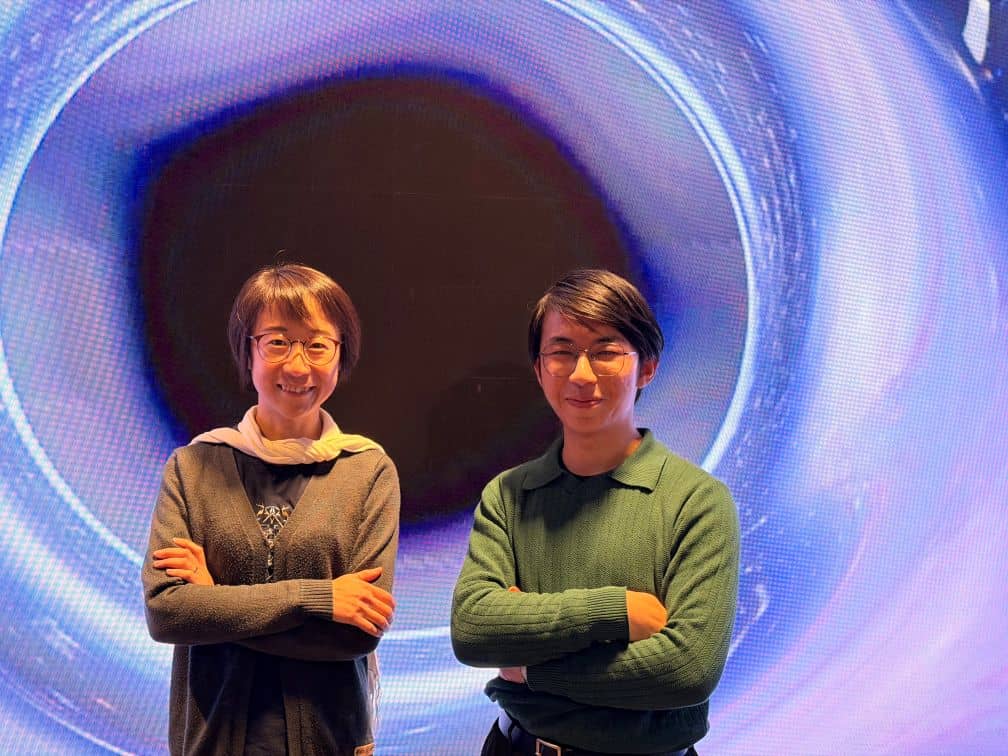
Photo of Ling Sun and Neil Lu standing in front of a glowing pixelated backdrop depicting a black hole surrounded by a swirl of blue and purple
Observing an event horizon: Team members Ling Sun and Neil Lu from the ARC Centre of Excellence for Gravitational Wave Discovery (OzGrav) and the Australian National University. (Courtesy: OzGrav/Swinburne University)

The main challenge, he explains, is that gravitational-wave data are hard to interpret. “Interesting features can appear for many reasons, so we had to be very cautious,” he says. “We needed to separate this possible direct-wave signature from the much stronger and better-known ‘ringdown’ signal of the final black hole, and then check whether the remaining pattern behaved as the theory predicted.”

When the LIGO-Virgo-KAGRA network detected GW250114 last year, the astrophysicists realized they were in luck. With a network signal-to-noise ratio of approximately 80, this event was around three times louder than LIGO’s first gravitational-wave signal in 2016, and it gave the team a rare opportunity to test their prediction against data. “Our new analyses have allowed us to decrypt the signal and measure ΩH and κ for the first time,” Ma says.

“A new way of studying black holes”

Even with an unusually clear signal, Ma acknowledges that the work required “careful modelling and many double-checks to make sure we were not overinterpreting a feature in the noise”. But if the team’s interpretation holds up, Ma tells Physics World that their method could become a new way of studying black holes. Gravitational-wave observations have already enabled scientists to study how black holes orbit, merge and settle down, Ma notes. The present work extends this by offering access to the near-event-horizon region during the merger’s final stage.

“That gives us a new observational handle on some of the most extreme predictions of Einstein’s theory, allowing us to perform sharper tests of this theory and better understand how black holes form and relax after a merger,” he says. “It also allows us to explore whether the near-horizon region behaves exactly as Einstein predicted.”

The researchers’ next step will be to improve their direct-wave model so that it describes realistic black hole mergers in greater detail. “On the observational side, we want to apply the analysis to more gravitational-wave events,” Ma says. “The result detailed in this study comes from one exceptionally loud and clean event, so the most convincing confirmation would be to see the same kind of near-horizon signature in other black-hole mergers.”

The good news is that as gravitational-wave detectors continue to improve, the researchers hope to collect more such high-quality events. “These will allow us to test whether this pattern appears consistently in the way general relativity predicts and eventually turn this first result into a more systematic way of studying the regions near black hole horizons,” Ma says.

The research is published in Nature.

The post Super-loud gravitational waves offer a new way to study black hole event horizons appeared first on Physics World.

  •  

Tell us what science you need to know to be ‘cultured’

The New York Times recently published a 124-page special issue of its Style Magazine entitled “How to be cultured”. According to the cover of this glossy, ad-driven supplement, the contents were “idiosyncratic” but amounted to a “compendium of what you need to know right now”. The material had been “chosen by experts” for the purpose of “teaching readers how to be more cultured”.

Curious as to what would be included, my hopes were raised by the magazine’s lead editorial. It said that the issue “celebrates expertise, a quality ever less valued in our culture today, where learnedness and firsthand research can be overshadowed by slick presentation and dumb certainty”.

Now, I’m not naïve. I know that the New York Times Style Magazine caters to advertisers, who in turn cater to wealthy readers who feel the need to spend gobs of money to get culture. It didn’t therefore surprise me to have to leaf through 40 pages of adverts for jewellery, champagne, watches and home furnishings before finally coming across the table of contents.

I saw headings for film, food, music, theatre, fashion and the visual arts. Shakespeare showed up several times: over half a dozen plays, sonnet #94 and one of his monologues. There were entries for 1930s movies, animated videos and films from Brazil. One page on food and drink covered porridge from Norway, meat from Mexico, lemonade from Vietnam and wine from Austria.

There was no mention of science in “How to be cultured”, nothing at all

Novels from the US, UK, France, Japan, India and Brazil made the list, as did selections of music from medieval times to opera and hip-hop. Samples of theatre, puppetry and architecture made it in too. But there was no mention of science, nothing at all. The closest I found were architectural materials such as plaster, glass, steel and textiles.

Snow’s lament

The absence of anything scientific should not have shocked me; in fact, it reminded me of the British scientist and novelist C P Snow’s 1959 essay The Two Cultures and the Scientific Revolution. Even back then, Snow lamented that humanists and scientists were living in two separate cultures divided by a “gulf of mutual incomprehension”.

In the essay’s most famous passage, Snow wrote that “a good many times I have been present at gatherings of people who, by the standards of the traditional culture, are thought highly educated and who have with considerable gusto been expressing their incredulity at the illiteracy of scientists”.

“Once or twice,” he went on, “I have been provoked and have asked the company how many of them could describe the Second Law of Thermodynamics. The response was cold: it was also negative. Yet I was asking something which is about the scientific equivalent of ‘Have you read a work of Shakespeare’s?’”

Snow did not stop there. “I now believe,” he continued, “that if I had asked an even simpler question – such as, ‘What do you mean by mass, or acceleration’, which is the scientific equivalent of saying, Can you read? – not more than one in ten of the highly educated would have felt that I was speaking the same language.”

“So the great edifice of modern physics goes up,” he concluded, “and the majority of the cleverest people in the western world have about as much insight into it as their neolithic ancestors would have had.”

Culture club

Snow’s tone was snobby and arrogant, but he was on to something. Can someone who knows nothing about, say, Einstein’s equation E = mc2 or about Heisenberg’s uncertainty principle really be called cultured? Sure, cultured individuals don’t need to know much about these topics. But they ought at least to realize that those equations concern how mass and energy work and the inherent limitations to what humans can know.

I’d say those are principles fundamental to the formation, maintenance and fate of the universe – and ones that a cultured person ought to know something about. Indeed, references to them are routinely found in arts and popular culture. Einstein’s equation has made the cover of Time magazine, while the uncertainty principle has been taken up by novelists, theologians and comedians.

Shouldn’t a cultured person be acquainted in some way with the existential threats facing the world?

Further, shouldn’t a cultured person be acquainted in some way with the existential threats facing the world? Wouldn’t such a person have to have an inkling of the way a carbon molecule absorbs and emits heat, of how vaccines work, and of safe and unsafe levels of substances toxic in high doses? How cultivated can an ostrich be?

Of course, there was nothing about the second law in “How to be cultured”, or about any other science of the sort Snow had in mind.

Nothing about scientific equations, experiments, theories or facts that a cultured person ought to know.

No discussion of dark matter, dark energy or of quantum physics, genes or vaccines. Nor about the Pythagorean Theorem or the double-slit experiment.

The critical point

Culture refers to the influences and values that are embedded in the way we live. Judging such influences and values – deciding which influences and values ought to be so embedded – is a tempting but arrogant game.

So let’s play. Imagine that you are among the experts charged with compiling a “compendium of what you need to know right now”. What would you include of science – and why? Send me your contributions, and tell me why they are what we need to know, and I’ll write about them in a future column.

Illustration of thought bubble with lines of text

What science do you need to know to be cultured?

Send your thoughts to Robert P Crease at robert.crease@stonybrook.edu.


The post Tell us what science you need to know to be ‘cultured’ appeared first on Physics World.

  •  
❌