 Login

SpaceX Stock Jumps 19% in Record Nasdaq Debut as Value Passes $2 Trillion
SpaceX’s $2 Trillion Nasdaq Debut SpaceX shares jumped 19% in their Nasdaq debut on Friday, lifting the company’s

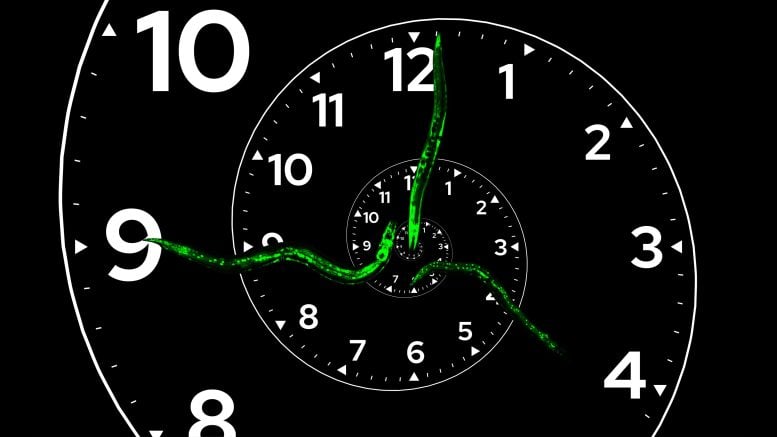 A newly discovered genetic clock acts as the body’s developmental timekeeper, coordinating the bursts of gene activity needed for growth. Scientists found that when this clock breaks down, development comes to a halt. Think about a train sitting at a station. Passengers have boarded, conductors are checking tickets, and everything is ready to go. But [...]
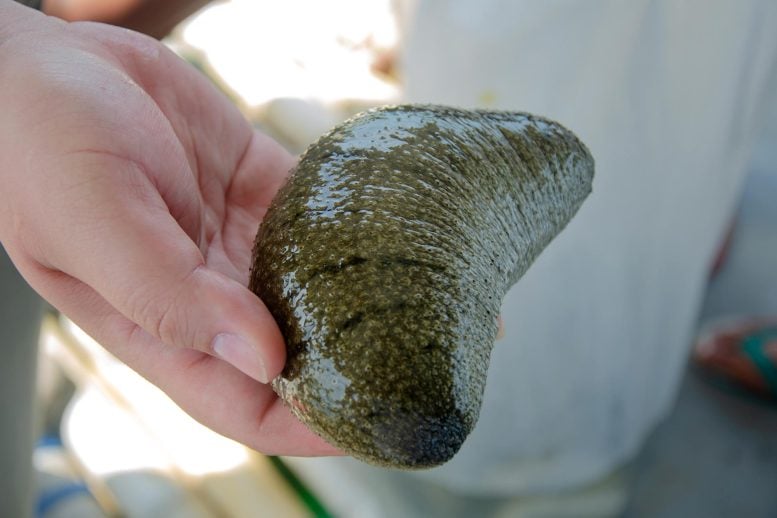 Detached sea cucumber tissue survived, healed, and grew for years in natural seawater, revealing a remarkable new model for regeneration and biomedical research. A chance observation has led scientists to a discovery that challenges one of biology’s most basic assumptions: that detached animal tissue eventually dies. Instead, researchers found that tissue removed from a sea [...]
 A new study suggests that reproducing a crucial sleep-like brain pattern in awake animals may help preserve memory and learning abilities. What if part of the brain could get some of the benefits of sleep without the rest of the brain ever going offline? A new NIH-funded study suggests that may be possible. Researchers found [...]

The James Webb Space Telescope (JWST) has revealed a cosmic catastrophe, as winds extinguished a star-forming galaxy in the early universe, offering new insight into earlier strange observations.
Cosmic winds may destroy entire galaxies, according to new JWST research exploring the lingering mystery of why certain parts of the universe are unexpectedly devoid of growth.
The findings were published in a recent paper in the Monthly Notices of the Royal Astronomical Society, revealing galactic-scale death in a universe just one billion years old, and potentially answering questions about previous troubling JWST observations.
Observations made by the JWST revealed cold gas, an essential star-forming material, blowing out of the CRISTAL-2 galaxy in a massive plume, severely degrading its ability to produce new stars. According to the researchers, it would take less than 50 million years for the galaxy to be completely dead if this activity keeps up, a mere blink in the scheme of a 13.8 billion-year-old universe.
Astronomers consider galaxies to be “dead” if they are no longer capable of producing fresh stars. Traditionally, astronomers expected that it would take billions of years for an old galaxy to slowly run out of fuel and burn out. However, JWST observations have continually captured events in the early universe that were not expected to occur until much later.
One of these was finding a host of dead galaxies in the early universe shortly after it first became operational in 2022. How galaxies could die so close to the beginning of the universe, without sufficient time to burn through their cold gas supplies, has long perplexed scientists.
As researchers began considering various explanations for the phenomenon, they initially settled on dark energy, essentially explaining one unknown with another. Dark energy is a theoretical substance that scientists believe drives the expansion of the universe and was once a stronger force than it is now. While the Dark Energy Spectroscopic Instrument survey revealed last year that dark energy appears to be weakening over time, an exotic galaxy-killer is not required, according to this latest research.
Instead, researchers offer a much simpler explanation of powerful cosmic winds in the remote past. Conventional thinking has it that such powerful winds could only be generated by a supermassive black hole, yet these new observations challenge that assumption.
CRISTAL-02 is a galaxy still in the making, composed of several smaller galaxies in the final stages of merging into a single system. Because the early universe was far denser than it is today, such collisions were much more common. During these mergers, gravitational forces funnel vast amounts of gas toward the galactic centers, triggering intense bursts of star formation.
Observations of CRISTAL-02 by the James Webb Space Telescope and the Atacama Large Millimeter/submillimeter Array (ALMA) revealed a star formation rate roughly twice that of similar galaxies. Ironically, this extraordinary burst of stellar activity is also generating a powerful cosmic wind that is stripping away the very gas needed to form new stars.
Compounding the effect, many of the newly formed stars rapidly exhaust their fuel and end their lives as supernovae, producing additional outflows that further deplete the galaxy’s star-forming material.
Together, these processes appear capable of shutting down star formation far more quickly than astronomers previously believed possible. Going forward, ongoing JWST observations are likely to continue challenging astronomers’ assumptions, as more evidence indicates that nearly half of the early universe’s massive galaxies were interacting—a finding which also suggests early “galactic deaths” like these may not be all that rare, after all.
The paper, “Multiphase Images of a Powerful Supernova-Driven Wind in the Early Universe,” appeared in Monthly Notices of the Royal Astronomical Society on June 10, 2026.
Ryan Whalen covers science and technology for The Debrief. He holds an MA in History and a Master of Library and Information Science with a certificate in Data Science. He can be contacted at ryan@thedebrief.org, and follow him on Twitter @mdntwvlf.
 EEG studies suggest caffeine can reduce deep, restorative sleep even when sleep duration appears normal. Its effects vary by individual, and relying on caffeine for energy may come at the cost of nighttime recovery. Evening coffee has long been debated. Some people can drink it and fall asleep with no trouble, while others struggle to [...]
Over two years after Japan’s Smart Lander for Investigating Moon (SLIM) mission deployed a tiny, shape-shifting rover on the Moon, the country’s space agency JAXA has finally revealed previously unreleased details about the first-of-its-kind autonomous robotic lunar exploration.
According to a statement announcing the recently published mission account, the SLIM team deployed the rover on the Moon’s surface, “after which the rover transformed from a tiny sphere into a wheeled robot that took images of the lander and its environment.” A second rover transmitted the data back to Earth, with all steps occurring autonomously.
The team behind the historic mission said their success could pave the way for swarms of small, transformable robots capable of exploring high-scientific value areas that larger spacecraft and robots cannot reach, including caves, tunnels, lava tubes, vents, and deep extraterrestrial craters.
In the published study, the JAXA team explains that robotic technologies like SLIM “are expected to drive substantial advancements in planetary exploration and resource prospecting” by performing tasks in extraterrestrial environments that are inaccessible to other platforms, including human astronauts. For example, the team noted that miniature robots offer tremendous weight savings over bulkier platforms, especially when added to missions with “strict payload limitations.”
“Miniature robots have the potential to reduce payloads and to reach cramped spaces such as small vents and craters that are inaccessible to larger, conventional robots,” they explain.
Still, the SLIM team notes that building tiny, shape-shifting rovers capable of exploring a variety of complex environments presents its own set of challenges. The most limiting constraints involve computational power and battery capacity. The team also observed that smaller robotics platforms inherently suffer from “reduced locomotion performance” due to their small size.
Now, when revealing the details of the SLIM mission, the researchers note that advancements in miniaturization and computational performance spurred by the Internet of Things “have catalyzed the emergence of smaller, lighter, and more intelligent rovers at lower costs.”
To build a tiny, shapeshifting robot capable of exploring the lunar surface autonomously, team leader Daichi Hirano and colleagues designed the Lunar Excursion Vehicle (LEV) system, which comprises LEV-1 and LEV-2. According to the team’s statement, LEV-1 can communicate directly with mission planners back on Earth. For locomotion, the robot moves via what the team termed “a controlled hopping mechanism.”
The second robot, LEV-2, starts out as a compact sphere 8 inches in diameter. However, once on the Moon, the mission controllers said that the tiny robot can transform into a “two-wheeled rover with cameras and a tail stabilizer.”
“Here, we introduce a two-wheeled centimeter-scale rover, designated Lunar Excursion Vehicle 2 (LEV-2), also known as SORA-Q (named after the Japanese words for space and sphere), which transforms into a wheeled configuration from a compact spherical form, enabling efficient traversal of soft lunar terrains,” they write.
According to the new mission details, the SLIM lander deployed LEV-2 “immediately before its landing on the lunar surface.” In the mission details, the team explained that upon deployment, the rover autonomously extended its wheels, tail stabilizer, and cameras, “thereby enhancing its mobility and stability on soft lunar terrain.”

After deployment, LEV-2 navigated the lunar surface in the immediate area around the lander. According to the published study, “the palm-sized rover accomplished autonomous lunar exploration by navigating around the SLIM lander, capturing images of both the SLIM lander and its environment.” Critically, the rover’s exploration was autonomous and “without reliance on ground-based teleoperation,” marking a historic first in lunar exploration.
After finishing its exploration, the tiny robot transmitted images of its adventures to LEV-1. The hopping rover then transmitted the data to Earth. The team notes that all these steps were also accomplished autonomously.
The team notes that the LEV-2 shape-shifting rover operated for “more than 100 minutes: before losing communication with LEV-1. Although determining the exact cause may require direct examination of the two robots, Hirano’s team suspects that issues caused by LEV-1’s hopping motions or battery depletion “may have contributed to connectivity issues.”
When discussing the implication of an autonomous, shape-shifting rover successfully navigating the lunar surface and completing its mission directives, the team concedes that the capabilities of a single, small rover like LEV-2 “are inherently limited.” However, they also note that their mission success highlights the potential of this category of robotic platform “as independent explorers, capable of accessing environments beyond the reach of a primary large spacecraft.”
“Swarm-controlled small robots are poised to be deployed in high-risk yet scientifically valuable environments, such as vents, caves, and steep slope craters, that are inaccessible to larger, conventional rovers,” the researchers conclude. “This approach promises to enhance both the efficiency and safety of future planetary surface exploration.”
The study “From ball to rover: Transformable palm-sized rover SORA-Q for autonomous lunar exploration” was published in Science Robotics.
Christopher Plain is a Science Fiction and Fantasy novelist and Head Science Writer at The Debrief. Follow and connect with him on X, learn about his books at plainfiction.com, or email him directly at christopher@thedebrief.org.


 It’s not easy to tell if someone has it.
 Terror in the skies.