Of the roughly $700 million in total funding, $425 million would be used to upgrade and extend the life of 13 coal plants that otherwise might have closed in the coming years.
The country on Thursday released a national artificial intelligence strategy that focuses on building its sovereign capability and protecting consumers.
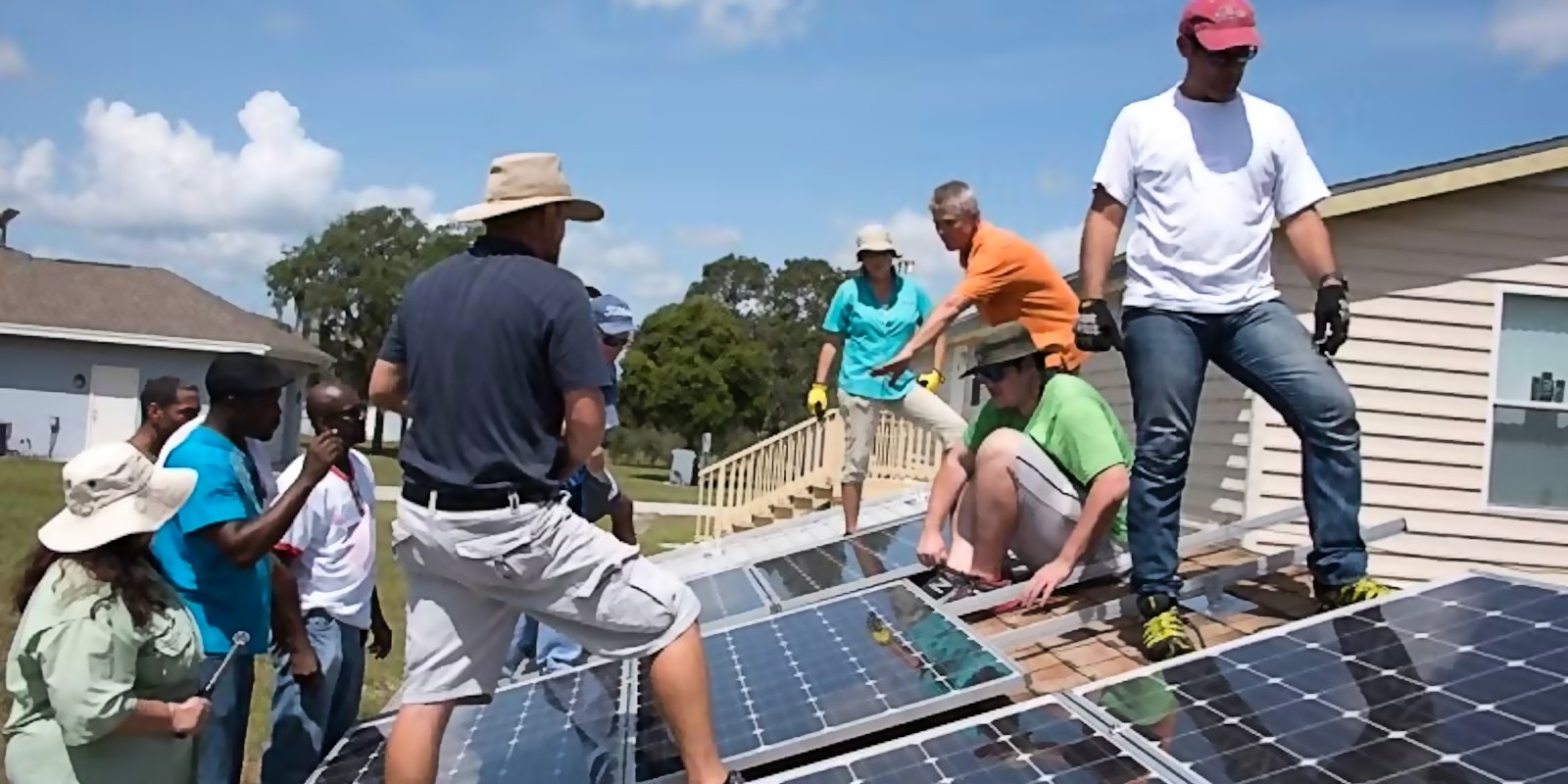
The window to claim a 30% tax credit on your solar panel project is closing July 4th, which means you’ve got just one month left to safe harbor your project and preserve your eligibility – keep reading to find out how.
After announcing a new three-year collaboration with Nissan to advance low-cost, solid-state EV batteries, Gelion’s tech may be the secret to leveling the playing field with China.
The Taiwanese assembly experts at Foxconn have taken the wraps off the Cavira, a new Tesla Model Y competitor that offers a 468 hp AWD powertrain, sub-four-second 0-60 mph performance, and up to 359 miles of range.
A new study challenges the long-held idea that habits form only through slow, gradual repetition. What if your habits don’t form through countless repetitions over months or years? What if the brain can decide, almost instantly, that a behavior is no longer worth thinking about? That possibility is at the center of a new Johns [...]
China is establishing an industrial policy framework to support a push to build space-based computing infrastructure, with the emergence of influential coordinating bodies.
In our increasingly dystopian world, who wouldn’t want to at least be open to a utopian antidote? The Global Justice Report, published on Thursday, outlines how to build a prosperous, equitable world within safe planetary boundaries. It’s a push from the modern eco-socialist left in a global battle for ideas that will shape the future.
Based on past social achievements and future energy transformation, it indicates that the overwhelming majority of people on the planet could, by the end of the century, work less and earn more – while keeping temperatures down and avoiding much of the current destruction of nature. It is an ambitious, comprehensive and upbeat plan, and a stronger argument around which to build a political campaign than abstract goals of net zero or decarbonisation.
Energy Environ. Sci., 2026, Advance Article DOI: 10.1039/D6EE01604A, Paper
Jiwon Kim, Jinuk Moon, Kyuri Cho, Junhyeong Kim, Man Ho Han, Seongbeen Kim, Jimin Han, Daeeun Choi, Hyunwoo Jun, Jong Hyun Jang, Hyung-Suk Oh, Sung Ki Cho, Wooyul Kim, Jeong Woo Han, Jinwoo Lee Dynamically stable oxidized surface states of sub-nanometer Ru clusters enhance interfacial hydrogen-bond connectivity, thereby enabling highly efficient alkaline water electrolysis. To cite this article before page numbers are assigned, use the DOI form of citation above. The content of this RSS Feed (c) The Royal Society of Chemistry
Battery energy storage specialist ELM MicroGrid has spent more than two decades building a nationwide energy storage and utility infrastructure businesses. Now, the company is bringing that expertise home with the installation of a new battery energy storage system at a solar microgrid project in Peoria, IL.
On today’s really quick episode of Quick Charge, we’re doing a crossover episode with Mike Bush from Marketscale’s Hammer Down podcast and explore the business of freight and logistics, how to get involved, and what the future might hold for more efficient, fossil-free trucking.
With dozens of companies, from small startups to tech giants, pursuing quantum computing, there's a steady flow of results as they try to find a path to utility. We typically focus on new technologies and major landmarks, which can obscure the fact that any big success will inevitably have been built on a lot of incremental progress.
The past few weeks have seen two companies release progress reports on how they're trying to get the technologies closer to general use. None of these represents a major breakthrough, but all are absolutely necessary for the technology to advance. The idea here is to convey the hard work required to move us closer to something useful.
Microsoft does material science
Microsoft is one of the few companies working on topological qubits, based on the distinct physics that occurs when particles are confined. Microsoft's system relies on a thin superconducting wire placed on top of a semiconductor. In superconductors, groups of two electrons form Cooper pairs. But if the wire contains an odd number of conducting electrons—meaning there's a single unpaired electron—it will end up delocalized to both ends of the wire. (Because quantum mechanics is weird.)
Sukhjot Kaur, Safa Gaber, Kalpana Garg, Abdul Khayum Mohammed, Ankur Bordoloi, Harpriya Minhas, Biswarup Pathak, Dinesh Shetty, Tharamani C. Nagaiah A tailored bifunctional cathode catalyst, Fe-Tp-10% G, was utilized for the conversion of HCl to industrially valuable Cl2 while storing energy in a Zn-ORR/CER battery. The content of this RSS Feed (c) The Royal Society of Chemistry
The Hyundai IONIQ 5 pretty much offers it all with up to 318 miles of driving range, fast charging, a surprisingly spacious interior, and an affordable starting price of just $35,000. It’s also a perfect fit for families looking to go electric.

 Login


















 Open Access