❌

Reading view

The best cameras under $1,000, according to experts

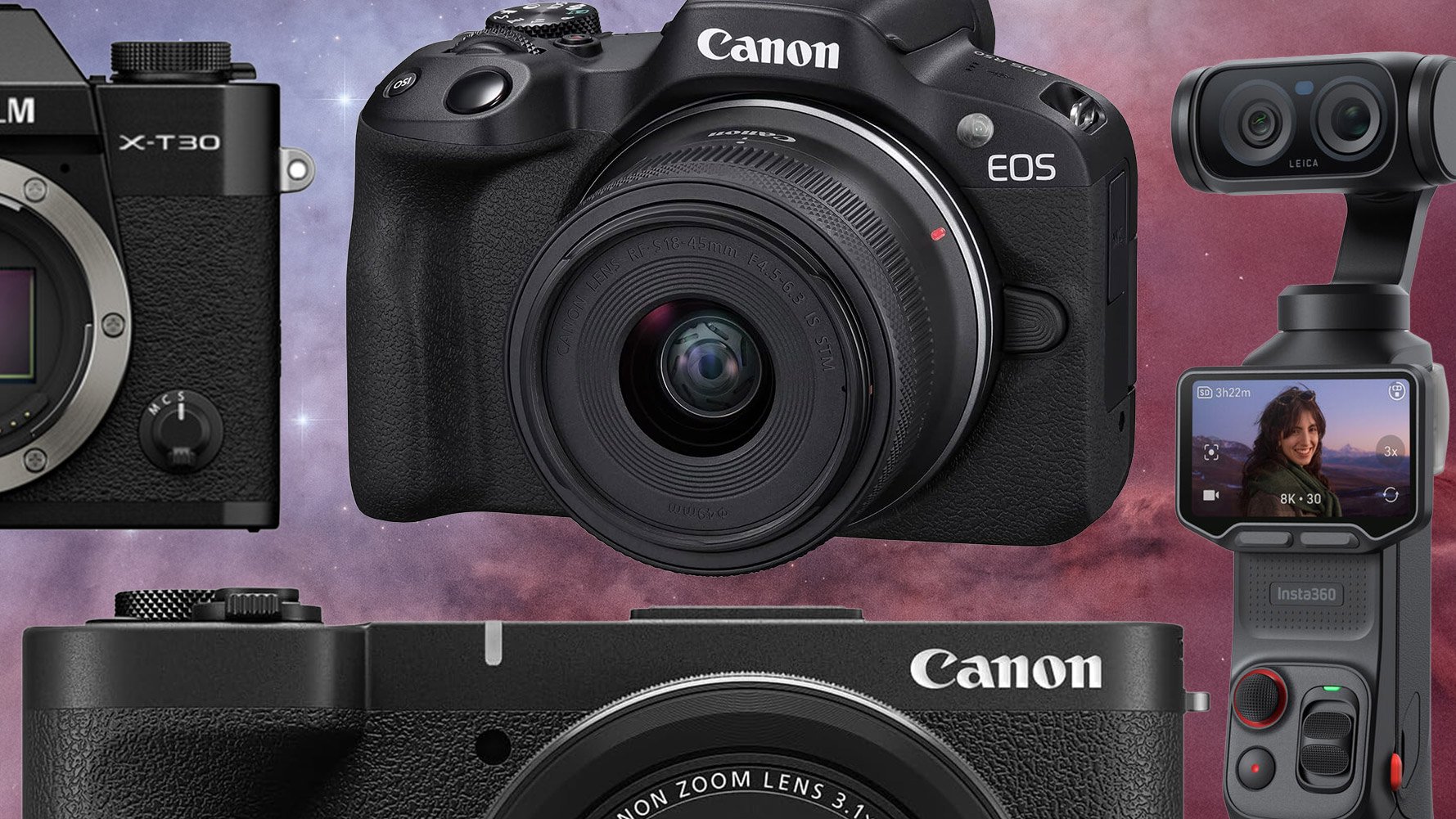
The best camera under $1,000 for most people is the Canon EOS R50 ($849.99 with an 18-45mm lens at Canon as of October 2026), because it pairs a 24.2-megapixel sensor and uncropped 4K video with Canon’s current lens mount and an assisted auto mode built for backlit and night scenes. If you’re mostly filming yourself, the Insta360 Luna Ultra ($769.99) puts a 1-inch sensor, a 3x telephoto, and a mechanical gimbal in your pocket. Plenty has changed since our last update: price increases, many tied to US tariffs, have pushed favorites like Sony’s a6400 past $1,000 for the body alone, Canon has discontinued the EOS RP in Japan, GoPro’s new flagship is the Mission 1 Pro rather than a Hero 14, and DJI’s newest pocket gimbal hasn’t officially reached the US. Here are your options if you’re looking to get started under a grand.

How we chose the best cameras under $1,000

I have been a professional photographer and camera journalist for nearly two decades. During my time at our sibling publication, Popular Photography, I shot with almost every major camera released in the past decade. For this guide, I looked for cameras with clear strengths that fit specific kinds of shooting, and weighed durability, performance, and less tangible things like access to a deep catalog of lenses and accessories.

For this update, we started from our previous picks and the cameras released since, then checked every finalist against its maker’s spec page and a live US retailer listing on October 20, 2026. That price pass cut more cameras than any spec comparison did: Sony’s a6400 now costs $1,098 for the body at Adorama and the Fujifilm X-E5 is $1,699.95 for the body. We also checked each maker’s product lifecycle and business news, which is why the Canon RP section says “while stock lasts” and the GoPro section mentions the company’s sale process.

The best cameras under $1,000: Recommendations

The picks below run from about $620 to $1,000. Five are interchangeable-lens cameras; the other three have built-in lenses, for people who want one device that does everything. Camera prices have moved a lot this year in both directions, so check before you buy. While we always make specific picks for specific needs, there’s plenty of overlap, so read the whole list before you set your heart on one.

Best overall: Canon EOS R50
See It

Pros

  • 24.2MP APS-C sensor and uncropped 4K/30, oversampled from 6K (Canon’s spec)
  • Up to 15 fps with the electronic shutter, 12 fps with electronic first curtain
  • Vari-angle touchscreen plus a 2.36-million-dot OLED viewfinder
  • Advanced A+ Assist mode helps with backlit and night scenes

Cons

  • No in-body stabilization, per Canon’s spec page
  • Small grip gets cramped with larger lenses
  • $849.99 is a sale price; it was $799 in early October, per CPriceWatch

Specs

  • Lens mount: Canon RF (RF-S lenses for APS-C)
  • Sensor size: APS-C
  • Megapixels: 24.2
  • Maximum video resolution: 4K at 30 fps, uncropped (Canon’s spec)
  • Price: $849.99 with RF-S 18-45mm at Canon as of October 20, 2026

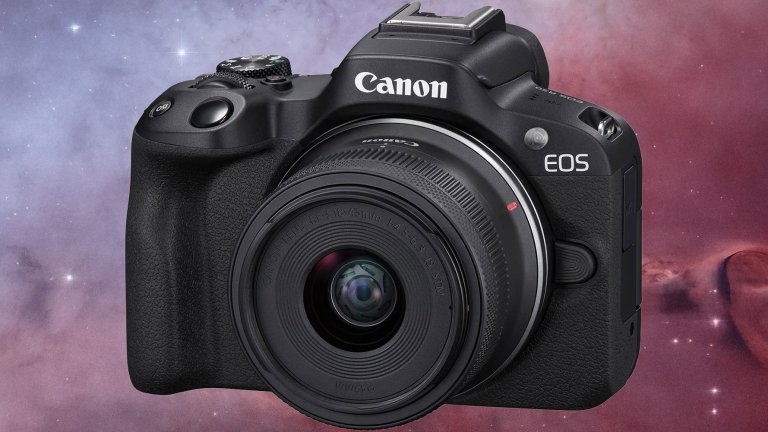
Canon’s EOS R50 is still the camera we’d hand to someone trading up from a phone. The kit with the RF-S 18-45mm IS STM lens costs $849.99 at Canon as of October 20, 2026 (a sale price against a $899.99 regular price), which leaves room in a $1,000 budget for a memory card and a bag. If that’s still too much, Canon’s refurbished store had this same kit for $529 with a one-year Canon USA warranty in late September (per CPriceWatch), though restocks sell out fast. Y.M.Cinema Magazine reported in late August that it was still the best-selling mirrorless camera on Amazon, more than three years after launch.

The video spec has aged better than the price tag suggests. Canon rates the R50 for 4K at 30 fps using the full width of its 24.2-megapixel APS-C sensor, oversampled from 6K, so you don’t lose your wide angle when you switch from stills to video. Subject-detection autofocus locks onto people and animals and follows them across the frame without any fiddling, and there’s a mic jack for when the built-in microphone stops cutting it.

For beginners, the Advanced A+ Assist mode is the feature that matters. It works like a full auto mode that reads the scene, so backlit portraits and night shots come out better than they would on plain auto, and you can graduate to aperture priority when you’re ready. Canon’s spec page lists no in-body stabilization, so stick with stabilized lenses for low-light handheld shooting, or budget for Canon’s inexpensive RF 50mm f/1.8 STM, which gathers far more light than the kit zoom. If you mostly shoot video, the R50 V below is the same camera reworked for creators, without the viewfinder.

Best for vlogging: Insta360 Luna Ultra
See It

Pros

  • 1-inch main camera plus a 1/1.3-inch 3x telephoto, per Insta360
  • 3-axis mechanical gimbal keeps walk-and-talk footage level
  • Detachable 2-inch OLED screen doubles as a remote up to 20 meters away
  • 47GB of built-in storage plus a microSD slot

Cons

  • About 233 grams, heavier than DJI’s Osmo Pocket 4, per T3
  • T3’s reviewer found controls lag slightly with the screen detached
  • No focus peaking at launch, per T3

Specs

  • Lens mount: Fixed dual lens (Leica Summicron)
  • Sensor size: 1-inch main, 1/1.3-inch telephoto
  • Megapixels: Not published (photos up to 37MP in UltraPhoto mode, per Insta360)
  • Maximum video resolution: 8K at 30 fps (Insta360’s spec)
  • Price: $769.99 at Insta360 as of October 20, 2026

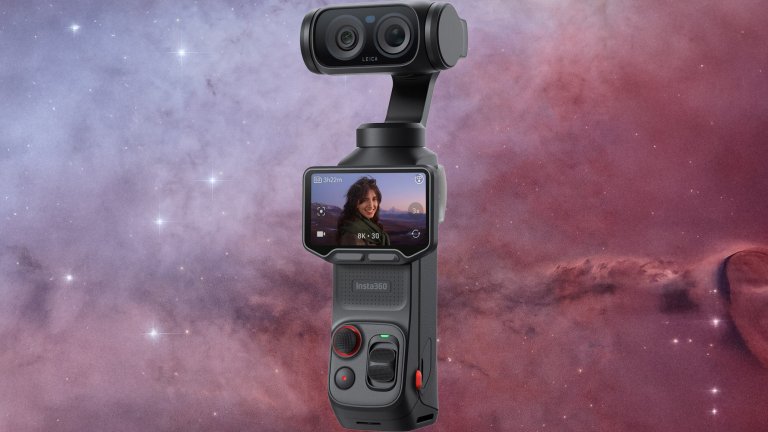
A phone on a gimbal gets you steady video. A pocket gimbal camera gets you steady video from a much bigger sensor, with the screen facing you and the stabilizer built in. The Insta360 Luna Ultra is the one we’d buy in that category, at $769.99 for the standard bundle at Insta360’s store. Its main camera puts a 1-inch sensor behind a Leica Summicron lens, and a second camera with a 1/1.3-inch sensor handles 3x telephoto. Insta360 rates the pair for 6x lossless zoom and 12x total.

That second lens is why we’d pick it over a single-lens pocket camera. You can frame yourself at the wide end, then punch in on a street performer across the plaza without walking over. Insta360 rates it for 8K at 30 fps, 4K at up to 120 fps, Dolby Vision HDR, and 10-bit I-Log, and the gimbal is a mechanical 3-axis unit, so most of the steadying happens physically instead of by cropping the frame. I have been using this for the past few months to shoot everything from personal videos to footage for work and I’ve been impressed with everything from battery life to image quality.

The 2-inch OLED screen pops off and works as a wireless monitor and remote from up to 20 meters, per Insta360, which is handy when the camera is on a tripod and you’re in the shot. It’s not the quickest to zoom or focus, but you’re trading a bit of performance for convenience. The bigger story for US buyers is the competition: DJI’s Osmo Pocket 4 launched in April with its FCC authorization still pending, per DroneXL, and Amateur Photographer reported in June that DJI’s products remained off the US market. The $969.99 Creator Bundle adds a wireless mic transmitter, a battery handle, and a wide-angle lens; start with the standard bundle unless you already know you need the mic.

Best for video on a budget: Canon EOS R50 V
See It

Pros

  • Full-width 4K/30 oversampled from 6K, per DPReview
  • Headphone and mic jacks, a front tally lamp, and a side tripod thread for vertical video
  • Optional RF-S 14-30mm power zoom is wide enough to hold at arm’s length
  • 370 grams for the body, per DPReview

Cons

  • No viewfinder and no built-in flash
  • No in-body stabilization
  • 4K/60 uses a 1.56x crop, and electronic stabilization crops further
  • About 70 minutes of 4K/30 per charge, per Canon’s manual (via DPReview)

Specs

  • Lens mount: Canon RF (RF-S lenses for APS-C)
  • Sensor size: APS-C
  • Megapixels: 24.2
  • Maximum video resolution: 4K at 30 fps uncropped; 4K at 60 fps with a 1.56x crop (per DPReview)
  • Price: $619.99 body, $799.99 with RF-S 14-30mm, at Canon as of October 12, 2026 (per CPriceWatch)

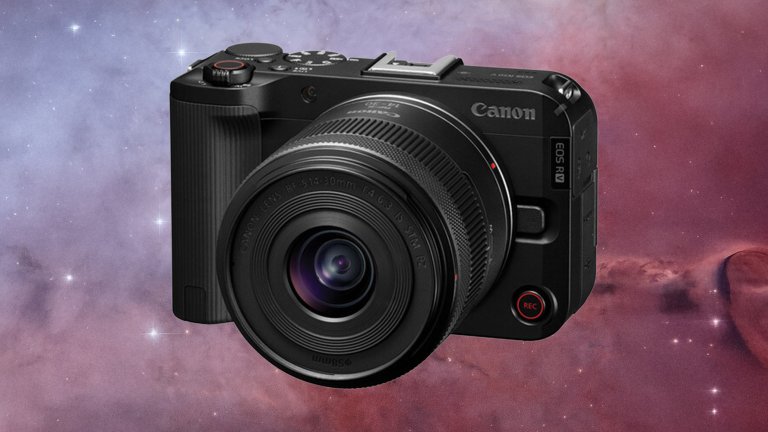
The Canon EOS R50 V takes the R50’s 24.2-megapixel sensor and rebuilds the body around video. The viewfinder and flash are gone. In their place you get a headphone jack next to the mic jack, a red tally lamp on the front so you know you’re recording, and a second tripod thread on the side for shooting vertical video without an L-bracket.

It’s the camera for the creator who wants interchangeable lenses on a desk or a tripod rather than a gimbal in a pocket. DPReview lists full-width 4K at 30 fps oversampled from 6K, the same clean 4K as the R50, and 4K at 60 fps with a 1.56x crop. Get the 14-30mm kit if you film yourself: on APS-C, that’s roughly a 22-48mm equivalent by our arithmetic, wide enough to hold at arm’s length.

There’s no in-body stabilization, so walking shots depend on a stabilized lens, a gimbal, or Canon’s electronic stabilization, which crops further. Battery life is the other limit. Plan for about 70 minutes of 4K/30 per charge, so grab a spare battery or USB power for long sessions. If you’d rather have a viewfinder for stills, the regular R50 kit above costs $50 more than the R50 V kit and does both jobs.

Best Fujifilm camera: Fujifilm X-T30 III

See It

Pros

  • 26.1MP X-Trans CMOS 4 sensor and X-Processor 5 (Fujifilm’s spec)
  • Top-plate film simulation dial with three slots for saved recipes
  • Built-in electronic viewfinder
  • 6.2K/30 open gate and full-width 4K/30 video, per DPReview

Cons

  • No in-body stabilization
  • $999.95 is body only; the 13-33mm kit is $1,149.95
  • Body-only stock was thin at the retailers we checked
  • CIPA-rated for 315 shots per charge (425 in Economy mode)

Specs

  • Lens mount: Fujifilm X
  • Sensor size: APS-C
  • Megapixels: 26.1
  • Maximum video resolution: 6.2K at 30 fps open gate; 4K at 60 fps with a 1.18x crop (per DPReview)
  • Price: $999.95 body only at Hot Rod Cameras as of October 20, 2026

The T30 III runs the same X-Processor 5 as the X-E5. It trades the X-E5’s 40-megapixel sensor for a 26.1-megapixel X-Trans CMOS 4 chip, which is plenty for prints and cropping, and it still has a built-in viewfinder, which Fujifilm’s cheaper X-M5 doesn’t.

The new top-plate dial is the reason to want this camera. It switches between 20 film simulations, and three of its positions store custom recipes, so you can build a Classic Chrome look with your own grain and white balance settings and call it back with a thumb. Fujifilm’s straight-out-of-camera color is why many people choose the system in the first place, and the dial moves it from the menus to the top of the camera. Video is better than an enthusiast stills camera needs: DPReview lists 6.2K at 30 fps in open gate and 4K at 30 fps from the full sensor width, with 10-bit 4:2:2 internal recording.

It’s still an entry-level body. There’s no in-body stabilization, so handheld low-light shots depend on a stabilized lens or a steady grip, and the battery offers roughly 315 shots per charge under good conditions. Stock is the other catch. On October 20, Glazer’s Camera showed the body sold out in all three colors and Hot Rod Cameras listed it as a preorder. The kit with the XC 13-33mm lens, at $1,149.95, breaks this guide’s budget, so pair the body with one of Fujifilm’s compact primes instead.

Best retro camera: Nikon Z fc
See It

Pros

  • Dedicated shutter speed, ISO, and exposure compensation dials
  • Uncropped 4K at 30 fps, per Nikon
  • Fully articulating 3-inch touchscreen
  • Body price has dropped below $760

Cons

  • No in-body stabilization
  • Five years old, with an older processor than Nikon’s Z50 II
  • Our price is body only

Specs

  • Lens mount: Nikon Z (DX)
  • Sensor size: APS-C
  • Megapixels: 20.9
  • Maximum video resolution: 4K at 30 fps, uncropped (Nikon’s spec)
  • Price: $756.95 body only at Adorama as of October 20, 2026

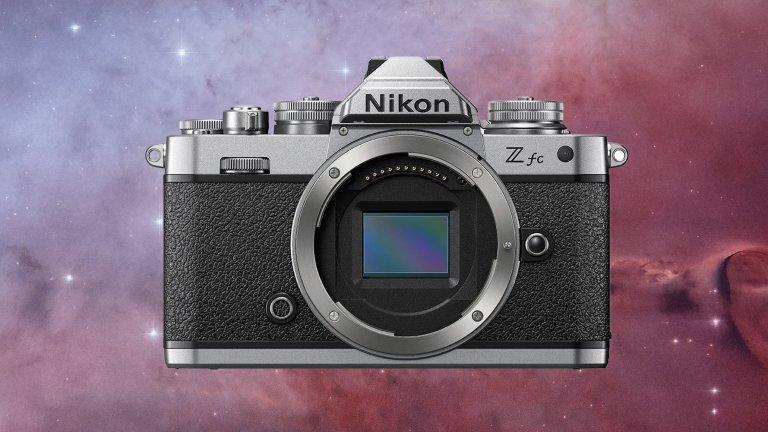
The Nikon FM2 is one of the great film SLRs, and the Z fc copies its top plate closely enough to fool people at a distance. Shutter speed, ISO, and exposure compensation each get their own engraved aluminum dial, so you can read every exposure setting with the camera switched off. I love setting exposure with real dials, and so do many of the working photographers I know. The price has come down too: Adorama had the body at $756.95 on October 20, 2026, against a $1,056.95 list price, and Nikon’s own store listed it starting at $759.95.

Inside, it’s a 20.9-megapixel DX sensor. Nikon rates it for 4K at 30 fps with full-pixel readout and no crop, plus bursts up to 11 fps, and the 3-inch touchscreen flips fully around for selfies and flips in to hide, which keeps the retro look intact. The contoured front makes it easier to hold than its flat sides suggest, and the 2.36-million-dot OLED viewfinder is big and bright for a camera this size.

It’s from 2021, and you can tell in places. There’s no in-body stabilization, and the Z50 II that Nikon launched at $909.95 in late 2024 has a newer processor and better subject detection inside a plainer body. The Z fc is the one to buy if you’ll enjoy using it more, and that’s a real consideration. The short Z-mount flange also makes it a good host for adapted vintage lenses, and Nikon’s FTZ II adapter covers decades of F-mount glass.

Best point-and-shoot: Canon PowerShot V1
See It

Pros

  • 1.4-inch-type, 22.3MP sensor, near Micro Four Thirds in area (per PetaPixel)
  • 16-50mm-equivalent f/2.8-4.5 zoom is wide enough for arm’s-length video
  • Built-in cooling fan for long 4K recordings
  • $849 at Canon, down from a $1,029 regular price

Cons

  • 4K at 60 fps uses a 1.4x crop
  • No viewfinder, and Galaxus’s reviewer found the screen hard to read in sun
  • Lens slows to f/4.5 at the long end

Specs

  • Lens mount: Fixed 8.2-25.6mm (16-50mm equivalent), f/2.8-4.5
  • Sensor size: 1.4-inch type
  • Megapixels: 22.3
  • Maximum video resolution: 4K at 60 fps (1.4x crop); 4K at 30 fps full width
  • Price: $849 at Canon as of October 20, 2026

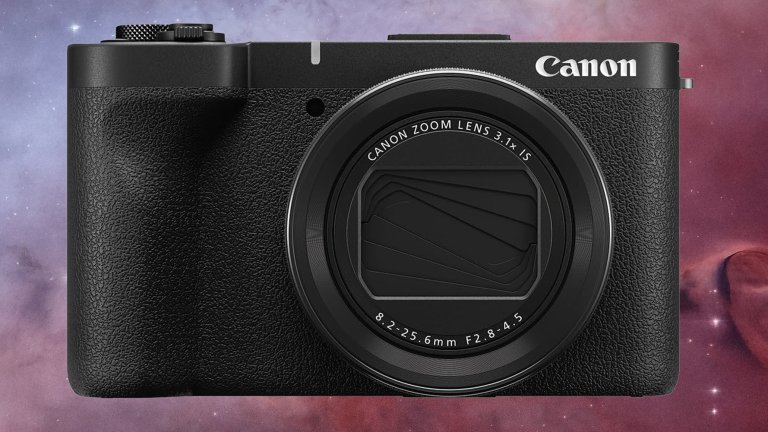
Canon couldn’t keep up with orders for the PowerShot V1 after it launched in 2025. It’s easier to find now, and cheaper: Canon’s store had it for $849 on October 20, 2026, down from a $1,029 regular price. It replaces the Sony ZV-1 II we used to recommend here, because the Insta360 above covers that camera’s vlogging job better and the V1 is the stronger camera for everything else.

Its sensor is the reason. Canon calls it a 1.4-inch type, and at 22.3 megapixels it has roughly the area of a Micro Four Thirds sensor, per PetaPixel, which by our arithmetic is about twice the area of the 1-inch sensors in most premium compacts. More area means cleaner low-light shots and easier background blur from a camera that fits in a jacket pocket. The zoom covers 16-50mm equivalent at f/2.8-4.5 (17-52mm in video mode), wide enough to hold at arm’s length and long enough for a head-and-shoulders portrait.

The V1 is also a better video camera than most compacts because it has a fan. PetaPixel’s launch report says Canon rates it for more than two hours of 4K/60 in typical conditions with the right settings, and the fan settings lift the time limits on 4K/30 and Full HD. 4K/60 crops the frame by 1.4x, though, so use 4K/30 when you need the full width, and expect the lens to get slow at the telephoto end indoors. Canon lists optical image stabilization in the lens plus digital Movie IS, and Galaxus’s hands-on review notes a built-in ND filter, which helps keep motion natural in bright daylight. The same review called the lack of a viewfinder the camera’s biggest weakness, and the screen is dim in direct sun, so this is a camera you’ll frame at arm’s length.

Best full-frame: Canon EOS RP
See It

Pros

  • 26.2MP full-frame sensor
  • Takes the same RF lenses as Canon’s pro bodies
  • Vari-angle touchscreen and OLED viewfinder
  • $899 for the body at Canon, a $250 discount

Cons

  • Discontinued in Japan in June 2026; US stock won’t last forever
  • 4K tops out at 23.98 fps with about a 1.76x crop, per Digital Camera World
  • About 5 fps bursts, per Canon

Specs

  • Lens mount: Canon RF
  • Sensor size: Full-frame
  • Megapixels: 26.2
  • Maximum video resolution: 4K at 23.98 fps (Canon’s spec)
  • Price: $899 body only at Canon as of October 20, 2026

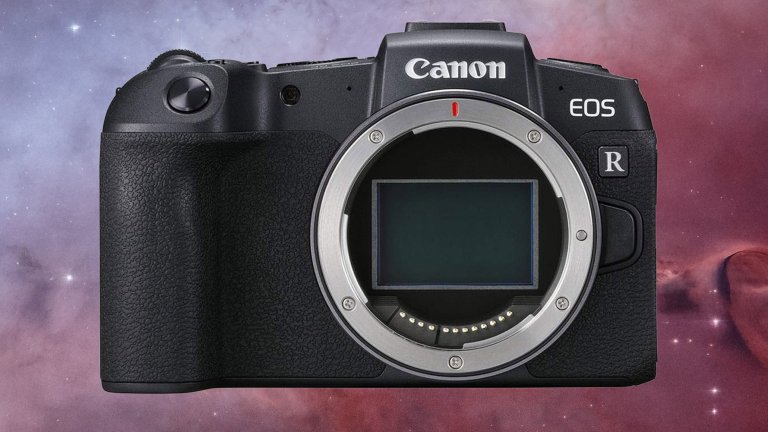
Canon listed the EOS RP as discontinued in Japan in June. In the US, Canon’s store still sells it, at $899 for the body as of October 20, 2026, which is $250 off a $1,149 regular price through November 1, per Canon. It was $799 at Canon and B&H in early October, per CPriceWatch, so a holiday sale could bring that back. Canon U.S.A. told PetaPixel in June that the RP remained on sale in the United States, with no end date announced, so treat this as a while-supplies-last pick.

I’ve shot with the RP as a backup body, and it’s a capable camera for what it is: a small, light way into full-frame for people who mostly shoot stills. The reason to buy it is the sensor. A full-frame sensor is the size of a frame of 35mm film, so lenses behave the way their focal lengths suggest: a 50mm lens looks like a 50mm lens, wide angles stay wide, and it’s easier to get a sharp subject against a soft background. The RP’s 26.2-megapixel sensor also handles dim rooms better than the APS-C cameras above, and anything you buy for it works on Canon’s newest full-frame bodies when you upgrade.

It’s a stills camera first. Canon’s spec page lists bursts of about 5 fps and 4K at 23.98 fps, and Digital Camera World’s review measured about a 1.76x crop in 4K, with Canon’s Dual Pixel autofocus unavailable in that mode, so the R50 is the better Canon for video. The kit with the RF 24-105mm f/4-7.1 lens runs $1,199 at Canon, past our budget; buy the body and add the RF 50mm f/1.8 STM for portraits.

Best action camera: GoPro Mission 1 Pro
See It

Pros

  • 1-inch 50MP sensor, 8K at 60 fps, and 4K at 240 fps (GoPro’s spec)
  • Waterproof to 66 feet (20 meters) without a housing
  • Front and rear screens, HyperSmooth stabilization, and Horizon Lock
  • Built-in mounting fingers fit standard GoPro mounts

Cons

  • $699.99 list, well above the Hero 13 Black
  • 3.5mm mic input requires the optional Media Mod
  • GoPro is looking for a buyer, per RedShark News

Specs

  • Lens mount: Fixed, 159-degree native field of view (GoPro’s spec)
  • Sensor size: 1-inch
  • Megapixels: 50
  • Maximum video resolution: 8K at 60 fps (GoPro’s spec)
  • Price: $699.99 at Adorama as of October 20, 2026

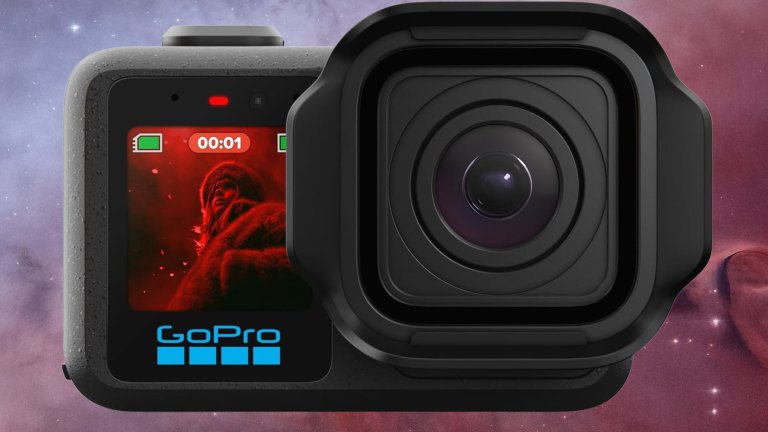
GoPro hasn’t released a Hero 14 Black. GoPro’s 2026 flagship is the Mission 1 Pro, a camera the company pitches at filmmakers, but it keeps everything that makes a GoPro useful for action: it’s waterproof to 66 feet without a housing, it has mounting fingers built into the body, and it has screens front and back. The difference is the sensor. It uses a 1-inch, 50-megapixel chip, much larger than the 1/1.9-inch sensor in the Hero 13 Black, which should mean cleaner footage at dusk and indoors.

GoPro rates it for 8K at 60 fps, 4K at 240 fps for slow motion, and 1080p at 960 fps in 10-second bursts, with 10-bit GP-Log2 and HLG HDR. Its native field of view is 159 degrees, per GoPro, and four microphones record 32-bit float audio, which makes a sudden shout much harder to clip.

If you just want a camera to stick on a helmet and forget, GoPro still sells the Hero 13 Black for less. If you want a waterproof camera that shoots photos first, with an optical zoom, look at OM System’s Tough TG-7 instead. Both are rugged and totally waterproof without a case, which also makes either one a good underwater camera.

Cameras that just missed the $1,000 cut

Several cameras that show up in nearly every budget camera roundup didn’t make this list because their current prices are over $1,000. If one goes on sale below that line during the holidays, it’s worth a look.

  • Nikon Z50 II: about $1,007 for the body at Focus Camera in mid-October, with a newer processor than our Z fc pick. It’s about $7 over the line, so a holiday sale could easily push it under.
  • Sony a6400: $1,098 for the body at Adorama as of October 20, 2026, for a camera that launched at $899.99 for the body in 2019.
  • Sony ZV-E10 II: $1,198 at Adorama as of October 20, 2026.
  • Canon EOS R10: $1,249 with the 18-45mm lens at Canon and B&H as of October 12, 2026. Canon’s refurbished store sold the same kit for $649 in May, per CPriceWatch.
  • Ricoh GR IIIx: about $1,247 at US retailers in late August, per Digital Camera World, and Ricoh is ending production in Japan this month.
  • Fujifilm X-E5: $1,699.95 for the body at Fujifilm’s US store in mid-October.

What to consider when buying a camera under $1,000

The right camera depends less on the spec sheet than on what you’ll actually shoot and how you’ll carry it. Here’s what to look at before you buy.

Sensor size matters more than megapixels

Most cameras here land between 20 and 26 megapixels, which is plenty for prints and cropping. Sensor size makes a bigger difference. A full-frame sensor matches a 35mm film frame. APS-C sensors, like the ones in the Canon R50, Fujifilm X-T30 III, and Nikon Z fc, have roughly 40 percent of that area, and the 1-inch and 1.4-inch-type sensors in the compacts and gimbal cameras are smaller still, though larger than most phones’ main sensors. Bigger sensors generally mean cleaner low-light shots and easier background blur. APS-C makes telephoto lenses smaller and cheaper, which is why it’s a good fit for most beginners.

Interchangeable lenses or a fixed lens

Compact cameras, gimbal cameras, and action cameras have built-in lenses, which keeps everything in one tidy package. Interchangeable-lens cameras let you add a fast prime for portraits or a long zoom for sports later, but you’re buying into a lens mount. Canon RF, Nikon Z, and Fujifilm X all have current lens lines from the camera makers plus third-party options, so any of the mirrorless picks here will have new glass to grow into.

Gimbal cameras are their own category

A pocket gimbal camera like the Insta360 Luna Ultra mounts its lens on a motorized 3-axis stabilizer, so walking shots stay smooth without the cropping that electronic stabilization uses. The trade is that the lens is fixed and the camera is built around video. If you mostly film yourself, buy one. If you mostly shoot photos, a mirrorless camera will serve you better.

Video specs to check

4K is standard across this list, but how a camera makes it varies. Some read the full width of the sensor; others crop in, which narrows your field of view and makes wide shots harder. Frame rate matters too: 30 fps is standard, 24 fps looks more like film, and 60 fps or higher lets you slow footage down. Check the recording format and bit depth as well. Log profiles and 10-bit recording give you more room to edit color, but they also mean more time grading.

Manual controls and build

When you’re starting out, manual mode can seem intimidating. That won’t last, and you want a camera you can grow into, which is why dial-heavy bodies like the Nikon Z fc and Fujifilm X-T30 III are worth a look even for beginners. Most cameras under $1,000 also aren’t built for harsh conditions. If you plan to get your camera wet or dirty, buy one made for it, like the GoPro, rather than worrying about a mirrorless body every time it rains.

FAQs

Q: What’s the best camera for beginners under $1,000?

The Canon EOS R50. It costs $849.99 with an 18-45mm lens at Canon as of October 2026, shoots uncropped 4K video, and has an Advanced A+ Assist mode that handles backlit and night scenes while you learn.

Q: Is the Canon EOS R50 still worth buying in 2026?

Yes. Canon hasn’t announced a successor as of October 2026, and the R50 still offers a 24.2-megapixel APS-C sensor, uncropped 4K at 30 fps, and Canon’s current RF lens mount. Y.M.Cinema Magazine reported in August 2026 that it was still the best-selling mirrorless camera on Amazon. If you mostly shoot video, consider the R50 V instead.

Q: When do cameras go on sale?

Around big retail events. Canon’s prices dropped during the early-October sales, then rose on October 12: the R50 kit went from $799 to $849 and the EOS RP body from $799 to $899, per CPriceWatch. The holiday shopping season around Black Friday is the next likely window.

Q: Which is better: mirrorless or DSLR?

For a new camera, mirrorless. Camera makers have moved their new bodies and lenses to mirrorless systems, and you get features like subject-detection autofocus that DSLRs largely missed. A used DSLR can still be a bargain if you already own lenses for it, but new glass for those mounts has mostly stopped.

Q: Can modern cameras use vintage lenses?

Yes, and mirrorless cameras are especially good at it. Their short lens mounts leave room for inexpensive adapters, so older manual-focus lenses can work on bodies like the Nikon Z fc or Fujifilm X-T30 III. You’ll usually focus by hand, which is easier with the focus magnification and peaking tools most mirrorless cameras include.

Q: Can you buy the DJI Osmo Pocket 4 in the US?

Not through official channels as of our research. DJI launched the Osmo Pocket 4 in April 2026 with its FCC authorization still pending, per DroneXL, and Amateur Photographer reported in June that DJI’s products remained off the US market. The Insta360 Luna Ultra, our vlogging pick, is sold at Insta360’s US store and major retailers.

Q: Is there a Fujifilm X-E5 under $1,000?

Not new. Fujifilm’s US store listed the X-E5 body at $1,699.95 in October 2026. The Fujifilm X-T30 III gets you the same X-Processor 5, a film simulation dial, and a viewfinder for $999.95, body only, with a 26.1-megapixel sensor instead of the X-E5’s 40 megapixels.

Final thoughts on the best cameras under $1,000

  • Best overall: Canon EOS R50, $849.99 with a lens ($529 refurbished when Canon has it), for uncropped 4K and beginner-friendly auto modes
  • Best for vlogging: Insta360 Luna Ultra, $769.99, for a 1-inch sensor, a 3x telephoto, and a mechanical gimbal in your pocket
  • Best for video on a budget: Canon EOS R50 V, $619.99 body only, for creator features on the R50’s sensor
  • Best Fujifilm camera: Fujifilm X-T30 III, $999.95 body only, for Fujifilm color and a film simulation dial
  • Best retro camera: Nikon Z fc, $756.95 body only, for real dials and FM2 styling
  • Best point-and-shoot: Canon PowerShot V1, $849, for a big-sensor point-and-shoot with a cooling fan
  • Best full-frame: Canon EOS RP, $899 body only, for full-frame while stock lasts
  • Best action camera: GoPro Mission 1 Pro, $699.99 (and $599.99 on sale this fall), for a 1-inch sensor in a waterproof GoPro body

Pro cameras still cost thousands of dollars, but $1,000 buys a lot of camera, as long as you pick for what you shoot. Photographers should start with the Canon R50 or Fujifilm X-T30 III, and video-first creators on a budget should look at the R50 V. If you mostly film yourself, get the Luna Ultra. Whatever you buy, learn it well. A great camera won’t do much without the person holding it.

The post The best cameras under $1,000, according to experts appeared first on Popular Science.
  •  

Deer mating season can be deadly for drivers. Solar powered roadsigns may help.

Fall is here, and with it comes very determined deer. Mating season for the hoofed ruminants typically begins once temperatures dive and the days grow shorter, but the annual event also poses problems for humans. The deer have one thing on their mind, which means they pay even less attention to vehicles and roadways. In New Jersey, roughly 41 percent of all annual animal collisions occur between October and December, while the AAA Foundation for Traffic Safety routinely tallies over 275 fatalities from similar accidents nationwide every year.

Driving gets even riskier in rural areas, which frequently host higher deer populations and much darker roads. However, a recent pilot program in Virginia offers a promising tool that may keep commuters safe while also allowing the animals to do their thing. At the Virginia Tech Transportation Institute (VTTI), researchers designed an automated digital roadside sensor system that warns drivers of large jaywalkers like deer and elk.

According to VTTI engineer Shreyas Bhat, the year-long trial demonstrated a “measurable change” in how local drivers responded when alerted to oncoming wildlife. Bhat and his colleagues tested the system with help from the state’s Department of Transportation along a 14-mile section of Route 460 in southwest Virginia. The array was composed of eight portable, solar-powered trailers and customizable digital message signs. Each station included thermal cameras analyzed by onboard machine learning software, which triggered the sign alerts whenever it flagged nearby medium– to large–sized animals.

Over the course of the trial, researchers amassed driving data on over 10,000 vehicles, while the detection system maintained an estimated accuracy of around 97 percent. This is particularly impressive given the region’s environmental and infrastructural challenges.

“This system is unique because of the requirements of the area—it needed to be solar powered, portable, and be able to withstand all weather conditions,” explained VTTI engineer Jean Paul Talledo Vilela.

The team reported an average reduced speed of about three miles per hour thanks to the roadside warning signs. That may not seem like much, but even a slight slowdown can save lives. It also proved people took note of the system.

“Speed is an important data point to understand if drivers were actually paying attention to the message board,” said Talledo Vilela. “Even if they are not braking aggressively, some reduction in speed indicates that they may be paying more attention to their surroundings because they got that alert.”

While Talledo Vilela, Bhat, and their collaborators are still parsing through data from the program,(it ended in September) the initial findings remain promising. From here, the team hopes to refine the overall system while organizing future trials in other regions of the country. If successful, the relatively simple installations could also be adapted for other year-round road safety situations like construction or real-time weather hazards.

The post Deer mating season can be deadly for drivers. Solar powered roadsigns may help. appeared first on Popular Science.

  •  

What night is van Gogh’s ‘The Starry Night’? New analysis says it’s in July.

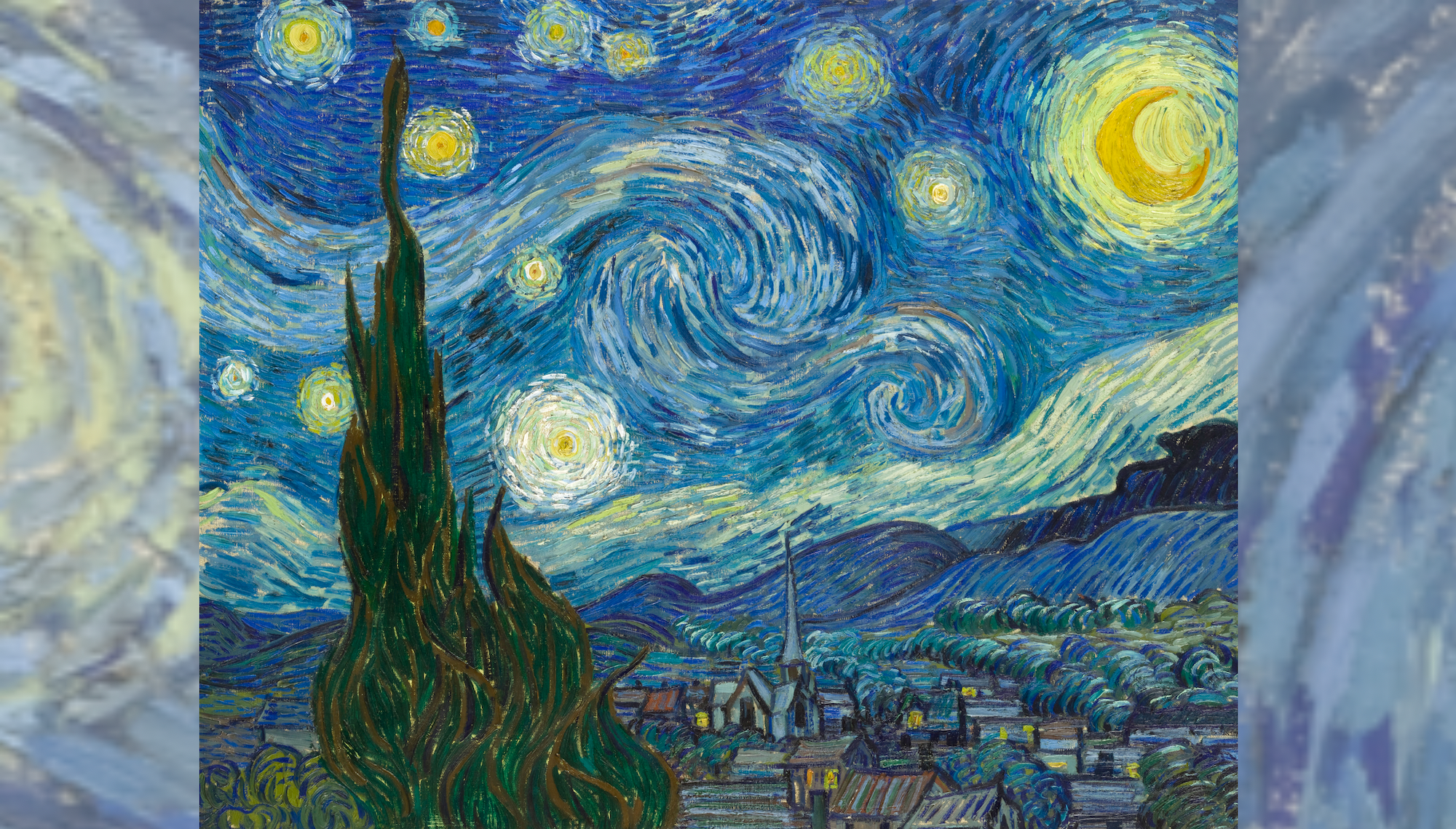
The swirling bluish-white mistrals, towering cypress trees, and glittery stars in Vincent van Gogh’s “The Starry Night” (1889) have captivated our imaginations for generations. Despite never selling a painting during his lifetime, van Gogh’s “The Starry Night” has since inspired a hit song in 1972, draws visitors to the Museum of Modern Art in New York City, and adorns everything from journals to scarves and tote bags.

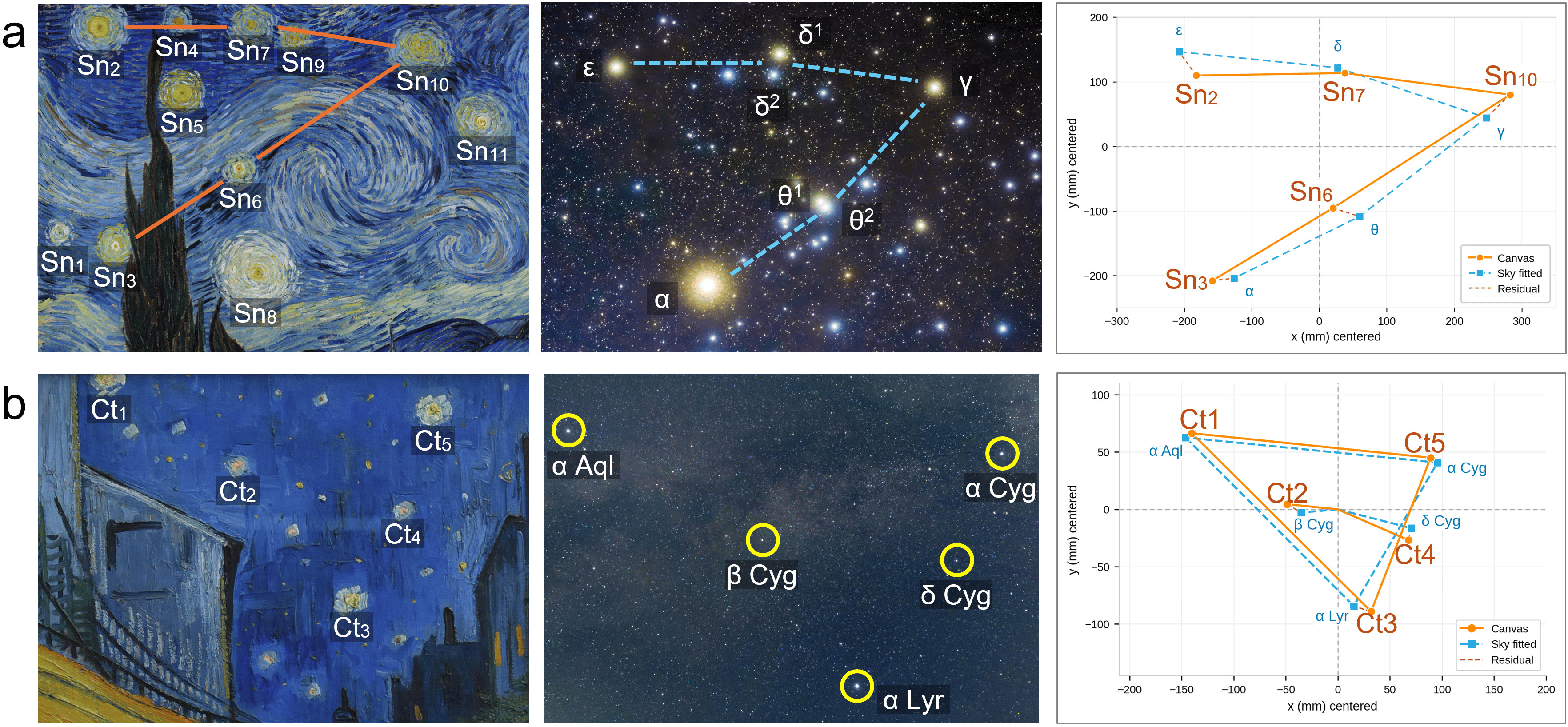
But what particular night above Saint-Rémy-de-Provence, France, did the troubled post-impressionist painter actually put on the canvas? A new analysis points to July 22, 1889. During the early morning hours at that time of year, a waning crescent moon, the planet Venus, and the Hyades star cluster in Taurus appeared close together—all of which are seen in the painting. A study published today in the journal Scientific Reports details the findings. 

The story behind ‘The Starry Night’

According to the Metropolitan Museum of Art, van Gogh was inspired by the view from his window at the Saint-Paul-de-Mausole asylum in southern France. He spent twelve months there 1889–1890, seeking reprieve from his mental illnesses and was also diagnosed with a form of epilepsy. 

Like many of his paintings that year, “The Starry Night” was created in several sessions during the day, under different weather conditions. The village nestled below the hills was also based on other views, and could not be seen from his window. Although van Gogh reconstructed some of the features in the night sky as he saw them, he also altered the celestial shapes and added a sense of glow.

“Van Gogh assigned an emotional language to night and nature that took them far from their actual appearances,” the museum writes. “Dominated by vivid blues and yellows applied with gestural verve and immediacy, ‘The Starry Night’ also demonstrates how inseparable van Gogh’s vision was from the new procedures of painting he had devised, in which color and paint describe a world outside the artwork even as they telegraph their own status as, merely, color and paint.”

Looking to the stars

Using astronomy to pinpoint which day inspired the painting began with UCLA art historian Albert Boime in 1984 and Harvard University astronomer and astrophysicist Charles Whitney in 1986. The two scholars reached conflicting conclusions, and neither of them displaced the prevailing religious and symbolic interpretations of the painting. 

Historically, the painting has been dated based on a letter van Gogh wrote to his brother Theo around June 18, 1889. However, the waning gibbous moon from mid-June does not account for the slender crescent seen in the painting. By July 22, 1889, the Hyades star cluster rose in the eastern sky alongside Venus, and the moon’s shape looked closer to the crescent on the canvas. This new study uses observational geometry to find an answer.

“To an observational astronomer, the cluster of stars in ‘The Starry Night’ is the Hyades in Taurus,” said study co-author Elijah Jeong-hyun Kim.  “But the moment I read the earlier studies explaining it as Aries, I heard the painting calling to me.” Kim is the CEO at South Korean robotic telescope company SLLAB and a PhD candidate at Kyung Hee University.

For this research, the team combined astronomical simulations and measurements of star positions, with historical weather records, and van Gogh’s own letters. They also used earlier sketches of the landscape to reconstruct the narrow field of view represented in “The Starry Night.”

(A) The central cluster of stars in “The Starry Night” (1889), left, and the Hyades cluster in Taurus, center. At right, the five stars in the painting (orange) are overlaid on the real stars (blue) after matching for size, orientation and position; red dashed lines show the residual differences. (B) The stars in “Café Terrace at Night” (1888), left, and the stars around the Summer Triangle, center. The panel at right follows the same layout as in (A). Image: Kim et al., Scientific Reports (2026), Figs. 2, 4 and S1.

According to the team, the crescent moon, Venus, and the Hyades star cluster in the constellation Taurus would have been visible around dawn on July 22, 1889. This configuration generally corresponds to what is portrayed in the painting. Weather records suggest that the night sky around July 22 would have been clear enough for this astronomical arrangement to be visible. Additionally, the frequent mentions of cicadas in van Gogh’s letters suggest that the region was seeing a period of hot weather, which matches the recorded temperatures in July 1889 better than in June.

The team also verified that the painter’s field of view in another painting titled “Starry Night over the Rhône” (1888) with photographs taken on site was painted when the sky was in Aries. Using the same method, the team also believes that the stars in “Café Terrace at Night” (1888) may be the Summer Triangle.

“I hope this work prompts a renewed, multidisciplinary look at the sequence and working methods of the Saint-Rémy paintings, and at Van Gogh’s movements that summer,” Kim said. “Our conversation with Van Gogh’s other skies is still ongoing. We plan to tell those stories one by one.”

The post What night is van Gogh’s ‘The Starry Night’? New analysis says it’s in July. appeared first on Popular Science.

  •  

Some people really are werewolves—at least, in their minds

Dr. Nick Medford’s patient had plenty of reasons to be terrified of a simple blood test.

His body had shrunk down to a fraction of its size, or so he believed, and the physicians looming over him were enormous. Then there was the needle about to pierce his vein: to the patient’s eye, it was larger than his entire arm.

It might sound like something out of Alice in Wonderland. But this patient’s story belonged to a different genre entirely. Horror, namely. As far as the patient was concerned, there was no point in taking his blood. It was no longer human. Neither was he. 

Medford’s patient was suffering from clinical lycanthropy, defined as the delusional belief that one is turning into a werewolf. And unlike the flesh-tearing beasts of folklore, who terrorize the unsuspecting by the light of the full moon, patients like Medford’s are often the ones haunted, trapped inside a body-horror nightmare. 

According to Medford, his patient knew something was wrong, but was as confused about his condition as anyone. “Not only did he think he was a werewolf, but he would also talk about things like wanting to realign the cosmos and wanting to kill God,” says Medford, a neuropsychiatrist with the South London and Maudsley NHS Foundation Trust. 

“And then you would say, ‘Do you believe in God? Are you religious?’ And he’d say, ‘No.’ His ideas didn’t really make sense even to him, which was a part of his distress.”

So, what causes this rare condition? And why does it take the form of one of Halloween’s classic monsters? 

Rarer than movie werewolves

If you’ve never heard of clinical lycanthropy before, there’s a good reason: Hollywood’s werewolves easily outnumber the real-life cases of this condition. Only about 25 instances have been reported in the medical literature.

Because there are so few cases, Medford says it is difficult to identify a common cause or predictable disease course. However, he says that typically it is seen in patients already experiencing mental illness.

“In around 40 percent of published cases, it occurs in the context of schizophrenia,” Medford says. “There are also reports of it occurring in the context of bipolar disorder or psychotic depression. So, in the context of severe mental illness, basically.”

Wild man with long hair and ripped pants and shirt eats a baby as people flee in the background.
Experts debate whether German artist Lucas Cranach the Elder depicts a werewolf or a cannibal in this woodcut print from the 16th century. Image: Public Domain

Medford’s own patient had been diagnosed with Huntington’s disease, an inherited, fatal brain disease that causes psychiatric symptoms and uncontrolled body movements. The case, which Medford documented in a 2023 report, was the only published instance of clinical lycanthropy associated with Huntington’s. Although Medford says it is uncertain what then led his patient to believe he was a werewolf, he says the physical changes associated with Huntington’s may have fed this idea. 

“There may be some change in the person’s body or in their perception or their experience of their body,” Medford says. “That might be, if you like, the seed from which this idea can develop.”

This seems possible in the case of Medford’s patient, who exhibited involuntary writhing movements and other strange physical sensations.

“He did not seem to be aware that he was having these abnormal movements, but he was aware of some weird sensations,” he says. “He described freezing sensations and electric-shock-like sensations. He had some sense that something strange was happening in his body.”

Why wolves?

But physical changes alone don’t explain why the patient imagined he was turning into a werewolf. Which raises the question: Why do these delusions so often focus on lupine metamorphoses?

They don’t always, Medford notes. There’s a broader term—therianthropy—for the delusion that one has turned into any animal. But most of these cases involve canines, he acknowledges.

“Most of them are wolves or dogs or something of that type,” he says. “And then there’s a whole range of other strange things. There’s a report of someone who thought they’d turned into a bee.” That would make for an underwhelming horror movie, to be sure. 

So, is it a coincidence that many of these patients report delusions ripped straight from a creature feature? 

Probably not. In their case report, Medford and his co-author, neuroscientist Natasha Sigala, note that “delusions are influenced by culture,” and few cultural images of human/animal shapeshifting are as deeply embedded as the werewolf.

“The werewolf folklore and werewolf mythology goes right back to antiquity,” Medford says. “And it’s kind of interesting that the werewolf or something like it seems to pop up in a lot of different cultures and different times and places.”

Headshot of actor in werewolf makeup with large pointed teeth and scarf.
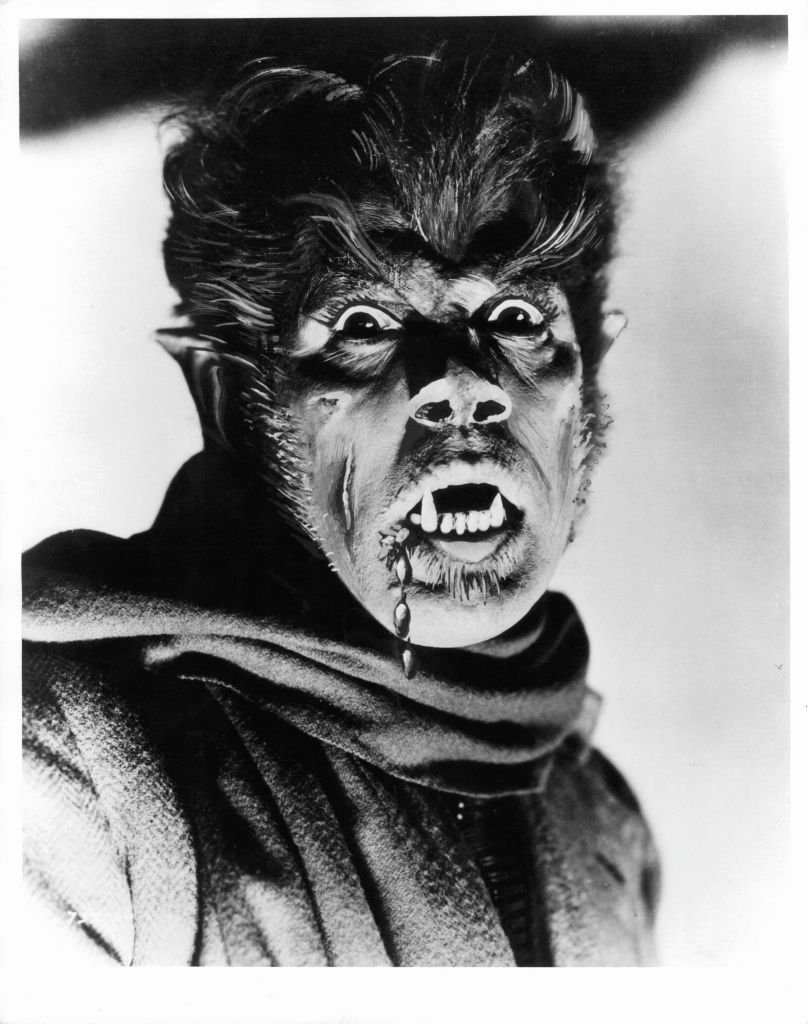
American actor Henry Hull poses for a publicity portrait for his 1935 film Werewolf of London. Image: Getty Images / Stringer / Archive Photos

Why is the werewolf legend so potent and enduring? Medford suspects it may tap into something primal. 

“The werewolf symbolizes something about the human condition,” he says. “We live in civilized societies, and we adhere to social norms, but there’s a sort of animal part of us that perhaps chafes against that.”

That internal conflict may explain some of the patient’s other fixations. He described urges to strangle his wife and to defecate in a church. Medford notes that Huntington’s may also have impaired his sense of disgust, which can happen as the disease progresses.

Yet the patient also fought against his own impulses. At times, he lunged at staff, only to pull back and apologize.

“You could see the conflict in that moment,” Medford says. In that sense, the patient wasn’t so far from the werewolves of fiction. Like a movie werewolf beholding his mirror image in horror, he looked at his reflection and saw himself changing in ways he couldn’t control. 

The werewolf fades 

For Medford’s patient, that dreaded blood test ultimately was part of a turning point in his treatment. The bloodwork allowed Medford to keep the patient on clozapine, a potent antipsychotic. As Medford increased the dose, the patient’s delusional beliefs dwindled, and although the underlying Huntington’s disease remained, the werewolf soon was gone.

Medford hopes patients like his will be treated with compassion rather than sensationalism. “These cases, they’re rare, but when they do happen, they tend to arise in the context of serious psychiatric or neurological disturbance,” Medford says. “They are people meriting sympathy and treatment, rather than romancing about it.”

In Ask Us Anything, Popular Science answers your most outlandish, mind-burning questions, from the everyday things you’ve always wondered to the bizarre things you never thought to ask. Have something you’ve always wanted to know? Ask us.

Related 'Ask Us Anything' Stories

The post Some people really are werewolves—at least, in their minds appeared first on Popular Science.
  •  

Anthropic’s Financial Situation May Explain Why Dario Amodei Looks So Terrified All the Time

Pull up any random photo of billionaire Anthropic CEO Dario Amodei, and you’re likely to land on a facial expression expressing something between horror and deep consternation. There may be a simple explanation for that: he knows the truth about his company’s finances.

New reporting by the Wall Street Journal revealed the mounting costs for the AI lab, which ballooned to a net loss of $80 billion in the first six months of 2026. Anthropic’s losses for the same period a year prior were $13 billion — still an eye-watering sum, but peanuts compared to its runaway spending this year (the WSJ called it “one of the largest half-year losses ever reported.”)

The bleak financial numbers come from a draft IPO prospectus viewed by the WSJ, which notes that the company’s revenue for the first half of 2026 grew by just $1.1 billion over the same period to $16.3 billion.

The figures add to the anxiety around how long the AI spending bubble can sustain itself. If Anthropic’s losses continue to mount at a rate far exceeding revenue growth, there’s simply no way the lab can dig itself out of the hole it’s burrowed for itself.

That would be bad news for the US economy as a whole, which now hinges almost entirely on circular AI investments and data center development.

Beyond the immediate losses, the WSJ notes that the AI lab is also footing a $450 billion bill for cloud computing infrastructure over the next seven to ten years — meaning the clock is ticking on what is surely the costliest game of “kick-the-can” the world has ever seen.

More on Anthropic: Anthropic Secretly Lobbying Government to Only Shut Down an AI Model If It’s Poised to Kill More Than 50 People

The post Anthropic’s Financial Situation May Explain Why Dario Amodei Looks So Terrified All the Time appeared first on Futurism.

  •  

A 180-Foot-Long Stone Tomb With “Antennae” Found in Western Sahara Is Over 4,000 Years Old

On a gravel plain in northern Western Sahara, with no shade for miles, there is a heap of stones 54.5 meters (179 feet) long. Two rows of stone slabs run out from it like the arms of a V that never quite closes. Archaeologists call these rows “antennae”, and the monuments antennae tumuli (a tumulus […]

  •  

Una tumba de 55 metros de longitud descubierta en el Sáhara Occidental tiene más de 4.000 años

En una llanura de grava del norte del Sáhara Occidental, sin una sombra donde resguardarse, hay un montón de piedras de casi 55 metros de largo del que salen dos hileras de losas. Los arqueólogos las llaman «antenas», y de ahí el nombre de estos monumentos, túmulos con antenas. Son frecuentes en el país y […]

  •  

Rome Reshaped Spain’s DNA More Than the Visigoths Did, Ancient Genomes Show

In the early 5th century, a woman of high rank was buried beside an old Roman posting station on the Via Augusta, in what is now the province of Castellón. Her grave held a glass cup and two gold pins in a style from the Danube region. Her brother died in Mérida, the Roman city […]

  •  

Roma cambió la genética de Hispania mucho más que los suevos, alanos y visigodos, según 243 genomas antiguos

A comienzos del siglo V, una mujer de alto rango fue enterrada junto a una antigua posta de la Vía Augusta, en la actual provincia de Castellón, con un vaso de vidrio y dos alfileres de oro de tradición danubiana. Su hermano acabó sus días en Mérida, la romana Augusta Emerita, a unos 725 kilómetros […]

  •  

La “muralla china” de Huesca: 840 metros de roca donde un señor de la guerra medieval levantó su fortaleza

Desde el mirador de la ermita de San Marcos parece la obra de un ejército de canteros: dos filas paralelas de piedra caliza, casi verticales, que bajan por una loma y se meten en el agua verde del embalse de Canelles. Entre ellas asoma una ermita medio derruida. Nadie levantó esos muros. Son los Roques […]

  •  

Spain’s “Great Wall” Was Never Built: It Is a 2,750 Feet Rock Ridge That a Medieval Lord Turned Into a Fortress

From the viewpoint at the chapel of San Marcos, it looks like the work of an army of stonemasons. Two lines of pale limestone, almost vertical, run down a hillside and disappear into the green water of the Canelles reservoir. A half-ruined chapel peeks out between them. Nobody built those walls. They are the Roques […]

  •  

Baby manta rays stick to the shallows to avoid sharks and orca

Before giant manta rays (Mobula birostris) can grow to up to 30 feet long and 4,409 pounds, they must start small like most living things. Giant manta ray babies (called pups) in Central America don’t have their size to protect them from orca whales (Orcinus orca) and the numerous sharks in the open ocean. Their solution—sticking to the coast, where there is plenty of food to help them grow and defend themselves. A new study published today in the journal Frontiers in Fish Science details the baby rays’ behavior. 

“We show that manta rays’ lifestyle isn’t a one-size-fits-all behavior. Giant manta rays in Central America undergo a dramatic shift in space use as they mature,” Jeffry Madrigal-Mesén, a study co-author and project leader of Mantas Costa Rica, said in a statement. “Juveniles remained strictly within shallow nearshore waters that serve as coastal refuges, but most of the tracked adults executed long-distance transboundary migrations along the continental shelf break into Central America.”

a manta ray swimming
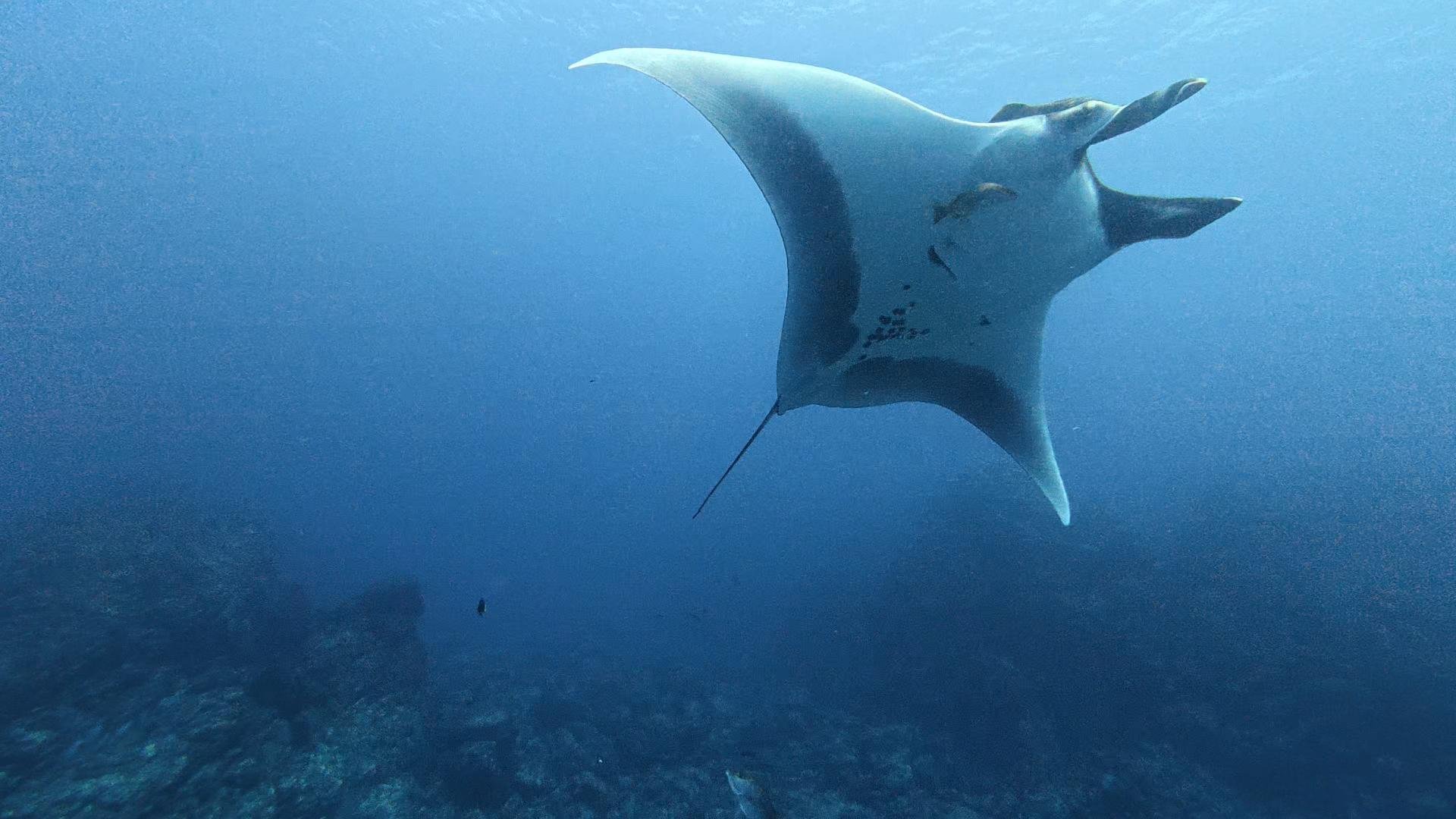
Puntitos, one of the immature mantas the scientists followed. Image: Jeffry Madrigal.

Where the pups grow

In the study, the team used multiple methods to track and identify mantas at five locations between 2018 and 2025. Acoustic telemetry uses underwater sound pulses to monitor fish movements and allowed the team to track 59 individual rays. With satellite telemetry, transmitters track movement and behavior from a distance and helped the team track large-scale movements of 12 individuals. Lastly, photo identification helped to identify individual manta rays.

“If we hadn’t used all three technologies together, we simply wouldn’t have been able to piece this puzzle together,” explained Madrigal-Mesén. “Combining these tools turned fragmented data into a unified, undeniable story.”

The team ended up with a dataset of over 12,000 detections. The data showed that young mantas (those with a body about 10 feet or less) stick to shallow coastal refuges. In these more shallow spots, the pups have a safe place that doesn’t overlap with their predators’ hunting grounds. They have plenty of food and places to hide, and even get essential services like cleaning from reefs.

“Mature adults can rely on their massive body size and their ability to dive deep to evade threats. But juveniles don’t have that luxury,” said Madrigal-Mesén. “What is truly amazing is seeing how strictly young manta rays stick to coastal waters as long-term refuges. We see the same individuals more often than once a year. In fact, just recently, they were sighted again at the exact same tagging location. It is always a joy to see them again—they have truly become a part of the family.”

a manta ray swimming by a diver
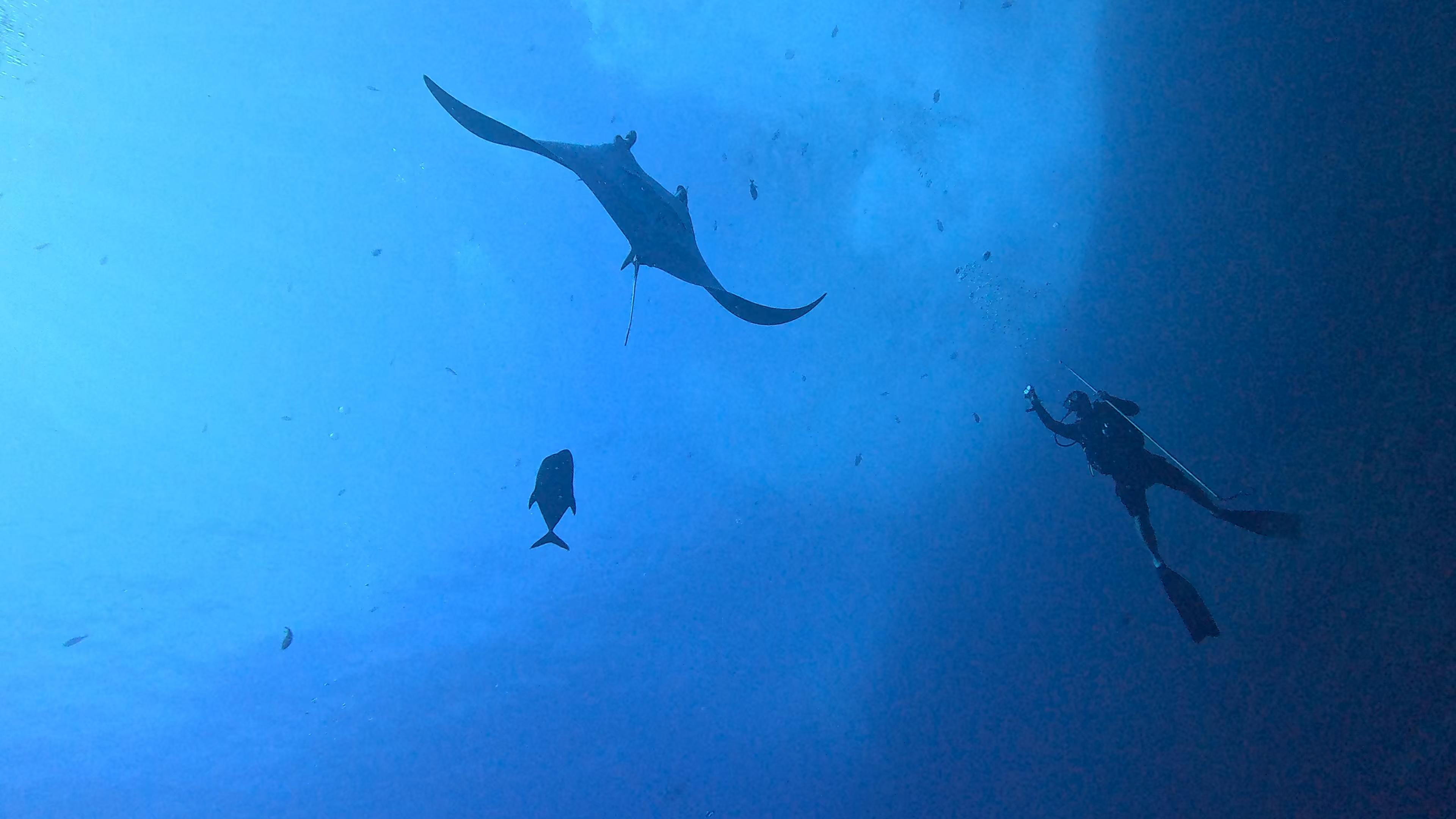
Manta ray in close proximity to a diver. Image: Jeffry Madrigal.

By comparison, nine mature mantas in the study went on expansive migrations along the continental shelf break. One manta ray nicknamed Mickey Mouse because of a spot pattern on his belly had movements that suggest the fish also continue to display loyalty to a particular site once they grow up. Unusually approachable for a manta, Mickey Mouse allowed the team tag him multiple times over several years, which provided a continuous dataset. In 2020, he logged 462 acoustic detections at a coastal hub called El Secreto. He returned to the same shelf in 2023, and stayed there for 38 days.

“Nearshore cleaning stations transcend basic hygienic function; they act as primary social hubs where courtship and reproductive interactions take place,” said Madrigal-Mesén. “Returning to a predictable coastal depot allows mature rays to prioritize social and cleaning needs before undertaking large-scale regional migrations.”

Traveling the manta swimway—safely

Once they leave coastal regions, adult manta rays face different dangers. Coastal areas are often legally protected marine reserves, but the open ocean is another story. They no longer have legal protection and are exposed to dangers from industrial fisheries and vessel strikes.

According to the team, this shows that marine protected areas alone are not enough to protect this highly mobile species as it swims across Central America. They say that multi-national “conservation swimways”  that link the domestic juvenile coastal refuges with adult migratory corridors could help keep the endangered rays safe. 

“This study opens a new chapter for manta ray research in Central America,” Madrigal-Mesén concluded. “We hope it sparks fresh enthusiasm and encourages future collaborators to join us in executing the new ideas and research projects we have planned for the conservation of this species.”

The post Baby manta rays stick to the shallows to avoid sharks and orca appeared first on Popular Science.

  •  

Google Fotos prepara novo "criador de clipes" com imagens do usuário

O Google Fotos vai ganhar um novo nome para a ferramenta de criação de vídeos, além de mais recursos de edição e ajustes nas configurações. A funcionalidade é chamada atualmente de “Vídeo de destaques” e, com a mudança, deve ser renomeada para “Criador de vídeos”. 

Segundo uma análise do código feita pelo Android Authority, a mudança do nome aparece em diferentes áreas do Google Fotos, como a guia “Criar”, o menu aberto pelo botão “+” e na ferramenta “Ajuda a criar”, que usa a IA Gemini para a produção dos vídeos. Reformulado em dezembro do ano passado, o editor também terá sincronização dos cortes com a música escolhida.

A mudança vem acompanhada de outras duas novidades. A primeira é uma opção para desativar as músicas das Recordações e, a segunda, é um atalho para controlar a reprodução automáticas das Fotos em Movimento, ou Motion Photos.

Hoje, o Google Fotos adiciona músicas automaticamente às Recordações, e o usuário só consegue desativá-las durante a exibição de cada uma. Com a mudança, será possível desativar as trilhas sonoras de todas as Recordações de uma só vez, pela opção Configurações do Fotos > Preferências > Recordações.

A reprodução automática das Fotos em Movimento, por sua vez, pode ser desativada em Configurações do Fotos > Preferências > Reprodução na grade de fotos. Com a atualização, a opção “Mostrar prévia de movimento” também ficará disponível no menu de três pontos, na parte superior da grade de fotos, como um atalho para alterar a configuração.

Google Fotos

Quando as novidades chegam ao Google Fotos?

O Google ainda não anunciou uma data para o lançamento das mudanças. Os recursos foram identificados por meio de uma análise do código da versão 7.98 do aplicativo, feita pelo Android Authority e conhecida como APK teardown.

A técnica consiste em examinar o código de um arquivo de instalação para encontrar indícios de funções em desenvolvimento. A descoberta mostra que o Google trabalha nas novidades, mas não garante que todos os recursos cheguem à versão pública do Google Fotos.

Se você gostou do conteúdo, talvez também se interesse por conferir “7 coisas que você pode encontrar na biblioteca do Google Fotos”. 


{{WHATSAPP_CHANNEL}}

  •  

Com novo visual, Apple Music ganha logotipo esculpido por ondas sonoras

O Apple Music oficializou o lançamento de seu rebranding, tendo um novo design e um logo criado a partir do som com a proposta de “Just music, made visible” (“Apenas música, tornada visível”) e o novo slogan “Made by Sound” (“Feito pelo som”). A empresa revelou a identidade pela rede social X e por um vídeo publicado no Youtube.

Segundo a Apple, a equipe pegou a frequência sonora produzida pelo artista Fred again.. e estúdio NEST Acoustics e a reproduziram em um equipamento com o objetivo de criar a onda sonora perfeita. Para isso, o equipamento moveu uma grande quantidade de líquidos na frequência das notas musicais que, por meio de uma câmera, foram transformadas na identidade da marca. A empresa não usou animações digitais feitas por computador nessa produção.

A Apple já adotou uma abordagem semelhante no rebranding do Apple TV, lançado em novembro de 2025. A vinheta colorida do serviço foi produzida com peças de vidro e as imagens captadas pela câmera, sem depender de computação gráfica. O projeto visual ficou a cargo do estúdio TBWA\Media Arts Lab e o músico FINNEAS compôs a nova assinatura sonora.

Quando a mudança visual vai aparecer no app?

A mudança visual já vinha sendo percebida nas últimas semanas, na versão beta do iOS 27.2. Ela trouxe um novo ícone para o aplicativo e outros ajustes de interface. Até o momento, os usuários verão a nova identidade no lançamento oficial da atualização, previsto para a próxima semana.

Se você gostou do conteúdo, talvez também se interesse por conferir “Fone barato chiando ou abafado? Truque no YouTube Music salva o som sem você gastar nada”.


{{WHATSAPP_CHANNEL}}

  •  

California accounts for 25% of all West Nile virus cases in the US

The California Department of Public Health (CDPH) reported 80 new West Nile virus (WNV) positive human cases reported in the state last week from the following counties: Fresno (2), Glenn (1), Los Angeles (59), Orange (11), Riverside (1), San Joaquin (1), Stanislaus (3), Tulare (1), and Yolo (1).

This brings the total human cases in California to 378 from 24 counties. This number accounts for 25.7 percent of the total WNV cases in the United States (1471).

23 WNV-related fatalities have been reported to CDPH this year from 9 jurisdictions: Butte (3), Glenn (2), Kings (1), Los Angeles (6), Orange (5), Sacramento (2), Stanislaus (1), Tuolumne (1), and Yolo (2).

Florida reports 72 additional local dengue cases in past week

Of the 378 case patients, 321 (85%) had neuroinvasive disease. The median age of case patients was 66 years and 254 (67%) of the case patients were male.

In Los Angeles County, the Department of Public Health has documented 249 West Nile virus (WNV) human infections and 12 deaths.

West Nile virus in the US: 20 years ago in NYC

The 378 cases statewide this year is higher than 59 cases reported in 2025 and the 110 case 5 year average.

West Nile virus is the most common and serious vector-borne disease in California. There have been more than 8,000 human cases and over 400 deaths reported in California since 2003. The mosquitoes that spread WNV are found throughout the state.

Outbreak News Today is a reader-supported publication. To receive new posts and support my work, consider becoming a free or paid subscriber.

  •  

Ailanthone suppresses HSV-1 and eases keratitis in mice

A plant-derived compound called ailanthone reduced HSV-1 replication in several cell models and eased corneal disease in a mouse model of herpes simplex keratitis, according to the study. The researchers found that ailanthone acted mainly after the virus entered cells and linked much of this effect to reduced expression of integrin beta 2, or ITGB2, a host protein that supports viral replication. The results identify ailanthone as a potential drug candidate, but the experiments do not establish that it is safe or effective in people.

The team began by screening natural compounds and testing ailanthone in African green monkey kidney Vero cells infected with HSV-1. Concentrations of 100 to 3,000 nanomolar reduced transcription of the viral immediate-early genes ICP0 and ICP4 and the late gene gD in a dose-dependent manner. The compound also reduced plaque formation and the concentration of progeny virus released into culture. Ailanthone had a half-maximal cytotoxic concentration above 10,000 nanomolar in these cells, while its half-maximal effective concentration against viral replication was 197.4 nanomolar, giving a selectivity index greater than 50. It also suppressed HSV-1-induced increases in the inflammatory cytokine genes IL-1B and TNF-α.

Antiviral activity was subsequently observed in human corneal epithelial cells, a model more directly relevant to the tissue affected by keratitis. Ailanthone concentrations of 100 to 500 nanomolar markedly reduced the cytopathic effects of HSV-1F, lowered expression of ICP0, ICP4 and gD, and reduced the viral induction of IL-1B and TNF-α. Its effective concentration in these cells was 50.16 nanomolar, with a cytotoxicity concentration above 10,000 nanomolar and a selectivity index greater than 100. The researchers also tested the compound in human retinal pigment epithelial ARPE-19 cells, where it reduced viral gene expression, plaque formation and progeny-virus titers while showing low cytotoxicity.

Activity was not restricted to the laboratory HSV-1F strain. In ARPE-19 cells, ailanthone concentration-dependently inhibited the late gD gene in the clinical acyclovir-resistant strain HSV-1/153, whereas 1,000 nanomolar acyclovir had little effect. The compound’s effective concentration was 35.05 nanomolar against HSV-1F and 227.4 nanomolar against HSV-1/153, with selectivity indices above 100 for both strains. A time-of-addition experiment indicated that ailanthone did not prevent attachment of HSV-1 to cells. It reduced entry under one experimental schedule and had its strongest effect on post-entry replication, where it lowered gD expression.

To investigate how the compound might work, the researchers combined computational target prediction with protein-interaction network analysis. They identified 36 targets shared by ailanthone and herpes simplex keratitis, then selected ITGB2 as a highly connected hub in the resulting network and as a top candidate in molecular docking. The predicted docking score for ailanthone and ITGB2 was −8.6 kcal per mole. Computational predictions alone cannot establish direct binding, so the team also performed a drug affinity responsive target stability assay in THP-1 cell lysates. Ailanthone protected ITGB2 from digestion by the protease pronase E in a dose-dependent manner, while acyclovir did not, providing biochemical evidence consistent with a direct interaction.

Functional experiments then tested whether ITGB2 was necessary for the antiviral effect. Three independent small interfering RNAs reduced ITGB2 messenger RNA and protein in THP-1 cells. Following HSV-1 infection, this knockdown lowered gD messenger RNA and protein and reduced the number of plaques produced when culture supernatants were transferred to fresh Vero cells. The converse pattern appeared when ITGB2 was overexpressed: elevated ITGB2 increased gD expression in infected cells, and it partially counteracted the reduction in gD protein caused by ailanthone in 293T and ARPE-19 cells. Together, these loss- and gain-of-function results support the conclusion that ailanthone’s antiviral activity is mediated at least partly by lowering ITGB2.

The researchers next tested ailanthone in an acute mouse model of HSV-1 keratitis. Six-week-old male BALB/c mice received a corneal scratch followed by application of HSV-1F, then received intraperitoneal ailanthone at 1 or 5 milligrams per kilogram or acyclovir at 5 milligrams per kilogram on days 1, 3 and 5 after infection. The methods section states that six animals were assigned to each group, although the discussion says five mice per group were used in the animal experiment. The 5-milligram-per-kilogram ailanthone treatment significantly reduced clinical disease scores, improved the appearance of the cornea under normal and cobalt-blue illumination, and lowered fluorescein staining scores on days 3 and 5. Hematoxylin and eosin staining at day 6 also indicated reduced corneal inflammation, and viral titers in ocular swabs were significantly lower than in infected mice given vehicle.

Analysis of mouse corneal tissue was consistent with the proposed mechanism. ITGB2 was upregulated in the corneas of infected animals, and ailanthone reduced its fluorescence intensity in a dose-dependent manner. Acyclovir did not significantly alter corneal ITGB2 levels. The investigators interpreted this as evidence that ailanthone differs from a direct viral DNA-replication inhibitor: the data are consistent with modulation of a host dependency factor rather than action solely through a viral enzyme. However, the study did not determine precisely how binding to ITGB2 leads to lower protein abundance. The authors note that transcriptional regulation, changes in messenger-RNA stability, or enhanced protein degradation could all be involved, and dedicated experiments would be required to distinguish among them.

Several limitations constrain how far the findings can be generalized. The cell experiments used established lines, including corneal epithelial and retinal pigment epithelial cells, rather than primary human corneal cells or an intact human immune system. The animal experiment examined acute primary infection in young male mice, whereas recurrent reactivation and the inflammation associated with repeated episodes are important features of human herpes simplex keratitis. Ailanthone was administered by intraperitoneal injection, but no topical ophthalmic formulation, corneal penetration, intraocular distribution, or optimized dosing regimen was evaluated. Long-term ocular toxicity and safety under repeated exposure also remain unknown. The natural compound may additionally affect multiple targets, and compensation among integrins could limit or alter its effects. The evidence therefore supports further preclinical investigation of ailanthone and ITGB2 as a host-directed antiviral strategy, not a clinical recommendation or a claim of human therapeutic benefit.

Subject of Research: Preclinical evaluation of ailanthone as a host-directed inhibitor of HSV-1 replication and herpes simplex keratitis.

Article Title: Natural compound ailanthone alleviates herpes simplex keratitis in mice by inhibiting HSV-1 replication

Article References: Chen, L., Yang, E., Zhang, X., Zhang, L., Wu, L., Chen, S., Jin, W., Qin, Q., Chen, R., Wu, J., & Chen, D. (2026). Natural compound ailanthone alleviates herpes simplex keratitis in mice by inhibiting HSV-1 replication. Frontiers in Pharmacology, 17, Article 1937590. https://doi.org/10.3389/fphar.2026.1937590

Image Credits: AI Generated

DOI: 10.3389/fphar.2026.1937590

Keywords: HSV-1, herpes simplex keratitis, ailanthone, ITGB2, host-directed antivirals, viral replication, corneal infection, mouse model, integrin beta 2, drug resistance, Natural, compound

  •  

Laser-made lattice reveals discrete light solitons in tunable atomic vapor

Scientists from the Quantum Technologies Group at the Institute of Physics Zagreb, in collaboration with a colleague from the Physics Department at the Faculty of Science (PMF), have experimentally demonstrated for the first time the existence of discrete one-dimensional (1D) solitons in an optically induced photonic lattice in warm rubidium vapor.

  •  
❌