❌

Reading view

Uranium from World War II reveals how close the Nazis were to an atomic bomb

The Nazis were far from completing a working reactor for their atomic bomb program, despite claims by the project's leader that it was almost ready, a new study finds.

The German physicist Werner Heisenberg wrote in 1947 that the reactor for the "Nazi bomb" project ‪— which culminated in Germany's B8 nuclear reactor ‪— was almost finished at the end of World War II.

Heisenberg, who led the reactor's development, claimed the reactor was "just insufficient" to create a self-sustaining fission reaction and that it lacked only a "relatively small amount of uranium" to work.

If it had worked, the B8 reactor would have confirmed that a fission chain reaction was possible, marking a key step toward the German development of an atomic bomb. It could have also spurred the development of specialized fission reactors used to create weapons-grade plutonium from uranium. Instead, the atomic bomb was developed first by the United States and was used to force the surrender of Japan in August 1945. (Germany had already surrendered in May 1945.)

The new study, published Sept. 29 in the journal PNAS Nexus, used historical documents and forensic investigations of two of the project's surviving uranium cubes to refute Heisenberg's claim. The new research indicates that the German B8 reactor had less than half the amount of "heavy water" and about half the amount of uranium it would have needed for a continuous chain reaction.

"My results argue that Heisenberg was off by roughly a factor of two," said first author Patrick Park, a doctoral student at Princeton University who co-wrote the study while at Columbia University.

Park said Heisenberg's mistake was understandable: His calculations were only approximate, and the project was relocated to a rock cellar in the town of Haigerloch, Germany, after Berlin was bombed.

My results argue that Heisenberg was off by roughly a factor of two.

Patrick Park, doctoral student at Princeton University

"People were dying or starving and so these reactor calculations were not his first priority," while many details of neutron physics were unknown at that time, Park told Live Science in an email. "Given these circumstances, I think he did the best he could."

Heavy water

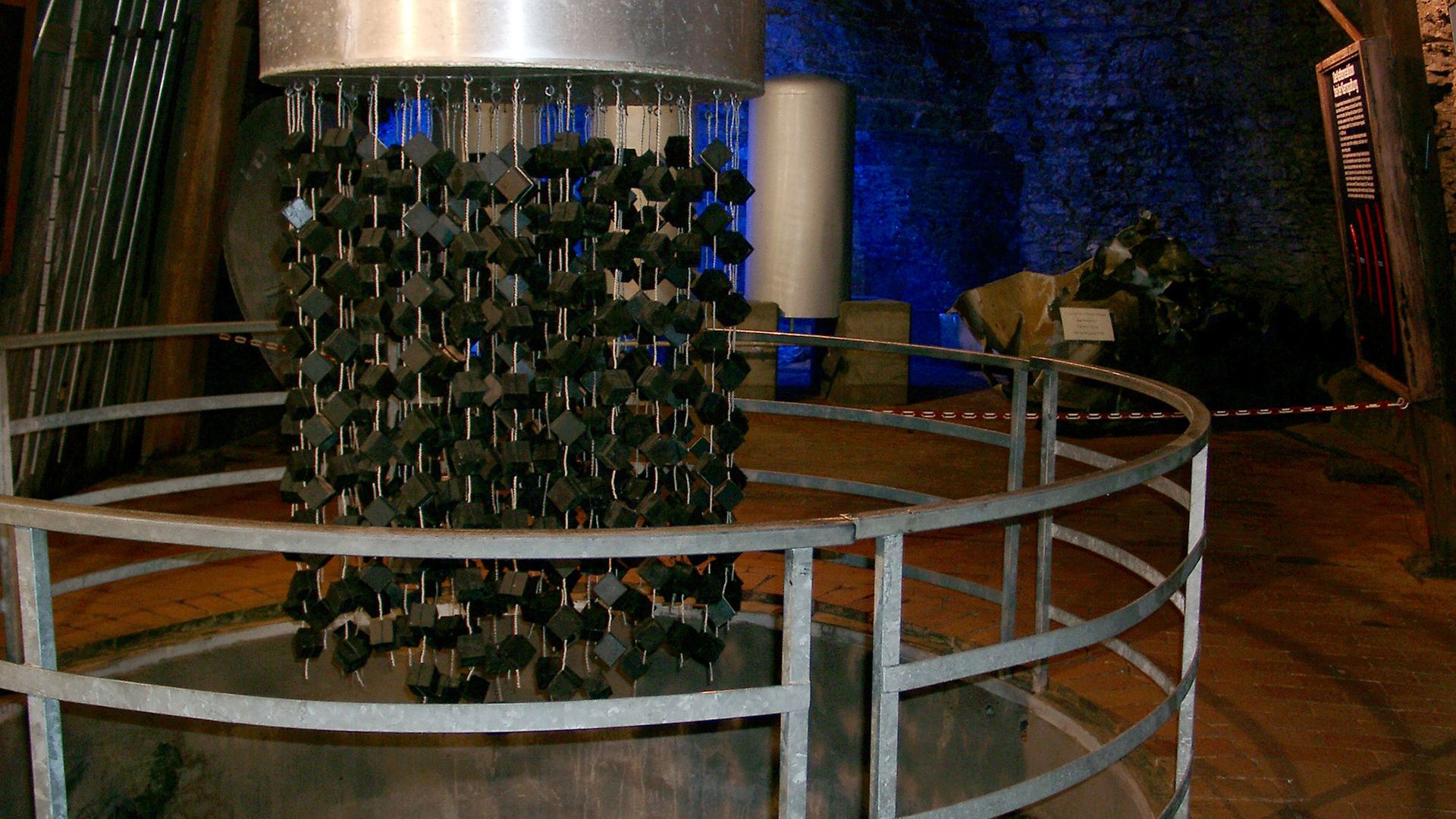
To answer the question of how far the reactor for the Nazi bomb project got, the scientists began by tracing archival records of hundreds of uranium cubes that had been used by German scientists. The B8 reactor consisted of five concentric circles of uranium cubes suspended on chains within the heavy water tank. The German scientists planned to place a radium-beryllium neutron source into the reactor's core to kick-start the chain reaction with a flood of neutrons that would split the uranium nuclei and release more neutrons, furthering the chain reaction.

Heavy water is a form of water that contains the neutron-heavy hydrogen isotope deuterium. Like the mainly-graphite blocks and rods used in many reactors, it can be used to "moderate" or slow down fast neutrons created in a fission reaction so they trigger fission — and more neutrons — in nearby uranium atoms. The Germans also used small amounts of graphite in their reactor, but as a coating to reflect neutrons back into the chamber.

Uranium cube on a stand

A cube of natural uranium from the German atomic bomb project. (Image credit: John T. Consoli, University of Maryland College Park, MD.)

By combining the records of the cubes, heavy water and graphite used by the German scientists with measurements of the two surviving cubes, the study authors created a mathematical model of the reactor that agreed closely with historical measurements. This enabled them to establish that the heavy water reactor was far from achieving a stable reaction. The findings also helped them examine the suggestion that the Germans should have instead built a graphite-based reactor like the nuclear pile developed at the University of Chicago to build the American bomb.

But the study authors determined that a graphite-moderated reactor was unfeasible in wartime Germany because the local supply of coal available to create graphite contained high levels of neutron-absorbing boron, making it useless.

Instead, the heavy water used in the B8 reactor was produced at a single factory in Norway, which was occupied by Germany from April 1940 until May 1945. However, the reactor contained only about 370 gallons (1,400 liters) of heavy water, instead of the more than 780 gallons (roughly 3,000 liters) it would have needed, the researchers determined.

Heavy water makes up a tiny fraction of a percent of ordinary water, and extracting it by electrolysis in the Norwegian factory took extraordinary effort. The factory was producing as much heavy water as it could, but the B8 reactor would have needed more than twice the amount it produced during the entire war, the researchers wrote.

Another finding is that the B8 reactor had about half the amount of uranium it would have needed to sustain a fission chain reaction. The reactor contained a total of 664 cubes, each weighing about 5.11 pounds (2.32 kilograms), for a total of 3,390 pounds (1,540 kilograms) of uranium. Similar cubes were distributed among other experimental groups, giving a total inventory in wartime Germany of about 1,100 cubes of uranium.

But the researchers determined that the B8 reactor would have needed at least 1,200 cubes to work. Germany, therefore, was not about to develop a reactor for an atomic bomb in 1945. Contrary to Heisenberg's claims, the heavy-water reactor was not nearly ready, and a working graphite reactor was impossible.

"We conclude Germany could not have built heavy water nor graphite reactors during World War II," the researchers wrote.

Mark Walker, a historian at Union College in Schenectady, New York, who wasn't involved in the study, said the findings explain Germany's decision to develop a heavy-water reactor, since a graphite reactor was not feasible and they didn't know at the time how much heavy water would be needed.

Walker is the author of "Hitler's Atomic Bomb: History, Legend, and the Twin Legacies of Auschwitz and Hiroshima" (Cambridge University Press, 2024) and a noted expert on Germany's wartime nuclear efforts. He agreed that Germany could not have made a graphite reactor during World War II.

"This paper argues that if the Germans had done something they did not do, then this would have failed," he told Live Science in an email. "While this is counterfactual history, it is an interesting engineering analysis."
  •  

'The Russians were the problem in the end': Sailor Matt Rutherford on being intercepted by the FSB while attempting to circumnavigate the Arctic Ocean solo

Sailor Matt Rutherford has dreamed for several years of becoming the first person to circumnavigate the Arctic Ocean solo, nonstop and unassisted. He finally set out from western Greenland on June 25 to achieve this goal, but threatening encounters with Russia's security agency less than two months later forced him to reverse course.

Rutherford is the founder and executive director of the nonprofit environmental organization Ocean Research Project, which gathers and analyzes marine data from a sailboat. His route took him around the southern tip of Greenland, through the Denmark Strait and into the Greenland Sea. From there, he sailed through the Norwegian and Barents seas, and reached Russia's Novaya Zemlya archipelago in mid-August.

He was planning to continue to Canada and end his journey where it started, but Russian officials halted him in his tracks and ordered him to turn around.

On his way home, Rutherford told Live Science about his adventures and why he wants to complete this loop. In an interview on Sept. 23, he also revealed what he'll do differently on his next attempt to avoid another Russian interception.

Sascha Pare: Where are you currently, and what are the conditions like?

Matt Rutherford: I'm about halfway between Greenland and Newfoundland in the Labrador Sea. The conditions aren't too bad; I mean, it's close to a gale, but it's not quite a gale. [Editor's note: A gale is defined as an area of sustained surface winds of 34 to 47 knots (39 to 54 miles per hour).] It's just a little hard to do anything. I've got dishes in the sink that are all wedged in there that I really need to deal with ‪—‬ but I don't feel like it, because you're just getting tossed around. Waves are crashing on the cockpit. Normally, I do video calls under a dodger [a canvas screen on a boat or ship that provides protection from spray], and you can see the ocean in the background… But I'm going to get hit by a wave if I do that.

SP: You're sailing home to Maryland after a rather perilous expedition. How long have you been at sea for?

MR: I left in mid-May, and I've been basically underway for the most part since then. At this time, currently, I've only been at sea for a few days, because I left Greenland a few days ago. The longest stretch I was continuously at sea this year is 59 days, although I was planning on doing longer than that, so that sucked. Essentially, I was attempting to do a nonstop, single-handed circumnavigation of the Arctic. That's where this all sort of came out of. I tried in 2018, but you couldn't get the Russian permits. And the Russians were the problem in the end [this year]. I got defeated by Russian bureaucracy, essentially. And there was some weird stuff going on with the ice up there this year. [Editor's note: Sections of the High Arctic were impassable due to a relatively cold summer and solid ice fields.]

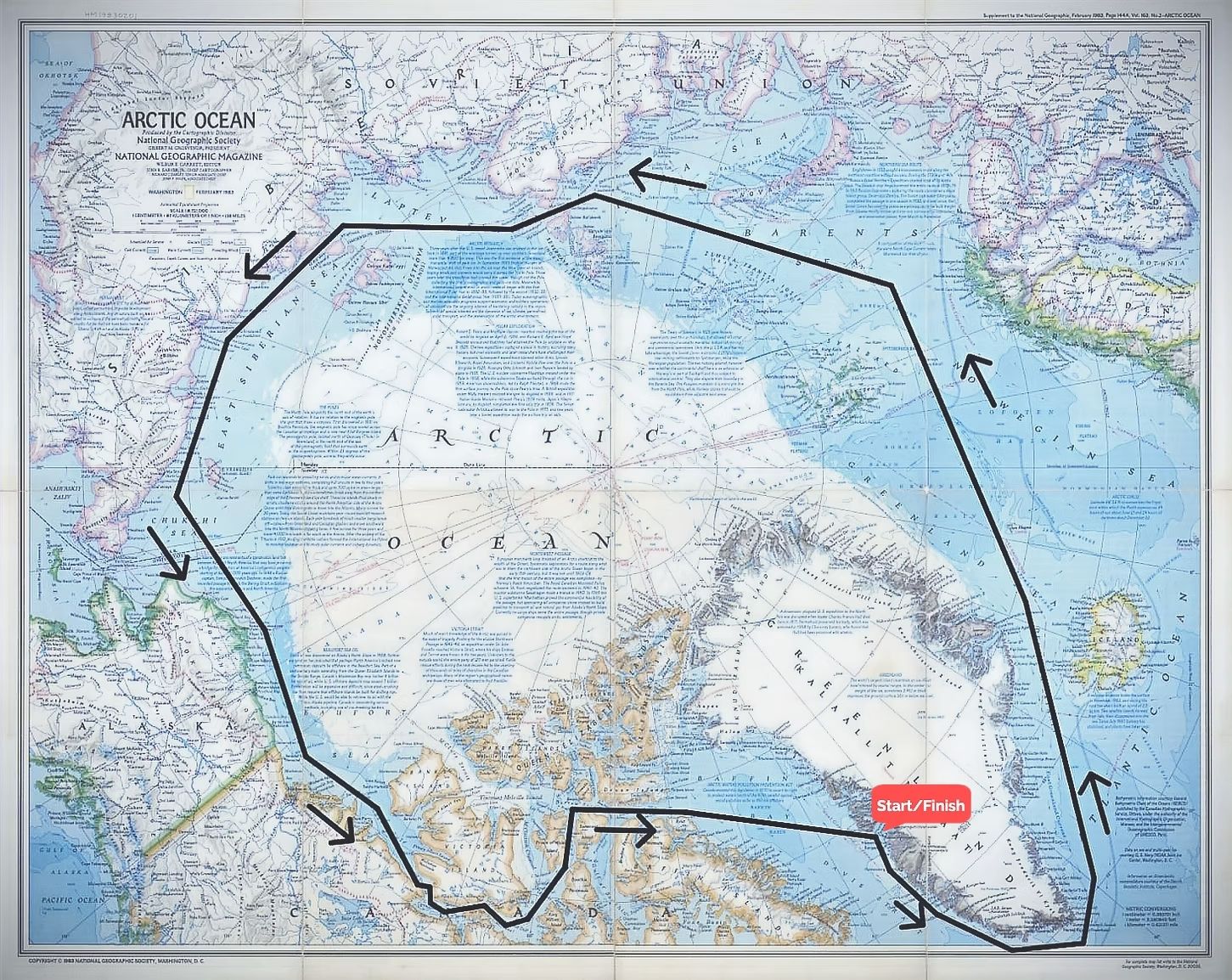
A map of the Arctic with arrows showing a circular sailing route.

Rutherford's route took him close to Russia's coast, where the FSB intercepted him. (Image credit: Ocean Research Project)

SP: What happened with the Russians that forced you to turn back?

MR: The FSB got me. [Editor's note: The Federal Security Service (FSB) is Russia's main security agency and a successor to the Soviet Union's KGB.] They boarded me twice, actually. I've never been boarded in the ocean in my life, and I've been sailing 20 years, all over the place. I got about 1,000 miles [1,600 kilometers] into Russia, roughly. I got into the Northern Sea Route. If you just draw a line due north, I was due north of West China — it was way over there, about halfway around the world in the Arctic. I made it about halfway, because I started in Aasiaat, Greenland.

They boarded me once, and then they turned me around and boarded me again. It's a bit of a strange situation, I guess. Two days after I turned around, the ice that I was waiting to open opened, and I sent them an email — the NSRA, the Northern Sea Route Association in Moscow — and said, "Hey, it's open. Can I pretty please go?" And they just got mad at me, like, "You'll be in violation of your permit; you have to turn around."

SP: You're planning to try the circumnavigation again next year. Will you do anything differently to make sure you complete it?

MR: The boat's pretty good to go ‪—‬ which is great, because that's a huge time sink. Ideally, hopefully, if I can get north of [the Norwegian archipelago] Svalbard again like I did this year, then I'm going to stay north of [the Russian archipelago] Franz Josef Land, and I'm going to basically ride the polar ice cap all the way from Svalbard to the Northwest Passage — all the way to Alaska and beyond, essentially.

Because I've learned how the FSB operate, and I know where they're keeping their ships now. Even though I was north of Novaya Zemlya, they still were able to get me. But if I'm over there, north of Frank Josef, they don't go that far, so they won't be able to get me up there. I've figured out a couple of other things that I'm not even going to say, honestly ‪—‬ there are workarounds to get them to [leave me alone]. I'm going to go a little bit quiet.

The NSRA gives you the permit to do this, but the FSB are the people who patrol it. And the FSB don't like the NSRA. I learned that when they boarded me, because they think that they're the ones who should control the Northern Sea Route, not the NSRA. So there's [a] beef between them; they don't talk. There's a lack of communication, which benefits me. I can lean heavy onto the NSRA side, because they don't have boats; they're not going to board you. And they're the ones you have to check in with every 24 hours in Moscow; you've got to send them an email every 24 hours. So I'll do all of that stuff with those guys, but I think there's some ways I can avoid the FSB even knowing where I am, essentially, while still complying with my permit in the NSRA.

Basically, I've got to do the Northern Sea Route without getting within 12 miles [19 km] of any Russian land, period ‪—‬ even a little island, even a rock that sticks out that's 10 feet by 10 feet [3 by 3 m]. That's going to be real tricky, because there are a lot of little islands down there. But the FSB is mostly on the European side; they have almost no boats over on the east side or the middle. So if you can get past the European side by hugging the coast way the hell north, hopefully I can get past where they patrol, and then I can just shoot on through.

Nobody else in the world does this ‪—‬ nobody else in the Arctic, nobody else anywhere. There's literally no other body of water on Earth where you've got to get permits, and then you've got to get boarded like this. It's only Russia, and only north of Russia. And that's because there's a huge amount of natural gas, they think, buried above Russia. So Russia's trying to claim everything to the North Pole.

Technically, it's international waters, so the U.N. is like, "No, this is not right." And Russia's like, "Whatcha gonna do about it?" It's kind of hard to argue with that ‪—‬ and it's north of Russia, so nobody else is there. They've got free rein, and they've got all the icebreakers and whatever else.

Everything else is about the same. I need to secure my hot sauce better, because every time I open my cabinet, they fall out all over the place. There's little things like that ‪—‬ quality-of-life things. I'll probably bring some more heated socks — electric socks and electric gloves. I'll try to make better videos — but I'm not a content creator, and I don't want to be an influencer.

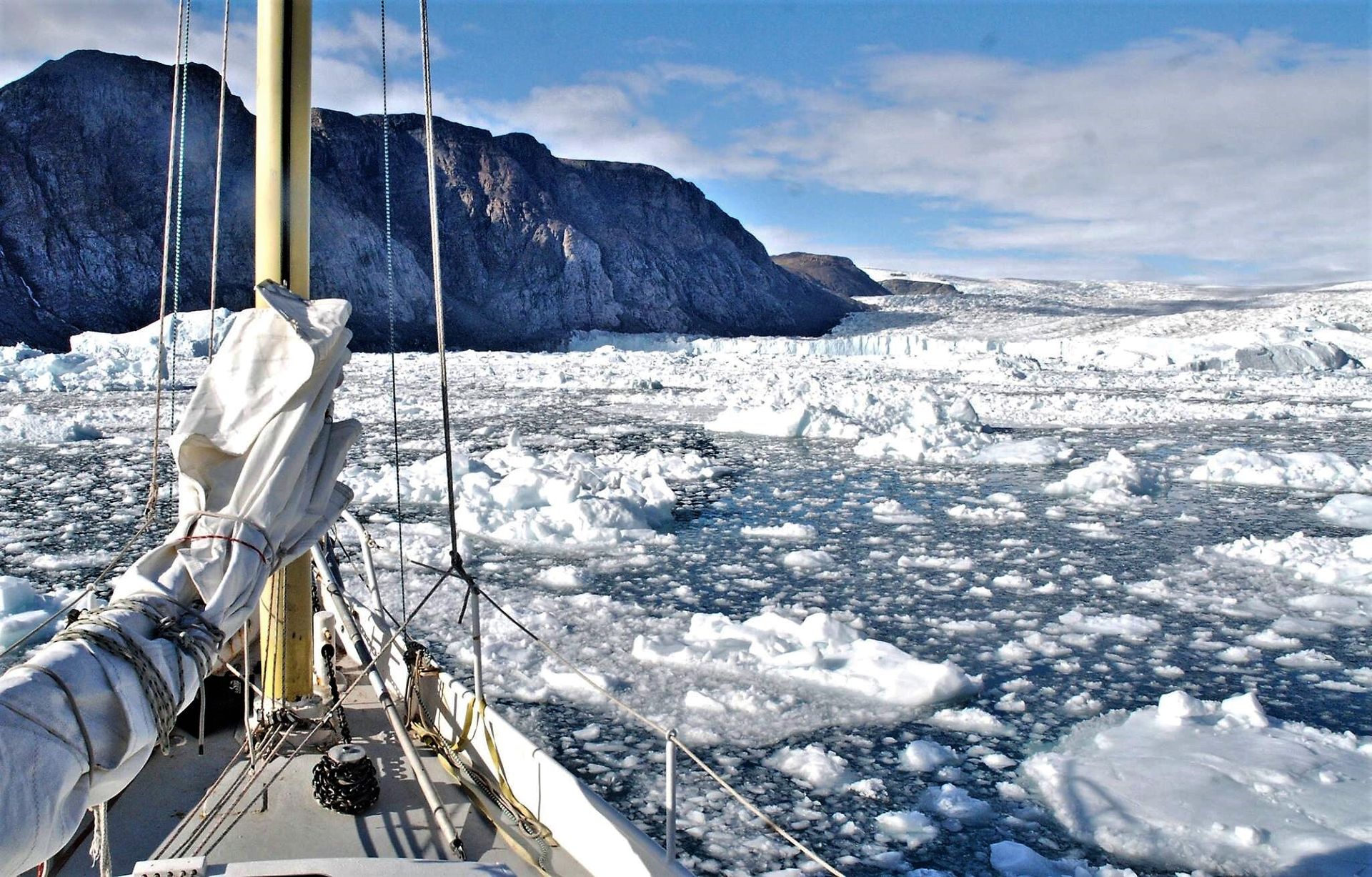
A ship floats between ice in the Arctic.

Rutherford will make another attempt at circumnavigating the Arctic next year. (Image credit: Matt Rutherford)

SP: Can you tell me a bit about your background and what led you to this point?

MR: I did this whole circumnavigation of the Americas — nonstop, single-handed — back in 2011 where I spent 309 days alone at sea on this little 27-foot (8 meters) boat. When I got back from that big, crazy trip — which I made a documentary about ["Red Dot on the Ocean: The Matt Rutherford Story"] — I created a nonprofit called Ocean Research Project, where, basically, we use sailboats to do research. We focused mostly in 2013 and 2014 on garbage-patch-related microplastics. In 2013, we mapped out the eastern side of the Atlantic garbage patch, because nobody had got to the eastern side of it. I think it was 160,000 pieces per square kilometer, or something like that. And then, we did some stuff in 2014 in the Pacific garbage patch with the University of Tokyo; we did a joint paper with them.

But mostly what we focus on is Arctic research. Since 2015, we've been heading up to Greenland — sometimes the Northwest Passage also, but primarily Greenland — doing research related to glaciers, for the most part. An ocean-terminating glacier sort of has a river of melted water underneath it, and it creates upwelling, and the upwelling has nutrients. So it mixes nutrients with the ocean and creates this perfect recipe for growth for phytoplankton and zooplankton. And then, we look at the different stages of decay between an ocean-terminating glacier, a land-retreated glacier or a deglaciated fjord. In the middle phase, when a glacier starts retreating back on land, it just creates a river of muddy water, essentially; it turns the fjord into a mud puddle. You can't have photosynthesis if you're in a mud puddle.

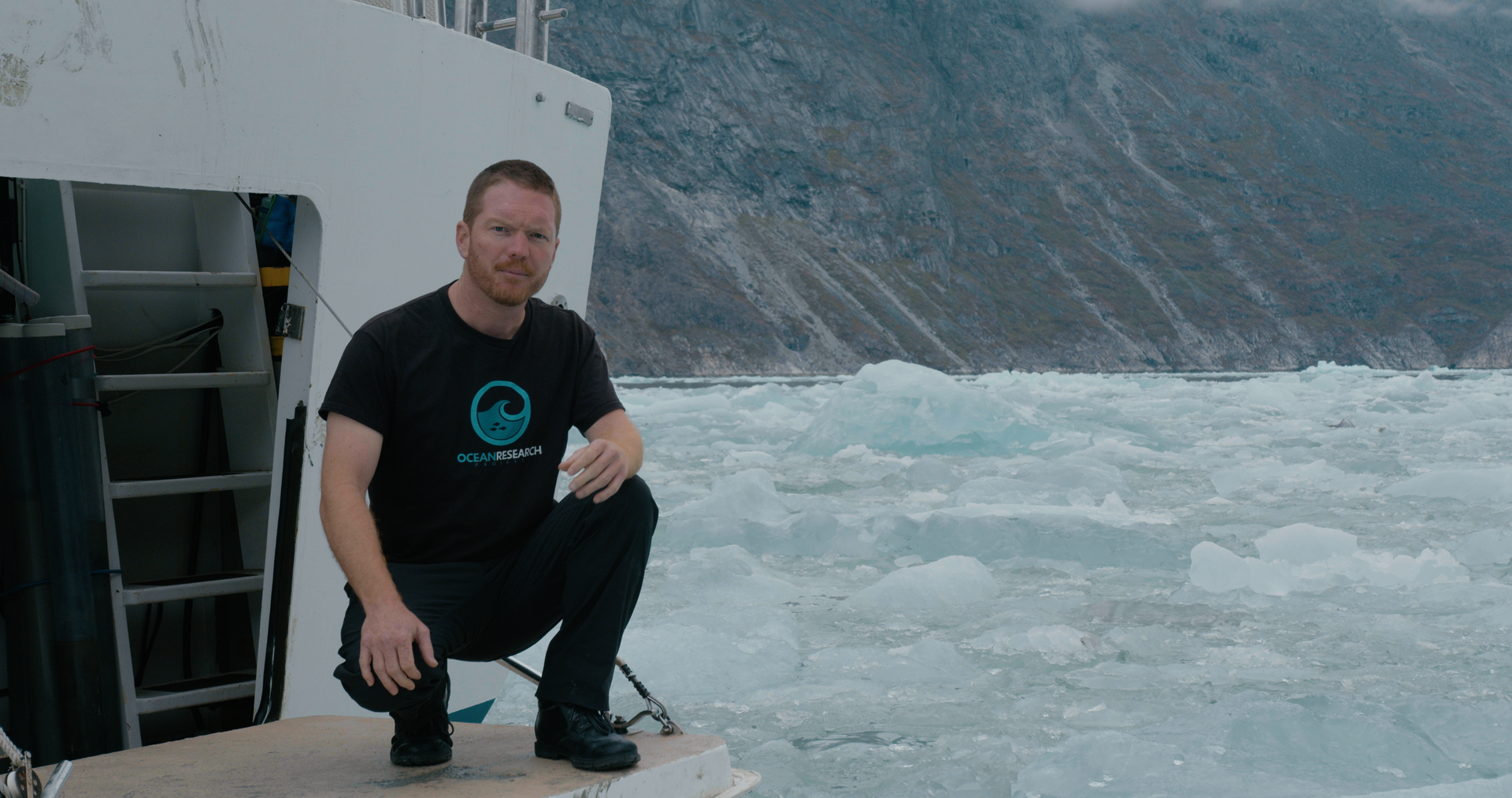
A man squats on the deck of a ship in an icy ocean

The Ocean Research Project is a nonprofit studying the Arctic and Chesapeake Bay. (Image credit: Matt Rutherford)

SP: Have you been collecting samples or data on this expedition?

MR: Well, it's a little tricky on a boat under these circumstances. I took 50 samples, which were just water samples, and those were from Newfoundland to Aasiaat, Greenland. Nicole [Nicole Trenholm, Ocean Research Project's science director] has a NASA internship out at JPL [Jet Propulsion Laboratory]. She was publishing a paper looking at their model that they have [ECCO-Darwin], and I've kind of forced my way into the paper — well, the organization did, with Nicole's help — by adding these samples. Now we have in situ data, physical data, that we can compare to the model data. That was the only thing we did this year. It's a couple-thousand-mile stretch with 50 water samples in it, so it's a pretty straightforward sort of thing.

Nicole is trying to publish multiple peer-reviewed scientific papers from our previous data. She's got a traffic jam of data, so she needed some time to finish publishing papers from stuff we've collected over the last few years. There is no money anyways. I could still grab some samples on the way up there [Greenland]. And it's trying to promote the nonprofit through it, because people will pay a lot more attention to this stuff than they pay to traditional research expeditions.

SP: What are your hopes for the Ocean Research Project once you tick off this goal?

MR: Basically, we're trying to expand the organization over the next couple of years. I'd like to bring in another one or two more scientists, because we're up there for three months in Greenland, and sometimes we go to the Northwest Passage — and it's a lot for one scientist.

The big problem we're having is that when Elon Musk was part of DOGE [U.S. Department of Government Efficiency], they cut a massive amount of polar funding — something like 88% of it — because apparently climate change is a hoax and they hate it and you're not allowed to research it either, right?

Basically, nobody's got money. We don't typically get NSF [National Science Foundation] funding; we get more foundation funding, because it's hard to get NSF funding, even before all this stuff. Now that the funding has been cut on the governmental level, a lot more scientists are going after the foundation grants that we used to have a lot less competition for. That makes it a little tricky, too, because now they're getting a flood of requests that they didn't usually get in the past.

This interview has been condensed and edited lightly for clarity.

Help us improve Live Science Pro: We're always trying to make our content better. Leave us feedback about Pro here.

  •  

Lightest known pair of neutron stars proves Einstein right yet again

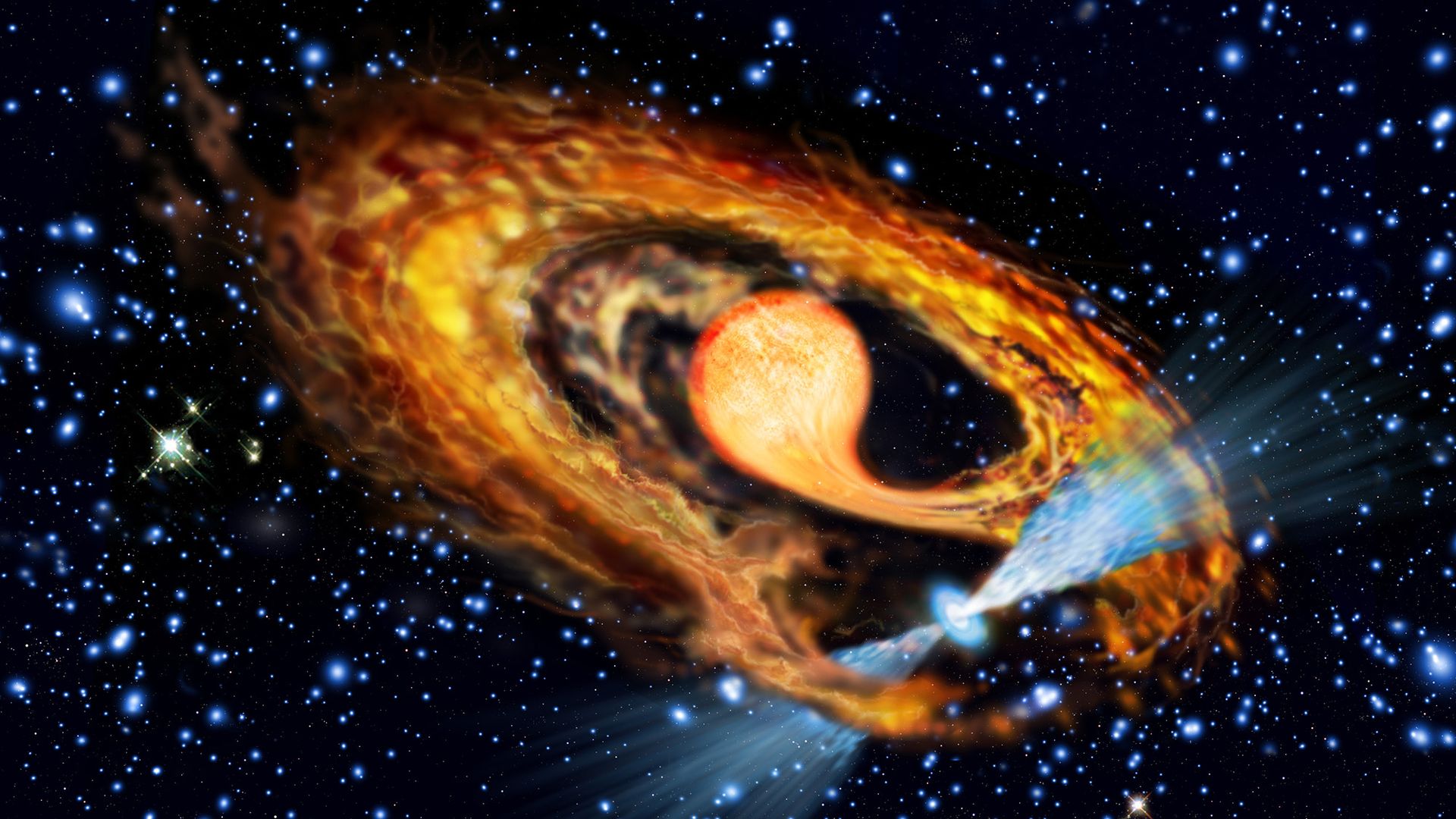
Astronomers have discovered the lightest known pair of neutron stars — two ultradense stellar remnants that circle each other every 2 hours, 22 minutes, veering toward an inevitable collision about 82 million years from now. By timing radio pulses from one of the stars, the researchers detected three subtle effects predicted by Albert Einstein's general theory of relativity and found that the theory describes the pair's motion to within about 1% — proving the visionary physicist right yet again.

The researchers published their findings Sept. 15 in the journal Physical Review Letters.

Neutron stars are the collapsed cores of massive stars that exploded as supernovas. Each packs more mass than the sun into a ball roughly 12 miles (20 kilometers) in diameter. Some, called pulsars, spin rapidly and sweep beams of radio waves across the sky like cosmic lighthouses. Their rotation is so steady that their pulses work as extraordinarily precise clocks.

Very few pulsars orbit another neutron star. "There are only 30 such double neutron star systems, and the relativistic effects are very strong if they are in compact orbits," study co-author JinLin Han, an astronomer at the National Astronomical Observatories of the Chinese Academy of Sciences, told Live Science via email.

The first such pair, discovered in 1974 and known as the Hulse-Taylor binary, provided the first evidence for gravitational waves — ripples in space-time predicted by Einstein. Such waves carry energy away from an orbiting pair, so its orbit should gradually shrink, and the Hulse-Taylor orbit shrank at just the rate Einstein's theory predicted.

Later, the "double pulsar," which completes an orbit every 2.45 hours, matched the predicted rate to within about 0.01%. Eventually, this shrinking forces such pairs to merge, unleashing gravitational waves like those the Laser Interferometer Gravitational-Wave Observatory and Virgo interferometer picked up in 2017.

A newly discovered pair

The new system, designated PSR J1856-0039, lies roughly 4,200 to 6,500 light-years from Earth. In 2020, it turned up in a survey of the Milky Way's disk by China's Five-hundred-meter Aperture Spherical Radio Telescope (FAST), the world's largest single-dish radio telescope.

"We have discovered about 900 pulsars," Han said of his team's work. "After a few follow-up observations, this one is very extraordinary."

The pulsar spins about 43 times per second, and the two stars are separated by roughly twice the distance between Earth and the moon. But the "most attractive feature" is the short orbital period of about 2.36 hours, Han said. "This is the second-shortest one, and it must show stronger relativistic effects than the famous double pulsar and the Hulse-Taylor system."

The team observed the pair with FAST 17 times between 2020 and 2025, sometimes long enough to cover a whole orbit. The researchers measured the arrival times of the system's pulses and then fit that data to orbital models that accounted for relativistic effects, like subtle changes to the pulse arrival times at different parts of the stars' orbits.

"With so many measurements by FAST, which would be hard to match in accuracy with other telescopes, we got not only the basic parameters of the pulsar and its orbit but also three relativistic effects," Han said.

First, the orbit is shrinking as the stars radiate gravitational waves, drawing them about 9 feet (2.7 meters) closer each year. Second, the oval orbit turns slowly, by 17.6 degrees per year — some 150,000 times faster than the relativistic drift of Mercury's orbit. Third, because both gravity and speed slow time, the pulsar's clock runs at a varying pace along the oval orbit, shifting its pulses by up to about half a millisecond.

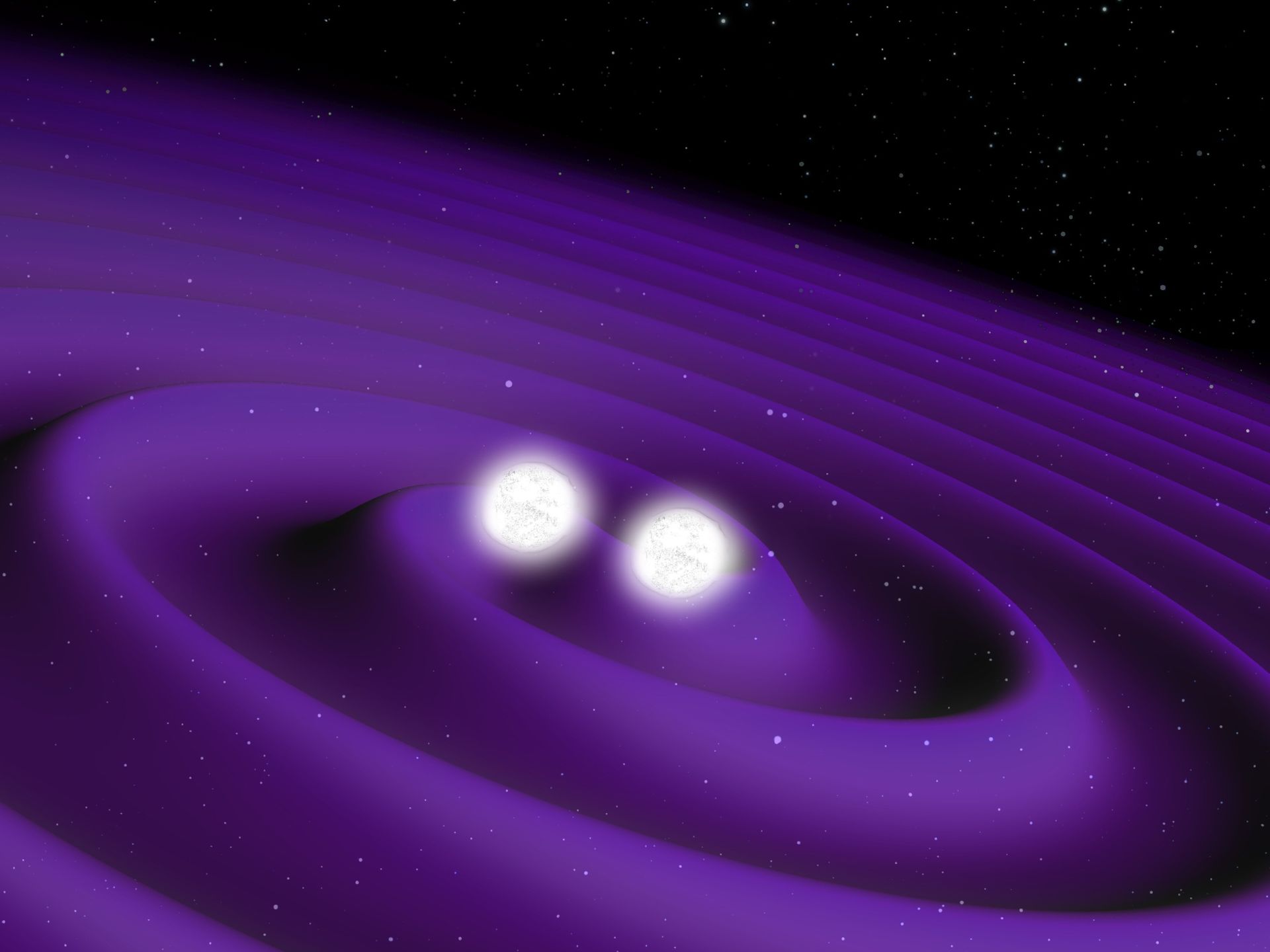
Two white stars circle each other, with purple swirls on them

An illustration of two neutron stars generating gravitational waves (purple) as they spiral toward each other in a tightening binary orbit. The rate of this orbital shrinkage offers a natural test of Einstein's theory or relativity. (Image credit: ESA)

"From these measurements, we determined the pulsar mass and the companion mass," Han explained. "The total mass is the lowest among all known double neutron star systems." The pulsar weighs about 1.3 times as much as the sun, and its companion is just 1.19 solar masses — one of the lowest-mass neutron stars known. Simulations suggest that supernovas can't forge neutron stars much lighter than that.

The stars will merge in about 82 million years. That merger will probably leave behind a heavier neutron star of about 2.26 solar masses, though the remnant could instead collapse into a black hole, the researchers estimate.

Another win for Einstein

Any two of the three effects are enough to calculate both stars' masses. The third then serves as an independent check, because if general relativity is correct, all three must point to the same masses — and they do.

"We found that general relativity is needed to explain the data, and the consistency is about 1%," Han said. The double pulsar test is more precise, but it drew on 16 years of data, compared with about five for the new pair. "Unfortunately, we could not beat this description of gravity," Han added, referring to physicists' hope of finding cracks in Einstein's theory that might reveal new physics.

Next, the team hopes to detect "frame dragging," an effect in which a spinning mass twists space-time around it, making nearby orbits wobble. "In the future, we will monitor this pulsar, probably over decades, to detect the frame dragging induced by the neutron star's spin," Han said.

Measuring the effect would reveal the pulsar's moment of inertia, which depends on how its mass is spread out inside. That would provide "a novel constraint" on how matter behaves at the crushing densities in neutron star cores, Han said — one of the biggest open questions in physics.

See how much you know about black holes with our black hole quiz!

  •  

A fighter pilot had unexplained headaches for over a year. The cause was hiding in plain sight.

The patient: A 29-year-old man in India

The symptoms: The man, a fighter pilot in the Indian Air Force, went to a civilian neurologist after having persistent headaches for 18 months. The headaches would occur approximately two to three times per month, starting in the late afternoon and lasting up to three days. Sleep did not improve his symptoms.

The pain was typically greater on the right side of his head, but he would often feel pain on the left side as well. The pilot also reported that just before a headache, he would experience a "sense of lousiness," his doctors wrote in a report of the case.

Sometimes, the pain was so intense that the man was unable to take part in scheduled flights. If he flew anyway during an episode, his headache would be even worse the next day.

What happened next: According to the man, his finances and personal relationships were not a source of stress. (Stress, in general, is a very common headache trigger.)

When asked about his medical history, the pilot recalled no recent ailments or conditions that could cause recurring headaches, such as inflammation and congestion of the sinuses (sinusitis). He had no family history of chronic headaches or migraine, a neurological disease that frequently causes moderate to severe headache, among other symptoms. Nor did he experience nausea, vomiting or visual anomalies called "auras," which often accompany or precede migraines.

Nevertheless, the civilian doctor determined that migraines were the culprit. He prescribed divalproex ‪—‬ an oral medication used for migraine prevention — and told the patient that he would likely need this medication for years. Concerned about taking the drug over a long period, the pilot decided to consult an authorized specialist at a military medical facility for further evaluation.

The diagnosis: The military doctors reviewed the pilot's case and examined him. All of his test results were in the normal range, and a CT scan showed no brain abnormalities. They ordered a nasal endoscopy — an exam that uses a camera to examine the nasal cavity and sinuses — and found that the patient had a deviated septum. However, the deviation was so minor that they ruled it out as a possible cause of his pain.

Finally, the doctors agreed with the initial diagnosis: The pilot was experiencing migraines. The causes of migraine are not fully understood, although genetics and environmental factors may contribute to both the duration and intensity of migraine pain in a given individual.

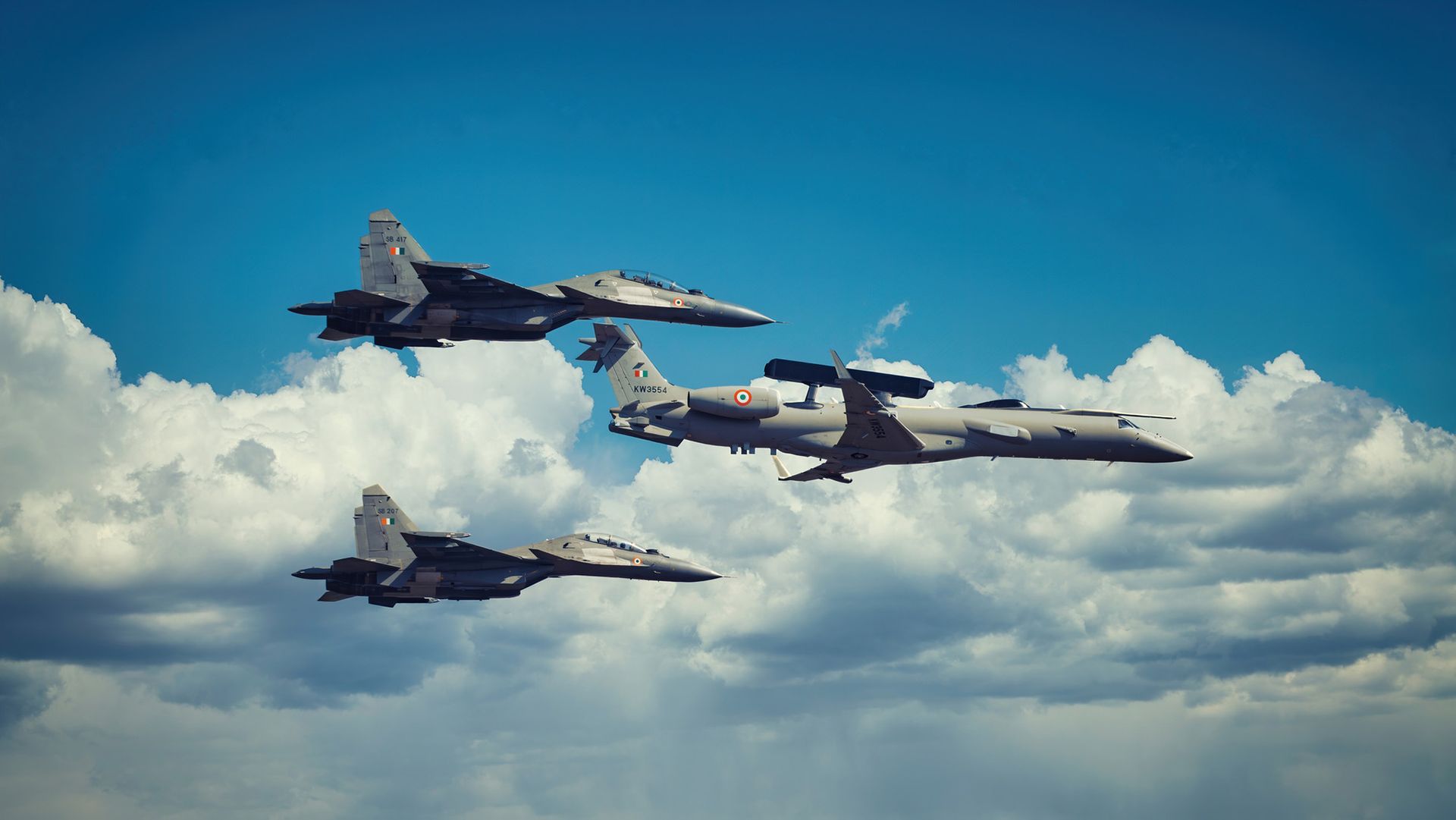
Three gray fighter jets float amidst clouds in the sky.

Indian Air Force (IAF) fighter jets photographed in 2019. The patient's headaches were sometimes so bad that they stopped him from conducting scheduled flights. (Image credit: Abhishek Singh via Getty Images)

The treatment: The pilot was given the migraine medicine sumatriptan, to be taken at the first sign of pain, and aspirin, to be taken during headaches. He was allowed to continue flying under restricted conditions, and he had to report to a military neurologist for monthly reviews over the next three months.

Four months later, he was headache-free and had stopped taking medication, according to the report. However, his superior officers needed a detailed medical review before they could restore his unrestricted flight status, as severe migraines can disqualify pilots from flying.

Over three days, doctors conducted in-depth interviews with the pilot, focusing on the first appearance of his symptoms and the circumstances leading up to his headaches. They were puzzled by certain details: His lack of nausea, vomiting and auras, and the fact that he got no relief through sleep. These facts raised questions about the migraine diagnosis.

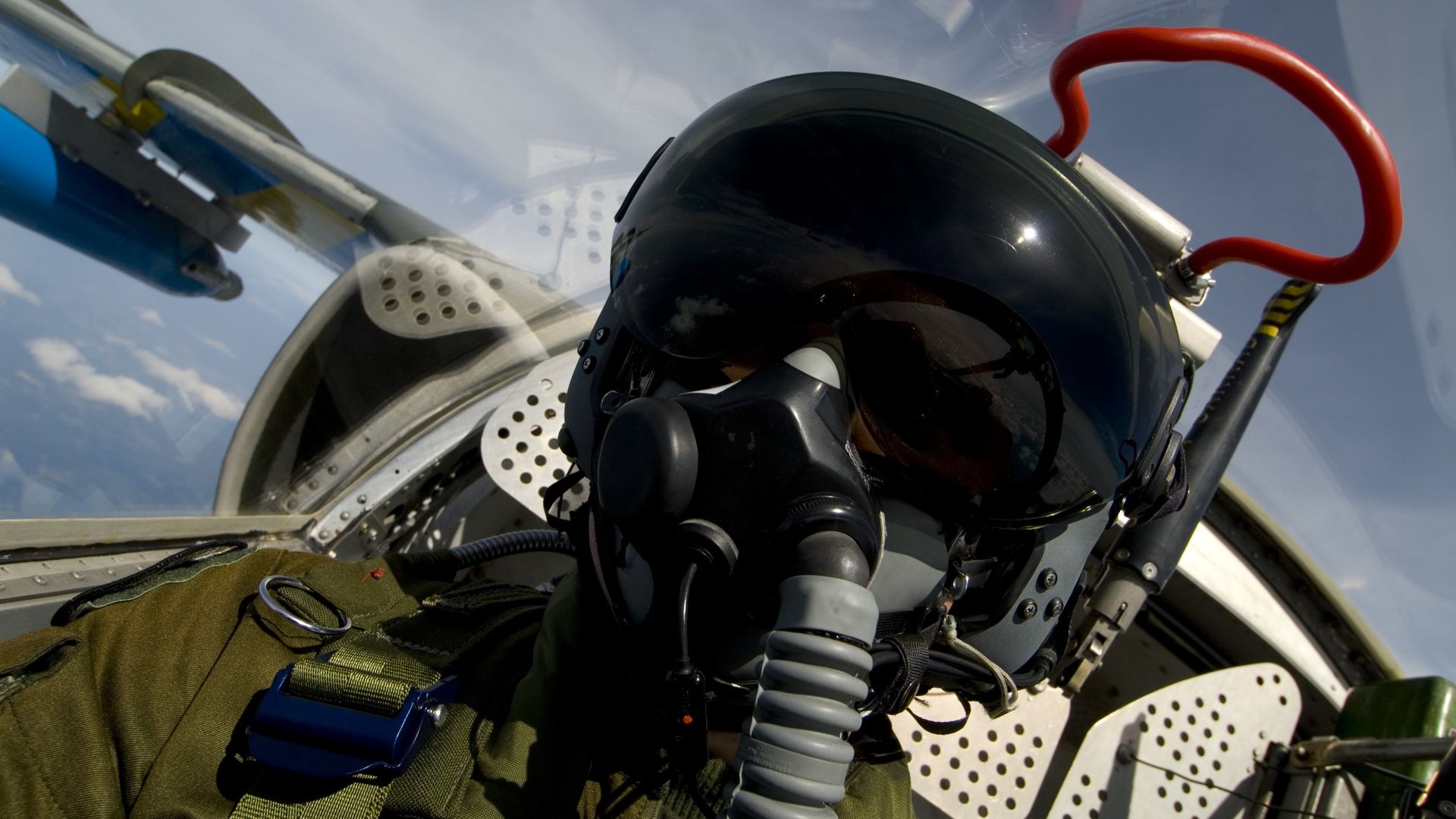
During the interviews, the pilot recalled that his headaches began around the time that he started using a new type of helmet with a tighter fit. The headaches corresponded with days in which he flew multiple flights and became worse the longer he wore the helmet. Then, around the time he started taking the prescribed medication, he coincidentally received a new allotment of personal flying clothing — including a helmet that was the correct size — for a new plane assignment. His headaches suddenly stopped.

"At that point the officer did not connect the cessation of headaches with the use of the new helmet," the doctors reported. "Reviewing the case in its entirety, the diagnosis of migraine or vascular headache was found to be incorrect; instead the individual was suffering from external compression headache due to an ill fitting helmet."

Compression headaches are caused by tight external pressure on the scalp and forehead, and they typically resolve when the pressure eases.

Doctors instructed the pilot to keep a headache diary and scheduled follow-up visits to confirm their findings. Five months later, his headaches had not returned, as he'd continued using the better-fitting helmet.

What makes the case unique: When the military doctors scoured peer-reviewed studies, they found no reports of similar instances of compression headache "in any of the Air Forces of the world," they wrote in the report.

This case, they added, emphasizes the medical significance of making sure that pilots' flight uniforms — especially their helmets — fit properly.

For more intriguing medical cases, check out our Diagnostic Dilemma archives.

This article is for informational purposes only and is not meant to offer medical advice.

Can you guess the diagnosis in these strange medical cases? Find out with our diagnostic dilemma quiz!

  •  

Case of mysterious medieval skeleton buried in Roman-era sarcophagus at Westminster Abbey finally solved

In the late 1800s, Westminster Abbey clergy stumbled upon a mysterious sarcophagus. The lid was decorated with an 11th-century Anglo-Saxon cross, but the base had a fourth-century Roman funeral inscription. For nearly 150 years, the tomb has baffled experts, but the abbey's consulting archaeologist may have finally figured out who was buried there, according to a new study.

Westminster's chief mason unearthed the stone sarcophagus in 1869, but when experts investigated it, they discovered that the burial had been looted earlier that century. Experts also noticed that the carved decoration on the side of the sarcophagus was stylistically Roman, with a Latin inscription that can be translated as "To the memory of Valerius Amandinus. Valerius Superventor and Marcellus made this for their father." But an enormous medieval cross had been carved into the lid of the sarcophagus, suggesting that the tomb had been reused to bury an important religious figure hundreds of years later.

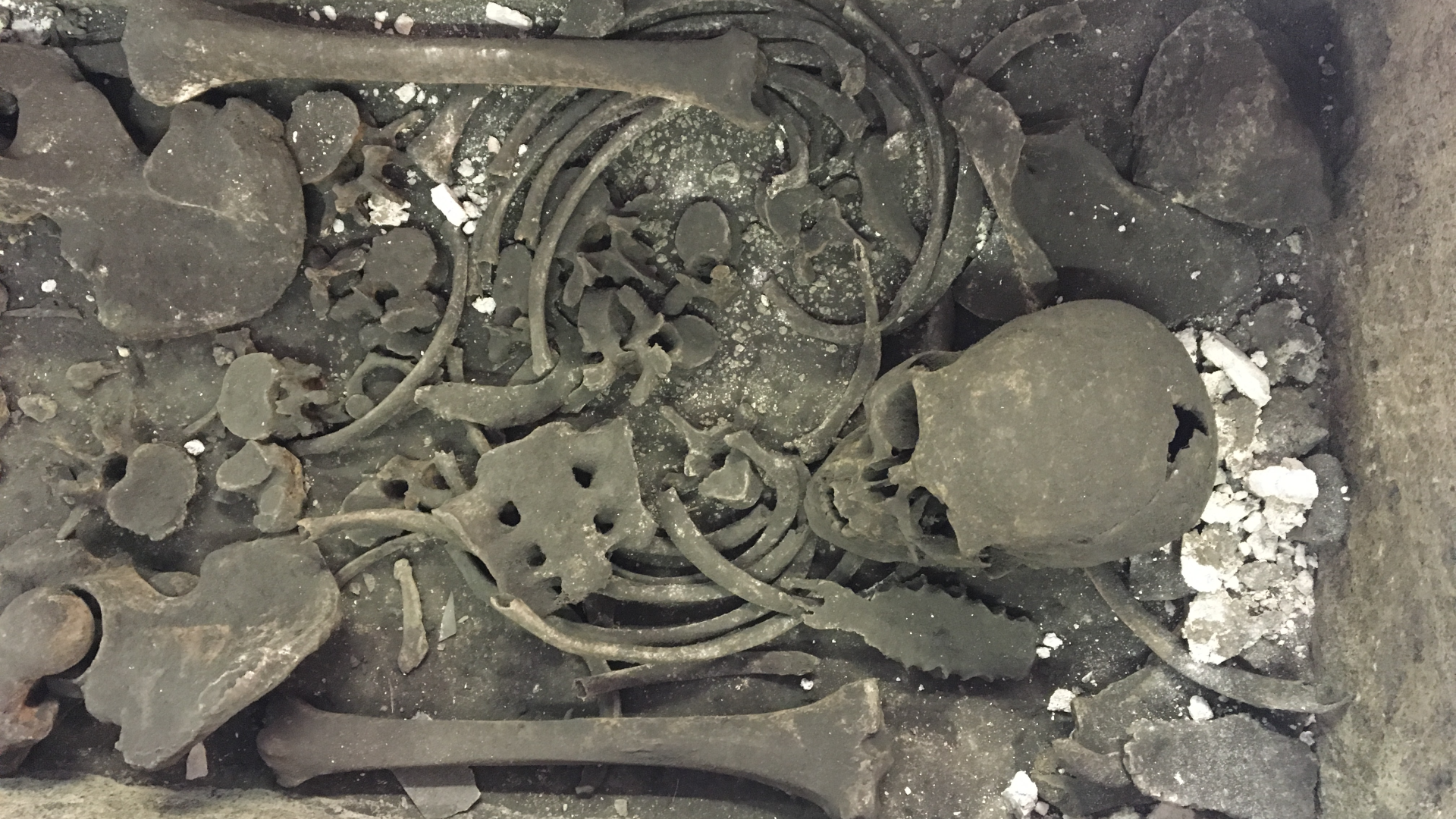
The mystery of the medieval individual buried in a Roman sarcophagus remained unsolved for 150 years, as no one thought that any bones were left inside. But when the stone coffin was opened for conservation in 2016 and a full skeleton was discovered, clues to the identity of the deceased finally came to light, Warwick Rodwell, the consultant archaeologist for Westminster Abbey, wrote in a study published Wednesday (Oct. 21) in the Journal of the British Archaeological Association.

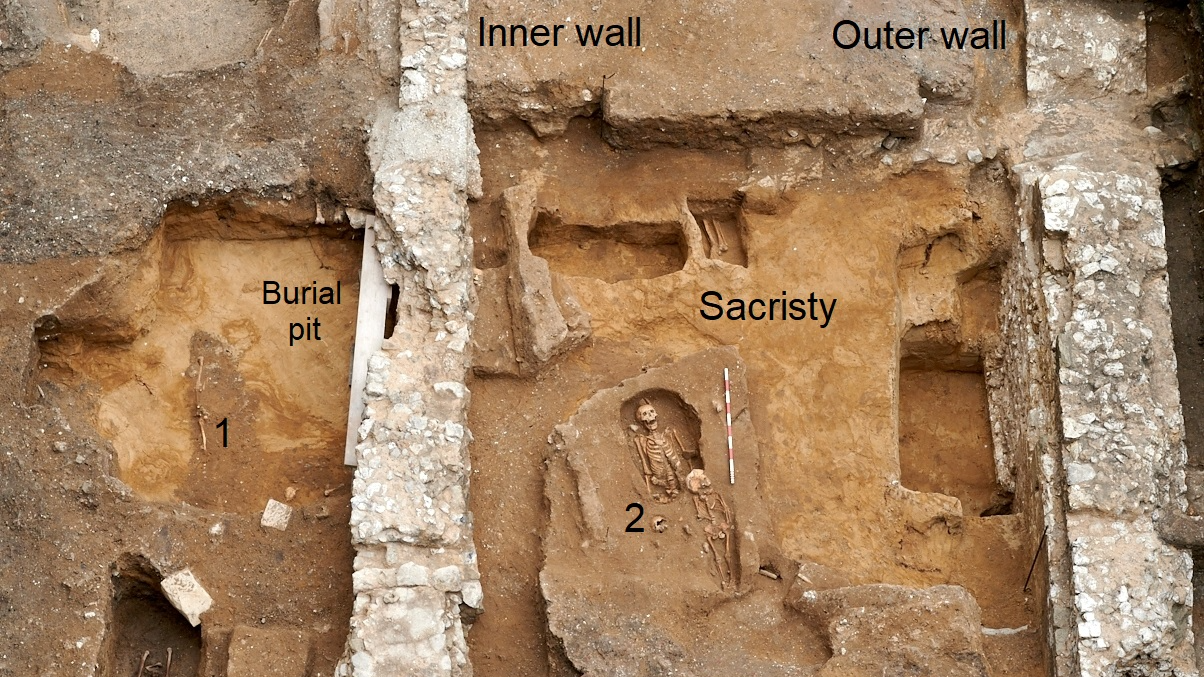
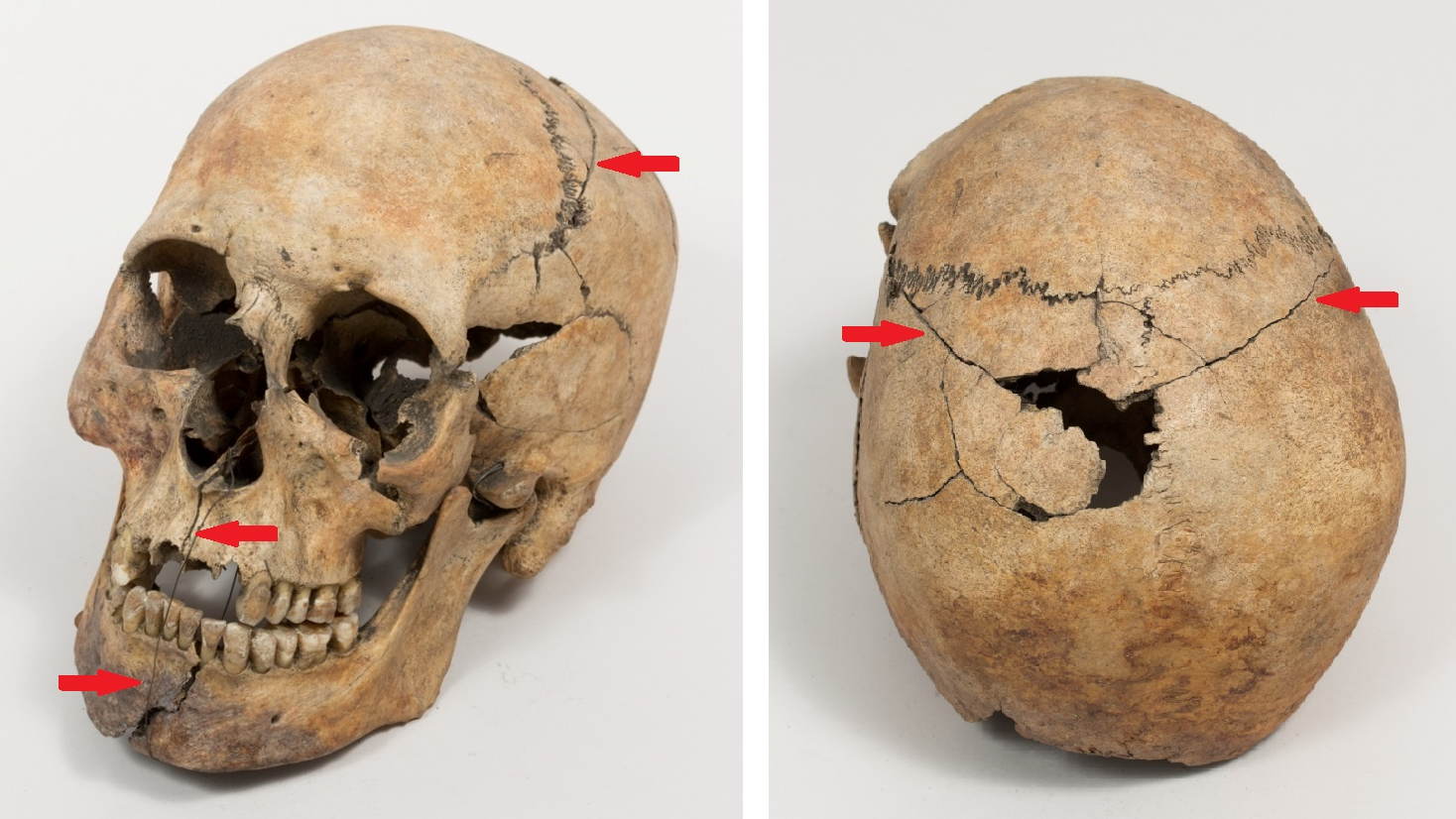
Although the skeleton had been disturbed over the years, with a hole accidentally made in the skull and arm and leg bones mixed up, it was clear that the person was male, middle-aged, and of average height, bioarchaeologist James Langthorne of Pre-Construct Archaeology wrote in a 2016 report. The man also had some evidence of osteoarthritis, two healed rib injuries and gout. The bones were carbon-dated to between 987 and 1052, confirming that the Roman-era sarcophagus was reused in the Middle Ages.

a limestone sarcophagus whose lid has been carved into a large cross
Dean & Chapter of Westminster
a black-and-white photograph of the side of a Roman sarcophagus showing an inscription
Dean & Chapter of Westminster
an aerial view of an excavation showing walls and the burial pit where a Roman sarcophagus was placed
© Pre-Construct Archaeology Ltd; (CC-BY-ND 4.0)
a human skeleton fully laid out in a sarcophagus but with several bones misplaced
© Pre-Construct Archaeology Ltd; (CC-BY-ND 4.0)
two views of a human skull showing post-mortem damage and reconstruction
© Pre-Construct Archaeology Ltd; (CC-BY-ND 4.0)

"This brings us to the final question of importance: who was he?" Rodwell wrote in the study. Despite the lack of grave goods, which may have been stolen in the early 19th century, "he was almost certainly an abbot" who was given a dignified burial in a stone sarcophagus with a large cross, Rodwell wrote.

Based on the birth and death dates of the abbots of Westminster and their tenure as clergy, Rodwell narrowed the candidates down to Wulfsige (abbot from 988 to 993), Ælfwig (abbot from 993 to 1020) and Wulfnoth (abbot from 1020 to 1049). Given that Wulfsige left Westminster to become a bishop elsewhere, he was likely not buried in the abbey.

"Consequently, we have two viable contenders for the occupant of the sarcophagus," Rodwell wrote. "The fact that Ælfwig was already a monk of Westminster might favour him."

Although the final resting place of Ælfwig may have been found after a millennium, some questions remain unanswered.

For example, it is unclear why an 11th-century abbot was buried in a recycled fourth-century Roman sarcophagus. The reuse of Roman coffins is extremely unusual, Rodwell noted in the study, and nothing comparable to this sarcophagus has ever been found. One explanation for the reuse may rest with the Latin inscription, whose first word — "memoriae" (to the memory) — suggests that Valerius Amandinus was an early Christian himself. This Roman may have been a significant figure in Roman London, Rodwell wrote, but "unfortunately, nothing is known about his career."

Experts are also unsure where the Roman sarcophagus came from. It was made from limestone sourced from Oxfordshire, a county in the South of England. But perhaps the coffin was originally buried in a Roman mausoleum and they were unearthed and moved at some point, Rodwell noted. But as Rodwell pointed out in the study, "there could be a villa and its cemetery somewhere in the vicinity of Westminster Abbey, awaiting discovery."

The sarcophagus is currently on display in the Queen’s Diamond Jubilee Galleries at Westminster Abbey.

What do you know about the Empire's conquest of the British Isles? Find out with our Roman Britain quiz!

  •  

Could 'body clocks' play a role in depression? Study proposes a new 'circadian' subtype

Some people with depression sleep far more than average, wake up exhausted, habitually stay up late, and experience mood shifts with the seasons. A new study suggests that these symptoms may cluster in a distinct subtype of depression that's tied to the body's internal clock.

While research has long linked a scrambled circadian rhythm to a risk of mood disorders, neuroscientists are now proposing that these disruptions define a specific form of depression that they call "circadian depression." First conceptualized in 2021, the body-clock subtype may affect about 1 in 4 people with severe, recurrent or persistent depression, the researchers estimate.

In their new study, published Wednesday (Oct. 21) in The British Journal of Psychiatry, the team identified the subtype in about 2,600 people out of over 11,000 evaluated.

"Circadian depression is a biologically informed subtype," said study co-author Emiliana Tonini, a neuroscientist at the University of Sydney. "Unlike subtypes defined mainly by symptoms, the core feature here is a disturbed circadian system, which common antidepressants may not fully address," Tonini told Live Science in an email.

The researchers think treatments that target the sleep-wake system, such as the sleep hormone melatonin or bright light therapy, might be beneficial for people with this subtype. However, because the subtype is still a proposal and not formally established yet, other experts say that further research is needed before the findings can inform clinical practice.

More than just bad sleep

Tonini and her team analyzed data from 11,380 adults ages 18 to 90 who took part in the Australian Genetics of Depression Study (AGDS), a nationwide study exploring how genes and life experiences influence depression and responses to treatment. They classified participants under the "circadian" umbrella if they had at least three of six features: seasonal mood swings, late sleep schedules, social jet lag (a mismatch between sleep routine during workdays and free days), night-owl habits, excessive sleep (hypersomnia), and fatigue upon waking.

A total of 2,604 people fit the proposed subtype. Compared with others in the AGDS cohort, this group was younger and developed depression earlier in life — around 19, compared with about 23 for the rest of the cohort.

The group also skewed female, and individuals reported greater psychological distress, frequent suicidal thoughts and more physical complaints than people who didn't fit the proposed subtype. Some experienced weight gain during depressive episodes and symptoms resembling hypomania, a revved-up state of elevated mood and energy that's milder than full-blown mania.

However, having this constellation of symptoms doesn't mean someone's biological clock is disrupted, said Brant Hasler, a psychologist and sleep researcher at the University of Pittsburgh who was not involved in the study. The researchers relied on the participants' self-reports of their sleep patterns; that data correlates only modestly with direct measures of circadian timing, such as measurements of melatonin in saliva, he said in an email.

"One can identify as an evening-type, and report later sleep timing, and still have physiological circadian timing that is not particularly delayed," he said.

So, in addition to checking symptoms, the team hunted for genetic clues underlying the proposed subtype. They analyzed DNA from participants' saliva samples and calculated "polygenic risk scores," which add up the influence of thousands of different genetic variants to estimate how likely someone is to develop a given condition.

A close up of an illustration of a transparent brain with the hypothalamus in red.

The body's sleep-wake cycle is largely controlled by a hub of cells within the hypothalamus (red). (Image credit: SEBASTIAN KAULITZKI/SCIENCE PHOTO LIBRARY via Getty Images)

"Mental health conditions are shaped by hundreds or thousands of variants that each add a small amount of risk, so everyone carries a unique 'portfolio' of risk," Tonini explained.

People in the circadian group had a higher genetic risk for depression, anxiety, attention-deficit/hyperactivity disorder (ADHD) and bipolar disorder, the analysis suggested. They also had a greater genetic risk of higher body weight, insulin resistance, inflammation, insomnia and late-night sleep habits, compared with the other study participants.

This suggests "circadian depression is more than just 'depression with bad sleep,'" Tonini said. "It involves a mix of metabolic, inflammatory, circadian, and mood-related processes."

Could this change depression treatment?

The researchers looked at the participants' past experiences with antidepressants, finding that the circadian group reported less benefit from common medications, such as selective serotonin reuptake inhibitors (SSRIs) and serotonin-norepinephrine reuptake inhibitors (SNRIs). Common examples include the SSRI Lexapro and the SNRI Cymbalta.

The circadian group also experienced more side effects from these treatments, such as drowsiness, nausea, anxiety and weight gain.

"If circadian disruption is a core biological mechanism in these individuals, treatments that fail to address those abnormalities may naturally be less effective," said Dr. Ruth Benca, a psychiatrist and sleep researcher at Wake Forest University School of Medicine who was not involved in the study. However, Benca cautioned that body-clock disruption may not be the only reason standard drugs fall short for these patients.

"People with more pronounced circadian disturbances often have more severe illness and other psychiatric conditions, which can contribute to treatment resistance," Benca told Live Science in an email.

Even so, tracking sleep, measurements of circadian rhythm, and seasonal shifts in mood could help clinicians identify at-risk patients earlier and select more effective treatments sooner in the course of illness, Benca suggested. "Potential approaches include behavioral routines, structured sleep schedules, or chronotherapy," in which the timing of medication or light exposure is strategically coordinated with internal body rhythms, she added.

Clinical trials are still needed to draw firm conclusions about potential treatments, Tonini noted. The findings also must be validated in broader populations, since the study drew on a single Australian cohort and its genetic analysis included only people of European ancestry.

For now, "the study is an important step toward a more personalized treatment approach," she said.

This article is for informational purposes only and is not meant to offer medical advice.

See how much you know about the most complex organ in the human body with our brain quiz!

  •  

Will Tesla's 'flying car' ever hit the market, or is it a load of compressed air?

Flying cars once seemed like the stuff of science fiction. But Tesla's recent demonstration, which showed the company's Rocket Roadster model briefly flying, has reignited the conversation about whether flying cars could soon become a reality.

The technology behind flying cars is continuing to advance, with companies developing vehicles that combine elements of traditional cars, helicopters, electric aircraft, and — in Tesla's case — rockets. Many of these designs use electric vertical-takeoff-and-landing technology, which allows them to lift off and land without a runway by using multiple rotors or propellers to generate lift. Advances in battery technology, autonomous flight systems and computer-assisted navigation are helping to make these vehicles seem more feasible. But challenges remain, including questions surrounding passenger safety, affordability, and the need for regulations and laws and infrastructure for the widespread use of these vehicles.

Tesla says production of its new "flying car" is scheduled for 2028, but the company is notorious for not meeting its proposed deadlines. So do you think flying cars could actually be available to the public within the next five years? Or are we still a long way from turning this science fiction fantasy into reality? Cast your vote in our poll, and share your thoughts in our comments section.

  •  

Devastating 2025 Myanmar earthquake sheds light on how the 'Big One' could play out in California

Last year's massive earthquake in Myanmar could help researchers better predict where the worst shaking will be if the "Big One" hits the San Andreas Fault in California.

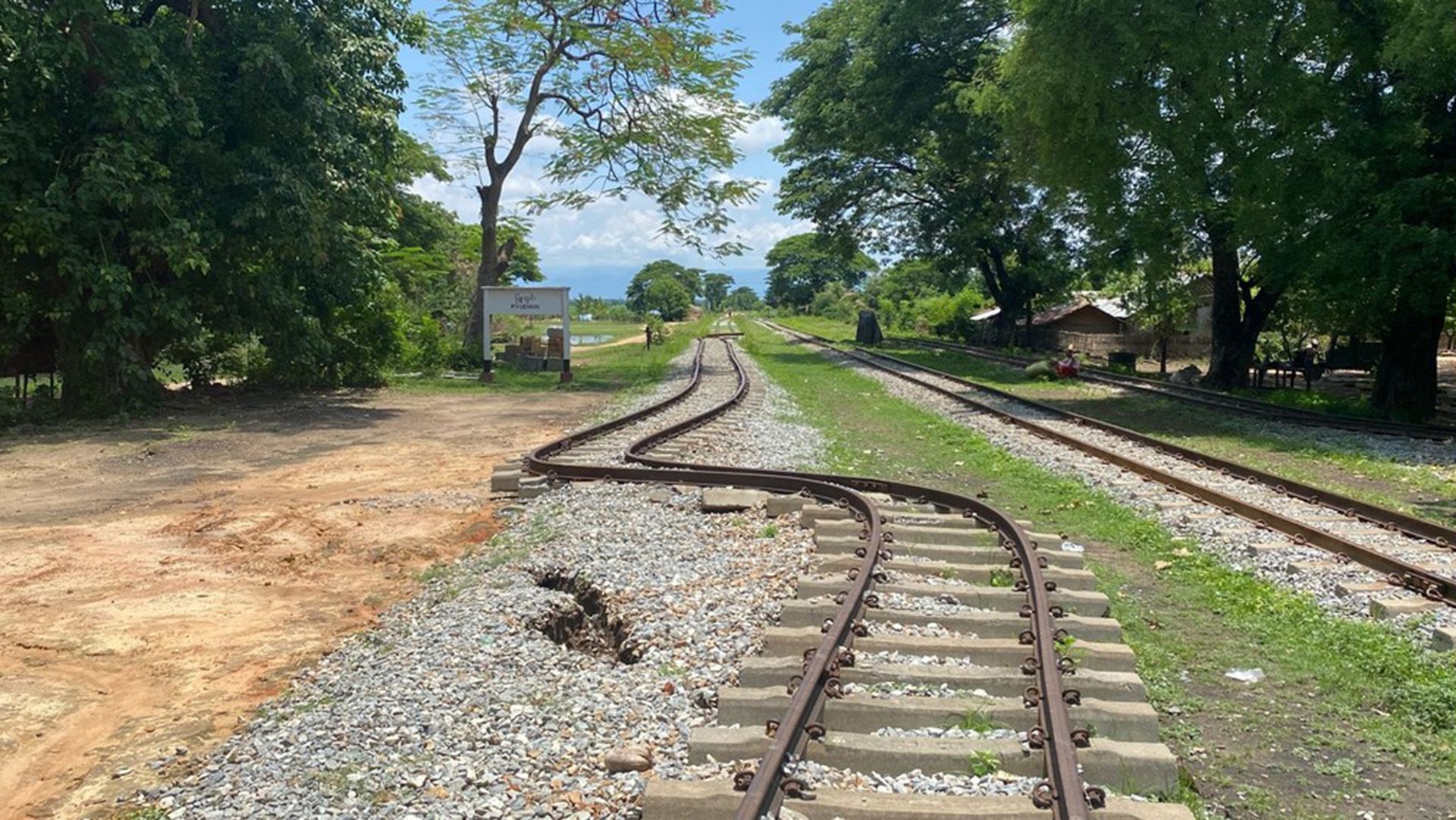
The magnitude 7.7 quake hit on March 28, 2025, near the city of Mandalay and shook buildings as far away as Bangkok, 830 miles (1,330 kilometers) away. The death toll was at least 3,700 people. New research that used detailed satellite data and a one-of-a-kind video of the ground rupturing reveals that the fault had a twisty, almost helical shape, which affected the shaking.

The Sagaing Fault in Myanmar that triggered the quake is analogous to many strike-slip faults worldwide that threaten population centers, said Alice-Agnes Gabriel, a geophysicist at the Scripps Institution of Oceanography at the University of California, San Diego and co-author of the new research, which was published Oct. 14 in the journal Nature Communications. This includes California's San Andreas Fault, which is similarly tilted and likely capable of generating a 7.8 magnitude earthquake. Studying what happened as the ground ruptured near Mandalay can reveal what might occur in future earthquakes on similar faults, Gabriel told Live Science.

"The idea is, we cannot predict when and where an earthquake might happen" along a particular fault, she said, "but we may be able to predict certain aspects of it."

Gabriel uses powerful supercomputers to model earthquake scenarios, but these scenarios are only as good as the data that goes into them. In the case of the Myanmar quake, the researchers had a unique piece of data to ground-truth their model on: a security video of the ground cracking as the fault ruptured. This phenomenon had not been captured on video before.

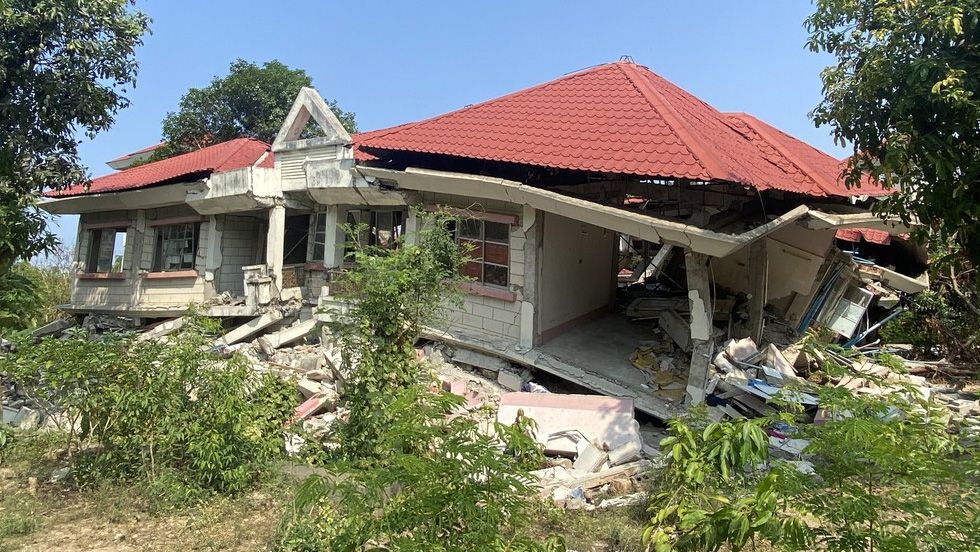
A house is seen split in half due to an earthquake

Damage from the magnitude 7.7 earthquake that hit on March 28, 2025, near the city of Mandalay. (Image credit: Photo(s) taken by Dr. Tha Zin Htet Tin of East Yangon University)

The researchers' models revealed that the fault is not a vertical plane under the ground. Instead, the surface dips west on the northern end of the fault, becomes vertical in the middle, and then dips eastward at the southern end, they found.

In general, more shaking occurs in the direction in which a fault line dips, Gabriel said. In the case of the San Andreas Fault, the dip is inland, toward California's high desert — an area that's less populated than coastal regions on the other side of the fault. This means that, if the Big One acts similarly to the Myanmar quake, the high desert side of the fault will experience more intense shaking than the coastal side. The San Andreas Fault has also built up strain for over a century, so the researchers believe it could act in a similar way to the Sagaing Fault.

However, everyone near a dangerous fault should still prepare for major shaking, Gabriel warned, because small local variations, like how much sediment has accumulated over the bedrock in an area, can make a difference in how bad the ground movement gets. Los Angeles, for example, sits on a sediment-filled basin that would jiggle like jelly in a large quake.

The researchers also investigated whether they could have predicted aspects of the Mandalay quake from monitoring data they had available from before the quake. They knew that the Sagaing Fault had been "locked" in certain segments, meaning that while the two tectonic plates on each side of the fault were moving, the rocks at the fault line were jammed against each other. These locked segments had been accumulating strain for 186 years.

The researchers found that they could predict the path, shape and speed of the rupture on the Sagaing Fault in Myanmar with details available prior to the quake, such as the detailed shape of the fault deep underground and how long sections had been locked. Similar predictions could be made for the San Andreas and other important faults. Previous studies have also shed light on other aspects of the fault, such as its simplicity and maturity, that could inform what might happen at other faults around the world.

Researchers are currently working to update their model of what the Big One would look like on the San Andreas. The results of the update will be shared to help the public prepare, inform building codes and educate emergency managers.

"This really shows how we can use this long-term fault-monitoring data," Gabriel said.

  •  

The James Webb telescope is watching one of the earliest supernovas in the universe unfold

Astronomers using the James Webb Space Telescope (JWST) have found what may be one of the most distant supernovas ever observed. And in a stroke of cosmic luck, the team thinks they're seeing what the explosion looked like just days after it ignited.

The supernova, named AT 2026abck, dates to around 1.15 billion years after the Big Bang, when the universe was less than one-tenth of its current age and bursting with massive stars flickering into life. The massive exploding star violently released its light over 12.5 billion years ago, according to the researchers — so long ago that the distance between us has effectively ballooned sixfold due to the expansion of the universe.

The discovery was described in a paper that was uploaded to the preprint server arXiv Sept. 29 and has not yet been peer reviewed. According to the study authors, this ancient speck of light is stupendously bright.

"At its peak, the supernova is about 8 billion times the brightness of the sun … almost as bright as the whole Milky Way Galaxy," study co-author Xiaohui Fan, an observational cosmologist and professor of astronomy at the University of Arizona, told Live Science via email. "Over the course of the explosion, it radiates the energy that the sun will radiate over about 2 billion years."

A beacon from the beginning of space-time

The newly discovered supernova shines brilliantly at over 30,000 degrees Fahrenheit (16,000 degrees Celsius). Its incandescent shell of ejected material has billowed to a radius of approximately 46 astronomical units ‪—‬ about 46 times the distance between Earth and the sun, or about as far as Pluto swings at its farthest point from the sun.

The supernova's host galaxy, designated ID101411, holds about 6.3 billion solar masses and is "forming new stars more than ten times faster than our Milky Way," first author Mingyang Zhuang, an observational astrophysicist at the University of Illinois Urbana-Champaign, told Live Science via email.

As with other early galaxies, ID101411 is deficient in metals, meaning any elements heavier than hydrogen and helium, because not enough time had passed to create those heavier elements in the forges of massive stars and their apocalyptic explosions.

Two images side by side showing deep space explosions

An illustration of a supernova erupting when the universe was just 730 million years old. (Image credit: NASA, ESA, CSA, STScI, L. Hustak (STScI))

The study authors estimate that they observed the supernova as it would have looked just four to 10 days after it exploded. Although this is relatively common, spotting one at such an incredible distance "is extremely rare," Zhuang emphasized. "You have to observe the exact same tiny patch of sky repeatedly with [JWST], and the explosion has to happen at the right moment. We were lucky."

There's another layer of luck that made the discovery even more remarkable: It was observed without the aid of a cosmological quirk called gravitational lensing — a phenomenon predicted by Einstein in which the gravity of a massive object in space bends and magnifies the light emitted by objects behind it.

"Most supernovas this far away were found with help from a massive foreground galaxy cluster acting as a natural magnifying glass," Zhuang explained. "It's the most distant one we've actually seen appear."

This supernova was discovered as part of the NEXUS Treasury program, in which JWST intermittently scours patches of the sky for ancient explosions. It had previously observed the explosion's host galaxy over the past few years and finally witnessed the supernova on Aug. 7 of this year.

An explosion in slow motion

Intriguingly, the star had not yet exploded in JWST's previous viewing, on May 28, 2026, meaning that 71 days passed on our Earthly clocks, even though only about 12 days passed in the supernova's own time frame.

This highlights a mind-bending cosmological effect: The universe's expansion doesn't just stretch space; it slows down time from our perspective.

"Because the universe has expanded since this light was emitted, everything about this explosion appears to us in slow motion, about six times slower than it actually happened," Zhuang said. "Changes that took one week at the supernova take about six weeks to unfold from our point of view."

Mysteries still remain about the nature of this ancient explosion that shone so brilliantly we can observe it across nearly the entire universe.

Rather than a conventional core collapse supernova ‪—‬ in which a star between approximately eight and 50 times the mass of the sun exhaust its nuclear fuel and suffers a rapid core collapse and subsequent explosion ‪—‬ the recently discovered supernova may be one of the universe's rarest, most powerful explosions, the study authors said. Known as a superluminous supernova, this type of explosion releases tens or hundreds of times more energy than conventional supernovas. Whether the explosion continues to heat up or starts to cool could reveal exactly what is happening in its environment and what caused it, the team said.

"Our interpretation is still preliminary," Zhuang concluded. "Follow-up observations will tell us more about exactly what kind of explosion this was."

How well do you know our home galaxy? Find out with our Milky Way quiz!

  •  

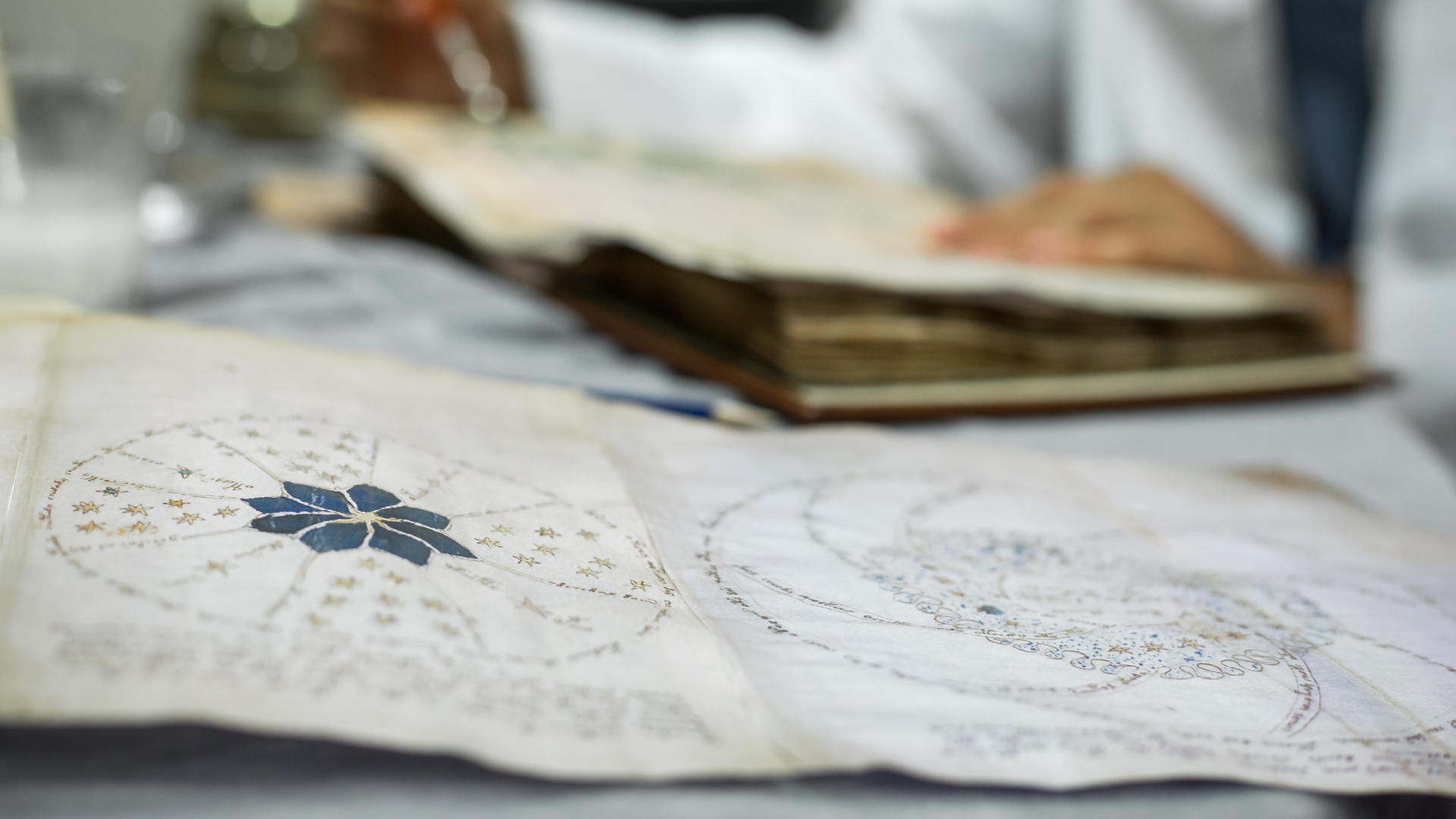
Undeciphered Voynich manuscript may have been bound out of order, study finds

The mysterious and undeciphered Voynich manuscript has caused consternation among code-breakers, linguists and scholars of medieval literature for more than a century. But now experts think they've worked out why it's so hard to crack: It was bound incorrectly in the 15th century, meaning the pages are out of order. The new linguistic analysis of the document has moved researchers closer to figuring out what the text was all about.

The Voynich manuscript is a medieval codex made up of leaves of parchment carbon-dated to the early 15th century. Its 240 pages are covered with about 38,000 words of a unique script called "Voynichese" along with illustrations of people, plants and astrological symbols. Also known as the Beinecke Cipher manuscript, the document was initially owned by a Holy Roman emperor and was purchased by Wilfrid Voynich in 1912. Since 1969, the manuscript has been in the collection of Yale University's rare book library. Experts have unsuccessfully tried to decipher the manuscript for more than a century.

"We don't know if it's a code," Lisa Fagin Davis, study co-author and executive director of the Medieval Academy of America, told Live Science. "But there are some odd characteristics of the Voynich manuscript in terms of its physical structure."

When doing research on the number of scribes who copied the document, Davis realized from the handwriting that the manuscript's pages alternate in ways that don't make sense. In addition, she said, "there are several examples where the image goes off the page in the middle and comes out on the other side, even though there are a bunch of pages in between."

In a study published Monday (Oct. 19) in the journal Digital Medievalist, Davis and co-author Colin Layfield, an information systems researcher at the University of Malta, suggested that the inconsistent structure of the enigmatic manuscript is the result of someone mis-binding a manuscript they were unable to read.

a series of illustrations of how a medieval book was bound

An illustration of how the Voynich manuscript may have been bound incorrectly. (Image credit: Quinn Reynolds for Live Science)

Medieval manuscripts were made up of rectangular sheets of parchment (animal skin), typically folded in half to produce what experts call a bifolium. Around five bifolia would typically be nested together, creating what experts call a quire. Then, a stack of quires would be bound together along the spine to create a book. However, Davis and Layfield suggested that the Voynich manuscript was intended to be a stack of singulions — a series of loose bifolia never meant to be bound together as a quire or a book.

This is not the first time a researcher has suggested the Voynich manuscript has pages out of order. But Davis and Layfield analyzed the graphic properties of the untranslated document to see if their hypothesis made sense.

"We're viewing it as a text and assuming it has a message," Layfield told Live Science, which means it should be possible to statistically compare blocks of text to see if they're similar or disconnected. Layfield used a technique called latent semantic analysis (LSA), which is a natural language processing technique invented in the late 1980s to find hidden patterns in texts.

LSA is particularly useful for small sets of data, Layfield explained. "Modern AI techniques need ridiculous amounts of data to train on, which we just don't have. We've got just 35,000 or so words. That's it." The researchers' LSA analysis of the Voynich manuscript revealed that some pages had low similarity, suggesting they may not have gone together, while others had high similarity, bolstering the idea that they were supposed to be read together.

By looking at the Voynich manuscript as a collection of singulions, Davis and Layfield solved some of the nagging issues with the document.

"When you start to think about it in the context of the other strange features of the manuscript, all of those problems are resolved," Davis said. "It solves the problem of each scribe writing one sheet. It solves the problem of the images crossing the gutter."

This means that any previous work on the Voynich manuscript that assumes it was ordered correctly now needs to be reconsidered, she said, but it also means there is new progress on the book.

"This work helps us think about whether there's actual meaning underneath it all," Davis said. "It doesn't get us there," she said about a definitive translation, "but it moves the ball because you can't make sense out of a book where all the pages are mixed up."

Davis is optimistic that someone will crack the Voynich mystery, in part because a similar modern puzzle known as Cain's Jawbone has been successfully deciphered by a handful of people. This devilishly difficult linguistic puzzle from the 1930s consists of 100 pages of a murder mystery arranged in the wrong order. Due to the unique nature of the text and its vague, stylized language, even AI has failed to solve it.

"We have some ideas for other work we want to do," Davis said. For example, there's a large water stain in the upper margin of some of the pages of the Voynich manuscript. "The stain should be symmetrical from one page to the next but it's not. That also supports the idea that the manuscript is bound out of order."

Davis and Layfield are thinking about ways to compare the stain shapes across the pages, as that may help them reorder the incorrectly organized pages.

See if you know what these mysterious artifacts are with our archaeological fragments quiz!

  •  

Ultrasound waves that jiggle deep brain structures may relieve delusions in schizophrenia, small trial hints

Stimulating the brain with ultrasound could help counter the delusions people experience in schizophrenia, a small trial finds.

The trial involved transcranial ultrasound stimulation, in which a device placed on a patient's head delivers ultrasound waves through the skull and into the brain. Its goal is to change the activity in a targeted brain region.

Delusions are false beliefs that are very difficult to shake; for example, a person might believe they are being stalked when they aren't or think that a major disaster is about to occur without any evidence to suggest so. In the trial, researchers found that a 10-minute session of the ultrasound treatment reduced the severity of delusions for at least a week in patients with schizophrenia or a related disorder.

This targeted ultrasound treatment delivered directly to the brain could avoid some of the full-body effects of antipsychotic medications, such as weight gain and high blood pressure. That said, the new results, published Tuesday (Oct. 20) in the journal npj Acoustics, are a first step and will need further verification in larger trials.

"It's too early to know for certain what the therapeutic benefits will be, but it's very exciting," study co-author Dr. Donald Goff, a professor of psychiatry at the New York University Grossman School of Medicine, told Live Science.

Targeting deep brain structures

The pilot study included 10 patients with either schizophrenia or schizoaffective disorder. In both conditions, patients experience psychotic symptoms, including delusions and hallucinations. Schizoaffective disorder also includes mood symptoms, such as mania.

The researchers interviewed each participant to characterize the content of their delusions, and also documented their cognitive state and experiences with auditory hallucinations — perceptions of sounds that aren't actually occurring. The participants then received both an ultrasound treatment and a placebo treatment, spaced one week apart.

Other noninvasive therapies — such as transcranial magnetic stimulation, which uses magnetic fields — can also stimulate the brain. But the ultrasound technique differs from these therapies because ultrasound waves can penetrate deeper into the brain with greater specificity, study co-author Shy Shoham, a neural engineer at NYU Grossman, told Live Science. He compared the way a transducer directs ultrasound waves toward a given brain region with the way a lens focuses light.

In this case, the researchers focused this lens on a brain network called the cortico-striatal-pallido-thalamic circuit, which includes structures underneath the brain's outer cortex. The relationship between this circuit and schizophrenia symptoms is still somewhat unclear, partly because its deeper components are hard to study in adequate resolution with MRI, said co-author Dr. Wei Qi, a clinical assistant professor of psychiatry at NYU Grossman. However, some past studies have suggested that this network plays a part in schizophrenia.

A cartoon of a transparent brain with an inner region glowing red.

The ultrasound treatment targeted a brain structure called the globus pallidus internus (orange). (Image credit: SEBASTIAN KAULITZKI/SCIENCE PHOTO LIBRARY via Getty Images)

Much of what scientists know about the network comes from research in movement disorders, such as Parkinson's disease, in which there is an imbalance between excitation and inhibition in the neurons that control movement. A similar dynamic could help to explain symptoms of schizophrenia, the scientists think.

"Our hypothesis is that, in schizophrenia, there is an imbalance between excitation and inhibition regarding what in the environment is actually important," Qi told Live Science. "The failure to inhibit irrelevant signals could be the basis of psychosis."
"Quite optimistic"

The researchers surveyed the study participants after each treatment, asking about the degree of belief each person had in their delusions and the amount of stress they caused. Compared with the placebo treatment, the ultrasound stimulation was associated with less-severe delusions over the following week. There was no significant change in patients' auditory hallucinations or overall cognition, though.

The ultrasound therapy came with mild side effects, such as fatigue and headache. Some patients had transient increases in delusions, which Qi attributed to normal fluctuations in symptoms that are expected in schizophrenia. These outcomes were just as common after the placebo treatment, so they may not be related to the ultrasound specifically.

The stimulation was aimed specifically at the right side of a brain structure called the globus pallidus internus (GPI). In a previous study, the authors found that greater connectivity between this region and another structure — the dorsal anterior cingulate gyrus — was linked to more-severe psychotic symptoms in schizophrenia. So, they made the GPI their target.

To date, "there haven't been many successful therapeutic attempts at targeting some of these deeper structures," said Dr. Deepak Sarpal, an associate professor of psychiatry at the University of Pittsburgh School of Medicine who was not involved with the study. Ultrasound waves reach brain regions under the cortex in a less-invasive manner than deep brain stimulation, in which a surgeon implants an electrode in a patient's brain, Sarpal noted.

The researchers are not the only group using transcranial ultrasound to influence the cortico-striatal-pallido-thalamic circuit. Earlier this year, another group stimulated portions of the striatum, which is located directly under the cortex, in patients with schizophrenia. They evaluated hallucinations rather than delusions, finding that the treatment reduced symptoms for at least a week after the procedure.

In this line of research, the targeted nature of transcranial ultrasound presents advantages as a research tool as well as a treatment approach.

"If we find that a specific circuit or a node in a circuit seems to be closely linked to symptoms we're trying to treat, then it will be a matter of understanding what pattern of stimulation may allow us to correct that," Goff said. Qi, Goff and colleagues now plan to continue testing their technique on more patients and to experiment with different doses of ultrasound.

"A lot more work needs to be done," Goff said, "but we're really quite optimistic about its promise."

This article is for informational purposes only and is not meant to offer medical advice.

See how much you know about the most complex organ in the human body with our brain quiz!

  •  

'It makes me feel that we can do a lot about it': ESA official shares striking satellite snap of Europe's record-breaking summer heat waves

QUICK FACTS

Where is it? Southern Europe and North Africa

What's in the photo? Land and sea surface temperatures during one of Europe's record-breaking summer heat waves

Which satellite took the photo? Sentinel-3B

When was it taken? June 23, 2026

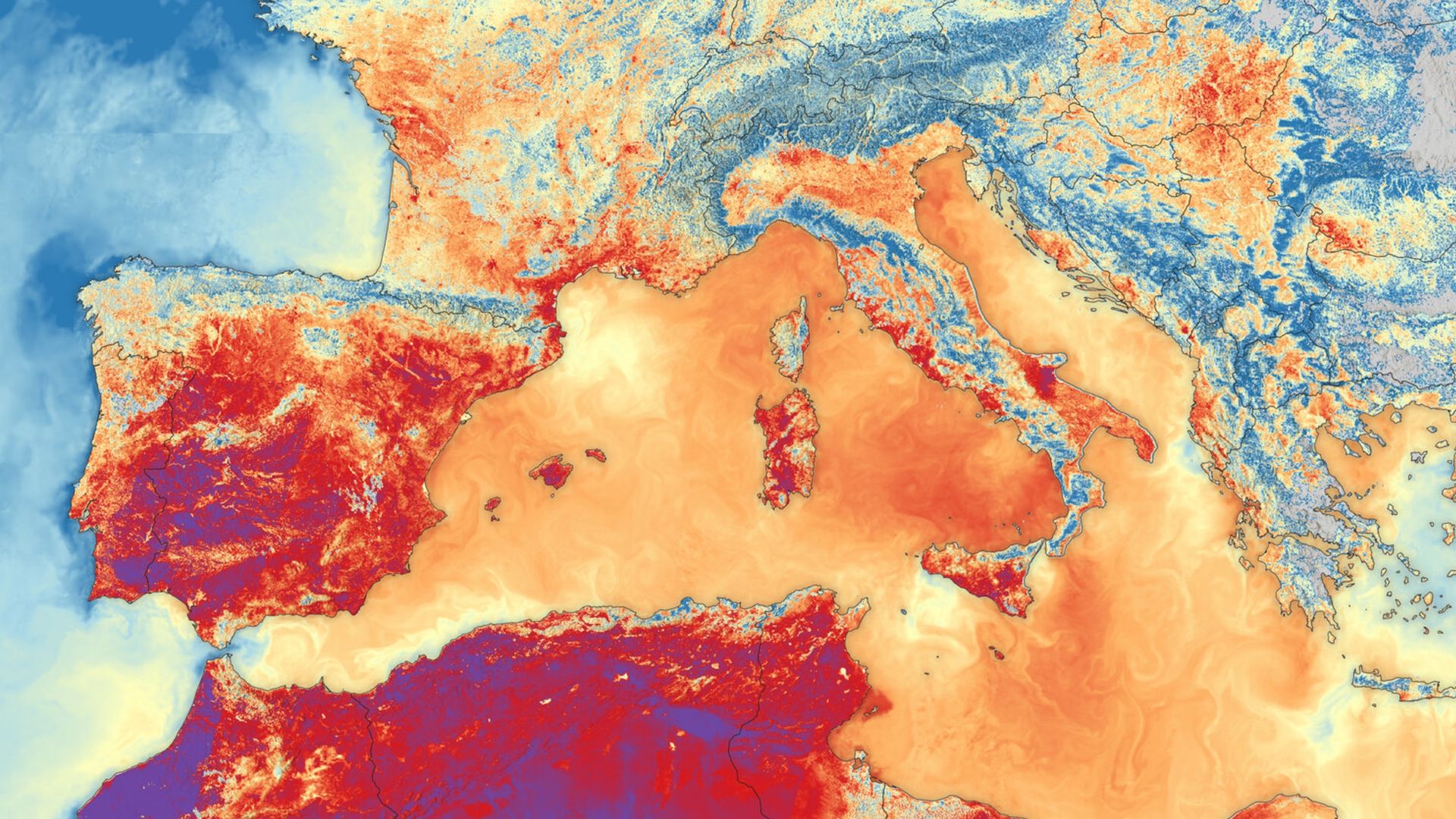
This striking satellite snap shows the scorching land and sea surface temperatures that hit Southern Europe during one of the continent's record-breaking heat waves this summer.

The image was created using data from the Sea and Land Surface Temperature Radiometer (SLSTR) on board the European Space Agency's (ESA) Sentinel-3B satellite. It was selected for this week's edition of Earth from space by Simonetta Cheli, director of Earth observation programs at ESA and head of the European Space Research Institute (ESRIN) in Frascati, Italy.

Live Science recently visited Frascati to see ESRIN's newly operational Space HPC supercomputer and sat down with Cheli for an in-depth discussion about Earth observation. When asked about her favorite satellite image, Cheli highlighted this photo as one that caught her eye this year.

In the thermal image, dark reds highlight terrestrial temperatures in excess of 95 degrees Fahrenheit (35 degrees Celsius) across most of Spain and parts of France and Italy, while dark purple spots show highs above 104 F (40 C) across patches of Spain and North Africa. The image also reveals sea surface temperatures spiking across the Mediterranean Sea. (The colors in the image do not represent the same temperatures on land and sea. For example, orange indicates temperatures of around 86 F (30 C) on land but around 73 F, or 23 C, at sea.)

Cheli said that assessing how terrestrial and marine environments interact during extreme weather events is really important and that including both in the same image is the only way to appreciate the true scale of this heat wave: "You see the red in the sea, and you see the red on the land, and I think it gives the feeling of the heat wave that we've all been living through this summer," she said.

A photo of the Sentinel-3C satellite launching on board a rocket in September

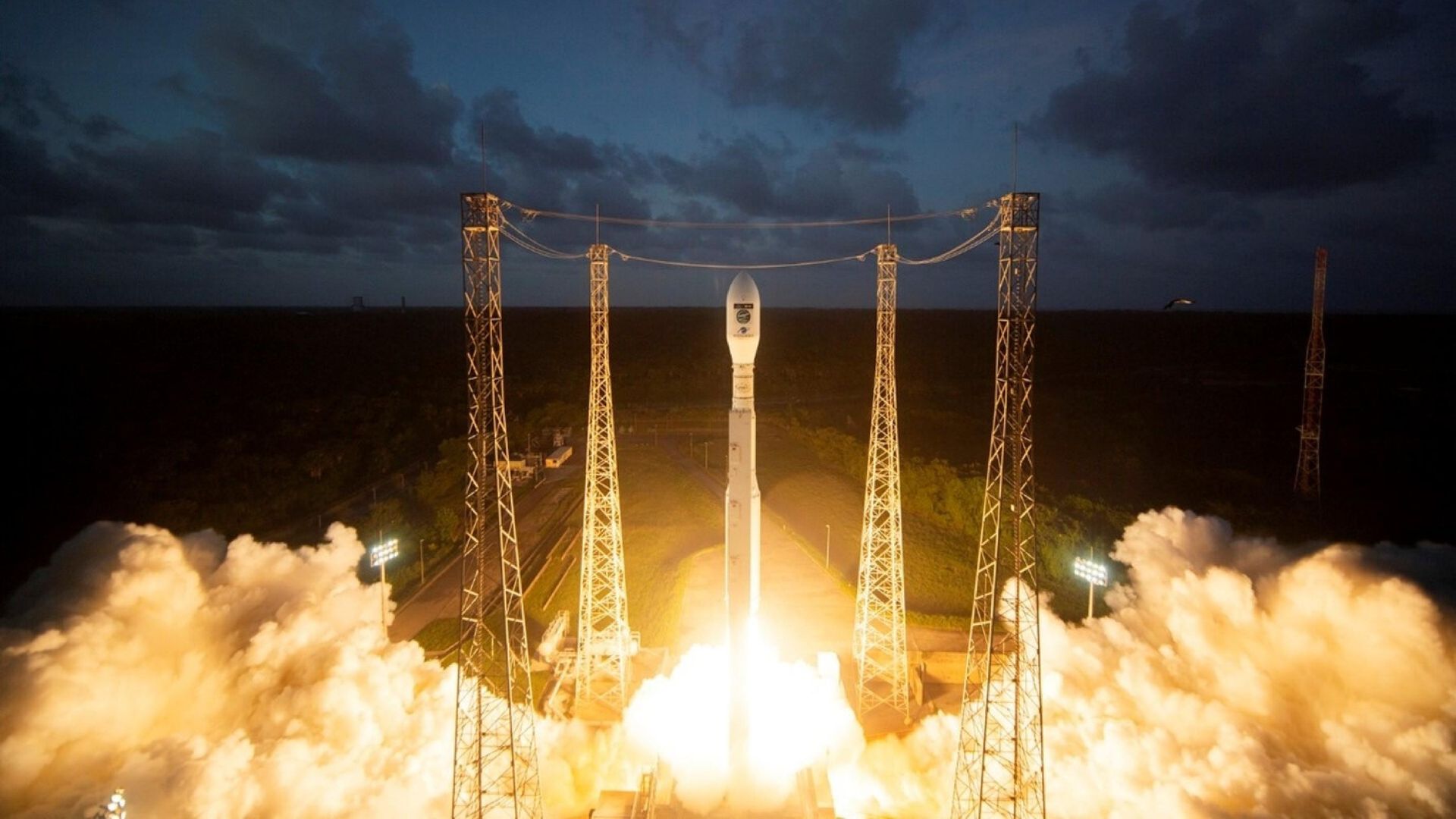
ESA launched the Sentinel-3C satellite in September, on board a Vega rocket that lifted off from the agency's launch site on French Guiana. It will help the agency monitor future extreme weather events in even greater detail. (Image credit: European Commission)

While many people may find such images related to human-caused climate change disheartening, Cheli sees it as a sign of hope that orbiting spacecraft can monitor otherwise-invisible changes to our planet's surface in such detail.

"It makes me feel that we can do a lot about it," she said. "It makes me feel that we have tools and certainly information capabilities to support, help and also raise awareness about this topic."

Cheli told Live Science that ESA's ability to monitor extreme weather events like this will only improve as the agency launches new-and-improved spacecraft into orbit. In September, ESA successfully launched Sentinel-3C, the successor to the spacecraft that snapped this image, which has already captured its first photos of Earth and will help study future heat waves in greater detail.

Europe's record-breaking summer

Between late May and mid-August, parts of Europe were hit by at least five separate heat waves, meaning temperatures stayed unusually high throughout the season. "We had, I would say, the hottest summer ever," Cheli said.

The peak heat occurred in June, when the average temperature for that month reached 69 F (20.7 C) — its highest in Western Europe's recorded history, according to the World Meteorological Organization. (This average includes nighttime temperatures, which is why it seems relatively low compared to other temperatures mentioned so far.)

Eight countries — Austria, Belarus, Czechia, Denmark, Germany, Hungary, Poland and Slovakia — recorded their highest land surface temperature of all time at various points throughout this summer, and several others had record temperatures for a specific month or region.

The extreme weather caused widespread droughts across the continent, some of which are still ongoing, and helped trigger several wildfires, including a series of particularly large blazes in France. Experts think the high temperatures resulted in at least 35,000 excess deaths across Europe, although the true number is expected to be much higher, according to The Guardian.

A photo of Simonetta Cheli stood next to an interactive model of the globe

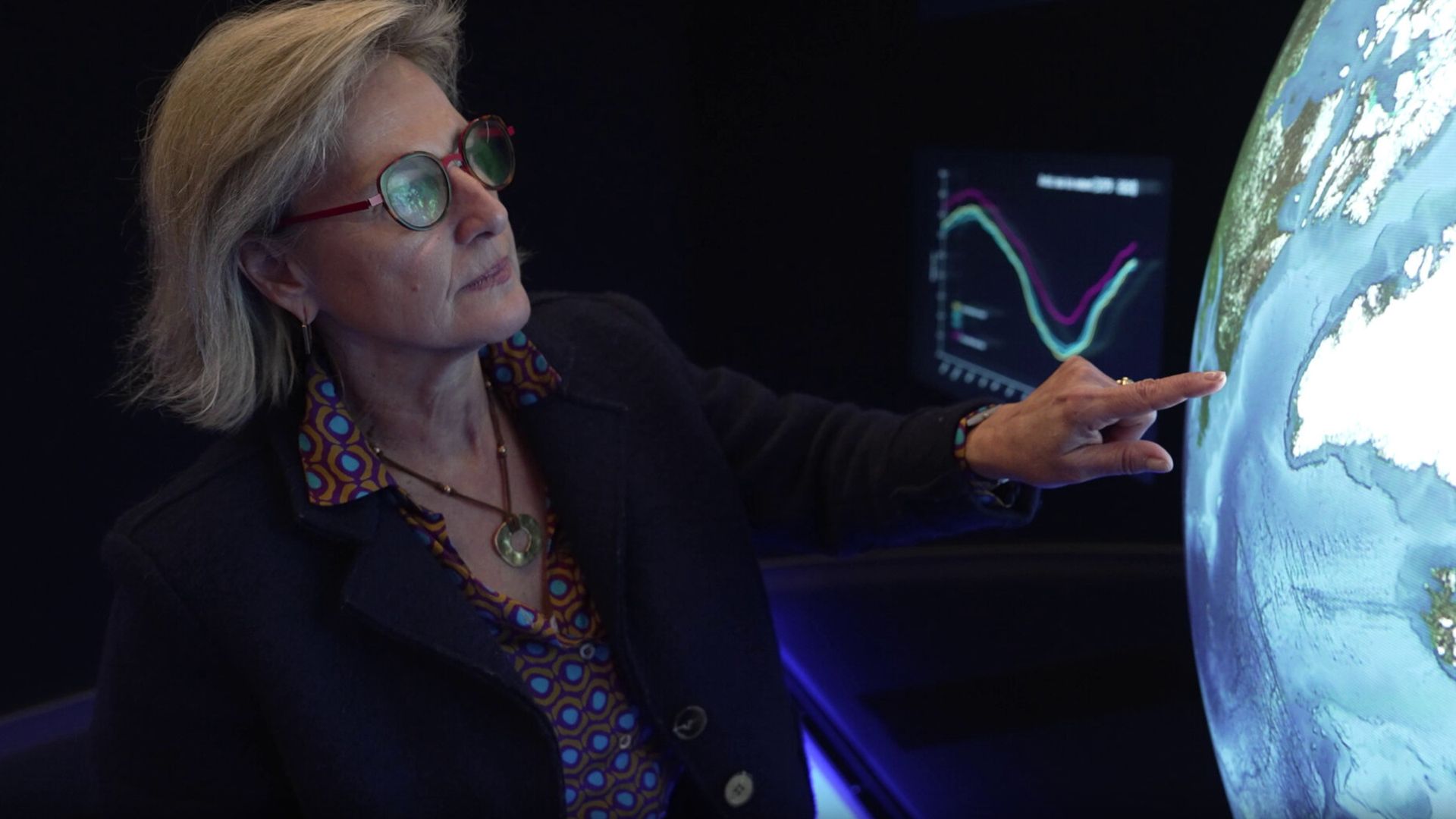
Simonetta Cheli is the director of ESA's Earth observation programs, and has been working at the agency for nearly 40 years. She described this summer's heat waves as the hottest she can remember. (Image credit: ESA)

The heat waves were caused by "heat domes," which are pockets of high pressure in the atmosphere that trap warm air beneath them, like placing a lid on top of a boiling pot. These are also linked to higher sea surface temperatures.

The ongoing super El Niño began in May and has already led to record temperatures in the Pacific Ocean, but it did not contribute to the European heat waves, according to ESA. Instead, the record temperatures are a continuation of recent global warming trends.

However, El Niño could lead to more extreme weather this winter, in Europe and in North America.

See more Earth from space

A satellite photo showing tens of thousands of small fields tightly crammed around a river in Taiwan

Multicolored agricultural 'mosaic'

A recent satellite photo shows a patchwork of tens of thousands of size-restricted farms tightly crammed into Taiwan's Yunlin County, which grows a majority of the island's food.

Photo of a space shuttle with an open cargo bay over the Bahamas

Space Shuttle's final photobomb

This 2011 astronaut photo captured one of NASA's iconic space shuttles passing between Earth and the International Space Station for the very last time.

A beautiful light blue plume swirling in the sea off Key West

Polar vortex paints picturesque plume

A recent satellite photo captured a stunning scene of sediment swirling across the West Florida Shelf after an extreme cold snap that covered large parts of the eastern U.S. in snow.

  •  

'We used to go to the climate conferences together. We are not anymore': ESA official Simonetta Cheli tells us how the political landscape for Earth observation is changing

FRASCATI, Italy — Observing Earth from space provides a much-needed insight into the evolution of our planet's health. This is particularly important in the face of climate change, as environmental degradation, food insecurity and extreme weather events can all reveal themselves in stark images taken from high above our planet's surface.

Simonetta Cheli is the director of Earth observation programs at the European Space Agency (ESA) and the head of the European Space Research Institute (ESRIN) in Frascati, Italy. With nearly 40 years of experience in the field, she is one of the world's leading experts on Earth observation.

Live Science spoke with Cheli on a recent visit to ESRIN to talk about why Earth observation is so important, how NASA budget cuts and political changes have altered the picture, and why private space satellites risk our ability to view the planet clearly.

She also discussed how new supercomputers, like ESRIN's newly operational Space HPC, are helping to process vast amounts of data like never before — and shared her favorite recent satellite snap of our planet

A headshot of Simonetta Cheli

Simonetta Cheli became ESA's director of Earth observation programs and head of ESRIN on Jan. 1, 2022, more than three decades after joining the agency. She was born in Siena, Italy, and went on to study law and economics at Yale University before gaining a degree in political sciences at the University 'Cesare Alfieri' in Florence, Italy. She also holds a diploma of advanced studies from the Centre d’Etudes Diplomatiques et Stratégiques in Paris. (Image credit: ESA)

Harry Baker: Why is observing Earth from space so important?

Simonetta Cheli: It's important because we need to know today what is the state of our planet, if it's healthy or if it's in danger, if it's stressed or not.

It's important to have objective information on many different variables, such as deforestation, the quality of the air that we breathe, the evolution of the oceans or the melting of ice masses. Basically, we need to be aware of what the situation is on Earth today, so we can preserve it tomorrow.

HB: How has ESA's Earth observation program changed throughout your career?

SC: When I started at ESA [in 1988], we were relying on missions from partners, including the Americans and Japanese. We didn't have our own missions.

We launched the first mission [ERS-1] in 1991. Today, just here at ESRIN, we manage over 20 missions and are planning more than 40 more. We have also launched three different missions in the last three weeks — one to look at how oceanography impacts extreme weather events [International Report for an Innovative Defence of Earth]; one to monitor the fluorescence and health status of vegetation [Fluorescence Explorer]; and one to measure temperature on land and sea [Sentinel-3C], which was a super useful thing this summer.

A photo of Simonetta Chelli speaking at a podium

Cheli is one of the world's leading experts on Earth observation and currently oversees more than 20 different missions that are monitoring our planet from above. (Image credit: ESA)

Europe is now a leading power in this domain worldwide. We have evolved a lot.

HB: How important is it to cooperate with other countries when observing our planet from above?

SC: Well, I must say, in ESA, it's in the DNA of our work. ESA includes 23 countries today, so we work together daily. We also work very closely with other commercial partners and the European Union, as well as international partners like NASA, Brazil, India and Africa. So this is part of our job, and very much also in the domain I'm managing.

We used to go to the climate conferences together. We are not anymore.

Simonetta Cheli, ESA

To tackle climate and environmental stability, you cannot just do things alone at the national level. You have to share data and work with everybody in the world, where you have to have common objectives. For example, what happens to Greenland affects everybody on Earth, not just the people who live there. So the collaboration, I think, is very much inherent in our daily job at ESA and between our partners.

HB: Given the recent cuts to NASA's funding, including its Earth observation budget, does ESA feel a bigger responsibility to step up and fill the gap?

SC: I think we certainly have a bigger opportunity in the sense that today, with the systems we have and the satellites we have and the missions we have, even before the political context. For example, we were already leading the U.S. with data on emissions.

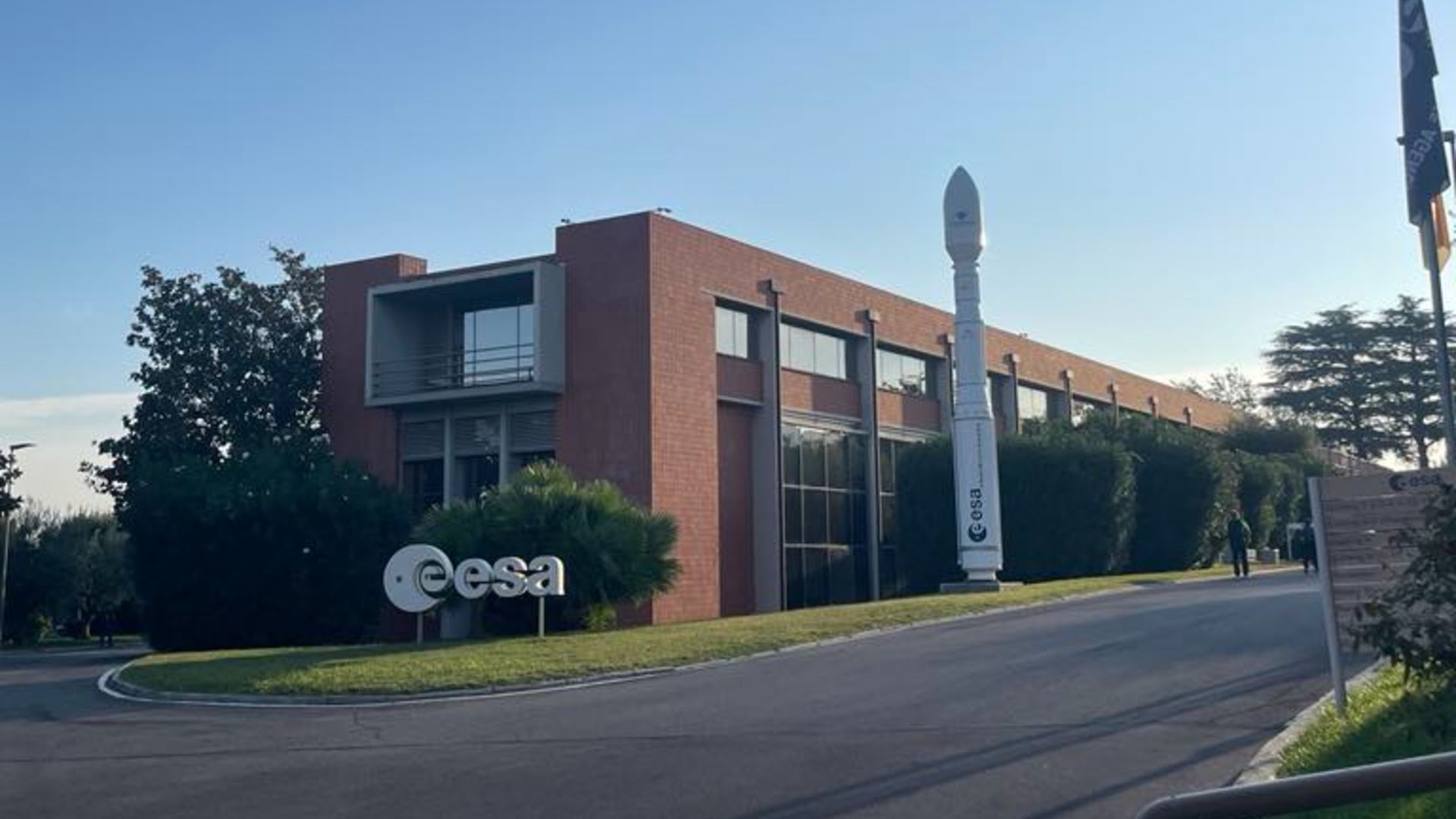
A photo of an ESA sign and model rocket at the entrance to the ESRIN center in Frascati

Live Science recently visited Frascati to see ESRIN's newly-operational Space HPC supercomputer. (Image credit: Harry Baker/Live Science)

We have a very good working-level collaboration with our American partners. This is somehow preserved, although politically it is, of course, more delicate. We used to go to the climate conferences together. We are not anymore.

HB: ESA just launched the latest batch of satellites in the IRIDE constellation (an Italian funded network of Earth-observing spacecraft designed and operated by ESA). What makes these satellites so special? And how are they helping your research?

SC: We launched the latest eight [satellites] last night! (The IRIDE satellites launched on Oct. 1, the day before this interview took place.)

Sixty-eight satellites are planned overall in this constellation, and we have launched quite a few [39] already, and plan to launch some more before the end of the year.

A photo of the Sentinel-3C satellite launching on board a rocket in September

On Sept. 14, ESA also launched the Sentinel-3C satellite on board at Vega rocket that lifted off from the agency's launch site in French Guiana. (Image credit: European Commission)

The network will collect a lot of data from the optical radar spectrum that will support different user needs: for example, in the civil protection area, in coastal erosion monitoring, in coast guard operations and in environmental stress analysis. And so this system will certainly be a big contribution to the wider European Earth observation setup.

HB: The number of private satellites, like in SpaceX's Starlink constellation, is increasing fast. Are you worried about the impacts that this might have on your scientific spacecraft?

SC: We are worried because we see that the anti-collision maneuvers are increasing and increasing. When my mission manager tells me we have to move the satellite because there is a risk of collision with another satellite, we have to go check with ESO [European Southern Observatory] in Germany, and then the operations center moves the satellite. And the number [of times we've done this] has certainly increased in the last four or five years due to the increased number of satellites up there.

For the moment, the technical collaboration with partners is going quite well. So when we see someone else's satellite, we actually try to organize things as best we can, and technically it's working well. But what we need for the future is a clear framework at the legal level, which is engaging everybody.

"Everybody" in space is no longer only the institutional partners; it's not just the space agencies of the world that should engage. Today, you have private actors, like Starlink, and if they don't engage in the same rules, you risk having a delicate situation. But this is something that we are discussing daily, and we're tackling.

HB: The whole point of Earth observation is to protect our planet. How do you feel about some of the negative impacts of launching satellites, such as exhaust plumes, metal pollution and space junk?

SC: There is a very strong objective linked to sustainability at ESA. It is not just about using the data to better preserve our planet; it's also about being sustainable in the daily work we do.

A photo of Simonetta Chelli stood next to a model of the globe

Chelli has been working at ESA for nearly 40 years, and believes that global cooperation is essential in Earth observation. (Image credit: ESA)

This is linked to, for example, trying to have a space debris policy; trying to have enough propellant on board of the satellites that we build to make sure that once they finish their lifetime, they come back with a re-entry assist and they don't stay there in orbit. And the same is true in the launcher domain, where there's a very strong effort from our partners in French Guiana [where ESA's only active launch site is located] to lessen our impact as much as possible on the environment with the launch setup.

There's a really dedicated team doing all this.

HB: How will AI systems and advanced computers, like Space HPC, help researchers process data? And what sort of things could that help you do?

SC: We have today a wealth of data that is continually increasing. Just in the Copernicus program [Europe's biggest Earth observation initiative], we receive 500 terabytes of data per day.

We also have big volumes of data in the archives here at ESRIN from science missions of international partners, including Japan, India, the U.S. and others. This "heritage data" guarantees that archival data of missions that have ended are preserved, which is super important.

A photo of Simonetta Chelli (red coat) stood next to other ESA officials at the opening of the Space HPC supercomputer in Frascati

Chelli (center right) was one of the people chosen to cut the ribbon at the opening of ESRIN's Space HPC supercomputer on March 12, 2025. (Image credit: ESA)

So instruments like SpaceHPC, which have high computing capability, help us a lot to process those datasets faster.

HB: What is your favorite satellite photo of Earth?

SC: I have too many favorite satellite photos, I must say. But this summer, the one I really found striking was a thermal image of Europe's heatwaves because, in that image, you see that the temperature on land and on sea was increasing so much.

A multicolor thermal photo of Southern Europe showing high temperatures across the continent

This photo, captured by ESA's Sentinel-3B satellite in June 2026, shows land and sea surface temperatures spiking across Southern Europe. While it is concerning, Cheli says that the image gives her hope about our ability to monitor such extreme weather events in the future. (Image credit: ESA/Sentinel-3B)

It was captured by Sentinel-3B [a predecessor of the recently launched Sentinel-3C], and you see the red in the sea, and you see the red on the land, and I think it gives the feeling of the heat wave that we've all been living through this summer. We had, I would say, the hottest summer ever.

But it makes me feel that we can do a lot about it. It makes me feel that we have tools and certainly information capabilities to support, help, and also raise awareness about this topic.

So right now that is a favorite, but there are so many [other photos].

This interview has been condensed and edited for clarity.

  •  

See pieces of Halley's Comet fall to Earth this week as the Orionid meteor shower peaks

One of the best fall meteor showers peaks this week, when pieces of the famous Halley's Comet streak across Earth's atmosphere as fast-moving "shooting stars."

The Orionid meteor shower will peak overnight Wednesday (Oct. 21) through Thursday (Oct. 22), potentially producing around 20 meteors per hour under a dark sky, according to Time and Date. The Orionids are caused when Earth passes through the debris left by Halley's Comet, which last passed through the inner solar system in 1986 and will return in 2061.

Halley's Comet is presently beyond the orbit of Neptune, according to The Planets Today, but it doesn't need to be close to Earth to cause "shooting stars." Every time the comet travels through the inner solar system, heat from the sun causes it to shed dust and rocky particles along its orbital path. Earth's own orbit takes the comet through streams of that ancient debris several times a year, with the particles vaporizing as they slam into our planet's atmosphere.
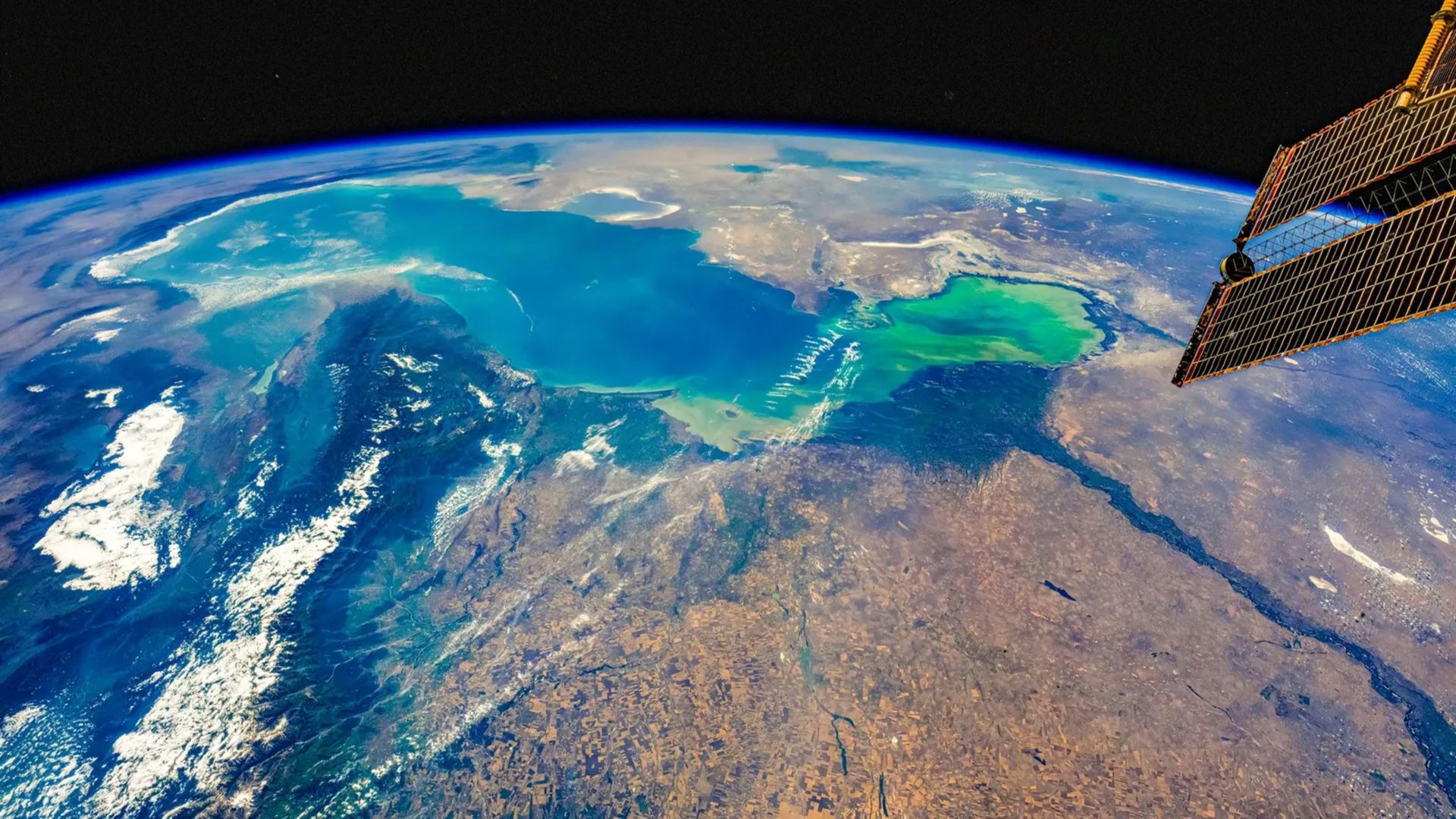
The Orionids are particularly fast meteors, striking Earth's atmosphere at around 41 miles per second (66 kilometers per second). They can produce bright streaks, occasional fireballs (extremely bright, sometimes colorful meteors) and "persistent trains" — glowing trails that remain visible briefly after a meteor has disappeared. The best way to view them is with the naked eye, although a nice pair of stargazing binoculars or a small backyard telescope will help you enjoy more sights during peak skywatching season this fall.
Halley's Comet produces not one but two annual meteor showers. Its orbit comes close to Earth's at two different points, so our planet encounters the comet's debris twice each year — once during the Orionids in late October, and again during the Eta Aquariid meteor shower in early May.

There's a slight complication with the Orionids this year. A 71%-illuminated waxing gibbous moon will brighten much of the night, making it harder to spot meteors. However, the moon will set early Thursday morning, creating a valuable window of darkness before dawn. That's also when the constellation Orion will be high in the sky, making the predawn hours the best time to watch.

You can trace the paths of Orionid meteors back to their radiant: the famous red supergiant star system Betelgeuse in the constellation Orion. (That's why the shower is called the Orionids.) However, there's no need to look directly at Orion. Meteors seen farther from the radiant can produce longer streaks across the sky; each one comes from a tiny piece of Halley's Comet completing a journey that began many centuries ago.

  •  

11th-century 'pizza peel' discovered in Russia doubled as a medieval game board

Archaeologists have unearthed an 11th-century wooden kitchen gadget with an ancient board game carved into the back. Medieval bakers may have used the wooden paddle not just to transfer bread into an oven but also to pass the time while they waited for the food to cook, the researchers said.

"We discovered a fragment of a fairly large shovel," Sergey Toropov, director of Novgorod State University's Center for Archaeological Research, said in a translated statement. "Most likely, it was a bread shovel, which was used to bake bread in an oven. On the reverse side, however, three squares have been carved, one inside the other."

The "bread shovel" — also known to contemporary home bakers as a wooden bread peel, a pizza paddle or a pizza peel — was found at the archaeological site of Pyatnitsky in the center of Staraya Russa, a medieval town between Moscow and St. Petersburg where last month, archaeologists reported their discovery of a "snake amulet."

a flat, rectangular wooden paddle with a broken-off handle

Archaeologists discovered a wooden baking implement — likely a pizza-paddle-like tool — dating back to medieval times. (Image credit: Novgorod State University)

The preserved portion of the bread peel measures about 12 by 16 inches (30 by 40 centimeters), and it was likely crafted from oak. While one side is flat, likely for baking tasty treats, the other side had been carved with a board for the ancient game known as merels, merrelles, mills, nine-men's morris or cowboy checkers.

The origin of the game is unknown, but historical records and archaeological artifacts suggest a similar two-person logic game was played by the ancient Romans two millennia ago — and the game may be even older than that. In the Middle Ages, merels became particularly popular across Europe and Asia, possibly because it requires little equipment and can be set up quickly.

a wooden board with 24 holes and 3 concentric squares and 18 pegs

A typical merels (also known as nine-men's morris, mills or merrelles) board and pieces. (Image credit: Alamy)

A typical merels board has three nested squares connected by horizontal and vertical lines. Each player has nine pieces of the same color. The goal is to arrange the pieces into columns of three along the lines. When a player forms a line, they can remove any one of their opponent's pieces. In this way, merels is a mixture of tic-tac-toe and checkers. A player wins when their opponent has only two pieces left or is completely blocked. (You can play an online version here.)

"Perhaps special boards for playing merels existed in antiquity," Toropov said, "but more often, one finds playing boards scratched or carved into the flat surfaces of household objects."

The archaeologists are not sure whether the wooden bread peel served two functions or whether it was repurposed as a game board after it broke and was no longer useful.

"At any moment, one could mark out a board on a flat surface, find suitable pieces — for example, small stones lying underfoot, and while away some time," Toropov said.

Merel boards and playing pieces have been recovered from ninth-century archaeological sites in the kingdom of the Rus', whose ancestors were Vikings who arrived in what is now Russia in the eighth century, according to the statement, but "a find as well-preserved as the one from Staraya Russa is practically unique."

  •  

A gene variant triples the risk of getting Alzheimer's disease — fat buildup in brain cells may be to blame, study finds

A gene variant called APOE4 dramatically increases the risk of late-onset Alzheimer's disease, the most common form of dementia. Now, emerging research is revealing APOE4's true role in the condition, and a new study pinpoints a possible way to treat it.

Historically, scientists studying Alzheimer's disease have focused on two proteins that accumulate in patients' brains: amyloid-beta and tau. However, there's a "third thing that people didn't pay attention to, until recently," said study co-author Li-Huei Tsai, a neuroscientist at MIT. That third thing is the accumulation of droplets of fat, or lipids, in the brain, she told Live Science.

The APOE gene makes proteins responsible for transporting fat around cells throughout the body and brain. A version of the gene called APOE4, which increases the risk of late-onset Alzheimer's three- to 12-fold, makes proteins that are less efficient at this function, Tsai said. But how APOE4 affects different brain cells was not clearly understood.

Tsai's team has been working to close that gap for about a decade.

"APOE4 can influence many different cell types," she emphasized. "It's not just one cell type."

Zeroing in on the clues

In past laboratory research, Tsai's team found that APOE4 causes a buildup of cholesterol in astrocytes, star-shaped brain cells that support the function of neurons. Genetic analyses suggested that the gene variant may mess with how these cells process fat.

Another study zoomed in on oligodendrocytes, cells that help insulate neurons' outgoing wires with a fatty material called myelin. This material helps neurons send messages more efficiently. APOE4 caused the oligodendrocytes to accumulate cholesterol. So, in lab mice, the team used a drug to help the cells get rid of that extra cholesterol, and it improved the cells' ability to make myelin and the mice's performance on cognitive tests.

In their latest research, published Thursday (Oct. 15) in the journal Cell Stem Cell, Tsai's team dug into the question of why APOE4 causes fat to accumulate in the first place.

They used stem cells to grow APOE4-carrying oligodendrocytes and then turned specific genes on or off, to see if they increased or decreased the formation of fat droplets. This screening pointed to a major group of genes involved in cell-to-cell communication, called the Wnt signaling pathway. This included a key gene called DKK1, which acts as a brake on this signaling system.

Disabling DKK1 — essentially lifting the brake — reduced the concentration of fat droplets in the cells, the team found.

In brain tissue samples from organ donors with APOE4, the team also found signs of low Wnt signaling. This finding "establishes a very strong link" between the signaling pathway and formation of fat droplets, said Rosie Jackson, a cell biologist at the University of Dundee who was not involved in this study.

A close up on an axon with myelin shown in orange

Myelin (orange) is a fatty material that coats the outgoing wires of many neurons, helping the cells send signals more efficiently. (Image credit: koto_feja via Getty Images)

APOE4's effects across the brain

The researchers then investigated exactly how Wnt signaling was disrupted in oligodendrocytes.

APOE4 seemed to decrease the cells' supply of a protein that helps relay Wnt signals. That helpful protein was being broken down by an enzyme whose levels had been boosted by the APOE4. In mice, the team used a drug to block that extra enzyme, and the treatment ultimately restored normal Wnt signaling, reduced fat buildup, and helped the cells make myelin properly.

This could change how scientists think about treating Alzheimer's disease, Jackson said. It "opens up a new wave of potential therapeutics" that could target the accumulated fats, rather than going after only amyloid-beta and tau, she said.

"I think that this is becoming a really common idea in the field — that we're going to need multiple medications that target slightly different elements," she told Live Science. "And targeting lipids will be a really important part of that."

That said, the findings have not been confirmed in humans yet.

"It's very encouraging that facilitating lipid clearance and lipid movement is a potential therapeutic avenue," said study co-author Joel Blanchard, a neuroscientist at the Icahn School of Medicine at Mount Sinai. The question is how we can do that in a safe and effective manner in humans, he said.

Blanchard has led other research that underscores APOE4's effects beyond fats and myelin. The gene variant may affect cells that support blood vessels in the brain by driving scarring and contributing to amyloid-beta buildup. It may also mess with the "trash collectors" inside astrocytes, again leading to a buildup of harmful proteins.

While cells with other versions of the APOE gene can put a lot of energy toward breaking down the proteins, APOE4-carrying cells put all their energy toward fat storage, Blanchard said.

But more research is needed to understand how to fix the problem, he said. Hopefully, targeting fat storage "could rescue not just one thing but multiple things that go wrong in the course of Alzheimer's disease," he told Live Science.

This article is for informational purposes only and is not meant to offer medical advice.

  •  

World's fastest AI-powered racing drone outflies the best human pilots

A drone powered by artificial intelligence (AI) has completed a championship race course faster than some of the world's best human drone pilots.

In a study published Oct. 14 in the journal Science Robotics, scientists created an AI system capable of pushing a quadcopter through a demanding course at over 60 mph (100 km/h), using little more than a single forward-facing camera, an inertial measurement unit, and a tiny onboard computer.

The system, called MonoRace, even won the 2025 Abu Dhabi Autonomous Racing League drone racing competition, outperforming every rival autonomous team and posting faster times than three former human world-champion drone pilots.

MonoRace accomplished this without the aid of GPS, external motion-capture systems, stereo cameras, or a preloaded map of the course. The system is an onboard autonomous flight model created by researchers at the Delft University of Technology's Micro Air Vehicles Lab in the Netherlands. Its name reflects its central design feature; "mono" refers to its monocular vision. The drone relies on a single rolling shutter camera and monitors its own motion with an internal measurement unit (IMU) that gauges acceleration and rotation.

Flying at breakneck speeds

The limited sensor package feeds a neural network, a machine-learning model that uses interconnected artificial neurons to learn patterns from data. This neural network identifies racing gates and estimates the drone's position and motion to generate motor commands. Then, it sends the commands to the four propellers at a rate of 500 times per second through the drone's flight controller.

The system fits a drone that weighs a mere 966 grams (2.13 pounds) and measures approximately 11.8 x 11 x 3.9 inches (30 x 28 x 10 centimeters). Because the MonoRace hardware was so compact, lightweight and computationally efficient, the team was able to operate it entirely aboard the drone.

On the Abu Dhabi course, MonoRace completed two laps around 11 gates in 16.56 seconds, hitting a top speed of approximately 63 mph (102 km/h).

A recently released video tracks MonoRace's development and performance in the competition, with real flight sequences demonstrating how the drone banks sharply, accelerates through gates, and navigates a course without human assistance.

However, some of the sequences are computer-generated. Study co-author Guido de Croon, a professor at the Delft University of Technology, said those are intentional visual effects. The only fully simulated imagery appears at about the two-minute mark, during the segment showing the training process.

"Here we show the gates in a visual simulator for the video but the real training happened in a stripped-down, pure physics simulator that ran really fast," de Croon told Live Science in an email. "Simulating vision was not done during training, as the control neural network receives an estimated state as input, which comes from a different perception and state estimation process."

The rest of the footage is real, although some shots include overlays showing how the drone interprets its camera feed. A convolutional neural network segments the white gates, sometimes displaying them as red in the normal camera image. Small circles mark detected gate corners, red lines indicate gate edges, and a blue overlay shows the portion of the image where the drone expects to find the next gate.

How the AI learned to race

Scientists trained the MonoRace model with reinforcement learning, a machine learning method in which an agent repeatedly attempts a task and receives feedback based on its success or failure.

"The reinforcement learning ran in simulation, because it needs lots of trial and error — like millions of tries," de Croon said. "It actually learns to fly from scratch."

The network learned to translate the drone's position on the track, velocity and orientation directly into motor commands. According to de Croon, early training focused on the basics, like avoiding crashes and reaching the first gate. As the training progressed, the system learned to advance farther along the course and fly at higher speeds.

The researchers didn't train the system on a single aircraft. Instead, they varied dimensions such as weight, voltage, drag, sensor noise and propeller condition so the AI model could cope with real-world variations and imperfections.

"That ensures that the trained network can control different drones," de Croon said.

MonoRace could become a training tool for human drone pilots, "a bit like powerful chess programs have also inspired humans playing the game," de Croon said.

Its broader significance lies in demonstrating advancements in physical AI, especially how a robot can perceive, decide and act at high speeds despite limited sensing and computing power. The control network runs on a microcontroller-class chip, meaning that sophisticated control doesn't require a large computer.

De Croon noted that a similarly sized network could optimize for minimal energy use rather than minimum lap time. Because most machines rely on small processors and conventional controllers, energy-optimal neural control could eventually reduce power consumption in everyday robotics, he said.

  •  

'Cute demo, but totally impractical': Experts are skeptical that Tesla's 'Rocket' Roadster could actually work in the real world

Tesla has unveiled a new "flying" version of its Roadster electric vehicle (EV) that uses SpaceX tech to pull off seemingly impressive airborne acrobatics.

During a filmed demonstration at the SpaceX rocket testing facility in Texas Thursday (Oct. 15), the second-generation Tesla Roadster was shown accelerating up a curved ramp before launching itself into the air, performing a 180-degree barrel roll and touching back down to Earth.

In another stunt, the vehicle leapt over a row of parked Teslas. For safety reasons, the vehicle was operated remotely in both instances.

"Turns out, the future does have flying cars," Tesla and SpaceX CEO Elon Musk wrote on X following the demonstration.

The Roadster's airborne capabilities are made possible by a system of cold-gas thrusters developed using technology from Musk's aerospace company, SpaceX. These thrusters release bursts of high-pressure gas to generate thrust, allowing the vehicle to accelerate rapidly and, according to Tesla, become airborne for short periods.

The new Roadster will come in three variants: Performance, Thrust and Rocket. Only the Rocket is capable of flight. The Performance model is a two-seater equipped with a suction system that's designed to improve traction and handling (or drive up inverted ramps, as in Tesla's demo), while the Thrust model adds rear-mounted thrusters that Tesla claims can propel the vehicle from 0 to 60 mph (97 km/h) in under a second.

A car hovers above the ground with steam underneath it.

(Image credit: Tesla)

The highest-end model, Rocket, features SpaceX cold-gas thrusters positioned around the vehicle to enable short bursts of flight and in-air control. This single-seat model will be available by invitation only, according to Tesla.

On the company's website, Tesla representatives explicitly stated that the Rocket isn't approved for use on public roads and that availability depends on regional regulations. During the reveal, Musk told the audience that the Rocket "is not necessarily a safety-optimized car."

Tesla hasn't disclosed how far or for how long its EV can remain airborne, nor is it the first company to develop a hybrid road-air vehicle. There is also skepticism from outside viewers on whether the demonstration could be replicated outside of controlled scenarios.

Artificial intelligence (AI) scientist Yann LeCun ‪— a professor of data science, computer science, neural science and electrical engineering at New York University ‪— described the demonstration on X as a "marketing stunt" and questioned whether the vehicle would work in practice.

"Even assuming that 50% of the mass of the car is the compressed air, that gives you less than 10s of useful thrust (with thrust-to-weight ratio larger than 1.0). Probably more like 5 seconds, actually," he posted on the social media platform. "So the car must be an empty, lightweight shell containing big compressed air tanks. Cute demo, but totally impractical. But of course, you knew that."

He likened it to SpaceShipOne, which debuted in 2004 as the first privately funded spacecraft and made three record-setting flights before being retired.

California-based Alef Aeronautics, which is developing its own flying EVs, marked Tesla's unveiling by releasing footage of its vehicle flying over an earlier Roadster model. Alef representatives said the demonstration marked its 1,000th logged flight.

"Welcome Tesla to the flying car race, we've been here alone for eleven years," Alef CEO Jim Dukhovny said in a statement emailed to Live Science. "Having competition is a good thing, especially from such a major company as Tesla."

Unlike Tesla's compressed-gas tech, Alef's vehicle uses electric propellers for vertical takeoff and landing, with a rotating cabin and body designed to support forward flight.

Production of the new Roadster is scheduled for 2028, but Tesla doesn't have the best track record of meeting its deadlines. The company has delayed production of its Optimus humanoid robot a few times since first unveiling the machine in 2021, for example, with an initial start in 2023, before being pushed back. Only in recent months has production begun to scale to a few hundred units per week.

Help us improve Live Science Pro: We're always trying to make our content better. Leave us feedback about Pro here.

  •  

Romans may have set fire to Celtic town during conquest to 'humiliate' the enemy, archaeologists find

Archaeologists have unearthed a Roman military camp in Spain, where they found fragments of weapons and metal tacks from soldiers' shoes. The camp was used during the Cantabrian Wars fought by Emperor Augustus as he expanded the Roman Empire in the first century B.C.

The fortified military camp is made up of an earthen platform roughly 39 feet (12 meters) wide, which is surrounded by a stone perimeter wall about 5 feet (1.5 m) thick, according to a translated statement. Uncovered during excavations earlier this year, the camp is situated about one-third of a mile (500 m) from where an Iron Age settlement was once inhabited by the Cantabri people, a group of Celtic tribes that lived among the Cantabrian Mountains in modern-day northern Spain.

The Cantabri fiercely resisted Roman rule for a decade, but in 19 B.C., they were conquered by the military commanded by Emperor Augustus. The Cantabrian Wars marked the end of local control over the territory, as the Iberian Peninsula then came under control of the Roman Empire.

three people work on a wooden archaeological site

Archaeologists work at the site of the Roman fort. (Image credit: University of León)

"It's not easy to find a camp associated with a hill fort in this condition," Eduardo González Gómez de Agüero, an archaeologist at the University of León who co-directed the excavation project, said in the statement.

Among the well-preserved remains at the camp were metal weapon fragments and small iron tacks known as hobnails, which were hammered into the bottom of Roman soldiers' leather military sandals to help provide traction on rocky and muddy terrain. These objects are evidence that the Roman military was prepared to attack and subdue the Iron Age community, according to the statement.

The archaeologists also uncovered evidence of a major fire that destroyed most of the pre-Roman settlement, including two temples. González Gómez de Agüero suggested that the Romans may have deliberately set the fire as part of their conquest.

"It's not just about defeating the enemy, but about humiliating them, erasing their identity, and breaking their connection to the land," he said in the statement.

Researchers are still working on establishing the chronology of the Romans' final attack on the Cantabri and want to understand if the settlement was destroyed in a single event or over time. Previously, another research team found 66 Roman camps in northern Spain, showing the immensity of the empire's attacks against the Cantabri.

The latest find is helping researchers understand the scale and location of Rome's fight for control of the Iberian Peninsula.

"It is an important step in understanding how the conquest was carried out on the Cantabrian slope of León, an area where it was necessary to link the Roman camps with Iron Age settlements," Carlos Fernández Rodríguez, an archaeologist at the University of León, said in the statement.

Can you identify these historical objects of war? Test your smarts with our weapons of the world quiz!

  •  

'Birdman' copper plate: A 700-year-old depiction of a Native American warrior that may be a woman holding a weapon and a severed head

a copper plate in the shape of a human wearing a bird costume against a black background

This hammered copper artifact depicts an Indigenous person wearing a bird costume and holding a severed head and a mace. (Image credit: Smithsonian National Museum of Natural History (CC0))
QUICK FACTS

Name: "Birdman" copper plate

What it is: A copper plate with a hammered decoration

Where it is from: Cahokia Mounds, Illinois

When it was made: 13th century

This copper plate was discovered in the late 19th century in a prehistoric Native American burial at the Etowah Indian Mounds archaeological site in Georgia, but it was likely made hundreds of miles away at Cahokia Mounds in Illinois. While the decorative plate showcases long-distance trade and a shared ritual culture among early Indigenous groups in the southeastern United States, the nature of the human figure depicted on the artifact has been debated for over a century.

The "Birdman" relic is one of two hammered copper plates that Smithsonian archaeologist John P. Rogan unearthed in the 1880s while digging in a burial mound at Etowah, a centuries-old village occupied by thousands of Native Americans from 1000 to 1550. Etowah was part of the "mound-building," or Mississippian, phase of Indigenous occupation; other famous sites include Moundville in Alabama and Cahokia in Illinois. These groups had extensive trade networks and shared a common artistic and ceremonial tradition known as the Southeastern Ceremonial Complex.

This copper artifact, known as Rogan Plate 1 or the "Birdman" plate, is in the collection of the Smithsonian National Museum of Natural History in Washington, D.C. The plate is roughly 11 inches (28 centimeters) tall and had been buried with a high-status person who likely died at Etowah in the mid-14th century. But experts believe the copper plate was an heirloom made decades earlier, at Cahokia, and traded south to Etowah.

A human figure dominates the copper plate with its elaborate bird costume. The person carries a severed head by the hair in their left hand, while their right hand holds a club or mace. The figure also wears a pleated skirt or loincloth that may have been made from human scalps. This bird-human figure is commonly depicted in the Southeastern Ceremonial Complex and has been called a dancing warrior, eagle warrior, eagle dancer, hawk dancer, falcon dancer and falcon warrior. But more often, the figure is called Birdman or Morning Star, a prehistoric Mississippian hero associated with agriculture and rebirth.

Archaeologists' interpretations of the Birdman plaque from Etowah have long assumed that the represented figure is a male warrior. In a 2004 study, for example, archaeologist Adam King wrote that "this plaque would have served as an emblem of office awarded to a chieftain, and would have accompanied him as a sign of his strength among the ancestral spirits."

But the sex of the skeleton in the Etowah burial is unclear, and there were high-status graves of both men and women at Etowah, archaeologist Billie Follensbee and art historian Katie Buford wrote in a 2017 study. Although experts previously assumed that both Rogan Plate 1 and Rogan Plate 2 represented male warriors, Follensbee and Buford found that the figures have slender bodies with prominent right breasts, suggesting the "Birdman" may have actually been female.

"A female bird-human warrior could have represented a gender variant individual in the form of the well-known Native American phenomenon of the 'manly-hearted woman,' a woman who has assumed the usually male role and the garb of a combat soldier," Follensbee and Buford wrote. In addition to the historic term "manly-hearted woman," third-gender or gender-variant individuals in Indigenous North America are often referred to as "two-spirit," a broad term Indigenous people coined in 1990 to describe people who take on gender-nonconforming roles.

The commemoration of a two-spirit individual on a copper artifact, as well as the use of the artifact as a high-status grave good, "not only demonstrates the Native American cultural acceptance of such gender variant roles but also further serves to celebrate the elite status and achievements of these 'manly-hearted women,'" Follensbee and Buford wrote.

For more stunning archaeological discoveries, check out our Astonishing Artifacts archives.

a ceramic urn with a person dressed like a jaguar surrounded by four human skulls

Jaguar Urn

a tall bronze shield with red roundel decorations against an orange background

Battersea Shield

a humanlike gold mask against an orange background

Java Mask

Can you put together last week's Astonishing Artifact?

  •  
❌