Login

'Cute demo, but totally impractical': Experts are skeptical that Tesla's 'Rocket' Roadster could actually work in the real world
Tesla has unveiled a new "flying" version of its Roadster electric vehicle (EV) that uses SpaceX tech to pull off seemingly impressive airborne acrobatics.
During a filmed demonstration at the SpaceX rocket testing facility in Texas Thursday (Oct. 15), the second-generation Tesla Roadster was shown accelerating up a curved ramp before launching itself into the air, performing a 180-degree barrel roll and touching back down to Earth.
In another stunt, the vehicle leapt over a row of parked Teslas. For safety reasons, the vehicle was operated remotely in both instances.
"Turns out, the future does have flying cars," Tesla and SpaceX CEO Elon Musk wrote on X following the demonstration.
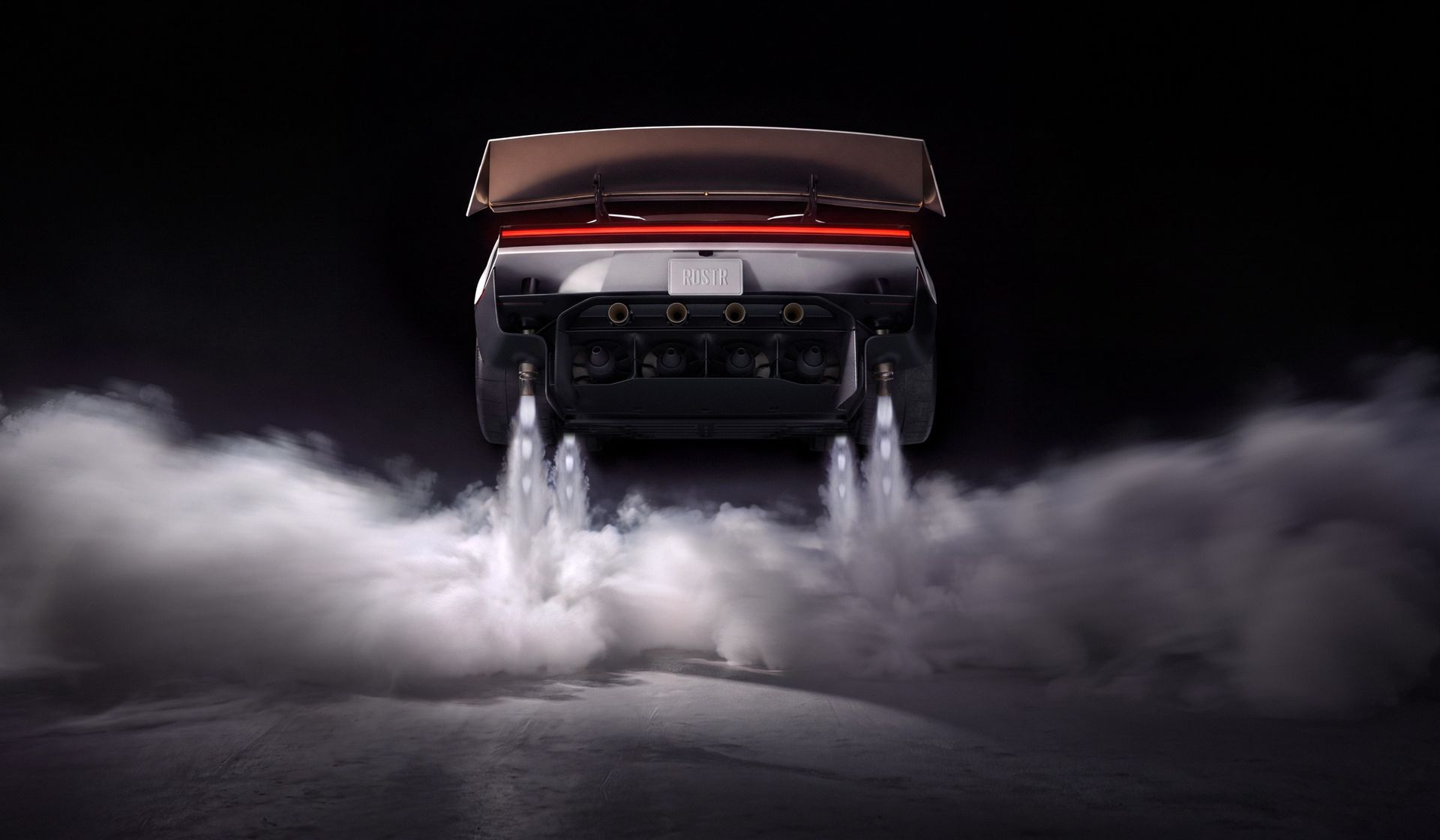
The Roadster's airborne capabilities are made possible by a system of cold-gas thrusters developed using technology from Musk's aerospace company, SpaceX. These thrusters release bursts of high-pressure gas to generate thrust, allowing the vehicle to accelerate rapidly and, according to Tesla, become airborne for short periods.
The new Roadster will come in three variants: Performance, Thrust and Rocket. Only the Rocket is capable of flight. The Performance model is a two-seater equipped with a suction system that's designed to improve traction and handling (or drive up inverted ramps, as in Tesla's demo), while the Thrust model adds rear-mounted thrusters that Tesla claims can propel the vehicle from 0 to 60 mph (97 km/h) in under a second.
The highest-end model, Rocket, features SpaceX cold-gas thrusters positioned around the vehicle to enable short bursts of flight and in-air control. This single-seat model will be available by invitation only, according to Tesla.
On the company's website, Tesla representatives explicitly stated that the Rocket isn't approved for use on public roads and that availability depends on regional regulations. During the reveal, Musk told the audience that the Rocket "is not necessarily a safety-optimized car."
Tesla hasn't disclosed how far or for how long its EV can remain airborne, nor is it the first company to develop a hybrid road-air vehicle. There is also skepticism from outside viewers on whether the demonstration could be replicated outside of controlled scenarios.
Artificial intelligence (AI) scientist Yann LeCun — a professor of data science, computer science, neural science and electrical engineering at New York University — described the demonstration on X as a "marketing stunt" and questioned whether the vehicle would work in practice.
"Even assuming that 50% of the mass of the car is the compressed air, that gives you less than 10s of useful thrust (with thrust-to-weight ratio larger than 1.0). Probably more like 5 seconds, actually," he posted on the social media platform. "So the car must be an empty, lightweight shell containing big compressed air tanks. Cute demo, but totally impractical. But of course, you knew that."
He likened it to SpaceShipOne, which debuted in 2004 as the first privately funded spacecraft and made three record-setting flights before being retired.
California-based Alef Aeronautics, which is developing its own flying EVs, marked Tesla's unveiling by releasing footage of its vehicle flying over an earlier Roadster model. Alef representatives said the demonstration marked its 1,000th logged flight.
"Welcome Tesla to the flying car race, we've been here alone for eleven years," Alef CEO Jim Dukhovny said in a statement emailed to Live Science. "Having competition is a good thing, especially from such a major company as Tesla."
Unlike Tesla's compressed-gas tech, Alef's vehicle uses electric propellers for vertical takeoff and landing, with a rotating cabin and body designed to support forward flight.
Production of the new Roadster is scheduled for 2028, but Tesla doesn't have the best track record of meeting its deadlines. The company has delayed production of its Optimus humanoid robot a few times since first unveiling the machine in 2021, for example, with an initial start in 2023, before being pushed back. Only in recent months has production begun to scale to a few hundred units per week.
Help us improve Live Science Pro: We're always trying to make our content better. Leave us feedback about Pro here.