 Login

How to turn on the new Sound Glow feature on HomePod
21 October 2026 at 17:30


HomePod Software 27.2 brings Sound Glow light effects to older HomePod models, plus new touch controls and better Mac speaker support.
(via Cult of Mac - Your source for the latest Apple news, rumors, analysis, reviews, how-tos and deals.)
The latest hardware release from Apple is bringing a major upgrade to home theater setups. The new fourth-generation Apple TV 4K now officially connects with up to four wireless speakers at the same time. This means users can finally position devices in the front-left, front-right, rear-left, and rear-right corners of their viewing area. This layout […]
The post New Apple TV 4K Model Allows For a Four Speaker Audio Layout appeared first on The Mac Observer.
Apple is rolling out a software update that gives your smart speaker a bit more personality. The new Sound Glow feature turns the top touch surface of your Apple HomePod into a colorful light show based on whatever music or podcast you are playing. Instead of a basic white light, the speaker now pulls two […]
The post Apple HomePod Gets a New Sound Glow Feature in the Latest Update appeared first on The Mac Observer.
The original HomePod mini won't get Siri AI, leaving owners stuck with classic Siri. Here's what older Apple speakers can still do.
(via Cult of Mac - Your source for the latest Apple news, rumors, analysis, reviews, how-tos and deals.)
As part of today’s announcements related to Home (including the brand new HomeView, which we’ve covered here), Apple also announced HomePod mini 2, an update to its popular line of diminutive speakers for the home first launched in 2020. The new HomePod mini comes in new colors, will support Siri AI in select markets with a future software update, has a new ‘Sound Glow’ top panel that intelligently adapts colors shown to match what is playing, and offers more integrations with the Apple TV 4K and Mac – all while delivering improved and richer sound compared to the first-generation model.
First, the look. The HomePod mini 2 looks nearly identical to its predecessor, except for the aforementioned Sound Glow and the new colors: pink, green, blue, white, and midnight. From the photos we’ve seen so far, they look really nice, and I’m personally a fan of the green and pink options.
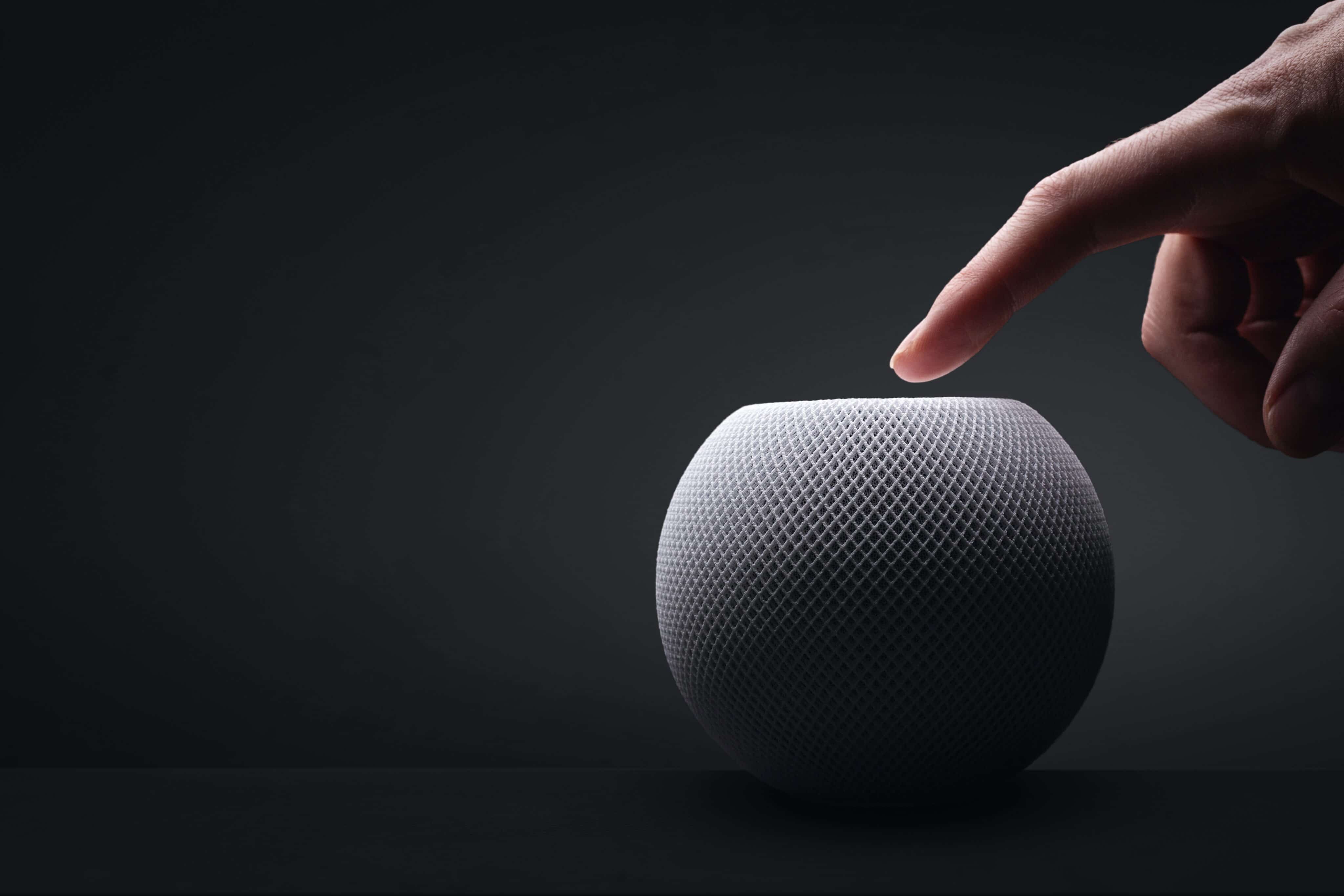
Sound Glow is the most apparent hardware-related innovation here: the top panel has been re-engineered to become “a visual canvas that glows and pulses in sync with the music”. The panel reacts in real time to bass and treble, adjusting its animation accordingly, but it also borrows from the Music app’s Now Playing screen: the colors displayed on Sound Glow will be subtly color-matched to the artwork of the audio that’s playing now. According to Apple, Sound Glow will also play custom animations when a soundscape like ‘Rain’ is activated, although a footnote on Apple’s website suggests that the feature will require an iPhone with Apple Intelligence enabled.
Sound Glow.
The real-time music analysis capabilities of the HomePod mini are made possible by the upgraded chip inside the device, the S10 previously seen on the Apple Watch. (The original HomePod mini had an S5.) In addition to dynamically adapting to sound in real time, the S10 is behind the HomePod mini 2’s ability to run Siri AI (more on this below) as well as to become part of a four-speaker surround group when combined with the also-new fourth-generation Apple TV 4K.
When four speakers are grouped, they can coordinate with an Apple TV to recognize each other’s position in a room and calibrate audio levels and timings to match what is playing. As someone who used for several years a two-HomePod mini pair with an Apple TV in my old apartment, I’m very intrigued by the potential of four little units carefully placed in my larger living room. As detailed by Apple, surround sound requires four HomePod mini 2 or HomePod (2nd generation) speakers in matching pairs front and center, so you can’t mix and match HomePod and HomePod mini 2 at the back of your couch, for instance.
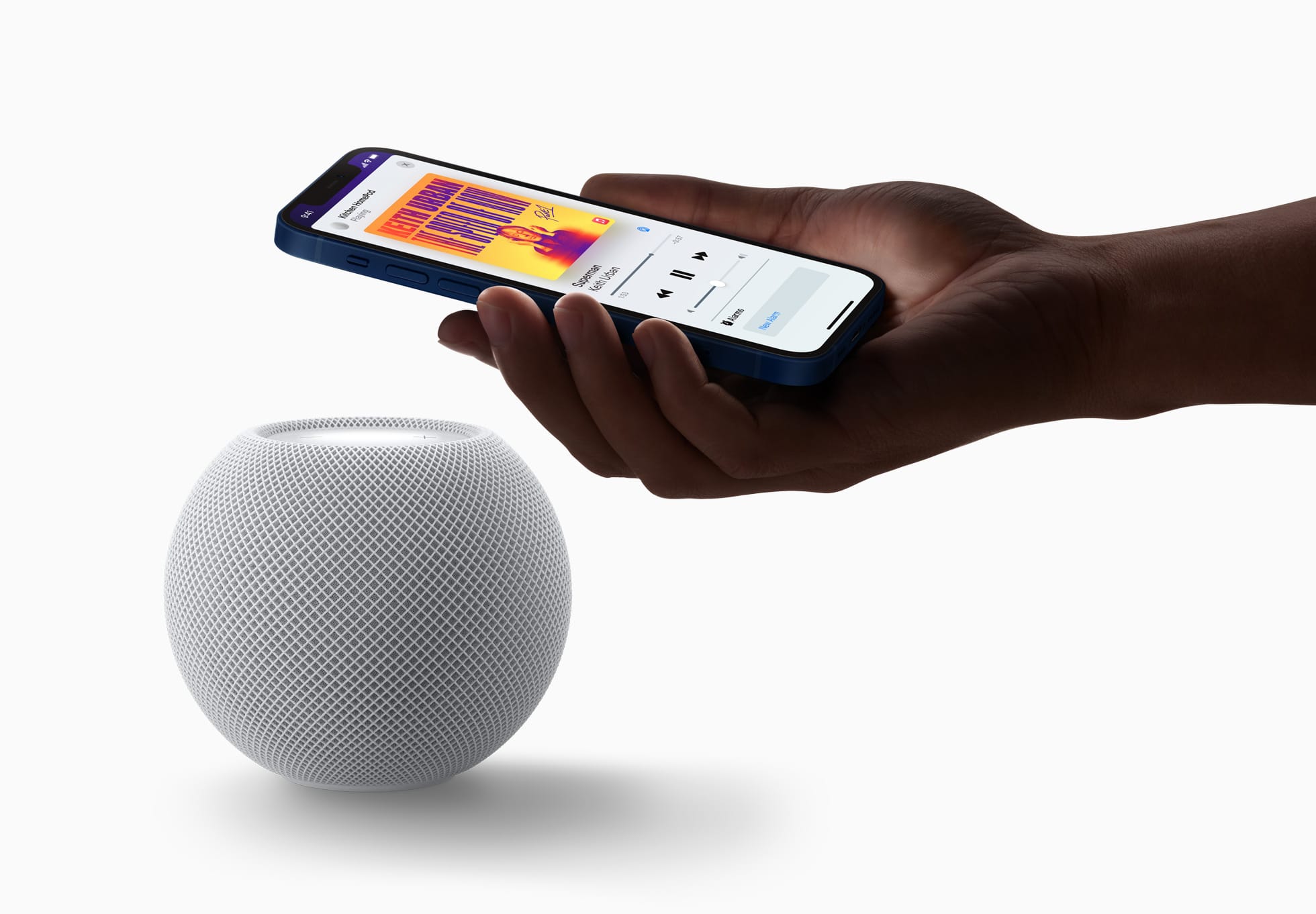
In addition to Apple TV, the HomePod mini 2 can also act as a default speaker for the Mac now. This potentially creates even more purchasing problems for me because, while I have a Sonos Move speaker at my desk, I dislike that I cannot set it as a default sound destination for my Mac mini, so I may even have to consider new speakers for my desk now. Ouch.
I love this look. I need this setup (but not in pink).
In its announcement today, Apple touts the work that has gone into computational audio powered by the S10 and aspects such as “Apple-designed force‑cancelling passive radiators” to improve the HomePod mini’s bass extension; those are things that we can only evaluate with an actual hands-on (ears-on?) with the product. What we can judge today is the Siri AI announcement: HomePod mini 2 will support Siri AI with a future software update, which means the assistant will be able to draw from the user’s context from a paired Apple device (Apple mentions “device”, not “iPhone”, meaning that iPad and Mac should work, too?) and offer personalized suggestions. You can read more about Siri AI in my review from last month here. In an interesting detail, however, Apple notes that even if you have Apple Intelligence disabled on a paired device, you’ll still get access to Siri AI’s newfound world knowledge features when Siri AI becomes available on HomePod mini 2:
Once Siri AI is enabled on a supported HomePod mini speaker, even users without an Apple Intelligence-enabled iPhone or iPad will benefit from Siri AI’s broad world knowledge; its ability to have rich, natural conversations; and its improved music discovery.
Notice how the quote above mentions “iPhone or iPad”, which makes the role of the Mac a little unclear.
That’s about it for the HomePod mini 2. It costs $149, which seems fair given the product’s features, and is available for pre-order today in the U.S. and 23 other countries. It launches on October 30, presumably without Siri AI given Apple’s “future software update” wording. It’s available in Italy, and I’m leaning toward pre-ordering two of them.
Anunciado na semana passada, o HomePod mini 2 traz algumas novidades bastante interessantes, como o suporte à Siri AI e um processador atualizado. Ainda assim, como ele se parece bastante com o seu antecessor (principalmente em termos de design), é possível que algumas pessoas ainda estejam confusas quanto às melhorias promovidas pela Apple.
Se você é uma delas, saiba que está no artigo certo! A seguir, vamos passar por todas as diferenças entre o HomePod mini de primeira geração e o HomePod mini 2 — assim, você poderá decidir qual dos dois modelos comprar ou se vale a pena trocar o seu.
Aqui você vai encontrar mais semelhanças do que diferenças entre as duas gerações da caixa de som inteligente, que contam com o mesmo visual geral, introduzido em 2020, com novas cores adicionadas em 2021 e posteriormente em 2024.

Com um corpo esférico envolto por uma malha colorida, ambos os modelos têm 84,33mm de altura e 97,9mm de largura, com diferença apenas no peso, menor no HomePod mini 2: 335g (ante os 345g do modelo de primeira geração).
Como dito, as cores do HomePod mini de primeira geração já foram atualizadas algumas vezes, e o modelo chegou a ser vendido nas opções branca, amarela, laranja, azul e meia-noite. O HomePod mini 2, por sua vez, pode ser adquirido nas cores branca, rosa, verde, azul e meia-noite.


Ambos os modelos seguem vindo com uma superfície circular retroiluminada com botões de “+” e “-” para ajuste rápido de volume.
A Apple disponibilizará o recurso Brilho do Som (Sound Glow), que faz essa superfície pulsar e brilhar em tempo real de acordo com a música que está tocando, para todos os modelos do HomePod mini e para o HomePod de segunda geração.
Nesse quesito temos algumas mudanças bem curiosas de uma geração para a outra, embora pouco tenha mudado do ponto de vista de hardware.
O que ambos os modelos têm:
O que apenas o HomePod mini 2 tem:


Em termos de hardware de áudio, o HomePod mini de primeira geração leva vantagem em apenas um item: o número de microfones. Enquanto o modelo mais antigo vem com quatro microfones embutidos “para Siri em distâncias grandes”, o HomePod mini 2 vem com “apenas” três.
É possível, no entanto, que a Apple esteja compensando a ausência de um microfone no novo modelo com as novas capacidades de software viabilizadas pelo chip S10, bem mais moderno do que o S5 do HomePod mini de primeira geração.
Aqui, nada mudou. Ambos os modelos podem reproduzir áudio das seguintes fontes:
Também é possível controlar a reprodução ao:
O HomePod mini 2 vence com facilidade nesse quesito: é o único compatível com a versão “turbinada” da assistente virtual da Apple, a Siri AI.
De acordo com a Apple, além de ajudar em tarefas mais simples como enviar mensagens, controlar a reprodução e configurar lembretes, a Siri AI também pode conversar mais naturalmente, responder dúvidas sobre o mundo real com base em buscas na web e recomendar músicas de maneira mais precisa. Ela ainda leva mais o contexto em conta e processa a maioria das solicitações no próprio dispositivo.
O HomePod mini de primeira geração segue com a versão antiga da Siri, capaz de lidar com comandos mais básicos.
Tanto o HomePod mini de primeira geração quanto o HomePod mini 2 são compatíveis com descoberta ponto a ponto, para acesso fácil de convidados, e com redes Thread, além de contarem com um chip de banda ultralarga para recursos que dependem da proximidade de outros aparelhos, como iPhones.
Já o modelo mais antigo tem Wi-Fi 4 (802.11n) e Bluetooth 5, enquanto a nova versão conta com Wi-Fi 6E (802.11ax) e Bluetooth 6. Ambos os modelos vêm com sensores de temperatura e umidade.
Já disponível em pré-venda, o HomePod mini 2 será lançado em 30 de outubro por US$150 (US$20 a mais do que o modelo anterior) nos Estados Unidos e em outros países selecionados.
Assim como seu antecessor, o novo HomePod mini também segue sem uma previsão de lançamento no Brasil ou em Portugal — quem sabe isso mude com o lançamento dos sistemas 27.2 e com a chegada da Siri AI em português.

Ambos os HomePods mini vêm com um cabo USB-C e um adaptador bivolt de 20W na caixa, além da documentação regulamentar, é claro.
NOTA DE TRANSPARÊNCIA: O MacMagazine recebe uma pequena comissão sobre vendas concluídas por meio de links deste post, mas você, como consumidor, não paga nada a mais pelos produtos/serviços ao usar os nossos links de afiliado.
