❌

Normal view

WhatsApp like a pro with these 7 expert tricks and hidden features

17 October 2026 at 18:00

When it comes to the mobile app heavyweights, few can beat WhatsApp. It’s estimated that around 3 billion people now use the cross-platform messaging tool at least once a month. And it’s important to remember there are only 8 billion or so people on the planet, so there are no signs of its popularity waning anytime soon.

Beyond being a hugely successful app, it’s also packed with features. You can use it to chat, make voice and video calls, share files, broadcast your location, and more. Even if you’ve used WhatsApp for years, you might not have discovered everything it’s capable of—which is where these tips come in.

1. Set a timer for messages to disappear

You don’t necessarily want everything you say on WhatsApp to be remembered forever, and the app includes a timer feature that will automatically expunge messages in a chat 24 hours, 7 days, or 90 days after they’re read, unless you specifically keep them. This is set on a chat-by-chat basis, and affects everyone in a conversation.

To change the setting for one of your chats, tap the contact or group name at the top of the screen, then pick Disappearing messages to select your time limit. This is applied until you turn it off or select a different period, but doesn’t affect the conversation history.

2. Lock away your most sensitive chats

A screenshot of WhatsApps' lock chats screen on a smartphone
Put certain chats behind a lock. David Nield

Another way of protecting sensitive information in chats is to add an extra lock to specific conversations. Even if someone should gain access to your phone and your apps, they won’t be able to see your locked chats.

From inside a conversation, tap the contact or group name at the top, then pick Chat lock (Android) or Lock chat (iOS). You can then use a specific PIN code to block access to the conversation, or use the same biometric scan technology (such as Face ID) that already protects your phone at the lock screen.

3. Edit a message after sending it

Have you noticed you can edit messages after sending them? It’s handy for those typos you only spot after dispatching a message—long-press on whatever you just sent, then tap the three dots and Edit (Android), or just Edit on the pop-up menu (iOS). Modified messages have an ‘Edited’ label visible to everyone in the chat, but they won’t be able to see what the original message said.

4. Stop specific contacts from seeing when you’re active

A screenshot of WhatsApps' activity access screen on a smartphone
Take control of who sees your activity on WhatsApp. David Niel

WhatsApp can tell your contacts whether you’re currently using the app and when you were “last seen,” but this might not be information you want to share with everyone. As well as disabling the feature entirely, you can also turn it off for specific contacts.

Open the You tab, then tap Privacy > Last seen and online, then select My contacts except … under the Who can see my last seen heading. You can then pick the contacts you don’t want to give this information to, and set the Who can see when I’m online option to match the same list.

5. Pin important messages you need to refer to or remember

Important details can quickly get lost in WhatsApp conversations, especially in busy group chats. But there is a way to pin specific messages to the top of the chat so they’re easy to get back to—someone’s address or the start time of an event, for example.

To pin a message on Android, long-press on it, then tap the three dots (top right) and Pin. On iOS, long-press a message and choose More > Pin. You can have up to three pinned messages per conversation, and select from three options for how long they’re pinned for: 24 hours, 7 days, or 30 days.

6. Give contacts their own notification sound

A screenshot of WhatsApps' contacts sound assignments screen on a smartphone
Your contacts can have their own alert sounds. David Nield

WhatsApp lets you assign specific notification sounds to specific contacts, which means you know who’s calling or messaging without picking up your phone. It gives you a better idea of whether something needs attention right away or can be safely ignored for a while.

Tap the group or contact name at the top of a chat, then pick Notifications and Notification tone or Ringtone to make changes. You can also select Vibrate to customize vibrations for each chat, though there are only four options here.

The option to mute the conversation is on the same screen—you can set mute separately for calls and messages.

7. Message yourself with notes and reminders

Not all messaging apps let you have a conversation with yourself, but WhatsApp does. This might seem like a rather pointless (and lonely) way of using the messaging app, but it can be really useful for jotting down things you need to remember on the go, leaving yourself voice notes of ideas and thoughts, and so on.

From the main conversation list, go to start a new chat, then search for “you” as the contact (or just enter your own username or phone number).

The post WhatsApp like a pro with these 7 expert tricks and hidden features appeared first on Popular Science.


Overheating issues may force Galaxy S27 Ultra to switch from Snapdragon to Exynos

What you need to know

  • A report claims that Samsung's Galaxy S27 Ultra has run into extreme overheating issues with the Snapdragon 8 Elite Extreme Gen 6.
  • These issues have reportedly caused "throttling" in the device, lowering its performance significant; a problem Samsung has reached out to Qualcomm to solve.
  • Reports say time is ticking, and if these issues aren't solved, Samsung might have to go with the Exynos 2700.
  • These issues are familiar, considering Samsung's own chips have struggled in the past with overheating problems, but the Exynos 2600 tried to solve that.

While we're eagerly awaiting the next Ultra flagship from Samsung, a report states the company's run into a problem. The issue lies with its chip and its supposed performance hiccups.

A report late this week by SEDaily (Korean) claims that Samsung's run into problems with Qualcomm's Snapdragon 8 Elite Extreme Gen 6 on the Galaxy S27 Ultra (via SamMobile). Samsung reportedly observed that the chip pushed the phone's temperatures beyond acceptable thresholds. Much like a computer, if the device begins to overheat, performance issues will occur.

Samsung has reportedly experienced "throttling" with the Galaxy S27 Ultra. This hasn't sat well with the Korean OEM. The publication reports that Samsung holds the device to the highest standards and that it must "stably run high-performance cameras, graphics, and AI features" (machine-translated).

Presently, if the S27 Ultra continues to experience issues with the SD 8 EE Gen 6, then Samsung may switch to the Exynos 2700. This is a reality that has yet to happen.

The post states that Samsung has reached out to Qualcomm about these issues. Time is of the essence; however, the OEM has given the chipmaker until "mid-October" to rectify the problems. The problem Samsung experienced is interesting, considering it mirrors the gripes consumers have had with its Exynos series in the past.

Overheating chips

Exynos 2600 chipset

(Image credit: Samsung)

Qualcomm split its flagship chips going into 2027 with the Snapdragon 8 Elite Gen 6 and the 8 Elite Extreme Gen 6. The latter is designed to push the boundaries of mobile phone technology and targets Ultra phones. Qualcomm built the chip on a 2nm process with its new Adreno Neural Fusion technology. This leans on AI to boost graphics performance for gamers during longer sessions.

As we alluded to before, Samsung's Exynos chips were infamous for overheating. We'd like to remind you of the Exynos 2600 from 2025. This chip was a significant step for Samsung in the right direction compared to previous generations. Not only was it the world's first 2nm chip, but its CPU and GPU upgrades were also important. What's more, the company introduced a new Heat Path Block (HPB) to fix overheating and performance issues.

While these overheating fixes did well, Samsung could do better. Rumors about the Exynos 2700 say the company wants to introduce a next-generation HPB, reducing heat generation further.

Android Central's Take

This is textbook tech. If it can output graphic or whatever at a higher strength, it will generate more heat. Look at gaming PCs. Why do you think they have so many fans? Why do you think the graphics card has its own fan—or maybe two or three! There's a chance that Samsung and Qualcomm will have to reconfigure some things in the Galaxy S27 Ultra and the chip. Beyond this, there's also public perception. Samsung hesitates to drop an Ultra with Exynos in the States because it could impact sales.

Then there's overall performance. Can the Exynos 2700 go blow for blow with the SD 8 EE Gen 6?

'Something was thrown out with the bathwater when we moved to modern smartphones': Clicks co-founder Jeff Gadway on bringing physical keyboards back to mobile phones

I fondly remember owning my first BlackBerry, and then my second ... and third. The smartphone was a sign of prestige, a device you could fit in your pocket with both a screen (later also a touchscreen in some models) and a miniature QWERTY keyboard. It was genius. That is, until elongated, touchscreen-only phones started coming to market, namely the first iPhone. Suddenly, BlackBerrys weren't so trendy anymore.

What's old becomes new again, however — a statement that fits almost every industry, from fashion to music and even tech. Clicks Technology, a U.K.-based hardware company with team members who previously worked for BlackBerry and within the BlackBerry space, is leaning into this trend. Growing from its first keyboard case, there are two devices coming this year: the Clicks Power Keyboard, which is now shipping, and the hotly anticipated Clicks Communicator, which should launch in December.

"Something was thrown out with the bathwater when we moved to modern smartphones," Jeff Gadway, co-founder of the company (and former marketing director at BlackBerry), explained in a recent interview. His company aims to bring it back — and possibly a little magic to a market that could sorely use some fresh ideas.

I saw both devices in prototype form at CES 2026 earlier this year, and in an interview with Gadway, discussed how the company is bringing razzle dazzle back to mobile.

Clicks then and now

An original Clicks keyboard case in hand.

(Image credit: Christine Persaud / Android Central)

Clicks introduced its first keyboard case for iPhone in 2024, eventually expanding to make cases for select Android phones, too. To say people were excited would be an understatement. "It was like catching lightning in a bottle that first year," Gadway told me during a recent podcast interview.

Interestingly, it wasn't just nostalgia-fueled business executives but also younger folks from the digital native generations who were intrigued. Young adults who had never used anything but a touch- or voice-controlled phone loved the concept as much as they are now learning to love vinyl, CDs, and wired earbuds.

The Clicks Power Keyboard attached to the phone vertically on the left and horizontally on the right

(Image credit: Clicks Technology)

The company has since developed the Power Keyboard, a MagSafe enabled keyboard accessory you can use with any MagSafe-enabled phone or case, or any Bluetooth input device, for that matter. The Communicator is an Android phone reminiscent of a BlackBerry Bold that combines a small screen with a miniature QWERTY keyboard.

The Power Keyboard is universal

A Clicks Power Keyboard attached to a phone on a grey background.

(Image credit: Clicks Technology)

The Power Keyboard solves the biggest issue with the original Clicks Keyboard Case: needing a fitted case for every model phone. Instead, this version is magnetic, clipping vertically or horizontally onto the back of any MagSafe-enabled phone or phone case and functioning as a power bank with a slide-out keyboard.

A Clicks Power Keyboard being used with a TV

(Image credit: Clicks Technology)

It isn't limited to phones: Use it handheld with a tablet or even as a Bluetooth mini keyboard for your smart TV. If you've ever attempted to enter a password into an app using your TV's remote and on the on-screen keyboard, you know how frustrating that experience can be. Gadway says the use cases run the gamut, from students using this in class with their phone instead of bringing a laptop, to CEOs, writers, and musicians being productive on the go.

Clicks Communicator reminds you what a phone is for

Three Clicks Communicators in a row in different colors.

(Image credit: Clicks Technology)

Taking things a step further, the Clicks Communicator is designed to remind us of the true purpose of a mobile phone: communication. Newer smartphones are designed for content consumption and creation with bigger screens, cameras, processors, and batteries, says Gadway. "What if you could build a phone that was really optimized for communication?"

There are two ways you might use the Communicator. The first is as a secondary phone with its own plan or tethered to your primary device. Maybe you have a company-provided phone on which you aren't permitted to download personal apps. The Communicator can be that secondary device to keep in touch with family, access banking and social media apps, play games, and more. The difference between the Communicator and another smartphone is that the smaller, utility-type screen makes this possible, but it's not optimized for going down the rabbit hole of endless scrolling.

A Clicks Communicator on a grey background

(Image credit: Clicks Technology)

The second is as a primary phone, which Gadway told me is how a lot of pre-order customers have said they want to use it. The Communicator sits between a dumbphone, which eliminates access to distracting apps altogether, paring down the experience to bare bones communication, and a full-featured premium smartphone.

The Communicator is a full Android 17 device, though, with access to the Google Play Store, a MediaTek Dimensity 8300 processor, a 50MP main camera, and a 24MP front-facing camera. Clicks even upgraded the RAM to 12GB prior to the official launch. It has legacy features you won't find in most modern phones, like a 3.5mm headphone jack and microSD card slot to expand the built-in 256GB storage.

The key is in the design: a touchscreen occupying the top three-quarters (4.03 inches, 120Hz) and a bottom keyboard. It's a constant reminder that this isn't a phone to doomscroll TikTok and Instagram or get caught up in mobile games. You can do that. But you won't want to, and that's a good thing.

A side view of the Clicks Communicator

(Image credit: Clicks Technology)

Other simple features are meant to further encourage focus, like a signal light, similar to the HiLight button in the Google Pixel 11 Pro series phones. Customize it with illuminating colors so you know when an incoming call or message is from your mom, child, spouse, or business partner versus a spam call or an old friend you don't have time to chat with right now.

Clicks is working with Niagara to build a custom Android launcher that can curate messages from your favorite apps on the home screen. Triage these apps, Gadway explains, to help prevent you from getting "sucked into side quests."

"What we're doing with Niagara," he explains, "is creating a version of this that taps into the hardware of Communicator using the touch-sensitive keyboard to scroll through your messages, and the keys themselves to delete, reply, forward, or mark as unread right from that home screen without ever having to actually go into the app itself. So, it's a much more purposeful home screen experience."

Clicks represents a return to form

Front and back views of the Clicks Communicator

(Image credit: Clicks Technology)

Modern smartphones do more than ever. But there's something inherently missing from the experience. It stems from nostalgia, for those who grew up using phones with keyboards. But there's also value from a usability perspective for a younger generation who never put their hands on one.

Gadway says that with the original Keyboard Case, 40-45 percent of buyers had never used a BlackBerry before. "They wanted to reshape their relationship with technology, have some tech that was a little more intentional, a little more purposeful, and that allowed them to get their screen real estate back and have a more satisfying tactile experience."

A close-up of the keyboard on a Clicks Communicator

(Image credit: Clicks Technology)

"Touchscreen smartphones are amazing," Gadway said recently. "They do so many things. And yet they lack some of that tactility and the ability to accomplish certain things from your phone that you wait to do back at your desk."

Originally, Clicks was positioned, at least in the minds of those who clamored to get a look at the original case years ago, as a throwback to simpler times. Today, with the latest generation products, it's evident that a physical keyboard is no longer just catering to the BlackBerry faithful. "There is a much bigger audience than we expected," says Gadway. Touchscreens and voice activation aren't going anywhere. But there's something about tactile feel that even the younger generations yearn to experience, too.

Jury finds Arm guilty in licensing breach, Qualcomm awarded just $2 in total

What you need to know

  • A Delaware jury sided with Qualcomm this week, finding Arm guilty of breaching a licensing agreement and "interfering" with business relations.
  • Qualcomm was awarded $1 in damages for each offense, but the shouting will continue: the companies will likely find themselves in court over royalty payments.
  • This started over Qualcomm's allegations that Arm "violated its contract" after its 2021 acquisition of Nuvia.

Qualcomm's court case with Arm was settled this week, and the former came out the victor ... in a way.

Reuters reported this week that a recent court case between Qualcomm and Arm over an alleged licensing breach has been settled. A Delaware jury found Arm guilty of the breach and of "interfering" with Qualcomm's business relationships, and as a result, Qualcomm was awarded $2 in damages — $1 for each offense.

While the jury officially sided with Qualcomm, Arm saw it differently. In a statement, the company said "the jury’s verdict confirms that Arm operated in ​good faith under its technology license agreement and its award of only two dollars confirms the merit of Arm’s arguments in the ‌case."

This likely won't be the end of Qualcomm and Arm's court dates. According to Reuters, Qualcomm has more to bring up, which it will likely do in court with Judge Maryellen Noreika. Since Arm neglected its responsibilities of providing the necessary tools for its chips, Judge Noreika could rule that Qualcomm can "stop paying royalties to Arm for five years." This is something Qualcomm has been after since this dispute began.

So far, Arm is against such a ruling. It remains to be seen what will happen.

Qualcomm's allegations

Qualcomm logo during CES 2018

(Image credit: Android Central)

Qualcomm and Arm's court case began in early October. The former wants to freeze royalty payments for up to five years, a ruling Judge Noreika will have to decide in the future. But it all started after Qualcomm’s 2021 acquisition of the chip startup Nuvia. As stated before, Qualcomm alleged Arm "violated its contract" by withholding its chip-testing tools.

Beyond this were Qualcomm's business relationships. The company claimed Arm "leaked its threat to end a key license in 2024." This reportedly hurt Qualcomm's potential chip deal with Meta that year. Qualcomm said this leak dropped $170 million off its deal with Meta. Arm denied that it was linked to any of this. Instead, Meta's change of heart from VR headsets to AI glasses was the real reason, the company claimed.

There's still a concern that the fallout of these cases could impact future phone prices. Price negotiations and control over CPU technology could be hit the hardest.

Elgato releases new Wave Go wireless microphone — here's how it works

14 October 2026 at 16:45

Elgato, the tech company that prides itself on high-quality accessories for streaming, content creation, and gaming, has launched its first wireless microphone called the Elgato Wave Go.

This extension of Elgato's 'Wave ecosystem' is a combined clip-on and handheld microphone system that allows its users to record audio any time, anywhere, on their terms, with studio-level quality, processing, and routing.

Here's everything you need to know about how the Elgato Wave Go works, which you can buy right now on Elgato's official store for $99.99.

The Elgato Wave Go has a convertible design that allows users to record audio in two ways while being connected to a phone via a USB-C receiver.

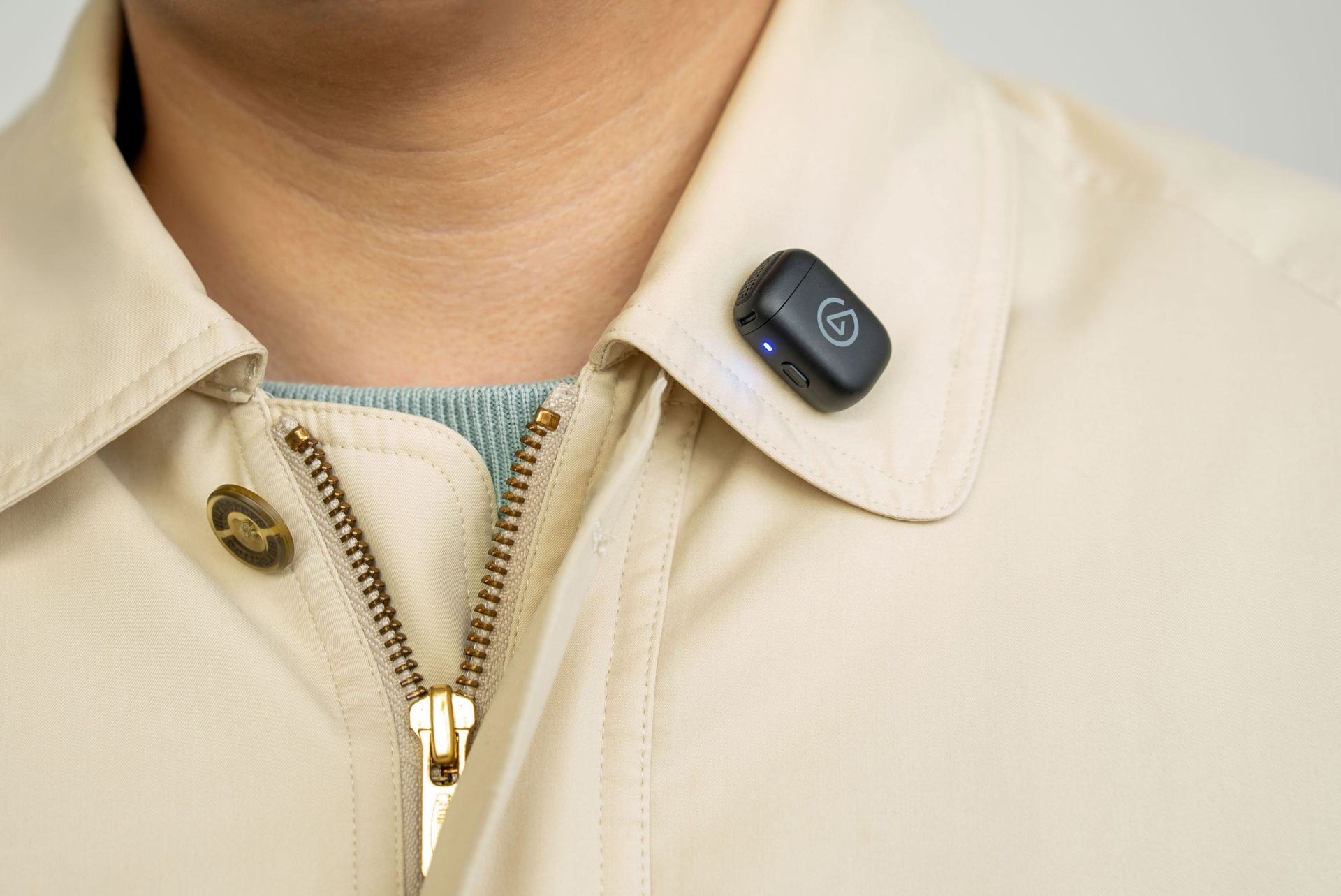
While in Clip-on Mode (which is a 7g transmitter the size of a coin), it can mount magnetically onto clothing with custom tuning that restores clarity and audio presence quality at chest distance.

In Handheld mode, Elgato Wave Go's transmitter fits inside a Smart Handle to become a full-sized interview mic with integrated controls, charging, and a sound profile that's been tuned for warmth and presence audio levels when used close up.

This microphone also features toggleable noise cancellation to block out annoying background noise, automatic EQ Shift and Auto Gain systems to apply different sound profiles and audio gain levels depending on its position and mode (without needing to mess around with its settings), and compatibility with the free Wave Go app on iOS and Android for users to customize these aforementioned features to their preference.

A man interviews a woman outdoors, holding a microphone as she speaks in a stone courtyard with café benches; the scene feels relaxed and conversational.

The Elgato Wave Go in Handheld mode. (Image credit: Elgato)

On top of that, the Elgato Wave Go will last you for a good long session, as its transmitter can run for up to 8 hours on a single charge or a full day while recording audio.

Its Smart Handle can be recharged alongside the transmitters when it's docked inside (even while recording), and it can store up to 5 full recharges so it can operate for at most 48 hours. The Elgato Wave Go can have all its components recharged while inside its carrying case, which can connect to USB-C chargers.

Its USB-C receiver also has pass-through charging, so you can recharge the Elgato Wave Go while connected to your phone.

Close-up of a person wearing a cream jacket over a teal shirt, with a small black wireless microphone clipped to the collar; the scene feels polished and professional.

The Elgato Wave Go in Clip-On mode. (Image credit: Elgato)

Lastly, the Elgato Wave Go can integrate with Elgato's free mixing software called Wave Link. When this mic is used in tandem with the app, users can route audio, apply effects, control its settings via Stream Deck, and unlock Voice Focus, which cleans up reverb and background noise while recording audio indoors.

If this lightweight, convertible microphone with expert sound quality, portability, and customization sounds appealing for your content creation needs, you can buy the Elgato Wave Go on Elgato.com for the MSRP of $99.99 (other retailers will sell it shortly after). The Elgato Wave Go will be available in 40 countries and regions.

Elgato is also offering a Sky Blue variant of the Elgato Wave Go for a limited time on its website. Plus, the microphone will have a second transmitter sold separately for an MSRP of $29.99 (or $14.99 when bought together with the Elgato Wave Go).

Wave Go Convertible wireless mic: $99.99

Let your voice be heard in your content with the Wave Go wireless microphone. It can be used in hand or clipped onto your shirt collar, convey and record your voice with pro-level quality, and last you over 48 hours before needing to recharge.View Deal

Click to join us on r/WindowsCentral

Join us on Reddit at r/WindowsCentral to share your insights and discuss our latest news, reviews, and more.

Global phone shipments plummet—research marks largest drop in over a decade

What you need to know

  • Counterpoint Research states Q3 for the global phone market reached its lowest point in 14 years.
  • Research states the market dropped by 20% YoY, and Samsung took the number one spot, thanks to the Galaxy Z Fold 8 and Fold 8 Ultra.
  • Counterpoint and Omdia suggest that Q4 might not show any meaningful improvements.

The global phone market looked bleaker and bleaker after every quarter in 2026. And new research states this is the worst it's been in 14 years.

Counterpoint Research analysts have published their Q3 2026 findings, which show just how far global phone shipments have plummeted. According to the research, global shipments saw a 20% YoY decline — and the culprit is clear. "The extreme memory shortage is pushing the smartphone market into a more selective phase," said Counterpoint senior analyst Shilpi Jain.

It states this is the lowest global phone shipments have been since 2012. While a sharp decline, Counterpoint states Samsung has retained its top position in the past quarter with a 3% YoY decline. What's more, Samsung's market share reportedly increased by 23%, "the largest share gain among major OEMs." Researchers attribute this to the Galaxy Z Fold 8 and Fold 8 Ultra sales and its Galaxy A series.

The extreme memory shortage is pushing the smartphone market into a more selective phase

Counterpoint senior analyst Shilpi Jain

Apple sits right behind Samsung in Q3, and the iPhone lineup is informative: The iPhone 18 series lacks a base option, offering only an 18 Pro and an 18 Pro Max. Counterpoint's analytics suggest this warranted the decline. Additionally, Chinese OEMs (Xiaomi, OPPO, and Vivo) round out the top five with massive declines of their own.

While a shortage of DRAM and NAND (courtesy of AI) is a key player in the market's decline, Counterpoint states "consumer behavior" has also changed as a result. Jain said, "Consumers are holding on to their devices longer than estimated, increasingly considering refurbished devices and prioritizing higher-value devices."

Q4 2026 remains dire for global phone shipments, with the post stating a recovery isn't likely "until component costs and supply conditions improve."

Struggling times

A collection of North American 2024 smartphones including the OnePlus 12, OnePlus 12R, Google Pixel 8a, Google Pixel 9 Pro XL, Samsung Galaxy S24 Ultra, and more.

(Image credit: Nicholas Sutrich / Android Central)
Android Central's Take

The idea of consumers hanging onto their phones longer is an interesting note for me. You end up having to make a decision: Do I buy this new phone I want that costs over $1,000, or do I keep the phone I already have? I hear every day how people are struggling with money. At the end of the day, you need a device that does what you need it to. If that's a phone that you bought a year or two ago, why get a new one when that money is better spent elsewhere?

Sentiments surrounding Q3 and Q4 of 2026 have not changed. In July, Omdia posted its research on the global phone market for Q2. The market dipped by 4% YoY in Q2; however, Samsung and Apple saw growth of 2% and 4%, respectively, compared with other OEMs. While Omdia highlighted that the memory crisis caused the Q2 decline, it also forecasted continued turbulence for Q3 and Q4.

Even the budget phone market is a little sketchy.

Today, Counterpoint brought up an interesting point. It said OEMs are starting to focus on "profitability over shipment volumes amid elevated component costs and weaker affordability." Samsung is reportedly taking this path, asking suppliers to cut Q4 phone production by 20% to 30%.

Beta no more: Nothing OS 5 (Android 17) is rolling out for the Phone 3

What you need to know

  • Nothing's General Release for its Android 17 update (OS 5.0) is rolling out now for the Phone 3.
  • Nothing OS 5.0 brings major updates to the Phone 3, such as deeper phone customization, improved Essential AI tools, a Glyph Interface app, and a brand-new typeface, Geist.
  • An updated roadmap reiterates the Open Beta for several more phones (Phone 4a and 3a series), ahead of an eventual General Release.

It's been two months of testing for Nothing's Android 17 software, and the update is finally rolling out.

Nothing announced in a community post that its OS 5.0 upgrade (Android 17) is rolling out for Phone 3 users. This "General Release" brings the "full experience" to all users—those who participated in the beta and those who didn't. Nothing states users should expect a "staggered release" for Nothing OS 5. While some users have received the update since Nothing announced its rollout, others will have to wait.

Certain regions and users in those regions will see the patch before others. So have patience this week and into next. If you're curious, Nothing states Phone 3 users should head into Settings > System > System Update to check if their device is ready to download/install.

Downloading the Nothing OS 5 update on a Nothing Phone 3

(Image credit: Nicholas Sutrich / Android Central)

Nothing OS 5 is huge—beyond the fact that it's Android 17. In late August, the company launched the software's open beta, encouraging Phone 3 users to join. Highlights include the system's new typeface, Geist. This typeface is "cleaner and easier to scan." It joins other refreshes to the device's UI's status bar, camera, Settings, and Gallery.

Elsewhere, you'll find the Glyph Interface inside a dedicated app. All features and sounds are housed in one place.

Nothing's Essential AI tools have been upgraded in OS 5. AI features have become a focal point for the company, and its Android 17 update sees it doubling down. Real-time transcriptions have been improved, and Smart Collections can "suggest and organize content for you automatically."

All of this and more (deeper personalization, lock screen upgrades, etc.) are packaged neatly in Nothing OS 5.

One down, more to go

An updated roadmap for Nothing's OS 5.0 (Android 17) update. The Phone 3 has received its full release; however, several more phones are still in Open Beta.

(Image credit: Nothing)

The Phone 3 was the first to enter Nothing's Android 17 Open Beta, and it's the first to exit. However, we're still waiting on several more updates. Nothing's updated roadmap shows that the Phone 4a, Phone 4a Pro, and the Phone 3a and 3a Pro are still in their respective Open Betas. These devices entered the Open Beta program in September.

There's a chance a General Release could arrive later in October or November for these phones.

Razer wants Pokémon fans to choose their fighter with three new gaming headsets, and I choose Charizard

Pokémon turns 30 this year, which means those of you who remember playing Pokémon Red and Blue on a Game Boy are now old enough to have disposable income. Razer apparently understands the assignment.

Razer has announced three new Pokémon-themed gaming headsets featuring Charizard, Lucario, and Sylveon, expanding a collection that already proves Pokémon merchandise does not have to be confined to plushies, trading cards, and whatever extraordinarily expensive piece of cardboard you just lost an eBay auction for.

Technically, none of these headsets is new. Razer is giving existing models Pokémon makeovers rather than launching new hardware. Charizard and Lucario get versions of the Razer BlackShark V3 X HyperSpeed, while Sylveon adorns the wired Razer Kraken V4 X. They're being released as part of Pokémon's ongoing 30th anniversary celebrations.

That's fine by me. Sometimes I don't need a revolutionary new driver architecture. Sometimes I just want Charizard on my head.

Charizard wins the headset battle, obviously

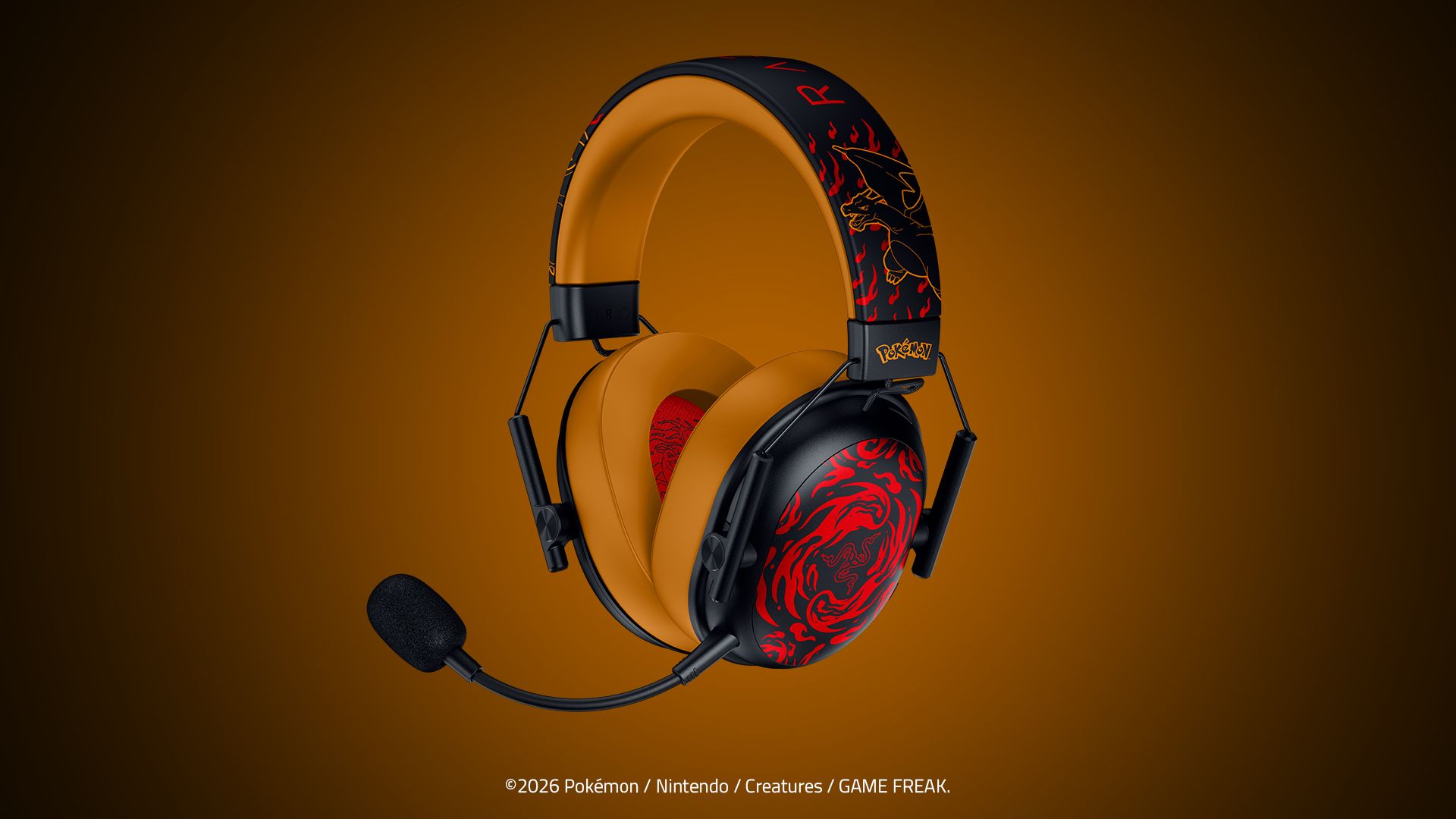
Charizard Edition: Razer BlackShark V3 X HyperSpeed Charizard Edition headset in black and orange, featuring flame graphics on the earcups, a boom mic, and Charizard headband art.

Razer BlackShark V3 X HyperSpeed Charizard Edition headset in black and orange, featuring flame graphics. (Image credit: Razer)

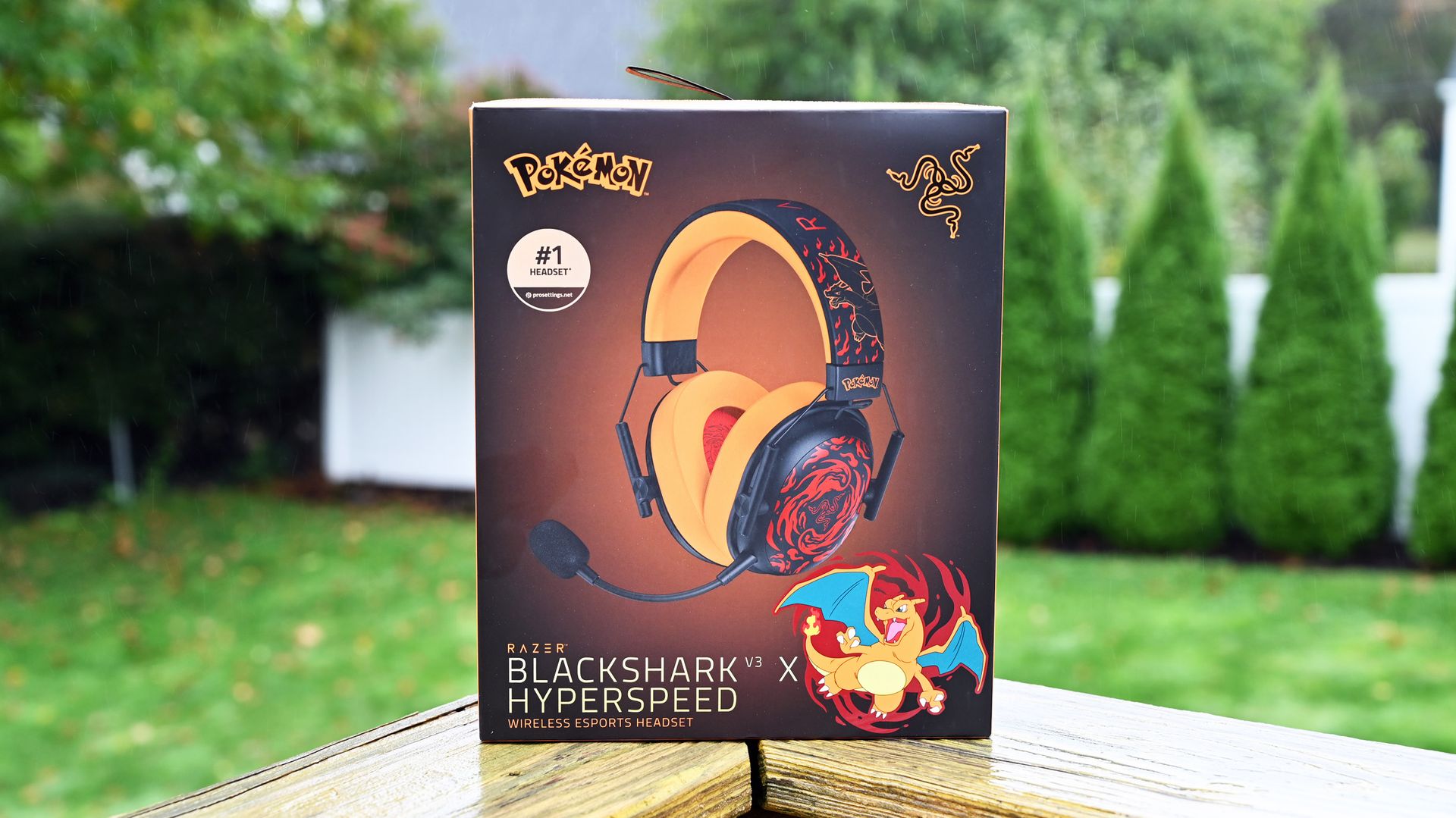
I've got the BlackShark V3 X HyperSpeed Charizard Edition here for photography, and Razer wisely resisted the temptation to simply make the entire thing bright orange.

Instead, there's a black exterior with fiery red Charizard artwork across the earcups and headband, contrasting against orange ear cushions and headband padding. The result looks unmistakably Pokémon without resembling something stolen from a ten-year-old's bedroom.

It also helps that Charizard remains one of the most immediately recognizable Pokémon ever created. The original Generation I Pokémon is officially Fire/Flying type, despite decades of childhood logic insisting that the giant fire-breathing dragon surely had to be Dragon type.

Razer BlackShark V3 X HyperSpeed Charizard Edition retail box on a wood deck with trees in the background.

Razer BlackShark V3 X HyperSpeed Charizard Edition retail box. (Image credit: Daniel Rubino)

Underneath that paint job is the regular Razer BlackShark V3 X HyperSpeed, which starts at $99.99 without the Pokémon treatment. It uses Razer's second-generation TriForce 50mm drivers and 2.4GHz HyperSpeed wireless, with Bluetooth and USB connectivity also available. Razer lists the standard model at just 270g.

The Charizard tax, therefore, works out to $20, with this edition carrying a $119.99 MSRP in the United States. (And for some reason, it's at Target for $139.99, but you can pick it up today, at least!)

If you're still reading this, I'm sure you've paid more for considerably less sensible Pokémon-related things.

Close-up of the black earcup faceplate featuring swirling red flame designs around the Razer logo, framed by a yellow cushion and metal wire slider.
Daniel Rubino
Close-up inside the yellow headset ear cushion, showing the red interior speaker fabric printed with a black line-art illustration of Charizard.
Daniel Rubino
Close-up of the Razer Charizard headset headband featuring red flame graphics, gold line art, and a black hinge piece stamped with the yellow Pokémon logo.
Daniel Rubino
Hand holding the headset earcup, showing bottom controls including a USB-C port, power button, volume dial, and mic mute button against a yellow cushion.
Daniel Rubino

It's worth emphasizing that the V3 X isn't the flagship BlackShark. That distinction belongs to the BlackShark V3 Pro, which Windows Central's Zachary Boddy reviewed last year. He called the V3 Pro "the closest to perfection I've ever seen a gaming headset reach," praising Razer for addressing seemingly every complaint about the previous generation.

Basically, the "X" versions of Razer products are more budget-friendly, as the V3 Pro is $249.99.

If Pokémon isn't enough to dictate your purchasing decision, we've also extensively tested the competition in our best Xbox headsets guide.

Product shot of the Razer Charizard headset.

Pokémon
Razer
BlackShark V3 X Hyper Speed (Charizard edition)

The Razer BlackShark V3 X Hyper Speed – Charizard Edition unleashes Charizard’s fiery determination into an officially licensed Pokémon wireless gaming headset, perfect for staying locked in and ready to roast the competition on PC, console, and mobile.

Team Lucario has entered the chat

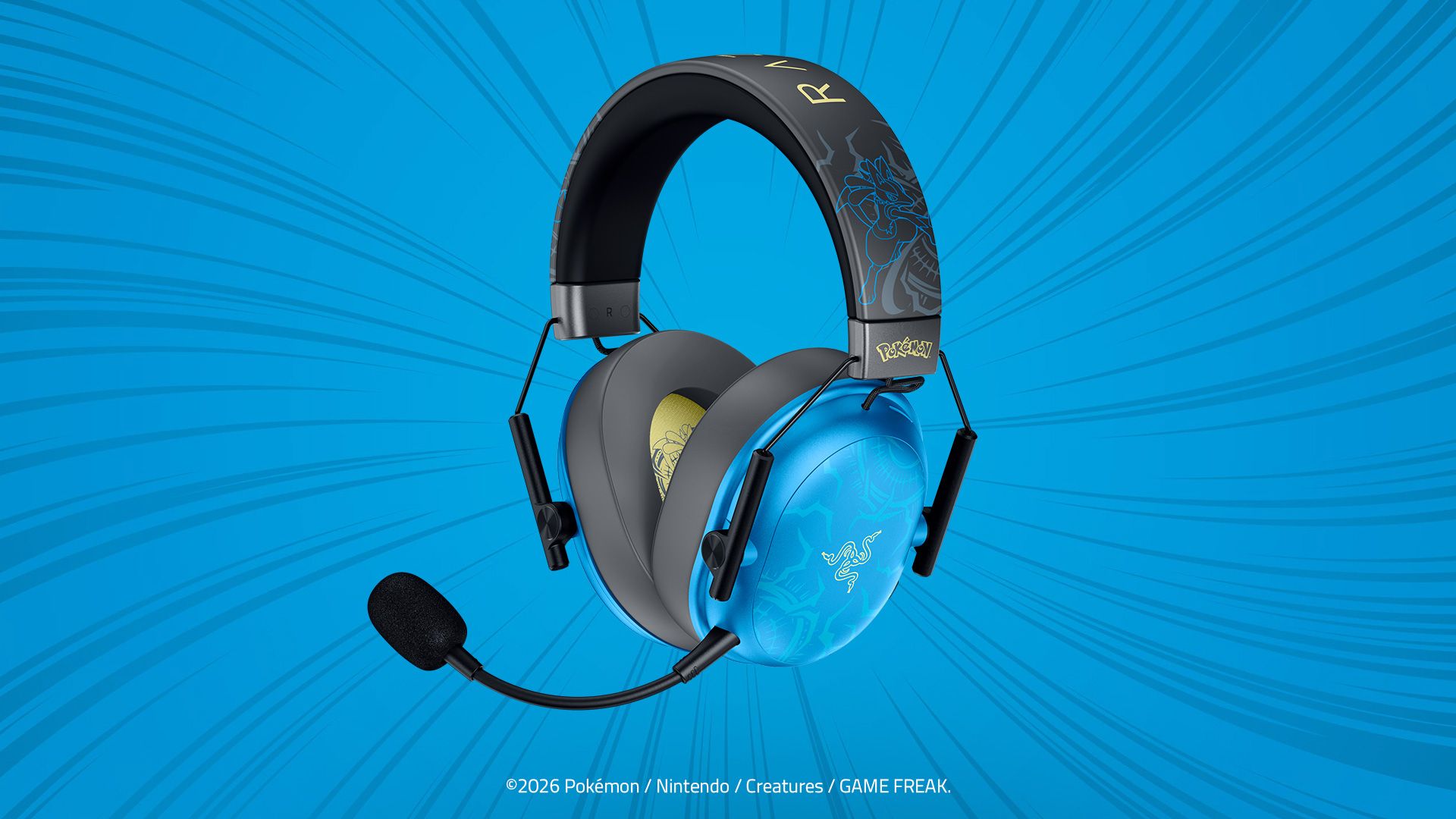
Lucario Edition: Razer BlackShark V3 X HyperSpeed Lucario Edition headset in blue and black, featuring aura designs on cyan earcups, a boom mic, and Lucario headband art.

Razer BlackShark V3 X HyperSpeed Lucario Edition headset in blue and black, featuring aura designs on cyan earcups. (Image credit: Razer)

If Charizard is a little too "look at me, I'm on fire" for your tastes, Lucario gets exactly the same BlackShark V3 X HyperSpeed treatment for $119.99.

Razer describes the design as inspired by Lucario's "calm intensity," and the blue finish certainly makes it the more restrained of the pair. The actual Pokémon is Fighting/Steel type, which makes attaching it to a competitive gaming headset feel appropriately on-brand.

Same headset, same 50mm Gen-2 drivers, same HyperSpeed wireless. Your decision essentially comes down to which monster you'd rather have watching over your K/D ratio.

Lucario gets a slight head start in the US, too. It's available exclusively from Target from October 7, while Charizard launches October 13 through Razer.com and Target. Both are also headed to broader retail in Latin America, Europe, Australia, and New Zealand.

And then there's Sylveon

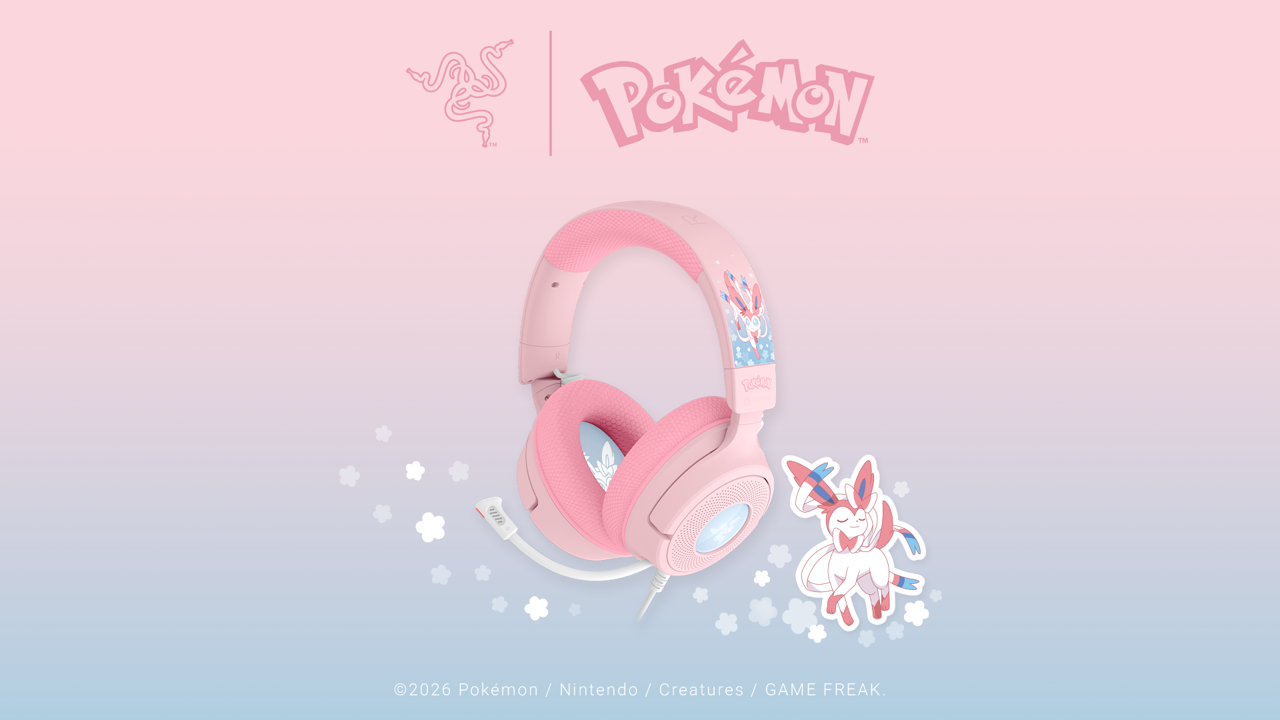
Pastel pink Razer Kraken V4 X Sylveon Edition wired headset with a white microphone, featuring Sylveon headband graphics and a Sylveon character illustration.

The new Pastel pink Razer Kraken V4 X Sylveon Edition wired headset. (Image credit: Razer)

Sylveon goes in an entirely different direction, and not just aesthetically.

The Razer Kraken V4 X Sylveon Edition is a wired headset with 40mm TriForce drivers, a retractable HyperClear cardioid microphone, and Chroma RGB lighting (sweet). It comes decked out in Sylveon's characteristic pink-and-blue color scheme.

It's wonderfully unapologetic.

Sylveon is a Fairy-type Pokémon and one of Eevee's evolutions, officially categorized as the "Intertwining Pokémon." Its ribbon-like feelers can apparently send out a soothing aura that erases hostility, which frankly sounds like technology every Call of Duty voice-chat lobby desperately needs.

The Sylveon Kraken V4 X costs $109.99 and launches October 13 exclusively through Target in the United States, with wider retail availability across Latin America, Europe, Australia, and New Zealand.

I choose you, Charizard

There's obviously no technical reason to replace a perfectly good headset purely because Razer printed a Pokémon on it. This is merchandising. Razer knows it, Pokémon knows it, I know it, and your wallet is about to find out.

But that's also rather missing the point.

The BlackShark V3 X HyperSpeed is already a lightweight wireless headset offering 2.4GHz, Bluetooth, and USB connectivity. For an extra $20, Pokémon fans can get essentially the same hardware dressed as Charizard or Lucario. Sylveon fans have a slightly cheaper, wired alternative with RGB.

And having actually seen the Charizard edition outside Razer's immaculate press renders, I'll say this: it's pretty damn cool.

Sometimes that's enough justification.

Besides, it's Pokémon's 30th anniversary. Treat yourself.

Click to join us on r/WindowsCentral

Join us on Reddit at r/WindowsCentral to share your insights and discuss our latest news, reviews, and more.

Google is now selling refurbished Pixel 9 phones, and the prices are pretty tempting

What you need to know

  • Google has added the Pixel 9, Pixel 9 Pro, and Pixel 9 Pro XL to its Certified Refurbished program in the US.
  • Prices start at $499 for the Pixel 9, while the Pixel 9 Pro and Pro XL cost $649 and $699, respectively.
  • Every refurbished Pixel goes through Google's quality checks, uses genuine replacement parts, and includes a one-year warranty.
  • Google is also offering six months of Google AI Plus with 2TB of storage alongside every Certified Refurbished Pixel 9 purchase.

Google has started selling certified refurbished Pixel 9 phones in the U.S., with prices starting at just $499.

For those unfamiliar, Google has a pretty interesting Certified Refurbished program in the US, where the company sells pre-owned Pixel smartphones that have been professionally inspected, tested, and restored to meet its quality standards, all at a lower price than when they originally launched. And now, the Pixel 9 series has joined the program.

As spotted by 9to5Google, Google has listed several Pixel 9 models on its Certified Refurbished page, including the base Pixel 9, Pixel 9 Pro, and Pixel 9 Pro XL. The regular Pixel 9 starts at $499, while the Pixel 9 Pro and Pixel 9 Pro XL are available for $649 and $699, respectively.

Google store showing certified refurbished Pixel 9 series

(Image credit: Google Store)

Currently, the base Pixel 9 appears to be out of stock, although some configurations of the Pixel 9 Pro and Pixel 9 Pro XL are still available to purchase. And to make the deal a little more enticing, Google is also offering buyers a free six-month Google AI Plus subscription, which includes 2TB of cloud storage that can be shared across Google services.

This makes the refurbished Pixel 9 series a pretty decent deal, especially considering these aren't just regular second-hand smartphones.

Google says every Certified Refurbished Pixel goes through a multi-point inspection and rigorous quality checks covering things like the battery, display, housing, and cameras. If any repairs or replacements are needed, Google uses genuine parts to restore the device to its quality standards.

The refurbished phones also come with a one-year limited warranty, similar to what you'd get when purchasing a brand-new Pixel phone.

So, compared to the regular Pixel 9, which originally launched for $799, you're saving around $300 by going with Google's certified refurbished model. The Pro models also offer some pretty substantial savings over their original launch prices.

Of course, these are still pre-owned devices, but with Google's official refurbishment process, genuine replacement parts, and a one-year warranty, they could be worth considering if you've been looking to pick up a Pixel without spending flagship money.

Galaxy S27 Ultra might take eye strain seriously amid rumors of DC dimming

What you need to know

  • A rumor claims that Samsung may introduce DC dimming to the Galaxy S27 Pro and S27 Ultra.
  • The company is reportedly working with "various safety firms" to understand how to reduce eye strain on its future Galaxy phones.
  • Nicholas Sutrich dove deep into PWM dimming and DC dimming once upon a time, and his feelings side with the latter that's more human-friendly.

Amongst all of the Galaxy S27 series rumors, this one deserves some attention. Rumors claim Samsung might start taking eye strain reduction seriously.

Rumors about this stem from tipster Walle on X, who states Samsung is looking to integrate new eye strain reduction tech into the Galaxy S27 Pro and S27 Ultra (via Android Headlines). The post claims both devices could benefit from DC dimming. It's been reported that Samsung is allegedly beginning to "collaborate" with "various safety firms to understand how to lessen eye strain problems."

Walle adds that these improvements (and more) will arrive for Samsung's Eye Comfort Shield. Currently, you can find this option in your Galaxy device's Display settings. When toggled, your device will limit its blue light by using warmer colors. Moreover, it will automatically adjust your screen's colors based on the time (if set to automatic).

On the surface, this rumor sounds like a win for people who suffer from headaches and eye strain when using their phones for extended periods. But there's more to know, considering Samsung's Galaxy phones already use PWM dimming.

PWM or DC dimming?

Samsung Galaxy S26 Ultra testing on Android Central

(Image credit: Harish Jonnalagadda / Android Central)
Android Central's Take

We love using our phones. What hurts is having to stop. Whether you're reading or watching a show or playing a game, the last thing you want is to feel a horrendous headache. If we can have phones that reduce that risk for those prone to it, that'd make the user experience that much better. We're paying hundreds and even thousands for these phones. Why are side effects included?

My former colleague Nicholas Sutrich was the person to go to whenever PWM dimming was brought. But what is it? In Sutrich's own words, "...modern smartphone displays don't dim like they used to, or even like a traditional lightbulb. Instead, they often rapidly turn on and off to fool your eyes into seeing a dimmer image."

This is Pulse Width Modulation (PWM dimming). This is a piece of technology most commonly used in OLED and AMOLED. Sutrich said, "Companies use PWM dimming because OLEDs can exhibit visual problems when trying to dim them like a traditional light source." However, the most clever ones realize they could "just turn it on and off very rapidly, and the human brain does the rest."

While PWM dimming is fine, Sutrich felt that DC dimming is better. DC-like dimming on OnePlus phones activates when your brightness is over 25%. If it dips below this line, the phone reverts to the crazy flickering of PWM dimming. Why? Sutrich said, "This is because, unlike PWM dimming, DC-like dimming never turns the entire display off when it refreshes. There's just a small brightness drop as each pixel is refreshed."

Hopefully we see this change for the Galaxy S27 Pro and S27 Ultra, but who knows.

Samsung phones finally support Googlebook cross-device features

What you need to know

  • Googlebook is finally adding Better Together support for Samsung Galaxy phones after leaving them out at launch.
  • Samsung phones running One UI 9.0 based on Android 17 can access Continue On, Cast My Apps, Quick Access, and Notification Sync.
  • A separate Google Play services update fixes a pairing bug that leaves the QR code onscreen after a successful connection.

Google is finally addressing one of the biggest issues with Googlebook at launch by bringing some of Googlebook’s Better Together features to Samsung Galaxy phones and making the initial setup less frustrating.

The big draw for the Googlebook is its deep integration with your phone. You can stream mobile apps to the laptop, sync notifications, access phone files, and use Continue On to pick up supported activities on another device. However, Samsung users were left out when Googlebook launched, despite Samsung being one of the biggest names in the Android ecosystem. Google had promised support would come in the next few weeks.

The rollout, as revealed by Google’s Mishaal Rahman on Reddit, is essentially a fix for a pairing bug, but Galaxy owners will need the right software versions before their phones can fully take advantage of the laptop’s Android integration.

This update works with Samsung smartphones with One UI 9.0 based on Android 17. Supported features include Continue On, Cast My Apps, Quick Access, and Notification Sync.

Another separate update to Google Play services should make the setup process easier and fix an annoying bug that sometimes leaves the pairing QR code onscreen even after the phone has connected.

Google says the changes will be rolled out automatically in the coming days via updates through Google Play and background services. To get everything working sooner, make sure Google Play services is version 26.37 or newer and Cross-device services is version 1.0.1346 or newer. Both devices need to use the same Google account, with Bluetooth and Wi-Fi turned on.

Your network can make a difference too. Google recommends using a private home network because connections between devices may be blocked on public Wi-Fi networks at hotels, offices, and cafes. Disabling a VPN or DNS blocker temporarily can also help with pairing issues.

Early feedback indicates the rollout is already making a difference. Some Galaxy S26 Ultra owners have reported that app casting now works while others wait for compatibility on their devices.

The update is a welcome fix but also points to a problem with the launch of Googlebook: core features weren’t ready for a large percentage of Android users. Samsung support would make the platform more convincing if Google can deliver a consistent experience across supported phones.

This unofficial port brings Pixel 11's Rambler to any Android phone

What you need to know

  • Google's Rambler uses AI to clean up voice typing, removing filler words, correcting grammar, and formatting text.
  • Developer Akshay Kadam has released PixelBoard, a modified Gboard APK that enables Rambler on other Android phones.
  • Users can reportedly access Rambler by installing PixelBoard and setting it as their default keyboard instead of Gboard.

If you've ever wanted to try the Pixel 11's Rambler feature on your Android phone, you can now do so, although there's a catch.

The Google Pixel 11 series launched earlier this year with several new AI features, including Magic Cue, Magic Capture, and Rambler. For those unfamiliar, Rambler is Google's new AI-powered voice typing feature that offers a much more advanced experience than the regular voice typing we've had on Android phones for years.

Similar to AI voice typing tools that have been available on desktops for a while, Rambler automatically cleans up your speech, fixes grammar and formatting, and removes filler words like "um" and "uh" to give you properly formatted text. It can also understand corrections while you're speaking, add emojis, and even rewrite your text in different tones, such as formal or casual.

Unlike traditional voice typing, though, Rambler doesn't show a live transcription of everything you're saying. Instead, once you've finished speaking and tapped the Done button, it processes your speech and returns a cleaned-up, properly formatted version of what you said.

The feature has been exclusive to the Pixel 11 series so far, but a developer has now found a way to bring it to other Android devices.

Hands-on with Pixel 11's Rambler feature

(Image credit: Future)

Developer Akshay Kadam has shared a modified version of Google's Gboard app, called PixelBoard, on GitHub. The developer has patched the Gboard APK to enable Rambler on Android phones that don't officially support the feature.

According to the developer, you can install the modified APK on your Android device and switch your default keyboard from Gboard to PixelBoard to access Rambler without needing a Pixel 11.

That said, PixelBoard isn't an official Google app, and installing modified APK files always carries security and privacy risks. There's also no guarantee that Rambler will continue working through this method. Since the feature is officially exclusive to the Pixel 11 series, Google could block the workaround through a future Gboard or server-side update.

But if you're curious about Rambler, the developer's GitHub project offers an unofficial way to try the feature without buying a Pixel 11. Just keep in mind that you're installing a modified keyboard at your own risk.

Get your Galaxy S26: Samsung rolls out an October patch for lingering security issues

What you need to know

  • Samsung is reportedly rolling out its October 2026 security patch to Galaxy S26 users in the U.S.
  • The patch is ~530MB, and delivers over 60 security fixes for the flagship series.
  • This October patch arrives a week (or two) after One UI 9 (Android 17) rolled out in the U.S. for S26 users.

Samsung is reportedly rolling out its latest security update for its 2026 flagship phones. There are also expectations for when it could arrive for the Galaxy S25 series.

This week, tipster Kailash on X reported that the October 2026 security patch has started arriving globally on the Galaxy S26 series (via SamMobile). Kailash states the update has reached devices in the U.S. and Canada with a 531MB download. Users will download the following version for the Galaxy S26, S26 Plus, and S26 Ultra, respectively: S948U1UES4BZIG, S948U1OYM4BZIG, and S948U1UES4BZIG.

The patch notes are incredibly light. Samsung only details security improvements once the update hits a user's device. There's a large portion of security fixes rolling out for the series—approaching 50 fixes from Google, to be frank. Samsung includes roughly 13 fixes of its own, pushing that total to 62.

Many of Samsung's fixes involve Android 14 to Android 17. It's rolling out fixes to stop malicious attackers from "executing arbitrary code" or accessing system privileges without permission.

On X, Kailash responded to a user regarding the Galaxy S25 series. These phones may see the update "next week." This may involve a global release as well, which would involve the U.S. and other North American regions. But that remains to be seen. Right now, it's the Galaxy S26 series.

An updated future

The Edge Panel on a Galaxy S26 Plus

(Image credit: Android Central)

The updates are rolling out fast and furious for Samsung (kind of). This is a monthly security update, and Samsung is (typically) punctual with them. However, this update is following the full release of One UI 9 (Android 17) for the latest flagship series. The Android upgrade was spotted for the S26 Ultra in the U.S., but T-Mobile users were among the first to receive it.

The Android 17 update was ~4GB, and it was released in September 2026. That security update was late, likely because Samsung wanted to pair it with the Android 17 update. Other devices, such as unlocked models and users with AT&T and Verizon services, hadn't seen the update at the same time. Those users should have started downloading the update in mid-to-late September.

The Galaxy S27’s rumored prices reveal why your next upgrade could cost more

What you need to know

  • A fresh leak claims that Samsung's adding a mid-tier Galaxy S27 Pro to its early 2027 roster, slotting between the Plus and Ultra models.
  • Preliminary U.S. launch targets start at $899 for the base S27, $1,099 for the S27 Plus, $1,299 for the S27 Pro, and $1,399 for the S27 Ultra.
  • Samsung could reserve its newer M16 OLED panels (and their built-in privacy features) for the Pro and Ultra, leaving the standard S27 and S27 Plus on older M14+ panels.

The Samsung Galaxy S27 lineup could be a relief for shoppers worried about another round of flagship price hikes, but the good news may come with a catch. A fresh leak indicates the company will introduce four models in early 2027, with more sophisticated OLED displays reserved for its two priciest phones.

According to pricing details shared by tipster @phonefuturist on X, the Galaxy S27 could start at $899 in the US. The S27 Plus may cost $1,099, followed by the S27 Pro at $1,299 and the S27 Ultra at $1,399. Pricing is expected to vary internationally, with the Ultra potentially priced as high as $1,499 depending on configuration.

🚨 EXCLUSIVE: Galaxy S27 series pricing🇺🇸 US/ 🇰🇷SK | 🌍 Int'l*S27: $899 | $999 — M14+S27+: $1,099 | $1,199 — M14+S27 Pro: $1,299 | $1,399 — M16S27 Ultra: $1,399/$1,499 | $1,499–$1,549 — M16Regional pricing varies. Current targets, subject to change.October 7, 2026

The leaked lineup would be a change for Samsung, which may be adding a Pro model between the Plus and Ultra. The company, though, has not confirmed the phones or their prices, and the tipster describes the figures as preliminary targets.

The more interesting detail is the split display. The regular S27 and S27 Plus are said to come with Samsung’s M14+ OLED panels, while the Pro and Ultra are said to have the newer M16 panels. That difference could see the privacy-display tech included on the more expensive models, while the cheaper-phone buyers miss out.

There is also a financial reason to be cautious. If prices rise, Samsung may have to tweak them pre-launch, possibly negating the perceived savings on the entry-level model. And here’s the awkward flip side: Samsung’s chip business is enjoying a boost from surging AI demand and tight memory supply — but those same market pressures could make its next phones more difficult for regular buyers to afford.

As someone who wants a reliable phone without spending over $1,000, I’d welcome a cheaper standard Galaxy S27. But I’d be annoyed if good screen tech were used as an excuse to push buyers toward more expensive models. Most people shouldn’t have to pay Ultra money to get a premium everyday experience.

These numbers could change as Samsung's next-generation flagship is still months away. Until the company makes an official announcement, buyers should consider the leak as an early pricing guide.

Samsung could soon challenge Apple, Sony, and Bose with its Galaxy Studio headphones

What you need to know

  • Samsung is reportedly developing its first Galaxy-branded over-ear headphones, which could launch as Galaxy Studio.
  • The leak comes from evowizz, who previously revealed Samsung's Galaxy Buds On before their official launch.
  • Samsung hasn't confirmed a launch date, although its rumored November Galaxy Glasses event could be a possibility.

Samsung could soon have a challenger to Apple's AirPods Max and Sony's flagship over-ear headphones, with the company reportedly working on a new pair called Galaxy Studio.

For years, brands like Sony, Apple, Bose, and Sennheiser have dominated the premium over-ear headphone market in the U.S. But it looks like another major brand could be joining the competition very soon. According to a new leak, Samsung is developing its own pair of over-ear headphones to complement the Galaxy Buds lineup, and they could be called Galaxy Studio.

As spotted by 9to5Google, leaker evowizz on X has shared that Samsung's upcoming over-ear headphones will carry the Galaxy Studio branding. Interestingly, this is the same leaker who first revealed details about Samsung's open-ear earbuds, which officially launched earlier this month as the Galaxy Buds On. And now, the leaker has shared the name of Samsung's next audio product as well.

Sony WH-1000XM6 testing on Android Central

(Image credit: Apoorva Bhardwaj / Android Central)

There isn't much information about the Galaxy Studio headphones just yet. We don't know what they'll look like, what features they'll offer, or how Samsung plans to position them against premium headphones like the AirPods Max and Sony's WH-1000X series.

There's also no word on when Samsung plans to launch the Galaxy Studio. However, with the name now reportedly surfacing, there's a chance we could start hearing more about the headphones over the coming weeks.

Samsung still has a few major products left to unveil this year. The company is reportedly preparing to launch its first Galaxy Glasses powered by Android XR sometime in November, and it's possible Samsung could use the same event to introduce its new over-ear headphones as well.

Of course, that's just speculation for now, and Samsung hasn't officially confirmed the Galaxy Studio headphones. But it'll be interesting to see what the company comes up with, especially considering how competitive the premium headphone market already is. We'll update this article as more details about the Galaxy Studio emerge.

What price hike? Amazon just slashed $450 off the Galaxy S26 Ultra

Samsung may have just increased the Galaxy S26 series' prices by $100 in the U.S., but that doesn't matter much right now, as Amazon has discounted the Galaxy S26 Ultra by a massive 32% during Prime Big Deal Days. That translates to a whopping $450 in savings on one of Samsung's best flagship phones.

If you're in the market for a new Android smartphone and want a no-nonsense flagship experience with built-in privacy features and productivity tools like the S Pen, the Galaxy S26 Ultra is probably one of the best phones you can buy right now. And thanks to Amazon's Prime Big Deal Days sale, you can grab it at a much lower price than usual.

The Galaxy S26 Ultra is probably one of the best Android smartphone you can buy right now and it is down to a record low price during the Prime Big Deals Day. The company is offering a no strings attached $450 discoun. Just be sure to sign into your Prime account (or sign up for Amazon's 30-day free trial) to enjoy the savings. View Deal

✅ Recommended if: You want a premium Android flagship with a built-in Privacy Display, powerful cameras, S Pen support, and Samsung's latest Galaxy AI features, especially at $450 off.

❌ Skip this deal if: You prefer smaller phones, don't need the S Pen or Privacy Display, or already own a recent Galaxy S Ultra that still works perfectly well.

The Galaxy S26 Ultra has earned plenty of praise for being one of the best Android smartphones of the year. Not only does Samsung offer top-tier specs, premium materials, and a great design, but the company also introduced one of my favorite smartphone features this year with the Galaxy S26 Ultra: Privacy Display.

With Privacy Display, you no longer need a separate privacy screen protector to keep people from peeking at your phone. The Galaxy S26 Ultra has the technology built directly into its display, allowing you to make the screen difficult to see for people looking from the sides. You can even configure it to activate only for specific apps or when sensitive information appears on the screen, such as notifications or when entering your PIN.

Author with Samsung Galaxy S26 Ultra in hand, focusing on the camera module

(Image credit: Sanuj Bhatia / Android Central)

And that's not all. The Galaxy S26 Ultra is powered by the Snapdragon 8 Elite Gen 5 for Galaxy chipset, which remains one of the most powerful smartphone processors out there. You also get a capable 200MP main camera on the back, alongside the built-in S Pen that lets you quickly jot down notes or annotate things on the go.

Samsung has packed plenty of Galaxy AI features into the phone as well, including conversational photo editing and Now Nudge. One of my favorite additions, though, is My FanCam, which lets you turn horizontal videos into vertical clips with automatic subject tracking, making it particularly useful for creating social media content.

Following the recent price increase, the Galaxy S26 Ultra now starts at $1,400 in the U.S. But Amazon's $450 discount brings it down to just $950 during Prime Big Deal Days. That's a pretty substantial saving and one of the lowest prices we've seen for Samsung's flagship since the price increase.

Samsung is reportedly cutting smartphone production as memory costs soar

What you need to know

  • Samsung has reportedly asked suppliers to cut Q4 smartphone production by 20% to 30%.
  • The cuts could drop Samsung’s total 2026 production from an expected 270 million units down closer to the 200-million range.
  • Skyrocketing smartphone DRAM prices are said to be squeezing margins, forcing Samsung to absorb higher manufacturing expenses or risk alienating buyers with steep price hikes.

Samsung looks set to do something counterintuitive in the smartphone market: make fewer phones rather than continue to build devices that barely make money.

A report from Korean outlet Money Today claims the company has asked suppliers to cut smartphone production by 20% to 30% in the fourth quarter, with rising memory costs making some models harder and harder to sell profitably.

Samsung was previously expected to produce around 270 million smartphones in 2026. The latest cuts could push that total into the 200-million range, the report said. Some seasonal slowdown is expected as buyers wait for the next Galaxy S series, but this year's drop is said to be significantly more than expected.

Based on estimates from TrendForce cited in the report, Samsung produced around 240 million smartphones in 2025, which put it on par with Apple as the world’s biggest smartphone maker by volume. This demonstrates the scale that Samsung has been able to hold onto even as competition gets tougher.

The issue apparently has to do with memory chips: Smartphone DRAM prices have skyrocketed, forcing manufacturers to either raise prices or take a hit on their margins.

That makes a dirty equation for Samsung. Raising phone prices too quickly risks cooling demand, while taking on the higher component costs leaves less cash on every device sold. Making millions more of them doesn’t resolve the problem of a phone making little or no profit.

For consumers it could mean fewer low-margin models, higher prices, and even more focus on Samsung’s premium Galaxy lineup.

Samsung has not officially confirmed the production cuts it is reportedly planning, so the next few months will show if the change is a temporary adjustment or a bigger shift in its smartphone strategy.

The best last-minute audio deals for Amazon Prime Big Deal Days

8 October 2026 at 00:52

Update, 7:35 pm ET, Wednesday, Oct. 7: We rechecked every price on Amazon this evening. The Beats Studio Pro are now $149.95, four listings came out because Amazon no longer shows a buy box for them or only one third-party unit is left, and several prices and Prime labels changed. More deals are in our live Prime Big Deal Days roundup.

The Beats Studio Pro are $149.95 on Amazon until the sale ends at 2:59am ET Thursday. That’s half off their $299.99 list price, and Amazon doesn’t require Prime for it. Sony’s WH-1000XM6 are $378, and the rest of the page runs from $27.95 JBL earbuds to $899 Sonos and Bose soundbars. Many of the deals that started with the sale on October 6 are Prime member prices, and each one is labeled.

Beats Studio Pro: $149.95 (was $299.99)

Beats Studio Pro $149.95 (was $299.99)

Noise-canceling over-ear headphones at half price

See It

The Beats Studio Pro are half off at $149.95, and Amazon sells them directly without a Prime requirement. Beats rates the battery for up to 40 hours with noise canceling off and up to 24 hours with it on, and lists lossless audio over the USB-C port. They pair with iPhones and Android phones alike.

Beats Powerbeats Pro 2: $179.95 (was $249.99)

Beats Powerbeats Pro 2 $179.95 (was $249.99)

Ear-hook workout earbuds with heart rate monitoring

See It

Beats builds the Powerbeats Pro 2 around what it calls secure-fit ear hooks, and at $179.95 the workout earbuds are about $70 off their $249.99 list price. Beats lists noise canceling, heart rate monitoring, and sweat and water resistance, and rates them for up to 45 hours of playback with the charging case. If you’d rather have wingtips than hooks, the Beats Powerbeats Fit are $159.95, about $40 off their $199.99 list price.

Bose SoundLink Plus: $179 (was $269)

Bose SoundLink Plus $179 (was $269)

A waterproof Bose speaker at $90 off

See It

Ninety dollars off puts the Bose SoundLink Plus at $179. Bose rates it for up to 20 hours on a charge and lists it as waterproof and dustproof. The bigger Bose SoundLink Max is $279, $120 off.

Marshall Emberton III: $99.99 (was $179.99)

Marshall Emberton III $99.99 (was $179.99)

A waterproof Marshall speaker at $80 off

See It

At $99.99, the Marshall Emberton III is $80 off its $179.99 list price, and the deal doesn’t require Prime. Marshall lists it as a waterproof and dustproof portable speaker with 32-plus hours of playtime. The larger Marshall Middleton is $149.99 for Prime members, and the Marshall Acton III home speaker is $189.99.

Best headphone and earbud deals

Sony’s WH-1000XM6 are $378, $81.99 off their $459.99 list price, and Sony’s listing cites 12 microphones and up to 30 hours of battery. Nothing’s Headphone (1) are $189 for Prime members, and Nothing’s listing cites up to 80 hours of playback. More Soundcore models are in our Anker and Soundcore deals post, and our Apple deals post covers AirPods and Beats.

Best Bluetooth and smart speaker deals

The Sonos Era 100 SL is $149, $40 off its $189 list price, and the JBL Charge 6 is $149.95 with a built-in power bank, according to JBL’s listing. The JBL Go 4 is $34.95 for Prime members. Our Logitech deals post covers the Ultimate Ears speakers, and the deals under $50 post collects cheaper picks.

Best soundbar, subwoofer and bookshelf speaker deals

Sony’s BRAVIA Theater System 6 is $548, $251.99 off its $799.99 list price, and the BRAVIA Theater Bar 6 is $448. The Sonos Arc Ultra and the Bose Lifestyle Ultra Soundbar are both $899, $200 off. Our TV and home theater deals post covers the TVs these pair with.

Prime Big Deal Days headphone deals FAQ

When does the Prime Big Deal Days sale end?

The sale ends at 11:59pm PT on Wednesday, October 7, which is 2:59am ET on Thursday. At about 7:35pm ET, Amazon’s countdown on the Skullcandy Crusher Evo at $89.99 showed roughly seven and a half hours left.

Is the Sony WH-1000XM6 on sale for Prime Big Deal Days?

Yes. The Sony WH-1000XM6 are $378, $81.99 under their $459.99 list price.

Are AirPods on sale for Prime Big Deal Days?

Yes. The Apple AirPods Pro 3 are $179, $70 off their $249 list price.

Are Bose speakers on sale for Prime Big Deal Days?

Yes. The Bose SoundLink Plus is $179, $90 off its $269 list price, and the Bose SoundLink Max is $279, $120 off its list price. The Bose SoundLink Flex (2nd Gen) is $99, down from a typical price of $119.99.

Do you need Prime to get these headphone deals?

For many of them. Amazon lists the Sennheiser Momentum 4 at $170.99, the Nothing Headphone (1) at $189 and the Marshall Middleton at $149.99 as Prime member prices. The Beats Studio Pro at $149.95 and the AirPods Pro 3 at $179 showed no Prime requirement when we checked at 7:35pm ET on October 7.

Are there good headphone deals under $50?

Yes. The Sony WH-CH520 are $33 without Prime, the Soundcore Q20i are $37.97 for Prime members, and the JBL Vibe Beam earbuds are $27.95.

More Prime Big Deal Days coverage

The post The best last-minute audio deals for Amazon Prime Big Deal Days appeared first on Popular Science.
Android 17 is here for the Moto Razr Ultra 2026: this is what you should know

What you need to know

  • Motorola is rolling out its Android 17 update to the Razr Ultra 2026 in the U.S.
  • The update is massive at ~4.1GB, and it brings several significant changes to the phone's icons, Settings page (revamped icons), AI Key (double press is customizable), AI Qira, Notification Summaries, and more.
  • Live Updates on the Razr Ultra take an approach similar to Apple's Dynamic Island on the iPhone.
  • The update should begin arriving on more devices this week.

If you're in the U.S. with Motorola's latest Razr Ultra, today might be a good day. Android 17 is rolling out for the Ultra foldable.

This afternoon (Oct. 6), we received a tip that Motorola's Razr Ultra 2026 is now receiving Android 17 in the U.S. as vA171WLH.38-19-5. Once this starts rolling out to more carriers and users, you should notice a 4.1GB download. The immediate changelog states that the official Android 17 release is "smarter, safer, and more productive."

The changelog for the Moto Razr Ultra 2026's Android 17 update.

(Image credit: iamDerrekLee / X)

On one hand, you have the patch notes, which tease "a fresh, expressive design" along with reduced visual clutter, improved multitasking, and enhanced protection and protection controls. But there's lots more in store. The full extent of the Razr Ultra 2026's Android 17 update reveals vastly updated icons, themed icons, and an updated Settings page.

According to our source, the Razr Ultra's AI Key "finally lets you remap with double tap." Within the AI Key's settings, you'll find a "Double Press" option. From there, you can select between several options, such as Digital Assistant, Motorola Qira, Pay Attention, and more.

The Live Updates UI has also gotten a refresh in Android 17. The updated design takes inspiration from Apple's devices with an "iPhone-like" Dynamic Island. Notification Summaries is another talking point. Moto states this feature will "summarize long messages and group conversations to get quick recaps."

A huge update

Android 17 brings themed icons to the Razr Ultra 2026.
iamDerrekLee / X
In Android 17, Notification summaries help Moto Razr Ultra 2026 users stay on top of conversations and group chats.
iamDerrekLee / X
The Razr Ultra 2026 gets the option to customize the AI Key's double press action.
iamDerrekLee / X
Price Point in Android 17 helps users focus on staying on task. It will delay opening apps that could distract you to help you make a better choice.
iamDerrekLee / X

The update for the Razr Ultra 2026 is extensive, adding new HDR display settings, Moto's AI, Qira, and Pause Point. Moto states Pause Point is designed to help users stay on task throughout the day. If you're trying to open an app that normally distracts you, Pause Point will "briefly delay" opening it. Moto says this is an intended action to help users make a different choice.

The HDR settings let users "brighten and expand the color range and clarity" of their display. There's an "Intensity" slider that you can shift to the right (brighter) or to the left (dimmer).

What's more, our source says "Tap to Send" is supposed to be included in this Android 17 update; however, they've yet to see it. Haptic feedback was noticed when dismissing notifications, similar to Google's Pixel phones.

We've been waiting for this update to arrive for a while now. Motorola detailed its list of eligible devices for Android 17 in August. It listed the Razr Ultra 2026, as well as the Razr Ultra 2025, Motorola Razr 70 Ultra, Motorola Razr+ 2026, and more. What followed this was Motorola's full reveal of its Android 17 update. Stackable widgets, new sharing features for Connected Devices, and the ability to hide labels when using Classic Style were mentioned.

This update was spotted early this afternoon, so keep your phone close. It should begin arriving for more users as the week continues.

The Xiaomi 18 Ultra would've had insane cameras, but it looks like we'll never get it

What you need to know

  • Rumors on X and Weibo (Chinese) claim the Xiaomi 18 Ultra "has been cancelled" and it's likely its price that got it cut.
  • A tipster on Weibo suggests the phone would've received a triple 200MP LOFIC camera setup with a display with 1mm bezels.
  • The Xiaomi 18 Pro and Pro Max debuted in mid-September with a triple camera array including a 200MP main and periscope sensor.

If you remember, Xiaomi's 17 series had a 17 Ultra; however, its current 18 series hasn't revealed one. Rumors state an "18 Ultra" might never happen, and that its specs would've been beastly.

Tipster Abhishek Yadav on X claims the Xiaomi 18 Ultra "has been cancelled," and it looks like its price was the issue. The social media post then highlights rumors about the phone's alleged specifications from Digital Chat Station on Weibo. DCS claims the phone would've featured a flat display with thin 1mm bezels. However, that's not the biggest thing; Xiaomi's camera technology was. The Xiaomi 18 Ultra might've launched with a triple 200MP setup.

According to the rumors, a 200MP main camera on a 1/1.12-inch LOFIC sensor would've led the way. The other two cameras include a 200MP (1/1.56-inch) ultra-wide and a 200MP (optical zoom) periscope lens.

We started this post by mentioning the phone's price, and DCS gives us insight. The tipster claims the phone might've been priced at 9,999 RMB (~$1,499) to start. Given how steep this is, it seems an executive decision had to be made. Nevertheless, Yadav on X states that an Ultra model phone could return to Xiaomi's lineup for its 19 series.

Strong cameras all around

The Xiaomi 18 Pro and 18 Pro Max.

(Image credit: Xiaomi)

Something is interesting about these 18 Ultra camera rumors. We almost got this exact setup on the Xiaomi 18 Pro and Pro Max. We've seen rumors about these phones for months after the 17 series debuted (and they've been very popular, too). Xiaomi continued to feature its rear displays on the 18 series with a few upgrades. The 18 Pro and 18 Pro Max feature twin 200MP cameras.

The 18 Pro Max contains a 200MP main lens and a 200MP periscope telephoto sensor. You'd find the same thing on the 18 Pro, with the addition of a 50MP ultra-wide camera. So while these two models lack the 200MP ultra-wide camera like the 18 Ultra (allegedly) would've delivered, these phones aren't bad. We spent some time with the Xiaomi 17 Ultra earlier this year, and its cameras were incredible.

Its telephoto camera in particular was a notable highlight, outshining the majority of the competition. If Xiaomi is going to return to the Ultra in 2027, maybe that's for the best.

❌