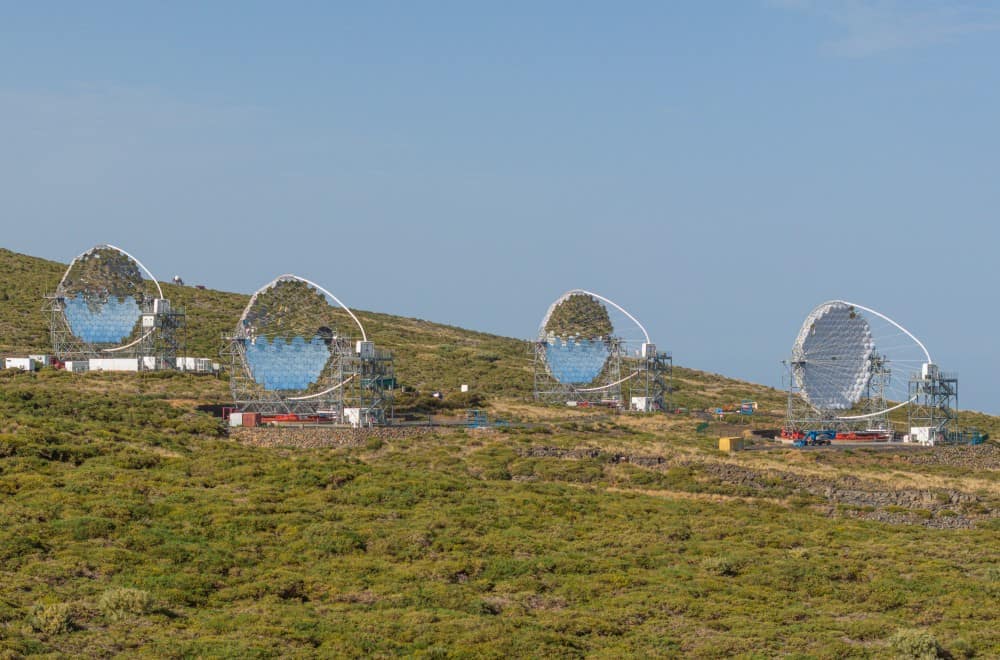
The construction of four 23 m-diameter telescopes belong to the Large-Sized Telescope (LST) array at the Roque de los Muchachos Observatory in La Palma, Spain.
The telescopes are designed to detect the faint Cherenkov light flashes when very high-energy gamma rays interact with the Earth’s atmosphere.
The LSTs are the most sensitive instruments in the world for observing gamma rays at energies between approximately 20 GeV and 3 TeV.
The first LST-1 telescope was built in 2020 and has already completed observations of pulsars, studies of active galactic nuclei at cosmological distances and rapid follow-up observations of transient phenomena such as novae and gamma-ray bursts.
The three other telescopes now join LST-1 and by observing the same gamma-ray showers simultaneously from multiple directions, it will provide improved sensitivity, angular resolution and energy reconstruction.
Their sensitivity to the lowest-energy gamma rays will enable astronomers to detect and study bright gamma-ray bursts at high redshift, potentially extending gamma-ray observations to sources at redshifts of around z∼4 to provide new insights into the early universe.
The telescopes will provide new insights into the early universe. (Courtesy: LST collaboration)
“The completion of the LST sub-array is the culmination of more than 15 years of international collaboration and technological innovation,” says Japanese astrophysicist Masahiro Teshima, who is principal investigator of the LST collaboration. “These telescopes will allow us to explore some of the most extreme environments in the universe, including supermassive black holes, neutron stars and the nature of dark matter.”
North-south divide
The telescope will form part of the Cherenkov Telescope Array Observatory (CTAO), which when operational in 2028 will operate between 20 GeV and 300 TeV and be the world’s most powerful observatory for gamma-ray astronomy.
The CTAO will consist of six LST telescopes as well as two other arrays: 23 telescopes belonging to the Medium-Sized Telescope (MST), which will operate between 80 GeV and 50 TeV, and 37 telescopes for the Small-Sized Telescope (SST) that will work between 2 TeV and 300 TeV.
The 66 telescopes will be distributed between CTAO-North at La Palma and CTAO-South at the Paranal Observatory in the Atacama Desert in Chile.
The LSTs form the low-energy core of CTAO-North and over the coming years they will undergo commissioning and be integrated into CTAO operations.
At the centre of our galaxy lies a supermassive black hole, Sagittarius A* (Sgr A*), that’s more than four million times the mass of the Sun. Astronomers have now discovered the fastest-known star in the Milky Way zooming around this black hole in an extremely close orbit. Observations of this star, known as S301, could shed new light on the spin of Sgr A*.
Black holes are extremely large concentrations of matter condensed into very small regions of space. As a black hole spins, it drags the surrounding space–time around it, a phenomenon known as frame dragging or the Lense-Thirring effect. This frame dragging creates a cosmic whirlpool, twisting the fabric of space–time and warping the orbits of nearby stars. However, unless the orbiting star reaches very close proximity, this subtle effect is difficult to measure.
“Our group has determined the mass of the central black hole down to sub-percent precision,” says team member Felix Mang, a PhD student at Max Planck Institute for Extraterrestrial Physics (MPE) and author of the study published in Nature. “A black hole is characterized exclusively by its mass, spin, or angular momentum and electric charge; now that we’ve measured the mass really, really accurately, the next step is to measure the spin.”
Lying in the galactic centre approximately 27,000 light-years from Earth, Sgr A* offers another direct way to measure its spin. There are a few dozen stars whirling around the massive black hole on nearly Keplerian orbits. The stars that come closest to Sgr A* most effectively probe its spin as they reach into the deepest parts of the gravitational potential, altering their trajectories.
For example, the star S2 is on a 16-year orbit and has been meticulously tracked using the GRAVITY instrument on the European Southern Observatory’s Very Large Telescope Interferometer. GRAVITY’s emergent near-infrared interferometry enabled the detection of strong relativistic effects during S2’s close approach in 2018, including a 12-arcminute orbital precession consistent with the Schwarzschild metric derived from Einstein’s general theory of relativity.
Despite these measurable relativistic effects, even at its pericentre when it is closest to Sgr A*, S2 remains too far away to detect the black hole’s spin without prohibitively long years of observation.
Discovery of S301
Although S2 is not a suitable candidate for Sgr A* spin measurements, the newly discovered star S301 is an ideal cosmic probe. Mang notes that the star is “a bit heavier than the Sun, and it has a radius which is a bit bigger; but overall, it’s not that special”. S301 is under 1.5 solar masses with a radius about 1.4 to 1.6 times that of the Sun, and it is too faint to be one of the giant stars in the galactic centre. Although the main-sequence star S301 may seem fairly ordinary, its extremely eccentric orbit and very close approach to the supermassive black hole are remarkable.
“We found the star in Spring 2023,” recalls Mang. Upon detection, the team could not conclude whether it was a foreground or a background star. However, dedicated follow-up observations in 2024 revealed a pronounced acceleration in S301’s proper motion, or apparent angular change of position on the sky. “It was curving away from a linear trajectory, which gave us a hint that it may be bound to the black hole,” Mang explains. Continued observations in 2025 allowed the team to create a robust initial model of S301’s orbit, revealing it to be “indeed a very eccentric and tightly orbiting star, which was then later on confirmed”.
Armed with evidence that the star might be gravitationally bound to Sgr A*, the team looked to the past, hoping to lock down S301’s orbit. Combing through archival data, the astronomers searched for traces of the star before its close approach in 2023. As Mang notes, “getting these two pre-peri positions in 2021 and 2017 was rather challenging, [we were] digging through the data”. The meticulous hunting paid off and revealed a strong trace of S301 in 2021 and a weaker signature back in 2017.
With 19 distinct positions found across nearly a decade of data, the team outlined a clear elliptical orbit, revealing that the star had zoomed past the supermassive black hole at its closest approach in early 2023 and passed significantly closer to the black hole than S2 ever has.
Extreme path of S301
The team determined that S301 boasts an orbital period of just 8.7 years, making it the shortest known orbital period around Sgr A*. This breaks the previous record, held by the star S55, which takes about 12 years to complete its path.
But S301’s orbital period is only part of what makes its path extraordinary. With an eccentricity of about 0.98, S301’s elongated path brings the star to a pericentre distance of approximately 1.78 billion kilometres, roughly 10 times smaller than that of S2. At that closest approach, S301 speeds around at about 25,000 km/s, making it the fastest known star in the Milky Way.
Because S301 gets so close to the supermassive black hole, general relativity strongly affects its orbit. In particular, S301 experiences a phenomenon known as the Schwarzschild precession, which shifts the star’s orbit by about 2° per revolution. Over the course of roughly 1500–1600 years, those slight shifts accumulate into a full 360° rotation of the orbit.
While this dramatic shift is driven by the colossal mass of Sgr A*, S301’s extreme orbit is also subjected to a subtler spin-induced effect: the Lense-Thirring precession. As Sgr A* spins, the twisted space–time forces S301’s orbital plane to slowly wobble, making it a powerful probe of the curved space–time around Sgr A*. By precisely tracking the star’s motion, astronomers can examine how its trajectory is shifted by these two precession effects, thereby enabling them to measure the spin of the supermassive black hole.
Looking forward, the upcoming years should bring substantially better data. “The instrument we are observing with, GRAVITY, has undergone some major upgrades, which gives us more flux, and we also expect to get better astrometric precision,” Mang says. “Along with that, we expect the Extremely Large Telescope, and one of its first light instruments, MICADO, to be operational by roughly 2030.”
These advances will allow astronomers to trace the motion of S301 with incredible precision. As a result, the team is confident that these instruments will decode the mystery of Sgr A*’s spin. “Combining the astrometry or proper motion measured with GRAVITY on the sky of that star, and then having a perception of the velocity of that star in the plane or out of the plane of the sky with MICADO, will allow the measurement of SgrA*’s spin, probably within the next 10 years,” Mang explains.
On 9 October 2022, a gamma-ray burst called GRB 221009A sent an enormous amount of high-energy radiation toward Earth. The Large High Altitude Air Shower Observatory (LHAASO) detected thousands of photons from the event, including some above 10 TeV. More than an hour later, the Carpet cosmic ray detector recorded something much harder to explain: a photon-like event with an estimated energy of 300 (+43/-38) TeV. At that energy, according to standard physics, the photon should have disappeared during its journey to Earth.
Giorgio Galanti of INAF and Marco Roncadelli of INFN have now examined what could allow such a photon to survive. Their explanation, reported in Physical Review Letters, involves two hypothetical effects: axion-like particles, or ALPs, and a possible violation of Lorentz invariance.
The space between galaxies is filled with background light, including the cosmic microwave background (CMB), the faint radiation left from the early universe. A 300 TeV gamma ray can collide with these low-energy photons and produce an electron and a positron. At this energy, the CMB is the dominant source of absorption.
“The CMB is extremely dense,” Galanti explains. A 300 TeV photon therefore has a mean free path far shorter than the distance from GRB 221009A, making the universe effectively opaque to it.
The numbers are difficult to put into perspective. Galanti and Roncadelli calculate that conventional propagation would result in only about 10-96 expected photons in the Carpet energy range. The Carpet event itself is also unusual because the detector did not find the muon signal expected from a hadronic cosmic-ray shower. The collaboration estimated the probability of a hadron being misidentified as the event at about 3 × 10⁻⁴.
Galanti says the researchers are taking the published Carpet result at face value while leaving open the question of whether it will ultimately prove to be a signal of new physics.
Two options to consider
One possible explanation involves ALPs, hypothetical particles that can mix with photons in magnetic fields. A photon can convert into an ALP, travel through a region where photons would be absorbed, and later convert back into a photon. This mechanism could help explain the LHAASO photons detected between roughly 10 and 20 TeV. But it runs into trouble at 300 TeV.
“ALPs alone fall short by roughly two orders of magnitude at 300 TeV,” Galanti says. They remain useful at lower energies, but the CMB absorption becomes too severe at the Carpet energy. The researchers found that within the range of ALP parameters under consideration, the expected number of Carpet photons stays below about 10-4, lower than the 0.0513 required at the 95% confidence level.
That led the researchers to consider another effect: a possible violation of Lorentz invariance, one of the foundations of relativity.
In the scenario they studied, the Lorentz invariant violation (LIV)-induced modifications of photon propagation change the threshold for photon–photon absorption. A 300 TeV photon can then interact with higher-energy background photons, which are much less abundant than the CMB photons responsible for ordinary absorption. The universe then becomes more transparent to the photon.
The researchers calculate upper limits of 1.22 × 10²¹ GeV for the linear LIV scale and 2.03 × 10¹³ GeV for the quadratic case, at 95% confidence.
The interesting part is that they don’t use LIV as a replacement for ALPs. As Galanti explains, ALPs function at LHAASO energies but not at Carpet energies, while LIV operates at Carpet energies but not at LHAASO energies. Their model incorporates both effects into a single theoretical framework.
There is another clue. A separate analysis by Dmitry Ofengeim and Tsvi Piran found that the more-than-one-hour delay between the LHAASO and Carpet events can also be explained with quadratic LIV. Their estimated scale is consistent with the limit obtained by Galanti and Roncadelli.
But Galanti is careful about what the result means.
“A single candidate photon from a single cosmic event cannot be claimed as an undisputed discovery,” he says. Confirmation would require repeated observations from multiple distant sources showing the same energy-dependent signatures.
Future observations from facilities including ASTRI Mini-Array, CTAO, SWGO and the expanded LHAASO could test whether similar high-energy signatures appear in gamma-ray bursts and distant active galaxies.
For now, the 300 TeV event remains an unusual observation with a possible explanation that goes beyond standard photon propagation.
Members of the Thirty Meter Telescope (TMT) International Organization have turned down Spain’s €1bn offer to build the instrument at the Roque de los Muchachos Observatory in La Palma. The package was put forward in July with funding also provided from the European Investment Bank and Spain’s Official Credit Institute. The decision makes Hawaii’s Mauna Kea as the only possible option for the telescope.
The TMT, if built, would use a segmented primary mirror consisting of 492 elements of zero-expansion glass for a 30 m-diameter primary mirror that will allow astronomers to resolve the faintest and oldest galaxies.
The TMT’s members include the University of California, the California Institute of Technology, Canada, India, and Japan.
Officials at the TMT have not released a final construction cost for the telescope, but it is expected to be at least $3bn, of which $2bn has been committed.
In 2009, the TMT organization choose Hawaii’s Mauna Kea peak as its location. However, in 2015 protests by indigenous Hawaiians, who regard the site as sacred, delayed the start of construction.
Some astronomers, however, were concerned by the potential move given that La Palma’s environmental conditions may limit the telescope’s scientific potential. In particular, the warmer climate and lower elevation of La Palma compared to Mauna Kea could affect mid-infrared observations, which require dry, cool conditions.
A year later, the NSF decided to pursue the GMT, which uses seven primary and seven secondary mirrors to give it an optical surface of 25.4 m. Building of the GMT is already under way at Chile’s Las Campanas peak with officials working toward a final design review.
In 2025, Spain then offered €400m to join the project if the TMT was built in La Palma. In July, the European Investment Bank and Spain’s Official Credit Institute said it would provide an additional €600m in loans towards construction.
Yet according to a statement from the Astrophysics Institute of the Canaries (IAC), which operates the Roque de los Muchachos Observatory, TMT officials have now rejected that offer.
The IAC say that TMT members were “unable to reach the consensus required to accept the financial offer”.
The IAC adds that despite the decision, the institute “remains fully committed to the scientific and technological development of the [Roque de los Muchachos Observatory]” and will continue to promote the installation of new infrastructure including the Cherenkov Telescope Array Observatory and the European Solar Telescope.
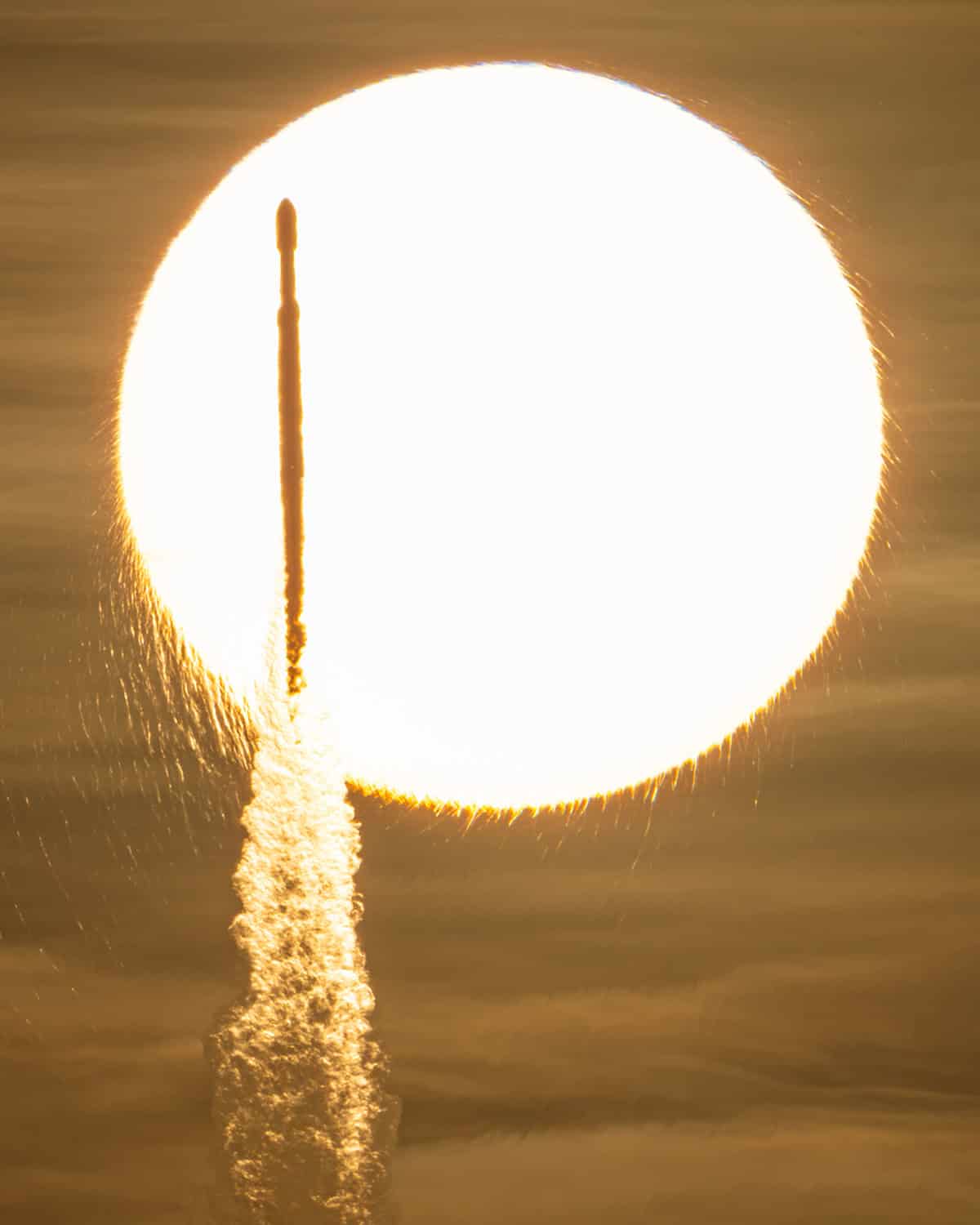
Lift off A SpaceX Falcon Heavy rocket with NASA’s Nancy Grace Roman Space Telescope on board is seen transiting the Sun during launch from the Kennedy Space Center in Florida on 30 August 2026. Named after the agency’s first chief astronomer, the telescope will survey billions of stars and galaxies with a field of view far larger than Hubble’s, helping scientists to study dark energy, exoplanets and the evolution of the universe. (Courtesy: NASA/John Kraus)
At 7.26 a.m. on Sunday 30 August 2026, a SpaceX Falcon Heavy rocket rose from the Kennedy Space Center in Florida, carrying NASA’s Nancy Grace Roman Space Telescope on its initial three-month journey beyond the Moon. As I watched online from my home in Sydney, Australia, that evening, the launch did not disappoint. There was all the familiar theatre of a rocket taking off: the brilliant column of flame, mission control calling out that it had gone through the point of peak aerodynamic stress, then the booster and main-engine cut-offs, before the fairing finally fell away.
Just 31 minutes after lift-off, Roman separated from its carrier rocket and began its long journey to L2, the second Sun–Earth Lagrange point, 1.5 million kilometres from Earth. Once it arrives there at the end of November, the gravitational balance will let Roman maintain its orbit with relatively little fuel. The Sun, Earth and Moon will all be on the same side of the spacecraft so that a single shield can block their light and heat, while the telescope faces away from them and stays cold.
Yet the most impactful part of Roman’s journey will be less visible. When its first images are released, hopefully in early 2027, the telescope will accelerate a change already long under way in astronomy. Rather than investigating carefully selected objects in the sky, astronomers are now increasingly mapping entire populations – monitoring a changing sky and searching enormous datasets for discoveries no single observer could conceivably find by eye. Roman will speed up that trend much further.
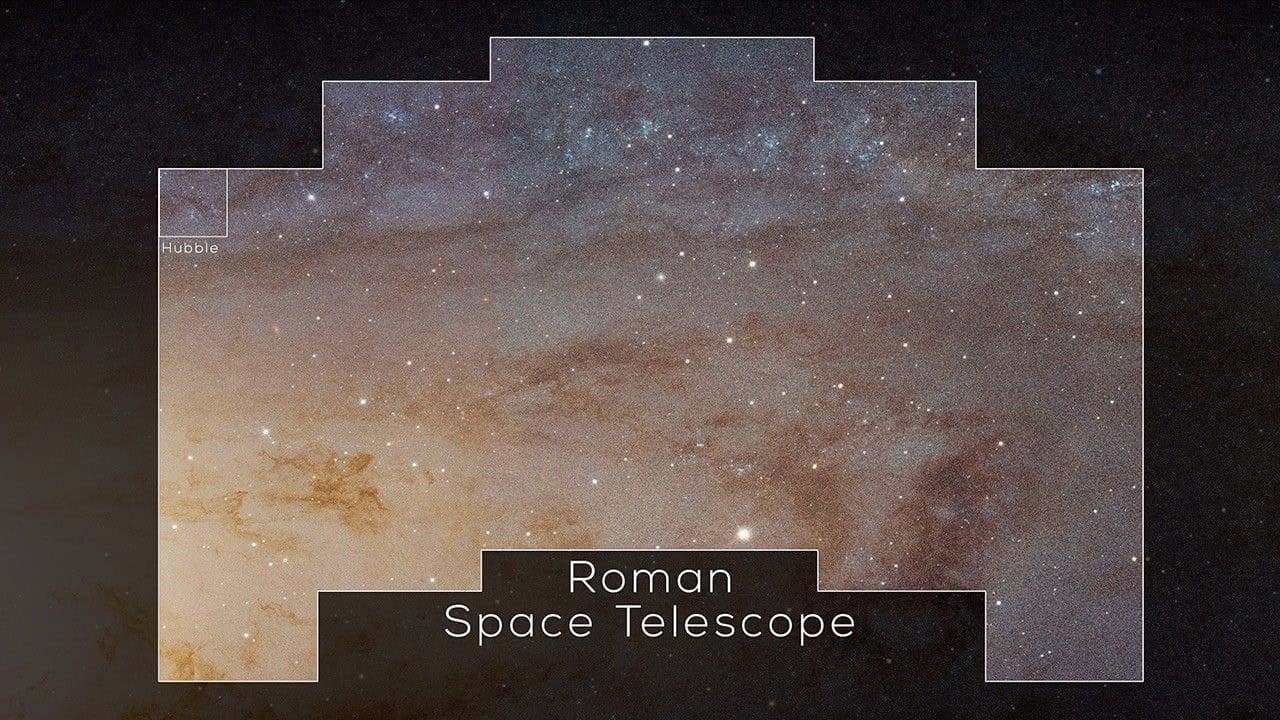
During the launch broadcast, I heard NASA administrator Jared Isaacman say Roman will study the “ecology of the universe”. Some cameras, he suggested, can provide an overview of a forest, while others can zoom in on individual birds and leaves. Roman, however, will combine both approaches. With a 2.4 m-diameter primary mirror, its images will be as sharp as those from the Hubble Space Telescope. But Roman’s Wide Field Instrument (WFI) can cover at least 100 times as much sky in a single pointing.
Bigger, brighter, better The Roman telescope will scan a much wider field of view than the Hubble Space Telescope (insert) ever could. (Courtesy: NASA)
With Roman, the detailed and population views become part of the same observation. Traditionally in astronomy, a sharp image of a single galaxy can reveal its stars, dust and morphology, while a wide but (usually) less detailed survey can tell us how galaxies are distributed. Roman will do both: it will record fine detail while retaining the wider view of the environments and populations to which individual objects belong. It will, in essence, allow astronomers to study in detail entire cosmic ecosystems as well as their constituent objects.
And that is what makes Roman so revolutionary.
From observing targets to interrogating surveys
For much of modern professional astronomy, observing began with a proposal to study an object of scientific interest. If it was accepted by an observatory’s time-allocation committee, the astronomer would travel to the telescope (or, later, log in remotely), collect a manageable quantity of data, reduce and analyse it, and retain exclusive access during a proprietary period while preparing their first research paper. The observer knew why each exposure had been taken.
That model has not disappeared. The Hubble and James Webb space telescopes remain extraordinarily powerful precisely because they can study selected targets in fantastic detail. Roman’s coronagraph, meanwhile, will test active optics that suppress starlight far more effectively than existing space-based coronagraphs, allowing it to image giant planets orbiting nearby stars and paving the way for future missions to photograph smaller, Earth-like worlds.
However, alongside targeted astronomy, a different observing mode has become increasingly important, namely observatories designed to produce systematic, reusable maps of the sky. The Gaia mission of the European Space Agency (ESA) is one such example. Over its 11-year life between 2014 and 2025, Gaia took more than three trillion (3 × 10¹²) observations of roughly two billion stars and other objects. Its public catalogues have allowed researchers to reconstruct the Milky Way’s structure, identify stellar streams and star clusters, examine binary stars and search for rare objects, often without ever applying for new telescope time.
Gaia’s third data release, which was made public in June 2022, included 10.5 million “variable sources” – any objects that change in brightness over time, sometimes regularly and sometimes unpredictably. They were all classified using supervised machine-learning techniques, in which an algorithm learns from previously labelled examples. No astronomer could personally have inspected that many light curves (records of brightness versus time).
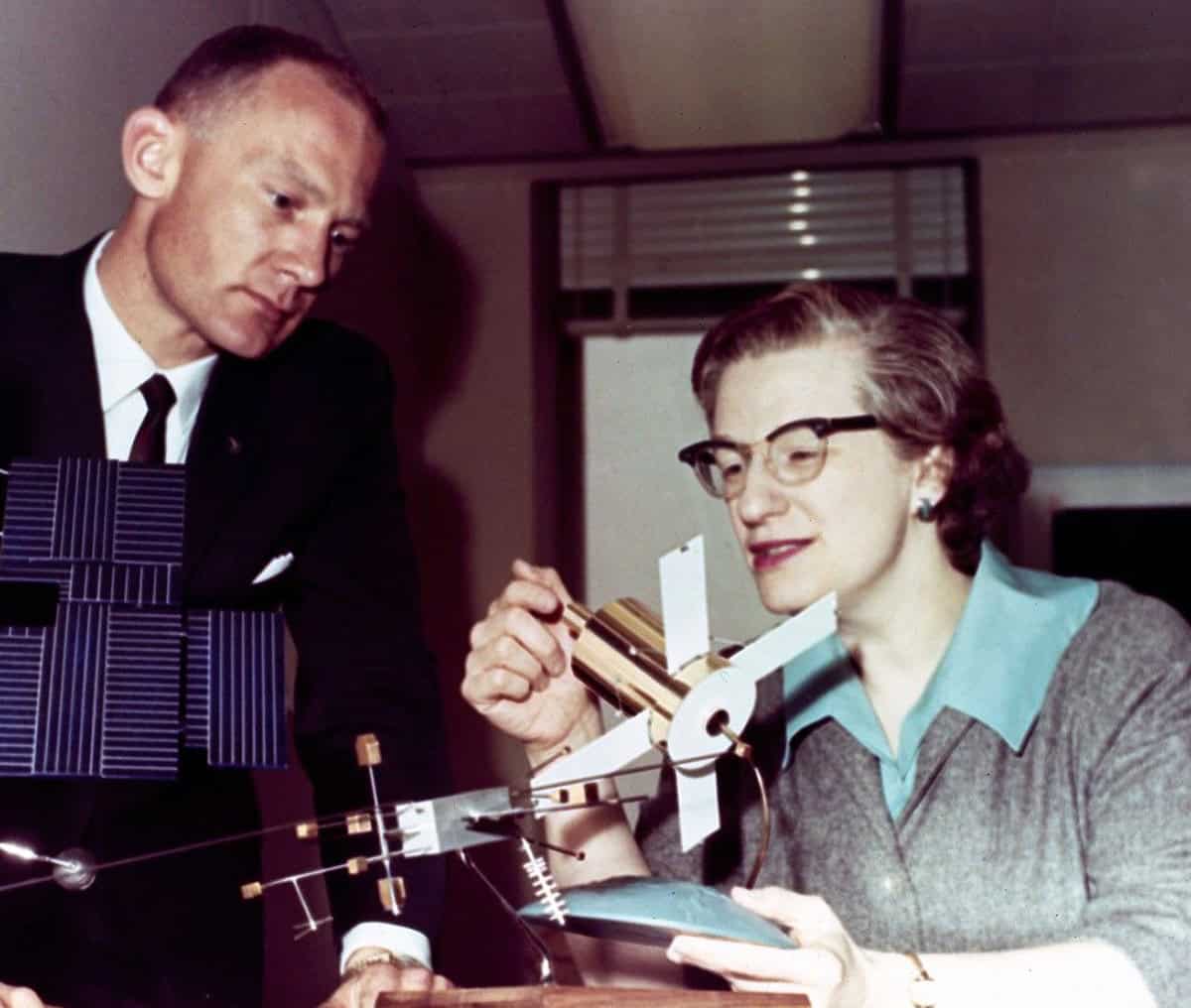
Space pioneer Nancy Grace Roman, born in 1925, was the first female executive at NASA and served as the agency’s first chief of astronomy throughout the 1960s and 1970s. She created NASA’s space astronomy programme and is known to many as the “Mother of Hubble” for her role in planning the Hubble Space Telescope. Pictured here explaining the Advanced Orbiting Solar Observatory to astronaut Edwin “Buzz” Aldrin, she was also an active public speaker, educator and advocate for women in science. (Courtesy: NASA)
The Vera C Rubin Observatory in Chile makes the new approach to professional astronomy even more explicit. Its decade-long Legacy Survey of Space and Time, which began in 2026, is collecting some 10 terabytes of data each and every night. Whenever its software detects that something has changed, it issues an alert. When alerts are triggered, they will be sent to automated “brokers”, which will cross-match them against existing catalogues, classify them and rank candidates for follow-up scrutiny. It is unlikely that an astronomer searching for supernovae, variable stars or hazardous asteroids, for example, will begin with the telescope’s raw images. Throughout modern astronomy, the starting point will instead be a filtered stream produced by a chain of algorithms.
Roman will carry this survey logic into space, beyond the blurring and infrared glow of the Earth’s atmosphere. As Roman’s deputy WFI scientist Ami Choi explained during the launch broadcast, the wide view is essential, especially for cosmologists. They don’t only need sharp measurements of individual galaxy shapes but also data on enough galaxies across a sufficiently large volume. That way they can distinguish the behaviour of the universe on large scales from the peculiarities of one small region.
Roman's three surveys
Roman’s three core surveys will show how a dataset can be designed to answer one question while creating the raw material for many others.
The High-Latitude Wide-Area Survey will map more than 5000 square degrees, which is more than 12% of the sky. It will do this using both imaging and “slitless” spectroscopy, in which spectra are recorded for every suitable object in the field rather than just individually selected targets.
Measuring the subtly distorted shapes of hundreds of millions of galaxies should reveal the distribution of dark matter – the mysterious, invisible stuff that makes up 27% of the universe by mass-energy – and also how cosmic structure has grown over time. Yet the same observations will also contain stars in the Milky Way, nearby galaxies, distant quasars, strong gravitational lenses and objects that no survey committee will ever have thought to put on a target list.
Roman’s High-Latitude Time-Domain Survey, meanwhile will repeatedly image “deep” fields at roughly five-day intervals, producing an anticipated 100,000 transient light curves. Type Ia supernovae, whose luminosities can be standardized to make them cosmic distance indicators, will trace the expansion history of the universe, but the repeated images should also expose variable galactic nuclei and rare explosions.
Finally, the Galactic Bulge Time-Domain Survey will revisit six fields of the sky about every 12 minutes during its most intensive observing seasons. Its main goal is to detect the temporary brightening of a star that occurs when the gravity of an unseen object passes in front and bends its light. Such “gravitational microlensing” events can reveal cold planets orbiting their host stars as well as free-floating planets and isolated black holes. The same sequence becomes a record of stellar variability and motion.
The reuse of data that we’ll see with Roman is not entirely new. Photographs recorded on physical glass plates often preserved far more sky than the astronomer who exposed them intended to study. Indeed, there have been instances of researchers trawling through old plate archives who’ve made discoveries decades after the photos were originally recorded. Electronic detectors, which produce digital images, made searching old data in this way far easier.
But what is new is the scale and the degree to which reuse is built into the Roman observatory from the outset. Many papers about data from the Roman mission will, I am sure, be written years later by researchers who were never involved in choosing the original data collection and may encounter the observation only as a row in a database.
Together, these observatories mark the arrival of what might be called astronomy’s “production era”. The phrase may sound industrial, but it describes a real shift in our professional practice. Telescope time remains precious, but it is no longer the only scarce resource. What will be increasingly hard to come by will be the capacity to process, connect and interpret what surveys have already observed, and to formulate a question sharp enough to extract meaning from an archive built for many purposes.
A picture too large to see
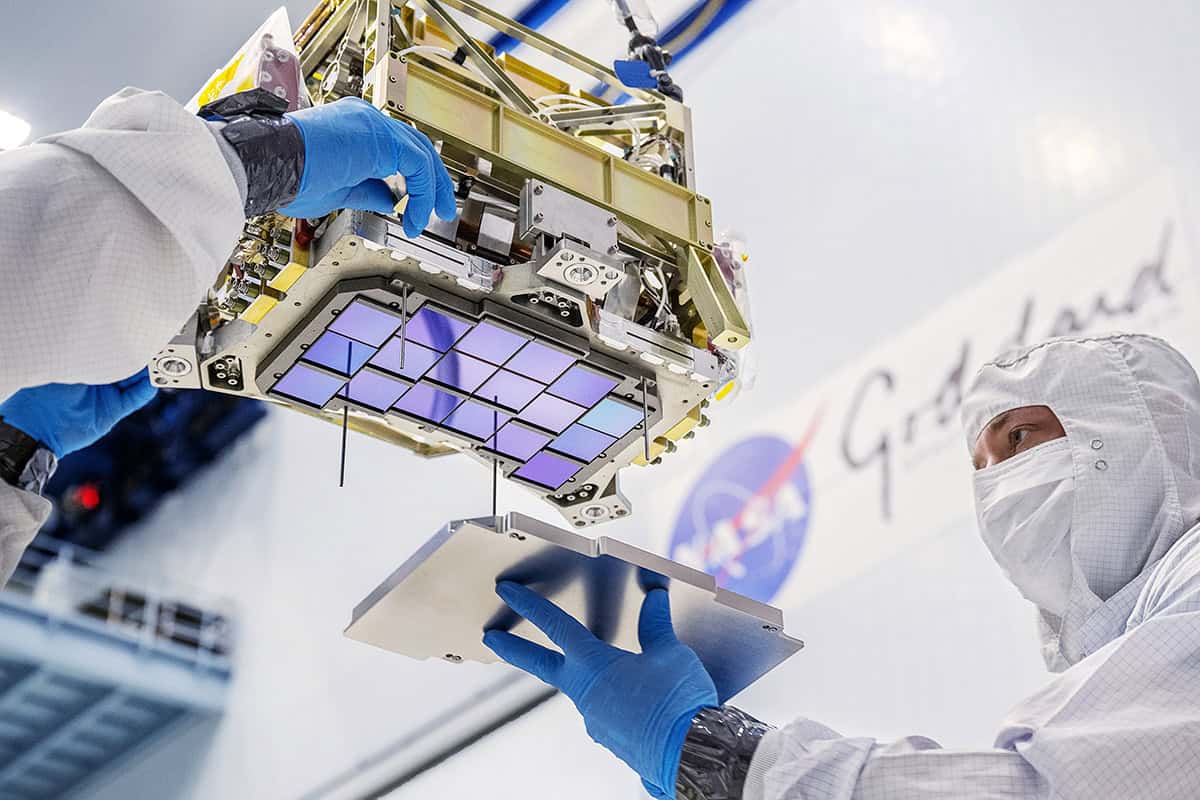
The data that Roman will yield is mind-boggling. Roman’s WFI has 18 infrared detector arrays with a total of about 300 million pixels. Even one field would require three dozen 4K television screens to display at full resolution. But Roman will tile thousands of such fields into surveys. During the pre-launch broadcast, Roman programme scientist Dominic Benford joked that NASA would need more than 500,000 TV sets to display the largest completed survey; laid out together, they’d cover some 45 city blocks.
Instrumental magic The Roman telescope’s Wide Field Imager has 18 detectors that can create 300-million-pixel images over a 0.28 square degree field of view. (Courtesy: NASA/Goddard Space Flight Center)
Calling this a single “picture” is convenient but misleading. It will be a computationally constructed portrait assembled from many pointings, observing epochs and filters. The telescope collects photons; processing pipelines calibrate the detectors, remove instrumental signatures, align exposures and turn them into images, mosaics and catalogues. In survey astronomy, computation is not something that happens after the observation; it is part of observing.
During its lifetime, Roman is expected to return around 1.4 terabytes (1.4 × 1012 bytes) of compressed data each and every day. In fact, if you take into account the intermediate data generated when the information is processed, Roman’s archive could top 20 petabytes (20 × 1015 bytes) over its five-year primary mission. NASA expects automated methods, including machine learning, to help explore the torrent of data.
Automation is unavoidable, but it poses a subtle problem. Algorithms are excellent at finding examples of phenomena on which they have been trained. The discoveries that change science, however, often do not fit into established categories. An anomaly-detection system can flag statistical outliers, but deciding which outliers are artefacts, familiar objects in unusual circumstances or genuinely new phenomena remains a scientific assessment.
Human involvement in Roman won’t be entirely superfluous, however, and will still be required to make breakthroughs. Citizen scientists will play their part too. We need to encourage amateur sleuths to follow in the footsteps of people like Hanny van Arkel – the Dutch schoolteacher who in 2007 spotted an unfamiliar green cloud in data gathered by the Sloan Digital Sky Survey. “Hanny’s Voorwerp”, as it became known, is an ionized cloud preserving the light echo of a quasar that had faded dramatically.
Open data, uneven opportunity
Roman will need both kinds of intelligence: machines capable of surveying the statistical forest and people – whether professional astronomers or citizen scientists – willing to pause over a strange bird in one of its trees. But the question is not just how Roman’s data will be searched. It is also who will get to search them.
The Roman space telescope will fundamentally change who gets the first chance to make a discovery
Roman, you see, will fundamentally change who gets the first chance to make a discovery. Hubble observers can receive up to a year of exclusive, “proprietary” access to their new data, which is typical for space- and ground-based professional programmes. Roman, however, will have no such period. Calibrated exposures are intended to become public within days, with more elaborate mosaics and catalogues following in periodic releases.
In principle, therefore, anyone will be able to start looking at observational data as soon as it’s released. The beauty of Roman is that a PhD student, a researcher at a small institution, or members of large international consortium will all be able to get going at the same time. The move to “open data” will also benefit astronomers at institutions who have traditionally lacked access to major telescopes.
However, it also complicates familiar ideas about ownership and priority. Who receives credit when one team designs a survey, another builds the pipeline, a machine identifies a puzzling candidate, and a third group recognizes its significance? Will researchers feel pressure to publish quickly rather than investigate carefully when competitors can access the same data?
Indeed, open access does not automatically create equal opportunity. A 20-petabyte archive cannot simply be downloaded onto a laptop. Researchers need computing resources, efficient code and the expertise to use them. That’s why the Space Telescope Science Institute in Baltimore, Maryland, has developed the cloud-based Roman Research Nexus, which will let users analyse mission data where they are stored.
Rather than trying to transfer vast wodges of raw data to their home institutions, researchers will instead write or upload code to a cloud-based environment where the Roman archive is stored, run the analysis there and then download the results. Essentially, they will take their code to the data, not the data to the code. Without such a platform, nominal access to the archive would be of limited use.
Even so, differences in funding, training, network bandwidth and available time will continue to shape who can exploit the archive most effectively. Astronomers will, in other words, still need to understand telescopes, detectors, calibration and astrophysics. But they will increasingly work alongside software engineers and statisticians, evaluate machine-generated classifications and design searches that can operate across billions of sources. Knowing what not to trust in a catalogue may become as important as knowing where to point a telescope.
From 3596 pixels to 300 million pixels
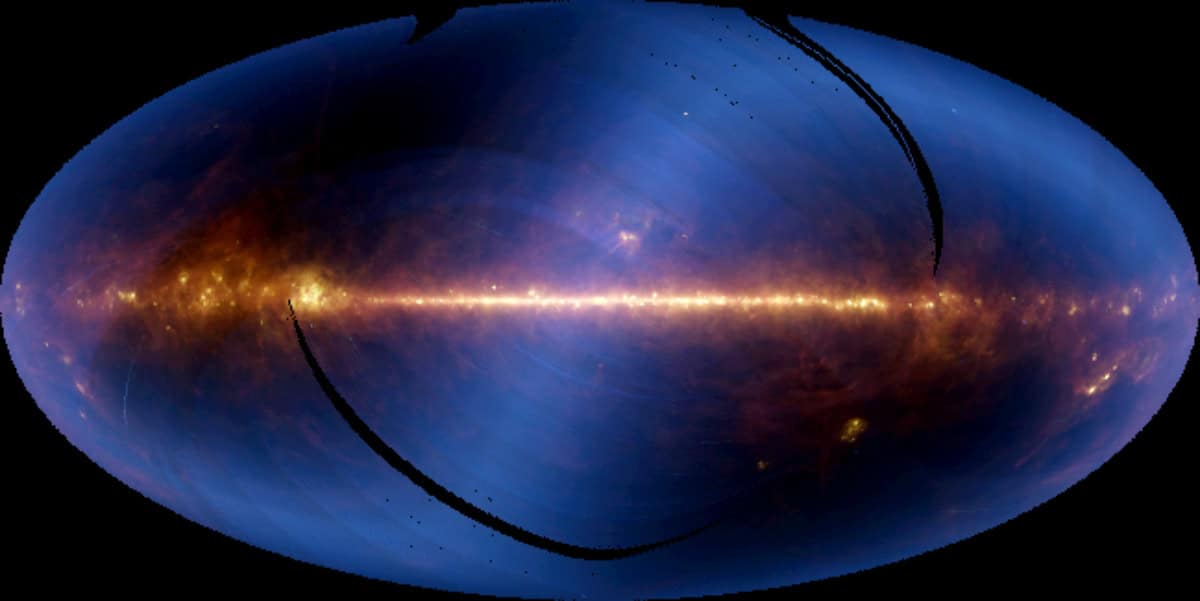
New development The Roman telescope is the next big thing in space-based infrared astronomy, which began in 1983 when NASA launched the Infrared Astronomical Satellite (IRAS). It created images such as this, in which the bright horizontal band is the plane of our Milky Way galaxy, with the centre of the galaxy located in the middle. Being so near, the Milky Way dominates our view of the entire sky, but when IRAS data was processed to show smaller regions of the sky, thousands of sources beyond our galaxy were revealed. (Courtesy: NASA/JPL)
In the early days of optical astronomy, researchers used traditional photographic plates to record individual images of the sky. To look at infrared light, astronomers turned to heat-sensitive detectors, but they’d still have to measure one position at a time, scanning a telescope across a source to build up information sequentially.
That logic changed in 1983 when NASA launched the Infrared Astronomical Satellite, which was the first space-based infrared observatory and had 62 separate detectors. By the 1990s, huge 256 × 256 arrays, encompassing 65,536 detector elements, had become common enough to support detailed infrared imaging of galaxies. Hubble’s Near Infrared Camera and Multi-Object Spectrometer, installed in 1997, used three arrays of this format.
I’ve seen the changes at first hand myself. In 1994 when I was doing my PhD at the University of Groningen in the Netherlands, I published my first paper on near-infrared astronomy, which I’d co-written with an undergraduate student I was supervising. It was based on infrared images of a galaxy taken with a camera on the 2.1 metre telescope at the Kitt Peak National Observatory in Arizona, which used an indium-antimonide detector with just 3596 pixels.
For my PhD itself, however, I observed a sample of galaxies using the European Southern Observatory’s 2.2-metre telescope at La Silla in Chile using a mercury cadmium telluride detector with 65,536 pixels. That was an 18-fold increase over the Kitt Peak camera, yet Roman’s focal plane, with its 18 detector arrays, contains more than 300 million physical pixels.
Progress is not just about pixel count. The advantages of working in space are even bigger because you get none of the atmospheric turbulence or infrared background that you do on Earth. However, it’s not all plain sailing. Space-borne infrared arrays need to be sensitive, uniform, low-noise and reliable; they also have to operate at cryogenic temperatures (roughly 90 K) and endure a harsh radiation environment.
In fact, Roman’s equipment represents decades of progress in materials science, fabrication, electronics, calibration and computing as well as our ability to make pixels ever-smaller. Its infrared detectors are cooled passively by radiators that discharge heat into space rather than by liquid helium.
Larger arrays have also changed what it means to select an astronomical target. A single detector requires an astronomer to decide where to measure: a small array records one selected view. Roman, however, will capture a panoramic field large enough to contain a huge amount of scientifically useful objects. It will transform astronomy, which will be less about choosing what to study and more about working out how to analyse huge data sets.
Looking differently
Roman will not replace targeted observatories or the astronomer’s intuition. Its most intriguing discoveries will often require the James Webb Space Telescope, Hubble or ground-based telescopes to inspect individual objects in greater detail. Instead, these facilities are complementary: one maps entire populations, another inspects exceptional objects, and each changes what the other knows to look for.
Roman’s launch on 30 August lasted little more than half an hour. But the transition the observatory represents has taken decades, driven by larger detectors, faster electronics, public archives and increasingly sophisticated software. I entered professional astronomy when infrared images containing tens of thousands of pixels were normal (see box). Roman will create survey portraits containing trillions of pixels, release its data rapidly to the world and ask humans and machines to explore them together.
When Roman reaches L2 and begins returning science data, its most important legacy may be a way of observing in which the sky becomes a shared, continuously growing dataset. And discovery begins with learning how to explore it.
Physicists at CERN have recreated the collisions that trigger cosmic-ray air showers in Earth’s atmosphere. Results from the ATLAS experiment on the Large Hadron Collider (LHC) show that none of the computer models used to simulate showers gets every detail right. Their measurements of particle production in proton–oxygen collisions are more than ten times more precise than the differences between the models – which could be improved by these latest results. This will be a step toward understanding the most energetic particles in the universe.
Cosmic rays are energetic particles (mostly protons) from outer space. They strike Earth’s atmosphere at nearly the speed of light, setting off cascades of secondary particles.
“Cosmic-ray air showers are sprays of particles raining down from high in the sky,” explains Jesse Liu of New York University, the lead author of a paper that describes the study. He adds that cosmic rays come from “extreme corners of our universe,” with exploding stars and supermassive black holes in distant galaxies as likely sources.
Still, the origin of the most energetic cosmic rays remains “one of the biggest mysteries in astrophysics,” says Karl-Heinz Kampert of the University of Wuppertal in Germany, who was not involved in the study. Such particles carry a hundred billion-billion electron volts or more – compared to the million-million electron volts achieved by the LHC. At the highest energies, only about one such particle hits each square kilometer of Earth’s surface per century. “The only way to measure them in sufficient numbers is to detect the extensive air showers they produce,” he says.
Difficult calculations
Interpreting these showers relies on computer simulations. But, the role of the strong nuclear force, which governs the underlying collisions, is notoriously difficult to calculate. The simulations therefore use models informed by accelerator data, yet “existing models widely disagree with one another on how these showers form,” says Liu.
The most energetic cosmic rays collide at energies far beyond the reach of the LHC, so “we must extrapolate the known properties of particle interactions at man-made accelerators to those occurring in the upper atmosphere,” Kampert explains. Moreover, the LHC’s beams had previously consisted only of protons or heavy nuclei such as lead, rather than the light nitrogen and oxygen nuclei found in air. “For more than a decade, the cosmic-ray community has been working to convince the CERN and particle physics communities of the importance of such measurements,” he says.
That changed in July 2025, when the LHC was reconfigured “to make protons acting as cosmic rays collide with oxygen nuclei playing the role of Earth’s atmosphere,” says Liu. The ATLAS detector recorded the charged particles these collisions produced.
Key parameter
ATLAS physicists studied “how many particles are created during collisions of protons and oxygen nuclei, alongside what energies and angles these particles fly out at,” Liu explains. They also determined the cross section, which “tells us how often these collisions occur,” he adds. Kampert calls it “a key parameter,” because it determines the average depth at which cosmic rays first interact in the atmosphere. This depth affects “essentially all air-shower measurements that are needed to infer the mass” of the incoming particle.
The measured cross section lies at the low end of model predictions, agreeing with only two of the seven models tested. The team also used it to infer the cross section for protons colliding with air, a quantity previously measured at such high energies only by cosmic-ray observatories. The result agrees with earlier air-shower measurements at similar energies.
“Our measurements are more than ten times more precise than the differences between the existing computer models,” says Liu. “Our data show that no model correctly describes the number of particles created in these collisions.” Some models misjudge the frequency of rare, particle-rich collisions by a factor of ten. A model called Angantyr best reproduces the particles’ energies and directions, but no model describes all the results consistently.
Blind spots and next steps
Kampert points out that the measurement has a blind spot because multipurpose detectors like CERN’s ATLAS and CMS are optimized to track particles flying out at relatively large angles to the beam. He explains, “most of the collision energy remains unseen by ATLAS and CMS and escapes close to the beam pipe, at very small angles. This unseen region most strongly influences the features of the air showers.” Specialized experiments, such as LHCf at CERN, are designed to fill this gap.
The next step, says Liu, is “to apply our data to improve the computer models of cosmic-ray showers.” Physicists will then check whether this eases the “muon puzzle” — facilities such as the Pierre Auger Observatory in Argentina see more muons, heavier cousins of electrons, in air showers than simulations predict. “Our proton–oxygen data are an important step toward resolving these puzzles and help decipher cosmic mysteries, namely what high-energy cosmic rays are made of and where they come from,” Liu adds.
“Model builders have been eagerly awaiting this data and have started improving their models based on it and earlier accelerator data,” says Kampert. Because Auger results suggest that the most energetic cosmic rays are mostly heavier nuclei such as carbon, nitrogen, oxygen and silicon, he calls data from oxygen–oxygen or nitrogen–nitrogen collisions “another important step forward.”
Earlier this year, he and colleagues outlined in Nature Reviews Physics how such data could feed into a common tuning of the models, an undertaking he calls “a great community effort involving researchers from different fields of science.”
“I hope [our work] strengthens the cross-disciplinary connections between particle physics and high-energy astrophysics, with much to learn from each other,” says Liu.
The image – The Quiet Predator – captures the Shark Nebula, which lies almost 650 light years away in the constellation Cepheus. The nebula is made of interstellar dust dense enough to block starlight with the blue-coloured areas in the image being “reflection nebulae” – clouds of interstellar dust that do not emit their own visible light but rather scatters and reflects light from nearby stars.
The image was taken in August 2025 with an Askar 140 APO telescope from the Jahra Governorate, Kuwait.
Sam Wen, founder and chief executive office of the astrophotography firm ZWO, says the image “is a stunning blend of technical excellence and artistic vision”.
“Showcasing the intricate structures of a rarely photographed nebula, the image combines remarkable detail with a striking composition and colour palette, inviting viewers to explore the hidden beauty of the cosmos,” adds Wen.
Alobaidly says it is a “tremendous honour” to receive the award.
“The juxtaposition of an oceanic predator prowling the skies above the Kuwaiti desert is something I find deeply poetic, and it is what first drew me to this remarkable region of the sky,” adds Alobaidly. “To me, it represents perfectly my love for both the Universe and the deserts of my ancestors.”
Alobaidly now hopes to continue using astrophotography for outreach and scientific research.
As well as winning the £10,000 top prize, the image will go on display along with other selected pictures from the competition at an exhibition at the National Maritime Museum observatory on 18 September.
The award – now in its 18th year – is run by the Royal Observatory Greenwich in association with ZWO and BBC Sky at Night Magazine.

 Login