Through joint research with the U.S. Geological Survey and the University of Tokyo, NIMS for the first time experimentally demonstrated friction completely independent of sliding velocity—an ideal that had never been realized—by heating mica, a layered oxide also used as a lubricant material, to 200°C (392°F). NIMS also clarified that this is caused by the disappearance of defects within crystals at high temperatures.
Through joint research with the U.S. Geological Survey and the University of Tokyo, NIMS for the first time experimentally demonstrated friction completely independent of sliding velocity—an ideal that had never been realized—by heating mica, a layered oxide also used as a lubricant material, to 200°C (392°F). NIMS also clarified that this is caused by the disappearance of defects within crystals at high temperatures.
Scientists have discovered that the weather on a distant world may be far more organized than it first appears. The object, known as SIMP 0136, is a brown dwarf located about 20 light-years from Earth. It is larger and hotter than a gas giant planet such as Jupiter, but it is not massive enough to […]
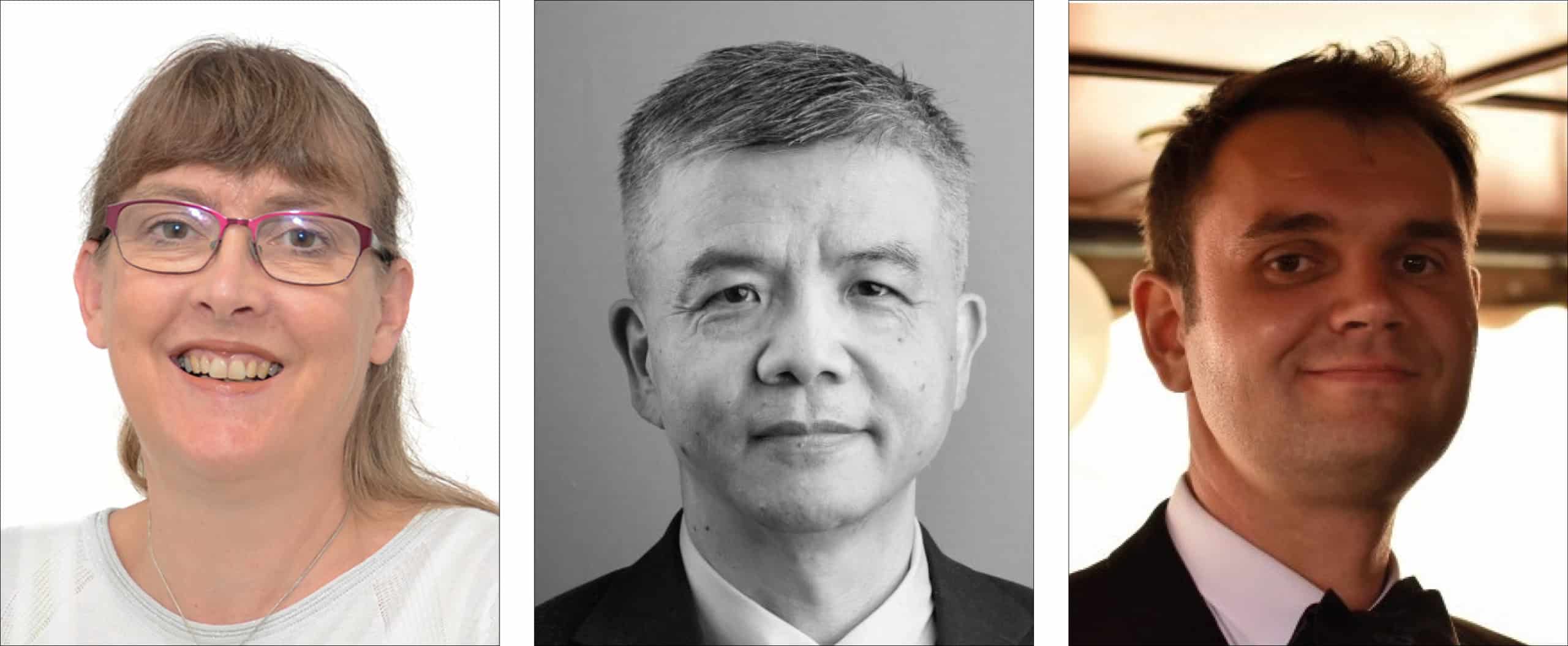
Join us for an in-depth conversation with Xiaochuan Pan as he shares an expert perspective on the rapidly evolving landscape of advanced X-ray imaging—highlighting the breakthroughs shaping the field, what defines high-impact research, and how Physics in Medicine & Biology supports and amplifies this work. He will also explore what sets outstanding early-career research apart and offer practical strategies for increasing the visibility, reach, and long-term impact of your publications.
This session will also spotlight the research of Ronan Smith, winner of the 2025 PMB Early Career Award, who will reflect on his contributions to advanced X-ray imaging—including his award-winning paper—and how his work connects to wider developments in medical physics and imaging.
Left to right: Carol Clark, Xiaochuan Pan, Ronan Smith
Moderator
Carol Clark, Publisher,Physics in Medicine & Biology
Speakers
Xiaochuan Pan is Professor of Radiology, Radiation & Cellular Oncology, Committee in Medical Physics, the College, and the University of Chicago Medicine Comprehensive Cancer Center at The University of Chicago. His research centers on physics, algorithms, and engineering underpinning tomographic imaging and its biomedical and clinical applications. He has made pioneering, significant contributions to advanced theory and algorithms for conventional and spectral computed tomography (CT), positron emission tomography (PET), and single-photo-emission computed tomography (SPECT). He has contributed to algorithm development for digital breast tomosynthesis (DBT), digital lung tomosynthesis (DLT), magnetic resonance imaging (MRI), electron-paramagnetic resonance imaging (EPRI), phase-contrast CT, and photo-acoustic tomography (PAT). He has also developed strong translational imaging technological programs tailored to specific applications of biomedical and/or clinical significance. Xiaochuan is a Fellow of AAPM, AIMBE, IAMBE, IEEE, OSA, NAI, and SPIE.
Ronan Smith is a physicist interested in better ways of X-ray imaging. He completed his PhD at Southampton University (UK) in 2023, developing a technique called dark-field X-ray imaging, before moving to the warmer climate of Adelaide University in Australia as a grant-funded researcher in the School of Medicine. He focuses on developing and implementing imaging techniques for challenging and dynamic environments, such as the respiratory system. His current area of research is novel ways of analysing and understanding a new method for dynamic lung imaging called X-ray Velocimetry, with side projects looking at dark-field X-ray imaging.
About this journal
Physics in Medicine & Biology. The international journal of biomedical physics and engineering, published by IOP Publishing on behalf of the Institute of Physics and Engineering in Medicine (IPEM)
In Texas, US, electricity demand is expected to grow because of rapid population growth, increased adoption of electric vehicles, expansion of AI data centres, and other societal and industrial developments. Most of Texas’ electricity system is managed by the Electric Reliability Council of Texas (ERCOT), which operates a grid that is largely independent from the rest of the United States. Combined with the state’s rapidly changing demand patterns, this makes Texas an important test case for exploring future energy scenarios.
In this work, the researchers developed a framework to model how different sources of electricity demand growth could affect the Texas grid through to 2050. They separately examined the impacts of population growth, electrified heating, electric vehicles, large industrial loads such as data centres, and electrification of oil and gas operations.
The study found that electric vehicles have the greatest impact on peak electricity demand because charging tends to occur at similar times of day, creating sharp increases in demand. In contrast, large industrial loads, including data centres, cryptocurrency mining, hydrogen production and manufacturing facilities, have the greatest impact on overall electricity consumption because they often operate continuously. Electrification of heating had a smaller net effect because heat pumps increase winter electricity demand while simultaneously reducing summer electricity demand through more efficient cooling.
The findings suggest that different types of demand growth require different grid solutions. Battery storage is particularly effective for managing the sharp demand peaks associated with electric vehicle charging, whereas growth from data centres and other large industrial loads is most economically met through additional natural gas, wind and solar generation. The study also showed that uncertainty in future demand could lead to dramatically different grid expansion requirements by 2050.
A key impact of this work is demonstrating that the source of future electricity demand can be just as important as its size, since different demand drivers require different investments in generation, storage and grid infrastructure. The framework developed in this study could help planners, investors and policymakers make more informed decisions about future electricity systems.
N = 4 super Yang-Mills is a highly symmetric quantum field theory that physicists use as a model system for exploring ideas in quantum gravity and string theory. The researchers study interactions between small and large excitations of the theory. The small, or light, excitations are super gravitons, which can be thought of as particle-like ripples of spacetime. The large, or heavy, excitations are giant gravitons: extended brane-like objects that arise when a graviton carries a very large amount of angular momentum. The goal is to understand how the light excitations behave in the presence of these heavy objects.
To study this, the authors analyse a four-point correlation function containing two light (L) and two heavy (H) operators, known as an LLHH correlator. These correlators are notoriously difficult to calculate directly because doing so requires detailed knowledge of how the supergravity fields couple to the giant graviton and its fluctuations. The key idea of the paper is to treat the pair of heavy operators as a zero-dimensional defect. This reformulates the four-point function as a two-point function of light probes in the presence of the defect, allowing bootstrap techniques to be applied.
Using this defect framework together with bootstrap techniques, the authors compute all strong-coupling four-point functions involving two maximal giant gravitons and two supergravitons of arbitrary dimension. They also uncover a partially broken higher-dimensional hidden conformal symmetry that organizes these correlators. Finally, they determine the leading interaction-induced energy shifts for a complete class of double-particle states associated with the defect and argue that the defect picture provides the natural description of heavy-light correlators more generally. This establishes a powerful new framework for studying giant gravitons, non-planar effects, and aspects of quantum gravity and strongly coupled quantum field theories.
Material behaviour is traditionally determined by chemistry. Free electrons in metals give rise to conductivity, unfilled orbitals make elements reactive. Metamaterials, on the other hand, have properties that come mainly from its internal design, not just from what it is made of.
These types of materials are characterised by a specifically designed larger-scale repeating pattern that interacts with waves in a chosen way. Invisibility cloaks are one such example. These are designed so that waves bend around an object and then recombine on the other side, making the object scatter much less light, sound or another type of wave.
The challenge is designing metamaterials to give you exactly the properties that you want. Two equations come into play.
The Laplace equation. This describes steady-state conditions with no oscillations or waves and has only one free parameter. It is easy to use but the metamaterial properties you can get are often limited.
The Helmholtz equation. This describes oscillations – sound waves, light waves etc. To use this equation, the wave medium usually needs two material parameters. For acoustics, these are equivalent to mass density and bulk modulus, which together determine how sound travels. Harder to work with, but more powerful.
The goal of new research from a team of researchers from China and Singapore is to have the best of both worlds. They were able to develop a mathematical correspondence between these two equations and use it to design metamaterials with new properties. Counterintuitively, they found that less complicated designs can achieve more. This less-for-more approach doesn’t try to design every aspect of how a wave behaves, but instead starts with a simpler, more manageable problem to access a wide range of useful effects.
The team used acoustics as testbed to demonstrate the power of their work. They demonstrated a range of novel phenomena such as three-dimensional freeform conformal cloaking, an experimentally validated waveguide cloak and the hyperbolic invisibility mentioned earlier. Because the technique is based on equations shared by several types of waves, their approach could also be applied to water waves and electromagnetic waves. This makes it a broadly transferable strategy for designing metamaterials
Real devices will still face practical limits from losses, dispersion and the need to approximate continuous material properties with fabricated structures. However, this new work does offer a practical method to design new metamaterials with exotic properties, and to manipulate waves beyond conventional constraints.
There’s a temperature nothing in the universe has ever touched. It’s called absolute zero, equal to -273.15°C (-459.67°F), the point at which the particles that make up matter would lose all their kinetic energy and simply stop moving. In 1848, the British physicist William Thomson — better known as Lord Kelvin — proposed making that […]
Researchers used a specially designed cavity to strengthen quantum vacuum fluctuations and enhance superconductivity in a thin material. Empty space is not truly empty. Even a vacuum contains restless quantum fluctuations, and researchers have now shown for the first time that these normally subtle effects can be engineered to strengthen superconductivity. The work, led by [...]
Scientists have traced a decades-old gamma-ray mystery to hidden magnetic transitions inside atomic nuclei. For decades, nuclear physicists have faced a puzzling question: why do some atomic nuclei release far more low-energy gamma rays than expected? A new study led by the Facility for Rare Isotope Beams (FRIB), with contributions from scientists at Lawrence Livermore [...]
Researchers have directly observed the optical Magnus effect for the first time, revealing a tiny shift in laser interactions that could affect the precise control of qubits in quantum computers. Anyone who has watched a spinning soccer ball curve around a defensive wall has seen what happens when spin changes an object’s path through the [...]
Physicists from the ATLAS Collaboration at CERN’s Large Hadron Collider have confirmed that quantum entanglement -- the phenomenon Albert Einstein called ‘spooky action at a distance’ -- can survive in some of the most extreme conditions ever produced in a laboratory.
Many of the world’s greatest scientific minds remain in startling disagreement with one another about the nature of reality itself. After conducting what is likely the largest survey of its kind, researchers reported that a vast majority of physicists suspect the big bang doesn’t necessarily mark the beginning of time. And as their additional responses indicate, scientists diverge even more when it comes to other hot-button cosmological topics.
In 2025, researchers put out an international open call for their Big Mysteries in Physics survey. Anyone could partake in the questionnaire, but responses from self-identifying physicists were later separated and reviewed to identify any particularly striking areas of agreement or disagreement. After reviewing answers from over 1,600 physicists, the questionnaire’s authors published their key takeaways earlier this year in Physics Magazine.
The results? Physicists are very divided on explanations for some of the universe’s fundamental operations.
The most dramatic relates to the big-bang theory (technically known as the Lambda Cold Dark Matter theory). About 68 percent of respondents said they don’t think the famous moment necessarily marks the beginning of time. Some of this has to do with how the big bang is presented in popular culture—contrary to many depictions, the theory specifically explains how the universe expanded from a single extremely hot, dense prior state of existence. This means it technically may have very little to do with the beginning of time.
The only other majority opinion pertains to the immediate moments following the big bang. Only 51 percent of physicists agreed that the immediate moments following the big bang involved an incomprehensibly fast period of expansion commonly known as inflation.
Subjects got far more contentious from there, although some of it was understandable. Given how much remains to still learn about dark matter, 17 percent of survey takers think the mysterious material is composed of an undiscovered particle or particles. Around 12 percent argued it could be explained by tweaking the theory of gravity. At best, barely 21 percent of physicists hypothesized it may be some combination of these and other answers.
Quantum physics continues the chaos. Nearly 19 percent of scientists think string theory is likely the best way to integrate gravity into quantum physics, while only 12 percent offered loop quantum gravity as an alternative. Meanwhile, 18 percent lean towards the suspicion that gravity can’t be integrated in any way.
If the survey presents one clear takeaway, it’s that these diverse theories are in no way an indictment of the present-day state of physics. These aren’t amateurs—they’re researchers who base their arguments on volumes’ worth of data, calculations, and scientific testing.
“Consensus, or its absence, tells us where the evidence feels settled and where researchers still see room for radically different ideas,” Niayesh Afshordi, a University of Waterloo physicist and study co-author, explained in a statement. “In this sense, lack of consensus can be a clue. It marks places where better data, sharper theory, or new connections between subfields may be needed”
Afshordi noted that unlike other polls, scientific reality isn’t settled by a majority vote. It’s supported by clear, demonstrable evidence.
“The interesting point is not that physicists are confused. It is that the frontier is genuinely alive,” he added.
Scientists have turned ordinary sunlight into a source of quantum entanglement, opening a surprising path toward more energy-efficient quantum technology. Quantum technologies often depend on powerful lasers that consume significant amounts of energy. As these systems grow larger and more widespread, their energy requirements could become an increasingly important concern. Now, researchers have demonstrated that [...]
A material once thought to be nonmagnetic may reveal a hidden magnetic side when made just a few atomic layers thick. A newly proposed class of magnetism known as altermagnetism could open new possibilities for making computer memory smaller and more efficient. Now, researchers have found evidence that ruthenium dioxide, a quantum material long debated [...]
A new invention could significantly improve electron microscopy by integrating a small quantum computer directly into the microscope. For delicate samples such as individual proteins, electron microscopy faces a fundamental tradeoff. Producing a clearer image generally requires sending more electrons through the specimen, but increasing the dose also raises the risk of damaging the very [...]
Which method of disposal of the body after death is best -- burial, cremation, or like ancient Israel practiced? The Christian teaching is that in the resurrection believers will receive new, incorruptible bodies, irrespective of how their earthly remains are treated. Ultimately, the focus is on spiritual transformation rather than physical remains.
The most impressive science fiction stories emphasize “science” over spectacle. The Star Trek franchise has featured plenty of examples since the original series premiered 60 years ago this month, but one of its most famous sci-fi moments may prove even more fascinating than fans realized. At Brazil’s Federal University of ABC, physicist Níckolas de Aguiar Alves determined that an early episode of Star Trek: The Next Generation demonstrates an aspect to the theory of relativity even better than its creators likely anticipated.
Season One’s ninth episode, “The Battle,” introduces a bit of backstory to Jean-Luc Picard’s illustrious career in the Federation. Years before he became captain of the USS Enterprise, Picard oversaw a ship called the Stargazer when it came under fire from an unknown assailant. Picard needed to navigate closer to the mystery attacker before responding, but the Enterprise’s shields were down.
The captain then quickly improvised what later became known as the “Picard Maneuver.” He ordered his crew to rush their foe at warp speed (faster than the speed of light) then quickly halt and begin firing. Relativistic physics dictated that if Stargazer traveled faster than visible light, it would technically generate two images of the ship from their attacker’s point of view—one Stargazer at the location just prior to warp speed, then a Stargazer where it halted. The operation was risky, but it gave Picard and his crew a 50/50 chance that the enemy would continue firing on an afterimage of Stargazer.
Traveling faster than lightspeed is widely considered impossible, but the underlying principles of Picard’s Maneuver don’t only hold up to expert scrutiny—its depiction in Star Trek is hypothetically less accurate than it should be. According to de Aguiar Alves, Picard’s odds technically would be even higher in such a scenario. But while a fan of the series, the physicist wasn’t intentionally trying to stress test the episode’s logic. Instead, de Aguiar Alves was working on an actual particle physics problem that involved a slower light speed. At one point, he began sketching out the scenario to double check his work.
“And after I drew one or two diagrams, I started noticing, ‘Hey, I think I’ve thought about something like this before,’” de Aguiar Alves said in a recent interview with Ars Technica.
In actuality, Picard’s Maneuver wouldn’t result in two Stargazer ships; it would make three of them. This is because Picard’s crew didn’t travel at a constant speed during the gambit–they first sped up, then stopped closer to their opponent. That means Stargazer technically accelerated not once, but twice. This makes all the difference.
The physicist doesn’t hold it against the episode’s writers. If anything, the overall conceit is an excellent scenario to ponder while studying theoretical physics.
“The main thing they got perfectly, and I think it is a great illustration,” he said.
Astronomers built the James Webb Space Telescope to pick up faint light from the first billion years after the Big Bang, a chaotic era when vast swaths of hydrogen and helium gas gathered into the chains of galaxies we see today. Even in the telescope’s first images, astronomers could see a whole zoo of mysterious smears of light. One batch of objects proved especially difficult to interpret.

 Login