Login

'Every time it gets excited — boom — it collapses': How dogs with narcolepsy helped scientists understand the disorder
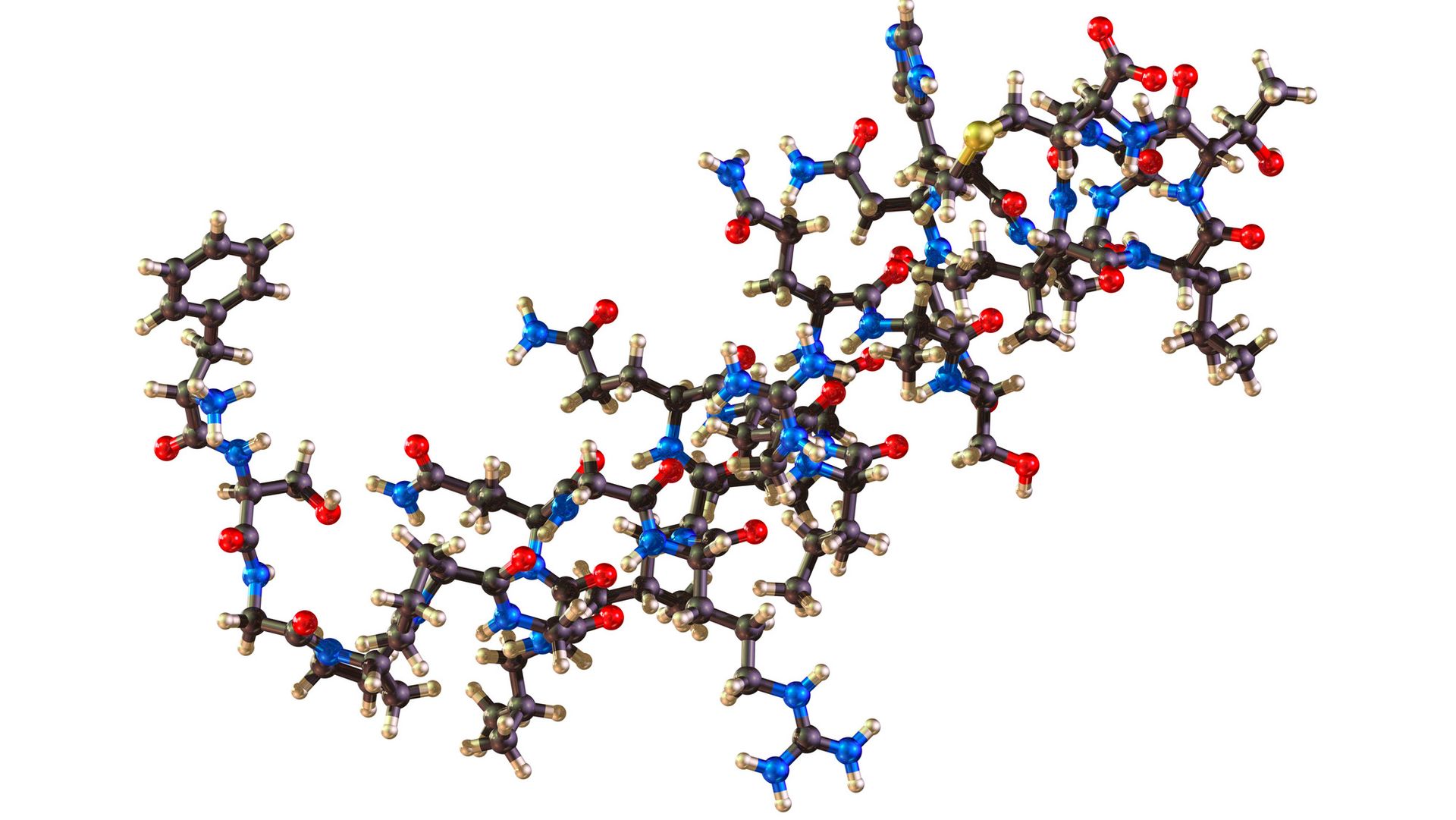
Many people are familiar with melatonin, a hormone that helps ready the body for sleep. But there's another, lesser-known chemical in the brain, called orexin, that tips the scale in the other direction: waking the body up.
In 1999, two scientists independently uncovered the function of orexin and published papers about it. Dr. Masashi Yanagisawa, a molecular biologist and physician now at the University of Tsukuba in Japan, came across orexin while studying the interaction of receptors and chemicals in the brain. Dr. Emmanuel Mignot, now the director of the Stanford Center for Narcolepsy, homed in on orexin while studying narcoleptic dogs. (His Chihuahua, named Watson, has narcolepsy, and he previously had another dog with the condition, named Bear.)
This year, the pair of researchers won the coveted Albert Lasker Basic Medical Research Award for this fundamental finding that helped reshape our understanding of sleep. Their work has since led to the development of drugs for insomnia and narcolepsy.
Yanagisawa told Live Science that, at the start of his research career, he didn't expect to end up studying sleep. Mignot, on the other hand, had an early interest in understanding narcolepsy so that better treatments for the neurological disorder could be developed. Live Science spoke with Mignot about the discovery of orexin and how the field might progress in the future.
Nicoletta Lanese: What initially drew you to studying narcolepsy?
Dr. Emmanuel Mignot: There were three things that attracted me to narcolepsy: Number one, it was a human problem. It was already known [at the time] that it was not super rare. I'm not saying it's super common, but 1 person per 3,000, 0.03% — it's reasonably common. And nobody cared about it. I would talk to neurologists and they'd say, "Oh, I've never seen one case in my entire life." So I would say, "Yes, of course; you miss them all." That was the state of the play at the time.
Number two, was what this was a quintessential sleep disorder [in which sleep itself is disrupted]. I thought that if we found the cause of this disease, we could potentially discover something totally new about sleep — a fantastic entry point to a mystery.
The third thing that made me ready to go there was that it was tractable. A lot of problems are not tractable.
NL: Why did you start working with the dogs with narcolepsy?
EM: I studied the pharmacological basis because I was trained in pharmacology, and as a psychiatrist, and I discovered how this drug modafinil [a stimulant-based narcolepsy treatment] was working. But quickly, I realized I'm not going to find the cause by doing pharmacology. I'm only going to explore what's known.
That's when I started to fall in love with genetics, even though I was not trained as a geneticist. I said, "We have to find this gene in the dogs." It looks like they have all the symptoms. It was a huge bet, and it took me 10 years because I was definitely … overoptimistic. But it was worth the price at the end.
After narcolepsy was described — the dog gene — suddenly narcolepsy became much more famous.
NL: And scientists already knew about narcolepsy in dogs at that time?
EM: The guy at Stanford that started the sleep program was called Dr. [William] Dement. He was a graduate student in Chicago in the 1950s, when [Eugene] Aserinsky and [Nathaniel] Kleitman discovered REM sleep. He had the foresight to understand that this was an important discovery.
[Later], he discovered that narcolepsy was really a disorder where people go into REM sleep and have this very abnormal dreaming. He came in 1970 to Stanford, and the first thing he did after his medical school was to start a clinic to see patients with narcolepsy. Around then, he spoke at an American Medical Association conference in San Francisco, and he discussed different sleep disorders, including narcolepsy. And then there was someone in the audience that said, "Oh my god; I have a dog with your disease. Every time it gets excited — boom — it collapses. And it sleeps all the time."
That dog had already been euthanized, but it still gave him the idea that these dogs have narcolepsy — maybe we should try to get some. So he went to a lot of veterinarians to talk to them about it, and they identified a whole series of dogs, including the first poodle, Monique, who had narcolepsy. And they started this little colony of dogs. Initially, they tried to breed them, but most cases of narcolepsy are actually not genetic. Then, in 1977, they got a whole litter of Dobermans, and then Labradors, that had some form that was genetic.
So when I arrived, it was in 1987. They already had the dog colony. I came to study the pharmacology, to try to find a better treatment for narcolepsy. But I did stand on the shoulders of giants.
NL: At that time, it's not like you had a complete dog genome. Did that make studying their genetics challenging?
EM: It was crazy. A couple of human genes had been isolated, and mouse genes, but it was a handful. We didn't even have the full genome map in humans. And meanwhile, dogs — no pun intended — were in no man's land. Very little was known.
It took me 10 years. I had times where some people didn't believe that the dogs had narcolepsy. There were a few depressing moments, but I was convinced that was the right thing to do.
NL: When you ultimately found the receptor for orexin, did it surprise you? It strikes me as surprising that there would be a discrete "switch" in the brain that controls wakefulness.
EM: I was lucky. Honestly, I had no idea. I got enamored with genetics because what I love [about it] is you can find something without any hypothesis. You just search for it, and what you find tells you what it is. You have no prerequisite for knowing what you would find.
I could have found something much less significant. That was a dream, to find a GPCR [G-protein coupled receptor, a protein on the outside of cells]. Can you imagine? A drug target.
Then, it turned out to be immediately applicable to humans. That, too, was a lot of luck; let's be honest. I was just trying to find the cause of one thing and one step at a time; it could have been something very complicated. It turned out to be simple.
Was I surprised? No, because I was not expecting one or another.
NL: Do you recall what the reception was like when the initial finding was published?
EM: It had an immediate effect, for several reasons. For example, I was seeing a lot of patients with narcolepsy at the time, but they were all old folks that had had narcolepsy forever. A lot of people would tell me, "I think I had it from when I was born, because I don't remember." We were never seeing children.
But after narcolepsy was described — the dog gene — suddenly narcolepsy became much more famous. And what happened is that people started to pay attention to narcolepsy, and we started to see kids. In kids, the picture is so much different. They gain an enormous amount of weight; it's very abrupt. It's a little bit different than what you see in adults, where they have adapted to it.
That was, I think, a practical consequence of the discovery. It really put narcolepsy on the map.
The second thing that happened is, all the drug companies started to develop hypnotics [sleeping pills], trying to block the orexin. They developed hypnotics relatively quickly, and they are very effective. They are probably safer than benzos [benzodiazepines] and so forth.
NL: Is it considered safer because the orexin blockers better replicate natural sleep?
EM: We know that the orexin definitely drops during sleep, so blocking it is definitely a way to recapitulate that drop; that's true. It's an awake-promoting system, so if you remove something that makes you more awake, it's safer than inducing sleep by shutting down the brain.
NL: As you moved to studying narcolepsy in humans, you found evidence that there might be an autoimmune response involved; it's been suggested that such a response may be harming the cells that make orexin in the brain. Was there suspicion that the condition had an autoimmune element previously?
EM: It's not something I 100% discovered. In 1983, before I came to study narcolepsy, there was a guy in Japan who I met, called Yutaka Honda. [Editor's note: Honda's research linked narcolepsy to the human leukocyte antigen (HLA) region of the genome, which helps regulate immune responses.]
The HLA is the way the immune system sees the world. That had just been discovered as very important for transplantation, because it's very polymorphic [takes on different forms] from one person to the next. They [Honda's group] found that all narcoleptics had a particular genetic variant, called HLA-DR2. This was a total surprise.
When I came, that was already known. But then people really looked and tried to see if the disease was autoimmune, but they couldn't find anything — no autoantibody, nothing. It was all negative.
I did a study with African Americans, and in African Americans, I found that this DR2 marker was not the best marker for narcolepsy. It was a gene just next to it that was called DQB1*06:02. [Editor's note: That HLA variant is now recognized as a strong risk factor for narcolepsy, particularly for narcolepsy type 1 (which involves a symptom called cataplexy).]
I'm very proud of that study because I think it's the first time that people used human diversity to actually map down a genetic factor more precisely, which now is used commonly. It's called transethnic mapping.
NL: New treatments that target orexin have just been approved. Do you see those therapies as an extension of your earlier findings?
- Neuroscience findings often can't be replicated — and it's a big problem for what we know about the brain
- 'It's being promoted like there's absolutely no risk': Why some experts say melatonin should be considered a drug rather than a supplement
- As cervical cancer rates fall, HPV is causing more throat and mouth cancers in men — why?
EM: Of course. I was trained as a pharmacologist originally, so obviously, I do a lot of clinical trials. I see my patients totally transformed by this medication. It's just amazing. I'm so fortunate. How could you get a better reward than seeing your patients totally transformed by this medication?
It's going to have a lot of other applications [beyond narcolepsy]. Some people think it's going to be very helpful for ADHD; some people think it could be very helpful for depressed people with excessive sleepiness. We don't know, really; there's a lot of possibilities.
Another thing I'm excited about is that I have a few patients with [both] narcolepsy and schizophrenia. You cannot give them stimulants. If you give them modafinil or another dopamine stimulant [for narcolepsy], they have even more hallucinations. Often, they are sedated by their medication, and we are very poor at making people more motivated and active. These [orexin-activating] drugs seem to have effects beyond just waking people up. They seem to increase motivation.
You don't know until you try, but I'm sure it's going to have other applications.
This interview has been condensed and edited lightly for clarity. It is for informational purposes only and is not meant to offer medical advice.
Help us improve Live Science Pro: We're always trying to make our content better. Leave us feedback about Pro here.