
❌

Normal view

Short-Term Animal-Product Restriction Rapidly Alters Human Proteogenomic Profiles

9 August 2026 at 00:45

A short-term decision to eat fewer or no animal products may begin reshaping the human body at the molecular level far sooner than many people expect, according to a new study published in Nature Communications. Research by A. Simistiras, O. Bocher, C. Emmanouil and colleagues examined how restricting animal-derived foods affects both gene activity and protein production in humans, revealing a complex biological response that unfolds beneath the visible changes on a plate.

The study focuses on proteogenomics, an approach that combines two powerful layers of biological information. Genomics and transcriptomics examine the instructions encoded in DNA and the messenger RNA molecules produced when genes are activated. Proteomics, by contrast, measures the proteins that cells actually manufacture. Because proteins perform most of the body’s day-to-day work—from transporting nutrients to controlling immune reactions—studying them alongside gene activity can provide a more direct picture of how physiology responds to dietary change.

Rather than treating diet as a distant influence on long-term health, the research highlights it as an immediate biological signal. When people reduce their intake of animal products, the body is exposed to a different mixture of amino acids, fats, vitamins, minerals and other bioactive compounds. The quantity and timing of these nutrients can alter metabolic pathways, cellular signaling and the activity of genes involved in maintaining tissues. The researchers’ proteogenomic analysis was designed to capture these interconnected effects during a relatively short dietary intervention.

The significance of the work lies in its ability to distinguish between what cells are instructed to do and what they ultimately do. A gene may become more active without producing a corresponding increase in its protein, while a protein may remain stable because of slower turnover or regulation after translation. By examining both molecular layers, the study offers a more refined view of diet-responsive biology than either gene-expression or protein measurements alone. This is particularly important for nutrition research, where modest changes in multiple pathways can combine to influence health.

The findings indicate that restricting animal products can produce measurable molecular shifts even over a limited period. These changes do not represent a simple biological switch from “animal-based” to “plant-based” physiology. Instead, they appear as a network of coordinated responses involving nutrient processing, energy metabolism and cellular regulation. Some proteins may respond directly to altered nutrient availability, while others may change indirectly as tissues adapt to new metabolic demands. The result is a biological signature of dietary transition rather than a single marker that explains every effect.

Such signatures could eventually help researchers understand why individuals respond differently to the same eating pattern. Two people can consume similar diets yet experience distinct changes in blood chemistry, metabolism or immune activity because of differences in genetics, gut microorganisms, age, lifestyle and baseline health. Proteogenomic profiles may help identify these sources of variation by showing which pathways are activated in each person. In the future, that information could support more individualized nutritional guidance instead of assuming that one dietary pattern produces the same outcome for everyone.

The study also underscores an important distinction between molecular response and clinical benefit. Detecting changes in proteins or gene activity does not automatically prove that a diet will prevent disease, improve performance or extend lifespan. Molecular alterations can be adaptive, neutral or potentially harmful depending on their intensity, duration and biological context. The research therefore provides evidence that the body responds rapidly to dietary restriction, while longer and larger studies will be needed to determine how these responses relate to cardiovascular health, metabolic disease, immune function and other outcomes.

The work arrives as plant-forward diets are drawing increasing interest for environmental, ethical and health reasons. Yet public discussions often reduce the science to competing claims about whether animal products are categorically beneficial or harmful. The proteogenomic perspective offers a more nuanced alternative. It suggests that dietary effects emerge through dozens, perhaps hundreds, of interacting pathways, and that the consequences of removing or reducing a food category depend on what replaces it. A diet rich in minimally processed legumes, grains, nuts, seeds, fruits and vegetables may produce a very different molecular response from one dominated by refined plant-based products.

For scientists, the study demonstrates the value of observing dietary change across multiple biological scales. For the public, its message is both striking and practical: the body does not wait years to notice what people eat. Even short-term restriction of animal products can be reflected in the molecular machinery of human cells. The findings do not settle the broader debate over the ideal diet, but they add a new layer of evidence showing that food choices are rapidly translated into biological signals—and that understanding those signals may be key to designing healthier, more personalized nutrition strategies.

Subject of Research: The proteogenomic effects of short-term restriction of animal products in humans.

Article Title: Diet-responsive proteogenomic effects following short-term restriction of animal products in humans.

Article References: Simistiras, A., Bocher, O., Emmanouil, C. et al. Diet-responsive proteogenomic effects following short-term restriction of animal products in humans. Nature Communications (2026). https://doi.org/10.1038/s41467-026-76379-6

Image Credits: AI Generated

DOI: 10.1038/s41467-026-76379-6

Keywords: proteogenomics, nutrition, animal-product restriction, plant-based diet, gene expression, protein response, human metabolism, dietary intervention, precision nutrition
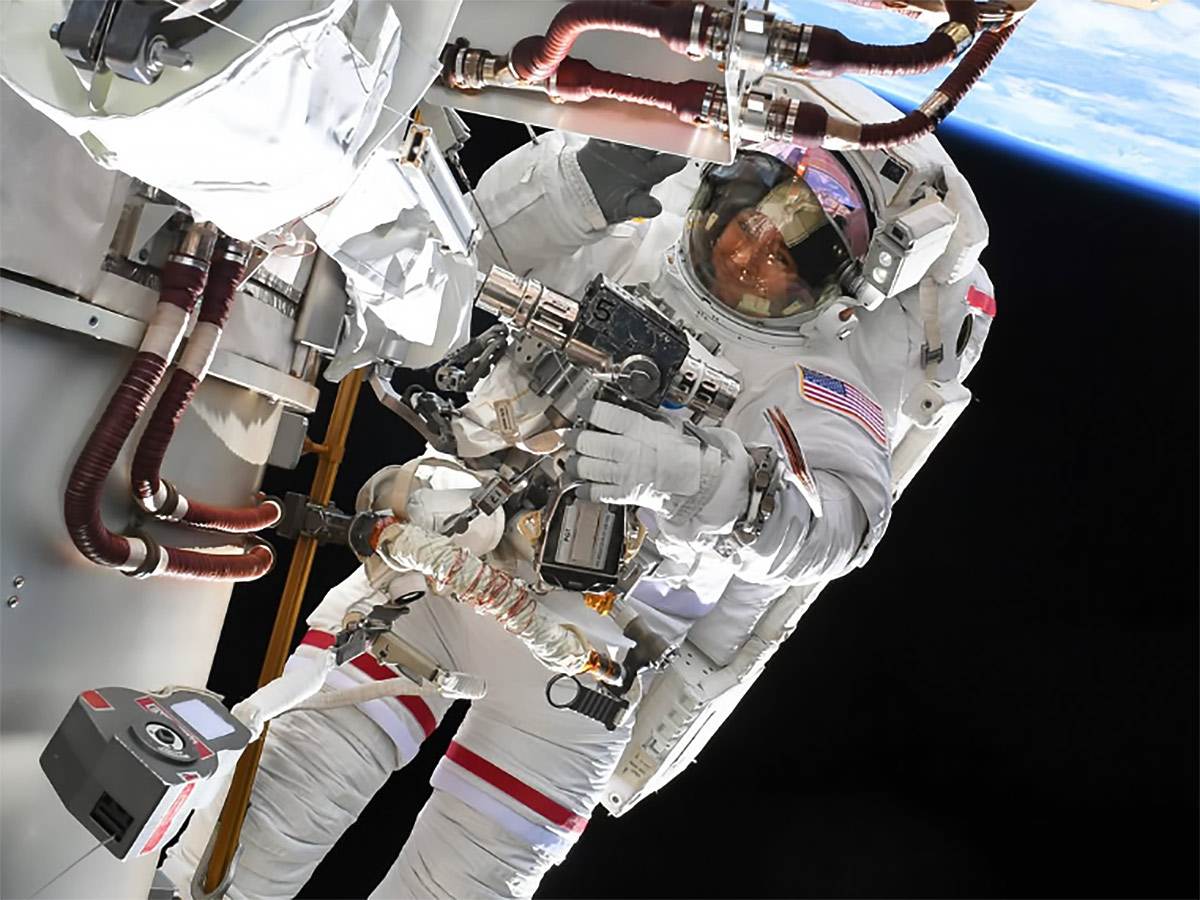
Space Station Crew Wraps Busy Week, Plans New Date for US Spacewalk 97

7 August 2026 at 23:29
NASA astronaut Jessica Meir shared a pictured of herself during a spacewalk taken by NASA astronaut Anil Menon on her Instagram page.
NASA astronaut Jessica Meir shared a pictured of herself during a spacewalk on her Instagram page taken by NASA astronaut Anil Menon.
Instagram/@Astro_Jessica

On Aug. 6, NASA astronauts Jessica Meir and Anil Menon concluded a 6-hour, 27-minute spacewalk outside the International Space Station. Meir and Menon successfully completed their primary objective of preparing the 3B power channel for the future installation of a roll out solar array. Toward the end of the spacewalk, a carbon dioxide sensor on Menon’s spacesuit indicated an unexpected data reading. Menon reported no other issues during the spacewalk.

Although the sensor returned to normal readings following removal of the suit, engineers on the ground will continue to evaluate over the coming days whether to change suits for the next spacewalk. As a result, NASA will move the next spacewalk to replace a Space-to-Ground antenna on the space station to Tuesday, Aug. 18. As of now, the third planned spacewalk this month remains scheduled on Tuesday, Aug. 25. The agency will provide additional spacewalk details early next week.

On Friday, NASA astronaut Jack Hathaway of studied Canadarm2 robotic arm operations planned to support the next spacewalk. NASA will soon name the spacewalkers who will replace a space-to-ground antenna to maintain high-speed data and communication transmissions between Mission Control Center and the space station.

ESA (European Space Agency) astronaut Sophie Adenot was back on exercise research working out with new and advanced gear to inform countermeasures that may improve muscle and bone health in microgravity. She first wore the EasyMotion-2 suit that sent electrical impulses and triggered muscle contractions to supplement her workout session on the advanced resistive exercise device in the Tranquility module. Afterward, she moved into the Columbus laboratory module and performed rope pull exercises on the European Enhanced Exploration Exercise Device (E4D). Researchers are evaluating the E4D’s effectiveness for use on missions to the Moon, Mars, and beyond.

Numerous science investigations and lab maintenance tasks also kept the three Expedition 75 cosmonauts busy at the end of the week. Roscosmos flight engineer Andrey Fedyaev started his shift measuring his blood pressure while wearing a series of cuffs on his arm, wrist, and fingers for a circulation system study. He wrapped up his day inspecting and cleaning smoke detectors in the Rassvet module. Flight engineer Pyotr Dubrov set up an automated Earth photography session to capture European and Asian landmarks then tested artificial intelligence tools to improve crew operations. Flight engineer Anna Kikina worked in the Zarya module photographing areas to identify optimal stowage locations and locate hardware.

Learn more about station activities by following the space station blog, @space_station on X, as well as the ISS Facebook and ISS Instagram accounts.

Get the latest from NASA delivered every week. Subscribe here.

The post Space Station Crew Wraps Busy Week, Plans New Date for US Spacewalk 97 appeared first on NASA Science.

Apple’s iPhone captures 65% of global premium smartphone market as segment hits record 29% share in H1 2026

7 August 2026 at 20:15

iPhone 17 Pro camera

Apple dominated the premium smartphone segment in the first half of 2026, holding a commanding 65% market share, according to Counterpoint Research. The Cupertino company outpaced the broader industry as devices priced at $600 and above (wholesale average selling price) accounted for a record 29% of overall global smartphone sales.

Premium smartphone unit sales grew 5% year-over-year in H1 2026, outperforming the overall market. This marked a rise from 25% share in H1 2025 and 20% in H1 2022. Counterpoint attributed much of the latest jump to rising memory and component costs, which hit low- and mid-tier devices harder. As prices for mid-range Android phones climbed, the gap with premium models—including older or discounted flagships—narrowed, making higher-end upgrades more attractive. Manufacturers also expanded financing, trade-in, and buyback programs to improve affordability.

Apple’s premium segment shipments rose 9% year-over-year, fueled by strong demand for the iPhone 17 series, particularly the base model. This reversed a prior-year slowdown linked to intensified competition in China, the world’s largest premium smartphone market. Apple’s share edged up from 63% in H1 2025 but remains below the 74% peak recorded in H1 2022.

Global Smartphone Premium Segment Brand Unit Sales Share H1 2022 to H1 2026

Global Smartphone Premium Segment Brand Unit Sales Share H1 2022 to H1 2026
Source: Counterpoint Research Global Handset Model Sales Tracker, Jun 2026 (Prelim). Premium Segment includes smartphones with a wholesale price of $600 and above.

Samsung held steady at 19% of the premium market (up from 17% in 2022) and posted 3% year-over-year growth despite a later-than-usual launch of the Galaxy S26 series. Together, Apple and Samsung controlled 84% of global premium smartphone sales, up from 82% a year earlier.

Among other players, OPPO recorded the fastest growth at 69% year-over-year, driven by its Find X9 series, while Vivo grew 20%. The remaining 16% of the premium segment was shared among Chinese brands including Huawei, Xiaomi, OPPO, and Vivo.

“Rising memory and component costs are reshaping smartphone pricing and creating opportunities for OEMs to accelerate premiumization,” said Counterpoint Senior Analyst Harshit Rastogi in a statement. “As mid-segment Android smartphone prices rise, the price gap with premium devices, especially older or discounted flagship models, is narrowing. This trend makes flagship smartphones a better upgrade option for consumers. To support this shift, OEMs are expanding financing, trade-in and buyback programs to improve affordability.”

MacDailyNews Take: The data underscores a continued shift toward higher-priced devices even as the broader smartphone market faces volume pressures. Premiumization is expected to persist, supported by better component access for leading brands, steady demand among higher-income consumers, and expanded financing options. In other words; More great news for Apple!


‎
Please help support MacDailyNews — and enjoy subscriber-only articles, comments, chat, and more — by subscribing to our Substack: macdailynews.substack.com. Thank you!

Support MacDailyNews at no extra cost to you by using this link to shop at Amazon.

The post Apple’s iPhone captures 65% of global premium smartphone market as segment hits record 29% share in H1 2026 appeared first on MacDailyNews.

Safety fears as scientists make first viruses designed by AI

Researchers say breakthrough offers hope for new medicines but also raises urgent biosecurity questions

Scientists have made the first viruses designed by artificial intelligence in a milestone that raises hopes for new medicines but also concerns over how to ensure the technology remains safe.

The viruses are specific kinds known as bacteriophages, which only infect bacteria and are used around the world to treat patients with persistent infections. In lab tests, a cocktail of the AI-designed viruses killed E coli bugs that were resistant to natural bacteriophages.

Continue reading...

© Photograph: Samyukta Lakshmi/Bloomberg/Getty Images

© Photograph: Samyukta Lakshmi/Bloomberg/Getty Images

© Photograph: Samyukta Lakshmi/Bloomberg/Getty Images

Redwire to fly dedicated Starfall mission for microgravity research

6 August 2026 at 15:18
Starfall reentry

A Redwire subsidiary working on space biotech and pharmaceutical applications has signed an agreement to fly microgravity research payloads on SpaceX’s Starfall reentry vehicle.

The post Redwire to fly dedicated Starfall mission for microgravity research appeared first on SpaceNews.

New Research Suggests Extraordinary Experiences Are More Common—and More Meaningful—Than Expected

6 August 2026 at 13:47

Throughout recorded history, humans have experienced events that challenge their understanding of reality. These include purported out-of-body and near-death experiences, anomalous events or perceptions, and even profound spiritual awakenings.

Depending on an individual’s culture, belief system, or worldview, these experiences may be interpreted as mythical, psychological, pathological, or even deeply spiritual. However, a new study by Ronald Fischer of the Instituto D’Or de Pesquisa e Ensino in São Paulo, Brazil, and colleagues suggests that these types of experiences may be more universal than previously thought.

Published in PLOS ONE, the research team took a deeper look into how people understand or personally interpret “nonordinary experiences,” what those factors might include, and how they could be seen as distress or personal growth. 

The Study 

The researchers examined how thousands of people interpreted unusual experiences. For example, one person might view an out-of-body or near-death experience as evidence of a spiritual awakening, while another might interpret the same event as a neurological phenomenon or the result of normal brain chemistry.

Similarly, hearing voices may be regarded as a symptom of mental illness in some cultures, while others interpret it as a spiritual or supernatural experience. The study argues that both perspectives can be valid, depending on the individual’s cultural and personal framework.

“Experiences like sensing a presence, having a vision, or feeling as though you are observing yourself from outside your own body are far more common in the general population than clinical diagnosis rates would suggest,” Fischer said in a statement. “We observed that most people in our sample of over 5000 participants who report them are not unwell, and most describe them as neutral or positive — both at the time they occur and also when looking back and reflecting on that experience.” 

The research team first reviewed and validated the Inventory of Nonordinary Experiences. They then developed a questionnaire designed to assess both the universal and cultural influences shaping participants’ interpretations of these events. After refining the survey based on feedback from 160 Brazilian participants, the researchers administered the final 47-question questionnaire to 5,117 individuals representing the general population.

“Previous research has often failed to differentiate the experience and how people make sense of such diverse and challenging experiences,” Fischer explained. “Our work stands out in that we squarely focus on where and when these experiences happened and how people tried to make sense of them.”

“By clearly separating the context, the experience and the meaning-making processes, the patterns we observe challenge various assumptions that have guided previous theory, research but also clinical practice,” he added. 

Among the findings, 20% of participants reported that their nonordinary experience had a negative impact, while 25% said it caused suffering or discomfort. However, 51% reported that their experience ultimately produced positive long-term effects.

The researchers also found that 39% of participants experienced these events while alone, and approximately 57% reported being awake and alert at the time. While some participants attributed their experiences to random chance, most reported having at least some degree of perceived control over the experience.

“For many people, such experiences can be meaningful and lead to personal growth and insight,” Fischer says. “Highlighting these possible positive outcomes is important to help people make sense of them and help to normalize them. Importantly, we hope our work can help to remove stigma by focusing on the diverse ways that people experience and make sense of them.”

“However, we would also stress that if people feel that these experiences interfere with their daily activities, then they should talk to a professional or seek help from somebody that they trust,” Fischer adds.

Overall, the survey challenges the assumption that anomalous experiences should primarily be viewed through the lens of mental illness.

“What struck us was the mismatch. These experiences share features with symptoms used to define psychosis and dissociation yet are frequently observed in a general-population sample,” said Pedro Fortes, a Researcher at the Instituto D’Or de Pesquisa e Ensino (IDOR). “Our prevalence study suggests they most often arrive in entirely ordinary moments, when we’re awake, alert, and by ourselves, and are commonly remembered as meaningful rather than frightening.”

Jorge Moll, neurologist and neuroscientist at the Instituto D’Or de Pesquisa e Ensino (IDOR), adds that “How a person interprets an unusual experience matters more than the experience itself in determining whether it becomes a source of distress or of meaning.”

“That has direct consequences for how clinicians and families respond when someone describes something extraordinary,” Moll concluded. 

Chrissy Newton is a PR professional and the founder of VOCAB Communications. She currently appears on The Discovery Channel and Max and hosts the Rebelliously Curious podcast, which can be found on YouTube and on all audio podcast streaming platforms. Follow her on X: @ChrissyNewton, Instagram: @BeingChrissyNewton, and chrissynewton.com. To contact Chrissy with a story, please email chrissy @ thedebrief.org.

❌