
❌

Normal view

Machine Learning Predicts Falls in Older Adults Using Dual-Task Gait Measures

2 August 2026 at 20:18

Falls among older adults often begin with changes too subtle to be noticed during an ordinary walk. A person may still appear steady while moving through a familiar environment, yet struggle when asked to divide attention between walking and another task. A new study by researchers Dong, Hu, Guo and colleagues examines whether machine-learning techniques can identify this hidden vulnerability in community-dwelling older adults by analyzing how gait changes during dual-task walking. Published in BMC Geriatrics in 2026, the research focuses on a potentially powerful combination of digital movement measurement and artificial intelligence: spatiotemporal gait parameters recorded while people walk and perform a second mental or motor activity.

Walking is not a single, automatic action. It requires continuous coordination between the brain, muscles, sensory systems and balance mechanisms. When a person walks while counting backward, answering questions or carrying an object, the nervous system must distribute attention between locomotion and the competing task. This is known as dual-task walking. Older adults who have limited cognitive or physical reserve may respond by slowing down, shortening their steps, widening their base of support or becoming more irregular in their timing. These adaptations can provide clues about fall susceptibility that may remain invisible during conventional clinical walking tests.

The study’s central idea is that gait should be evaluated under realistic cognitive pressure rather than only in ideal, distraction-free conditions. Spatiotemporal gait parameters describe measurable features of movement across time and space, including walking speed, stride length, step time, cadence, stance duration and the variability between consecutive steps. In a dual-task setting, researchers can also examine the degree to which these variables change compared with normal walking. This difference, often called dual-task cost, can reveal how much a person’s mobility is affected when attention is divided. A larger cost may indicate reduced ability to manage competing demands while remaining stable.

Machine learning offers a way to analyze these patterns simultaneously. Traditional clinical assessment may focus on one or two measurements, such as walking speed or the number of previous falls. A machine-learning model can process many variables at once and search for combinations associated with elevated risk. Depending on the model design, the system may learn from labeled examples, in which participants’ gait data are linked to fall-related outcomes, and then estimate risk for new individuals. Algorithms can detect nonlinear relationships that are difficult to capture with conventional statistical methods, although their usefulness depends heavily on the quality, size and representativeness of the data used for training.

The community setting is especially important. Many studies of balance and falls are conducted in hospitals or specialist laboratories, where participants may be healthier, more closely supervised or less representative of the broader older population. Community-dwelling adults live independently and encounter the complex conditions that make falls more likely: distractions, uneven surfaces, hurried movement, household obstacles and the need to perform several tasks at once. By focusing on this group, the research addresses a practical question for preventive medicine: can accessible gait testing identify people who appear independent but may require additional support before a serious fall occurs?

A potential advantage of this approach is its ability to move fall-risk assessment toward objective, repeatable measurement. Gait sensors, pressure-sensitive walkways, wearable devices or camera-based systems can convert movement into numerical data. Those data may be more sensitive than a brief visual observation, particularly when they capture step-to-step variability and changes induced by a secondary task. In the future, similar measurements could potentially be collected in clinics, rehabilitation centers or even at home. However, a prediction tool would need to be tested across different ages, health conditions, walking environments and technology platforms before it could be trusted for widespread use.

The research also highlights the technical challenges behind apparently simple predictions. Falls are influenced by numerous factors, including muscle strength, vision, medication use, reaction time, fear of falling, neurological disease and environmental hazards. Gait features alone cannot explain every incident. A machine-learning model may also perform impressively on the data used to develop it but less reliably on people from another population, a problem known as limited generalizability or overfitting. For clinical adoption, researchers must therefore evaluate calibration, sensitivity and specificity, test the model on independent datasets and make its decisions understandable to health professionals and patients.

Although the citation identifies the study’s objective and methodology, it does not provide detailed numerical findings such as sample size, predictive accuracy or the specific algorithm used. Those results will determine how close this technology is to practical deployment. Even so, the study reflects a broader shift in geriatric care: fall prevention is increasingly being treated as a problem of measurable, dynamic performance rather than a simple checklist of past incidents. By combining dual-task gait analysis with machine learning, the researchers are investigating whether the body’s response to distraction can serve as an early warning signal—one that could eventually help clinicians intervene before a dangerous fall changes an older person’s independence.

Subject of Research: Fall-risk prediction in community-dwelling older adults using machine learning and dual-task spatiotemporal gait parameters.

Article Title: Machine learning-based fall risk prediction in community-dwelling older adults using dual-task spatiotemporal gait parameters.

Article References: Dong, G., Hu, H., Guo, Y. et al. “Machine learning-based fall risk prediction in community-dwelling older adults using dual-task spatiotemporal gait parameters.” BMC Geriatrics (2026). https://doi.org/10.1186/s12877-026-07998-3

Image Credits: AI Generated

DOI: 10.1186/s12877-026-07998-3

Keywords: machine learning, fall risk prediction, older adults, community-dwelling older adults, dual-task walking, gait analysis, spatiotemporal gait parameters, geriatric medicine, balance, mobility.

How Inflammatory Markers Affect Physical Performance in Community-Dwelling Older Adults: Systematic Review

2 August 2026 at 15:11

As populations age, scientists are looking more closely at a hidden biological process that may help explain why some older adults remain mobile and independent while others experience a rapid decline in strength, balance, and endurance. A systematic review by A. Boshnjaku, R. Obërtinca, M. Hoxha, and colleagues examines whether five inflammation-related biomarkers—CRP, high-sensitivity CRP, interleukin-6, interleukin-10, and tumor necrosis factor-alpha—are linked to physical performance in older adults living in the community. Published in BMC Geriatrics, the review focuses on a question with major implications for healthy aging: can signals circulating in the blood reveal who is at greater risk of losing physical function?

The study centers on chronic, low-grade inflammation, a biological condition often associated with aging and commonly described as “inflammaging.” Unlike the intense inflammation triggered by an infection or injury, inflammaging can persist quietly over years. It may be influenced by immune-system changes, excess body fat, physical inactivity, chronic disease, and cellular stress. Although inflammation is essential for repairing tissue and fighting pathogens, prolonged activation can affect muscle metabolism, blood-vessel function, nervous-system signaling, and energy production. These changes could, in theory, make everyday movements such as walking, rising from a chair, or climbing stairs increasingly difficult.

C-reactive protein, or CRP, is one of the most widely used indicators of systemic inflammation. It is produced primarily by the liver in response to inflammatory signals, especially interleukin-6. Standard CRP testing is useful for detecting relatively pronounced inflammatory activity, while high-sensitivity CRP, known as hs-CRP, can measure much lower concentrations. That distinction matters in research on older adults, where subtle inflammatory differences may exist even when there is no obvious acute illness. However, neither CRP nor hs-CRP identifies a single disease or proves that inflammation itself caused a decline in physical ability.

The review also considers three signaling proteins known as cytokines. Interleukin-6, or IL-6, can promote inflammation but also participates in muscle adaptation and energy regulation, making its effects highly dependent on timing, tissue, and physiological context. Tumor necrosis factor-alpha, or TNF-α, is a potent inflammatory mediator that can influence muscle protein breakdown and interfere with insulin signaling. Interleukin-10, or IL-10, generally acts as an anti-inflammatory regulator, helping restrain excessive immune activation. Examining these markers together offers a more nuanced picture than relying on a single laboratory value.

Physical performance is a crucial measure of aging because it reflects how effectively multiple systems work together. Muscle strength alone does not determine whether a person can remain independent. Walking speed, repeated chair stands, balance, grip strength, endurance, and composite tests such as the Short Physical Performance Battery can reveal the combined effects of the muscular, cardiovascular, neurological, and skeletal systems. For people living outside hospitals and care facilities, these measures may also provide a practical snapshot of resilience in everyday life. A small difference in performance can translate into a major difference in fall risk, mobility, and the ability to manage daily activities.

By bringing together evidence from studies of community-dwelling older adults, the authors address an important gap between laboratory research and real-world aging. Older people living independently are not a uniform group: some have multiple chronic conditions, while others remain highly active; some take anti-inflammatory medications, and others do not. Diet, smoking, obesity, socioeconomic conditions, sleep, recent infections, and exercise can all alter cytokine levels and physical performance. A systematic review can help determine whether associations between biomarkers and function appear consistently across this complex population or whether they vary substantially from one study to another.

The review’s importance lies not only in asking whether inflammatory markers are associated with poorer performance, but also in highlighting the limitations of interpreting such relationships. A high biomarker level may be a consequence of frailty, reduced activity, obesity, or an undiagnosed illness rather than the original cause of decline. Conversely, a single blood sample may fail to capture fluctuations in inflammation over time. Differences in laboratory methods, cutoff values, participant health, medication use, and performance tests can make studies difficult to compare. These issues are central when translating population-level associations into decisions about an individual patient.

The findings may ultimately support a broader approach to healthy aging in which inflammation is considered alongside strength, nutrition, cardiovascular health, cognition, and social environment. The biomarkers discussed in the review are not presented as standalone tests that can predict the future with certainty. Instead, they may help researchers understand why physical function changes and identify biological pathways that could be targeted through exercise, weight management, treatment of chronic disease, or other interventions. The study also underscores the need for longitudinal research capable of separating cause from consequence and for standardized testing that can connect laboratory signals with meaningful improvements in daily life.

For now, the review places a spotlight on the immune system as a possible contributor to the physical changes associated with later life. Its focus on CRP, hs-CRP, IL-6, IL-10, and TNF-α reflects the growing recognition that aging is not simply the result of muscles becoming weaker, but of interconnected changes across the body. Understanding how these inflammatory signals relate to mobility could help scientists develop more precise strategies for preserving independence—while reminding clinicians and the public that a blood test is most informative when interpreted together with a person’s functional ability, medical history, and lived environment.

Subject of Research: The relationship between inflammatory biomarkers and physical performance in community-dwelling older adults.

Article Title: What is the impact of CRP, hs-CRP, IL-6, IL-10, and TNFα in physical performance in community-dwelling older adults: a systematic review.

Article References: Boshnjaku, A., Obërtinca, R., Hoxha, M. et al. What is the impact of CRP, hs-CRP, IL-6, IL-10, and TNFα in physical performance in community-dwelling older adults: a systematic review. BMC Geriatrics (2026). https://doi.org/10.1186/s12877-026-08080-8

Image Credits: AI Generated

DOI: 10.1186/s12877-026-08080-8

Keywords: aging, older adults, inflammation, CRP, hs-CRP, IL-6, IL-10, TNF-α, physical performance, inflammaging, systematic review

Study Finds a Surprising Link Between Gut Microbes and Aging

1 August 2026 at 16:18
Intestinal Gut Bacteria MicrobiomeCertain gut bacteria were linked to slower or faster biological aging. The communities of bacteria living in the gut may carry clues about how rapidly the body is aging. Researchers at the University of Hawaiʻi at Mānoa found that certain microbial patterns were associated with faster or slower biological aging, adding to evidence that gut [...]

AI sniffs out tuberculosis in breath’s chemical signature

31 July 2026 at 12:00

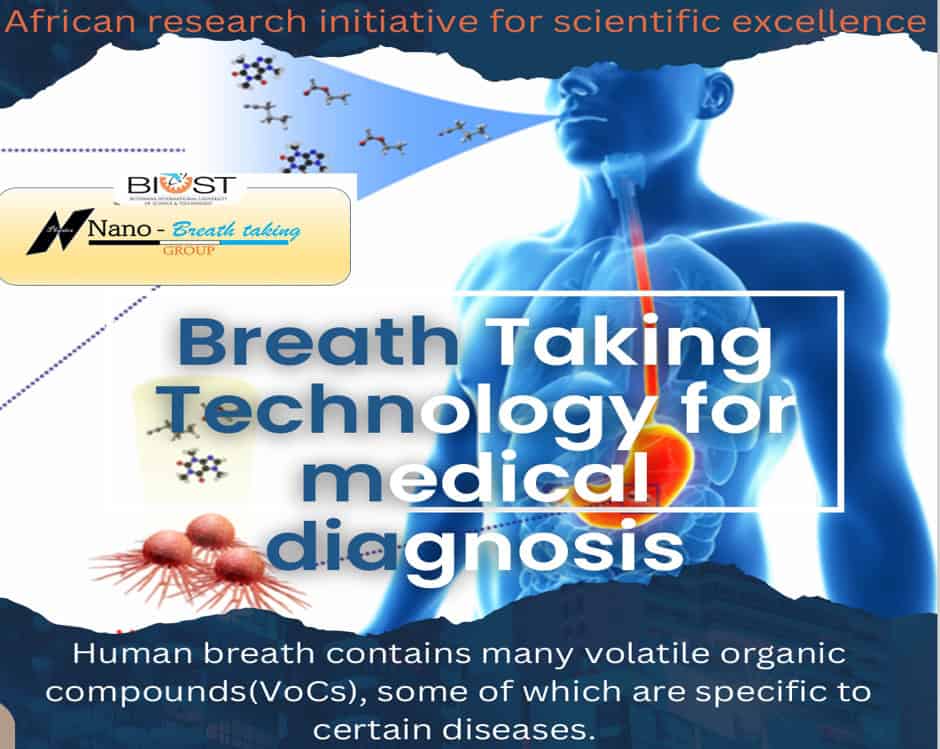
Every breath we exhale carries a complex chemical narrative written in thousands of volatile organic compounds (VOCs). These tiny molecules, produced by human metabolic processes and invading pathogens, hold immense diagnostic potential. Yet, translating this molecular cloud into a definitive medical diagnosis has long faced an analytical bottleneck. Now, an international team of physicists from Botswana and South Africa has harnessed machine learning to decode these complex signatures, offering a rapid, non-invasive pathway to detect tuberculosis (TB) directly from human breath.

Breaking the analytical bottleneck

Traditional gas chromatography-mass spectrometry (GC-MS) excels at separating complex molecular mixtures based on volatility and mass-to-charge ratios. However, a single breath sample generates thousands of overlapping spectral peaks. Manually sifting through this dense landscape is a painstaking, time-consuming process.

To find a faster, more systematic approach to molecule identification, researchers in the Nano –Breath taking group led by George Chimowa from Botswana International University of Science and Technology (BIUST) collected breath samples from three distinct cohorts: patients with active TB, individuals with multidrug-resistant TB (MDR-TB), and healthy control volunteers.

Standard analytical pipelines often rely on aggressive data pre-processing to smooth and simplify the GC-MS spectra. However, this filtering risks erasing subtle, low-concentration molecular features that might hold critical diagnostic clues. Bypassing this limitation, the BIUST group fed a high-dimensional dataset of 1867 spectral features (from 87 breath samples) directly into four competing supervised machine-learning algorithms: decision trees, random forest, k-nearest neighbours, and support vector machines (SVM). The researchers published their findings in Discover Artificial Intelligence.

Geometric optimization avoids the pitfalls of high-dimensional data

The team found that the linear SVM classifier led the algorithmic comparison, distinguishing among the three patient cohorts with 93% accuracy.

This performance stems from how the algorithm handles high-dimensional data spaces. While distance metric models often suffer from overfitting errors, where experimental noise is misidentified as a meaningful diagnostic signal, SVM relies on geometric boundary optimization to separate classes.

Much like clearing a wide highway down the centre of two opposing crowds, it identifies a hyperplane that maximizes the margin between groups. Instead of tracking every individual in the crowd, the algorithm relies solely on a sparse subset of border points known as support vectors. By focusing strictly on these boundary “guards” and ignoring the background movement, this approach completely isolates the classifier from the noise inherent to the surrounding high-dimensional feature space.

The Nano – Breath taking research group

Beyond raw classification accuracy, the model yielded a crucial insight for future clinical applications. It pinpointed a specific window within the gas chromatogram, a retention time between 10 and 30 min, where the most diagnostic, high-variance VOCs elute. This 20-min window corresponds to medium- and large-molecule VOCs, including specific chemical biomarkers associated with TB, such as tridecane, decane and O-cymene.

By demonstrating that these vital diagnostic features are concentrated within this single slice of data, the physicists have shown that future diagnostic hardware can be specialized, eliminating the need to analyse the entire spectrum. Narrowing the focus to this specific elution window can drastically shrink data-processing times and maximize instrument throughput in clinical settings.

AI and the future of medical diagnostics

TB remains one of the world’s deadliest infectious diseases. Traditional diagnostics rely heavily on slow sputum cultures and backlogged laboratory queues, delaying critical treatment. A rapid, non-invasive breath test powered by an optimized physical classifier offers an ideal alternative for resource-limited settings where laboratory infrastructure may be scarce.

While the researchers emphasize that larger validation trials are required, the work signals a profound shift in medical diagnostics. It mirrors advanced data-modelling techniques used in engineering, such as those predicting structural degradation in self-healing aerospace composites.

By fusing analytical physics with artificial intelligence, this research points to a future where immediate, automated bedside disease detection could be rapid, accessible and driven entirely by the mathematical profiling of a patient’s breath.

The post AI sniffs out tuberculosis in breath’s chemical signature appeared first on Physics World.

Decades of Financial Hardship Linked to Faster Brain Aging

28 July 2026 at 20:13
Long-term financial stress accelerates age-related cognitive decline. Image credit: Thomas Breher.

A large British study spanning more than 70 years has found that people who experience chronic money struggles over their working lives show measurable declines in memory and processing speed by their 50s, along with signs of accelerated brain shrinkage decades later.

The post Decades of Financial Hardship Linked to Faster Brain Aging appeared first on Sci.News: Breaking Science News.

5,000-Year-Old Blue Pigment Reveals Evidence of Ancient Egyptian Nanotechnology—Now It’s Finding New Life in Biomedical Imaging

28 July 2026 at 14:05

Thousands of years ago, a striking blue pigment began appearing in the art that adorned the walls of ancient Egyptian tombs, and eventually on the crown of the famous bust of Nefertiti, wife of the 18th dynasty pharaoh Akhenaten and half-sister to one of Ancient Egypt’s most famous kings: Tutankhamun.

However, the ancient artists who first used this remarkable pigment, known today as “Egyptian blue,” had likely never guessed that thousands of years into the future, this unique substance would have applications in modern biomedical research.

That is precisely what one team of researchers discovered several years ago, in a study that revealed how this striking pigment is more than just a modern medical marvel with origins in the ancient world—it also provides evidence of ancient nanotechnology in early Egypt.

The Enigma of Egyptian Blue

“Egyptian blue” is the common term for a pigment first developed in ancient Egypt around 2500 B.C., made from calcium copper silicate. Originally, it was created to provide an artificial alternative to a more costly form of blue pigment from the era, which was produced using lapis lazuli.

However, ancient Egyptian scientists discovered that by heating limestone, sand, and copper, they could produce a far less expensive form of blue pigment, and soon its use spread throughout the ancient Mediterranean world, making its way into the craftsmanship in parts of the ancient world that ranged from Mesopotamia to Greece and Rome.

An Ancient Technology Finds Modern Biomedical Applications

Although Egyptian blue’s obvious practical uses in art were derived from its unique and stunning appearance, time would eventually reveal that it had other uses. Specifically, in a 2020 study published in Nature Communications, a team of researchers reported on their discovery that Egyptian blue in its powdered form can be separated into nanoscale sheets roughly 100,000 times thinner than a human hair.

This is significant because these tiny particles of the substance exhibit significant fluorescence under near-infrared light, which can be used by researchers to track them within biological samples.

Chemist Sebastian Kruss of Georg-August University Göttingen, the lead author of the 2020 study, remarked at the time that he was certain such capabilities “will be of growing interest for material scientists as well as biomedical research” in the years ahead.

Ancient Nanotech’s Survival Through the Centuries

One reason the pigment is so useful is also the likely reason behind its discovery, and that is Egyptian blue’s durability. For many millennia, samples of this unique material have managed to survive, and the material’s nanoscale form remains stable even over such long periods.

In the past, earlier studies had demonstrated that the material fluoresces in near-infrared wavelengths. Additionally, it was known to scientists that the pigment could be broken down into flakes after being stirred in hot water for periods of several days.

Building on this knowledge, the research detailed in the 2020 paper sought to go even further by examining whether those particles could function as fluorescent markers in living systems.

Near-Infrared Applications

One thing that scientists find useful about near-infrared imaging is that it provides an effective way to examine biological material by leveraging wavelengths that fall just beyond the ranges of the visible spectrum.

Although some molecules can already be used as fluorescent markers, Egyptian blue nanoparticles generate significantly brighter signals than several common alternatives. Additionally, unlike other fluorescent compounds, the pigment can resist photobleaching, which is important because this allows its glow to persist even during prolonged observation.

A pair of experiments was used by the team to demonstrate the material’s potential. The first involved using Egyptian blue particles injected within a fruit fly embryo, which were tracked as it developed. In another, the particles were added to plant leaves, allowing comparisons with the performance of a conventional near-infrared imaging molecule.

In this experiment, the team found that the Egyptian blue produced a bright signal that remained visible even against the leaves’ natural fluorescence—the comparison molecule, by contrast, was heavily obscured.

According to Kruss, the tiny Egyptian Blue particles prove to be “very useful glowing labels in biomedical research,” calling the pigment a “very powerful fluorophore.”

An Ancient Discovery Breaking New Ground in the 21st Century

According to Kruss and his colleagues, such particles could eventually help scientists observe processes including embryonic development and cell division, while potentially supporting applications such as image-guided surgery and the labeling of cancerous tissue.

Altogether, this enigmatic form of ancient nanotechnology is still playing a role in helping develop the cutting-edge biomedical technologies of tomorrow, even more than 5,000 years after its initial discovery.

Kruss and his team’s original paper from 2020, “Exfoliated near infrared fluorescent silicate nanosheets for (bio)photonics,” was published in Nature.

Micah Hanks is the Editor-in-Chief and Co-Founder of The Debrief. A longtime reporter on science, defense, and technology with a focus on space and astronomy, he can be reached at micah@thedebrief.org. Follow him on X @MicahHanks, and at micahhanks.com.

❌