Breathing clean air depends on filters that do more than trap particles—they must hold them. In many conventional systems, captured dust can loosen under airflow and mechanical disturbances, which lowers filtration efficiency, shortens service life, and forces more frequent replacement. The bottleneck is not capture alone, but durable retention of what the filter catches.
A research team led by Professor Sanghyuk Wooh and Professor Chae Bin Kim has introduced a dynamic imine bond adhesive (DIBA) designed to keep airborne particles embedded. The concept is to marry solid-like stability with liquid-like adhesion, so the filter surface can “refresh” itself while working.
The coating is built by crosslinking polydimethylsiloxane (PDMS) via dynamic Schiff base chemistry. This chemistry enables bond exchange at the interface, allowing adhesive sites to reorganize over time rather than degrade into inert residue. The result is a coating that is both mechanically robust and chemically active.
When sprayed onto commercially available filter media, the DIBA layer behaves like an internal reservoir of stickiness. As particles are collected, they are drawn into the adhesive film rather than remaining only on the exterior fibers. Capillary-driven wetting then forms adhesive bridges around individual particulates, increasing the real contact area that governs holding strength.
Performance tests combined chemical, mechanical, and interfacial characterization—rheology, FTIR, atomic force microscopy, and microscopy—with filtration trials. The coating boosted particle adhesion dramatically, approaching a nearly seventy-fold improvement compared with typical behavior. Importantly, the adhesive renewal process helps counteract the gradual loss of attachment that plagues standard filters.
Filtration efficiency improved by roughly 10–30% across multiple commercial materials, without raising pressure drop. The upgrade is significant in practical terms: one reported shift is from MERV 6 toward MERV 11, indicating better capture at the same airflow penalty.
The coated filters also sustained operation under high-speed airflow (up to 20 m/s) and delayed pore clogging. By maintaining effective particulate capture for longer intervals, the DIBA approach extended filter lifespan by nearly a factor of two relative to conventional designs.
Because DIBA is applied through simple spray-coating, it is compatible with existing manufacturing and retrofit workflows. The researchers highlight applications ranging from HVAC and air purifiers to cleanrooms, industrial dust collectors, automotive cabin filters, and personal protective equipment.
More broadly, the work suggests a platform for next-generation filtration where energy use and replacement schedules improve simultaneously. The dynamic adhesive strategy could be adapted to other separations, including water purification and environmental remediation, wherever particles need to be captured and kept immobilized.
Subject of Research: Not applicable Article Title: A Super-Adhesive Air Filter With Capillarity-Mediated Spontaneous Particle Absorption via Dynamic Bond Exchange News Publication Date: 22-Apr-2026 Web References: https://doi.org/10.1002/adma.202600006 References: DOI: 10.1002/adma.202600006 Image Credits: Professor Sanghyuk Wooh from Chung-Ang University, Republic of Korea and Professor Chae Bin Kim from Pusan National University, Republic of Korea
Daniel Blumstein, a professor of ecology and evolutionary biology at U.C.L.A., faced a funding issue amid federal cuts to scientific research. To raise money for its marmot research, his team started “OnlyMarms,” a free, G-rated account of cute videos that collects money through tips.
For over 20 years, Live Science has been committed to bringing you the latest breakthroughs and incredible discoveries with clarity, authority and good humor (when appropriate, of course). In that time, we've evolved through a modernized website design, a transition to more deeply reported stories, and the addition of engaging videos produced by a dedicated team.
Over the years, we have relied on advertising to support our team of journalists. However, the fast-changing economic landscape has pushed us to continue evolving so we can deliver quality science journalism. That is why I am proud to say we have launched Live Science Pro,a new space on Live Science that allows you to directly support our award-winning team of science journalists so we can continue writing best-in-class stories.
Right now, the world needs credible, rigorous science more than ever. Our mission is to responsibly communicate that science with the highest degree of accuracy, informing the scientific community and sparking the fascination of those who can't wait to learn about our world and the universe beyond. By joining Live Science Pro, your subscription supports this goal and allows us to produce high-quality journalism that is written and fact-checked by our experienced writers and editors, without ever seeing an advertisement on our articles. This means you get all the science, and none of the distractions.
While you can still read the latest science news for free, written to the same high standards as our Pro content, as a part of your paid membership, a Live Science Pro subscription gives you access to our Science Spotlight features, which take an in-depth look at the paradigm shifts and breakthroughs that will transform science in the coming years. Your subscription puts must-reads at your fingertips, including our insightful analyses, which give you crucial context for the biggest science headlines; and interviews and exclusive book excerpts, which provide a more personal look at the people driving progress. You also get access to our opinion pieces, which reveal how experts are thinking about the biggest issues in their fields.
Plus, you'll receive our exclusive, members-only weekly newsletter, which provides a curated look at the stories our writers and editors are most excited about and their take on what matters most in their areas of expertise.
To mark the launch of Live Science Pro, we're offering an introductory price of $3 for the first three months, or for an even better value, you can sign up for an annual subscription for just $30 for the first year. You can find more details on how to subscribe here: livescience.com/subscription
Right now, there are more voices and options than ever. We know you demand credibility and accuracy from your science reporting, and we thank you, again, for placing your trust in ours.
In a few short years, artificial intelligence (AI) has transformed how we interact with computers and threatens to upend wide swathes of the job market. But large language models (LLMs) still struggle with the messy realities of the physical world. Researchers are betting that a new type of AI, called "world models," could fix that.
At a fundamental level, world models do exactly what the name suggests: They build a mathematical model of the world that can then be used to make predictions about how it will change in response to certain actions or changing conditions. The "world" in this context doesn't necessarily mean the entire physical reality. Instead, it refers to the environment the model operates within, which could be anything from a warehouse to a video game.
Exactly what counts as a world model and how best to build such a model remain topics of considerable debate among AI researchers. But world models would represent a significant advance over LLMs, which, despite their impressive capabilities, simply predict the most likely next word in a sequence.
The hope is that by developing a richer understanding of complex environments, world models could allow AI to finally break out of the chat interface, with potentially game-changing applications in areas like robotics, autonomous driving and scientific discovery.
"The idea has strong connections with the intuitive models in our human minds," saidYunzhu Li, an assistant professor of computer science at Columbia University. "We can imagine how the environment is going to change, how an object is going to move when you apply a specific action. And we basically want to also build this kind of model for any robots or any virtual agent so they can imagine the effects of their actions."
Building world models in your mind
While world models are the latest buzzword in Silicon Valley, the concept has deep roots. It first came to prominence in the 1950s, Manling Li, an assistant professor of computer science at Northwestern University, told Live Science. It arose when cognitive scientists attempted to describe the mental models people used to simulate their environments in their heads.
The concept is also deeply connected to, and often inspired by, control theory, Manling Li said. This is a branch of applied mathematics used to create models of physical systems so they can be predictably controlled. It powers everything from thermostats to aircraft autopilot systems.
However, the term "world models" today refers primarily to neural networks that learn models of their environment by training on data. The modern incarnation of the idea can be traced toa 2018 study titled "World Models," by scientist David Ha and deep learning pioneer Jürgen Schmidhuber. Early models from Google, likePlaNet andDreamer, were among the first to solve tasks by first making predictions about the outcome of different actions.
While the idea behind a world model is fairly intuitive, a more precise definition is any system capable of "action-conditioned future prediction," Yunzhu Li said. This essentially means the model can predict how a particular action will change the state of the world around it.
Making those predictions, Manling Li said, consists of two key tasks: state estimation and state transition. State estimation refers to the ability to perceive the current state of the environment and encode it into a format that the model can compute, while state transition means the ability to predict how a particular action will cause the environment to evolve.
The data that powers new realities
Deep-learning-based world models learn to do both tasks by training on vast quantities of data. But exactly what kind of data and how that data should be encoded and processed are design choices, with different groups taking a variety of approaches, Yunzhu Li said.
World models are trained primarily on video data, although they can also be trained on 3D data captured by light detection and ranging (lidar) or other depth sensors, audio data and even text that explains the relationships between elements in the environment. Crucially, Yunzhu Li said, this has to be paired with action data — things like robot joint angles, movement readings from an inertial sensor, or event text labels describing what action was taken.
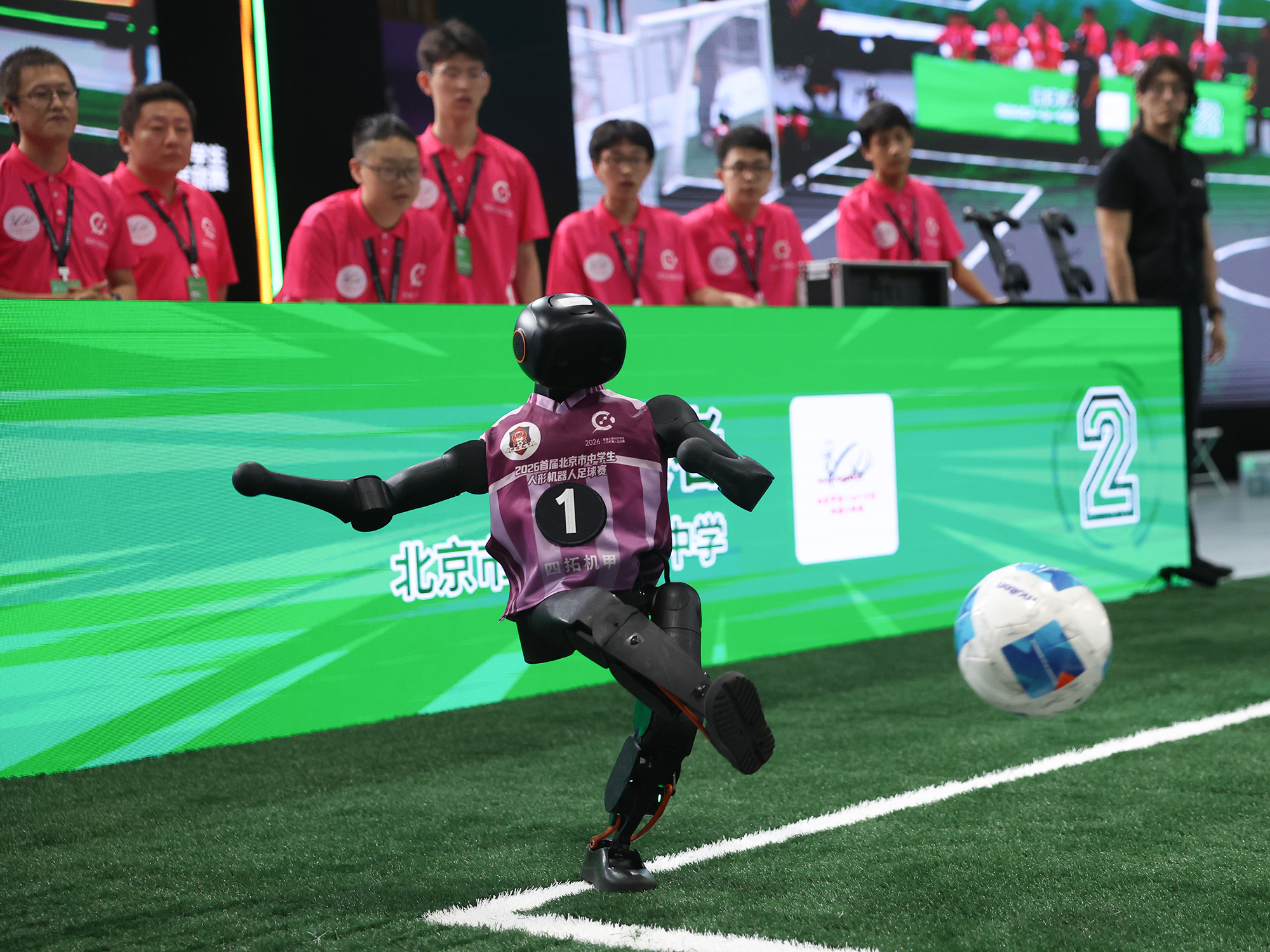
Robots, including humanoids, will be increasingly reliant on strong world models in order to interact with the physical realm. (Image credit: China News Service via Getty Images)
Typically, this data is arranged into sequences of state-action pairs — essentially, recordings of what the world looked like and what action was applied at each step. The AI then uses this data to learn a statistical model of what impacts different actions have on its environment, which can be used to make predictions.
This data can be processed in different ways, Yunzhu Li said. One of the most popular approaches is to operate directly on raw pixel data, which represents the state of the world as a series of images and predicts how actions will change them. Another is to use the data to learn 3D geometric representations of the world that more explicitly encode spatial and physical relationships among objects in a scene.
The power of math-based abstractions
More recently, however, there's been growing interest in approaches that operate on a more abstract level. When a neural network learns from image data, it creates high-dimensional numerical representations of the real-world elements that make up the visual scene — known as embeddings — that exist in a mathematical space known as the model's "latent space."
In a pixel-based model, these abstract representations are reconstructed into pixels to make predictions about what will happen next. But it's also possible to do those simulations within the latent space by directly predicting the embedding of the environment's next state. This approach has been popularized by computer scientist Yann LeCun, Meta's former AI head and one of the "godfathers of deep learning," with hisJoint-Embedding Predictive Architecture. He hasraised more than $1 billion for a startup called AMI Labs, which plans to use the approach to build world models.
The key advantage of the approach is its efficiency, Yunzhu Li said. Pixel-based approaches have to reconstruct the entire image every time they make a prediction, even if only a small portion of the frame changes.
"As humans, when we're imagining the evolutions of the environment, we don't have to imagine the exact value of every pixel," he said. "That is why it makes a lot of sense to think about predicting over the latent space. It is easier to make sure you are only learning things that are task relevant and ignoring the things that are irrelevant to the task."
Yann LeCun, the executive chairman of AMI Labs, has raised more than $1 billion to build world models. (Image credit: Bloomberg via Getty Images)
The flip side, however, is that it's much easier to understand what your model is doing if its predictions are in a visual format rather than abstract representations, Yunzhu Li added. "You have a better ability to debug your system by having something more explicit that is easily human interpretable," he said.
But questions about how best to represent data in a world model are secondary to the bigger issue of where to get that data in the first place, Manling Li said. LLM makers could simply scrape all the text from the internet for the initial foundational models, but high-quality, action-labeled video often has to be painstakingly curated. What's more, that data can be very sparse, she added, because only a small number of pixels in an image may change in response to an action.
"If I have a video camera recording what I am doing currently, it's generally just some very minor movement of my hand; the entire environment is not really changing," Manling Li said.
This is leading to considerable debate about the best architectures for world models. Almost every LLM today is based on the transformer architecture, which excels at rapidly ingesting huge amounts of data. But these models are tuned to dense language data where every word carries some meaning, and they are less suitable for sparse video data, Manling Li said. As a result, people are experimenting with a wide variety of model architectures and the field has yet to converge on a tried-and-true recipe.
The evolution of world models
One area of considerable controversy is whether video generation models, like OpenAI's Sora, count as world models. OpenAI representatives previously claimed it'sa "world simulator" and suggested this type of model could be a promising path toward "general purpose simulators of the physical world." However, Yunzhu Li said that because these models are trained on raw video data without any action labels, they cannot be considered true world models.
"It is only conditioned on some initial language prompt and then predicts the entire video," he said. "So it cannot predict the counterfactual futures — for example, what would have happened if you applied a different action?"
But there are also questions around whether the current approach to world modeling can truly achieve its goals. The vast majority of world models today are trained on big chunks of prepared data. In contrast, humans and animals build their mental models of the world through interaction with their environment, which provides continuous feedback that lets them refine their understanding.
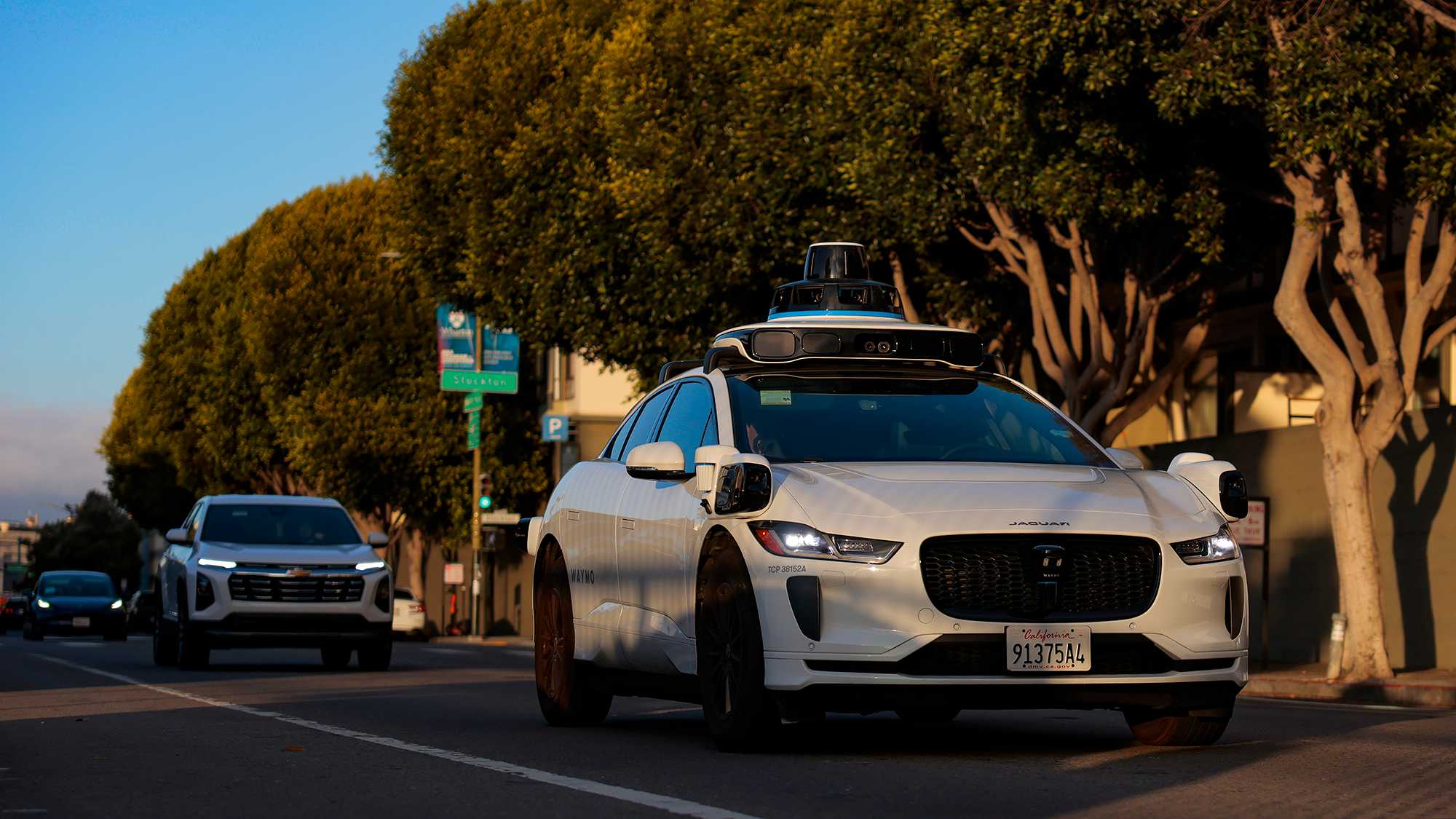
Driverless cars are one kind of AI-powered device that stand to gain from more sophisticated world models. (Image credit: Heather Diehl via Getty Images)
"In order to learn the most effective word models, it's highly likely we will also need the world model to make interactions with the environment and learn from those online interactions," Yunzhu Li said. That remains a stretch goal, however, as current neural network technology is incapable of this kind of continual learning. In addition, allowing a half-finished model to interact with the real world raises significant safety concerns, Yunzhu Li added.
Even a more modest world model could prove invaluable for a host of applications, though. Some of the most obvious include helping robots and autonomous vehicles navigate and plan how to complete tasks. But they could also act as a general-purpose simulator for a variety of applications, depending on the data they are trained on, Manling Li said. Such simulators could include more advanced physics engines for video games, digital twins of patients that could guide medical treatment, or even new ways to model physical phenomena like the climate.
Crucially, there is likely to be a broad diversity of world models. That's because the action data crucial to building a world model is fundamentally connected to a particular physical embodiment, such as a robotic arm, a human or a drone. In the short term, at least, this means world models will be adapted for specific applications, Yunzhu Li said, though many in the field have more ambitious long-term plans.
"People are working very hard and hope that with enough compute, with enough data, and with good enough algorithms, we will have this one unified world model that works across the board for many different applications," he said.

 Login