
❌

Normal view

From galaxies to groceries: how Sarah Bridle made the switch from cosmology to food

20 July 2026 at 11:00

What happens when a cosmologist points their tools at the dinner plate instead of the night sky? One person who has done just that is Sarah Bridle, who studied natural sciences at the University of Cambridge in the UK and then stayed on to do a PhD in cosmology, graduating in 2000. Having spent two decades mapping dark matter and building large collaborations around open data, Bridle is now chair in food, climate and society at the University of York, applying that same quantitative, physics based mindset to food.

Food manufacturing is a huge sector: in the UK, it employs 400,000 people and contributes £28bn to the economy. Physics underpins much in the field – everything from productivity, food safety and food security to health and nutrition, waste reduction and environmental impact. Bridle talks to Gleb Yakubov, a food physicist at the University of Leeds, about what inspired their switch from cosmology to food physics and tips for those looking to follow suit. Yakubov is a committee member of the food physics group of the Institute of Physics (IOP), which bridges industry and academia, raises the profile of physics in food, and represents the community to policymakers.

What attracted you to food physics?

It began when I heard that the late David MacKay, who was working at the University of Cambridge, was ill. He worked on error-correction codes, education and artificial intelligence, before pivoting to sustainability and became chief scientific adviser to the UK energy department. I started thinking hard about why we do what we do, and what would happen without him doing the fantastic work he led on energy and climate.

I began watching his talks and learning about climate change – something I hadn’t really engaged with while immersed in astrophysics. In one of his penultimate presentations, he highlighted food as having huge potential to influence climate change through diets and how we produce food. From that moment on I wanted to understand this area – it was compelling, timely and I got obsessed.

You’ve called land use the “dark matter” of climate solutions – what do you mean by this?

Most people aren’t aware that food is responsible for up to a third of global greenhouse gas emissions and, in the UK, about 70% of land is used for agriculture. Many climate solutions involve land – forests for sequestration, biofuels, solar – and people often say “we can’t spare land, we need it for food”. But the way we use land for food can be extremely inefficient, which blocks those climate solutions. That’s a huge, underappreciated lever. 

When you started working in food, what surprised you most?

As a data geek, I expected it to be all about technical solutions but what surprised me was how dominant social and cultural factors are too. You see versions of the so-called “Jevons paradox”: introduce an efficient technology and people just use more of it, cancelling the gains. Unless, that is, you pair it with social and cultural change. Food systems aren’t just complicated; they’re a complex mix of people, incentives, norms and feedback loops.

How did you shift that approach, given that people don’t always behave rationally?

I don’t think people are random; they just use different decision criteria than many models assume. For example, if you raise the price of meat to reduce consumption, some people may see it as more of a luxury and desire it more. You can get perverse responses unless you understand the social context. On top of that, my recent work looks at the potential for civil unrest and even societal collapse – uncertainties we wouldn’t have anticipated five years ago. It pushes us to combine quantitative modelling with deeper social insight.

Can you share an example where astrophysics tools didn’t work in a food context?

Early on I tried to repurpose multispectral satellite-imaging techniques to detect blackgrass in UK wheat fields. Blackgrass is a serious weed that hits yields and this felt like a neat transfer – I’d been analysing astronomical imaging, so why not fields? But it turned out to be too difficult with satellite data alone. Variables like soil moisture, rockiness and other field conditions confounded the signals. That experience nudged me away from a pure imaging approach toward broader system modelling – and, later, back to data with more contextual integration.

Tell us about your “future food calculator”?

About five years ago we started building a quantitative model of the food system to compare interventions on a common footing: on-farm practices such as fertiliser, irrigation, crop management; consumer dietary shifts; and land-use choices. We turned it into a web-based dashboard inspired by MacKay’s energy calculator. Users can move sliders, explore UK production and consumption, greenhouse gas emissions, self-sufficiency and land use, and ask, “Do these choices get us to net zero, and with what trade-offs?”

How do you handle the “people” side – demographics and messaging – in such models and outreach?

You have to meet people where they are. Older generations, on average, are more focused on health than climate. Children and younger people tend to feel invincible about health but are very concerned about climate. If you’re trying to encourage dietary change, those differences matter for messaging and for assumptions in models.

What have you learned about information versus behaviour change?

From obesity research we know that giving people information often doesn’t change behaviour. But it does increase receptiveness to policy. You couldn’t have a sugary drinks tax without enough people accepting that sugary drinks contribute to type 2 diabetes and put pressure on the National Health Service.

I think the same is true for climate and food: we need systemic changes that make sustainable choices easy by default, and public understanding helps make those changes legitimate. Reformulation and choice architecture are good examples – you can reduce beef content in a lasagne by adding pulses, or put low-impact options first in canteens. Many people won’t even notice, but outcomes improve.

While space has an intrinsic “wow” factor, how do you create that for the food industry?

For many people there’s a complete disconnect between food and how it’s produced. Experience helps more than pictures so community garden projects, for example, let people see how hard it is to grow food and how weather drives yields. That fosters respect for food, reduces waste, increases interest in the natural world and builds practical resilience.
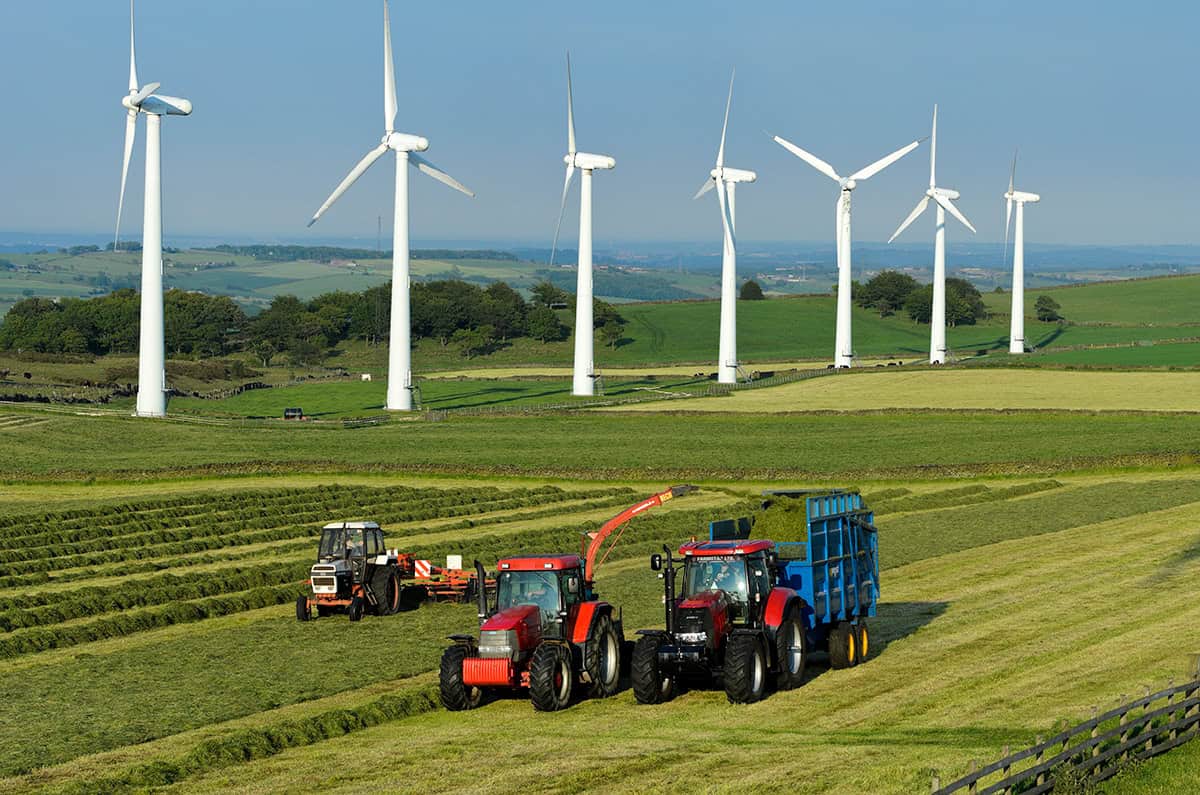
Agriculture and wind farms in close proximity
Balancing act Food production is responsible for up to a third of global greenhouse gas emissions. (Courtesy: iStock/Stephen Meese)

You’ve also advised on environmental labelling – what should a good label do?

People already face a lot of labels, and shopping may not be when they’re most receptive. Studies show labels don’t shift individual purchasing as much as you might expect. But labels do change production. In pilot programmes, adding climate labels led operators to change what they offered once they saw the differences. In Canada, when authorities announced a tighter threshold for “red” sugar labels, manufacturers reformulated to avoid red. So the big impact is upstream – on what gets produced.

What’s inside the “digital twin” of UK food you’re building and what can it tell policymakers?

We take UK production and consumption, feed use and losses, and then we test interventions and see how they affect greenhouse-gas emissions and self-sufficiency. An example is soil carbon management practices such as how to reduce tillage – the mechanical manipulation of soil to prepare seedbeds – manage crop residues and control weeds. Another is dietary and consumer preference shifts, such as reducing red meat consumption. The twin helps interrogate trade-offs and unintended consequences, and assess whether a bundle of changes can hit net-zero targets while maintaining resilience.

Herbicides like glyphosate illustrate those trade-offs. How do you manage that complexity?

Exactly. No-till – an agricultural technique that plants crops without disturbing the soil through traditional ploughing or tilling – can reduce emissions but may increase reliance on herbicides if weed pressure rises. The point is to quantify those interactions at the system level and compare pathways transparently, rather than assuming any single intervention is universally better in isolation.

How do the field’s data practices compare with astrophysics – and what would you change tomorrow?

Food physics feels like astrophysics did 20–30 years ago. In astrophysics today everybody codes, collaborations are large and data and code are open. When we released Python code on GitHub for food-system models and invited contributions, basically no-one engaged because the skills weren’t there. Many models live in Excel rather than in transparent, version-controlled code.

We need standards, shared datasets, open code and co-ordinated efforts

Sarah Bridle

Even at the policy interface there are gaps: you might get a major report with spreadsheets but not the underlying code or assumptions, which we then have to reverse-engineer. With a problem as urgent as climate change, that level of opacity isn’t defensible. We need standards, shared datasets, open code and co-ordinated efforts.

What advice do you have for physicists or mathematicians who want to follow in your footsteps?

Quantitative modelling, open-source practices and Python-based tooling are highly sought after right now. Help build transparent models and shared datasets, and join or create collaborative efforts that mirror modern astrophysics consortia. Also, find your people. The best advice I got was to “adopt your own mentors”. I worked with a career coach and asked people for 30-minute calls. Many were lukewarm, but a few were transformative and became long-term collaborators. It was painful but made all the difference.

What is a concrete step someone could take now?

One is to bring open-science habits to food-system work: publish code and assumptions, contribute quantitative skills to cross-disciplinary teams, help build shared datasets and reproducible models, and translate findings into accessible tools – like interactive calculators – for policymakers and the public.

What motivates you now?

My motivation is about doing what I can to help with the crisis we’re walking into. It’s a way to channel worries about the future into practical improvements.

Looking a decade ahead, what would success look like for the UK food system?

Success would mean that UK production and consumption are aligned with net-zero targets and that land is used more efficiently so other climate solutions can scale. Through product reformulation and choice, I hope we can make low-impact diets easy by default. I also hope that self-sufficiency and resilience improve – and that open, quantitative modelling with transparent code and assumptions is embedded in policymaking.

The post From galaxies to groceries: how Sarah Bridle made the switch from cosmology to food appeared first on Physics World.
From ideas to industry: a theoretical physicist’s journey into Silicon Valley

1 July 2026 at 11:00

When Ryan Hamerly was a 15-year-old at Boulder High School in Colorado, he spent his summer building a Tesla coil after seeing a classroom demonstration. “I thought that was really, really cool,” he recalls. “I wanted to make one myself, and as a result I ended up studying the theory of electricity and magnetism over one summer.”

In hindsight, Hamerly realizes he didn’t use much theory to construct the coil, which became part of a school physics project. “Most of the design was based on things I had read on the Internet,” he explains, “but I did try to teach myself electricity and magnetism – and it did work in the end.”

In 2006 Hamerly’s interest in physics took him to the California Institute of Technology (Caltech) for his undergraduate studies. Keen to do graduate research, Hamerly was most fascinated by fundamental theoretical problems in quantum field theory, such as dark matter and quantum gravity. But as he started toying between different options, he had a chance encounter with Hideo Mabuchi, an applied physicist at Stanford University.

“One thing that Hideo told me that I thought was particularly fascinating,” says Hamerly, “is that quantum field theory is just a generic tool that applies in many other fields.” He therefore ended up doing a PhD in optical and quantum computing under Mabuchi’s supervision, which he completed in 2016.

Hamerly then moved to Japan, where he studied at the National Institute of Informatics in Tokyo – a time he characterizes as “sort of a postdoc, but more an excuse to travel for a year”. He did, though, get a paper out of it “so it wasn’t wasted”. In Tokyo, Hamerly worked with Mabuchi’s longtime friend Yoshihisa Yamamoto – a quantum optics researcher who had previously led a group at Japanese telecoms giant NTT for over two decades.

Step into industry

When Hamerly returned to the US in 2017, he did a formal postdoc under quantum photonics engineer Dirk Englund at the Massachusetts Institute of Technology (MIT). And in a fortuitous turn of events, Yamamoto also came to the US to establish the Silicon Valley start-up NTT Research, with the intention of forming collaborations with US universities.

“[Yamamoto] just called me up and said they had a position at NTT to work in optical computing,” he says. “At the time it made most sense to stay at MIT working as a collaborator [rather than relocate to the NTT campus] because that was where a lot of our experiments were being done.”

Today, Hamerly is a senior research scientist at NTT Research’s Physics and Informatics (PHI) Lab in Sunnyvale, California. He divides his time between MIT – where his collaboration with Englund continues – and the PHI laboratory, about 15 km from Stanford. He works at the intersection of optics, deep learning and quantum computation. For example, one of Hamerly’s projects looks into ways to reduce the energy consumption of AI data centres using optical interconnects in place of electronic ones.

Researchers hope it might one day be possible to design processors that perform calculations using optical logic that are either impossible, or at least energetically unfeasible, using electronic logic. To this end, in January 2026 Hamerly co-founded Opticore – a company producing photonic integrated circuits for energy-efficient, high-speed AI – with UC Berkeley professors Mengjie Yu and Zaijun Chen, who was previously a postdoc in Englund’s MIT group.

Different setting, same science

Hamerly does not view his place at NTT Research as purely an industry position. “The mission at NTT Research is about generating ideas that will ultimately have some use in industry,” he explains, “but the fundamental focus is on those ideas and on the research.”

The mission at NTT Research is about generating ideas that will ultimately have some use in industry

His experience at NTT Research has shown him that an industrial lab can be smaller and more focused than one at a university – but that can be a double-edged sword. “[At a university] it’s nice to be able to go into seminar rooms and see a talk from a travelling world expert in a different field,” he says, “but on the other hand, the average person [at NTT] tends to be a lot more experienced and productive than say a graduate student in academia who is still learning.”

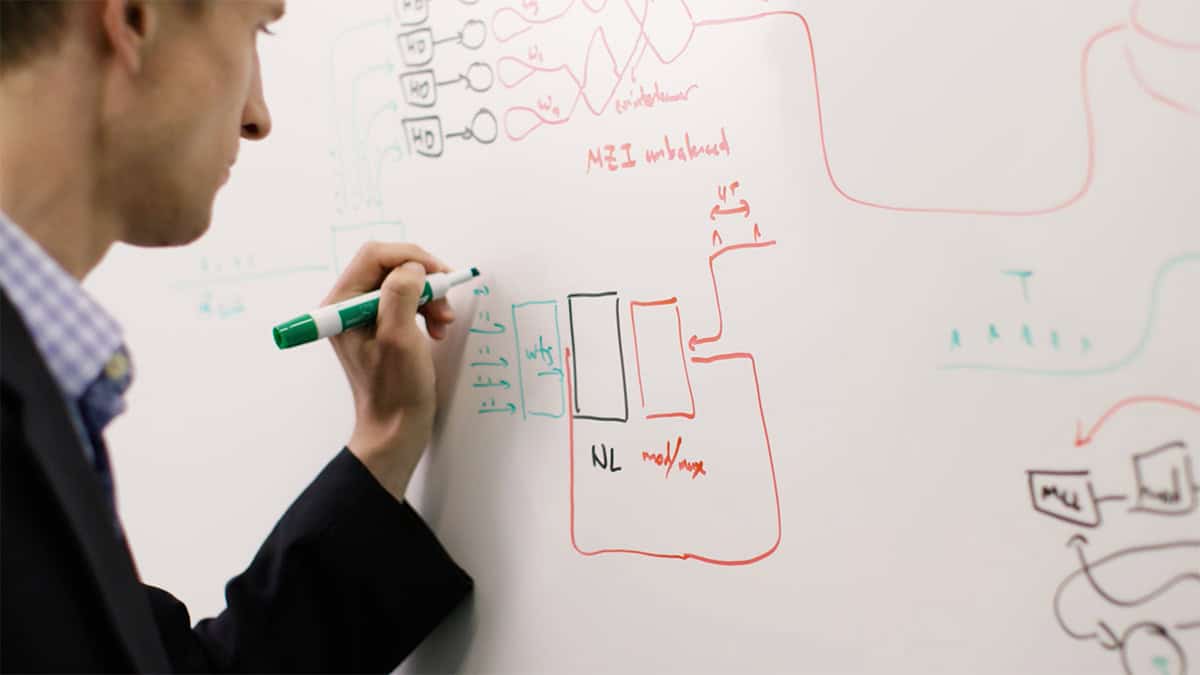
Ryan Hamerly writing on a whiteboard
Starting out Ryan Hamerly recently helped launch photonic processor start-up Opticore alongside his academic collaborators. (Courtesy: NTT Research, Inc)

However, the chance to meet and interact with scientists from different areas is still the same. “Science is science, regardless of what institution you’re affiliated with,” he says. “We’re still doing the same things: we do research in a lab, we write up the results, submit them and publish them in journals, and we go to conferences and present our work.”

Hamerly still sees himself as principally a theorist. He spends much of his time writing computer code – occasionally for models that run on a supercomputer but usually for models that can run on his laptop. The rest of his time is focused on writing papers, travelling to present work, responding to reviews or in meetings.

Looking to the future, Hamerly believes that technology will impact research, but that the core elements of a researcher’s role are likely to remain similar for the foreseeable future. “The job of a researcher before the Internet, for example, is not too different from a post-Internet researcher,” he says, pointing to how you still have to communicate research via papers and conferences, and understand the field by reading others’ publications.

“There will definitely be changes in the way you do every one of these things in the next 10 years, especially with AI, but I don’t see any of them becoming optional.”

For young researchers entering the field, Hamerly advises keeping your options open. He did not envisage himself leaving full-time academia and work in an industrial lab, but switched because it offered a better opportunity to pursue the research he wanted to do. “They are both good routes to do research,” he concludes, “but you might find – based on which offers you get – that one is better than another.”

The post From ideas to industry: a theoretical physicist’s journey into Silicon Valley appeared first on Physics World.

Ask me anything: Mary Bishai – ‘For a self-professed nerd like me, doing big science is heaven’

15 June 2026 at 11:00

Born and raised in Egypt, Mary Bishai studied physics at the University of Colorado, Boulder, US, before doing a master’s and PhD, also in physics, at Purdue University. After a postdoc at Fermilab, she joined Brookhaven National Laboratory in 2004, where she is now a distinguished scientist. Bishai served as co-spokesperson for the Deep Underground Neutrino Experiment (DUNE) from 2023 to 2025 and, over the years, has collaborated on many other leading particle-physics projects, including MicroBooNE, the Daya Bay neutrino experiment, the Main Injector Neutrino Oscillation Search, the CDF experiment at Fermilab, and the CLEO experiment at Cornell University. In 2026 she was elected fellow of the American Association for the Advancement of Science.

What skills do you use every day in your job?

I enjoy brainstorming. If I am having a mental block or get stuck in a technical or personal interaction issue, I walk down the hall to chat with a colleague about their work – even if it isn’t related to my own problem. This serves two purposes. First, it helps ameliorate the feelings of loneliness and frustration to discuss your challenges with others. Second, a surefire cure for any mental block is to divert your attention to a different topic. Another essential skill is to try to play devil’s advocate with myself and colleagues. My team finds this infuriating sometimes, but it’s vital – you need to be your toughest critic.

What do you like best and least about your job?

For a self-professed nerd like me, doing big science is heaven. I get to geek out on a broad set of technical and scientific challenges and work with lots of really cool experts from a variety of disciplines. Recently, for example, as part of DUNE, I’ve been looking at designs for the infrastructure that houses the Long Baseline Neutrino Facility. Located at Fermilab near Chicago, it will send the world’s most powerful beam of neutrinos to a detector in an underground lab 1300 km away in South Dakota.

In any given week, I might find myself discussing the mechanical engineering of detectors or learning about the civil engineering required for large-scale facilities. I might be discovering fascinating details about the hydrogeology of the Fermilab site, exploring the design of focusing magnets, or studying the results of simulations of high-energy particle interactions in materials.

I could also find myself in a meeting of the artificial intelligence (AI) expert team, learning new AI approaches, such as improving the search for neutrinos from supernovae using our detectors. Wandering the hallways, I might bump into a colleague from Brookhaven’s chemistry division and get chatting about new detector materials. I also work with theorists on new ideas for physics at DUNE.

I’m happiest trying to connect the dots between physics goals and technical and engineering disciplines, coming up with multidisciplinary design solutions to realize these massive science projects

I trained as an experimental particle physicist, but I’m happiest trying to connect the dots between physics goals and technical and engineering disciplines, coming up with multidisciplinary design solutions to realize these massive science projects. Best of all is when I ask a question in an area I’m not an expert in – say civil engineering – and someone replies: “Hmm, we hadn’t thought about that.”

My least favourite part of the job is that it can be very challenging to deal with large international collaborations of scientists and engineers over the very long time scales of large-scale projects. You need a lot of emotional resilience, stamina and patience to keep going for the decades it takes to get these large-scale projects to fruition. Burn out and despondency are downsides; keeping yourself and your team going is very difficult.  

What do you know today that you wish you knew when you were starting out in your career?

Always be honest to the science. If it looks like something you put a lot of effort into is a dead end, drop it; don’t wait until someone tells you to stop. There will be a lot of dead ends before you find the right direction. When an approach fails, it means you have a new intellectual challenge – and that’s the fun part. Don’t be afraid to challenge established dogma and groupthink, even if it means difficult discussions with your colleagues no matter how senior. And most importantly, don’t keep pushing when you are burning out. It’s okay to step back and slow down for a while.

The post Ask me anything: Mary Bishai – ‘For a self-professed nerd like me, doing big science is heaven’ appeared first on Physics World.

From equations to nuclear medicine: Keamogetswe Ramonaheng on building medical physics in Africa

1 June 2026 at 11:00

For Keamogetswe Ramonaheng, physics was never just about equations – it was about clarity. “From a young age, I was attracted to mathematics and science as a way of understanding complex phenomena through a structured approach,” she says. “Physics was the area that spoke to me the most because it is the foundation for the fundamental principles that govern the natural world.”

Ramonaheng is head of medical physics and radiobiology at the Nuclear Medicine Research Infrastructure (NuMeRI) in Pretoria, South Africa, where she applies the principles of radiation science to treat cancer. NuMeRI, which opened in 2024, is the first research facility in Africa dedicated to nuclear medicine. It’s a joint venture between the Steve Biko Academic Hospital, the University of Pretoria, iThemba Laboratories for Accelerator-Based Sciences and the Nuclear Energy Corporation of South Africa.

Ramonaheng’s academic journey began at the University of the Free State (UFS), where she completed her undergraduate and honours studies before starting an internship at Universitas Academic Hospital in Bloemfontein. There she saw how a rigorous physics training can lead to tangible, clinical benefits. “The ability to comprehend and harness the interaction between radiation and matter in the human body demonstrated the power and relevance of scientific inquiry,” she recalls.

In many ways, nuclear medicine found me

Keamogetswe Ramonaheng

Thanks to a fellowship from the International Atomic Energy Agency (IAEA), Ramonaheng completed a clinical placement at Royal North Shore Hospital in Sydney, Australia. She later continued her postgraduate studies at UFS, becoming the first Black South African woman to earn a PhD in medical physics for nuclear medicine. “In many ways, nuclear medicine found me,” says Ramonaheng, who is grateful to the encouragement of various senior staff members who saw her potential and guided her into the field.

Multifaceted role

Following a spell as an independent medical physicist and manager at Universitas Academic Hospital and lecturer at UFS, Ramonaheng joined NuMeRI in 2024 and the University of Pretoria. Along with the team of scientists she leads, Ramonaheng oversees the safe and effective use of ionizing radiation at NuMeRI used to treat and diagnose disease in a safe and effective manner.

It’s a varied role, which stretches from providing patient-focused clinical services to carrying out applied research. “We integrate research with operations,” says Ramonaheng. “That requires careful planning and rigorous quality assurance, ensuring that innovation does not compromise safety.”

Among her duties, Ramonaheng carries out dosimetry calculations for innovative radiopharmaceuticals, works on new forms of quantitative imaging, and helps to develop novel radionuclide therapies, including using alpha particles to treat cancer. She also uses gamma-ray cameras equipped with highly sensitive cadmium-zinc-telluride detectors, which allow radiopharmaceuticals to be quantified and imaged more precisely.

Ramonaheng is particularly interested in “theranostics” – a form of “precision medicine” that combines therapy with diagnostics. It involves giving a patient a tumour-targeting molecule labelled with a radionuclide. This allows the tumour to be visualized using techniques such as positron emission tomography (PET) or single-photon emission computerized tomography (SPECT). The same molecule – or one similar to it – is then used to deliver a therapeutic radionuclide directly to the tumour.

Daily challenges

For Ramonaheng, a typical day is fast-paced. Mornings often begin with her overseeing radiation-safety protocols and ensuring that radiation imaging and counting equipment are working as well as possible, such that they meet quality assurance standards. Through the day, Ramonaheng also oversees all operational medical-physics activities and carries out her duties as chair of NuMeRI’s radiation protection committee.

As the day progresses, she might find herself reviewing clinical theranostics dosimetry workflows to carrying out patient-specific dose calculations or evaluating quantitative imaging metrics from SPECT/CT and PET/CT systems. Other tasks include reviewing research protocols for cancer theranostics, mentoring postgraduate students at the University of Pretoria, and examining clinical trials.

Innovation accelerates when silos are dismantled

Keamogetswe Ramonaheng

Ramonaheng works in a highly interdisciplinary environment, collaborating with radiographers, nurses, radiochemists, radiopharmacists, medical physicists and clinicians to address live issues in real time. “Innovation accelerates when silos are dismantled,” she says.

The work is not without its challenges. Funding for postgraduate training is a persistent concern. Clinical physics is also a highly specialized field, which means it can be hard to recruit people with the right skills, who might be drawn to better-paid industry jobs. In addition, NuMeRI is an operationally complex mix of advanced imaging systems, radiopharmaceuticals and clinical regulations, which requires good project-management and planning skills.

But Ramonaheng, who recently won two awards at the 8th Theranostics World Congress in Cape Town, feels the benefits outweigh the challenges. “It is very fulfilling to see the translation of research into clinical application,” she says. Just as gratifying, she adds, is watching her students move from their studies to publications and clinical applications. “You see the entire process of scientific advancement.”

A more promising future

Looking ahead, Ramonaheng envisages a growing use of artificial intelligence (AI) in her work. She also collaborates with national and international partners to automate workflows and enhance efficiency, precision and patient-centred care. Another ambition for Ramonaheng is to further strengthen NuMeRI as an Africa-wide hub for research, clinical service and training – a vision reinforced by the IAEA recently naming NuMeRI as one of 18 global “anchor centres” for its work in radiotherapy and medical imaging.

Ramonaheng believes medical physics will grow rapidly in Africa over the next 10 years, fuelled by an expansion of theranostics and precision medicine. Her hope is to guide this growth through mentorship and leadership, ensuring that Africa develops its own talent pool of medical physicists who can address the continent’s unique healthcare needs.

Africa suffers, for example, from limited access to advanced imaging and targeted therapies. Ramonaheng’s aim is to optimize personalized and precision medicine for cancer patients, ultimately improving treatment outcomes and quality of life. Eventually, she hopes, medical physics will be recognized as a profession across the continent. “We are building not only research outputs but human capital.”

Leadership is not only about the creation of paths, but the creation of paths where there were no paths previously

Keamogetswe Ramonaheng

Being a pioneer in the field has required resilience on her part. “Competence must be coupled with confidence,” says Ramonaheng, who has had to learn the unwritten rules of a world dominated by men. As a mentor, her guiding principle is the African concept of motho ke motho ka batho babang – a person is a person only through others. “Leadership is not only about the creation of paths,” she says, “but the creation of paths where there were no paths previously.”

Her message to young physicists – particularly women and those from other underrepresented groups – is clear. “Medical physics is a dynamic and impactful field at the intersection of physics, medicine and technology,” she says. “ It allows you to see the direct translation of science to patients.” Medical physics requires resilience, curiosity and commitment, but for Ramonaheng its beauty is that equations don’t stay on paper – they become a tool for healing.

The post From equations to nuclear medicine: Keamogetswe Ramonaheng on building medical physics in Africa appeared first on Physics World.

The AI jobs apocalypse probably isn’t coming anytime soon

25 July 2026 at 14:00

Artificial intelligence may not deliver on its promise of vast economic opportunity at a price that humanity is willing to pay

In March, Anthropic, the cutting-edge artificial intelligence business that gave us the chatbot Claude, published an analysis on the impact of AI on employment, to help us assess the claim that intelligent robots were about to redefine human existence, ending demand for human labor.

Last year in May, Anthropic’s co-founder, Dario Amodei, claimed AI could wipe out half of all entry-level jobs in one to five years. Last January, he told us AI would probably become a “general labor substitute for humans”. In June he said we risk “a world where the economic trade-off dial is stuck on the hypergrowth, hyper-inequality setting”.

Continue reading...

© Photograph: DragonImages/Getty Images

© Photograph: DragonImages/Getty Images

© Photograph: DragonImages/Getty Images

Tech layoffs: A 2026 timeline

23 July 2026 at 09:02

Among a range of factors leading to a wave of tech sector layoffs in 2026 is the rapid rise of artificial intelligence and automation. Companies are reconfiguring their workforces to leverage AI for increased efficiency and reduced operating costs. This realignment and reduction is implemented even by companies reporting strong financial performance.

But it’s not just AI leading to workforce cuts. Complementing this technological shift are ongoing economic uncertainty, inflation, and higher interest rates, compounded by a chip shortage and rising energy costs. This mix is driving companies to cut costs and streamline operations for increased efficiency.

According to data compiled by Layoffs.fyi, an online tracker that keep tabs on job losses in the technology sector, 123,941 tech employees were laid off at 269 companies in 2025. The site also reports that 71,981 government employees were laid off by DOGE alone, with 182,528 total federal workers laid off.

Here is a list — to be updated regularly — of some of the most prominent technology layoffs the industry has experienced recently.

Notable tech layoffs in 2026

  • Monday.com
  • Microsoft
  • Meta
  • Cisco
  • Cloudflare
  • Oracle
  • Atlassian
  • Salesforce
  • Amazon
  • Ericsson

July 22, 2026: Monday.com cuts 20% of its workforce to restructure for the AI era

The company says the decision to cut 620 jobs isn’t about margins, but about creating a flatter organization built around AI agents, autonomous teams, and deeper customer engagement.

July 6, 2026: Microsoft cuts 4,800 jobs, primarily in sales and Xbox teams

As the company trims thousands of jobs, it’s also investing in embedded engineering teams and AI infrastructure. The layoffs come several weeks after the company offered 8,750 US employees voluntary retirement buyouts.

June 5, 2026: Tech industry cut 38,242 jobs in May, worst since 2024

AI was blamed for 40% of the job cuts in May, up from 7% in January, according to research by employment placement company Challenger, Gray & Christmas.

May 20, 2026: Meta cuts 8,000 jobs, around 10% of workforce

The cuts are expected to expected to hit Meta’s engineering and product teams the hardest, arriving as Meta pivots toward AI to boost efficiency across its organization, according to Yahoo Tech.

May 13, 2026: Cisco to cut nearly 4,000 jobs despite strong growth in AI, enterprise networking

Despite reporting positive financial news — including record third-quarter revenue of $15.8 billion, a 12% year-over-year increase — Cisco said it will eliminate almost 4,000 jobs.

May 7, 2026: Cloudflare to cut 1,100 jobs in AI-focused restructuring

About 20% of Cloudflare’s global workforce will be culled as the company pivots for the agentic AI era, Reuters reported.

April 1, 2026: Oracle to cut up to 30,000 jobs globally, putting enterprise support and roadmaps at risk

Oracle began laying off employees on March 31 in what could be the largest workforce reduction in the company’s history. Employees received termination emails at 6 a.m. local time with immediate system lockouts and no prior warning. (Note: in June, CNBC put the final layoff tally at 21,000.)

March 12, 2026: Atlassian cuts 1,600 jobs to fund AI and enterprise expansion

Atlassian will reduce its global workforce by approximately 10%, eliminating around 1,600 roles, as the collaboration software maker redirects capital toward artificial intelligence development and enterprise sales.

March 11, 2026: Tech layoffs surpass 45,000 in early 2026

A recent analysis by RationalFX found 45,363 job cuts globally so far this year—with roughly 68% or more than 30,000 occurring in the U.S. — highlighting ongoing workforce cuts even as many tech companies report strong revenue growth.

February 10, 2026: Salesforce lays off staffers as executive leadership churn continues

Salesforce has reduced close to 1,000 roles earlier this month across teams, including marketing, product management, data analytics, and its Agentforce AI unit, Business Insider reported, quoting employees familiar with the matter.

January 23, 2026: Amazon layoffs expected to disproportionately hit AWS and tech talent

As the market slows down, AWS and other Amazon units are preparing for another round of layoffs, which is expected to overwhelmingly impact tech talent. An email from HR leader Beth Galetti on Jan. 28 confirmed 16,000 job cuts.

January 15, 2026: Ericsson plans to shed 1,600 jobs in Sweden

 Ericsson lans to cut some 1,600 jobs in Sweden, the telecommunications equipment maker said doubling down on recent cost-saving measures that have helped it weather a prolonged downturn in telecoms spending, Reuters reports.

January 13, 2026: Meta plans to cut around 10% of employees in Reality Labs business

Meta plans to cut around 10% of the employees in its Reality Labs division who work on products including the metaverse, according to three people with knowledge of the discussions, according to The New York Times.

Layoffs in 2025

  • Cisco
  • Oracle
  • Windsurf
  • Intel
  • Microsoft
  • Crowdstrike
  • HPE
  • Autodesk
  • HPE
  • CISA
  • Workday
  • Salesforce
  • Meta

Global tech-sector layoffs surpass 244,000 in 2025

Economic uncertainty, elevated interest rates, and AI adoption have driven workforce reductions across tech companies worldwide, according to a RationalFX report.

October 28, 2025: Amazon to cut 14,000 jobs across company

Amazon will reduce its overall workforce by 14,000, cutting layers of management across the company and hiring in some areas to support its “biggest bets”.

August 18, 2025: Cisco and Oracle to cut hundreds of Bay Area jobs

Tech companies Cisco and Oracle are cutting hundreds of jobs across the Bay Area. Cisco will eliminate 221 positions at its Milpitas and San Francisco offices, effective Oct. 13. Oracle is reducing 101 positions in Santa Clara on the same date 

August 5, 2025: 3 weeks after acquiring Windsurf, Cognition offers staff the exit door

Cognition, the AI coding startup that acquired rival company Windsurf three weeks ago, laid off 30 employees last week and is offering buyouts to the roughly 200 remaining employees on the team, reports The Information.

July 25, 2025, Intel to lay off 22% of workforce, CEO Tan signals ‘no more blank checks’

Intel will reduce its workforce to 75,000 employees by the end of 2025 as new CEO Lip-Bu Tan implements sweeping changes designed to transform the struggling chipmaker

July 8, 2025, Intel layoffs begin: Chipmaker is cutting many thousands of jobs

Intel has begun laying off employees across the company. CEO Lip-Bu Tan told workers back in April to expect major layoffs at Intel in the coming months as the chipmaker slashes costs and overhauls its organization after years of technical setbacks and falling sales.

July 2, 2025: Microsoft will cut 9,000 workers

Microsoft will lay off about 9,000 employees, a source familiar with the workforce cut told CNBC.  The cuts will reportedly affect less than 4% of Microsoft’s global workforce and will impact different teams, geographies and levels of experience. This is the latest in a string of cuts the tech giant has made this year.

June 17, 2025: Intel looks to factory layoffs to return to profitability

Intel will lay off up to 20% of its manufacturing sector employees starting in July, according to media reports, as the company looks for options as it seeks a return to profitability. The cuts reportedly will be made around the world, but some of the layoffs will be closer to home, according to a report in The Oregonian citing an internal company memo from Intel manufacturing Vice President Naga Chandrasekaran.

May 7, 2025: CrowdStrike to lay off 5% of staff

CrowdStrike announced a plan to cut about 500 roles, roughly 5% of its workforce, to streamline operations and reduce costs. The cybersecurity company will incur about $36 million to $53 million in charges related to the layoffs

March 6, 2025: HPE cuts 2,500 jobs, remains committed to Juniper buy

CEO Antonio Neri told Wall Street analysts that HPE would begin implementing a cost-cutting program involving layoffs of about 2,500 employees over the next 18 months. HPE employs about 61,000 people worldwide.

Feb. 27, 2025: Autodesk to lay off 9% of workforce

Software maker Autodesk is laying off 1,350 staff. With the rise of subscription and multi-year contracts billed annually, and self-service enablement, it finds it needs fewer sales staff, CEO Andrew Anagnost said in a message to employees. And with its cloud, platform, and AI products proving most profitable, it’s concentrating its staff and investments there.

Feb. 27, 2025: HP to lay off 2,000 more

As part of an ongoing restructuring, HP plans to lay off up to another 2,000 workers. In recent weeks, the company has tried — unsuccessfully — to do away with telephone support staff by forcing callers to wait for at least 15 minutes if they refuse to use self-service support resources online. The company swiftly backtracked, but wider job cuts are still on.

Feb. 21, 2025: CISA lays off 130

Government employees get laid off too: In this case, 130 workers at the US Cybersecurity and Infrastructure Security Agency are being shown the door as a result of a DOGE decision. Cybersecurity experts are concerned that the cuts will harm the international collaborations that CISA has fostered, quite apart from their concerns about the security of the DOGE layoff process itself.

Feb. 5, 2025: Workday lays off 1,750

As it moves to invest more in AI and international growth, Workday is laying off 8.5% of its workforce and disposing of unused office space. Some analysts fear the cutbacks will affect the company’s customer service — unless AI can pick up the slack.

Feb. 4, 2025: Salesforce lays off over 1,000

At the same time as it’s hiring sales staff for its new artificial intelligence products, Salesforce is laying off over 1,000 workers across the company, according to Bloomberg. As of June, 2024, the company had over 72,000 employees, according to its website. Salesforce did not comment on the report. In 2024 the company reportedly laid off around 1,000 staff too, in two waves: January and July.

Jan. 14, 2025: Meta will lay off 5% of workforce

Mark Zuckerberg told Meta employees he intended to “move out the low performers faster” in an internal memo reported by Bloomberg. The memo announced that the company will lay off 5% of its staff, or around 3,600 staff, beginning Feb. 10. The company had already reduced its headcount by 5% in 2024 through natural attrition, the memo said. Among those leaving the company will be staff previously responsible for fact checking of posts on its social media platforms in the US, as the company begins relying on its users to police content.

Tech layoffs in 2024

  • Equinix
  • AMD
  • Freshworks
  • Cisco
  • General Motors
  • Intel
  • OpenText
  • Microsoft
  • AWS
  • Dell

Nov. 26, 2024: Equinix to cut 3% of staff

Despite intense demand for its data center capacity, Equinix is planning to lay off 3% of its workforce, or around 400 employees. The announcement followed the appointment of Adaire Fox-Martin to replace Charles Meyers as CEO and the departures of two other senior executives, CIO Milind Wagle and CISO Michael Montoya.

Nov. 13, 2024: AMD to cut 4% of workforce

AMD will lay off around 1,000 employees as it pivots towards developing AI-focused chips, it said. The move came as a surprise to staff, as the company also reported strong quarterly earnings.

Nov. 7, 2024: Freshworks lays off 660

Enterprise software vendor Freshworks laid off around 660 staff, or around 13% of its headcount, despite reporting increased revenue and profits in its fourth fiscal quarter. The company described the layoffs as a realignment of its global workforce.

Sept. 17, 2024: Cisco lays off 6,000

After laying off around 4,200 staff in February, Cisco is at it again, laying off another 6,000 or around 7% of its workforce. Among the divisions affected were its threat intelligence unit, Talos Security.

Aug. 20, 2024: General Motors lays off 1,000 software staff

More than 1,000 software and services staff are on the way out at General Motors, signalling that it could be rethinking its digital transformation strategy. In an internal memo, the company said that it was moving resources to its highest-priority work and flattening hierarchies.

August 1, 2024: Intel removes 15,000 roles

Intel plans to cut its workforce by around 15% to reduce costs after a disastrous second quarter. Revenue for the three months to June 29 stagnated at around $12.8 billion, but net income fell 85% to $83 million, prompting CEO Pat Gelsinger to bring forward a company-wide meeting in order to announce that 15,000 staff would lose their jobs. “This is an incredibly hard day for Intel as we are making some of the most consequential changes in our company’s history,” Gelsinger wrote in an email to staff, continuing: “Our revenues have not grown as expected — and we’ve yet to fully benefit from powerful trends, like AI. Our costs are too high, our margins are too low. We need bolder actions to address both — particularly given our financial results and outlook for the second half of 2024, which is tougher than previously expected.”

July 4, 2024: OpenText to lay off 1,200

OpenText said it will lay off 1,200 staff, or about 1.7% of its workforce, in a bid to save around $100 million annually. It plans to hire new sales and engineering staff in other areas in 2025, it said.

June 4, 2024: Microsoft lays off staff in Azure division

Microsoft laid off staff in several teams supporting its cloud services, including Azure for Operations and Mission Engineering. The company didn’t say exactly how many staff were leaving.

April 4, 2024: Amazon downsizes AWS in a fresh cost-cutting round

Amazon announced hundreds of layoffs in the sales and marketing teams of its AWS cloud services division — and also in the technology development teams for its physical retail stores, as it stepped back from efforts to generalize the “Just Walk Out” technology built for its Amazon Fresh grocery stores.

April 1, 2024: Dell acknowledges 13,000 job cuts

Dell Technologies’ latest 10K filing with the US Securities and Exchange Commission disclosed that the company had laid off 13,000 employees over the course of the 2023 fiscal year; it characterized the layoffs and other reorganizational moves as cost-cutting measures. “These actions resulted in a reduction in our overall headcount,” the company said. A comparison to the previous year’s 10K filing, performed by The Register, found that Dell employed 133,000 people at that point, compared to 120,000 as of February 2024. Dell announced layoffs of 6,650 staffers on Feb. 6, but it is unclear whether those cuts were reflected in the numbers from this year’s 10K statement.

See news of earlier layoffs.

OECD: Physical labor isn’t immune from AI disruptions

21 July 2026 at 12:00

Jobs involving physical labor are at high risk of disruption from automation, with new technologies such as AI robots becoming more prevalent, according to a recent study by the Organization for Economic Co-operation and Development (OECD). That means workers in construction and extraction, farming, fishing, forestry, production and material transportation could be affected by fast-moving technology changes.

“Routine and low-skilled jobs are at higher risk,” the Paris-based public policy group said, adding that “overall, jobs requiring non-routine cognitive, social and creative skills are less susceptible to automation.”

The kinds of creative and cognitive jobs still thought to be less exposed to automation include social work and community service roles. 

OECD also said management jobs — which often require workers to devise creative answers to solve problems — fall within the creative and cognitive category. “While AI has made some high-skill job requirements more susceptible to automation, many critical skills in these roles remain difficult to automate,” OECD said.

The same still holds true for some physical and manual labor jobs – including cleaners, agricultural workers, food-prep assistants, and laborers — which are less exposed to the affects of AI, OECD said.  

But people who work in programming, translating and interpretation positions could find their work affected by the quick rise of AI tools and services. According to the organization, global AI uptake rose from 7% in 2021 to 20% in 2025.

“In these occupations, GenAI could perform a significant share of tasks at least twice as fast today or in the near future,” OECD said.

The effects of the AI boom are not always uniform across industries or regions. In a separate 2026 Employment Outlook study released by the group, exposure to disruption from generative AI (genAI) ranges from about 16% in some areas to more than 70% elsewhere, depending on industries and occupations. 

Numerous research firms have said in recent years that AI is driving short-term job losses, though tech industry experts and analysts have argued AI will also create new careers and jobs as agentic AI takes over low-skilled work. 

AI technology has become so ubiquitous that it’s been compared to electricity — virtually all companies will need it or at least know how to use it. But it’s adoption has been hindered at times as companies struggle to find ROI from its use, and by regulatory and ethical hurdles.

In the US, AI blamed for June job losses

According to a Challenger, Gray & Christmas study released earlier this month, AI was cited as the top reason for job cuts in June. The outplacement firm said employers cut 45,849 job cuts in June, of which 14,029 were attributed to AI, with the tech industry leading the cuts.

“Tech remains the epicenter of this year’s cuts,” Challenger said. “AI is the dominant force as companies are restructuring around it, automating roles, and reallocating budgets toward new capabilities. The sector is being reshaped in real time.”

Overall, AI has been responsible for 173,568 job cuts since 2021, the company said.

AI is hurting jobs in customer service, internal reporting, telecommunications, and hosting automation, said Victor Janulaitis, a staffing consultant who was formerly CEO at Janco Associates Inc.

“C-level executives continue to be focused on eliminating ‘non-essential’ managers, staff, and services,” he said. “Coders and developers have limited opportunities with legacy applications.”

While jobs in the IT sector overall are declining, current hiring tends to skew in the direction of people with AI skills. A report this month by CompTIA put job listings with AI skills at around 500,000, which is close to double the number in January.

“Employers in other industries are accelerating digital transformation initiatives and moving from AI experimentation to implementation,” said Seth Robinson, CompTIA’s vice president for industry research.

That view dovetails with what ManpowerGroup, the recruitment firm, is seeing; demand for AI-related skills has nearly doubled over the past year, said Ger Doyle, regional president of North America at ManpowerGroup.

That growth extends well beyond traditional technology roles as companies move from experimenting to AI deployments at scale, Doyle said. “We’re seeing it influence hiring across occupations ranging from data science and engineering to project management and operational roles,” he said.

❌