
❌

Normal view

What is Starfall? A look at SpaceX's mysterious new return capsule

23 June 2026 at 22:00

SpaceX just launched a brand-new return capsule that it has been developing in the dark.

That vehicle, called Starfall, lifted off atop a Falcon 9 rocket this morning (June 23), on a test mission designed to show that it can fly in a controlled fashion and survive the fiery trip down through Earth's atmosphere.

The demonstration flight may have caught some space fans by surprise, for SpaceX has revealed little about Starfall to date. And that air of secrecy extended through today's launch; the company cut off its webcast about 10 minutes after liftoff, a practice usually associated with national security missions.

SpaceX provided a very brief overview of Starfall today, saying via X that the new vehicle "will enable affordable, routine access to the microgravity environment for scientific research and in-space manufacturing."

Details about the vehicle are harder to come by — but we have some, thanks to an environmental assessment published by the U.S. Federal Aviation Administration (FAA) last month. That report looked at the potential environmental impact of two Starfall demonstration reentries, one or both of which was set in motion by today's launch. (It's unclear how many Starfall vehicles the Falcon 9 lofted on this initial flight.)

According to the FAA document, Starfall is a disk-shaped spacecraft that stands about 2.5 feet (0.75 meters) tall, with a diameter of 10.2 feet (3.1 m). It weighs roughly 4,600 pounds (2,100 kilograms) and can carry about 2,200 pounds (1,000 kg) of payload. The vehicle can launch on both the workhorse Falcon 9 and Starship, the megarocket SpaceX is developing to help humanity settle the moon and Mars, among other tasks.

Starfall consists of two parts: an aluminum "top plate" that weighs about 3,090 pounds (1,400 kg) and a detachable carbon-fiber heat shield. Cargo rides in the top plate, which features a payload bay 8.2 feet long, 4.9 feet wide and 1.6 feet tall (2.5 by 1.5 by 0.5 m).

For comparison, SpaceX's Dragon capsule, which routinely flies people and cargo to and from the International Space Station, stands about 14.7 feet (4.5 m) tall, with a diameter of 13.0 feet (4.0 m). Dragon can haul about 13,230 pounds (6,000 kg) to low Earth orbit and bring 6,600 pounds (3,000 kg) back down, according to its SpaceX specifications page.

a flat space capsule reenters Earth's atmosphere

Artist's illustration of a SpaceX Starfall capsule reentering Earth's atmosphere. (Image credit: SpaceX)

Starfall is not capable of carrying astronauts. And, in another departure from Dragon, the newly debuted return vehicle does not have a traditional propulsion system.

It has only "an attitude control system which uses compressed inert gas (for example, compressed nitrogen gas) to perform small attitude control maneuvers, such as pointing the capsule's heat shield in the correct direction to safely reenter Earth's atmosphere," the FAA's assessment reads.

"Capsules do not have the ability to de-orbit themselves and can only control their attitude," it adds. "Individual capsules would reenter Earth's atmosphere on a pre-planned trajectory and splash down with the assistance of parachutes."

That splashdown — at least of the first two Starfall vehicles — will take place in the open Pacific Ocean, about 700 nautical miles (1,300 kilometers) off the west coast of the United States. Starfall, and its cargo, will then be collected by recovery boats.

SpaceX has two main goals for Starfall, according to the FAA document. The vehicle will "enable point-to-point delivery of critical cargo through space on rapid timelines" and also "create a self-sustaining commercial in-space manufacturing market by offering access to microgravity and vacuum, loiter on orbit, and safe return from orbit as a service at scale."

two perspectives of a black, hokey-puck-looking shape on a white background.

An illustration of a Starfall vehicle from an Environmental Assessment published by the Federal Aviation Administration. (Image credit: Federal Aviation Administration (FAA).)

SpaceX isn't alone in pursuing these opportunities. For example, the California-based company Varda Space has already launched and landed five of its 650-pound (300 kg) "W-series" spacecraft, which are designed to be both orbital mini-factories and return capsules.

And another California outfit, Outpost Space, is developing a line of "CarryAll" return vehicles that can get very large payloads — those weighing up to 22,000 pounds (10,000 kg) — down from space with pinpoint accuracy, within 80 feet (25 m) of a target anywhere on Earth.

The CarryAll Block 3 will be a "flagship vehicle for in-space manufacturing and warehousing, Earth return, military resilience and humanitarian aid," Outpost's website states.

a red square covers an area of ocean on a map off the California coast.

SpaceX is targeting an area 700 nautical miles (1,300 km) off the United States West Coast for Starfall splashdowns. (Image credit: Federal Aviation Administration (FAA))

So SpaceX is not breaking new ground with Starfall. But the company is poised to play a leading role in the nascent Earth-return field, thanks to its launch dominance and vertical integration.

The Falcon 9 flew a whopping 165 times in 2025, after all, and SpaceX envisions launching Starship thousands of times per year when that massive rocket comes fully online. So it shouldn't be too difficult for SpaceX to send hundreds of Starfall vehicles up and then back down again, delivering space-made pharmaceuticals and other high-value goods to customers around the world.

Rocket Lab launches US Space Force mission with less than 17 hours' notice — a new record

23 June 2026 at 19:00

Rocket Lab has successfully launched the second spacecraft for the U.S. Space Force's Victus Haze Tactically Responsive Space (TacRS) mission, setting a new readiness record in the process.

Only 16 hours and 42 minutes passed between Rocket Lab receiving the Notice To Launch from the Space Force's Space Safari Program Office and liftoff of the company's Electron launch vehicle, beating the previous TacRS record set by Firefly Aerospace on the September 2023 Victus Nox mission by more than 10 hours.

Liftoff occurred on Friday (June 19) at 6:19 a.m. EDT (1019 GMT, 10:19 p.m., local time), from Rocket Lab's Launch Complex-1, in New Zealand, beginning a rapid-response demonstration designed to simulate a real-world orbital threat scenario.

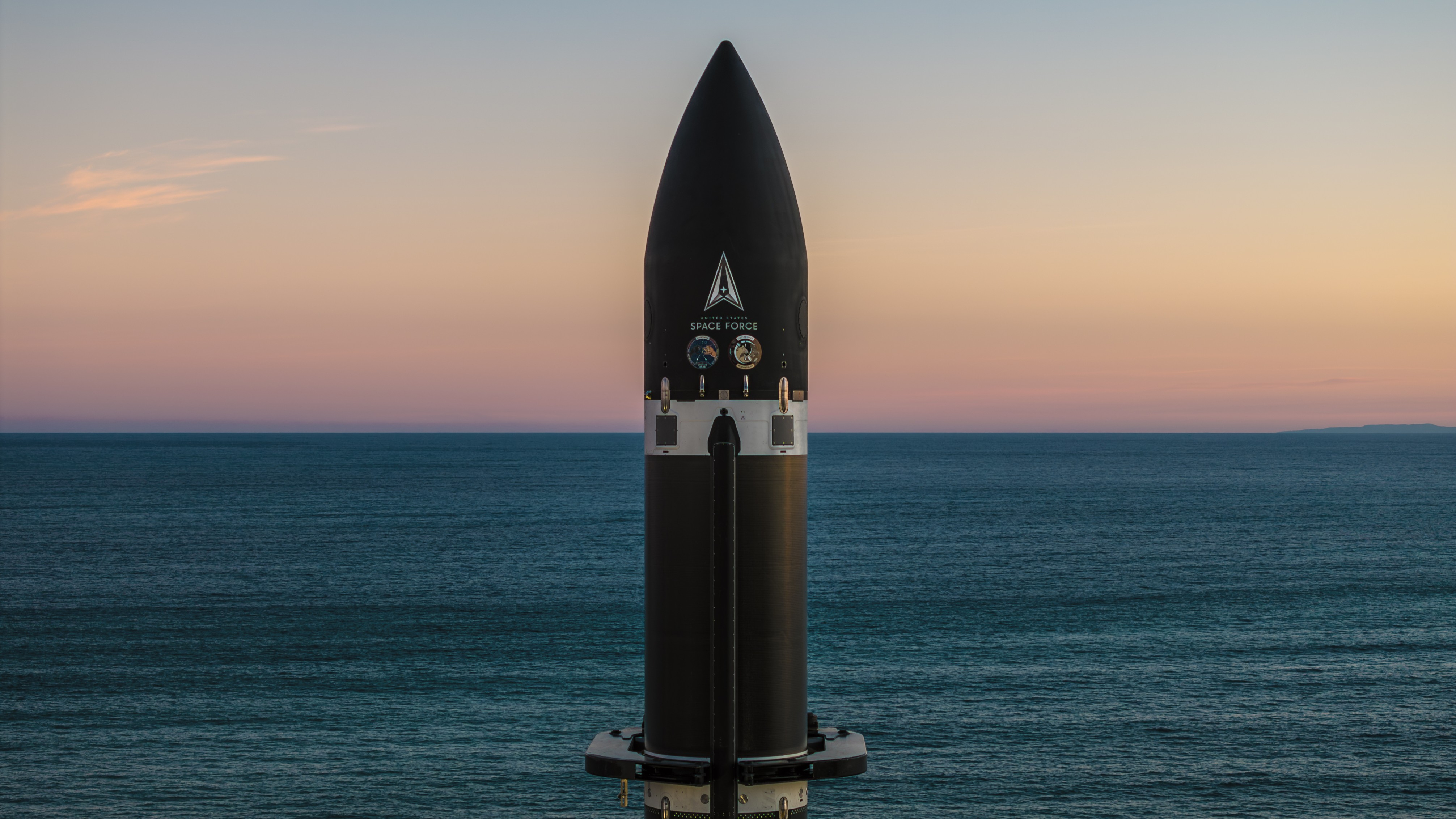
The top of a black rocket stands against a background of rich sea parted in the center by the horizon, and a cool, orange-hued sky.

Rocket Lab's Electron rocket launched on Friday (June 19) at 6:19 a.m. EDT (1019 GMT, 10:19 p.m., local time), from Rocket Lab's Launch Complex-1, in New Zealand. (Image credit: Rocket Lab)

Electron delivered a Rocket Lab-built Pioneer spacecraft to low Earth orbit (LEO), where it has begun pursuit of another Victus Haze spacecraft that was launched by SpaceX in May and serves as the target vehicle for the demonstration — True Anomaly's Jackal satellite. According to a June 22 Rocket Lab statement, "[Pioneer] is now fully commissioned and conducting complex orbital maneuvers to chase down another spacecraft on orbit and conduct Rendezvous and Proximity Operations (RPO)."

Victus Haze is a TacRS mission managed by Space Systems Command's Space Safari Program Office, with the objective of demonstrating the rapid acquisition, launch and operation of spacecraft in response to orbital threats and "non-compliant satellites," the Rocket Lab release said.

"Rendezvous and Proximity Operations on such short timelines are certainly not trivial, especially in a crisis or conflict scenario, but this demonstration of our ability to commission a complex and capable space vehicle within less than 72 hours, and immediately begin an RPO scenario thereafter, shows that we can field capability to deny adversaries first-mover advantage into novel orbits,” said Lt. Col. Lincoln Miller, Space Safari system program manager, in the statement.

Rocket Lab and True Anomaly teams are now managing their respective spacecraft in orbit. They will soon enter the RPO phase of Victus Haze, conducting space domain awareness (SDA) threat-response scenarios and "dynamic engagements with the other," according to a separate statement from the U.S. Space Force (USSF).

The VICTUS HAZE mission explained. Phase 1: Launch on demand 🚀 The @USSpaceForce's @USSF_SSC called, told us to launch, and just 16 hours 42 minutes hours later, Electron successfully left the pad from LC-1.Phase 2: 🛰️ With Pioneer spacecraft checkouts complete 34 hours… pic.twitter.com/lJK226LhzTJune 23, 2026

Space Force officials have increasingly looked to commercial providers to develop new capabilities and technologies to address potential conflicts in space. “Victus Haze is primed to further demonstrate our readiness to lean on our commercial partners to deny, disrupt, and counter any adversarial advantage — no matter where they try to operate in space,” acting Space Force portfolio acquisition executive Col. Bryon McClain said in the USSF statement.

With its Electron rocket and Pioneer spacecraft both vertically integrated into Rocket Lab's manufacturing processes, this Victus Haze launch marks the first TacRS mission to be carried out by a single prime contractor, providing the spacecraft, launch vehicle and on-orbit operations.

"This is what modern space power looks like: the ability to reinforce and reimagine national security space architecture at will," said Rocket Lab CEO Peter Beck. "We’re proud to be providing the nation with those next-generation space capabilities, today.”

China's space plane appears to have released a mystery object in orbit

China's Shenlong space plane appears to have released a mystery object while in orbit, according to a private space surveillance firm.

Shenlong launched on its fourth mission on Feb. 6, 2026 atop a Long March 2F rocket that lifted off from China's Jiuquan Satellite Launch Center in the Gobi Desert. As with previous flights, the objectives of this mission were not disclosed to the public. But according to recent observations by the commercial orbital intelligence company LeoLabs, one part of Shenlong's latest mission appears to involve releasing an unknown object.

"At 02:30 UTC on 22 June 2026, LeoLabs detected an unknown object in the vicinity of the Chinese Shenlong reusable space plane," LeoLabs posted to X. "This object did not correlate to any other object in our catalog. It was first observed by our Tracker radar in New Zealand."

"Following additional observations across our global network and analysis via LeoLabs Delta, we have independently cataloged this object and assessed with high confidence that it was released from the Chinese space plane," the company added in the post. "This activity is consistent with sub-satellite deployments conducted by the space plane in previous missions."

Space tracker Jonathan McDowell noted on X that the object has now been catalogued by the U.S. Space Force.

Shenlong, or "Divine Dragon," is a reusable space plane that launches atop a rocket but lands on a runway like an aircraft. Its overall design is believed to be similar to the United States Space Force's X-37B, or somewhat like NASA's storied space shuttle. Exact specifications are difficult to come by, given how secretive China's space program remains about Shenlong.

Very few images exist of Shenlong, and most of what we have seen of the space plane are telescopic images of the vehicle taken from ground-based telescopes.

black-and-white images of an aircraft-like object rotating in space

Imagery of China's Shenlong space plane caught on camera in 2024 by Felix Schöfbänker in Upper Austria. (Image credit: Felix Schöfbänker )

This isn't the first time that Shenlong has appeared to release objects while in orbit. In June 2024, observers noticed that the space plane may have released a subsatellite or ejected an unnecessary piece of hardware as it approached the end of its mission.

Six months earlier, observers believed the space plane had ejected six objects at once, but those were later determined to be debris left over from launch.

Observers on the ground have also noticed what appear to be solar arrays extending from Shenlong, based on analysis of telescope imagery.

On previous missions, Shenlong has appeared to conduct what are known as rendezvous and proximity operations (RPO), meaning it tested the capability to maneuver close to other objects in space, according to SpaceNews.

White these RPOs can be conducted for peaceful purposes such as repairing or refueling other spacecraft, it might also be the case that space superpowers such as China and Russia are developing these capabilities to potentially tamper with adversary satellites should warfare ever make it to space. In May, two Russian satellites came within 10 feet (3 meters) of one another in orbit, following a pattern of the country testing the capabilities of these so-called "inspector" spacecraft.

There's no reason to believe the United States isn't developing its own RPO capabilities for similar reasons, and the nation has released official artwork suggesting as much.

SpaceX launches its 1st 'Starfall' reentry capsule in early morning Falcon 9 liftoff

22 June 2026 at 23:00

SpaceX's newest spaceflight tech has to launched to the final frontier for the first time.

The company's Starfall capsule took to the skies on its debut mission today (June 23), following SpaceX's application with the U.S. Federal Aviation Administration (FAA) for two reentry vehicle landings. The mission lifted off from Space Launch Complex-40 at Cape Canaveral Space Force Station in Florida at 6:52 a.m. EDT (1052 GMT).

Starfall is a cargo transportation vehicle designed to carry payloads to low Earth orbit (LEO) and beyond, aboard SpaceX's Falcon 9 and Falcon Heavy rockets, and also return materials safely back to Earth. The platform isn't designed to fly human passengers; it's geared toward the support of research or other payloads that require retrieval after a stint in space, such as pharmaceuticals and other products of orbital manufacturing.

a flat space capsule reenters Earth's atmosphere

Render of Starfall capsule reentering Earth's atmosphere. (Image credit: SpaceX)

The concept has already been put into practice by Varda Space, which has landed five of its 3-foot-wide (0.9 meters), roughly 650-pound (300 kilograms) conical "W-series" capsules to date, one of which returned a payload for the U.S. Air Force after more than eight weeks on orbit. Starfall is more than three times as large, measuring 10 feet (3.1 m) across and 2.5 feet (0.75 m) tall. The SpaceX vehicle can carry up to 2,200 pounds (1,000 kg) of payload.

Starfall has two primary sections, which separate after reentry: a top plate for payload storage and attitude control components, and a carbon fiber heat shield that stores compressed gas to power attitude control maneuvers needed for precise reentries and landings, heat shield jettison and parachute deployment, according to SpaceX's FAA filing.

two perspectives of a black, hokey-puck-looking shape on a white background.

(Image credit: Federal Aviation Administration (FAA).)

SpaceX plans to launch Starfall on suborbital missions, in addition to the longer-term stretches it will be able to spend in LEO. The capsule lacks a propulsion system and is incapable of deorbiting itself. The FAA document is unclear about how this will be accomplished, but it's likely that this launch will use Falcon 9's second stage to bring the demo capsule back to Earth.

In the event that Starfall experiences some sort of issue in space or during reentry, SpaceX has designed the spacecraft for safe expendability. "Capsules use nonhazardous inert cold gas (nitrogen) for attitude control and contain no liquid propellants or hazardous substances. All pressurized systems would be vented prior to splashdown, therefore, no propellants would be released into the ocean," the company says in the FAA document.

a red square covers an area of ocean on a map off the California coast.

SpaceX is targeting an area 700 nautical miles (1,300 km) off the United States West Coast for Starfall splashdowns. (Image credit: Federal Aviation Administration (FAA))

SpaceX has not yet specified how long it plans to keep the test Starfall vehicle in orbit on this debut mission, and did not broadcast views of the Falcon 9 second stage after separation from the rocket's booster. When the Starfall payload returns, SpaceX is targeting an area in the Pacific Ocean for splashdown, about 700 nautical miles (1,300 km) off the United States West Coast.

On the opposite side of the U.S., the Falcon 9 rocket that launched the Starfall demo mission headed for a return in the Atlantic Ocean. It was the 29th flight for this particular booster, tail number 1078, whose previous experience includes NASA's Crew-6 launch to the International Space Station, a Space Force mission and 23 Starlink launches, among others. Following stage separation, about 2.5 minutes after liftoff, Booster 1078 fine-tune its trajectory for a landing burn and touchdown on the SpaceX autonomous droneship "A Shortfall of Gravitas" downrange in the Atlantic, touching down about T+9 minutes.

Editor's note: This story was updated at 7:10 a.m. EDT to reflect the successful launch of SpaceX's Falcon 9 rocket and Starfall demonstration mission.

NASA's Roman Space Telescope arrives in Florida ahead of SpaceX Falcon Heavy launch this summer

22 June 2026 at 21:00

The heavy hitters in space telescopes are about to be joined by a new contender.

NASA's Nancy Roman Grace Space Telescope arrived at the Kennedy Space Center (KSC), in Florida, on Sunday (June 21), for final tests ahead of launching later this summer. Roman was shipped to KSC from NASA's Goddard Space Flight Center in Greenbelt, Maryland, riding the agency's Pegasus barge from Baltimore to the Space Coast.

KSC is Roman's final stop before launching to space aboard a SpaceX Falcon Heavy rocket where it will join other flagship observatories like Hubble, Webb, Chandra and Spitzer. NASA is currently targeting an Aug. 30 liftoff — eight weeks ahead of its original schedule. Before that date arrives, Roman will undergo tests inside KSC's Payload Hazardous Servicing Facility (PHSF), where upgrades were recently completed to prepare for the telescope's arrival.

Roman, inside a specialized, environmentally-controlled protective container used to encapsulate the telescope at the start of its journey from Goddard, was transported to the exterior of the PHSF building following its KSC arrival, where teams began a decontamination and cleaning process to ready the container for opening today (June 22) inside the PHSF airlock, followed by the unboxing and transportation of the roughly 18,000-pound (8,200-kilogram) spacecraft to the high bay clean room for prelaunch preparations.

Roman's work platform inside the PHSF, which NASA refers to as "the Pantheon" will allow engineers to perform final checkouts on the spacecraft, including tests of the telescope's six solar panels, insulation, and heat management components. Technicians will also load Roman with about 290 gallons (1,100 liters) of hypergolic hydrazine fuel, which will power the satellite's thrusters for delivery to its final orbit and small positional adjustments during the ten or more years the propellant is expected to last.

Roman is headed to Sun-Earth Lagrange point two (L2), a station-keeping point about 1 million miles (1.6 million kilometers) beyond Earth on the side opposite the sun. Lagrange points are regions of space similar to where the gravitational influence of two or more bodies is equal, allowing spacecraft to be "parked" and remain in place without needing to fire their thrusters and expend fuel. Once it settles in at L2, Roman's mission is set to last for at least five years, with the option for NASA to extend the telescope's use as long as its fuel lasts and instruments perform as needed.

Using its 7.9-foot-wide (2.4 meters) primary mirror, combined with a 300-megapixel camera and coronograph, Roman's primary mission will be hunting down the elusive mysteries of dark energy and the accelerating expansion of the universe through the discovery of "billions of galaxies, hundreds of thousands of new exoplanets, hundreds of blackholes, and … vast volumes of daily data for astronomers to study," according to NASA.

Asteroid Donaldjohanson is Wobbly, Peanut-Shaped Object with Watery Past, Scientists Say

22 June 2026 at 17:26
The asteroid Donaldjohanson is composed of two heavily cratered lobes, connected by a smoother neck, with overall dimensions 8.8 km by 4.4 km by 3.1 km. Image credit: NASA / Goddard / SwRI / Dan Gallagher.

The main-belt asteroid Donaldjohanson, a heavily cratered fragment born from a catastrophic breakup 155 million years ago, appears to wobble through space while preserving clues to the migration of water-rich worlds in the early Solar System, according to a new analysis of images and data from NASA’s Lucy spacecraft.

The post Asteroid Donaldjohanson is Wobbly, Peanut-Shaped Object with Watery Past, Scientists Say appeared first on Sci.News: Breaking Science News.

Launch monster: SpaceX has lofted more satellites than everyone else in history, combined

22 June 2026 at 13:00

SpaceX just notched a remarkable launch-dominance milestone.

Elon Musk's company has now lofted more spacecraft than the rest of humanity combined — and its lead is likely to grow over the coming months and years.

Investor and former space-industry executive Christian Keil highlighted the achievement in a June 12 X post, which noted that SpaceX had launched 15,262 satellites as of that date. The combined total for all other companies and organizations since the dawn of the space age in 1957 was 15,138, according to Keil.

Musk founded SpaceX in 2002. The company was not an instant success; its first three launches, with the homegrown Falcon 1 rocket, were failures. SpaceX finally broke through with a Falcon 1 success in 2008. A fourth straight failure probably would have been the end of the company, Musk has said.

SpaceX soon moved on to the Falcon 9 rocket, which debuted in 2010 and remains the company's workhorse; it flew a whopping 165 times in 2025.

Most of those launches — nearly 75% of them, in fact — were devoted to building out Starlink, the broadband megaconstellation SpaceX has assembled in low Earth orbit (LEO).

Unsurprisingly, the vast majority of objects that SpaceX has launched to date are Starlink satellites. As of June 18, the company has sent 12,318 of the internet spacecraft to LEO, according to astrophysicist and satellite tracker Jonathan McDowell.

That number will continue growing far into the future, as Starlink could someday have 40,000 or more satellites.

And SpaceX is dreaming even bigger than that. Musk recently announced that he wants to operate a million data centers in space, as part of SpaceX's transition from a pure launch concern to a company focused heavily on artificial intelligence.

These spacecraft will be lofted by SpaceX's Starship megarocket, which is still in the test flight phase. Starship is the biggest and most powerful rocket ever built, and it's designed to be fully and rapidly reusable.

SpaceX has teased a future that features thousands of Starship flights every year as the company helps humanity settle the moon and Mars, among other ambitious tasks. So, it's safe to say that SpaceX doesn't plan to relinquish its launch lead anytime soon.

Scientists Release New Images Captured by the Lucy Spacecraft Flyby of Asteroid Donaldjohanson

22 June 2026 at 12:50


Scientists have released a series of previously unseen images of the asteroid Donaldjohanson captured by NASA’s Lucy spacecraft during an April 2025 flyby.

The team behind the photos’ release said the Lucy spacecraft, which was named for the infamous hominin fossil discovered by anthropologist Donald Johanson, captured critical details about the small main-belt asteroid’s surface features and motion that could help clarify the space rock’s origin and evolution.

The data could also inform studies of the Solar System’s formation, including how asteroids move and evolve over extended timescales.

Craters on Asteroid Donaldjohanson Confirm Its Age

According to a statement from team leader Simone Marchi and colleagues, images captured during the deep-space rendezvous revealed that the oddly shaped rock consists of two cratered ‘lobes’ connected by a comparatively smooth central “neck” section. The researchers noted that Donaldjohanson measured over 8.8 kilometers by 4.4 km by 3.1 km.

An analysis of the surface features helped the team pinpoint the asteroid’s likeliest age to a set of asteroids belonging to the Erigone family, a group that broke apart a larger “parent” body into smaller fragments. The team notes that this ancient age “implies that DJ is a fragment of a larger parent body that was destroyed in a collision about 155 million years ago.”

asteroid Donaldjohanson, Lucy spacecraft
A grey-scale optical image, acquired with the L’LORRI instrument, of the main belt carbonaceous asteroid (52246) Donaldjohanson as observed by the NASA Lucy Spacecraft on April 20, 2025. Distance: 1272.5 km
Phase: 34.4 deg. Image Width: 6.5 km. Image Credit: NASA/GSFC/SwRI/JHU-APL.

Although an examination of the craters helped place the asteroid’s likely age, they noted that craters less than 0.4 kilometers “have been preferentially erased.” The researchers suggest that this preferential erasure of smaller craters might have been caused by “seismic shaking” following a more recent impact event.

“DJ Rotates Slowly in a Tumbling State”

Along with surface features, the newly released images revealed the asteroid’s motion. Specifically, the team determined that Donaldjohanson has a slow, tumbling movement rather than a simple rotation.” Instead of an impact, the team suspects that the asteroid’s motion could have been produced gradually by “torques” resulting from thermal radiation.

“DJ rotates slowly in a tumbling state, likely owing to spin-down by radiative forces,” the team writes.

Lucy spacecraft, asteroid Donaldjohanson
The main belt carbonaceous asteroid (52246) Donaldjohanson as observed by the NASA Lucy Spacecraft on April 20, 2025. Here, the grey-scale optical image, acquired with the L’LORRI instrument, is overlaid with a false-color map indicating the gravitational slopes on the asteroid’s surface. Distance: 1059 km. Phase: 50.5 deg. Image Width: 5.4 km. Image Credit: NASA/GSFC/SwRI/JHU-APL/DLR.

A spectral analysis of the rock’s cratered surface also revealed a similar composition to other Erigone family asteroids, particularly the presence of iron-bearing phyllosilicates. The team notes these phyllosilicates indicate an “aqueous evolution” on the parent body. However, they also note that the water-induced mineral alteration was likely halted “at an early stage” due to insufficient water or heat.

Next Mission Encounter Planned for 2027

Although the newly released Lucy images were captured in 2025, the team notes that the Donaldjohanson flyby mission was one leg of a larger set of 8 planned Lucy asteroid flybys, with the entire set expected to take 12 years to complete.

“Over its 12-year mission, Lucy will explore a record-breaking number of asteroids: it will fly by three in the belt of asteroids that circle the Sun between the orbits of Mars and Jupiter, and then eight Trojans, which includes five asteroid targets and the satellites of three of those,” a NASA statement explained. “Lucy also will fly by Earth three times to get a push from its gravity, making it the first spacecraft to return to the vicinity of Earth from the outer solar system.”

The study “​The Lucy flyby of asteroid (52246) Donaldjohanson:​ ​A bilobed object with a tumbling rotation” was published in Science.

Christopher Plain is a Science Fiction and Fantasy novelist and Head Science Writer at The Debrief. Follow and connect with him on X, learn about his books at plainfiction.com, or email him directly at christopher@thedebrief.org.

SpaceX Falcon 9 rocket launches 24 Starlink satellites into low Earth orbit from California (video)

SpaceX added 24 satellites to its Starlink megaconstellation on Sunday (June 21) with a launch from California.

A Falcon 9 rocket lifted off at 12:39 p.m. EDT (1639 GMT or 9:39 a.m. PDT local time) from Space Launch Complex 4 East at Vandenberg Space Force Base. SpaceX confirmed deployment of the Starlink batch (Group 17-28) about an hour after their launch.

The Falcon 9 rocket's first stage (Booster 1063) completed its 33rd launch by landing on the autonomous droneship "Of Course I Still Love You" stationed in the Pacific Ocean. The stage is just two flights shy of the current Falcon 9 reuse record of 35 launches.

a timelapse exposure of a daytime rocket launch results in a bright beam of light climbing into the overcast sky

A SpaceX Falcon 9 rocket carrying 24 Starlink satellites lifted off from Vandenberg Space Force Base in California on Sunday, June 21, 2026. (Image credit: SpaceX)
Previous Booster 1063 missions

The Starlink network now has more than 10,600 active satellites, according to tracker Jonathan McDowell. The service provides worldwide internet access, as well as inflight wifi and direct to cell connections for select providers.

Sunday;s launch was SpaceX's 72nd Falcon 9 mission of the year out of a total history 655 missions.

❌