❌

Normal view

We got a sneak peek of the final space shuttle set to go on public display

24 June 2026 at 15:04

There are some sights in this world that no photograph can truly capture.

Think of the rolling ribbons of the aurora in the northern and southern skies, the depth and breadth of the Grand Canyon, or the sense of immersion when diving on the Great Barrier Reef. Astronauts will tell you that not even large-format cameras can truly capture the blackness of outer space or the majesty that is our planet as seen from orbit or beyond.

It's not every day that a new one of those sights debuts. But such will be the case on Friday, November 13, when the California Science Center in Los Angeles finally reveals the launch-pad-like display of the space shuttle Endeavor inside the new Samuel Oschin Air and Space Center.

Read full article

Comments

© California Science Center/Mike Kelley

Astronomers discover giant ‘bow and arrow’ galaxy stretching 1.8 million light-years across

24 June 2026 at 11:50

Astronomers have discovered a strange and spectacular galaxy that looks like a giant bow and arrow stretching across space. The unusual object, named RAD-BAARG (Bow-And-Arrow Radio Galaxy), has an enormous arc-shaped structure that spans nearly 1.8 million light-years—about 18 times wider than our Milky Way galaxy. What makes this discovery even more special is that […]

The post Astronomers discover giant ‘bow and arrow’ galaxy stretching 1.8 million light-years across appeared first on Knowridge Science Report.

De la Seine-Saint-Denis à la Nasa : le message d'Allan Petre que tous les jeunes devraient entendre

24 June 2026 at 11:27
À l'occasion de sa 10e édition, VivaTech a une nouvelle fois mis à l'honneur les innovations qui façonnent le monde de demain. Du 17 au 20 juin, le salon parisien a réuni les grands noms de l'intelligence artificielle, du spatial et de la tech européenne. Au micro de Futura, Allan Petre est...

60 million stars: Euclid space telescope snaps the largest-ever close-up photo of the Milky Way's heart

24 June 2026 at 11:00

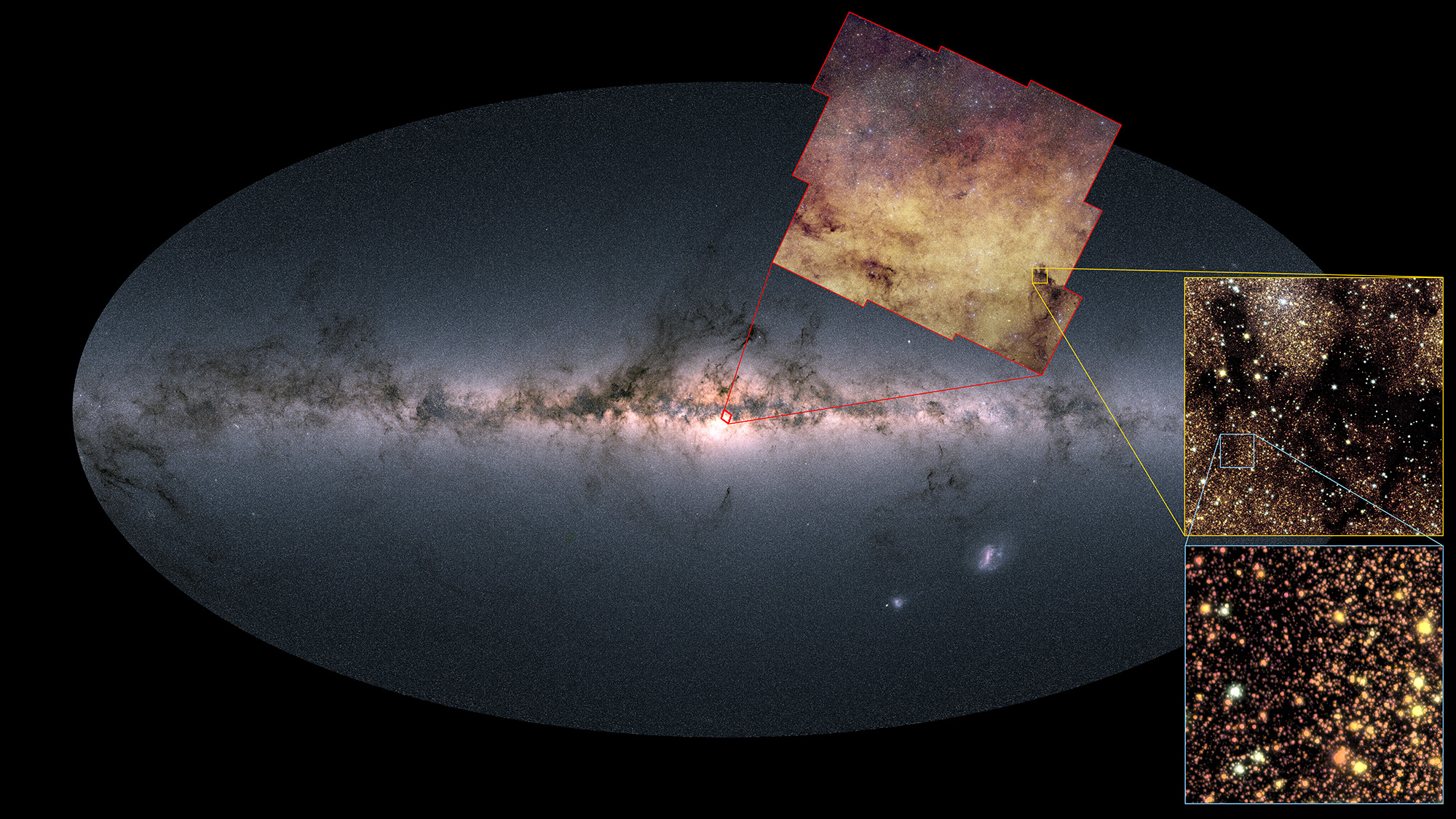
A deep-space telescope on a grand mission to make the largest-ever 3D map of the universe just peered into the star-filled heart of the Milky Way. In the new observations, shared Wednesday (June 24), the Euclid space telescope imaged the center of the Milky Way in extraordinary detail, showing off more than 60 million stars crowded in the galaxy's center.

The shiny new image from the European Space Agency (ESA) spacecraft will help astronomers confirm newfound exoplanets and use changes in starlight to measure those planets' masses as they orbit their parent stars, according to ESA scientists.

The image was taken in 26 cumulative hours in March 2025, across nine pointings of the telescope's visible-light camera toward the galaxy's center, also called the galactic bulge. Each viewpoint captured a slice of sky larger than the full moon. In a statement, ESA praised the performance of Euclid under challenging conditions.

"Designed to observe billions of faraway galaxies, the space telescope's visible-light camera is sensitive enough to tell apart individual stars in our super-crowded galactic bulge, without being blinded," agency officials wrote.

The mosaic image will help NASA's Nancy Grace Roman Telescope with its upcoming planet-hunting mission, after that observatory launches aboard a SpaceX Falcon Heavy rocket from NASA's Kennedy Space Center in Florida no earlier than Aug. 30.

One way the Roman telescope will search for new worlds is through microlensing, the same technique that can be used to examine exoplanets in the new Euclid image. Microlensing happens when one star passes in front of another from the perspective of an observer. The gravity of the closer-up star briefly bends and magnifies the light of the star behind it, allowing possibly unseen planets to pop up near that star.

An ovular cutout of the Milky Way galaxy glowing in deep space, with boxouts showing zoomed in areas on the right side.

An image of the Milky Way as seen from Earth, showing two zooms of Euclid's target area. (Image credit: ESA/Euclid/Euclid Consortium/NASA, CFHT, ESA/Gaia/DPAC,image processing by J.-C. Cuillandre and E. Bertin (CEA Paris-Saclay))

"During the last 20 years, almost 300 exoplanets have been discovered using this technique, all with ground-based telescopes and all towards the centre of our galaxy," Jean-Philippe Beaulieu, who initiated the Euclid galactic bulge survey and co-led the Euclid Consortium's exoplanet working group, said in the ESA statement.

"This image from Euclid includes 51 known planetary systems ‪—‬ and it will assist in studying many more that will be found," added Beaulieu, who holds positions at the Paris Institute of Astrophysics and the University of Tasmania in Australia.

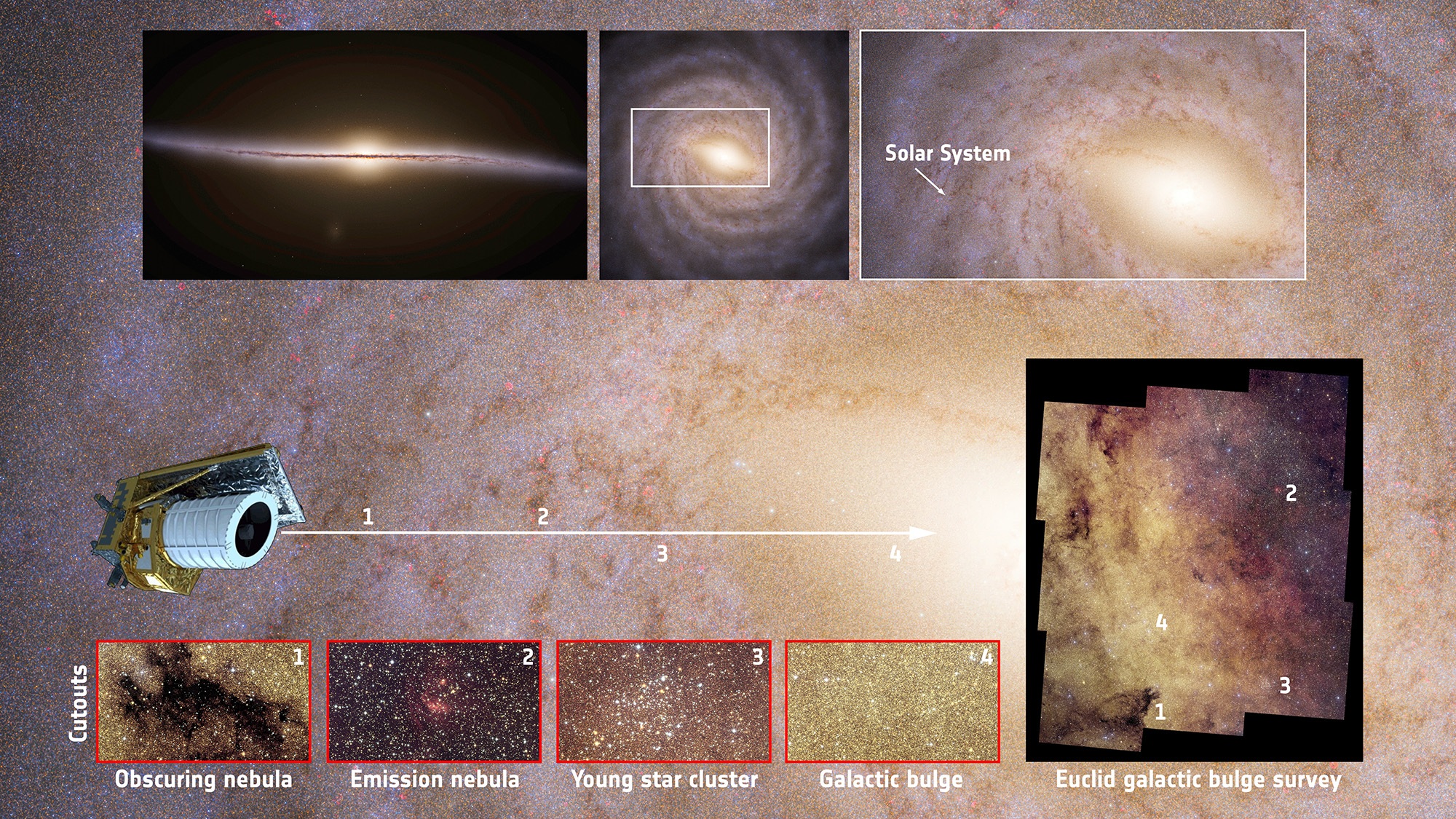
A space telescope against a deep space background with boxouts showing close ups of different areas in space

An infographic showing how Euclid sees across the Milky Way, into the galaxy's central bulge. The bottom panels illustrate the diversity of structures in Euclid's field of view. (Image credit: ESA/Euclid/Euclid Consortium/NASA, CFHT, image processing by J.-C. Cuillandre and E. Bertin (CEA Paris-Saclay); Milky Way artist impressions: ESA/Gaia/DPAC, Stefan Payne-Wardenaar))

A cosmic time capsule

Euclid's observing window was too short to find a microlensing event, which requires more than 20 days of examining one star to watch for a planet's orbit and associated changes in the star's light. But Euclid's work did allow astronomers to measure already-known planets. And once newer planets are confirmed by other telescopes, the image will let astronomers look back to confirm those newfound worlds' masses.

"In 24 hours, Euclid has already captured the stars involved in all the future microlensing events that the Roman space telescope will detect, but before the stars and planets involved have aligned," Natalia Rektsini, a postdoctoral fellow at the Paris Institute of Astrophysics who led the release of Euclid's galactic bulge survey data, explained in the statement.

"Anyone who detects a microlensing event in the same region, for example with Roman, will be able from now on to use Euclid data as a time reference in the past and see how the stars looked before they overlapped," she added. "Since Euclid can clearly separate individual stars, one can then measure how fast they move over time, and use that information to confirm the existence of a planet and determine its mass. This would not be possible with data from one point in time."

How well do you know our home galaxy? Find out with our Milky Way quiz!

China’s high-speed rail network now stretches more than 50,000 kilometres across the country — longer than the combined high-speed rail networks of every other nation on Earth put together — and the entire system was built in roughly 17 years, beginning with a single line opened for the 2008 Beijing Olympics, and now connects 33 of the country’s 34 provincial-level divisions with trains running at routine commercial speeds of 350 kilometres per hour

24 June 2026 at 09:30

The year an American president signs a major infrastructure bill, a Chinese provincial governor breaks ground on three high-speed rail lines in the same week. The asymmetry is structural, the pace is sustained, and the cumulative result, after roughly 17 years, is a national rail network of a size and density that has no precedent in the history of transportation. The first revenue-earning Chinese high-speed rail line opened on 1 August 2008, exactly one week before the Beijing Summer Olympics. It was 117 kilometres long. It ran from Beijing to the port city of Tianjin. It used trains imported from Japan and Germany under licensing agreements that were already being quietly modified by Chinese engineers who would, within five years, be producing entirely indigenous variants without further input from their foreign partners. The line had been designed and built in approximately three years, primarily as an Olympic prestige project, and was treated by international observers at the time as an interesting but localised infrastructure achievement comparable to the high-speed rail networks of France, Germany, or Japan, which between them had been building and operating such systems for several decades. The line was, in retrospect, the start of something on a scale that none of those countries had ever attempted.

According to a comprehensive reference summary of the development of China’s high-speed rail network, the trajectory of construction over the subsequent 17 years has been the most aggressive infrastructure expansion programme of the early 21st century, possibly the most aggressive transport infrastructure expansion of any kind in modern history. The network grew from approximately 117 kilometres in 2008 to approximately 9,000 kilometres by the end of 2012. It reached 22,000 kilometres by the end of 2016, 35,000 kilometres by the end of 2019, and 37,900 kilometres by the end of 2020. The pace then accelerated rather than slowed: an additional 12,500 kilometres was added between the start of 2021 and the close of 2025, with the symbolic 50,000-kilometre threshold crossed in late December 2025 with the opening of the Xi’an–Yan’an line connecting the Shaanxi provincial capital to the northern revolutionary heritage city of Yan’an. By the standard measurement methodology, the global combined high-speed rail mileage outside China currently totals approximately 21,000 to 25,000 kilometres. China alone now operates more than twice that.

What the network actually connects

The geographical coverage of the network is the easier number to underestimate from the outside. As reported by Global Times’s coverage of the 50,000-kilometre milestone and the network’s role in regional development, the Chinese HSR system now extends to 33 of China’s 34 provincial-level administrative divisions, with the only exception being the Macau Special Administrative Region. Hong Kong was connected in 2018. The autonomous regions of Tibet, Xinjiang, and Inner Mongolia are all integrated into the national grid. The southwestern province of Yunnan is connected via the Shanghai–Kunming high-speed line. The far-northern Heilongjiang province has been linked via the Harbin–Dalian line since 2012. The result of this geographic distribution is that any two major Chinese cities within 500 kilometres of each other are now generally within a one-to-two-hour HSR journey of each other, any two within 1,000 kilometres are within approximately four hours, and same-day round trips between cities approximately 2,000 kilometres apart are now routinely possible — equivalent to a one-day return trip between, in American terms, Chicago and Los Angeles.

The trains themselves have evolved across several generations. The current backbone of the network is the Fuxing (“Rejuvenation”) series, introduced in 2017, which operates at routine commercial speeds of 350 kilometres per hour across approximately 6,000 kilometres of the highest-grade passenger-dedicated lines. The successor generation, the CR450, has been in testing since 2023 with a designed commercial speed of 400 kilometres per hour and a tested maximum single-train speed of approximately 453 kilometres per hour. In June 2023, two CR450 prototypes passing each other in opposite directions on the Meizhou Bay cross-sea bridge in Fujian set a world record for relative closing speed at approximately 891 kilometres per hour — the fastest closing speed ever recorded between two trains passing each other on a steel rail. The most recent single-train 450 km/h test was conducted on the Shanghai–Chongqing–Chengdu high-speed line on 21 October 2025, with commercial entry to service expected by 2026. A separate maglev development programme, operating on different physics (electromagnetic suspension rather than steel-on-steel contact), produced a 600 kilometres-per-hour maglev train that was formally unveiled at the UIC World Congress on High-Speed Rail in Beijing in July 2025, with the stated goal of bridging the operational gap between conventional high-speed rail and commercial air travel.

What the system cost

The financial dimension is the part of the story that receives less coverage but is increasingly relevant to Chinese transport policy. Per Newsweek’s analysis of the scale of China’s high-speed rail expansion and its underlying drivers, the total construction cost of the system to date is estimated at approximately $300 billion. The 2009 single-year investment figure was approximately $50 billion. The 2025 figure was approximately 901.5 billion yuan, or about $129 billion. The unit construction cost per kilometre of 350 km/h passenger-dedicated line, in the Chinese case, has ranged between 94 and 183 million yuan, depending on terrain — substantially lower than the equivalent unit costs for high-speed rail construction in Europe (approximately $25 to $39 million per kilometre) or the United States (approximately $52 million per kilometre for the partially-completed California system). The cost advantage is attributed to economies of scale across the unusually large construction programme, standardised line and station designs, lower labour costs, vertically integrated state-owned construction enterprises, and the absence of the property-rights and environmental-review processes that typically extend construction timelines in other jurisdictions.

The accumulated debt of China State Railway Group, the state-owned operator that owns and operates the network, stood at approximately $839 billion at the end of 2023, by the corporation’s own published figures. The debt is real and is a non-trivial component of the broader fiscal picture facing Chinese local and central governments. Whether the network will continue to be expanded at the pace of the past 17 years, or whether the 15th Five-Year Plan (covering 2026 to 2030) will mark a transition to a slower, more financially conservative growth path, is one of the open policy questions currently being negotiated within the Chinese government. The current official target is to reach 60,000 kilometres of high-speed rail by 2030 — an additional 10,000 kilometres of new construction over the next five years, which would, in any other country, be a complete national high-speed rail programme in its own right. In China, it represents a deceleration. As described by Global Times’s coverage of the total network’s end-of-2025 status and the 15th Five-Year Plan, the country’s broader railway network (including conventional rail) reached 165,000 kilometres by the end of 2025, with the high-speed rail portion of approximately 50,400 kilometres representing roughly 30 percent of the total. The system is, by every available measure, the largest single transport infrastructure programme in modern history. The 17 years of construction that produced it have, in proportional terms, no precedent.

The post China’s high-speed rail network now stretches more than 50,000 kilometres across the country — longer than the combined high-speed rail networks of every other nation on Earth put together — and the entire system was built in roughly 17 years, beginning with a single line opened for the 2008 Beijing Olympics, and now connects 33 of the country’s 34 provincial-level divisions with trains running at routine commercial speeds of 350 kilometres per hour appeared first on Space Daily.

SpaceX secretly launches Starfall, a 10.2-ft disk return capsule for microgravity cargo

24 June 2026 at 08:44

SpaceX has a new spacecraft, and it might already be in orbit. The company launched its secretive Starfall return capsule for the first time on June 23, lifting off aboard a Falcon 9 from Space Launch Complex 40 at Cape Canaveral Space Force Station at 6:52 a.m. EDT.

The mission caught many space watchers by surprise — SpaceX had revealed almost nothing about Starfall before launch, and the company cut its webcast roughly 10 minutes after liftoff, a practice typically associated with national security missions.

What SpaceX did say, via a post on X, was brief: Starfall “will enable affordable, routine access to the microgravity environment for scientific research and in-space manufacturing.”

The company added that the vehicle will “enable point-to-point delivery of critical cargo through space on rapid timelines” and create “a self-sustaining commercial in-space manufacturing market by offering access to microgravity and vacuum, loiter on orbit, and safe return from orbit as a service at scale.”

What Starfall actually is

Most of what is publicly known about Starfall comes from an environmental assessment published by the Federal Aviation Administration last month. According to the FAA document, Starfall is a disk-shaped spacecraft that stands about 2.5 feet (0.75 meters) tall and has a diameter of 10.2 feet (3.1 meters). It weighs roughly 4,600 pounds (2,100 kilograms) and can carry about 2,200 pounds (1,000 kg) of payload.

Starfall consists of two parts: an aluminum “top plate” that weighs about 3,090 pounds (1,400 kg) and a detachable carbon-fiber heat shield. The heat shield contains compressed nitrogen gas that powers the capsule’s attitude control thrusters, mechanically jettisons the shield before splashdown, and deploys the parachutes — all without liquid propellants or hazardous substances aboard.

The capsule carries no propulsion system and cannot deorbit itself. It is entirely uncrewed and not designed to carry passengers. The vehicle can launch on both the workhorse Falcon 9 and Starship, the megarocket SpaceX is developing to help humanity settle the moon and Mars.

SpaceX has not yet specified how long the test vehicle will remain in orbit before reentry. When the Starfall payload returns, SpaceX is targeting an area in the Pacific Ocean for splashdown, about 700 nautical miles (1,300 km) off the United States West Coast.

How many were launched?

It is unclear how many Starfall vehicles the Falcon 9 lofted on this initial flight. The FAA environmental assessment covered two demonstration reentries, and one or both may have been initiated by Tuesday’s launch.

SpaceX is not first — but may come to dominate

SpaceX isn’t alone in pursuing these opportunities. Varda Space has already launched and landed five of its 650-pound (300 kg) “W-series” spacecraft, which are designed to be both orbital mini-factories and return capsules. And another California outfit, Outpost Space, is developing a line of “CarryAll” return vehicles that can deliver very large payloads — up to 22,000 pounds (10,000 kg) — down from space with pinpoint accuracy, within 80 feet (25 m) of a target anywhere on Earth.

So SpaceX is not breaking new ground with Starfall. But the company is poised to play a leading role in the nascent Earth-return field, thanks to its launch dominance and vertical integration.

The Falcon 9 flew a whopping 165 times in 2025, and SpaceX envisions launching Starship thousands of times per year when that massive rocket comes fully online.

That launch economics advantage is decisive. Every orbital manufacturing company currently operating — including Varda Space Industries — uses SpaceX Falcon 9 rideshares to reach orbit. With Starfall, SpaceX is entering a market it has until now served only as a launch provider, potentially competing with its own customers for the same orbital manufacturing return payloads.

Interstellar Visitor 3I/ATLAS Is Bursting With an Unexpected Chemical

Artist’s Impression of 3IATLAS Passing the SunAstronomers have found that interstellar comet 3I/ATLAS contains an unusually large amount of methanol. Every interstellar object that passes through our solar system offers a rare chance to sample material forged around another star. Now, new observations of comet 3I/ATLAS using the Atacama Large Millimeter/submillimeter Array (ALMA) have revealed a chemical surprise: the comet is [...]

Scientists Just Found All 5 Genetic “Letters” of DNA and RNA on an Asteroid

23 June 2026 at 21:49
Ryugu Sample in Its Return CapsuleThe discovery of all five nucleobases on Ryugu strengthens the idea that life’s molecular ingredients formed in space before reaching Earth. A new study reports that samples from the asteroid Ryugu contain all five fundamental nucleobases, the molecular “letters” of life. Tiny asteroid grains can preserve chemical clues about the ingredients that may have helped [...]

World’s fastest tactical launch delivers military spacecraft to orbit under 17 hours

23 June 2026 at 20:14

Rocket Lab has set a new benchmark for military responsive space operations after launching the U.S. Space Force’s VICTUS HAZE mission just 16 hours and 42 minutes after receiving a formal launch order. The turnaround beat the previous record by more than 10 hours and showed how quickly a defense spacecraft can move from standby to orbit.

The mission also introduced a different operating model for tactical space missions. Rocket Lab developed the spacecraft, carried out the launch, and now controls operations in orbit, giving the U.S. Space Force a single provider for the entire effort.

Faster launch timeline

Responsive space programs are designed to place satellites into orbit on short notice during a crisis. VICTUS HAZE tested that concept under demanding timelines and cleared several milestones well ahead of schedule.

Rocket Lab’s Guidance, Navigation and Control team needed only about four hours to finalize trajectories, update flight software and coordinate ground stations after receiving the launch notice.

The Space Force called, and we launched. From call up to lift-off in just 16 hours 42 minutes 🎯 Rocket Lab has made history – the fastest response time ever for a @USSF_SSC Tactically Responsive Space mission. pic.twitter.com/yJyhFxbpT3

— Rocket Lab (@RocketLab) June 22, 2026

Electron lifted off from Launch Complex 1 in New Zealand and successfully deployed the company’s Pioneer spacecraft. Engineers completed spacecraft commissioning in 37 hours and 36 minutes, beating the program’s 72-hour requirement by more than 34 hours.

Spacecraft begins pursuit

The Pioneer spacecraft has already started Rendezvous and Proximity Operations in low Earth orbit. The mission simulates a scenario in which a maneuverable satellite rapidly approaches and inspects another spacecraft that is not cooperating.

Such missions could strengthen U.S. military space awareness during emergencies. A satellite launched on short notice can quickly pursue an object in orbit and provide military planners with near real-time intelligence about its movements and activities.

Rocket Lab founder and CEO Sir Peter Beck described the integrated approach as a major step forward for responsive space missions. “Our launch-plus-spacecraft integrated mission capability is transformative for responsive space,” Beck said. He added that having spacecraft ready for immediate deployment allows the United States and its allies to reinforce national security space operations far more quickly.

Single provider strategy

VICTUS HAZE is the first Tactical Responsive Space mission to rely on a single prime contractor for the entire effort. Rocket Lab developed the Pioneer spacecraft before carrying it into orbit on Electron. The company now directs the mission from the ground as the satellite performs its assigned operations.

According to U.S. Space Force Lt. Col. Lincoln Miller, the mission completes the program’s “crawl, walk, run” demonstration phase and shows teams can field sophisticated space capabilities within days instead of months. He said Rendezvous and Proximity Operations remain challenging under compressed timelines. Commissioning the spacecraft ahead of schedule and immediately starting orbital maneuvers demonstrates the ability to respond rapidly during a crisis.

Rocket Lab credits that speed to its vertically integrated manufacturing approach. The Pioneer spacecraft relies on key hardware and software produced inside the company instead of a network of outside suppliers. That level of control shortens development schedules and eliminates many procurement delays that slow traditional defense programs. As a result, a mission that would normally require years of planning moved from launch notification to orbit in less than 17 hours, establishing a new benchmark for rapid military space access.

💾

Rocket Lab's VICTUS HAZE mission launched in 16 hours as the Pioneer spacecraft began rapid orbital operations.

Something in space may be changing alien signals before they can reach Earth. Scientists have a solution.

23 June 2026 at 17:00

Humans have been searching the stars for alien radio signals for decades — and so far, E.T. has not phoned home. But that doesn’t mean intelligent life isn’t out there, a new study hints. Rather, something else could be interfering: according to the research, space weather surrounding alien planets could be preventing us from detecting technological signals from extraterrestrial civilizations.

The findings, published March 5 in The Astrophysical Journal, offer a potential answer to the Fermi paradox: Given the size of the universe, there are many potentially habitable planets that could support life, and yet we have not detected technosignatures from any of them ‪— so, "Where is everyone?" physicist Enrico Fermi famously posited in 1950.

In the new study, researchers found that space weather caused by a planet's star could broaden hypothetical technosignals, dissipating their power over a larger range of frequencies and making them more difficult to detect.

"If a signal gets broadened by its own star's environment, it can slip below our detection thresholds, even if it's there, potentially helping explain some of the radio silence we've seen in technosignature searches," Vishal Gajjar, an astronomer at the SETI Institute and first author of the paper, said in a statement.

One way astronomers search for alien life is by looking for very narrowband signals, which are sharp spikes in the power of a radio emission. This spike usually only covers a few hertz.

"These don't occur naturally," Evan Keane, an astronomer at Trinity College Dublin who was not involved in the research, told Live Science. "So, if you see something very narrowband, you know that it is from something of interest." Astronomers would, for example, be able to easily detect some narrowband technosignatures on Mars, coming from the Mars rovers. But they have not observed any such signals from a clearly non-human origin.

Distorting signals

The new research argues that astronomers may have been looking for the wrong signal shape. In the new study, the researchers found that alien signals could be distorted by stellar space weather surrounding their home stars, which could explain why they have not been detected.

Space weather refers to changes in the space environment caused by charged particles, radiation and giant lumps of plasma called coronal mass ejections emitted by the sun. Other stars also generate space weather in their vicinity.

Gajjar and SETI colleague Grayce Brown investigated how space weather has historically impacted communications between Earth and spacecraft such as Mariner IV, which flew by Mars in the 1960s, and the Viking probes, which launched in 1977 for a voyage through the solar system and beyond. They created one of the largest collections of signal broadening examples and used that information to determine how other sunlike stars would affect the environment around their exoplanets. From this, the team calculated what would happen to a hypothetical alien narrowband signal that originated on one of them.

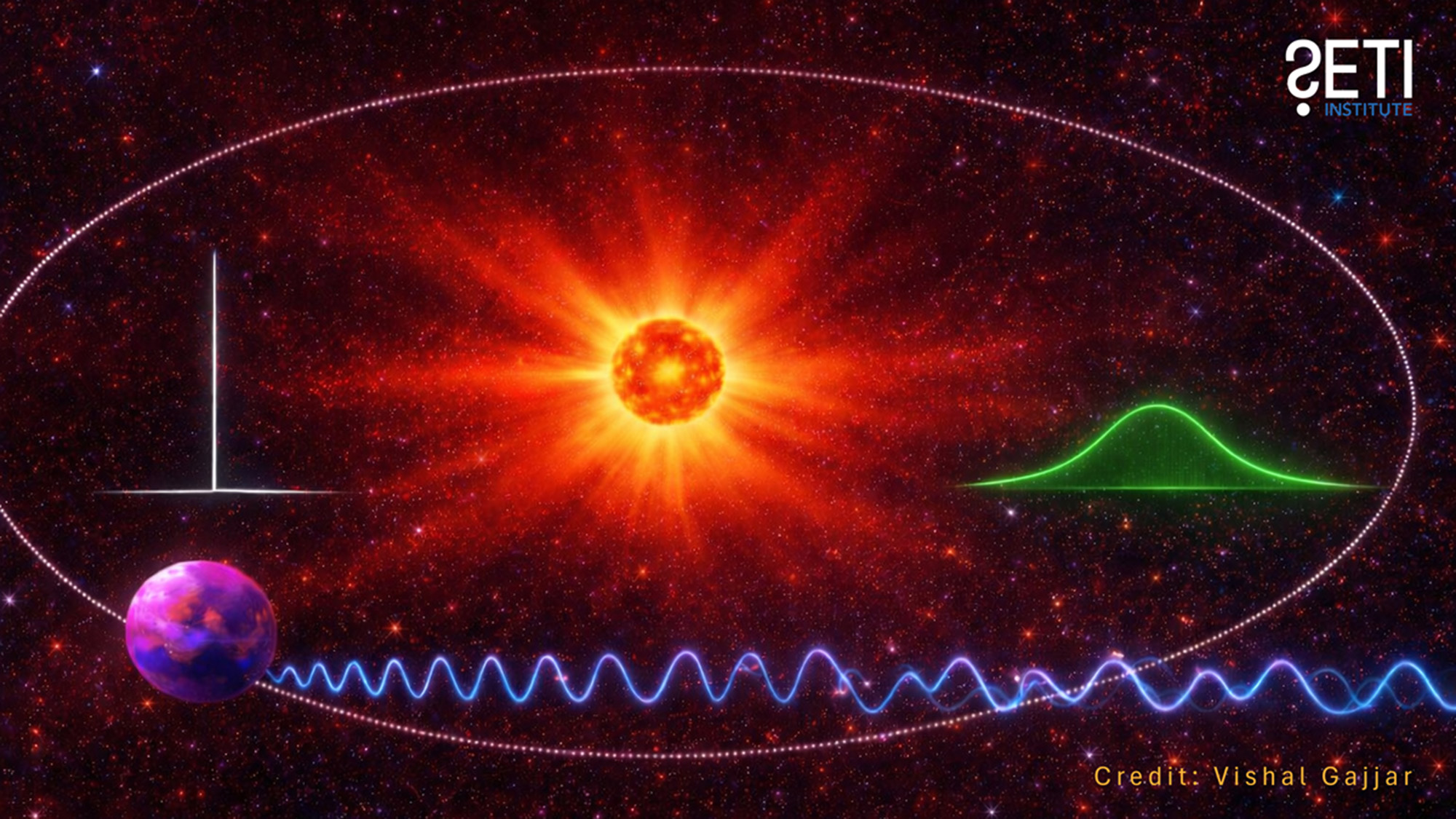
A graph showing various wavy lines next to an exoplanet with a glowing sun in the middle of the image

A planet’s radio signal may begin as a sharp tone (left, white) but can be spread out by the star’s plasma winds into a wider, fainter signal (right, green). The new study suggests radio astronomers may be missing signals by mostly looking for the sharp white shape instead of the broader green one. (Image credit: Vishal Gajjar)

Then, they turned their attention to M dwarf stars, the most common type in the Milky Way. These stars account for three out of four stars in our galaxy, and some have been around since the early universe. That gives them a lot of time to have developed technologically advanced life, according to the paper.

There are no actual measurements of space weather around these stars, so Gajjar and Brown modeled what might happen to a narrowband technosignal that emerged from exoplanets and had to travel through interplanetary plasma. They found that hypothetical narrowband signals from these exoplanets were more likely to be smeared by space weather, making them even harder to detect.

In the paper, the authors propose a framework to estimate how much broadening would happen to a signal, given its frequency and the type of star its exoplanet was orbiting.

This new framework doesn’t totally answer Fermi’s infamous question, but it does give us a potential reason for the silence. The Fermi paradox "is not solely evidence for the absence of transmitters, but also a reflection of our detection limitations arising from a mismatch between the assumed signal morphology" and shape, the researchers wrote.

A step forward for SETI

Michael Garrett, an astrophysicist at the University of Manchester in the U.K. who was not involved in the study, welcomed the research.

"It is a solid contribution that SETI researchers and signal-processing teams should pay attention to," he told Live Science. "One of the strengths of the paper is that it's grounded in real measurements too, drawing on decades of spacecraft observations."

However, he emphasized that the paper focused on narrowband radio signals, which was only one way of potentially detecting an alien civilization. By contrast, Garrett's work explores the possible combined radio leakage from a technological civilization across a large range of frequencies.

Andrew Siemion, director of Breakthrough Listen Oxford Hub in the U.K. who was not involved in the research but collaborates with the SETI Institute, said this is the first paper to explore the space around exoplanets and its impact on detectability.

"The work offers a very concrete mechanism through which a candidate signal might ultimately be validated as having a likely origin with a distant planetary system," he told Live Science.

The authors recommended that future searches, especially with sensitive next-generation telescopes such as SKA-Low, take note of signal broadening when searching for civilizations beyond Earth.

Are you a UFO fanatic? Find out with our extraterrestrials quiz!

Sophia selects Apex bus for on-orbit computing demonstration

23 June 2026 at 16:56

SAN FRANCISCO – Sophia Space announced the selection June 22 of an Apex bus for its first orbital computing node. Pasadena, California-based Sophia plans to demonstrate its Thermal Integrated LEO […]

The post Sophia selects Apex bus for on-orbit computing demonstration appeared first on SpaceNews.

I Am Artemis: Jason Peterson

23 June 2026 at 15:27
4 Min Read

I Am Artemis: Jason Peterson

NASA’s Jason Peterson is the range operations manager at NASA’s Stennis Space Center. For Artemis II, he supported the team responsible for delivering video and communication feeds for launch and splashdown.
Credits: NASA/Danny Nowlin

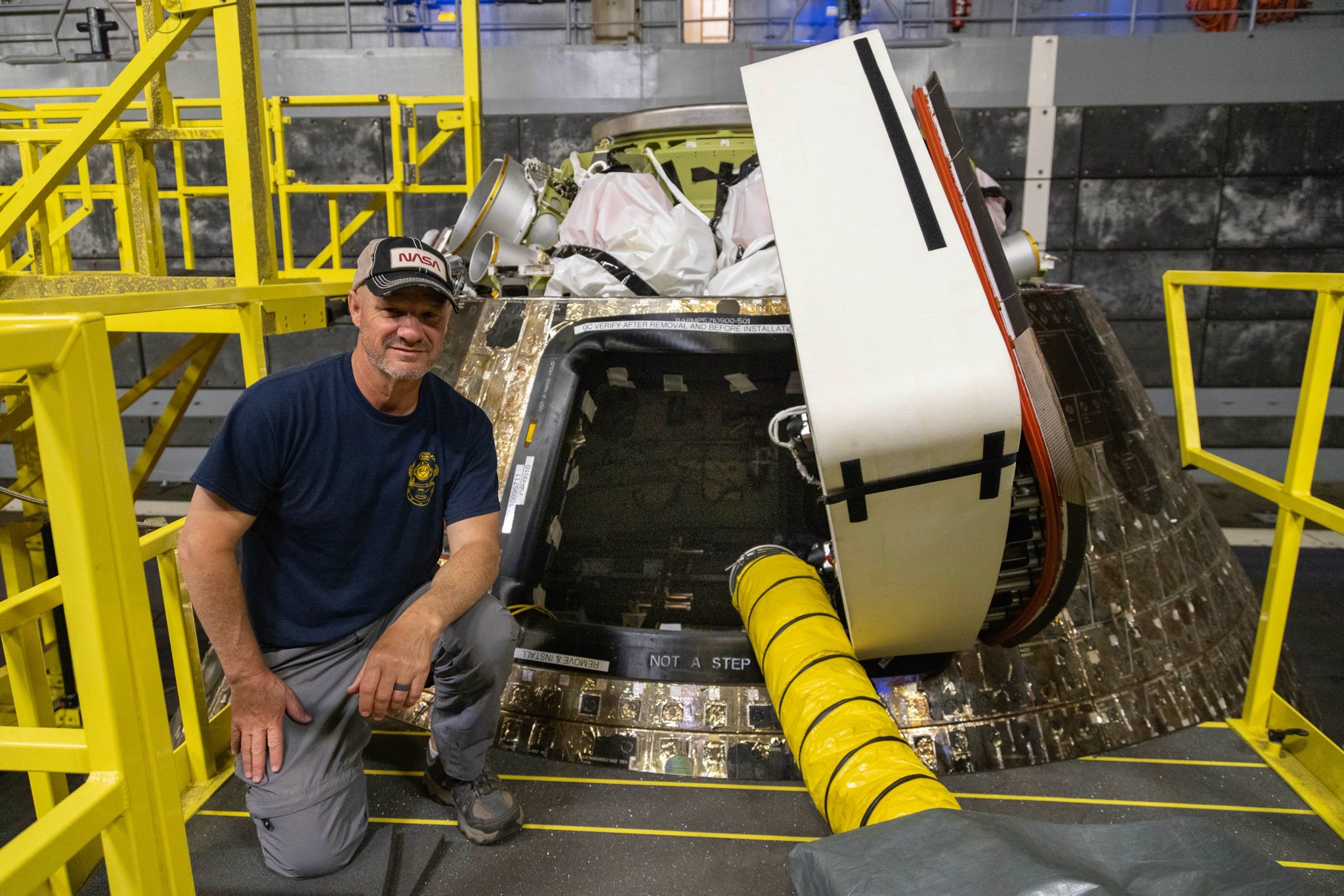
Jason Peterson’s responsibilities for NASA’s Artemis II mission went beyond his usual role as the range operations manager at NASA’s Stennis Space Center near Bay St. Louis, Mississippi.

For Peterson, working at NASA is a surreal full-circle moment.

“I grew up in DeLisle, Mississippi, right down the road from NASA,” said Peterson. “You would hear NASA testing, the windows would shake, and you knew they were out there. Not in a million years would I have ever dreamed I would work with NASA.”

His career journey took a few turns before reaching the space agency.

“I got out of school, welded, went to college and then to the Air Force. The path to NASA really started to develop from there,” said Peterson.

Peterson spent 24 years in the U.S. Air Force and Air National Guard, working in airfield and air-to-ground range operations, followed by a few years working as an aircraft dispatcher at Airbus Final Assembly Line.

Peterson credits his military experience with preparing him for the 12-to-16-hour workdays that helped bring the Artemis II test flight around the Moon and into view for audiences around the world.

He supported the team responsible for delivering video and communication feeds for the launch of NASA’s SLS (Space Launch System) rocket with the Artemis II crew aboard the Orion spacecraft, and then splashdown in the Pacific Ocean.

During the nearly 10-day mission, NASA astronauts Reid Wiseman, Victor Glover, Christina Koch, and CSA (Canadian Space Agency) astronaut Jeremy Hansen completed a record-setting lunar flyby, taking them 252,756 miles at their farthest distance from Earth.

Aboard the USS John P. Murtha, Peterson was the first on the ship to spot the capsule returning with the crew.

“The sonic boom was the moment it truly hit me. Even though I was tracking the capsule, it did not fully register until then. Chills went down my neck and back. You realize our astronauts are coming home. It was an incredible and emotional moment.”

JASON PETERSON

JASON PETERSON

Range Operations Manager for NASA Stennis

Jason Peterson, NASA Stennis range operations manager, is shown with the Orion spacecraft aboard the USS John P. Murtha on April 13, 2026. Peterson was the first to spot the capsule returning with the Artemis II crew as he supported the team responsible for delivering video and communication feeds during splashdown operations. Credits: NASA
NASA

Peterson operated one of six cameras providing live coverage by using a high‑resolution, multi‑sensor system with thermal capabilities. Using the ship’s heading and Orion’s predicted trajectory, he located the capsule within minutes and began tracking it.

Orion entered Earth’s atmosphere at about 400,000 feet above the planet’s surface, traveling nearly 35 times the speed of sound and about 1,956 statute miles from its splashdown point off the coast of California. Peterson tracked Orion from the release of the small parachutes that first slow and steady the capsule, through the main parachutes opening, and all the way to splashdown.

“You are fully locked in, keeping it centered, in focus, and steady,” said Peterson.

Peterson’s focus on the mission began weeks earlier at NASA’s Kennedy Space Center in Florida.

In the days leading to launch, Peterson worked with the team running full systems checks, staging communications gear, and preparing drones and fixed‑wing camera assets. He helped configure and operate the systems that ensured live video flowed from the launch pad, the crowds, and surrounding air and ground platforms.

On April 1, the launch day of Artemis II, the team unloaded and set up high‑resolution sensors, connection terminals, routers, monitors, fiber lines, and drone equipment. They flew drones to capture crowd scenes and aerial views before liftoff.

As the SLS rocket launched, Peterson’s full attention was on positioning the drone and maintaining the shot.

“There is not much time to step back and take in the moment, as you are concentrating on precision,” said Peterson.

As the mission got underway, Peterson and the team packed up, returned to the facility, and downloaded the day’s footage.

The Artemis II crew were more than halfway to the Moon as Peterson arrived in San Diego on April 4. In the days leading to splashdown, the team loaded and installed high‑fidelity cameras and supporting equipment, all to help the world witness a historic milestone when the Artemis II crew returned to Earth on April 10.

Next up will be Artemis III. NASA will launch four astronauts from NASA Kennedy aboard the Orion spacecraft on the SLS rocket. Building on the successful Artemis II crewed test flight in April, Artemis III will pave the way for future surface missions, with experts like Peterson helping every step of the way.

About the Author

Bo Black

Communications Strategist

Share

Details

Last Updated
Jun 23, 2026
Editor
Catherine Ragin Williams
Keep Exploring

Discover More Topics From NASA

Could Spaceflight Alter Human Consciousness? Scientists Say Microgravity May Mimic Psychedelic Brain States

23 June 2026 at 13:26

A growing body of evidence suggests that leaving Earth may do far more than challenge the human body. According to a new study, the absence of gravity itself could temporarily reshape consciousness, loosening the brain’s most strongly ingrained assumptions and opening the door to altered perceptions, expanded awareness, and even experiences that resemble some aspects of psychedelic states.

As humanity prepares for longer stays on the Moon, commercial space tourism, and eventual missions to Mars, researchers contend that understanding what happens to the mind in microgravity may be just as important as understanding the engineering that gets astronauts there. According to them, gravity may not simply keep people anchored to the ground—it may also help anchor human consciousness itself.

In a new paper published in Frontiers in Psychology, researchers Dr. Annahita Nezami and Dr. Elisa Raffaella Ferre of Birkbeck, University of London, explored decades of neuroscience, psychology, and spaceflight research to propose that Earth’s gravitational pull acts as a deeply embedded “super-prior” within the brain. By disrupting this ancient reference point, microgravity may trigger widespread changes across neural networks that underpin perception, self-awareness, and emotional regulation.

“Human consciousness has evolved under the constant pull of terrestrial gravity, yet its role in shaping perception and awareness has received limited theoretical attention,” researchers write. “As spaceflight transitions from short missions to long-duration habitation, understanding how consciousness responds to non-terrestrial gravity becomes increasingly urgent.”

Every human brain evolved under the constant force of Earth’s gravity. From before birth onward, sensory systems constantly rely on gravity cues to determine which way is up, where the body is in space, and how to interpret movement.

Researchers argue that this constant exposure has made gravity one of the brain’s most reliable assumptions. In the language of predictive neuroscience, the brain constantly generates expectations about the world and updates them using incoming sensory information. Gravity, they say, functions as a basic expectation—a “1G super-prior”—that helps stabilize consciousness.

Remove that constant, and things begin to change.

In orbit, vestibular signals from the inner ear become unreliable. Visual, proprioceptive, and balance information no longer align as the brain evolved to expect. The resulting mismatch generates anticipation errors, forcing widespread recalibration.

Those changes are already well documented among astronauts. Space travelers commonly experience spatial disorientation, altered body perception, sleep disturbances, mood swings, and, in some cases, feelings of depersonalization or derealization—states in which individuals feel separated from themselves or perceive their surroundings as unreal.

Astronauts have also reported more positive and profound experiences. Many describe feeling “unmoored,” “expanded,” and deeply interconnected with humanity, or overwhelmed by awe while viewing Earth from orbit. This phenomenon, known as the Overview Effect, has been associated with lasting shifts in values, increased environmental concern, and enhanced feelings of oneness.

The study suggests that these experiences might originate from the same neurocognitive processes triggered when gravity’s stabilizing role is weakened.

“By perturbing the most stable embodied reference – gravity itself – spaceflight offers a rare window into how fundamental expectations shape consciousness,” researchers write. “The loosening of perceptual boundaries in microgravity has been proposed as a neurocognitive foundation for the Overview Effect.”

Brain imaging studies lend support to the idea. MRI scans of astronauts before and after extended-duration missions have revealed structural changes, including fluid redistribution, enlargement of brain ventricles, and gray matter remodeling. Functional MRI studies have also found changes in connectivity among vestibular, sensory, and default mode network regions involved in awareness and the combining of internal and external information.

Especially intriguing are changes observed in the default mode network, a system involved in introspection, self-referential thought, and consciousness. Activity inside this network appears to diminish after spaceflight, with some changes persisting for months after astronauts return to Earth.

Electroencephalography studies have likewise detected reductions in alpha-wave activity during and after missions, another sign that brain function is being reorganized in response to microgravity.

These neural changes led the researchers to an unexpected comparison.

Many of the same large-scale patterns recorded after spaceflight resemble effects previously documented under psychedelic compounds such as psilocybin and LSD. In both situations, highly organized brain networks appear to loosen, while communication between previously separate regions increases.

Researchers stress that the mechanisms are entirely different. Psychedelics act through serotonin receptors, whereas microgravity represents an environmental disruption rather than a pharmacological one. Yet both seem to converge by weakening the brain’s highest-level assumptions and increasing the combination of sensory information.

According to researchers, this convergence phenomenon suggests that spaceflight could provide scientists with a natural, drug-free model for studying transformative states of consciousness.

The researchers argue that terrestrial gravity, microgravity, and psychedelic states may represent different conditions along a spectrum defined by the strength of the brain’s deeply ingrained “1G super-prior.” As that stabilizing role weakens, top-down constraints relax, potentially increasing neuroplasticity and mental flexibility.

The implications go beyond astronaut health. Understanding how consciousness changes in unfamiliar environments may provide new clues to the neural foundations of self-awareness. It could also prove increasingly important as private citizens spend more time in space and human settlements expand away from Earth.

Researchers suggest that microgravity offers scientists something that cannot be replicated on Earth—a chance to observe what happens when one of evolution’s oldest assumptions suddenly disappears.

“By situating consciousness in an environment for which evolution offers no precedent, spaceflight positions microgravity as a powerful natural neurocognitive catalyst for transformative experience,” researchers write. “In stepping beyond Earth’s gravity, we gain a unique vantage point from which to examine the contingent foundations of human awareness and the conditions under which it can be fundamentally transformed.”

Tim McMillan is a retired law enforcement executive, investigative reporter and co-founder of The Debrief. His writing typically focuses on defense, national security, the Intelligence Community and topics related to psychology. You can follow Tim on Twitter: @LtTimMcMillan.  Tim can be reached by email: tim@thedebrief.org or through encrypted email: LtTimMcMillan@protonmail.com 

Spiritual Physics | The Science Behind UFOs and Exotic Energy

23 June 2026 at 06:58
I further develop "spiritual physics" to explore the dynamics of UFOs, linking their behavior to concepts of exotic energy and matter. By applying Newtonian kinematics and imaginary numbers, the model suggests UFOs harness unseen energy and achieve incredible speeds. The interplay between real and imaginary mass could explain their elusive movements.

With Starfall, SpaceX eyes an edge in global cargo delivery from orbit

23 June 2026 at 06:25

A SpaceX Falcon 9 rocket lifted off on Tuesday to test a new reentry vehicle designed to deliver cargo anywhere in the world from low-Earth orbit.

The company developed the new saucer-shaped reentry pod, called Starfall, under a veil of secrecy. Its purpose is to support the "transport and delivery of goods through space," according to an environmental assessment published by the Federal Aviation Administration last month.

The first demonstration of the Starfall vehicle began at 6:53 am EDT (10:53 UTC) with liftoff aboard a Falcon 9 rocket from Cape Canaveral Space Force Station, Florida. At least one Starfall reentry pod rode to orbit on the Falcon 9, perhaps alongside another undisclosed payload. After circling the planet two times, the Falcon 9's upper stage was expected to release Starfall for atmospheric reentry, targeting a parachute-assisted splashdown in the Pacific Ocean around 800 miles west of California.

Read full article

Comments

© SpaceX

❌