❌

Normal view

Search for Hidden Cosmic Companions in Sun’s Backyard

17 June 2026 at 20:40

Some stars have planets. Others are orbited by brown dwarfs, balls of gas too massive to be planets, but too low-mass to be stars. Astronomers love these brown dwarf-star pairs because being paired with a star helps reveal a brown dwarf’s age. Ages of astronomical objects are often hard to measure, but essential for understanding how they form. 

Now, you can join NASA’s new Backyard Worlds: Binaries project and help astronomers discover these rare and interesting pairs. As a volunteer, you’ll inspect images from NASA’s Wide-field Infrared Survey Explorer (WISE) space telescope. Brown dwarfs may appear as small dots moving across a field of otherwise static stars. 

“We need your help to gain critical insights into these enigmatic cosmic objects,” said project lead Aaron Meisner.

Brown dwarfs are common but mysterious because they are so faint. There’s one for every three or four stars in our corner of the Milky Way galaxy. They are important laboratories for understanding giant planets like Jupiter.

Join the Backyard Worlds: Binaries project today and help astronomers understand where and when brown dwarfs form! You can also try one of our other brown dwarf-related projects: Backyard Worlds: Cool Neighbors! Anyone with a laptop or cell phone can participate. Participation does not require citizenship in any particular country.

Share

Details

Last Updated
Jun 18, 2026
Editor
NASA Science Editorial Team

The post Search for Hidden Cosmic Companions in Sun’s Backyard appeared first on NASA Science.

Search for Hidden Cosmic Companions in Sun’s Backyard

17 June 2026 at 20:40

Some stars have planets. Others are orbited by brown dwarfs, balls of gas too massive to be planets, but too low-mass to be stars. Astronomers love these brown dwarf-star pairs because being paired with a star helps reveal a brown dwarf’s age. Ages of astronomical objects are often hard to measure, but essential for understanding how they form. 

Now, you can join NASA’s new Backyard Worlds: Binaries project and help astronomers discover these rare and interesting pairs. As a volunteer, you’ll inspect images from NASA’s Wide-field Infrared Survey Explorer (WISE) space telescope. Brown dwarfs may appear as small dots moving across a field of otherwise static stars. 

“We need your help to gain critical insights into these enigmatic cosmic objects,” said project lead Aaron Meisner.

Brown dwarfs are common but mysterious because they are so faint. There’s one for every three or four stars in our corner of the Milky Way galaxy. They are important laboratories for understanding giant planets like Jupiter.

Join the Backyard Worlds: Binaries project today and help astronomers understand where and when brown dwarfs form! You can also try one of our other brown dwarf-related projects: Backyard Worlds: Cool Neighbors! Anyone with a laptop or cell phone can participate. Participation does not require citizenship in any particular country.

Share

Details

Last Updated
Jun 18, 2026
Editor
NASA Science Editorial Team

Zooming In on Individual Lipid Transporters: A Closer Look

17 June 2026 at 17:47

In the complex landscape of cellular biology, lipid transport stands as a fundamental process indispensable to life. All cells are enveloped by a thin, flexible membrane primarily composed of lipids, which not only serve as barriers but also actively participate in critical cellular functions. The transport of these lipids across membranes is orchestrated by specialized proteins, the lipid transporters, which facilitate the movement of lipid molecules from one side of the membrane bilayer to the other. This transport underpins a myriad of physiological activities, including the assembly and preservation of cellular membranes, lipid provision to mitochondria, and signaling pathways involved in programmed cell death. Despite its significance, the individual dynamics of lipid transport proteins have remained elusive due to limitations in traditional investigative methodologies.

Historically, investigations into lipid transporter proteins have utilized ensemble measurement techniques. These conventional methods analyze millions of protein molecules simultaneously, yielding averaged data that mask the heterogeneity among individual transporters. Consequently, the unique behaviors, efficiency rates, and mechanistic variations of single lipid transport proteins could not be discerned. Understanding these subtle distinctions is pivotal for unearthing nuanced cellular processes and developing targeted therapeutic interventions. Addressing this gap, an international cohort of researchers has pioneered a breakthrough technique leveraging highly sensitive imaging methodologies combined with high-throughput capabilities to observe and quantify the lipid transport activity of individual proteins in real-time.

Central to the research is the protein VDAC1 (Voltage-Dependent Anion Channel 1), which plays a crucial role in the delivery of lipids to mitochondria, thereby sustaining mitochondrial membrane integrity and function. Notably, VDAC1’s lipid transport activity is contingent upon its assembly into dimers—complexes formed by the pairing of two protein molecules. The novel imaging approach revealed a striking variability in the lipid transport efficiency among these dimers. Whereas some VDAC1 dimers were capable of translocating thousands of lipid molecules per second, others exhibited markedly reduced activity, and a subset appeared completely inactive. This individual-level heterogeneity, unnoticed in previous bulk assays, can be attributed to the specific spatial conformations that these dimers adopt, influencing their functional interfaces for lipid translocation.

This heterogeneity extends beyond mere functional curiosity; it introduces a paradigm shift in understanding membrane protein behavior, suggesting that protein complex formation—its precise structural arrangement—critically governs functional outcomes. Molecular dynamic simulations provided corroborative evidence, demonstrating that only particular dimer configurations furnish the optimal surface topology necessary for efficient lipid movement. These insights prompt a reevaluation of lipid transporter function that moves beyond static representations, embracing the dynamic and variable nature of protein assemblies in vivo.

The methodology that underpins these discoveries is itself a technical marvel. By employing a single vesicle fluorescence microscopy platform, the researchers can isolate individual liposomes encapsulating single protein entities. Fluorescent probes sensitive to lipid translocation allow precise quantification of scrambling events—a process by which phospholipids redistribute between the bilayer leaflets—on a vesicle-by-vesicle basis. This level of granularity affords unprecedented resolution in kinetic measurements, avoiding the artifacts inherent in bulk assays where asynchronous activity and averaged signals convolute interpretation.

Moreover, this platform’s versatility is notable. It is not confined to the study of VDAC1 but adaptable to a broad spectrum of lipid transporters implicated across diverse cellular pathways. By systematically altering membrane lipid compositions or introducing cofactors such as metal ions, researchers can dissect how microenvironmental factors influence transporter kinetics. This feature facilitates comprehensive structure-function analyses, enabling the delineation of regulatory mechanisms and potential modulatory elements affecting transport efficacy.

From a translational perspective, the implications of these findings are profound. Mitochondrial dysfunction underlies a constellation of pathologies ranging from metabolic disorders to neurodegenerative diseases and certain hematological conditions. Aberrant lipid transport may contribute to these dysfunctions by compromising membrane integrity or signaling fidelity. Enhanced comprehension of individual transporter behavior could usher in new diagnostic markers or therapeutic targets. For instance, modulating the assembly state or stabilizing the active dimer conformation of VDAC1 may represent novel strategies to restore or optimize mitochondrial lipid homeostasis.

Furthermore, the study’s insights into the variability of lipid transporters invite reconsideration of drug design paradigms. Rather than targeting proteins en masse, future pharmacological interventions might be tailored to influence specific functional states or conformers of lipid transport proteins, enhancing efficacy and minimizing off-target effects. Such precision medicine approaches would benefit immensely from platforms capable of high-resolution characterization as demonstrated here.

The scientific community also gains a powerful tool to unravel the complexities of lipid dynamics and membrane biology. By circumventing the averaging problem intrinsic to ensemble experiments, researchers can now observe phenomena such as transient conformational states, stochastic transport events, and cooperative interactions among protein assemblies. This deeper understanding is essential for decoding the lipid-mediated regulatory codes that orchestrate cellular responses to environmental cues and stressors.

Importantly, this research exemplifies the synergy between experimental innovation and computational modeling. The integration of single-molecule fluorescence microscopy with molecular simulations not only confirms empirical observations but also guides hypothesis generation and experimental design. Such interdisciplinary approaches are increasingly vital for tackling intricate biological questions that span scales from atomic-level interactions to cellular physiology.

Looking ahead, the deployment of this single-vesicle fluorescence microscopy platform promises to accelerate discoveries in membrane biology and lipid transport. As the method is refined and applied to other protein families, it may reveal fundamental principles governing membrane asymmetry, lipid signaling, and protein-lipid interplay. These explorations are key for elucidating cellular homeostasis and the pathological disruptions that lead to disease.

In conclusion, the unveiling of individual lipid transporter dynamics through advanced fluorescence microscopy heralds a new era in cellular biochemistry. This technological and conceptual advance provides a crucial lens to interrogate the heterogeneity and regulation of crucial transport proteins, broadening our understanding of lipid biology and opening avenues for targeted biomedical innovations that address mitochondrial health and related disorders.


Subject of Research: Cells
Article Title: A Single Vesicle Fluorescence Microscopy Platform to Quantify Phospholipid Scrambling
News Publication Date: 15-Jun-2026
Web References: https://doi.org/10.1038/s41594-026-01821-8
Image Credits: © Günther-Pomorski
Keywords: lipid transport, VDAC1, mitochondrial lipid supply, single vesicle microscopy, phospholipid scrambling, protein dimerization, membrane biology, fluorescence microscopy, lipid transporter heterogeneity, mitochondrial function, molecular simulation, cellular membranes

NASA’s Webb Catches Exoplanet Getting Roasted

16 June 2026 at 22:15
 
4 Min Read

NASA’s Webb Catches Exoplanet Getting Roasted

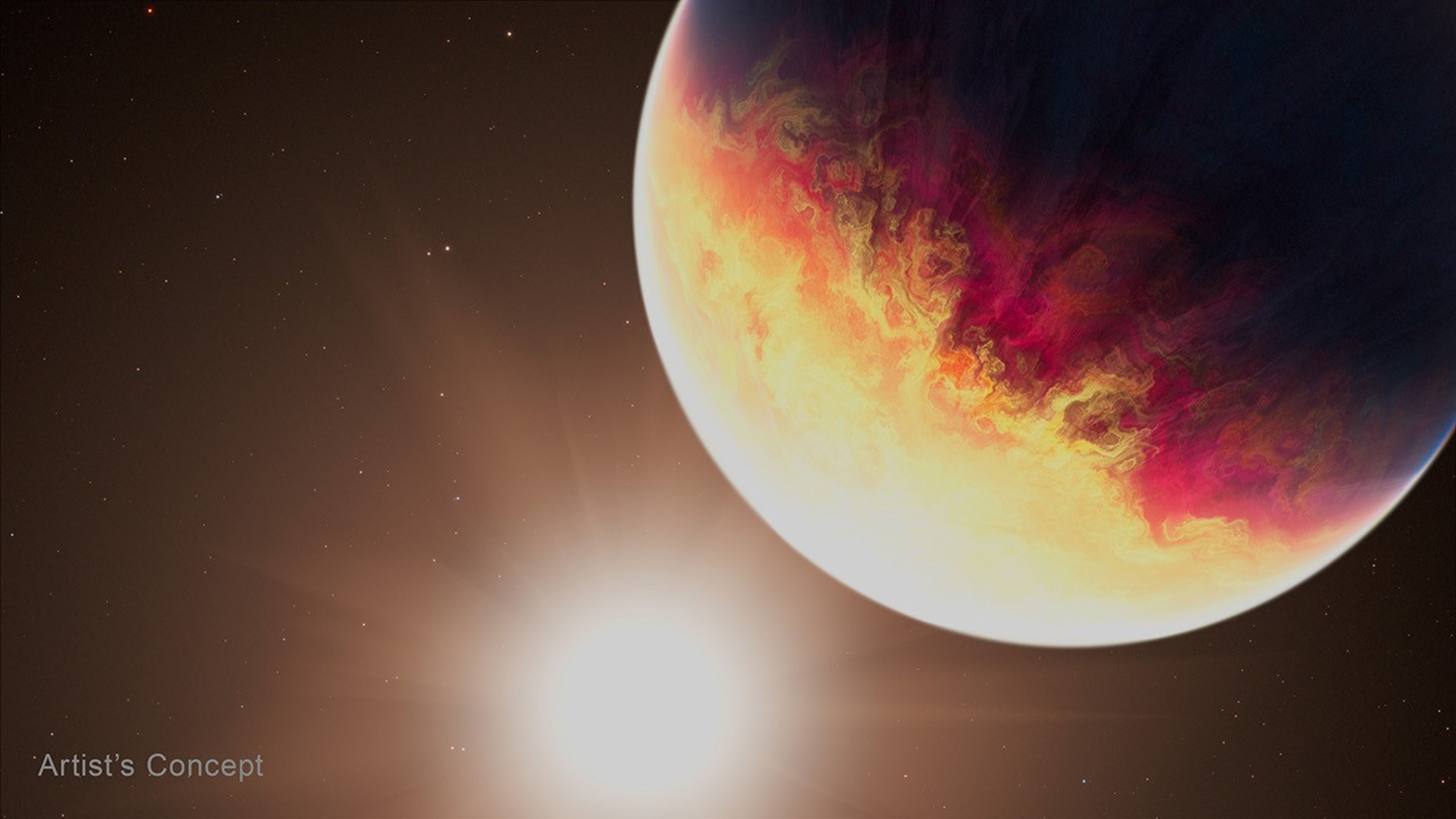
Illustration of a planet and a star, labeled artist’s concept at the bottom left. The planet fills more than a quarter of the image to the upper right, with the bright star to its lower left. The planet is white hot on the star side, fading to yellow that mixes with swirls of bright red across its middle, and eventually fading to black on the side most distant from the star. Distant stars dot the background of space, which is black near the edges of the frame.
This artist’s concept shows exoplanet HD 80606 b being “roasted” as its orbit approaches periastron, the point at which it is closest to its host star, which is similar to our Sun.
Credits:
Artwork: NASA, ESA, CSA, Joseph Olmsted (STScI)

4 min read

NASA’s Webb Catches Exoplanet Getting Roasted

One well-done gas giant, coming right up! That’s the latest from researchers analyzing NASA’s James Webb Space Telescope’s observations of HD 80606 b, an exoplanet four times the mass of Jupiter with an extremely elliptical orbit that sweeps close by its Sun-like star. The research team is presenting their study and preliminary findings Tuesday at the 248th meeting of the American Astronomical Society in Pasadena, California.

“Hot Jupiters are already considered some of the most extreme exoplanets we know of, but even among that population, HD 80606 b is one of the most extreme,” said Tiffany Kataria, the study’s principal investigator at NASA’s Jet Propulsion Laboratory in Southern California. “We typically think of hot Jupiters as hot gas giants sitting right next to their stars, but this planet’s highly eccentric orbit creates a completely different beast.”

As the planet plunges close to its star, Webb shows its temperature skyrockets by 1,100 degrees Fahrenheit. Previous studies have shown that radical temperature swings can cause an exoplanet’s chemistry and clouds to change in real time. According to the research team, the dynamic conditions of HD 80606 b make the planet an ideal target to observe these changes with Webb’s powerful instruments.

Image: Artist’s concept exoplanet HD 80606 b

Illustration of a planet and a star, labeled artistu2019s concept at the bottom left. The planet fills more than a quarter of the image to the upper right, with the bright star to its lower left. The planet is white hot on the star side, fading to yellow that mixes with swirls of bright red across its middle, and eventually fading to black on the side most distant from the star. Distant stars dot the background of space, which is black near the edges of the frame.
This artist’s concept shows exoplanet HD 80606 b being “roasted” as its orbit approaches periastron, the point at which it is closest to its host star, which is similar to our Sun.
Artwork: NASA, ESA, CSA, Joseph Olmsted (STScI)

“Observing a planet like HD 80606 b is actually very efficient because its unusual orbit, with the corresponding swings in temperature and chemical composition, allow us to gather data under varying conditions in just hours and apply those findings to other hot Jupiters or more conventional exoplanets,” said Laura C. Mayorga, co-investigator on the study and an exoplanet astronomer at the Johns Hopkins Applied Physics Laboratory in Laurel, Maryland.

Measurements of temperature and chemical composition were done with spectroscopy, a technique scientists use to break light into its component colors to reveal information about the composition, temperature, motion, and physical properties of objects in space. The team used Webb’s MIRI (Mid-Infrared Instrument) for an extended observation of HD 80606 b before, during, and after its periastron, or closest pass by its star. During periastron, the planet also passed behind the star from Webb’s perspective in what’s known as a secondary eclipse. The observation was years in the planning, as scheduling the time to catch the planet at this point was complex given its extremely elliptical 111-day orbit, and Webb’s own restrictions on where it can look during specific times of the year, based on Earth’s position in orbit around the Sun.

Researchers say they have only begun to peel back the layers of an incredibly rich dataset, but they can clearly see a dramatic shift in the exoplanet’s temperature. “Webb has shown that the planet’s increase in temperature was even more extreme than we anticipated based on Spitzer data,” said Kataria.

In fact, the planet had already been dubbed the “roasted exoplanet” and even got its own poster in NASA’s popular series. NASA’s now-retired Spitzer Space Telescope laid the groundwork of infrared observations of HD 80606 b, showing that more detailed spectroscopic data from Webb would be especially compelling.

“Spitzer did amazing work on this exoplanet, and now Webb is building on that legacy by enabling us to drill down to distinguish specific chemical signatures like methane and carbon dioxide, which is just amazing progress,” said Ryan Challener, co-author and research associate at the Cornell Center for Astrophysics and Planetary Science. “There’s so much to learn from this one dataset here — we really are just getting started deciphering what Webb has to tell us.”

The James Webb Space Telescope is the world’s premier space science observatory. Webb is solving mysteries in our solar system, looking beyond to distant worlds around other stars, and probing the mysterious structures and origins of our universe and our place in it. Webb is an international program led by NASA with its partners, ESA (European Space Agency) and CSA (Canadian Space Agency).

For more information on Webb, visit:

science.nasa.gov/webb

Downloads & Related Information

The following sections contain links to download this article’s images and videos in all available resolutions followed by related information links, media contacts, and if available, research paper and Spanish translation links.

Related Images & Videos

Illustration of a planet and a star, labeled artistu2019s concept at the bottom left. The planet fills more than a quarter of the image to the upper right, with the bright star to its lower left. The planet is white hot on the star side, fading to yellow that mixes with swirls of bright red across its middle, and eventually fading to black on the side most distant from the star. Distant stars dot the background of space, which is black near the edges of the frame.

HD 80606 b (Artist’s Concept)

This artist’s concept shows exoplanet HD 80606 b being “roasted” as its orbit approaches periastron, the point at which it is closest to its host star, which is similar to our Sun.

Related Links

Este Artículo en Español – “Telescopio Webb de la NASA Detecta un Exoplaneto Asandose”

Read:  Webb’s Impact on Exoplanet Research

Watch:  How to Study Exoplanets: Webb and Challenges

Explore:  Eyes on Exoplanets

Print: The Roasted Exoplanet Poster

More Webb: News | Images | Science | Home Page


Share

Details

Last Updated
Jun 17, 2026
Contact
Media

Laura Betz
NASA’s Goddard Space Flight Center
Greenbelt, Maryland
laura.e.betz@nasa.gov

Leah Ramsay
Space Telescope Science Institute
Baltimore, Maryland

Hannah Braun
Space Telescope Science Institute
Baltimore, Maryland

❌