Structures and Materials, Associate Director, Research Directorate at NASA’s Langley Research Center
Martin Annett is the Associate Director of the Structures and Materials Division at NASA’s Langley Research Center, where he leads cutting-edge research in structures and materials in support of aeronautics and space missions.
He has recently served in key leadership roles as Chief Engineer and Program Manager for NASA’s Science and Space Technology Mission Directorates. From 2008 to 2021, Martin contributed to major advancements in aircraft and rotorcraft crashworthiness at Langley’s Landing and Impact Research Facility, serving as Technical Lead for Impact Dynamics and Injury Biomechanics, Head of the Structural Dynamics Branch, and Facility Manager.
Prior to joining NASA, Martin held positions at Johns Hopkins University Applied Physics Laboratory, Orbital Sciences Corporation, and the Aerospace Corporation, where he conducted structural dynamics testing and analysis in support of missile defense systems, spacecraft structures and opto-mechanical instruments, and injury biomechanics programs.
Martin holds an M.S. in Mechanical Engineering from George Washington University and a B.S. in Aerospace Engineering and Mechanics from the University of Minnesota.
He has authored or co-authored more than 40 technical papers and is an active member of the Vertical Flight Society’s Crash Safety Committee.
NASA’s Career Technical Education Day Highlights Technical Careers
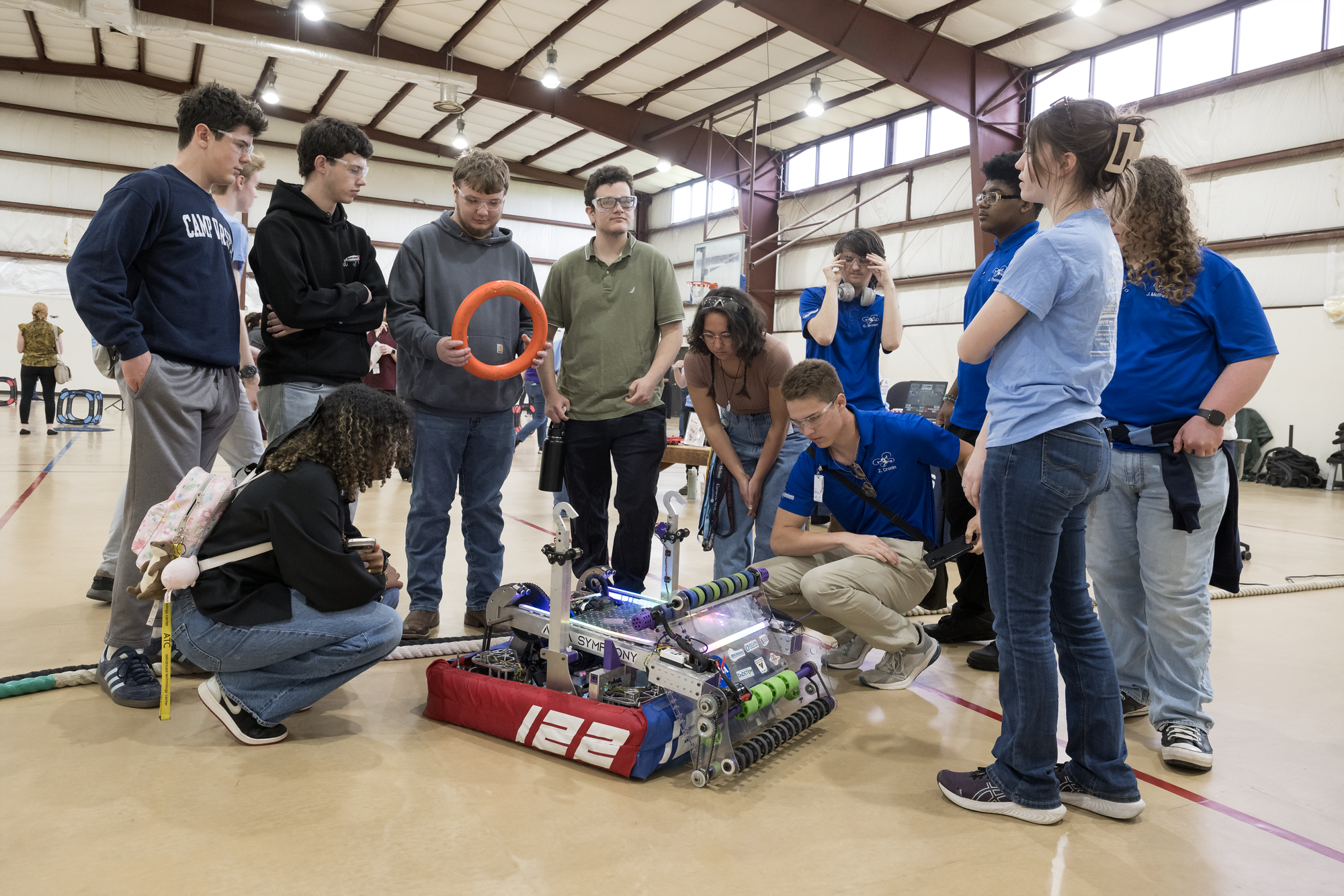
Students participate in a hands-on robotics demonstration during Career Technical Education Day at NASA’s Langley Research Center in Hampton, Virginia.
NASA/Mark Knopp
At NASA, remaining a global leader in exploration and innovation includes having a skilled and dedicated workforce. Technicians play a critical role in advancing the agency’s research and missions, applying hands-on expertise across engineering, fabrication, electronics, and countless other technical fields.
To help cultivate the next generation of technical talent, NASA’s Office of STEM Engagement hosted Career Technical Education Day recently at NASA’s Langley Research Center in Hampton, Virginia. One hundred high school and community college students from Virginia and North Carolina attended, eager to explore the technical career paths that help drive NASA’s work.
“Many students picture NASA as only astronauts or engineers and therefore never consider a career at NASA to be within their reach,” said Bonnie Murray, lead for the Office of STEM Engagement at NASA Langley. “Bringing students from local career and technical education programs to Langley allows them the opportunity to see technicians at work, hear the pathways those technicians followed, and understand how the skills they are developing in their related classes have a place in the NASA workforce.”
The event opened with remarks from NASA Langley’s Steve Gayle, who traced his path from an engineering technician co-op in the center’s Fabrication Division and a graduate of Langley’s Engineering Technician Apprentice Program to his current role as acting associate director. Gayle encouraged students to embrace challenges, think critically, stay curious, and create their own opportunities as they pursue their career goals.
“We need young, bright minds,” Gayle said. “At NASA, we rely on skilled hands-on professionals — technicians who operate our wind tunnels, apply their skills in our fabrication shops, and use their electronics knowledge to design, test, and build critical systems.”
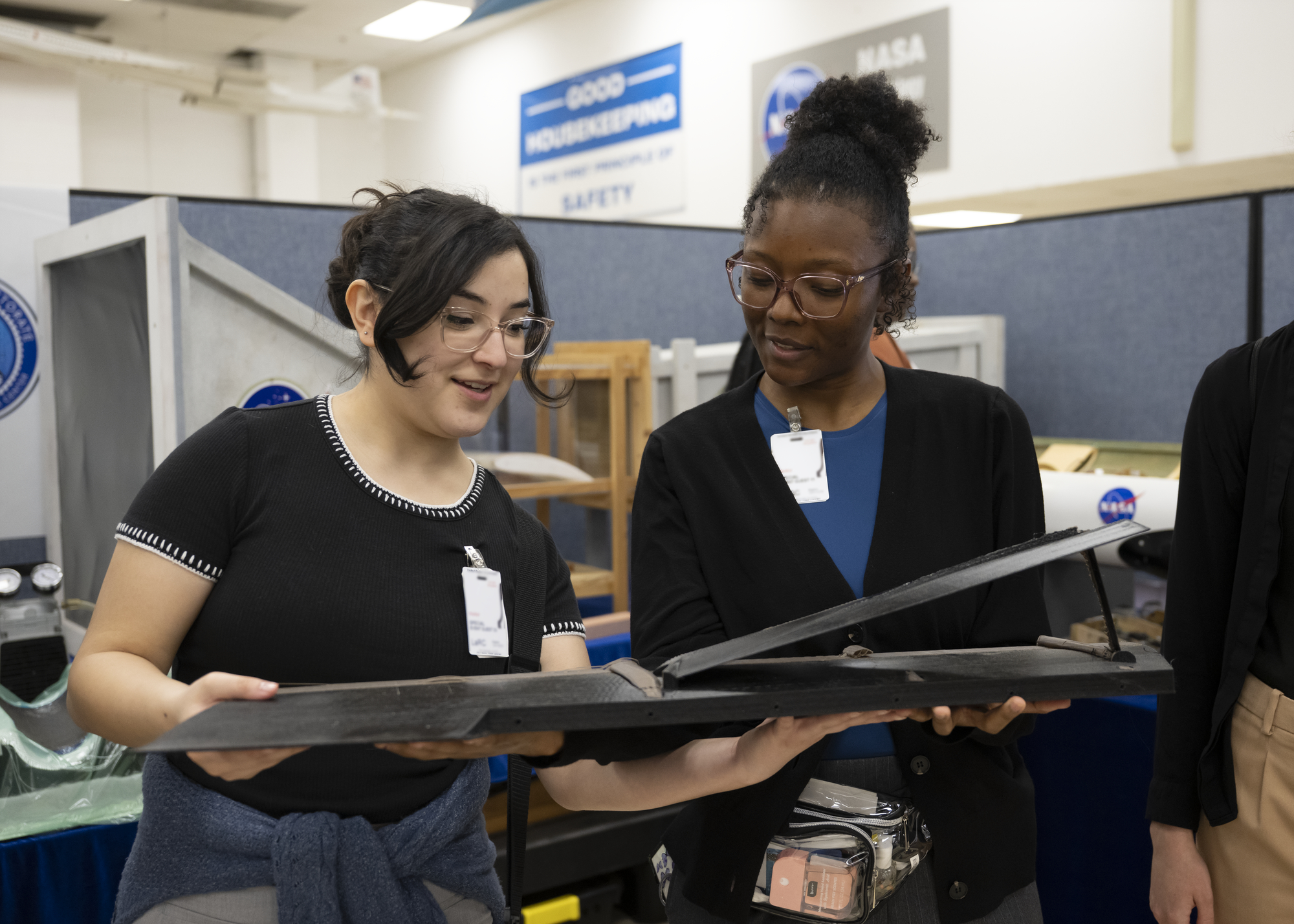
Students visit NASA Langley Research Center’s model shop during Career Technical Education Day to learn about the materials and techniques technicians use to build model aircraft and spacecraft.
NASA/Ryan Hill
Throughout the day, students toured several of Langley’s world-class facilities, including the historic Landing and Impact Research Facility and one of the center’s wind tunnels. At each stop, they received a behind-the-scenes look at the spaces where NASA technicians build, test, and refine the tools and technologies that support the agency’s missions. The technicians spoke with students about their work, their career paths, and the skills needed to excel in technical roles.
Hands-on demonstrations and interactive activities lead by NASA technicians and aerospace industry partners helped students connect their classroom experience with real-world applications. Whether observing fabrication techniques, seeing instrumentation up close, or engaging with engineering demonstrations, participants experienced how STEM and technical skills directly translate into meaningful careers.
“Through events such as this, NASA seeks to prepare students for aerospace careers through experiences and investments that strengthen research capacity, build technical expertise, and expand reach in alignment with agency missions and needs,” Murray said. The event ended with a career panel moderated by NASA astronaut Joe Acaba, associate director of mission and strategy at NASA’s Johnson Space Center in Houston and former math and science teacher. The panel featured four Langley technician apprentices who shared insights into their roles and the value of strong foundational skills in technical fields.
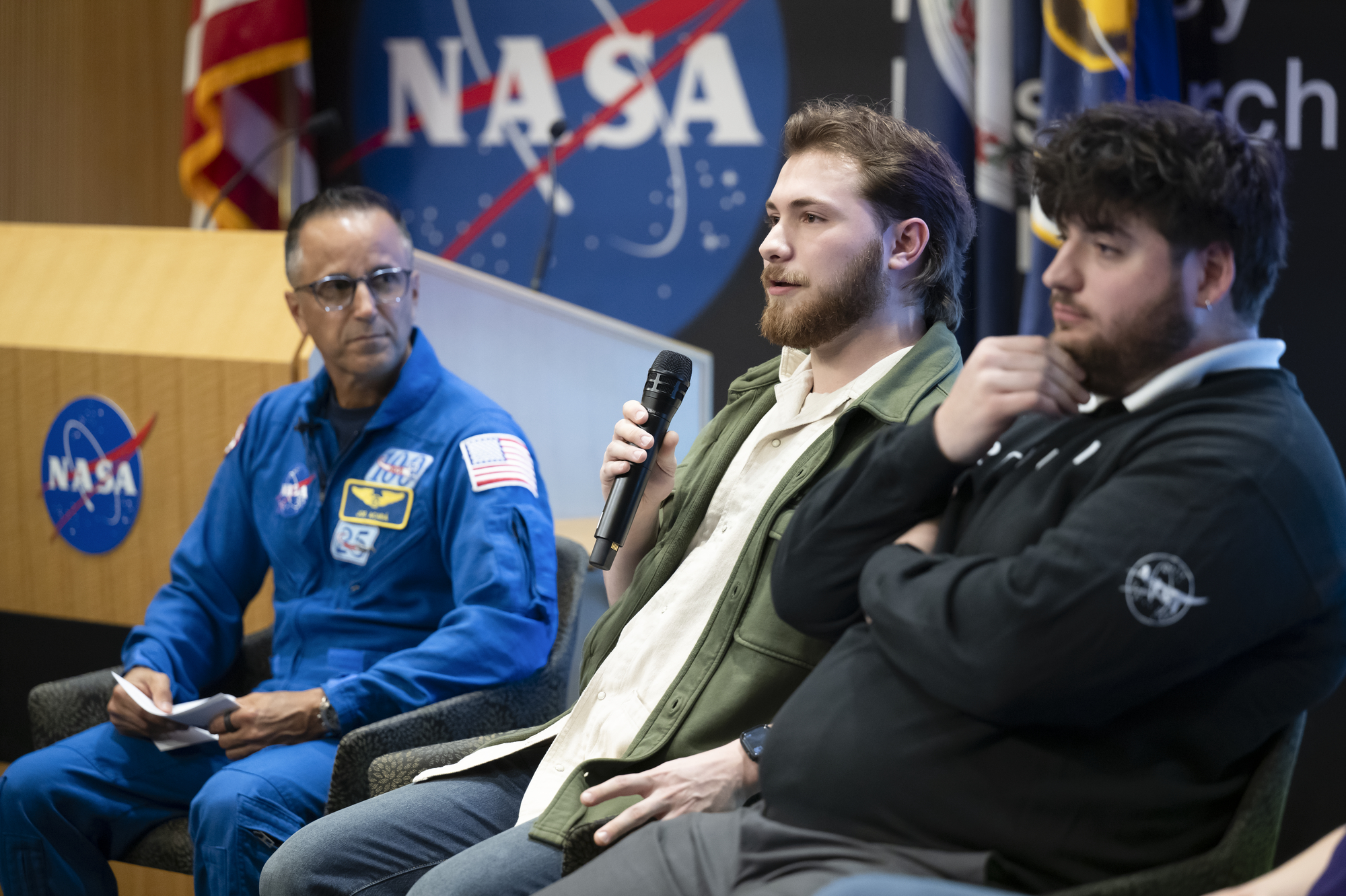
Wyatt Healy, mechanical engineering technician apprentice at NASA’s Langley Research Center, answers questions during a career panel featuring NASA Langley technician apprentices during Career Technical Education Day.
NASA/Ryan Hill
“A basic grasp of how software, systems, and even everyday items function goes a long way as you progress in your technician journey,” said Wyatt Healy, mechanical engineering technician apprentice at NASA Langley. “When you have those fundamentals down, learning the more advanced concepts becomes much easier. It doesn’t happen overnigh but with a strong foundation, the sky is the limit.”
By connecting students with NASA professionals, facilities, and hands-on experiences, the event showcased a broad range of opportunities available in technical careers. It also underscored NASA’s commitment to building a strong, skilled workforce equipped to support the agency’s mission and tackle the challenges of tomorrow.
For more information about opportunities to connect students with NASA’s mission, work, and people, visit:
Preparations for Next Moonwalk Simulations Underway (and Underwater)
Students participate in a hands-on robotics demonstration during Career Technical Education Day at NASA’s Langley Research Center in Hampton, Virginia.
NASA/Mark Knopp
At NASA, remaining a global leader in exploration and innovation includes having a skilled and dedicated workforce. Technicians play a critical role in advancing the agency’s research and missions, applying hands-on expertise across engineering, fabrication, electronics, and countless other technical fields.
To help cultivate the next generation of technical talent, NASA’s Office of STEM Engagement hosted Career Technical Education Day recently at NASA’s Langley Research Center in Hampton, Virginia. One hundred high school and community college students from Virginia and North Carolina attended, eager to explore the technical career paths that help drive NASA’s work.
“Many students picture NASA as only astronauts or engineers and therefore never consider a career at NASA to be within their reach,” said Bonnie Murray, lead for the Office of STEM Engagement at NASA Langley. “Bringing students from local career and technical education programs to Langley allows them the opportunity to see technicians at work, hear the pathways those technicians followed, and understand how the skills they are developing in their related classes have a place in the NASA workforce.”
The event opened with remarks from NASA Langley’s Steve Gayle, who traced his path from an engineering technician co-op in the center’s Fabrication Division and a graduate of Langley’s Engineering Technician Apprentice Program to his current role as acting associate director. Gayle encouraged students to embrace challenges, think critically, stay curious, and create their own opportunities as they pursue their career goals.
“We need young, bright minds,” Gayle said. “At NASA, we rely on skilled hands-on professionals — technicians who operate our wind tunnels, apply their skills in our fabrication shops, and use their electronics knowledge to design, test, and build critical systems.”
Students visit NASA Langley Research Center’s model shop during Career Technical Education Day to learn about the materials and techniques technicians use to build model aircraft and spacecraft.
NASA/Ryan Hill
Throughout the day, students toured several of Langley’s world-class facilities, including the historic Landing and Impact Research Facility and one of the center’s wind tunnels. At each stop, they received a behind-the-scenes look at the spaces where NASA technicians build, test, and refine the tools and technologies that support the agency’s missions. The technicians spoke with students about their work, their career paths, and the skills needed to excel in technical roles.
Hands-on demonstrations and interactive activities lead by NASA technicians and aerospace industry partners helped students connect their classroom experience with real-world applications. Whether observing fabrication techniques, seeing instrumentation up close, or engaging with engineering demonstrations, participants experienced how STEM and technical skills directly translate into meaningful careers.
“Through events such as this, NASA seeks to prepare students for aerospace careers through experiences and investments that strengthen research capacity, build technical expertise, and expand reach in alignment with agency missions and needs,” Murray said. The event ended with a career panel moderated by NASA astronaut Joe Acaba, associate director of mission and strategy at NASA’s Johnson Space Center in Houston and former math and science teacher. The panel featured four Langley technician apprentices who shared insights into their roles and the value of strong foundational skills in technical fields.
Wyatt Healy, mechanical engineering technician apprentice at NASA’s Langley Research Center, answers questions during a career panel featuring NASA Langley technician apprentices during Career Technical Education Day.
NASA/Ryan Hill
“A basic grasp of how software, systems, and even everyday items function goes a long way as you progress in your technician journey,” said Wyatt Healy, mechanical engineering technician apprentice at NASA Langley. “When you have those fundamentals down, learning the more advanced concepts becomes much easier. It doesn’t happen overnight, but with a strong foundation, the sky is the limit.”
By connecting students with NASA professionals, facilities, and hands-on experiences, the event showcased a broad range of opportunities available in technical careers. It also underscored NASA’s commitment to building a strong, skilled workforce equipped to support the agency’s mission and tackle the challenges of tomorrow.
For more information about opportunities to connect students with NASA’s mission, work, and people, visit:

 Login