PORT HUGHES, Australia — Situated midway along the Great Southern Reef that spans Australia’s southern coastline, the waters off Port Hughes typically teem with life. The coastal hamlet northwest of Adelaide plays host to a multitude of coral, bivalve and fish species. But in late March, the largest and longest harmful algal bloom (HAB) in Australian history arrived to Port Hughes, depleting its waters’ rich biodiversity. The bloom had first appeared elsewhere off the state of South Australia’s coast a year earlier, causing eye and skin irritation and respiratory symptoms among beachgoers. Then, along with waves of acrid-smelling sea foam, scores of dead marine animals began washing ashore. In Port Hughes, the HAB’s impacts were most visible below the surface. The town’s wooden jetty had previously been one of the most consistent locations in South Australia to observe temperate species, said Stefan Andrews, co-founder of the Great Southern Reef Foundation, a conservation advocacy group. But by mid-April, when Mongabay joined Andrews on a dive, the site was drab compared with vibrant photographs taken in February and March. Under the jetty, sponges and corals that had previously adorned its pylons in a brilliantly hued mosaic appeared colorless. Apart from a short-headed seahorse (Hippocampus breviceps) — a “sign of hope,” Andrews called it — little life was visible in the murky waters. The reef, he said, had become quieter, lacking the sounds of snapping shrimp and other creatures that once played in the underwater soundtrack. “There’s a sense of loss when you…This article was originally published on Mongabay
Across the stories today, a common thread emerges: the gap between environmental promises and practice is forcing communities to take matters into their own hands, even as powerful interests dig in their heels.
The day’s coverage points to growing momentum around local action filling spaces where larger systems have failed. In Iowa, farmer James Hepp is breaking ranks with agricultural tradition, calling for mandatory water quality standards after voluntary programs fell short on his 1,600 acres. Meanwhile, in Ghana, marine biologist Issah Seidu has convinced fishing communities to trade endangered guitarfish for giant snail farming—creating economic opportunity that doesn’t depend on depleting the ocean.
These grassroots shifts are happening against a backdrop of institutional retreat. The aviation industry quietly admitted its 2050 net-zero pledges will likely miss the mark, just five years after making them. Democratic politicians are avoiding climate messaging despite electoral benefits, a phenomenon researchers call “climate hushing.” And the Trump administration invoked wartime powers to pour $700 million into coal revival, framing fossil fuels as national security.
Yet nature itself is sending mixed signals that complicate neat narratives about environmental decline. UK waters are experiencing an unprecedented octopus population boom that’s reshaping marine ecosystems from England to Scotland. Tuna populations are showing remarkable recovery through strict international fishing regulations. But for every success story, there’s a reminder of fragility: critically endangered Chinese pangolins discovered thriving in Nepal’s community forests, or 119 sailors’ graves from 1801 now threatened by Norfolk’s rising seas.
It’s a reminder that progress and pressure often arrive together. The same regulatory changes that created UK electric vehicle loopholes will pump an extra 17 million tonnes of carbon into the atmosphere by 2030. North Carolina legislators are simultaneously curbing data centers’ massive electricity consumption while boosting fossil fuel incentives—an environmental paradox wrapped in a single bill.
Behind the numbers are real communities adapting in real time. Over 600 Thai residents just completed a 42-mile “peace walk” demanding government action on heavy metal river pollution. In the Dominican Republic, 65-year-old Leoncia Ramos wants to leave the home she’s known her entire life, fleeing gold mine pollution while Canada’s corporate watchdog office sits empty. Long Island residents in Brookhaven are discovering that decades of landfill contamination now threatens their groundwater.
These stories reveal something crucial about this environmental moment: when institutions fail or retreat, communities don’t wait. They organize marches, develop alternative livelihoods, break with traditional alliances, and demand accountability. Whether it’s Michigan’s farm training program addressing agricultural crisis through hands-on education, or Malawi’s Elephant Marsh feeding thousands while facing conservation pressures, local knowledge and local action are filling critical gaps.
The tension between extraction and protection remains fierce—Shell operated leaking Nigeria pipelines for years despite knowing the risks to mangrove forests, while Colorado opens 156,000 acres of critical wildlife habitat to oil drilling. But today’s coverage also suggests that the most durable environmental progress might be happening at smaller scales, in communities that can’t afford to wait for global agreements or corporate promises.
As the week unfolds, all eyes will be on whether these grassroots innovations can scale up fast enough to match the challenges revealed in today’s headlines.
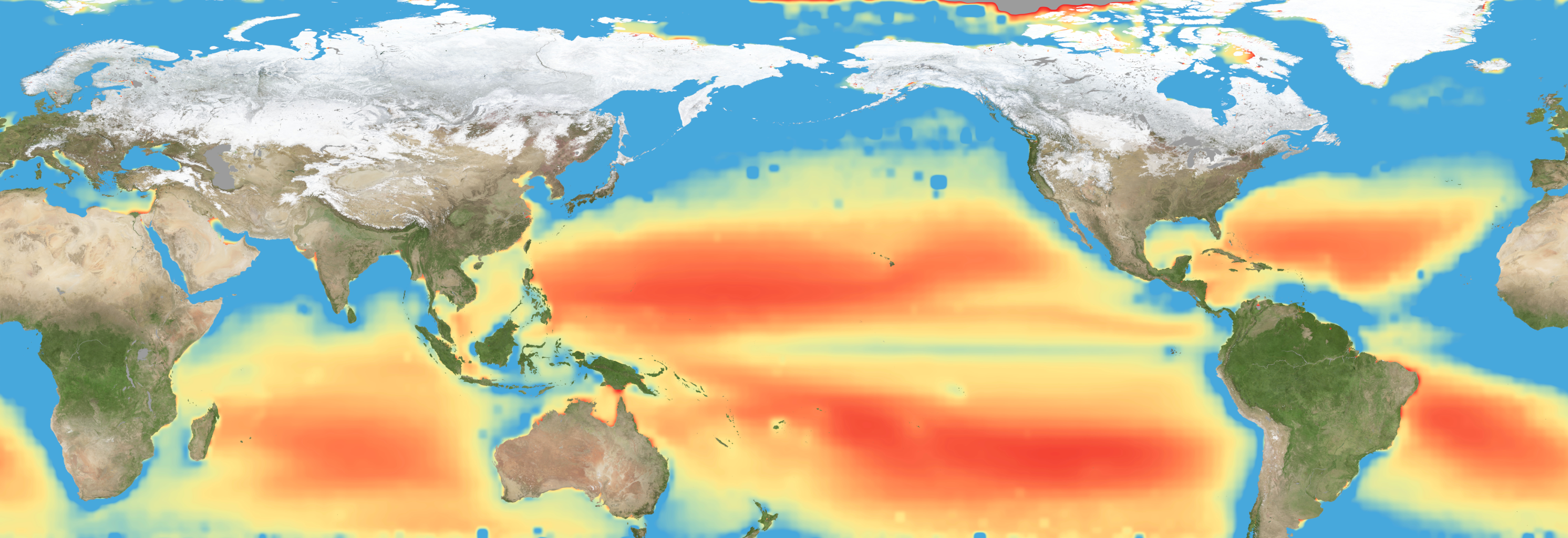
Warming waters decrease upwelling and lead to stress on marine microorganisms due to limited availability of vital nutrients. Red indicates the regions of highest nutrient-related stress.
Kel Elkins/NASA’s Scientific Visualization Studio
Editor’s note: This article was updated on June 5.
A new study combining NASA satellite observations, ocean surveys, and genetic testing on marine microorganisms found evidence that warming ocean waters may be limiting nutrient availability across much of the global ocean. The researchers report that this nutrient stress affects microscopic marine organisms and could influence marine ecosystems over time.
The research, published June 5 in Science Advances, tracked the condition of phytoplankton, which form the base of ocean food webs. Rather than measuring nutrients like nitrogen, iron, and phosphorus directly, the researchers inferred stress by tracking subtle shifts in the ratio of carbon to chlorophyll in phytoplankton observed from space. When the amount of chlorophyll decreases relative to carbon as seen in satellite data, it’s an indication that the plankton are stressed.
“As our ocean continues to change, the ability to observe and track ocean conditions through sustained, high quality remote sensing observations has never been more important,” said Laura Lorenzoni, Program Scientist for NASA’s Ocean Biology and Biogeochemistry Program at NASA Headquarters in Washington. “This is fundamental, as plankton communities are the base of the marine food web on which important economic activities rely.”
The research team combined two decades of data from NASA’s Aqua satellite’s Moderate Resolution Imaging Spectroradiometer (MODIS) sensor with plankton samples collected on research cruises around the world. The approach linked large-scale satellite observations with genetic markers in Prochlorococcus, a tiny but abundant marine microbe that shows signs of nutrient stress in its DNA. The result is a global map revealing where phytoplankton are thriving and where they’re struggling.
Ocean chlorophyll, as observed with NASA’s Moderate Resolution Imaging Spectroradiometer (MODIS) instrument between January 2010 through May 2016.
Marit Jentoft-Nilsen/NASA’s Goddard Space Flight Center
The strongest indications of nutrient stress on plankton appeared in the subtropical gyres, which are vast, relatively calm regions of the Atlantic, Pacific, and Indian oceans. In these areas, a layer of warm surface water stifles the flow of colder water from deeper in the ocean.
“When the surface of the ocean warms, it generates this very stable situation where a layer of low-density water sits on top of higher-density cold water,” said study coauthor Adam Martiny, an oceanographer at the University of California, Irvine. “You’ve probably experienced that if you’ve ever been to a lake in the summertime—it’s super warm right on the surface, and very cold deeper down when you stick your legs in.”
This layering blocks the upward flow of nutrient-rich water, limiting the availability of ocean surface nutrients that are crucial for plankton. In the South Pacific, one of the most nutrient-poor regions, a layer of warm surface water contributed to nitrogen and iron shortages, producing the most severe nutrient-related stress that the team discovered.
But the researchers were surprised to find that parts of the North Atlantic experience less nutrient stress than expected. Although there was evidence of a lack of phosphorus, the impact on microorganisms was comparatively mild.
That difference may reflect the biology of the organisms themselves. Phytoplankton can partially compensate for phosphorus shortages by recycling phosphorus more efficiently or replacing phosphorus-rich molecules inside their cells. Nitrogen shortages are harder to overcome because nitrogen is crucial for the proteins and cellular machinery required for photosynthesis and nutrient uptake.
The study revealed that nutrient stress is strongly correlated with seasons and major weather cycles such as El Niño and the Pacific Decadal Oscillation, which lead to warming waters in the Pacific Ocean. During La Niña events, which cool water over a large part of the Pacific, stronger upwelling brought more nutrients to surface waters and reduced stress in some regions. Superimposed on those multi-year cycles, however, was a longer-term trend.
From 2002 through 2021, average sea-surface temperatures increased across nearly 90% of the ocean area examined in the study. Over the same period, nutrient stress generally intensified, consistent with previous hypothesis that warming oceans may become increasingly stratified and less able to replenish surface nutrients.
In many nutrient-poor regions of the Southern Hemisphere, however, the researchers found evidence that nutrient stress had not increased as much as expected despite significant warming. They suspect that microbes capable of capturing nitrogen from the air may partially offset the effects of reduced nutrient mixing.
That finding hints that marine ecosystems may possess more resilience to warming climates than some models predict. It also underscores the complexity of forecasting how ocean biology will respond to continued warming.
“We have two really powerful tools,” said study coauthor Michael Behrenfeld, a biochemist with Oregon State University in Corvallis, Oregon. The tools include satellite observations and cellular studies. “Both produce big data sets, but they are kind of opposites. We have very detailed data about microscopic phytoplankton … and then we have global coverage with satellites.”
By combining satellites that monitor the entire ocean with genetic clues carried inside microscopic plankton, the researchers say they are gaining a new way to track biological responses to changing environmental conditions near real time.
For generations, wild rice has been far more than just a food source for Native American communities in the Great Lakes region—it’s a cornerstone of cultural identity and spiritual practice. Bazile Minogiizhigaabo Panek of the Red Cliff Band of Lake Superior Chippewa recalls his first harvest at age seven, gliding through shallow northern Wisconsin waters in a traditional canoe while his family used poles and sticks to gather the precious grains that would rain into their boat and back into the water below.
Today, this culturally vital resource faces mounting pressures from climate change, pollution, and habitat loss. Rising temperatures alter water levels and growing seasons, while industrial runoff and invasive species threaten the delicate ecosystems where wild rice thrives. These challenges have prompted Indigenous communities and conservation groups to launch comprehensive protection efforts across traditional growing areas.
The response has been both scientific and deeply rooted in traditional knowledge. Teams are working systematically to map existing rice beds, collect seeds from healthy populations, and restore damaged habitats. Climate projections guide decisions about where to establish new growing areas that may prove more resilient as conditions continue to change. These efforts combine centuries-old harvesting wisdom with modern conservation techniques, creating a model for how traditional ecological knowledge can inform contemporary environmental protection.
The stakes extend far beyond preserving a single species. Wild rice ecosystems support diverse wildlife populations and serve as natural water filters. For Indigenous communities, protecting these waters means safeguarding cultural practices that have connected families and communities to the land for countless generations.

 Login