Across the stories today, a common thread emerges: the planet is speaking in signals — some subtle, some deafening — and the question is whether our institutions can listen fast enough to act.
Start with the signals themselves. El Niño has surged to record strength weeks ahead of schedule, and its fingerprints are already visible — from Hurricane Polo’s explosive intensification in the Pacific to the climate volatility rippling through global weather systems. In the UK, an aphid outbreak wiped out 30 million lettuce heads almost overnight, a small but telling example of how shifting conditions can upend food systems in ways no one budgets for. In Malawi, an unexplained weed overgrowth has choked Chia Lagoon, stranding farmers and fishers in flooded fields nearly seven months after the rains should have drained. These aren’t isolated oddities. They’re the planet’s early warning system, written in crop yields and clogged waterways.
Then there’s the human response — uneven, but not absent. Germany’s landmark pledge to phase out fossil fuels by 2045 marks a rare moment of policy catching up to urgency, moving beyond vague “carbon neutrality” language toward something more concrete. The UK’s decision to declassify a once-suppressed intelligence report — warning that climate breakdown is a direct threat to global security — suggests governments are quietly acknowledging what scientists have said for years, even if political will lags behind. And at UN climate talks in New York, amid what The Guardian describes as a genuinely grim mood, solar power’s continued growth offered rare, tangible hope. As Al Gore noted twenty years after An Inconvenient Truth, he’s surprised by the ferocity of fossil fuel pushback — but still believes, cautiously, that the fight can be won.
Behind the numbers are real communities adapting in real time. In the Andes, villagers near Villa de Arma are turning to ancient wetland systems as glaciers they once walked across vanish into bare rock. In Guam, resident Leevin Camacho learned his family’s water contained a pesticide banned since 1987 — a stark reminder that militarization and environmental cost are often intertwined, especially in the Pacific. And in Sarawak, Indigenous communities are still reckoning with displacement from the Bakun megadam three decades later, a cautionary tale as the world races toward a “clean” energy future that doesn’t always ask who pays for it.
It’s a reminder that progress and pressure often arrive together. Endangered birds on South Australia’s Eyre Peninsula won last-minute protection from a rocket launch site — a genuine conservation victory — even as a Norfolk Broads housing levy was quietly slashed, raising fears that environmental safeguards elsewhere are eroding. Meanwhile, olive ridley sea turtles nesting for the first time ever on California beaches offer something rarer: wonder. A signal, too, but one that invites curiosity rather than alarm — proof that the natural world is still capable of surprising us.
As the week unfolds, all eyes will be on whether momentum from Climate Week — bolstered even by a monster from Sesame Street reminding children it’s okay to feel both fear and courage — translates into follow-through. The data, the disasters, and the small human stories all point the same direction: the era of asking “if” is over. What remains is the harder work of “how fast,” and “for whom.”
As climate experts gather in New York this week for another round of high-stakes negotiations, the mood is grim. This year is on track to set a new global temperature record, and next year could break it again as El Niño intensifies. The planet has lurched from one disaster to the next: deadly European heatwaves, catastrophic flooding in Nepal that has erased entire communities, and unsettling new research suggesting the Atlantic Ocean’s major current systems may be approaching a dangerous tipping point. Despite the mounting evidence and urgency, political will to act remains stubbornly weak.
Yet amid this bleak landscape, there is one source of genuine optimism: solar power. Unlike political negotiations, which move at a glacial pace, solar technology has advanced rapidly and become dramatically cheaper, making clean energy more accessible than ever before. Advocates are now pushing world leaders to commit to an ambitious but achievable goal — bringing solar power to every corner of the globe by 2030.
The road ahead won’t be easy. Confronting entrenched fossil fuel interests and inertia among the powerful takes courage. But there’s a unifying truth that cuts through the complexity of climate politics: every person on Earth lives under the same sun. That shared reality, advocates argue, can become a source of collective strength — a reminder that the tools to address the climate crisis already exist and are within reach, if only the political will can catch up with the technology.
When policymakers struggle to inspire real momentum on the climate crisis, sometimes it takes a three-and-a-half-year-old furry red monster to cut through the noise. That’s exactly what happened this week in New York City, where Elmo of Sesame Street fame made a memorable appearance at a Climate Week event focused on how extreme weather and rising temperatures are affecting children around the world.
Speaking in his characteristic third-person style, Elmo shared how frightened he felt during a recent storm that struck Sesame Street, an event portrayed in a recent episode featuring musician Post Malone. The storm storyline was designed to help young viewers process fear and anxiety around extreme weather, a growing reality for children as climate-driven disasters become more frequent and intense.
Elmo’s message to the crowd went beyond fear, though. He spoke about resilience and compassion in the face of frightening events, telling the audience that “courage is when you still help others,” even when you’re scared yourself. The sentiment struck a chord at an event otherwise filled with sobering statistics about how children worldwide are increasingly exposed to climate-related hazards, from heat waves to flooding to poor air quality.
Organizers say bringing beloved children’s characters into climate conversations helps make an overwhelming global issue more relatable, especially for young audiences who are already absorbing news of extreme weather. With research showing that children face disproportionate risks from a warming planet, advocates hope that even a small, fuzzy voice of comfort might help both kids and adults find the courage to act.
After nearly two decades, America's war on CO2 is being brought to a well-deserved end, with Lee Zeldin, the head of Trump's EPA, scrapping Biden-era green power plant rules, says Tilak Doshi.
Arctic summer sea ice should have melted away years ago, according to the 'experts' who foretold its demise by 2007, 2012, 2016... But with the ice going nowhere, those experts are very quiet now, says Paul Homewood.
The Americas experienced their own Vesuvius-style volcanic eruption 21.9 million years ago, devastating a portion of Chile worse than Pompeii.
A new study in Science Advances highlights the work of University College London Earth Sciences researchers analyzing a mountain of ancient volcanic rock covering an area six times the size of the Chilean capital, Santiago.
The Lauca Caldera erupted to cover the area in molten ignimbrite rock up to a kilometer deep. That ancient volcanic hellscape buried the region’s terrain but, ironically, preserved it from typical erosion, providing important clues for modern climate researchers.
Modeling Volcanic Activity
“This landscape was buried by a giant volcanic eruption – a little like Pompeii, but on a vastly larger scale,” said lead author Dr Byron Adams, based at UCL Earth Sciences. “Instead of covering a town, hot mixtures of volcanic ash, rock fragments, and gas swept across an entire landscape, engulfing the terrain beneath them.”
Using detailed computer models, the UCL Earth Sciences team produced hundreds of possible landscapes to explore what the region may have once looked like. Detailed data on how rivers cut through landscapes to form mountain ranges informed predictions of what lies beneath the massive ignimbrite deposits. The researchers concluded that a low-relief landscape, such as foothills, most likely existed there at the time.
“Pompeii shows how volcanic eruptions can freeze a moment in human history. This study shows that much larger eruptions can also freeze moments in Earth history, burying whole landscapes beneath volcanic deposits and preserving clues to how mountains were being built before the eruption,” Adams said.
“We cannot dig down to see the buried landscape, but we can use the shape of the volcanic blanket and what we know about how rivers shape mountains to infer what is hidden beneath it.”
The Volcanic Andes
The findings indicate that this portion of the Andes, the world’s longest continental mountain range, rose very slowly, by only about an inch per century. At a faster rate, the landscape beneath the volcanic deposits would not fit the researchers’ models, and the slopes would have been much steeper.
The work provides new evidence in a longstanding debate among geologists over whether the Andes rose rapidly in the last few million years or developed more gradually over a much longer period. Earlier mineral analyses of the Andean range produced similar estimates based on records of temperature changes preserved in the rocks as they cooled while moving toward the planet’s surface.
“This approach gives us a new way to look back at Earth’s history. Current methods to estimate the speed at which mountains build look at chemical ‘clocks’ in the rock, but these are limited to specific moments in time. Our method can estimate rock uplift over a much longer period,” Dr. Adams said. “In this case, we estimate it would have taken millions of years to produce the subdued landscape we infer prior to the eruption.”
Other mountain ranges around the world, such as the Himalayas, can move even faster, rising several millimeters or even centimeters each year.
Climate Implications
While the team’s work covers only the middle of the Andes’ history, it still provides interesting support for the slow-movement hypothesis. For years, researchers have worked to understand how the Andes developed, as they strongly influence global and regional climate.
By better understanding the Andes, climatologists have a more complete data set to piece together the complex problem of global climate change.
“What’s particularly exciting about this study is that it gives us a new way of piecing together that history, concluded co-author Dr Frances Cooper, also based at UCL Earth Sciences. “The same approach could be applied to volcanic deposits elsewhere in the world, helping us reconstruct landscapes buried for millions of years.”
The paper, “Landscapes Buried Beneath Large-Volume Ignimbrites Reveal Preeruptive Uplift Rates,” appeared in Science Advances on September 11, 2026.
Ryan Whalen covers science and technology for The Debrief. He holds an MA in History and a Master of Library and Information Science with a certificate in Data Science. He can be contacted at ryan@thedebrief.org, and follow him on Twitter @mdntwvlf.
Across the stories today, a common thread emerges: the boundaries we once drew around “the environment” — between land and sea, sky and orbit, economy and ecology — keep dissolving, revealing how deeply intertwined these systems have become.
Start with the sky, in more ways than one. The US government’s confirmation that it has deployed a weapon in Earth’s orbit marks a genuine turning point, not just for defense policy but for how we think about the commons above our heads. Space has long been treated as neutral ground; now it’s becoming contested territory, raising quiet but urgent questions about debris, escalation, and what “environment” even means when it extends past the atmosphere. Meanwhile, back on solid ground, the UK’s climate advisers delivered a pointed message to Heathrow: a third runway cannot proceed unless airlines help pay for the emissions it would unleash, potentially through carbon removal costs. It’s a small but telling signal that growth and climate accounting are becoming inseparable in policy conversations — expansion is no longer a given, even for infrastructure long considered inevitable.
That tension between growth and limits runs through much of today’s coverage. A Guardian analysis found that the world’s twenty largest private equity firms back energy portfolios emitting more greenhouse gases than all but three countries on Earth — a stark reminder that climate accountability often hides behind layers of finance most people never see. In Venezuela, a US-backed push for “legitimate” mining and a new oil megadeal are drawing warnings from environmental and human rights groups who see familiar risks dressed in new language. And in Guinea-Bissau, industrial fishmeal factories are quietly hollowing out a food fish that coastal communities have relied on for generations. Behind the numbers are real communities adapting in real time — from Vietnamese fishers losing thousands of dollars per vessel to tangled plastic waste, to Dhaka residents like Yeasmin Begum, who has spent her life breathing the smoke of a landfill she never chose to live beside.
Yet alongside these pressures, the day’s coverage also points to growing momentum around resilience and repair. Ukrainians are turning to rooftop solar to keep homes running amid bombardment — a portrait of adaptation born from necessity. A Congolese NGO now co-manages a national reserve for the first time, a homegrown model of stewardship. Moon bears rescued from bile farms are stretching their limbs in Suffolk enclosures, and three wild dog brothers wandered 2,500 miles across Zambia in search of a mate, offering an unlikely note of hope for their species. Even Griffith Park’s mountain lion — photographed beneath the Hollywood sign — helped inspire the world’s largest wildlife crossing, proof that a single image can shift infrastructure decisions.
It’s a reminder that progress and pressure often arrive together. Some communities are innovating their way through crisis; others, like the land defenders now forming self-defense units amid rising violence, are simply trying to survive it. As Brazil’s upcoming election looms over the Amazon’s future, and Chief Raoni Metuktire — one of its most storied protectors — enters palliative care, the coming months may reveal whether today’s momentum toward stewardship can outpace the forces pulling the other way.
New research suggests that Antarctica and Greenland have lost more than 11 trillion tons of ice since the 1970s, and the main driver isn't surface melting.
The EU has claimed "insurance as usual is not sustainable" in the era of climate change, but it's really just an excuse for Brussels to build a climate protection racket, warns Dr Tilak Doshi.
Choosing to bury their heads in the sand on behalf of the citizens of this country and perhaps the planet at large, the Trump administration has announced that the Environmental Protection Agency will eliminate limits on greenhouse gas pollution produced by coal and natural gas power plants, the Associated Press reports.
Needless to say, it would be a staggering setback in the federal government’s ability to tackle climate change, and the effects could be long-lasting in both an environmental and legal sense. The administration is also proposing a separate rule that could prevent future administrations from imposing restrictions on greenhouse gas emissions from power plants, all but ensuring a future of ecological catastrophe.
“Tearing down our national protections against climate pollution from power plants will have enormous costs for the health, safety and well-being of families across the country,” Vickie Patton, general counsel for the Environmental Defense Fund, told the AP. “Americans everywhere are already suffering from record-breaking heat, more dangerous floods and storms, and skyrocketing insurance costs.”
Manish Bapna, the president of the Natural Resources Defense Council, told the New York Timesthat the EPA “is ending its legal and moral responsibility to end climate pollution.”
These changes, which involve repealing regulations passed under the preceding Biden and Obama administrations and passing new ones, have been a long time coming.
Led by EPA administrator Lee Zeldin, the agency first proposed them last year, arguing that CO2 and other greenhouse gas emissions from power plants are neither a significant contributor to “dangerous pollution” that harms human health, nor to climate change. It follows, Trump’s EPA argues, that the agency doesn’t have the authority to regulate the emissions under the Clean Air Act, the US’s landmark air quality control law passed in 1963.
The action will almost certainly face fierce legal challenges from environmental groups.
“The Sierra Club will fight back against this reckless and dangerous proposal with everything we have in the courts, in Congress, and in communities across the country,” Holly Bender, the group’s chief program officer, said in a statement.
Trump has long been a climate change skeptic, calling it not only a “hoax,” but the “greatest con job ever perpetrated on the world.” Upon taking office in 2025, he immediately withdrew the US from the Paris Agreement for the second time (the first happened during his first term, and was overturned by president Biden). The international treaty is an agreement to limit global warming to 1.5 degrees Celsius, or 2.7 degrees Fahrenheit, past which scientists say the worst effects of climate change will be irreversible.
A clear beneficiary of the changes is the coal industry, which Trump has gone to great lengths to appease. He has proposed relaxing regulations around how it disposes of its toxic waste, and directed the federal government to pour $700 million into supporting the industry. But “clean, beautiful coal,” as Trump calls it, is pound for pound the most carbon-emitting fuel and the largest source of global CO2 emissions.
Climate change is often discussed in terms of rising temperatures, extreme weather and environmental loss. But there's another consequence that can be harder to see: The impact on our mental health.
Editor's Note: This text was updated at 12:30 p.m. EDT to correct the spelling of Kim Meidenbauer's name.
Burning up: How can we adapt to a warming world?
As the planet warms, our environment will be transformed, but so will our bodies. This video is part of a series where we investigate the health impacts of climate change, focusing on heat, air quality, food and infection risk. We also evaluate the promising solutions that could help us adapt to our warmer future.
'Wildfire smoke is the fastest-growing environmental threat in the US': How a warming world will poison the air we breathe
Wildfires are projected to increase dramatically due to climate change. That could trigger a massive increase in heart attacks, premature births and early deaths, research reveals.
If this summer felt hotter than usual, you're not alone. As it turns out, this past summer was the hottest on record in the United States.
This is the hottest that summer in the U.S. has been in at least 132 years. Specifically, the temperatures rose to 3 degrees Fahrenheit (1.67 degrees Celsius) above average, beating out the most recent record set in 2021 of 0.4 degrees F (0.22 degrees C) above average, according to a new report from National Oceanic and Atmospheric Administration (NOAA). And looking month-to-month, this was also the hottest August we've ever seen.
The record-breaking season saw unmatched temperature highs across the contiguous U.S. (all of the adjoining states, excluding Alaska and Hawaii which just aren't a part of this record) from June through August. But scorching temperatures aren't all that this new record reveals, as this summer was also one of the driest on record for the contiguous U.S., with more than half of the country in a drought by September. The summer of 2026 saw both extreme precipitation highs and lows across the country, too. From droughts to heavy rain, there was nothing average about the precipitation seen across the U.S. this summer.
A closer look
Digging into some of the details, the full summer was 3 degrees F above the average for the season, 74.4 degrees F (23.5 degrees C). August was 3.5 degrees F (1.94 degrees C) above average for the month at 75.6 F (24.2 C). And while most of the contiguous U.S. experienced well above average temperatures this summer, some locations felt the heat the most. The Southwest, the southern Rockies, the southwestern Plains, southern Florida, California, Nevada, New Mexico and Colorado hit particularly high temperatures this August.
Looking at the summer's unusual precipitation levels, the total precipitation across the contiguous U.S. was 0.32 inches (0.8 centimeters) below average, making this past summer the third driest on record, and the driest summer since 2000. By Sept. 1, 59.1% of the country was in drought. There was drought across the West, the upper Midwest, the Deep South and more. Over 75% of Puerto Rico lie in drought conditions as well, with 40% being in "extreme drought." And while summer might be ending, a lot of this drought is projected to continue, according to the report from NOAA. When it comes to drier lands, that also means an increased risk of wildfire.
Though these temperature differences might seem small or relatively mild at face value, they have massive consequences. As climate change progresses primarily due to greenhouse gas emissions caused by human activities like transportation and manufacturing, we continue to see a whole host of its effects across the world. This ranges from rising average temperatures and glacial ice loss to sea level rise and worsening natural disasters. Those natural disasters include events like flooding, hurricanes, wildfires and cyclones.
While different areas of the world will experience different effects of global warming, one thing remains true for all: The consequences will only continue to worsen asour planet warms.
This infographic shows some of the weather and climate events that took place in the U.S. during August, 2026. (Image credit: NOAA)
If we just look at this past August 2026 in the U.S., not only did we see record-high temperatures, but also weather and climate disasters of all varieties. Fires broke out over 10,000 acres of eastern Washington, even spreading across the state and into Oregon. More fires, in fact, spread across Nevada and Alaska while wind gusts up to 111 miles per hour (178.6 kilometers per hour) tore across South Dakota. A heatwave brought sweltering temperatures to south Florida and Hurricane Lala brought intense winds, rain and flooding to Hawaii;. And these are just a few of the many examples — from just this last month.
As global temperature increase shoots past 1.5 degrees Celsius, the vulnerable countries that fought for that Paris Agreement target face a brutal new reality.
Weakening Atlantic Ocean currents could cripple agriculture in some of the world's major breadbaskets, threatening global food security and raising the price of basic commodities, new research finds.
The study, which hasn't been peer-reviewed yet, investigated how a roughly 60% decline in the Atlantic Meridional Overturning Circulation (AMOC) would impact global food production. The AMOC is a system of ocean currents that regulates the global climate and brings heat from the tropics to the Northern Hemisphere.
In the new study, researchers used a computer model to simulate the AMOC's future decline. They modeled 100 years of change, assuming 3.6 degrees Fahrenheit (2 degrees Celsius) of warming above preindustrial levels. The team forced an AMOC slowdown over the first 50 years in one simulation but didn't modify the circulation in a second experiment, which enabled them to compare the world with and without an AMOC failure.
The model's outcomes mirrored the results of previous studies, showing broad cooling in the Northern Hemisphere and a southward shift of the belt of clouds and rain that encircles the globe near the equator. As in past studies, these effects were irreversible on human timescales, said study co-author Michael Hinge, a senior economist at the nonprofit Alliance to Feed the Earth in Disasters (ALLFED).
"Once the damage is inflicted, it stays there," Hinge told Live Science, adding that in the 50 years after the peak rate of AMOC slowdown in the model, the circulation weakened by an extra 20%. The study was posted on ALLFED's website July 7.
An agricultural "shock"
Hinge and his colleagues ran three models to look at the most common varieties of wheat, maize and rice, layering these models on top of the AMOC simulations. They found that global yields for these crops decreased by 5.3% by the 50-year mark, once the AMOC had weakened substantially.
"Lots of these effects manifest earlier, so it's a moving target," Hinge said.
He added that the results were based on a single warming scenario that was run once and used monthly rather than daily data, so they should be interpreted as a proof of concept. "We've set up a pipeline that is ready to take pretty much any AMOC scenario that can generate high-resolution climate data and see what it implies for crops," Hinge said.
While there was a 5.3% decrease overall, that global metric concealed huge differences between regions. For example, countries like Germany and Ukraine lost up to 19% of their cereal yields due to sudden, sharp cooling, while Canada showed a 12% decline in production for the same reason.
"Scandinavia, the United Kingdom and Canada are particularly exposed," Hinge said, "but there are many other [vulnerable] locations, some of which may be surprising even to the people who are living there."
For instance, the model produced a "very nasty brown splodge" of reduced precipitation over India, Pakistan and big parts of China, he said. Iran, Sudan and Eritrea, which are already water-stressed countries, also exhibited severe declines in rainfall, indicating that a portion of the agriculture there may not survive an AMOC collapse.
The 5.3% result also hides variability among years, Hinge said, because it's an average. So there may be years when global cereal losses reach 10% or more, which would bump up food prices, in part because countries might stockpile crops instead of trading them.
Global response
The regional effects of an AMOC slowdown would interact with climate change, triggering unpredictable outcomes. In particular, maladaptation — taking actions that end up backfiring — is a worry, Hinge said.
"You're preparing and setting up for much hotter temperatures or trying to develop areas for these temperatures and the trends you're seeing, and suddenly you see something different," he said. "That may cause an even larger compounding effect [on agriculture]."
The findings build on prior research led by Paul Ritchie, a climate scientist at the University of Exeter in the U.K., whose team explored the effects of an AMOC collapse on agriculture in Great Britain. That study, published in 2020, had similar limitations as the new one, so it's best to interpret both papers as a suggestion of what might happen rather than a precise forecast, Ritchie told Live Science in an email.
"I think the new study is valuable in showing the potential scale and geographic distribution of the initial agricultural shock," said Ritchie, who was not involved in the latest work. "What that would ultimately mean for food production and food security is more uncertain, because there are many possible responses by farmers, markets and governments." For that reason, the regional predictions may be more informative than the 5.3% global average, he said.
An AMOC collapse could reduce rainfall over the Indian subcontinent, crippling agriculture in this region. (Image credit: Bhaswaran Bhattacharya/IndiaPictures/Universal Images Group via Getty Images)
Average food prices worldwide could rise by 17% to 40% if the AMOC weakens to the extent it did in the model, the study predicts. The level of increase depends on how countries respond to the shock and their degree of preparedness, as well as on whether agriculture can be sustainably expanded in places like the African Sahel (the semi-arid zone directly south of the Sahara Desert) and Brazil, the analysis suggests.
The U.S. would not be spared from this price jump, and the model indicated that the country could see crop losses of about 3% for domestic wheat and corn. This loss would likely impact other foods that rely on cereal inputs, like meat, Hinge said. "The variety of foods available in the stores may well diminish for periods," he added.
An AMOC collapse would fundamentally deepen the need for countries to trade with each other, because some regions — such as the Indian subcontinent, China, Iran, Russia, Ukraine and Canada — could endure this giant shift only if they imported more food, Hinge said.
"Should countries turn inwards and start to restrict exports in an effort to ensure access for their own citizens first, or deal with the uncertainty, or offset concerns, then this will massively magnify the effects of AMOC," he said.
If governments behave as they have during past shocks, such as the 2008 financial crisis and the COVID-19 pandemic, they may restrict trade and start stockpiling food if and when the effects of AMOC weakening begin to show, Hinge predicted. The researchers hope their work and future modeling can help people understand the need to take swift, effective action if a collapse were to occur, he said.
Currently, "if that warning light starts flashing, we're not sure what to do with it," Hinge said. "There are no easy answers here; an AMOC [collapse] would be deeply catastrophic."
By the time naval architecture firm George G. Sharp tasked Jack Heaney with the design of the world’s first nuclear-powered merchant ship, the Glasgow-born designer had already broken many styling norms. In the mid-1940s, Heaney transformed routine ocean transport into a festive occasion when he designed the interiors of the SS President Wilson and SS President Cleveland with Hawaiian murals, carved glass panels, and a smoking lounge dressed in playful, exotic wall art. His gift for making the mundane desirable wasn’t confined to ocean liners—New York’s Museum of Modern Art had already put one of his stackable aluminum chairs on display in 1947. But nothing in Heaney’s career had prepared him for the commission that reached his drawing board in 1957.
At the time, the shadow of 1945, when the world first witnessed the terrifying power of the atom, loomed large. Following World War II, the United States and Soviet Union were locked in a nuclear arms race, and the public associated splitting atoms with annihilation. Atoms meant war.
To shift that sentiment, President Eisenhower launched his Atoms for Peace initiative, aimed at demonstrating the civilian benefits of nuclear technology—and the NS Savannah, or Nuclear Ship Savannah, was to be its flagship. Heaney suddenly had a much more daunting task than usual; he would have to make the feared desirable.
More than half a century since theSavannah was decommissioned in 1971, there is no nuclear-powered merchant ship in active commercial service anywhere in the world. Four nations have tried. None succeeded, mostly because the economics were not compelling enough and no one trusted nuclear ships.
In the interim, nuclear reactors have only become smaller and safer. Now, as the true cost of burning oil at sea comes due—commercial shipping produces more than three percent of global greenhouse gas emissions—the economics of nuclear-powered merchant ships may finally be compelling. But the problem Heaney was hired to solve in 1957 still stands in the way, persuading people to trust what they fear.
The making of a maritime designer
John “Jack” Heaney was born in Glasgow in 1904. He grew up during a time when the River Clyde, which runs through the heart of Glasgow, served as the world’s premiere shipbuilding hub, with nearly 40 shipyards situated on its banks. Heaney studied naval architecture at the University of Glasgow, while taking classes at the Glasgow School of Art and apprenticing at the Fairfield Shipbuilding and Engineering Company.
When Heaney emigrated to New York in 1926, he worked a string of jobs, including a brief stint as a door-to-door refrigerator salesman, before joining the New York City-based naval architecture firm George G. Sharp, Inc. in 1937. At Sharp, Heaney quickly developed a reputation for having an engineer’s eye and artist’s hand, helping design the interiors of several prominent passenger-cargo ships—a specialized form of merchant ship that is part cruise liner, part cargo vessel—including the Robin Line, the Delta Line, and the American President Lines. In 1947, the same year MoMA put his chair on display, Heaney opened his own design firm on West 54th Street in Manhattan. A decade later, the Savannah project came across his bow.
Originally tasked with the ship’s exterior design, Heaney eventually assumed responsibility for the ship’s interior styling, too. From stem to stern, it was Heaney’s job to design a nuclear-powered ship that passengers would want to cruise on for pleasure, and that businesses would want to ship merchandise on for commerce.
The NS Savannah was the first nuclear-powered merchant ship. Image: Contributor / Getty Images / Mondadori Portfolio
Atoms for Peace
Eisenhower had announced the Atoms for Peace initiative four years earlier, in a December 1953 address to the United Nations. The atom, he argued, should be turned from a great destructive force “into a great boon, for the benefit of all mankind.” Under Eisenhower, the U.S. began sharing reactor technology and medical isotopes with allied nations. Atoms for Peace sought to prove that the technology that had obliterated two cities could also light homes, treat cancer, build harbors, and move ships.
The U.S. Navy, meanwhile, saw the advantages of a vessel that could continuously plow the ocean without refueling for months, or even years. The USS Nautilus was the first atomic-powered vessel, a sub, launching in 1955. By the time Sharp signed Heaney to the Savannah project, two more atomic-powered subs were patrolling the world’s oceans (USS Skate and USS Seawolf). But military vessels primarily keep to military ports, so the public rarely saw them.
Eisenhower needed a civilian showcase that would disassociate atom-splitting from mushroom clouds. That showcase would be Heaney’s NS Savannah. As a passenger-cargo ship, the Savannah would routinely sail into commercial harbors like Rotterdam, Le Havre, and New York, normalizing nuclear reactors and demonstrating their safety. At least, that was the goal.
How safe is our A-ship?
In 1959, the same year the Savannah launched, Popular Science ran a short feature designed to quell readers’ fears: “How Safe Is Our A-Ship Savannah?” The staff-written story read more like a safety brief than an objective review. While boasting about its efficiency—“on a single loading of A-fuel, the Savannah will have a range of 350,000 nautical miles”—the article focused mainly on the “worst possible accidents that might befall the first atomic merchant vessel.” Such caution seemed justified. That same year, Denmark canceled a scheduled visit by the USSSkate to Copenhagen, and England agreed to receive visiting nuclear submarines only at the remote Isle of Portland, population 12,000, rather than major ports.
Popular Science’s initial coverage was not anomalous. “Passengers will receive no more radiation on the Savannah than they receive from normal background radiation of the earth in their day-to-day lives,” The New York Times reassured its readers.
By 1961, however, as the Savannah prepared to begin its cargo and passenger service, which commenced in 1962, Popular Science’s editors were fully onboard, launching a four-part series that spanned four consecutive issues and more than a dozen pages. The do-it-yourself mini-manual provided detailed instructions for readers to build and sail their own four-foot model of the ship. Four different writers and editors took part in the project: hull casting one month, superstructure the next, then a working steam turbine, and finally radio controls. Even as Popular Science promoted its features, the real Savannah was being fitted with Heaney’s final touches.
The January 1961 issue of Popular Science shows a model of the NS Savannah assembled with screws and dowels. Image: Popular Science, January 1961 issue
Domesticating the atom
On a conventional ship, fuel is stored low in the hull, in tanks that any port can refill with diesel by hose. But Savannah’s single, massive fuel core had to sit in the hull’s center, beneath an opening in the deck, so it could be accessible by overhead crane for refueling. Heaney’s answer to this exterior design problem became the ship’s signature: a streamlined, teardrop-shaped superstructure. Popular Science’s writers praised Savannah’s sleek, futuristic lines as “graceful as a racing yacht’s,” and called its reactor housing “a well-placed superstructure [that] blends airfoil curves with sharply angled planes for a dazzling effect.”
Below decks, Heaney took the fear problem head on, weaving Atomic Age motifs into the ship’s interior. In the veranda, the cocktail bar’s backlit wine rack depicted the trilinear chart of the nuclides in blue, red, and yellow glass; the tables ringing the dance floor glowed, their tops lit by “panelescent,” or electrically charged luminescent panels. Even the floor tiles in the main stairwell carried the atomic theme. A separate lounge nearby offered passengers a closed-circuit television view into the reactor containment vessel. Overhead light beamed down through light fixtures adorned with stylized atoms.
In the dining room, sculptor Pierre Bourdelle installed a wall mural titled “Fission.” Nearby, suspended in glass, hung a small gold model of the NSSavannah’s namesake, the 1819 steamship SSSavannah, the first ship to cross the Atlantic under sail and steam. Heaney hoped such Old World symbolism would make people feel comfortable dining, dancing, and sleeping no more than a dozen yards from a nuclear reactor.
As a design achievement, Savannah was a triumph. Her passenger cabins were mostly full from 1962 to 1965, and more than 1.4 million people toured the ship across 46 ports in 13 countries.
Even the plates and silverware used on the NS Savannah had an atomic motif. Image: Baltimore Sun / Contributor / Getty Images / Kim Hairston
Sunk by economics—and fear
But novelty was never going to be enough to move public sentiment or make Savannah pay for itself. The combined ship-and-reactor construction cost ran to roughly $46 million, three to four times what a comparable conventional freighter cost at the time, and the ship’s specialized nuclear crew commanded specialized wages. No private insurer would touch a nuclear-powered merchant ship; the U.S. government had to indemnify it instead, extending $500 million in federal liability coverage just to get foreign ports to receive the ship. Every port call required a small diplomatic mission of its own, negotiated weeks in advance, with tugs standing by in case of an accident. Some countries, like Australia, New Zealand, and Japan, never accepted Savannah.
By the end of the 1960s, the U.S. Defense Department, one of merchant shipping’s largest customers, had concluded that conventional freighters remained the better bet. With no federal appetite left to continue funding a revenue-losing program, Savannah was withdrawn from service in late 1971 with no plans to build another.
The timing proved fateful. Two years after Savannah was decommissioned, the 1973 oil embargo sent fuel prices soaring; had it still been sailing, the ship’s independence from oil might have tipped the scales for commercial customers, even if the public remained fearful.
Fear kills future “A-ships”
In 1979, the partial meltdown at Three Mile Island—eight years after Savannah’s own retirement—hardened American public fear of nuclear power for more than a generation. The Soviet Union’s Chernobyl accident in 1986 and Japan’s Fukushima accident in 2011 reinforced that fear.
Three other nations tried what the U.S. attempted with Savannah, and each ran into the same wall. West Germany’s nuclear-powered merchant ship Otto Hahn logged 650,000 nautical miles over a decade before port restrictions and rising costs forced her conversion to diesel in 1979—the same year as Three Mile Island.
Japan’s nuclear-powered Mutsu fared worse. Local fishermen blockaded it in harbor for two years before the ship could even sail, and when its reactor went online in 1974, it leaked. The crew had to improvise radiation shielding using boiled rice and old socks.
The Soviet Union’s nuclear-powered Sevmorput, the last of the four and the only one to operate into the 21st century, has sat idle at a dock in Murmansk since 2024. As of today, not a single nuclear-powered merchant ship plows the seas anywhere on Earth.
And yet, military fleets have proven the technology works. The U.S. Navy alone has logged more than 6,200 accident-free reactor-years since 1955. What’s more, reactor designs have advanced significantly since Heaney’s day. Small modular reactors, or SMRs, have been engineered to be smaller, safer, and simpler to certify than anything available in 1959. SMRs are now in active development for maritime use, including a Norwegian consortium’s NuProShip program, and a molten-chloride test reactor that Core Power and TerraPower are building at the Idaho National Laboratory.
The pressure to act has intensified, too. Commercial shipping produces more than three percent of global greenhouse gas emissions—a share that could climb to 10 percent by 2050 if the industry does nothing while the rest of the world decarbonizes. In 2023, the International Maritime Organization, which governs commercial shipping, committed its member states to a net-zero target by 2050, a goal serious enough that the IMO is now weighing previously unthinkable measures like SMRs.
But none of it matters if nuclear-powered merchant ships remain taboo.
Sixty-five years after Jack Heaney tried to make the atom desirable, the real problem with nuclear reactors was less about the technology and more about public perception. Unfortunately, that perception has kept a viable climate solution off the table for more than half a century, at a cost now measurable in our planet’s atmosphere. As the shipping industry searches for a way to shed its considerable share of global carbon emissions, it is not physics but persuasion that remains unsolved.
In A Century in Motion, Popular Science revisits fascinating transportation stories from our archives, from hybrid cars to moving sidewalks, and explores how these inventions are re-emerging today in surprising ways.
England’s sparkling wine producers are celebrating what could be one of their finest harvests on record, as an unusually hot, dry summer accelerated grape ripening across the country’s vineyards. Winemakers say they are preparing for the earliest grape harvest in memory, with the intense sunshine boosting sugar levels in the fruit and setting the stage for what many are already calling a “vintage year.”
The same weather pattern that benefited grape growers, however, has spelled trouble for another beloved British beverage. Barley, the key ingredient in beer production, has struggled under the prolonged drought conditions that gripped much of England this summer. Farmers report significantly reduced yields, prompting warnings from brewers and beer sellers about potential shortages in the months ahead.
The contrasting fortunes of these two industries highlight the complex and often unpredictable ways that shifting weather patterns and extreme heat are reshaping British agriculture. While warmer temperatures have allowed English vineyards to produce grapes with a ripeness and sweetness once associated only with more southern wine regions, the same conditions have proven punishing for cereal crops that need more moisture to thrive.
As climate patterns continue to shift, experts suggest that English agriculture may see more of these mixed outcomes, with certain crops benefiting from warmer growing seasons while others suffer from increased drought stress. For now, wine lovers may have reason to celebrate, even as beer drinkers brace for tighter supplies and potentially higher prices in the coming year.
As the planet warms, our environment will be transformed, but so will our bodies. In this series, 'Burning up,' we investigate the health impacts of climate change, focusing on heat, air quality, food and infection risk. We also evaluate the promising solutions that could help us adapt to our warmer future.
To the untrained eye, Xiaoyu Shan's lab bench looked like a home gardening experiment gone bad: dishes filled with dirt — some that looked like mud pies and others that were bone-dry — and not a plant to be seen.
But those dishes held a warning. The dirt that Shan, a postdoctoral research associate in biology and biological engineering at Caltech, was studying contained soil microbes. And those soil microbes were exhibiting a concerning propensity: In dried-out soil, they were evolving to become more antibiotic resistant.
The study describing those findings, published in March, systematically showed that drought conditions could fuel the evolution of antibiotic-resistant bacteria. Most of this resistance is driven by humans' misuse of antibiotics, which spurs bacteria to evolve genes that help them ward off the drugs. But the Caltech study raised a new worry: As many places face increased drought conditions, climate change itself could act as a selective pressure that could supercharge the evolution of these drug-resistant superbugs.
"We can expect to have more resistant bacteria being selected for in certain places around the globe," said Dianne Newman, a Caltech microbiologist and co-author of the study.
Increased antibiotic resistance is just one way that climate change is likely to put new populations at risk of multiple types of infections.
And this increased disease burden will coincide with climate change scrambling supply chains, eroding nutrition and stressing our health in other ways.
"No individual metric really does justice to the overall risk and health and well-being of these multiple stressors being exacerbated all at once and compounding each other," said Marina Romanello, a principal research fellow at the Institute of Global Health at University College London.
Warm-weather disease
In the small mountain town of Bailey, Colorado, which lies at an elevation of 7,740 feet (2,360 meters), May often brings snowstorms that can blanket the ground in white even as the sun starts to bake the plains at lower elevations. But on Memorial Day 2026, the forest floor was dry and ticks quested their way along blades of grass, seeking a blood meal.
A mild winter in most of the country means ticks — and the diseases they carry — are a rising concern. In April, the Centers for Disease Control and Prevention (CDC) reported that emergency department visits for tick bites were at their highest for that month since 2017. That trend isn't a one-off, according to the CDC; as temperatures rise, insects and arthropods can survive longer in the year and farther north.
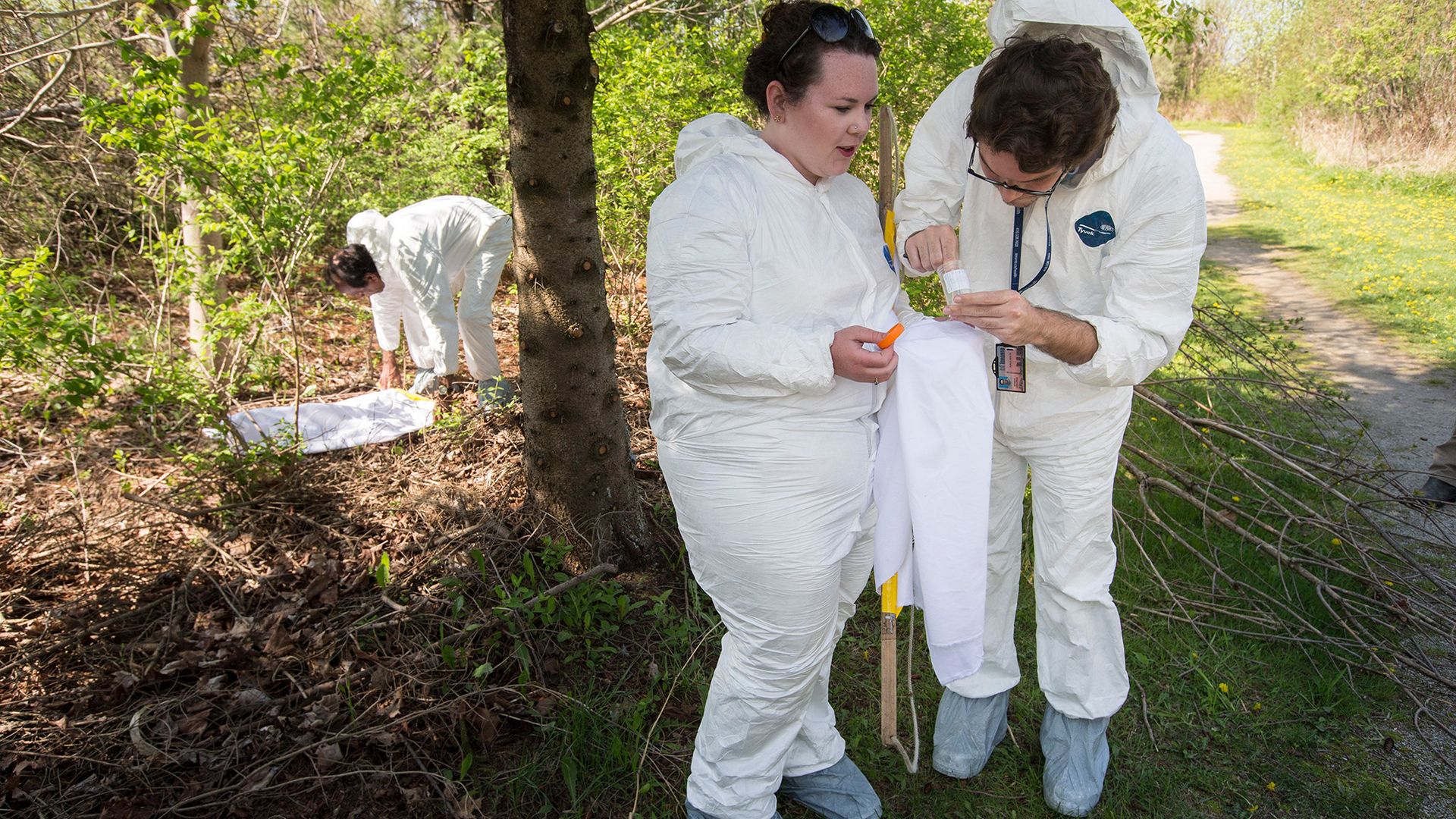
Public health workers in Ontario do a survey for black-legged ticks. Lyme disease, which is carried by the ticks, is spreading in new areas as the climate warms. (Image credit: Bernard Weil via Getty Images)
As a result, vector-borne illnesses such as Lyme disease (spread by black-legged ticks in the Ixodes genus) and West Nile virus (spread by mosquitoes) will become more common in increasingly northerly locations. Already, alpha-gal syndrome, which is not an infection but is transmitted by the Lone Star tick (Amblyomma americanum) and causes an incurable allergy to red meat, is also seeing a dramatic rise as the species expands its range across the Northeast. Positive tests for antibodies to the alpha-gal molecule have increased by 100 times between 2013 and 2024.
Right now, almost half a million people are treated for Lyme disease each year, and the CDC records more than 8,000 cases of other tick-borne diseases annually across the country. It's not clear how this will change as the climate warms. One 2022 study found major increases in Lyme disease only at levels of warming of 6.3 to 9.9 degrees Fahrenheit (3.5 to 5.5 degrees Celsius) by 2100, but that much warming that fast is now considered an implausible scenario. However, the researchers saw a huge amount of uncertainty in the numbers, given the number of variables that affect whether a spreading tick population will transmit more disease, such as how often people go outside or what steps they take to avoid tick bites. Tick-borne illnesses are likely also underreported, so even the true number of illnesses transmitted each year right now is unknown.
But ticks are responsible for spreading 90% of all vector-borne diseases in the U.S., so any trends in the suite of illnesses spread by ticks are likely to affect thousands to tens of thousands of people.
An even more ubiquitous bloodsucker, the mosquito, currently spreads only a few diseases in the U.S. The most common and most serious is West Nile virus, which mosquitoes catch from feeding on infected birds. As of Sept. 8, 504 cases of West Nile virus had been reported in the U.S. in 2026, with 363 of them affecting the central nervous system. And because fewer than 1% of West Nile cases progress to the central nervous system, those numbers likely represent a dramatic underreporting of milder cases, which can cause months of fatigue in some people, in addition to acute flu-like symptoms, such as fever, headache and body aches.
Mosquito-borne illnesses like West Nile are expected to spread more quickly in warming temperatures. Heat helps mosquitoes stick around longer during the year, much like it does for ticks. It also speeds up the transmission and replication of the virus inside the mosquito, since the insects are cold-blooded and thus their metabolism is ruled by the weather.
"Except for places that are already really, really warm, we should expect that the replication rate of the virus inside the mosquito will speed up," said John Drake, director of the Center for the Ecology of Infectious Diseases at the University of Georgia. "That shortens the generation time, and that means we expect there to be more transmission."
Even though mosquitos love water, climate-related drought could ironically nearly triple the number of human West Nile cases in the U.S. over the next 30 years from around 2,000 reported cases (according to CDC data) to between 5,000 and 6,000. That's likely because in drier conditions, more mosquitoes are infected, possibly because birds, the intermediate host of the virus, either congregate more closely with mosquitoes around water sources or breed less readily in drought, meaning the fraction of birds that carry the virus is higher than in more water-abundant times.
Except for places that are already really, really warm, we should expect that the replication rate of the virus inside the mosquito will speed up. That shortens the generation time, and that means we expect there to be more transmission.
John Drake, director of the Center for the Ecology of Infectious Diseases at the University of Georgia
Mosquito-borne diseases long ago eradicated from the U.S. could also resurge with warming temperatures. The southeastern United States will become more prone to malaria and dengue fever transmission under all levels of warming; summer 2026 saw more than 40 locally-acquired cases of dengue fever in Florida. Public health surveillance and disease-control measures have largely stopped those transmission chains, but the likelihood is that society will have to pour more money into beating these diseases back again in future decades. For example, there are malaria vaccines approved for children, but currently, they are recommended only in areas where the illnesses are endemic. If malaria were commonly found in the southern U.S., millions of Americans might need vaccines, including susceptible adults.
"If we were to get endemic diseases like those in the U.S. again, it could become a huge burden and it could be quite costly," Drake said.
Disaster and disease
Flooding is another factor that's exacerbating vector-borne disease under climate change. As climate change worsens, extreme weather events will, too. Because warm air can hold more moisture, many areas will see increased episodes of heavy rainfall and hurricanes will become more intense.
"Flooding creates habitat for these mosquitoes," Drake said.
Disasters also spur the spread of other diseases that are usually quite rare in the U.S., such as leptospirosis, a bacterial infection that spreads from animals to humans via animal urine. Floodwaters may be contaminated by the bodies of drowned animals; in 2022, after Hurricane Fiora hit Puerto Rico, leptospirosis cases leapt by a factor of 3.6 to over 10 cases a week.
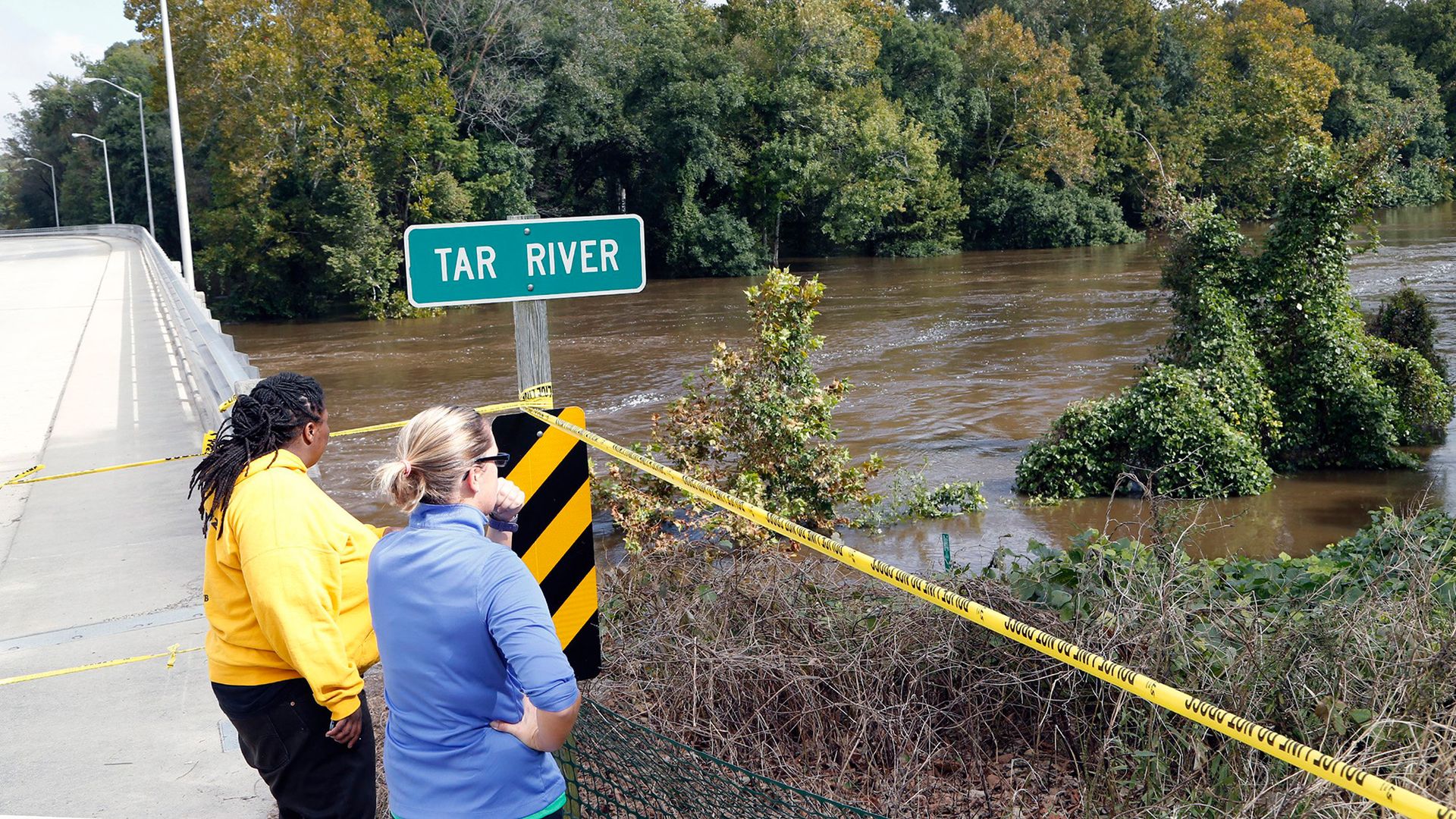
After Hurricane Matthew, emergency visits for gastrointestinal disease increased 11%. (Image credit: Raleigh News & Observer via Getty Images)
After Hurricanes Matthew and Florence in 2016 and 2018, respectively, North Carolina saw an 11% increase in emergency department visits for gastrointestinal illnesses. Black and American Indian residents were the most affected, likely because discrimination over generations has disproportionately pushed Black Americans and Native Americans to less desirable, more flood-prone land, the researchers found.
Cycles of precipitation, drought and subsequent dust storms can spur the spread of Valley fever, a fungal respiratory disease that causes an estimated 700 to 1,100 deaths per year, mostly in the U.S. Southwest. Valley fever is already on the rise, with cases in Arizona, one of the hotspots for the disease, doubling from about 64 cases per 100,000 people in 2005 to 145 cases per 100,000 people in 2022. As the West warms and dries, Valley fever is likely to spread from its stronghold in the Southwest and become endemic in Idaho, Wyoming, Montana, Nebraska, South Dakota and North Dakota, putting millions more people at risk.
The infectious disease risk from natural disasters tends to stack on top of other health problems stemming from these catastrophes. Flooded buildings can harbor mold that can worsen allergies, asthma and other respiratory illnesses. When major storms cause power loss, people turn to generators for electricity, which release pollutants linked to asthma. Though it's often hard to track the effects of these disasters, one study found that flooded regions after Tropical Storm Imelda in Texas in 2019 saw 10% more emergency department visits for asthma than nonflooded regions did.
Moreover, the threat to life and livelihood from these disasters can cause mental health conditions, such as post-traumatic stress disorder, Romanello said. The problems compound on each other, she said; already, she has heard reports from Africa about malaria outbreaks, fed by warming, and health workers struggling to reach the affected regions because flooding, also exacerbated by warming, has washed out roads.
"What is the most concerning aspect is that all of that is happening together, so we're seeing all of this risk being exacerbated at once," she said.
Jace White of Fresno acquired Valley Fever while working on his family farm. Valley fever is predicted to become more common with climate change. (Image credit: The Washington Post via Getty Images)
Antibiotic resistance on the rise
As Newman and Shan's work shows, as spots around the U.S. face new infection risks, existing treatments may become less effective. Their work showed that drought concentrated the natural antibiotics that bacteria make in the soil, making it harder for bacteria susceptible to the compounds to survive. As a result, the microbes with genes for antibiotic resistance did better. The problem for human health is that bacteria are very good at gene swapping, so these soil microbes can easily pass their antibiotic resistance superpowers to bacteria that infect people, their research showed.
"Gardening, breathing dust — that's how it happens," Newman said of human and soil bacteria coming into contact. "We are constantly encountering bacteria in our environment."
A scanning-electron microscope image of Pseudomonas aeruginosa. Recent research suggests that drought could fuel the rise of drug-resistant versions of such pathogenic bacteria. (Image credit: CDC/SCIENCE PHOTO LIBRARY via Getty Images)
The researchers found an association between drought and antibiotic resistance reported by hospitals.
They aren't the only ones. A recent study on Salmonella, a bacterium that causes about 1.35 million cases of food poisoning each year in the U.S. alone, found that temperature and rainfall promote antibiotic resistance in this microbe. "Globally, climate change was linked to about a 10% increase in Salmonella resistance gene abundance," said study first author Zhen-Chao Zhou, an ecology researcher at the Chinese Academy of Sciences in Beijing. Other microbes show similar effects.
Meanwhile, warmer conditions help bacteria grow faster, adapt to stress and swap resistance genes, Zhou said, while drought concentrates them in limited water sources where they mingle freely. Climate-change-induced flooding can then, in theory, spread the resistant genes far and wide.
Combating the compounding risks requires both public health and climate mitigation approaches, experts say. Not only does the world need to cut greenhouse gas emissions, but people also need to use antibiotics more carefully, Zhou said; improve sanitation practices, such as sewage management, around the world so that antibiotic-resistant strains don't spread as easily; strengthen food safety; and expand disease surveillance. The public also needs to understand that climate change is a health issue, Romanello said.
"When we talk about tackling greenhouse gas emissions," she said, "what we're talking about is a sustainable livable future with healthy economies."
These new findings could help scientists adapt crops to dry environmental conditions in the future. Plants rely on sunlight to turn water and carbon dioxide into energy-rich sugars and oxygen through different forms of photosynthesis. Drought can make that process far more difficult. A research group led by Wolfram Weckwerth at the University of Vienna [...]
On Alaska’s remote North Slope, researchers are picking their way across spongy tussock grasses toward Galbraith Creek, a rushing meltwater stream fed by the snowy peaks of the Brooks Range. There, they carefully string up mist nets to catch white-crowned sparrows that have just completed their long migration from warmer latitudes. The birds have only a brief window to stake out territory, find mates, and raise chicks—all fueled by the explosive burst of insects that emerges each summer across the tundra.
From every bird captured, scientists collect blood, feather, and fecal samples to track what the sparrows are eating and how their diets shift as the short Arctic summer progresses. This detailed data collection is part of a groundbreaking research effort seeking to understand something far bigger than individual birds: whether an entire ecosystem—spanning streams, tundra, insects, and wildlife—can adapt fast enough, together, to survive rapid climate change.
Unlike traditional studies that examine how single species adjust to warming conditions, this project treats the Arctic as an interconnected web where the timing of ice melt, insect emergence, plant growth, and animal migration must all stay in sync. As the region warms at a pace several times faster than the global average, that synchronization is increasingly at risk. If insects hatch earlier but sparrows arrive on their usual schedule, birds could miss their crucial food window—a mismatch that could ripple through the entire food chain.
Scientists hope their findings will reveal whether coordinated, ecosystem-wide adaptation is possible, offering a preview of how fragile Arctic systems—and the species that depend on them—might fare as the climate crisis accelerates.

 Login