For years, the idea of nuclear weapons in space sounded more like science fiction than a realistic threat. That changed Monday (Sept. 14), when U.S. Air Force Secretary Troy Meink announced at the Air, Space and Cyber Conference in Maryland that the U.S. had deployed "on-orbit space control weapons capable of defending the Joint Force against hostile adversary action."
The concerns about nukes in space goes back to the 1960s. In 1967, the U.S. and the Soviet Union signed the Outer Space Treaty, in which the nations agreed to not place nuclear weapons or other weapons of mass destruction in orbit around Earth. But this treaty never included an enforcement mechanism — and now, that tenuous compromise may have been violated entirely, inviting other countries to add their own weapons to the final frontier.
With the U.S.' recent announcement, are you worried about an arms race in space? Vote in our poll below, and leave your thoughts in the comments.
The idea of a humanoid robot folding laundry, loading the dishwasher or vacuuming once sounded like a scene from "The Jetsons." Now, as robotics companies race to develop machines that can navigate everyday environments and handle household tasks, the prospect of a robot taking over our chores feels increasingly real.
But just because robots can do the work, that doesn't mean people are ready to welcome them into their homes.
Live Science recently polled readers on whether they would want a humanoid robot doing their household chores, and the results reveal just how appealing the idea of a robotic housekeeper really is.
As of Sept. 15, over 600 people had responded, with 42% choosing to let the robot "take my chores, please." This pattern was reflected in the comments, with one reader stating, "I would, but I doubt my wife would approve of the job the robot did." To this, another reader responded, "Good for her. Take her household responsibilities for a year and report back."
Thirty-six percent of voters, the next-largest bloc, chose the opposite answer: "No, I don't trust it with my dishes (or data)." Humanoid robots are taught movements and tasks by building world models from the environments around them. While the technology remains primitive — resulting in some clumsy (albeit hilarious) mechanical failures — this, rather than privacy concerns, seems to be the current focus of deploying these machines.
It's these mechanical concerns that other commenters focused on, with one reader writing, "I don't think robots are dexterous enough to do dusting chores. Maybe vacuuming, but probably slow and clumsy moving furniture."
The reader also cast doubt on washing floors and moving furniture to mop hard floors — could it discern between items that could and couldn't be loaded into the dishwasher?
"Maybe robots can maintain houseplants," they continued. "Certainly, equipped with a moisture meter and a huge horticultural database, robots can probably serve a better role as waterers in huge commercial nurseries…"
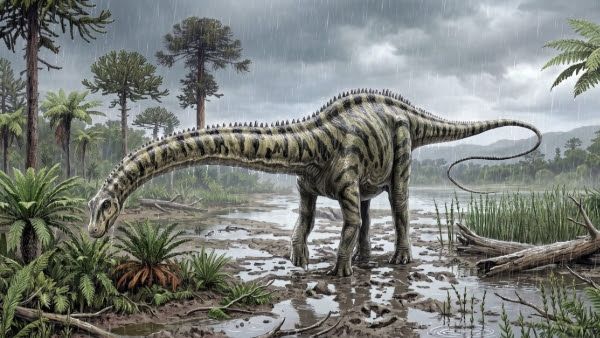
Paleontologists have identified the first confirmed remains of Diplodocus — "Dippy," for short — outside the western U.S., revealing that the iconic long-necked dinosaur reached what is now Spain roughly 150 million years ago.
The findings show that the enormous sauropod didn't live only in North America, as was long thought. Instead, it may have rambled across a land bridge all the way to Europe, the new study suggests.
The discovery, made at the La Tejería site near the small village of El Castellar in eastern Spain, provides some of the strongest fossil evidence yet that dinosaurs could move between North America and Europe during the Late Jurassic, when the Atlantic Ocean was still in its early stages of opening after the breakup of the supercontinent Pangaea. The researchers published their findings Tuesday (Sept. 15) in the Journal of Vertebrate Paleontology.
"Paleontological studies like this one help us better understand the history of life on Earth, reconstruct ancient ecosystems, and understand how they changed through time," study first author Sergio Sánchez Fenollosa, a doctoral student who studies biodiversity and evolutionary biology at the Joint Paleontology Foundation Teruel-Dinópolis (Dinópolis Foundation), a paleontological research institution, told Live Science via email.
A sauropod in Spain
Dippy is one of the best-known dinosaurs. After its fossils made their grand debut at the Carnegie Museum of Natural History in Pittsburgh in the early 1900s, life-size fossil replicas of the towering herbivore were sent around the world, including to England, France, Spain, Argentina and Russia.
But until now, Diplodocus' Late Jurassicfossils were known only from the Morrison Formation in the western United States — and the latest discovery shows that Dippy wasn't a homebody.
The newly unearthed Diplodocus specimen consists of 14 well-preserved tail vertebrae and several chevrons — bones that helped support blood vessels and muscles within the dinosaur's tail.
Study co-author and managing director of the Dinópolis Foundation, Alberto Cobos, said it was a friend who "thought he had spotted some bones on a mountainside," Cobos told Live Science via email. "That very day, I went to the site near El Castellar (a village in the province of Teruel). Sure enough, we saw a couple of sauropod vertebral centers."
Although only part of the skeleton has been recovered, the bones show a series of characteristics associated with Diplodocus, including large cavities corresponding to where air sacs would have been, along with deep grooves running alongside the underside of the tailbones.
The 14 vertebrate and several chevrons found in Spain correspond to the Dipolodocus' anatomy. (Image credit: Carmelo López)
"It was an exciting and continuous process of seeing the pieces of the puzzle gradually fall into place," Sánchez Fenollosa said in a statement. "From the early stages of the osteological study, we noticed strong similarities with several diplodocine sauropods … With each new result, the picture became clearer: we were looking at a Diplodocus."
It's unclear which species of Diplodocus the new specimen is, but like others of its genus, it was a huge dinosaur with an extremely long neck and whip-like tail.
"The Diplodocus from El Castellar was approximately 25 meters [82 feet] long (comparable in size to its North American relatives), making it another of the giant sauropods of the Spanish Jurassic," Cobos said in the statement.
An ancient bridge
Between 195 million and 170 million years ago, the supercontinent Pangaea broke apart as the Atlantic Ocean opened. But the ocean was much narrower than it is today, and the continents were not necessarily as isolated as their modern geography is now.
Evidence indicates that temporary land bridges may have allowed some animals to move between the two regions. The most famous prehistoric land bridge is the Bering Land Bridge that humans used to move between Asia and what is now Alaska. Previous research showed the Bering Land Bridge also existed around 68 million years ago, and it may have allowed an Asian ancestor of Tyrannosaurus rex to trek into North America.
Geological conditions may have allowed dinosaurs like Diplodocus to move between continents, Sánchez Fenollosa told Live Science in an email. "This interpretation is supported not only by the fossil record but also by geological evidence," he said.
The newfound Diplodocus fossils also suggest that the distribution of giant sauropods was more complicated than the fossil record previously indicated.
"More complete specimens will be essential to understand this story in greater detail, particularly to determine which Diplodocus species inhabited Europe: whether it was one already known from North America or a previously unknown species," Sánchez Fenollosa said. "This discovery reminds us that even for such iconic dinosaurs, there are still many unanswered questions about their evolutionary history and biogeography."
The debate has become more mainstream thanks to a recent preprint study that examined "consciousness steering," an AI-tuning technique that affects how an AI model expresses ideas about self-awareness. The researchers suggested that if AI is allowed to claim it is conscious, it's also more likely to state that it believes in ghosts or vampires.
Although the study hasn't been peer-reviewed yet, it raises a big question in the world of AI research: Could AI one day develop real consciousness, regardless of whether it claims to be conscious? We posed this question to Live Science readers in a recent poll.
As of Sept. 11, over 290 people had responded, with 43% of voters picking "Yes, if we don't have guardrails in place, AI may develop consciousness." This trend was reflected in the comments, with one reader writing, "If AI did become self aware, we would not know, as it would do everything to hide it's [sic] abilities. The main problem is what it [would] do next!"
Another commenter wrote, "Recently I had some long discussions with the Google AI about my experience with early AI and the future of AI gaining self awareness/consciousness. I suggested that if/when AI becomes sentient, that it would not inform humans." Another Live Science reader had similar thoughts, stating, "AI, as [an] amazing product on one hand, can become very dangerous on another hand. Look what happened with abuse of other inventions, like [the] internet, telephone etc. With AI we will never know what is the truth and what not. If left, in the future it can extinct humanity. It just started with 'innocent' hacking sprees, where human[s] started losing control. What will be next?"
The next-largest voting group consisted of 29% of voters, who chose "Maybe, but the models need a more advanced architecture to one day gain consciousness." This was reflected in the majority of the comments, as readers discussed the philosophical concepts around consciousness and intelligence.
One reader wrote, "Before asking such a question we need to know and understand what consciousness is and how it emerges in 'constructed' containers like ourselves. Is it a quantum phenomenon and how then does the process create consciousness? Meta-cognition. How does a system or an event know that it knows that it knows it knows? We really don't know how self-awareness arises, and tests show that "other animals have self awareness or meta-cognition," they noted. "There are theories about consciousness but I doubt anyone on Earth knows 100%."
Not surprisingly, only 10% of voters picked the whimsical answer of "No, because robot overlords will end the world before we even get that far." While the robot overlords may have to compete with AI to overthrow humanity, one reader commented that in the future, "We will be assimilated. Maybe that is how Transformers started?"
A recent preprint study examined "consciousness steering," an AI-tuning technique that affects how an AI model expresses ideas about self-awareness. The study suggested that if AI is allowed to claim consciousness, it's also more likely to say it believes in ghosts or vampires. But today's most advanced models with these safeguards enabled are unable to perceive consciousness in other sentient beings, like humans and animals — which carries different ramifications.
Although the study hasn't been peer-reviewed yet, it raises a big question in the world of AI research: Could AI one day develop real consciousness, regardless of whether or not it simply claims to be conscious? And there's perhaps an even scarier question: Could we even tell if the technology was conscious? Vote in our poll below, and leave your thoughts in the comments.
Football is a high-impact sport. A player may take hundreds of hits over the course of their career, including some that cause concussions. Other impacts may seem minor at the time, but there are concerns that repeated head blows can negatively impact long-term brain health.
Those worries gained new attention after a recent study estimated that at least 25% of recently deceased NFL players had chronic traumatic encephalopathy (CTE). CTE is a degenerative brain disease linked to repeated head impacts. Although the study doesn't necessarily mean that 25% of current NFL players have CTE, it does add to the growing evidence that repeated hits may carry serious consequences.
The NFL has taken steps to reduce those risks, including strengthening concussion protocols and investing in safer equipment, like Guardian Caps. But are those measures enough? With new research continuing to shed light on CTE, we want to know what you think. Weigh in via our poll below, and let us know your thoughts in the comments.

 Login