Many of the world’s greatest scientific minds remain in startling disagreement with one another about the nature of reality itself. After conducting what is likely the largest survey of its kind, researchers reported that a vast majority of physicists suspect the big bang doesn’t necessarily mark the beginning of time. And as their additional responses indicate, scientists diverge even more when it comes to other hot-button cosmological topics.
In 2025, researchers put out an international open call for their Big Mysteries in Physics survey. Anyone could partake in the questionnaire, but responses from self-identifying physicists were later separated and reviewed to identify any particularly striking areas of agreement or disagreement. After reviewing answers from over 1,600 physicists, the questionnaire’s authors published their key takeaways earlier this year in Physics Magazine.
The results? Physicists are very divided on explanations for some of the universe’s fundamental operations.
The most dramatic relates to the big-bang theory (technically known as the Lambda Cold Dark Matter theory). About 68 percent of respondents said they don’t think the famous moment necessarily marks the beginning of time. Some of this has to do with how the big bang is presented in popular culture—contrary to many depictions, the theory specifically explains how the universe expanded from a single extremely hot, dense prior state of existence. This means it technically may have very little to do with the beginning of time.
The only other majority opinion pertains to the immediate moments following the big bang. Only 51 percent of physicists agreed that the immediate moments following the big bang involved an incomprehensibly fast period of expansion commonly known as inflation.
Subjects got far more contentious from there, although some of it was understandable. Given how much remains to still learn about dark matter, 17 percent of survey takers think the mysterious material is composed of an undiscovered particle or particles. Around 12 percent argued it could be explained by tweaking the theory of gravity. At best, barely 21 percent of physicists hypothesized it may be some combination of these and other answers.
Quantum physics continues the chaos. Nearly 19 percent of scientists think string theory is likely the best way to integrate gravity into quantum physics, while only 12 percent offered loop quantum gravity as an alternative. Meanwhile, 18 percent lean towards the suspicion that gravity can’t be integrated in any way.
If the survey presents one clear takeaway, it’s that these diverse theories are in no way an indictment of the present-day state of physics. These aren’t amateurs—they’re researchers who base their arguments on volumes’ worth of data, calculations, and scientific testing.
“Consensus, or its absence, tells us where the evidence feels settled and where researchers still see room for radically different ideas,” Niayesh Afshordi, a University of Waterloo physicist and study co-author, explained in a statement. “In this sense, lack of consensus can be a clue. It marks places where better data, sharper theory, or new connections between subfields may be needed”
Afshordi noted that unlike other polls, scientific reality isn’t settled by a majority vote. It’s supported by clear, demonstrable evidence.
“The interesting point is not that physicists are confused. It is that the frontier is genuinely alive,” he added.
The most impressive science fiction stories emphasize “science” over spectacle. The Star Trek franchise has featured plenty of examples since the original series premiered 60 years ago this month, but one of its most famous sci-fi moments may prove even more fascinating than fans realized. At Brazil’s Federal University of ABC, physicist Níckolas de Aguiar Alves determined that an early episode of Star Trek: The Next Generation demonstrates an aspect to the theory of relativity even better than its creators likely anticipated.
Season One’s ninth episode, “The Battle,” introduces a bit of backstory to Jean-Luc Picard’s illustrious career in the Federation. Years before he became captain of the USS Enterprise, Picard oversaw a ship called the Stargazer when it came under fire from an unknown assailant. Picard needed to navigate closer to the mystery attacker before responding, but the Enterprise’s shields were down.
The captain then quickly improvised what later became known as the “Picard Maneuver.” He ordered his crew to rush their foe at warp speed (faster than the speed of light) then quickly halt and begin firing. Relativistic physics dictated that if Stargazer traveled faster than visible light, it would technically generate two images of the ship from their attacker’s point of view—one Stargazer at the location just prior to warp speed, then a Stargazer where it halted. The operation was risky, but it gave Picard and his crew a 50/50 chance that the enemy would continue firing on an afterimage of Stargazer.
Traveling faster than lightspeed is widely considered impossible, but the underlying principles of Picard’s Maneuver don’t only hold up to expert scrutiny—its depiction in Star Trek is hypothetically less accurate than it should be. According to de Aguiar Alves, Picard’s odds technically would be even higher in such a scenario. But while a fan of the series, the physicist wasn’t intentionally trying to stress test the episode’s logic. Instead, de Aguiar Alves was working on an actual particle physics problem that involved a slower light speed. At one point, he began sketching out the scenario to double check his work.
“And after I drew one or two diagrams, I started noticing, ‘Hey, I think I’ve thought about something like this before,’” de Aguiar Alves said in a recent interview with Ars Technica.
In actuality, Picard’s Maneuver wouldn’t result in two Stargazer ships; it would make three of them. This is because Picard’s crew didn’t travel at a constant speed during the gambit–they first sped up, then stopped closer to their opponent. That means Stargazer technically accelerated not once, but twice. This makes all the difference.
The physicist doesn’t hold it against the episode’s writers. If anything, the overall conceit is an excellent scenario to ponder while studying theoretical physics.
“The main thing they got perfectly, and I think it is a great illustration,” he said.
By the time naval architecture firm George G. Sharp tasked Jack Heaney with the design of the world’s first nuclear-powered merchant ship, the Glasgow-born designer had already broken many styling norms. In the mid-1940s, Heaney transformed routine ocean transport into a festive occasion when he designed the interiors of the SS President Wilson and SS President Cleveland with Hawaiian murals, carved glass panels, and a smoking lounge dressed in playful, exotic wall art. His gift for making the mundane desirable wasn’t confined to ocean liners—New York’s Museum of Modern Art had already put one of his stackable aluminum chairs on display in 1947. But nothing in Heaney’s career had prepared him for the commission that reached his drawing board in 1957.
At the time, the shadow of 1945, when the world first witnessed the terrifying power of the atom, loomed large. Following World War II, the United States and Soviet Union were locked in a nuclear arms race, and the public associated splitting atoms with annihilation. Atoms meant war.
To shift that sentiment, President Eisenhower launched his Atoms for Peace initiative, aimed at demonstrating the civilian benefits of nuclear technology—and the NS Savannah, or Nuclear Ship Savannah, was to be its flagship. Heaney suddenly had a much more daunting task than usual; he would have to make the feared desirable.
More than half a century since theSavannah was decommissioned in 1971, there is no nuclear-powered merchant ship in active commercial service anywhere in the world. Four nations have tried. None succeeded, mostly because the economics were not compelling enough and no one trusted nuclear ships.
In the interim, nuclear reactors have only become smaller and safer. Now, as the true cost of burning oil at sea comes due—commercial shipping produces more than three percent of global greenhouse gas emissions—the economics of nuclear-powered merchant ships may finally be compelling. But the problem Heaney was hired to solve in 1957 still stands in the way, persuading people to trust what they fear.
The making of a maritime designer
John “Jack” Heaney was born in Glasgow in 1904. He grew up during a time when the River Clyde, which runs through the heart of Glasgow, served as the world’s premiere shipbuilding hub, with nearly 40 shipyards situated on its banks. Heaney studied naval architecture at the University of Glasgow, while taking classes at the Glasgow School of Art and apprenticing at the Fairfield Shipbuilding and Engineering Company.
When Heaney emigrated to New York in 1926, he worked a string of jobs, including a brief stint as a door-to-door refrigerator salesman, before joining the New York City-based naval architecture firm George G. Sharp, Inc. in 1937. At Sharp, Heaney quickly developed a reputation for having an engineer’s eye and artist’s hand, helping design the interiors of several prominent passenger-cargo ships—a specialized form of merchant ship that is part cruise liner, part cargo vessel—including the Robin Line, the Delta Line, and the American President Lines. In 1947, the same year MoMA put his chair on display, Heaney opened his own design firm on West 54th Street in Manhattan. A decade later, the Savannah project came across his bow.
Originally tasked with the ship’s exterior design, Heaney eventually assumed responsibility for the ship’s interior styling, too. From stem to stern, it was Heaney’s job to design a nuclear-powered ship that passengers would want to cruise on for pleasure, and that businesses would want to ship merchandise on for commerce.
The NS Savannah was the first nuclear-powered merchant ship. Image: Contributor / Getty Images / Mondadori Portfolio
Atoms for Peace
Eisenhower had announced the Atoms for Peace initiative four years earlier, in a December 1953 address to the United Nations. The atom, he argued, should be turned from a great destructive force “into a great boon, for the benefit of all mankind.” Under Eisenhower, the U.S. began sharing reactor technology and medical isotopes with allied nations. Atoms for Peace sought to prove that the technology that had obliterated two cities could also light homes, treat cancer, build harbors, and move ships.
The U.S. Navy, meanwhile, saw the advantages of a vessel that could continuously plow the ocean without refueling for months, or even years. The USS Nautilus was the first atomic-powered vessel, a sub, launching in 1955. By the time Sharp signed Heaney to the Savannah project, two more atomic-powered subs were patrolling the world’s oceans (USS Skate and USS Seawolf). But military vessels primarily keep to military ports, so the public rarely saw them.
Eisenhower needed a civilian showcase that would disassociate atom-splitting from mushroom clouds. That showcase would be Heaney’s NS Savannah. As a passenger-cargo ship, the Savannah would routinely sail into commercial harbors like Rotterdam, Le Havre, and New York, normalizing nuclear reactors and demonstrating their safety. At least, that was the goal.
How safe is our A-ship?
In 1959, the same year the Savannah launched, Popular Science ran a short feature designed to quell readers’ fears: “How Safe Is Our A-Ship Savannah?” The staff-written story read more like a safety brief than an objective review. While boasting about its efficiency—“on a single loading of A-fuel, the Savannah will have a range of 350,000 nautical miles”—the article focused mainly on the “worst possible accidents that might befall the first atomic merchant vessel.” Such caution seemed justified. That same year, Denmark canceled a scheduled visit by the USSSkate to Copenhagen, and England agreed to receive visiting nuclear submarines only at the remote Isle of Portland, population 12,000, rather than major ports.
Popular Science’s initial coverage was not anomalous. “Passengers will receive no more radiation on the Savannah than they receive from normal background radiation of the earth in their day-to-day lives,” The New York Times reassured its readers.
By 1961, however, as the Savannah prepared to begin its cargo and passenger service, which commenced in 1962, Popular Science’s editors were fully onboard, launching a four-part series that spanned four consecutive issues and more than a dozen pages. The do-it-yourself mini-manual provided detailed instructions for readers to build and sail their own four-foot model of the ship. Four different writers and editors took part in the project: hull casting one month, superstructure the next, then a working steam turbine, and finally radio controls. Even as Popular Science promoted its features, the real Savannah was being fitted with Heaney’s final touches.
The January 1961 issue of Popular Science shows a model of the NS Savannah assembled with screws and dowels. Image: Popular Science, January 1961 issue
Domesticating the atom
On a conventional ship, fuel is stored low in the hull, in tanks that any port can refill with diesel by hose. But Savannah’s single, massive fuel core had to sit in the hull’s center, beneath an opening in the deck, so it could be accessible by overhead crane for refueling. Heaney’s answer to this exterior design problem became the ship’s signature: a streamlined, teardrop-shaped superstructure. Popular Science’s writers praised Savannah’s sleek, futuristic lines as “graceful as a racing yacht’s,” and called its reactor housing “a well-placed superstructure [that] blends airfoil curves with sharply angled planes for a dazzling effect.”
Below decks, Heaney took the fear problem head on, weaving Atomic Age motifs into the ship’s interior. In the veranda, the cocktail bar’s backlit wine rack depicted the trilinear chart of the nuclides in blue, red, and yellow glass; the tables ringing the dance floor glowed, their tops lit by “panelescent,” or electrically charged luminescent panels. Even the floor tiles in the main stairwell carried the atomic theme. A separate lounge nearby offered passengers a closed-circuit television view into the reactor containment vessel. Overhead light beamed down through light fixtures adorned with stylized atoms.
In the dining room, sculptor Pierre Bourdelle installed a wall mural titled “Fission.” Nearby, suspended in glass, hung a small gold model of the NSSavannah’s namesake, the 1819 steamship SSSavannah, the first ship to cross the Atlantic under sail and steam. Heaney hoped such Old World symbolism would make people feel comfortable dining, dancing, and sleeping no more than a dozen yards from a nuclear reactor.
As a design achievement, Savannah was a triumph. Her passenger cabins were mostly full from 1962 to 1965, and more than 1.4 million people toured the ship across 46 ports in 13 countries.
Even the plates and silverware used on the NS Savannah had an atomic motif. Image: Baltimore Sun / Contributor / Getty Images / Kim Hairston
Sunk by economics—and fear
But novelty was never going to be enough to move public sentiment or make Savannah pay for itself. The combined ship-and-reactor construction cost ran to roughly $46 million, three to four times what a comparable conventional freighter cost at the time, and the ship’s specialized nuclear crew commanded specialized wages. No private insurer would touch a nuclear-powered merchant ship; the U.S. government had to indemnify it instead, extending $500 million in federal liability coverage just to get foreign ports to receive the ship. Every port call required a small diplomatic mission of its own, negotiated weeks in advance, with tugs standing by in case of an accident. Some countries, like Australia, New Zealand, and Japan, never accepted Savannah.
By the end of the 1960s, the U.S. Defense Department, one of merchant shipping’s largest customers, had concluded that conventional freighters remained the better bet. With no federal appetite left to continue funding a revenue-losing program, Savannah was withdrawn from service in late 1971 with no plans to build another.
The timing proved fateful. Two years after Savannah was decommissioned, the 1973 oil embargo sent fuel prices soaring; had it still been sailing, the ship’s independence from oil might have tipped the scales for commercial customers, even if the public remained fearful.
Fear kills future “A-ships”
In 1979, the partial meltdown at Three Mile Island—eight years after Savannah’s own retirement—hardened American public fear of nuclear power for more than a generation. The Soviet Union’s Chernobyl accident in 1986 and Japan’s Fukushima accident in 2011 reinforced that fear.
Three other nations tried what the U.S. attempted with Savannah, and each ran into the same wall. West Germany’s nuclear-powered merchant ship Otto Hahn logged 650,000 nautical miles over a decade before port restrictions and rising costs forced her conversion to diesel in 1979—the same year as Three Mile Island.
Japan’s nuclear-powered Mutsu fared worse. Local fishermen blockaded it in harbor for two years before the ship could even sail, and when its reactor went online in 1974, it leaked. The crew had to improvise radiation shielding using boiled rice and old socks.
The Soviet Union’s nuclear-powered Sevmorput, the last of the four and the only one to operate into the 21st century, has sat idle at a dock in Murmansk since 2024. As of today, not a single nuclear-powered merchant ship plows the seas anywhere on Earth.
And yet, military fleets have proven the technology works. The U.S. Navy alone has logged more than 6,200 accident-free reactor-years since 1955. What’s more, reactor designs have advanced significantly since Heaney’s day. Small modular reactors, or SMRs, have been engineered to be smaller, safer, and simpler to certify than anything available in 1959. SMRs are now in active development for maritime use, including a Norwegian consortium’s NuProShip program, and a molten-chloride test reactor that Core Power and TerraPower are building at the Idaho National Laboratory.
The pressure to act has intensified, too. Commercial shipping produces more than three percent of global greenhouse gas emissions—a share that could climb to 10 percent by 2050 if the industry does nothing while the rest of the world decarbonizes. In 2023, the International Maritime Organization, which governs commercial shipping, committed its member states to a net-zero target by 2050, a goal serious enough that the IMO is now weighing previously unthinkable measures like SMRs.
But none of it matters if nuclear-powered merchant ships remain taboo.
Sixty-five years after Jack Heaney tried to make the atom desirable, the real problem with nuclear reactors was less about the technology and more about public perception. Unfortunately, that perception has kept a viable climate solution off the table for more than half a century, at a cost now measurable in our planet’s atmosphere. As the shipping industry searches for a way to shed its considerable share of global carbon emissions, it is not physics but persuasion that remains unsolved.
In A Century in Motion, Popular Science revisits fascinating transportation stories from our archives, from hybrid cars to moving sidewalks, and explores how these inventions are re-emerging today in surprising ways.
Almost a hundred years ago, physicists theorized out what free fall should do to a quantum wave. If the solution they came up with is wrong, quantum mechanics and Einstein's theory of gravity flatly contradict each other. But testing it has been impossible because nobody has managed to build an interferometer that could perform the necessary measurement.
Now, a team led by Ron Folman, a physicist at Ben-Gurion University of the Negev, with collaborators in Germany, the UK, and the US, including Nobel laureate Roger Penrose, has done it. They built a new interferometer that gives a single atom two possible paths at once: one that involves a free fall, and another where it is held perfectly still. Both paths end at the same place at the same moment, allowing the team to measure what the fall does to a wave-like property of the atom.
Long time coming
Ever since Galileo, physicists have known how to describe a falling object—where it is, how fast it goes, or how quickly it accelerates. Quantum mechanics, though, insists that every object is also a wave. “Every particle, doesn't matter if it's a car or a spaceship or an atom, is a wave,” Folman says. “Everything that is a wave, like sea waves or sound waves, goes up and down. And if you're up or down, this is measured by something called a phase. A phase just tells you if you are at the top of the wave or at the bottom.”
Scientists have spotted the first hints that Albert Einstein's formulation of gravity operates in the quantum realm.
The hints have to do with observations of a falling quantum object, and though this may not seem like a huge deal (literally, we are talking about atoms here), it could be an important step on the road to a theory of ... everything.
To start, we have to go back to the early years of the 20th century. Consider Einstein's iconic theory of gravity, general relativity, and the elusive realm of quantum mechanics. While the former describes the universe on scales of planets, stars and black holes, even demonstrating how galaxies and galaxy clusters formed, the latter describes the counterintuitive physics found on scales smaller than atoms. But there is a problem: these two important theories don't play well together.
A team of researchers has performed an experiment to find the point where quantum mechanics and general relativity meet. Namely, how the quantum properties of atoms change as those atoms fall under the influence of gravity.
"This is a unique paper, in the sense that it combines a hard experiment with a far-reaching theoretical interpretation, about one of the most fundamental questions in physics: How can gravity, described by Einstein's theory of relativity, and quantum theory, be unified into one understanding of the universe?" team leader Ron Folman of the Ben-Gurion University of the Negev said in a statement. "These two pillars of modern physics have so far eluded all attempts at a unified theoretical framework, but this complex experiment gives more hints as to how such a unification may be achieved."
Elevators and equivalence
At the cornerstone of the team's experiment is an important element of general relativity called the equivalence principle.
The equivalence principle states that, for an observer in free fall, gravity should disappear. If that sounds confusing, consider this popular analogy: You are inside a closed elevator with no view of your surroundings. You feel heavy. You might drop a ball, and it would fall to the floor of the elevator. Why would these things happen? Well, there are two options.
You might be sitting stationary on the ground floor, or the elevator could be moving upwards at an acceleration equal to the gravitational field strength of Earth, 9.8 meters per second squared. You can't tell the difference between gravity and acceleration. That's the equivalence principle.
Now, let's shake that up. Suddenly, you can't feel weight anymore. You drop the ball, and it floats. Gravity has disappeared, or the upward acceleration has ended. Inside the elevator, two things may have happened, and you can't distinguish between these two either. The elevator cable may have snapped, and you may now be in free fall, or the upward acceleration may have carried you to space and then ceased.
A demonstration of the equivalence principle. (Image credit: Robert Lea (created with Canva))
The big question now is: How do you test this on a quantum scale, especially for particles that behave as waves as they travel?
Wave hello to quantum gravity?
To measure the equivalence principle at a quantum scale, the researchers turned to a piece of equipment called the Quantum Galileo Interferometer. This allowed them to split the quantum wave associated with a traveling atom into two paths. One was held in place while the other was allowed to fall freely.
The team then reunited the wave to observe the changes gravity had introduced to the falling wave.
For the experimental subjects, the team chose a cloud of rubidium atoms, which they cooled to just above absolute zero. These were placed close to the surface of a specially designed atom chip. Using microwave pulses, the scientists placed the atoms in what is known as a quantum superposition.
A superposition is one of those really weird things unique to quantum physics, effectively allowing a quantum system to simultaneously exist in two or more contradictory states. In this case, the superposition allowed each atom to travel along two different paths at the same time.
Magnetic fields generated by the atomic chip applied an upward push along one path, counteracting the downward pull of gravity and holding it stationary. The other path was subjected to magnetic pulses pushing the atoms upwards. The pulses were then shut off, allowing the atoms to fall freely under gravity like a ball thrown into the air.
The 2D MOT apparatus which feeds the science chamber with cold atoms. At the center is a glass cell held under vacuum between coils producing magnetic fields. The atoms go into the science chamber through the tiny hole that may be seen in the center of the yellow (reflecting) surface. (Image credit: Or Dobkowski.)
When the waves were reunited, the team used an effect called interference, which occurs when the peaks and troughs of two misaligned waves meet, to measure changes in the free-falling wave.
This represented the first time that the effects of gravity and free fall on the phase of a quantum wave had been measured.
However, while this is an effective demonstration of Einstein's equivalence principle in the quantum realm, it isn't a demonstration of quantum gravity. Yet it remains a step along a frustratingly long road physicists have been traveling down for over a century with no end in sight.
"We have no consistent theory telling us why quantum physics should fail," team member Vlatko Vedral said in the statement. "This experiment pushes quantum mechanics into one of its most intriguing frontiers, gravity, and shows that, once again, its predictions hold."
The team's research was published on Wednesday (Sept. 2) in the journalScience Advances.
In a promising advancement in the search for dark matter, scientists have transformed a tiny magnet into a detector that can sense some of nature’s faintest forces—with a little help from levitation.
The research could help researchers detect some of the heaviest particles that are believed to have ever inhabited the universe, according to physicists.
Led by Rice University physicist Christopher Tunnell, the achievement was made using a tiny permanent magnet—one around the size of a grain of sand—which they levitated over a superconductor that was chilled to freezing cold temperatures just above absolute zero.
Since the magnet floats without encountering any surfaces, this dramatically reduces friction, allowing the Rice team to carefully monitor its movements, some of which are as small as around one-hundredth of a single atom. Such subtleties of its motion offer a novel possibility: that the magnet’s faint movements could serve as an effective signal if a massive dark matter particle passed through the detector.
The tiny magnet used by the Rice University research team (Image Credit: Christopher Tunnell/Rice University).
Unusual Candidates for Dark Matter Particles
“Dark matter could be hiding at masses that our traditional experiments were never built to reach,” Tunnell said in a recent statement, noting that by leveraging the team’s novel detector, “we can begin searching a part of the dark matter landscape that has largely been out of experimental reach despite being the focus of extensive theoretical study by my Rice cosmology colleague Andrew Long.”
Among the most mysterious phenomena in the universe, dark matter is believed to comprise most of the matter that populates the cosmos and exerts gravitational effects that influence the formation and behavior of galaxies. Despite this, scientists have remained unsuccessful in detecting it or even determining what it is comprised of.
There are several experiments that hunt for hypothetical dark matter particles, which scientists believe have masses that are similar to those of atoms or subatomic particles. Still, there are some theoretical models which suggest much heavier particles could also qualify—some approaching sizes as large as a human cell.
A Novel Means of Detecting Dark Matter
Detecting something so large would require a very different kind of dark matter detector. To search for the kinds of interactions that smaller particles would be expected to generate, the Rice researchers instead looked for an impulse—one more likely to result from such an “ultraheavy” dark matter particle as it interacted with the detector.
“Instead of looking for a steady signal, we are waiting for very small knocks,” explained Rice postdoctoral researcher Juehang Qin.
The Rice research unit, led by associate professor Christopher Tunnel (left).
Over the course of one month, the team collected observations that focused mainly on quiet overnight periods when vibrations and other environmental disturbances were minimized. Unfortunately, no promising detections were made during this time.
Still, important results can also be derived from a lack of any definitive discoveries, especially when it comes to a field like particle physics. In this case, that’s because the absence of a signal allowed the researchers to place a few constraints on the combinations of dark matter masses and interaction strengths that should have been expected to produce detectable effects.
Altogether, the team’s experiment looked at nine orders of magnitude in its search for possible dark matter particle passes, which included searches for particles as much as 10 million times heavier than those investigated in past similar experiments.
Next Steps
Going forward, the next step would be to increase the experiment’s sensitivity by cooling the magnet even further, observing for longer periods, and eventually successfully levitating several magnets simultaneously. Multiple detectors could also help scientists determine whether real interactions involving dark matter are occurring, as opposed to false positives that might arise from vibrations or other kinds of interference.
Although the Rice team’s work is only a first step, their experiments with a tiny levitating magnet mark a promising pathway toward future potential detections, which may finally unlock new clues to the universe’s mysterious dark matter landscape.
The team’s research was detailed at the 2026 International Conference on Particle Physics and Cosmology, and additional details can be found here.
Micah Hanks is the Editor-in-Chief and Co-Founder of The Debrief. A longtime reporter on science, defense, and technology with a focus on space and astronomy, he can be reached atmicah@thedebrief.org. Follow him on X @MicahHanks, and at micahhanks.com.
String theory has been famously untestable for decades. This week the Economist reported that has changed, and the reason involves an extra dimension of space that might be just big enough to notice in a tabletop experiment. There is a rather different way to read the situation. Let's take a look.
The dark matter search LUX-ZEPLIN has announced that they have made a detection that could be the first ever evidence for a dark matter particle. Just what have they measured, what could it be, and what does it mean? I have a brief summary.
Shadowy dark matter has eluded scientists for decades. The LZ experiment may have spotted one particle, called a WIMP, but more data is needed to check.
By analysing the signals from extragalactic fast radio bursts, astronomers at the Massachusetts Institute of Technology (MIT) say that the “missing matter” in the universe is distributed further away from galaxies than most theoretical simulations predict. Their finding – which is counterintuitive since the gravity from galaxies tends to pull everything closer to them – could help us better understand how highly energetic galactic activities, such as jets from supermassive black holes and explosions from old dying stars, impact the formation of cosmological structures.
“Ordinary” matter, which is built from atoms and their protons and neutrons (collectively known as baryons), makes up stars and galaxies and everything we see around us. However, the best models of the universe we have today suggest that close to 90% of this baryonic matter is “missing”.
The radio signals of FRBs are stretched
As their name implies, fast radio bursts (FRBs) are brief, intense bursts of radio waves spanning multiple wavelengths. They were first detected in 2007 and since then, astronomers have spotted thousands of others, including some within our own galaxy. They are thought to originate from cataclysmic processes involving compact celestial objects such as neutron stars and typically last a few milliseconds or even less. And these FRBs can be used to probe the missing baryonic matter.
As they pass through the missing matter, the radio signals of FRBs are stretched (or “dispersed”) over time – that is, their overall duration becomes longer. The more missing matter they pass through, the more the signals are dispersed. The missing matter has an extremely low density – of just a single proton per cubic metre – so it is extremely difficult to identify, but researchers recently found that they could use the dispersion effect to detect it. In that previous study, they confirmed that intergalactic space, which contains most of the universe’s baryons, is home to tenuous clouds or filaments of diffuse plasma that make up the missing matter.
Data from CHIME and DESI
In the new work, a team led by astrophysicists Haochen Wang and Kiyoshi Masui has now gone a step further and mapped the extent to which this plasma extends. They did this by cross correlating the locations of millions of galaxies with the dispersion of nearly 3000 background FRBs on length scales of 0.1 to 50 Mpc.
The researchers used data from the Canadian Hydrogen Intensity Mapping Experiment (CHIME) catalogue and the Dark Energy Spectroscopic Instrument (DESI) survey. CHIME, a large radio telescope located in British Columbia, scans the entire northern sky for incoming radio waves and it can detect ultrashort, ultrabright radio signals. Indeed, it has detected about 4000 FRBs since it became operational. DESI, for its part, is an instrument mounted on the Mayall Telescope at Kitt Peak National Observatory, near Tucson, Arizona. It makes detailed measurements of the light coming from over 30 million galaxies – originally to provide estimates of dark energy, the mysterious force that is driving our universe’s expansion.
In all, the researchers detected 2870 FRB signals with CHIME and correlated these with the locations of around six million galaxies with DESI.
Missing baryonic matter scattered across a large radius
Their analyses revealed that on scales smaller than about 1 Mpc, the missing baryonic matter was indeed found around galaxies and galaxy clusters, but rather than being close to galaxies in a dense ball as expected, it was scattered across a large radius. “A galaxy is maybe a few 100,000 light years across, and we found missing matter out to about four million light years,” Masui says. “That’s further than the simulations predict.”
The new result backs up the idea that missing matter is projected out from a galaxy through highly energetic events, such as jets from supermassive black holes and explosions from old dying stars. These processes could be much more energetic than we think, note Wang and Masui, and they are stronger and much more violent.
The work, which is detailed in Physical Review Letters, proves that FRBs are a good way to study large-scale structures in the universe – in a similar way to how cosmologists have been using galaxies and the cosmic microwave background for decades, says Wang. “It has helped to establish FRBs as a new cosmological probe, especially for detecting the missing matter.”
FRBs will only become a more popular tool in this context, he adds, especially given that several new radio telescopes, with upcoming surveys such as CHORD, DSA-2000 and the SKA, are being constructed around the world to offer much better FRB data in the coming years. “Indeed, we have already received more FRB data from our telescopes and are working on expanding our study,” Wang tells Physics World.
And that is not all: the researchers say they are also busy improving their analysis technique. “Until now, we have mostly examined the dispersion of FRBs but we are now working on extracting information from FRBs’ spatial positions relative to galaxies. This will reveal more details on how the missing matter is distributed in the universe.”
All four major LHC experiments have found new evidence that collisions between oxygen and neon may produce the extreme state of matter that existed during the first microseconds after the Big Bang. Inside the Large Hadron Collider (LHC), collisions between relatively light oxygen and neon nuclei may be producing matter from the earliest moments of [...]
Beyond familiar particles such as electrons and protons, scientists have discovered a zoo of "quasiparticles" with exotic names, such as magnons, angulons, dropletons and polaritons. But what are quasiparticles, exactly? And given the "quasi" in their name, are they considered real particles?
One way to understand quasiparticles is to explore what a particle is. The standard mental picture of a particle "is of a discrete object, like a ball," Douglas Natelson, a condensed matter physicist at Rice University in Houston, told Live Science. However, this classic image of particles changed with the advent of quantum physics, which revealed that the universe becomes fuzzy at its smallest levels. For example, in 1924, French physicist Louis de Broglie showed that particles such as electrons could also behave as waves — a discovery that earned him a Nobel Prize.
Modern physics suggests that particles are excitations in fields that permeate the entire universe, a bit like a ripple in a pond, Ross McKenzie, a theoretical condensed matter physicist and professor emeritus at the University of Queensland in Australia, told Live Science. Each type of particle has its own corresponding field. For instance, photons of light are ripples of the electromagnetic field, McKenzie noted.
The quantum nature of particles means they can not only fly through an empty vacuum but also ripple through matter. For instance, photons can zip through transparent and translucent materials, and electrons can flow inside wires.
If you can picture a standard particle, such as an electron, as a ripple traveling within a material, you can also envision other kinds of excitations within matter. These other types of ripples are quasiparticles.
For example, think of "the wave" done at a sporting event. "You can watch it propagate around a football stadium; it has a location and a speed," Natelson said. "It only exists within the stadium, though, and it's made up of the collective response of all the interacting fans."
In much the same way, "quasiparticles can only exist within some medium or material, because they are built up from the response of that material's constituents or building blocks," Natelson said; in contrast, particles such as electrons and protons "can exist in free space."
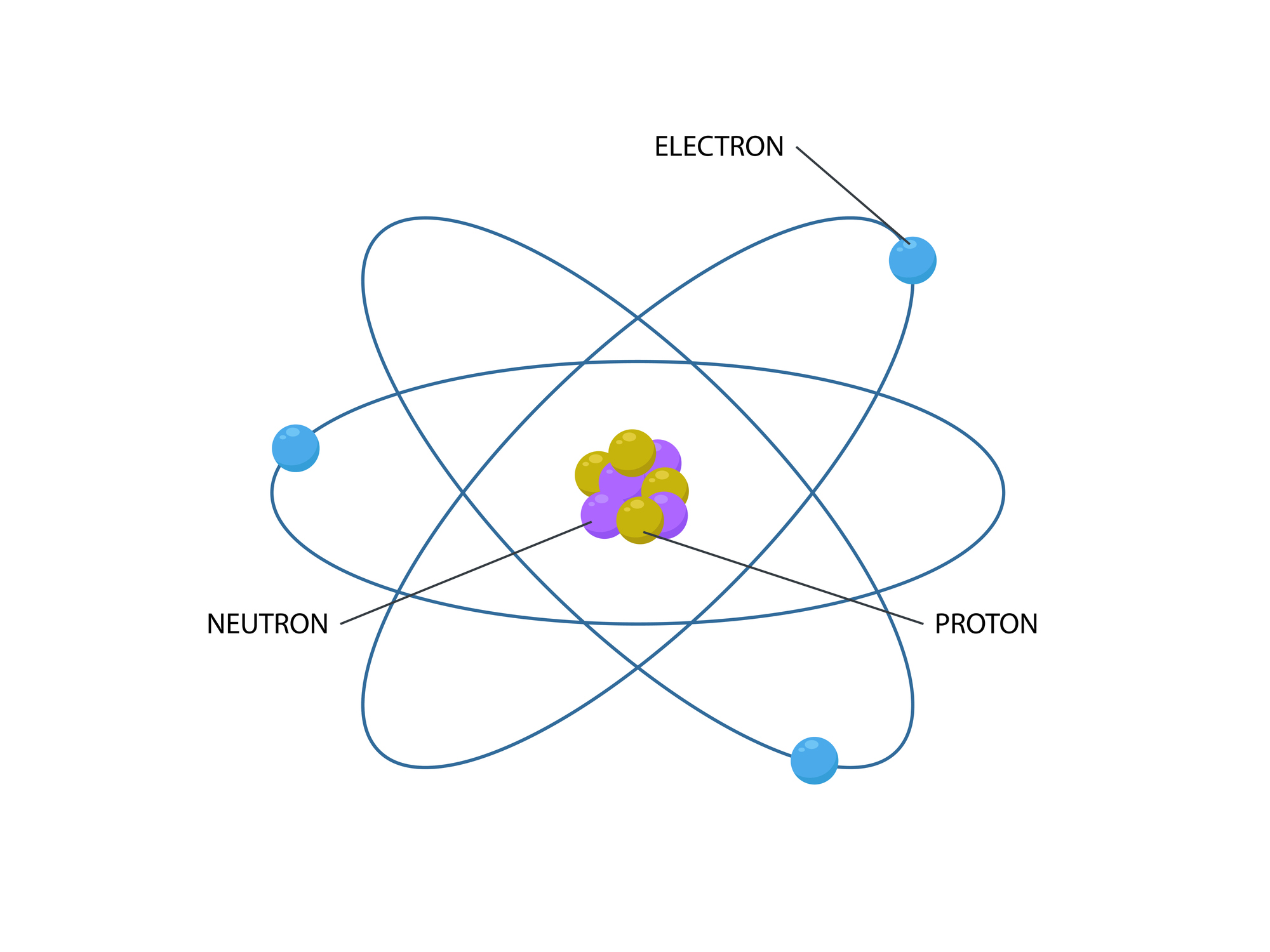
Electrons have a negative charge and orbit around the nucleus of an atom. (Image credit: agung fatria viaGetty Images)
In other words, quasiparticles can't exist in a vacuum and they can't exist on their own. They're reliant on particles acting together and being in a material where they can emerge, just as a wave carried out in a stadium can only exist when there is a group of people there who can perform it.
A philosophical question concerning quasiparticles is whether they are real, McKenzie noted. After all, "quasi" in Latin means "almost."
"Fundamental particles can exist in isolation in a vacuum, and quasiparticles need many interacting particles to exist," McKenzie said. "Still, I would say quasiparticles are, for all intents and purposes, just as real as particles, in how you can detect them and manipulate them."
A zoo of quasiparticles
The concept of quasiparticles originated with theoretical physicist Lev Landau in the 1950s, McKenzie said, and the idea ultimately helped Landau win the Nobel Prize in physics in 1962. Scientists have now proposed the existence of dozens of quasiparticle types, including the following:
The phonon, which is a quasiparticle of sound — it is the smallest packet of vibrational energy that makes up sound in matter, McKenzie said.
The electron hole, often simply called a hole, is the positively charged vacancy left behind once an electron has left its original place, McKenzie noted.
The electron quasiparticle, which essentially consists of an electron and its interactions with its surrounding environment. This combined package means the electron quasiparticle requires more force to move, so it effectively has more mass than a regular electron, McKenzie explained.
The exciton, a quasiparticle made of an electron and a hole orbiting each other.
The anyon, a kind of quasiparticle so far only seen in two-dimensional systems, which may carry only a fraction of an electric charge.
"How many kinds of quasiparticles are there?" McKenzie said. "Just like there are an infinite number of possible states of matter, I would say that, in principle, there are an infinite number of types of quasiparticles."
Scientists describe activity in material as quasiparticles "because it simplifies everything dramatically," McKenzie said. In the same vein, Natelson said that "very often the math behind physical phenomena in solids is described well by quasiparticles."
Quasiparticles are not simply useful for bookkeeping. For instance, researchers typically describe the behavior of electricity in electronic devices in forms of quasiparticles such as holes and excitons, Natelson said.
All in all, the answer to the question of whether quasiparticles are real is a matter of interpretation. If the question is whether or not a quasiparticle is an elementary particle such as an electron, the answer is no — they cannot exist on their own, and they depend on the materials in which they manifest.
However, if the question is whether or not quasiparticles are real phenomena, the answer is yes — they are things that scientists can measure that can behave like particles and effectively have many of the same properties that other particles do.
A photon is a single particle of light, and under normal circumstances, it can't be divided. But a photon is also not a particle, in the sense that it does not have a specific location. Instead, it is an extended object.
So if a photon is only partway through the process of reflecting from a perfect mirror and you yank the mirror away, what happens? The answer, from a trio of Norwegian physicists, turns out (arxiv.org link) to be more complex than I expected.
A photon divided?
Let’s first talk briefly about dividing and combining photons. If this were a common experience in our lives, then shining a single color of light through a piece of glass or reflecting it from a surface might cause photons to divide or combine. This would lead to an amazing array of colors: Our universe would be the most fantastic and legal LSD trip you could imagine. But this doesn't generally happen, hence LSD.
After more than two decades of searching, scientists have finally observed a phenomenon in a hot and dense particle 'soup' similar to that which filled the cosmos moments after the Big Bang. The observation could help cosmologists better understand the incredibly hot and dense state of the universe in its earliest moments.
The world's most powerful particle accelerator, the Large Hadron Collider (LHC), regularly creates this so-called quark-gluon plasma by smashing together the atomic nuclei of heavy elements like lead and generating sprays of particles called jets, from which this hot and dense particle soup emerges. This is necessary because in the modern universe, quarks and gluons, referred to as "partons," are only ever found together comprising particles like protons and neutrons. Thus, it takes the kind of energy generated by smashing atoms together at near-light-speeds to free these partons and generate the hot 'soup' known as quark-gluon plasma.
As particles ripple through the quark-gluon plasma, they lose energy and momentum to this medium, which should create wakes in this primordial soup, much like that which is created when the hull of a boat pushes through the ocean. However, researchers had failed to see this so-called "diffusion wake" for two decades. That is, until now.
"Observing and quantifying the quark-gluon plasma diffusion wake opens the door to the new precision characterization of the properties and dynamics of the quark-gluon plasma, and promises new insights into the evolution of the early universe,” team leader Raghunath Pradhan of the University of Illinois Chicago (UIC) said in a statement.
A new approach in the hunt for particle wakes
Previously, the search for wave signals had involved generating events involving the production of a jet alongside a particle called a Z boson. However, while this had provided some evidence of particle wakes, signals from these wakes are subtle and easily drowned out by other jet-related effects, meaning these detections weren't statistically significant enough to be classed as a confirmed detection.
To search for the wave signal, this team took a different approach and used the LHC to smash together two lead nuclei to create jets of particles that were back-to-back, called a dijet event. The unique shape of these events meant that signals from wakes could be more easily disentangled from surrounding noise.
Display of a lead-lead collision, which produced two back-to-back jets, recorded by the CMS experiment. The jets are indicated by the orange cones. (Image credit: CERN)
The team's measurement showed a clear lack of particles behind the direction of the jets, which was particularly prominent at relatively low momentum. That is exactly what would be expected for a diffusion wake.The strongest wake signals were detected in more centralised lead-lead collisions, which create more quark-gluon plasma.
"This observation is a culmination of a decades-long quest to observe the wake phenomenon; it has been predicted by theory over 20 years ago, but remained elusive in the experimental data," team leader Olga Evdokimov of UIC said.
The team's research was accepted for publication on June 25 in the journal Physical Review Letters.
One of the great unanswered questions in physics concerns the nature of neutrinos, the lightest known particles with mass. A process called neutrinoless double beta decay could provide the answer. In ordinary double beta decay, two neutrons inside a nucleus transform into two protons, emitting two electrons and two antineutrinos. In the neutrinoless version, only the electrons emerge. The idea has deep roots: in 1937 the Italian physicist Ettore Majorana proposed that some particles could be their own antiparticles, and two years later Wendell Furry realized that if neutrinos were such particles, double beta decay could occur without releasing any neutrinos at all. Observing this neutrinoless process today would confirm that neutrinos are indeed their own antiparticles and would show that a fundamental rule of particle physics, known as lepton number conservation, is not exact after all.
Chasing a decay that may never happen
The process, if it happens, must be extraordinarily rare. Current experiments are already sensitive to decays with half-lives greater than 10²⁶ years, far longer than the age of the Universe, and future detectors aim to probe even rarer events still.
One of the most promising technologies for this search uses xenon gas compressed to high pressure. When a charged particle moves through the gas, it ionizes xenon atoms and creates flashes of ultraviolet light. Electric fields then guide the liberated electrons toward sensors, allowing the event to be reconstructed in three dimensions. Xenon gas also allows exceptionally precise measurements of the energy deposited by the decay.
A neutrinoless double beta decay would release two electrons from a common point. As they travel through the gas, they follow winding paths and lose most of their energy at the ends of their trajectories, producing two small regions of concentrated energy deposition. This double-ended structure gives a characteristic signature that distinguishes the sought-after events from most background processes, which typically produce only a single electron track.
The main obstacle is that the drifting electrons spread out as they move through the gas. This diffusion blurs the image of the tracks, especially for events that occur far from the sensors. The amplification process used to make the faint electron signal detectable introduces further smearing. As a result, the distinctive two-electron pattern can become difficult to recognize, particularly deep inside large detectors.
ITACA (Ion Tracking with Ammonium Cations Apparatus)
An alternative approach 1 is to image not only the electrons but also the positive ions left behind by the ionization process. Tiny amounts of ammonia (NH3), around one hundred parts per billion, can be added to the xenon gas. Rapid chemical reactions convert the positive xenon ions into ammonium ions (NH4+)almost as soon as they form, without significantly affecting the light signals or the transport of the electrons.
Principle of operation of ITACA. Source: J. J. Gomez-Cadenas et al. (2026) Eur. Phys. J. C doi: 10.1140/epjc/s10052-026-15501-wCC BY 4.0
These ammonium ions move far more slowly than electrons and diffuse much less along the way. Electrons cross the detector in a few milliseconds, whereas the ions can take anywhere from a fraction of a second to several seconds to reach their own collection point. Because the ion cloud stays comparatively compact, it can preserve fine details of the original interaction that may already be lost in the blurred electron image.
The two effects turn out to work against each other in a useful way. Wherever an electron happens to be born close to its collecting sensors, its own image stays sharp, while the corresponding ions still have most of their long journey ahead of them and their image comes out blurred. Deep in the gas, far from the electron sensors, the opposite happens: the electron image becomes badly smeared over its long drift, but the ions in that region have only a short remaining distance to travel and arrive with their picture largely intact. Because the two blurring effects are anti-correlated in this way, at least one of the two pictures, electron or ion, stays sharp no matter where in the detector a decay occurs, keeping the overall reconstruction quality close to uniform throughout the full detector volume.
Emission spectra of the free and chelated species (with NH4+) of NAPH3 (Naphthalimide) sensors. Source: J. J. Gomez-Cadenas et al. (2026) Eur. Phys. J. C doi: 10.1140/epjc/s10052-026-15501-wCC BY 4.0
The ion image itself is recorded by letting the ions land on specially prepared molecular surfaces coated with fluorescent sensors that respond specifically to ammonium ions. When illuminated by a laser, only the molecules that have actually captured an ion light up. A microscope and camera system can then scan this surface and reconstruct the ion track with very high spatial resolution.
The researchers call this system ITACA, after Ion Tracking with Ammonium Cations Apparatus. The researchers themselves would be Penelope, waiting for a husband and king who may, or may not, appear.
Would ITACA be the final destination?
Simulations indicate that these ion images preserve the characteristic two-endpoint structure expected from neutrinoless double beta decay, even in the presence of background noise from unbound sensor molecules that occasionally glow on their own. The sharper topology this provides should make it substantially easier to reject events produced by natural radioactivity and other processes that can otherwise mimic the sought-after signal.
Taken together, the additional information carried by the ion tracks could reduce troublesome background events by roughly an order of magnitude beyond what current xenon-gas detectors achieve, and by close to a factor of twenty for some of the most problematic radioactive backgrounds, those whose energy lies dangerously close to the signal itself. Improvements of this size would substantially increase the chances of finally catching neutrinoless double beta decay in the act, and with it, the chance to learn whether the neutrino holds one of the most unusual properties in all of particle physics.
Author: César Tomé López is a science writer and the editor of Mapping Ignorance
Disclaimer: Parts of this article may have been copied verbatim or almost verbatim from the referenced research paper/s.
References
J. J. Gomez-Cadenas, L. Arazi, M. Elorza, Z. Freixa, F. Monrabal, A. Pazos, J. Renner, S. R. Soleti, and S. Torelli (2026) A journey to ITACA Eur. Phys. J. C doi: 10.1140/epjc/s10052-026-15501-w↩
The Large Hadron Collider (LHC), the world's largest and most powerful atom smasher, has entered a planned four-year shutdown that will upgrade it to its most capable form yet.
The particle accelerator was switched off Monday (June 29) and is scheduled to come back online in 2030 as the High-Luminosity Large Hadron Collider (HiLumi LHC), with improvements that will allow it to smash together roughly 10 times more particles than its original design. That data could help spark new discoveries in fundamental physics and shed light on the nature of dark matter, antimatter and the early universe.
"This is a very important moment," HiLumi LHC project chief Markus Zerlauth toldAgence France-Presse. "From Monday, we will be entering a new phase."
Since its first successful proton collision in 2009, the LHC has allowed physicists to test theories about particle physics and theStandard Model of the subatomic world. It was essential to the discovery of the Higgs boson in 2012, which helped explain how tiny fundamental particles acquire mass. The collider covers a 17-mile (27 kilometers) loop at the border between France and Switzerland near Geneva.
The current shutdown is the third long-term, planned pause in the collider's operations. The first, a two-year shutdown beginning in 2013, consolidated connections between superconducting magnets and boosted the energy of the colliding proton beams. A second pause, from 2018 to 2022, involved a series of upgrades, replacements and preventive maintenance.
In the current period of dormancy, dubbed Long Shutdown 3 (LS3), specialists will install upgrades to boost the collider's luminosity by a factor of 10. That will increase the number of particle collisions, roughly tripling the number of times particles will smack into each other compared with the existing setup. Once the final version of the particle accelerator is online, it will run until the end of its operational lifespan in the 2040s and will be earmarked for replacement by a new, higher-energy particle accelerator in the years that follow.
"It really is an opportunity to explore the universe in a way we haven't done before," Mark Thomson, director general of CERN (the European Organization for Nuclear Research), where the LHC is housed, toldNew Scientist.
Civil engineers work on upgrades to turn the Large Hadron Collider into the High Luminosity Large Hadron Collider, significantly increasing the facility’s rate of particle collisions. (Image credit: Samuel Joseph Hertzog, CERN)
That jump means that experiments will produce much more data, which will allow scientists to study known phenomena, such as the Higgs boson, in more detail and increase the odds of observing rare events. For example, the HiLumi LHC is expected to produce about 380 million Higgs bosons over its lifetime of a decade or so, compared with the 55 million it's made to date. The data could help scientists solve problems with the Standard Model, which currently doesn't incorporate dark matter or dark energy, the primary forms of mass and energy in the universe.
"The LS3 represents a huge and complex logistical and engineering undertaking," Jean-Philippe Tock, head of the LS3 coordination team, said in astatement. "In the LHC alone, 1.2 km [0.75 miles] of magnets and components will be removed and replaced with new equipment, and across the whole complex, dozens of projects are planned, involving thousands of engineers, physicists, technicians and support personnel."
While the LHC won't be smashing any particles together during the shutdown period, researchers will continue to analyze data already collected during experiments during the prior operational window.
Though the LHC's primary purpose is fundamental physics research, technologies used to upgrade the collider could find their way into everyday life. For example, some instruments and techniques originally developed at CERN are now being used in medical imaging, sensors and art restoration.
Astronomers have traced a high-energy "ghost particle" back to Shadow Blaster, a star-forming galaxy located 11 billion light-years away. That means that this particle, a neutrino, had been travelling to us ever since the 13.8 billion year-old universe was just around 3 billion years old.
The discovery offers the first evidence that star-forming galaxies like Shadow Blaster play a significant role in populating the universe with mysterious high-energy cosmic ghost-neutrinos. These particles get their spooky nickname because, possessing virtually no mass and no electric charge, they pass through matter with little to no interaction while moving at nearly the speed of light. For context, as you read the preceding sentence, over 65 billion neutrinos streamed through every square inch of your body; that's about 100 billion per square centimeter.
Despite the difficulty associated with detecting such particles, humanity has been spotting neutrinos since the 1960s, but only a few sources of these particles have been identified. Neutrinos are the second most abundant particles in the cosmos after photons, particles of light, and the identified sources are nowhere near enough to account for this abundance. That has prompted the search for other, hidden neutrino sources, especially those which can accelerate neutrinos to high energies. Now that hunt has led to the identification of the incredibly bright Shadow Blaster galaxy, officially designated JCMT0402−0424, which shines in infrared, as a potential neutrino source.
The galaxy JCMT0402−0424, or "Shadow Blaster" identified as a source of a high-energy neutrino detected in 2021. (Image credit: International Gemini Observatory/NOIRLab/NSF/AURA/ALMA (ESO/NAOJ/NRAO))
"Shadow Blaster possesses the kind of dense, gas-rich environment that theoretical models have long suggested could efficiently produce high-energy neutrinos," Yuji Urata of MITOS Science Co., LTD. in Taiwan said in a statement. "If confirmed, Shadow Blaster would be the first-ever individual dusty star-forming galaxy directly linked to a high-energy neutrino event."
Thus far, no other credible candidates exist as potential sources for this high-energy neutrino, designated IC 210922A.
Chasing ghosts
Astronomers were alerted to the existence of IC 210922A half a decade ago when this high-energy neutrino event was detected by the IceCube Neutrino Observatory located in Antarctica. This set the astronomical community scouring space in the direction of the constellation Eridanus for potential sources for an electromagnetic counterpart to this event with a range of telescopes. This turned up no convincing gamma-ray, X-ray or optical counterpart for the neutrino detection, nor could any gamma-ray burst, supernova, or tidal disruption event (in which a black hole violently shreds a star) be linked with IC 210922A.
Urata and colleagues began their personal search with the James Clerk Maxwell Telescope (JCMT), operated by the East Asian Observatory, and the Submillimeter Array (SMA), discovering Shadow Blaster, a galaxy in the right position and with the right level of brightness to be associated with IC 210922A. The team followed this up with an investigation using the Atacama Large Millimeter/submillimeter Array (ALMA), a collection of 66 radio wave antennas in northern Chile.
The detection of this galaxy was possible because it is strongly gravitationally lensed. Gravitational lensing is a phenomenon that occurs when an object of great mass comes between Earth and a distant background source, curving the fabric of spacetime. As light from the background source navigates this curvature, its path is curved. This results in light from the lensed source arriving at different times to our telescopes, causing it to be amplified.
In the case of Shadow Blaster, before the team could learn anything about this distant galaxy, they had to discover more about the object serving as the intermediate gravitational lens, specifically what type of object it is, its mass, and its distance from us. To do this, they turned to the Gemini North telescope and its Gemini Multi-Object Spectrograph (GMOS) and the Gemini Near-InfraRed Spectrograph (GNIRS) instruments.
With the model of a gravitational lens determined, the team discovered that Shadow Blaster is a galaxy with an extremely compact heart filled with dense clouds of gas and dust that is fueling an intense burst of star formation. A region such as this has long been theorized to serve as a powerful particle accelerator. Because Shadow Blaster lacks a feeding supermassive black hole, this research shows that these regions can still serve as cosmic particle accelerators when they harbor sleeping black holes and in the absence of the powerful jets that erupt from active galactic nuclei (AGNs).
As for the overall population of neutrinos, this research could help account for that too. Intensely star-forming galaxies, or starburst galaxies, are believed to have been prevalent around 10 billion years ago in the early universe. Thus, these galaxies could have been producing a multitude of high-energy neutrinos. Proving that may prove difficult, however, as astronomers don't have the good fortune to find all of these galaxies lurking behind a gravitational lens, meaning they may be too faint and distant to study.
"Our analysis suggests that this population could contribute up to roughly 20% of the observed diffuse neutrino background measured by IceCube," Urata concluded,
The team's research was published on Wednesday (June 17) in the journal Nature Astronomy.
Physicists recently wondered what would happen if you tried to split a photon — and they found some unexpected behavior that may transform the way we think about particles.
The experiment, in which researchers simulated a photon being sliced by a shutter under various conditions, showed that a severed photon can lead to a complex mixture of zero to infinitely-many photons — raising some big questions about the nature of particle interactions.
Photons are elementary packets of light, which means they are not made up of anything else. So what does it even mean to try splitting a photon? It may be possible thanks to wave-particle duality — a core principle of quantum mechanics, the bizarre physics of the very small.
According to wave-particle duality, a photon is not only a particle but also a wave. Using theoretical calculations, the researchers investigated what would happen if you sent this photon through a shutter and closed it while the photon was passing through, effectively cutting off the tail end of the photon wave.
"I think that most physicists would expect there to be a certain probability that you have zero photons and a certain probability that you have a single photon left after you have done this," Johannes Skaar, co-author of the new study and a professor of theoretical physics at the University of Oslo, told Live Science. "And that is approximately true, but it is not exactly true."
What are the chances?
This brings up another strange aspect of quantum mechanics: its probabilistic nature. Particles exist as a cloud of probabilities stretching to infinity. Until a particle is observed, its properties, such as its position or energy, are in a superposition of possible values; all we can know are the chances of finding it in a certain state.
Through their calculations, Skaar and his colleagues determined how cutting a photon affects these probabilities. In their study, recently accepted in the journal Physical Review Letters, they found that it would create a complex mixture of photon states, including one with an infinite number of photons.
Each of these states has a probability that depends on how quickly the shutter cuts the photon. The expected number of photons becomes infinite only if the shutter is closed infinitely quickly. For realistic shutter speeds, even a thousand photons would be extremely unlikely.
This may sound very strange, but the quantum physicists were unfazed. In fact, what surprised Skaar and his colleagues was what happens if you make measurements of the cut photon from different perspectives.
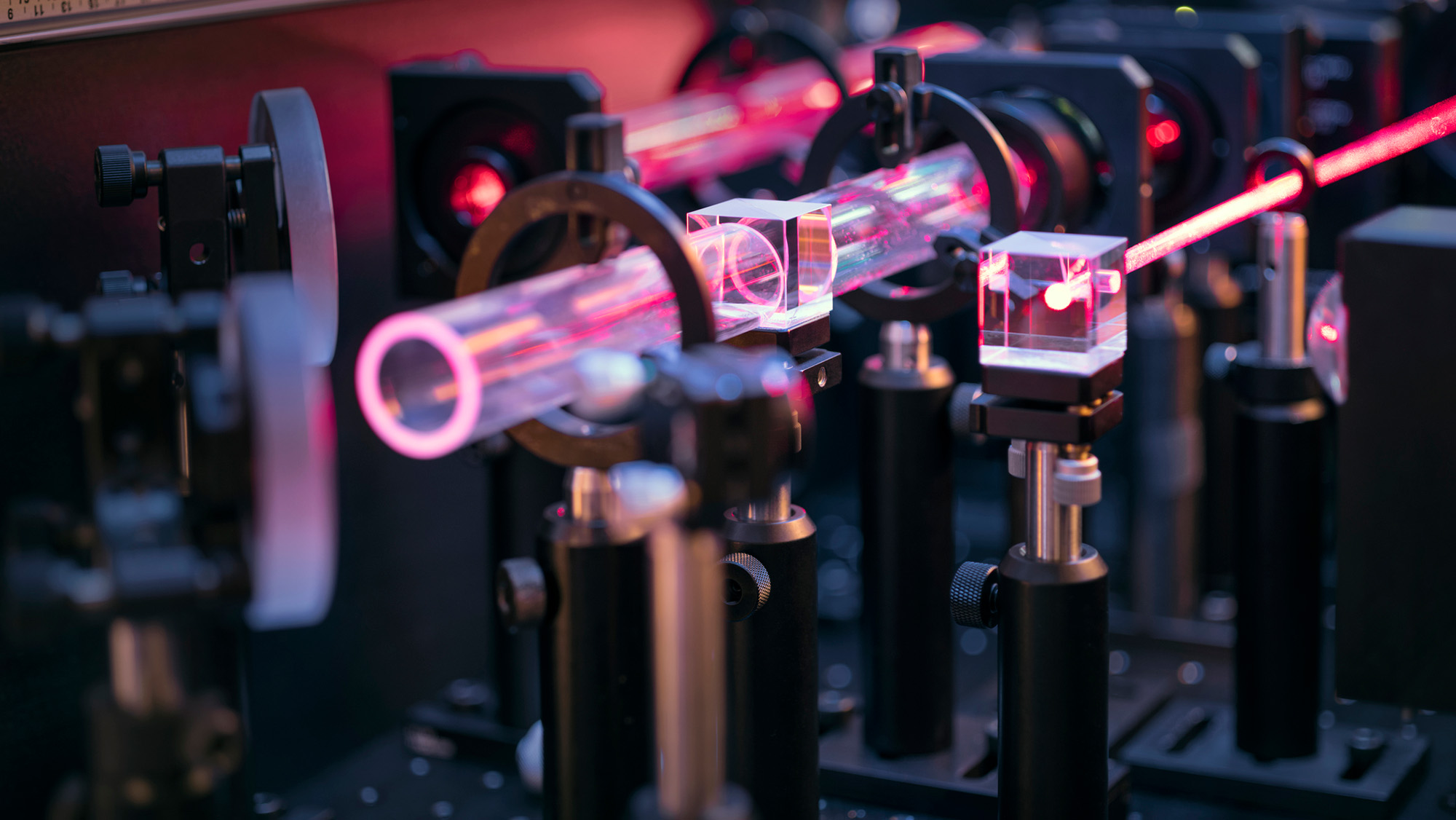
A photo of an optical table with laser and beam-splitting cube, often used in photonics research. (Image credit: EschCollection via Getty Images)
"When you measure from one side of the shutter, then it will look like a single photon state," Skaar said. "Then, on the other side, it will look like a vacuum state — that means no photons. And that is very strange because the actual state globally is this mixture from zero to infinity."
Changing how we think about particles
The fact that these complex mixtures can be treated locally as very simple states raises fundamental questions about the nature of particles. Skaar said they are still reckoning with the full extent of these implications and they are now considering how this process could play out for other quantum particles, such as electrons.
They hope that by following this theoretical thread through, they may be able to develop a neater way of describing particle interactions. Currently, particles' infinite stretching means they have been interacting for an infinite amount of time. This then poses a problem for causality — the order of cause and effect — in particle interactions, the team said.
These new theoretical photons with a cutoff tail would not have this problem, meaning the causal link in an interaction would be clear, Skaar said. He admitted that there is much more work to be done to develop the theoretical description of this interaction. However, the new result is an important step toward describing particle interactions with a clear causal relationship, which Skaar described as the team's "ultimate goal."
For decades, physicists have pursued a goal that sounds nearly impossible: to build a clock that keeps time using an atom's nucleus rather than the electrons orbiting it.
Now, researchers have demonstrated the first functioning nuclear clock — an advancement that could eventually lead to more robust timekeeping devices and new ways to search for dark matter and physics beyond the Standard Model.
"Having worked in this field for more than 15 years, it is just beautiful, how a very 'wild' idea such as manipulating an atomic nucleus with a laser has turned into reality," Thorsten Schumm, a professor of quantum metrology at the Vienna University of Technology and a member of the research team, told Live Science via email.
How is a nuclear clock different from an atomic clock?
Today's most accurate clocks are optical atomic clocks, which measure the frequency of electrons jumping between different energy levels inside atoms. These clocks are so precise that they would lose less than a second over a 100 million years.
A nuclear clock works similarly, but it uses a transition within the nucleus itself, where the nucleus jumps between energy levels. Because the nucleus sits deep inside the atom, it's far less affected by external disturbances from things like electric or magnetic fields. According to Schumm, the nuclear transition can be 1,000 to 10,000 times less sensitive to environmental noise than atomic transitions are.
A diagram showing how a nuclear clock works. (Image credit: N. Hanacek/NIST)
"This means that it would be easier to stabilize a nuclear clock over long periods of time," Jacob Higgins, a postdoctoral researcher at Northwestern University who previously worked on thorium clock experiments at JILA in Colorado but was not affiliated with the study, told Live Science in an email. "The transition used for the nuclear clock experiment has a higher quality factor than optical atomic clock transitions, which means that in principle, it can be measured more precisely given the same amount of measurement time."
Together, those advantages could allow nuclear clocks to outperform even today's best atomic clocks according to Higgins.
Why thorium-229 is special
The nuclear clock relies on a rare isotope called thorium-229, whose nucleus contains an unusually low-energy excited state that can be manipulated with ultraviolet laser light.
For decades, scientists had suspected thorium had a low transition, but identifying and controlling it proved extremely challenging. Researchers spent years testing different thorium-containing materials, laser systems and detection methods before finally pinning down the transition.
"It was a long road," Higgins said.
One key advancement was the development of continuous-wave lasers that operate at the precise wavelength needed to excite the thorium nucleus. Before those lasers existed, researchers had to excite the nucleus and then wait several minutes for it to decay and emit a detectable signal. That process was too slow to build a practical clock.
"With the continuous lasers, we can measure the nucleus in absorption and get an immediate response, whether the laser is still at the right frequency (and if not, correct it back)," Schumm said. "Once we had that, it was 'just' implementing some electronics and atomization to have the clock stabilize itself to the nucleus."
Thanks to this set-up, the researchers kept the nuclear clock running continuously for 24 hours.
Unlike many optical atomic clocks, which require ultracold atoms to be suspended in a vacuum chamber, the thorium nuclei are embedded inside a crystal at room temperature.
Because the thorium transition remains stable inside a solid material, researchers may eventually be able to build compact clocks that are useful for navigation systems, telecommunication networks and data synchronization.
NASA's Deep Space Atomic Clock, seen here in an artist's illustration, was launched in June 2019 to use atomic clocks in space. (Image credit: NASA)
A tool for studying the universe
Some physicists are more excited about what nuclear clocks could reveal about fundamental physics, rather than the clocks' timekeeping abilities.
Atomic clocks primarily probe electromagnetic interactions involving electrons. Nuclear clocks, by contrast, are sensitive to the strong nuclear force, weak nuclear force and electromagnetism — three of the four fundamental forces of the universe, along with gravity. This can make them useful detectors of new physics, in a way.
"The nuclear clock is foremost a different clock, ticking on different fundamental physics mechanisms," Schumm said. "Essentially all modern theories beyond the standard model predict additional particles or 5th forces … which can be probed with the nuclear clock in some parameter regime."
Thorium-229 is particularly intriguing because the energy difference between its two nuclear states results from a delicate balance between electromagnetic and nuclear forces. Because those large contributions nearly cancel each other out, even tiny changes in the underlying forces could shift the clock's frequency.
Researchers, including Higgins, have already used early versions of the clock to place constraints on some dark matter models, and they expect its sensitivity to improve as the technology itself gets better.
Although the first functioning nuclear clock is a major achievement, these timekeepers remain in their infancy. Scientists still need to gain a better understanding of how the thorium transition responds to factors like temperature and magnetic fields while developing more powerful and stable laser systems.
"I think it will be many years before the thorium clock can compete with today's best optical atomic clocks," Higgins said, "but we will learn a lot of new science on the pathway to getting there."

 Login