Auf YouTube findest du die angesagtesten Videos und Tracks. Außerdem kannst du eigene Inhalte hochladen und mit Freunden oder gleich der ganzen Welt teilen.
As the 2026-2027 NFL season kicks off, the Philadelphia Eagles are giving new meaning to their signature “Fly, Eagles, Fly” fight song. The football team is partnering with the National Marine Sanctuary Foundation for Birds Supporting Birds, an initiative to support seabirds off the coast of Massachusetts (and in New England Patriots’ territory) this fall.
The team is supporting NOAA’s Stellwagen Bank National Marine Sanctuary Shearwater Tagging Project, an ongoing initiative dedicated to studying the great shearwater (Ardenna gravis) and their migration. Great shearwaters are large, white-and-grey seabirds known for their epic journeys. They travel thousands of miles every year from their remote South Atlantic breeding grounds up to the cooler North Atlantic waters during the nonbreeding season. According to the National Marine Sanctuary Foundation, they fly the equivalent of over 200,000 football fields across the Atlantic Ocean every single year.
Birds Supporting Birds will help support researchers in Stellwagen Bank, an 842-square-mile marine sanctuary east of Boston, to tag great shearwaters and track their migratory routes across the Atlantic.
“The Eagles are directly funding researchers to attach lightweight, solar-powered satellite transmitters to great shearwaters,” Joel R. Johnson, President and CEO of the National Marine Sanctuary Foundation, tells Popular Science. “These tags track the birds’ migration patterns around the Eastern Seaboard and down to the Southern Atlantic Ocean in real time.”
Lovingly known as “The Birds” by their incredibly devoted fanbase, the football team is leveraging their platform to bring attention to ocean conservation and highlight environmental stewardship.
A major 2015 study found that the Gulf of Maine is warming faster than 99 percent of the ocean due to climate change. While the water has slightly cooled since 2021, a report published by NOAA in July found that the environment in the Gulf of Maine still remains unstable. These changes in ocean temperature, currents, and other conditions can impact the seabirds’ food supply.
Great shearwaters are reliable indicators of an ecosystem’s health, who rely on small fish called sand lance in their diets. Whales, dolphins, bluefin tuna (Thunnus thynnus), and other key Gulf of Maine species also rely on these fish belonging to the family Ammodytidae in their diets. By studying great shearwaters and their health, researchers can better understand what is happening in the local ecosystem as a whole.
Researchers at Stellwagen Bank National Marine Sanctuary used satellite tracking technology in 2013. These tags are lightweight and attached to the birds with degradable thread. They have small solar panels so scientists can monitor the birds’ routes over extended periods.
Researchers have now deployed tags on Phil, Franklin, Hoagie, and Liberty, four great shearwaters with very Philly-appropriate names.
Great shearwaters can help scientists understand an ecosystem’s health. Image:National Marine Sanctuary Foundation.
“We are thrilled to invite the public to follow Phil, Franklin, Hoagie, and Liberty in real time on our interactive maps and social channels, bringing everyone along on our shared mission to protect our ocean waters and marine life,” says Johnson, who lists bald eagles (Haliaeetus leucocephalus), great blue herons (Ardea herodias), and great shearwaters among his favorite birds.
Live interactive maps will be available soon on the Stellwagen Bank National Marine Sanctuary and National Marine Sanctuary Foundation’s website, so you can follow the great shearwater’s epic journey, while the Eagles (or your favorite team) compete on the gridiron.
Auf YouTube findest du die angesagtesten Videos und Tracks. Außerdem kannst du eigene Inhalte hochladen und mit Freunden oder gleich der ganzen Welt teilen.
If it feels like you are wishing people a happy birthday more often than usual once September begins, it is not in your head. September is the most common birth month of the whole year, and one day stands above them all—September 9.
In 2016, statistics organization FiveThirtyEight and data journalist Matt Styles analyzed data on the average number of births per year from 1994 to 2014. In that 10-year-period, September tops the with nine out of the 10 most common birthdays falling on September. Based on this analysis, the ninth day of the ninth month is the most popular birthday.
The reasons behind this surge of September babies are likely couples spending more time indoors during the colder months of the year and holiday season. Some people tend to work less as the holidays approach, so there is more time to party-hop, drink a few more cocktails than usual, and the rest is clear. Pregnancies are supposed to last 38 weeks from conception, so babies born on September 9 would have likely been conceived on December 17.
For a September 19 birthday, conception date should technically be December 27. All of those September 22 to 26 babies are generally conceived around New Years Eve and New Years Day. December is also a romantic season in general. According to data collected from the wedding planning website The Knot, December is the most popular month to get engaged globally.
Some other hypotheses behind this surge in cold weather conceptions are that the shorter days may affect hormones and that sperm may be less potent in the warmer summer months.
As far as rare birthdays go, Leap Day (February 29) is the clear winner, but the rest of the rare birthdays are those on major holidays. This is likely because scheduled inductions and C-sections are avoided on days like Christmas (December 25) and Fourth of July.
To see how common your birthday is, plug it into birthdayrank.com.
Effective clean technology (cleantech) policies, such as subsidies and carbon pricing, require an understanding of how interventions shape environmental and socioeconomic outcomes. To support targeted, evidence-based policy design, we discuss how causal machine learning can compare alternative policy scenarios and reveal where, how and for whom cleantech policies work.
At a spry 36-years-young, the NASA/ESA Hubble Space Telescope just keeps on going. The groundbreaking observatory recently took a new image of a sprawling nebula located in the Large Magellanic Cloud (LMC). The LMC is the largest of the small galaxies that orbit our home Milky Way galaxy, and it’s only 160,000 light-years away. Since it is relatively close by, astronomers can more easily observe star birth hot spots like LHA 120-N44 (or N44).
N44 is located in the constellation Dorado. It is dominated by two main features—a large central void and an outer shell made of dense, dusty gas.
The central void is considered a “superbubble,” that spans about 210 by 140 light-years across. N44’s superbubble void was created by the powerful stellar winds and explosive supernovae from the glittery stars at the center.
The shell surrounding the superbubble is made of all of the gas that was expelled when these stars in the void were born. Once the gas was swept away, it compressed and formed a shell around the superbubble. Now, new stars are forming in this compressed gas shell, making it an interesting target for astronomers. They are using N44 to study how stars form in this type of cosmic environment.
“Their goal is to understand how long it takes from the collapse of cold gas clouds into dense knots to the moment nuclear fusion ignites in the heart of a newborn star,” NASA writes.
The gas shell surrounding N44’s superbubble has intrigued astronomers for over half a century. It is energized by ultraviolet radiation from massive stars, which makes it glow and highlights several distinct features. In the 1950s, astronomer Karl Henize first catalogued the distinct features within the nebula’s star-forming complex.
One feature is a smaller bubble (cataloged as N44F). It is an interstellar bubble blown by the intense stellar winds coming from one hot and massive star and is located in the upper-right corner of the new image.
This Hubble Space Telescope image features the picturesque nebula LHA 120-N44, or N44. The interstellar bubble N44F is at the top right corner. Image: NASA, ESA/Hubble, D. Gouliermis.
This Hubble Space Telescope image features the picturesque nebula LHA 120-N44, or N44. The interstellar bubble N44F is at the top right corner. Image: NASA, ESA/Hubble, D. Gouliermis.
The data used in this image is from observing program #14689; PI: Gouliermis. It used Hubble to survey N44 and take a census of its stars, cataloguing roughly 500,000 stars within the cluster, and some interlopers drifting in front of the nebula. Of the stars the team surveyed, roughly 30,000 are what astronomers call pre-main-sequence stars. These baby stars have not begun to fuse hydrogen into helium in their cores. Hubble’s highly-sensitive instruments were able to pick out faint objects in crowded clusters to find these young stars at work.
Two unusually colored lobsters have been spared from the dinner plate and are living at the Gulf of Maine Research Institute (GMRI) in Portland, and will be educating students in the process. Ethel is a split-colored lobster, with a very autumnal orange and black hue, while Gertrude is a breathtaking blue.
Shawn McEwen at Sea Salt Lobster Wholesale in nearby Saco, Maine contacted the team at the research center to see if they were interested in taking Ethel the two-toned lobster.
“He told us ‘We move a lot of lobsters and in my career this is top 3,’” Sam Fuss, an educator with GMRI’s LabVenture program, tells Popular Science.
Ethel’s two-tone look is a genetic mutation. Image: Gulf of Maine Research Institute.
To find Gertrude the blue a new home, the staff at the nearby Portland Lobster Company reached out to GMRI. And it could not have been easier for the team to pick up the new colorful crustacean.
“We coordinated a time, walked over to their restaurant with a bucket, and then walked her right back to our tank,” says Fuss.
Gertrude the blue on the way to her new home. Image: Gulf of Maine Research Institute.
GMRI works with many of Maine’s lobster fishers and has a network who will reach out about interesting catches like Ethel and Gertrude.
“Previously, in our tank, we have had blue lobsters, orange lobsters, calico lobsters, and other split-color lobsters,” says Fuss.
Why some lobsters are so colorful
In the wild, American or Maine lobsters (Homarus americanus) typically have a greenish-brown color. This helps them blend in better with the rocky seafloor. Lobsters have several layers of a pigment called astaxanthin. This pigment appears as layers of red, yellow, and blue. When all of those color layers are stacked up, they give lobsters a mottled blotch pattern of oranges, reds, blues, pinks, purples, yellows, and browns.
But some lobsters end up more colorful. Rare genetic mutations can alter the amount of pigment or how they interact with one another, producing striking shell colors such as blue, half-orange half-black, or even calico patterns. A lobster’s diet can also impact its shell color. For example, individuals that only eat small fish rather than shrimp and crabs get less astaxanthin, which can affect their coloration.
Split-colorization like we seen on Ethel occurs when two fertilized, unlaid eggs contact each other. One of the eggs then absorbs the other, creating a lobster that has two sets of genetic information. They also can store color pigments differently on either side of its shell.
The chance of finding a blue lobster like this Gertrude is about 1 in 2 million, while the odds are 1 in 50 million to find a split-colored lobster like Ethel. As for the other colors, the chance of finding a red lobster is 1 in 10 million, and 1 in 100 million for an albino or cotton candy lobster.
Crustaceans tackling climate change
Now that they are at GMRI, Gertrude, Ethel, and the institute’s other fish and crustaceans will be on display for fifth and sixth grade students from across the state who visit during the LabVenture field trip. Since the program began in 2005, LabVenture has provided a hands-on lab to over 170,000 Maine middle school students free of charge.
“The display tank that Gertrude and Ethel are living in is always a highlight of the field trip for our students,” Zoë Kennedy, LabVenture’s Lead Educator, tells Popular Science. “Many of them have spent most of their lives living right next to the Gulf of Maine but being able to see what the ecosystem looks like beneath the water brings a whole new perspective and sense of wonder.”
A landmark 2015 study found that the Gulf of Maine is warming faster than 99 percent of the ocean due to climate change. While the water has been cooling off a bit since 2021, a report published by NOAA in July 2026 found that the environment in the Gulf of Maine remains unstable. According to the GMRI LabVenture team, building more climate-ready communities, a strong waterfront workforce, and a blue economy in the face of this upheaval all starts with education.
“Our LabVenture program builds that foundation early by teaching students to interpret real, authentic climate data, while sparking the curiosity that drives them to keep asking questions about the world around them,” says Kennedy.
Electra is part of a well-established bear lineage in Katmai. She was born in 2008 to Bear #708 (Amelia), who was likely born to Bear #468 (Reggie). Rangers first spotted her in 2011 as a subadult. She has had at least three litters of cubs, in 2016, 2020, and 2026, respectively. Bears #901 and #384 are two of her adult offspring who have been seen in the park. This year, she had two spring cubs who have been spotted with her multiple times over the summer.
According to Katmai and explore.org naturalist Mike Fitz, one way that bear culture is similar to human culture is that their knowledge is passed down. Mother bears teach their cubs skills, and the offspring primarily learn by doing instead of through inherited instincts. Mother bears like Electra will teach their cubs about safe places to build dens, where and when to find food, and how to get it.
Fishing techniques can also be specific to each individual bear. Adult male Bear #164 (aka Bucky Dent) is known for standing at the deepest plunge pool under the cascade of Brooks Falls, where he can catch the salmon that wells up from the pool below, jump up, or come down from the falls above. Electra’s mother Amelia used to stand and walk out into the water when she was fishing, and Electra and one of her adult offspring (Bear # 901) fish the same way.
Physically, Electra is a medium-sized adult, and has a dark blond or medium-brown coat in July. By the fall, her coat typically becomes more uniformly brown. She also has a prominent shoulder hump and a tapered muzzle.
Electra made her Fat Bear Week debut in 2023, where she lost to ace-fisher bear Bucky Dent. Fat Bear Week 2026 runs from September 22 through September 29.
Following an outpouring of support for Jackie, a famous bald eagle mother watched by millions, the California State Senate passed Senate Resolution 140. The bipartisan measure honors Jackie and proclaims that Friday September 4, 2026 is California Wildlife Day to honor her memory and celebrate the Golden State’s biodiversity.
The resolution was introduced by State Senator Tony Strickland (R-Huntington Beach) and is sponsored by KFI AM 640 in Los Angeles. It recognizes the eagle’s role in connecting people with wildlife conservation, while highlighting the state’s biodiversity.
“Jackie captured the hearts of people in California and around the world, giving so many of us a front-row seat to the beauty, strength, and resilience of wildlife,” Senator Strickland said in a press release. “Her story reminds us that wildfire conservation brings people together. As we celebrate America’s 250th birthday this year and reflect on the values that unite us, it is especially meaningful to honor the Bald Eagle and Jackie’s incredible legacy here in California.”
Amy King, the host of “Wake Up Call” on KFI AM640 in Los Angeles, said it was clear how many humans connected with these eagles and their story.
“Over the past decade, many of our listeners watched the webcam and witnessed the beautiful life Jackie, her mate Shadow, and their eaglets created together,” King added. “Jackie’s story brought people together across generations and communities. As storytellers, we believe stories can connect people, inspire compassion, and create a shared sense of community. It has been an honor to share Jackie’s story with our listeners and to be part of the community that followed her remarkable journey.”
Friends of Big Bear Valley (FOBBV), the nonprofit organization that runs the nest cameras that brought Jackie and Shadow to the world, are also planning a memorial service for October 3.
Jackie’s story
Jackie was born, raised, and lived in Big Bear Valley in southern California. Prior to the 2011-2012 nesting season, no bald eagle chicks were known to have ever hatched in Big Bear Valley. Then came Jackie, named after a forest ranger and born to parents Ricky and Lucy in 2012.
During the 2016-2017 nesting season, Jackie took over a nest where Friends of Big Bear Valley (FOBBV) had a camera stationed. In 2018, she had two chicks named Stormy and Big Bear Baby (or BBB) with her first mate, Mr. B.
Her long-time partner Shadow entered the picture in summer 2018. He showed up at the nest and would not leave. FOBBV called the new male Shadow because he appeared so determined to stay in the nest, and the team initially believed he was one of Jackie’s siblings, also named Shadow. The eagle’s plumage indicated he was one year older than the other Shadow and not Jackie’s sibling, but the name stuck.
Shadow continued to hold his ground and Mr. B gave up and eventually left. Jackie then accepted Shadow as her new mate.
Wildlife cameras documented Jackie and Shadow’s life together, offering viewers a direct look into the brutality and beauty of nature. The pair successfully raised chicks in 2019 (Cookie and Simba) and 2022 (Spirit). The pair’s eggs failed to hatch in 2023 and 2024. In 2025, Jackie laid three eggs that all hatched in early March. However, a strong snowstorm dumped up to two feet of snow and battered the nest with strong wind and only two of the chicks (Sunny and Gizmo) survived.
In January, Jackie laid two eggs in the nest, but ravens destroyed them. She later laid two more eggs that hatched in April and named Luna and Sandy. The name Sandy is in honor of FOBBV’s former executive director Sandy Steers who died from cancer in February.
Jackie’s injury
On July 17, Jackie was found injured on the ground near Dana Point Park, California. Cell phone video from a witness confirmed that she had an altercation with two other subadult eagles. She successfully fended off the other eagles by turning over and using her talons, but could not fly far away.
She was transferred to the Ojai Raptor Center for care, where she was diagnosed with severe anemia. Her anemia worsened during the first week of August, the Ojai Raptor Center said that she was in unstable condition on August 9. Her packed cell volume (PCV) fell below percent, before rising to nine percent. She died early in the morning on August 10 and a full necropsy report is still forthcoming.
Jackie’s resilience inspired millions of people around the world.
Just like 20-somethings yelling or waving in a crowded, strobe light-filled club, three-spined sticklebacks (Gasterosteus aculeatus) can change their social behavior for the benefit of the group. These small fish will change how they swim to help find food when they are in cloudy water. The findings are detailed in a study published today in the journal Proceedings of the Royal Society B.
There are eight known species of sticklebacks (order Gasterosteiformes). These small fish live in fresh, brackish, and marine waters all over the Northern Hemisphere and as far north as the Arctic Ocean. They can grow to a maximum length of roughly seven inches and are known for a row of two to 16 spines on their backs.
Since they live in everything from salty seas to fresh lakes, their habitats can range from crystal clear to densely clouded. Turbidity is when small particles like mud, algae, or silt make water cloudy. While it is a natural process, farming, mining, construction, and other pollutants are increasing turbidity and reducing visibility in rivers and coastal waters around the world. This can make it more difficult for aquatic animals like sticklebacks to see their food, friends, or enemies.
“At the moment, we’re seeing our weather flipping between hot, dry periods to heavy rains, which mean[s] our rivers and streams experience sudden surges of muddy, highly turbid water,”
Dr. Sean Rands, a study co-author and behavioral ecologist at the University of Bristol, said in a statement. “It is good to know that the fish can respond to these big changes.”
For this study, the team observed how three-spined sticklebacks responded to their water becoming cloudier and noted their directions when food suddenly appeared in the water.
In murkier water, the fish took longer to swim towards the food than those in clear water. However, individuals in larger groups responded more quickly in both clear and cloudy water.
The study found in murkier water fish took longer to move towards the food than those in clear water, but individuals in larger groups responded more quickly overall. Image: Christos Ioannou.
The way that the sticklebacks moved together also influenced their response to the food. The smaller groups living in murky water got to the food more quickly when they swam close together in the same direction. By contrast, tighter coordination slowed the group’s response for larger groups of fish in clear water.
Before the food was introduced, fish in murky water tended to stick closer together, align their movements more closely, and respond more eagerly to the behavior of group members that were nearby.
According to the team, these results suggest that sticklebacks can compensate for reduced visibility in the water by increasing cooperation and coordination with one another.
“When we put an unexpected piece of food in the water, it took the fish longer to find it when the water was cloudier. This makes sense and has been shown before in different water-living species,” added study co-author and behavioral ecologist Christos Ioannou. “However, we were excited to see that the sticklebacks were able to compensate for this challenge by changing their shoaling behaviour. Their shoals became more coordinated, with the fish moving and aligning themselves together much more closely in poor conditions. This in turn meant the fish were able to find the food faster than if they weren’t coordinating.”
This enhanced social behavior may help them overcome the challenges of living in murky environments and respond better when there is an opportunity to find a meal.
“Finding that these rules are able to change in response to the challenges animals experience is reassuring, as it shows that these little fish have some extra tricks for the changes that humans are causing to their homes,” said Rands.
The deepest parts of our ocean are more like the fare reaches of space than planet Earth. We never really know what we’ll find down there. A team from the National Oceanographic and Atmospheric Administration’s (NOAA) Ocean Exploration team experienced that first hand when they spotted a very tiny fish in the Northeast Canyons and Seamounts Marine National Monument in the Atlantic Ocean off the coast of New England.
The team estimated that it measured only five millimeters (0.19 inches) to one centimeter (0.4 inches). It is still unclear what species this fish is, but scientists speculated that it could be a juvenile toadfish (family Batrachoidida) aka the sea toad. They have a sad-looking “Monday Face” and dwell on the sea floor to hunt whatever comes within their reach.
A glass sponge amongst polymetallic nodules. It was one of several varieties of sponges seen during the final dive of the 2026 Cook Islands ROV Exploration cruise. Image: NOAA Ocean Exploration, 2026 Cook Islands ROV Exploration.
Currently, NOAA is partnering with Nautilus Live to explore the deep sea near Wake Island. The island is about halfway between the Hawaiian and Mariana Islands, and is one of the most isolated land masses on Earth. The 30-day expedition will utilize remotely operated vehicles (ROV), mapping technology, and the E/V Nautilus to collect baseline data about the 157,236 square-mile area and the marine life that lives there.
The expedition could find potential maritime heritage sites associated with the Battle of Wake Island. From December 8 to 23, 1941, a small force of United States Marines and civilian defenders fought off parts of the Imperial Japanese Navy. The Japanese Navy ultimately took Wake Island, but at great cost. According to the National World War II Museum, the Japanese Navy ultimately sacrificed two destroyers, one submarine, 21 aircraft, and 900 to 1,000 lives just to conquer Wake Island. Despite the loss, fewer than 100 Americans died during the 16-day siege, including 46 Marines and three sailors.
The Wake Island expedition is scheduled to end on September 18.
Bear #910 is a female brown bear that was first spotted in 2019 at Katmai’s Brooks River. She is about 10.5-years-old, has large, blonde, floppy ears, which can help viewers pick her out of the crowd on the live cam set up in the park.
Bear #910 is also a particularly unique mother bear. Between mid-August and October 2022, she adopted her sister Bear #909’s 2.5-year-old female yearling cub (a one- to two-year-old cub still with its mother), while she herself had a spring cub (a first-year cub that was born over the winter and emerges in the spring). An adoption like this is an exceptionally rare event in the wild, but it has also been observed in polar bears. The pair was frequently seen fishing together with their cubs throughout 2023 and 2024 and a paper on their story was published in the journal BioOne in 2025.
Most bear mothers generally keep their litters separated, and this year’s season was an example of why they tend to stick to themselves. On Tuesday, July 28, the live-cams captured a young brown bear cub being killed and eaten by an unrelated mother bear (Bear #806). The deceased cub was born this spring, and was one of Bear #909’s cubs. Bear 909 started this season with two cubs, but has now lost both.
On Sunday, August 2, one of Bear #335’s (also known as Jolly) cubs died, after following three unrelated cubs up a tree. The mother of the cubs already in the tree attacked Bear #335’s cub, who did not survive the encounter. The identity of the mother bear who killed the spring cub was not confirmed.
Following the first cub’s death, naturalist Mike Fitz and park rangers Christine Loberg and Sarah Bruce hosted a chat about the incident. The team said that while infanticide by female adults does occur, this is likely the first documented case occurring at Brooks River. While there is no single answer as to why mother bears are killing cubs, some experts suspect bear adoption, food scarcity, and fights for dominance all play a role.
During Fat Bear Week 2025, she lost to Bear #856 in the second round of voting. Voting this year. The competition this year is scheduled to begin at the end of September.
While John Harvey was working as a veterinarian in Devon, England, his clinic looked for ways to lower its carbon footprint. They installed energy-efficient light bulbs. This got Harvey thinking: What about the animals? How much did pets impact the planet?
Take their food. Dogs and cats eat a meat-based diet. Raising livestock for meat uses a lot of land, water and energy. It also contributes to climate change by producing greenhouse gases. Harvey suspected pet food would have a large carbon footprint, but he couldn’t find much data on it. So in 2024, Harvey started studying how different types of dog food affect the planet. Now, he’s a researcher at the University of Edinburgh in Scotland and the University of Exeter in England.
Outdoor dogs and cats may also hunt or scare local wildlife. And many other pets — reptiles, frogs, birds and fish — are taken from the wild for sale as pets. This could harm wild populations and the ecosystems they come from.
But, in many homes, pets are an important part of the family. They can boost our well-being and bring joy. Harvey has found ways to both love our pets and care for the planet. Now, he and other scientists share science-based tips for pet owners seeking to shrink the environmental pawprint of their pets’ foods, poop and origins.
Chow down chowhounds
Dogs are super popular pets. In the United States alone, there are close to 90 million pet canines. What dogs eat is their “biggest single impact” on the planet, Harvey says. He is part of a team that analyzed nearly 1,000 types of dog food. Their goal: to calculate the greenhouse gas emissions linked with making each.
Wet and raw dog foods had the highest emissions. Wet food’s footprint was high because it comes in metal cans, which take a lot of energy and resources to make. Raw dog food contains more meat than other types of foods. It also needs energy to keep it cold.
The type of meat we feed dogs also really matters. This includes the animal it comes from, such as chicken, fish or beef. But also “you can make great dog food out of trimmings of meat,” Harvey says. These are the parts often not used in human food, such as liver and kidney. Using meat parts that would otherwise be thrown out means using fewer livestock — and their associated resources.
Researchers calculated the greenhouse gas emissions linked to making nearly 1,000 kinds of dog food. The one with the biggest eco-“pawprint” released a whopping 65 times more emissions than the “greenest” food. Some of the most climate-friendly options were dry foods without beef or lamb and that weren’t grain-free.Lajst/iStock/Getty Images Plus
One surprise: The dog food with the largest footprint produced a whopping 65 times the greenhouse-gas emissions of the food with the smallest footprint. (Compare this with foods that people eat. A high-meat diet produces 2.5 times the emissions of a plant-based diet.) Harvey’s team shared those findings this January in the Journal of Cleaner Production.
That means that with dog food, there “is a pretty big opportunity to make a difference,” Harvey reports.
Here are some tips. Choose dry food. Skip the lamb and beef. Don’t feed your dog human-grade meat or grain-free food. The extra meat in grain-free food isn’t needed for a dog’s health, Harvey says. Be careful not to overfeed, which Harvey notes is unhealthy for both your dog and the planet. And when choosing a new dog, consider a small one; they’ll eat less and have a smaller overall footprint.
Over time, peoples’ choices may lead breeders to produce more small dogs.
Poop patrol
With a pooch, it’s not just what goes in but also what comes out. Poop left outdoors can pollute the land and water, notes Emily Bryson. She’s an environmental scientist at Central Queensland University in Wayville, Australia. Nutrients in fresh poop can leach into water. And dog poop may also contain disease-causing germs or parasites.
Responsible dog owners pick up the pet wastes and throw it away. Making those bags spews climate-warming greenhouse gases, as does the decay of poop in landfills.
But Bryson has a solution.
“Dog poo, in itself, is a valuable resource,” she says. “It just needs to be treated to be made safe.” She studied how composting can transform nutrients in poop into forms that plants can use.
Most city-scale compost programs don’t allow dog poop, Bryson found. So she focused her research on home composting. Dog poop decomposes well, she found. Pathogens died and nutrients became available in a form plants can use as a fertilizer. In the end, the poop became valuable.
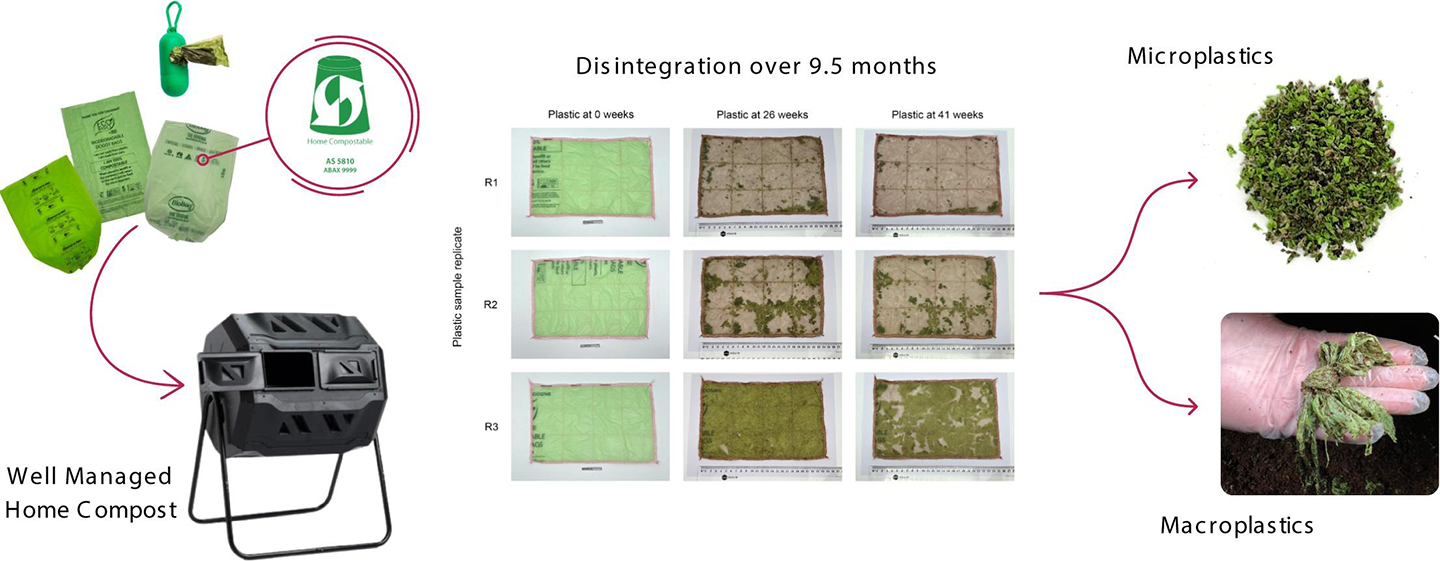
Researchers tested the breakdown of compostable bags for dog poop in home compost (left). Over 9.5 months, the bags did not fully degrade (middle). Instead, the bags broke down into a mass of polluting microplastics (right).Bryson et al/Waste Management 2026 (CC BY-NC-ND 4.0)
Getting dog poop into a compost container takes some creativity. Even compostable bags break down into microplastics, Bryson’s team found. And compostable bags are usually made from fossil fuel-based plastic. Instead of a bag, scoop poop with a tool straight into the bin. Or, Bryson suggests, put it into any paper product that will fully break down.
For instance, at some sites in New York City, people use newspaper to pick up and toss poo into a compost tumbler. The finished compost is used to fertilize park plantings.
Cat quandaries
Some 76 million pet cats live in the United States. As with dog food, dry cat foods — and those without beef and lamb — will be greener for the planet. Cats eat less than most dogs, so their diet’s carbon pawprint is smaller.
But cats have a bigger impact on other animals. Environmental scientist Loren Fardell tracked how outdoor cats affect wildlife. While working at the University of Sydney, Australia, her team set up infrared cameras in backyards and near open areas, such as parks. These cameras showed that wildlife avoided spots cats had visited that day and even the day before.
Why? Outdoor cats leave a trail of scents in their urine, feces and shed fur, Fardell explains. Smells of a potential predator can stress birds and small mammals. These creatures could end up traveling farther and staying more vigilant to survive.
Even the smell of a cat can affect wildlife. The scent felines leave behind in backyards and parks stresses out birds and other animals, which can affect how effectively they get food or look for mates.Irina Nedikova/iStock/Getty Images Plus
Wildlife living near people already face stress from noise, lights, cars and habitat loss, Fardell points out. So it’s important to keep cats indoors, she says. Or, use fully enclosed outdoor cat runs. This also keeps cats safe from disease, predators, cars or getting lost.
Indoor kitties use litter boxes. Companies mine the absorbent clay used to make for kitty litter. This can destroy natural habitats. So researchers are looking to make litter more sustainable.
Scientists with the U.S. Department of Agriculture found discarded organic material, such as soybean hulls, were a good alternative to clay. And some companies sell kitty litter made from other natural products, such as discarded olive pits.
Never flush cat poop down the toilet. It can contain parasites that can survive wastewater treatment and later infect and kill wild animals, such as dolphins.
Caring for exotic critters
When Alice Hughes was a kid, she kept frogs, leopard geckos and a corn snake. Now she’s a zoologist at the University of Melbourne in Australia. Her research focuses on the impact of wild-caught pets, including reptiles.
Some 2.4 million U.S. households nurture pet reptiles. Their biggest impact will trace to whether they were wild caught or bred in captivity. Taking animals from the wild can weaken populations or even cause extinctions.
Hughes realized little effort had been made to track the impact of collecting wild animals for sale elsewhere. Laws to protect wildlife were largely set up for species known to be threatened with extinction, such as elephants and red pandas. Few laws existed to protect critters collected for sale as pets.
For example, Indonesia exports eight million Tokay geckos a year. Most come from the wild, Hughes says. “What is that doing to wild populations, not just geckos but all the other species in the food web?” No one knows, she says, “because we don’t have the data to monitor that [impact].”
Some reptiles breed easily in captivity, such as this corn snake. Buying captive-bred reptiles won’t harm wild populations, which might suffer as people collect individuals for sale as pets.Vagengeym_Elena/iStock/Getty Images Plus
And this problem is only getting worse. Influencers showing off wild, or exotic, pets on TikTok and YouTube have made exotic reptile pets more popular, Hughes says. “Everyone sees that they’re cool. They don’t take up much space. And so,” she says, “you have this growing demand.”
Hughes found nearly half of all known species of reptiles are in the pet trade, most with no protection.
Another problem: Some people may change their mind and not want their exotic pets any more. If set free, the animals might harm local wildlife. This has happened with hundreds of species. Asian lionfish released from a U.S. aquarium, for instance, are now eating North American ocean dwellers. And pet Burmese pythons released in Florida are now gobbling up native wildlife, including opossums, bobcats and raccoons.
Just like reptiles and fish, amphibians face threats from collectors looking to sell them into the pet trade.
Amphibian populations are even more at risk than reptiles because they’re harder to keep alive during transport, says Hughes. Also, as collectors travel between sites they can spread diseases — such as the deadly chytrid fungus — to previously healthy populations.
Even spiders are vulnerable. They’re “really popular pets,” says Hughes. “Videos of dancing, jumping spiders on [social media] have increased the demand for [them as pets].” Hughes found around 100 species being sold as pets that scientists had not yet described.
Some, such as tarantulas, have long lives and small ranges. This means that if a collector catches too many tarantulas from one area, the local population could go extinct. There’s a misconception that invertebrates breed rapidly and have short lives. That’s not true for all, she says.
Social media posts featuring jumping spiders, such as this one, have popularized the arthropods as pets.xbn83/Moment/Getty Images Plus
Fish face many of the same problems. Even in countries with rules about reporting fish imports, no one really knows how many fish are coming in, Hughes notes. Importers may list “tropical fish,” which would not reveal whether they are transporting a highly endangered species, she says.
Collectors are not thinking about protecting species in the wild. They’re feeding “that Pokémon mentality,” says Hughes, “to catch them all.” She’s seen species of large jumping spiders and cave geckos enter the pet trade just months after first being described as a newfound species by scientists.
Finding fantastic beasts
Online pet stores make access to all sorts of creatures easy. Some animals there have been bred for the pet trade. But many others are hard to breed in captivity or are cheaper to collect from the wild. Stores often list these as “field collected.”
Sellers of field-collected species have no way to tell if their business harms native populations. That’s why “captive-bred animals are better,” Hughes says. Corn snakes and bearded dragons, for instance, breed easily in captivity. And sales of captive-bred animals won’t harm wild populations.
Another advantage: Captive-bred animals tend to have better temperaments, Hughes says, so you’re less likely to get bitten by them. They’re also less likely to have parasites or diseases, she says.
Species such as this beautiful African fire skink do not breed easily in captivity. So when sold as pets, they invariably had been collected in the wild. In general, wild collection can shrink local animal populations, which may even go extinct. This can harm the ecosystems the creatures had been part of. Allen Szykula/iStock/Getty Images Plus
A pet store should be able to tell you where animals were bred. And reputable breeders often provide some proof, such as photos of animal eggs on their websites.
Protections exist for some wild birds, Hughes says. Because of the fear of bird flu, there are stricter regulations for importing birds than for importing other creatures into the United States and Europe. This has reduced sales of wild birds.
Lots of other small creatures make good, eco-friendly pets. Pocket pets, such as rats, hamsters or gerbils, are easy to breed and have a tiny footprint on the planet. Over a million U.S. households keep such pets.
These two cuddly rats, like other pocket pets (including guinea pigs, hamsters or mice), eat a vegetarian diet and have a small eco-pawprint. Chris Scuffins/Moment/Collection Moment
Some people may enjoy a temporary pet borrowed from the outdoors. Yards and parks contain common insects and invertebrates that crawl, flit and fly.
Hughes recommends trying a pet caterpillar. You can tell what it eats based on where you find it. Take a few leaves inside and watch it spin a cocoon and undergo metamorphosis.
Slugs and snails can be fun too, but be sure to wash your hands after touching them, she advises. They can have parasites. Or set up your own worm farm and watch the critters burrow. All you need is a clear jar and soil.
Whatever pets you choose, remember to “treat them with respect. Don’t be rough with them,” Hughes says.
For Harvey, pets are really important. “They bring massive joy to a lot of people,” he says. Now, for the health of the planet, he hopes we find ways to make pet ownership more sustainable.
Most people set out in life wanting to believe the world is fair. They expect people to wait their turn in queues, to be treated equally in their job, and to be rewarded for hard work. These expectations influence how they understand the world around them, and shape their responses to it.
But what happens when life repeatedly challenges those assumptions? Psychologists have long been interested in this question. Our new research, published in the British Journal of Psychology, suggests adverse experiences shape both how fair people believe the world is, and how they view their place in society.
Over the course of a lifetime, personal setbacks – from illness and bereavement to being a victim of crime – may have a cumulative effect, leading to a growing sense that the world is unfair. We think this is important in the context of today’s increasingly polarised societies, in which trust in institutions has declined severely in the UK and many other countries.
Video: TEDxTalks.
Adversity and unfairness
Our research set out to answer two key questions: do experiences of adversity influence whether people see the world as fundamentally unfair – and if so, what are the societal consequences? We conducted three surveys involving more than 1,200 British participants with an equal gender split and average age of 39.
In one study, we found that people who reported experiencing more lifetime adversity – including illness, bereavement, financial hardship and violence – were more likely to believe the world was unfair.
In another, we compared people who had experienced violent victimisation with those who had not. After accounting for demographic factors, people who had experienced violent crime reported stronger perceptions of injustice.
Our final study found that greater lifetime adversity was associated with lower trust in institutions through perceptions of injustice. This is important because trust underpins many aspects of society, from confidence in public institutions to democratic participation.
Together, these findings suggest that people don’t simply interpret information based on the facts available to them. They also interpret it through the lens of their previous experiences.
Two people can read the same news story, watch the same political debate or hear the same public health advice, yet come away with very different conclusions that may not simply reflect differences in knowledge or politics. It may also reflect differences in how they have come to see the world as a result of the hardships they have faced.
Furthermore, if someone increasingly believes that the world is unfair, they may be more likely to notice fresh examples of perceived injustice, corruption or hidden motives – and interpret new events through that lens.
Belief in conspiracy theories
Previous research has shown that people who feel uncertain, powerless or threatened are often more likely to endorse conspiracy theories. Most of this work, however, has focused on their identities, traits and beliefs.
In our investigation of the impact of adverse life experiences on people, we found a remarkably consistent pattern. When these hardships are associated with stronger perceptions of injustice in the world, the same people more strongly endorse conspiracy beliefs.
Conspiracy theories rarely describe events as random. Instead, they tend to suggest that powerful individuals or organisations are secretly responsible for what happens. They offer explanations that identify intentional causes behind events that might otherwise seem confusing or unjust.
This makes it all the more important to understand the experiences and psychological processes that may contribute to these worldviews developing in the first place. Our findings suggest that perceptions of injustice are one such pathway.
For someone who increasingly feels the world is unfair, conspiracy theories may become more psychologically appealing – providing a way of making sense of experiences that otherwise feel difficult to understand.
Our research does not suggest that adversity inevitably leads to conspiracy beliefs; nor that conspiracy theories are an inevitable consequence of trauma. Rather, it highlights a long-term psychological process that may help explain why some people become more receptive to these ideas.
In an increasingly polarised world, the media and political focus is often concentrated on what information people consume. But our research suggests we should pay more attention to the experiences that shape the lens through which people interpret information. This could help explain why people can look at the same events and reach very different conclusions.
Ultimately, people’s experiences don’t just affect them in the moment. They shape their worldview – which can influence how they interpret and respond to events and other people’s behaviour far into the future.
So, we believe any effort to reach greater consensus in society may require a deeper understanding of the hardships people have lived through over the course of their lives – and how these can affect their sense of injustice.
Daniel Jolley has received funding from the Leverhulme Trust, the British Academy, and the Engineering and Physical Sciences Research Council (EPSRC).
The studies mentioned in this piece were funded by the British Academy/Leverhulme Small Research Grants Scheme (SRG23/230720) and carried out in collaboration between Daniel Jolley, Laura Blackie, and research assistant Anna Maughan.
Laura Blackie has received funding from the British Academy.
Nvidia is doubling down on its open-source efforts, pouring investment into an ambitious new in-house AI model that it hopes will drive demand for its hardware—but that could also compete with customers and partners.
Nvidia is aiming for the new model, the biggest of a family that it is calling Nemotron 4, to be on par in its performance with the best open-source AI models in the world, according to several people who work on Nemotron. The research paper detailing Nvidia’s last big model had 570 authors, and employees said Nemotron 4 would involve even more people. “Everyone just wants to be involved at this point,” one former employee said.

 Login