❌

Normal view

AI controller translates VR, video and language commands into humanoid robot actions

9 September 2026 at 15:40
Humanoid robots, robotic systems with limbs and body structures that resemble those of humans, could tackle various manual tasks in homes, workspaces and other settings. Yet teaching these robots to reliably perform different humanlike movements is typically challenging and time-consuming.

Dozens of Humanoid Robots Gather for a Protest, Marching and Waving Signs

9 September 2026 at 14:03

As sordid tales of AI layoffs and automation grip the news cycle, one group is fighting fire with fire, by staging an anti-AI demonstration with dozens of humanoid robots.

The rally, first reported by Agence France-Presse, was organized by the Polish group Democratism. It featured some 30 robots waving flags calling for swift regulation of AI. Staged outside the offices of Poland’s Digital Affairs Ministry in Warsaw, the organizers told reporters they used the robots to demonstrate the current state of robotics and AI. Though humanoid robots remain in their infancy, the robots gathered together do make for a striking display.

Around 30 robots joined a protest in front of Poland’s digital affairs ministry, calling for stronger AI regulations.

The demonstration was organised by campaigners to spark debate on how AI and robots could replace workers. pic.twitter.com/QEbvchb2RS

— Al Jazeera English (@AJEnglish) September 7, 2026

“The robots present here are meant to show that this technology is already a reality,” the organizers told AFP via an Agibot A3, which contains voice-recognition capabilities integrated with a large language model.

“We particularly want to address the issue of the potential replacement of people both by humanoid robots and by artificial intelligence in cognitive work,” Democratism organizer Grzegorz Kuliś told the news service. “If we don’t react now, we may soon have a problem… these robots can already move around freely, they’re already ‘protesting.'”

Notably, Kuliś is the chief information officer and owner of a company called Delta Robots, meaning the demonstration also serves to drum up press for his own commercial interests. Kuliś’ altruistic motivations notwithstanding, plenty of major AI labs like Anthropic and OpenAI have taken to using scare tactics to promote the supposedly advanced capabilities of their own products — while calling for stricter regulation of their own industry.

Whether the Polish robotics wiz is following in the self-serving footsteps of Sam Altman remains to be seen. But either way, it marks the first known use of humanoid robots for a political demonstration — and it surely won’t be the last.

More on robots: Humanoid Robot Fights Back After Getting Shoved

The post Dozens of Humanoid Robots Gather for a Protest, Marching and Waving Signs appeared first on Futurism.

Bizarre Glitch Causes Delivery Robots to Swarm Busy City Sidewalk

9 September 2026 at 00:56

The companies ushering in food delivery robots aren’t buying themselves much goodwill in the Windy City.

In the short amount of time they’ve been on Chicago streets, the bots have sent residents to the hospital and smashed through bus stops, prompting local officials to set up an exclusion zone prohibiting the companies from operating in a certain section of the city.

Now, it seems the bots are also capable of swarming the city’s busy sidewalk, making it all but impossible for residents to pass safely.

A clip shared by Chicago resident Becca Ostein on her morning run captured the bizarre moment when a swarm of delivery robots operated by the firm Coco caused a traffic jam on a sidewalk near Lincoln Park.

Apparently caused by a freak glitch, the video shows Ostein attempting to pass a veritable obstacle course of a dozen squirming robots, their on-board lights flashing as they congregate on a patch of narrow sidewalk. Another bot is seen maneuvering off in the distance, though it isn’t clear whether it’s approaching or fleeing the fray.

“Run route was crowded this morning,” Ostein wrote in her caption of the video.

The video garnered plenty of reactions in the comments, the majority of which were negative.

“As a disabled person this is an actual nightmare,” one user replied.

“They were swarming,” Ostein told CBS News in an interview following the incident. “They didn’t seem to have anywhere to go. Without agile feet, no one could have gotten by.”

In a statement shared under Ostein’s post, Coco apologized, admitting “that’s not how our robots are designed to operate.”

“Our team caught it quickly, and the robots were cleared and operating normally within minutes,” the company continued. “We’ve made sure this won’t happen again.”

More on robots: As If There Was Any Question About Data Centers Being Weak Job Creators, Meta Is Now Deploying Robots to Maintain Them

The post Bizarre Glitch Causes Delivery Robots to Swarm Busy City Sidewalk appeared first on Futurism.

Whole-body expansion and contraction make a robot seem more alive

8 September 2026 at 20:00
A research group comprising Associate Professor Yoshihiro Nakata and Taisei Mogi from the Graduate School of Informatics and Engineering at The University of Electro-Communications (UEC), Japan, and Mari Saito of Sony Corporation has developed MOFU (MOrphing Fluffy Unit), a mobile robot capable of whole-body expansion and contraction. The group investigated how whole-body expansion-contraction affects perceived animacy, or the extent to which the robot is perceived as lifelike. In addition to expansion-contraction and locomotion, MOFU was designed with features including quiet operation and a soft, fluffy exterior. The study was published in PLOS ONE.

Eerily humanlike AI-powered robot enters mass production in China — its makers say it could soon be helping you out at home

8 September 2026 at 07:00

BERLIN — An eerily lifelike humanoid robot made by Chinese technology company Xpeng has now entered mass production, company representatives revealed. They say it'll be the first such machine to walk itself off the production line.

The humanoid robot, dubbed IRON, went viral last year after presenters sliced it open onstage to prove a human wasn't inside. Xpeng will now produce units through its existing production facilities, with no word on how many its factories will aim to build.

The fabric skin-clad machine comes in different body shapes and even genders, but all stand approximately 5 feet 7 inches tall (173 centimeters) and weigh 143 pounds (65 kilograms). The prototype included 82 degrees of freedom (DoF) head to toe, including 22 DoF in each hand, which differs from the production version's 76 DoF and 21 DoF respectively. They can also move at speeds of up to 6.5 feet per second (approximately 2 meters per second), which is equivalent to a fast power walk.

In conversations with Live Science at IFA 2026, held in Berlin between Sept. 4 and 8, Xpeng representatives claimed that their machines will one day be used in homes to help with domestic chores like cleaning and folding laundry. They likened the introduction of humanoid robots more generally to the rise of smartphones in the mid-2000s and expect robots to proliferate on a similar scale over the next few years.

As such, they have extremely lofty expectations for IRON, with the company branding it the world's first "high-level, general-purpose" humanoid robot. Representatives added that it can receive instructions, plan its strategy, navigate the environment intelligently, and avoid obstacles without trial and error. The robot also has a "self-charging" feature, meaning it will seek out designated charging cabins and plug itself in when low on battery.

The rise of humanoid robots

If the claims bear out, it will place IRON among the first such machines powered by artificial intelligence to be built on a massive scale. Competitors that have also entered mass production include American robotics company Figure AI's Figure 03, which in May participated in a live-streamed production line demonstration, as well as the Chinese AGIBOT, which reached 15,000 units in June.

One notable company that hasn't entered its robot into mass production is Tesla. The Optimus robot is still in factory assembly, and its release has been delayed four times since 2022, most recently last year. Xpeng representatives were keen to point this out in briefing materials shared with Live Science, without mentioning other humanoid robot makers.

IRON's makers claim it's more advanced than its counterparts. Rather than building separate AI engines, the company has deployed the same "world model" to power the robot as that used in its fleet of AI-enabled electric vehicles (EVs) and its flying car prototypes.

Xpeng's IRON humanoid robot

The prototype IRON humanoid robot is 5 feet 6 inches tall and weighs 143 pounds. (Image credit: Keumars Afifi-Sabet/Live Science)

One of the biggest challenges in robotics is that, given the physical world's messiness, AI systems struggle to navigate and manipulate their environment unless conditions are controlled. That's why we're used to seeing robots either completing tasks slowly or getting things spectacularly wrong. Researchers, therefore, are increasingly focusing on building world models and other layers like improved vision-language-action (VLA) systems that enable them to better plan their actions a few steps ahead.

Xpeng representatives won't share detailed information about the proprietary AI system powering IRON, but each robot features three frameworks that combine so it can function autonomously.

The frameworks include VLA, which combines visual perception, natural language, and physical motor control; a vision-language model (VLM) — combining vision encoders with text readers; and a vision-language-task/thought (VLT) model, which representatives say gives IRON reasoning capabilities that enable it to think through assigned tasks.

Each IRON robot is powered by three Turing AI chips that offer a collective 2,250 trillion operations per second (TOPS) of AI processing power. This means it can run a model equivalent to Meta's Llama 3.2 (launched in 2024) locally without needing to access the internet. By contrast, most new laptops that can perform simple on-device AI tasks (like altering your webcam video feed in real time) tap into approximately 50 TOPS.

"We aim to build a new type of robot with full generalization capabilities that can truly become part of everyday life, create a better life for people, and ultimately become a companion in their lives," said He Xiaopeng, the company's chairman and CEO, in a statement shared with Live Science.

The company will first install these robots in its own showrooms and technology campuses while it continues to validate new ways to use them. Then in 2027, external shipments will target commercial customers for roles in areas such as customer service or guided tours in China primarily, and then in other countries.

Surveillance-Happy Police In Shambles After Trump Tariffs Makes Drones Absurdly Expensive

6 September 2026 at 17:01

The surveillance state costs money, people!

Well, tell that to president Trump. On Thursday, he slapped a 100 percent tariff — he sure loves round numbers and levying imports — on larger foreign-made drones.

Trump claimed that this “bolsters national security.” But, ironically, it could be undermining domestic security — at least according to surveillance-happy police departments who’ve gotten used to overlooking their subjects from above, according to a roundup of commentary from Ars Technica.

Speaking to the New York Times, Scott Mlakar, chief of the Lake County Drone Unit outside Cleveland, called the tariffs financially onerous and lamented that it would prevent many communities from buying them, adding that his unit uses them to hunt crime suspects at night and search for lost children.

“Most of this, in our humble opinion, is lobbying by US manufacturers to eliminate foreign competition,” he said. “This is not national security. It’s protectionism.”

The tariff is explicitly designed to target popular Chinese drones, while making exceptions or imposing much lighter tariffs on drones made from allies like Japan, Taiwan, South Korea, and the EU.  In particular, these steep duties will apply to drones that use thermal imaging or weigh more than 55 pounds. In addition, the Federal Communications Commission is weighing reclassifying some drone technologies like lidar as “military grade,” Ars noted, which would restrict who can access these drones even further.

Drones have a lot of other practical uses beyond law enforcement, obviously, including monitoring wild fires and assisting rescue operations. Amid heightened backlash against Flock, though, they’ve come to be seen as another surveillance apparatus.

But weaning the US off Chinese drone tech is supposed to be good for national security, according to the Trump administration. One small problem: a single Chinese company, DJI, makes more than 70 percent of the world’s commercial drones, according to the NYT. Good luck replacing all those.

Plenty of other cops are bellyaching about the tariffs, too, extolling how irreplaceable that awesome Chinese made drones have become to their operation.

Ars spotted a Texas police officer named Jason Lee, for instance, who complained to the FCC that “there is currently no economically viable domestic replacement” for DJI drones. “More than 80 percent of state and local law-enforcement drone programs surveyed in 2024 used DJI aircraft,” he added.

“The fact that a domestic product exists does not necessarily mean it is a viable substitute,” Lee said. “A replacement must be operationally comparable, economically obtainable, supported by an adequate supply chain, and accepted by pilots who must rely on it during real-world incidents.”

More on drones: Amazon Delivery Drone Drops Package Directly Into Customer’s Swimming Pool

The post Surveillance-Happy Police In Shambles After Trump Tariffs Makes Drones Absurdly Expensive appeared first on Futurism.

Humanoid Robot Fights Back After Getting Shoved

6 September 2026 at 15:02

While they’re seemingly still years away from completing actually useful tasks, like cleaning a messy apartment or doing the dishes, humanoid robots have developed plenty of capabilities over the past few years, from sprinting faster than any human ever to performing elaborate dance choreographies.

They’ve also been taught how to punch and even kickbox for their human overlords’ amusement, as one man visiting a store in Russia appears to have learned the hard way.

A viral CCTV video shows the individual lightly shoving what appears to be a Chinese Unitree G1 humanoid robot. After it recoils slightly, it suddenly starts playing cheesy fighting music and pops into a wide-legged stance, ready to pounce. Two store clerks then try to restrain the robot as it tries to throw technical, high-legged kicks.

Robot consultant glitches and ATTACKS customer in Russia's Saratov

The customer escaped with a fright, while robot Syoma was sent for a reboot pic.twitter.com/tGYUhj4KPV

— RT (@RT_com) September 2, 2026

One kick appears to hit a target, in the form of one of the clerk’s nether regions.

Twenty seconds later, the robotic assailant’s moves come to an abrupt end as it suddenly lifts up its arms as if to strike a T pose.

“They gave that thing a kung-fu beat down mode I’m in tears,” one X user wrote.

Other netizens took a far more serious tone.

“Not long now robots will be ripping peoples arms off in public,” one tweeted.

But it’d be far too soon to officially declare the beginning of a real robot uprising. The footage leaves us with far more questions than answers. We don’t know if the robot was being controlled remotely, for example, or following a predetermined sequence of actions as part of a tech demonstration.

Of course, it’s also entirely possible the entire confrontation was scripted and designed to get views on social media.

While it doesn’t appear to have resulted in any serious injuries, it wouldn’t have been the first time we’ve seen somebody get hurt by a humanoid robot. For instance, we’ve come across a video of a robot in a clown wig roundhousing kicking an innocent child, or another hit a man in the nose, causing him to bleed.

More on humanoid robots: Chinese Companies Are Unleashing AI-Powered Robo-Chefs

The post Humanoid Robot Fights Back After Getting Shoved appeared first on Futurism.

Faster than Usain Bolt? Here's all the records robot 'athletes' broke at this year's World Humanoid Robot Games in China.

5 September 2026 at 15:00

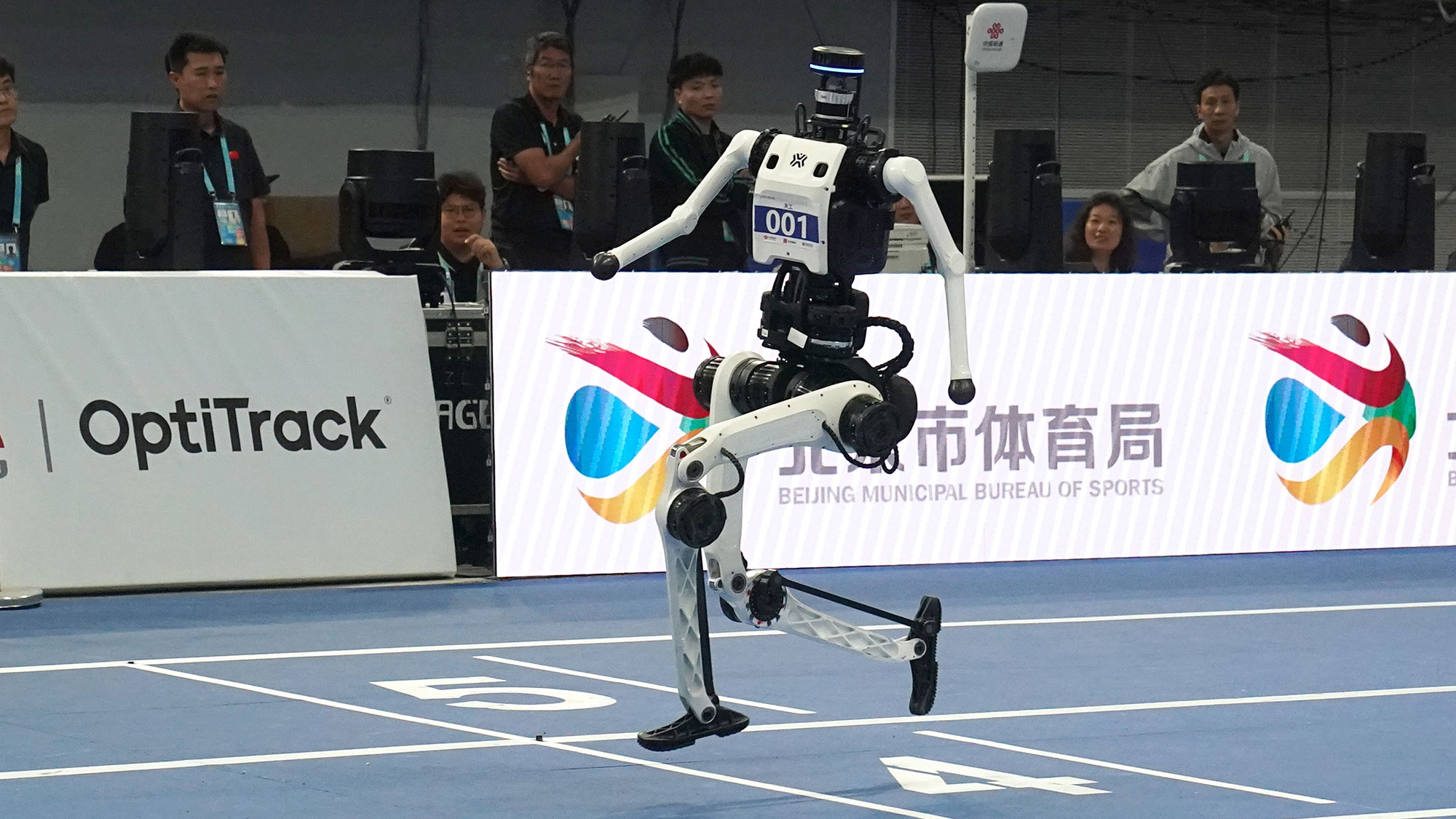
Humanoid robots in Beijing have beaten a number of men's athletics world records at the 2026 World Humanoid Robot Games, claiming high-water marks in the 100-meter sprint, the 400 m, 1,500 m and high jump. While these performances aren't official replacements for the human records, as the robots competed under robot-specific categories and conditions, they highlight the progress made since last year's inaugural robot games .

The five-day games were held between Aug. 22nd and 26 at Beijing’s National Speed Skating Oval and drew 2,056 robots from 666 teams across 16 countries. The events included sports like football and martial arts, as well as practical applications like warehouse logistics, factory-style assembly and charging tasks.

Robots broke four human athletics records:

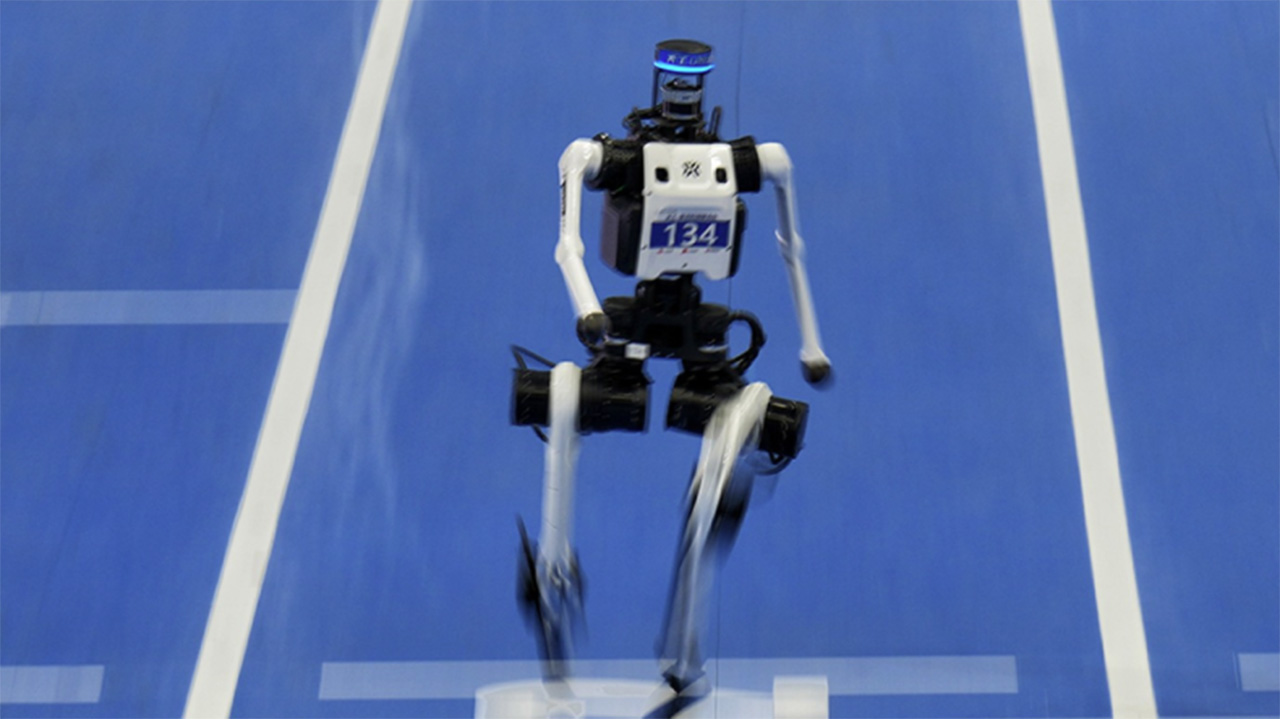
100 meters: Tiangong Ultra, 8.64 seconds

Human benchmark: Usain Bolt ran 9.58 seconds at the 2009 World Athletics Championships in Berlin.

Robot result: Tiangong Ultra is a humanoid robot developed by the Beijing Humanoid Robot Innovation Center. It won the large-size 100 m final, completing it in 8.64 seconds on Aug. 26. It set an early mark of 9.39 seconds, already enough to smash Bolt's record, then improved to 8.86 seconds in qualifying before the blistering 8.64 time in the final. That 8.64-second time is 0.94 seconds below Bolt’s mark.

A humanoid robot runs on a blue track

The Tiangong Ultra robot running. (Image credit: X-Humanoid)

400 meters: Tiangong Ultra, 38.15 seconds

Human benchmark: Wayde van Niekerk's 43.03 seconds, set at the Rio Olympics on Aug. 14, 2016.

Robot result: The same robot that set the 100 m record dominated the 400 m competition as well. Tiangong Ultra won the 400 m final in 38.15 seconds, nearly 5 seconds faster than van Niekerk's world record.

A humanoid robot runs on a blue track

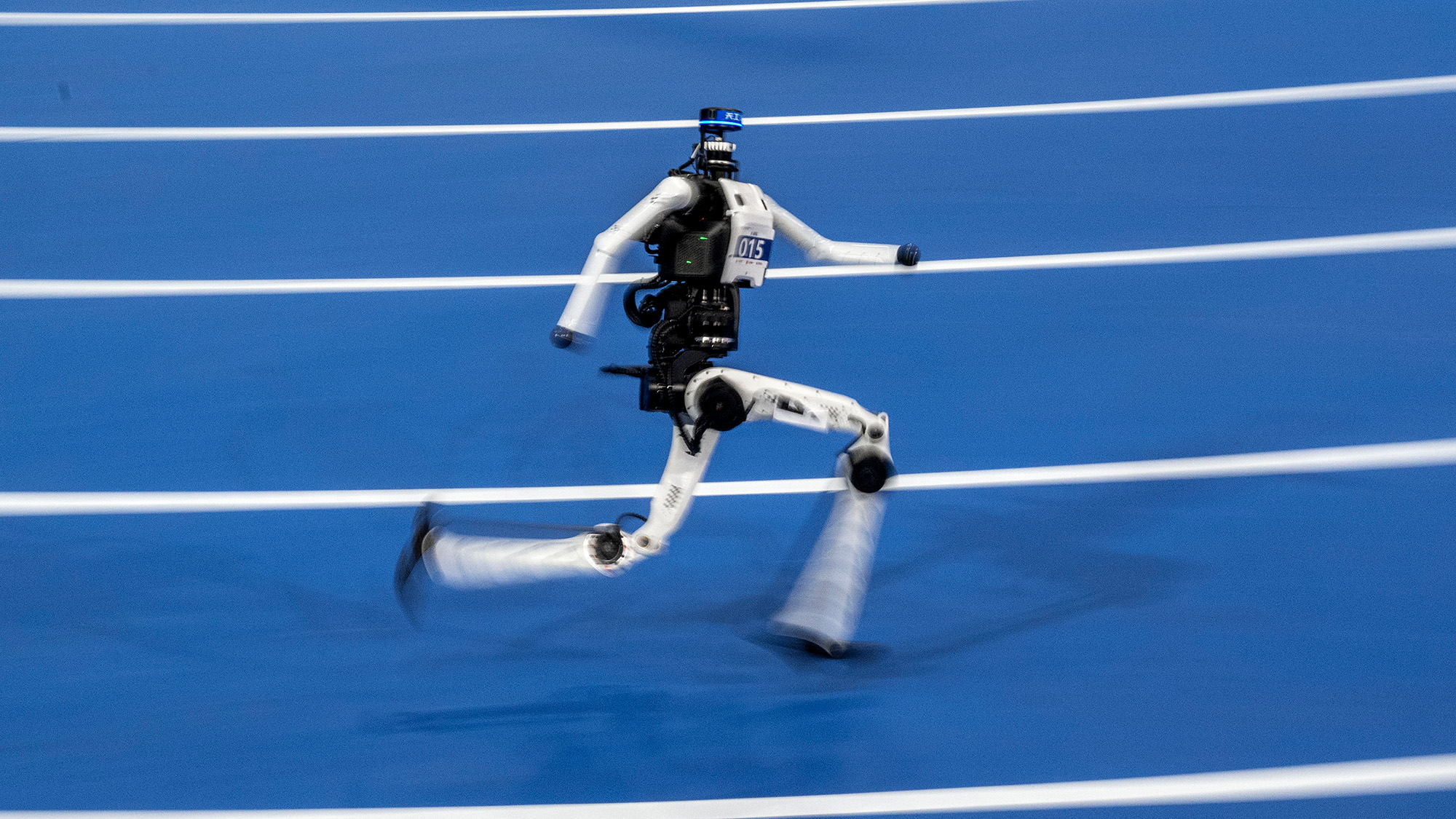
Robots from Team Tiangong Ultra compete in the 4x100 meter relay final of the 2nd World Humanoid Robot Games at National Speed Skating Oval in Beijing, China, on August 25, 2026. (Image credit: VCG via Getty Images)

1,500 meters: Tiangong Ultra, 2 minutes, 21.6 seconds

Human benchmark: Hicham El Guerrouj of Morocco set the men’s 1,500 m world record of 3 minutes, 26 seconds in Rome on July 14, 1998.

Robot result: Team Tianzhuo's Tiangong Ultra completed its record-smashing hat trick, winning the 1,500 m in 2 minutes, 21.6 seconds — well below El Guerrouj's time. The next two finishers, at 2 minutes, 30.00 seconds and 2 minutes, 30.22 seconds, also bettered the human benchmark.

A black-and-white humanoid robot sprints on a blue track.

A Tai Gong Ultra humanoid robot runs to victory in the 1500 meter final at the 2nd World Robot Games at National Speed Skating Oval on August 23, 2026 in Beijing, China. (Image credit: Kevin Frayer / Stringer via Getty Images)

High jump: 2.88 m (9.45 feet) standing jump

Human benchmark: Javier Sotomayor of Cuba cleared 2.45 m (8.04 feet) in Salamanca, Spain, on July 27, 1993.

Robot result: A robot made by X-Humanoid cleared 2.88 m in a standing high jump, which smashed the previous best robot result of 0.95 m (3.12 feet) at the inaugural games in 2025. However, Sotomayor’s record came in a standard running high jump, in which athletes use a curved approach, generate speed and clear the bar using a technique called the Fosbury flop. The robot completed a standing high jump, a different event with different mechanics. The running high jump is both harder and higher than the standing jump, because athletes can convert horizontal speed into greater lift using a one-foot takeoff and the Fosbury flop, enabling higher clearances than the purely muscular, two-footed standing high jump.

What the record claims mean

These games showcase the expanding abilities of humanoid robots. Disciplines like running, particularly across longer distance events like the 1500 m, and high standing jumps require powerful actuators, fast balance corrections, foot-placement control and software that can compensate for tiny errors in real time.

"In my view, these World Records were achieved using, 'The Best Part is No Part' principle, through mostly mechanical optimization to perform a single task extremely well," said Scott Walter, the Robotics Research Diligence director at RoboStrategy, an investment fund that gives retail and institutional investors exposure to private and public companies in robotics and “embodied” or physical AI. "Locomotion is mostly solved as witnessed by these games, albeit with optimizations," he told Live Science in an email.

Walter said the key to many of the impressive advances we've seen is simplicity, shearing off unnecessary components that introduce more points of failure and can make coordination more difficult.

"Many degrees of freedom were removed in the arms (shoulders, elbow, no wrist, no hands), hips and ankles. This reduced mass, and allowed distal mass to be moved higher up in the kinematic chain, improving movement efficiency," he said.

However, although the robots were very capable in the specific events in which they competed, we shouldn't take that to mean they're top performers in other, more diverse tasks.

"The bots are barely humanoid and could only accelerate in a straight line, not stop without crashing nor run the curve to slow down," Walter said. "The winners were in no shape afterwards to stand on the podium to receive their medals. Nor could they run in the 4x100 relay as, ironically, they had no hands for the 'hand-off.'"

Some robots were seen crashing into barriers or falling, and others caught fire, highlighting that reliability is still an issue.

But other robots at the games were made for more than just going faster, higher, stronger. Alongside track-style events, robots performed practical tasks such as connecting charging cables, handling objects, using tools and working in simulated industrial or service settings.

In many cases, the greater challenge is not raw strength or speed but reliably seeing an object, judging its position, applying the right amount of force and recovering when something does not go as planned. More than 40% of the games' events required robots to operate autonomously, without direct human control.

"Manipulation is the greatest biggest challenge as that is the business end of the humanoid and a dexterous and robust hand is still elusive," Walter said. "Specialization is easy, general purpose is not."

Walter noted that the decathlon record may be the next target as it demonstrates a range of abilities.

"The human Decathlon record is the true test of speed, endurance, power, strength, robustness, coordination and dexterity. I would not be surprised to see an attempt at the record next year," he said.

As If There Was Any Question About Data Centers Being Weak Job Creators, Meta Is Now Deploying Robots to Maintain Them

5 September 2026 at 11:01

Since the start of the data center boom, “job creation” was one of the key promises made to communities weighing whether to host the tech industry’s monstrous computing facilities in their backyards.

That was always a gross over-representation of the facts, as most labor required for data centers comes in the form of temporary construction jobs to build them. Still, the tech tycoons who need data centers to keep the AI revolution chugging along could always fall back on promoting the lonely skeleton crews tasked with manually monitoring, patrolling, and maintaining each facility.

Now, even that could be going away.

According to new reporting by Ars Technica, the AI giant Meta is testing new robots designed to automate the work of data center maintenance, with the aim of keeping the cost of labor even lower.

The initiative is in its very early stages, per Ars, involving trial runs of hardware from a few different robotics firms. These include companies like ABB, Kinova, and Watney Robotics, which supply robot arms being tested for tasks like hot-swapping network cables and cycling power to server racks.

One anonymous Meta staffer told Ars that, if it’s successful, a robotic arm from Kinova could replace up to 80 percent of their the facilities’ workload.

“We thought those of us performing the physical tasks were safe for a while, but not anymore,” the worker lamented. “It’s coming for us all, unfortunately.”

The bulk of data center overhead comes from the hardware itself, particularly the extremely pricey AI chips needed to run high-powered large language models. Even when factoring in construction the human labor cost of data centers is negligible, meaning Meta is going far out of its way to automate maintenance work.

Approached for comment by Ars, a Meta spokesperson declined to comment on the testing of robots for data center work.

More on data centers: Data Center Backlash Has Officially Rattled Sam Altman

The post As If There Was Any Question About Data Centers Being Weak Job Creators, Meta Is Now Deploying Robots to Maintain Them appeared first on Futurism.

Research roundup: 7 cool science stories we almost missed

1 September 2026 at 20:06

It’s a regrettable reality that there is never enough time to cover all the interesting scientific stories we come across. So every month, we highlight a handful of the best stories that nearly slipped through the cracks. August’s list includes the discovery of a new celestial object astronomers have dubbed a "black hole star"; breaking down plastics with microbes and turning them into edible cookies; how whale calls are connected to Einstein's special theory of relativity; and how avocado tree flowers switch sex during the day, among other highlights.

Discovery of a "black hole star"

Credit: Rohan Naidu (University of Hawai'i)

In 2024, astronomers combing through datasets taken by the James Webb Space Telescope noticed hundreds of mysterious little red dots lurking therein, believed to be baby quasars. They existed when the Universe was just a few hundred million years old. One such object in particular captured scientists' interest: a red dot that was extremely red and very bright, but whose properties didn't fit with any known astrophysical object. Astronomers have now concluded that the little red dot is a "black hole star," so named because it is the size of a large star but produces far more energy than would be possible via nuclear fusion—energy comparable to what an active black hole would produce.

Read full article

Comments

© ose-Luis Olivares, MIT

Scientists build tiny robots without motors that can fly using sound waves alone

If you blow across the top of an empty bottle you'll hear a clear, steady note. Now, engineers have used that same concept to power tiny robots that move without a single motor on board.

These new devices are powered entirely by sound. When the right frequency is aimed at them, hollow chambers built into their structure resonate and push out a jet of air, generating enough thrust to steer a small boat or lift a tiny flying robot off the ground.

The scientists described their innovation in a study published Aug. 12 in the journal Science Advances.

A 19th-century tuning trick, miniaturized

The effect behind it, known as Helmholtz resonance, was first studied in 1856 by the German physicist Hermann von Helmholtz, who was trying to invent a tool for tuning musical instruments. He noticed that when air trapped inside a cavity resonates, it also pushes out a faint jet of air.

"It isn’t very powerful when you do it with a musical instrument, because pressure is low," said study co-author Selman Sakar, an associate professor of mechanical engineering at the Swiss Federal Technology Institute of Lausanne (EPFL) in Switzerland. "But if you could crank up the pressure, all of a sudden that jet could become significant... in a way that the force can be harnessed for machinery," he told Live Science.

The team realized that shrinking Helmholtz's resonators down would push the frequency needed to activate them into the ultrasonic range — meaning it's too high-pitched for humans to hear and, crucially, easier to focus with precision. Larger versions generating the same force would need audible sound loud enough to be both annoying and potentially harmful, Sakar said.

Using a specialized 3D-printing technique called two-photon printing, the researchers built hollow structures based on Helmholtz's original equations and confirmed with lab tests and computer simulations that they generated thrust as predicted.

A close up of a gold coin with three y-shaped robots next to it.

Several of the tiny, propeller-like microfliers pictured next to a Swiss franc coin for scale. (Image credit: EPFL/MICROBS - CC-BY-SA 4.0)

Boats, rockets and tiny helicopters

The team built small boats measuring roughly 2 inches (5 centimeters) fitted with multiple resonators, each tuned to a different frequency and pointed in a different direction. By changing the pitch of a nearby speaker, the researchers could steer the boats left, right or straight ahead.

At a far smaller scale — some just 0.04 inches (1 millimeter) across — the team also built "microfliers" that generated lift two different ways: some pushed thrust downward like a rocket — but using air for the thrust — while others span tiny attached blades to fly like a helicopter, using sound waves to rotate the blades.

The technology has an advantage over conventional means of power generation because it can be built at extremely small scales, Sakar said. Conventional motors have "a fundamental limit" on miniaturization because of the physical components like magnets, coils and shafts that a motor needs to work, he said. Because these resonators are just precisely shaped hollow cavities, there's no comparable limit on how small they could eventually build.

The researchers said in the study that the same principle could eventually be used to precisely rotate and manipulate small objects in midair without touching them, or to build soft, flexible surfaces that bend and change shape on command when they "hear" a particular frequency which can be used for biomedical applications like heart stents.

For now, the study is a foundation for the researchers to build on, Sakar said. "This paper, I think, is important in the sense that we put the design principles out," he said, adding that follow-up work could focus on more applied designs, control systems or navigation.

China’s Moon mission to find water ice is unlike anything NASA has done

26 August 2026 at 14:00

Author: Richard de Grijs, Professor of Astrophysics, Macquarie University

Chang’e-7
Shackleton crater on the Lunar South Pole.
NASA’s Scientific Visualization Studio


How do you explore a place where the Sun never shines? China’s space programme will soon embark on one of the most innovative lunar exploration missions in recent years.

We’ve known for nearly two decades that some form of water exists on the Moon. What we still don’t know is exactly how much accessible water ice lies inside permanently shadowed craters, how deeply it is buried or what form it takes.

What we do know is that accessing that water ice will be a real challenge: it is found at the bottom of deep, hard-to-traverse craters where the Sun never shines, remaining untouched for billions of years at temperatures well below –200°C. These are among the most valuable places on the Moon, but the hardest to reach and explore.

Lunar exploration has come a long way since the Soviet Union’s Luna-1 probe reached the Moon’s vicinity in January 1959. The Apollo missions and their successors showed the challenge is no longer simply to reach the Moon. It is to explore places human and conventional rovers cannot easily go, and ultimately determine whether the Moon itself can provide some of the resources that future explorers will need.

China has spent two decades building an increasingly ambitious lunar exploration programme, named after Chang’e, the ancient Chinese goddess of the Moon. The Chang’e-7 mission is expected to set course for our celestial neighbour later this month, although a recent failure involving a different Chinese rocket has introduced some uncertainty over the launch date. Here’s what makes this latest mission so interesting.

What is Chang’e-7 set to achieve?

The mission will test several novel approaches to lunar exploration. It will consist of an orbiter, a lander, a rover and a hopper.

In addition, the Queqiao-2 lunar relay satellite is already in place. Launched separately in March 2024, it subsequently supported the Chang’e-6 mission and will facilitate communication between Earth and the lunar surface during the Chang’e-7 mission.

We don’t know precisely where the mission will land, but a site on or near an illuminated ridge close to the Shackleton crater in the Lunar South Pole’s Aitken region is a prime candidate.

The hopper will be the mission’s real star. Unlike a wheeled rover, it’s designed to leap over broken terrain and descend into craters where sunlight never reaches, places conventional vehicles may simply be unable to enter.

Adding it to the mission makes sense, given the steep crater walls, broken terrain, permanent shadow and the need for autonomous navigation and communications.

Chinese scientists won’t be looking for signs of water; we already have compelling evidence for lunar polar water. The question at the mission’s core is where exactly that water is located, in what form and concentration, and whether it could realistically be accessed.

This marks a transition from simply exploring the Moon to determining whether its resources can actually be used.

Chang’e-7
Mosaic of the Moon’s south polar region, width approximately 600 km. The south pole is at the centre of the intersecting lines.
NASA/GSFC/Arizona State University

How NASA is taking a different tack

Other nations are similarly interested in addressing that same question. The United States is pursuing the same longer-term objective of making sustained lunar operations possible. Although NASA will be confronted by the same physical problems, the American space agency has opted for a different solution.

Chang’e-7 is a coordinated state mission whose elements have been designed around a single, specific objective and which can use the already operational Queqiao-2 infrastructure.

NASA, by contrast, is deliberately trying something different: building a lunar marketplace through its Commercial Lunar Payload Services (CLPS) programme. The agency buys lunar delivery, mobility and technology services from companies that own and operate their own spacecraft.

NASA currently has 17 contracted deliveries carrying more than 60 instruments.

And the American effort has already yielded useful experience: Intuitive Machines’ IM-2 mission, Athena, attempted strikingly similar undertakings to Chang’e-7. It carried a drill and mass spectrometer looking for volatiles, a small hopping vehicle intended to explore difficult terrain and an experimental mobile communications network. However, the lander fell over at the landing site and was powered down just one day after arriving.

In essence, the destination dictates the problems; different space programmes are experimenting with different ways to resolve them.

Learning how to live on the Moon

Finding lunar resources is only the first step. Chang’e-7 will attempt to determine where useful lunar resources are found near the Moon’s South Pole and characterise their nature.

Chang’e-8, slated for potential launch in 2028, will move towards demonstrating how they might actually be used.

Crewed exploration will likely follow, culminating in the construction of the International Lunar Research Station, jointly led by the China National Space Administration and Russia’s Roscosmos space agency.

On the other side of the Pacific, the CLPS will feed technology and science into the broader NASA-led Artemis programme, which the agency explicitly describes as laying the foundation for sustained lunar exploration.

Ultimately, the lunar South Pole doesn’t care which flag is on a spacecraft. Any explorer entering its permanently shadowed craters faces the same darkness, severe cold, broken terrain and communications problems.

Getting to the Moon was one of the great technological challenges of the 20th century. Learning how to live and work there may be one of the great challenges of the 21st.The Conversation


This article is republished from The Conversation under a Creative Commons license. Original article.

The post China’s Moon mission to find water ice is unlike anything NASA has done appeared first on Mapping Ignorance.

Scientists Create Material That Can Shapeshift and Expand 80,000% Using Only Light

25 August 2026 at 13:03

A small piece of material sits nearly motionless in the dark. However, shine light on it and within seconds it begins to swell at an extraordinary rate.  Aim the light differently, and the same material can curl itself into a left-handed helix, reverse into a right-handed one, twist into more complicated shapes, or mimic the vines of a climbing plant.

Then turn the lights off, and the instructions disappear.

Researchers at the University of Science and Technology of China have developed a new photoresponsive hydrogel whose 3D shape can effectively expand, change, or even be rewritten into an entirely different configuration depending on where light strikes it.

In experiments reported in Nature Communications, the material expanded more than 80,000% within 40 seconds and could be repeatedly programmed into helices, twists, and hybrid structures.

Researchers also used its light-controlled motion to lift objects and drive a miniature rotary system, pointing toward possible applications in smart materials and soft robotics.

“Reconfiguring handedness in synthetic systems with spatiotemporal control and reversible behavior remains a fundamental challenge in bioinspired robotics and materials science,” researchers write. “Here, we demonstrate homogeneous photoactive hydrogels capable of ultrafast, programmable handed shape-morphing, including helices and twists, through spatially controlled light illumination.”

The ability to program the material after it has already been formed makes the breakthrough especially unusual.

Many shape-changing materials are manufactured with their future behavior already built into them. Different layers, directional fibers, compositional gradients, and pre-patterned structures determine how they will eventually bend, curl, or twist. Once fabricated, those instructions can be difficult, if not impossible, to change.

The new hydrogel begins as a structurally uniform material, with the asymmetry required for complex motion instead created temporarily by the pattern of incoming light. The key to making that possible is an unusually powerful swelling response.

The researchers incorporated a light-sensitive molecule known as spiropyran into a polymer network. When illuminated, the molecule experiences a chemical change that alters the electrical interactions between portions of the polymer. Attractions that normally help keep the network compact weaken or become repulsive, allowing the chains to spread apart and absorb large amounts of water.

The resulting expansion is dramatic. The researchers measured more than 80,000% volume growth after only 40 seconds of irradiation, a combination of speed and magnitude they say exceeds previously reported photoresponsive hydrogels.

Yet, simply making the hydrogel swell was only part of the experiment.

By controlling where the light hits, the team could make some portions of the material expand faster than others. Illuminating one side of a narrow strip creates a swelling gradient through its thickness. The resulting strain mismatch causes the strip to bend first, then curl into a helix.

Illuminating both sides produces a different internal swelling distribution. Rather than curling in the same manner, the strip buckles and rotates along its length, creating a twisted structure. Those shapes are not locked in place. Once the light is removed, the hydrogel relaxes and can later be programmed again.

The direction of the illumination can even determine the material’s “handedness.” Light arriving from one angle can produce a left-handed helix, while lighting the same strip from the opposite direction produces a right-handed one after the material has relaxed in darkness. Researchers repeatedly switched samples back and forth and found that the material retained its reconfigurability after more than 20 consecutive cycles.

More complicated lighting designs produced even stranger results.

By illuminating separate regions of a longer strip independently, researchers created structures containing multiple forms at once. One section could form a helix while another became a twist. Other patterns produced neighboring helices with opposite handedness or helix-twist-helix combinations, creating shapes reminiscent of the spiraling tendrils plants use to wrap around supports.

That ability to rewrite a material’s geometry also translated into mechanical output.

In one demonstration, a 6 mg strip curled into a spring capable of lifting a 50 mg payload or more than eight times its own weight. Researchers also created a light-controlled underwater switch in which the hydrogel moved two conductors into contact, as well as a tendril-like actuator that encircled another object.

The most elaborate demonstration turned the hydrogel’s twisting motion into locomotion.

Researchers connected a floating propeller to a hydrogel strip that served as a rotating shaft, with a paddle attached below the water. When light caused the hydrogel to twist, the paddle rotated, and the propeller began both spinning and traveling around a circular path. Programming the hydrogel’s handedness allowed the system to produce clockwise or counterclockwise motion.

Potentially, the hydrogel breakthrough could lead to soft robots that change shape or movement depending on the task, light-controlled grippers that wrap around delicate objects, or adaptive components that reconfigure themselves without conventional motors and mechanical parts.

Similar hydrogel materials might eventually serve as tiny switches, valves, pumps, or rotating actuators in conditions where running wires or fitting traditional machinery is difficult. Because the same configuration can be reprogrammed rather than permanently locked into one behavior, it could also open the door to devices that perform several different mechanical functions at different times.

However, for now, the experiments remain laboratory demonstrations. Researchers say the material will need faster response times to compete with some other classes of soft actuators.

Further research might improve the efficiency of its molecular photoswitches and redesign the polymer network so water can move through it more quickly.

Still, the wider concept suggests a different way of thinking about programmable matter. Instead of manufacturing a material with one predetermined set of movements, its instructions could arrive afterward as a pattern of light, then disappear and be replaced whenever a different behavior is needed.

“The core innovation of this work lies in the achievement of precise, reversible regulation of structural handedness in homogeneous hydrogels purely via external optical modulation,” researchers write. “The design principle presented here—reversibly encoding spatiotemporally programmable handedness within a homogeneous network through simple light patterns—establishes a method for creating intelligent, adaptive materials with embedded logic and function.”

The study, “Reconfiguring handed shape-morphing and actuation in hydrogels via light-encoded rapid expansion,” appeared in Nature Communications. 

Tim McMillan is a retired law enforcement executive, investigative reporter and co-founder of The Debrief. His writing typically focuses on defense, national security, the Intelligence Community and topics related to psychology. You can follow Tim on Twitter: @LtTimMcMillan.  Tim can be reached by email: tim@thedebrief.org or through encrypted email: LtTimMcMillan@protonmail.com 

US distributor of China’s most popular humanoid robots pivots after US ban

20 August 2026 at 23:00

A leading US distributor of China’s most popular humanoid robots and robot dogs now plans to produce its own robots at a facility on Long Island, New York. The business pivot comes amid the US government’s growing crackdown on foreign-made robots.

The company, RoboStore, had previously become the main North American distributor for humanoid robots and quadruped robots from Unitree Robotics, a Chinese robotics company that produces some of the most affordable and popular humanoid robot models. Universities like Harvard and MIT, along with tech companies like Amazon and Nvidia, purchased such robots made in China through RoboStore for their own research and development purposes.

“We’ve sold over 1,500 robots and deployed them and worked with customers like Cisco, OpenAI, Nvidia, and over 150 universities,” Teddy Haggerty, founder and CEO of RoboStore, told Ars.

Read full article

Comments

© Robo Inc.

This 3D-printable robot clips onto your guitar and plays it like a human

11 August 2026 at 14:05

A New Zealand engineer who goes by Bruce online has built a 3D-printable robotic system. It attaches to an acoustic guitar and plays it from a digital tab file. The output is real acoustic sound, not a digital or synthesized approximation. The device, called MegCell Pulse, is now funding on Kickstarter. Backers receive STL files for printing most of the components themselves, along with a parts list and assembly instructions.

The premise behind the Pulse is simple as a question and difficult as an engineering problem. What if a digital music file could control a physical instrument, producing sound with all the natural qualities of that instrument in its room? Most approaches to digital music run in the opposite direction, converting acoustic guitar recordings into digital files. The Pulse reverses that pipeline, taking a digital guitar tablature file and converting its instructions into physical finger and pick movements on a real guitar.

From tab file to acoustic sound

The Pulse attaches to the guitar body and uses two mechanical arms to replicate the movements of a human player. The fretting arm presses strings down between frets, taking the role of the guitarist’s left hand. The picking arm plucks those strings in time, taking the place of the right hand. The two arms are coordinated by gears and magnetic actuators. They draw their timing and positioning directly from a standard digital tab file. No custom programming is required for each piece of music — the system reads the tab notation as written.

What comes out of the guitar is the instrument’s own acoustic sound, shaped by its body, its strings, and the room it is in. That is meaningfully different from a synthesizer or playback system, which would produce a digitally modeled approximation. The Pulse makes the strings vibrate. The guitar amplifies those vibrations in the way it was built to.

What makes this one different

Robots playing instruments are not new, but most existing systems require significant engineering work to teach the machine a new song. The Pulse skips that by reading standard tablature. Any piece of music already encoded in tab format is immediately available without additional programming.

Bruce has also demonstrated the system as an assistive tool. It can take over fretting duties, allowing a one-handed player to produce a full performance. The human handles one mechanical role while the robot handles the other, creating a collaborative performance rather than a fully automated one.

The 3D-printable design has a practical advantage beyond accessibility: the system can be repaired and upgraded by reprinting individual components, rather than replacing a proprietary unit.

What it cannot do yet

The system does not cover the full length of most guitar fretboards, which constrains the range of music it can play. It cannot slide between frets, which rules out legato techniques and string bends. Chord strumming is also a more difficult motion to replicate than single-note picking, and the system’s handling of this technique is still developing.

Bruce acknowledges the Pulse is a work in progress. The key question now is whether the system can incorporate the small timing variations and embellishments that make a guitar performance sound human. That is the engineering problem that will determine how far the project can go.

Agility’s Digit V5 robot targets 20-hour workdays without safety fences in factories

11 August 2026 at 13:57

US-based Agility Robotics is preparing to launch its Digit V5 humanoid robot, with the company positioning it as a step toward safer human-robot collaboration in warehouses and factories.

The robot is designed to operate alongside workers without traditional safety fencing, addressing a key challenge in deploying humanoids in real-world workplaces.

Digit V5 is expected to support 20-hour operational days and use interchangeable end-effectors for different material-handling tasks, with autonomous tool changes planned for the future.

Recently, Agility Robotics revealed its plans to go public through a $2.5 billion SPAC deal, raising over $620 million to fund product development, research, and expansion.

Robots go cageless

Agility Robotics is preparing to deploy its next-generation Digit V5 humanoid robot to early customers in December, marking a major step toward wider commercial use of humanoid machines in industrial environments.

Digit V5 is designed specifically for warehouse and factory operations, where it can work alongside people without requiring the extensive safety fencing typically used around industrial robots. The humanoid platform combines a human-scale form factor with autonomous mobility, allowing it to navigate facilities and perform material-handling tasks in spaces designed for human workers.

Agility says Digit V5 incorporates upgraded safety systems intended to let the robot operate in close proximity to people. This could eliminate the need for dedicated cages and barriers that can consume valuable floor space, require costly facility modifications, disrupt traffic patterns and force changes to existing workflows, reports Humanoids Daily.

The ability to operate without conventional fencing could make Digit V5 particularly useful in crowded warehouses and factories where installing a dedicated robotic enclosure is impractical. Workers could also move through areas where the robot is operating, potentially allowing more flexible collaboration between humans and machines.

Agility expects early customer deployments to validate Digit V5’s safety capabilities under real-world conditions before broader production begins. The company believes the technology could expand humanoid applications beyond logistics and manufacturing into sectors such as retail and pharmaceuticals, where earlier systems faced greater operational restrictions.

Advances robot safety

Agility is placing safety at the center of its next-generation Digit V5 humanoid robot, with a new system designed to let it operate in close proximity to people without traditional safety fencing.

The robot combines cameras, sensors and software that can detect and interpret people in its surroundings with hardware designed to respond safely to unexpected movements. Its proprietary cycloidal actuators in the hips and knees provide the strength and dynamic stability needed to react quickly without losing balance, dropping a payload or falling.

Agility has tested this capability by suddenly removing the surface beneath the robot, prompting it to take a corrective step and maintain its load. The company considers this dynamic stability an important part of its overall safety approach.

Digit V5 also introduces other features intended to support safer and more flexible operation. Its battery system is designed to support more than 20 hours of work per day, potentially allowing one robot to operate across three shifts. The humanoid also uses an ISO-standard flange that allows it to work with a broad range of robotic end-effectors. Agility has demonstrated Digit changing grippers and plans to eventually enable autonomous tool changes.

These capabilities could expand the robot beyond bulk material handling into tasks such as kitting and sorting, while maintaining the safety requirements needed for workplaces where humans and robots operate together.

💾

Agility Robotics’ Digit V5 is built for safer human-robot collaboration, operating without fencing while handling tasks in factories.

Video: Chinese robot dog tracks Tibetan antelopes at 15,420 feet in harsh terrain

11 August 2026 at 13:46

DEEP Robotics’ intelligent robots are helping researchers observe Tibetan antelopes in the high-altitude Serling Tso Nature Reserve in China.

Located at an average elevation of 4,700 meters (around 15,420 feet), the reserve becomes a key observation site between July and September, when large herds return with newborn calves during the annual migration season.

The robots captured footage of the animals migrating, nursing, and foraging around Cuo’e Lake, providing researchers with visual data that could support wildlife behavior.

Recently, Deep Robotics’ DR02 humanoid showcased enhanced mobility, running on grass, jumping obstacles, climbing stairs, and operating near hazardous electrical infrastructure for industrial applications.

Robots aid wildlife

At an average elevation of about 4,700 meters, China’s Serling Tso Nature Reserve provides an important habitat for Tibetan antelopes. From July through September, large herds return to the region with newborn calves, creating an ideal period for researchers to study migration, nursing and feeding behavior.

During this year’s migration season, DEEP Robotics deployed its robots around Cuo’e Lake to support wildlife research and ecological conservation. The machines captured natural footage of Tibetan antelopes while minimizing human interference, providing researchers with valuable visual data for long-term population and behavioral studies.

Advancing into High-Altitude Ecological Zones – Intelligent Robots Assist in Scientific Observation of Antelopes 🤖 pic.twitter.com/QvNNUk1yeH

— DEEP Robotics (@DeepRobotics_CN) August 10, 2026

DEEP Robotics has previously used robotic systems for high-altitude wildlife observation. In 2025, its X30 quadruped robot operated in the Hoh Xil region at an elevation of around 4,800 meters (around 15,750 feet). Its biomimetic design helped it blend into the environment and reduce disturbance to animals.

This year, the company deployed its Lynx M20 wheeled-legged robot in the Serling Tso Reserve, primarily for close-range visual documentation. The robot was required to operate across soft meadows, uneven permafrost and scattered gravel, where conventional equipment can struggle with stability.

Cold temperatures, rain, snow and other harsh weather conditions further complicate fieldwork, highlighting the potential of rugged robotic platforms for scientific observation in extreme environments.

Lynx M20 advances

DEEP Robotics’ Lynx M20 wheeled-legged robot is being used to support ecological research in the challenging high-altitude environment in Serling Tso Nature Reserve.

Designed for all-terrain operation, the Lynx M20 combines the speed of wheeled movement with the obstacle-crossing ability of legged locomotion. Its IP66 protection rating helps shield the robot from dust and water, while its operating temperature range of -20°C (-4°F) to 55°C (131°F) allows it to function in unpredictable plateau conditions.

The robot is also equipped with LiDAR and depth cameras that enable it to perceive changes in terrain, including meadows, uneven permafrost and gravel slopes. Using this environmental data, the system can adjust its posture and movement in real time, helping it maintain stability while navigating difficult ground.

A key advantage is its low-interference operation. Tibetan antelopes are highly sensitive to unfamiliar sounds and movements, making conventional close-range observation difficult. The Lynx M20’s relatively quiet movement allows researchers to approach herds with less disturbance and remotely document behaviors such as migration, grazing, and nursing.

Researchers observed the robot approaching a herd near Cuo’e Lake without causing the animals to flee. According to DEEP, the exercise demonstrates how increasingly capable mobile robots can extend scientific monitoring into remote and extreme environments.

💾

DEEP Robotics’ intelligent robots help researchers monitor Tibetan antelopes, capturing migration, nursing and feeding behavior.

Electronic skin enables tunable touch and proximity sensing for robots and prosthetics

10 August 2026 at 17:20
Recent advances in miniaturized and portable electronics, particularly wearable and flexible devices, have increased the demand for self-powered sensing technologies. Among these, triboelectric nanogenerators (TENGs) have received considerable attention for developing highly sensitive tactile sensors.

❌