
❌

Normal view

From pit stop to plant food: how Grand Prix crowd’s urine becomes fertilizer

31 July 2026 at 12:00

Peeing at the Grand Prix just got a lot more meaningful. In the latest episode of Physics World Stories, Lucy Bell-Reeves and Olivia Wilson, who work for the start-up NPK Recovery, based at the University of the West of England, explain how their mobile system upcycles urine into fertilizer, right where it’s produced.

The pair unpack the physics and chemistry behind their approach, contrasting it with the energy-intensive Haber-Bosch process, which converts natural gas into ammonia under extreme heat and pressure at centralized plants. With the UK importing 100% of its nitrogen, and recent global conflicts exposing the fragility of fertilizer supply chains, the case for local, circular alternatives is growing stronger.

Host Andrew Glester hears about the pair’s experience at the British Grand Prix in Silverstone, the UK’s leg of the Formula 1 World Championship. Bell-Reeves and Wilson reflect on what it’s like to experience the β€œGrand Pee”, and how attendees react when they discover where their urine ends up.

While not pitched as a replacement for industrial-scale ammonia production, the system offers a smart fix for off-grid sites facing sudden spikes in human waste.

The post From pit stop to plant food: how Grand Prix crowd’s urine becomes fertilizer appeared first on Physics World.
πŸ’Ύ

Beyond the data: art meets climate at the edge of the world

26 June 2026 at 15:00

β€œThe most beautiful thing we can experience is the mysterious,” wrote Albert Einstein. β€œIt is the source of all true art and science.” It is a reminder that wonder – particularly in the natural world – lies at the heart of both disciplines. When it comes to an issue as multifaceted and emotive as climate change, it feels only natural to turn to art as well as science to make sense of what is happening around us.

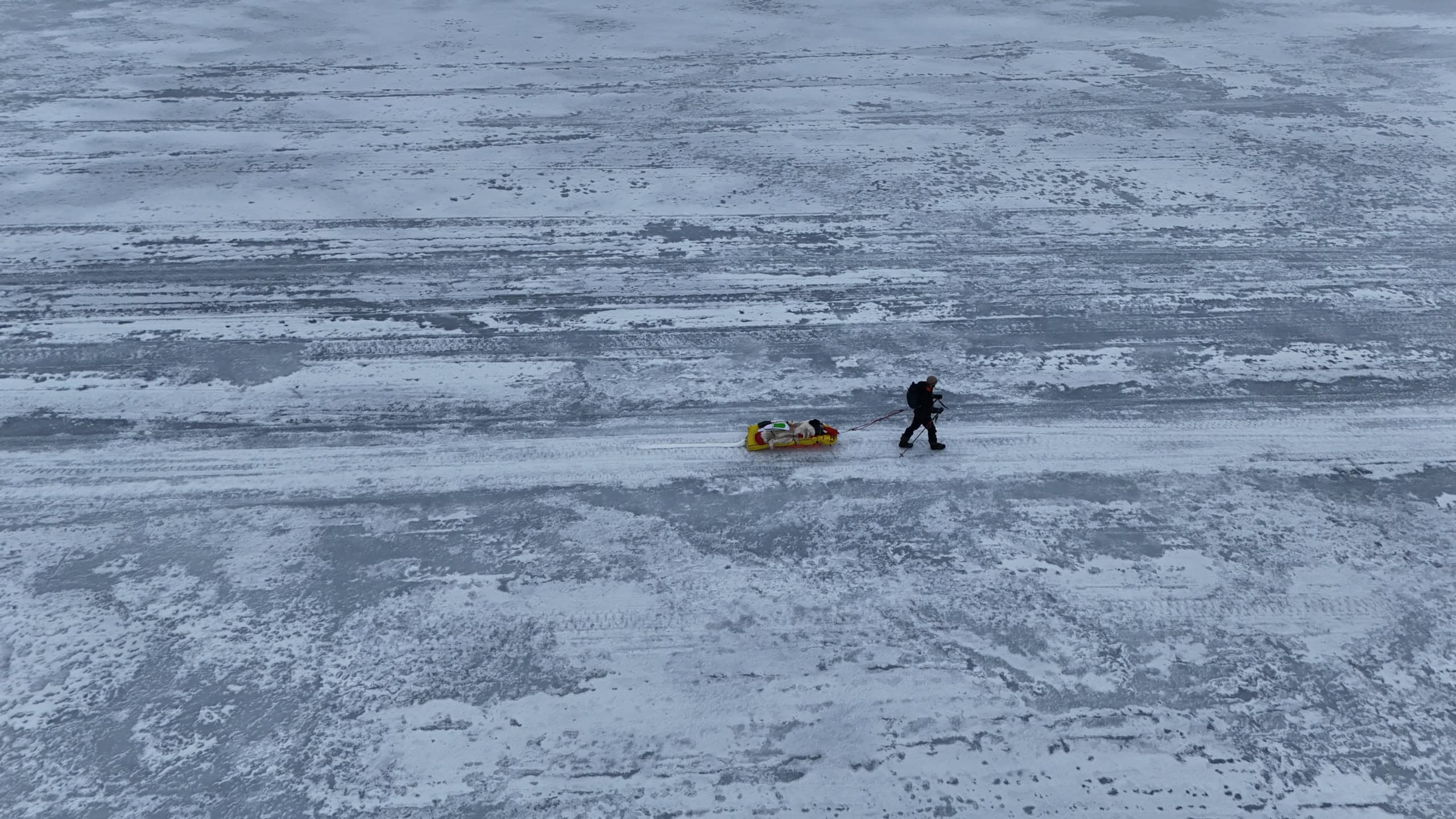
The latest episode of Physics World Stories brings together two artists doing exactly that. Host Andrew Glester speaks first with Tom Bailey, a performance and environmental artist from Bristol-based creative company Mechanimal. Bailey has recently returned from an extraordinary 600Β kilometre journey through the Arctic borderlands β€” spanning Norway, Finland and Sweden β€” travelling by ski, sledge, foot and boat, and occasionally dressed as a reindeer.

Drone shot of artist Tom Bailey pulling a sled along an ice sheet in the Arctic
Arctic art Tom Bailey on his 600 km climate journey and performance tour in the Arctic borderlands. (Courtesy: Tom Bailey and Natasha Soonchild)

Travelling between festival performances, Bailey immersed himself in a region undergoing dramatic change: shifting weather patterns, transforming landscapes, and growing international interest in its mineral resources, raising urgent questions about governance and access. Central to his vision is a β€œmore-than-human” perspective, advocating for nature to have formal representation in international decision-making, not merely as a resource to be managed, but as a presence with its own legitimate interests.

A climate video game with beautiful music

Composer Naomi Hart approaches the crisis from a different angle. After a conversation with her daughter about fears for the future left her saddened but resolute, she channelled that emotion into Save Progress – a short video game exploring how human connection can help us to think about the world and the choices ahead. In the podcast, Hart talks about her creative choices; the game combines an intentionally old-school design with specially composed synthesizer music. Save Progress takes around 10 minutes to play: give it a try.

  • To keep track of how physicists are investigating climate change and developing solutions, visit the Environment and Energy section of the Physics World website.

The post Beyond the data: art meets climate at the edge of the world appeared first on Physics World.

πŸ’Ύ

❌