Normal view
D-Wave shows off its new entry in quantum computing race
D-Wave is a bit of an oddity in the quantum computing space, having been founded back in the last century. And its initial offering wasn't a quantum computer like those being developed by IBM or Google. Instead, the company built what's now called a quantum annealer, a machine that isn't general-purpose but can solve a large class of optimization problems. While the hardware shares some similarities with the qubits used in gate-based quantum computers, it operates in a fundamentally different way.
But a few years back, D-Wave started working on gate-based hardware, apparently choosing a somewhat unusual qubit technology called fluxonium. And this year, the company acquired a startup called Quantum Circuits that spun out of Yale University and has been developing what's called a dual-rail qubit (the same technology used by Amazon), which promises to make most errors very easy to detect, simplifying error correction.
On Wednesday, the company is publishing a paper in Nature that describes a key step in validating this dual-rail technology, showing that two of the qubits can be entangled without altering their best feature: Most are a single type that is easy to detect.


Β© D-Wave
Quantum Computingβs βDark Horseβ Just Cleared a Major Hurdle
- La Brujula Verde - English
- Remains of the 1945 atomic explosion with an unknown metallic alloy discovered in the sand of Hiroshima Bay
Remains of the 1945 atomic explosion with an unknown metallic alloy discovered in the sand of Hiroshima Bay

Quantum computers outperform classical ones, with results you can trust
There are many algorithms for which it has been mathematically proven that a quantum computer can generate results that would take a classical computer an unreasonable amount of time to generate. Unfortunately, today's quantum computers either can't run those algorithms or can only run simplified versions that classical computers can also handle. This has left the field facing a challenging question: Can we demonstrate the promise of quantum computers on today's noisy, limited hardware?
That's a more difficult question than it may first appear. If you generate a result that's out of reach of today's regular computers, it may not be possible to verify that you got the right result. And given that today's quantum computers are somewhat error-prone, getting the wrong result is a distinct possibility. Further, in the absence of a mathematical proof of the capabilities of quantum hardware, it's possible that a better classical algorithm could outperform the quantum hardware.
These issues inspired IBM to launch a quantum advantage tracker. On Thursday, the company announced three new entries that it says clearly show a quantum advantage, each using a different approach to overcoming errors and validating quantum results. "Trusted computing when you can do classical simulations is irrelevant," IBM's Jay Gambetta told Ars. "Trusted computing when you can't do classical simulations is a big deal."


Β© IBM
Yet more qubit tech: New quantum dot options, diamond vacancies
If you follow quantum computing news for long enough, it can start to seem like any quantum system that can alternate between two well-separated energy states can be used as a qubit. Atoms, ions, photons, electrons, and manufactured devices all have their backers. One of the key things that attracts backers is the tech's ability to scale. We'll need a lot of high-quality qubits to start doing any complex computations, and the ability of any technology to get us there is the subject of debate.
So even as some technologies can now support thousands of qubits, some competitors are still working on a small handful of qubitsβthe companies behind them are convinced that they have the potential to scale more effectively.
One of those technologies involves quantum dots that hold a single electron. Their advantage is that we can manufacture them using the same tech we use to build traditional processors, an approach that has proven to be scalable. This week saw two new papers describing different ways of using quantum dots, one of which was appealing enough that IBM bought the company that developed it. Separately, another company has released a processor showing 100 individual electrons being held in diamond defects, technology that wasn't obvious could scale.


Β© HRL Laboratories
Fractured and Fed Up, Teams Fully Competitive After Major Breakthrough
A new UC Irvineβled poll released four months before Election Day suggests Orange County remains a rare political battleground, with the governorβs race hovering near statistical dead heat. In a June 9β12 field survey of 809 Orange County adults, likely-voter preferences put Republican Steve Hilton ahead of Democrat Xavier Becerra, 47% to 44%, well within a reported Β±4.2 percentage-point margin of error.
The deeper story is turnout mechanics. Becerra performs best among groups that report lower voting certaintyβLatino and Asian-American respondents, women, and Independentsβwhile Republicans show higher levels of commitment. Only about half of Independents say they are absolutely certain to vote in November, compared with roughly three-quarters of Republicans and Democrats, raising the possibility that the election hinges more on who shows up than on who is preferred.
Orange Countyβs issue landscape narrows to a single dominant demand: housing costs. Sixty-one percent of residents name housing among the top problems facing California, and 37% identify it as the single most important issueβnearly double the next closest category. That cross-cutting salience persists despite demographic and partisan differences, making housing the campaignβs defining scalar variable.
The electorate also shows a structural shift. Independents now match Democrats as the countyβs largest bloc, leaving Republicans virtually tied. The resulting near-perfect three-way splitβ34% Democrat, 34% Independent or other, 32% Republicanβmirrors the March 2026 results and reinforces Orange Countyβs classification as a highly competitive electorate.
Generation appears to be the strongest cleavage dimension. Approval for President Donald Trump ranges from 14% among Gen Z to 53% among Baby Boomers, while voting certainty spans from 45% (Gen Z) to 87% (Boomers). Explanations for skipping the June primary cluster around forgetfulness, registration barriers, and skepticism about vote efficacy, especially among younger and Independent residents.
Racial and ethnic patterns complicate conventional realignment narratives. Although Latino and Asian-American groups are becoming more independent rather than simply shifting left or right, their head-to-head lean remains Democratic in candidate matchups. However, the turnout gapβabout half of Latino residents and 59% of Asian-Americans reporting absolute voting certainty versus 82% for White respondentsβmay determine which coalition converts into votes.
Gender divides are consistent across the ballot. Men back Hilton by 14 points, while women support Becerra by 8 points, and approval of Trump and opposition to Governor Gavin Newsom track similarly by gender. Unlike generations, however, the gender gap does not translate into different turnout intentions, with roughly two-thirds of both men and women expressing absolute certainty to vote.
Finally, perceptions of institutional direction show persistent anxiety. Around two-thirds of respondents say the United States is headed in the wrong direction, while California fares only slightly better. Locally, optimism is more stable and surprisingly bipartisan, suggesting that residents may differentiate between county-level functioning and national or state governance.
Subject of Research:
Political science / Public opinion (elections; social surveys)
Article Title:
Orange Countyβs governor race remains a statistical toss-up as housing dominates public priorities
News Publication Date:
Today (June 9β12 field dates; exact publication date not specified)
Web References:
https://sites.uci.edu/ocpoll/
References:
UC Irvine School of Social Ecology βUCI-OC Pollβ (fielded June 9β12 among 809 Orange County adults)
Image Credits:
Not provided
Keywords:
public opinion, elections, housing affordability, voter turnout certainty, political polarization, Independents, generational gap, gender gap, Orange County

Quantum entanglement explains why strange metals are so strange

βStrangeβ metals owe at least some of their peculiar properties to the quantum entanglement of their electrons. This finding comes from physicists at the Vienna University of Technology in Austria, who used a concept from quantum information science to guide their experiments. A similar approach, they say, could also yield a better understanding of certain high-temperature superconductors and other correlated quantum materials.
Electrons travel relatively unimpeded through most metals, but in the 1980s, scientists identified puzzling exceptions in certain cuprate high-temperature superconductors. Further examples of this βstrangeβ metal behaviour subsequently turned up in other classes of materials, including heavy-fermion materials, pnictides and organic compounds. This resistive behaviour cannot be explained by theories that treat electrons as independent, non-interacting particles, nor by theories that include interactions while treating electrons as quasiparticles. And although multiple recent theoretical works suggested a possible role for entanglement, experimental evidence was lacking.
A novel statistical tool
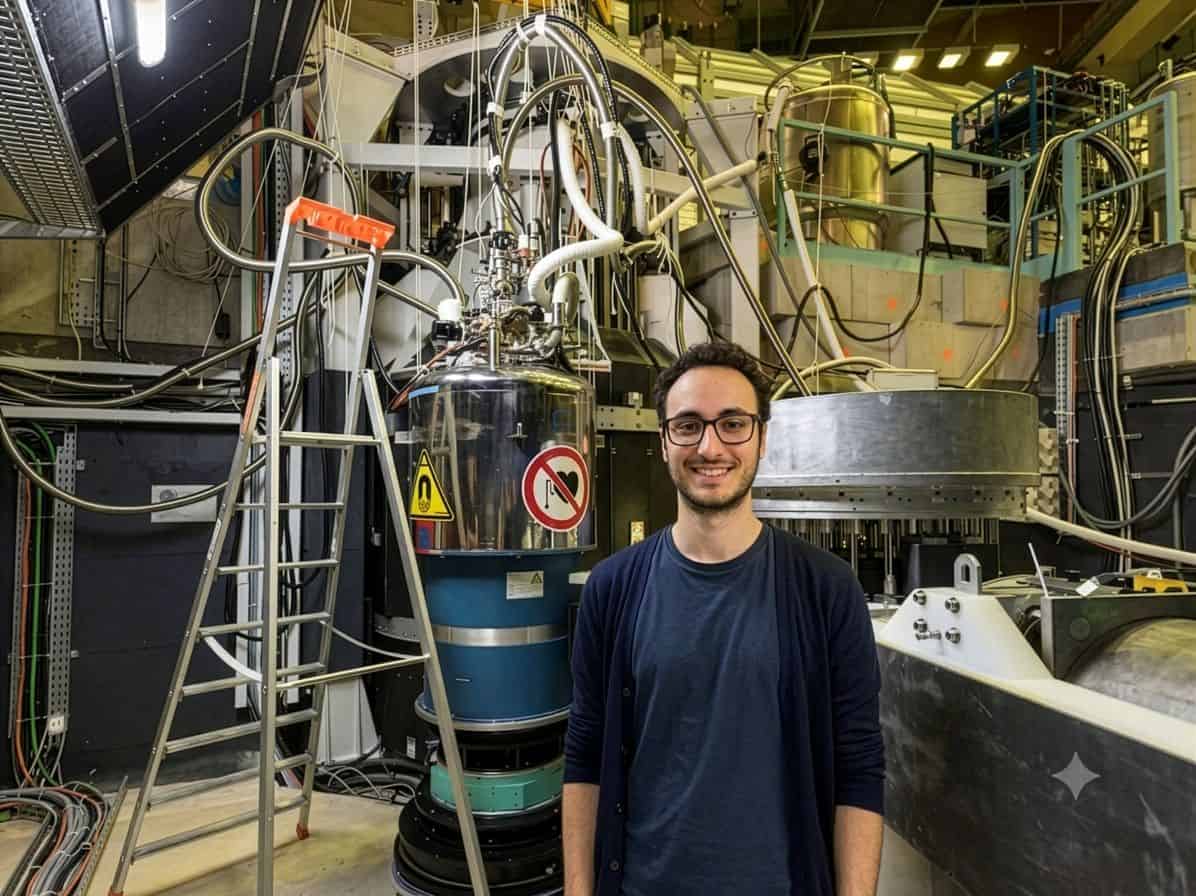
To investigate further, a team led by solid-state physicist Silke BΓΌhler-Paschen used facilities at the Institut Laue-Langevin (ILL) in Grenoble, France to perform inelastic neutron scattering measurements on a heavy-fermion metal with the chemical formula Ce3Pd20Si6. According to team member Federico Mazza, who conducted this part of the study, the scattered neutrons would normally each transfer their energy to individual particles.
However, when the researchers analysed their data using a concept called quantum Fisher information β roughly, a measure of how sensitively a quantum state depends on a given parameter β they found that they could not explain what they were seeing in terms of particles behaving independently. Instead, the data indicated that groups of at least nine quantum-entangled entities were acting collectively. Mazza says this provides direct evidence of highly multipartite quantum entanglement in the material β and, in turn, a new way of understanding why strange metals are so strange.
The parent state of high-temperature superconductivity
The strange metal state is of great interest because physicists consider it the βparentβ state of high-temperature superconductivity, though it also occurs across other materials platforms. βWe had suspected that some of the intriguing properties of this state might be related to entanglement but were not able to pin it down until now,β BΓΌhler-Paschen explains. βThe results are a great success for us. They confirm that our unusual approach of using methods from quantum information science for solid-state physics studies of novel materials can reveal fundamentally new insight.β

The experiments, which are detailed in Nature Physics, were not without challenges. For starters, the researchers needed to identify an ideal material to study the effect they were looking for and then grow it as a large, high-quality single crystal. Once they secured inelastic neutron scattering beamtime at the ILLβs powerful high-resolution triple-axis spectrometer β a difficult feat in itself β BΓΌhler-Paschen notes that they had to obtain and analyse the data at the highest standards and support it with simulations. βLast but not least, [we had to] communicate with our peers that multipartite entanglement contains valuable information beyond correlation functions and scaling analyses,β BΓΌhler-Paschen recalls.
Rather than being a βdetailβ of one particular material, BΓΌhler-Paschen says the teamβs result suggests that enhanced multipartite entanglement might be an integral part of the strange metal state. Verifying this, however, will require studies on other strange metals across materials classes, she says.
βLooking further ahead, we can envision that this aspect of strange metals finds application in quantum devices,β she tells Physics World. βIt could also help us better understand high-temperature superconductors and other materials in which electrons are so strongly correlated that they lose their (quasi)particle nature.β
The post Quantum entanglement explains why strange metals are so strange appeared first on Physics World.
Experiment that may or may not disprove Bohmian mechanics continues to spark debate
In the event of a nuclear holocaust, the only life remaining on Earth may be cockroaches, Keith Richards and physicists arguing about philosophical interpretations of quantum mechanics. One especially rich source of arguments is a deterministic alternative to the standard Copenhagen interpretation that dates back to the American (and later British, after Princeton University fired him for alleged communist sympathies) theoretical physicist David Bohm. According to Bohm, the position of a quantum particle is well defined everywhere and guided by a βpilot waveβ which, alas, cannot be measured directly.
Despite these philosophical differences, Bohmian mechanics makes the same predictions as the Copenhagen interpretation. Except maybe it doesnβt. Occasionally, a bright theorist hypothesizes that, under very specific circumstances, one could distinguish them. Very occasionally, a bright experimentalist conducts an experiment that claims to actually do so.
This is what happened last year when Jan KlΓ€rs and colleagues at the University of Twente in the Netherlands sent photons from a laser down one of two coupled waveguides towards a potential step. When the photons reached the step, they could pass through it by quantum tunnelling. They could also pass into the other waveguide. The researchers interpreted the distance the photons travelled through the barrier before tunnelling into the other waveguide as a measurement of their speed.
The key result was that, when the wave functions on both sides of the barrier were the same, the photons still tunnelled at, ahem, light speed β matching the Copenhagen notion that tunnelling occurred equally in both directions. However, the Twente team calculated that Bohmian mechanics predicted that photons inside the step β where the guiding equation didnβt have a real-valued frequency β would be at rest and get stuck. Interferometric measurements showed that wasnβt happening.
Not so fast
Game, set and match to Copenhagen? Er, no. Proponents of Bohmian mechanics immediately disputed the teamβs definition of velocity. βItβs just an operational definition,β says AurΓ©lien Drezet of the CNRS University of Grenoble-Alps in France. βIt has the units of velocityβ¦but that doesnβt mean that Bohmian mechanics can interpret the result.β
In a βMatters Arisingβ article in Nature, Drezet and two colleagues at the TechnionβIsrael Institute of Technology in Haifa now add an experimental qualm. The fact that the Twente team was able to produce an image shows that radiation must be leaking out of the cavity, Drezet claims: βIf you go to higher approximations and include cavity losses, you explain the experiment completely using Bohmian mechanics,β he says.
KlΓ€rs, who is preparing a formal response, is unconvinced. On the first point, he sees no reason βwhy the same speed measurement, which correctly captures the Bohmian velocity in the propagating regime, should cease to be a speed measurement in the evanescent regimeβ. On the second, he says his group did not ignore radiative leakage from the cavity: they measured it and found it βdoes not have a significant impact on the scattering physics we investigate or on the interpretation of our resultsβ.
This could go on for some time β regardless of how many seconds it is to midnight.
The post Experiment that may or may not disprove Bohmian mechanics continues to spark debate appeared first on Physics World.
New technique enables LIGO to peer farther into the distant universe
20 Years in the Making: Physicists Confirm Long-Standing Quantum Prediction
What happens when you try to chop a photon in half?
A photon is a single particle of light, and under normal circumstances, it can't be divided. But a photon is also not a particle, in the sense that it does not have a specific location. Instead, it is an extended object.
So if a photon is only partway through the process of reflecting from a perfect mirror and you yank the mirror away, what happens? The answer, from a trio of Norwegian physicists, turns out (arxiv.org link) to be more complex than I expected.
A photon divided?
Letβs first talk briefly about dividing and combining photons. If this were a common experience in our lives, then shining a single color of light through a piece of glass or reflecting it from a surface might cause photons to divide or combine. This would lead to an amazing array of colors: Our universe would be the most fantastic and legal LSD trip you could imagine. But this doesn't generally happen, hence LSD.


Β© DrPixel
Quantum error correction can constantly recalibrate a processor
There are some obvious big picture issues that stand between us and useful quantum computing. Issues like whether we can make enough high-quality hardware qubits to connect into the error-corrected logical qubits we need, and how we generate the states needed to perform universal computation on those logical qubits. But there are also many less prominent challenges that will need to be solved before we can perform calculations.
One of those challenges, which only affects some types of hardware, is calibration. For devices we manufacture, like superconducting qubits, there are always subtle variations among individual qubits. (This is not true when we use something like an atom to hold the qubit, but the lasers that control them can drift.) As a result, this hardware is put through a process called calibration, where we test different frequencies and amplitudes of the microwave pulses that control them to find the combination that produces the lowest error rates, and then save those settings for use in calculations.
However, you can't perform the typical calibration process while you're doing calculations, which means drift becomes an issue for long and complicated algorithms. Google, though, has figured out that it's possible to do calibration using the same data that's used for error correction.


Β© Google
- ZME Science
- New Spider from Australia Turns Silk Into a Catapult Specifically to Hunt One Dangerous Ant
Scientists Finally Figure Out Why Cats Are So Good at Landing on Their Feet
Can Time Flow in Reverse? A Quantum Breakthrough Challenges Our Assumptions
What if Time Isnβt Fundamental? Physicists Just Tested the Idea in the Lab
What Happens When You Cut a Photon in Half? You Get a Quantum Surprise
Sooner than expected? Useful quantum error correction promised for 2028.
Quantum computing news usually picks up near the end of the year, as companies try to provide evidence that they are hitting benchmarks on time. However, there have been interesting announcements as the summer starts this year, from incremental progress to attention-grabbing promises. As we did earlier this month, Ars has a rundown of some of the most significant announcements.
These include a promise of useful, error-corrected quantum computing as soon as 2028, details on an updated trapped ion processor, and a case in which claims of quantum supremacy have been cut back a bit thanks to advances in more traditional algorithms.
2028 is remarkably soon
Many people in the field expect that useful quantum computers are still about five to 10 years away. While there may be a few useful algorithms that can be run on existing error-prone hardware, almost all of the interesting problems that quantum computing can be applied to will require some form of error correction enabled by linking a small collection of hardware qubits together into what's called a logical qubit. Logical qubits include the redundant storage of information along with neighboring qubits that can be measured to determine when errors occur and how to fix them.


Β© QuEra