
❌

Normal view

Há exatamente 20 anos, o primeiro Mac Pro era anunciado!

7 August 2026 at 18:57

Já tendo completado a passagem para o mundo dos mortos, o icônico Mac Pro (antigo desktop topo-de-linha da Apple) foi revelado ao mundo pela primeira vez há exatos 20 anos, durante Worldwide Developers Conference (WWDC) de 2006.

Último Mac a trocar os chips PowerPC pelos processadores da Intel (transição que havia sido iniciada em 2005), ele chegou com o dobro de performance do Power Mac G5, seu antecessor direto — e de quem herdou a primeira iteração do design de “ralador de queijo”, que com certeza marcou época.

Mac Pro (2006)

Com um preço inicial de US$2.500 (ou US$4.140, levando em conta a inflação até os dias de hoje), ele era parrudíssimo — tanto em termos de performance bruta quanto de conectividade. Extremamente “upgradeável”, ele vinha com dois processadores Intel Xeon de dois núcleos (2,0GHz, 2,66GHz ou 3,0GHz, dependendo da versão escolhida), bem como com a placa gráfica GeForce 7300 GT, da NVIDIA — componente que podia ser trocado por uma Quadro FX 4500 (também da NVIDIA) ou uma ATI Radeon X1900 XT (da AMD).

Contando com quatro espaços para unidades Serial ATA (dois a mais que o Power Mac G5), o Mac Pro de primeira geração também permita a instalação de até quatro GPUs 1Graphics processing units, ou unidades de processamento gráfico. via PCIe, além suportar até 32GB de RAM 2Random access memory, ou memória de acesso aleatório. — por padrão, ele vinha com “apenas” 1GB. O desktop também era equipado com 5 portas USB 2.0 e 4 FireWire 800, padrão ainda muito popular na época.

Mac Pro (2006)

O queridinho de profissionais criativos, o Mac Pro parecia ser feito sob medida (ou vice-versa) para softwares como o Final Cut Pro, além de vir de fábrica com o clássico Mac OS X Tiger, lançado mais cedo naquele ano. Nem tudo eram flores, no entanto, já que alguns apps, como os da popular Adobe Creative Suite, ainda precisavam da camada de tradução Rosetta para rodar adequadamente em Macs com processadores x86, o que resultava em gargalos de performance — problema que foi solucionado com o passar dos meses.

Desde então, o Mac Pro original foi atualizado algumas vezes; o primeiro upgrade veio já em abril 2007, seguido por outro em janeiro de 2008. No início de 2009, o computador ganhou os processadores Intel Xeon 5500 e, um ano depois, passou a suportar até 64GB de memória e até 8TB de armazenamento — além de ter adotado os processadores da linha Intel Xeon 5600, é claro. A última dança desse primeiro design do desktop veio em 2012, com dois processadores Intel Xeon Westmere-EP de seis núcleos (2,4GHz).

O primeiro tropeço

O ano de 2013 foi difícil para o Mac Pro, que recebeu um novo design tão compacto quanto polêmico. Cilíndrica, a nova geração do Mac Pro instigou comparações com latas de lixo, principalmente por conta da abertura para ventilação na parte de cima do computador.
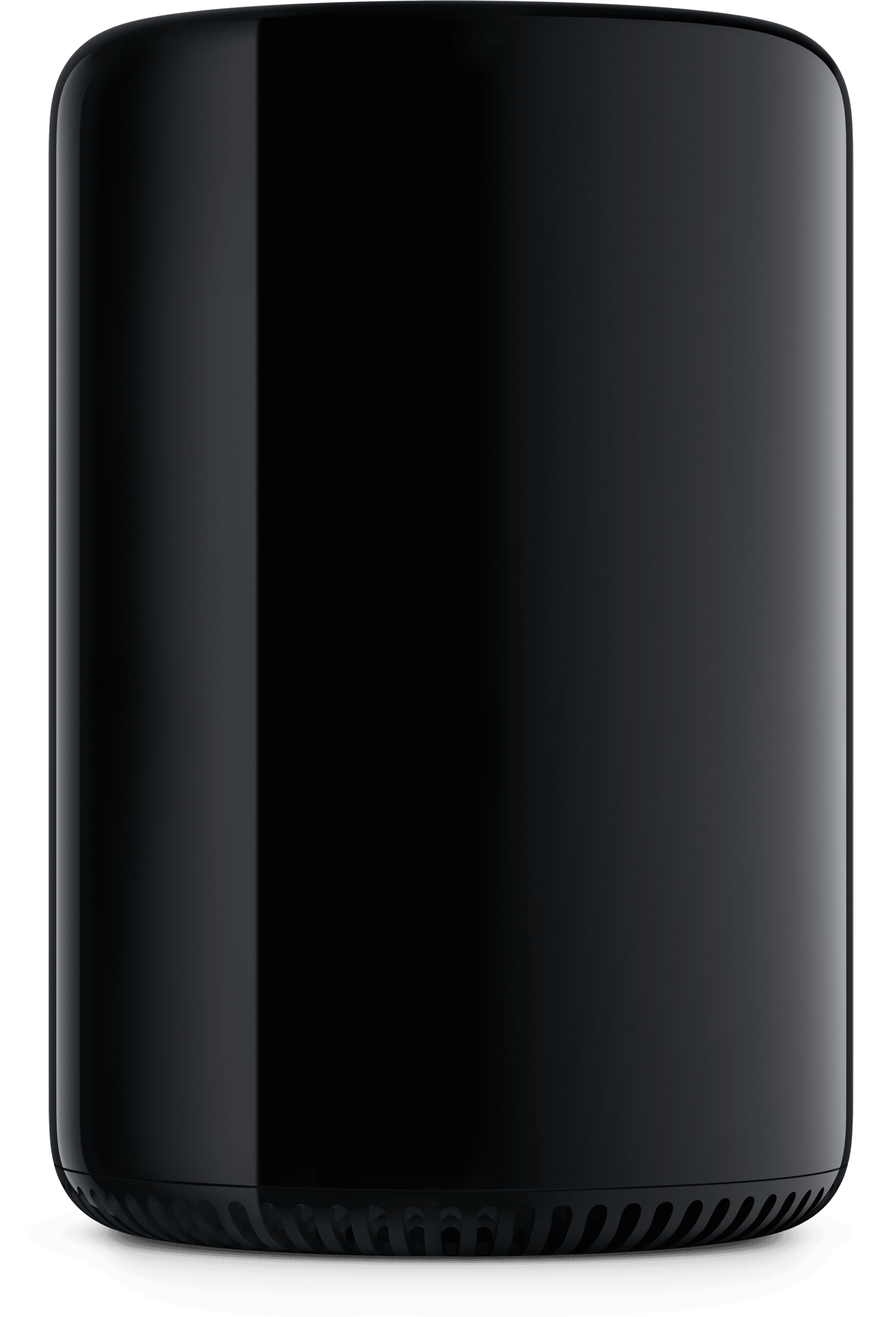
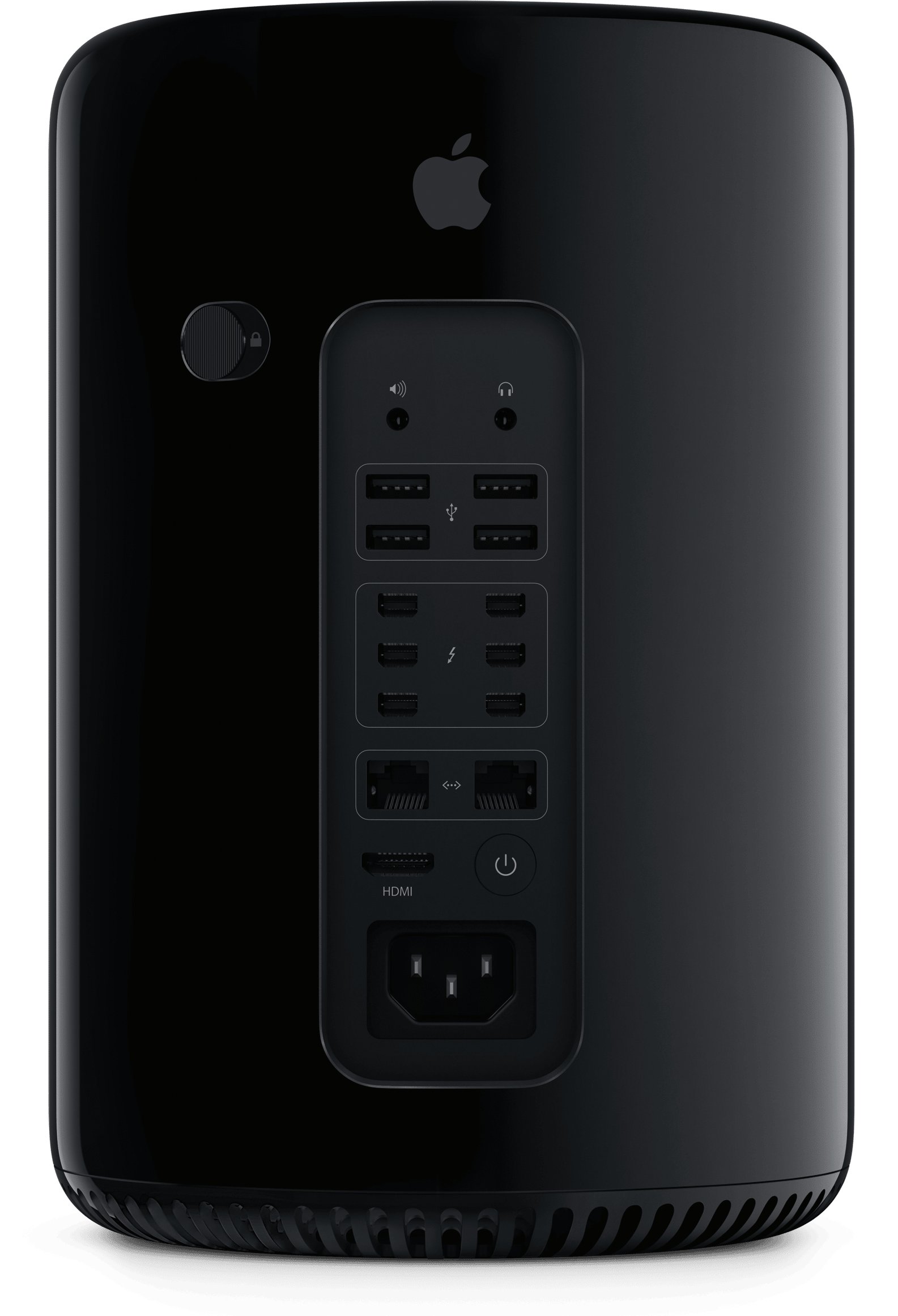
Mac Pro de frente
Mac Pro de trás
Divulgação/Apple

Por falar em ventilação, é nessa área onde reside a maior fraqueza desse novo modelo: o sistema de resfriamento, construído em volta de um “núcleo térmico unificado” central que, embora fosse, sim, um conceito muito interessante, não era o suficiente para resfriar o seu processador Intel Xeon e as duas GPUs AMD FirePro.

O novo design também fez a Apple abrir mão de duas outras características importantíssimas do Mac Pro: a vasta seleção de portas e a possibilidade de trocar praticamente todos os principais componentes do computador. Caso o usuário quisesse realizar algum upgrade, ele era obrigado a fazer isso por meio de uma das suas portas Thunderbolt 2, o que estava longe de ser o ideal.
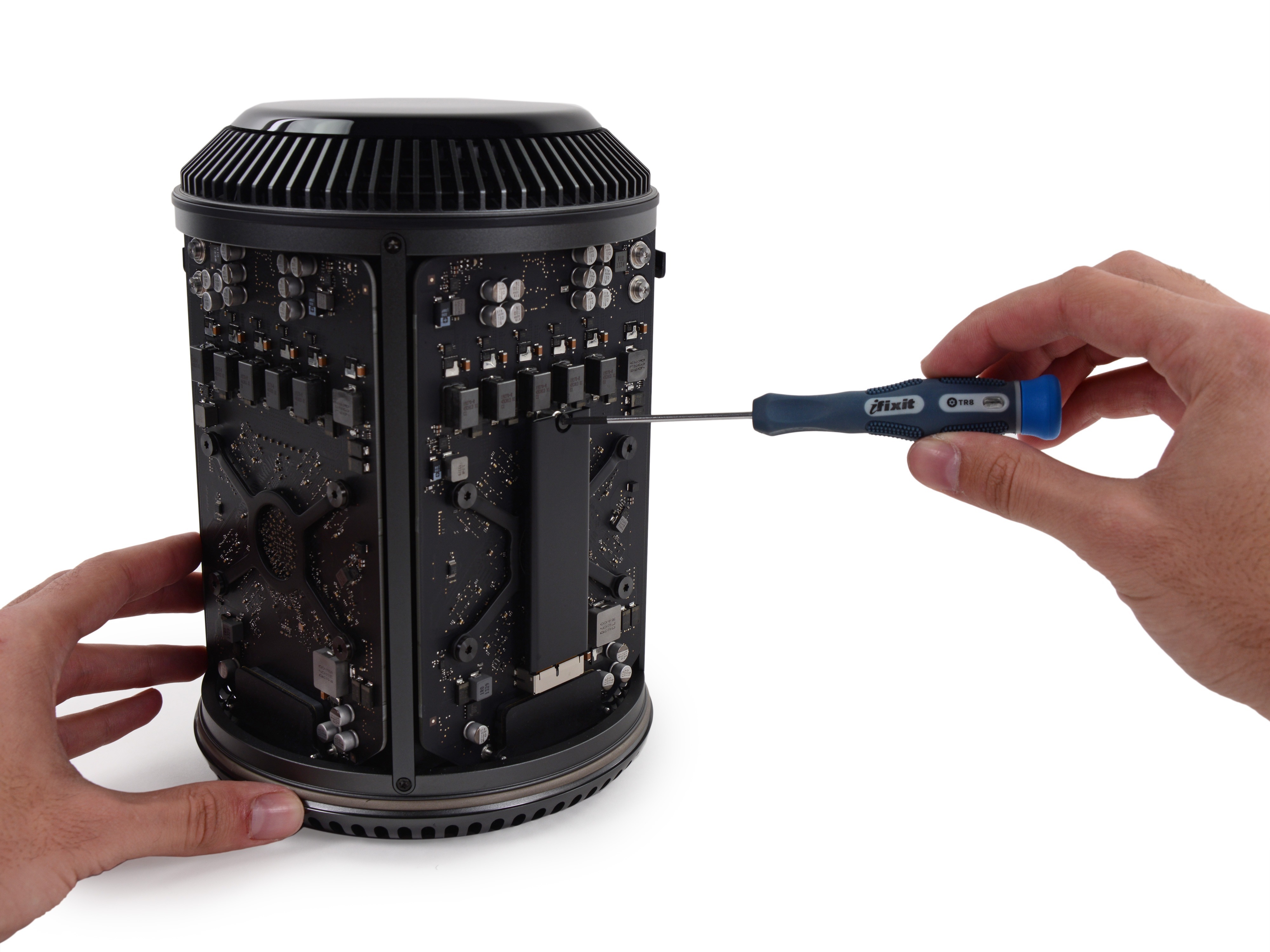
Mac Pro desmontado pela iFixit
Foto: iFixit

A má recepção fez o Mac Pro “lata de lixo” cair no ostracismo e ficar sem receber novas atualizações por nada menos que seis anos — um contraste e tanto em relação ao modelo anterior. A situação chegou até mesmo ao ponto de a própria Apple admitir, em 2017, que errou a mão na hora de projetar a mais nova versão do seu desktop profissional — atitude que foi seguida pelo lançamento do iMac Pro, que serviu como uma espécie de “tapa buraco” até o lançamento do último grande redesign do Mac Pro.

Um breve renascimento

Em 2019, a Apple colocou ordem na casa ao lançar um novo Mac Pro muito mais parecido com o modelo original do que com o computador que o precedeu — ou seja, com um formato de torre tradicional.

Apostando mais uma vez no alumínio como seu material principal, o desktop passou a contar com furos para ventilação que, mais uma vez, provocaram comparações com raladores de queijo. Dentro, foram adicionada três ventoinhas bem parrudas, as quais davam conta de resfriar todos os componentes do computador, já que eles não contavam com coolers individuais.
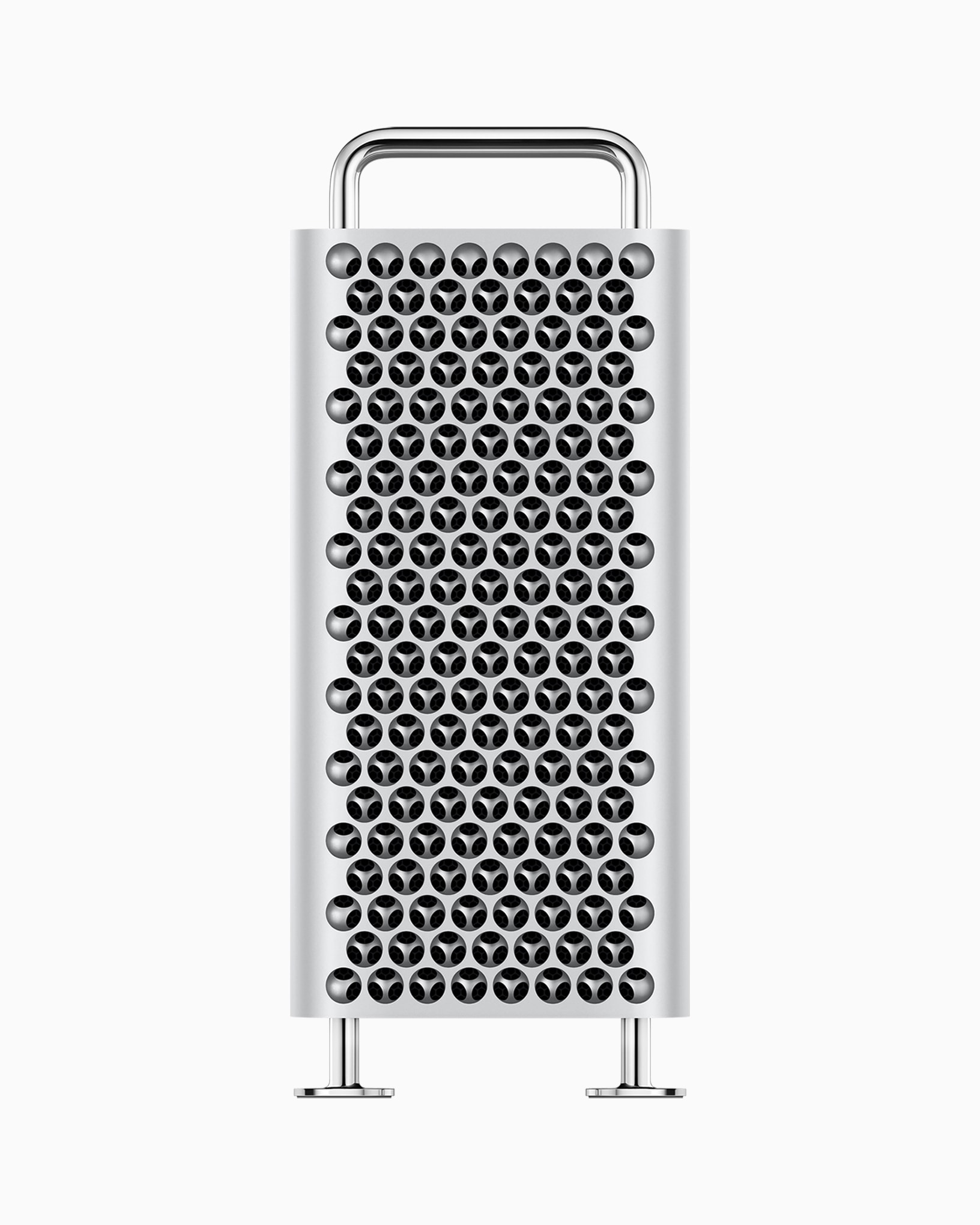
Novo Mac Pro com aspecto de ralador de queijo
Divulgação/Apple

Equipado com um processador Intel Xeon de até 28 núcleos, ele suportava até 1,5TB de memória — número surpreendente até para os dias de hoje. Contando com nada menos que oito slots PCIe, ele podia ser configurado com as GPUs Radeon Pro 580X ou Radeon Pro Vega II, da AMD, bem como com a novíssima placa aceleradora Apple Afterburner, para a edição de vídeos.

O otimismo introduzido por esse novo design, porém, foi logo suplantado pela introdução, apenas um ano depois, dos chips da família Apple Silicon, bem mais rápidos e eficientes que os da Intel e que passariam a substituir os processadores da fabricante estadunidense nos Macs. Em outras palavras, isso fez com que muita gente pensasse duas vezes antes de adquirir um Mac Pro — afinal, uma versão bem mais poderosa com um chip ARM 3Advanced RISC Machine. provavelmente já estava nos planos da Apple.
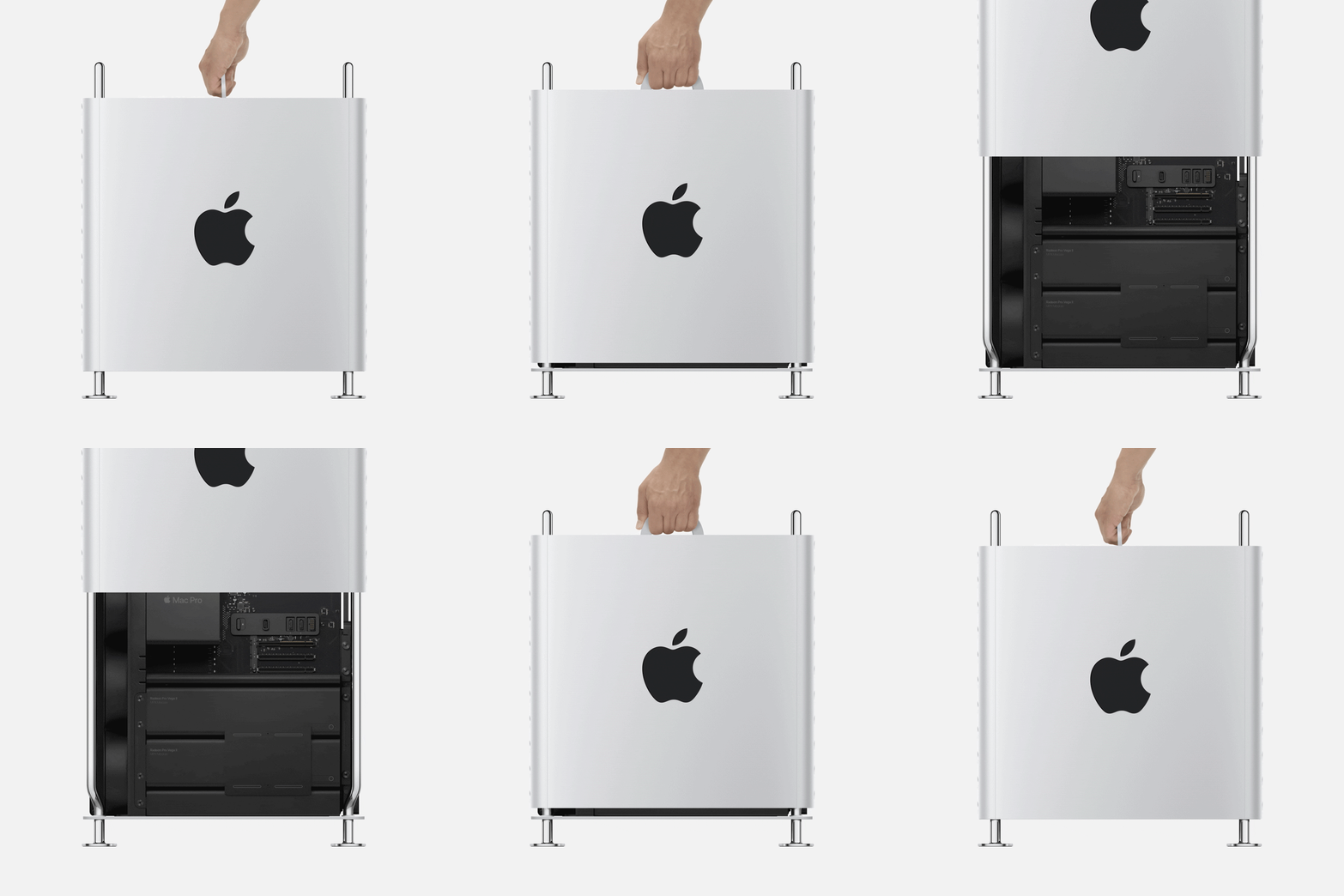
GIF animado da abertura do novo Mac Pro

Isso, no entanto, só foi acontecer em 2023 — e de um jeito um tanto… agridoce. Embora a adoção do chip M2 Ultra tenha sido bem-vinda, o computador perdeu muitas das características que o faziam ser uma boa opção para usuários profissionais, como a possibilidade de fazer upgrades nas suas peças — uma consequência da natureza centralizada dos SoCs 4System on a chip, ou sistema em um chip. da Apple.

Além disso, a essa altura do campeonato, o Mac Studio (outro computador voltado a profissionais) já estava no mercado há cerca de um ano e oferecia a mesma performance de ponta que muitos esperavam do Mac Pro, além de ser bem mais compacto e, principalmente, “acessível” (a partir de US$7.000 vs. a partir de US$2.000).
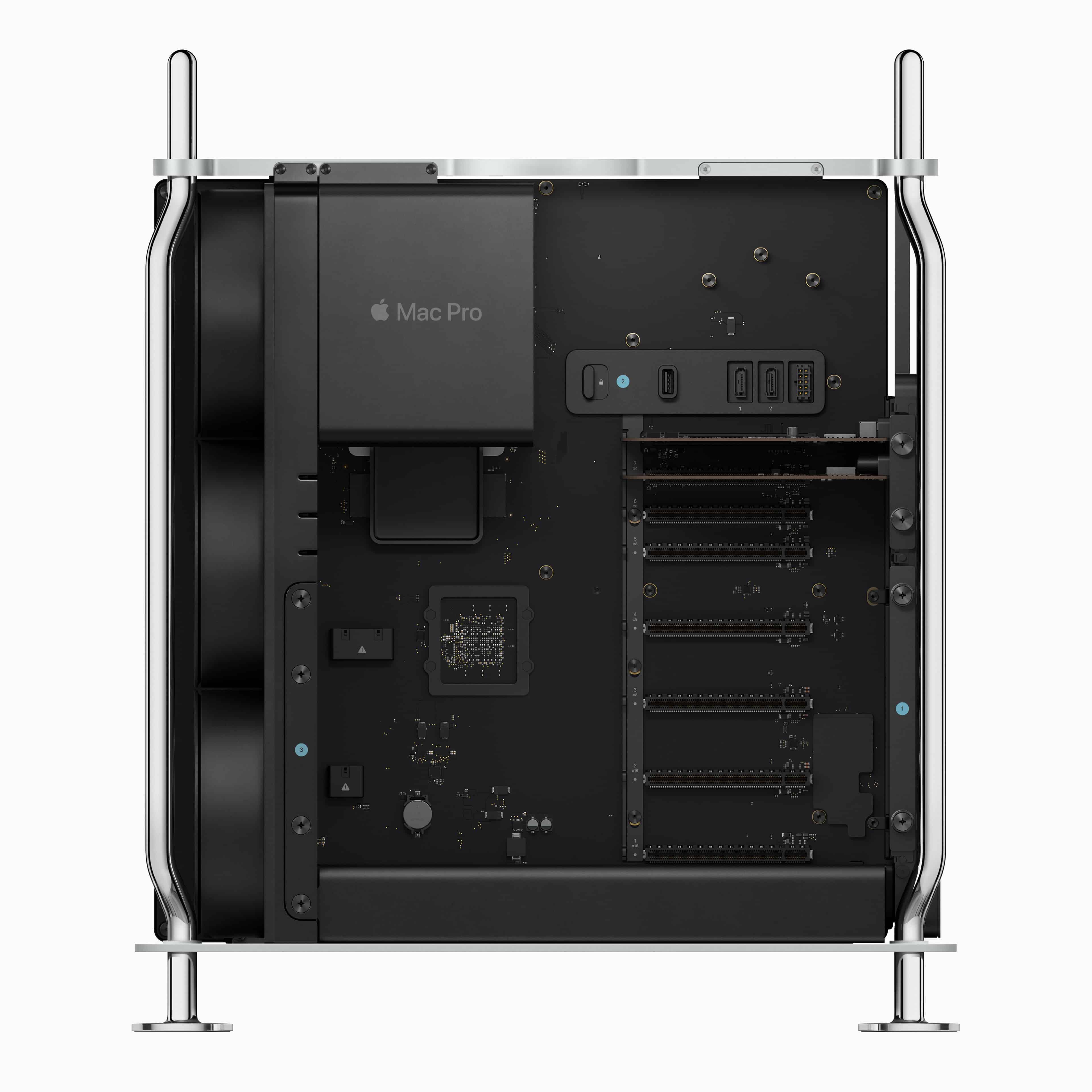
As entranhas do Mac Pro com M2 Ultra

Embora rumores de uma atualização tenham circulado nos últimos anos, tudo isso levou a Apple a finalmente aposentar o Mac Pro em março de 2026, pouco meses antes do seu aniversário de 20 anos. No momento, os esforços da Apple parecem estar completamente voltados ao Mac Studio, que tomou o posto de “computador para profissionais” da Maçã.

E vocês, já estão com saudades do Mac Pro ou a Apple fez certo em descontinuá-lo? Comentem!

via MacRumors, Cult of Mac, AppleInsider

Notas de rodapé

  • 1
    Graphics processing units, ou unidades de processamento gráfico.
  • 2
    Random access memory, ou memória de acesso aleatório.
  • 3
    Advanced RISC Machine.
  • 4
    System on a chip, ou sistema em um chip.

WWDC 2026 Links

17 June 2026 at 20:16

General:

Documentation:

Sessions:

Podcasts:

Previously:

Safari 27 Announced

12 June 2026 at 20:33

Tim Hardwick:

Apple’s new version of Safari browser in macOS 27 and iOS 27 can be tasked to monitor a webpage and notify you of any changes, thanks to a new built-in feature.

[…]

In other upcoming feature additions, using the power of AI, Safari tabs that you have open can automatically be organized into topics.

Saron Yitbarek et al.:

Don’t miss our WWDC26 sessions on web technology, including What’s new in WebKit for Safari 27, to go deeper on our work in this release. Now, let’s dig into this beta, packed with 58 new features, 525 fixes and 4 deprecations that will hopefully make your work as a web developer a little easier.

Saron Yitbarek:

This year, the WebKit team is here with six sessions covering new CSS layouts, customizable form controls, 3D models, immersive spatial experiences, and browser extensions.

See also: Safari 27 Beta Release Notes.

Previously:

Update (2026-06-17): Jeremy Keith:

But credit where credit is due. The upcoming version 27 of Safari is looking very good.

That’s not because it’s at the cutting edge of the latest web standards. Quite the opposite. Most of the changes listed for this release are bug fixes. That’s what I want to acknowledge and applaud.

Previously:

Siri AI Announced

10 June 2026 at 21:00

Apple (Hacker News):

Siri AI is an entirely new version of Siri deeply integrated into iPhone, iPad, Mac, Apple Watch, and Apple Vision Pro. It can draw on personal context understanding to search across messages, emails, photos, and more, and get things done across apps with even more systemwide app actions. Additionally, Siri AI can answer questions related to the content on a user’s screen or go out to the web to get up-to-date information using broad world knowledge and generate a helpful answer. A dedicated Siri app allows users to revisit a past conversation or kick off a new one — all in one place — and uses iCloud to privately sync conversational history across a user’s products.

Apple (MacRumors, MacStories):

Powered by the next generation of Apple Intelligence, Siri AI is a completely reimagined version of Siri that is more helpful, more capable, and more intelligent. With detailed, engaging responses and natural back-and-forth conversation, Siri AI helps users get more done than ever.

[…]

Siri has been rebuilt from the ground up with powerful AI at its core. It takes full advantage of the bold new architecture for Apple Intelligence, including the next generation of Apple Foundation Models that run on device and on servers using Private Cloud Compute. When Private Cloud Compute is handling users’ requests, their personal data is not stored nor made accessible to Apple or anyone else. Outside experts can continue to verify this privacy promise at any time. Additionally, Siri AI uses the system orchestrator to tap into core capabilities like the Spotlight index and App Toolbox, which work entirely on device to keep users in control of their data.

[…]

For products that support Apple’s most advanced on-device model ever, Siri AI offers even more expressive voices, as well as a major boost in accuracy with systemwide dictation. Users have the ability to customize the expressiveness and pace of Siri’s voice so it’s just right for them. Dictation now captures what users say as polished text with greater precision, automatically handling capitalization, punctuation, and formatting as they speak. With improved speech understanding, users can speak naturally and trust that their words will appear clearly, accurately, and as intended.

I remain uninterested in these more advanced Siri features. They matter in that Apple needs to show that they’re not “behind” and that they can actually deliver on what they announce and advertise. But I don’t find the use cases compelling and wouldn’t trust the results.

If you really care about a particular concert, would you believe Siri about how the tickets work and that it will auto-create a reminder at the right time? Why should I believe that it can figure out whether a particular irregularly shaped object can fit inside an irregularly shaped container when said shapes are probably not even published on the Web? Can it really dig into my e-mail to find the right flight info? An answer without being able to see the sources is not useful. And I certainly don’t want it to pick for itself which vacation photos to send out.

I just want the basic features—from a decade or so ago, like music controls, reminders, and access to my purchases—to work quickly, reliably, and offline to the extent possible. I did not hear anything to suggest that this was a focus. Instead, everyone is celebrating how slow the demos were because that proves they weren’t fake.

Ben Thompson:

It’s actually super important that the Siri demo was kind of slow, because it emphasized it was real. Would be even better if it were live, though.

Mark Gurman:

The other interesting thing to note from the keynote: watching the demos, there is ZERO doubt these are real, recorded demonstrations on live devices. There will be no confusion about what is real or fake like there was at WWDC 2024 and the initial attempt at the new Siri.

John Gruber:

In fact, I think most of them were single takes of multiple demos back-to-back. That’s the way it should be, even when they feel a little slow.

Jonathan Wight:

Who the fuck wears a $4000 VR headset to find out if their boots will fit in their fucking backpack?

THATS the best example they could come up for that feature?

Rob Terrell:

also I wouldn’t trust the answer anyway

Kyle Howells:

These Siri demo’s feel like OpenAI demo’s from a view years ago. However, this is built in to the operating system.

Much like Dropbox vs iCloud, I feel like long term, once it’s good enough Apple will succeed in making AI a “feature” rather than a product.

Simon B. Støvring:

Apple needed to show that they could make a version of Siri that wasn’t three years behind. They didn’t succeed.

Ben Thompson (Hacker News):

And, if your standards are the state of the art in AI circa June 2024, when Apple took their first crack at answering the question, they did quite well.

[…]

What’s fascinating about this specific demo is that it also showed just how far behind Apple is.

[…]

Still, the bubble was strong enough to convince OpenAI to make the exact same mistake Dropbox did: the company somehow convinced itself that it could make enough money selling subscriptions to consumers; Anthropic, meanwhile, realized that it was enterprises who were willing to pay for AI’s massive productivity benefits, even as OpenAI failed to capitalize on their consumer market penetration by refusing to build an advertising product.

This is a long-winded way of saying that I don’t think that Apple’s agentic shortcomings are a big deal, at least for now. Agents help you do work and be more productive, and consumers don’t want to work or care about being productive. What they do want to do is watch short-form video, and an iPhone is simply much better at that than any other device ever will be; in that context, Siri being good enough is enough, and it appears that Apple crossed that bar.

John Gruber:

They need to execute, they need to prove this can scale, and most of all, they need to get third-party apps on board with App Intents and App Schemas. But it seems like they’re doing all of that. This is not a done deal but it is very realistic.

Steve Troughton-Smith:

Siri doesn’t have access to the filesystem or tool-calling, so it’s completely unable to do the kinds of tasks you might easily do with Codex or Claude. It’s a good start, but the state of the art has already dramatically shifted over the past year. The question is will Siri move in this direction, or stick to providing answers from the web?

Will Apple introduce its own distinct Codex-style agentic programming model that can do all this, and work with Xcode? You would hope so…

Aaron Pearce:

Have new Siri now. Siri still can’t do “turn lamp off and turn plug on” in one command.

Joe Rossignol:

The revamped version of Siri that is officially named “Siri AI” will be available to test in the iOS 27, iPadOS 27, macOS 27, and visionOS 27 developer betas starting today, and it is coming to the Apple Watch in a future watchOS 27 beta. “Siri AI” will also be included in the public betas of each platform that are launching in July.

“Siri AI” requires a device that is compatible with Apple Intelligence.

Hartley Charlton:

Apple senior vice president of software engineering Craig Federighi has explained why the company launched a standalone Siri app in iOS 27, after previously characterizing a dedicated chatbot as contrary to its Apple Intelligence strategy.

[…]

“We see Siri not as a separate chatbot, just an unintegrated place you go and chit-chat, but rather as an integral, conversational tool that you use in the moment, deeply integrated into your experience.”

Clear as mud.

ldt:

How to bypass the new Siri waitlist (Mac only)

See also: New Siri Waitlist.

Previously:

Update (2026-06-11): famebot:

…And playlists, contacts, settings and preferences. Peel off the agentic slop bandwagon and focus on core performance, smarter caching, and resilience under adverse network conditions.

Joe Fabisevich:

Love the new Siri, sick.

Update (2026-06-12): Juli Clover has a hands-on video.

Nick Heer:

Though this is a test conducted on the very first version of Siri A.I. from a fixed point in Calgary, it seems to work quite well. So far, it is better than any version of Siri Apple has released yet and, as you can see above, it is almost as good as the original 2010 demo, before Apple acquired the company.

Update (2026-06-16): Riccardo Mori:

On the one hand, if Siri has indeed become this reliable at understanding queries like those demoed so far, it’s indeed impressive. On the other hand, I can’t help but ask myself, once again, whether people at Apple even know how regular people actually use their phones and devices.

Jeff Johnson:

Apple executives downplay and obfuscate the role of Google in Siri AI. The Siri AI announcement didn’t even mention Google or Gemini once! Does anyone actually believe Apple’s BS? The argument seems to be that since Google made a bespoke implementation for Apple, Google is not really involved, and it’s all Apple. Ridiculous.

Jeff Johnson:

It’s really odd to me that Apple is getting so much credit for Google’s work. Siri now “works” to the extent it does because Siri is to a very large extent Gemini, and Apple has wrapped that in a bow.

Apple didn’t “nail” anything. Apple failed at its own internal efforts and was forced to outsource.

This is the advantage of being a platform: you can fail and still win.

Chance Miller (via John Gruber):

Apple’s Siri team, led by Craig Federighi, held a post-WWDC keynote tech talk with members of the press this afternoon to talk through iOS 27 and the new Siri AI.

During the talk, Federighi shared more details about Apple’s collaboration with Google.

Matthew Green (Lobsters):

Apple looks like it will use some combination of Google Gemini models, combined with Google’s Confidential Inference and Apple’s own Private Cloud Compute for private hosting. These systems will process both your queries and evaluate private data from your devices.

[…]

Apple has since “expanded” PCC to encompass Google’s hardware as well. I will confess that I find the details of the new “expanded” PCC just a bit vague. It sounds a lot like Apple is primarily going to rely on Google’s existing confidential compute (running in Google datacenters) to process this data, but they’re bolting on a new layer of technical security to control which models are actually running. In any case: security experts can argue about whether this is good enough to keep Cozy Bear away from your data. What I will grant is that it’s probably good enough to keep Google and Apple from accessing your stuff, which is what most people are worried about in the first place.

So why am I so nervous?

[…]

So far we’ve discussed two adversaries: the misaligned designers of private agents (such as search operators), and the possibility of remote prompt injection attacks. But of course, in any discussion of technical privacy systems we need to talk about the last elephant in the room: your government.

Previously:

Apple evitou citar Jony Ive em processo contra a OpenAI

20 July 2026 at 13:36

Desde que a Apple levou a OpenAI aos tribunais por uma suposta violação de segredos industriais e propriedade intelectual, a ausência do nome de Jony Ive no processo tem sido motivo de especulações, considerando que o ex-executivo da Maçã e braço direito de Steve Jobs é uma peça relevante para o desenvolvimento de hardwares da dona do ChatGPT.

No ano passado, a startup de Ive, a io Products, foi adquirida pela OpenAI por US$6,5 bilhões. Desde então, o estúdio de design independente LoveFrom (também comandado pelo ex-Apple) passou a ser o espaço da gigante de inteligência artificial (IA) para a supervisão do design da sua linha de hardware. Nesse processo, mais de 400 funcionários trocaram a Maçã pela empresa de Sam Altman — entre eles, Tang Tan e Chang Liu, acusados de instruírem a revelação de protótipos da Maçã para quem estivesse em entrevista com a empresa de IA.

Para Mark Gurman, jornalista da Bloomberg, existem duas explicações lógicas para Ive ter ficado de fora das acusações: a ausência de provas que comprovem seu vínculo com o esquema e a sua relação de proximidade com a viúva de Jobs, Laurene Powell Jobs.

Jony Ive, Sam Altman e Laurene Powell Jobs

Próxima de Tim Cook e de outros executivos da empresa — além de manter uma relação de longa data com Ive —, ela continua circulando com naturalidade entre ambos os lados, tendo inclusive participado da última WWDC como convidada.

Laurene também é uma das principais investidoras dos projetos de Ive e esteve ao lado dele e de Altman quando os dois revelaram que o primeiro dispositivo de IA da OpenAI já estava em desenvolvimento. Para Gurman, esse conjunto de relações pode ter contribuído para evitar que o nome do ex-chefe de design da Apple fosse envolvido diretamente na disputa judicial, especialmente na ausência de evidências que o ligassem ao suposto vazamento de informações.

iOS 27: Há 31 modelos de iPhone compatíveis com o novo sistema operativo da Apple. Veja se o seu está na lista

12 June 2026 at 17:36

A Apple confirmou na WWDC 2026 todos os modelos compatíveis com o iOS 27, e a boa notícia é que nenhum iPhone ficou para trás face à versão anterior. Já a nova Siri com IA só chega aos modelos mais recentes, mas apresenta uma justificação para tal.

The post iOS 27: Há 31 modelos de iPhone compatíveis com o novo sistema operativo da Apple. Veja se o seu está na lista appeared first on Tek Notícias.

SpaceX, Anthropic, and OpenAI’s hot IPO summer

12 June 2026 at 17:23
The IPO market is back, and it’s not the same companies leading the charge. FAANG had a good run, but a new acronym is taking over: MANGOS — Meta (or Microsoft, depending on who you ask), Anthropic, Nvidia, Google, OpenAI, and SpaceX. Half of that bunch is heading to public markets in the same window, and it’s a stress test for investors, for valuations, and for […]

Siri AI is all Apple; it just needed Google to get there

12 June 2026 at 13:49

Apple’s executives have been taking questions, hosting seminars, seemingly working around the clock to stress one very important thing: Apple is not using a white label version of Google Gemini to make Siri AI happen. They just pooled resources to get there. 

The new Siri AI is faster, more accurate, offers powerful contextual capabilities and shows how Apple has leap-frogged into a good peer position in an AI race critics felt it had already lost. Its market scale — even without the EU — is huge. For most consumers, Apple Intelligence and Siri will continue to be their primary/first engagement with artificial intelligence on a device.

Getting there took a lot of work, and Apple needed Google to get it done. Though there is still some confusion about what that means, Apple’s software chief tried to explain it this week. “We use none of the models that Google deploys to their customers, nor do we use the infrastructure and means by which they employ models to their customers,” Craig Federighi said in a presentation at WWDC.

Apple is not even using Google Search as the foundation of its system, he said. “This is the amount of Google Assistant we use,” Federighi said, pointing at an empty chart. “Nothing.”

Apple not Gemini, Siri AI is not Google’s

What makes this hard to understand is that we all know Apple partnered with Google to build Siri AI; back in January, we were told the next generation of Apple Foundation Models would be based on Gemini models and cloud technology. So, how can we have moved from partnership hero to usage zero?

The answer is, we didn’t. What happened is that Apple built its new Apple Frontier Models (AFMs) (the AI inside Siri AI) by training them using proprietary Apple data and reinforcement learning and then refined those models using “outputs from Google’s Gemini Frontier models.”

In other words, Apple used Google Gemini to help improve its own models, which means the models themselves, the AI in Siri AI, are Apple’s — but they were trained with help from Gemini. They are not white label iterations of those Google models. 

Apple also hit a second snag. Its very best model (AFM 3 Cloud Pro) requires more processor power to run than Apple could deliver using its own cloud-hosted Private Cloud Compute servers. Now, we know Apple doesn’t like using other people’s stuff. But it’s a realistic company that understands it sometimes must, and just as it uses AWS to support some of its services, it moved to adopt Google cloud services and Nvidia processors to drive the most demanding requests.

A question of trust

Apple also developed a technological solution that means it can claim the interaction remains just as private as if it were run on your device. Apple has made it possible for independent security experts to confirm this and says it is the only company that can deploy software on those servers, with strong security to ensure your device only interacts with those servers when you want it to. So far, no one has broken this protection. 

I came across an interesting report in which Tekonyx Founder and Chief Research Officer Sid Nag explained the significance of Apple finding a way to expand its Private cloud Compute infrastructure beyond its own data centers.

“Apple is effectively arguing that trust in AI systems should come from cryptographic and architectural guarantees rather than trust in the cloud provider itself,” he told Fierce. Where enterprises have faced a choice between access to powerful AI or privacy, Apple has introduced a new solution he called “portable trust.” This could conceivably become a new IaaS offering from the companies involved over time.

Working together for the benefit of all

So, while Apple’s models were built with Google’s help, and while its most advanced models run with support from Google and Nvidia, the models are Apple’s alone. 

It’s good for Google, of course. Apple is paying for this use, which helps the search giant claw back some of the value of its massive, muti-billion-dollar AI infrastructure investment. It’s not clear how much Apple is paying; earlier this year, the $1 billion figure was bandied around. But Apple’s decision to tie usage to iCloud subscriptions in some hitherto undisclosed way hints that the deal may also see some token-based usage charges on top of the basic Apple fee. I’ve not come across any details, but that’s what I surmise based on the size of Apple’s ecosystem and the growing realization of how quickly users can consume AI capacity.

What AI models is Apple running?

AFM 3 Cloud Pro is one of five Apple Frontier Models driving Siri AI.  Here’s how Apple describes those five models:

On-device models

  • AFM 3 Core, the next generation of Apple’s 3-billion-parameter dense model. You’ll use this for basic text generation, summaries, conversational replies, all the standard uses. It can also handle indexing, search, App Intents, basic dictation and contextual awareness.
  • AFM 3 Core Advanced, the most powerful on-device model. This is what makes Siri’s voice match mood or context, does all the high-accuracy dictation, and can process various data to handle tasks across different apps. It’s the AI driving your more involved Siri conversations. 

AFM Core Advanced is impressive in its own right, because Apple has managed to cram a 20-billion-parameter model onto a smartphone. It has done this by using a sparse architecture, which means it activates just 1 to 4 billion parameters at a time depending on the request. It is, however, only available to Apple’s most powerful systems — iPhone 17 Pro, iPhone 17 Pro Max, iPhone Air, M4 or later iPad, M3 or later Mac with 12GB+ memory.

Server-based models

  • AFM 3 Cloud, which Apple calls its server-side workhorse, optimized for speed, efficiency, and performance.
  • ADM 3 Cloud (Image), for image generation and editing, which unlocks advanced photo-editing tools, the all-new Image Playground, and more.
  • AFM 3 Cloud Pro, the most capable server-based model, which powers the most demanding use cases, like agentic tool use and complex reasoning.

All five were built using the same common foundation, which was then specialized to reflect the proposed use of that model. It’s interesting to look at the human evaluation tests Apple ran to test how well these models performed; they demonstrate impressive improvement on the company’s original models, effectively justifying the decision to work with Gemini.

You can follow me on social media! Join me on BlueSky,  LinkedIn, Mastodon and subscribe to The Core.

WWDC: What IT admins need to know

11 June 2026 at 18:03

Under-the-hood AI changes and efficiency improvements at the OS layer across Apple’s platforms are certainly the highlights at WWDC 2026. But there have also been significant changes IT admins will need to prepare for, particularly around Declarative Device Management (DDM). 

The Intel age is over

Apple warned us this was coming, but macOS 27 will not support Intel at all. The company will deliver three more years of security updates for those devices, and you will still be able to use Rosetta to get Intel app binaries to run legacy apps on Apple Silicon. But if you still rely on any Intel apps or Macs, it really is time to plan your upgrade.

DDM becomes the present

It was the future once, but when it comes to Declarative Device Management (DDM) that future is now. Apple is removing all its legacy MDM mechanisms to replace them with DDM. “For IT admins, WWDC 2026 is a migration year,” wrote Fleet. “Apple is removing legacy MDM mechanisms and replacing them with Declarative Device Management (DDM). Some of it is urgent. Some of it just needs a plan.”

It’s a great step, though IT admins will need to ensure they aren’t relying on legacy MDM to handle any of their device fleets. That’s a particular issue around software and security update management. In most cases, your MDM provider has probably already introduced DDM support. But if you aren’t certain, now is the time to find out before your systems fail.

Apple has also added new DDM tools across various systems, apps, identities and more. Some of the highlights include:

  • VPN and Network configurations can be provisioned using DDM; they also become credential-reliant, which should make management more streamlined.
  • Apple Intelligence, Siri, and keyboard settings can also be configured via DDM, and admins can manage individual Apple Intelligence tools. 
  • Web content filter and content caching both become controllable with DDM.
  • A new privacy key lets IT manage things like camera or microphone access.
  • Apple has added a device system health reporting function to verify that hardware components on iPhone and iPad are genuine.
  • IT will be able to detect whether a device is in Lockdown Mode.

“One of the new features I’m most excited about is the ability to set permission defaults for managed apps and websites viewed in Safari,” said Adam Henry, senior product manager at Iru. “While the user is still prompted to allow these permissions, we can now present those requests as a unified prompt immediately upon app launch, along with a custom explanation as to why those permissions are important — think a teleconferencing app or website that always needs access to camera and microphone.

“Overall, I think this is a much more user-friendly solution that will likely increase permission compliance.”

Siri and AI

Although, Apple has introduced new management tools for AI, it’s important to remember some advice from Joel Rennich, senior vice president for product management at JumpCloud: “Traditional IAM models assume users directly interact with applications, but agentic systems change that assumption. AI intermediaries can now retrieve data, execute workflows, and make decisions across systems. Enterprises will need identity frameworks that govern both human and non-human actors consistently.”

He also noted: “The separation between where data lives and where it is used becomes increasingly invisible to the user. Intent becomes the primary input, not app selection.”

At the same time, the evolution of AI on Apple’s devices promises a lot for enterprise users. Matt Vlasach, Jamf senior vice president, enterprise products and solutions engineering, told me: “Most notable for me was Siri AI and the push towards on-device and more capable models that can do more with user context. While obvious for consumer use cases as illustrated in the keynote, the opportunity to evolve this to the work context using a more advanced Apple Intelligence framework is an exciting evolution.”

Farewell AFP

Apple has finally eradicated Apple Filing Protocol (AFP) in macOS. This will be an issue for any business that uses legacy Time Capsule or NAS storage devices, though in most cases those products are already obsolete and should be replaced. This is unlikely to be a huge challenge for most, given that Apple began using SMB as its primary file sharing protocol back in 2013 and support for AFP server disappeared in 2020. (Time Capsule fans might want to take a look at the TimeCapsuleSMB open-source project.)

Hello AppleCare log collection

Apple will introduce a new remote log collection capability that integrates directly with the company’s support infrastructure. So, when AppleCare support engages with an organization’s IT team, they can provide an enhanced logging token which can be shared to get the device to collect diagnostic logs to upload to AppleCare. You just know this will expedite remedy.

Single Sign-On improvements

As I noted here, there are some significant Single Sign-On (SSO) updates; two that caught my eye include:

  • IT can now insist on biometric as well as password ID on managed devices.
  • Authenticated Guest Mode with Platform SSO allows users to quickly and securely login to a shared Mac in a temporary session.
  • Platform SSO on macOS 27 adds web-based authentication.

Network and more

Another change affects the system processes used in device management at a network level. Apple now requires that you use TLS 1.2 or later. If you or your MDM systems are not doing so, get ready for things to break. (Apple has published a support article to help IT test their network environments in preparation for this change.)

Apple also announced that IT admins will be able to purchase and manage app subscriptions directly in Apple School Manager and Apple Business Manager. And it introduced a managed migration feature that should help migrate data, while preserving device management enrollment and settings. 

More information

I’ve really only offered a flavor of some of the IT improvements introduced at WWDC. To find out more, watch the Apple sessions on “What’s new in managing Apple devices” and take a look at the Apple Platform Deployment guide; it should be updated before the new operating systems ship this fall 

You can follow me on social media! Join me on BlueSky,  LinkedIn, Mastodon and subscribe to The Core.

Apple’s AI plans show promise, but proof of success still to come — analysts

9 June 2026 at 17:02

WWDC26 felt like a defining platform moment. Apple is no longer simply promising that AI will arrive eventually; it is arguing that Apple Intelligence and Siri AI should become central to the future of its ecosystem. If that works, the company will have turned AI from a perceived weakness into a new reason to stay inside Apple’s world.

Still, the bigger question is execution. Apple did not present AI as a lab experiment; it presented a polished, consumer-ready experience. That raises expectations. 

Apple must deliver this time

Users will not judge Apple Intelligence by model architecture or parameter counts. They will judge it by whether Siri understands them, whether actions work reliably, whether personal context feels useful rather than intrusive, and whether the experience is consistent across devices.

Since Monday’s announcements, we’ve learned that some features will not work on all devices — and there’s speculation Siri AI may not fully escape beta until 2027. “Until Apple puts a stake in the ground and says when the new Siri features will be available, the debate remains: Does Apple actually have the chops in personalized AI? The demo suggests yes. The lack of timing suggests maybe,” wrote analyst Gene Munster.

Optimists argue that Apple has regained momentum by presenting a coherent AI story, one built around privacy, integration and everyday utility rather than spectacle. Skeptics counter that many of the features resemble capabilities already available elsewhere, and say the company still needs to prove it can ship them at scale and make them a meaningful reason for consumers to upgrade.

What the analysts say

That balance is visible in analyst reaction. In a client note seen by Computerworld, Erik Woodring of Morgan Stanley described the keynote as clear progress on Apple’s AI roadmap and said it suggested monetization opportunities could arrive earlier than expected — even if the overall journey will be “a marathon, not a sprint.”

UBS, in contrast, said the privacy-focused AI additions are useful but unlikely to be a material driver of iPhone demand in the near term, while Barclays called the changes interesting but incremental, and not enough to drive an upgrade cycle.

Ben Wood, chief analyst at CCS Insight, argued that Apple had to answer concerns about its AI shortcomings and now has to prove that its privacy-led, integration-first approach translates into a meaningfully better everyday experience. “Consumers will not judge Apple Intelligence by model sizes, partnerships or technical architecture,” Wood told me. “They will judge it by whether Siri understands them, whether actions work, whether personal context feels useful rather than intrusive, and whether the experience is consistent across devices.”

Dipanjan Chatterjee, vice president principal analyst at Forrester, said Apple’s strength lies in shifting the focus from the underlying technology to outcomes such as usefulness, simplicity and trust, while warning that the company still has skeptics to win over after its stop-start AI rollout. “The lesson for brands is clear: market the value, not the ingredients,” said Chatterjee. “After stumbling with the Apple Intelligence roll-out, Apple’s success will hinge on delivering the new Siri experience quickly, and ensuring it works as promised for iPhone users at scale.”

What about Apple developers?

While many are infuriated about Europe’s inability to build compromise, Apple’s developer army otherwise seems positive about what the company has accomplished. 

“On the AI front, it never made sense to me for Apple to develop their own LLM, so focusing on powerful, fast and private for implementation of Apple Intelligence seems to be an effort that is progressing rather nicely.  In all, a pretty good Keynote, I’d say,” Rich Siegel, founder and CEO of Bare Bones Software, said in an interview.

“It’s great to see Apple continue to pursue a vision of AI that leverages local systems, preserves privacy, and integrates with third party tools,” said Ken Case, CEO of the Omni Group. “A lot of our work around the Apple Foundation Models and automation, App Intents, and adopting Swift look to be fruitful investments, but it’s clear there’s more to do starting this summer. It’s also welcome to see them refine Liquid Glass, giving customers more control and listening to feedback they’ve heard over the past year.”

“I expected that this year’s Siri revamp would be the biggest personal assistant update Apple has ever done, and that’s exactly what we got,” said Sergii Kryvoblotskyi, director of AI and research at MacPaw. “Since Apple acquired Siri back in 2010, it has lacked one thing: real intelligence. Behind the great speech recognition service it provided, the tech was not ready to provide real value to users.”

“Most notable for me was Siri AI and the push towards on-device and more capable models that can do more with user context,” Matt Vlasach, Jamf senior vice president, enterprise products and solutions engineering,” said in an interview. “While obvious for consumer use cases, as illustrated in the keynote, the opportunity to evolve this to the work context using a more advanced Apple Intelligence framework is an exciting evolution.”

“OS 27 feels like a deliberate reset, less about new features and more about polish and quality-of-life improvements, which most users will welcome,” said John Richards, general manager, IT products, at Iru. “The new capabilities are focused entirely on Apple Intelligence and Siri AI, and what’s encouraging is how much Apple leaned into privacy with the Gemini partnership. That combination of capability and privacy-first design is the right instinct.”

“The single biggest request I made at Apple’s Foundation Models workshop in Madrid was opening Private Cloud Compute to third-party developers,” said Serhii Popov, senior software Eengineer at CleanMyMac. “It’s here and free for apps under 2 million users. That’s a real breakthrough and a huge opportunity for a lot of great apps.”

How will integrated AI change things?

Joel Rennich, senior vice president for product management at JumpCloud, looked ay how on-device AI will transform other paradigms. For starters, it shifts identity from simple authentication to governing what actions an AI agent is allowed to take.v“Enterprises will need identity frameworks that govern both human and non-human actors consistently,” he said.

“iOS 27 and Apple Intelligence point toward an operating system that does not just launch apps, it executes intent,” Rennich said. “Instead of users navigating between tools, the OS increasingly mediates outcomes directly through AI. This changes how work is initiated and completed on devices.

“With Apple Intelligence integrated across core experiences like Siri, Safari, and system services, AI is no longer an overlay but infrastructure. The separation between where data lives and where it is used becomes increasingly invisible to the user. Intent becomes the primary input, not app selection.”

I also spoke with Hexnode CEO Apu Pavithran, who pointed to some of the concerns enterprise users might have following WWDC: “The keynote didn’t speak much to admins,” he said. “The features that matter most at the management layer, such as how Apple exposes Siri AI through MDM APIs, whether IT gets granular per-app controls for Apple Intelligence, how shared device deployments handle the new assistant — these will be answered in the developer documentation. This week, that’s where IT teams should be looking.”

“Admins should dig in immediately and see what’s changed. Watch the developer docs, audit how Apple Intelligence interacts with existing device policies, and remember that the keynote is only a part of the story for enterprises,” he said.

Making AI great again

“Rebuilt from the ground up, Apple is trying to make AI feel native, useful and invisible across the devices people already use every day,” Francisco Jeronimo, vice president for client devices at IDC, said in an interview. “This matters, because the winning AI experience for consumers will not be the loudest or most technically complex. It will be the one that understands context, respects privacy, works reliably across apps, and reduces friction without forcing users to change behavior.”

“[Apple] is also clearly seeking to differentiate through its privacy promises,” said CCS Insight’s Wood. “This looks like a step in the right direction, but there is no room for complacency, and Apple still has a long AI journey ahead.”

Pavithran reflected on something more. “Overall, it’s hard not to think of this year as a deliberately measured keynote, one that’s intentionally playing it safe and seeking to rewrite the AI narrative,” he said. “I won’t be surprised if this ends up setting the stage for a much bigger installment next year with incoming CEO John Ternus hitting the ground running with some ‘wow’ features like new hardware or agentic AI at scale.”

That we can now seriously consider that possibility shows the extent to which Apple has regained momentum in AI on its platforms.

You can follow me on social media! Join me on BlueSky,  LinkedIn, Mastodon and The Core.

WWDC: Did Apple make the AI grade this year?

8 June 2026 at 22:15

There were several key components to emerge from Apple’s developer conference Monday as the company sought to reassure users (and investors) that it has met the existential challenge represented by AI. Aside from a serious focus on Siri AI and embedded Apple Intelligence across its varied platforms, officials also hailed a slew of performance/usability tweaks, described new child safety tools, gave macOS 27 a real name, “Golden Gate” — and offered a standing ovation in farewell to outgoing CEO Tim Cook.

Before the Worldwide Developer Conference (WWDC), analysts seemed optimistic about the company’s plans, most of which had already leaked. Analysts didn’t expect Apple to announce anything that would transform the AI industry (it didn’t), but they did hope the company would introduce tools to keep it competitive with rivals (it did). That’s assuming all the demos at the event were live, actual feature demos, rather than faked set-ups as seen before.

Hard, hard work

Apple’s teams have evidently worked incredibly hard to come this far, and execs did introduce truly impressive new AI features focused on what customers and developers actually need. The company also played to its strengths, particularly around vision intelligence; private-by-design (large language models) LLMs; highly useful contextual awareness; and Siri AI, which works as an app and lets you carry on conversational quests securely across all your Apple devices.

As anticipated, Apple also introduced APIs developers will be able to use to provide new AI features in their apps.

Among the many individual tools most of us can expect to use this fall, are:

  • Siri AI, which can help users search for information across their messages, emails, photos, and more; answer questions about virtually any topic; and take action in apps. 
  • Apple Passwords, which now automatically fix weak and compromised passwords with agentic AI.
  • Spatial reframing, which lets users recompose a photo after it’s been taken by dragging to shift perspective, as if repositioning the camera in the original scene.
  • A new Extend Tool, which expands the edges of an image to add breathing room, fix a crooked horizon, or change aspect ratio without losing the original subject.
  • A Notify Me tool that monitors web pages for changes such as price drops or restocks and sends a notification when something changes.
  • Photorealistic image generation, which supports the creation of high-quality photo-realistic images via a new generative model running on Private Cloud Compute.
  • One-tap contextual suggestions in Messages, which surface actions such as creating reminders and notes, or finding relevant photos based on conversation context.
  • And Describe a Shortcut, which means users can describe an automation they want in plain language and Shortcuts assembles the required steps automatically.

All about you, not AI

Apple did not seek to introduce AI features for their own sake; instead, it remains deeply focused on how to make its devices more useful to customers. As Craig Federighi, Apple’s senior vice president of software engineering, said: 

“Truly helpful AI must be centered on our users’ needs, deeply integrated into the products they rely on every day, grounded in personal context, and built with privacy at every step. That is our vision for Apple Intelligence. With useful features for browsing the web, expressing creativity, editing photos, and so much more, today marks a big step forward on our journey to integrate powerful AI into the core of our platforms and make our products even more personal and useful.”

Apple is not Gemini

Apple confirmed that it worked with Google Gemini to create some of the AI models highlighted today. This led some analysts before the event to say: “For Apple, the bull case is that a working Siri reframes it as an AI winner; the bear case is that paying a rival for core intelligence caps the premium investors assign to the stock.”

Perhaps they need not worry, as what we now seem to have is a far more solid base from which to continue to develop AI services and tools that compete against others in the space. Not only that, but Apple is not using rebranded Gemini — it simply worked with Google to build its own models, as Federighi insisted. In meetings at the show, Apple explained the full extent of the work it did with Google, stressing that none of the new features should be considered white label versions of Google’s LLMs. 

(Even Apple’s new search tools are based on its own search database, rather than anybody else’s. And when advanced searches are shared with Google-hosted Nvidia processors, Apple puts privacy protection in place.)

In the end, the most important consideration — for customers and developers — is that Apple seems to have succeeded in bringing dozens and dozens of powerful new on-device AI tools to its customers, giving it a firmer, more impressive peer position in the business. (It’s also true that investors were disappointed that the new AI features won’t be made available in Europe or China due to regulatory challenges, putting developers in both nations at a disadvantage.) Developers elsewhere will be able to explore Apple’s Foundation Models and its new Core AI APIs to their heart’s content. 

First reactions to Apple’s news

While Apple’s stock value dipped as investors sold on the news and invested into the speculation, I do think Apple successfully turned this corner — though it will need to continue to invest heavily in AI across its platforms. The work is far from over.

“It is great to see Apple continue to pursue a vision of AI that leverages local systems, preserves privacy, and integrates with third party tools,” Ken Case, CEO of the Omni Group, told me. “A lot of our work around the Apple Foundation Models and automation, App Intents, and adopting Swift look to be fruitful investments, but it’s clear there’s more to do starting this summer.”

Creative Strategies President and Principal Analyst Carolina Milanesi explained why it matters Apple is deploying these capabilities across its ecosystem, as it gives the company a unique market position. “Where Apple Intelligence is today is different than what Claude or ChatGPT are because is it really embedded in the devices, and we need to remember that Apple sells devices,” she said.

Apple did also note that the new Siri AI will be available in beta this year. “Investors wanted it in September. That means the real version is likely early to mid 2027,” said Gene Munster at Deepwater Asset Management. “Funny that the stock actually ticked up 0.5% on the “beta later this year” update given [that] while it’s later than what they wanted, it is at least a date that investors can focus on.”

It is also true that what Apple did achieve this year at WWDC is to offer up a set of new AI features that investors already see as having significant value.

You can follow me on social media! Join me on BlueSky,  LinkedIn, Mastodon and The Core.

WWDC: Apple’s AI moment of truth arrives

8 June 2026 at 16:41

Everybody is watching to see what comes from Apple at its annual Worldwide Developer Conference (WWDC) today. There’s a great deal at stake, as when it comes to artificial intelligence (AI) today’s event represents an existentially important moment for the company. 

Apple execs absolutely must convince developers, industry watchers, users — all of us — that it has learned from its well-publicized mistakes of the past two years and put together a serious proposition for AI across its platforms.

What we think we know

Right now, we think Apple intends to offer a hybrid of its own self-developed AI tools and services combined with others made with Google Gemini — all supported by an open approach to using AI services from third-party providers such as Anthropic or OpenAI. 

When it comes to implementation, this should mean a contextually sensitive Siri that can respond to what you have on the screen of your device, or in the viewfinder of your camera app. The idea here is that you’ll be able to do contextual tasks like book restaurants or send a message to your granny, translate a sign, or even navigate around a room. More than this, you should also be able to combine tasks giving Siri complex — agentic AI — tasks it can then transact on your behalf.

Many of these functions will take place on device. Some will rely on Apple’s own fleet of Private Cloud Compute servers, supported by additional capacity from Google and Nvidia. When Apple Intelligence/Google Gemini can’t accomplish a task, you’ll be able to request that another service handle it on your behalf outside Apple’s managed garden. Siri itself will also gain a brand new interface.

What developers expect and how we got here

As discussed here, developers expect Apple will make access to many of its new Apple Intelligence APIs available to them.  This will let them deploy useful functionality in their apps at no charge, in part because the intelligence takes place on the device. 

It will also be possible for developers to permit their apps to run without being opened, which means a user should be able to ask Siri to do complex tasks that also include functionality from their apps. During this past weekend, we were warned that some or all of the new Siri functionality might be introduced on a staggered basis using a waiting list.

Apple has come a long way since that tense meeting in early 2025 when the company’s senior leadership established a new approach to AI. With Apple CEO Tim Cook taking an uncharacteristic interest in driving his teams to pull their act together, Apple developed a new, partnership-based approach to try to recapture lost ground.

Has Apple achieved it? That’s the test

Has Apple finally regained the initiative?

To a great extent, that will be the big focus across the industry once the company tells us what it’s done. Cook’s final WWDC as CEO sees a company at the absolute top of its game in so many ways, including soaring Mac sales. But to some extent he will be judged on how successfully Apple’s AI pivot comes across.

Weekend analyst notes summed it up, with bears and bulls tossing insights along. In one camp, you’ll find the true believers who argue that if Apple does come to us with something convincing, it has a chance to absolutely dominate consumer AI. “Siri/Apple Intelligence 2.0 has the potential to become the ultimate AI resource offload and deliver a form of Agentic AI to the consumer at a lower cost than incumbents,” said Morgan Stanley analyst Eric Woodring.

Cynics, however, warn that Apple really must demonstrate the kind of contextual, agentic AI it first announced (and failed to ship) two years ago; they want a chatbot with muscle, and will see right through any attempt to place a PR veneer over something weaker than what others already provide. If Apple fails to deliver on this, it can expect its stock to be utterly savaged over the next few days, though some analysts believe that Apple’s previous missteps mean the damage is already priced in.

A chance to shine, but can it?

Ultimately, of course, in addition to convincing industry watchers, Apple will need to find a way to deliver the kind of AI power consumers have been told to expect — while also protecting privacy. If it does get that right, particularly if it truly exploits its powerful hardware to ensure the most common tasks take place directly on the device, it has a major opportunity to deliver a form of Agentic AI at a lower cost than incumbents can. And it can do so while leaving the core AI bubble to burst as and when it will.

Will Apple succeed? We’ll know in a few hours, when you should check back for first takeaways on what Apple has to share. Join me on the Core for the headline summaries.

You can follow me on social media! Join me on BlueSky,  LinkedIn, Mastodon and The Core.

Why Apple may be winning again

5 June 2026 at 14:14

As we lean into WWDC, three strategically brilliant Apple moves have been exposed in the last couple of weeks, two of which will have immense consequences in the coming year, while one sets the scene for essential future growth.

In each case, Apple’s leadership has found counter-intuitive gambits that actually secure the company’s future. Let’s start with Vision Pro.

It came from the future

News this week is that incoming CEO John Ternus has made some tough decisions around Apple’s approach to spatial computing, terminating development of Vision Pro (even as leaked images of a black model emerge) while focusing R&D on two smart glasses projects to compete with Meta. 

The intention is to introduce XR and AR glasses priced at around $300 to $500 each. While not as richly-featured as the Vision Pro, they will be within the reach of more people and draw deeply on the huge R&D effort that went into the original Apple AR visors. Apple hopes a focus on trust and privacy will be enough to push Meta aside, helping Cupertino dominate this part of the category. If that plan succeeds, don’t be at all surprised to see plans for Vision Pro 2 return to the table, though that’s not the focus now.

Apple frequently described the Vision Pro as a product “pulled from the future,” a device for enterprise users and early adopters. For many such users, the existing product will be useful in their work for time to come. 

What’s strategically solid about this is that Apple has now defined a good future for spatial computing and is bringing components of that future to the mass market on the basis of a provable technology you can already try for yourself in any Apple Store. This is a long game, and while it will take time to play out, it’s a game the company has proved it can join.

Privacy as a standard

Apple has apparently chosen to use Nvidia and Google technologies to support at least some of the Apple Intelligence/Siri improvements to be announced at WWDC next week. This seems to fly against the company’s general approach to privacy on its platforms, with the silicon, operating system and — thanks to Private Cloud Compute — the cloud all in its control.

How, you might ask, can Apple ensure privacy when using third-party infrastructure to manage some AI transactions? How can it do so without damaging its trusted brand?

One direction that makes sense is to consider that Apple and its partners have reached consensus on what privacy should be and how it should be delivered. That’s a very important consensus, as it suggests Apple is building an approach that makes privacy an attestable standard.

The company has been pushing governments for years to agree to such standards, but all it seems to have had in return are continued government attempts to erode personal privacy. That’s particularly evident in the UK government’s egregious move to undermine encryption to the detriment of all. (The UK isn’t really alone in preferring surveillance above liberty.)

Android developer Google has had the same experience, and while its approach to privacy differs from Apple, both companies understand the need for encryption. As such, any form of consensus on some form of privacy standards is welcome — and while I’d very much prefer an enforceable, verifiable approach, some industry agreement has to be better than nothing at all. 

While I don’t believe Apple’s approach to privacy in the new breed Siri/Apple Intelligence will be introduced in this way at WWDC, it will be interesting to see what does emerge from the new tech triptych (Apple, Google, Nvidia) in the coming months. Certainly, all three have a great interest in guarding encryption against Quantum attacks for which hidden backdoors would be easy pickings.

Winning the PC War

Apple has won the PC war.

That last point needs explanation: Apple’s entry-level MacBook Neo also has just 8GB RAM, but it also has custom-designed Apple processors and an operating system optimized to run on the hardware. That means those Macs use memory far more efficiently than their competitors. 

So, you can pick up some mass market Windows laptops for $800 that hold just 8GB memory, or spend $699 for a MacBook Neo with double amount and that can also run Windows in VM extremely well. 

Component prices are not going to shrink back for a while, any more than further magical thinking is going to end the war in Iran. At this point in the cycle, Apple has the PC market advantage. Millions are purchasing its entry-level Mac and the vast majority of those new users will love the platform, as new users usually do. That’s going to lead to a spike in Apple services sign-ups, and prompt solid future upgrade and accessory sales cycles.

Apple accomplished this by selling a low-cost Mac at a time when competitors face existential problems maintaining their grip on the mid-range market. The longer Apple holds prices on the device, the greater the advantage it builds, while applying huge pressure on PC competitors.

Summing up the goods

With the Mac hitting its iPod moment as it achieves mass market sales, Apple finally seeing something like progress in its attempt to secure privacy in a digital age, and a strong position from which to grow in the wearables market, the company has played a fine hand. 

That’s even before it introduces us to its improved Apple Intelligence, and an era of AI access in which many everyday tasks take place token free directly on the device. Indeed, when it comes to AI, if it gets things right at WWDC, Apple appears to be making money, while AI competitors are bleeding financial oxygen as their inflated bubble heads to its inevitable demise. What about the enterprise? Take a look at this chart.

You can follow me on social media! Join me on BlueSky,  LinkedIn, Mastodon, and follow The Core.

What Safari reveals about Apple’s AI strategy ahead of WWDC

4 June 2026 at 17:27

Apple’s latest Safari privacy campaign is more than pre-WWDC marketing. It is an early signal of how the company plans to frame artificial intelligence (AI): as something that only works if users trust the platform behind it.

The week before WWDC is often significant, as Apple tends to make announcements it simply can’t fit into the keynote itself. This year’s first pre-show reveal is a new campaign focused on privacy that shows how much more private Safari is than rival browsers; there’s even a highly entertaining video that makes the point.

Privacy on Safari

Apple has been building privacy protections into Safari for years. The browser protects you from malicious scripts that might attempt to access passwords or credit card information. Safari also tells you what data an extension wants to access and can restrict access to match your settings. It blocks third-party cookies by default, detects and removes trackers, and has measures in place to prevent data companies from identifying — and following — you through device characteristics. 

That’s even before Apple’s powerful Private Browsing mode, which includes meaningful protections. The company has put together a page packed with resources to explain the privacy protections it has in place across its platforms.

Privacy is critical to Apple — not only because the company regards it as a human right, but because it correctly recognizes that to make new generations of sensor-laden technologies it must ensure privacy is protected. Without privacy and trust, people won’t use the technology.

Trust is the product, not you

The truth is that people are becoming increasingly concerned about how the digital devices we depend on for convenience are now being used for different kinds of surveillance, and we need to be convinced that our personal data is protected. We do not want every aspect of our life to become fodder to feed a digital dystopia, even as we still want the positive solutions technology promises.

Think about the Apple Watch. Consider the data it gathers: distance walked, calories burned, and more — it’s a rich trove of personally identifiable data that no one really wants to share with others without consent. Apple Watch is not the only Apple device that is gathering information, even your web browser captures a great deal of it. Hence, the focus on Safari in Apple’s new campaign.

Privacy will become an even greater concern as AI spreads. Data brokering services already make extensive use of AI to analyze and identify patterns in the online data they harvest. AI deployed without strong privacy protections poses serious risks to the way we live, while the consolidation of AI ownership in the hands of a few companies risks creating dangerous imbalances of power. That’s the context in which private data needs to be protected, making privacy an essential component of a positive tech-augmented future. 

Why the AI era raises the stakes

Apple’s focus on privacy is far from new; it has been consistent in this work for many years. Competitors often accuse Apple of hypocrisy, but the company has been arguing for privacy’s importance for more than a decade. Others have adopted some of the same principles, though not all of them — and while Apple may sometimes use privacy as a moat for its own products and services, that does not diminish its value.

It’s with all this in mind that I consider Apple’s latest privacy ad campaign and its rollout just before WWDC, where it is expected to introduce new AI services. That Apple’s new privacy campaign seems not to have made the final cut for the show tells me the company has much more to discuss on the topic, particularly around Apple Intelligence.

What Safari’s signals suggest

When Apple introduces its new AI features at WWDC it will do so while celebrating the privacy built into them. The current privacy ad campaign will be part of an overall push as the company explains that its ecosystem can run third-party AI services while also offering its own bespoke Apple Intelligence AI to do really useful things in complete privacy.

This isn’t just a competitive moat, it’s a realistic assessment in practice. It shows that Apple understands that in the age of AI, privacy matters more than ever. As AI becomes central to everyday digital experiences, privacy is no longer optional — and Apple is prepared to make the case to support it.

You can follow me on social media! Join me on BlueSky,  LinkedIn, Mastodon, and follow The Core.

WWDC: What can developers expect?

1 June 2026 at 16:23

Apple will open the doors to developers at its Worldwide Developer Conference (WWDC) next week. Beyond a big push on AI and new OSes focused on stability and performance, what should developers expect? Mostly it’s about new APIs, Foundation Models, and App Intents; here’s what I’ve been able to figure out so far.

Foundation Models

Apple has been building new Apple Intelligence APIs. One way it is achieving this is to take models made with Google Gemini, then distill and shrink them to fit inside (and run on) its devices. The progression will be to introduce these as a new crop of Foundation models developers can use in their apps. There’s more:

  • New APIs mean developers will be able to run Apple Intelligence tools such as summarization directly on the customer device, all offline, all private.
  • Developers that use Apple’s standard text editing/entry views will gain access to improved Apple-developed tools inside their apps without custom-coding.
  • Because intelligence takes place on the user’s device, neither developers nor users will need to pay for those AI tokens. This is a distinct cost and privacy-saving advantage for customers and developers.

App Intents: The next generation

Apple continues on its quest to convince developers to make features of their apps available for use via Siri with App Intents. Doing so requires developers to wrap their apps into semantic structures, enabling speech/text-based interaction. To help them achieve this, Apple is expected to introduce a complete redesign of its App Intents framework.

Speak as you wish

While users must say “Hey Siri” to invoke its attention today, the assistant will respond more dynamically to natural language. Combined with App Intents, that means users should be able to ask Siri to use a combination of apps to make things happen on the device.

A developer might build a travel app that can take an itinerary and hand it across to a budgeting tool, for example. The idea is that with a spoken or typed command, a person will be able to call on a collection of apps to identify the destination, create an itinerary, put together a to-do list, prepare relevant letters or emails, and assemble a budget — all invoked by the original command.

What about context?

We’re expecting Siri to become better at using the content of your screen, location, and other personal data as it seeks to provide more contextualized responses. We don’t yet know the extent or form in which Apple will make that information available to third-party developers to help contextualize their own apps. Apple’s focus on privacy matters a great deal, as does its relationship with regulators, some of whom will demand that data made available to Apple’s own apps be made available to third-party apps. These are important matters for Apple, app developers, and customers who want the convenience of AI without loss of privacy.

More consistent UI tools on Swift

Swift should get better at migrating legacy code, but the big speculation around it concerns Liquid Glass. Will Swift make it easier for developers to build consistent user interfaces that work properly across all Apple’s platforms? If it does, then it will help overcome one of the big criticisms of Apple’s liquid-inspired UI. Swift will also usher in the tools developers need to support agentic application coding.

Better vibes for Xcode

Vibe coding is everywhere, including within Xcode, which is expected to gain improved contextual and predictive understanding to help boost developer productivity. Xcode could also  introduce improved real-time architectural debugging hints, aiming to make it easier for developers to build bug-free apps.

A Mac you can wear: Vision OS

All the AI enhancements made available across Apple’s other products will also be offered to visionOS. That access takes the headset another step closer to becoming the Mac you wear like sunglasses.

Elsewhere

  • A new Camera API means developers can build specialized, interactive buttons that users can deploy directly within the native iOS Camera interface. This should be a great way to use more sophisticated camera apps more naturally.
  • Wallet Pass means apps will be able to ingest things like barcodes or gym passes for use within Wallet.
  • Icon Composer might offer more tools designed to promote consistency.

Intel finally retires

Apple will abandon Intel support in macOS 27, which means developers will likely end support for legacy Intel applications in response.

After the gold rush

Once the lights go down on WWDC, Apple’s real test will be to see if its announcements help make AI useful, private, and affordable to developers and their customers. After all, if Apple gets AI right on a platform basis, it should be able to offer the kind of on-device intelligence no one else can match, at no charge to developers or users — a move that might yet kick-start AI innovation across its platforms. This will provide a moat around the Apple ecosystem, inside which developers can explore new potentials for AI to give customers the tools they need at costs they can afford.

You can follow me on social media! Join me on BlueSky,  LinkedIn, Mastodon, and MeWe. 

WWDC, Apple, and AI: Waiting for the gift

29 May 2026 at 16:42

I will sit right down (waiting for the gift of sound and vision)
And I will sing (waiting for the gift of sound and vision)

— David Bowie

Apple is planning to sponsor and present 14 AI research papers at the annual IEEE/CVF Conference on Computer Vision and Pattern Recognition (CVPR) in Denver next week, just days before it introduces major new AI features at its Worldwide Developer Conference (WWDC).

The fresh research explores topics such as using LLMs in image generation, quality testing, and user interface prototyping. For months, supply chain rumors have hinted at a radical evolution for the ubiquitous AirPods in the form of built-in ambient cameras. With this in mind, it’s noteworthy that one of the research papers, “From Where Things Are to What They’re For: Benchmarking Spatial–Functional Intelligence for Multimodal LLMs,” specifically seems to cater for such use cases. 

Accessibility for the people

In application, this tech promises profound potential for accessibility. It suggests that someone with limited vision might be able to get their AirPods to guide them through an unfamiliar room. This is something that should fit well inside the company’s ongoing narrative around machine vision intelligence and accessibility. 

Accessibility is central to a second presentation to be made during the Generative AI for Sign Language Workshop at the conference. Led by Apple’s Colin Lea, who presented a session on speech tech for people with speech disabilities at a similar event, this focus on machine vision intelligence and accessibility is entirely deliberate. 

Indeed, even though the industry and critics condemn Apple for lagging behind others in the AI space, the publication of these 14 papers at a key industry session just before WWDC shows the company has been doing a great deal of foundational work behind the scenes. We expect this work to bear its first fruit at WWDC, and it is important to understand the disclosures as a power move. Apple is using the show to celebrate its strengths in AI development, and given its decade work on Apple Car, many of those strengths relate to machine vision intelligence. 

Apple is so advanced in the field it is already deploying advanced models that empower consumers. Just last week, it promised to introduce a new tool called Image Explorer in VoiceOver to help partially sighted customers later this year. Among many other features, this will arrive alongside a system to let disabled users control compatible wheelchairs with spoken word commands. 

Apple is pushing boundaries all the way. Its paper “VSAS-Bench: Real-Time Evaluation of Visual Streaming Assistant Models,” proves it is actively refining models to process live video instantly on consumer hardware. 

What matters, the human or the machine?

The difference between Apple and its competitors is deep and philosophical. I’d argue that while others build cloud-dependent chatbots, Apple is embedding AI tools that solve real human problems in its systems. 

This extends to its plans at WWDC, where it will introduce a raft of AI tools made with help from Google Gemini and a host of AI services it has developed in house. The latter will include a great many accessibility tools of the type it will discuss at the CVPR event, the beauty of which being that they will run privately and on-device. You could argue that while other tech giants are using AI to automate white-collar jobs or build a surveillance dystopia, Apple is searching for applications of machine intelligence that solve real human problems. 

The company seems pretty realistic about the ongoing AI transformation. It recognizes that its own ecosystem must become a peer player in the emerging AI-augmented environment the tech industry seems intent on building. 

With that in mind, Apple is willing to engage in strategic, mutually beneficial partnerships, such as permitting Siri to use third-party AI services to handle requests. But even as it does that, it is also focusing on those areas in which it can make a unique difference, such as the accessibility features Apple as a platform has always provided.

Open up

As the Vision Pro demonstrated, and as these mythical video-enabled AirPods will in the future suggest, computers are steadily getting smarter. So, the way we use them is also changing as we move away from the rigid boundaries of keyboards, mice, and touchscreens. Apple’s quest for ambient computing began long before the sudden gold rush for generative AI chatbots. 

In the end, as the latter services become commodified, the way humans interact with them will define the next generation of hardware. That’s exciting for Apple, given that product design is where it excels. The era of sound and vision may finally have arrived.

You can follow me on social media! Join me on BlueSky,  LinkedIn, Mastodon, and MeWe. 

❌