❌

Normal view

Mysterious Gravitational Waves May Be Echoes of Ancient Dark Stars

21 August 2026 at 15:59

A faint gravitational-wave signal spreading across the universe may contain clues about mysterious stars that existed more than 13 billion years ago, according to new research. Scientists from Colgate University have investigated whether some of the earliest supermassive black holes could be responsible for much of the extremely low-frequency gravitational-wave background detected today. Their findings […]

The post Mysterious Gravitational Waves May Be Echoes of Ancient Dark Stars appeared first on Knowridge Science Report.

Hidden Stars Reveal Early Galaxies Were Far Bigger Than We Thought

21 August 2026 at 11:53

Some of the earliest massive galaxies in the universe may be hiding enormous numbers of small, faint stars, suggesting they contain much more mass than astronomers previously believed. Using the James Webb Space Telescope (JWST), an international team led by researchers at Leiden University studied nine massive galaxies from the early universe. They discovered that […]

The post Hidden Stars Reveal Early Galaxies Were Far Bigger Than We Thought appeared first on Knowridge Science Report.

Sophie Adenot, première Française dans le vide spatial : les images d’une mission sous tension

19 August 2026 at 12:01
Hier, à 400 kilomètres au-dessus de la Terre, Sophie Adenot avait rendez-vous avec l’histoire. Et l’astronaute française a répondu présente. Même si sa sortie extravéhiculaire ne s’est pas tout à fait déroulée comme prévu.

First test flight of largest all-electric aircraft used just $5 of electricity

14 August 2026 at 19:00

The first flight of the largest battery-electric aircraft to take to the skies lasted nearly half an hour while costing just $5 of electricity. That aviation feat comes at a time when jet fuel prices have skyrocketed because of the US war with Iran.

The test flight of Heart Aerospace’s X1 demonstrator aircraft took place at Plattsburgh International Airport in upstate New York on August 12. The X1 aircraft is comparable in size to a small regional airliner and can achieve a maximum takeoff weight exceeding 25,000 pounds with the help of four wing-mounted electric motors. The battery-electric propulsion system delivered more than one megawatt of power during the maiden flight.

All-electric aircraft can offer quieter and cleaner flight without the emissions that come from burning jet fuel. They may also prove more reliably cost-effective than conventional aircraft that come with jet fuel costs subject to geopolitical disruptions.

Read full article

Comments

© Heart Aerospace

Google Meet expande recurso de notas para reuniões presenciais

14 August 2026 at 16:40

Para os adeptos do recurso Anota pra Mim (Take notes for me) do Meet, o Google anunciou ontem que a funcionalidade passou a ser compatível também com reuniões presenciais.

Rivalizando com iniciativas como o app Granola ou o assistente Notetaker do Wispr Flow, o recurso era anteriormente restrito aos encontros virtuais ocorridos dentro da plataforma do Google.

Recurso "Anota pra Mim" no Google Meet (versão web)
Divulgação/Google

Ele permite que o Gemini transcreva conversas e crie resumos da reunião salvos em um documento do Google, criando ainda um relatório encaminhado ao email do usuário com detalhes dos assuntos tratados e uma lista de tarefas da reunião. O Anota pra Mim é compatível tanto com as versões web quanto com o app do Google Meet.

Recurso Anota pra Mim (Take Notes) no app mobile do Google Meet
Divulgação/Google

De acordo com o Google, a distribuição ampliada começou hoje para a versão web e iniciará no dia 31 de agosto para o app no iOS. A ferramenta está disponível para os assinantes dos planos AI Pro (além do AI Pro for Education) e Ultra — no caso dos consumidores finais — e nos planos padrão e Plus das soluções Business e Enterprise do Google Workspace.

Knowing through uncertainty: probability and the evolution of our cosmos

12 August 2026 at 15:00
Abstract space geometric pattern
(Courtesy: Shutterstock/svekloid)

All scientific inquiry involves some kind of uncertainty, but the uncertainties in cosmology are particularly daunting. As well as being complex and difficult to describe, the systems cosmologists investigate are almost by definition out of reach. In these conditions of uncertainty, how confident can we be in the models we’ve built? How can we come to know how galaxies form, how the universe began or how much dark matter it contains?

In The Random Universe: How Models and Probability Help us Make Sense of the Cosmos, cosmologist and astrophysicist Andrew Jaffe offers a masterful and refreshing take on these questions. As the director of the Centre for Inference and Cosmology at Imperial College London, UK, and a past co-investigator on ESA’s Planck satellite that provided us with so much new information about the cosmos, Jaffe is well-equipped to walk readers through the tools that allow us to learn about the world despite its uncertainties. Anchoring his insights in beautifully narrated episodes from the history of physics, astrophysics and cosmology, he sheds light on how our theories of the universe evolved into our current best cosmological model – which nonetheless still has limitations.

Jaffe is particularly good at recounting how we refined, revised and even replaced some of our assumptions in light of incoming evidence such as the first measurements of stellar distance; the discovery of galaxies beyond our own; and precise measurements of cosmological parameters. Throughout this journey, he engages thoughtfully with a rich philosophical tradition that runs from David Hume in the 18th century through Willard Van Orman Quine, Imre Lakatos and Paul Feyerabend in the 20th.

Bayes’ theorem is important because it tells us how to update our degree of belief in light of new evidence

The book’s main protagonist, though, is the mathematician Thomas Bayes. For Jaffe, Bayesian probability is key to dealing with uncertainty, and even to solving Hume’s notorious problem of induction: how do we justify inferences from a finite set of observations to generalizations that go beyond them? Bayes’ theorem is important, Jaffe argues, because it tells us how to update our degree of belief in light of new evidence. It shows us why and how, even in an uncertain world, “the more observations we make, the surer we become”.

Of course, before we can use probability to deal with uncertainty, we first need a model. As Jaffe puts it, “Absent a model, I can’t assign a probability, and absent a probability, I can’t quantify my uncertainty about the world.” So, what exactly is a model? I found Jaffe’s answer to be one of the most captivating elements of the book. As the title of a subsection of chapter five puts it, “a model is a story about the world”. Without models, Jaffe tells us, our world would be an unexplained series of unrelated events. Models are also what allow us to take a finite set of data and use it to create something new. Without this leap, Jaffe suggests, we cannot learn anything about the world, because “you can’t make sense of an experimental result unless you have some model to interpret it”.

Of course, if the way we interpret data depends on our model, then different people may well obtain different interpretations depending on which model and which prior probability they choose. This charge of subjectivity is a longstanding accusation against Bayesians, but Jaffe offers at least a partial solution: “If you and I agree on the model, we should assign the same probability.” This, Jaffe argues, is where objectivity emerges, writing that “we come to the same conclusions if we start from the same premises”.

Models allow us to understand the world by bridging subjectivity with objectivity, and the personal with the collective

Many contemporary philosophers are at odds with the idealized view of science as an objective and linear enterprise that produces theories from a God’s-eye view. Instead, they strive to portray it as something that is social and human, but reliable nonetheless. Jaffe’s own views seem to align with this endeavour; as he puts it, “the scientific coupling of models and observations is a living, breathing, subjective endeavour, simultaneously collective and personal”. Through their interplay with data, he argues, models allow us to understand the world by bridging subjectivity with objectivity, and the personal with the collective.

Not everyone will agree with Jaffe that Bayesian probability offers a solution to Hume’s problem of induction. Personally, I (or perhaps the hardcore rationalist in me) was not convinced. Nevertheless, I found the book’s thesis – that uncertainty is not a hindrance to knowledge, but an opportunity to learn (and learn more) about the world – simultaneously liberating, humbling and empowering. I recommend The Random Universe to scientists, philosophers and anyone interested in better understanding the role of probability in science; the philosophical problems with how we handle uncertainty; and how our standard cosmological model came to be. I also hope it will encourage more collaborations between philosophers and scientists. There are many questions we can explore further if we work together.

  • 2025 Yale University Press, £25hb, 288pp

The post Knowing through uncertainty: probability and the evolution of our cosmos appeared first on Physics World.

NASA Astronaut Mike Fincke Leaves NASA, Career Includes 4 Spaceflights

12 August 2026 at 17:03
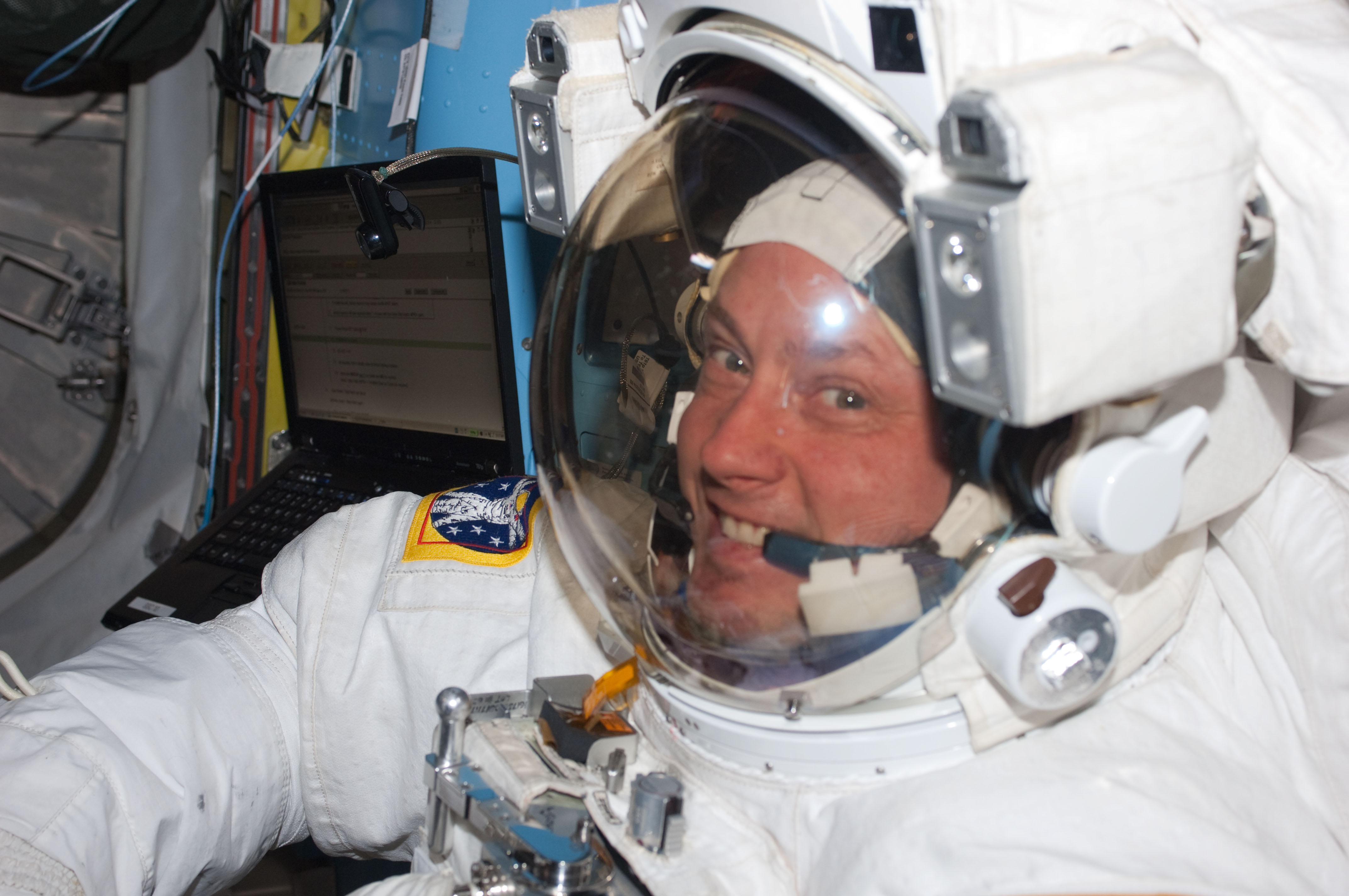
NASA astronaut Mike Fincke is pictured inside the International Space Station’s Quest airlock prior to the start of the third spacewalk for the STS-134 mission.
Credit: NASA

NASA astronaut Mike Fincke is departing the agency on Wednesday after 30 years of service. Throughout his career, he flew four missions, spent 549 days in space, and completed nine spacewalks in support of the International Space Station.

“Few people have had the opportunity to shape as many chapters of NASA’s history as Mike Fincke,” said NASA Administrator Jared Isaacman. “Over a remarkable career, Mike served our nation as a pilot, engineer, astronaut, and mentor. From long-duration missions aboard the International Space Station to helping prepare the Artemis generation, his contributions have helped position NASA for what comes next. The success we’re building on today is possible because of people like Mike, who dedicated their careers to moving our space program forward and preparing the next generation to carry the mission even further. I’d like to congratulate Mike on an incredible career and thank him for his decades of service to NASA, our nation, and the countless people who had the opportunity to learn from and fly alongside him.”

He ranks fourth among NASA astronauts in accumulated time in space, and his spacewalks total 48 hours and 37 minutes. Most recently, Fincke piloted NASA’s SpaceX Crew‑11 mission, which launched in August 2025 and returned in January. During the mission, he served as a flight engineer for International Space Station Expedition 73 and commander of Expedition 74.

Fincke joined NASA’s 16th astronaut class in 1996 and first flew to space in 2004 aboard Soyuz TMA‑4 in support of the space station’s Expedition 9. Serving as a science officer and flight engineer, he helped maintain station systems and performed four spacewalks. He returned to space in 2008 on Soyuz TMA‑13 as commander of Expedition 18, preparing the space station for its transition to six‑person crews at the time and completing two more spacewalks.

In 2011, Fincke flew on STS‑134, the final flight of space shuttle Endeavour. As mission specialist and robotic arm operator, he completed three spacewalks and helped deliver and install the Alpha Magnetic Spectrometer.

“Mike’s remarkable career reflects three decades of dedication to NASA’s mission and the advancement of human spaceflight,” said Vanessa Wyche, director of NASA’s Johnson Space Center in Houston. “From his time aboard the International Space Station to his commitment to mentoring the next generation, Mike has made an immense impact across our agency. His legacy of service, mentorship, and dedication to exploration will continue to inspire the generations to come.”

Throughout his career, Fincke bridged spacecraft development, flight testing, and mission operations. Early in the International Space Station Program, he helped test and integrate several of the station’s initial modules before launch. His flight experience spanned multiple generations of human spacecraft, including two missions aboard Soyuz, one aboard the space shuttle, and later piloting the SpaceX Dragon.

Fincke was a foundational contributor to NASA’s Commercial Crew Program. As chief of the Astronaut Office’s Commercial Crew Branch, he worked to ensure astronaut needs, crew safety, and human spaceflight experience informed development of the nation’s next generation of crewed spacecraft. He spent five years supporting Boeing’s Crew Flight Test program training as a crew member and backup pilot, contributing to flight software, systems integration, integrated testing, and spacecraft interfaces.

Fincke also supported station operations from the ground as a crew test support team member in Russia, a capsule communicator, or capcom, and crew procedures team lead. He helped translate complex engineering and operational requirements into clear instructions for crews working in orbit. His continuity across development, integration, mission support, and long‑duration flight gave him an end‑to‑end perspective on space station assembly and operation.

“Mike approached every assignment with experience, humility, and an unwavering focus on the mission,” said Scott Tingle, chief of the Astronaut Office at NASA Johnson. “Whether flying aboard the station, supporting crews from the ground, or helping shape the spacecraft that future crews will rely on, he consistently strengthened our team. His legacy is woven into the way we fly today.”

A native of Emsworth, Pennsylvania, Fincke holds bachelor’s degrees in aeronautics and astronautics and in Earth, atmospheric, and planetary sciences from the Massachusetts Institute of Technology, where he also studied in the Soviet Union through an exchange program with the Moscow Aviation Institute. He earned master’s degrees in aeronautics and astronautics from Stanford University and in planetary geology from the University of Houston, Clear Lake.

Fincke is a retired U.S. Air Force colonel and distinguished graduate of the U.S. Air Force Test Pilot School. He served as a space systems engineer and flight test engineer at Edwards and Eglin Air Force Bases and later as the U.S. flight test liaison to the Japanese‑U.S. XF‑2 fighter program at Gifu Air Base in Japan. He accumulated more than 2,000 flight hours in more than 30 aircraft types.

“After exactly 30 years, I am departing NASA, but I remain deeply committed to the work of exploration.” Fincke said. “NASA gave me the extraordinary privilege of serving alongside remarkable people, flying and helping develop spacecraft, and contributing to the International Space Station from its earliest days through command in orbit. I am profoundly grateful to my crewmates, the teams on the ground, our international partners, and the families who make this work possible. I am excited to carry those lessons forward and help prepare the next generation of engineers, explorers, and leaders. Together, we will return humanity to the Moon, travel to Mars, journey outward to the planets and moons beyond Earth, and someday reach for the stars – all while caring for Earth, the most beautiful planet in our solar system.”

To learn more about NASA’s astronauts and space exploration, visit:

https://www.nasa.gov/astronauts

-end-

Jimi Russell
Headquarters, Washington
202-358-1100
james.j.russell@nasa.gov

Anna Schneider
Johnson Space Center, Houston
281-483-5111
anna.c.schneider@nasa.gov

Share

Details

Last Updated
Aug 12, 2026

Water Found in Stellar Envelope Near the Milky Way’s Central Black Hole

11 August 2026 at 20:24

Astronomers using NASA’s James Webb Space Telescope have discovered water molecules inside the enormous envelope of gas and dust surrounding IRS 3, an aging star located remarkably close to the supermassive black hole at the centre of the Milky Way. The finding challenges the long-held assumption that the intense radiation and gravitational turbulence around Sagittarius A, commonly known as Sgr A, would prevent molecules from surviving in such a hostile environment.

IRS 3 lies about 0.6 light-years from Sgr A*, a distance equivalent to roughly 42,000 times the separation between Earth and the Sun. In everyday terms, that is an immense distance. On the scale of the Galactic Centre, however, it places the star in the immediate neighbourhood of a black hole containing approximately four million times the mass of the Sun. The region is crowded with stars, powerful magnetic fields, energetic particles and rapidly changing radiation, making IRS 3 an exceptional natural laboratory for studying how stars evolve under extreme conditions.

The observations were conducted with the Mid-Infrared Instrument, or MIRI, aboard the James Webb Space Telescope. Mid-infrared light is particularly useful for investigating cool dust and molecules that absorb and re-emit radiation at characteristic wavelengths. By analysing the infrared spectrum of IRS 3, researchers led by PD Dr Florian Peißker of the University of Cologne identified the chemical and physical properties of the material surrounding the star with far greater detail than previous observations allowed.

What makes IRS 3 especially striking is the scale of its circumstellar envelope. The structure extends to a radius of approximately 10,000 astronomical units, where one astronomical unit is the average distance between Earth and the Sun. Such envelopes are common around mature, evolved stars, but IRS 3 appears to be unusually isolated in the immediate vicinity of Sgr A*. Its enormous shell of material therefore stands out against a dense background containing millions of other stars.

The new observations indicate that IRS 3 is undergoing a phase known as a superwind. This is a brief but dramatic stage in the late evolution of certain stars, particularly asymptotic giant branch stars. During this phase, powerful stellar winds carry gas and newly formed dust away from the star at extremely high rates. Over periods of only a few centuries, the star can lose a substantial fraction of its outer layers, transforming its surroundings into a thick, expanding envelope that will eventually disperse into interstellar space.

According to the research team, IRS 3 is losing material at a rate equivalent to the mass of Earth every 18 days. Although the comparison makes the scale easier to imagine, the total outflow is far more significant when considered over astronomical timescales. The steady loss of gas and dust explains why the envelope is both unusually large and dense. It also provides the raw material in which molecules can form, shielded within cooler regions of the expanding stellar outflow.

The detection of water is the most surprising aspect of the study. Near Sgr A*, ultraviolet radiation, X-rays and high-energy particles are expected to break apart fragile molecules. Water molecules can be destroyed when energetic photons dissociate them into their constituent atoms, particularly in exposed regions close to powerful sources of radiation. Yet the MIRI observations show that water exists within the envelope of IRS 3, suggesting that the dense outflow from the star creates protected pockets where molecular chemistry can proceed.

This discovery does not mean that the Galactic Centre is a calm or hospitable environment. Instead, it demonstrates that stellar mass loss can temporarily create its own chemical refuge. The material expelled by IRS 3 increases the density of gas and dust around the star, allowing some regions of the envelope to absorb damaging radiation. Within these shielded zones, atoms can combine on dust grains or in the gas phase, producing molecules that would otherwise be rapidly destroyed. The finding offers a new view of how evolved stars may enrich even the most violent regions of a galaxy.

The researchers say that IRS 3 may be actively supplying the area around Sgr A* with elements and molecules that later become part of the broader interstellar medium. Water itself is not evidence of life, but it is a crucial ingredient in planetary formation and a central component of the chemistry that precedes biology. As the envelope expands, some of its contents will eventually mix with surrounding gas, potentially influencing the composition of future stars, planets and smaller bodies formed in the Galactic Centre.

The study, published in Astronomy & Astrophysics, also highlights the scientific value of observing the Milky Way’s centre at infrared wavelengths. Visible light is heavily obscured by dust along the line of sight, while infrared radiation can pass through much of that material and reveal otherwise hidden structures. Future observations with METIS, a next-generation mid-infrared instrument being developed for the Extremely Large Telescope in Chile, could provide sharper views of IRS 3’s envelope, measure its winds in greater detail and determine how its molecular content changes over time. For now, the star’s unexpected water-rich cocoon is offering astronomers a rare glimpse of stellar chemistry unfolding beside one of the most extreme objects in the universe.

Subject of Research: Not applicable

Article Title: Dust production in the harsh environment of Sgr A* – MIRI/JWST observation of the O-rich asymptotic giant branch star IRS 3

News Publication Date: 11-Aug-2026

Web References: https://doi.org/10.1051/0004-6361/202660243

References: Astronomy & Astrophysics

Image Credits: ESO/F. Peissker

Keywords

James Webb Space Telescope, JWST, MIRI, IRS 3, Sagittarius A, Sgr A, Milky Way, Galactic Centre, water molecules, superwind, asymptotic giant branch star, stellar evolution, circumstellar envelope, dust production, black hole, infrared astronomy, Extremely Large Telescope

SpaceX has asked to operate up to one million AI satellites, but their direct waste heat would barely affect global temperature; the larger climate question is what launches and mass re-entry would put into the upper atmosphere

11 August 2026 at 14:30
Representative rocket lifting off through a plume of exhaust

SpaceX has formally asked US regulators for permission to operate as many as one million AI data-center satellites. That number is real. It is also an upper limit in an application, not an approved fleet, a launch schedule or evidence that one million spacecraft will actually be built.

If the full Starmind system ever existed, its direct waste heat would be too small to become a major global climate driver. The harder environmental question lies in the industrial cycle required to create and replace it: manufacturing enormous amounts of hardware, launching it through the atmosphere and eventually vaporizing much of it during re-entry.

Climate models have only begun to study satellite constellations measured in tens of thousands. A million large computing satellites would sit far beyond the scale directly tested in that literature.

The FCC has accepted an application, not approved a million launches

SpaceX filed its application on January 30, 2026. The Federal Communications Commission accepted it for public comment on February 4.

The filing seeks authority for a non-geostationary system of up to one million satellites between 500 and 2,000 kilometers altitude. The spacecraft would exchange data through optical links and connect with SpaceX’s Starlink network.

Accepting an application for filing is an administrative step. It does not mean the FCC has determined that the architecture is safe, environmentally acceptable or technically achievable. The public notice also says SpaceX plans different hardware versions across multiple orbital shells, so “one million satellites” does not describe one fixed design.

SpaceX has since presented its first AI1 design for the Starmind system. The company’s published specifications give it a 120-kilowatt average compute load, a 150-kilowatt peak and a deployed wingspan of 70 meters.

The computers’ direct heat is not the main climate problem

Computers turn almost all the electricity they use into heat. In orbit, that heat cannot leave through air or cooling water because neither is available. Large radiator surfaces must emit it as infrared radiation.

One million AI1 satellites operating at the advertised average would use about 120 gigawatts for computing. To put a strict upper bound on the direct climate effect, imagine that every watt of that heat somehow reached and was absorbed by Earth. Spread over the planet’s surface, it would average roughly 0.00024 watts per square meter.

That artificial scenario overstates the real effect because radiators can direct most thermal radiation toward deep space. Even so, its value is more than 10,000 times smaller than the IPCC’s estimate of 2.72 watts per square meter for total human-caused effective radiative forcing between 1750 and 2019.

The fleet would therefore not warm Earth simply by running hot computers overhead. Reflected sunlight, radiator orientation and the design of vast solar arrays would still need assessment, but direct compute heat is not the dominant global term.

Space solar power could avoid some terrestrial emissions

SpaceX argues that sun-synchronous satellites could collect solar energy without clouds or night-time interruptions and reject heat without chillers, cooling towers or fans. If orbital computing genuinely replaced electricity from fossil-fueled grids, it could avoid some power-sector carbon emissions and water consumption.

That benefit cannot be calculated from the one-million figure. A fair comparison would need the energy and materials used to manufacture satellites and rockets, propellant production, launch emissions, ground stations, replacement rates, failed spacecraft and the carbon intensity of the terrestrial data centers displaced.

No published life-cycle assessment yet covers SpaceX’s proposed full system. “Powered by solar energy” describes operation in orbit, not the environmental balance of building and continually replenishing the fleet.

Rocket exhaust is unusually effective high in the atmosphere

Rocket emissions are small beside global aviation, shipping or power generation by mass. Their location makes them different. Rockets inject black carbon, water vapor, nitrogen compounds, alumina and other products directly into atmospheric layers that surface pollution rarely reaches.

Black carbon absorbs sunlight and warms the surrounding stratosphere, changing atmospheric circulation and ozone chemistry. A NOAA modeling study found that a tenfold increase in hydrocarbon-rocket soot could warm parts of the stratosphere by 0.5 to 2 degrees Celsius and alter circulation. The authors stressed that soot emissions from different engines remain poorly measured.

A newer 2026 study in Earth’s Future modeled launch and re-entry emissions from the recent megaconstellation era through 2029. It found a global stratospherically adjusted forcing of about -0.0064 watts per square meter from all space missions in its scenario, with megaconstellations contributing 42 percent.

That modeled forcing is small compared with the present greenhouse-gas-driven climate imbalance, and its negative sign represents a slight cooling influence after the stratosphere adjusts. It is not necessarily good news. The same soot warms the stratosphere, changes circulation and can affect ozone. It is better understood as an uncontrolled atmospheric perturbation than as useful climate cooling.

The result also cannot be multiplied mechanically from thousands of satellites to one million. Starmind would use different spacecraft, potentially different launch vehicles and an unknown deployment cadence.

Re-entry would turn satellite material into atmospheric aerosol

Low-Earth-orbit constellations require replacement. Hardware fails, components age and atmospheric drag eventually brings spacecraft down. A million-satellite fleet with a five-year average life would imply 200,000 replacements and re-entries every year. SpaceX has not established that lifetime for the full system, but the example shows why lifespan matters as much as fleet size.

Re-entering spacecraft do not simply disappear. Heating vaporizes metals and creates particles and gases in the upper atmosphere. A 2024 global emissions inventory identified aluminum oxide as the dominant modeled metal oxide from satellites that ablate, alongside nitrogen oxides produced by high-temperature re-entry.

A 2025 atmospheric modeling study tested a scenario with 10,000 metric tons of re-entry alumina per year, a level associated with forecasts of roughly 60,000 satellites. Depending on particle size and re-entry latitude, the model produced regional temperature anomalies reaching about 1.5 degrees in the middle atmosphere and changes to polar-vortex winds.

That is not a prediction of 1.5 degrees of global surface warming. It is a modeled regional response high in the atmosphere, with large uncertainty about particle size, composition and transport. Scaling to Starmind requires basic information that is not public, especially spacecraft mass, material composition, operational life and disposal pattern.

A million is a different environmental regime

Space Daily has already examined how large Starmind spacecraft could affect ground-based astronomy. Climate and atmospheric chemistry pose a separate problem: pollution can accumulate even when each individual launch or re-entry looks small.

The most honest answer is therefore split. Direct waste heat from the orbital computers would be negligible at the global climate scale. Moving computing away from terrestrial grids might avoid emissions, but that benefit has not been demonstrated through a full life-cycle study.

The serious unknown is the launch-and-replacement machine surrounding the constellation. Existing research already finds measurable, though currently small, radiative and ozone effects from today’s much smaller space industry. A fleet approaching one million satellites would turn an emerging source of upper-atmosphere pollution into a planetary experiment without a validated model of the outcome.

The post SpaceX has asked to operate up to one million AI satellites, but their direct waste heat would barely affect global temperature; the larger climate question is what launches and mass re-entry would put into the upper atmosphere appeared first on Space Daily.

Rocket Lab’s GHOST to enable rocket launches to take place from anywhere on Earth

11 August 2026 at 14:08

Looks like an entire orbital launchpad could be hitched to a semi-truck and driven anywhere on Earth, thanks to space launch provider Rocket Lab. 

The company has unveiled GHOST, which is short for Global Hypersonic and Orbital Spaceport Technology. GHOST is a deployable, containerized launch infrastructure designed to fire rockets into orbit or suborbital trajectories from nearly anywhere on Earth. 

It is like a spaceflight in a box. GHOST houses everything required to execute a flight campaign: the rockets themselves, ground support equipment, launch pads, and complete range control systems. 

With this technology, Rocket Lab aims to make launch operations fully portable, especially for national security and international space defense.

Furthermore, GHOST’s primary advantage is its ability to support both Electron orbital rockets and HASTE hypersonic test vehicles using a single shared ground infrastructure. 

“We’ve been leading the field in small launch for missile defense and national security for years. Our reliability, repeatability, and affordability sets us apart from everybody else, and creating GHOST is about packaging that up into a deployable system that can serve the world’s most important programs from wherever those missions need,” said Sir Peter Beck, founder and CEO of Rocket Lab. 

Dual mission profiles

Rocket Lab depends on two primary vehicles: Electron, its 59-foot workhorse launcher with 83 missions under its belt since debuting in 2017. It is the second most frequently launched US rocket annually after SpaceX’s Falcon 9.

And HASTE (Hypersonic Accelerator Suborbital Test Electron) is a suborbital derivative designed for testing hypersonic flight technologies. First launched in June 2023, HASTE has flown nine times to date, offering customers dedicated testing environments alongside Electron’s small-satellite orbital rides.

This new containerized setup supports dual-vehicle launches out of a single system. As a result, defense partners and international allies can rapidly establish independent launch points while completely overcoming the high costs of fixed concrete infrastructure.

“Whether it’s for missile defense and deterrence, or opening up more trajectories, orbital missions, and sovereign launch capabilities in allied nations, GHOST is the answer to launching anywhere, anytime, and without compromise,” Beck added. 

GHOST: Launch-anywhere capability

Rocket Lab will debut its containerized GHOST system in 2027 with a suborbital launch from its newly established Launch Complex 4 at Alaska’s Pacific Spaceport Complex. 

Featuring two pads built for high-frequency flight campaigns, this addition brings Rocket Lab’s global network to six operational pads across two hemispheres, expanding beyond its active sites in New Zealand (LC-1) and Virginia (LC-2 and LC-3).

Rocket Lab has expanded its Virginia facility with a second launch pad to support Neutron, its upcoming medium-lift rocket designed to be larger, more powerful, and partially reusable — similar to SpaceX’s Falcon 9.

Although Neutron‘s maiden flight slipped past its original 2024 target, developmental delays are typical for new launch vehicles, and the company continues to make steady progress toward its operational debut.

Earlier this year, Rocket Lab secured its largest launch agreement to date through a $190 million Department of Defense contract for 20 flights of its suborbital HASTE rocket.

Serving as the core testbed for the DOD and Naval Surface Warfare Center Crane Division, HASTE allows defense agencies to evaluate payloads and maneuverable hardware at Mach 5+ speeds. This high-cadence testing pipeline directly supports the U.S. military’s drive to accelerate its capabilities in hypersonic technology and defense systems against fast, low-altitude aerial threats.

National security space strategy is shifting fast. Fixed launch pads are stationary targets. Through compact, modular launch systems, GHOST could bring mobility-driven deterrence to space defense, allowing swift, on-demand launches directly from allied lands.

💾

Rocket Lab has unveiled GHOST, which is short for Global Hypersonic and Orbital Spaceport Technology, a portable platform.

Which Families Pay Most for Neonatal Intensive Care? Analyzing NICU Out-of-Pocket Costs

11 August 2026 at 14:06

The price of saving a newborn’s life can extend far beyond the hospital walls. A new analysis published in the Journal of Perinatology is drawing attention to a largely invisible consequence of neonatal intensive care: the direct medical out-of-pocket costs paid by families. The study, led by researchers Gorka, Profit and Phibbs, examines who carries the greatest financial burden during a neonatal intensive care unit admission and investigates how structural conditions may shape those costs.

Neonatal intensive care is among the most technologically advanced forms of medicine. Infants in NICUs may require mechanical ventilation, incubators that regulate temperature and humidity, continuous heart and oxygen monitoring, intravenous nutrition, specialized medications and repeated laboratory testing. These interventions can be lifesaving, particularly for babies born extremely prematurely or with serious medical complications. Yet the financial consequences of receiving this care are not experienced equally by every household, even when families receive treatment in the same health-care system.

The researchers’ focus is direct medical out-of-pocket spending: the money families must pay themselves for medical services connected to a NICU admission. This can include deductibles, copayments, coinsurance and other forms of cost sharing that remain after insurance has paid its portion. Unlike the total hospital charge or the amount reimbursed by an insurer, out-of-pocket cost reflects the portion that reaches a family’s own budget. For households already coping with an unexpected high-risk birth, even relatively small individual charges can accumulate rapidly.

The study is designed not only to document these expenses, but also to explore the structural forces behind differences in cost burden. In health economics, structural contributions refer to the way institutions and systems distribute risk and resources. Insurance design, employment-linked coverage, household income, geographic location, hospital characteristics and access to public assistance can all affect how much a family ultimately pays. Two infants with similar clinical needs may therefore generate very different financial experiences for their parents, depending on the architecture of coverage surrounding them.

That distinction matters because the effects of a NICU admission are not limited to the newborn’s medical condition. Parents may need to travel long distances to reach a specialized hospital, arrange accommodation near the facility, pay for transportation or meals, and take unpaid leave from work. These expenses may not always appear in estimates of direct medical out-of-pocket costs, but they can intensify the economic shock associated with a prolonged admission. The medical bill is only one component of the broader financial strain that can accompany neonatal illness.

A central question raised by the analysis is whether the families with the fewest financial resources are also the ones most exposed to high cost sharing. A payment that is manageable for a high-income household may consume a substantial share of a lower-income family’s monthly budget. Economists often describe this pattern as a disproportionate cost burden: the absolute amount paid may not be the highest, yet the payment represents a greater fraction of household resources. This distinction can reveal inequities that remain hidden when researchers look only at average dollar amounts.

The findings are expected to be relevant to health-policy debates about medical debt, insurance protection and the financial consequences of premature birth. If structural factors account for meaningful differences in family payments, reducing inequality may require more than improving clinical care. Potential responses could include limits on neonatal cost sharing, stronger protections against unexpected bills, expanded eligibility for public coverage and assistance with transportation or family support services. The analysis may also help hospitals and policymakers identify families at risk of financial hardship while an infant is still receiving care.

The issue has significance beyond individual hospitalizations because NICU care can influence a family’s financial stability long after discharge. Parents may face follow-up appointments, medications, developmental assessments and specialist care for children who experienced complications of prematurity or serious illness. Medical expenses can overlap with reduced work hours, job loss or the need for one parent to become a full-time caregiver. A short period of intensive treatment can therefore produce a long economic aftershock, particularly when families lack savings or paid leave.

By placing family payments at the center of neonatal research, Gorka, Profit and Phibbs emphasize a dimension of NICU care that is often absent from clinical success measures. Survival, complications and length of stay remain essential indicators, but they do not fully describe the experience of families navigating intensive care. Understanding who pays the most, why they pay it and how those payments relate to broader social structures could help redefine quality in neonatal medicine. The study’s message is potentially viral because it connects cutting-edge life-saving technology with a simple but consequential question: when medicine saves a baby, how much of the cost is left for the family to survive?

Subject of Research: Direct medical out-of-pocket costs of neonatal intensive care admissions and structural factors contributing to differences in financial burden among NICU families.

Article Title: Who pays the most for neonatal intensive care? An analysis of the out-of-pocket cost burden borne by NICU families

Article References: Gorka, N., Profit, J. & Phibbs, C.S. “Who pays the most for neonatal intensive care? An analysis of the out-of-pocket cost burden borne by NICU families.” Journal of Perinatology (2026). https://doi.org/10.1038/s41372-026-02869-6

Image Credits: AI Generated

DOI: 10.1038/s41372-026-02869-6

Keywords: neonatal intensive care, NICU, out-of-pocket costs, medical expenses, health-care inequality, premature birth, financial burden, insurance, neonatal health, health policy

Astronomers just released a map of universe so big it contains 4 billion objects

11 August 2026 at 12:53

Astronomers have released the largest-ever 2D color map of the universe. The 5.6-trillion-pixel image contains nearly 4 billion celestial objects, assembled from more than 263,000 telescope exposures taken over 2,285 nights. The release comes from the DESI Legacy Imaging Surveys, led by Lawrence Berkeley National Laboratory. The data is publicly available through the Legacy Survey Sky Viewer, where anyone can explore the full map.

The map is not a single photograph. It is a composite of images from multiple telescopes, including the 570-megapixel Dark Energy Camera at Cerro Tololo in Chile and the Mayall 4-meter Telescope at Kitt Peak in Arizona. Each image was taken under different atmospheric and telescope conditions. Merging those images required about a year of software development. The actual processing took eight weeks on the Perlmutter supercomputer at the National Energy Research Scientific Computing Center in Berkeley.

A deep photo, not a distance map

A 2D sky map and a 3D map of the universe serve fundamentally different purposes. The 2D map is essentially a deep photograph. It records where galaxies and stars appear on the sky and how bright they are, across visible and near-infrared wavelengths. The 3D survey is DESI’s primary scientific mission. It adds the third dimension by measuring spectra from individual objects to determine their redshifts and therefore their distances from Earth. Before DESI can measure a galaxy’s distance, it must know the galaxy exists, and the 2D Legacy Surveys map is how it finds them.

The new map has been guiding DESI’s target selection since June 2026. Its release follows DESI completing its original five-year 3D survey in April, ahead of schedule. The instrument captured 47 million galaxies and quasars when the original target was 34 million, plus more than 20 million nearby stars.

DESI outran its own target list

The expansion of the 2D map was driven by a practical problem of success. DESI performed so efficiently that astronomers working on the project became concerned they would exhaust their pool of available targets. “It became clear we might run out of galaxies to look at and run out of sky, and we better start doing something about that,” said David Schlegel of Berkeley Lab, who works on both DESI and the Legacy Surveys.

Expanding the target catalog required expanding the 2D imaging survey it is built on, which produced the record-setting 5.6-trillion-pixel map now publicly available. With DESI continuing observations through 2028, the new catalog will support the instrument’s extended mission.

What the 3D survey has already found

The larger purpose of both the 2D and 3D maps is the study of dark energy, the unknown force that makes up roughly 70 percent of the universe and drives its accelerating expansion. DESI’s early results have produced one of the most consequential hints in modern cosmology: that dark energy may not be constant but weakening over time. If confirmed, that finding would require a fundamental revision of cosmology’s standard model.

The Legacy Surveys map is also being made available as a foundational reference for the next generation of astronomical instruments. This extends its scientific life well beyond DESI’s own mission. Astronomers and citizen scientists can access the Sky Viewer and search for rare phenomena across the nearly four billion objects now catalogued in visible form.

Never-Before-Seen Vortices Are Swirling Across the Sun

Tiny Vortices on the SunThe world’s largest solar telescope and advanced computer simulations revealed vortices that are reshaping our understanding of the Sun. Across the Sun’s visible surface, hot plasma is constantly rising, cooling, and sinking. At the edges of these churning regions, researchers have now resolved tiny swirling structures that may help explain how the Sun twists, stores, [...]

Something May Be Flowing Beneath Pluto’s Giant Heart-Shaped Glacier

11 August 2026 at 12:03
Pluto New Horizons 2015Researchers used New Horizons images to identify evidence that liquid nitrogen may have flowed from beneath Pluto’s famous heart-shaped glacier. Dark markings across part of Pluto’s enormous heart-shaped glacier may record something unexpected beneath its frozen surface: liquid nitrogen moving upward and briefly flowing across the ice. Using observations from NASA’s New Horizons spacecraft, researchers [...]

Don’t Miss: Europe Is About To Go Dark in a Spectacular Total Solar Eclipse

11 August 2026 at 11:28
Solar Eclipse (Artist Impression)A rare total solar eclipse will sweep across parts of Europe on August 12, 2026, briefly turning daylight into darkness as the Moon completely covers the Sun. Europe is about to experience a total solar eclipse, and people around the world will be able to watch it live. The European Space Agency (ESA) will begin [...]

Proteus Space Names Maj. Gen. Kim Crider (USAF, Ret.) to Board of Directors

11 August 2026 at 11:00

LOS ANGELES, August 11th, 2026. Proteus Space, an AI-native aerospace company delivering rapid, end-to-end access to space, today announced that retired U.S. Air Force Maj. Gen. Kimberly “Kim” Crider has […]

The post Proteus Space Names Maj. Gen. Kim Crider (USAF, Ret.) to Board of Directors appeared first on SpaceNews.

Scientists Warn That New Satellites Could Cause Eye Damage for People on the Ground

10 August 2026 at 20:05

Last month, the Federal Communications Commission approved an experimental and controversial new satellite being developed by venture Reflect Orbital to reflect sunlight down onto the Earth to illuminate patches of it at night for paying customers.

The purported goal is to allow solar farms to continue generating electricity even after nightfall and provide illumination during emergencies. Those may sound like noble ideas on the surface, but the concept comes with major downsides as well.

One is that such bright satellites could easily wreck deep space observations. Astronomers were appalled at the news, with the FCC receiving nearly nearly 2,000 public comments criticizing the proposal, as Wired reported at the time.

And it’s not just professional astronomers that could be affected, as experts told The Verge. Amateur astronomers gazing up at the prototype mirror satellite, dubbed Eärendil-1 — continuing Silicon Valley’s obsession with borrowing names from JRR Tolkien’s “Lord of the Rings” — could easily be blinded. Even looking through a 12-inch telescope, a common type used by enthusiasts, could result in permanent eye damage.

It’s a considerable risk to human health that makes the FCC’s approval “extraordinary,” as Royal Astronomical Society deputy executive director Robert Massey told The Verge.

It’s a risk experts have known for decades now. Case in point, observing a similar proposed Russian prototype, dubbed Znamya, could cause damage equivalent to staring at the Sun around a total eclipse, according to a 2000 research article by the Royal Astronomical Society of Canada. (Russia launched two experimental Znamya space mirror satellites in the 1990s, but later abandoned the program.)

Critics of the FCC’s approval of Reflect Orbital’s plans pointed out the risk of eye damage to the regulator, which wound up being deemed irrelevant and too “small” of a factor compared to the “benefits of permitting American companies to test innovative technology in space.”

As The Verge points out, astronomers won’t even be warned of when and where the mirror satellite will be in the night sky, which could result in them gazing at it inadvertently.

Reflect Orbital spokesperson Christopher Buscombe told the publication that the company is in active talks with “scientists, astronomers, environmental researchers and other stakeholders” and that it will use its initial demonstration satellite to test out built-in safeguards.

The Air Line Pilots Association has also raised concerns over Reflect Orbital’s inadequate approach to air safety. The satellites could also disrupt sleep and the circadian rhythms migratory species.

“The proposed scale of orbital deployment would represent a significant alteration of the natural night-time light environment at a planetary scale,” the presidents of several international chronobiology assocaitions said in a joint statement quoted by The Guardian.

Buscombe told The Verge that the company would limit the amount of light being reflected and calibrate brightness to “levels humans and animals already tolerate.” But experts warn there are far too many variables that the company won’t be able to control for, from light scattering in the atmosphere to interactions with clouds.

Satellites in general are an increasingly controversial topic. The number of spacecraft in low Earth has exploded over the past decade, and many are being delivered at lower altitudes that make them appear even brighter.

“The stars above us are a valued part of human heritage – deploying more than one million exceptionally bright satellites would utterly destroy this and permanently scar the natural landscape,” Massey told The Verge.

More on the satellites: Astronomers Horrified by Enormous Mirror Satellite That Reflects Sunlight Back Down to Earth at Night

The post Scientists Warn That New Satellites Could Cause Eye Damage for People on the Ground appeared first on Futurism.

❌