❌

Normal view

After 24 years, Return to Castle Wolfenstein is finally distributed uncut in Germany — game was censored due to strict laws regarding Nazi symbolism

9 August 2026 at 11:40

Some announcements arrive with fireworks, while others show up as a single easily missed tweet during a flurry of QuakeCon announcements to quietly close one of the longest-running oddities in PC gaming. After roughly 25 years, Return to Castle Wolfenstein (RTCW) is finally available in Germany in its original, uncut form. Bethesda Deutschland dropped the news amidst its QuakeCon announcements, bringing an end to a censorship saga regarding Nazi symbolism that stretches all the way back to the game's original 2001 release.

A Return to Castle Wolfenstein screenshot showing the Norway level and the submarine you board at the end.

The game's environments are surprisingly varied despite the relatively primitive technology in use. This level is set in Norway. (Image credit: Bethesda Softworks)

If you weren't around for PC gaming in 2001, it's hard to overstate how different the landscape looked. NVIDIA's GeForce 3 had only recently introduced programmable shaders to consumer graphics cards, the ATI Radeon 8500 was fresh competition, Windows XP was brand new, and legendary pioneers 3dfx had just disappeared after being acquired by NVIDIA. Broadband internet was becoming more common, but plenty of multiplayer sessions still happened over LANs, and a Pentium III or Athlon paired with 256 MB of RAM was enough to run one of the latest engine technology showcases.

Built on id Tech 3, perhaps better known as the tech that powered the incredible Quake III Arena, Grey Matter's Return to Castle Wolfenstein looked fantastic for its day, and it also inherited the series' unmistakable identity. See, ever since Castle Wolfenstein in 1981, and even more so after Wolfenstein 3D essentially invented the first-person shooter as we know it a decade later, the games have been about one thing above all else: shooting Nazis.

That identity created a problem in Germany. For decades, games depicting Nazi symbolism faced legal and regulatory hurdles that films did not, resulting in a heavily modified German version. In RTCW, swastikas disappeared, Nazi organizations were renamed, Heinrich Himmler became the fictional "Heinrich Höller," and references to the Third Reich gave way to the equally fictional "Wolf Clan."

At first glance, that sounds like the sort of censorship that simply strips away context, yet RTCW was already a strange game. The opening hours suggest a relatively grounded World War II action title. You wake up in a prison with a knife, you fight Nazis in a castle, and things seem normal for about a whole hour before rapidly veering into supernatural pulp. Within a few missions, you're fighting zombies, exploring haunted crypts, and watching the SS dabble in increasingly implausible occult experiments.

An RTCW screenshot showing the final boss, Heinrich I, flanked by several undead enemies.

The final boss Heinrich is barely mentioned before the end of the game, making him quite a surprise if you aren't paying close attention to the story. (Image credit: Alan Chan/MobyGames)

By the end, the final boss isn't Hitler (mech suit or no) or a secret superweapon, but Heinrich I, historically known as Henry the Fowler. He was a real 10th-century German king, supposedly resurrected in the game through dark ritual. He's also somewhat infamously a surprisingly manageable final boss, making for a finish both absurd and anticlimactic after the game's escalating parade of undead knights and bizarre experiments.

Seen through that lens, the censored version accidentally became a different story. Instead of Nazis attempting to exploit medieval occult power, it played more like an ancient secret society preserving itself across the centuries before trying to resurrect its long-dead founder. It's arguably a cleaner fantasy premise. The "Wolf Clan" makes more narrative sense once the game fully commits to gothic horror. However, it does make the opening chapters, where an OSS Ranger is somehow investigating a shadowy organization seemingly unrelated to the wider war, a bit awkward.

The catch, of course, is that it stops feeling much like Wolfenstein. The series' DNA is inseparable from infiltrating Nazi strongholds and sabotaging increasingly desperate attempts to turn the tide of World War II. Remove that element, and the title itself starts to feel like an artifact from another game series altogether.

A screenshot of a briefing screen from Return to Castle Wolfenstein, showing how detailed the mission briefings were.

These surprisingly detailed mission briefings had to be fully reworked for the German version of the game. (Image credit: Bethesda Softworks)

It's a curious example of something that occasionally happens with censorship across entertainment. More often than not, edits simply leave a work feeling diminished. Every so often, though, these constraints produce something unexpectedly memorable. The Texas Chain Saw Massacre owes much of its enduring reputation to how much horror it leaves to implication rather than explicit gore, and that decision was made due to the ratings board. Similarly, action film edits for TV often cut gory death scenes, which can ironically improve the pacing of the film.

Return to Castle Wolfenstein belongs in that same conversation, albeit for different reasons. The German version wasn't a better version of the game in any objective sense, but it accidentally shifted the genre. Instead of occult Nazis, it became a story about an ancient cult whose descendants had survived into the modern era. That's a premise that I personally find more appealing and even internally consistent, even if it comes at the expense of the series' defining theme.

A RealRTCW mod screenshot showing improved texturing and lighting over the base game.

The RealRTCW mod offers widescreen support and improved texturing and lighting over the base game. (Image credit: RealRTCW Team)

So, after a quarter of a century, German players can finally buy the same uncensored game that much of the rest of the world has had since 2001. It's ironic, and it's about time, too. While Germany relaxed its gaming rules in 2018, allowing modern entries like The New Order to go uncut in 2019, Grey Matter's 2001 classic remained stuck in censorship limbo until now. For game preservation, historical authenticity, and simple consumer choice, that's unquestionably the right outcome. Yet it also marks the quiet retirement of one of gaming's strangest alternate versions; a release that, through a combination of legal necessity and narrative coincidence, accidentally stumbled into telling a very different and potentially more compelling story.

Folks in Germany should now be able to pick up the uncensored version of the classic game on sale for just two dollars at Steam and GOG, or you can get a bundle that includes the original Wolfenstein 3D for just a dollar more. If you grab it, make sure to check out the RealRTCW overhaul mod that radically improves the game with modern features like proper widescreen support and cleaner OpenAL audio.

Atari ST Public Floppy Database now open for everyone — online archive originally designed for ST flash cart packed with classics and homebrew

8 August 2026 at 13:15

An extensive Atari ST floppy disk database can now easily be accessed by all netizens. Originally created to serve floppy images to the owners of the SidecarTridge multi‑function hardware add‑on for the Atari ST family (ST, STE, Mega ST, TT, Falcon), anyone can now browse, search, and download the .ST files to use with other hardware, emulators, or even to rewrite the disk images to actual floppies.

The Atari ST Public Floppy Database browser from the SidecarTridge Multi-device is now open on the web to everyone.Until now, searching that community-curated archive of floppy images meant firing up your Atari ST with a SidecarTridge Multi-device. The search lived inside the…July 21, 2026

After reading the announcement, I decided to check out the online repository. My favorite old platformer series was there, with more than one disk featuring the legendary Turrican and Turrican II releases. I also checked and confirmed public domain/shareware favorites like Gravity Force were available, as was Llamatron, and the mono high-resolution Bolo. Some things I looked for, like the Stupendous Demo, seemed to be missing, as were serious art and DTP tools I used to dabble with in the 90s.

Atari ST screenshots

(Image credit: Tom's Hardware)

The database is pleasingly new and regularly maintained, though. For example, it has 41 Atari ST disks flagged as recent arrivals. These are a mix of old releases being added, and some extremely new titles like new homebrew games, and a collection of demos released at Sommerhack 2026 just last month.

As indicated in the intro, this disk database was originally collated for direct access via hardware designed to bring several modern conveniences to those who still cling to original Atari ST-family computers. The SidecarTridge slots into the computer’s cartridge port, hence the name. It is much more than a ‘Gotek-style’ flash card floppy loader, though. This Raspberry Pi Pico W RP2040 microcontroller-powered device can also load different ROMs (the Atari ST’s entire OS and GEM desktop were loaded from ROM for super-fast,t no-disk-needed booting) via its microSD card slot. It also provides hard disk emulation, networking features (Wi-Fi for downloading Atari ST Public Floppy Database disks), access to RTC, and modern keyboards, mice, and other peripherals.

Play Any Apple II or Apple IIgs Game in Your Browser

7 August 2026 at 22:34

If you’ve been using computers for a long time, you might recall the Apple II and Apple IIgs, two of Apple’s early computers that were before they had fully committed to the Macintosh platform. While there were plenty of productivity apps and programming tools for Apple II and Apple IIgs, there were also a whole ... Read More

The post Play Any Apple II or Apple IIgs Game in Your Browser appeared first on OS X Daily.

Take-Two despreocupa com polêmica sindical e mira sucesso do GTA 6

7 August 2026 at 20:29

Descubra como a Take-Two encara a controvérsia sindical e segue confiante no lançamento do GTA 6.

O post Take-Two despreocupa com polêmica sindical e mira sucesso do GTA 6 apareceu primeiro em Blog do Edivaldo - Informações e Notícias sobre Linux.

💾

Aproveite vídeos e músicas que você ama, envie e compartilhe conteúdo original com amigos, parentes e o mundo no YouTube.

New official 30th anniversary Quake mission pack adds new maps and mechanics

7 August 2026 at 19:00

This year is the 30th anniversary of the launch of the original Quake by id Software, if you could believe it. To commemorate that, publisher Bethesda has released a new campaign chapter for the game, titled "Dawn of the Machine."

This is part of a series of new campaign chapters, all developed by MachineGames "in collaboration with id Software." MachineGames is best known for making the games in the relatively recent Wolfenstein reboot series, as well as Indiana Jones and the Great Circle. The Quake maps are made by a team dubbed "Quake Club," which includes several MachineGames employees who work on Quake maps in their spare time.

The ambition and scope of some of these maps is beyond what was typical for Quake maps back in the late '90s, thanks in part to the team's use of TrenchBroom, a newer map editor that works well on modern systems and is easier to work with and more capable than what folks were using in those days.

Read full article

Comments

© Bethesda

EA Sports FC 27: what does the next instalment of the world’s biggest football game have in store?

7 August 2026 at 14:00

The all-conquering franchise’s revamps are technically impressive, its transfers more true to life – and its new grassroots social hub is surprising fun

As if the world wasn’t sufficiently football-obsessed, it’s time to prepare for the arrival of its biggest football video game. EA Sports FC 27 (the franchise that used to be Fifa – what better time to no longer be Fifa-branded?) is due to be released on 25 September. I just spent two intense days in Vancouver, where the EA FC games are made, playing FC 27 and talking to its developers.

With an annual franchise such as EA FC, it helps to have something fresh to entice regular fans, and FC 27 has a whole new element, entitled the Grounds. It’s a physical hub-type area, similar to the City as seen in 2K’s recent NBA 2K basketball games, but much more pleasant to frequent, split as it is into areas inspired by British, French and Argentinian street-football culture.

Continue reading...

© Photograph: Electronic Arts

© Photograph: Electronic Arts

© Photograph: Electronic Arts

Pony Island 2 Panda Circus: gallop out of hell in this phantasmagorical follow-up to 2016’s indie hit

7 August 2026 at 10:00

Daniel Mullins explains how he plans to follow up his quirky classic without losing what made it stand out in the first place

Glitchy aesthetics. Literally collapsing menu boxes. The game taunting you by “possessing” your Steam friends. Technical tricks of this nature may sound gimmicky in 2026, but they felt excitingly unorthodox a decade ago, when Pony Island came out to critical acclaim.

Fans of Daniel Mullins, the celebrated indie developer of Inscryption, will be forgiven for forgetting that Pony Island 2: Panda Circus is in active development. After all, it’s been almost three years since the announcement – and a full decade since it was first teased as an Easter egg in Pony Island’s ARG (Alternate Reality Game) – with only a single trailer and a bunch of tunes from the soundtrack released to the public.

Continue reading...

© Photograph: Daniel Mullins Games

© Photograph: Daniel Mullins Games

© Photograph: Daniel Mullins Games

EA Sports Tailors Madden NFL 27 for Apple Arcade

6 August 2026 at 19:00

EA Sports has released Madden NFL 27 Arcade Edition, a version of the popular football simulation franchise that Apple Arcade subscribers can play on the iPhone, iPad, Mac, and Apple TV. It’s a big release built specifically to take advantage of Apple hardware, allowing players to play the game on a wide variety of hardware.

I was struck by how easy it is to pick up and play the game whether you’re a diehard NFL fan or not. I don’t follow football closely, but I was able to get the hang of the game and have fun right away, knocking out a Quick Play match when I had a few minutes to spare.

Quick Play tightly limits the overall time it takes to complete a matchup, but it doesn’t sacrifice depth in the process. There are long lists of plays you can run, including suggested plays, play types, formations, and recents, as well as a wide variety of statistics. And after a big play, you can replay it with total control over the camera angle, too.

However, if you want to go really deep, the game’s Franchise Mode lets you play a full NFL season, managing your team all the way through the playoffs. You can also draft your dream team from the game’s huge catalog of real-world NFL stars. Plus, during the real-world NFL season, player attributes shift based on their actual performance.

Madden NFL 27 also looks terrific. The 120Hz playback is smooth on the iPhone, where I spent most of my time with the game, and even nicer on a bigger screen like my 14” M4 Max MacBook Pro, making for an immersive experience.

What impresses me most about Madden NFL 27, though, is how well it makes use of the Apple hardware and technologies at its disposal. Too often, those sorts of details get left behind when a big release is published on Apple platforms.

To its credit, EA has done an excellent job adapting Madden NFL 27 for Apple Arcade subscribers. You can play across every device mentioned above, leaving off on one device and picking up on another seamlessly because saves sync across devices. Every device supports game controllers and touch where applicable, and those devices with 120Hz displays support that, too.

Madden NFL 27 Arcade Edition is available now on the App Store as part of an Apple Arcade subscription. The game is debuting on other platforms next week.

Nazis and Happy Feet collide in Penguin Colony, a psychological horror game set at the world’s end

6 August 2026 at 15:00

Explore Antarctica as a flightless bird – and dodge some earthly monsters – in this surreal adaptation of HP Lovecraft

While watching the 2006 animated film Happy Feet with his daughter, Origame Digital founder Naphtali Faulkner noticed something interesting. “[In the movie], they see the digger fall into the ocean, and it has an almost eldritch quality,” he says. Over time, and with plenty of iteration, Faulkner’s inspirations coalesced, from HP Lovecraft to the 1982 version of The Thing and the works of David Lynch. “I’m a big fan of horror that sits in your head rather than in your stomach,” says Faulkner.

In Penguin Colony, players body-switch between species of flightless birds, piecing together cryptic cosmic clues as they tail a Nazi expedition to Antarctica. In the process, Origame Digital draws on Lovecraft’s novella At the Mountains of Madness. “I’d always wanted to do a creature that’s a manifestation of colonial thought, energy and power, and the idea of it resting and then regrowing,” says Faulkner. “I was looking through the history of Lovecraft and him being a gigantic racist, and this idea of the Nazis sort of came out,” he adds.

Continue reading...

© Photograph: Fellow Traveller

© Photograph: Fellow Traveller

© Photograph: Fellow Traveller

‘Mamma mia!’: Trump tariffs refund ignites 53% profit spike at Nintendo

Profit jump fuelled largely by unknown US refund amount as Japanese video game firm records quarterly sales drop

Nintendo has reported a jump in profits, as the Japanese game maker’s earnings were buoyed up by a long-awaited refund on Donald Trump’s tariffs.

The company said profits surged 53.5% to ¥147.4bn (£694m) over the three months to June, substantially beating expert forecasts for ¥77.8bn.

Continue reading...

© Photograph: Richard A Brooks/AFP/Getty Images

© Photograph: Richard A Brooks/AFP/Getty Images

© Photograph: Richard A Brooks/AFP/Getty Images

Metroid at 40: happy birthday to Samus Aran, gaming’s greatest badass and my personal heroine

6 August 2026 at 08:00

Being a woman who loves video games has often felt lonely, like being on a hostile planet – but Metroid’s female space hunter has been with me all the way

It’s 1986, and you’re playing a brand-new game. (You’re in Japan in this scenario, by the way; the game in question, Metroid, won’t come to North America and Europe until later.) Anyway, this new game has you in its grip. You are a lone astronaut exploring a hostile alien planet full of ancient, mysterious structures. This astronaut looks human enough – but this distinctly alien place is full of objects that power up their spacesuit’s capabilities. Each new ability allows you to explore a new area, and as you do, you realise that the entirety of the planetary base you’re exploring is one, massive, interconnected maze. Whoa.

Hours later, you finally defeat Mother Brain and set off a timed self-destruct sequence. Upon your escape, you’re treated to an endgame screen: the little astronaut faces you as text on screen implores you to “pray for peace in space”.

Continue reading...

© Photograph: Nintendo

© Photograph: Nintendo

© Photograph: Nintendo

Madden NFL 27 e Retro Bowl College+ chegam ao Apple Arcade

6 August 2026 at 12:30

Chegou hoje ao catálogo do Apple Arcade o jogo Madden NFL 27 Arcade Edition, da EA Sports, simultaneamente ao começo da temporada da liga de futebol americano. O título é, segundo a Apple, pensado especialmente para o seu serviço.

O jogo é uma versão completa de Madden, a série de jogos da EA dedicada à NFL. Sem anúncios ou compras dentro do aplicativo, o game inclui os modos Franquia e Jogo Rápido, cujas classificações se baseiam nas avaliações reais de desempenho dos jogadores da liga.

O modo Franquia conta com um sistema de histórias semanais, colocando o jogador no papel de gerente geral, responsável por conduzir a equipe por narrativas que evoluem ao longo da temporada, conquistar a torcida e formar uma equipe campeã. O jogo possui suporte a controle no iPhone, iPad, Mac e Apple TV.

Além dele, Retro Bowl College+, jogo retrô feito em pixel art, também chegou hoje ao Apple Arcade. Nele, os jogadores assumem o papel de técnico em uma das 250 equipes universitárias, podendo se consagrar como um nome vitorioso.

Divulgação/Apple

O Apple Arcade conta com mais de 200 títulos no acervo (livres de propagandas ou compras internas), os quais podem ser acessados por até cinco membros de um Compartilhamento Familiar em iPhones, iPads, Macs, Apple TVs e/ou Apple Vision Pros. O serviço de jogos custa R$14,90 por mês e também faz parte do pacote de assinaturas da empresa, o Apple One.

NOTA DE TRANSPARÊNCIA: O MacMagazine recebe uma pequena comissão sobre vendas concluídas por meio de links deste post, mas você, como consumidor, não paga nada mais pelos produtos/serviços usando os nossos links de afiliado.

Telegram é removido temporariamente da App Store por conteúdo ilegal [atualizado]

4 August 2026 at 13:19

Usuários do Telegram notaram ontem que o aplicativo do mensageiro para iOS ficou indisponível na App Store por um breve período, o que deixou muita gente confusa.

Contatada pela Reuters, a Apple explicou que tirou o mensageiro do ar após um usuário ter reportado a presença de “material de abuso sexual infantil” na plataforma, o que obviamente vai contra as regras da sua loja.

Ainda segundo a gigante de Cupertino, a página do Telegram foi restaurada depois que a equipe do mensageiro removeu o conteúdo supracitado e baniu o usuário responsável pela publicação.

Em resposta, o mensageiro disse que possui uma política de “tolerância zero” contra esse tipo de conteúdo, além de ter bloqueado mais de 338.000 grupos e canais com material ilegal ao longo do último ano.

Ainda assim, a equipe do app ironizou a decisão da Apple nas redes sociais, dando a entender que a companhia não aplica o mesmo tratamento a outros apps. Ela também aproveitou a situação para divulgar uma página com dados sobre a moderação de conteúdo na plataforma:

I'm sure this stance will be applied equally to all other apps in the store, in the future right? @Apple

(btw: https://t.co/ZRYqIGaxVH)

— Telegram Messenger (@telegram) August 4, 2026
Tenho certeza de que essa postura será aplicada igualmente a todos os outros aplicativos da loja no futuro, certo? @Apple

(Aliás: telegram.org/safety#csam-gr…)

Outra pessoa a ir às redes sociais para comentar esse pequeno imbróglio foi o CEO 1Chief executive officer, ou diretor executivo. da Epic Games, Tim Sweeney, que criticou a falta de transparência na tomada de decisão da Apple, além de classificá-la como “arbitrária”. Em guerra com a fabricante do iPhone há alguns anos por conta das regras da App Store, ele aproveitou a situação para dizer que a loja da Maçã “precisa desesperadamente de concorrência”:

Such arbitrary policy enforcement, by a monopoly gatekeeper, creates a perfect storm of fear and acquiescence by developers who are victims of Apple’s monopoly. Speak up and criticize their gatekeeping and maybe they’ll enforce the rules one way rather than the other way.

— Tim Sweeney (@TimSweeneyEpic) August 4, 2026
A App Store da Apple precisa desesperadamente de concorrência global. A Apple remove arbitrariamente uma ferramenta vital de comunicação e privacidade, tornando-a inacessível a bilhões de usuários, e infelizmente isso é considerado normal.

A Apple declarou que removeu o aplicativo para um bilhão de pessoas porque um usuário do Telegram publicou algo horrível e ilegal. A empresa não explicou como, se esse é o padrão para remoção de aplicativos, qualquer aplicativo de comunicação, incluindo o iMessage, poderia operar em larga escala.

Essa aplicação arbitrária de políticas, por parte de um monopólio, cria a tempestade perfeita de medo e aquiescência por parte dos desenvolvedores, que são vítimas do monopólio da Apple. Manifeste-se e critique essa postura de controle, e talvez eles passem a aplicar as regras de uma forma, em vez de outra.

Questionada sobre os comentários de Sweeney, a Apple preferiu não emitir uma resposta.

Atualização 04/08/2026 às 13:10

O chefão do Telegram, Pavel Durov, finalmente se pronunciou sobre a remoção do seu app da App Store por meio de uma mensagem no seu canal pessoal.

Segundo ele, todo esse imbróglio foi provocado por um único usuário mal intencionado, que plantou conteúdo impróprio modificado por inteligência artificial (IA) em um grupo público na plataforma. Para tal, essa pessoa editou uma mensagem antiga na conversa, o que acabou fazendo com que ela passasse despercebida pelos administradores do grupo.

Ainda de acordo com Durov, esse usuário era um extorsionista — ou seja, uma pessoa que usa “contas automatizadas para plantar conteúdo ilegal em grupos públicos e depois denunciá-lo diretamente à Apple, tentando provocar a remoção de comunidades legítimas” cujos donos se recusaram a pagar o resgate.

O executivo também garantiu que a presença de conteúdo desse tipo na plataforma não representa um problema sistêmico e que sua equipe de moderação é efetiva, além de ter criticado a Apple por ter removido o app de sua loja sem contatar o Telegram primeiro. “Se um aplicativo usado por mais de 1 bilhão de pessoas pode ser removido da App Store sem aviso prévio, qualquer aplicativo pode ser”, comentou.

Notas de rodapé

  • 1
    Chief executive officer, ou diretor executivo.

Wolfenshine é uma versão modernizada do clássico jogo Wolfenstein 3D

4 August 2026 at 13:00

O popular jogo Wolfenstein 3D (um dos primeiros games de tiro em primeira pessoa do mercado) foi reconstruído do zero como parte de um novo projeto para modernizá-lo.

O objetivo dessa empreitada, denominada Wolfenshine, foi superar as limitações técnicas da época em que o jogo foi lançado e que o impediam de ter coisas como sombras, luzes coloridas, neblinas e outros efeitos.

O novo projeto, por sua vez, faz uso dos arquivos de mapas, inimigos, armas, sons e gráficos do jogo original — que não são distribuídos junto do Wolfenshine, mas lidos a partir de uma cópia própria do usuário (seja a versão shareware gratuita ou a completa, com as seis fases) — e acrescenta uma camada de efeitos modernos por cima, levando um pouco da tecnologia atual para o game.

Com isso, salas que teoricamente deveriam ser iluminadas por uma lâmpada passam a realmente contar com iluminação, corredores passam a exibir a luz originada por uma porta aberta, dentre outras coisas bem legais.

A jogabilidade, cabe destacar, continua exatamente a mesma. Como o game usa os mesmos arquivos da versão original, basta apertar F2 no teclado para alternar entre o visual clássico e o do Wolfenshine, num passe de mágica.

O Wolfenshine é um projeto de código aberto. O código-fonte e todos os detalhes técnicos (incluindo o passo a passo para a sua instalação) estão disponíveis no repositório oficial no GitHub, onde ele pode ser baixado em versões para macOS, Windows e Linux.

via OS X Daily

Gears of War: E-Day: Release date, platforms & everything else we know about Marcus Fenix's return

2 August 2026 at 17:00

Microsoft and Xbox are currently facing all sorts of troubles (many of their own doing) in the shape of sweeping layoffs, studio cuts, and calls to boycott their products, to name a few. Extremely talented developers (who deserve much better) still put out exciting video games regardless, and with the remake of Halo: Combat Evolved out now, we look to Gears of War: E-Day, the series' first mainline entry since 2019.

While there are plenty of upcoming space games worth keeping tabs on, Gears of War's return feels special for a number of reasons. Although Gears 5 was not a flop – quite the opposite – there was a growing sentiment among the fanbase that Gears of War needed to reevaluate its future by revisiting its past. After a solid remaster of the original game last year, this next chapter is taking us back to where it all started: Emergence Day.

With gameplay systems, mechanics, controls, and visuals fully rebuilt on Unreal Engine 5, The Coalition aims to deliver the ultimate Gears of War experience with E-Day, and at least the atmosphere and tone seem pitch-perfect. But with nostalgia taking so many beloved franchises a few steps back in recent times, we must wonder if there's more to E-Day than reliving the series' glory days? Here's everything you should know about Gears of War: E-Day ahead of its launch.

When is Gears of War: E-Day coming out?

Screenshot from Gears of War: E-Day

(Image credit: Xbox Game Studios)

Gears of War: E-Day launches on October 6, 2026.

After a gameplay-less reveal in summer 2024, The Coalition went silent to continue work on the prequel. It was finally during the Xbox Games Showcase 2026 that we received confirmation Gears of War: E-Day would arrive before the year's end.

Is Gears of War: E-Day coming to PlayStation 5?

Contents of Gears of War: E-Day Collector's Edition.

(Image credit: Xbox Game Studios)

No, Gears of War: E-Day won't be releasing on PS5 despite last year's remaster of the first game marking the series' debut on Sony consoles.

Though rumors and leaked materials pointed to Gears of War: E-Day launching on Sony's console alongside Xbox, the full reveal in summer 2026 underlined it was an Xbox Series X/S console exclusive. It will, however, also launch on Windows via the Xbox app and Steam. As usual, Game Pass Ultimate subscribers will also get access to it day one.

Three editions will be available at launch, and you can pre-order them already:

  • Standard ($69.99 / £59.99 / €69.99) – Base game.
  • Premium ($99.99 / £89.99 / €99.99) – Base game with up to five days of early access, Bravo Squad Signature Weapon Pack, Emergence Customization Pack, Four Seasonal Customization Packs (released post-launch), and 1,000 iron (the game's premium in-game currency). A separate upgrade for Standard will also be sold.
  • Collector's ($299.99 / variable regional pricing) – Everything in the Premium Edition plus physical items, including a collector's display box, a 15" statue, replica COG tags, an exclusive steelbook case, an art piece, and an art print & thank-you note from the studio.

All editions also benefit from pre-order bonuses that include open beta early access (on August 6), the Exfil weapon set, and Exfil Dom legendary character skin.

Gears of War: E-Day trailers

Xbox and The Coalition are sharing all sorts of short videos in the lead-up to launch, but if you want to only watch the trailers and gameplay demos, we have them right here:

Is Gears of War: E-Day the first game in the timeline?

Screenshot from Gears of War: E-Day.

(Image credit: Xbox Game Studios)

Gears of War: E-Day is the first chapter in the Gears timeline. It tells the story of how the humans on the Earth-like planet of Sera came in contact with the bloodthirsty and relentless Locust Horde on what would later be called Emergence Day.

If you're planning to play the Gears of War games in order, this would be the perfect place to start moving forward. Though the original game and Judgment (a spinoff that was released for Xbox 360) gave us information on what happened during E-Day, we never really had a Rogue One-like prequel similar to Halo: Reach. Now, both veterans and newcomers will be able to experience the struggle humanity faced as a new conflict erupted.

Alongside a supporting cast of new and familiar faces, the story follows original trilogy protagonists Marcus Fenix and Dominic 'Dom' Santiago as they battle through the chaos of E-Day and push back against the subterranean invaders. For additional context, the war against the Locust kicks off only a few weeks after the 79-year conflict between human factions known as the Pendulum Wars, which explains why the COG wasn't in the best of conditions when the monsters attacked.

Will Gears of War: E-Day have co-op and competitive multiplayer?

Screenshot from Gears of War: E-Day.

(Image credit: Xbox Game Studios)

Gears of War: E-Day is a third-person, cover-based shooter in the style of the previous games and, as such, both co-op and competitive multiplayer are back alongside the single-player experience.

The main story campaign can be played in single-player, or with up to four players online or two players locally via split screen. It must be noted the PC version of the game won't feature local co-op. These player counts also apply to the series' famous Horde Siege PvE survival mode, which pits players against waves of enemies as they select different classes and loadouts.

Versus PvP multiplayer for online competition also returns with all-new maps and both Social and Ranked matches. While the post-launch support hasn't been fully detailed, it feels likely more maps will be added in the future at no extra cost.

Is there a Gears of War: E-Day demo?

Screenshot from Gears of War: E-Day.

(Image credit: Xbox Game Studios)

There's no Gears of War: E-Day demo announced at the time of writing. However, players can look forward to a multiplayer open beta happening in the coming weeks. More specifically, those who pre-order or have active Game Pass Ultimate subs can access the test early, from August 6 to 10. The second – and fully open – weekend will happen at a later date, probably the following week.

Microsoft Paint used as a 'monitor' to run Doom at up to 35 fps, project released by firm's Azure CTO — runs actual Doom engine and loads real shareware DOOM1.WAD

2 August 2026 at 15:14

Another day another Doom port, but the new DoomPaint stands out from the crowd for a few reasons. Firstly, it has been developed by Mark Russinovich, the Microsoft Azure CTO. Secondly, DoomPaint runs the actual original shareware Doom release using MS Paint as the monitor or viewport for in-game action. That’s different, and it is remarkable to read that the OLE clipboard hack behind this latest Doom escapade allows the game to run at a fair pace, up to 35 FPS, but might also sometimes be “spreadsheet-tier,” according to the author.

“The actual Doom engine (ViZDoom) runs the real shareware DOOM1.WAD — with the BSD-licensed Freedoom WADs covering the episodes shareware doesn't ship — and renders headlessly,” explains Russinovich on the project GitHub page. “Every frame is placed on the Windows clipboard and pasted into Paint's canvas as a genuine document edit.” The Microsoft CTO adds that the relatively low frame rate “is part of the charm” of DoomPaint, but 35 FPS isn’t bad, if you can make it, especially in 1990s PC gaming terms.

There are files, resources and instructions on how to run DoomPaint on the GitHub site. Depending on your machine you may be able to run this version of Doom at a full 35 FPS at 320 x 200, or even 640 x 400 pixels. It even includes sound and music.

Towards the end of the README file, Russinovich says that “Paint renders the game but does not compute it. Paint computes nothing. Paint has never computed anything. That's the joke.” DoomPaint is distributed under the MIT license.

Russinovich started at Microsoft in 2006, where he’s transformed SysInternals into the backbone of Windows diagnostics. More recently he’s shaped Azure’s architecture, security, and reliability. Over the past year he has, accidentally or by design, become well known as a leading voice behind addressing the many shortcomings of Windows 11.

It's therefore kind of surprising that this busy CTO has time to fiddle with projects like DoomPaint. However, the most dedicated coding and computer enthusiasts will also code and compute in their spare time.

Commemorative golden Doom floppy disks go up for pre-order — pair of limited edition dummy ‘imitation gold plating’ disks and a box are $30 at GameStop

2 August 2026 at 13:45

GameStop has listed a Doom Floppy Disk Limited Edition Imitation Gold Plated Replica at $29.99. Let’s unpick that for a moment. These are imitation floppy disks coated in imitation gold, delivered in a commemorative box. There’s a display stand included, too. However, these are non-functioning 'floppy disks' inspired by the Doom v1.2 shareware release and don’t contain any game data. Doom's single-level ‘Knee‑Deep in the Dead’ shareware release is still free to download, though, as it has been for many years.

Doom Floppy Disk Limited Edition Imitation Gold Plated Replica
GameStop and Fanattik
Doom Floppy Disk Limited Edition Imitation Gold Plated Replica
GameStop and Fanattik
Doom Floppy Disk Limited Edition Imitation Gold Plated Replica
GameStop and Fanattik

“What's more retro than obsolete technology?” asks Fanattik, the collectibles maker behind this useless physical media. “Celebrating the humble 3½-inch, 1.44 MB floppy disk that the game was originally released on back in 1993, this limited edition Doom Floppy Disk Replica plated with imitation gold comes in a box displaying the original game artwork, has a display stand included, and is individually numbered as one of 5,000 worldwide.” Pre-orders are now open at GameStop in the US for $29.99 or directly from Fanattik in the UK at £19.99.

The 89 x 89 mm dimensions of the golden-but-not-gold and 3.5-inch-but-not-floppies make them at least the correct size. However, if I were buying fake floppies, I think I would appreciate a movable protective sliding mechanism and the write-protect cutout toggle to move, so I could fidget with them from time to time.

Also, in some ways, it is ironic that game media is now being licensed and hawked to fans, at non-trivial prices, without any game data contained on them. This seems to be a growing trend as the games industry moves inexorably to a digital-only future. People still covet the physical media so much that they are now willing to pay for it, even without any game data or download code being associated with it.

The original Doom v1.2 shareware edition was released on two floppy disks in Feb 1994, and it is famous for adding modem support to this seminal game. If you paid and registered Doom v1.2, you would get four floppy disks from id Software containing the full three-episode campaign. The registered release disk set stayed on four floppies until the CD-ROM era.

From Hardspace to Clearspace: How space salvage games compare to real debris removal

2 August 2026 at 13:00

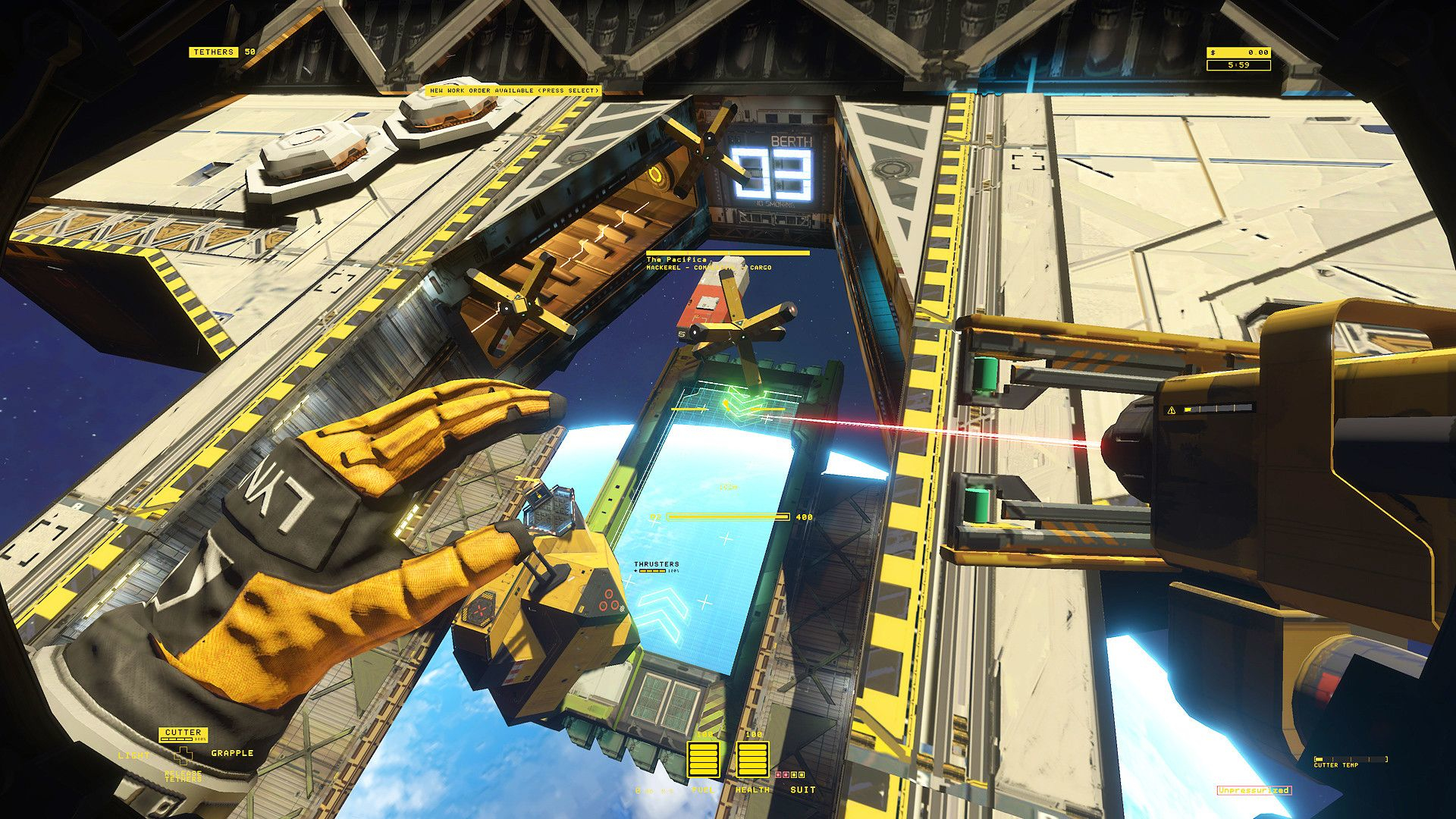
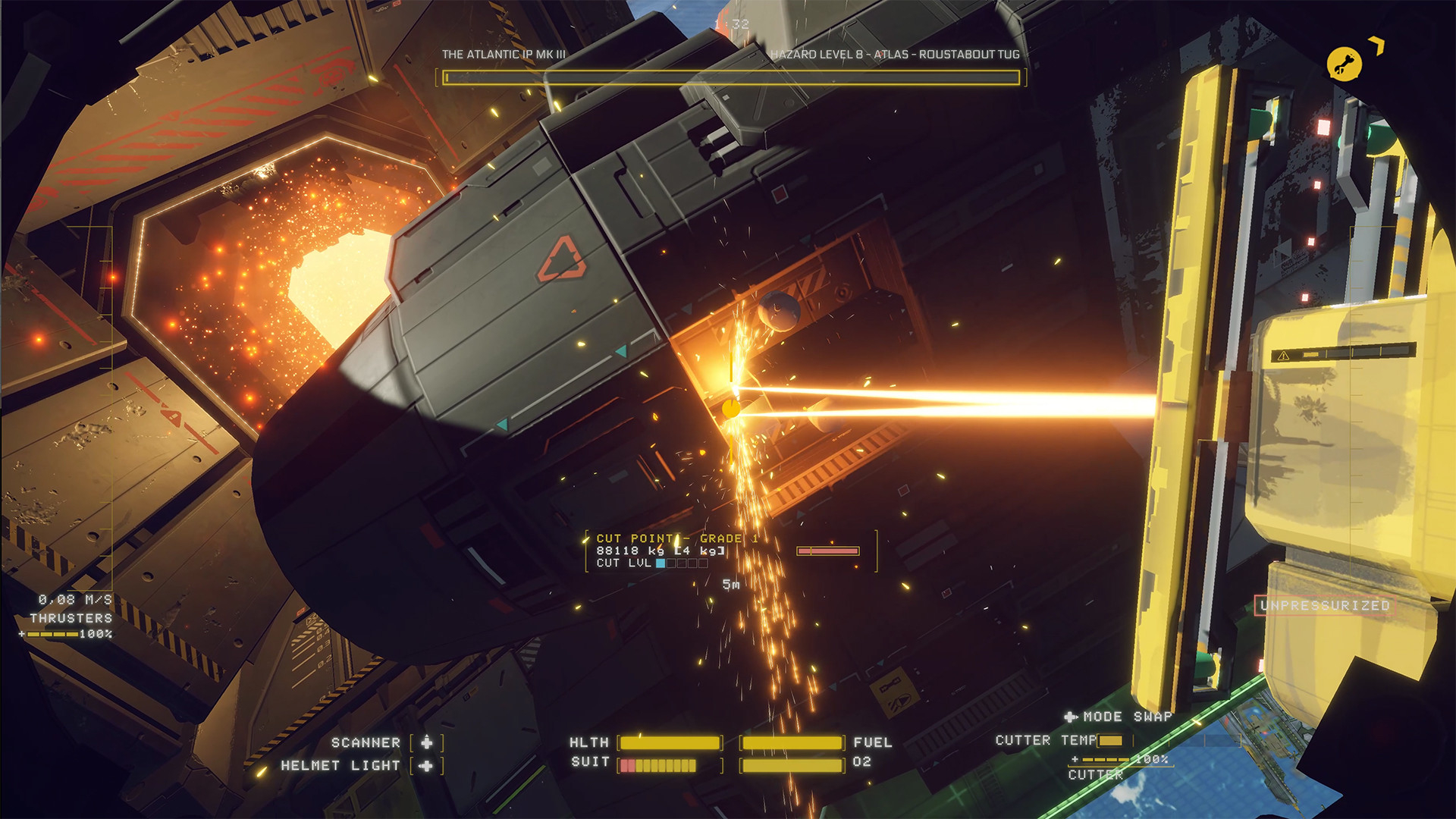
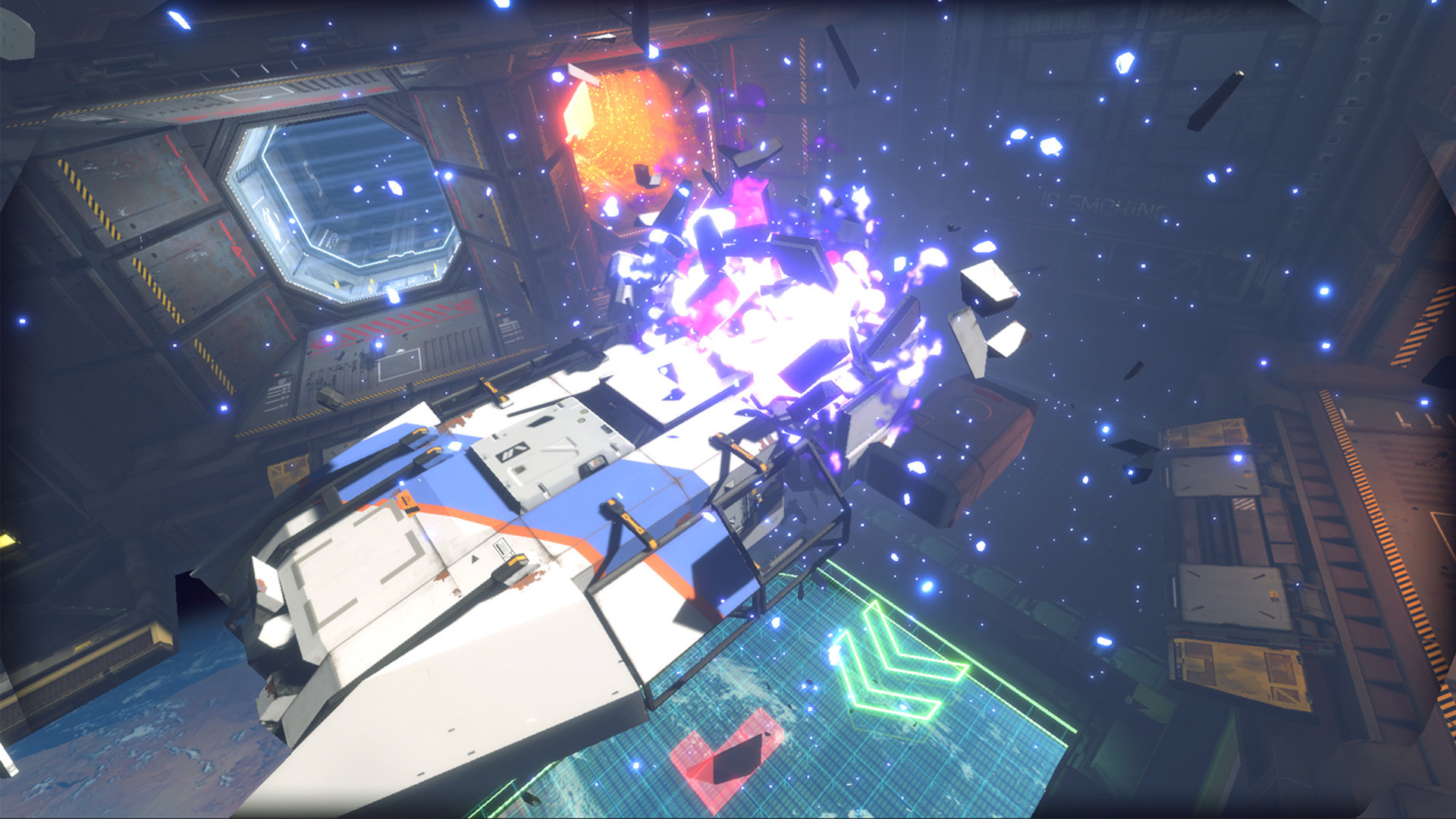
While Hardspace: Shipbreaker does an excellent job of capturing the dystopian perils of unchecked hypercapitalism, the real fun in this space game comes from carving up massive capital ships with space lasers and explosives.

Floating in zero gravity, players slice derelict spacecraft into salvageable chunks, while also contending with unruly physics, pressure, and profit margins. It's a compelling fantasy: orbital blue-collar labor, where yesterday's spacecraft become tomorrow's raw materials.

As satisfying as the simulation is, the real-world challenge of space debris removal is both more constrained and more urgent.

Screenshot from the 2020 space video game

(Image credit: Blackbird Interactive)

Christian Steimle is the Project Manager of the European Space Agency's (ESA) ClearSpace-1 mission, the first ever aimed at removing a piece of debris (in this case, a satellite called PROBA-1) from low-Earth orbit.

We spoke to him to get a sense of how actual space junk removal will happen in the future, and how it stacks up to the representations we see in sci-fi games like Shipbreaker.

The fantasy of orbital demolition

Screenshot from the 2020 space video game

(Image credit: Blackbird Interactive)

Games like Hardspace: Shipbreaker, ΔV: Rings of Saturn, and other space cleanup simulators tend to emphasize three core ideas: that debris can be dismantled piece by piece, that tools can safely cut or break apart structures in orbit, and that salvage is economically driven and scalable.

While they may be necessary assumptions to make for engaging gameplay, they diverge pretty significantly from current realities.

The main issue is fragmentation. Breaking apart a defunct satellite, even under the most carefully controlled and monitored conditions, risks generating thousands of high-velocity fragments. Some of those generated would be too small to feasibly track, yet large enough to destroy operational spacecraft, satellites, or stations. This is the nightmare scenario behind the Kessler syndrome, a cascading chain of collisions that could render entire orbital pathways unusable.

Screenshot from the 2020 space video game

(Image credit: Blackbird Interactive)

As Christian Steimle, Project Manager for the European Space Agency's ClearSpace-1 mission, explains, "The common agreement between all of these missions is that objects to be removed shall not be broken up or damaged… especially to avoid creating smaller debris which is more difficult to track."

That means that the core mechanic of many space salvage games (cutting or exploding things into smaller bits) is precisely what real missions are designed to avoid.

How real debris removal works

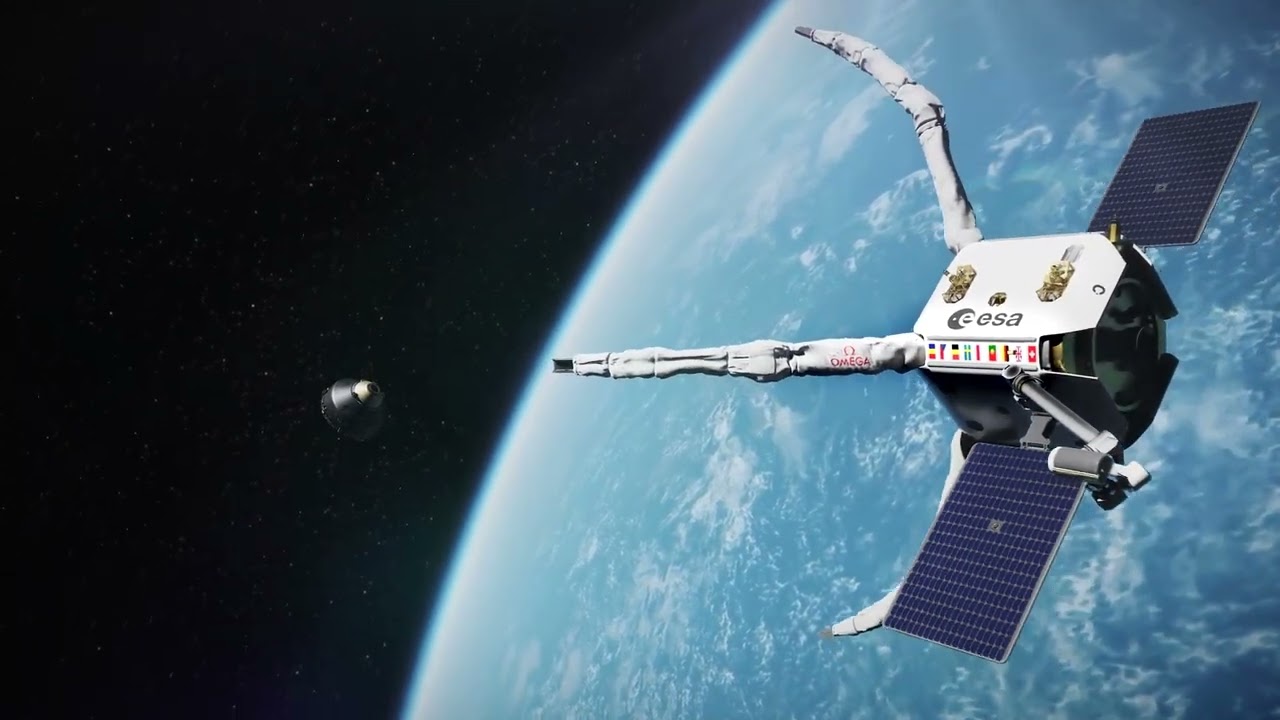
An artist's rendition of the ClearSpace-1 servicer approaching the space debris object during the ClearSpace-1 mission.

(Image credit: Clearspace)

ClearSpace-1 takes a more holistic approach. Instead of dismantling debris, the mission aims to capture PROBA-1 with as little initial damage as possible, then guide it to destruction in Earth's atmosphere.

"ClearSpace-1 will be launched into a position slightly below PROBA-1 by a dedicated launch," Steimle says. "After successful commissioning, the ClearSpace-1 servicer will inspect PROBA-1 in a number of fly-around manoeuvres."

These inspection passes are not just reconnaissance. They validate visual navigation systems and analyze how the target object is tumbling so the capture vehicle can respond appropriately.

The capture itself is a delicate operation. "The ClearSpace-developed capture system will encompass the client satellite, first forming a cage around PROBA-1, then closing the cage carefully to avoid damaging the client," Steimle explains.

Once secured, the combined spacecraft must be stabilized before any orbital change. Only then can the system lower its orbit, ensuring both objects burn up safely during re-entry. "ClearSpace-1 is designed to demise during re-entry, ensuring on-ground safety and disposal at the same time."

The process more closely resembles a surgical extraction of potentially hazardous material than scrapyard demolition.

What games get right

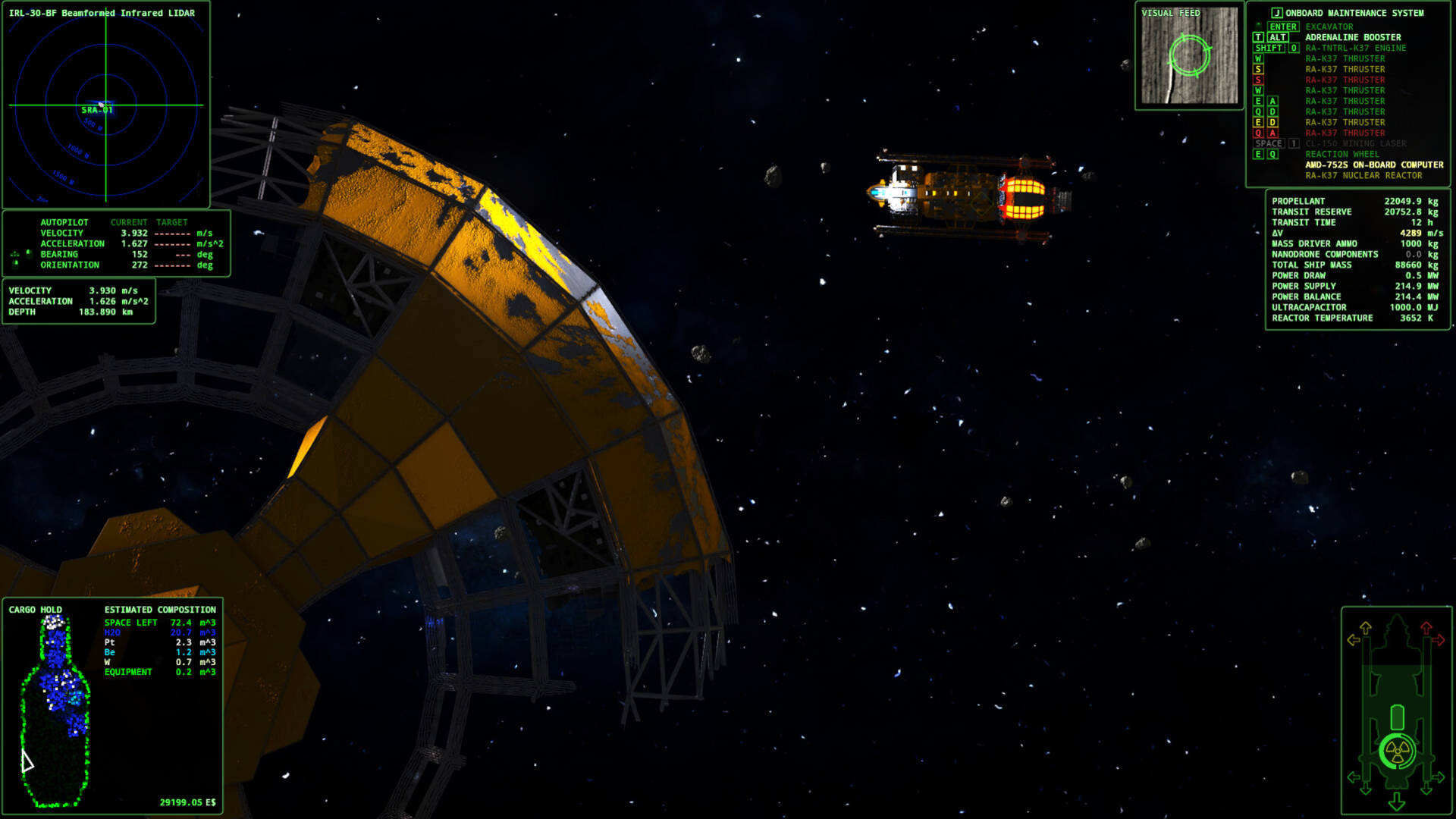
Screenshot from sci-fi debris clear-up and mining game

(Image credit: Kodera Software)

Despite their liberties, space cleanup games do hit the mark in a number of areas. One is the importance of orbital mechanics. Many games emphasize inertia, momentum, and the difficulty of stopping or redirecting large masses. Real active debris removal (ADR) missions face similar constraints, where even small velocity mismatches can lead to mission failure or damage to the capture vehicle or target.

The danger of uncontrolled motion is also well represented. Tumbling objects are among the hardest targets in space operations. Synchronizing with them requires precise, multi-axis propulsion and control systems. As Steimle notes, future vehicles must "synchronise [their] motion with a potentially tumbling space object and apply the proper control to detumble." One of the main challenges in games like Shipbreaker is avoiding being clobbered by moving debris, especially after you've detonated some explosives, or matching the speed of a rotating component long enough to cut it apart.

Third, specialization is key. Your toolkit and how you use it in games like Shipbreaker is key, and real missions rely on highly tailored capture systems. Each target may require a different approach, from robotic arms to nets, harpoons, or enclosure systems like ClearSpace's.

Where the simulations fall short

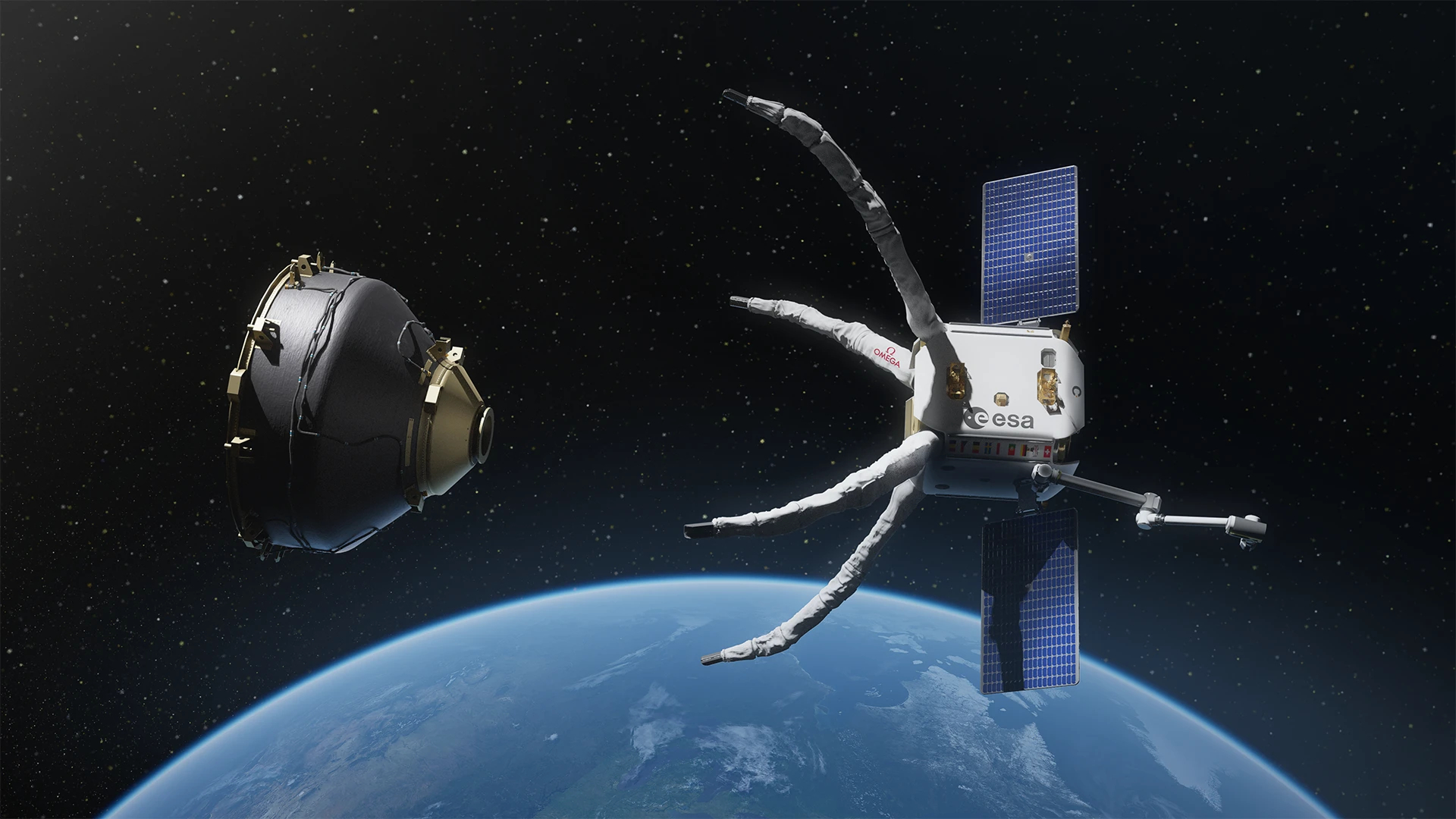
An artistic impression of the ClearSpace-1 servicer approaching the VESPA payload adapter in the world’s first active debris removal mission, commissioned by the European Space Agency (ESA)

(Image credit: Clearspace)

The biggest gap between games and reality isn't the tech, it's risk tolerance.

In games, mistakes are recoverable. In orbit, a single error can generate long-lived debris fields traveling at roughly 7–8 kilometers per second, turning tiny fragments into deadly kinetic weapons.

Games also tend to assume an eventual salvage economy, where materials are recovered and reused in space. While in-orbit manufacturing and recycling are active areas of research, current debris removal efforts aren't about profit. They're about mitigation.

"The overarching requirement is to preserve the space environment around the Earth for use by future generations," Steimle says. "Removing large objects before first collisions occur is key."

There are also orbital regime differences that games rarely address. In geostationary orbit (GEO), for instance, debris is not deorbited but moved to a higher "graveyard orbit" due to the prohibitive energy cost of re-entry. This kind of orbital zoning has no real analogue in most gameplay systems.

The future of orbital cleanup

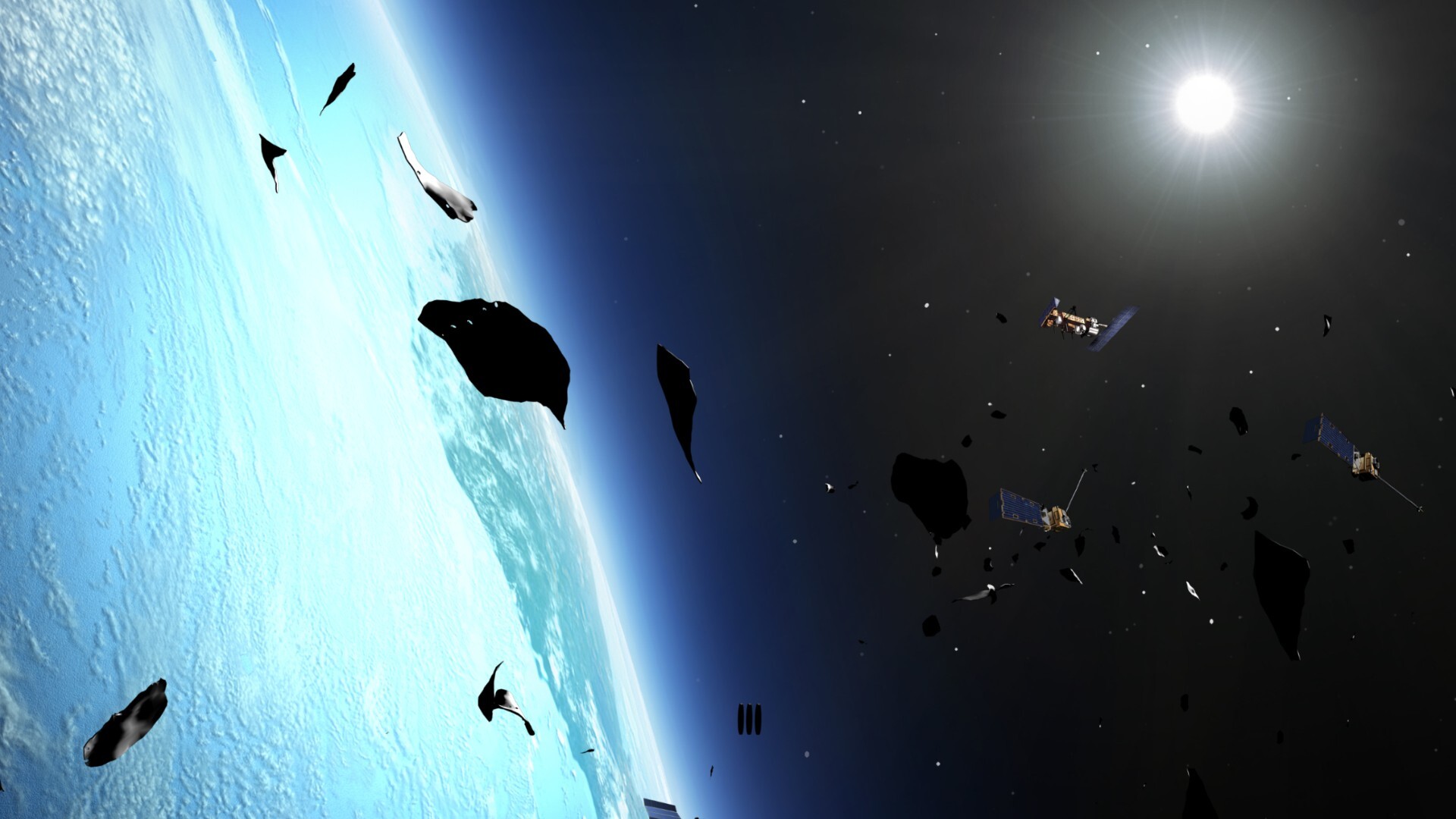
A look at orbital debris floating above Earth's atmosphere in space.

Illustration of space junk around Earth. Space junk consist of debris left in orbit from space missions: abandoned or broken satellites, satellite pieces, tools dropped by astronauts, or even space rocks captured into Earth orbit. (Image credit: Mark Garlick/Science Photo Library/Getty Images)

Looking ahead, the field of in-orbit servicing and debris removal is diversifying rapidly. Steimle says agencies and private companies across Europe, the United States and Japan are developing competing capture technologies and mission architectures.

Low-Earth orbit operations will likely favor agile, highly maneuverable vehicles capable of complex rendezvous and stabilization tasks. GEO missions, by contrast, will involve larger, less dynamic spacecraft performing long-duration servicing and relocation.

What remains consistent is the guiding principle: do no harm to the orbital environment. There's little room for the improvisational cutting and explosive decompression you see in most space salvage games. Instead, the future of orbital cleanup will depend on autonomy, precision guidance, and tightly controlled interactions with fragile, often unpredictable objects.

Fiction vs. necessity

Artist's illustration of space junk orbiting Earth.

An artist's illustration of space junk orbiting Earth. (Image credit: NASA)

Perhaps tellingly, most space cleanup games focus on the economy of salvage. You're tasked with generating profit, or feeding it into a progression system to purchase new tools or more efficient methods of destruction. In reality, the immediate challenge is more conservative and more urgent: preventing a runaway cascade of collisions that could close off access to space altogether.

If anything, the contrast highlights just how precarious Earth's orbital environment has become. The fantasy is not that we can break things apart in space; it's that we can continue to use space safely without cleaning up the vast constellations of trash we've already left behind.

Prolific Team Fortress 2 collector is selling his in-game case arsenal for an estimated $100,000 — 1.7 million items collected over 10 years are enough to fund a house purchase

Team Fortress 2 cases are worth pocket change. There are a few select cases that scale up to a few dollars, and even fewer with a market price in the double digits, but the vast majority of cases are worth a few pennies, no more than a Steam Trading Card. But one player, Vincent Stech, started collecting cases nearly a decade ago, racking up over 1.7 million cases across several Steam accounts. And now, he’s selling the whole collection, with an estimated value of $100,000.

Stech started collecting cases around Team Fortress 2’s last major update, in late 2017, outside of annual Halloween events that persisted through 2022. In order to accumulate so many cases, Stech largely automated the process, noting that he was careful not to upset the string-pullers at Valve as he amassed a stash of seemingly innocuous digital assets.

“That’s always been one of my biggest fears over the past decade, is one day they wake up like ‘hey, we don’t like what this guy’s doing,’” Stech told Tom's Hardware. “Because I know people with accounts with like 50,000 items that won’t load, and Valve won’t delete the items off their account, so they just can’t access Team Fortress 2 inventory ever again on their main account.”

Before understanding Stech’s process, however, we have to start with how Team Fortress 2’s in-game economy works. Like other Valve titles, you’re able to list items you earn in-game on the Steam Community Marketplace, selling them for real dollars or spending real dollars of your own to buy other items. That’s the normal way of doing things, but this in-game economy has grown beyond the bounds of Steam. A lot of transactions happen off the platform.

Backpack

(Image credit: Backpack)

Websites like backpack.tf and stntrading.eu take trading off of Steam, allowing you to use in-game crafting materials (along with keys) to buy and sell items. There are several reasons for these third-party marketplaces to exist, not the least of which is bot automation, which is against Steam’s Terms of Service. This exchange of in-game currency for items happens through trades on Steam, creating a separate marketplace where real money doesn’t change hands.

That’s not where Stech started. “Team Fortress 2 cases, they weren’t worth anything. They were… people were just giving them away because they take inventory spots,” Stech said. “People were deleting things, and so I decided to scoop them up.”

The problem Stech quickly ran into was inventory space. You can only have a few thousand items in your inventory (Stech told me 4,000 for Team Fortress 2, others say it’s around 2,000). Regardless of the number, it’s far too low a limit to amass nearly 2 million items, even with dozens of alternative accounts. Stech bypassed this issue by using the community marketplace. He listed the cases at very high prices where they were unlikely to sell. That’s because you can have tens of thousands of items on the market “before Steam gets really angry at you.” It effectively multiplies inventory space.

Team fortress 2 inventory

(Image credit: Vincent Stech)

As his inventory began to grow, Stech started automating the process of taking inventory and accepting trades, the latter of which was handled through a simple batch file. At first, Stech was just buying cases in bulk at relatively low prices, but the inventory escalated once he started digging into Steam’s local pricing in different regions.

“In Venezuela and, like, Russian [Rubles]... they are very weak currencies compared to the U.S. dollar,” Stech said. “What I found out is the lowest you can sell an item on Steam for us is three cents. For them, it’s a 10th of a penny. So I found this one guy in Venezuela… he would buy almost every case off the Steam Community Market for their extremely low price, and then he would sell it to me, and I would just give him, like, keys. And he was actually a doctor in Venezuela, and they don’t make much at all by comparison to, like, what $50 would be in USD. So a large majority of his income was case money.”

For context, $50 is equivalent to just over 37,000 bolívares (the official currency of Venezuela).

Stech’s first cash-out from Steam was $50 when he was around 16 years old. A few years later, he cashed out $2,500 to buy his first car. Stech stopped collecting cases about three years ago, and now, he’s looking to sell off the entire collection, which he estimates is worth around $100,000.

Selling this collection is no easy feat, however. For starters, Steam can break when trades get too large, necessitating hundreds of trades across dozens of different accounts. Further, Stech controls quite a large portion of known cases. “At one point, I calculated I had, like, 17% of all TF2 cases that are publicly known… I would have an extremely hard time selling it off because I am a large [portion] of the market. It’s like, you know, Elon Musk couldn’t dump a lot of his stock.”

Stech has, apparently, found a buyer that wants the whole collection, however, and the selling process is already underway. “The transaction has kind of started… he has admin privileges on the trade offers he sends to my accounts, so my accounts just automatically accept any trade from him,” Stech said. “An option was for him to just buy the accounts, but we know that is very bannable, so we haven’t done that.”

Stech says he expects to have the process complete around October. Just as he used case money to buy his first car, he says he plans to use the money from the sale as a down payment on a house.

❌