Normal view
James Webb Telescope Discovers Hidden Giant Planet in Famous Star System
Scientists Watch Chemistry Unfold Atom by Atom
- The Debrief
- No Sample-Return Required? Scientists Demonstrate Extraterrestrial Biosignature Detection Method Using the Mars Rover’s Existing Instruments
No Sample-Return Required? Scientists Demonstrate Extraterrestrial Biosignature Detection Method Using the Mars Rover’s Existing Instruments
An international team of researchers has demonstrated a new biosignature detection method for distinguishing between abiotic and biotic apatite mineral samples on Mars using instruments already aboard the Perseverance Rover, rather than returning samples to Earth.
The team said their mineral-based biosignature detection approach was successful in identifying samples with nearly 98% accuracy and allows for “deeper time” searches for signs of life, given the longer-lasting nature of minerals compared to biological materials. They also suggest their approach could broaden the capabilities of upcoming rover and life-hunting missions without adding new tools or sensors.
Advantages of a Mineral-Based Approach for Hunting Biosignatures
In a study detailing the team’s technique, Robert M. Hazen from the Carnegie Institution for Science and colleagues explained that searching for life and biosignatures beyond Earth “is a central objective of astrobiology.” They also note that this research is complemented by studies exploring the origin and early evolution of terrestrial life. Still, they add, although identifying biosignatures remains a key challenge, “robust mineral biosignatures remain limited.”
For example, most proposed biosignature missions focus on organic molecules or searching for fossils preserved in sedimentary environments or aquatic environments, including the subsurface oceans of some of the solar system’s moons. However, there are few, if any, proposed missions searching for signs of life preserved in mineral records, which the team notes “can retain records of biological activity over much longer geological timescales”
On Mars, NASA’s Perseverance rover has meticulously collected soil and rock samples deemed most likely to contain biosignatures. However, efforts to send a future sample-return mission to the red planet to retrieve samples are currently stalled and may never be completed.
According to the study authors, there are flight-ready instruments “already deployed on the “Perseverance” rover and planned for deployment on the “Rosalind Franklin” rover capable of searching for signs of life in place rather than returning the samples to labs on Earth. However, they add, “to fully exploit these mission-limited yet information-rich tools, it is essential to efficiently extract as much diagnostic value as possible from the data they generate.”
To search for mineral-based biosignatures, the team focused its research on Raman spectroscopy.
Using Instruments Already Aboard Mars Rovers to Search for Life
“Raman spectroscopy is particularly attractive because it provides bond-specific information on crystal structure and chemical substitution in a nondestructive manner,” they explain.
The team also notes that the Raman spectra acquired by the rover’s instruments “are highly comparable to those obtained under laboratory conditions,” increasing the robustness of any possible life signal.
“This consistency enables direct translation of laboratory reference datasets to planetary environments,” they write.
However, they add, Raman spectra from natural geological samples are often complex, including “overlapping vibrational modes, heterogeneous backgrounds, and chemistry-dependent band shifts.” Until now, this complexity has made interpreting samples based on individual spectral peaks or qualitative inspection inherently challenging.
“Identifying reliable biosignatures that can be detected by flight-ready instruments, such as Raman spectroscopy, remains a central challenge in astrobiology,” the researchers explain. “Developing robust mineralogical indicators of life therefore represents a critical and complementary approach for planetary exploration.”
Approach Distinguishes Abiotic and Biotic Features
To test their approach, the team focused on the mineral apatite. A ubiquitous phosphate, the team notes that apatite can be found “in terrestrial and extraterrestrial environments.” Although apatite is a major component of biological formations such as teeth and bones, it also forms naturally, providing an opportunity to search for biosignatures over much longer timescales if scientists can differentiate the two.
“Here, we integrate Raman spectroscopy with interpretable machine learning to distinguish biotic from abiotic apatite, a ubiquitous phosphate mineral in terrestrial and extraterrestrial environments,” the researchers write.
First, Hazen and colleagues compiled 331 Raman spectra samples. Critically, they included only specimens with known origin attributes: biogenic, abiogenic, or synthetic.
Next, they used this data to extract 21 “band-resolved features.” This was accomplished by training a random forest classifier to identify the “most diagnostic” features of each sample.
“Determining the origin of a sample involves assessing multiple independently varying features of a Raman spectrum, including band positions, widths, and relative intensities, the type of multivariate analysis well suited to machine learning,” the study authors explain.
After some comparative analysis, the team ultimately determined that a sample’s carbonate band and the width of the dominant phosphate band, “reflecting chemical composition and crystal structure, respectively,” were the strongest indicators of biological, natural, or synthetic origin.
After using their method to check the 311 samples, the team said the model successfully distinguished biotic from abiotic apatite “with classification accuracy exceeding 96%.” In fact, the team reported that their mineral-based biosignature detection method misidentified only one biotic apatite sample as abiotic and one abiotic sample as biological.
“Here, we show that biologically formed apatite can be distinguished from abiotic counterparts using interpretable machine learning applied to Raman spectra,” the study authors write.
Life Detection Across Diverse Planetary Environments
When discussing the potential implications of their new mineral-based biosignature detection approach, the team noted that their findings establish a “broadly applicable and mission-relevant strategy for deep-time archives and future planetary missions.” More broadly, the researchers note that their findings highlight the “growing importance of combining flight-ready analytical instruments with AI” to fully leverage datasets already captured by Mars rovers and other “in situ” planetary missions.
“As planetary exploration increasingly shifts toward autonomous decision-making and target selection, the integration of interpretable AI with mineralogical biosignatures offers a powerful and extensible framework,” they write.
Beyond mineral-based biosignature detection strategies, the research team notes that future life hunting missions will “increasingly rely on the joint interpretation of mineralogical and organic spectroscopic signatures.” These include on-board py-GC-MS measurements, infrared spectroscopy, luminescence, laser-induced breakdown spectroscopy, X-ray fluorescence, and “other analytic methods.”
Future approaches will increasingly rely on AI to analyze these disparate datasets, which the authors note will allow for biologically mediated patterns to be distinguished from natural or synthetic backgrounds “in a physically and chemically consistent manner.”
“In this context, such an integrative and interpretable framework provides a pathway toward autonomous, mechanism-informed life detection across diverse planetary environments, advancing the broader goals of planetary science in understanding habitability, biosignature preservation, and the coevolution of geology and biology,” the authors conclude.
The study “Mineral biosignature identification from Raman spectroscopy using machine learning” was published in PNAS Nexus.
Christopher Plain is a Science Fiction and Fantasy novelist and Head Science Writer at The Debrief. Follow and connect with him on X, learn about his books at plainfiction.com, or email him directly at christopher@thedebrief.org.

James Webb Space Telescope Finds a Hot Jupiter Roasting on a 111-Day Skewer
A New View of the Spectroscopic Universe
![]()
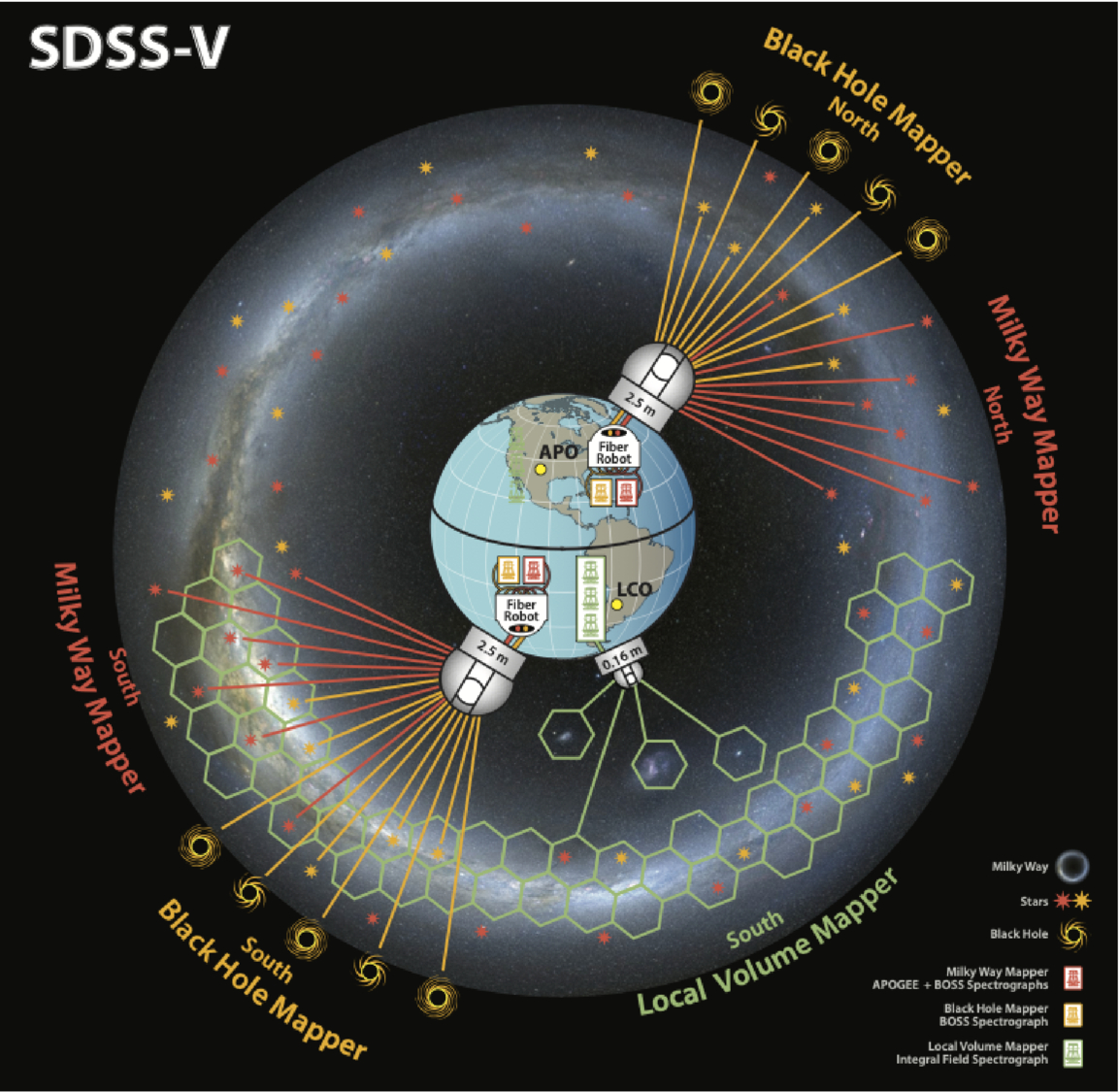
The Sloan Digital Sky Survey (SDSS) fundamentally changed the way modern astronomy research is done. This “grand and bold thing” is not frozen in a museum exhibit, however: instead, the SDSS telescopes and team have continued to iterate. The collaboration recently described the fifth generation of this groundbreaking survey in The Astronomical Journal.
Roots in History
Astronomy is now without question a “big data” science. While a lucky few researchers still occasionally travel to distant mountaintops to sojourn with the stars, most astronomers who can describe their work as “observational” rarely ever leave their laptops. Petabytes of historical data, including images, spectra, enormous simulation archives, and more, are available the instant one’s fingers touch a keyboard. As a result, the speed of discovery has increased exponentially, and the barriers to cutting-edge research have dramatically shrunk.
While no paradigm shift can be pinned to an exact date, astronomy’s turn towards the data-rich era arguably began in 1998 when SDSS first began collecting data. This was among the first of the “industrial” surveys that observed large swaths of the sky with electronic detectors and used automated pipelines for bulk data processing. In the years since, larger robotic telescopes have begun to mimic the SDSS strategy of “mowing the sky.” The latest of these successors, which itself may usher in another paradigm shift in terms of data volume and availability, is the soon-to-begin Legacy Survey of Space and Time at the Vera C. Rubin Observatory.While SDSS’s twin 2.5-meter telescopes (one in New Mexico and one in Chile, allowing the survey to observe the entire sky) are dwarfed by Rubin’s 8-meter mirror, there is still thrilling science to be done with these moderate-sized observatories. This is especially true after a series of upgrades to the spectrographs and thanks to a deep expertise in not only survey-style science, but also in project management and survey planning. In 2021, in the middle of COVID-19 delays and distancing requirements, the team began upgrades to their existing facilities and construction of a brand new telescope to kick off the latest survey, SDSS-V.
The Next Generation
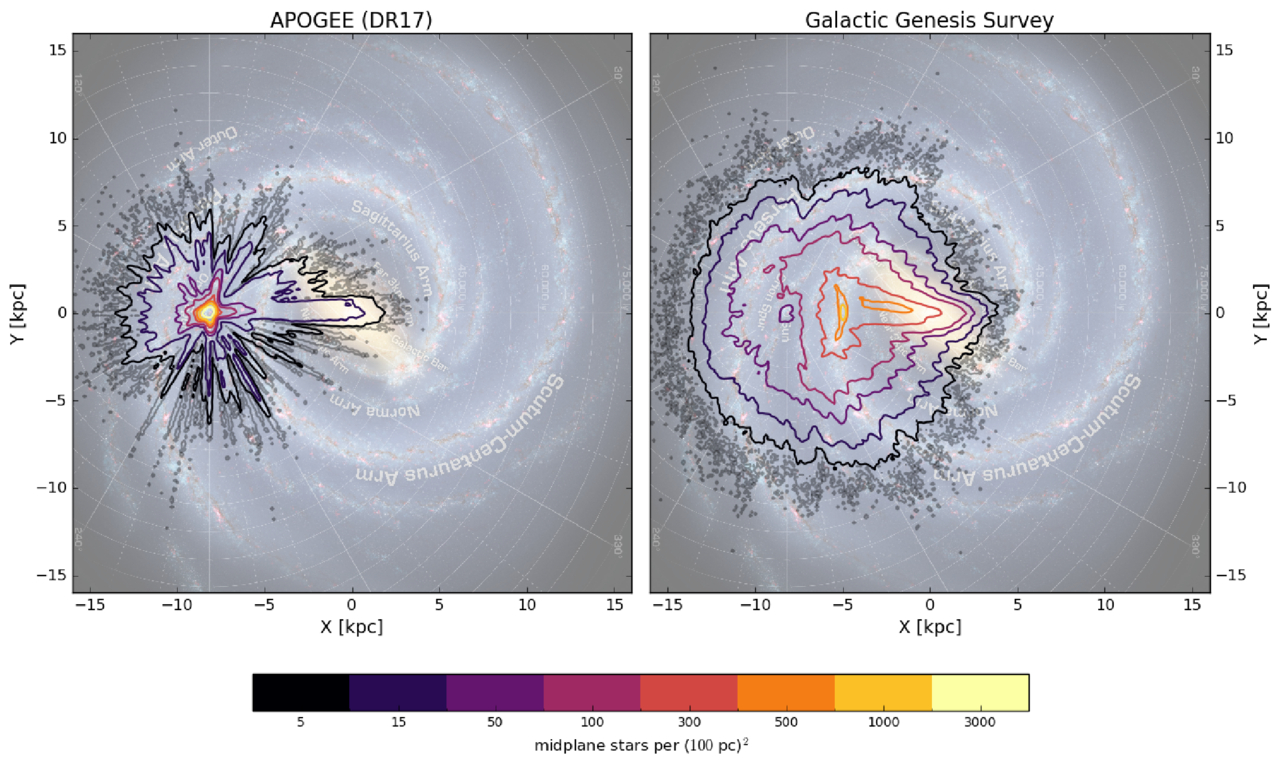
The density of target stars for the SDSS-V survey compared to a previous spectroscopic survey. Click to enlarge. [Kollmeier et al. 2026]
By the end of the survey, SDSS-V will have collected optical and near-infrared spectra for roughly 6 million objects spread across the whole sky, as well as time-series spectra from about a million of these sources. This dataset, which is unprecedented in both its spatial and temporal coverage, will allow researchers to probe questions ranging from how quasars evolve over time to how commonly young stars have brown-dwarf companions. Long since SDSS initiated the era of industrial survey astronomy, this latest publication shows how the survey continues to lead the way.
Citation
“Sloan Digital Sky Survey. V. Pioneering Panoptic Spectroscopy,” Juna A. Kollmeier et al 2026 AJ 171 52. doi:10.3847/1538-3881/ae0576
The post A New View of the Spectroscopic Universe appeared first on AAS Nova.
In or Out? Using Balmer Emission to Distinguish Inflows from Outflows
![]()
Galaxies pull in and pump out gas as they form and evolve, but distinguishing between the two directions is tricky. A recent study used emission lines and dust absorption to try to pin it down.
Inflow or Outflow?
Throughout their lives, galaxies churn gas into stars, stars fuse new metals, supernovae blow enriched material back out, and the cycle repeats. To maintain this process and sustain star formation, a galaxy must fuel up by accreting gas from its surroundings. However, catching galactic gas accretion has proven difficult — both emission from gas falling into the galaxy (inflows) and gas blown out by supernovae (outflows) can appear blueshifted or redshifted along an observer’s sight line, depending on if the flowing material is in front of or behind the galaxy.
While direct evidence of inflows has been identified in the Milky Way, only a few direct detections of inflowing gas in other galaxies exist due to the degeneracy of inflow and outflow emission-line features. Relying on additional absorption measurements, some studies have teased out inflows in other galaxies, but these star formation fuel pumps remain overwhelmingly evasive. The angle at which we observe a galaxy also limits our ability to detect both inflows and outflows, with face-on galaxies best oriented to detect these shifted spectral features. How then do we uncover this critical component of a galaxy’s evolution?
Breaking Through with the Balmer Decrement
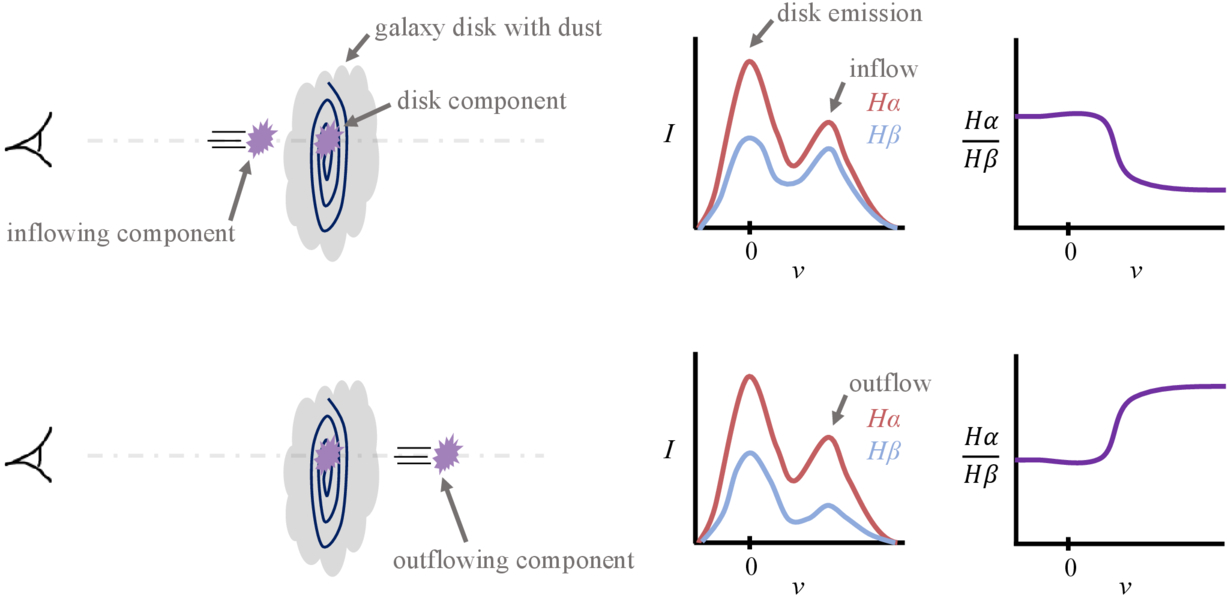
A diagram illustrating the degeneracy in emission spectra of galaxies, with the top panel showing an inflowing component and the bottom panel showing an outflowing component. While the Hα emission is similar, the Hβ emission is more affected by extinction due to dust in the galaxy’s disk, making it possible to identify inflow versus outflow based on the Balmer decrement. Click to enlarge. [Sitaram et al 2026]
Testing this idea, the authors performed a hydrodynamic simulation of an isolated, face-on Milky Way–like galaxy and tracked inflows and outflows over a billion years. From the simulation, they extracted mock spectral observations to measure the ionized gas motions and Hα and Hꞵ emission lines along different sight lines throughout the galaxy. Separating gas components into three categories — inflow, outflow, and in the disk — the authors found that dust extinction does cause noticeable differences in the Balmer decrement depending on a component’s location with respect to the disk.
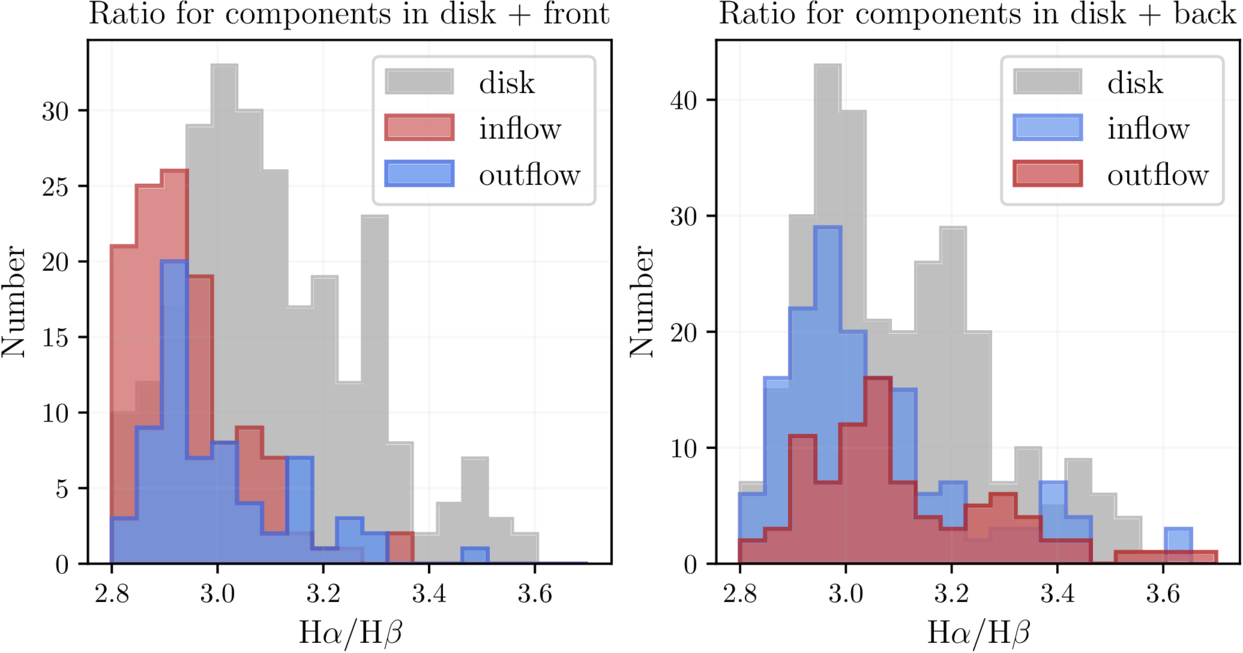
The distribution of Balmer ratios between different components in the interstellar medium and in front of the galaxy (left) and behind the galaxy (right). Material in front of the galaxy shows lower Hα/Hβ ratios. Click to enlarge. [Sitaram et al 2026]
Front Inflow Finds
What does this mean for identifying the inflows that provide galaxies with star-forming fuel? The authors reported that components in front of the galaxy — redshifted inflows and blueshifted outflows — tend to exhibit lower Hα/Hꞵ ratios compared to components behind the disk, aligning with the expectation that dust in the disk absorbs Hꞵ. In particular, these front inflows appear to be the most readily distinguished from gas in and behind the galaxy’s disk.
However, things get more complicated for gas behind the galaxy. Because the dust in the simulation is distributed nonuniformly in small clumps throughout the galaxy, it is difficult to distinguish between disk gas and gas behind the galaxy. While future simulations with improved dust modeling are necessary to resolve this issue, this study offers a useful method to distinguish inflow and outflow in dusty face-on galaxies.
Citation
“Identifying Signatures of Inflow onto Face-On Galaxies Using Balmer Decrement,” Meghna Sitaram et al 2026 ApJ 1001 87. doi:10.3847/1538-4357/ae5222
The post In or Out? Using Balmer Emission to Distinguish Inflows from Outflows appeared first on AAS Nova.
- AAS Nova
- Water Vapor Around a Sizzling Supergiant: High-Resolution Spectroscopy of B[e] Supergiant LHA 115-S 18
Water Vapor Around a Sizzling Supergiant: High-Resolution Spectroscopy of B[e] Supergiant LHA 115-S 18
![]()
Prior to exploding, massive stars advance through action-packed evolutionary stages that are exciting but often difficult to fully decipher. A recent study focuses on a unique late-stage star to better understand its properties and evolution.
To B[e] a Supergiant
Very Large Telescope Interferometer image of the circumstellar disk around the B[e] supergiant star HD 62623. The colors indicate the rotation of the disk with blue coming toward us and red going away. [ESO/F. Millour; CC BY 4.0]
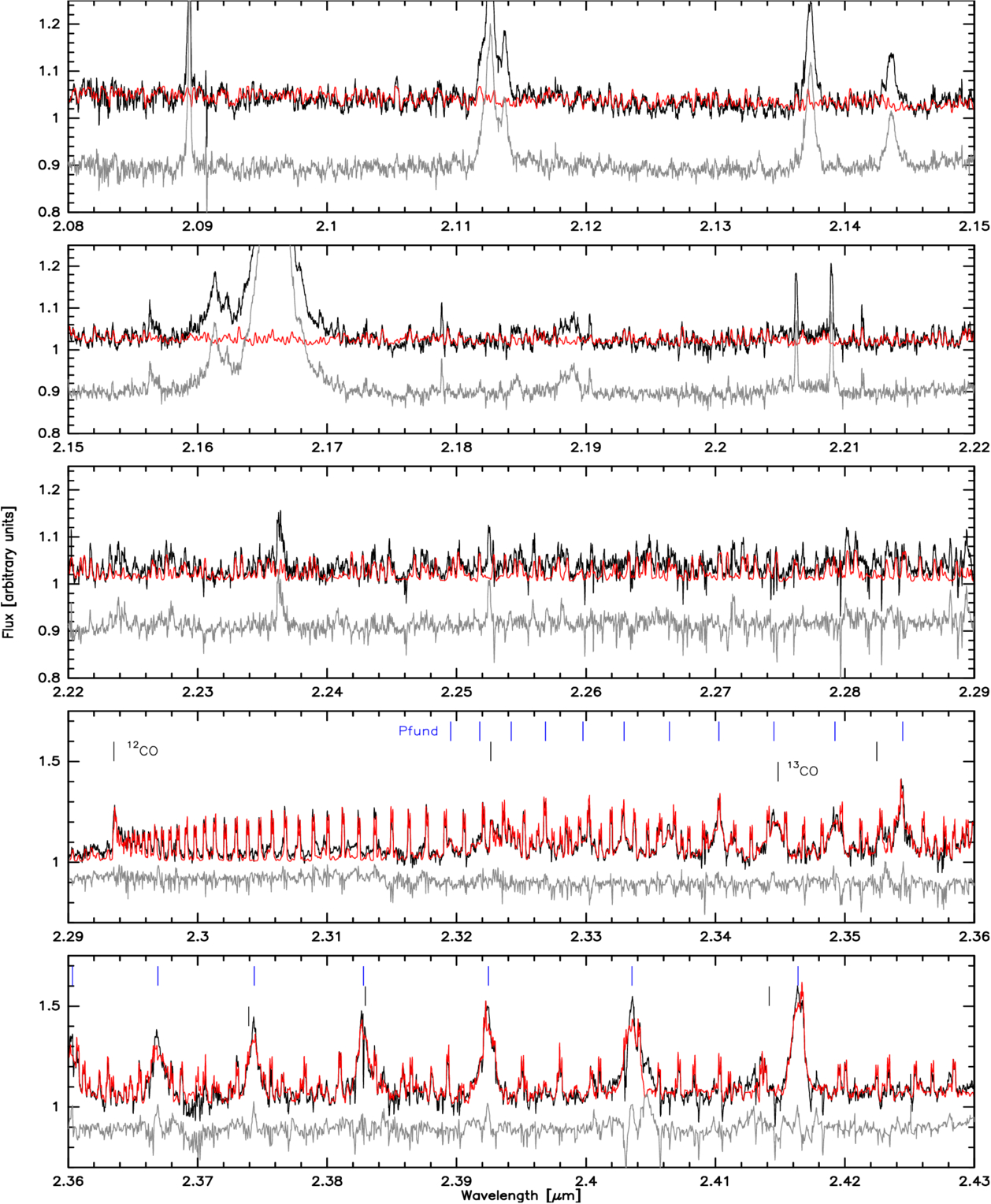
One particularly interesting B[e] supergiant, LHA 115-S 18, has been the subject of numerous studies but remains poorly constrained. The star exhibits significant variability both in brightness and emission features on timescales of days to years, and previous works have suggested that the star may have an as-yet unconfirmed binary companion. Molecular line emission from CO and TiO have been identified in LHA 115-S 18, indicating a circumstellar disk, but to date, water vapor emission has not been identified in any B[e] supergiant. Identifying more complex oxygen-bearing molecules like water will further reveal the physical properties and possible binary companion of LHA 115-S 18.
Identifying Emission in LHA 115-S 18
To characterize the emission around LHA 115-S 18, María Laura Arias (Institute of Astrophysics La Plata; National University of La Plata) and collaborators obtained high-resolution near-infrared spectroscopy of the star using the Immersion Grating Infrared Spectrometer on the Gemini South telescope. From the high-resolution spectra, the team identified several atomic emission lines indicative of the star’s gaseous envelope, revealing the structure of material around the star: an inner hot disk of ionized material and an outer cool disk of neutral material. Looking at molecular emission from carbon monoxide — a tracer of both gas motions and stellar age — the authors confirmed the presence of a rotating ring of gas around LHA 115-S 18 and determined that the star is an evolved, post–red supergiant object.
Spectrum of LHA 115-S 18 (black) with the model spectrum composed of water vapor (red, top three panels) and water vapor, CO, and hydrogen emission (red, bottom two panels) overplotted as well as residuals (gray). [Arias et al 2026]
Sustaining a cool disk around such a hot star indicates that the circumstellar environment around LHA 115-S 18 is complex and likely shaped by binary interaction. With emission features characteristic of both cool and hot evolved stars, this particular B[e] supergiant presents itself as a unique object holding critical insights into the late-stage evolution of massive stars. Further multiwavelength observations of LHA 115-S 18 will constrain its potential binarity and reveal a possible evolutionary link between B[e] supergiants and other late-stage evolutionary phases of massive stars.
Citation
“High-resolution Near-Infrared Spectroscopy of the B[e] Supergiant LHA 115-S 18: Discovery of Hot Water Vapor Emission,” María Laura Arias et al 2026 ApJL 1000 L49. doi:10.3847/2041-8213/ae524a
The post Water Vapor Around a Sizzling Supergiant: High-Resolution Spectroscopy of B[e] Supergiant LHA 115-S 18 appeared first on AAS Nova.
Characterizing the Atmosphere of Exoplanet WD 0806b with JWST
![]()
Orbiting a white dwarf, the exoplanet WD 0806b is the subject of a recent study using JWST to measure the atmospheric conditions governing the planet.
Directly Imaged Exoplanet WD 0806b
Most of the 6,000 and counting exoplanets discovered thus far have been detected due to their impacts on their host star — passing in front of the star and causing it to dim, or gravitationally tugging on the star and causing it to wobble. On rare occasions, though, astronomers have been able to catch the exoplanet itself through direct imaging. Directly imaged exoplanets offer key insights that cannot be obtained through indirect detection methods. Luminosity measurements and spectral emission features allow astronomers to more directly measure planet mass, radius, and composition otherwise inferred from the host star.
NIRCam image showing host star WD 0806 circled in orange and the location of exoplanet WD 0806b marked by the orange arrow. [Lew et al 2026]
WD 0806b’s Atmospheric Abundances from JWST
Aiming to characterize the physical properties and atmospheric composition of WD 0806b, Ben W.P. Lew (Bay Area Environmental Research Institute; NASA Ames Research Center) and collaborators used JWST’s Near-Infrared Camera (NIRCam) and Near-Infrared Spectrograph (NIRSpec) to obtain high-resolution imaging and spectroscopy of the exoplanet. Combining these observations, prior lower-resolution observations, and evolutionary planet models, the authors estimated the physical properties of WD 0806b including mass, radius, surface gravity, and effective temperature.
From the derived physical properties, the authors modeled the NIRSpec spectrum to estimate molecular abundances and elemental abundance ratios in the atmosphere of WD 0806b. They obtained measurements of multiple molecules including carbon dioxide, carbon monoxide, and ammonia; these molecular abundances offer the opportunity to test chemical equilibrium and disequilibrium as well as eddy diffusion, or bulk mixing, in the planet’s atmosphere. The authors developed a novel chemical analysis framework to determine how bulk mixing varies with altitude in WD 0806b and reported the first observational evidence that mixing becomes weaker at higher altitudes in exoplanet atmospheres. This result points to the need for future studies exploring the impact of these chemical processes on spectra and photometry, which are essential to characterizing cold giant planets.This study highlights how high-precision JWST data can reveal a rich collection of atmospheric conditions, chemical composition, and physical processes occurring in cold giant planets. With such a wide orbit from its host white dwarf, WD 0806b serves as an interesting case study for how giant planet composition may reflect the formation and evolutionary history of the overall system. Future observations of and comparisons to similarly cold giant planets will further uncover how atmospheric characterization may fit into our understanding of exoplanets and their histories.
Citation
“JWST Spectral Retrieval of Cold Directly Imaged Planet WD 0806b and the First Measurement of Altitude-dependent Kzz in Exoplanet Atmospheres,” Ben W.P. Lew et al 2026 AJ 171 227. doi:10.3847/1538-3881/ae4747
The post Characterizing the Atmosphere of Exoplanet WD 0806b with JWST appeared first on AAS Nova.
Jupiter’s Atmosphere Holds Steady
![]()
Jupiter’s upper atmosphere is hundreds of degrees hotter than it has any right to be, and for decades astronomers could only study it in brief, seemingly chaotic glimpses. New global maps built from years of observations have finally revealed the big picture — and it is surprisingly calm.
Order from Chaos
Although we’re well acquainted with Jupiter, having sent eight spacecraft on close passages and lived with it dominating the night sky for millennia, some of its simplest characteristics continue to puzzle us. For example, high above Jupiter’s cloud bands, temperatures exceed 800 K — far hotter than we’d expect given the meager sunlight that reaches that distance. Astronomers have long suspected that this excess is deposited by energy from the planet’s brilliant polar auroras, but previous observations provided only localized, sporadic snapshots that collectively painted a confusing picture of an ever-changing landscape.
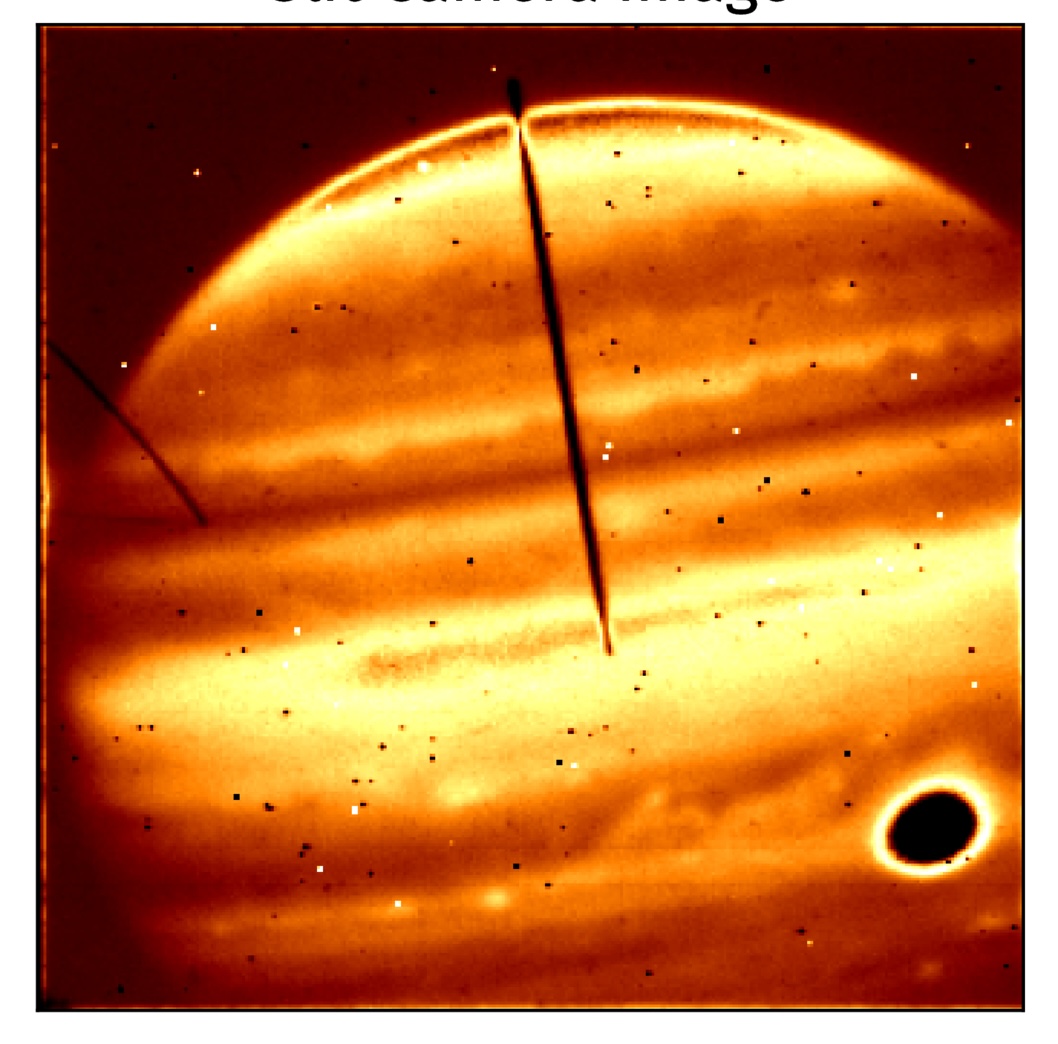
Jupiter as seen by the slit camera on the Keck telescope during one of the team’s observations. The spectrograph slit is the dark vertical band stretching from the equator to the north pole, and the Great Red Spot appears in black at the lower right. [Adapted from Roberts et al. 2026]
Consistency is Key
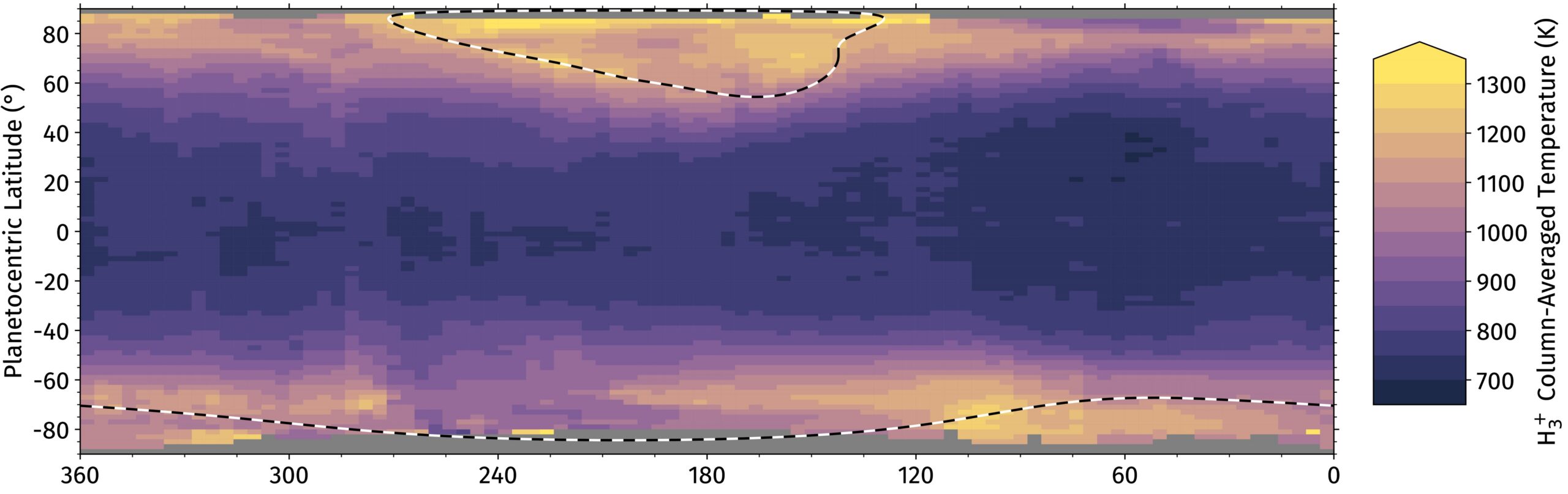
A look at how the maps evolved over time revealed striking order: the spatial patterns remained nearly constant, and the temperatures barely changed even over years. In general, the team noted that temperature decreases smoothly from the auroral regions near the poles (~1,150 K) to the equator (~750 K) at every longitude, and that although there is some night-to-night temperature variation, things stay remarkably steady over the years-long baseline.
A map of the average temperature of Jupiter’s upper atmosphere, as measured by the new Keck NIRSPEC data. Click to enlarge. [Adapted from Roberts et al. 2026]
The conclusion that the upper atmosphere is complex but steady has implications beyond just Jupiter, as the team notes that JWST has already observed spatial patterns in the temperatures of the upper atmospheres of both Uranus and Neptune. As Roberts and colleagues note, “similar physical mechanisms could give rise to comparably stable structures” on those distant ice giants, meaning this analysis could ground our understanding of the upper atmospheres of giant worlds across the solar system.
Citation
“A Global View of Jupiter’s Upper Atmosphere Through H3+,” Kate Roberts et al 2026 ApJL 998 L13. doi:10.3847/2041-8213/ae3c9b
The post Jupiter’s Atmosphere Holds Steady appeared first on AAS Nova.
Abundant but Ambiguous: Understanding the Atmospheres of Sub-Neptunes with JWST
![]()
Recent JWST observations of exoplanet GJ 3090b reveal intriguing qualities of one of the galaxy’s most abundant planet types.
Many Sub-Neptunes, Many Mysteries
Over the past 30 years, astronomers have discovered thousands of distant worlds. Within the growing exoplanet population, the sub-Neptune — a planet with a mass and radius between Earth’s and Neptune’s — has emerged as the most common planet type in the Milky Way. However, the composition and structure of these planets are not yet well understood. While sub-Neptunes orbiting Sun-like stars seem to separate into a small, rocky population and a larger, gaseous population, sub-Neptunes around cooler, lower-mass stars do not show such a clear division.
For sub-Neptunes around Sun-like stars, the population separation between rocky and gaseous planets is inferred from a dearth of planets with radii between 1.8 and 2 times the Earth’s radius (a gap dubbed the “radius valley”). This gap provides hints to the formation and evolutionary processes that shaped the planet, but with a murkier radius valley for sub-Neptunes around lower-mass stars, their origins are more unclear. Recent observations of sub-Neptunes have revealed a diverse range of atmospheric compositions, further bolstering the need to continue exploring the galaxy’s most prevalent planet type.
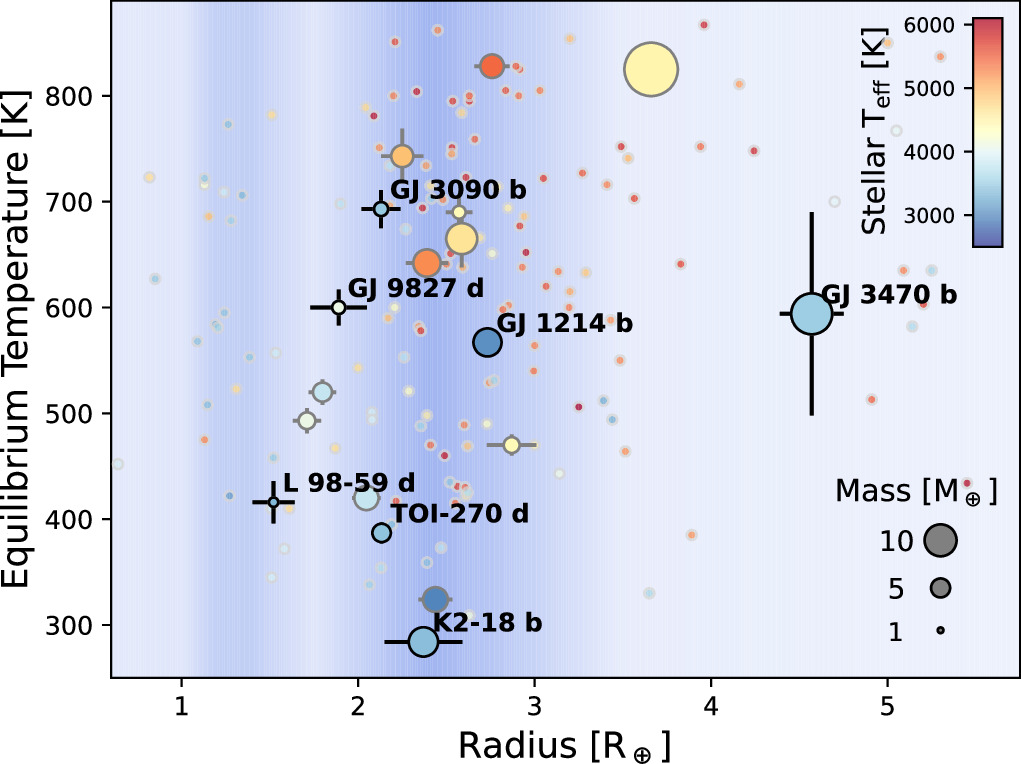
Planet equilibrium temperature versus planet radius plot showing where GJ 3090b falls with respect to the general sub-Neptune population. Click to enlarge. [Ahrer et al 2025]
JWST Observations of GJ 3090b
Aiming to add to the sample of well-characterized sub-Neptune atmospheres, Eva-Maria Ahrer (Max Planck Institute for Astronomy) and collaborators collected JWST spectroscopy of the sub-Neptune GJ 3090b. Previously discovered with the Transiting Exoplanet Survey Satellite (TESS), GJ 3090b orbits a late-type, low-mass star and has a radius that places it at the outer edge of the radius valley.
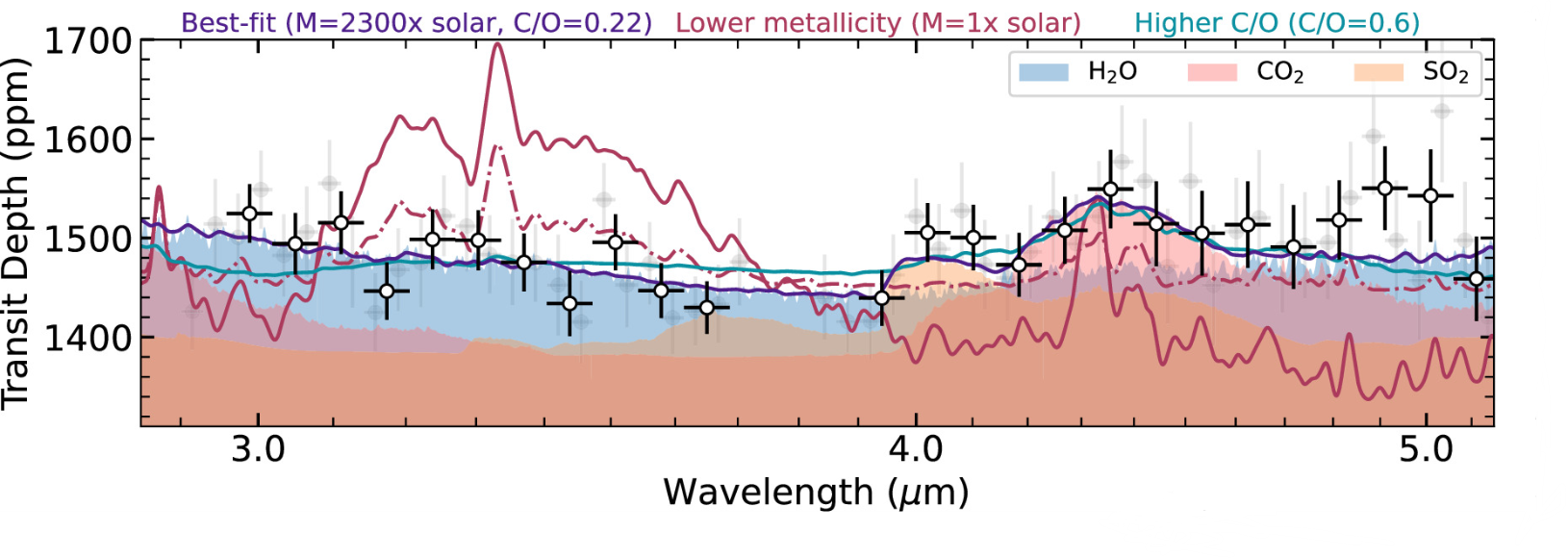
With the JWST spectroscopy, the authors search for a helium signature that traces how hydrogen and helium may be escaping the planet’s atmosphere. The authors detect a low-amplitude helium signature that suggests GJ 3090b has a metal-enriched atmosphere that slows down mass loss and weakens the helium feature. Additionally, the spectrum reveals the presence of heavy molecules like water, carbon dioxide, and sulfur dioxide, which points again to the planet’s atmosphere being metal enriched. What does this composition tell us about the planet?
JWST spectrum of GJ 3090b’s atmosphere. The spectrum is best fit with a high-metallicity model. Click to enlarge. [Modified from Ahrer et al 2025]
Exploring Metal Enrichment and Planet Structure
Given the makeup of GJ 3090b’s atmosphere, the authors explore various theoretical models to understand why this planet may have a high-metallicity atmosphere. If the planet formed past its system’s snow line, where it is cool enough for water to freeze, the planet could have accreted water ice laced with enriched material. As the planet migrated inwards, the heat from the star melted the ice, allowing the enriched material to escape into the atmosphere.
Alternatively, sub-Neptunes close to their host stars are expected to lose significant amounts of hydrogen and helium due to hydrodynamic effects. When these light elements escape the atmosphere, the remaining gas contains a higher fraction of metals as it is now less diluted with hydrogen and helium. Additionally, using structure models, the authors predict that GJ 3090b has a well-mixed core of rock and ice, further supporting the idea that it formed farther out where water could freeze and then migrated inward.
However, further high-resolution observations are needed to better constrain the true abundances of the metals in GJ 3090b’s atmosphere, which leaves the planet’s history and structure still a little hazy. With JWST opening the window for detailed atmospheric studies of exoplanets, more observations will allow astronomers to understand and characterize planets across the Milky Way.
Citation
“Escaping Helium and a Highly Muted Spectrum Suggest a Metal-enriched Atmosphere on Sub-Neptune GJ3090b from JWST Transit Spectroscopy,” Eva-Maria Ahrer et al 2025 ApJL 985 L10. doi:10.3847/2041-8213/add010
The post Abundant but Ambiguous: Understanding the Atmospheres of Sub-Neptunes with JWST appeared first on AAS Nova.