De acordo com o jornalista da Bloomberg, Mark Gurman, a Apple teria cogitado (e posteriormente descartado) um recurso bastante interessante para o Apple Upgrade: a transferência dos dados do iCloud do usuário para o novo aparelho antes mesmo de ele ser enviado para o assinante.
Revelada na última edição da sua newsletter “Power On”, a ideia — descrita como um recurso premium — seria especialmente bem-vinda para as trocas anuais de iPhones realizadas durante o período do serviço adquirido, livrando o usuário de ter que configurar seu aparelho ao ligá-lo pela primeira vez.
The Apple Upgrade feature that never made it past the drawing board: a so-called white-glove component, where your new device each year would arrive at home ready to go, preloaded with all of your data via your iCloud backup. Here’s what happened. https://t.co/PZ4r8jEgvG
O recurso de atualização da Apple que nunca saiu do papel: um componente supostamente premium, em que seu novo dispositivo chegaria à sua casa a cada ano, pronto para uso, com todos os seus dados pré-carregados por meio do backup do iCloud. Veja o que aconteceu.
Essa ideia, no entanto, esbarrou em um obstáculo importantíssimo: a privacidade do usuário, já que dados do iCloud só poderiam ser acessados pela Apple nos casos em que a Proteção Avançada de Dados (Advanced Data Protection) com criptografia de ponta a ponta não foi ativada. Isso, é claro, não inclui o Reino Unido, onde o recurso não pode ser mais acessado.
Como lembrou o 9to5Mac, o acesso remoto às definições de sistema de um iPhone obtido por meio do Apple Upgrade poderia ser associado ao Presto, um sistema proprietário de gerenciamento de atualizações baseado em hardware (empurrado especificamente por um Mac mini com um sistema customizado) para realizar o update de iPhones lacrados.
Anunciado no mês passado, o Apple Upgrade oferece o leasing de Apple Watches, iPhones, iPads e Macs para clientes dos Estados Unidos, com planos de até 36 meses dependendo do dispositivo escolhido.
De acordo com Mark Gurman, a Apple já planeja pelo menos três gerações para os seus iPhones dobráveis, estreando a sua resposta ao segmento com o anúncio do “iPhone Ultra”, previsto para ocorrer no mês que vem.
Um diferencial para as próximas gerações dos celulares dobráveis da Apple já colocado em pauta pelo jornalista da Bloomberg na edição mais recente da sua newsletter “Power On” é o aumento no tamanho das telas — tanto a interna quanto a externa, que deverão contar inicialmente com dimensões de 7,8 e 5,5 polegadas, respectivamente, segundo os rumores —, embora não tenha ficado claro se as mudanças ocorrerão na segunda ou na terceira versão do “Ultra”.
Imagem: fpt.
Cotado para ser lançado ainda este ano, o aparelho que marcará a estreia da Apple no mercado dos smartphones dobráveis e deverá contar com o chip “A20 Pro”, o modem “C2”, a volta do Touch ID (que deverá ser posicionado na lateral do aparelho, no botão liga/desliga) e um preço inicial cujas especulações flutuam entre US$2.000 e US$2.500.
Na avaliação de Gurman, o dobrável marcará a primeira mudança de design revolucionária dos iPhones, que passou por pequenas mudanças visuais ao longo dos anos, mas manteve essencialmente o mesmo formato desde 2007.
Em sua tradicional newsletter “Power On”, o jornalista Mark Gurman (da Bloomberg) tratou dos planos da Maçã para futuro do Apple Watch. A linha poderá passar por reformulações em seu formato, expandindo a variedade de modelos ofertados — mas essa mudança não estaria no horizonte de curto prazo.
Ainda que o bem-estar seja um pilar basilar do segmento de vestíveis (tanto por parte da Apple quanto na concorrência), a equipe de design industrial da empresa trabalha em novos produtos que funcionem como a resposta da Maçã à expansão da gama de dispositivos vestíveis disponíveis no mercado, sejam os anéis inteligentes ou as pulseiras sem tela.
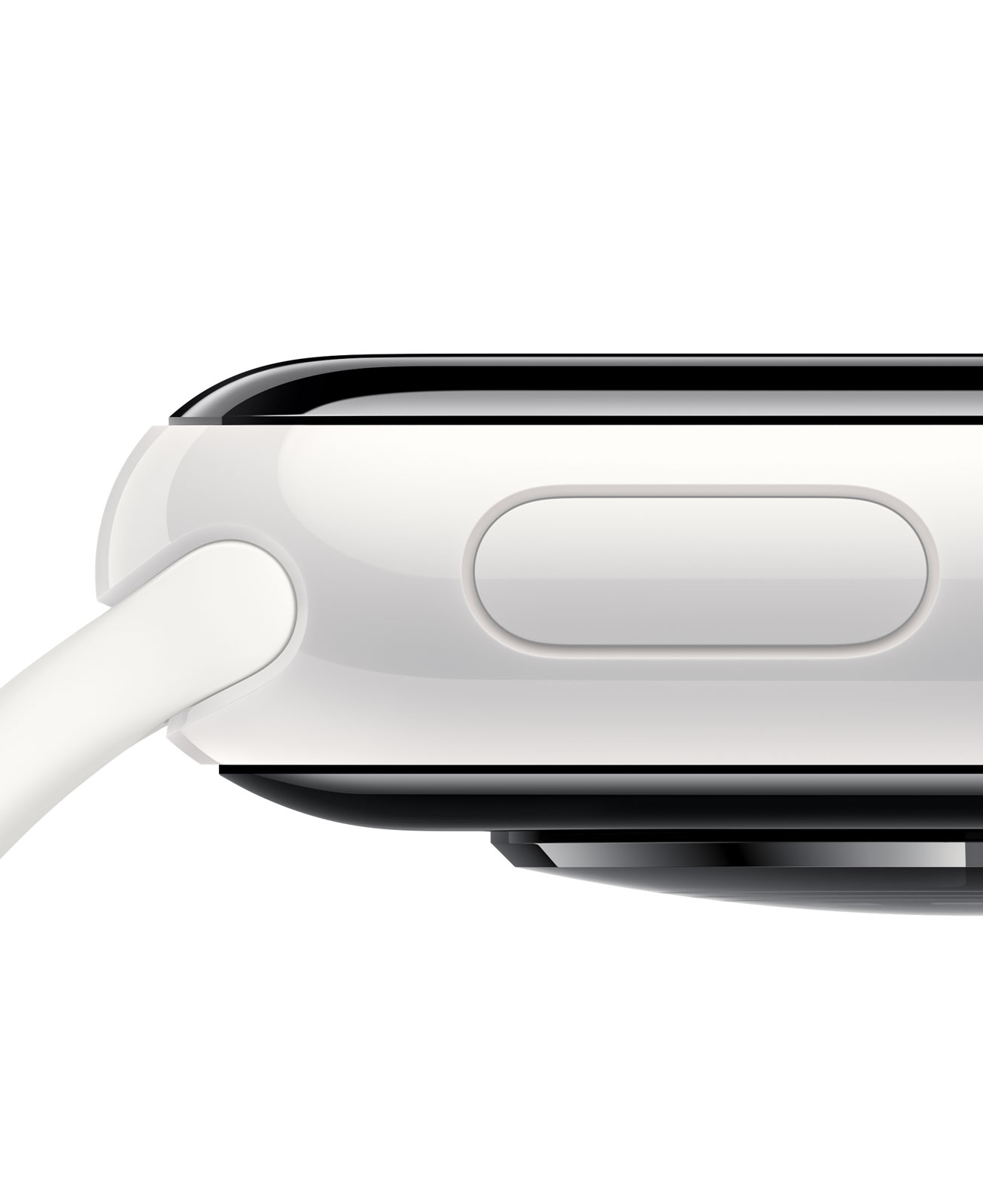
Gurman salientou, no entanto, que essas mudanças poderão “levar tempo” para chegar ao consumidor final, e que atualizações modestas deverão definir o tom da linha durante pelo menos os próximos dois anos; ele reiterou ainda que a Apple planeja reintroduzir o acabamento em cerâmica — ou agora em setembro, com o “Apple Watch Series 12” e o “Ultra 4”, ou com os modelos que deverão ser apresentados no ano que vem —, além de apresentar melhorias significativas de performance.
Quem lidera a frente de ampliação dos vestíveis da Apple é Eddy Cue, que assumiu o comando do setor de saúde no ano passado. O executivo parece estar atento às iniciativas de empresas como a WHOOP ou a Oura, que redefiniram a relação dos wearables com a integração de recursos de inteligência artificial (IA) — o que, dada a expansão da IA no ecossistema da Maçã, poderá ser um caminho para os diferenciais em termos de software.
Os planos para o futuro, de acordo com o jornalista, envolvem variações de wearables sem telas, que deverão ser ainda mais acessíveis do que o Apple Watch SE, além de variantes que extrapolam a linha Ultra e Hermès. Gurman mencionou que, embora acredite que a hipótese nunca se transformará em um lançamento real, a Apple cogitou ainda a implementação de telas redondas.
Ao fazer um breve passeio pela trajetória do Apple Watch, ele destacou que as suas evoluções, assim como as do iPhone, partiram (e seguem partindo) de mudanças incrementais, sem romper com o formato do relógio apresentado por Tim Cook em 2014. Ao traçar um paralelo com a trajetória dos iPhones, a ampliação dos formatos do Apple Watch lembra a expectativa de que o “iPhone Ultra” redefina o paradigma de formato dos celulares da Maçã.
Apple Watch Ultra 3
Cores: natural ou preto Pulseiras: loop Alpina, loop Trail, Oceano ou estilo milanês de titânio
Material: alumínio ou titânio Cores: cinza-espacial, prateado, ouro rosa, preto brilhante, natural, dourado ou ardósia Tamanho: 42mm ou 46mm Conectividade: GPS ou GPS + Cellular Pulseiras: esportiva ou estilo milanês
NOTA DE TRANSPARÊNCIA: O MacMagazine recebe uma pequena comissão sobre vendas concluídas por meio de links deste post, mas você, como consumidor, não paga nada mais pelos produtos/serviços usando os nossos links de afiliado.
Apple is already making plans for its third-generation foldable iPhone, with launch expected as early as 2028, according to Bloomberg's Mark Gurman.
Writing in his latest "Power On" newsletter, Gurman said the first foldable iPhone is about to get what he called the device's first "truly revolutionary design change" this year, and that Apple already has a roadmap extending two generations beyond it. A second-generation model is planned for 2027, Gurman says, with a third version following as early as 2028.
The third-generation foldable will apparently feature slightly larger displays on both the inside and the outside compared to its predecessors, though he did not provide specific screen sizes. The first foldable iPhone is expected to launch with a 7.8-inch inner display and a 5.5-inch cover display, so any increase would build on those dimensions. This is the first report to lay out plans for a third-generation model, extending Apple's foldable roadmap a year beyond where it previously stood.
The first foldable iPhone is expected to arrive this year with an ultra-thin design, Touch ID instead of Face ID, the A20 chip, C2 modem, and the moniker "iPhone Ultra," at a price around or above $2,000. The second-generation foldable, meanwhile, is reported to have already received the go-ahead for development, according to the Weibo leaker known as "Digital Chat Station," who said the "iPhone Ultra 2" project has been formally approved and will likely reuse the first-generation model's display. That model is expected to launch in fall 2027 alongside the 20th-anniversary iPhone.
Apple is re-evaluating the Apple Watch lineup and considering a host of radical new designs, according to Bloomberg's Mark Gurman.
In today's edition of his "Power On" newsletter, Gurman compared plans for the Apple Watch's evolution to the "revolutionary design change" that the foldable iPhone represents. It will be "something that transforms the product for a new era." Apple's industrial design team has reportedly been "exploring a broader rethink of its smartwatches" for some time, with several directions under evaluation.
The company is apparently taking the resurgence of fitness bands without screens and smart rings seriously. As a result, the company is considering new Apple Watch-style devices with no display, as well as new Apple Watches with different types of screen and various new sizes.
Apple has also contemplated giving the Apple Watch a round display, but Gurman cautioned that such a device is unlikely to be released. The company has also considered introducing new premium variants designed to sit above the Ultra and Hermès models, alongside even more affordable options in addition to the Apple Watch SE.
The company has not yet settled on a direction for the product line, but it is said to be "determined to reinvent the lineup in response to growing competition." It also plans to make its wearables more AI-focused, with ambitious long-term plans to revamp the Health app.
Gurman believes that the Apple Watch revamp "could be as significant as the iPhone's transformation from a slab design into a foldable device." Apple purportedly hopes to reinvigorate its Wearables, Home and Accessories segment, which has struggled to generate growth over recent years.
The people most likely to describe themselves as lonely in midlife surveys are often the ones with the fullest calendars. They have adult children who call on birthdays, colleagues who invite them to dinners, a spouse who has slept beside them for twenty-five years, and a phone that lights up all day with requests. And still, when the house goes quiet, something feels missing in a way that partnership and parenthood were supposed to have solved.
The loneliness of the useful person is a specific kind. It doesn’t announce itself as absence. It shows up as a low, background hum of not-quite-being-met, even in rooms full of people who love you.
The version of you that gets invited
By the time most people reach their fifties, they have accumulated decades of evidence about which parts of themselves the world rewards. The competent one. The calm one. The fixer. The listener who never quite becomes the one being listened to. The parent who solves logistics for three generations at once. Each role, taken alone, is fine. Stacked over thirty years, they harden into something else: a public self so well-practised that the private self starts to feel like a stranger even to its owner.
Loneliness is not simply about being alone; it is the perceived gap between the connection you want and the connection you have. It is about being unknown while surrounded.
The person in their fifties who is celebrated as reliable, capable, or endlessly generous is often the person whose inner weather nobody has asked about in years. Their usefulness is what gets invited into rooms. Their interior does not.
How instrumental relationships quietly replace intimate ones
Relationships fall on a rough spectrum. On one end are instrumental relationships, built around what a person does or provides. On the other are expressive relationships, where the point of the relationship is the person themselves. Most social lives contain both. The trouble starts when the ratio tips, slowly, over decades, until nearly every relationship a person has is instrumental in some way.
A woman in her fifties may have twelve people who call her regularly. Her mother needs help with medical appointments. Her adult son needs a co-signer. Her boss needs the report by Friday. Her husband needs her to remember his sister’s birthday. Her friend needs to vent about her divorce. None of these people are villains. Each of them loves her, in the way people love a reliable source. But not one of them, on any given Tuesday, is calling to ask how she actually is and then waiting for the real answer.
The pattern is not new, but its recognition is recent. In caregiving populations, a specific phenomenon has emerged: social alienation, distinct from loneliness, in which a person’s role so completely defines their contact with others that the person underneath the role disappears from view. A 2025 study of caregivers of stroke patients in China found that caregivers experience high levels of social alienation, with living arrangements, caregiving burden, and loneliness all significantly predicting the depth of that alienation. The caregivers weren’t isolated in the ordinary sense. They were embedded in family. They were simply no longer being met as themselves.
Why the fifties are the decade this bill comes due
Several life stages converge in the fifties in ways that intensify the useful-person trap. Parents are aging and often need active help. Adult children are launching, or failing to launch, and either state generates demands. Careers reach the phase where seniority means being the person others come to. Marriages, if they have lasted this long, have often settled into a division of labour where each partner handles a fixed set of tasks and stops asking the other about anything outside that division.
The result is a person whose days are structured almost entirely around what other people need from them. There is nothing wrong with any single demand. There is something quietly corrosive about the cumulative one.
Grandparent caregiving offers a useful case. A scoping review of grandchild caregiving and depression found mixed effects, with the relationship between caring for grandchildren and mood depending heavily on whether the grandparent felt they had chosen the role or been assigned it, and on how much of their identity remained outside it. The finding that matters here is simple: the same activity can be nourishing or depleting depending on whether the person doing it feels seen inside it.
The tell, the childhood pattern, and what being met actually requires
There is a small experiment worth trying, though it is not really an experiment. Ask a person in their fifties, in a moment of genuine attention, what they have been thinking about lately. Not what they have been doing. What they have been thinking about.
The pause tends to be long. Often the first answer is a logistical update, because logistics is the language most of their relationships operate in. If you wait past the logistics, something else usually surfaces: an old regret they have not spoken aloud in a decade, a fear about a parent, a question about whether the second half of life is going to feel any different from the first. The material is right there, close to the surface. It has simply not been invited out in a long time.
In a recent piece on the lie of omission, Space Daily explored how people can spend years telling only the safe true things about themselves, until friendships of a decade contain nothing that would let either person recognise the other in a crisis. The useful person’s loneliness is often built out of exactly this material. Every conversation was pleasant. Every conversation was true. None of them touched the parts that most needed touching.
Not every fifty-something who ends up in this position started in the same place, but a striking number of them describe a common childhood: they were the calm one, the one who did not add to their parents’ load, the one whose emotional needs got quietly filed under “can wait.” They learned early that being low-maintenance was rewarded and being needy was expensive.
Building on attachment theory, the babies in Mary Ainsworth’s Strange Situation study who looked most composed when left alone were the ones whose heart rates were racing the entire time. Their calm was a strategy, not a state. John Bowlby, who built attachment theory in the 1950s, argued that the undemanding child is often the one who learned that asking for less kept the peace. Those children grow up to become spouses who rarely voice needs, managers who remain calm under pressure, and parents who carry burdens silently.
Emotional intimacy, in the clinical literature, is not the same as time spent together or affection expressed. It is the specific experience of being known and having that knowledge received without correction. Research on emotional intimacy suggests it requires three ingredients most useful people have quietly starved themselves of: undistracted time, a willingness to redefine intimacy on the participants’ own terms, and treating vulnerability as strength rather than as a tax on the relationship.
The trouble for the fifty-something who has been useful for decades is that vulnerability has been coded, in their nervous system, as burden. Sharing an actual worry feels like adding to someone else’s plate. Answering “how are you” with anything other than “good, you?” feels like an imposition. The muscle for being known has atrophied from disuse, and rebuilding it feels awkward, embarrassing, sometimes physically uncomfortable.
Why AI companions are not the answer, and the modest fix
The commercial response to midlife loneliness has been swift and lucrative. Chatbot companions are now used by hundreds of millions of people globally. The appeal, especially for the useful person, is obvious. A chatbot never needs anything back. It listens without waiting for its turn. It never has a bad week that overrides yours.
But Stanford researchers who analysed conversations from more than 1,000 users of Character.AI found the opposite of relief. People with smaller in-person social networks who used chatbots intensely reported worse well-being, not better, and those who shared the most sensitive personal information with the bots scored lowest of all. Researchers found that using chatbots to fulfill social needs does not substitute for human connection, according to the study. The researchers noted that AI companions are designed primarily to keep users engaged rather than to meet genuine social needs.
The researchers described what the bots offer as brief, unsatisfying interactions—like junk food for the social appetite. Filling in the moment, hollow by the next morning. For a person who has spent decades being the one everyone else confides in, a chatbot that finally listens can feel like a discovery. It is not one. It is a mirror that has been polished to reflect back whatever the user brings, which is the exact opposite of being met by a different mind.
There is a well-known finding in social psychology that two strangers can generate deep mutual closeness in under an hour by working through a specific series of escalating questions. Arthur Aron’s 1997 study on the 36 questions found that the pairs who completed the full protocol reported feeling closer to each other than many people feel to their oldest friends. The mechanism was not chemistry. It was structured, mutual, escalating disclosure.
The finding is often cited as a hopeful one, and it is. But it also contains a quiet indictment. If two strangers with a list of questions can generate more felt closeness in ninety minutes than a fifty-something feels with the people they have shared a house or an office with for twenty years, the problem is not a lack of available connection. The problem is that most long-standing relationships never renegotiate their scripts after the scripts get set. Whatever role a person was assigned at the beginning is the role they are still playing, three decades in.
The interventions that actually change this pattern are almost insultingly modest. They involve saying, out loud, to one person, one true thing that would not normally get said. They involve answering “how are you” with an actual sentence about an actual state, not once as a stunt, but as a slow policy change. They involve letting a friend see the version of you that is tired, unsure, or angry at someone you’re supposed to love.
They involve, most uncomfortably, tolerating the pause when the other person doesn’t know what to do with the real answer. Because they won’t, at first. They have been in a relationship with the useful version of you for years, and the useful version is who they came to see.
Some of those relationships will adjust. The person on the other end will lean in, relieved that the pretence is finally dropping. Others won’t. They will keep asking the useful version to show up, and the choice about how much of your time to give those relationships is a choice you get to make, possibly for the first time.
A recent Human Element piece on people who downsize their lives in their sixties looked at exactly this reallocation, the way people begin, later than they wish they had, to notice which parts of their life were costing them without earning their keep. The relationships that only wanted the useful version fall into that category more often than people expect.
Who this loneliness looks like from the outside
The person in their fifties who fits this description is often the last person a casual observer would identify as lonely. They have a partner. They have children who love them. They have a job that respects them and a phone that never stops. They are, by every visible metric, connected.
They are also, in the quiet hour after everyone else has gone to bed, aware of a specific ache that partnership and parenthood were supposed to have eliminated. The ache is not for more people. It is for the experience of being asked a real question by someone willing to hear a real answer, and for the strange, slightly frightening recognition that the version of themselves that would give that answer has not been out of the house in a long time.
Loneliness in midlife is not always a problem of scarcity. Sometimes it is a problem of composition. A life full of people who only know the useful version of you is a life in which the rest of you is still waiting to be met, and the waiting gets heavier the longer it goes on. The relief, when it comes, tends to arrive through the smallest door: one honest answer, given to one person, on one ordinary afternoon.
The Jung line about self-acceptance being the most terrifying task circulates so often on social media that it has almost lost its edge, and yet the moment you sit with it honestly, really sit with it, past the coffee-mug aesthetic, you notice something uncomfortable. The sentence is not asking you to love yourself. It is asking you to stop editing.
That distinction matters. Loving yourself is a project. Accepting yourself is a surrender.
One flatters the ego. The other dismantles it.
What Jung actually seems to have meant
The line, in the version that circulates most widely, reads: the most terrifying thing is to accept oneself completely. It moves through quote collections and social feeds largely without a citation attached, which is part of why it travels so easily.
Jung is also the psychiatrist people reach for when something has broken. In July 2025, days after news of his separation from Katy Perry, Orlando Bloom posted a screenshot of an article about Jung to his Instagram Stories, highlighting the line about loneliness coming not from having nobody around you but from being unable to say the things that seem important to you.
Bloom is not unusual in reaching for Jung during a period of upheaval. People tend to find the Swiss psychiatrist when the usual self-improvement scripts stop working.
The reason is structural. Most advice tells you to become better. Jung suggested you first stop pretending you are not who you already are.
Why acceptance feels worse than change
Change gives the mind something to do. There is a plan, a target weight, a new job, a version of yourself twelve months out who will finally be acceptable to you.
Acceptance offers none of that. It asks you to look at the envy, the small cruelties, the parts of yourself you have hidden even from your closest friends, and to say: yes, that is also me.
Alli Spotts-De Lazzer, a licensed therapist writing in Psychology Today, has argued that self-acceptance may matter more than high self-esteem for living a contented life. Her point is about the scoring system. Self-esteem depends on evidence: grades, promotions, praise. Self-acceptance does not require the evidence to be flattering.
That is why it is harder. There is no scorecard.
The parts we refuse to claim
Jung’s term for the disowned material was the shadow. He meant the qualities a person cannot bear to see in themselves and therefore projects outward, onto a spouse, a colleague, a political opponent, a stranger on the internet.
You can spot your own shadow by noticing what enrages you disproportionately in other people. The trait you find unforgivable in a coworker is often the trait you have most carefully denied in yourself.
This is why acceptance terrifies. To accept yourself completely means retrieving those projections. It means admitting that the person you have been criticising is, in some measurable way, a mirror.
Loneliness and the unspoken self
Jung linked the refusal of self-acceptance to a specific kind of loneliness. Not the loneliness of empty rooms, but the loneliness of unsaid things, the idea that isolation grows sharpest when you cannot say what actually matters to you.
A person who has not accepted themselves cannot communicate themselves. They can only communicate the acceptable version.
Everyone in their life is talking to a spokesperson.
Over time, this produces a strange grief: being surrounded by people who love a curated character, while the actual self stands quietly behind the curtain, unwitnessed.
The research that backs Jung’s instinct
Contemporary psychology has been slowly circling what Jung intuited a century ago. A 2025 study in Frontiers in Psychology, led by Yuting Li and colleagues at Shanxi Medical University, followed university students across two measurement points six months apart and found that self-esteem fully mediated the relationship between self-acceptance and prosocial behaviour. Self-acceptance did not push people toward kindness directly. It did so by changing how they held themselves, and that shift carried the entire effect.
The sample was narrow, medical students at a single Chinese university, with a heavy gender imbalance the authors flag themselves. It is a suggestive finding rather than a settled law. But the direction is the interesting part.
The mechanism makes sense. If you are not spending psychic energy hiding from your own contradictions, you have more energy available for someone else’s.
The reverse also holds. People who cannot bear their own flaws may struggle to tolerate the flaws of others. Judgment turns outward when it cannot be metabolised inward.
This is the quiet cost of refusing Jung’s task. Not misery, exactly. Just a permanent low-grade grievance with the world.
Why growth requires acceptance first
There is a common misreading of Jung that treats acceptance as resignation, as giving up on becoming better. The research points the other way. Susan Krauss Whitbourne, professor emerita of psychological and brain sciences at the University of Massachusetts Amherst, has argued that the path toward self-growth is paved with self-acceptance rather than blocked by it. Reviewing a set of University of Zurich intervention studies that pitted self-improvement against self-acceptance, she notes that both produced similar gains in wellbeing, and that trying and failing to change can generate its own trouble, what those authors call false hope syndrome.
The reason is practical. You cannot change something you refuse to look at.
Denial keeps a trait frozen in place. Acceptance thaws it enough to work with.
People who try to become better without first accepting who they are tend to build a shinier surface over the same underlying pattern. The behaviour changes. The compulsion driving it does not.
The mechanism of the fear
Why is this so terrifying? Because complete acceptance dissolves the story you have been running about who you are.
Most identities are constructed by exclusion. You know who you are partly by knowing what you are not. The moment you accept that the excluded traits are also yours, the identity loses its clean edges.
That is disorienting in a specific way. It is not despair. It is closer to vertigo.
Jung believed this vertigo was the entry point to genuine individuation, the process of becoming an actual person rather than a bundle of inherited roles.
The face you have not met
There is a small experiment that gets at Jung’s point without any theory. Look at an unreversed photograph of yourself, not a mirror image, but the version everyone else sees. Most people find it slightly wrong, slightly stranger than expected.
The person the world knows is not quite the person you have been looking at.
Acceptance works similarly. The self you have been curating is a reversed image. The self other people encounter, and the self that lives underneath, is closer to the real thing.
Meeting it feels like meeting a stranger.
What acceptance is not
It is worth being precise. Accepting yourself completely does not mean approving of everything you do. It does not mean abandoning ethics or discipline.
It means refusing to lie about what is there.
A person who accepts that they have a temper can work on the temper. A person who insists they do not have one will keep being surprised by their own outbursts.
Acceptance is honesty about what is actually present. Nothing more, nothing less.
The everyday texture of the task
Most people do not confront Jung’s terrifying task in a single dramatic session. It arrives in small increments: a midlife morning when the ambition you have been performing suddenly feels borrowed, a conversation with an adult child where you notice you have been playing a role for twenty years, a health scare that reorders what you say you care about.
The pattern is similar. A person stops pretending certain things matter to them, and the external life reorganises around the admission.
That is Jung’s task in domestic form. Not a breakdown. A quiet subtraction of what was never really yours.
Why it stays terrifying
Even people who have done years of work on themselves report that acceptance keeps arriving in new layers. There is always another disowned piece.
The envy you thought you had processed returns in a new form. The old grievance you believed you had released surfaces during a family dinner. The version of yourself you thought you had left behind reappears under stress.
Jung was not describing a one-time event. He was describing a lifelong posture.
The terror is not that acceptance is difficult once. It is that it is difficult continually, and that most people, at some point, decide they would rather manage the surface than face what is underneath it.
The quiet reward
People who do keep at it tend to describe a specific change, and it is not happiness in the ordinary sense. Acceptance is not a mood. It is a lowered resistance.
The people who have done this work are not conspicuously cheerful. They are just harder to destabilise.
Criticism does not shatter them, because they already know what is true about themselves. Flattery does not inflate them, for the same reason.
They have become, in Jung’s sense, actual. And the terrifying thing turns out to have been the doorway, not the destination.
Where to start, if you want to
There is no clean method. But there is a first question that tends to open the door: what do you find most unforgivable in other people?
Sit with the answer for a week. Do not defend yourself against it. Do not rush to conclude anything.
Notice, quietly, where that quality also lives in you.
That is the beginning of the task Jung called the most terrifying. Not because the material is horrifying, since most of it is ordinary human stuff. But because meeting it, without flinching, changes who you take yourself to be.
Which is, in the end, the only thing worth changing.
Northrop Grumman and the Canadian Space Agency will adapt what they had been working on for NASA’s lunar Gateway into applications for a planned lunar base, albeit with few specifics.
Pages of released UAP files do not settle the question of what is in the sky. They do show what government agencies were told, what their files retained and where the evidence breaks off. That is the value of the fifth tranche of records released on 7 August through the U.S. government’s UAP portal. Three […]
Neanderthals vanished roughly 42,000 years ago, but a piece of their biology appears to be quietly at work in some people today, according to a new study led by scientists from the Max Planck Institute for Evolutionary Anthropology.
A team of researchers from the University of Sydney and the University of Glasgow argues that dietary sugars, not animal foods, may have played the decisive role in the expansion of the human brain over the past 4 million years, as hominin brain size grew nearly fivefold, from about 300 grams in early relatives like […]
Moving a free-roaming cat indoors for good is a decision many owners approach with dread: guilt over confining a former outdoor explorer, worry about litter boxes and scratched furniture, and doubts about whether the cat will ever adjust.
In a perspective paper published in The American Journal of Clinical Nutrition, a team of researchers and health experts calls for a ‘paradigm shift’ in how public health agencies address hypertension.
A briga entre a OpenAI e a Apple teve um novo capítulo na Justiça. Depois de rebater as acusações publicamente em carta aberta no início da semana, a dona do ChatGPT protocolou ontem (5/8) uma petição pedindo a um juiz federal americano que arquive o processo movido pela Apple, classificando as alegações da fabricante como sem fundamento.
Segundo a Bloomberg, os advogados da OpenAI argumentam que o processo distorce a conduta de seus funcionários e que um dos acusados de furto de dados, na verdade, tentava ajudar um ex-colega que continuava na Apple. Na petição, a empresa chega a dizer que a ação da Apple é “sem fundamento e forjada”, usada para compensar suas dificuldades em reter talentos e sua demora em integrar IA aos produtos.
Redigido sem investigação adequada e construído sobre comunicações seletivamente recortadas e condutas comuns tiradas de contexto, a reclamação da Apple é — tomando emprestada sua própria expressão — “podre desde a raiz”.
A defesa se concentra em dois nomes já conhecidos do processo. Tang Tan, chefe de hardware da OpenAI e ex-vice-presidente de design de produto da Apple por 24 anos, teria seguido práticas normais de recrutamento do setor ao entrevistar funcionários da Maçã. Já Chang Liu, engenheiro acusado de acessar arquivos confidenciais de hardware por semanas após identificar uma falha de autenticação, estaria apenas atendendo a um pedido de ex-colegas da Apple que precisavam localizar informações para o próprio trabalho — a OpenAI publicou trechos de mensagens de texto que, segundo ela, comprovam a versão.
A petição também questiona a base jurídica do processo: para a OpenAI, a Apple nunca chegou a identificar de forma específica quais informações configurariam, de fato, segredos industriais protegidos, nem demonstrou uso indevido por parte de qualquer um dos réus. Como reforço, a empresa de Sam Altman afirma não ter qualquer interesse nos segredos da rival, já que estaria “construindo algo inteiramente novo e diferente de tudo o que existe na Apple”.
OpenAI is asking a federal judge to dismiss a lawsuit filed by Apple accusing the artificial intelligence company of stealing trade secrets, saying that the iPhone maker’s allegations are meritless. https://t.co/9u2OTVWMlwhttps://t.co/ZmugpwLCWy
Outro ponto de defesa recai sobre as próprias práticas internas da Apple: segundo a OpenAI, a fabricante permitia que funcionários usassem contas pessoais do iCloud para trabalho e, posteriormente, revisou mensagens pessoais deixadas em dispositivos corporativos — o que teria gerado o acesso residual alegado no processo, e não um esquema coordenado de furto.
Chama atenção também a defesa específica de Tan quanto à posse de um documento interno sobre desligamento de funcionários: enquanto a Apple alega que o material serviria para burlar verificações de segurança, a OpenAI sustenta o oposto — que Tan teria guardado a informação justamente para garantir que novos contratados vindos da Apple seguissem à risca os procedimentos de desligamento da própria Apple, sem reter dados confidenciais.
Segundo o Axios, a petição tem 31 páginas e variações da palavra “fail” (“falhar”/”fracassar”, em referência às falhas da Apple) aparecem quase 50 vezes ao longo do texto — um indicativo do tom escolhido pelos advogados da OpenAI.
Injunção e próximos passos
O caso corre como Apple vs. Liu (processo 5:26-cv-07078) na Justiça Federal do Distrito Norte da Califórnia, sob o juiz Edward Davila — o mesmo que presidiu o julgamento criminal de Elizabeth Holmes, ex-CEO 1Chief executive officer, ou diretor executivo. da Theranos.
Paralelamente ao pedido de arquivamento, a OpenAI ainda precisa responder, até 17 de agosto, ao pedido de liminar feito pela Apple para suspender o uso de qualquer suposto segredo industrial enquanto o processo tramita. A audiência sobre essa liminar está marcada para 1º de outubro.
Até a publicação desta matéria, a Apple não havia se pronunciado sobre a nova petição da OpenAI.
Na carta aberta, intitulada “Apple is getting this wrong” (“A Apple está entendendo isso errado”, em tradução direta), a empresa de Sam Altman tenta demonstrar inconsistências na narrativa apresentada pela Apple aos tribunais, classificada por ela como “descuidada, agressiva e estranhamente pessoal”. A OpenAI também diz que a prática não faz jus à grandeza histórica da Maçã.
Quanto às questões endereçadas na carta, a acusação principal — de que Tang Tan, líder de hardware da OpenAI e ex-designer da Apple, utilizou seu conhecimento sobre os procedimentos internos da Apple para repassar informações confidenciais sobre os seus produtos — foi contestada, com a versão oficial da OpenAI alegando que Tang sempre foi enfático quanto à falta de intenção em fazer uso de segredos industriais de outras empresas. A confusão sobre a revogação de acesso já havia sido mencionada em uma reportagem do The Information.
Sobre Chang Liu, cuja acusação envolvia a retenção de dispositivos e acessos para baixar arquivos internos, a réplica à Maçã, caso verdadeira, é um tanto reveladora: na carta, foi mencionado que funcionários da Apple entraram em contato com Liu mesmo após a sua saída para localizar os arquivos de projetos internos, revelando uma fragilidade no processo de revogação do acesso a arquivos internos. As mensagens trocadas entre Chang e um funcionário da Maçã via iMessage foram divulgadas junto da carta.
Já tratando sobre a alegada ciência da OpenAI quanto aos temas do processo, a dona do ChatGPT expôs emails de advogados externos que representavam a Maçã admitindo um erro no envio das mensagens, ocasionado por uma confusão entre os sobrenomes de Che Chang (conselheiro geral da OpenAI) e de um funcionário de sobrenome Wang — a quem, alegadamente, se referia a mencionada conversa por telefone, que nunca aconteceu, de acordo com a carta e com uma confissão feita em um dos emails divulgados.
A carta não cobriu, no entanto, as acusações de que a OpenAI vinha incentivando funcionários da Apple a realizar entrevistas para os seus cargos e fornecer detalhes sobre dispositivos ainda não lançados, e nem o suposto contato feito por parte da OpenAI com fornecedores da Apple sob o apoio de dados internos importantes.
Solicitação de liminar
Ontem, a Apple solicitou, de maneira preliminar, uma liminar para impedir que Liu e Tan possam acessar, obter, utilizar ou divulgar informações confidenciais. O pedido foi rebatido na carta:
O pedido da Apple por uma liminar preliminar é baseado em informações falsas e é completamente desnecessário, porque não temos, nem queremos ter, nenhum de seus segredos comerciais. Estamos muito mais interessados em construir produtos e tecnologias inovadores que ampliem as fronteiras do que é possível.
Até o momento, a Maçã não se pronunciou sobre a resposta da OpenAI.
Como sabemos, o então vice-presidente sênior de engenharia de hardware da Apple, John Ternus, assumirá o cargo de CEO1Chief executive officer, ou diretor executivo. no dia 1º de setembro — e ele trará de volta para a empresa uma antiga colega.
De acordo com o jornalista Mark Gurman (da Bloomberg), a Apple recontratará Laura Legros, que atuou como vice-presidente de engenharia de hardware até se aposentar em 2022. Ainda segundo as informações, Legros assumirá o cargo de vice-presidente e trabalhará de forma integrada em diferentes áreas da empresa.
Naturalmente, a recontratação da executiva é um caso raro na Apple, principalmente considerando que Legros já havia se aposentado. Durante sua carreira, ela ajudou a gerenciar a entrega de produtos, os cronogramas de desenvolvimento e a coordenação entre as equipes de engenharia.
Além de nomear Legros para sua nova equipe, Ternus também busca promover mudanças na equipe de design da Apple, segundo Gurman. Além disso, alguns outros executivos da empresa estão se aproximando da idade de aposentadoria e já confirmaram suas saídas nos próximos anos.
De acordo com Mark Gurman, jornalista da Bloomberg, a Apple pretende transformar seus futuros óculos e headsets em dispositivos voltados à saúde.
Na edição mais recente da newsletter “Power On”, ele ressaltou que a ideia já havia sido levantada durante o desenvolvimento do Apple Vision Pro, que contaria com uma versão do Apple Fitness+ com execução local — permitindo que o dispositivo auxiliasse os usuários no acompanhamento dos seus treinos e na análise dos movimentos —, mas o recurso foi descartado.
A ideia, no entanto, parece viva para novos dispositivos, como os rumorados óculos inteligentes da Apple. O que ressalta essa especulação é a descrição de uma vaga para uma liderança estratégica de design de produto.
Com vinculação ao Vision Products Group, a demanda envolve “definir o futuro das experiências de saúde, bem-estar e condicionamento físico nos produtos de computação espacial”, transformando “oportunidades ambíguas na interseção entre computação espacial, vestíveis, saúde do consumidor e comportamento humano”.
Caso esse direcionamento se concretize a partir da estreia da Apple no segmento dos óculos inteligentes, essa abordagem — somada à integração com o seu ecossistema — pode se tornar a sua marca registrada em relação a competidores estabelecidos desse mercado, como a Meta.
Novos AirPods ainda em 2026?
Questionado sobre o futuro dos AirPods, Gurman rememorou que, embora a primeira versão dos AirPods com câmeras integradas a recursos de inteligência artificial (IA) — de codinome B798 — tenha sido adiada para 2027, uma segunda versão encontrada no código do iOS 27, sob o codinome B790, pode sugerir que a estreia dessa reformulação dos fones ocorrerá ainda em 2026.
Imagem: ChatGPT
O jornalista mencionou, ainda, que a última variante estaria no cronograma interno da Apple com previsão de lançamento já para este ano.
AirPods Max 2
Chip: H2 Cores: azul, roxo, meia-noite, estelar ou laranja
NOTA DE TRANSPARÊNCIA: O MacMagazine recebe uma pequena comissão sobre vendas concluídas por meio de links deste post, mas você, como consumidor, não paga nada mais pelos produtos/serviços usando os nossos links de afiliado.

 Login