By this point this iMac had seen many iterations of items used as a computer case for one length of time or another: a wooden board, a shelf, and then a drawer from a tossed out table. Why not a proper open air style case? There’s nothing particular which makes this case more […]
The iPhone X is a testament to device longevity, and durability. I gave mine to a family member when upgrading to an Xs Max in Late 2018, who held onto it all these years through a few different protective cases. Today I got it back where it’ll remain in my collection, after they upgraded to […]
Back in early 2018 I wrote one of my first articles as a writer for Low End Mac, covering how to get 64 GB of RAM working in your Mac Pro 1,1 (2006) or Mac Pro 2,1 (2007). At the time, the project felt like a massive risk considering the cost of the RAM, and […]
NASA’s SkyFall Helicopters at Work (Artist’s Concept)
PIA26760
Credits: NASA/JPL-Caltech
Downloads
NASA’s SkyFall Helicopters at Work (Artist’s Concept)
JPEG (3.25 MB)
Description
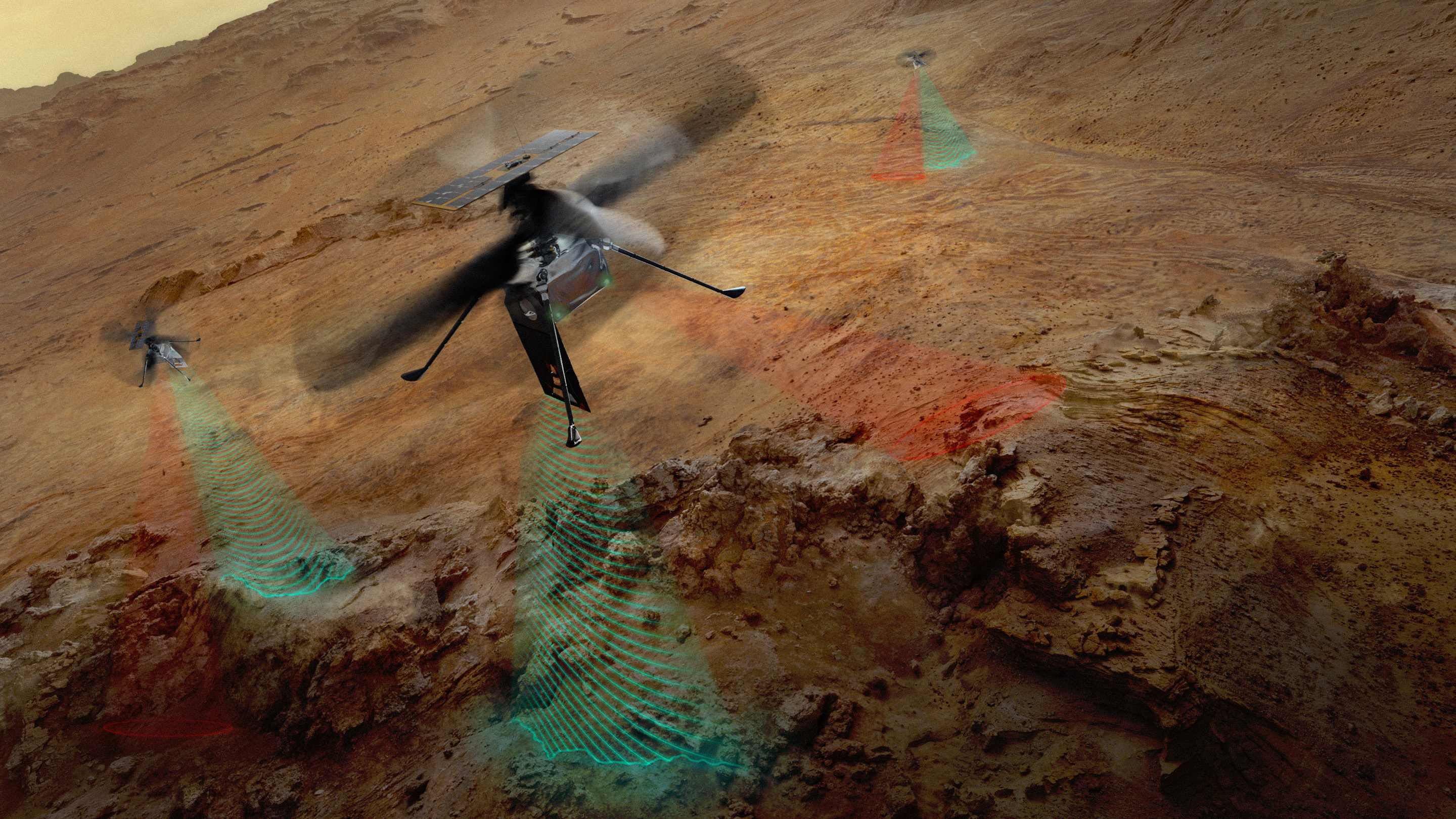
This artist’s concept depicts NASA’s three SkyFall Mars helicopters collecting data while flying over the surface of the Red Planet.
The green frequency waves emanating from the helicopters’ large antennas depict collection of subsurface radar data. The red beams depict collect near-infrared imagery data from regolith (crushed rock and dust) and other surface features.
Equipped with four instruments each, the three helicopters will follow in the footsteps of the agency’s Ingenuity Mars Helicopter, a technology demonstrator that flew 72 times over nearly three years, proving that powered, controlled flight is possible in the rarefied Martian atmosphere. It also demonstrated how an aerial perspective can generate valuabledata by helping NASA’s Perseverance Mars rover team plan time-saving routes and choose locations for science-gathering.
The SkyFall project, which will carry three Mars helicopters to the Red Planet in December 2028, is managed by NASA’s Jet Propulsion Laboratory. AeroVironment of Arlington, Virginia — which worked with JPL to design and build the history-making Ingenuity rotorcraft — will co-design and co-manufacture the SkyFall helicopters. Managed by Caltech for NASA, JPL manages the overall Mars Exploration Program on behalf of NASA’s Science Mission Directorate in Washington.
SkyFall ground-penetrating radar engineer Maya Román connects a coaxial cable to a test antenna in the Environmental Test Lab’s electromagnetic interference testing chamber at NASA’s Jet Propulsion Laboratory in Southern California.
The antenna was pointed up during test to minimize reflections and interferences with the antenna pattern during the measurement.
Equipped with four instruments each, the three SkyFall aircraft will follow in the footsteps of the agency’s Ingenuity Mars Helicopter, which flew 72 times over nearly three years, proving that powered, controlled flight is possible in the rarefied Martian atmosphere. It also demonstrated how an aerial perspective can generate valuable data by helping NASA’s Perseverance Mars rover team plan time-saving routes and choose locations for science-gathering.
You heard that right, an entire GPU crammed into a compact PCMCIA card. What looks like an unassuming adapter for PowerBooks and PCs to hook up an external monitor, turns out to have an entire Trident Cyberblade XP2 chip crammed in there. Featuring many supported resolutions including up to 2048 x 1280 @60Hz […]
Macrobiological features have been cited as irreducibly complex, including animal joints and the trap mechanisms of carnivorous plants, even the cell itself.
Glenview, Illinois—CHEST, the American College of Chest Physicians’ flagship journal portfolio, has reported a major milestone for its open-access publication CHEST® Critical Care: the journal has earned its first Journal Impact Factor of 2.7. Released annually by Clarivate through the Journal Citation Reports, the metric reflects the average number of citations received by articles published in a journal, serving as a widely used proxy for scholarly influence.
In practical terms, an Impact Factor offers more than prestige. It functions as a signal to authors, clinicians, and research teams that the work circulating in a journal is being engaged by the wider scientific and medical community—particularly important in time-sensitive domains like intensive care medicine, where findings can influence protocols and bedside decision-making.
Hayley Gershengorn, MD, FCCP, Editor in Chief of CHEST Critical Care, emphasized that the achievement is rooted in the ecosystem around the journal. Authors contribute original and reproducible studies; reviewers help refine rigor and clarity; editorial leadership maintains standards; and readers ensure the research travels beyond publication.
The journal was designed to accelerate dissemination of high-quality critical care research while keeping access frictionless. Because CHEST Critical Care is fully open access, its content can be read by practitioners, investigators, and policymakers worldwide without subscription barriers—an element that can broaden citation pathways and facilitate adoption of evidence-based practices.
Beyond original studies, the journal publishes a range of formats, including reviews and case reports, as well as “How I Do It” clinical education articles. This blend supports both scientific discovery and translational learning, which can be critical for managing complex syndromes such as sepsis, respiratory failure, and septic shock.
For biomedical audiences, open-access visibility plus peer-reviewed credibility creates a compelling combination: findings are discoverable, accessible, and citable. That coupling helps explain why emerging journals can gain momentum quickly when their content resonates with urgent clinical needs.
To follow updates across the CHEST journal ecosystem, readers can visit the CHEST website and track news via the journal’s social channels. The organization frames the Impact Factor as a validation of community effort—and as motivation to keep publishing research that improves outcomes in critical care.
Subject of Research: Critical care medicine; scholarly publishing metrics Article Title: CHEST Critical Care Achieves First Journal Impact Factor of 2.7 News Publication Date: Not provided Web References:https://www.chestnet.org/guidelines-and-topic-collections/publications ; https://www.twitter.com/journal_chest References: Clarivate Journal Citation Reports (Journal Impact Factor methodology) Image Credits: Not provided Keywords: CHEST Critical Care, Journal Impact Factor, Clarivate, open access publishing, critical care medicine, citations, peer review, intensive care research
I’ve used Day One for more than a decade. It was an excellent journalling app. Private, minimal, easy to use, with excellent features such as geolocation, weather, ‘On this Day’, and book printing. Features that got out of the way and either worked quietly in the background or appeared only when you summoned them. That’s changed.
Now there are new subscription tiers. Previously, the tiers were Free and Premium. Simple. Premium included sync and a few other things that I can’t remember, but it was compelling enough that I’ve been a Premium subscriber from the beginning. Now, without consultation, I’m Silver (not Premium), and there’s a new, more expensive AI-driven tier, Gold. I don’t object solely on that basis. You would think I could just choose to remain on ‘Silver’ and all would be well. But no. Even with these features turned off in settings, I’m visually prompted in the app to upgrade to Gold and use the Daily Chat (with AI), which I’ve turned off and can only use if I upgrade. And yet, there it is, taunting me.
It seems like I may have stumbled into a solution for getting Photoshop on the M2 Air sooner rather than later. Initially the idea was to get Photoshop CS4 working in a Leopard VM on UTM, downsizing it somehow, and fitting it onto my Mac’s tiny 256 GB SSD. After trying out the “reclaim space” […]
There’s the brand-new MacBook Neo, there’s the M1 MacBook Pro, the M1 MacBook Air.. and then there are the M2 MacBook Airs. While they may stand apart in shape, size and even age, what they mostly have in common in Mid-2026 is their value to performance. Today we’re taking a look at a Mid-2023 15-Inch […]
While the project started back in February and was attempted to be finished then, it has finally been done in its first iteration. This means mostly every navigation page (including everything on the navigation bar, tech specs, software index, etc;) can be displayed from bezel to shining bezel, without pinching to zoom. See: Introducing – […]
Whether you’re dropping an OWC Mercury Accelsior AHCI into an old Mac Pro, are replacing a 2.5″ SATA HDD with an SSD, or deal with mostly any Mac made after 2012, Solid State Drives have become the predominant choice as the primary boot drive in nearly every modern computer. Flash storage has been used for […]
The Growing Crescent of Mars as NASA’s Psyche Mission Approaches
PIA26586
Credits: NASA/JPL-Caltech/ASU
Downloads
The Growing Crescent of Mars as NASA’s Psyche Mission Approaches
PNG (3.48 MB)
Description
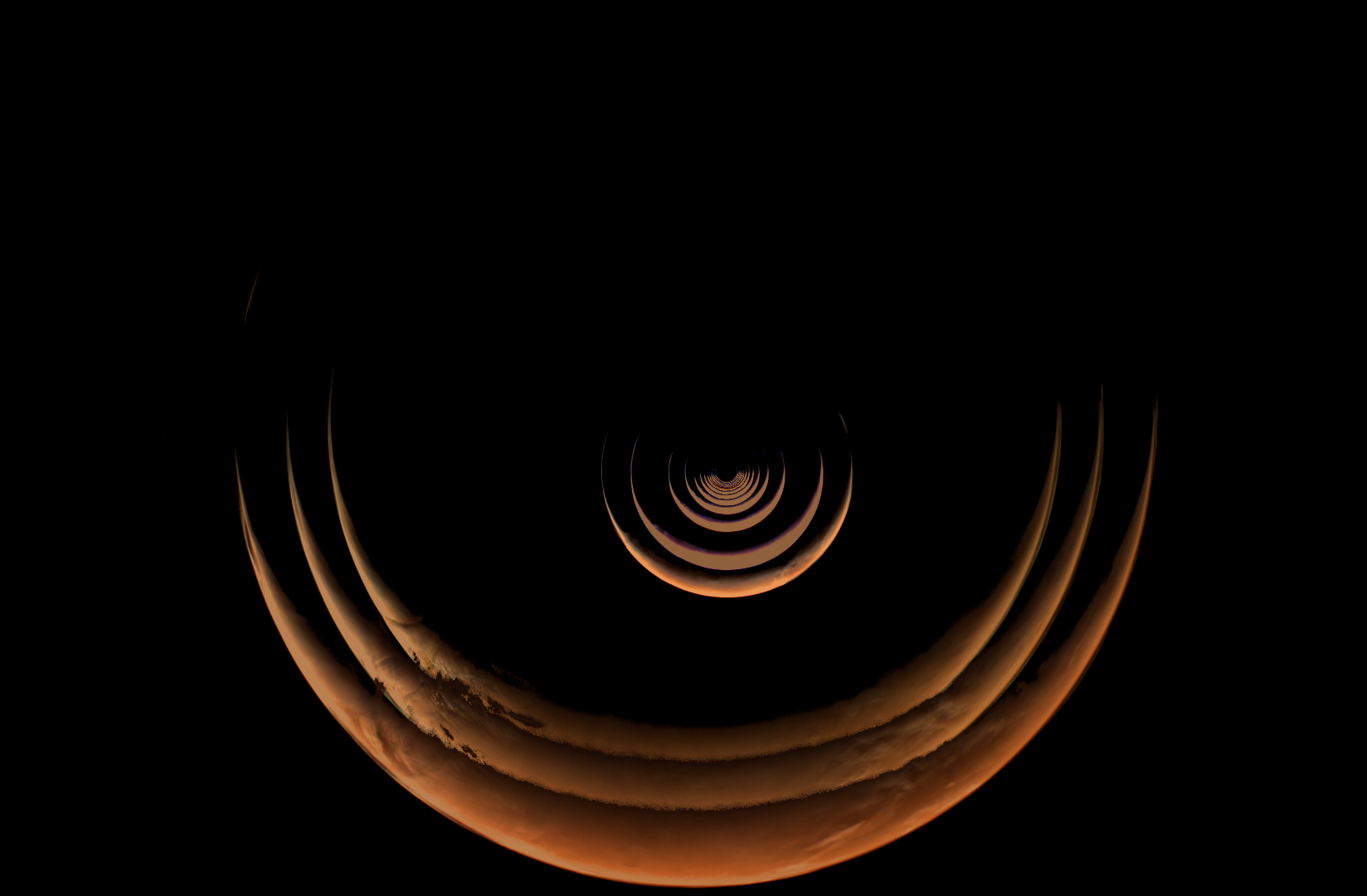
This composite of images taken by NASA’s Psyche mission shows the crescent of Mars grow as the spacecraft approached the planet for a gravity assist from May 2 to May 15, 2026. The series begins with the smallest crescent at the center of the of the image as Mars is farthest from the spacecraft, and progressively grows as the spacecraft gets closer. After these views were captured by the spacecraft’s multispectral imager instrument, Mars began to overfill the field of view as Psyche made close approach with the planet and captured a series of high-resolution images of the surface.
Because Psyche approached Mars from a high phase angle, the planet appeared as a thin crescent in the days running up to the close approach, lit by sunlight reflecting off its surface. Using these views of the approach, close approach, and departure from Mars, the Psyche team compiled a stunning time-lapse of its entire Mars encounter.
For more information about NASA’s Psyche mission, visit:
Billions of years ago, an hours-long Martian sandstorm blew so intensely that sand ripples began to climb upon one another as they moved across the surface. These layers of sediment eventually hardened into the multilayered rocks seen in this image, which was taken by NASA’s Curiosity rover on Dec. 12, 2024, the 4,391st Martian day, or sol, of the mission.
Scientists believe this is the first evidence of climbing wind ripple strata on the Red Planet. Spotted at a location nicknamed “Jawbone Canyon,” these rocks are a rare time capsule preserving a dramatic wind event early in Martian history. A paper detailing the discovery was featured on the cover of the journal Geology on July 1, 2026.
This orbital map shows the path NASA’s Perseverance Mars rover took to get to a location the science team has dubbed the “Broom Point member,” a sequence of layered bedrock likely more than 3.9 billion years old. As planned, the rover landed inside Jezero Crater on Feb. 18, 2021. It investigated the crater’s western delta and inlet river valley, Neretva Vallis, before summiting the crater rim in December 2024 following a rim-to-crest climb of 2,620 feet (800 meters).
The Broom Point region is situated on the outer edge of the crater rim and was visited by the rover in mid-2025. The yellow dot indicates location where the rover took a selfie.
NASA’s Jet Propulsion Laboratory, which is managed for the agency by Caltech in Pasadena, California, built and manages operations of the Perseverance rover. Arizona State University leads the operations of the Mastcam-Z instrument, working in collaboration with Malin Space Science Systems in San Diego, on the design, fabrication, testing, and operation of the cameras, and in collaboration with the Niels Bohr Institute of the University of Copenhagen on the design, fabrication, and testing of the calibration targets.
JPL manages the Mars Reconnaissance Orbiter for NASA’s Science Mission Directorate in Washington as part of NASA’s Mars Exploration Program portfolio. Lockheed Martin Space in Denver built MRO and supports its operations. The University of Arizona, in Tucson, operates HiRISE, which was built by Ball Aerospace & Technologies Corp., in Boulder, Colorado.
A 2,600-year-old discovery in China has revealed an archaeological enigma: why were dozens of bronze artifacts within an ancient tomb scattered and broken at the time of their placement?
The discoveries, made within the Zaoshulin Cemetery, a major archaeological site in Suizhou City, Hubei province, China, included several bronze bells that were dispersed throughout the lord’s final resting place, following the destruction of their wooden hanging components.
Now archaeologists think the unusual discovery wasn’t an accident, but instead could be evidence of the “deactivation” of these ancient objects as part of a widespread ritual phenomenon from the ancient world.
For Whom the Bells Toll
Archaeologist Chinglong Tse, who is presently a Ph.D. candidate at the University College London’s Institute of Archaeology, says the bells found within the tomb were more than just instruments used to create sonorous ringing: they were the implements of a world filled with belief in spirits of our ancestors and other supernatural presences.
“If archaeologists treat objects as tools, they risk projecting the image of a modern, rational, secular man onto the past,” Tse recently said of the discoveries, which he details in a new study featured in the Cambridge Archaeological Journal.
The bells, according to Tse, were likely crafted sometime in the early to mid 600s B.C., when Lord Qiu of the Zeng state commissioned them as implements for summoning the strength of his ancestors in combating an enemy state in the region. During Qiu’s time, known as the Spring and Autumn period, rival states in China’s Zhou dynasty waged war for power over the region, and the period is recognized as one of early China’s most turbulent.
The collection of bronze artifacts uncovered in Lord Qiu’s tomb comprise two sets of ornate bells, which archaeologists say were “deactivated” at the time of their entombment with the powerful State leader’s remains (Image Credit: Cambridge Archaeological Journal (2026). DOI: 10.1017/s0959774326100651)
Before the ancient Chinese lord’s death, peace was achieved between the Zeng state and its enemies in the state of Chu. As an act of ritual to prepare Lord Qiu’s changing role in the afterlife, the dismantling of the bells was a means of “deactivating” them, as their purpose had already been fulfilled.
With their powerful supernatural effects disabled, Lord Qiu’s own path into the afterlife to join his ancestors was prepared for.
The Dragon Bells of Lord Qiu
Qiu commissioned the crafting of these bronze bells as a charm to aid him during the period of unrest during which he reigned. The bells are magnificent artifacts, decorated in stylized dragons and featuring gemstones inlaid on their surfaces alongside inscriptions praising Qiu’s ancestors, all aimed at ensuring the protection of the Zeng territory.
According to history, Qiu would eventually wed the sister of the King of Chu, ending the rivalry between states, and thereby making these specially crafted bronze artifacts obsolete. Upon his death, the bells were intentionally “deactivated” with their wooden components removed, and the bells were scattered within Qiu’s tomb to prevent their intended function from carrying on into the afterlife.
Artifacts that Tell Stories
Appearing nearby within the tomb were a newer set of simpler bronze bells, which were neatly stacked and facing toward the southeast, bearing inscriptions that indicate their intended role had been for the afterlife, rather than to aid during times of regional conflict during Qiu’s lifetime.
“We still know very little about how bronze bells were produced in the Zeng state,” says Tse, adding that archaeologists may be able to discern a significant amount of information about the beliefs and capabilities of the people who lived during Qiu’s time if deeper knowledge about the bronze bells they constructed could be gleaned.
Fundamentally, Tse argues that while it is tempting to project a materialist, utilitarian mindset onto such ancient artifacts, doing so risks misunderstanding their actual purpose and their relationship to the worldview and belief systems of their ancient creators.
In that sense, the curious collection of dragon bells within lord Qiu’s tomb is more than merely artifacts—they are part of an ancient story of conflict, peace, and traditional views on the afterlife in the world of ancient China.
Tse’s findings were recently published in a study, “The Bells Are Harmonious and Resonant’: Numinous Ancestors, Resonant Bells and the Personhood of Lord Qiu of Zeng in Tomb M190 at Zaoshulin, Hubei,” which appeared in the Cambridge Archaeological Journal.
Micah Hanks is the Editor-in-Chief and Co-Founder of The Debrief. A longtime reporter on science, defense, and technology with a focus on space and astronomy, he can be reached atmicah@thedebrief.org. Follow him on X @MicahHanks, and at micahhanks.com.
Desert Field Test With NASA Advanced Rover Prototype
PIA26701
Credits: NASA/JPL-Caltech
Downloads
Desert Field Test With NASA Advanced Rover Prototype
PNG (27.94 MB)
PIA26701 Figure A
JPEG (26.03 MB)
PIA26701 Figure B
JPEG (951.75 KB)
PIA26701 Figure C
JPEG (16.03 MB)
PIA26701 Figure D
JPEG (16.46 MB)
Description
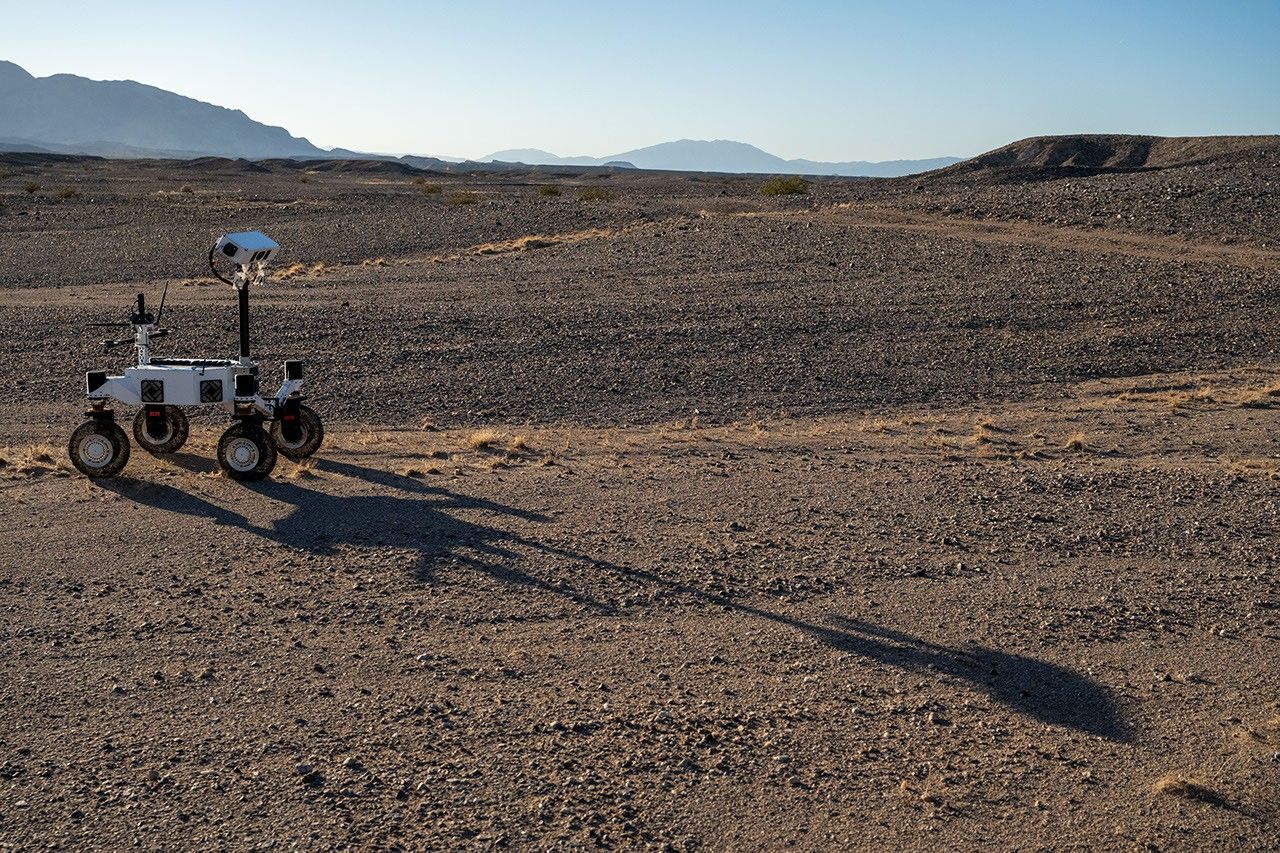
A prototype four-wheel rover developed at NASA’s Jet Propulsion Laboratory with advanced mobility and robotic autonomy capabilities trundled across the Colorado Desert near Plaster City, California, during a field test in March 2026. Called ERNEST (Exploration Rover for Navigating Extreme Sloped Terrain), the rover served here as a testbed for autonomy software developed for a potential lunar mission requiring higher speeds and much greater mileage than can be achieved with current planetary rovers.
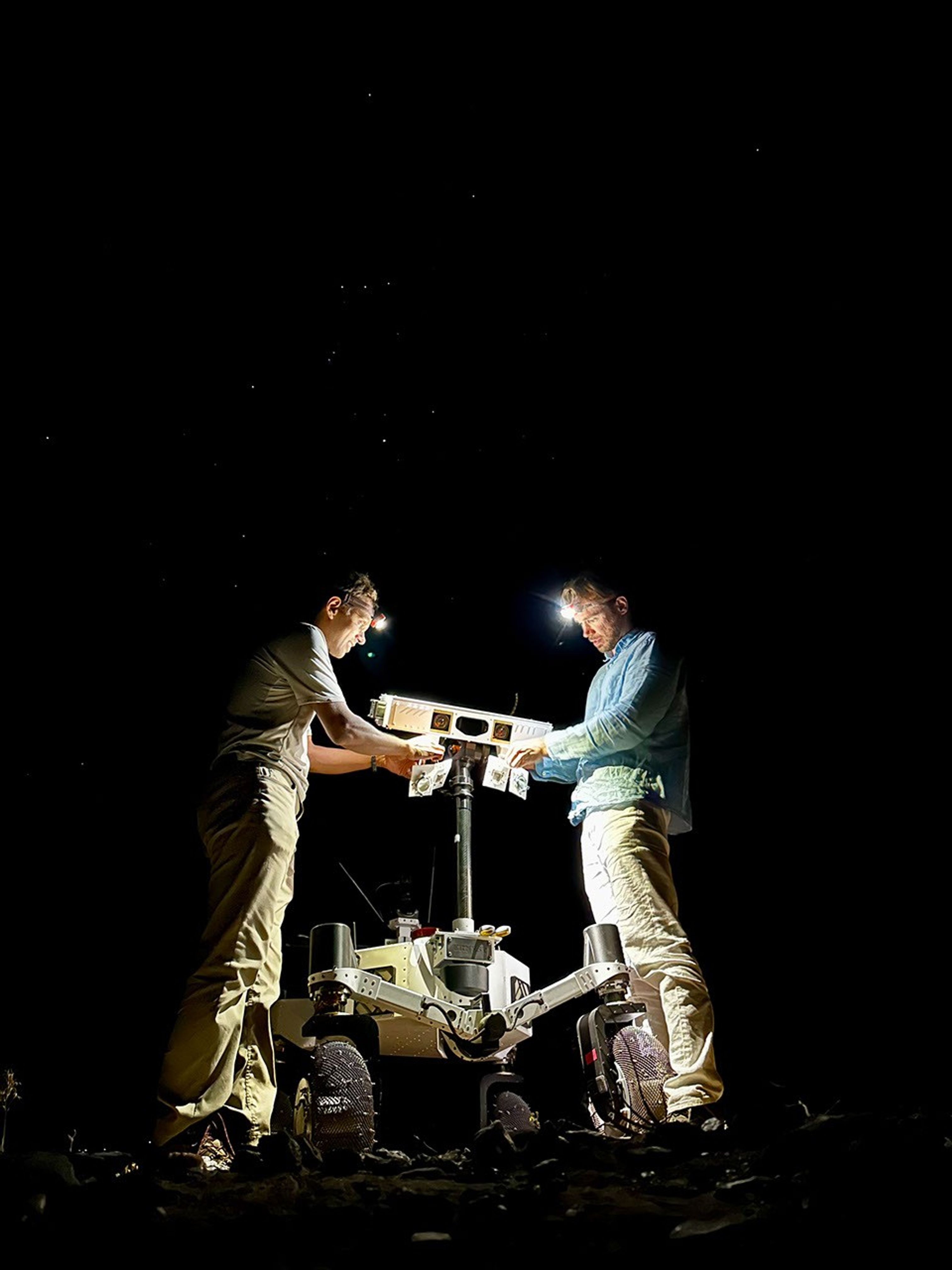
ERNEST was trailed by engineers as it traveled about 16 miles over the course of 37 hours of drive time. That’s more than 10 times the speed at which NASA’s Perseverance rover can navigate on Mars. The team also tested how well the rover traveled at dusk, dawn, and nighttime to simulate the experience of large terrain shadows in polar regions on the Moon.
Figure A
Figure A shows the rover traveling toward its shadow.
Figure B
Figure B shows two team members setting up illuminators on the rover at night.
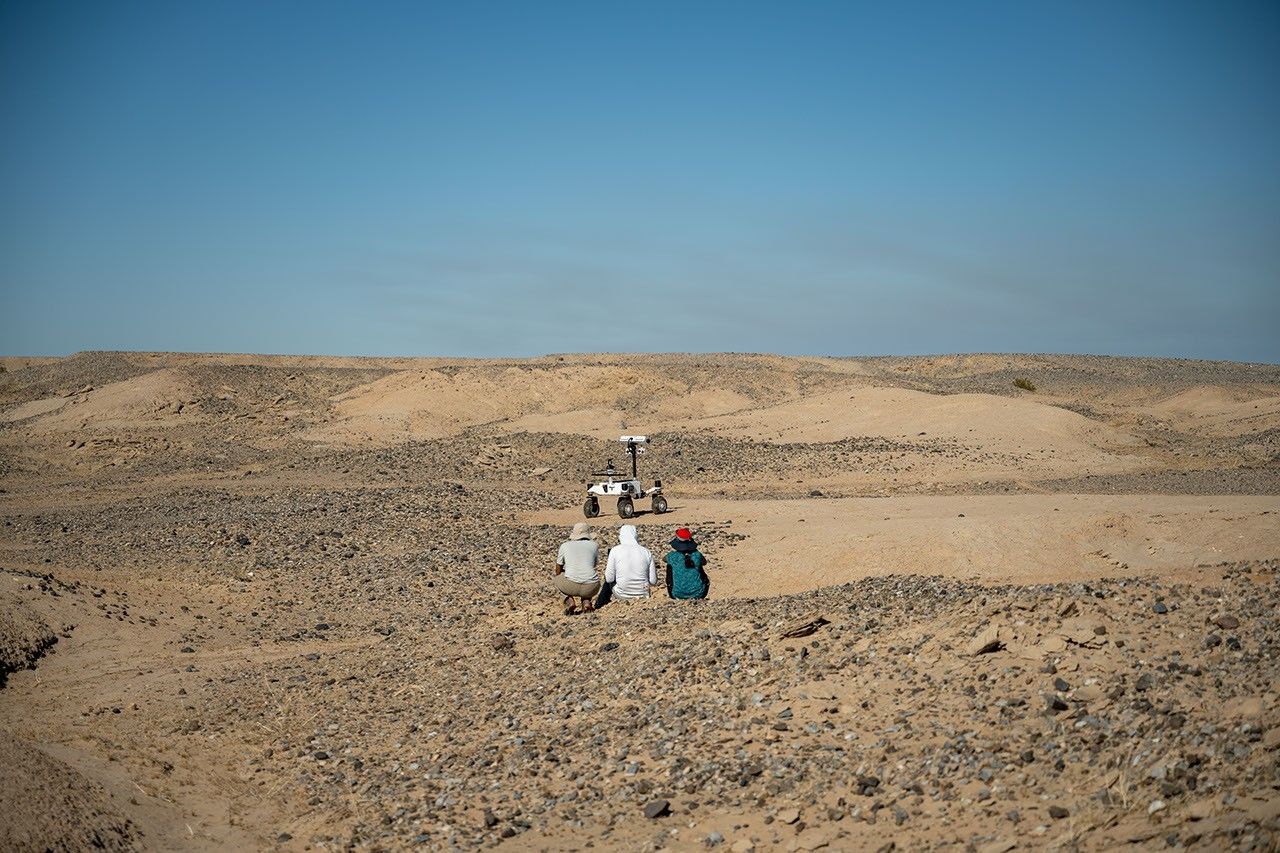
Figure C
Figure C shows three team members observing the rover during its long-range traverse.
Figure D
Figure D shows the rover with one wheel up on a rock.
Work on ERNEST began in 2022 and was initially supported by JPL internal research and development funds. It is currently funded by NASA’s Mars Exploration Program and the agency’s Exploration Science Strategy Integration Office under its Science Mission Directorate in Washington. Caltech in Pasadena, California, manages JPL for NASA.

 Login