❌

Normal view

Noble Gases Along for the Ride

24 July 2026 at 17:00

A rendering of an orange and grey planet against a dark background.

What can some neon trapped in a chunk of rock tell us about Earth’s formation and the protosolar nebula? Quite a lot, as detailed in a recent study in The Planetary Science Journal.

Noble Mysteries

By analyzing rocks pulled from mid-ocean ridges, geologists have concluded that there are tiny amounts of noble gases in the deep interior of Earth. That’s a strange statement upon reflection: how did these gases, which are famously apathetic to essentially all other elements, end up embedded within rocks thousands of kilometers underground? Since their passivity rules out the potential of a chemical reaction that formed them in place, they must have been in the mantle since the very beginning of Earth’s history.

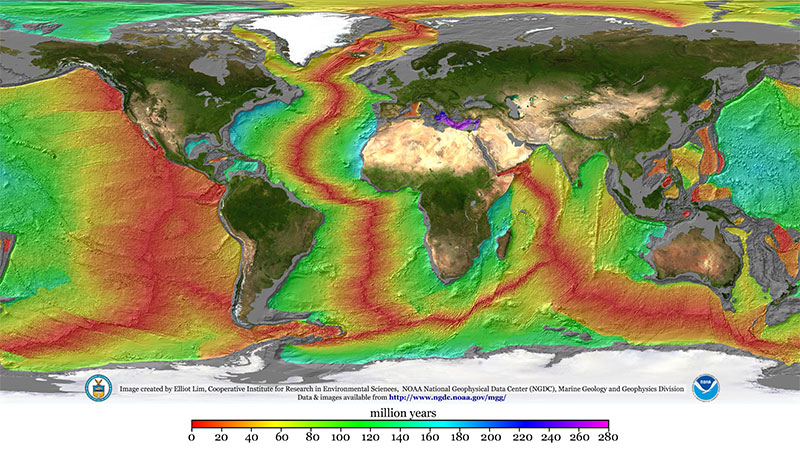
A map of Earth with the continents shown normally but the sea colored according to age.

A map illustrating the age of the seafloor. Mid-ocean ridges stand out clearly in red. By sampling material from these ridges, planetary scientists can infer the composition of Earth’s deep interior. Click to enlarge. [Mr. Elliot Lim, CIRES and NOAA/NCEI]

There are a few scenarios for how this could have happened. Though it’s possible that these inert species were delivered to the early Earth encapsulated within primitive meteorites or in solids contaminated by ions from the solar wind, at least some fraction of these elements likely came directly from the gaseous nebula that surrounded the earliest protoplanets.

That last option is especially exciting to present-day planetary scientists interested in constraining Earth’s formation history because it requires some very specific conditions. Since light noble gases like neon don’t dissolve well in seawater, they must have dissolved into a magma ocean — meaning the nebula was still around when Earth was large enough to have a molten surface. That already restricts us to a very specific time in the solar system’s history, but it doesn’t say much about the specific size of the proto-Earth other than “big,” and it doesn’t say much about the state of the nebula other than “it existed.” Recently, Vincent Savignac and Eve Lee (University of California, San Diego; McGill University) successfully refined these constraints to pin down information about both the early Earth and the nebula that surrounded it.

Infant Earths

Savignac and Lee began by growing a grid of infant Earths on their computers via models of gas accretion and atmosphere–magma interactions. Each simulation started with a different proto-Earth mass and nebular density, and each one yielded a different amount of neon in Earth’s deep interior. Excitingly, only a small handful of the scenarios tested ended up with values similar to those observed.

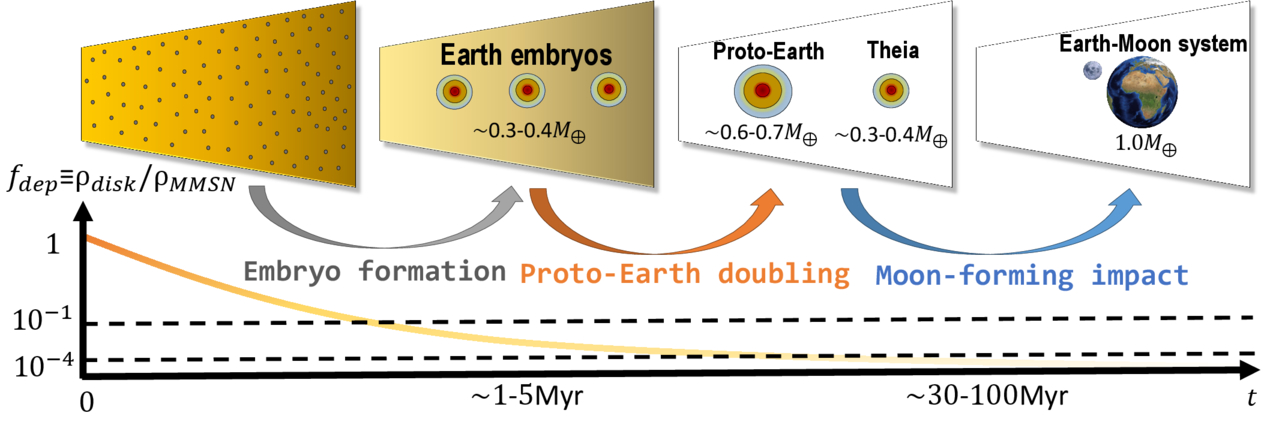
A cartoon of small cores surrounded by gaseous envelopes eventually merging into the Earth.

A schematic of Earth’s formation via embryo formation (when the noble gases enter the mantle) followed by mergers. Click to enlarge. [Savignac & Lee 2026]

On the mass axis, the team found a narrow range of acceptable conditions. If a proto-Earth was less than about 20% of Earth’s present-day mass, it couldn’t accrete much gas. This let it cool rapidly, freezing the magma ocean and shutting down neon dissolution before too much could be trapped inside. On the other hand, if a proto-Earth was more than about 40% of Earth’s present-day mass, it would accrete too much gas, stay molten for too long, and be left with too much neon. On the density axis, the researchers found that when the nebula accreted on to the proto-Earth, it must have been fairly depleted compared to its initial density. This implies that the whole process happened at the end of the nebula’s life, just before it was completely blown away by the proto-Sun.

Savignac and Lee demonstrated that these constraints are robust against the later stages of Earth’s evolution. In its later years, Earth either suffered or benefited from a giant impact, depending on your feelings about the Moon, but the researchers showed that this event doesn’t pose a problem for their models. Overall, this study builds a delightful link between rocks from our deep oceans and the particulars of Earth’s formation, demonstrating the unique power of planetary science to tie together different scientific fields.

Citation

“Constructing the Earth’s Formation History Using Deep Mantle Noble Gas Reservoirs,” Vincent Savignac and Eve J. Lee 2026 Planet Sci. J. 7 135. doi:10.3847/PSJ/ae64f7

The post Noble Gases Along for the Ride appeared first on AAS Nova.

Investigating a Polluted White Dwarf

18 February 2026 at 17:00

GD 362 and its debris disk

Roughly 25–50% of the white dwarfs in the solar neighborhood are “polluted,” showing signs of accretion of metal-rich planetary material. New JWST observations reveal the contents of the debris disk surrounding one of the most polluted white dwarfs in the solar neighborhood.

Heavy-Metal Pollution

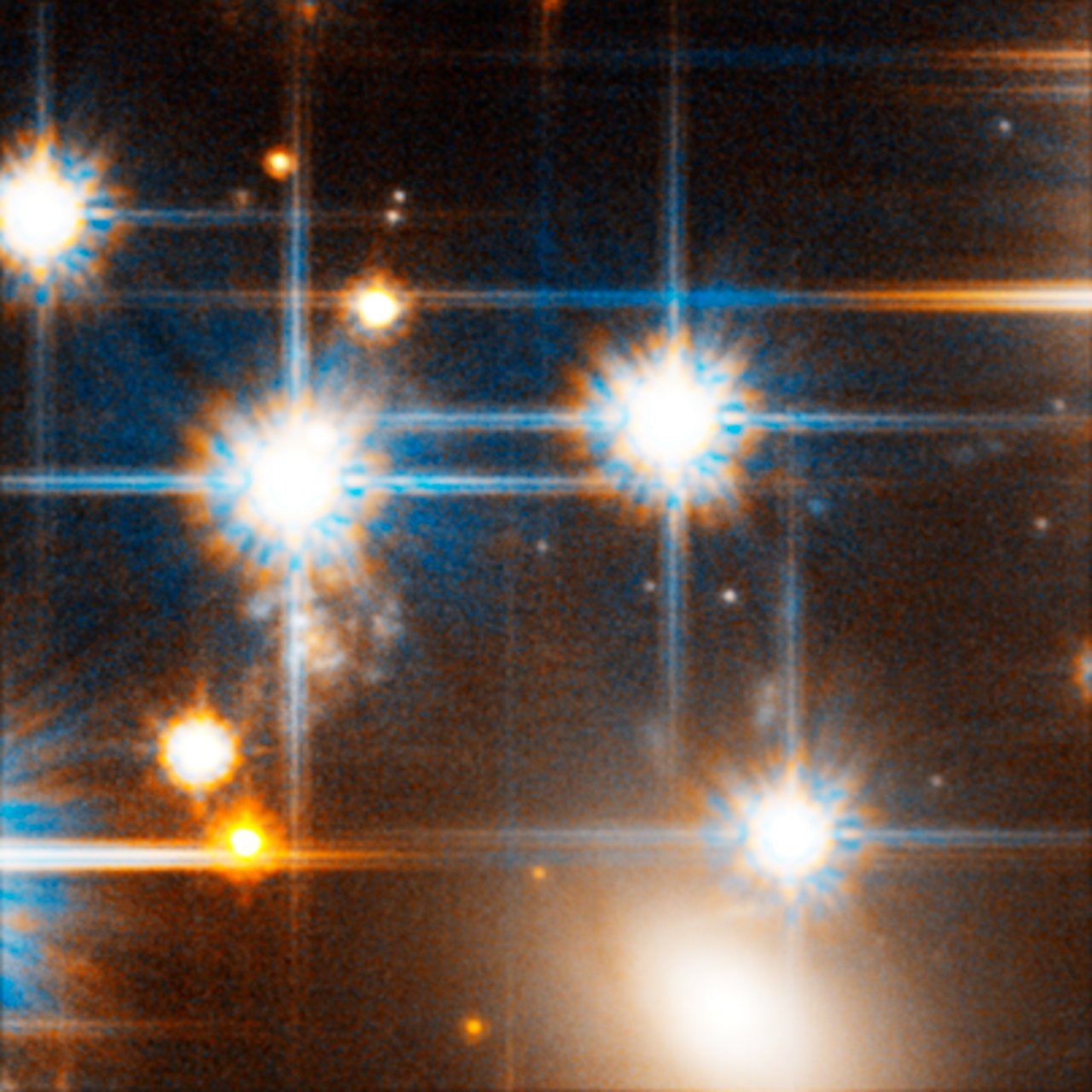
Hubble Space Telescope images of stars and a white dwarf

A white dwarf is faintly visible at the center of this Hubble Space Telescope image, tucked between the two brightest stars. [NASA, ESA and H. Richer (University of British Columbia); CC BY 4.0]

White dwarfs are the remnants of low- to intermediate-mass stars that have ceased core fusion and evolved off the main sequence. The presence of metals in white dwarf atmospheres shows that it’s common for white dwarfs to accrete rocky materials from tidally disrupted bodies in their surroundings, allowing for a post-mortem investigation of the composition of rocky worlds in far-off planetary systems.

One of the most impressively metal-polluted white dwarfs known is GD 362, which is surrounded by a dusty debris disk and shows evidence for at least 16 accreted elements. GD 362 is a helium-atmosphere white dwarf, but previous observations have also shown that it has an unusually large amount of hydrogen in its atmosphere — a possible sign that the star has consumed one or more bodies containing water or ice.

Disk Investigation

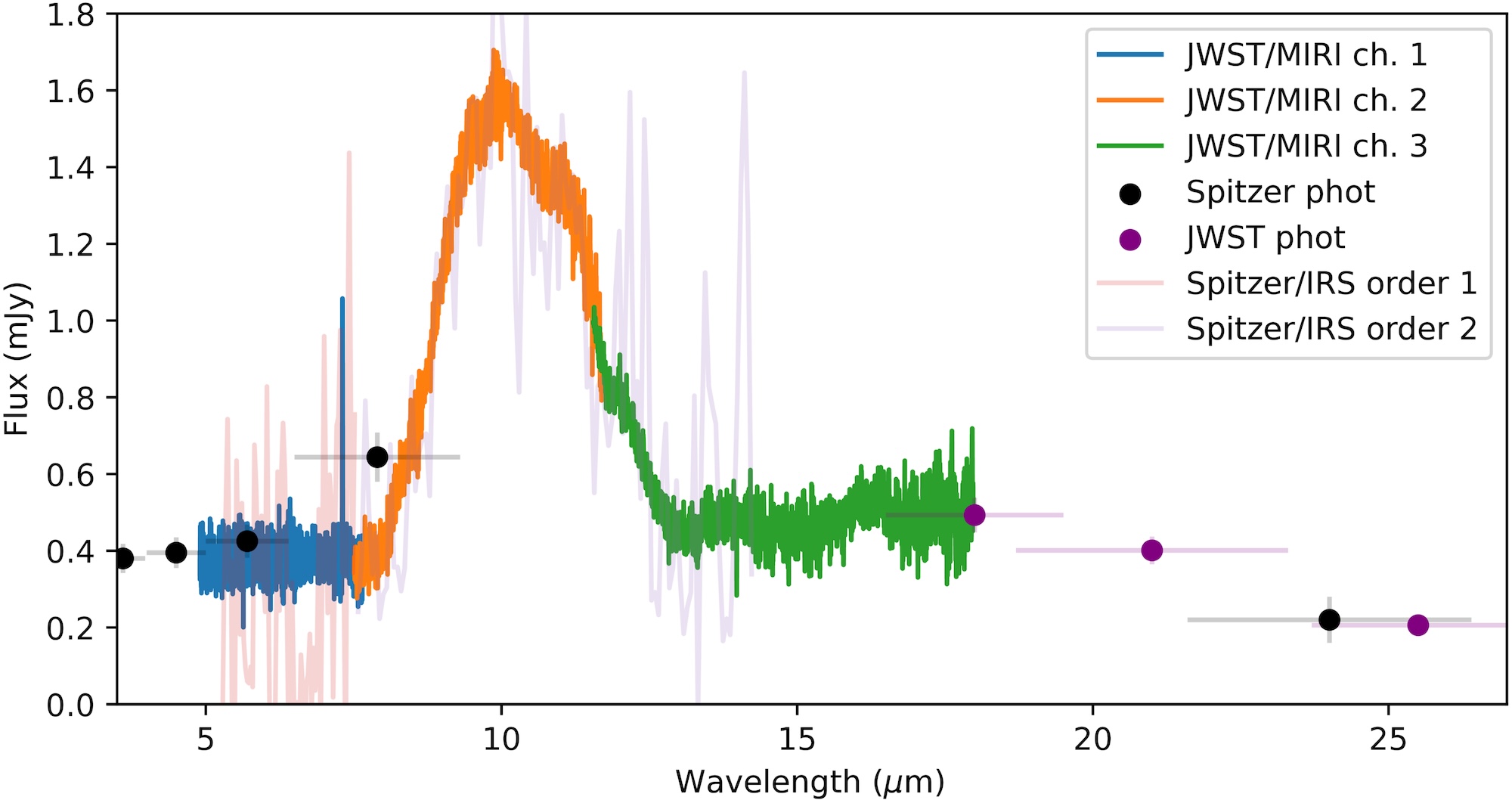
spectrum of GD 362

Mid-infrared JWST spectrum and photometry of GD 362, with additional spectral and photometric data from the Spitzer Space Telescope. Click to enlarge. [Reach et al. 2025]

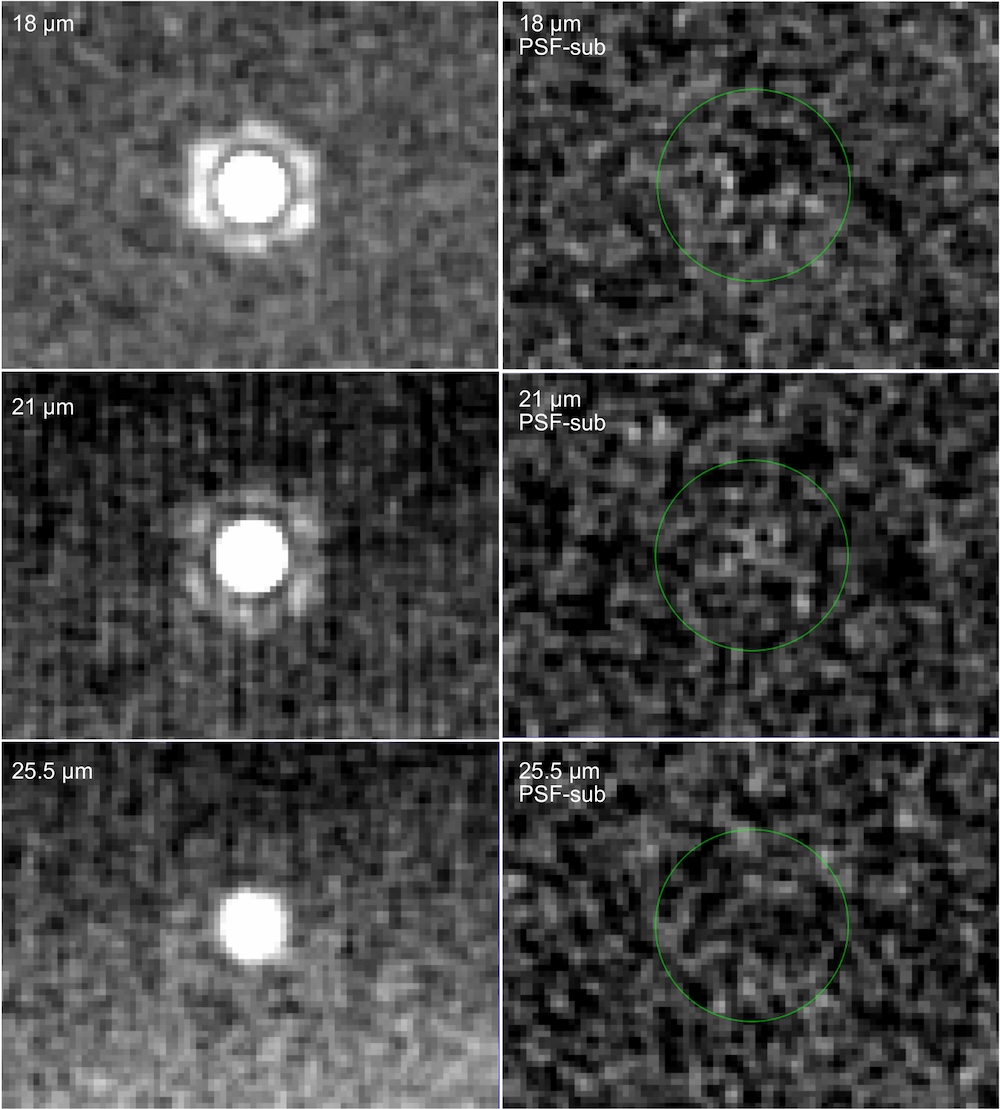
Now, a team led by William Reach (Space Science Institute) has obtained JWST spectra of GD 362 to examine the material in its disk directly. Using both the Near-Infrared Camera (NIRCam) and the Mid-Infrared Instrument (MIRI), the team collected spectra of the white dwarf from 0.6 to 17 microns, with additional photometric measurements at 18, 21, and 25.5 microns. The JWST spectra show bright emission from the white dwarf at wavelengths shorter than 2.5 microns, with a clear signature of disk material at longer wavelengths, including a strong emission feature at 9–11 microns.

Reach’s team modeled the JWST spectra to constrain the mineralogy of the disk and its physical attributes. They found that the disk likely stretches from 140 to 1,400 times the white dwarf’s radius and contains both silicates and carbon, with the prominent emission feature pointing to olivine and pyroxene silicate minerals. The elements seen in the white dwarf’s atmosphere are generally similar to those observed in the disk, strengthening the connection between accretion from the disk and the metals present in the white dwarf’s spectrum.

Hydrogen Mismatch

The new JWST data furthered the investigation of GD 362’s atmospheric hydrogen and the possibility that it’s accreting water- or ice-rich material. Though water molecules have spectral features in the range studied, none of these features appeared in the JWST spectra of GD 362. This isn’t necessarily a surprise; the team showed that water molecules in the disk would quickly be split apart by GD 362’s high-energy radiation.

JWST images of GD 362

Left column: Three JWST images of GD 362. Right: The same images with the white dwarf’s point spread function subtracted. [Reach et al. 2025]

Curiously, though, Reach’s team found little evidence for hydrogen-rich material within the disk that could be the source of the white dwarf’s atmospheric hydrogen. Because accreted hydrogen would remain in the star’s atmosphere indefinitely, the presence of atmospheric hydrogen could be evidence that the white dwarf accreted water-rich material from its debris disk in the past, though the materials currently present in the disk are dry.

In addition to investigating GD 362’s disk, Reach and collaborators searched for planets orbiting the white dwarf. Though they found none, they were able to rule out the presence of companions with masses greater than 25 times the mass of Jupiter.

Citation

“Composition of Planetary Debris Around the White Dwarf GD 362,” William T. Reach et al 2025 ApJ 994 195. doi:10.3847/1538-4357/ae11a9

The post Investigating a Polluted White Dwarf appeared first on AAS Nova.

We Have Visitors: Interstellar Material from Nearby Debris Disks

6 February 2026 at 17:00

'Oumuamua

Traversing the galaxy from places yet known, a few interstellar objects have taken a quick dip into our solar system. These objects have inspired a frenzy of questions regarding their origins and paths that led them here. A recent study took to nearby planet-forming stellar systems as possible launching posts.

Interstellar Object Origins

As 3I/ATLAS was first spotted entering the solar system in July 2025, all eyes turned to the curious interstellar visitor. Just the third interstellar object astronomers have observed, 3I/ATLAS joins 1I/ʻOumuamua (2017) and 2I/Borisov (2019) in capturing our attention and igniting many questions regarding their origins and journeys to our corner of the Milky Way. While astronomers have characterized these objects’ compositions, sizes, and paths through the solar system, the mechanisms by which these objects leave their origin systems and travel the galaxy before arriving here are not well constrained. 

These three large bodies are just part of the interstellar material visiting the solar system — spacecraft have detected an influx of small interstellar dust particles, and while not yet directly confirmed, interstellar meteoroids burning up in Earth’s atmosphere are possible. This loose material likely originates in dusty, planet-forming disks (debris disks) around stars — rubble kicked out into interstellar space, sending chemicals, organic compounds, and perhaps even the precursors of life to other nearby systems. Understanding the origins and trajectories of such material will allow us to investigate planet formation and how developing systems may impact their environments.

Deliveries from Debris Disks

Debris disks offer ideal testbeds for tracing small bodies and dusty material through the galaxy. Interactions with large planets in debris disks can launch loose material like planetesimals and dust into interstellar space. To explore how debris disks may drive interstellar visitors to our solar system, Cole R. Gregg and Paul A. Wiegert (The University of Western Ontario) simulated how much material the 20 nearest debris disks would contribute to the interstellar object population of our solar system.

sky projection for particle arrival directions

Arrival direction on the sky for particles that reach the solar system from the 20 debris disks studied here. The arrival locations for 1I/ʻOumuamua, 2I/Borisov, and 3I/ATLAS are shown for comparison. Click to enlarge. [Gregg and Wiegert 2025]

The authors modeled the trajectories of ejected material from each debris disk within a simulated Milky Way, running the simulations backward and forward in time to trace the ejecta over 100 million years. These simulations show that material from each of the 20 systems is currently expected to be within our solar system. For interstellar objects (≥100 meters), the simulations predict that about two objects from these debris disks are currently within the inner solar system.

Trickier to spot, smaller meteoroids (≥200 microns) that would appear as meteors in Earth’s atmosphere are also expected. The only way to observationally confirm interstellar origins for meteors is based on how fast they are moving relative to the material in our solar system, or their excess velocities. Based on the simulations, many of these smaller particles have low excess velocities, making them observationally difficult to distinguish from bound solar system objects.

Observational Connections and Expectations

'oumuamua zoom in plot

Zoomed-in view focusing on the direction where 1I/ʻOumuamua entered the solar system. The interstellar object falls near the arrival directions of particles from HD 38858 and HD 166. Click to enlarge. [Gregg and Wiegert 2025]

How do these simulations compare to observations? From their analysis, the authors identified where the interstellar material from each debris disk would first enter the solar system. Comparing these to the entry locations of 1I/ʻOumuamua, 2I/Borisov, and 3I/ATLAS, ʻOumuamua appears near the entry locations for debris from HD 166 and HD 38858. (2I/Borisov and 3I/ATLAS had no such match up in this sample of debris disks.) However, tracing ʻOumuamua’s travel backward, its closest approaches to these systems are about 32 and 18 light-years away, respectively — likely too far to have originated from either system but still a clear proof of concept that we can place interstellar objects near potential systems of origin. 

Where are the expected interstellar meteoroids? Current meteor detectors including the Canadian Meteor Orbit Radar (CMOR) and the Global Meteor Network (GMN) search the sky for incoming material. While the simulations predict hundreds of meteoroid-sized particles from each debris disk currently in the inner solar system, the small collecting area of CMOR and the limiting size of grains detectable by GMN statistically require decades of observations to detect even a single interstellar meteoroid. Thus, the lack of detections thus far is not surprising, but with advanced instrumentation, discoveries of more interstellar particles and objects are imminent.

Citation

“A Catalogue of Interstellar Material Delivery from Nearby Debris Disks,” Cole R. Gregg and Paul A. Wiegert 2025 PSJ 6 309. doi:10.3847/PSJ/ae284f

The post We Have Visitors: Interstellar Material from Nearby Debris Disks appeared first on AAS Nova.

Featured Image: Hubble Samples a Dusty Cosmic Sandwich

26 January 2026 at 17:00

protoplanetary disk IRAS23077+6707

Dracula's Chivito

Hubble Space Telescope image of Dracula’s Chivito. [Monsch et al 2026]

The disks of gas and dust that collect around young stars — protoplanetary disks — hold the secrets to how planets form. When a protoplanetary disk is tilted edge-on from our perspective, the disk’s dense, dusty midplane blocks the light from the star at the center, revealing structures like winds and jets wafting off of the disk. Pictured above and to the right is the spectacular edge-on protoplanetary disk IRAS23077+6707, which is also known as Dracula’s Chivito. (Delightfully, the name combines references to the backgrounds of two of the astronomers who identified the object as a protoplanetary disk: one hailing from Transylvania and another from Uruguay, where a sandwich called a chivito is the national dish.) Though the distance to this disk is not known, estimates place it around 1,000 light-years away, which would make the disk about 4,200 au across — larger than any other known protoplanetary disk. Recently, a team led by Kristina Monsch (Center for Astrophysics ∣ Harvard & Smithsonian) published their Hubble Space Telescope observations of Dracula’s Chivito. These observations show in great detail the structure within the disk, including large-scale asymmetries, wispy tendrils, and potential signs of dust grains settling toward the midplane. To learn more about this exceptional protoplanetary disk, be sure to check out the full research article linked below.

Citation

“Hubble Reveals Complex Multiscale Structure in the Edge-On Protoplanetary Disk IRAS23077+6707,” Kristina Monsch et al 2026 ApJ 996 45. doi:10.3847/1538-4357/ae247f

The post Featured Image: Hubble Samples a Dusty Cosmic Sandwich appeared first on AAS Nova.

Supernovae, Shocks, and Spindown: A Possible Origin Story for Ultra-Long-Period Pulsars

16 January 2026 at 17:00

Researchers have recently discovered a number of ultra-long-period pulsars that are difficult to explain with typical pulsar models. A new article explains how these pulsars might arise from massive stars in close binary systems.

Strangely Slow Sources

Crab Nebula

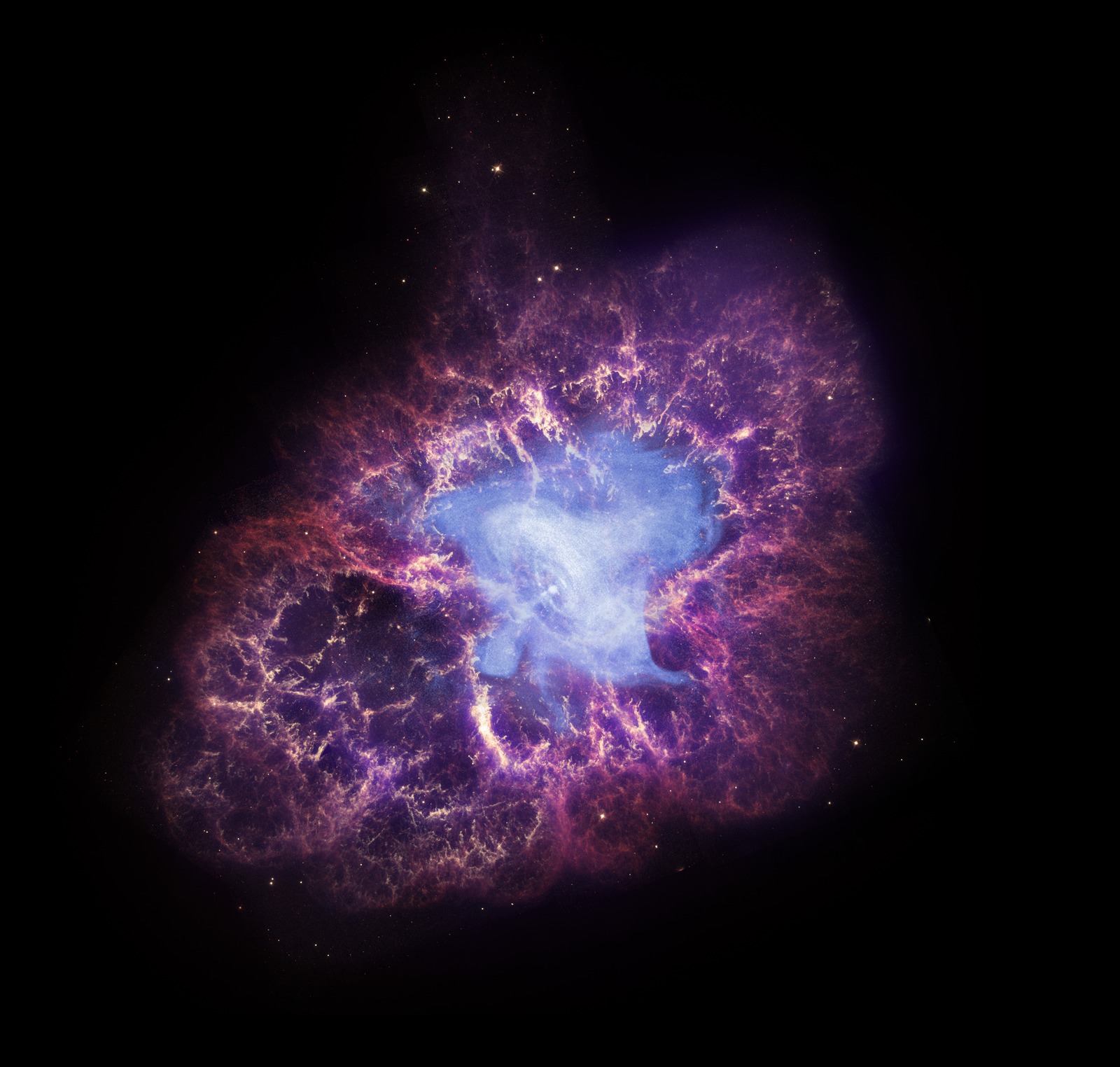
A multi-wavelength view of the Crab Nebula, the remnant of a supernova that birthed a neutron star. The neutron star powers a pulsar wind nebula, shown in blue. [X-Ray: NASA/CXC/J.Hester (ASU); Optical: NASA/ESA/J.Hester & A.Loll (ASU); Infrared: NASA/JPL-Caltech/R.Gehrz (Univ. Minn.)]

When massive stars go supernova, the explosion can leave behind the condensed stellar core in the form of a neutron star. Neutron stars that spin rapidly become pulsars, whose fast rotation powers beams of radio emission along the star’s poles.

Until not too long ago, pulsars appeared to have periods no longer than 12 seconds. Above that “sluggish” rotation rate, researchers suggested, pulsars could no longer produce electron–positron pairs and channel them along polar magnetic field lines to generate their characteristic radio signals.

So it seemed, until unexpectedly slow pulsars began to crop up. The first trend-breaking pulsars had periods of a few dozen seconds, and objects with pulse periods of minutes or hours have now been found. What could these strange objects be?

Neutron Star Origin Story

In a recent article led by Savannah Cary (University of California, Berkeley), researchers proposed that these strange radio sources are pulsars, but pulsars that rotate slowly and have magnetically powered (rather than rotationally powered) radio emission.

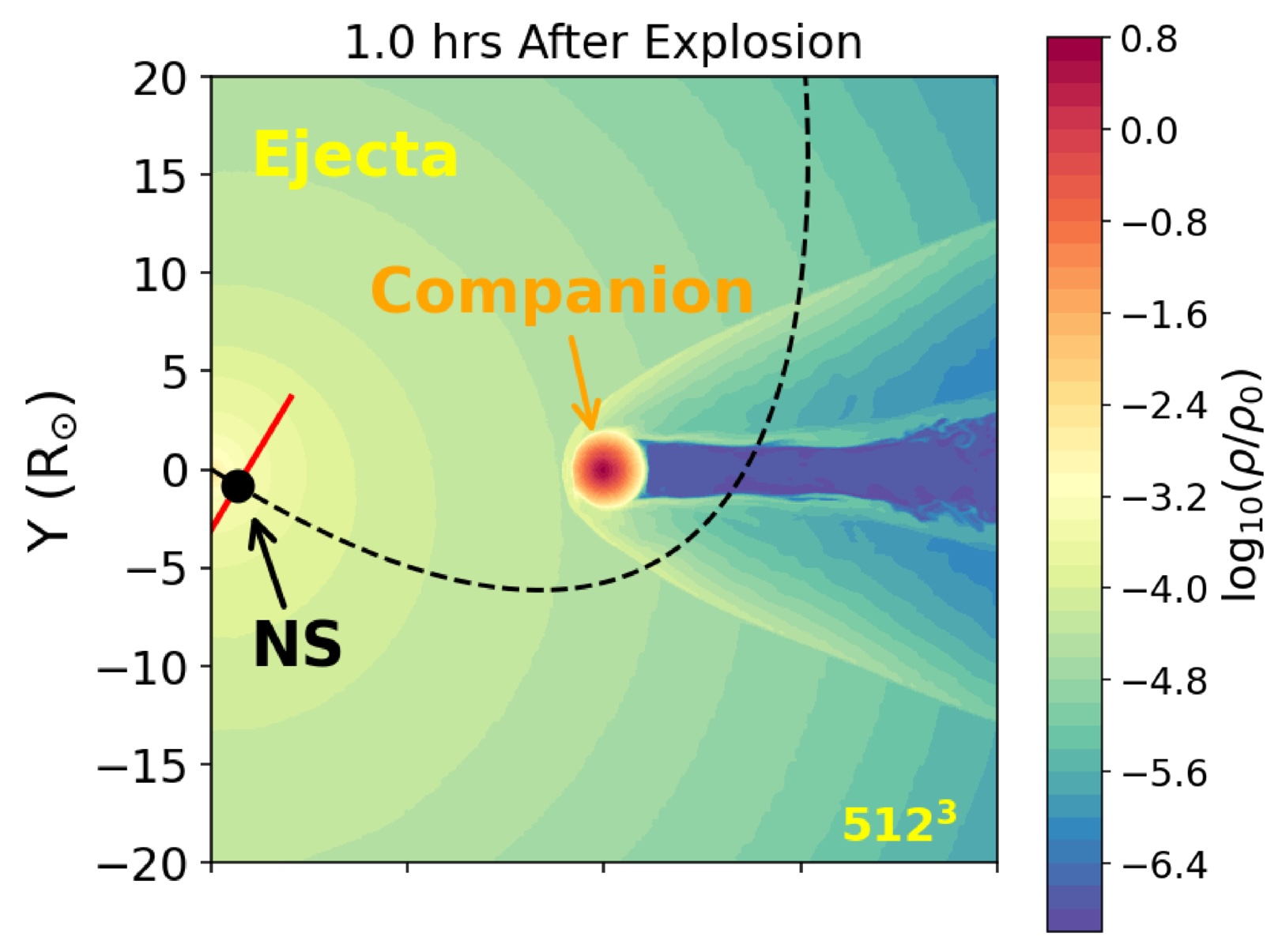
The proposed origin story for these ultra-long-period pulsars begins with a binary system containing a massive star and a close stellar companion. As the massive star evolves, it transfers its outer layers to the companion and expires as a stripped-envelope supernova that births a rapidly spinning neutron star. As the supernova ejecta crashes into the companion star, the star heats up and expands to 5–100 times its original radius.

simulation of supernova ejecta colliding with a star

Simulation snapshot taken one hour after the supernova explosion. The black dashed line shows the path the neutron star (NS) will take through the companion star’s outer layers. Click to enlarge. [Adapted from Cary et al. 2026]

Meanwhile, the explosion delivers a ferocious kick to the newborn neutron star, likely unbinding the binary system. This sets the neutron star on a new course that could take it through the puffed-up outer layers of its former companion, where it may collect gas from the star and ejected material from the supernova into an accretion disk.

Slowing Down

Cary’s team explored the outcomes of this scenario with a trio of simulations: hydrodynamical models for the shock heating of the companion star, numerical models for the formation of the disk around the neutron star, and analytical models for the interaction between the disk and the neutron star.

For a binary system containing stars of 6.4 and 4.0 solar masses and a separation of 20 solar radii — values drawn from observations and simulations — the resulting unbound neutron star collects a disk in 8–10% of cases. The neutron star’s mass, radius, rotation rate, and magnetic field strength determine whether the neutron star and the disk will interact. If they don’t, the neutron star remains rotating rapidly like a typical pulsar. If they do, the neutron star’s rotation will slow to a relative crawl over about a million years. For modest magnetic fields between 1013 and 1014 Gauss, this means rotation periods in the realm of 102 seconds, whereas stronger magnetic fields, above 1015 Gauss, yield periods of roughly a day.

This work suggests that close binary systems could be the source of ultra-long-period pulsars, of which Cary’s team estimates there may be 10–1,000 in the Milky Way. Future work will explore this possibility further, examining broader swaths of parameter space to learn more about how this scenario could contribute to the population of ultra-long-period pulsars in our galaxy.

Citation

“Accretion from a Shock-Inflated Companion: Spinning Down Neutron Stars to Hour-Long Periods,” Savannah Cary et al 2026 ApJ 996 141. doi:10.3847/1538-4357/ae1d43

The post Supernovae, Shocks, and Spindown: A Possible Origin Story for Ultra-Long-Period Pulsars appeared first on AAS Nova.

Michelangelo in Space: A Planet Carving the Fomalhaut Debris Disk?

9 December 2025 at 17:00

Fomalhaut debris disk

Editor’s Note: Astrobites is a graduate-student-run organization that digests astrophysical literature for undergraduate students. As part of the partnership between the AAS and astrobites, we occasionally repost astrobites content here at AAS Nova. We hope you enjoy this post from astrobites; the original can be viewed at astrobites.org.

Title: ALMA Reveals an Eccentricity Gradient in the Fomalhaut Debris Disk
Authors: Joshua B. Lovell et al.
First Author’s Institution: Center for Astrophysics | Harvard & Smithsonian
Status: Published in ApJ

Step 1: Understanding How to Carve Your Debris Disk

Let’s start with our solar system: the Kuiper belt, a large ring of icy asteroids, is believed to have been sculpted into its current shape by Neptune. Neptune may have previously scattered objects in the Kuiper Belt through gravitational interactions, but some of them (like Pluto) remain in an orbital resonance with Neptune. In the same way that Neptune shapes the Kuiper Belt, today’s authors believe a planet could be shaping an exo-Kuiper Belt around the star Fomalhaut.

What on Neptune is an orbital resonance, though? A planet orbiting a star has an orbital period, and the gravitational forces between nearby (astronomically speaking) objects can push these objects into a state where their orbital periods are multiples of each other. For example, Pluto and Neptune have a 2:3 orbital resonance, meaning Pluto completes two orbits for every three that Neptune does. The same can happen for the asteroids and planetesimals in the Kuiper Belt, so the same should happen in other star systems!

Step 2: Make Your Observations

If we understand how debris disks carved by exoplanets look — and we think we do — then we should be able to infer the existence of exoplanets! Today’s authors have used observations from the Atacama Large Millimeter/submillimeter Array (ALMA) of the debris disk around Fomalhaut and made some very clever calculations. We’ve known about this disk for a while, which is why today’s authors have studied it with a new analysis technique they developed.

Planeteismals — basically big rocks from a few to hundreds of kilometers across — that orbit in this disk do so with a certain eccentricity, and typically things in the same orbit would have the same eccentricity. But today’s authors were clever — they checked if there was an eccentricity gradient, meaning the planetesimals’ eccentricities depend on their semi-major axis (i.e., the mean orbit radius); we would typically not expect any eccentricity gradient for bodies orbiting a star unperturbed. The authors discovered that the gradient for planetesimals around Fomalhaut is negative, which implies the presence of a planet when you look at the maths behind gravitational interactions between planets and planetesimals.

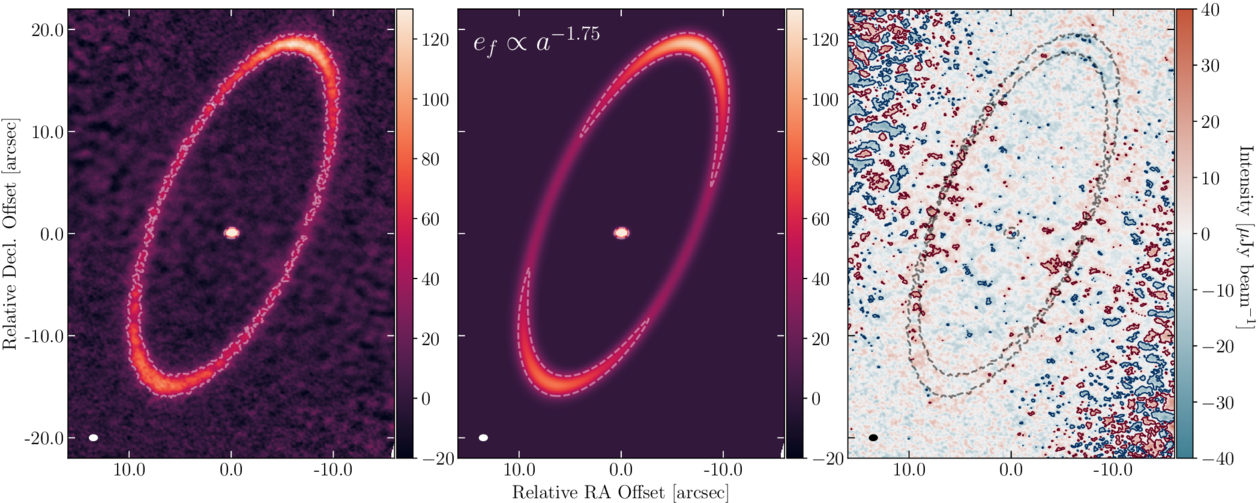
A negative eccentricity gradient means the planetesimals gather up at the point on the orbit farthest from the star (the apocenter), and since there are more planetesimals in that region, they appear brighter in the ALMA data (see Fig. 1 left); the ring also appears slightly wider. If the eccentricity gradient were positive, the same thing would happen at the point on the orbit closest to the star (the pericenter). The authors term this phenomenon the “eccentric velocity divergence.”

observed and modeled brightness of the Fomalhaut debris disk

Figure 1: Left: The observed intensity of the Fomalhaut debris disk with ALMA. Middle: the authors’ model that fits the ALMA data the best. Right: The residual (data – model) between model and data. White means there is a close match to the data (which is better). [Lovell et al. 2025]

When the authors ran their eccentric velocity divergence calculations for the Fomalhaut disk model, they compared it to observations using a Markov Chain Monte Carlo algorithm. Figure 1 shows their best-fitting model, which fits remarkably well, based on the residual (i.e., the difference between model and data) you can see on the right — including the slightly wider ring at the apocenter!

The authors tested other scenarios with different gradients and allowed for the planetesimals to oscillate their eccentricity around their orbit, but they didn’t find a better-fitting scenario.

Step 3: Find a Carving Planet

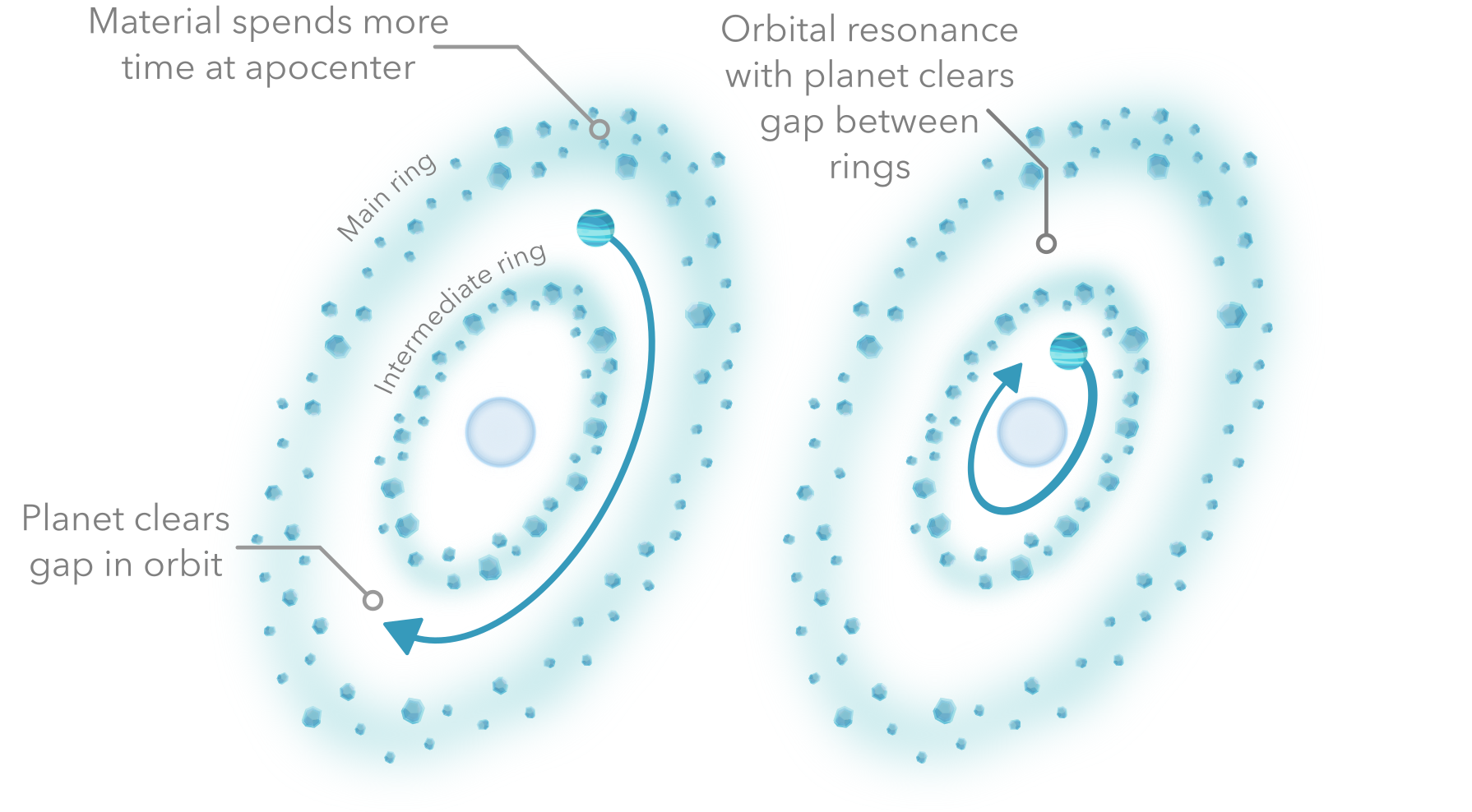
Okay, so those were the details. The authors investigated a few scenarios to see what could be causing the observed debris disk and its negative eccentricity gradient, as well as an intermediate ring sitting between the main disk and the star that recently was seen with JWST. The authors tested two scenarios: one where a planet sits between the rings and evacuates the nearby region, and another where a planet is interior to the inner ring and clears the gap through orbital resonances (kind of like Neptune!). An illustration can be seen in Figure 2.

Illustration of possible planet-based scenarios that could create the observed debris disk around Fomalhaut

Figure 2: Illustration of possible planet-based scenarios that could create the observed debris disk around Fomalhaut. One features a planet between the observed debris disk rings, and another is where the planet is interior to both and carves the gap with orbital resonances. [J. Williams]

A planet was previously thought to exist around Fomalhaut, but it is now accepted there is not one we can currently observe. The authors point out that the possible planet sculpting this debris disk could be the same planet we thought existed previously, but at a lower mass (1–16 Earth masses; almost a Neptune mass). We can’t observe a planet with these parameters yet, but maybe with future observing facilities!

Finally, the authors stress, however, that it might not be a planet causing the observed structure — it could instead be the gravity of the planetesimals in the disk. Unfortunately, existing models are not equipped to explore this scenario, which is why the authors are planning to develop tools to investigate this next.

Original astrobite edited by Sandy Chiu.

About the author, Joe Williams:

I’m a third-year PhD student at the University of Exeter in the UK, and I study protoplanetary discs — mainly the tiny dust grains and their ices! In my spare time, I’m a climber, crocheter, and reader of sci-fi and fantasy books. My favourite sci-fi series is The Expanse!

The post Michelangelo in Space: A Planet Carving the Fomalhaut Debris Disk? appeared first on AAS Nova.

Researchers Spot a Rare Glowing, Growing Planet

8 October 2025 at 17:00

WISPIT 2b

Have you ever eaten a meal so quickly that you started to glow? Although this behavior likely isn’t relatable for most humans, astronomers are beginning to find more and more baby planets doing just that.

Planetary Glow Up

Planets are, famously, quite large. But astronomers know that they don’t start out that way, and that instead, stars and planetary systems start as wispy collections of dust and gas. This raw material eventually compresses itself into stars and planets and life capable of contemplating such things, but how exactly that happens is not perfectly understood.

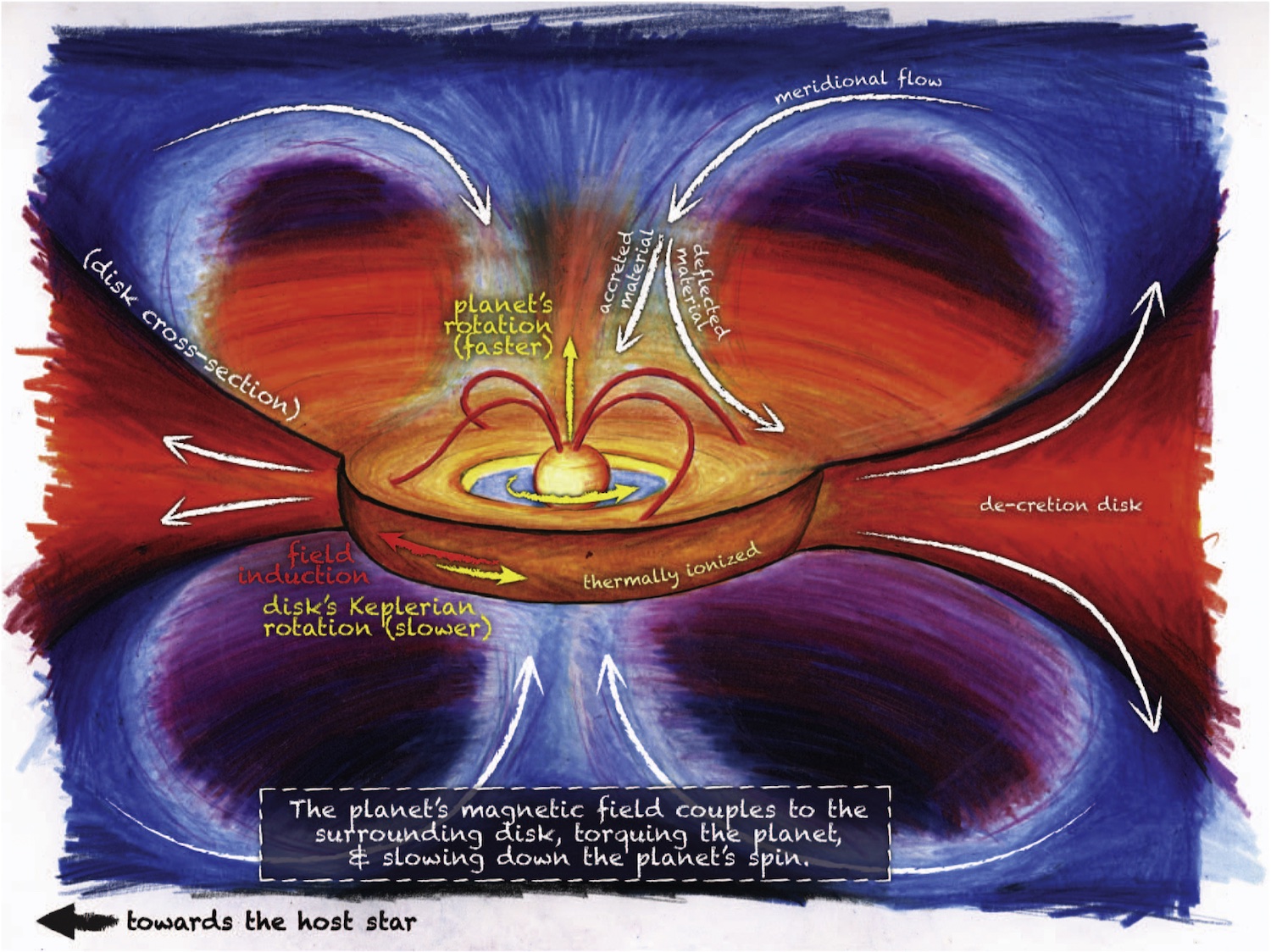
A colored-pencil drawing of gas flowing around a planet, with arrows noting the direction of the flow at various points.

A schematic of some of the processes involved during giant planet formation. Click to enlarge. [Batygin 2018]

Astronomers have the broad contours sketched out at least. Protoplanets destined to become gas giants like Jupiter and Saturn start by gobbling up all the material around them and eventually clear out gaps in the disks in which they are born. What little material flows into these gaps gets sucked onto the planet in a process called accretion, though exactly where this material lands and how gravity and magnetic fields interact is up for debate.

A number of different mechanisms predict that during this process, the protoplanet should emit light at a certain frequency associated with electrons jumping between energy levels in hydrogen atoms — what astronomers call Hα emission. In other words, they should glow at that specific wavelength only when they are accreting, though how strongly and consistently will depend on exactly what is happening around the planet.

These ideas existed only on paper until 2019, when a team first observed two glowing, growing planets around the star PDS 70. Recently, however, a powerful new instrument has begun collecting data, and astronomers just announced it has found another similar protoplanet: WISPIT-2b.

A New Discovery

A team of researchers led by Laird Close (University of Arizona) announced the discovery of this new world after analyzing images taken with the powerful new MagAO-X instrument on one of the 6.5-meter Magellan telescopes in Chile. The team outfitted the camera with a narrow filter that only admitted the Hα emission associated with accretion, then collected thousands of images over about two hours in April 2025. After stacking and post-processing their data, a faint dot jumped out beside the central star, right in the gap between two bright rings in the star’s disk.

A bright dot beside fainter rings of material.

A follow-up image of WISPIT-2b taken with a broader filter. [Laird et al. 2025]

This protoplanet, which the authors name WISPIT-2b in honor of their Wide Separation Planets in Time (WISPIT) survey, is likely about five times the mass of Jupiter and only 5 million years old, making it a baby on astronomical timescales. Based on how strongly it’s glowing, the team estimates that it’s accreting the equivalent of about 100 times the mass of Phobos, Mars’s largest moon, each year. This process won’t continue forever, as eventually the remains of the star’s disk will disperse and the planet will have to go hungry.

This remarkable find is only the third protoplanet unambiguously found to be embedded within a disk, and the first to be found in the gap between rings in a disk. With MagAO-X collecting data and the WISPIT survey underway, we’re likely in store for many other discoveries in the coming years. With enough observations and examples of these growing worlds, astronomers will fill in their models of how exactly giant planets as we know them are formed.

Citation

“Wide Separation Planets in Time (WISPIT): Discovery of a Gap Hα Protoplanet WISPIT 2b with MagAO-X,” Laird M. Close et al 2025 ApJL 990 L9. doi:10.3847/2041-8213/adf7a5

The post Researchers Spot a Rare Glowing, Growing Planet appeared first on AAS Nova.

A Dusty Disk Points to a Potential Planet

27 August 2025 at 17:00

Beta Pictoris debris disk

JWST observations of a nearby star’s debris disk recently revealed what may be one of the lowest-mass planets ever imaged.

How to Find a Small Planet

Though it remains a formidable technical challenge, astronomers have gotten fairly good at taking images of planets around other stars by carefully blocking the light of the host and searching for the small points of light that remain. However, though this technique is well-suited for discovering large, bright, high-mass planets, their lower-mass cousins below the size of Jupiter remain challenging to detect. To get pictures of these smaller worlds, astronomers must resort to detective work and search for signs of their presence through indirect means.

One promising approach is to look not for the planet itself, but rather its effect on the dusty disk of material around the star. These structures, called debris disks, are constantly replenished by planetesimals colliding and grinding one another to dust. If a planet happens to orbit within this disk, it will “stir” the dust into distinctive patterns including rings and spiral arms. If astronomers observe that a star has a debris disk with gaps or spirals, they can analyze those substructures and deduce where a planet might be hiding.

The Star of this Show: TWA 7

TWA 7 debris disk and candidate planet

A mid-infrared image of TWA 7’s debris disk and candidate planet. [ESA/Webb, NASA, CSA, A.M. Lagrange, M. Zamani (ESA/Webb); CC BY 4.0]

TWA 7 is a tiny M-dwarf star just over 100 light-years from Earth. Data from the Spitzer Space Telescope revealed that TWA 7 was unusually bright when observed at infrared wavelengths, which hinted that there might be a warm, dusty disk surrounding the star. Follow-up observations with the Hubble Space Telescope and several major ground-based facilities confirmed that this star successfully met all the conditions listed above: TWA 7 is surrounded by a face-on debris disk with rings and a faint spiral arm. Using all of this information, astronomers predicted that a Saturn-mass planet might lie in a low-density pocket of the disk just beside the star.

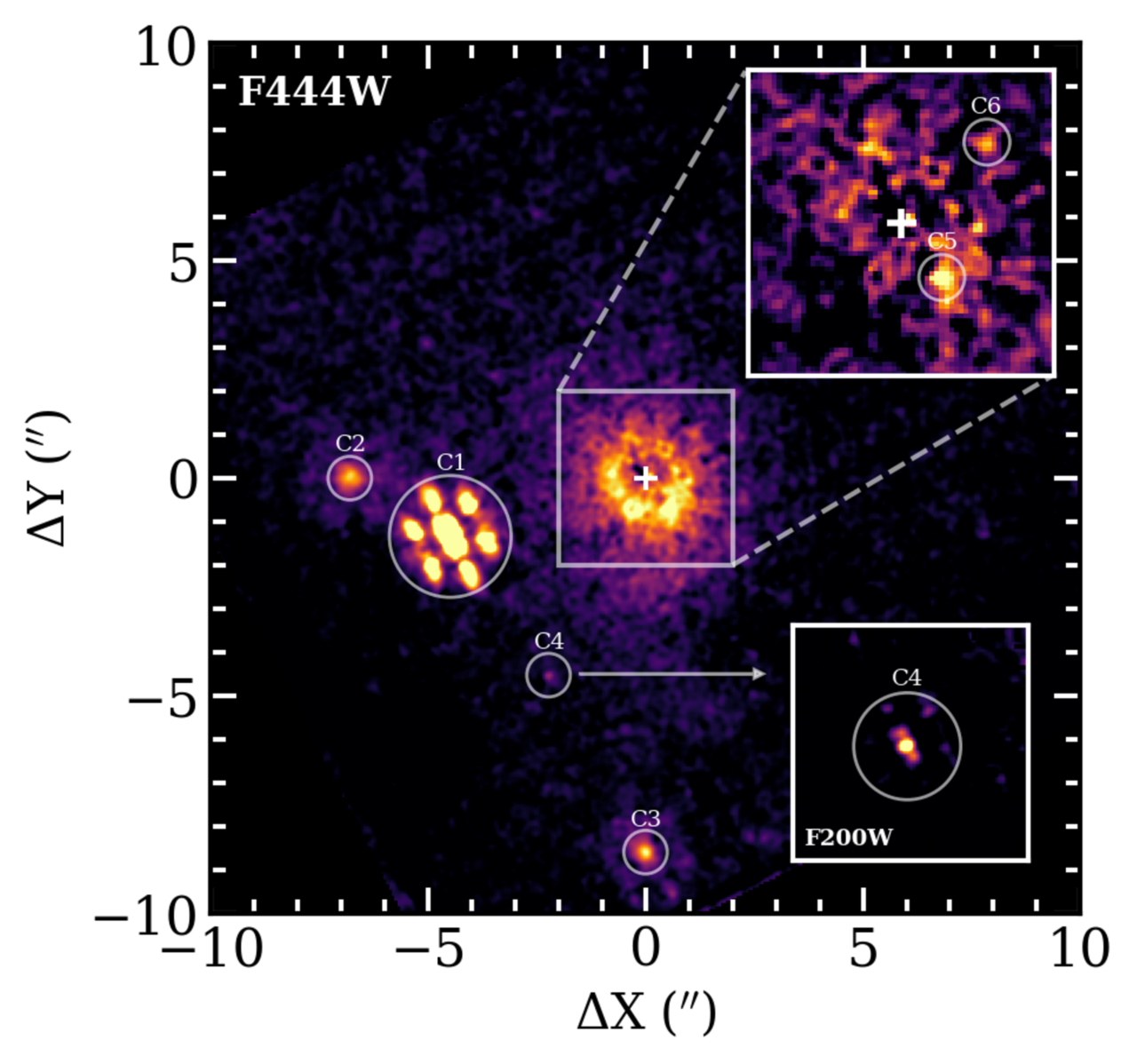
This prediction led to a search with JWST last summer. Initial observations taken at mid-infrared wavelengths revealed a bright dot sitting near the predicted location of the planet. However, with just these observations, it was hard to confidently say that this source wasn’t just a distant background galaxy that happened to appear there by chance. To help settle the matter, JWST took another look in two different near-infrared wavelength bands a few weeks later.

JWST observations of TWA 7

New JWST observations of TWA 7. The sources labeled C5 and C6 are planet candidates. C6 is located at the same place as the planet candidate identified in mid-infrared observations, making it a strong candidate. C5 requires further observations to understand if it is real or an artifact. Click to enlarge. [Crotts et al. 2025]

Revisiting TWA 7

A team led by Katie Crotts (Space Telescope Science Institute) recently published these later observations. These new data show a dot in the exact same place as before, and with a color that’s much more planet-like than galaxy-like.

While this adds plenty of evidence to the planetary interpretation, the team cautions that one more set of follow-up observations is needed to be confident that this is, in fact, a planet. Assuming future observations back up these first hints, however, this would be the lowest-mass planet ever imaged, and a happy conclusion to a detective story that started with dust.

Citation

“Follow-Up Exploration of the TWA 7 Planet–Disk System with JWST NIRCam,” Katie Crotts et al 2025 ApJL 987 L41. doi:10.3847/2041-8213/ade798

The post A Dusty Disk Points to a Potential Planet appeared first on AAS Nova.

Escaping the Dust Trap: Simulations of Dust Dynamics in Protoplanetary Disks

25 July 2025 at 17:00

Through detailed simulations of gas and dust, a recent study revealed that the behavior of dust within protoplanetary disks is a bit more complex than previously assumed.

Dust Traps in Protoplanetary Disks

As a planet forms within a protoplanetary disk — dust and gas orbiting a new star — tidal interactions between the budding body and the dusty material surrounding it can create pressure bumps where dust builds up. These dust traps appear as rings in observations of protoplanetary disks.

Dust traps are thought to play a critical role in the disk’s evolution and the early stages of planet formation. Dust traps may prevent solid material from migrating inward, starving the inner disk and impeding planet growth interior to the trap. These reservoirs may also serve as a chemical barrier, keeping volatile materials like water from moving to the inner regions of a disk.

While a perfect dust trap completely isolates material from the rest of the disk, recent observations and 2D simulations have shown that dust traps may be a bit more permeable — leaking smaller sized grains, mixing material, and changing the disk’s appearance. However, these results only account for two dimensions of the complex three-dimensional environment in which dust traps reside. Thus, 3D hydrodynamical simulations are necessary to provide more realistic details of dust dynamics within planet-hosting protoplanetary disks. 

Dusty Simulations

Dust-gas density ratios for 3d models at 1500 orbits

Z-axis averaged dust–gas density ratios (top) and dust–gas surface density ratios for the 3D simulations after 1,500 orbits. For the simulations with higher diffusion and lower planet mass, there is clear leaking of dust beyond the dust trap ring (edges marked with dotted red lines). Click to enlarge. [Huang et al 2025]

In a recent study, Pinghui Huang (Chinese Academy of Sciences; University of Victoria) and collaborators performed multiple 2D and 3D numerical simulations of gas and dust within a protoplanetary disk with a forming planet. The simulations varied the mass of the planet and the level of turbulent diffusion — how well material and energy flow and mix within the gas. These variations allowed the authors to explore how dust traps behave within different types of systems. 

The simulations showed that the embedded planet will perturb the gas and dust, producing density shocks that create gaps and, subsequently, pressure bumps where dust traps coalesce. From their analysis, the authors found that dust traps become leakier at higher levels of diffusion and when the embedded planet is lower in mass. Essentially, if the gas flows and mixes more efficiently, the perturbations of the planet are erased more quickly, and if the planet is sufficiently small, its ability to disrupt the disk is much weaker. Dust remains coupled to the gas, flowing through these weak traps without becoming stuck. Additionally, the 3D simulations show higher amounts of leakage compared to the 2D simulations, which the authors attributed to the asymmetric and complex vertical geometry of the disk.

Trapping over time.

Flux-trapping ratio (left) and mass-trapping ratio (right) as a function of time for the 2D (top) and 3D (bottom) simulations. The higher-mass planet in Model A causes more flux and mass-trapping than the lower-mass planets and more turbulent systems. Additionally, the 3D simulations show significantly lower flux and mass-trapping than the 2D simulations. Click to enlarge. [Huang et al 2025]

Implications and Comparison to Observations

What then are the consequences of leaky dust traps? In planet formation theory, dust traps determine the mass at which a planet creates a sufficient pressure bump that isolates small pebbles and dust exterior to its orbit. For perfect dust traps, this isolation of material from the planet and inner disk creates a clear chemical distinction between the inner and outer disk. However, as shown by the 3D simulations, dust traps are imperfect, allowing small particles to filter through; the authors suggest this may mean that the growing planet slows but does not stop the migration of solid materials in a disk.

Recent observations of protoplanetary disks reveal the presence of larger volatiles within the inner disk. Specifically, the disk PDS 70 shows water emission in its inner disk despite having two confirmed giant planets orbiting in the outer disk. Without leaky dust traps, volatiles like water would be trapped in the pressure bumps created by these planets. However, as the authors have shown, the complex reality of dust dynamics within protoplanetary disks allows heavier elements to leak through, enriching the inner disk. Further observations and detailed 3D simulations will allow astronomers to understand the extent of leaky dust traps and reveal the realistic conditions driving early planet formation.

Citation

“Leaky Dust Traps in Planet-Embedded Protoplanetary Disks,” Pinghui Huang et al 2025 ApJ 988 94. doi:10.3847/1538-4357/addd1f

The post Escaping the Dust Trap: Simulations of Dust Dynamics in Protoplanetary Disks appeared first on AAS Nova.

Astronomers Spot Possible Disk in Rubin Observatory First-Look Image

16 July 2025 at 18:33

Lagoon and Trifid Nebulae

Editor’s Note: Shortly after the publication of this article, we became aware that the disk described in this work was previously discovered by Wei-Hao Wang, as reported in the Astronomer’s Telegram in July 2024.

On 23 June 2025, the public got its first look at images from the NSF–DOE Vera C. Rubin Observatory — and the discoveries are already starting to roll in.

Trifid and Lagoon

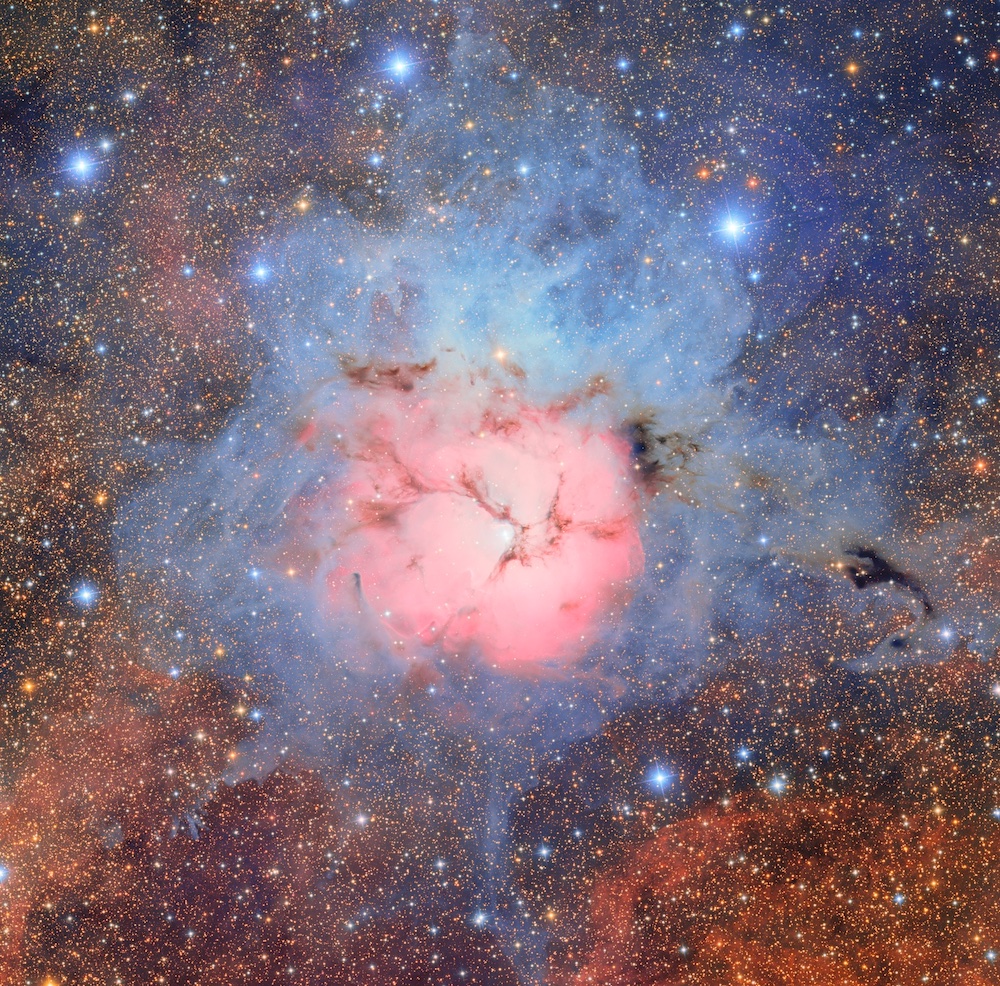
Trifid Nebula closeup

A closeup of the Trifid Nebula from one of the Rubin Observatory first-look images. [Adapted from NSF–DOE Vera C. Rubin Observatory; CC BY 4.0]

One of the first-look images from Rubin features two photogenic star-forming regions in the Milky Way: the Trifid Nebula (Messier 20) and the Lagoon Nebula (Messier 8). The image, which was constructed from 678 exposures totaling 7.2 hours of observations, demonstrates Rubin’s ability to quickly cover large swaths of sky.

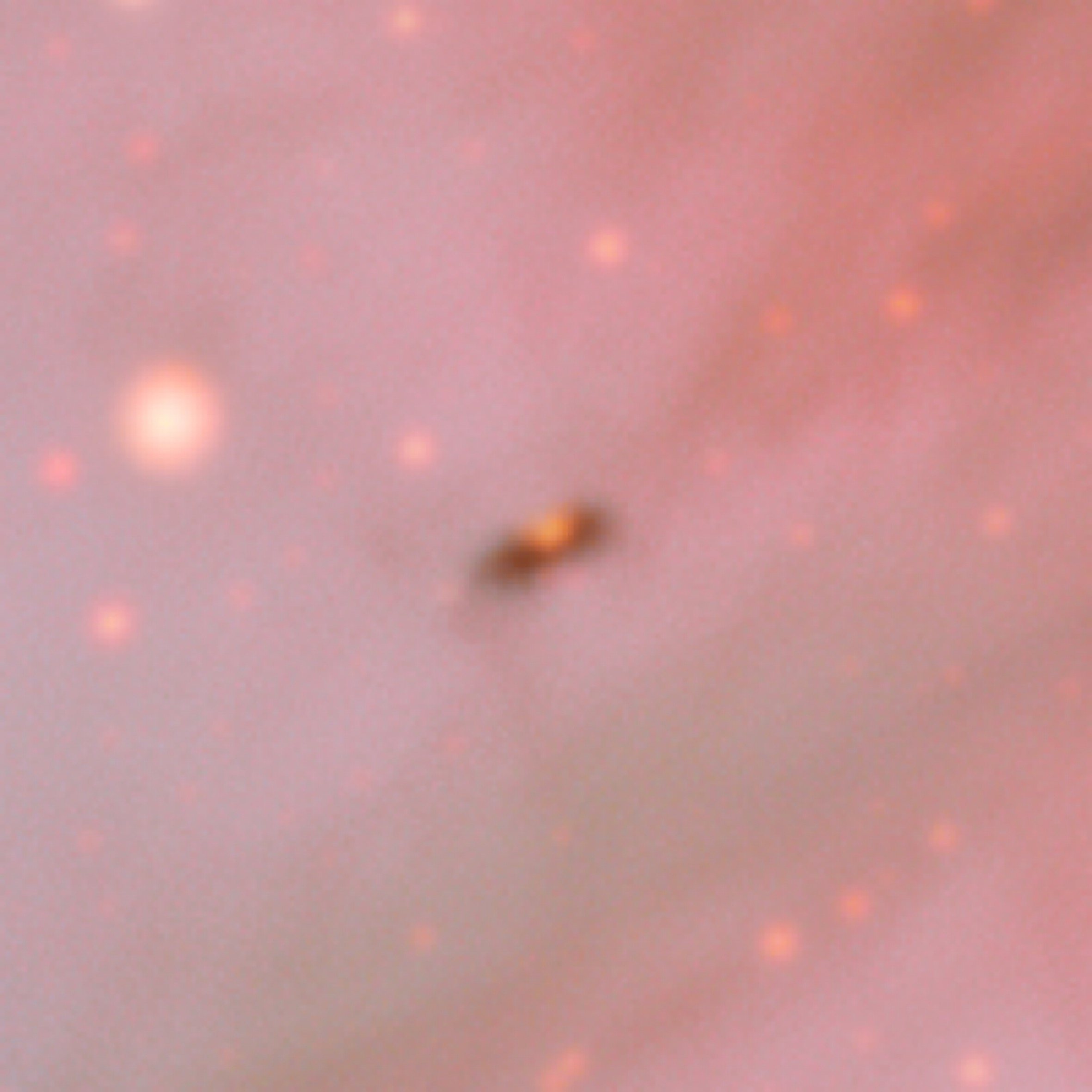
The Trifid and Lagoon nebulae are both HII regions, making them ideal places to search for circumstellar and protoplanetary disks, as well as proplyds — protoplanetary disks that are in the process of being evaporated by the intense radiation from nearby massive stars. The glowing gas of an HII region provides the background illumination needed to pick out the silhouettes of dark and dusty disks.

disk candidate

The Trifid Nebula disk candidate identified in this work. [Adapted from Zamani & Rector 2025]

Disk Detected

Published today in the Research Notes of the AAS, Mahdi Zamani (Zamani Scientific Visualizations & Imaging) and Travis Rector (University of Alaska Anchorage) reported the results of their search for proplyds in the Rubin image of the Trifid and Lagoon nebulae. The team detected one candidate circumstellar or protoplanetary disk on the edge of the Trifid Nebula, surrounded by tenuous, filamentary clouds of gas and dust.

The Rubin data don’t show evidence for ionized gas surrounding the disk, so it’s not yet clear if the object should be classified as a proplyd. The disk has a projected distance of 7.5 light-years from HD 164492A, the O-type star whose intense radiation is responsible for energizing the surrounding nebula, and may also be capable of ionizing the disk studied here.

Disk Detected

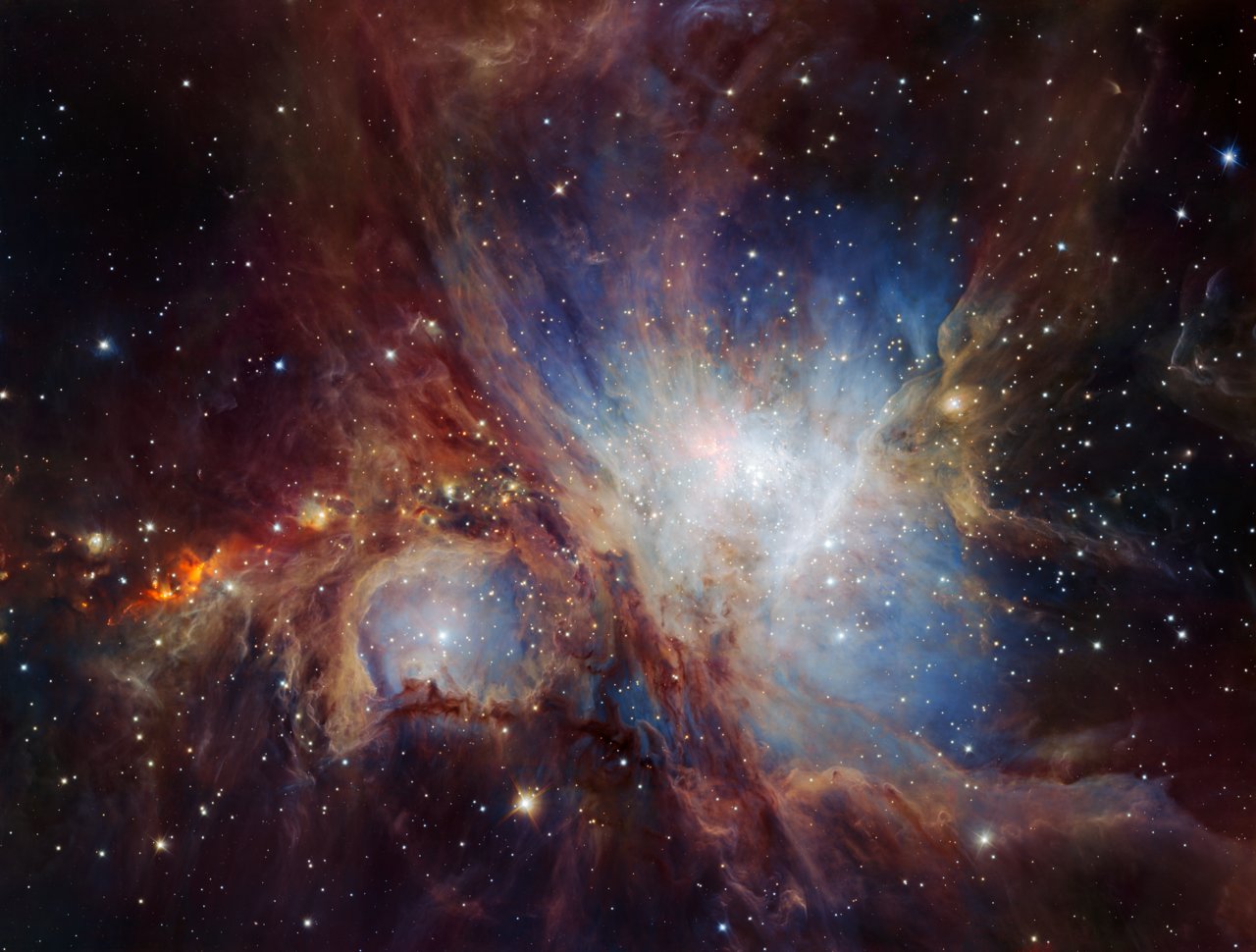
infrared image of the stars and protostars in the orion nebula

The Orion molecular cloud complex is among the most active star-forming regions in the Milky Way, home to hundreds of protostars and thousands of pre-main-sequence stars. [ESO/H. Drass et al.; CC BY 4.0]

This disk candidate is remarkable for both its size and location. With an estimated diameter of 4,000 au, it’s larger than most known circumstellar disks. Finding a disk outside the nearby Orion Nebula is also comparatively rare, since searches in more distant star-forming regions require finer resolution than the nearby Orion Nebula. (Orion is about 1,300 light-years away, and the Trifid Nebula is about 4,000 light-years away.)

Researchers have searched the Trifid Nebula previously for signs of protoplanetary disks, but while those searches found evidence for disks around hot stars near the center of the cluster, this particular disk candidate went undetected. Previous searches likely didn’t cover a large enough area of the nebula, or perhaps lacked the resolution needed to differentiate between the dusty disk and the nearby filamentary gas clouds. With Rubin’s broad field of view and precise resolution, the observatory was well-positioned to spot this disk candidate.

Citation

“The Potential Discovery of a Circumstellar Disk in M20 from Rubin First Look,” Mahdi Zamani and T. A. Rector 2025 Res. Notes AAS 9 172. doi:10.3847/2515-5172/ade982

The post Astronomers Spot Possible Disk in Rubin Observatory First-Look Image appeared first on AAS Nova.

Monthly Roundup: A Deep View of Planet-Forming Disks with ALMA

28 May 2025 at 17:00

radio images of eight protoplanetary disks

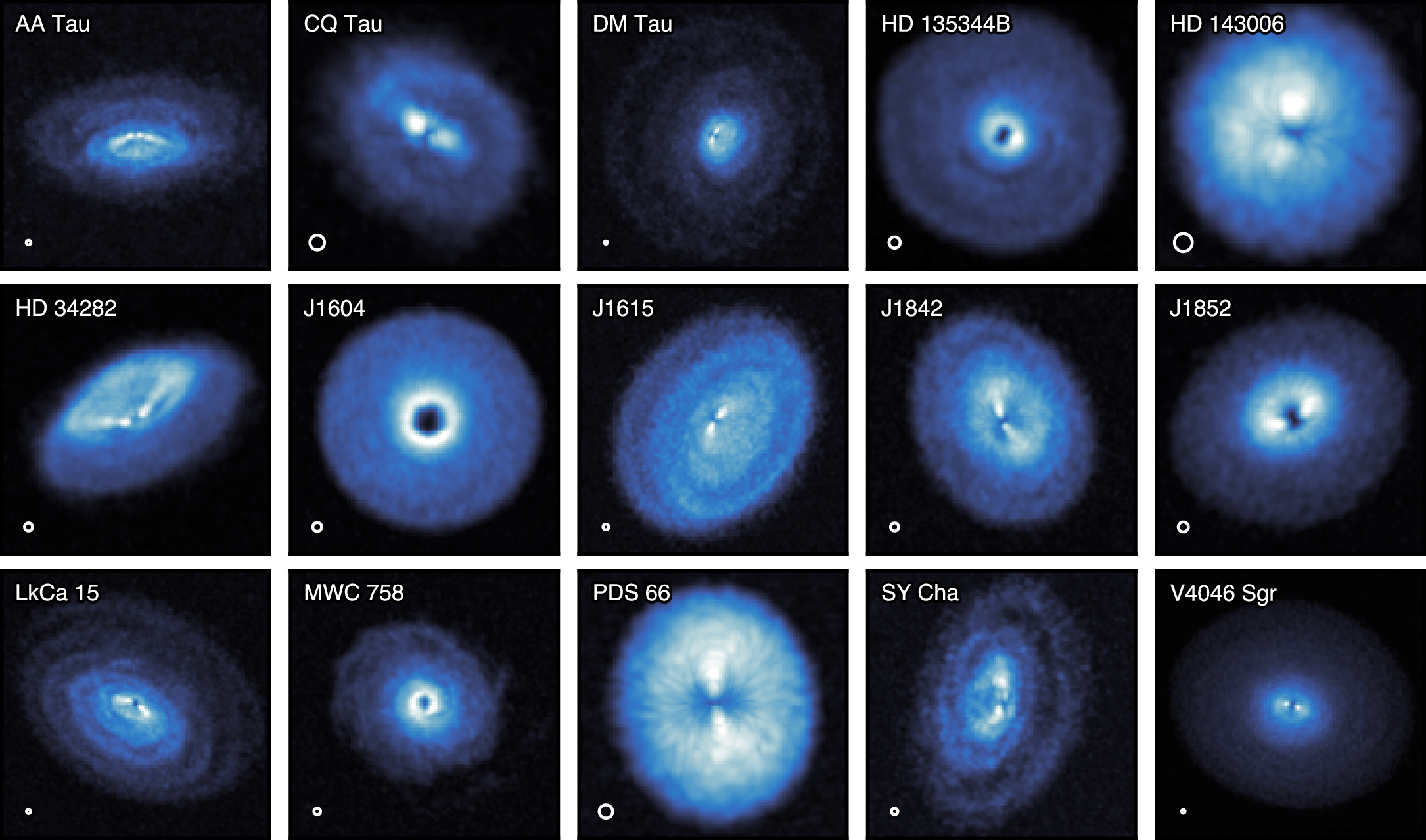
Protoplanetary disks, the sites of planet formation around young stars, are rich and complex objects. An in-depth investigation of 15 protoplanetary disks has recently been published in a Focus Issue of the Astrophysical Journal Letters. This investigation leveraged the exquisite resolution and sensitivity of the Atacama Large Millimeter/submillimeter Array (ALMA), a moveable network of 66 radio dishes in the Atacama Desert in Chile.

Featuring high-resolution observations of multiple gas species, updated image processing techniques, and state-of-the-art modeling, the exoALMA project examines the early stages of planet formation, when protoplanets embedded within dusty disks induce rings, gaps, spirals, and other structures.

This Monthly Roundup consists of quick snippets describing each of the currently published research articles in the exoALMA Focus Issue of the Astrophysical Journal Letters. Each snippet links to the corresponding research article, and the Focus Issue landing page is linked at the bottom of this post.

Introducing exoALMA

exoALMA disks

The full exoALMA sample. All 15 disks show evidence of substructure in their gas emission. [Teague et al. 2025]

First up, exoALMA project PI Richard Teague (Massachusetts Institute of Technology) and collaborators introduced the survey, the disk sample, and the science goals. The team mapped the dust and gas distributions of 15 protoplanetary disks that were selected for their brightness, large size, lack of obscuration, and low inclination angles. The three key science goals were to 1) detect protoplanets hidden within the disks, 2) study the disks’ dynamical structures, especially as these structures relate to instabilities that can perturb the disks and determine their lifetimes, and 3) determine the disks’ density and temperature structure.

Interpreting interferometric data from ALMA requires special care, as Ryan Loomis (National Radio Astronomy Observatory) and coauthors show in their overview of the data calibration and imaging pipeline. The team described their methods of processing the data, including a recently developed alignment method that greatly reduces the number of artifacts that could be mistaken for planet-induced velocity perturbations.

plot of emitting surface of J1615

Emitting height from images processed using the standard method (CLEAN) and using regularized maximum likelihood (RML). [Adapted from Zawadzki et al. 2025]

Although extreme care was taken not to introduce spurious signals through the calibration process, it’s critical to perform additional tests to confirm that detected signals are real, rather than artifacts. To that end, Brianna Zawadzki (Wesleyan University) and coauthors presented exoALMA images processed with a procedure called regularized maximum likelihood. The regularized maximum likelihood–processed images showed the same non-Keplerian features as the images processed with the standard algorithm, suggesting that these features are real.

Analysis Methods and Toolkit Testing

Analyzing observations of protoplanetary disks is challenging, motivating Thomas Hilder (Monash University) and collaborators to take the first step toward addressing issues like beam smearing, the creation of probabilistic data products, and incorporating a realistic noise model. Using their newly developed methods, the team analyzed several disks in the exoALMA sample, finding velocity substructures at greater velocities than existing methods.

Vertical structure and Keplerian rotation of the exoALMA sample

Vertical structure and Keplerian rotation of the exoALMA sample as inferred from modeling. Click to enlarge. [Izquierdo et al. 2025]

Andrés Izquierdo (University of Florida; Leiden University; European Southern Observatory) and collaborators described their methodology for investigating gas structure in the exoALMA sample. The team’s fitting method allowed them to separate the contribution of a disk’s front and back sides from the rest of its emission, leading to estimates of the orientation and vertical profile of each disk.

Jaehan Bae (University of Florida) and collaborators drew attention to the tools astronomers use to interpret observations of protoplanetary disks — namely, forward models. Bae’s team used five different hydrodynamics models to simulate a protoplanetary disk harboring an embedded giant planet. Then, they used two radiative transfer models to simulate carbon monoxide channel maps and calculate the temperature of the disk. Finally, they extracted the location of the synthetic planet. This investigation ultimately showed good agreements between the model outputs, showing that any combination of the models tested in this work is suitable.

plots of nonaxisymmetry of the exoALMA sample

Residual signal-to-noise ratio for the exoALMA sample, ordered from least to most nonaxisymmetric. Rings and gaps are marked with solid and dashed ellipses, respectively. Click to enlarge. [Curone et al. 2025]

Seeking Structure

A team headed by Pietro Curone (University of Milan; University of Chile) examined the rich ALMA dataset for signs of structure within the disks. The team modeled each disk with an axisymmetric model, then subtracted off the best-fitting model to reveal substructures and asymmetries in the disks. Several features were revealed, including shadows, offsets between inner and outer disks, spiral structures, and crescent-shaped asymmetries. Though one disk, PDS 66, was apparently without any internal structure, this investigation showed that structures are common in this sample of large, bright disks. Further work is needed, however, to explore whether these features are common in the disk population as a whole.

Maria Galloway-Sprietsma (University of Florida) and collaborators identified the disk surfaces that emit particular spectral lines. The team found that 12CO traced the upper atmosphere of the disks, while 13CO — an isotopologue of the more common molecule 12CO — and CS (carbon monosulfide) probed deeper regions. In addition, nearly all of the disks showed evidence of localized substructure, highlighting the need for theoretical work to explain the wide variety of disk structures and behaviors.

Evidence for Planets

exoALMA images of disks with velocity kinks due to the presence of a planet

From top to bottom: velocity kinks associated with an embedded planet; 12CO observations with the identified velocity kinks; filtered ALMA observations, showing the location of the planetary wake; exoALMA continuum emission; and polarimetric images. The blue circles show the locations of the purported planets. Click to enlarge. [Pinte et al. 2025]

Christophe Pinte (University Grenoble Alpes; Monash University) and collaborators analyzed substructures revealed by 12CO emission. These images revealed arcs, spiral arms, and kinks in 13 out of the 15 disks in the sample. Of these, six were consistent with wakes forming due to planets with masses between 1 and 5 Jupiter masses orbiting at 80–310 au.

Charles Gardner (Rice University; Los Alamos National Laboratory) and coauthors focused on LkCa 15, a disk that appears markedly different in dust and gas emission. The disk’s dust continuum emission shows a 40-au-wide region depleted of dust, while the gas emission, traced by CO, shows no depletion of gas in the same region. Though previous infrared observations have suggested that this dust-depleted region could host massive planets, Gardner’s team concluded that a chain of small planets or processes unrelated to planet formation likely excavated the region instead.

A team led by Jochen Stadler (Côte d’Azur University) searched for deviations from Keplerian rotational velocity — potential evidence for embedded protoplanets. The team discovered deviations up to 15% from the background velocity, with deviations appearing at both large and small radial scales. Rings and gaps visible in the dust emission tended to align with gas pressure maxima and minima, respectively. However, the team also found gas pressure structures in the outer disk that were beyond the dust emission and were not accompanied by rings or gaps.

Comparison of kinematic and emission-line-derived masses for the exoALMA sample

Comparison of kinematic and emission-line-derived masses. Click to enlarge. [Trapman et al. 2025]

Masses and Abundances

A team led by Cristiano Longarini (University of Cambridge; University of Milan) put the disks of the exoALMA sample on the scale. By modeling the rotation curves of 12CO and 13CO, the team constrained the masses of 10 disks and their central stars. Leon Trapman (University of Wisconsin-Madison) and collaborators also considered the problem of disk masses. The team used CO and N2H+ emission to measure the gas masses of 11 disks in the exoALMA sample and compared the results to previous kinematic measurements. The two sets of measurements tend to agree within a factor of three.

Giovanni Rosotti (University of Milan) and collaborators introduced a new model that connects the emitting height of CO molecules to the gas surface density and temperature. Unlike existing models, the team’s new model can be applied to optically thick observations. Comparing the results of this new method with dynamical estimates relying on interstellar medium abundances of CO yields lower gas masses, suggesting that the CO abundance in the protoplanetary disks studied is depleted relative to the interstellar medium.

Turbulence, Traps, and Vortices

Protoplanetary disks are expected to experience turbulence, large-scale gas motions, and instabilities. Marcelo Barraza-Alfaro (Massachusetts Institute of Technology) and collaborators investigated whether a program like exoALMA could detect signs of these processes at work. The team used 3D numerical simulations to explore the observational signatures of the vertical shear instability, the magnetorotational instability, and the gravitational instability. They found that rings, arcs, and spirals can arise from instabilities. While spirals present in the disks in the exoALMA sample could feasibly be due to the magnetorotational instability or the gravitational instability, ring-like and arc-like features due to the vertical shear instability were not detected.

Tomohiro Yoshida (National Astronomical Observatory of Japan; The Graduate University for Advanced Studies) and collaborators reported on their detection of pressure-broadened emission-line wings in RX J1604.3−2130 A. This detection allowed the team to constrain the disk’s gas surface density — a critical property related to the mass available to form planets. They also clearly showed a dust ring coinciding with a gas pressure maximum, proving that gas pressure maxima can create dust traps. The gas-to-dust surface density ratio at the location of this dust trap suggests that the disk has already birthed protoplanets or the dust trapping efficiency is low.

dust crescents in four protoplanetary disks

Locations of crescent-shaped dust clumps in the four disks from this study. Click to enlarge. [Adapted from Wölfer et al. 2025]

Vortices are theorized to shepherd dust grains into crescent-shaped traps, providing an environment for dust grains to clump together and grow into planetesimals and eventually planets. Lisa Wölfer (Massachusetts Institute of Technology) and collaborators searched for kinematic signatures of dust-trapping vortices in CO line emission from four disks that exhibit crescent-shaped concentrations of dust. None of the four disks exhibited the clear signature of a vortex, and higher-resolution data or observations of emission lines that trace motions closer to the midplane of the disk may be necessary to probe this signal further.

The full list of articles in this Focus Issue can be found here.

Citation

“exoALMA. I. Science Goals, Project Design, and Data Products,” Richard Teague et al 2025 ApJL 984 L6. doi:10.3847/2041-8213/adc43b

The post Monthly Roundup: A Deep View of Planet-Forming Disks with ALMA appeared first on AAS Nova.

Winds, Jets, and Wigglings from Young Stars and Their Disks

14 May 2025 at 17:00

protoplanetary disk HH 30

New JWST observations provide a detailed look at the jets of four young stars, revealing shocks, mass loss, and wiggly behavior that hints at a hidden binary companion.

Taurus star-forming region

A portion of the Taurus star-forming region. [ESO/Digitized Sky Survey 2. Acknowledgement: Davide De Martin; CC BY 4.0]

From Cloud to Star to Planetary System

The transformation from a turbulent cloud of hydrogen gas to a star circled by planets is complicated. As stars coalesce from their natal clouds, they gather gas from their surroundings and flatten it into a dense, dusty disk. While feeding on the gas from this disk, young stars launch powerful, narrow jets and broad, slower-moving winds. As accretion slows, planets begin to form, getting their start from clumps of dust grains.

In a recent research article, JWST observations give insight into the details of this process, illuminating the winds and jets of the disks surrounding young stars.

JWST’s View

Naman Bajaj (Lunar and Planetary Laboratory, The University of Arizona) and collaborators investigated four protoplanetary disks with JWST’s Near Infrared Spectrograph (NIRSpec). The four disks — Tau 042021, HH 30, FS Tau B, and IRAS 04302 — reside in the Taurus star-forming region, which is 1–2 million years old and roughly 450 light-years away.

JWST images of four protoplanetary disks

JWST images of the four disks as seen in a selection of emission lines. Green contour lines show the location of continuum emission. [Adapted from Bajaj et al. 2025]

Each of these disks displays narrow jets that emerge perpendicularly above and below the disk, nested within broad, cone-shaped winds. The disks were selected for their edge-on appearance, which highlights the jets and winds that emerge from the disk.

Bajaj’s team identified more than 40 emission lines for each disk, allowing them to determine the properties of the jets, such as the density and shock speed. One important aspect that can be gleaned from these observations is an estimate of the mass carried away by the jets. Using three independent methods, the team found that jet mass-loss rates for the four disks was on average a billionth of a solar mass per year.

The Wiggly Jet of Tau 042021

Observed locations of the center of the redshifted and blueshifted jets (circles) as well as a fit to a binary orbit model (green dashed line). [Bajaj et al. 2025]

Though appearing to jut straight out from the disk, each of the jets studied showed signs of side-to-side wiggles. Tau 042021’s jets are especially interesting, displaying mirror-symmetric wiggling, in which the redshifted and blueshifted wiggles mirror one another. At present, the only explanation for these synchronized wiggles is a binary companion. By modeling the jet wiggles as emanating from a star in a binary system, the authors concluded that Tau 042021 likely contains a 0.33-solar-mass star and a 0.07-solar-mass star in a 2.5-year orbit with a separation of 1.35 au.

Bajaj and coauthors presented a rich dataset that illuminates the behavior of jets from young stars, and their work isn’t yet done; this is the second research article the team has produced from these data, and more are in the works.

Citation

“Class I/II Jets with JWST: Mass-Loss Rates, Asymmetries, and Binary-Induced Wigglings,” Naman S. Bajaj et al 2025 AJ 169 296. doi:10.3847/1538-3881/adc73c

The post Winds, Jets, and Wigglings from Young Stars and Their Disks appeared first on AAS Nova.

❌