❌

Normal view

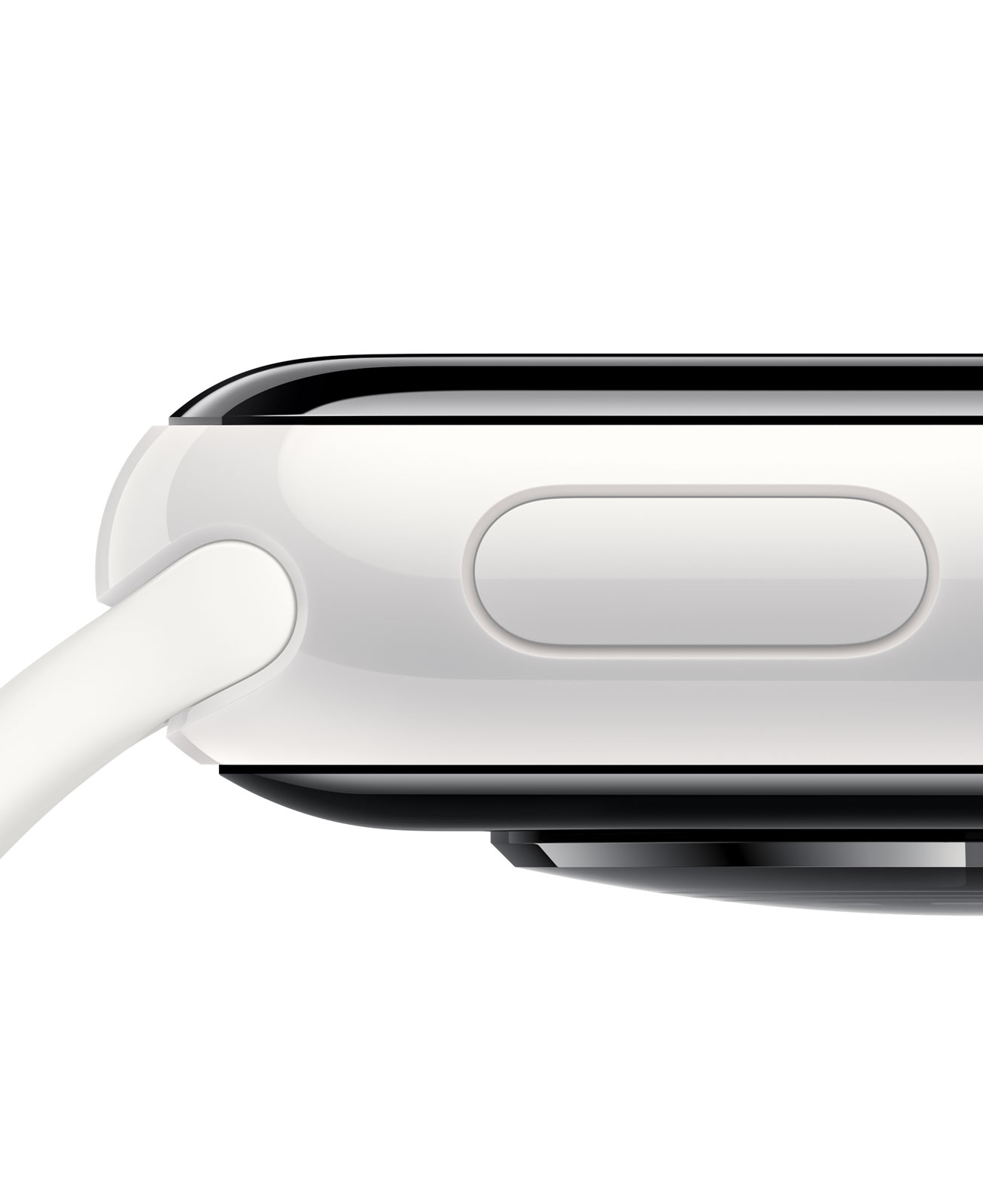
Apple Watch poderá ganhar novos formatos no futuro

10 August 2026 at 14:12

Em sua tradicional newsletter “Power On”, o jornalista Mark Gurman (da Bloomberg) tratou dos planos da Maçã para futuro do Apple Watch. A linha poderá passar por reformulações em seu formato, expandindo a variedade de modelos ofertados — mas essa mudança não estaria no horizonte de curto prazo.

Ainda que o bem-estar seja um pilar basilar do segmento de vestíveis (tanto por parte da Apple quanto na concorrência), a equipe de design industrial da empresa trabalha em novos produtos que funcionem como a resposta da Maçã à expansão da gama de dispositivos vestíveis disponíveis no mercado, sejam os anéis inteligentes ou as pulseiras sem tela.

Gurman salientou, no entanto, que essas mudanças poderão “levar tempo” para chegar ao consumidor final, e que atualizações modestas deverão definir o tom da linha durante pelo menos os próximos dois anos; ele reiterou ainda que a Apple planeja reintroduzir o acabamento em cerâmica — ou agora em setembro, com o “Apple Watch Series 12” e o “Ultra 4”, ou com os modelos que deverão ser apresentados no ano que vem —, além de apresentar melhorias significativas de performance.

Apple Watch Edition de cerâmica

Quem lidera a frente de ampliação dos vestíveis da Apple é Eddy Cue, que assumiu o comando do setor de saúde no ano passado. O executivo parece estar atento às iniciativas de empresas como a WHOOP ou a Oura, que redefiniram a relação dos wearables com a integração de recursos de inteligência artificial (IA) — o que, dada a expansão da IA no ecossistema da Maçã, poderá ser um caminho para os diferenciais em termos de software.

Os planos para o futuro, de acordo com o jornalista, envolvem variações de wearables sem telas, que deverão ser ainda mais acessíveis do que o Apple Watch SE, além de variantes que extrapolam a linha Ultra e Hermès. Gurman mencionou que, embora acredite que a hipótese nunca se transformará em um lançamento real, a Apple cogitou ainda a implementação de telas redondas.

Ao fazer um breve passeio pela trajetória do Apple Watch, ele destacou que as suas evoluções, assim como as do iPhone, partiram (e seguem partindo) de mudanças incrementais, sem romper com o formato do relógio apresentado por Tim Cook em 2014. Ao traçar um paralelo com a trajetória dos iPhones, a ampliação dos formatos do Apple Watch lembra a expectativa de que o “iPhone Ultra” redefina o paradigma de formato dos celulares da Maçã.

Apple Watch Ultra 3

Cores: natural ou preto
Pulseiras: loop Alpina, loop Trail, Oceano ou estilo milanês de titânio
R$ 7.850,50
R$ 10.499,00

Apple Watch Series 11

Material: alumínio ou titânio
Cores: cinza-espacial, prateado, ouro rosa, preto brilhante, natural, dourado ou ardósia
Tamanho: 42mm ou 46mm
Conectividade: GPS ou GPS + Cellular
Pulseiras: esportiva ou estilo milanês
R$ 4.599,00
R$ 5.499,00

Apple Watch SE 3

Cores: meia-noite ou estelar
Tamanhos: 40mm ou 44mm
Conectividade: GPS ou GPS + Cellular
Pulseira: esportiva
R$ 2.466,78
R$ 3.299,00

NOTA DE TRANSPARÊNCIA: O MacMagazine recebe uma pequena comissão sobre vendas concluídas por meio de links deste post, mas você, como consumidor, não paga nada mais pelos produtos/serviços usando os nossos links de afiliado.

Can new CEO John Ternus bring back Apple’s design mojo?

5 August 2026 at 22:00
Apple's incoming CEO John Ternus
Apple’s incoming CEO John Ternus

As Tim Cook hands the reins to hardware engineering chief John Ternus in September 2026, the company faces its biggest leadership transition in 15 years. While Cook’s tenure delivered massive revenue growth and operational excellence, many former employees and analysts say Apple has lost the product-first, risk-taking design culture that defined the Jobs years. Fortune explores whether Ternus can shift the company from steady iteration back to true innovation.

Sebastian Herrera for Fortune:
‎

Matthew Rogers remembers Apple’s scrappy days when, as an engineer fresh out of college, he could debate ideas directly with Steve Jobs… “I was 23, 24 years old, and I interacted with Steve Jobs. That’s crazy, right? But that’s the organization he ran,” Rogers told Fortune from his Silicon Valley office (he now runs food-recycling startup Mill).

Back then, Apple’s hierarchy was much flatter. What made Apple special, he said, is that Jobs surrounded himself with consumer-minded product leaders who were expected to argue. The mandate was to build “the best thing out there” and take real risks. Some of Apple’s most iconic products came out of a skunkworks team across the street from the main office.

That much-mythologized era continues to shape — and perhaps burden — Apple as it navigates its biggest leadership transition in 15 years. Somewhere along the way, Apple lost a part of its design and product magic, Rogers and several former design and hardware employees, investors, and analysts said. The September handoff from Tim Cook to incoming chief executive John Ternus, who currently leads hardware engineering, has Rogers and other longtime Apple watchers wondering: Can the company reclaim its product-first soul?

Rogers, who also cocreated smart home company Nest with former Apple executive Tony Fadell, said Ternus now faces a defining test. “I’ll put it this way,” he said. “He has a tall task, but a big opportunity.”

‎
MacDailyNews Take: As we posted on X just yesterday:

Under Tim Cook, Apple systematically strayed from Steve Jobs’ core vision. Product Design, the very soul of the company Jobs rebuilt, was demoted, sidelined, and subordinated to operations, supply-chain efficiency, and services revenue. The result? Fifteen long years of polished, but profoundly boring iteration: thinner bezels, faster chips, incremental camera bumps, and endless “Pro” variants that rarely moved the industry forward the way the original iPhone, iPad, or even the aluminum unibody MacBooks once did.

Jobs put Design at the absolute top of the food chain. Jony Ive’s group wasn’t a service department; it was the engine. Cook flipped the hierarchy. Hardware engineering, operations, and finance called the shots (poorly; witness Luca Maestri famously rejecting calls to invest in AI early on which is why he’s now sidelined). Design became reactive instead of directive. The Vision Pro launched as an impressive, but overpriced, underbaked curiosity. After billions spent, the Apple Car evaporated. True category-defining leaps simply did not happen.

Now comes John Ternus, a product person, a hardware guy who has spent his career shipping actual devices rather than optimizing margins. Early signals are encouraging: bringing trusted hardware lieutenants back into the fold and already embedding himself with the industrial design group. That is exactly the right instinct.

If Ternus moves quickly to restore Design to its rightful place at the apex of Apple’s decision-making, the company might finally escape the long, comfortable, lucrative mediocrity of the Cook era. Apple doesn’t need another fifteen years of safer, prettier, or just different iterations. It needs the return of products that make people stop, stare, and rethink what a computer in their pocket, on their wrist, or on their face can be.

The hardware engineer is about to become CEO. The question is whether he has the will — and the authority with Cook looming as Executive Chairman — to put Design back on top where Jobs left it. The next few years will tell us if Apple can innovate again… or if the iteration treadmill simply continues under a new CEO.

Fingers crossed!


‎
Please help support MacDailyNews — and enjoy subscriber-only articles, comments, chat, and more — by subscribing to our Substack: macdailynews.substack.com. Thank you!

Support MacDailyNews at no extra cost to you by using this link to shop at Amazon.

The post Can new CEO John Ternus bring back Apple’s design mojo? appeared first on MacDailyNews.

Fabricante chinesa rejeitou vender RAM a preços menores para a Apple

6 August 2026 at 15:28

Parece que a tentativa da Apple de colaborar com a fabricante chinesa de memória CXMT encontrou mais um empecilho no caminho: supostamente, a possível fornecedora demandou os mesmos valores (ou até maiores) pagos pela Maçã à Samsung Electronics e à SK Hynix. A informação veio do site sul-coreano Digital Daily.

O desgaste ocorreu após a Maçã tentar negociar os preços das memórias, tendo seu pedido de redução de preço rejeitado pela CXMT, que manteve preços semelhantes ou até mesmo superiores aos das demais fornecedoras da Apple.

Do lado da chinesa, há alguns motivos para essa postura: a barganha de uma empresa americana com uma série de exigências quanto aos processos de certificação de qualidade contrasta com o conforto do seu domínio do mercado doméstico, já que a fabricante possui contratos de longo prazo sob preços elevados com empresas como a HUAWEI e a Xiaomi.

Os desafios

Mesmo sob forte pressão da Micron e do Senado americano, a negociação com a CXMT (presente na lista de restrições comerciais do Pentágono como uma empresa militar da China, vale lembrar) foi uma alternativa encontrada por Tim Cook para mitigar os efeitos da crise de memória.

De acordo com um executivo da indústria de semicondutores consultado pelo veículo sul-coreano, a postura da CXMT ajudou a estabelecer um piso para os preços praticados com a DRAM 1Dynamic random access memory, ou memória dinâmica de acesso aleatório. convencional, suficiente para que a Samsung e a SK Hynix cobrassem um valor consideravelmente mais alto. Esse conforto mercadológico quanto às fornecedoras ocidentais também diz respeito ao foco de produção para memórias de alto desempenho destinadas a data centers de inteligência artificial (IA), deixando a produção para eletrônicos de consumo em segundo plano — o que naturalmente provoca escassez.

Segundo o analista Tim Culpan, a Apple e seus fornecedores estão correndo contra o relógio para obter chips de memória a tempo do lançamento da próxima geração de iPhones, prevista para ser anunciada no mês que vem. Esse cenário fez com que a Maçã recorresse especialmente à Micron, à Samsung e à SK Hynix. A escassez poderá afetar a disponibilidade do “iPhone 18 Pro” e do “iPhone 18 Pro Max”, embora ainda exista alguma confiança de que a demanda inicial poderá ser suprida.

Resta a dúvida se a Apple seguirá em suas tratativas com a CXMT ou se dará o braço a torcer aos interlocutores estadunidenses dessa história. Em ambos os cenários, infelizmente, parece que a conta irá chegar mais alta ao consumidor final.

via Wccftech, MacRumors

Notas de rodapé

  • 1
    Dynamic random access memory, ou memória dinâmica de acesso aleatório.

Apple fecha o melhor trimestre abril-junho da sua história no último balanço de Tim Cook

2 August 2026 at 14:30

Todas as empresas de capital aberto (que possuem ações à venda na bolsa de valores) são obrigadas, por lei — na maioria dos países (inclusive Brasil) —, a disponibilizar publicamente suas demonstrações financeiras periodicamente. Esse costuma ser um momento bastante esperado por acionistas (analisando se a empresa na qual estão investindo está sendo bem administrada e gerando lucros), investidores (para captar novas oportunidades de alocar seus recursos), além da imprensa e de curiosos em geral. Na última quinta-feira (30/7), foi a vez da Apple de divulgar seus resultados financeiros referentes ao trimestre abril-junho de 2026.

Para alegria de todos, o CEO 1Chief executive officer, ou diretor executivo. Tim Cook se despede da sua posição com o melhor terceiro trimestre fiscal que a empresa já registrou — um recorde absoluto! Como já informado aqui no MacMagazine, no período de abril a junho (encerrado no dia 27/6), a companhia relatou uma receita de US$109,4 bilhões (alta de 16,4%) em relação ao mesmo trimestre do ano anterior, e lucro líquido de US$29,8 bilhões (um avanço de 27%). A margem bruta chegou a incríveis 50,1%, a maior já apurada em períodos semelhantes da história da empresa!

Hoje, a Apple tem orgulho de relatar o nosso melhor trimestre de abril-junho de todos os tempos, com crescimento de receita de dois dígitos em iPhone, Mac e Serviços, e em todos os segmentos geográficos.

A fala acima é de Cook. Ele deixará o cargo em 1º de setembro, quando John Ternus assumirá, e passará a presidir o conselho de administração.

O fenômeno Mac

Uma das grandes surpresas do relatório foi o crescimento no faturamento de Macs. Pela primeira vez, a categoria ultrapassou a casa dos US$10 bilhões em um trimestre abril-junho, e o crescimento de 29% superou o do iPhone.

A explicação está em parte na procura alucinada por Macs mini para rodar agentes de inteligência artificial e na leva de lançamentos de março: MacBook Air com M5, MacBook Pro com M5 Pro e M5 Max, e principalmente o MacBook Neo, o modelo de entrada que estreou a US$600 — preço que subiu para US$700 em junho, no reajuste geral motivado pelo custo de memória. A Apple parece ter encontrado um mercado relevante abaixo do Air, e vale acompanhar o que isso faz com a margem da linha nos próximos trimestres.

O iPad foi a única categoria no vermelho, com queda anual de 6%. Não é surpresa: a própria Apple havia avisado que a comparação seria difícil, pois no ano anterior houve o lançamento do iPad com chip A16. O iPad Air com M4, que chegou em março, não foi suficiente para compensar. Cabe ainda analisar se o bem-sucedido MacBook Neo não acabou levando um pouco do mercado dos tablets, também.

O asterisco que quase ninguém vai mencionar

A margem bruta de 50,1% e o lucro por ação de US$2,02 não são resultado apenas da operação, e esse detalhe se perde facilmente na comemoração dos recordes.

À primeira vista, no press release — e nos comentários que fizemos no último podcast —, esse ponto não ficou bem claro, mas merece atenção. A Apple informou, no comunicado, que a margem incluiu cerca de dois pontos percentuais e o lucro por ação incluiu US$0,11 vindos de reembolso de tarifas, dinheiro que a empresa havia pago ao governo americano e recebeu de volta depois que a Suprema Corte derrubou, em fevereiro, as tarifas impostas sob a IEEPA (a lei de poderes econômicos internacionais de emergência). A empresa não detalhou a origem exata dos valores devolvidos, mas a decisão da Corte é o evento que abriu caminho para os reembolsos.

É dinheiro real, entra legitimamente no resultado, mas não é recorrente e não diz nada sobre a capacidade da Apple de vender aparelhos. Descontando o efeito, a fotografia muda um pouco: a margem bruta cai para aproximadamente 48%, exatamente o que o consenso projetava, e o lucro por ação vai para cerca de US$1,91, contra os US$1,89 esperados. De uma superação de 6,9% no lucro, sobra uma de pouco mais de 1%.

Ou seja: o trimestre continua bom em receita e em volume, que são genuinamente fortes. Mas o brilho extraordinário no lucro é, em boa parte, contábil, e não se repete.

A Apple abre a margem bruta em dois blocos apenas: produtos e serviços. Ela nunca divulga margem por categoria individual (não existe margem oficial de iPhone, Mac ou iPad em documento nenhum da empresa, e todo número desse tipo que circula é estimativa de analista), mas os dois blocos que ela abre já contam a história.

Linha de negócioMargem do FQ3 2026Margem do FQ3 2025Variação
Produtos40,07%34,52%+5,55pp
Serviços75,62%75,58%+0,04pp
Consolidado50,06%46,49%+3,57pp

A margem de hardware subiu 5,55 pontos percentuais em 12 meses. A margem de hardware não sobe 5 pontos por ganho de eficiência: é ali que o reembolso de tarifas desembarcou, porque tarifa incide sobre produto físico. A prova está na linha seguinte: serviços, que não pagam tarifa nenhuma, ficou praticamente parado. A melhora não foi operacional.

Vale registrar um desequilíbrio que explica boa parte do valuation da Apple. Serviços representam 28,1% da receita, mas respondem por 42,4% do lucro bruto do trimestre. Produtos são 71,9% da receita e apenas 57,6% do lucro. Cada dólar de serviço vale quase o dobro de um dólar de hardware, e é por isso que o mercado aceita pagar perto de 40x o lucro por uma empresa que, no fim das contas, vende telefone.

Serviços: um pequeno sinal de alerta

Os relatórios revelaram um problema silencioso do trimestre. Serviços cresceram 12,1%, um bom número isolado, mas bem abaixo dos 16,2% do trimestre encerrado em março e, mais grave, abaixo do que a própria Apple havia sinalizado. Na teleconferência de abril, o diretor financeiro Kevan Parekh disse que os serviços cresceriam em ritmo “similar ao reportado em março” (ou seja, algo perto de 16%, ressalvando o efeito cambial). Ficaram cerca de 4 pontos percentuais aquém.

A linha chegou a recuar 0,8% em relação ao trimestre imediatamente anterior. Foi o único item da projeção que a Apple não cumpriu, e não é um item qualquer: é o que sustenta o múltiplo da ação. Parte da imprensa de mercado atribuiu a reação negativa à combinação de serviços com a Grande China, embora as estimativas para a região divergissem bastante entre as casas: havia projeções de US$18,8 bilhões, que o resultado cumpriu, e de US$19,5 bilhões, que não.

Some-se a isso um risco que não tem data marcada. Boa parte da receita dos serviços vem do acordo pelo qual o Google paga à Apple para ser o buscador padrão do Safari — cerca de 36% da receita de anúncios de busca, algo próximo de US$20 bilhões por ano. Existe um processo em andamento que questiona a legitimidade desta taxa. A sentença de setembro de 2025 permitiu que o acordo continuasse, mas o Departamento de Justiça dos Estados Unidos recorreu em fevereiro de 2026 e o Google entrou com recurso próprio em maio. Se a decisão cair, o buraco nessa linha é de dois dígitos de bilhão!

Três números que o comunicado não destaca

Fora das manchetes do balanço, três indicadores das demonstrações merecem atenção, e nenhum deles apareceu no material de divulgação.

  1. O estoque quase dobrou, de US$5,7 bilhões em setembro de 2025 para US$11,1 bilhões, alta de 94%. Uma empresa que é referência mundial em operar com estoque enxuto dobrou o estoque em 9 meses. A leitura mais provável é compra antecipada de memória, antes que os preços subam ainda mais. É a confirmação contábil do que Cook disse em junho, quando afirmou que aumentos de preços eram inevitáveis.
  2. Pesquisa e desenvolvimento saltou para US$11,7 bilhões, o dobro do ritmo da receita, e passou de 9,4% para 10,7% do faturamento. Ao mesmo tempo, o investimento em ativo fixo (equipamentos, imóveis, veículos etc.) caiu 28% no acumulado de 9 meses. É a tese da IA “capital-light” traduzida em números: a Apple gasta mais em gente e software, e menos em concreto e servidor, apostando em rodar inteligência nos mais de 2 bilhões de aparelhos que já estão nas mãos dos usuários. O oposto de Microsoft, Google e Amazon.
  3. O caixa operacional de 9 meses foi de US$117 bilhões, contra US$81,8 bilhões. Mesmo assim, a recompra de ações caiu de US$70,6 para US$62,1 bilhões. A Apple está segurando dinheiro, o que é coerente com o estoque dobrado e com uma troca de comando marcada para 1º de setembro.

Há ainda um detalhe na linha de outras receitas, que agrupa o que a Apple ganha fora da operação: juros do caixa aplicado, juros pagos sobre dívida, variação cambial e valorização de participações minoritárias. O resultado foi de US$572 milhões positivos, contra US$171 milhões negativos há um ano — um giro de US$743 milhões. A carteira de caixa e aplicações subiu para US$146,5 bilhões, enquanto a dívida caiu para US$82,3 bilhões. Mais dinheiro rendendo, menos juros a pagar. É lucro financeiro, não operacional.

A projeção para setembro veio bem abaixo

O trimestre relatado é recorde. A projeção que o acompanha, não. E como o mercado precifica futuro e não passado, foi ela que dominou a reação. A ação, que havia fechado o pregão a US$333,43, caiu cerca de 6,5% na negociação estendida ao longo da teleconferência, o que equivale a aproximadamente US$317 bilhões de valor de mercado. No dia seguinte, a queda se confirmou: -7,35%. A projeção da Apple para o trimestre de setembro, o último do ano fiscal, veio com dois números desconfortáveis.

IndicadorFQ3 2026 (real)FQ4 2026 (projetado)
Crescimento de receita16,4%de 9% a 11%
Margem bruta50,1%de 47% a 48%
Margem bruta sem reembolso de tarifas48,1%de 47% a 48%
Receita implícitaUS$109,4 bilhõesde US$111,7 a US$113,7 bilhões

A desaceleração de 16,4% para algo entre 9% e 11% já seria suficiente para incomodar. O que agravou foi a justificativa: Parekh afirmou que o impacto das restrições de oferta deve “aumentar significativamente” em relação ao trimestre anterior — citando explicitamente iPhone, Mac e iPad —, e mencionou ainda ventos contrários de câmbio sobre a receita de iPhone.

A margem projetada de 47% a 48% é o número mais revelador de todo o balanço. Ela fica abaixo do resultado limpo deste trimestre sem o reembolso de tarifas. Ou seja: a Apple está dizendo que a margem vai cair de verdade, em bases comparáveis. O colchão de estoque de memória comprado a preço favorável, que segurou os custos nos últimos trimestres, está acabando, e o trimestre de setembro é justamente o que carrega o lançamento dos “iPhones 18 Pro/18 Pro Max” — e provavelmente do “iPhone Ultra”, o primeiro dobrável da empresa.

O que Ternus herda

Ternus assumirá como diretor executivo em 1º de setembro, com Cook passando a presidente executivo do conselho. A julgar pelo balanço, ele recebe uma casa em ordem: receita recorde, base instalada de aparelhos ativos em máxima histórica em todas as categorias principais, patrimônio líquido de US$107,5 bilhões e — possivelmente — a companhia mais valiosa do mundo.

Recebe também três problemas bem definidos. O primeiro é o custo de memória, que já forçou aumentos de preço no MacBook Air, no Mac mini e no Mac Studio, e que agora vai comprimir margem sem o amortecedor do estoque barato.

O segundo é a desaceleração dos serviços, com os recursos judiciais contra o acordo de busca com o Google ainda pendentes.

O terceiro é entregar a Siri reformulada, anunciada na WWDC26, movida pelo Gemini do Google, prevista para o ciclo do iOS 27 e adiada por tempo indeterminado na União Europeia — decisão que a Apple atribui às exigências da Lei dos Mercados Digitais (Digital Markets Act, ou DMA).

A leitura mais honesta deste balanço talvez seja esta: Cook encerra sua gestão entregando o melhor trimestre abril-junho da história da Apple, a maior capitalização de mercado do mundo e uma operação que cresce dois dígitos em todos os continentes em que atua. O que ele não entrega pronto é a próxima curva: provar que a aposta de rodar inteligência artificial dentro do aparelho, e não na nuvem, vale o múltiplo de 40x que a ação vinha cobrando. Essa parte, agora, é com Ternus.

Metodologia

Os números do trimestre e do comparativo anual foram extraídos das demonstrações consolidadas condensadas não auditadas da Apple referentes ao terceiro trimestre fiscal de 2026 e ao terceiro trimestre fiscal de 2025, conferidas linha a linha. As margens por linha de negócio, os indicadores de balanço patrimonial e de fluxo de caixa e todos os percentuais foram calculados a partir desses documentos.

As estimativas de consenso de Wall Street citadas foram compiladas antes da divulgação junto a Yahoo Finance, TipRanks, Zacks, Visible Alpha, Hudson Labs e Goldman Sachs.

A projeção para o trimestre de setembro e as declarações do diretor financeiro vêm da teleconferência de 30 de julho de 2026, com apuração de 9to5Mac, CNBC e AppleInsider.

Os dados de mercado chinês são da IDC e da CAICT. A série de fechamentos mensais da ação tem origem em StatMuse, StockAnalysis.com, FinancialContent e Macrotrends, via S&P Global Market Intelligence.

O ajuste identificado como “sem reembolso de tarifas” não é uma linha contábil: é cálculo próprio a partir do efeito que a Apple declarou no comunicado de resultados.

Observação

Este texto não constitui recomendação de investimento.

Notas de rodapé

  • 1
    Chief executive officer, ou diretor executivo.

Apple Supports Japan Earthquake Relief Efforts

By: Jack
1 August 2026 at 22:21

Japan earthquake relief efforts will receive financial support from Apple following the powerful earthquake that struck Kumamoto Prefecture on the island of Kyushu.

CEO Tim Cook announced the donation through social media on July 30. He expressed concern for people facing the earthquake and continuing aftershocks while thanking the first responders helping affected communities.

“Japan has a very special place in my heart.”

Cook wrote before confirming that Apple was making a donation to support relief work.

Apple did not disclose the amount, recipient organizations or whether its contribution would support the immediate emergency response, longer-term reconstruction or both. The company frequently keeps disaster donation amounts private, even when Cook publicly confirms its participation.

The announcement came as rescue teams continued searching damaged homes, industrial facilities and the remains of a shopping center. Survivors were dealing with water shortages, disrupted transportation, damaged buildings and dangerous summer temperatures.

A cityscape with mid-rise buildings, a central school with a dirt sports field, and lush green trees in the foreground. In the wake of the Japan earthquake relief efforts, signs of recovery are evident throughout the scene. Distant hills and a hazy sky are visible in the background.
Image Credit: Wikimedia

Japan Earthquake Relief Follows Deadly Kumamoto Disaster

The earthquake struck southwestern Japan on Tuesday, July 28. Japanese reporting and international agencies have described it as a magnitude 7.1 event, while the U.S. Geological Survey measured it at magnitude 6.8. Differences can occur because agencies use different measurement methods and datasets.

The earthquake reached the highest level on Japan’s seismic intensity scale in parts of Kumamoto. Strong shaking damaged roads, houses and public infrastructure across communities near the epicenter.

The confirmed death toll had risen to 34 by Friday, according to Kumamoto prefectural authorities. Additional people were injured or remained missing as emergency workers entered the period when the likelihood of finding survivors beneath collapsed structures begins to decline sharply.

One of the most severe incidents involved an explosion and partial collapse at a shopping center. The earthquake also toppled a large chimney at a paper factory, damaged traditional homes and caused another section of the stone walls at Kumamoto Castle to collapse.

The historic castle was undergoing extensive restoration after the 2016 Kumamoto earthquakes. Damage to rebuilt or partially restored areas illustrates how recovery from one major disaster can remain unfinished when another arrives.

Aftershocks continued during the rescue operation, increasing the danger for emergency personnel entering unstable buildings. They also discouraged residents from returning to damaged homes, even when those structures remained standing.

Thousands of survivors moved into public shelters or slept inside vehicles. Some families chose cars because evacuation centers were crowded, while others feared that another strong tremor could collapse weakened buildings.

Extreme heat added another emergency. High summer temperatures can quickly create dehydration, heat exhaustion and medical complications, particularly for older people, children and residents sleeping in vehicles without reliable cooling.

Apple Donation Joins an Expanding Corporate Response

The Apple donation places the company among several technology and entertainment businesses providing money for Japan earthquake relief and reconstruction.

The Pokémon Company announced a contribution of 100 million yen to Kumamoto Prefecture, the Japanese Red Cross and other support organizations. The funding is intended to assist people affected by the earthquake and support restoration across damaged areas.

Sony committed 50 million yen and began collecting additional employee donations that the company will match. Its contribution is being directed toward the Japanese Red Cross and an emergency fund operated with Save the Children.

Sony has a direct industrial connection to Kumamoto through its semiconductor operations. The company described the prefecture as a community with which it has developed deep ties since establishing the Kumamoto Technology Center in 2001.

Apple also maintains substantial commercial and cultural connections with Japan through its retail stores, developer community, suppliers and customers. Cook has visited the country repeatedly and has met Japanese developers, musicians, educators and manufacturing partners during previous trips.

The amount behind Apple’s latest commitment may never be made public. The absence of a disclosed figure prevents direct comparison with other corporate donations, and it also leaves unanswered which organizations will distribute the money.

Relief contributions can support several different stages of a disaster response. Immediate funding may pay for water, food, temporary shelter, medical care and emergency equipment. Later funding can help repair homes, restore community services and assist families whose employment disappeared with damaged businesses.

The timing of Apple’s donation places it during the immediate emergency rather than after the complete scale of destruction has been calculated. Recovery costs will continue changing as inspectors determine which buildings can be repaired and which must be demolished.

A man in a black shirt smiles while posing next to a large Pikachu mascot, with several smaller Pikachu figures on shelves in the background—capturing a true Tim Cook’s Pikachu Moment. An apple japanese logo is visible in the bottom right corner.

Kumamoto Faces Another Long Recovery

Kumamoto experienced a destructive sequence of earthquakes in April 2016. Those events killed dozens of people, damaged or destroyed more than 100,000 buildings and displaced large numbers of residents.

Apple responded at the time by allowing customers to send donations to the Japanese Red Cross through iTunes. The system offered preset contribution amounts that were transferred without Apple retaining a percentage.

The company has used similar responses after earthquakes, hurricanes, floods and wildfires in several countries. Cook usually announces the commitment publicly while leaving the amount and distribution arrangements private.

Apple has previously contributed directly to relief organizations and has sometimes provided matching programs for employee donations. It has not announced whether employee matching or a customer donation channel will accompany the current Japan earthquake relief commitment.

The 2026 disaster presents different immediate pressures from the 2016 earthquakes because it arrived during intense summer heat. Shelter capacity alone does not solve the problem when buildings lack sufficient cooling, water or private areas for medically vulnerable residents.

Japanese authorities deployed Self-Defense Force personnel and emergency teams to support local rescuers. Prime Minister Sanae Takaichi instructed agencies to prioritize the protection of life, collect information quickly and coordinate assistance across national and local government.

Electricity had been restored by Friday evening, according to the local power company, but water remained a serious concern. Kumamoto authorities said nearly 80,000 homes were still without running water, creating demand for bottled supplies, mobile water stations and sanitation support.

A water interruption affects more than drinking. Hospitals, shelters, restaurants and homes need reliable supplies for hygiene, food preparation and medical care. Restoration can take longer than electricity because ruptured pipes must be located, isolated and repaired across damaged roads and neighborhoods.

Apple Donation Arrives Before the Full Damage Is Known

Apple’s announcement communicates support without defining how the money will be used. The effectiveness of the contribution will depend on the recipient, timing and ability to direct funding toward needs that remain after the first wave of public attention passes.

Immediate rescue work receives the greatest visibility, but rebuilding homes and local businesses can continue for years. Families may need temporary housing long after shelters close, while damaged schools, transportation routes and medical facilities require larger reconstruction programs.

Private donations cannot replace government disaster funding. They can provide additional flexibility for relief groups that need to purchase supplies quickly or reach people whose circumstances do not fit standard assistance programs.

The continuing aftershocks also make damage assessments provisional. A building considered stable after the first inspection may require another examination, while rain or additional shaking can affect weakened slopes and structures.

Apple has not indicated whether it will open a public donation channel through the App Store or another service. Its current response is limited to the corporate contribution confirmed by Cook.

The next stage of Japan earthquake relief will move from search operations toward shelter support, structural inspections and temporary housing. In Kumamoto, the most urgent calculation is already measured beyond financial totals: nearly 80,000 homes need running water restored while residents endure the hottest weeks of the Japanese summer.

The post Apple Supports Japan Earthquake Relief Efforts appeared first on AppleMagazine.

How Apple Changed Under Tim Cook: 15 Years in Numbers

31 July 2026 at 21:29
Apple CEO Tim Cook participated in his final Apple earnings call yesterday, with incoming CEO John Ternus set to take over on September 1. With Cook's tenure coming to an end, we thought we'd take a look at how Apple has changed over the last 15 years.


Cook took over as CEO on August 24, 2011, after Steve Jobs resigned.

Apple's Revenue


During yesterday's earnings call, Bank of America analyst Wamsi Mohan shared an interesting observation about Apple's quarterly earnings. When Cook took over as CEO, Apple's revenue for all of 2011 was $108 billion.

Apple reported $109.4 billion for Q3 2026, earning its 2011 revenue in a single quarter. We don't have the numbers for fiscal 2026 yet, but in fiscal 2025, revenue was $416 billion.

iPhone revenue in 2011 was $47 billion, and just this quarter, it was $54.3 billion.

Valuation


Apple stock is down today after Cook said he expects supply constraints and memory shortages to affect revenue in the current quarter, but last week, Apple briefly hit a market cap above $5 trillion. Apple's market cap is now around the $4.5 trillion mark, and it once again trails Nvidia for world's most valuable publicly traded company.

Apple was the first company to reach a $1 trillion valuation in August 2018, the first to reach $2 trillion in August 2020, and the first to reach $3 trillion in January 2022. It was the third company to hit a $4 trillion valuation in October 2025, and then the second to reach $5 trillion.

A day after Cook took over in August 2011, Apple's stock price was $13.35 (split-adjusted). Today, it opened at $304.81, a roughly 23x increase. There was a 7-for–1 split in 2014 and 4-for–1 split in 2020 during Cook's tenure.

Installed Base


Apple said it has over 2.5 billion active devices. Apple didn't share installed base numbers until 2016, when it hit a billion active devices.

Services


Apple's services category revenue has seen the most growth. It was $9.4 billion in all of 2011, but in Q3 2026, it was $30.7 billion. In fiscal 2025, services brought in $109 billion.

Apple said during the earnings call that it now has 1.5 billion subscriptions. A huge number of services launched under Cook, including:

Back in 2011, Apple's services were limited to AppleCare, iTunes, and the ‌App Store‌.

Product Launches


Under Cook, Apple launched everything from the AirPods to the Apple Watch.

Capital Returns


Cook initiated quarterly dividends in 2012, and also executed an ongoing share repurchase program. Since then, Apple has returned more than $1 trillion to shareholders.

Transition to John Ternus


Cook said yesterday that the transition to Ternus is "going seamlessly." Ternus will become CEO on September 1, ahead of when Apple announces new iPhone models. Cook will remain at Apple as executive chairman, where he will engage with policymakers and help Apple navigate regulatory pressure.

In April, Cook said he planned to remain at Apple for years to come. "I am healthy. My energy is high, and I plan to be in this role for a long time," said Cook. He said he will support current hardware engineering chief John Ternus in any way necessary when Ternus takes over as CEO, and he plans to continue to offer knowledge and experience whenever it's needed. "Apple will be my top priority," he said. "It's who I am at my core, and I can't imagine it any other way."

Cook on Ternus


Cook yesterday said Ternus is the best choice to take over Apple.
The transition is going seamlessly, and I am beyond excited for John to step into his new role and lead Apple into its next era. He is truly one of a kind and there is no better person to take the helm of the company.

As I've said, I couldn't be more confident in his leadership, in our executive team, and in the extraordinary people at Apple who are determined to enrich the lives of our users all over the world. We have a bright future ahead, and I truly have never been more optimistic.

Ternus has been at Apple since 2001, when he joined the product design team. He became vice president of hardware engineering in 2013 and focused on the AirPods, Mac, and iPad. In 2020, he also took on the iPhone, and he became senior vice president of hardware engineering in 2021.
This article, "How Apple Changed Under Tim Cook: 15 Years in Numbers" first appeared on MacRumors.com

Discuss this article in our forums

Apple’s Q3 2026 Results

31 July 2026 at 19:31

Apple (transcript, Hacker News):

The Company posted quarterly revenue of $109.4 billion, up 16 percent year over year.

[…]

“Today, Apple is proud to report our strongest June quarter ever, with double-digit revenue growth across iPhone, Mac and Services, and in every geographic segment,” said Tim Cook, Apple’s CEO.

Jason Snell:

iPhone revenue was up 22%, Mac revenue was up 10.4%, Services revenue was up 12%, and Wearables revenue was up 6%. iPad revenue was down 6%.

John Voorhees:

Together, iPhone and Services accounted for 77.7% of Apple’s $109.4B in net sales.

Jordan Golson:

Gross margin for the quarter was 50.1 percent, compared to 46.5 percent in the year-ago quarter.

Jason Snell:

You can’t argue with the strong iPhone and Mac sales figures, and Apple specifically called out the MacBook Pro and the MacBook Neo, which Cook said “has been especially popular” and suggested that the company is still struggling to make them fast enough.

It’s admirable (and sensible) that Cook isn’t pointing fingers at anyone but customers who want Apple products, but the key phrase in his statement is “the supply chain just has less flexibility in it than normal.” This is an acknowledgement that while in the past, Apple might have been able to boost chip production from its partners, today the chip industry is maxed out thanks to the wild building of chips for AI applications.

[…]

As an aside, Cook also alluded to reports that Apple has tried to get the U.S. government to authorize purchase of RAM from some forbidden Chinese chipmakers, which has aroused political ire.

See also: MacRumors.

Previously:

Apple stock price plummets as supply chain snarls mar forecast in Cook’s final earnings as CEO

31 July 2026 at 16:00

Apple stock price plummets as supply chain snarls mar forecast in Cook's final earnings as CEO

Apple shares fell nearly 10% on Friday after a disappointing forecast revealed struggles to secure enough components amid the AI-driven data center boom straining global supply chains, according to Reuters.

The drop, if sustained, would mark the stock’s worst day since the pandemic-driven selloff in March 2020. It would erase nearly $500 billion from Apple’s market capitalization and return the crown of the world’s most valuable company to AI chip giant Nvidia, days after Apple reclaimed it.

Tim Cook, widely hailed as a supply-chain genius, called the shortages “very significant” and said Apple had limited options to address them, speaking on his final earnings call as CEO before handing the reins to John Ternus in September and becoming executive chairman.

“If even at Apple’s scale they are saying they are out all supply chain flexibility, it’s really bad for everyone,” Ben Bajarin, CEO of tech consultant Creative Strategies, told Reuters.

Big Tech has been scooping up advanced chip-making capacity and memory chips to power its AI data centers, sparking shortages and price increases that are expected to shrink both the personal computer and smartphone markets this year.

Apple had cushioned some of the blow from surging memory costs by drawing on stockpiled inventory, but Cook said on Apple’s conference call that the buffer was fading and shortages of processors were keeping it from meeting strong demand for iPhones and Macs.

Its forecast on Thursday for revenue growth of between 9% and 11% in the current quarter fell short of Wall Street’s roughly 12% estimate, and softer growth in its services business also overshadowed otherwise strong June-quarter results.

Services Weakness Worries Investors

The services weakness worried investors as it came during a stretch of strong iPhone sales, which typically feed the business that takes a cut of App Store purchases and includes everything from Apple Music to Apple TV.

That slowdown could deepen if iPhone sales take a hit from a price increase that many analysts expect during the launch of the new lineup, which typically happens in September, the report noted.

“Apple’s leverage over the supply chain appears to be in question and it’s not clear that AI is serving as any measurable tailwind to products or services, with its future monetization impact still uncertain,” Morgan Stanley analysts said, as quoted by Reuters. “In fact, one could argue App Store softness might even be a result of AI re-prioritizing customer time.”

Still, some analysts said that the iPhone has weathered price hikes before without denting demand significantly and that a recent U.S. leasing deal with Klarna that offers monthly plans for Apple’s devices could soften the blow.

At least four brokerages cut their targets for the company’s stock price, while three raised. That moved the median view to $330, which is $3 lower than the last closing price, according to LSEG data cited by Reuters. The stock has risen 22.7% this year as of Thursday’s close.

MacDailyNews Take: It’s always darkest before the dawn. Just one month to go!


‎
Please help support MacDailyNews — and enjoy subscriber-only articles, comments, chat, and more — by subscribing to our Substack: macdailynews.substack.com. Thank you!

Support MacDailyNews at no extra cost to you by using this link to shop at Amazon.

The post Apple stock price plummets as supply chain snarls mar forecast in Cook’s final earnings as CEO appeared first on MacDailyNews.

Tim Cook exits Apple not with a bang, but with a $350 billion whimper

31 July 2026 at 15:00
Outgoing Apple CEO Tim Cook

Tim Cook’s fifteen-year run as Apple’s CEO is closing not with a victory lap, but with a sharp reminder of the limits of his signature skill set. Fresh off a record June quarter, the company under his final guidance faces a memory and component crunch that management itself has called a “hundred-year flood,” one that will constrain iPhone, Mac, and iPad shipments in the current quarter. Apple investors responded by promptly erasing some $350 billion in market value. The stumble leaves Cook’s carefully cultivated image as a global supply chain genius looking frayed just a few weeks before he hands the keys to John Ternus.

Rich Duprey for 24/7 Wall. St.:
‎

The problem wasn’t the quarter Apple reported. It was the quarter ahead… Importantly, Apple isn’t warning that customers are disappearing. It is warning that it can’t build enough products to satisfy them…

Wall Street largely views Apple’s problem as delayed demand rather than destroyed demand…

In short, Apple’s latest earnings did not expose a weakening franchise. They exposed the limits of even Tim Cook’s supply-chain expertise during an industrywide shortage unlike anything the company has previously experienced.

The market, though, responded by focusing on the next three months. Smart investors should spend more time thinking about the next three years.

Apple still generates record quarterly results, maintains one of the world’s strongest consumer ecosystems, and serves a customer base that has repeatedly proven willing to wait — and pay — for its products. Regardless of whether memory prices remain elevated for another quarter or two, supply constraints eventually ease. When they do, delayed sales have an opportunity to flow back into Apple’s results.

‎
MacDailyNews Take: The stock’s ugly drop looks like a classic short-term overreaction. Demand remains solid; the real problem is temporary supply constraints. In just one month, Apple gets its first product-focused CEO since Steve Jobs. The fifteen-year operational chapter is finally closing.

Patience, Padawans. Backing up the truck.


‎
Please help support MacDailyNews — and enjoy subscriber-only articles, comments, chat, and more — by subscribing to our Substack: macdailynews.substack.com. Thank you!

Support MacDailyNews at no extra cost to you by using this link to shop at Amazon.

[Thanks to MacDailyNews Reader “Fred Mertz” for the heads up.]

The post Tim Cook exits Apple not with a bang, but with a $350 billion whimper appeared first on MacDailyNews.

Tim Cook: Apple 'Reluctantly Raised Prices' Due to '100-Year Flood on Memory Pricing'

30 July 2026 at 23:48
Apple didn't want to raise its prices but was forced to do so because of exponential increases in memory costs, Apple CEO Tim Cook said today during the company's Q3 2026 earnings call. Apple increased prices for Macs and iPads in June because memory prices have surged.


On the pricing front, you know, we reluctantly raised prices. I would say we did it because we're in what I would characterize as a 100-year flood on memory pricing with exponential increases in memory prices, so that was the rationale for it.

When asked whether Apple is aiming to protect gross profit dollars or product gross margins when considering pricing increases, Cook said it's multifactorial.
In terms of our philosophy on dollars or percentages, we look at units, revenue, and margin, and then come to a business judgment as to how to handle that, and so it's not a mathematical formula that gets us to a specific result, or just looking at one dimension of that. We look at all three dimensions and think about it over the long term instead of, you know, a 90-day clock.

Cook did not comment on whether Apple plans to raise iPhone prices when the iPhone 18 Pro models and first foldable launch this September, but multiple analysts believe prices will go up.

Cook said Apple is expecting to pay higher memory costs in the September quarter, though Apple will be able to partially offset it with lower costs on some non-memory components and a stockpile of inventory.
This article, "Tim Cook: Apple 'Reluctantly Raised Prices' Due to '100-Year Flood on Memory Pricing'" first appeared on MacRumors.com

Discuss this article in our forums

Tim Cook Thanks Shareholders on His Final Apple Earnings Call

30 July 2026 at 23:26
Apple CEO Tim Cook today confirmed that today's call was his last as CEO, with John Ternus set to become Apple's new CEO on September 1. Cook will transition to a new role as executive chairman when Ternus becomes CEO.


I just wanted to take a moment to say thank you to all of you, from our shareholders, particularly our long-term shareholders who have put their trust in us for so many years, to the analysts who have followed our company so closely. As you know, this will be my final earnings call, and John will lead these calls going forward.

Cook said the transition to Ternus is "going seamlessly," and he is excited for Ternus to lead Apple into its next era.
As I've said, I couldn't be more confident in his leadership, in our executive team, and in the extraordinary people at Apple who are determined to enrich the lives of our users all over the world. We have a bright future ahead, and I truly have never been more optimistic.

While Cook is stepping down as Apple's CEO, he said earlier this year that he plans to serve as executive chairman "for a long time." He said Apple will continue to be his top priority.
This article, "Tim Cook Thanks Shareholders on His Final Apple Earnings Call" first appeared on MacRumors.com

Discuss this article in our forums

Tim Cook passes the baton in Apple's Q3 2026 earnings call

30 July 2026 at 23:05

Apple saw an excellent and better-than-anticipated Q3 2026 in terms of iPhone sales, but its revenue for services—like Apple TV, Apple Music, AppleCare, or iCloud—slipped downward, disappointing experts who were hoping for more. Further, fears about memory prices and supply constraints slightly soured reception to what could have otherwise been a slightly positive but business-as-usual quarter.

That's the key takeaway from the company's Q3 2026 earnings call today.

Read full article

Comments

© Justin Sullivan/Getty Images

MacDailyNews presents live notes from Apple’s Q326 conference call

30 July 2026 at 21:47

Apple logo

MacDailyNews presents live notes from Apple’s Q326 Conference Call with analysts starting at 2pm PDT / 5pm EDT today, July 30, 2026.

This stream is best experienced on an iPhone 7 or later, iPad (5th generation or later), or iPod touch (7th generation) using Safari on iOS 12 or later; or a Mac using Safari on macOS Mojave 10.14 or later. Streaming to your TV requires an AirPlay 2–capable device, or via AirPlay to an Apple TV (2nd generation or later) with the latest Apple TV software or tvOS. Other platforms may also be able to access the stream using recent versions of Chrome, Firefox, or Microsoft Edge (MSE, H.264, and AAC required).

Apple’s live conference call webcast will begin at 2pm PDT / 5pm EDT here.

Apple today posted record third quarter revenue of $109.4 billion, up a whopping 16% year over year, and quarterly diluted earnings per share (EPS) of $2.02, up a staggering 29% year over year (which included a favorable impact of $0.11 from tariff refunds).

Prior to Apple’s earnings release, Wall Street was looking for revenue of approximately $108.9 billion and diluted EPS of $1.89.

Live notes in chronological order:

• Awaiting start of conference call.

• AAPL After hours: $320.07, -13.36 (-4.01%) @ 4:51:50 PM EDT

• AAPL After hours: $318.98, -14.45 (-4.33%) @ 4:58:18 PM EDT

Tim Cook: Good afternoon, everyone, and thanks for joining the call. Today Apple is pleased to report 109.4 billion in revenue—up 16% from a year ago, and a June quarter record. We were able to achieve this despite supply constraints, and sequential foreign exchange headwinds. We continue to see enormous customer enthusiasm for our most popular lineup ever, with iPhone revenue growing 22% from a year ago to reach a June quarter record. We saw so much excitement around the best Mac lineup we’ve ever had, growing a strong 29% to achieve a June quarter revenue record. Service is also set a June quarter record with 30.7 billion in revenue.

We achieved June quarter revenue records in every geographic segment. We were pleased to see strength across the board, with June quarter records in the U.S., Latin America, Western Europe, India, China, mainland, Japan, and Southeast Asia. We also achieved June quarter revenue records in both developed and emerging markets, and saw double-digit growth in most emerging markets.

This year’s WWDC was a wonderful showcase of our latest innovations. We were tremendously excited to unveil the all-new Siri AI, a completely reimagined version of Siri that is profoundly capable, deeply personal, and integrated seamlessly across our platform. And we’ve been absolutely thrilled by the response from people who’ve been using Siri AI in the developer and public betas. The reviews from early users have been phenomenal, and it’s been so wonderful to hear from people who are excited about the capabilities we’ve built. And it underscores our philosophy that building AI that is private, and based on personal context, can change how users find information and get things done with our product in a way that truly enriches their lives. We really couldn’t be more excited about it, and we are feeling incredibly enthusiastic about the impact it’s going to have.

At WWDC, we also announced new tools to help parents keep kids safe online, and we were pleased by the overwhelmingly positive reactions. New child safety features like Browse and Time Allowances will help parents encourage kids to develop healthy digital habits. These new tools integrate guidance from leading clinical and child development research, including the American Academy of Pediatrics. Our goal is to make it easier for parents to manage what their children see, who they interact with, and how and when they can use their devices. We’re looking forward to bringing these new capabilities to users this fall, in addition to amazing new updates across our operating systems.

Now let me turn to the results for the quarter, beginning with iPhone. iPhone revenue for the June quarter was 54.3 billion dollars, up 22% from a year ago. We achieved June quarter records in every geographic segment and set a June quarter record for upgrading. According to IDC, we gained share globally during the quarter. As I’ve said before, this is the most powerful and most popular iPhone lineup we’ve ever had. More people are relying on iPhone every day for AI, powered by the outstanding performance of A19 and A19 Pro. Across the lineup, iPhone continues to deliver the performance, battery life, durability, and camera capabilities that people count on every day. Whether it’s the extraordinary camera system of iPhone 17 Pro and Pro Max, the remarkably thin design of iPhone Air, the balanced performance and durability of iPhone 17, or the exceptional value of iPhone 17e, there’s an iPhone for every customer.

Mac delivered its best June quarter yet, with 10.4 billion in revenue, growing an impressive 29% from a year ago, despite significant supply constraints. This revenue growth was driven by the incredible strength of our latest lineup, with MacBook Pro and the all-new MacBook Neo. According to IDC, we gained share globally. We also set a June quarter revenue record in developed markets and an all-time record in emerging markets, with particular strength in greater China where we had an all-time revenue record. In addition, we achieved all-time records for upgraders and customers new to Mac. With the power of Apple Silicon, the Mac lineup delivers outstanding power-efficient performance, massive memory bandwidth, and next-level AI capabilities. Mac continues to be the ultimate AI powerhouse, excelling at high throughput, on-device inference, and creation across a broad range of AI workloads. And we’re seeing customers increasingly put those capabilities to work, from using Mac mini as a powerful platform for agentic AI, to deploying clusters of Mac Studio systems to run frontier-class models locally. Across the lineup, customers continue to embrace the Mac family. MacBook Neo has been especially popular, with its distinctive design and excellent value resonating with customers around the world. And we’re continuing to work hard to meet demand. MacBook Air, the world’s most popular laptop, continues to deliver the portability and performance customers love with M5. And MacBook Pro, powered by M5 Pro and M5 Max, remains a go-to choice for professionals tackling the most demanding AI development and creative workflows.

And iPad, revenue was 6.2 billion for the June quarter, iPad continues to be the ultimate go-anywhere, do-anything device for students, entrepreneurs, and creators of all kinds, thanks to its incredible power, portability, and versatility. The addition of M4 to iPad Air has made it even more capable, delivering a significant performance boost for everything from personal productivity and immersive learning to advanced creative workflows. Together with the remarkable performance of iPad Pro, the amazing value and versatility of iPad, and the ultra-portable iPad mini, we’re offering customers our strongest iPad lineup ever.

Revenue for Wearables, Home, and Accessories was 7.9 billion dollars, up 6% from a year ago. We grew in every geographic segment and achieved a June quarter record for upgraders for Apple Watch. Our Apple Watch lineup brings together the most comprehensive set of health and fitness features we’ve ever had. We’re delivering useful features backed by research to enable users to better understand their health and well-being. It’s gratifying to receive almost daily reminders of the meaningful impact Apple’s health innovations are having for users all over the world, changing even saving lives. Meanwhile, we continue raising the bar across our AirPods lineup, whether it’s the immersive listening experience of AirPods Pro 3 or the premium listening experience and exceptional active noise cancellation of AirPods Max 2. And with live translation, powered by Apple Intelligence, people are crossing language barriers and connecting like never before.

As I mentioned earlier, we’re excited about the work we’re doing on the next generation of Apple Intelligence, including Siri AI and the AI features we’re developing across our platform. These experiences are intuitive and useful, while also deeply integrated in a way that’s personal and private, with the latest models running on device and on servers using private cloud compute. We begin laying the groundwork for users to have the best possible experience with AI when we introduce the Neural Engine in 2017. Ever since then, we’ve innovated and invested deliberately in silicon, systems, and scalable unified memory architecture designed with AI at their core. What sets Apple apart is the unique combination of massive unified memory bandwidth, industry-leading power-efficient performance, and deep on-device intelligence. All built around the customer experience from the ground up. The result is that Apple has created the world’s best hardware to experience AI, whether it’s using Apple Intelligence, including Siri AI, or third-party offerings. That’s why developers and researchers are increasingly using Apple devices to build ever more advanced tools and models.

Turning to Services, revenue was 30.7 billion dollars, a June quarter revenue record, and up 12% from a year ago, despite significant sequential foreign exchange headwinds. We also set an all-time revenue record in developed markets and a June quarter record in emerging markets. Apple TV continues to leave audiences spellbound, with new releases like Widow’s Bay and Cape Fear, alongside returning favorites like Silo and Sugar. And next week, we’re excited that Ted Lasso is back for his fourth season. It was wonderful to see Apple TV earn the industry’s top honors, adding Tony Awards this year to its Emmy, Grammy, and Oscar wins. We’ve reached that milestone faster than any streamer in history. We’re also looking forward to this year’s Emmy Awards, where Apple has landed a record 89 nominations, leading all networks in both the major drama and comedy series categories with three outstanding drama series nominations and three outstanding comedy series nominations. Widow’s Bay also stands out as the year’s most nominated new program, earning 19 Emmy nominations. And the 6.5 years since launch, Apple TV has earned more than 850 wins, and nearly 3,800 nominations. In time for the World Cup, we expanded Apple Sports to include more than 170 countries and regions worldwide, and made it easier than ever for fans to follow every moment of the tournament from the opening game to the final whistle. At the same time, we’re halfway through an unforgettable year of F1, and Apple TV subscribers have been tuning in all season to follow their favorite drivers and teams.

In Retail, we were pleased to announce Apple Upgrade this week for customers in the US, Apple Upgrade is a new hardware leasing program launched in partnership with Klarna and makes it even easier for customers to get their hands on Apple’s latest products with a plan that’s right for them.

In all of our work, we’re thoughtful and intentional in how we show up for our users and across our communities. That means innovating to protect user privacy with the next generation of Apple Intelligence, or helping parents keep kids safe as I mentioned earlier. In honor of global accessibility awareness day, we unveil new features to help users get more out of the products they use every day. New intelligent capabilities are coming to VoiceOver, Magnifier, Voice Control, and accessibility reader to make them more useful and intuitive. We’re also using on-device speech recognition to generate subtitles for video content without captions. And Apple Vision Pro is adding a feature for power wheelchair users to control drive systems using just their eyes. All of these features were born out of Apple’s longstanding commitment to ensuring that the benefits of technology are shared with everyone.

As we continue to develop new capabilities for users around the world, we’re also doing our part to invest in innovation close to home. Last year, we made a $600 billion commitment to the US over four years, and now, as we said before, we plan to reinvest the tariff refunds we’ve received into the US. We’re pleased with the progress we’ve already made advancing the American supply chain. Earlier this month, Apple announced a new agreement with Broadcom to design and produce custom silicon components and cutting-edge wireless connectivity technologies. The new multi-year agreement with Broadcom, which is part of Apple’s American Manufacturing Programs, is expected to exceed $30 billion. This marks our largest ever American Manufacturing Program commitment. It’s also an important step forward in our work to build an end-to-end silicon supply chain here in the US. We’re excited for the upcoming opening of the Apple Advanced Manufacturing Center in Houston. The center is located in a facility where we currently assemble advanced AI servers. Later this year, we’ll make Mac mini there too. The center will teach students supplier employees and business of all sizes the same innovative processes we use to make our products. The goal is to empower American manufacturers to take their work to the next level and strengthen the entire advanced manufacturing ecosystem.

We have an exciting fall ahead, and an incredible future beyond. Our roadmap is phenomenal, and we are so excited about the way Siri AI will enrich our users’ lives. Throughout all of it, we will remain guided by our North Star, building the best products and services to enable people to do magical things. It’s a special privilege to be part of people’s lives in lasting and meaningful ways, helping them to create, connect, and experience the world around them.

Kevan Parekh: Despite supply constraints. Product’s revenue was 78.7 billion dollars, up 18% year over year, driven by double-digit growth on iPhone and Mac. Both of which set new June quarter records. Our install base of over 2.5 billion active devices has reached another all-time high across all major product categories and geographic segments. Services revenue was 30.7 billion dollars, up 12% year over year. We set revenue records in every services category, including all-time records in cloud services and payment services.

Company gross margin was 50.1%, up 80 basis points sequentially. This included a benefit from tariff refunds, which had a favorable impact of approximately 2 percentage points. When you remove this favorable impact, you would have been at the midpoint of the guidance range we provided last quarter. Product’s gross margin was 40.1%, up 140 basis points sequentially. This also included a benefit from a tariff refunds I just mentioned. Which had a favorable impact of over 2.5 percentage points. Services gross margin was 75.6%, down 110 basis points sequentially, driven by a different mix.

Operating expenses came in at 19.1 billion dollars, up 23% year over year, driven by investments in R&D. Net income was 29.8 billion dollars. Diluted earnings per share was $2.02, up 29% year over year, and included 11 cents of favorable impact from tariff refunds. Operating cash flow was very strong at 34.4 billion dollars. All three of these metrics set June quarter records, even when excluding the tariff refund benefit.

Now, I’m going to provide some more details for each of our revenue categories.

iPhone revenue was 54.3 billion dollars, up 22% year over year, driven by the iPhone 17 family. We grew double digits in the vast majority of markets we track, and reached June quarter revenue records across both developed and emerging markets. The iPhone active install base grew to an all-time high and set a June quarter record for upgraders. According to a recent survey from WorldPanel, iPhone was the top-selling model in the U.S., urban China, the U.K., France, Australia, and Japan. We were thrilled with the response to the iPhone 17 family.

Customer satisfaction in the U.S. was recently measured at 99% by 451 Research.

Mac revenue was 10.4 billion dollars, up 29% year over year, a new June quarter record, driven by the strength of MacBook Neo and MacBook Pro. We grew in both developed and emerging markets, with strong double-digit growth in markets like Latin America, India, and Southeast Asia.

The customer reception to MacBook Neo has been incredible. We continue to attract new customers to the product around the world. As Tim mentioned, Mac had its best quarter ever for customers new to the Mac and for upgraders worldwide, including in the U.S., China mainland, and India. And in the U.S., customer satisfaction for Mac was recently measured at 95%.

iPad revenue was 6.2 billion dollars, down 6% year over year, driven by the continued difficult compare against the launch of the A16-powered iPad in the prior year. At the same time, the iPad install base reached a new all-time high and over half of the customers who purchased an iPad were new to the product

And 451 Research recently measured customer satisfaction at 98% in the U.S.

Wearables, Home, and Aaccessories revenue was 7.9 billion dollars, up 6% year over year, driven by strength in wearables and accessories. And we saw growth in both developed and emerging markets. The wearables install base reached a new all-time high. We set a June quarter record for upgraders on Apple Watch, and over half the customers purchasing an Apple Watch during the quarter were new to the product.

And in the U.S., customer satisfaction on Apple Watch was reported at 95%.

Our services revenue reached a June quarter record of 30.7 billion dollars, up 12% year over year, despite significant sequential FX headwinds. For the total services business, we saw double-digit growth in the vast majority of markets we track. We set records in every category, with June quarter records in advertising, app store, AppleCare, music, and video as well as all-time records in cloud services and payment services. We are optimistic about the long-term future of our services business.

With our large install base of over 2.5 billion active devices, we have incredibly strong foundation for growth opportunities. Our services continue to attract more customers, and we have now surpassed 1.5 billion in paid subscriptions. Both transacting and paid accounts reached new all-time highs in the quarter, with double-digit growth for both in emerging markets. And we continue to improve and expand our services offerings, from powerful updates to creator studio to exciting new features we’re bringing to services later this year, like splitting bills with Apple Cash using visual intelligence.

Turning now to enterprise and education, organizations are using the Apple Platform to drive AI innovation and empower the next generation of students. Starting with enterprise, Morgan Stanley has deployed over 20,000 iPhone 17 devices globally as part of a shift from employee-owned to corporate-owned devices, reliability and security. More companies are choosing Mac for on-device AI advantages, including lower costs, better performance, and enhanced privacy and security. At Disney, creative teams are increasingly turning to Mac for on-device AI workflows that reduce overall cloud token costs and keep their IP secure. And Credit Agrifal, France’s leading retail bank, is using on-device AI and MacBook Pro to streamline regulatory workflows, reducing manual processing time by over 80%.

Our newest addition to the Mac lineup, MacBook Neo, is reaching new enterprise users in many environments, from bank branches to retail storefronts. In education, MacBook Neo continued to accelerate adoption of Apple products. With many districts leveraging Apple Financial Services to deploy at scale. Pinellas County schools, one of the largest districts in Florida, is transitioning 25,000 students from Windows devices to MacBook Neo across its 18 high schools. In Washington, Peninsula School District 401 moved over 8,000 students from Chromebooks to MacBook Neo. And in Oklahoma, Midwest City, Dell City School District purchased over 6,000 MacBook Neos to become an all-Apple district for students. In fact, in the last quarter, about half of the MacBook Neo large purchases by U.S. education institutions displaced Windows and Chromebook devices.

Let’s turn to our cash position and capital return program. We ended the quarter with $147 billion in cash and marketable securities, and $84 billion in total debt. During the quarter, we returned $33 billion to shareholders. This included $4 billion in dividends and equivalents, and $25.8 billion in share repurchases.

As we move ahead, into the September quarter, I’d like to review our outlook, which includes forward-looking information.

Importantly, the color we’re providing assumes that global tariff rates policies and their application remain in effect as of this call, and the global macroeconomic outlook does not worsen from today.

We also expect our September quarter total company revenue to be impacted by two main factors: first, we expect foreign exchange to be a sequential headwind of about 2.5 percentage points to the year-over-year total company growth rate from the June quarter to the September quarter. Second, we expect the impact from supply constraints to increase significantly sequentially. The projected supply constraint in the September quarter affects iPhone, Mac, and iPad. As a result, we expect our September quarter total company revenue to grow between 9 and 11 percent year over year. On iPhone, we expect to continue to see high levels of demand, however, we do expect iPhone revenue to be impacted by these foreign exchange headwinds and supply constraints. Therefore, we expect a September quarter reported growth rate for iPhone to be mid-teens year over year. For services, we expect a September quarter year-over-year reported growth rate to be largely similar to what we reported in the June quarter, after removing the negative sequential impact of about 2.5 percentage points in foreign exchange that we just described.

We expect gross margin to be between 47 percent and 48 percent. This includes an expected benefit of approximately 1 percentage point related to tariff refunds. We expect operating expenses to be between 19.1 billion and 19.4 billion dollars.

We expect OIME to be around 350 million dollars, excluding any potential impact from the mark-to-market of minority investments. And our tax rate to be around 16.5 percent. Finally, today, our board of directors has declared a cash dividend of $27 per share, common stock, payable on August 13, 2026, to shareholders of record as of August 10, 2026.

Before we take questions, let me turn it back over to Tim.

Cook: Thanks, Kevin. Before we get into questions, I just wanted to take a moment to say thank you to all of you. From our shareholders, particularly our long-term shareholders, who have put their trust in us for so many years, to the analysts who have followed our company so closely. As you know, this will be my final earnings call, and John will lead these calls going forward. The transition is going seamlessly, and I am beyond excited for John to step into his new role and lead Apple into its next era. He is truly one of a kind, and there is no better person to take the helm of the company. As I’ve said, I couldn’t be more confident in his leadership, in our executive team, and in the extraordinary people at Apple who are determined to enrich the lives of our users all over the world. We have a bright future ahead, and I truly have never been more optimistic. So thank you all, and now Kevin and I will be happy to take your questions.

Analysts’ Questions

Q: Tim, best of luck. It’s been a pleasure working with you over the years. Maybe to start with, if I think about the 9 to 11 percentile growth that’s guided for September, it’s about 500 basis points or so deceleration versus what we’ve seen in, you know, really in June quarter, even through this year, I would say. Can you just talk about how much of this decel is only supply constraint versus other factors like FX? And if you just flesh out what these supply constraints are, the broadening beyond these advanced SOCs you talked about last quarter as well.

Parekh: Yeah, this is Kevin. How are we doing? Why don’t I start with just kind of describing the sequential change, and then I’ll let Tim jump into kind of a bit more color on supply constraints.

So I think I mentioned in my declarative remarks, we expect the September quarter total revenue to grow by 9 to 11 percent year over year.

And then we expect that to be impacted by two main factors. The first, when we look at kind of going from the June quarter to September quarter, we expect foreign exchange to be a sequential headwind of around 2.5 percentage points to the year-over-year total company growth rate.

And then the second impact is that the impact on supply constraints is we expect that to increase significantly, when we go sequentially from June to September. And that’s projected supply constraint in the September quarter will affect the iPhone Mac and the iPad. And really, when you combine those two factors, you get pretty close to the June overall total company growth rate.

Cook: Yeah, Tim, first of all, thank you for your comments. During the June quarter, we did experience supply constraints primarily on the Mac and to a lesser extent on iPhone and iPad. These were driven by very high levels of demand and, as you’ve said before, we are seeing less flexibility in the supply chain than normal. And the constraints were primarily driven by the availability of advanced nodes that are SSDs or produced on.

If you look forward then into the current quarter, the September quarter, we are continuing to expect high levels of demand. However, with less flexibility in supply chain, we expect the impact from the supply constraints to increase significantly sequentially.

The projected supply constraints in the September quarter as Kevin said affect iPhone, Mac, and iPad.

And so we’re seeing some very significant constraints currently with limited flexibility in the supply chain to remedy it.

Q: Got it. This is really helpful. Thanks a lot for that. And then, Tim, I just have a memory question for you. You know, Apple has historically I think done a really excellent job about delivering capability and utility to customers without really making them pay disproportionately more. The sizing memory inflation seems to challenge that equation for you folks right now. And, you know, there were reports that suggest that you’re seeking greater sourcing flexibility for memory. Can you just talk about, you know, is this sourcing options really about ensuring that you have supply and the way to mitigate memory inflation? Or is it more to preserve the value proposition for your customers? Just any light you could shed on this would be helpful. Thank you.

Cook:Yeah, let me back up and talk about memory in general, because I know this is a subject on many of your minds. If you look at the, as I’ve said on the last call, we paid more for memory in the March quarter than the December quarter. And then, as I alluded to last quarter, we expected to pay significantly more in the June quarter than the March quarter. And that is what happened. It was partially offset by the benefit of carry-in inventory. For September, we expect to pay even higher memory costs. And we’re able to offset partly by a few factors.

And let me walk through kind of what they are. The first is, as you would expect, we have a benefit from some carry-in inventory in the September quarter. However, we believe this we’ll see decreasing benefit from this over time. Beyond the September quarter.

The second is, we’re expecting lower costs on certain non-memory components. That are in our bond. And then if you look beyond September, we see the market pricing for memory continuing to increase which could drive an increasing impact on our business. And we’re continuing to evaluate this. In terms of the sources of supply, you know, primarily the DRAM market has three suppliers. And obviously, if there were more suppliers, that would be good. And it would help us on the supply side and perhaps the pricing side. It’s unclear on the pricing side. But it could help on the supply side. And so we’re evaluating all options.

Q: First, on the Apple upgrade program, could you talk a little bit about, you know, the expected adoption rates across your, you know, 2.5 billion device install base in success? Do you see it shortening the replacement cycle for iPhone or, you know, also having an equal impact to Mac and iPad, which may have not as benefited from device subsidies in the US like iPhone has historically? Thank you.

Cook: If you look at the upgrade program, what it’s all about is making it easier for customers to get their hands on our latest product. With a leasing plan that’s right for them. And of course, as you know, the residual values on Apple products are generally much higher than the residual value on several of our competition. And so it’s a way to get into a product on a fairly affordable basis for particularly for those customers who want to upgrade on some kind of schedule. And so we’re very excited about it. It is offered in our retail stores and so it’s not widely offered in all channels. And so we’ll see what the customer uptake is. But the early feedback on it is quite positive.

Parekh: Yeah, Michael, I’ll just mention that it’s only available in the US right now as well.

Q: Great. Thank you. That’s very helpful. And then, my second question just on iOS 27 and Apple Intelligence. You know, when is the public beta early this month? Could you talk about, you know, learnings from the public beta? Will, you know, the new Siri AI be a demand driver for iPhones this holiday? You know, how does the Apple Intelligence usage to date in the open beta inform how you’re thinking about compute costs and the ability to report. Some of those costs through iCloud Clients? Thank you.

Cook: Yeah, thank you for that. First of all, we are off the charts excited about Siri AI. We had a great reception from WWDC. We released the developer beta immediately after the keynote. The developer feedback has been overwhelmingly positive. The feedback from reviewers and so forth have been overwhelmingly positive. We released it to the public for a public beta a few weeks ago. And the continued feedback is really, really great. I think it’s a very big idea to have AI that’s private that’s based on your personal context and that’s integrated across the operating system. And so we couldn’t be happier with how things are going. In terms of the what it means for compute cost, it’s obviously early going for us. And so I don’t want to say that we have a complete plan for that. We do. Believe there will be people that want to use it a lot. And so we will have some kind of upgrade possibilities on iCloud Plus where people can buy up the stack on iCloud Plus. And we’ll see how the pickup for that is. But we could not be more excited about where the product is.

Q: I wanted to ask about the supply constraints again. And I think people are just trying to make sense of it a little bit this way, is that, you know, the street had you at 12% growth for the quarter of September. And so, you know, you could argue that to get to the 10% you guided, that’s just the FX. And then in the first quarter, which is December, the street had you decelerating quite a bit, you know, to like 8% to 9%. So I think, you know, what we’re struggling with after hours here is how much do you supply constraints really hit you in December? And, you know, impact that? Because, you know, the streets did a pretty good job of give us there as you see it, Tim, and we’d really appreciate it. Thanks.

Cook: Let me talk about the constraints a little more and then Kevin can weigh in on the guidance for revenue. As I had mentioned before, the primary issue is advanced nodes that we run our SOCs on. That’s the primary supply constraint now. And the root cause of it is not a is not a regular supply issue. It’s a demand forecast issue, to be candid, where the iPhone and the Mac are both doing remarkably better than we thought they would do. And we had high expectations. So it wasn’t that our expectations were low, but as you can see, from iPhone’s growth being 22% and Mac’s growth at 29% and the iPhone is 22% year to date as well, that these are extraordinary numbers. And the supply chain just has less flexibility in it than normal. So we’ve been pulling supply ahead. And at some point, there’s a limit to that. And so we’ve got a quarter that we’re going to be scrambling on the supply side, essentially. And Kevin, you want to add on the revenue guidance?

Parekh: Yeah, thanks, Tim. Ben, let me jump in here. And that the dynamics Tim mentioned, combined with the foreign exchange impact I mentioned earlier, sequentially, is really what’s built into the 9% to 11% guidance we’re giving for the September total company revenue year-on-year growth rate. Beyond September, we’re not providing any color at this point. You mentioned December. So we’re not providing any kind of color or guidance beyond the September quarter.

Q: Okay. And then, you know, if I could just ask, and you guys, you know, know what’s in the press all the time, but there’s this little company that is also building a fab in Arizona. That’s, you know, you guys have been speculating you guys could work with that could potentially alleviate some at least your silicon constraints. Is there any possibility that you guys broaden out your silicon providers in a reasonable time frame to alleviate these so we feel better about supply?

Cook: Yeah, let me stress again. This isn’t a partner or supplier issue. This issue is an incredibly strong it’s a great issue in some ways. It’s an incredibly strong iPhone and Mac product cycle that has really yielded demand beyond our expectation. In Arizona, we do source over 100 million components this year out of Arizona. And so we have it is part of our $600 billion commitment to the US. And we could not be more pleased with how that fab has ramped and is producing for us.

Q: You know, I want to maybe focus on pricing here, Tim, and kind of unprecedented for you to take pricing in the ways that you have. I guess two related questions is just, you know, is it your intention to pursue some of these multi-year LTAs with your suppliers just to ensure access to supply at pre-agreed prices? And, you know, when you approach product pricing in this environment, is it your intention to protect, you know, product gross profit dollars? Is it your intention to protect product gross margins? We’d just love the kind of thought process behind the pricing. And then I’d put follow-up, please. Thank you.

Cook: Yeah. On the pricing front, you know, we reluctantly raise prices, I would say. We did it because we’re in what I would characterize as a 100-year flood on the memory pricing. With exponential increases in memory prices, and so that was the that was the rationale for it. In terms of our philosophy on dollars or percentages, we look at units revenue and margin. And then come to a business judgment as to how to handle that. And so it’s not a mathematical formula that gets us to a specific result or just looking at one dimension of that. We look at all three dimensions and think about it over the long term. Instead of a, you know, a 90-day clock.

Q: And then just maybe a quick follow-up. I guess, Tim, or Kevin, just 12% services growth was just a bit below your guidance, I imagine, FX maybe played a role there.

I think the fiscal forecast guidance assumes, you know, another deceleration. I think the math would imply below 10% year-over-year as reported. So can you maybe just help us understand, you know, the kind of function factors underlying that deceleration? And if that’s App Store, which I think some third-party data sources would suggest, you know, is that a function of AI maybe reprioritizing time away from parts of the App Store? Just want to make sure we understand the moving pieces on services, please. Thank you so much.

Parekh: So let’s walk from kind of the 16% in our fiscal second quarter to kind of the 12% that we just talked about in the June quarter that you referenced. And we look at that, you know, relative to the March quarter, foreign exchange was the main driver for the change in the year-on-year growth rate sequentially. And also a couple of other factors to keep in mind. One is we had that the applicable release of F1, which is one of the highest grossing sports films in history, and this year we didn’t have it the applicable release. So that had a favorable impact on both the June quarter and also the September quarter and the year ago.

We also sort of had some factors that impacted the performance of the App Store. We did see some headwinds in mobile gaming. For the growth in categories like cloud. This is video, payment services, and advertising, and we set revenue records in every category with June quarter records in advertising and the app store, AppleCare, music, and video. We’re Apple TV, viewership reaching all-time high in the quarter. And then we also set all-time records in cloud services and payment services, where Apple Pay saw a record level of users in both developed and emerging markets.

And services also had a June quarter record in emerging markets, and we outlined in the prepared remarks our services continue to attract more customers, and we now have surpassed 1.5 billion in paid subscriptions, and our transacting and paid accounts hit an all-time high with double-digit growth in both those two and emerging markets.

So I think when I step back, if I look at kind of how we landed versus our expectations that we had outlined, in the March quarter, for the June quarter, I would say that our kind of we roughly met our expectations but we did see a bit more softness on mobile gaming in the app store.

As we go into the September quarter, what I would say is we expect foreign exchange will continue to be a headwind, and in fact, this is a theme that’s impacting the services business more so than a total company, we expect foreign exchange to drive about a 5 percentage point headwind to the year-on-year growth rate from the March to September quarter. So if we look at the sequential change in the June quarter, a 12% services we reported, to what we’re guiding for the September quarter, we are going to see another 2.5 point sequential headwind.

Q: I guess I want to maybe tether with the memory pricing dynamic, but as you look at the demand that you’re seeing right now, I’m curious of how you assess whether or not you’ve seen any pull forward of demand, either from the consumer or even the enterprise and education market, and whether or not you’re factoring that into your views as we look forward at all.

Cook: On you’re talking about on iPhone, I assume, in general, we’ve been running at this 22% growth rate for the last while, for this cycle has been a 22% increase year to date. And so it’s not obvious I would say that. It’s not obvious in the data that what you’re asking is true. Obviously, we’ve now had to increase prices on iPad and Mac, and the price elasticity there is just too early to come to a definitive conclusion of what happens there. Because it takes a little while for the channels to adjust since there’s channel inventory, and it takes a while for the consumer to respond. And so we’ll understand that more in the weeks ahead.

Q:A very helpful. And then as a quick follow-up, maybe more longer-term thematically, is AI proliferates towards the edge and more consumers utilize AI, I’m curious, Tim, if you see AI opening up additional opportunities. I can appreciate that you’re not going to give us specifics, but do you see other kind of addressable markets evolving from AI over time?

Cook: Yes. I think there are enormous opportunities for Apple moving forward in AI. And I’m so excited about Siri AI and kind of where it is and where it’s going, and I’m excited about the feedback that we’re getting there. And of course, the ability to run some percentage of requests on-device is also very strategic and sort of a competitive weapon, if you will. So I could not be more excited about the opportunities there.

Q: For my question, first on Siri AI, do you expect that Siri AI would change the capital intensity of Apple despite the fact that you have the ability to do so much differentiated workloads on-device and you have this distributed compute? You do have some requests that go into the backend, both in your own first-party cloud as well as third-party. So is it right to think that the capital intensity of Apple will change in the future because of Siri AI and Apple follow-up?

Cook: We use a hybrid model, as I know Kevin has reviewed. We reviewed earlier and so we use some third-party cloud and we do our own data centers. And so there will be a mix but generally speaking, as you know, we have been growing our op-ex and spending more in AI in general. And quite a bit more. And there are other locations on the P&L other than op-ex, like OCOGs and etc., that also have AI expenditures. And so we’ll see what Siri AI does from the cost side of it, but there’s also the ability when people use it a lot for them to move up on an iCloud plan as well. And so what the balance of that is, is a bit uncertain at the moment.

Q:And John, since you’re on the call, congrats on the new role. I’d love to get maybe just a high-level take from you if you think that the competitive landscape here is changing especially as you hear about potentially companies like OpenAI building an AI-enabled competitive device or SpaceX AI potentially having a phone. That would bypass some of the typical carrier tax. Just would love your high-level thoughts on how you see the competitive landscape evolving and Apple’s solution there.

Ternus:Well, thank you for asking. I guess I would just say reiterate what Tim said. There is so much opportunity for us with everything that’s happening in this space. And we’re just really focused on our plans and very excited about it.

Q: If I go back to WWDC when you announced Siri AI, you also did mention along with the rollout that probably we won’t have the initial rollout in China and Europe. So just wanted to get your updated thoughts on that front and any more color in terms of what hurdles you need to cross to be able to launch it in those regions and have a follow-up. Thank you.

Cook: Thanks for the question. Let me take them individually.

If you look at the EU, we’re working closely with the commission. Obviously, our complete desire is to launch everything, everywhere, at the same time. That’s always the philosophy that we have. We have not been able to do that in the European Union. But we’re working closely with them to try to get to something that would allow us to offer Siri AI there. It is offered or will be offered for the Mac there. Because the Mac is not covered by the same regulations as the iPhone and the iPad. So, we’re working with them and hope to reach some sort of solution.

If you then look at China, last week we received approval to ship sort of the original features of Apple Intelligence. Things like cleanup and so forth. And so we’re working now through the rollout of those and there will be more work required down the road for the Siri AI. But we’re at the front end of that.

Q: Okay. Great. And for my follow-up, Kevin, just not to beat sort of this FX thing to death here, but if I look at the gross margin, you delivered 48% in the quarter without the tariff refund benefit. You’re guiding to like 46 and a half. Any way to walk us through the sequential driver there and how much of that is FX impacting it versus maybe like increased commodity cost, etc., that’s driving that sequential quantitation? Because it does seem a bit more atypical than your normal sort of years.

Parekh: So let me walk through kind of what’s impacting our gross margins. We look at our gross margin change from the 49.3 we had total company level for the March quarter and as you mentioned, the 48.1 adjusted to the tariff refund in the June quarter. That 120 basis point change if you look at the drivers of that, more than 100% of that can be explained by the memory cost change that Tim outlined. While FX was a factor, really the main driver was really the memory cost impact. And as Tim outlined earlier, when we talked a bit about the dynamics around the memory cost, we did see some partial offsets from things like the benefit of carrying inventory, reduction in non-memory component costs, and some variable mix. We are seeing the same dynamics when you go from the 48.1 that we printed in the June quarter to the 46.5 midpoint you referenced of our range without the tariff refund impact.

That 160 basis point change is also more than that is explained by the change in memory. Costs. And we had some partial offsets again from things like the benefit of carrying inventory, lower cost non-memory components, and as well favorable mix. I think that FX was a pretty minimal impact when you look at that versus the memory. And so generally the sequential change from the March quarter to the 46 and a half you referenced is really driven by memory.

END OF CONFERENCE CALL

• AAPL After hours: $310.81, -22.62 (-6.78%) @ 6:01:06 PM EDT

The post MacDailyNews presents live notes from Apple’s Q326 conference call appeared first on MacDailyNews.

Apple Pledges Funds To Support Japan Earthquake Relief Efforts

30 July 2026 at 20:05

Following a destructive magnitude 6.8 earthquake that struck the Kumamoto prefecture on Kyushu island this past Tuesday, Apple has announced clear plans to assist with the ongoing recovery. The natural disaster caused significant damage to local buildings and resulted in the tragic loss of at least 34 lives. With aftershocks continuing through the rest of […]

The post Apple Pledges Funds To Support Japan Earthquake Relief Efforts appeared first on The Mac Observer.

Tim Cook and John Ternus discuss CEO transition and Apple TV’s legacy and future

29 July 2026 at 20:00
Apple’s incoming CEO John Ternus (left) and outgoing CEO Tim Cook at Apple Park n Cupertino, California in April 2026.

Apple’s Tim Cook and incoming CEO John Ternus stepped onto the red carpet together at the Ted Lasso Season 4 premiere, matching in navy suits and “Believe” pins while reflecting on a smooth leadership handoff and the bright future of Apple TV.

In a joint interview with Deadline, Cook expressed excitement over Apple TV’s record 89 Emmy nominations, while Ternus shared his enthusiasm for the show’s return and the momentum behind Apple’s content slate.

Nellie Andreeva for Deadline:
‎

“We’ve been at it for seven years, and it feels like every year is better than the year before,” Cook said. “Now we’ve really hit our stride, and I couldn’t be more excited about where we’re going. We have 89 Emmy nominations, we’re so excited. I hope you’re watching Widow’s Bay, it’s a terrific show, and now tonight to bring Ted Lasso back, it’s marvelous.”

Cook announced his pending departure as CEO in April.

Turns out Ternus is a Ted Lasso fan too.

“I love Ted Lasso, I am so excited to have all the characters back, to have the story back,” he said. “It’s just such an amazing story, such an amazing message of optimism and hope and believe.”

As Ternus prepares to lead Apple, what ideas does he have for the company’s streaming service? Is he planning to make some changes? As a big racing fan, adding more racing, perhaps, to Apple TV’s Formula 1 coverage?

“I am just so excited about the momentum we have,” he said. “There’s so much great content on Apple TV, and now is just the perfect time for us to keep the momentum up, keep bringing in incredible storytellers and creative folks to keep making it better.”

“This year’s been amazing with Pluribus and Widows Bay. Right now, I’m watching Silo and Lucky,” Ternus said.

Added Cook, “I love Severance, I can’t wait for it to come back. I’m watching Widow’s Bay, as I mentioned. I love Pluribus. Silo is fantastic,” Cook said.

‎
MacDailyNews Note: Apple TV is available on the Apple TV app in over 100 countries and regions, on over 1 billion screens, including iPhone, iPad, Apple TV 4K, Apple Vision Pro, Mac, popular smart TVs from Samsung, LG, Sony, VIZIO, TCL and others, Roku and Amazon Fire TV devices, Chromecast with Google TV, PlayStation and Xbox gaming consoles, and at tv.apple.com, for $12.99 per month with a seven-day free trial for new subscribers. For a limited time, customers who purchase and activate a new iPhone, iPad, Apple TV 4K or Mac can enjoy three months of Apple TV for free.

Watch on Apple TV


‎
Please help support MacDailyNews — and enjoy subscriber-only articles, comments, chat, and more — by subscribing to our Substack: macdailynews.substack.com. Thank you!

Support MacDailyNews at no extra cost to you by using this link to shop at Amazon.

The post Tim Cook and John Ternus discuss CEO transition and Apple TV’s legacy and future appeared first on MacDailyNews.

Novas tarifas sobre importações nos EUA poderão afetar produção de iPhones

24 July 2026 at 18:25

O governo dos Estados Unidos aplicou uma tarifa de 10% para importações de cerca de 60 países, incluindo alguns dos territórios onde os produtos da Apple são montados.

Resultado de uma investigação conduzida pelo Representante de Comércio dos Estados Unidos (United States Trade Representative, ou USTR) sobre o possível uso de trabalho forçado na produção de bens, as novas medidas tributárias entram em vigor hoje, substituindo a tarifa geral de 10% sobre importações imposta pela administração de Donald Trump, que deixou de valer após decisão da Suprema Corte americana.

O memorando publicado pela Casa Branca prevê algumas exceções à aplicabilidade do imposto, isentando itens que causam impactos econômicos generalizados caso sejam tarifados, além de produtos que não possam ser produzidos em quantidade suficiente ou a preços competitivos nos EUA — o que hipoteticamente poderia ser uma brecha para a Apple, que poderia argumentar não ter capacidade de realocar a sua cadeia de suprimentos para o território americano sem comprometer os preços praticados.

O documento ainda prevê isenção das tarifas para produtos em que a medida não contribui de forma significativa para eliminar as práticas que motivaram sua elaboração.

É difícil afirmar com precisão como isso impactará os produtos da Apple, mas no âmbito das empresas impactadas pela medida, estão as operações da Foxconn, uma das principais parceiras da Maçã na montagem dos seus produtos. A empresa, vale lembrar, foi denunciada em 2025 por apresentar más condições de trabalho aos seus empregados durante a produção do iPhone 17, acarretando investigações das denúncias por parte da própria Apple.

Por tudo isso, é razoável afirmar que as isenções não deverão se aplicar aos produtos da Apple de imediato — e o CEO 1Chief executive officer, ou diretor executivo. da empresa, Tim Cook, poderá ter que entrar em campo novamente para negociar novos termos com o presidente Trump, antes mesmo de deixar o cargo para John Ternus.

via AppleInsider

Notas de rodapé

  • 1
    Chief executive officer, ou diretor executivo.

Will Ternus split AAPL? Apple stock split buzz returns near record highs

23 July 2026 at 15:00

Apple price target

With Apple shares trading near all-time highs around $326, fresh speculation about a potential stock split has resurfaced. While the company has not announced any plans, the upcoming leadership transition adds a new dimension to the discussion.

Apple announced in April 2026 that Tim Cook will step down as CEO on August 31 and transition to Executive Chairman, with John Ternus (currently Senior Vice President of Hardware Engineering) taking over as CEO effective September 1, 2026. This marks the most significant leadership change at Apple in over 15 years.

Could the CEO Transition Influence a Split?

Analysts and investors are debating whether the smooth handover could accelerate or delay a split:

• Potential catalyst: A new CEO often seeks early wins to build momentum. A stock split would be a low-risk, high-visibility move that signals confidence and appeals to retail investors — especially as Ternus begins his tenure.

• Likely timing: Most observers expect any decision to wait until after the transition settles (late 2026 or 2027), once Ternus has established his priorities around AI, hardware innovation, and Mac refreshes.

• Continuity advantage: With Cook remaining as Executive Chairman, the board is expected to maintain strong oversight, reducing any perceived risk around major shareholder-friendly actions.

Apple has not split its stock since the 4-for-1 in August 2020. With fractional-share trading now widespread, the urgency is lower than in the past, but a split could still broaden accessibility and create psychological tailwinds.

Apple’s stock has performed strongly in 2026, rebounding from a weaker 2025 and recently approaching record levels. Solid services growth, ongoing buybacks, and AI/hardware momentum (including upcoming Mac lineup overhauls) have supported the rally — all without a split.

Historically, Apple splits (1987, 2000, 2005, 2014, 2020) have often coincided with periods of optimism and growth. A future split under Ternus could similarly project confidence in the company’s long-term trajectory.

MacDailyNews Take: The Cook-to-Ternus transition is unlikely to hinder a stock split and could even encourage one as an early signal of confidence under the new leadership. That said, Apple tends to be deliberate, so any move would likely prioritize substance over optics.

While a split (even a modest 2-for-1 or 3-for-1) could project optimism and attract more retail interest, Apple’s fundamentals (robust cash reserves, ongoing innovation, and execution on AI/hardware roadmaps) appear to be driving the stock’s current momentum without one. Splits are cosmetic in terms of intrinsic value but have historically aligned with growth phases. Investors should watch for any board signals or SEC filings, but the lack of a split hasn’t held back the rebound in 2026.

Apple’s split history:

• June 16, 1987: 2-for-1
• June 21, 2000: 2-for-1
• February 28, 2005: 2-for-1
• June 9, 2014: 7-for-1
• August 31, 2020: 4-for-1


‎
Please help support MacDailyNews — and enjoy subscriber-only articles, comments, chat, and more — by subscribing to our Substack: macdailynews.substack.com. Thank you!

Support MacDailyNews at no extra cost to you by using this link to shop at Amazon.

The post Will Ternus split AAPL? Apple stock split buzz returns near record highs appeared first on MacDailyNews.

❌