Frontier Infrastructure Holdings (Frontier) and Carbonfuture have announced a new partnership to create and market carbon-removal credits from CO₂ produced by ethanol plants across the US’ Mountain West and Texas.
Under the agreement, Frontier will handle the physical CO₂ while Carbonfuture will help sell the resulting credits. According to reports, this deal now represents the largest ethanol-based bioenergy carbon capture and sequestration (BECCS) carbon dioxide removal (CDR) deal ever signed.
Under the deal, 750,000 carbon credits will be made available from “Project Spirit,” which is Frontier’s ethanol BECCS initiative. These credits will be made available for purchase by corporate and institutional buyers via Carbonfuture once active.
The idea is that CO₂ will be absorbed from corn. This corn is then harvested and fermented to make ethanol, a process that releases relatively pure CO₂.
Typically, this CO₂ is released back into the atmosphere, but under Project Spirit, it is captured at source. The gas is then compressed and liquefied ready for transport in special railcars to Wyoming.
Carbon storage from corn
It is then injected underground in deep geological storage vessels. The process will be actively monitored, and credits are issued for sale for the net quantity permanently removed.
“The removal will be certified under Puro.earth’s Geologically Stored Carbon (GSC) Methodology, with monitoring, reporting, and verification provided by Mangrove Systems,” Frontier explains in its press release.
Ethanol fermentation, it turns out, is attractive for carbon capture because it produces an unusually concentrated CO₂ stream (around 99% in some systems). So it generally requires less complicated separation than capturing dilute CO₂ from a power-station exhaust.
It is also considered “biogenic,” meaning the CO₂ is removed from the atmosphere by plants rather than “cleaning up” extra carbon released from burning things like fossil fuels.
“This partnership agreement marks an important step forward for our CO₂-by-rail initiative and for the ethanol producers we serve,” said Steven Lowenthal, Co-CEO of Frontier, in a press release.
“Carbonfuture has built a trusted platform for durable carbon removal, and partnering with them gives our customers a practical, near-term pathway to achieving their net zero goals through a trustworthy infrastructure,” he added.
Not entirely carbon negative
“Buyers are looking for durable carbon removal they can trust, at scale,” said Julie Mansfield, Head of Global Buyer Growth, Carbonfuture.
“By bringing Frontier’s ethanol BECCS supply to market, this partnership expands access to verifiable, durable removals while reinforcing the rigorous standards needed to scale the sector,” he added.
It is important to note that this is not yet a completed removal project, nor does the announcement say that all 750,000 credits have already been purchased. According to reports, the first CO₂ removals are expected to begin sometime in late 2027.
It is also important to note that the process will not be entirely net-negative in terms of CO₂ emissions. Growing the corn in the first place requires the use of fertilizers, diesel-powered farming machinery, and energy to process and ferment the corn.
Transportation via rail and other parasitic electrical costs are involved for processing the CO₂ and injection underground are also involved. That all said, this will prove attractive to carbon credit purchasers when it finally does go live later next year.
The United States is moving to expand its domestic drone manufacturing base after Performance Drone Works (PDW) received a conditional loan commitment of up to $820 million from the Department of War’s Office of Strategic Capital (OSC). Rather than focusing solely on producing more drones, the proposed funding aims is address one of the industry’s biggest vulnerabilities: reliance on foreign-controlled supply chains for critical drone components.
If finalized, the financing would help expand U.S. production capacity for propulsion systems, power electronics, flight-control hardware, vision systems, and other key technologies used in drones, robotics, and autonomous platforms.
Building the industrial base behind military drones
Modern military drones are only as resilient as the supply chains that support them. While the United States develops some of the world’s most advanced unmanned systems, many of the electronic components and subsystems that power them continue to come from overseas suppliers.
According to the company, the proposed investment would allow PDW to manufacture many of these critical technologies domestically while also supplying components to other American drone manufacturers. The initiative reflects broader efforts to strengthen the U.S. defense industrial base as demand for unmanned systems continues to grow.
The company currently operates Drone Factory 01, a 90,000-square-foot engineering and manufacturing facility in Huntsville, Alabama, where engineering, systems integration, flight testing, manufacturing, and fulfillment are carried out under one roof.
Lessons from modern warfare
The announcement comes as drones have become one of the defining technologies of modern conflict. From intelligence gathering and precision strikes to logistics and electronic warfare, unmanned systems are now central to military operations across multiple theaters.
Recent conflicts have also exposed the importance of manufacturing capacity. Producing advanced drones at scale requires a reliable supply of motors, batteries, flight controllers, sensors, cameras, communications equipment, and propulsion systems. Many of these have historically depended on international supply chains.
By investing in domestic production of these technologies, the United States aims to reduce potential supply disruptions while improving the ability to rapidly manufacture mission-critical systems when required.
Beyond defense applications
Although the proposed financing is driven by national security priorities, the manufacturing capability could extend beyond military use. PDW said the expanded production capacity is intended to support future public safety, industrial, and commercial applications in addition to meeting defense requirements. A stronger domestic component ecosystem could also benefit the wider U.S. drone industry by providing American-made alternatives for manufacturers that currently rely on imported hardware.
The Office of Strategic Capital was established to help finance technologies considered important to long-term U.S. national security and industrial competitiveness, particularly in areas where private investment alone may not be sufficient to rapidly scale manufacturing.
Funding remains conditional
The proposed $820 million financing has not yet been finalized. According to the announcement, the commitment remains conditional and is subject to additional financial, legal, technical, and due diligence requirements before reaching financial close.
Even so, the size of the proposed investment illustrates how drone manufacturing has become a strategic priority for the United States. As militaries increasingly rely on autonomous systems across air, land, and sea, building secure domestic supply chains for the components behind those platforms is emerging as an important part of maintaining technological and industrial competitiveness.
Bentham Science Launches Two New Journals to Accelerate Research in Wireless Communications and Engineering
Bentham Science Publishers has announced the launch of two new peer-reviewed journals designed to capture the rapid transformation of modern technology: Wireless and Communication Letters and Current Engineering Letters and Reviews. Both publications are now open for manuscript submissions, offering researchers an international platform to share emerging discoveries in communication systems, engineering technologies, and interdisciplinary innovation. The launches arrive as advances in artificial intelligence, sixth-generation wireless networks, satellite systems, advanced materials, and sustainable engineering continue to reshape scientific research and industrial development.
Wireless and Communication Letters is focused on the technologies that enable today’s increasingly connected world. The journal will publish original letters, full-length research articles, comprehensive reviews, mini-reviews, and guest-edited thematic issues addressing both theoretical developments and practical applications. Its scope covers the complete communication chain, from antennas and radio-frequency hardware to signal processing, network architecture, cybersecurity, and intelligent software. By emphasizing the efficient dissemination of research, the journal aims to provide a rapid channel for findings that could influence the next generation of wireless infrastructure.
The technical challenges addressed by the journal are central to the future of digital connectivity. Fifth-generation networks have already introduced high-speed mobile broadband, ultra-reliable low-latency communication, and massive machine-type connectivity, but researchers are now investigating 6G systems capable of supporting even greater data rates, extremely precise sensing, and seamless integration with artificial intelligence. These systems may combine terahertz frequencies, reconfigurable intelligent surfaces, distributed antennas, edge computing, and advanced machine-learning algorithms. Such technologies require new approaches to spectrum allocation, energy efficiency, network coordination, and data security.
The journal also welcomes research on the Internet of Things and machine-to-machine communication, areas in which billions of sensors and devices are expected to exchange data with minimal human intervention. In these environments, communication protocols must operate reliably despite limited power, unpredictable radio conditions, and enormous numbers of connected nodes. Research into low-power wide-area networks, intelligent scheduling, network virtualization, and secure device authentication could help support applications ranging from industrial automation and smart cities to remote healthcare and environmental monitoring.
A further component of the journal’s scope involves the physical science of communication. Antenna design, electromagnetic propagation, microwave engineering, optical links, and satellite communication determine how information travels through real environments. Engineers must account for obstacles, atmospheric conditions, interference, polarization, bandwidth limitations, and the movement of users or spacecraft. Developments in compact antennas, beamforming, optical wireless communication, and satellite-terrestrial integration could improve connectivity in rural regions, disaster zones, transportation systems, and future space missions.
Wireless and Communication Letters is led by Editor-in-Chief Dr. Nasimuddin of the Antenna and Optical Department at the Institute for Infocomm Research in Singapore. Supported by an international editorial board, the journal states that it will apply a rigorous and objective peer-review process. This is particularly important in a field where theoretical claims must often be tested through simulations, prototypes, channel measurements, or performance comparisons. Research involving modulation, coding, information theory, cognitive radio, software-defined networking, artificial intelligence, privacy, and communication protocols will be considered within the journal’s broad technological remit.
Alongside the communications title, Bentham Science has introduced Current Engineering Letters and Reviews, an interdisciplinary journal intended to connect research across the full spectrum of engineering sciences. Announced on 3 August 2026, the journal will publish research articles, short communications, comprehensive reviews, mini-reviews, and thematic issues. Its mission is to bring together discoveries that are often separated into specialist fields, reflecting the reality that many modern technologies emerge from collaboration among mechanical, electrical, materials, chemical, biomedical, environmental, and computer engineers.
The new engineering journal will cover aerospace, civil, structural, transportation, manufacturing, energy, robotics, automation, nanotechnology, artificial intelligence, and digital engineering. It will also address sustainable engineering, renewable energy systems, smart materials, advanced manufacturing, and biomedical technologies. These subjects are increasingly connected: an electric vehicle, for example, depends simultaneously on materials science, power electronics, software, communications, manufacturing, and transportation engineering. An interdisciplinary publication can provide a forum for examining such systems as integrated technological platforms rather than isolated components.
The scientific importance of this approach is becoming more visible as engineers confront challenges involving climate change, resource efficiency, resilient infrastructure, and automation. Renewable energy systems require improved storage, power conversion, and grid management; smart materials can respond to changes in temperature, pressure, or electromagnetic fields; and artificial intelligence can optimize industrial processes by identifying patterns in large streams of sensor data. At the same time, engineering research must demonstrate reliability, scalability, safety, and economic feasibility if laboratory innovations are to produce measurable benefits in society and industry.
Both journals invite contributions from researchers, engineers, scientists, academics, and industry professionals worldwide. Bentham Science says that information about open-access policies, article processing charges, waiver eligibility, editorial policies, and complaints and appeals procedures is available through the respective journal websites. With their emphasis on rapid communication, technical rigor, and interdisciplinary exchange, the two publications seek to become new hubs for research at the intersection of connectivity, intelligent systems, sustainable technology, and engineering innovation.
Subject of Research: Wireless communications, communication engineering, interdisciplinary engineering research, emerging technologies, artificial intelligence, sustainable engineering, and advanced technological systems.
Article Title: Bentham Science Launches Two New Journals to Accelerate Research in Wireless Communications and Engineering
News Publication Date: 3 August 2026 (for the announcement of Current Engineering Letters and Reviews; no publication date is provided for Wireless and Communication Letters).
Keywords
Wireless communications, 5G, 6G, Internet of Things, satellite communications, antenna design, signal processing, artificial intelligence, engineering research, sustainable engineering, robotics, renewable energy, smart materials, advanced manufacturing.
Multimodal large language models (MLLMs), which process multiple types of sensory information, such as text, images and audio, at the same time, are rapidly expanding the range of applications for artificial intelligence (AI). However, in real-world environments, these models can misinterpret the physical characteristics of sensors, mistakenly identify objects or claim to hear sounds that are not actually present simply because a certain object appears in a video. These errors are known as hallucinations.
Google briefly added Nano Banana 2 to Earth for generating imagined cities and historical scenes, then pulled it after users shared images that appeared to violate its policies.
Queues at sports events can be very long, even at large venues with many entrance gates. To speed things up, Geelong Football Club recently introduced an "express lane" option for club members.
Peeing at the Grand Prix just got a lot more meaningful. In the latest episode of Physics World Stories, Lucy Bell-Reeves and Olivia Wilson, who work for the start-up NPK Recovery, based at the University of the West of England, explain how their mobile system upcycles urine into fertilizer, right where it’s produced.
The pair unpack the physics and chemistry behind their approach, contrasting it with the energy-intensive Haber-Bosch process, which converts natural gas into ammonia under extreme heat and pressure at centralized plants. With the UK importing 100% of its nitrogen, and recent global conflicts exposing the fragility of fertilizer supply chains, the case for local, circular alternatives is growing stronger.
Host Andrew Glester hears about the pair’s experience at the British Grand Prix in Silverstone, the UK’s leg of the Formula 1 World Championship. Bell-Reeves and Wilson reflect on what it’s like to experience the “Grand Pee”, and how attendees react when they discover where their urine ends up.
While not pitched as a replacement for industrial-scale ammonia production, the system offers a smart fix for off-grid sites facing sudden spikes in human waste.
Google has updated Gemini for macOS with system-wide voice dictation and screen-aware commands, bringing AI assistance directly into desktop workflows.
To improve pedestrian safety in urban areas, researchers are developing technologies that alert pedestrians to potential hazards via smartphones or earbuds. However, loud warning sounds and strong vibrations can induce stress, and repeated alerts may eventually be ignored. To address this challenge, the researchers proposed a method that uses auditory augmented reality, which overlays information onto environmental sounds through earbuds, to slightly modify the sound of an approaching vehicle and naturally draw attention to it.
Breathing clean air depends on filters that do more than trap particles—they must hold them. In many conventional systems, captured dust can loosen under airflow and mechanical disturbances, which lowers filtration efficiency, shortens service life, and forces more frequent replacement. The bottleneck is not capture alone, but durable retention of what the filter catches.
A research team led by Professor Sanghyuk Wooh and Professor Chae Bin Kim has introduced a dynamic imine bond adhesive (DIBA) designed to keep airborne particles embedded. The concept is to marry solid-like stability with liquid-like adhesion, so the filter surface can “refresh” itself while working.
The coating is built by crosslinking polydimethylsiloxane (PDMS) via dynamic Schiff base chemistry. This chemistry enables bond exchange at the interface, allowing adhesive sites to reorganize over time rather than degrade into inert residue. The result is a coating that is both mechanically robust and chemically active.
When sprayed onto commercially available filter media, the DIBA layer behaves like an internal reservoir of stickiness. As particles are collected, they are drawn into the adhesive film rather than remaining only on the exterior fibers. Capillary-driven wetting then forms adhesive bridges around individual particulates, increasing the real contact area that governs holding strength.
Performance tests combined chemical, mechanical, and interfacial characterization—rheology, FTIR, atomic force microscopy, and microscopy—with filtration trials. The coating boosted particle adhesion dramatically, approaching a nearly seventy-fold improvement compared with typical behavior. Importantly, the adhesive renewal process helps counteract the gradual loss of attachment that plagues standard filters.
Filtration efficiency improved by roughly 10–30% across multiple commercial materials, without raising pressure drop. The upgrade is significant in practical terms: one reported shift is from MERV 6 toward MERV 11, indicating better capture at the same airflow penalty.
The coated filters also sustained operation under high-speed airflow (up to 20 m/s) and delayed pore clogging. By maintaining effective particulate capture for longer intervals, the DIBA approach extended filter lifespan by nearly a factor of two relative to conventional designs.
Because DIBA is applied through simple spray-coating, it is compatible with existing manufacturing and retrofit workflows. The researchers highlight applications ranging from HVAC and air purifiers to cleanrooms, industrial dust collectors, automotive cabin filters, and personal protective equipment.
More broadly, the work suggests a platform for next-generation filtration where energy use and replacement schedules improve simultaneously. The dynamic adhesive strategy could be adapted to other separations, including water purification and environmental remediation, wherever particles need to be captured and kept immobilized.
Subject of Research: Not applicable Article Title: A Super-Adhesive Air Filter With Capillarity-Mediated Spontaneous Particle Absorption via Dynamic Bond Exchange News Publication Date: 22-Apr-2026 Web References: https://doi.org/10.1002/adma.202600006 References: DOI: 10.1002/adma.202600006 Image Credits: Professor Sanghyuk Wooh from Chung-Ang University, Republic of Korea and Professor Chae Bin Kim from Pusan National University, Republic of Korea
Physicists (and engineers) are great at estimating. We’ve obviously never counted the number of electrons in the visible universe, but we reckon there are between 1080 and 1082 of them. As for the “Planck length” at which quantum effects start to dominate gravity, that’s estimated to be 10–35 metres. The transition between laminar and turbulent flow in fluids, meanwhile, comes in at Reynolds’ numbers of between 2500 and 4000.
These estimation skills, which are a familiar part of any physicist’s toolkit, can also come in handy for anyone working in the business world. In particular, the ability to estimate is useful when examining the business cases drawn up by start-up companies seeking to drum up financial support from investors and banks.
Most business cases completely overestimate a company’s predicted profits and make wild – and mostly nonsensical – statements
Such documents inevitably paint a rosy picture of a firm’s potential because, without money, nothing can be done. However, in my experience, most business cases completely overestimate a company’s predicted profits. They also make wild – and mostly nonsensical – statements about the transformational impact it will have on a particular industry.
Now I appreciate that business cases need to contain a bit of hyperbole if they are to attract investor funding; there’s no point being unnecessarily gloomy and down-beat. But given that up to 90% of start-up companies fail, it’s essential to have the ability and skills to evaluate a start-up company’s business case as realistically as possible.
Here’s the rub
Let me give you a specific example from tribology – the science of friction, lubrication and wear. Tribology might seem mundane, but it is a big deal, especially when you realize that 25% of the world’s energy is used simply to overcome friction and wear. (The Institute of Physics has a special interest group in tribology if you want to find out more about the field.)
One topic of huge interest, on which Google Scholar reckons almost 15,000 papers were published in 2025 alone, is that of nanoparticles as potential lubricant additives. Despite that large amount of research, I am not aware of any mainstream commercial lubricants that use any of these additives. So why is there such a large disconnect between academia and actual practice?
This is where our estimation skills come in. We know that lubricants are mostly hydrocarbon oils plus chemical additives such as antioxidants, friction modifiers, dispersants, detergents and anti-wear and anti-foaming agents. According to data from Kline and Company, about 40 million tonnes of lubricants are used annually around the world, roughly evenly split between industry and the automotive sector.
Automotive lubricants typically contain 15% additives, whilst industrial lubricants have about 1%. The “average” additive content, over all lubricants, is therefore about 8%, which equates to 3.2 million tonnes. With Polaris Market Research estimating that the lubricant-additives business being worth about $20 billion, we can see that the “average” additive price is roughly $6250 per tonne.
Particularly important to lubricants are anti-wear additives, which stop metal surfaces from breaking down when the oil that normally keeps them apart has disappeared. Lubricants usually have about 1% of such additives. Given the numbers above, we can estimate that the overall market for them should be about 400,000 tonnes.
That’s not far off the real market size, which business analysts Markets and Markets reckon to be about 300,000 tonnes. (The figure is slightly less than my estimate because some lubricants, such as transformer and circulating oils, don’t contain such additives.) With that market being worth almost $1 billion a year, the average price of anti-wear additives is about $3300 per tonne.
There’s also another key component of modern engine oils, namely friction modifiers – “slippery” substances that form films on moving surfaces to reduce friction and stop them from shearing. Some of the best friction modifiers, which are based on molybdenum, cost about $10,000 per tonne. Given that base oils typically cost between $1000 and $2500 per tonne, molybdenum-based friction modifiers are much pricer than anti-wear additives.
Graphene isn’t gold
Armed with this information, we can now see why graphene – the “poster child” of lubricant nanoparticles – has flopped so badly from a commercial point of view as a lubricant additive. This 2D carbon material costs a staggering $50,000–$200,000 per tonne, which is more than five times pricier than the most expensive additives in lubricant formulations.
The message is clear. For lubricant nanoparticles to become commercially competitive additives, their price per tonne needs to be come down by at least an order of magnitude. Now most Physics World readers are unlikely to be in the business of selling lubricants. But for anyone developing a new technology, the point is you cannot assume customers will come running.
Businesses need to be aware of what existing technologies are out there – and how much those rival technologies cost
Businesses need to be aware of what existing technologies are out there – and how much those rival technologies cost. If a new technology is too expensive for that application, different markets may need to be considered. Graphene, for example, has proved more useful in composites and materials reinforcement, coatings, energy storage and electronics, rather than lubricants.
Looking at new technologies even more broadly, the most successful by far are those that have fallen in price year-on-year for a decade or more. In computing, for example the cost of CPU time per dollar has typically dropped by a third every single year for the last 70 years, while computer memory has plummeted from $604trillion per terabyte in 1959 to just over $1000 per terabyte in 2023. As for electric cars, they are selling like hot cakes now that batteries have dropped from $10,000 per kWh in 1991 to barely $100 per kWh today.
My message is simple. When it comes to any technology, a sure-fire way to judge if it’ll succeed is to see if its price is likely to drop. No-one can know what the future will hold, but as physicists and engineers, we have a great ability to make estimations. By applying those skills when we sift through business cases, we’re more likely than most to identify the real gems from the rest.
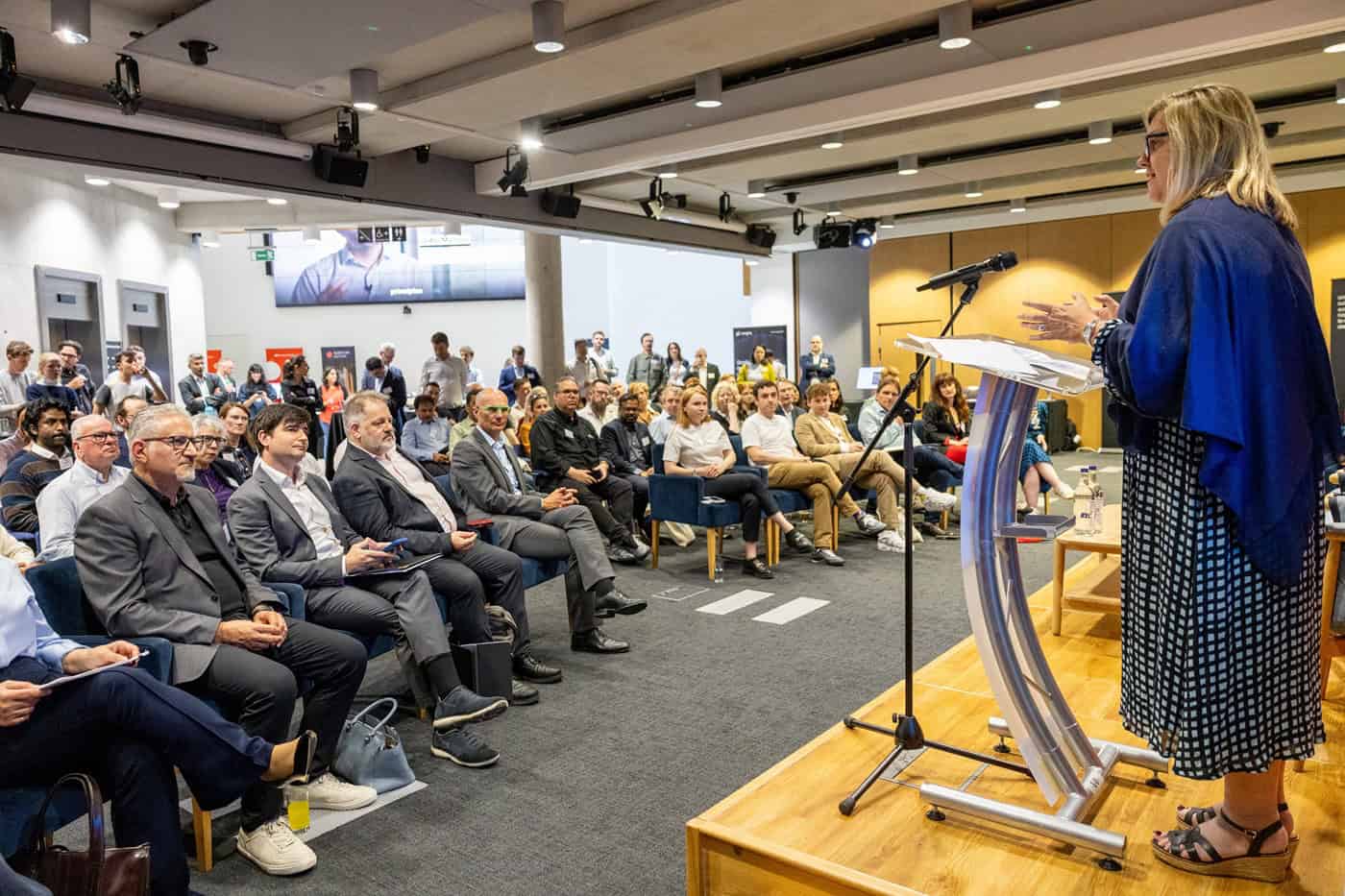
Capital connections Janet Coyle from London and Partners addressing delegates at a meeting at the Institute of Physics to mark the first anniversary of the London Quantum Cluster. (Courtesy: Carmen Vilano)
“There are two types of people when it comes to quantum,” joked Howard Dawber, deputy mayor of London for business and growth at a meeting at the Institute of Physics last night to celebrate the first anniversary of the London Quantum Cluster.
“There are those who understand quantum mechanics. There are those who don’t. And there are those who are in superposition of understanding and not understanding until they are observed.”
It was a light-hearted remark that matched the mood of what was essentially an evening of boosterism for quantum technology in London ahead of London Tech Week next week.
As chair of London and Partners – the growth agency for London – Dawber told the gathering of more than 100 “quantum influencers” that the organization was “100% behind the London Quantum Cluster”.
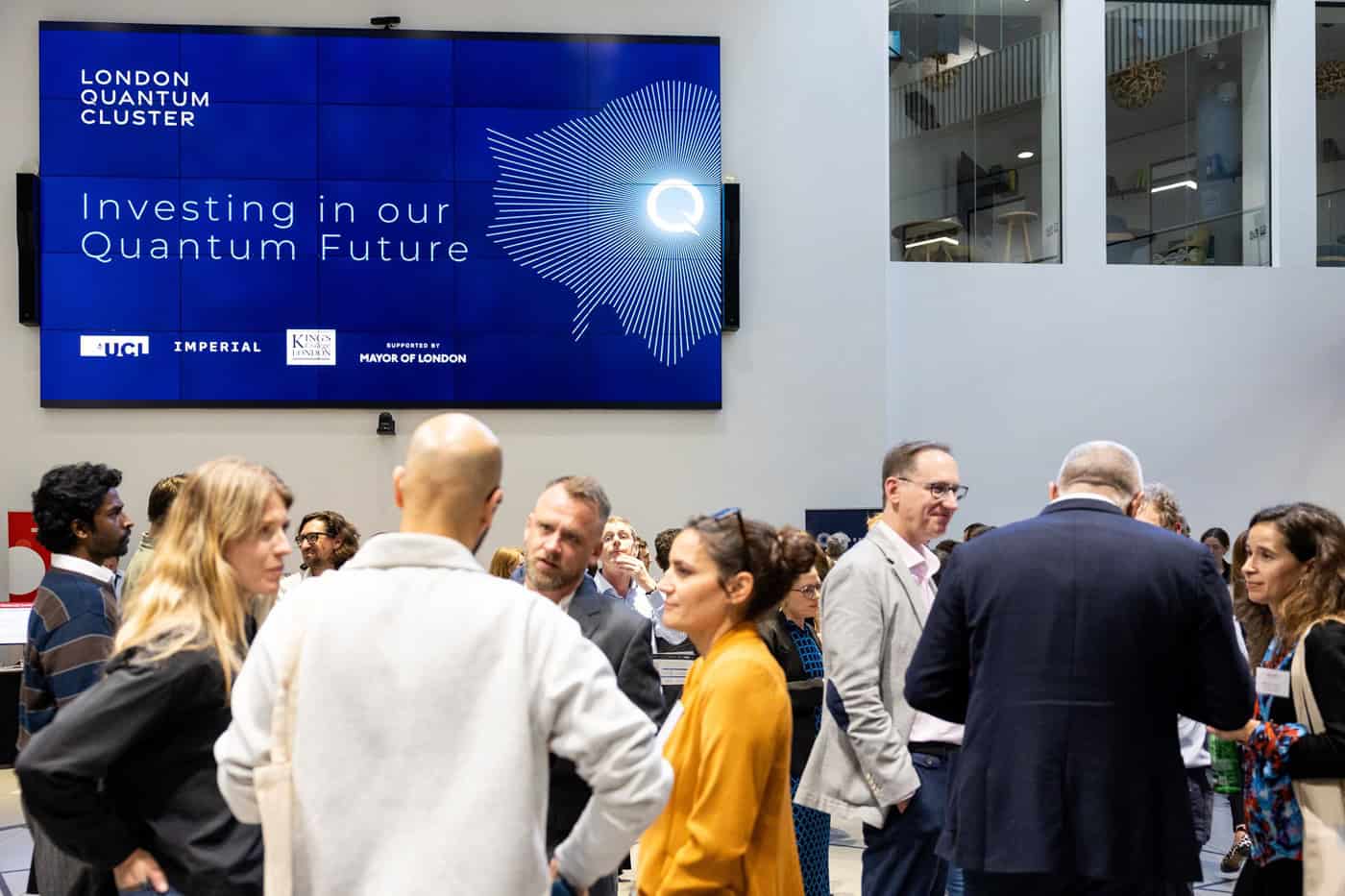
Founded in 2025 by University College London, King’s College London and Imperial College London, with support from the Mayor of London and the UK government, the cluster seeks to establish the capital as a powerhouse of quantum tech.
Georgia Siora from Warwick Economics and Development presented data to show that London is already doing well in the sector, being home to more than 160 quantum companies, with seven of the top 10 UK quantum firms based in the city. Small- and medium-sized quantum firms in the capital, she added, contribute an estimated £153m annually to the economy.
Happy anniversary The London Quantum Cluster is now one year old. (Courtesy: Carmen Vilano)
“Quantum and deep tech are at the heart of the capital’s 10-year growth plan,” added Janet Coyle, managing director of London and Partners.
Geraint Rees, vice-provost for research, innovation and global engagement at UCL, said his aim was “to make London the best place on the planet for serious quantum companies”. He pointed to UCL spin-out Quantum Motion, which has just won $160m of venture-capital funding, as an example of the kind of firm making a name in the city.
The evening ended with a panel debate chaired by Jess Wade from Imperial College London, featuring Maria Maragkou from Nu Quantum as well as Richard Murray, founder of ORCA Computing, who drew a distinction between universities being all about expanding the frontiers of knowledge, whereas for start-ups “the aim is to win”.
Also on the panel was physicist Alejandro Montblanch – head of quantum communication and networking at banking group HSBC – who made it clear that what he wanted to know was: “How can your quantum company help HSBC make more money?”
A welcome note of caution came from London-based venture-capital investor Eloisa Angeles, who pointed out that while the UK has a good track record of government-funded research, the UK is weak at “follow through”, with the government not focused on procurement and not having the end customer of the research in sight.
From heatwaves to extreme rainfall, the impact of climate change is rapidly becoming a reality in our daily lives and a danger to our planet. But physicists are in a great position to help, with physics-based research bringing about practical, real-world solutions, whether it’s more efficient solar cells, better climate models, or novel materials for capturing carbon dioxide from the atmosphere.
There are huge economic and commercial benefits from such work too. A 2023 report from the Institute of Physics (IOP), entitled Physics Powering the Green Economy, estimates there are almost 1800 companies in the UK and Ireland taking green technologies to market with a combined turnover of £750bn.
Last year a follow-up IOP Impact report entitled Unleashing Physics to Power the UK Energy Sector identified the most promising physics technologies for transforming the UK’s energy system. These fall into three main areas: energy generation (nuclear power, photovoltaics), storage (batteries) and transmission (high-temperature superconductors).
The clean-energy revolution will not be easy, however. As the IOP report points out, the UK has a strong research base, good international collaborations, and a growing pipeline of spin-out and early-stage companies. But the country doesn’t invest enough in technology scale-up facilities, faces critical skill shortages, and isn’t great at recycling either.
To discuss how physicists are supporting the green economy – and what more they can do – a panel debate was recently held at the IOP in central London. Attended by Prince Edward, the Duke of Edinburgh, as well as about 100 business leaders, policy chiefs, senior physicists, and IOP and IOP Publishing staff, it was chaired by Tara Shears, the IOP’s vice-president for science and innovation.
The panel featured ex-BP boss John Browne, who now works in green energy, Emily Nurse from the UK’s Climate Change Committee, former Sizewell C energy-strategy director David Cole, solar-cell physicist Jenny Nelson from Imperial College, and Nellie Technologies founder Stephen Milburn. The following is an edited extract of the discussion.
Physicists for a greener future
Green game-changers Tara Shears (far left) chairing the panel debate at the Institute of Physics in London on how physics can support the green economy. It featured (from left to right) John Browne, Emily Nurse, David Cole, Jenny Nelson and Stephen Milburn. (Courtesy: Carmen Valino)
John Browne is chair of BeyondNetZero, a climate-growth equity venture firm. He was group chief executive of energy giant BP from 1995–2007, having joined the firm in 1966 after studying natural sciences.
Emily Nurse, who was originally an experimental particle physicist, is the director of net zero at the UK’s Climate Change Committee, which advises the UK government on reducing emissions and adapting to the impacts of climate change.
David Cole, an engineer by training, was at the time of the discussion director of energy strategy at the Sizewell C nuclear-power plant, which is being built in Suffolk in the UK. When complete, it is expected to meet up to 7% of the UK’s total electricity demand. He is now executive president, consulting, at energy firm Wood.
Stephen Milburn is a physicist who is founder and chief executive of the firm Nellie Technologies in South Wales. It removes carbon dioxide form the atmosphere using biomass, which can then be used as animal feed or construction material.
What role are physicists currently playing in our quest for a greener economy?
John Browne: I made a wonderful decision 60 years ago, when I was 18, which was to read physics. After graduating, I became an engineer, but over the last 30 years physics has come back in to my life as I’ve found myself doing something very important – trying to get to net zero. Physics, you see, touches absolutely everything.
All that I’ve ever done – whether it’s renewable energy or “old energy” [fossil fuels] in my old life – starts with physics. Whether you’re involved in chemistry, biology, electronics or engineering, it could not exist without a much deeper understanding of physics. We have to make sure everybody knows that – but I don’t think people currently do. They tend to think engineering is the only enabler for commercialization, but physics is there.
Emily Nurse: I started out as a particle physicist working at CERN on the Large Hadron Collider but for the last four years, I’ve been involved in climate policy and now work with the UK’s Climate Change Committee. We are the UK government’s official advisers on its climate targets – and assessing progress towards meeting those targets. As we celebrate global decarbonization to date, we need to remember it’s all underpinned by physics.
Take the rise of solar power for example, which has been the fastest growing source of global electricity generation for the last 20 years in a row. Solar installations in 2024 were double those in 2022. Along with wind, solar has led to a reduction in electricity from fossil fuels. We’re seeing the costs of solar plummeting and they just keep falling further.
In the UK, solar power has been growing more slowly, but it’s starting to pick up and is going to be a really important part of the electricity mix. We’ve also got a lot of wind here in the UK – it’s a very windy island after all. I would also like to give a shout out to heat pumps: as a physicist, how can you not love their efficiency?
David Cole: I am an engineer, not a physicist, but I’ve spent my career in lots of different sectors and been fascinated with the role that energy plays in creating a better society. What’s really interesting at Sizewell C is the ownership structure, which involves both state and private investment. It’s the first time private investment has been used for a new nuclear build in the UK.
I hope it leads to a virtuous circle, in which the more plants we build, the more we can reap from that investment
David Cole
Getting this hybrid financial structure over the line was not trivial – it took a lot of effort – but I think it will drive great performance. We’re also trying to use as much UK content in the plants as possible, whether that’s materials, skills or technology. I hope it leads to a virtuous circle, in which the more plants we build, the more we can reap from that investment. Sizewell C will, in other words, bring down energy costs, which is fundamental to economic growth.
Jenny Nelson: I have been active in research into solar photovoltaic (PV) materials and devices for over 30 years and we should celebrate how much has happened in the field during that time. In the last 10 years, we have seen capacity increase globally by more than a factor of 10, we’ve seen the efficiency of solar cells increase, and we’ve seen the cost come down almost by a factor of eight, all of which is remarkable.
Those innovations are firmly rooted in physics – whether it’s changes in device structure… or of the optical properties of materials
Jenny Nelson
The cheapest form of electricity globally, in other words, is now from solar PV, which was not the case 30 years ago. These developments have come partly from economies of scale and partly from technological innovations that have now fed through into production. Those innovations are firmly rooted in physics – whether it’s changes in device structure due to our understanding of semiconductor physics or new developments in the optical properties of materials.
The next generation of PV cells, which are likely to be silicon-based tandem devices, will also depend on scientific breakthroughs and innovations.
Stephen Milburn: I’m chief executive of Nellie Technologies, which is based in South Wales on the site of a former chemical-weapons storage facility. We’re using biomass waste for removing atmospheric carbon dioxide, and if you visit us, you’ll see all kinds of activity: in one corner there’s chemistry, in another engineering and in the next there’s biology and biochemistry. But physics is at the heart of the technology. Physicists are a bit arrogant when we say we think we can do everything, but the fact is we probably can.
But we should also celebrate the work that has gone on to create a market in which carbon-emission credits can be bought and sold. Trading carbon credits has been a bit of a dark activity over the last 10 years, with double counting and bad things happening purely by firms wishing to make a profit. However, the market does have the power to regulate itself – in fact the alignment we’re starting to see between the UK and the EU will help greatly.
Challenging times Technologies to store, generate or transmit energy are rooted in physics. (Courtesy: iStock/Galeanu Mihai)
What are the biggest growth opportunities for the green-economy sector?
John Browne: First, we can do much more with what we’ve already got – for example we could increase our offshore wind or rethink whether we should go back into onshore wind. Second, we can improve what we’re doing – for instance, by increasing the efficiency of solar panels to their theoretical maximum, which would make rooftop solar economically attractive. Third, there are new opportunities, such as metallic organic frameworks and nuclear fusion.
What we do here in the UK needs to move the needle globally, which means thinking about how to scale and finance it properly
John Browne
However, the UK needs to avoid doing things that others are doing much better. The race for the best battery in the world is, for example, probably going to be won elsewhere. What we do here in the UK needs to move the needle globally, which means thinking about how to scale and finance it properly. The UK shouldn’t end up as a secondary player.
Emily Nurse: The UK has made a lot of progress in our quest to reach net zero by 2050. Since 1990, for example, we’ve halved our carbon emissions, mainly by decarbonizing electricity – phasing out coal, reducing gas generation, while significantly increasing wind, solar and other renewables. Electricity generation now accounts for only around 7% of UK emissions, which are dominated by transport (cars and vans) and heating (oil and gas boilers).
Reducing emissions still further will predominantly come from moving to electric technologies, including electric vehicles and heat pumps, and by further decarbonizing the electricity supply. There will be a backbone of wind and solar, but to ensure a secure supply, we’ll need nuclear, carbon capture and storage, hydrogen and batteries. We’ll have to reduce emissions from agriculture and land use too.
A report from the Confederation of British Industry (CBI) last year estimated that the net-zero economy grew by 10% in 2024, which is three times faster than the rest of the UK. But we’ll need more innovations to continue to bring costs down – and we’ll also need to provide incentives to boost the take-up of electric technologies. If we do that, there’ll be an overall saving to the UK economy in about 15 years’ time, our analysis suggests. There are huge opportunities for green growth to come from this investment.
David Cole: I agree that for the UK to be competitive, the cost of energy has to come down – not just for domestic customers but businesses too. In fact, there are two main opportunities First, we have to adopt a “whole-systems” approach. If we’re building a power station, for example, can we use every bit to its maximum potential?
Let’s say I’m running a direct air-capture plant operating at 25–30 ºC – can I use the waste flow from my coolant system to encourage new industries? Can it support nearby hydrogen generation plants or companies making, say, synthetic aviation fuel? Those questions involve thinking about physics and engineering as well as materials science, which is also super important.
Whichever way you look at it, we’re talking about building a lot of hardware, which involves materials. How much energy per unit mass are they using? Can we recycle those materials? What can we do with the waste products? Ultimately, what is really important is energy security: where does your energy come from, who made it and what impact does it have on the environment?
Jenny Nelson: The net-zero economy is growing significantly faster than the rest of the economy and I think that will continue. But decarbonizing the power sector only addresses part of the problem and we’re going to see a big transition across the rest of industry, agriculture and elsewhere that will generate a wide range of opportunities and stimulate the economy too. I’m not just talking about rolling out more renewables, but about integration – bringing together the generation and storage of energy, ensuring that we are managing demands and have the right infrastructure.
As for my area of photovoltaics, we’ve seen great ideas and technologies come out of the UK that are very likely going to be developed outside the UK because the manufacturing capacity isn’t here. Nevertheless, those ideas and innovations can still benefit the country through licensing, partial manufacturing and new technology.
One thing to remember about solar power is it’s distributed. You can have solar generation without being connected to the grid. That not only opens some markets for certain applications where you want to generate electricity locally, but it also provides a route to energy security through back-up generation, towards which solar power will be an important part.
Stephen Milburn: Having a strong green-technology manufacturing base is a huge opportunity for the UK. My company is based in South Wales, where we have lots of highly skilled people who used to work in traditional industries but now don’t have many places to go. Yes, there’s a fantastic semiconductor industry here, but when it comes to deploying green technology we cannot outsource that responsibility to other parts of the world.
Green tech needs to be deployed in the UK’s industrial heartlands… if we don’t nurture jobs and skills here there’s a real risk they will be gone forever
Stephen Milburn
Green tech needs to be deployed in the UK’s industrial heartlands to take advantage of the skills we already have, but which we are at risk of losing. In fact, if we don’t nurture those jobs and skills here there’s a real risk they will be gone forever. Having a strong green-technology manufacturing base is a huge opportunity for the UK.
Deep thinkers Combining analytical minds with great problem-solving skills, physicists are well placed to tackle the challenges of climate change. (Courtesy: iStock/MTStock Studio)
What needs to happen so that these opportunities can be put into practice?
Stephen Milburn: Many science graduates leave university equipped with solid academic rigour and a great scientific understanding, but they often lack practical green-technology skills. This summer my company is therefore hoping to launch a climate apprenticeship programme, which will allow graduates to pick up those skills. We need to build green-tech skills in the real economy, in particular those that will deal with climate change.
Jenny Nelson: The UK must do more to support its own innovations. We need better regulations to avoid unnecessary bottlenecks. We need to invest in infrastructure like the grid. We should completely avoid subsidizing fossil fuels and instead divert any subsidies into alternative economies. Finally, we need to train and educate people, showing the public the potential of green technology so that they become part of the transition, for example by generating their own electricity.
David Cole: We need to integrate our policies on industry, energy, land use and AI so that we can invest in them all as growth areas. In particular, I’d like to see a long-term nuclear programme in which we build a fleet of new reactors all of the same design, which will drive down costs by letting us replicate a particular technology. It’s also vital that we get a high proportion of UK content and technology into these reactors, which will lead to a virtuous circle, with money coming back into the economy that we can re-invest in industrial and academic partnerships.
Emily Nurse: What’s vital is consistency in policies; we need certainty. In the UK, we are fortunate to have world-leading climate legislation in the form of the 2008 Climate Change Act, which does not just make it a legal requirement to reach net zero by 2050 but also gives us targets along the way. It means we know what we need to do in both the medium- and long-term, which gives certainty to investors, businesses, innovators and consumers.
What’s really important is communication – supporting communities through the transition and making sure they realize the benefits
Emily Nurse
So the first thing we need to do is keep the Climate Change Act. Then, of course, we’ve got to address barriers to delivery, including having the right incentives to electrify the economy. And what’s really important is communication – supporting communities through the transition and making sure they realize the benefits, not just in terms of reducing carbon production but of having cleaner, better and more efficient technologies too.
John Browne: First, we must never stop investing in people who can discover things and translate them into real commercial products. Second, we need to understand how to scale things, which means focusing on the winners and getting rid of things that are “nice to have” but aren’t going anywhere. That’s not easy because you have to push people to say, “You’ve done great work, but you’ll have to stop”.
What’s more, to scale new technology, people have to learn what it takes. When I’m in the US, I often speak to chief executives who can explain their technology to the financier who’s supporting it, whereas here in the UK that often doesn’t happen.
Third, we need to maintain confidence in what we’re doing. I often talk to people who think that it’ll be really expensive to get to net zero, but in fact estimates suggest that each household would only have to spend an average of about £150 a year to get there. So it’ll be less than the cost of a TV licence to get to net zero.
Of course the investment needed will be “lumpy” – it’s not as simple as just levying a fee – but the point about governments is that they can smooth things out. That is what they have done in the past and it’s what they should continue to do.
For more information about the IOP’s work on the green economy, click here. You can also keep up to date with the all latest research in the field through IOP Publishing’s series of open-access Environmental Research Journals at this link.
US firm Rescale, a digital engineering platform that combines AI, simulation, and high-performance computing to help R&D and engineering teams design, test, and bring new products to market faster, has received funding under the Genesis Mission, a national initiative led by the US Department of Energy to build an advanced integrated science discovery platform.
As part of the program, Rescale will join Lawrence Berkeley National Laboratory, Lawrence Livermore National Laboratory, and Oak Ridge National Laboratory as a funded partner in the Agentic HPC Pipeline Initiative (AHPI).
The initiative aims to use agentic AI on Rescale’s platform to help accelerate the adoption of national laboratory-developed computing tools and simulations by US industry.
Doubling scientific research output with AI and advanced computing
The Genesis Mission is an ambitious initiative aimed at accelerating scientific and technological breakthroughs by combining artificial intelligence, supercomputing, quantum systems, and advanced scientific instruments into a single research platform.
Established through an executive order in November 2025, the program brings together the department’s 17 national laboratories and around 40,000 scientists and engineers to advance research in areas including energy, scientific discovery, and national security.
Department officials have compared the scale and ambition of the initiative to landmark US efforts such as the Manhattan Project and the Apollo program, with the goal of doubling the productivity of the country’s scientific research within the next decade.
The US Department of Energy launched the first Genesis Mission funding round earlier this year, awarding $293 million to projects focused on areas including advanced manufacturing, biotechnology, nuclear energy, and quantum science. The program received more than 8,000 applications, making it the department’s largest-ever funding call.
Rescale’s AHPI was selected for Phase I funding to address a key challenge: helping industry access advanced simulation tools developed by US national laboratories that have often required specialized expertise and infrastructure.
The company will work with three US national laboratories to bring agentic AI capabilities to advanced simulation tools. The project will integrate AI agents into WarpX, LiDO, and Adamantine, codes developed by Lawrence Berkeley National Laboratory, Lawrence Livermore National Laboratory, and Oak Ridge National Laboratory.
Using the Rescale platform, AI agents will help engineers choose simulation tools, configure inputs, monitor runs, and analyze results. The initiative aims to reduce the time and specialized expertise needed to use these simulations by more than five times, making advanced research capabilities more accessible to US manufacturers.
According to Rescale CEO Joris Poort, the Genesis Mission highlights the importance of making industrial AI technologies available to leading research and development teams that can apply them in real-world applications.
Building on Rescale’s existing partnership with ORNL’s Manufacturing Demonstration Facility, AHPI addresses a common gap: DOE-industry collaborations run for a fixed term, and once they end, partners keep the insight but lose the tools to act on it. AHPI keeps the resulting agentic workflows, surrogate models, and code environments live on Rescale, letting labs and industry keep collaborating long after a project’s funding ends.
Siri Wolfram Alpha integration helped create one of the defining moments in the early history of consumer artificial intelligence. When Apple introduced Siri with iPhone 4S in October 2011, users were not merely given another form of voice control. They could ask a spoken question and receive a calculated answer rather than a page of search results.
Questions involving mathematics, measurements, dates, nutrition, astronomy and factual comparisons could be routed to Wolfram Alpha, a computational knowledge engine launched in 2009. Siri handled the conversation, while Wolfram Alpha supplied structured information and calculations behind many of the responses.
The experience could feel remarkably advanced for its time. Asking how many days remained before a holiday, comparing the populations of two cities or converting miles into kilometers no longer required opening Safari, entering a query and selecting a website.
That direct path from natural language to a useful answer established an expectation that continues shaping AI products today.
Its technological roots extend to research conducted at SRI International, including work associated with the DARPA-funded CALO project. The objective was to develop systems capable of learning, organizing information and helping people complete everyday tasks.
SRI later spun the technology into Siri Inc., founded by a team including Dag Kittlaus, Adam Cheyer and Tom Gruber. The company released a standalone Siri app for iPhone in early 2010.
The original product was designed around actions rather than ordinary web search. A user could ask for a restaurant reservation, request a taxi, check entertainment listings or search for local services. Siri attempted to understand the intent and connect the request with an appropriate online provider.
This approach was ambitious because the assistant needed to coordinate several different systems. Speech had to be converted into text, the request had to be interpreted, context had to be considered and an external service had to return something useful.
Apple acquired Siri in April 2010. Steve Jobs had personally recognized the potential of moving beyond a collection of apps toward a conversational layer capable of reaching them on behalf of the user.
When the assistant returned as an integrated feature of iPhone 4S, Apple had narrowed some aspects of the original startup vision while making the technology accessible to a much larger audience.
Siri could send messages, create reminders, place calls, manage calendar events, check weather conditions and answer questions. Apple initially labeled the feature as a beta, an unusual decision for a prominent part of a new iPhone launch.
The beta label acknowledged that natural-language interaction remained unpredictable. Accents, ambiguous phrasing, network conditions and external data providers could all influence whether a request succeeded.
Image Source: Google
Siri Wolfram Alpha Made Answers Feel Immediate
Siri Wolfram Alpha became especially memorable because it showed the difference between retrieving information and computing an answer.
A conventional search engine could locate pages containing a formula. Wolfram Alpha could apply that formula to the values supplied by the user. It could interpret units, compare quantities, calculate probabilities and organize factual data into a structured response.
That distinction allowed Siri to appear more knowledgeable than a voice interface simply reading search results aloud.
A request such as “What is 15% of $86?” could return the calculation directly. A question about the distance between planets could produce a value without requiring the user to inspect several websites. Wolfram Alpha could also answer unusually specific requests, including information about aircraft flying overhead when the necessary location and aviation data were available.
The system was not a large language model. It did not generate open-ended prose in the way current AI assistants do. Wolfram Alpha relied on curated data, symbolic computation, algorithms and formal representations of knowledge.
That structure provided an advantage that remains relevant: many answers could be calculated and traced through defined information rather than improvised statistically.
Early Siri combined several specialized capabilities instead of depending on one system to do everything. One provider might supply restaurant information, another could handle maps and Wolfram Alpha could process computational questions.
The assistant acted as the conversational coordinator.
This architecture made Siri seem like one intelligence even though the response could come from a network of separate services. Modern AI platforms have returned to a similar idea through tools, agents and external data connections. A language model may manage the conversation while calling a calculator, calendar, search engine or business system when a task requires reliable external action.
Siri demonstrated that model on a consumer smartphone more than a decade earlier.
A Small Integration Created a Large Expectation
The Wolfram Alpha partnership influenced how people began judging digital assistants.
Before Siri, voice features on phones were commonly associated with rigid commands such as calling a contact or selecting music. Siri invited users to speak more naturally and attempt questions that would previously have been typed into a browser.
The results were inconsistent, but successful interactions changed perceptions immediately. The iPhone appeared capable of understanding intent, reaching into a knowledge system and returning a concise answer through one conversational interface.
That apparent simplicity concealed substantial infrastructure. Speech recognition, language interpretation, location, personal context and external databases all had to work together quickly enough to preserve the feeling of a conversation.
Wolfram Alpha also gave Apple access to expertise that would have taken years to reproduce internally. Stephen Wolfram had spent decades building Mathematica and computational systems before launching the public knowledge engine.
Following the Siri announcement, Wolfram described the integration as a characteristically direct Steve Jobs decision: users wanted access to knowledge and actions without unnecessary intermediate steps.
That idea became more influential than any individual answer Siri provided.
The assistant did not need to show how many services had participated. It needed to understand the request and return the result.
Early Siri Also Revealed the Limits of the Model
The first version of Siri could feel futuristic one moment and frustrating the next.
Some questions reached Wolfram Alpha correctly, while similar wording could trigger a web search or an unrelated response. Siri occasionally struggled to determine whether the user wanted a calculation, a local result or an action inside the phone.
Wolfram Alpha responses were also better suited to some subjects than others. Mathematical and scientific questions matched its computational structure, while casual conversation, current events and subjective requests required different sources.
Network dependence created another weakness. Early Siri processing relied heavily on remote servers, so delays or outages could make a basic request fail even when the iPhone itself was functioning normally.
Those limitations foreshadowed the central challenge surrounding modern assistants. A convincing interface encourages people to ask almost anything, but no single technical system performs equally well across every type of request.
Current generative AI can produce more natural language and handle a wider range of topics. It can also create confident errors when factual grounding is weak. The computational approach represented by Wolfram Alpha remains valuable precisely because some questions require verified data and exact calculation rather than fluent speculation.
The story behind the first Siri steps is therefore not only about an old iPhone feature. It shows that a powerful assistant needs more than a conversational personality. It requires access to dependable tools, structured knowledge and the ability to recognize when another system should provide the answer.
Siri Wolfram Alpha offered that lesson in 2011, long before AI assistants became capable of writing essays, interpreting screens and acting across apps.
Shiso, a ring-necked parakeet, can't speak English, but she knows how to make her preferences known. She has screaming fights with the dogs and cats in her household, snorts for attention and food, and perches on her human to interact with her.
A new study from the University of Toronto finds that people perceive their bodies as larger in virtual reality than in the physical world—and that effect doesn't end when the headset comes off.
On Tuesday, the White House Office of Science and Technology Policy (OSTP) released a report entitled "Science: A New Golden Age," in which it lays out how it has viewed science, found it lacking, and believes the Trump administration is in the perfect position to fix things. It's a bit unexpected coming from an administration that has been proposing crippling funding cuts to research and trying to enable political appointees to terminate grants awarded based on scientific merit.
The report presents itself as the spiritual successor of "Science, the Endless Frontier," a policy document that laid out the case for government-funded science in the wake of World War II. The New Golden Age (SNGA) says that, while the concepts promoted by the original remain vital, the circumstances have changed such that we need major revisions to how the government is implementing things.
The result is an odd mix. It completely ignores or glosses over many things that the administration is doing to harm scientific progress. In some cases, it identifies issues that have already been discussed as problems within the scientific community, but misrepresents them. Elsewhere, it's a mixture of political grievances, ideas without a solid intellectual foundation, and an injection of Silicon Valley's perspective on innovation (Michael Kratsios, the director of the OSTP, formerly worked with Peter Thiel). As a result, it's unlikely to have anything like the impact of "Science, the Endless Frontier."

 Login