❌

Normal view

Science word of the day: Coprolite

30 July 2026 at 09:00

Science word of the day: Coprolite

Pronunciation: KAHP'-ruh-lite

What it means: Coprolites are fossilized poop. Scientists have found coprolites from animals as diverse as fish, dinosaurs and saber-toothed cats. Teeth in the saber-toothed cat poop indicated that it had been eating baby sloths, which frankly feels a bit unfair from a creature with 11-inch-long (28 centimeters) teeth.

These fossils form when poop gets rapidly buried and mineralized instead of rotting away. Coprolites can be hard to match to the animal that produced them, but undigested bones and teeth in the fossilized poop can often provide clues to the kinds of animals that other animals eat.

How to use it in a sentence: If you're ever in a science museum and a volunteer, with a twinkle in their eye, asks you what you think a chunky, rock-looking thing is, the answer is always coprolite.

Can you crack our science word of the day puzzle, Chain Word?

“Weird Clams” Reveal a New Invasion Along the U.S. Northeast Coast

Empty Manila Clam ShellsA research team found reproducing populations of Manila clams in Cape Cod and Boston Harbor. A stretch of Atlantic shoreline that had remained free of Manila clams now appears to support reproducing populations of the invasive shellfish. Biologists led by the University of Massachusetts Amherst, MIT Sea Grant at the Massachusetts Institute of Technology and [...]

An Extraordinary White House Meeting

16 July 2026 at 14:28
A new book sheds light on President Trump’s affinity for fossil fuels.

© Adriana Loureiro Fernandez for The New York Times

An oil refinery in Punto Fijo, Venezuela. In a meeting with the president, the Chevron chief executive pushed for an extension of the company’s license to operate in the country.

'Another dinosaur has entered the luxury collectibles market': Gus the T. rex just sold for $50 million. Here's what its loss means to science.

16 July 2026 at 10:05

On July 14, 2026, "Gus," one of the most complete specimens of Tyrannosaurus rex, went to an as yet unidentified buyer for US$50.1 million. This auction at Sotheby's set a record for most valuable fossil ever sold. Another dinosaur has entered the luxury collectibles market, a reminder that even Earth's deepest history can be sold to the highest bidder.

To paleontologists like me, however, a fossil like "Gus" — excavated from the Hell Creek Formation in South Dakota over three years starting in 2021 by commercial collector Thomas Heitkamp and his team — is not a trophy or a work of art. It is an irreplaceable scientific archive. Fossils preserve evidence of evolution, extinction, growth, disease, injury and ancient ecosystems. They are finite, nonsubstitutable records of life’s history on Earth.

Science depends on independent verification of claims and healthy debate. Researchers must be able to revisit specimens, test earlier conclusions and ask new questions.

But once a scientifically important fossil enters a private collection, access for researchers is no longer guaranteed. Collectors typically sequester their fossils in their homes. Even when privately owned specimens are loaned to museums, the owners can change their minds, ending access at any time. This issue is especially of note when it comes to Tyrannosaurus rex; a 2025 study found that while there were 61 T. rex fossils in public trusts at that time, 71 were privately held.

That is why the Society of Vertebrate Paleontology, of which I'm a long-term member and president-elect, has long argued that scientifically significant vertebrate fossils belong in the public trust, curated in museums and universities that preserve them permanently, make them available for research and share them with the public.

Finding a fossil

Supporters of commercial fossil sales often argue that without sales to private collectors, specimens like "Gus" would remain buried or erode away. They’re right about one thing: Discovery matters. Many extraordinary fossils have been found by ranchers, hikers, amateur collectors and commercial excavators. Paleontology is accessible to everyone who has an eye for observing nature — you don't need to be an expert with academic credentials to make an important discovery.

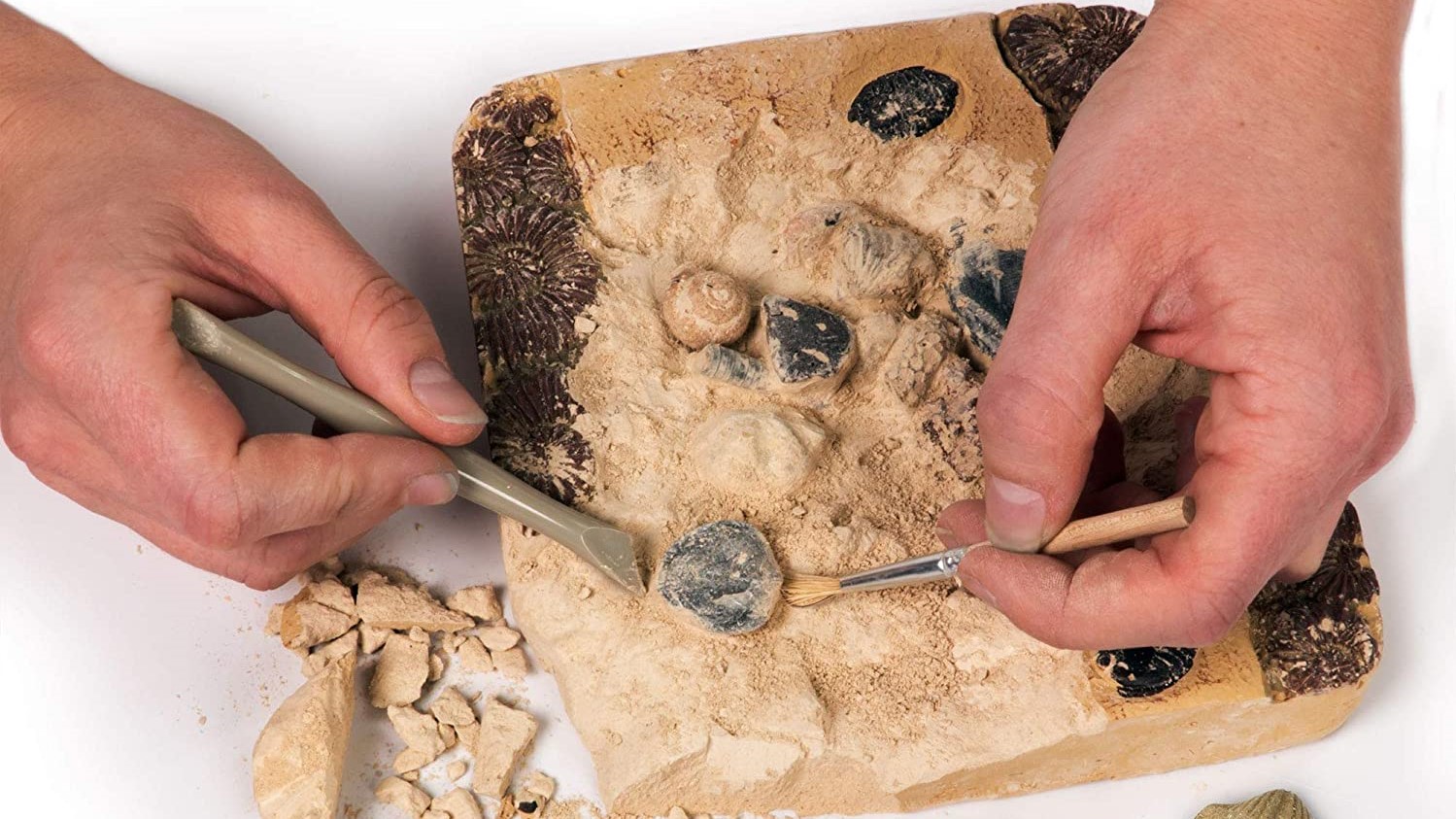
A close up of a person's hands unearthing rocks from a tan block

Fossil kits are sold on Amazon and other online retailers, encouraging curiosity in budding paleontologists. (Image credit: Amazon)

But discovery is only the beginning. A fossil's scientific value depends on careful documentation of where it was found, the rocks surrounding it, and the plants and animals preserved alongside it. Those details allow scientists to reconstruct ancient ecosystems, understand how an animal lived and died, and interpret how its remains became fossilized. When that contextual information is incomplete or lost, much of the fossil's scientific value is lost as well.

Yet even discovery, excavation and publication barely scratch the surface of a fossil's scientific importance. The greatest scientific value of a specimen often comes decades later, when researchers ask new questions and apply new technologies that earlier generations never imagined. A specimen that seems fully studied today may yield surprising new information tomorrow, but only if it is still available for study.

Delayed discoveries

Consider the iconic dinosaurs, including T. rex, Triceratops, Diplodocus and Stegosaurus, first collected more than a century ago. Early paleontologists could describe their shapes but had no way to dig deeper by peering inside the bones. Because those specimens were preserved in museum collections, later generations could revisit them with technologies that didn't exist when they were discovered.

Paleontologist Larry Witmer and his collaborators at Ohio University started using CT imaging 20 years ago to reconstruct the internal anatomy of historic dinosaur fossils without damaging them, based on how X-rays travel through specimens. Brain cavities, inner ears, air spaces, nerves and blood vessels became visible for the first time, revealing how dinosaurs balanced, heard, smelled and perceived their world.

Henry Fricke, Thomas Cullen and other geochemists have used isotopic signatures preserved in fossil teeth and eggshells to reconstruct dinosaur diets, migration patterns and body temperatures. This research has revealed how dinosaurs lived: what they ate, how they moved through ancient landscapes, and even how warm their bodies were.

More recently, molecular paleontologist Jasmina Wiemann and her collaborators have identified chemical traces preserved in fossil bone, eggshell and skin that reveal aspects of dinosaur biology unimaginable even a generation ago. Until now, paleontologists had no way to know details about metabolic rates and reproduction or the colors of skin, feathers and eggs.

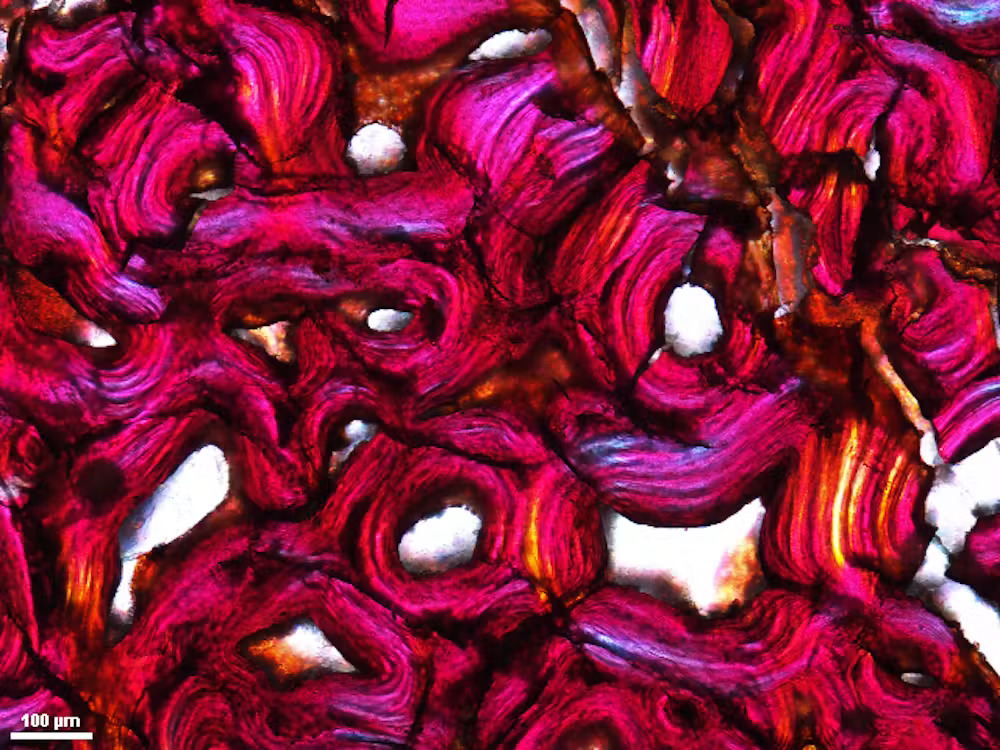
A close up of red cells under a microscope

A thin section of a Diplodocus femur reveals the microscopic architecture of the bone, preserving a record of the animal's growth and life history.  (Image credit: Kristina Curry Rogers)

In my own research I use microscopes to uncover the hidden stories preserved inside dinosaur bones and teeth. Thin sections of fossil bones reveal that dinosaurs grew more like mammals and birds than like oversized reptiles. Microscopic modifications to bones capture traces of ancient scavenging, and tiny signatures deep inside baby dinosaur bones indicate the moment of hatching.

None of these discoveries would have been possible if the original fossils had vanished into inaccessible private collections.

Shared natural heritage, on the auction block

Fossils are not static objects whose scientific value is exhausted once they are described. Their value grows as science advances, but only if future researchers can continue to examine the original specimens.

Of course, sometimes dinosaur fossils are rescued from obscurity through purchase and immediate deposition or donation to natural history museums. Some of the world's most important dinosaur fossils are accessible today because individuals, companies or organizations with the means to acquire extraordinary specimens recognized that they belong where scientists can continue to study them and where future generations can learn from them.

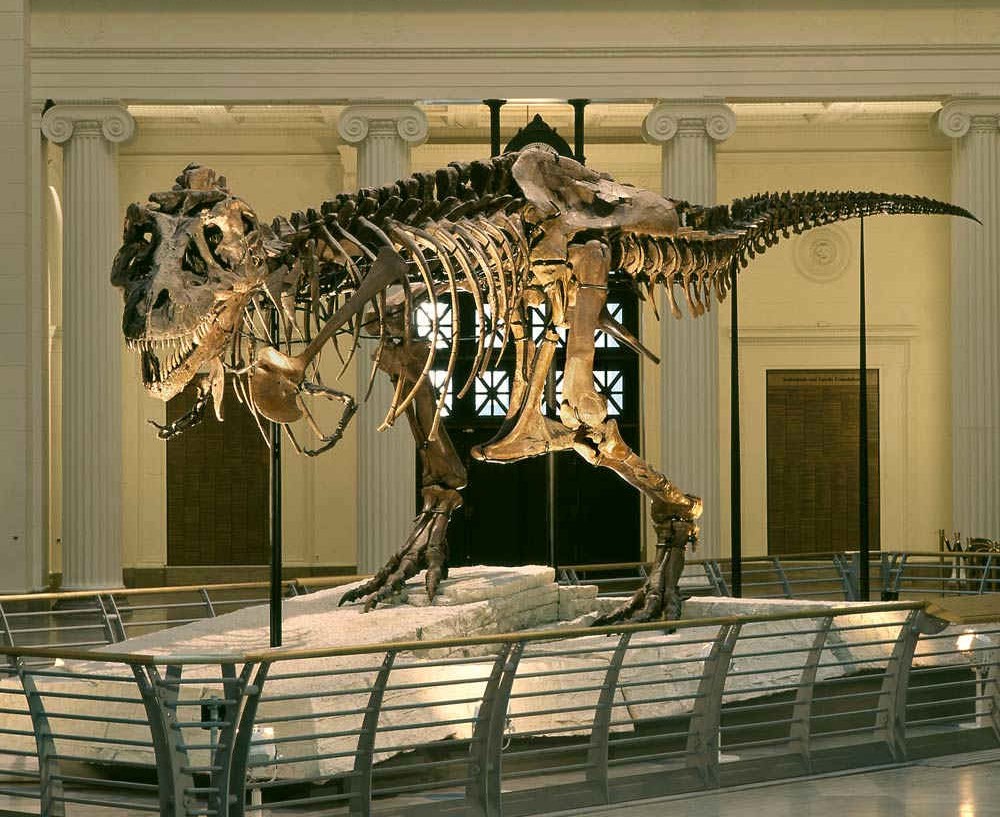
The <em>Tyrannosaurus rex</em> named Sue, shown here at The Field Museum in Chicago, may not have used her little arms much when she was alive, scientists say.

Schoolchildren were among the first to visit 'Sue' the T. rex once it was displayed at the Field Museum of Natural History in Chicago, Ill., thanks to funding from the California State University system, Walt Disney Parks and Resorts and McDonald's. (Image credit: copyright The Field Museum)

Purchasing a fossil in order to place it permanently in the public trust is fundamentally different from acquiring it as a private collectible: One expands access, the other leaves access uncertain.

But as fossil prices rise into the millions, museums increasingly cannot compete. The most significant fossils are no longer reliably entering public collections. Instead, they are becoming luxury assets whose market value supersedes their scientific value.

Dinosaurs belong to our shared natural heritage. They inspire wonder because they connect all of us to a world unimaginably older than our own. For me, the question raised by auctions like the one on July 14 of "Gus" is not who can afford to own these relics of the past. It is whether future generations have the chance to study and learn from them.

This edited article is republished from The Conversation under a Creative Commons license. Read the original article.

How much do you know about the king of the dinosaurs? Test your knowledge with our T. rex quiz!

The First Ancient Protein Analysis of Homo Naledi Has Revealed a New Burial Mystery

29 June 2026 at 13:18

A team of researchers examined 23 teeth from at least 20 individuals from South Africa‘s Rising Star Cave system and found no evidence of the male-specific Amelogenin-Y protein.

A recent study, published in Cell, marks the first ancient protein analysis of Homo naledi and raises the possibility that the Dinaledi Chamber may contain predominantly, or possibly exclusively, female individuals. If confirmed, Homo naledi would become the first known non-human species to practice sex-specific burial.

A Decade-Old Puzzle

Since its discovery in 2013, Homo naledi has puzzled paleoanthropologists. This extinct human relative lived between 335,000 and 241,000 years ago and combined ape-like anatomy with distinct human features. So far, Homo naledi remains have only been found in the Rising Star Cave system in South Africa.

For over a decade, scientists noted that the adult fossils from the Dinaledi Chamber were nearly identical, lacking the skeletal variation usually seen between males and females. The reason for this similarity remained unclear.

Proteins Where DNA Fails

To investigate further, a team from the University of York, the University of Copenhagen, and additional institutions analyzed the remains at the molecular level. They used a minimally destructive acid-etching method to extract protein fragments, or peptides, from the enamel of the 23 teeth.

“Unlike those found in other remains like bone fragments, proteins in tooth enamel are preserved because dental enamel—the hardest tissue in the human body—shields proteins from environmental contamination even for millions of years. This makes them ideal carriers of genetic information from deep time. Our study helps explain the long-standing mystery of why Homo naledi lacked significant variation; it’s probably because they could have all belonged to one sex,” said Palesa Madupe, who conducted the research during her postdoctoral fellowship at the University of Copenhagen.

A Missing Male Marker

The researchers specifically searched for Amelogenin-Y, a protein produced only by the male Y chromosome, but detected none of it in the sampled teeth. To make sure the results were not due to modern contamination, a specialized chemistry team at the University of York independently confirmed that the amino acids were genuinely ancient. The findings remained consistent.

“The lack of male markers within the group is truly fascinating. It is incredibly exciting to gain a window not only into the biology of our ancestors, but also into how they lived. These findings offer rare insights into a culture that has, until now, been difficult to access directly. Advances in ancient protein analysis are opening the door to a far richer and more nuanced understanding of ancient hominins,” said Dr. Marc Dickinson from the university’s Department of Chemistry.

Ritual or Genetic Fluke?

The findings allow for two possible explanations. One is cultural: if the chamber were reserved for females, it could indicate that Homo naledi practiced sex-specific, symbolic mortuary behavior, a trait previously thought to be unique to modern humans.

The second explanation is biological. The researchers note that a small, isolated Homo naledi population could have lost or mutated the Amelogenin-Y gene, leaving males without the protein marker typically used to identify male remains.

Either explanation could reshape what scientists know about Homo naledi. If researchers confirm the site as an all-female burial chamber, it would suggest that symbolic behavior emerged earlier in the human lineage than previously believed. On the other hand, a genetic change across the population would show how isolation can shape a species’ biology in ways that fossils alone cannot reveal. This study shows how ancient protein analysis from teeth can open new windows into human evolution.

Austin Burgess is a writer and researcher with a background in sales, marketing, and data analytics. He holds an MBA, a Bachelor of Science in Business Administration, and a data analytics certification. His work focuses on breaking scientific developments, with an emphasis on emerging biology, cognitive neuroscience, and archaeological discoveries.

Studying Brain Mechanisms of Irritability Through Cross-Species Reward Frustration

9 July 2026 at 05:01

In a groundbreaking study published in Translational Psychiatry, researchers have unveiled a novel cross-species approach to unraveling the neural circuitry underlying irritability—a pervasive emotional state with significant clinical implications. The investigation, led by WL Tseng, Z Li, and E Leibenluft, harnesses the concept of frustrative non-reward (FNR) as a potent experimental probe, enabling unprecedented insight into the brain mechanisms that drive irritability across humans and animal models.

Irritability, often characterized by heightened sensitivity to frustration and negative affect, is a hallmark symptom in various psychiatric disorders, including mood and anxiety conditions. However, the challenge in dissecting its neurobiological roots has historically stemmed from the lack of translational tools that can bridge findings from animal models to human pathology. By focusing on frustrative non-reward—the experience of being denied an expected reward—this study provides a quantifiable and comparable construct to systematically explore irritability’s brain basis.

Central to the research is the deployment of paradigms that elicit FNR responses in both humans and animals, enabling scientists to examine conserved neural circuits modulated by this emotional challenge. Functional neuroimaging data reveal that regions such as the anterior cingulate cortex, ventral striatum, and amygdala exhibit altered activity during frustrative episodes. These findings suggest a neurobiological signature of irritability that transcends species boundaries, emphasizing the role of reward processing and emotional regulation networks.

On a molecular level, the study points toward dysregulation in neurotransmitter systems implicated in reward anticipation and frustration tolerance, including dopaminergic and serotonergic pathways. These alterations may underlie the exaggerated irritability seen in clinical populations, offering targets for therapeutic intervention. Furthermore, the team’s use of advanced computational modeling to integrate behavioral, neuroimaging, and neurochemical data sets a new standard for mechanistic research in affective neuroscience.

Importantly, this cross-species strategy enhances the validity of animal models used in preclinical research on irritability, fostering improved translational potential. It opens avenues for testing pharmacological agents aimed at modulating FNR responses, thereby attenuating irritability symptoms with higher specificity. The quantitative nature of FNR as an experimental probe may also facilitate the development of biomarker-driven diagnostic tools in psychiatry.

The research underscores the significance of irritability not merely as a symptomatic complaint but as a fundamental affective process with distinct neurobiological underpinnings. By delineating the brain circuitry common to humans and animals during frustrative non-reward, the study propels the field toward more effective interventions for irritability-related psychopathologies.

As psychiatric research increasingly embraces an integrative cross-species framework, studies like this highlight the potential for converging evidence to unravel complex emotional states. The elucidation of neural mechanisms underlying irritability promises to revolutionize both our understanding and treatment of disorders marked by heightened frustration sensitivity.

This pioneering work marks a crucial step forward in affective neuroscience, establishing frustrative non-reward as a versatile and robust probe to decode irritability. Future investigations building on these findings are poised to translate laboratory insights into therapeutic breakthroughs that improve mental health outcomes worldwide.


Subject of Research: Neural mechanisms of irritability using frustrative non-reward as a cross-species probe

Article Title: Frustrative non-reward: A cross-species probe to study brain mechanisms of irritability

Article References:
Tseng, WL., Li, Z. & Leibenluft, E. Frustrative non-reward: A cross-species probe to study brain mechanisms of irritability. Transl Psychiatry (2026). https://doi.org/10.1038/s41398-026-04257-2

Image Credits: AI Generated

DOI: https://doi.org/10.1038/s41398-026-04257-2

Trump Administration Forms Partnership to Bank DNA From Imperiled Species

The government is teaming up with Colossal Biosciences, a private company that claims to have revived extinct dire wolves, to store samples from at-risk animals and plants.

© Lenny Ignelzi/Associated Press

The Frozen Zoo in San Diego, which has been preserving cells for over 50 years. The U.S. Fish and Wildlife Service has announced a partnership with Colossal Biosciences for a similar effort.

Antarctica's first dinosaur fossil belonged to a group of the largest land animals ever

1 July 2026 at 17:45

The first dinosaur found in Antarctica belonged to a group that included the largest animals ever to walk the planet, a new study finds.

A backbone from the 82 million-year-old giant was discovered more than 40 years ago, but at the time, researchers assumed it came from an ancient marine reptile. Now a new study, published June 29 in the journal Acta Palaeontologica Polonica, has revealed that it was actually a titanosaur — the group of long-necked sauropods that included the largest land animals on record.

"At first glance this appears to be an unremarkable fossil, but it holds an important place in the history of Antarctic exploration as the first dinosaur fossil found on the continent," study first author Paul Barrett, a paleontologist at the Natural History Museum in London, said in a statement.

While this fossil now holds the record for the first dinosaur fossil found in Antarctica, other dinosaur fossils were identified on the continent after its discovery, so it's not the only known Antarctic dinosaur. In fact, researchers have identified a variety of dinosaurs on Antarctica, with another sauropod fossil identified as a titanosaur in 2011.

The newly identified dinosaur was around 20 to 23 feet (6 to 7 meters) long. That's very small compared with the largest-known titanosaurs, which could grow up to 123 feet (37.5 m) long. However, as the fossil is just a fragment of a vertebra, researchers are unable to narrow down which species the Antarctic titanosaur belonged to, and it's possible that the individual was only a juvenile when it died.

Mike Thomson, a British Antarctic Survey geologist, found the fossil during an expedition to James Ross Island in 1985. The island, which has been the site of multiple dinosaur discoveries, is located off the northeastern Antarctic Peninsula, south of the 600-mile-wide (965 kilometers) Drake Passage that separates South America from Antarctica.

Antarctica is well known for its icy landscapes, but when titanosaurs roamed Earth, the continent was still attached to South America and full of temperate forests. Antarctica's dinosaurs were so far south that they would have lived in constant twilight during the winter months, according to a news article published by the Natural History Museum.

The authors of the new study identified the dinosaur using high-resolution CT scans, which enabled them to look inside the fossil. Dating back to the Cretaceous period (143 million to 66 million years ago), the titanosaur lived in the last age of the non-avian dinosaurs, before an enormous asteroid hit what is now Mexico's Yucatan Peninsula 66 million years ago and wiped them out.

The Antarctic titanosaur helps researchers better understand how dinosaurs spread across Earth's southern continents, which at the time were combined into a supercontinent called Gondwana. The presence of titanosaurs on Antarctica suggests that they may have used Antarctica to travel from what is now South America to New Zealand.

Other dinosaurs identified on Antarctica include small herbivores, armored ankylosaurs and bipedal predators like Imperobator, which would have shared the forests with the newly identified titanosaur. While researchers are beginning to piece together Antarctica's ancient ecosystems, they still have a lot to learn about the dinosaurs that lived there.

"There are likely many more dinosaurs to be discovered on the continent," Barrett said. "As climate change causes ice to retreat we may indeed find further evidence of this past biodiversity."

From Darkness to Light: How Blind Mexican Cavefish Reveal Brain Evolution

24 June 2026 at 14:50

Deep within the labyrinthine caves of northeastern Mexico dwells a remarkable species of fish, the blind Mexican cavefish (Astyanax mexicanus), whose evolutionary journey over hundreds of thousands of years has led it to adapt to a life shrouded in perpetual darkness. This fish has lost its eyes and pigmentation, hallmark traits of cave-dwelling organisms, while simultaneously acquiring a suite of physiological and behavioral adaptations tailored to survive in nutrient-scarce subterranean environments. Its dual existence as both a sighted surface fish and numerous independently evolved cave forms presents a unique biological system for examining how extreme environments drive evolutionary changes in brain structure, sensory processing, and behavior.

Researchers from Florida Atlantic University, collaborating with experts from institutions across the United States, have leveraged cutting-edge genetic and imaging technologies to decipher the neural underpinnings that distinguish cavefish from their surface relatives. By employing genetically engineered lines of this species that express fluorescent markers in their neurons, the scientists conducted real-time, whole-brain imaging at cellular resolution, unveiling intricate patterns of neural activity in response to sensory stimuli. This approach allowed direct comparison of neural circuitry when fish were exposed to alternating light and dark conditions, providing profound insights into how evolution recalibrates brain function to orchestrate behavior appropriate for radically different environments.

The study, recently published in Science Advances, reveals an astonishing reversal in sensorimotor behavior between the two ecotypes. Whereas surface fish exhibit increased locomotor activity upon sudden darkness—presumably an adaptive mechanism to enhance exploration for light sources—the cavefish respond inversely, with heightened activity triggered by light exposure. This counterintuitive response is theorized to serve as an adaptive avoidance strategy, steering cavefish away from illuminated cave entrances where predation risk and environmental fluctuations are higher. Such behavioral rewiring exemplifies how neural circuits can be evolutionarily repurposed rather than completely reinvented.

Central to this behavioral dichotomy is the alteration of activity within the posterior tuberculum, a brain region long implicated in sensorimotor integration and motivational states. The researchers identified not only region-specific shifts in activity patterns but also characterized a previously undescribed neuronal cell type that appears to play a pivotal role in mediating light-evoked responses. Intriguingly, neurons that in surface fish were activated by darkness exhibited robust activation in cavefish under light stimulus, underscoring the concept of evolutionary neural circuit reutilization. This finding challenges conventional assumptions that new behaviors necessitate de novo neural architectures and instead supports a model where existing circuits are modified to generate novel functional outputs.

Further mechanistic insights emerged from the investigation of dopaminergic signaling pathways. Dopamine, a neurotransmitter extensively involved in motor control, reward processing, and sensory modulation across vertebrates, was found to be centrally implicated in mediating these light-driven behavioral shifts. The study demonstrates that evolutionary tuning of dopamine circuits underlies the behavioral adaptation in cavefish, representing a conserved neurochemical axis modified through natural selection. This work sheds light on the plasticity and evolutionary potential of neuromodulatory systems in shaping species-specific behaviors.

These findings have significant implications beyond the realm of evolutionary biology. Since dopaminergic circuits are highly conserved from fish to mammals, understanding how these systems adapt to environmental pressures provides a window into fundamental brain functions relevant to health and disease. For example, alterations in dopamine signaling underlie numerous neurodevelopmental and neurodegenerative disorders in humans, including Parkinson’s disease, schizophrenia, autism spectrum disorders, and attention deficit hyperactivity disorder (ADHD). By elucidating natural mechanisms of dopamine circuit modification, this research may inform therapeutic strategies targeting related pathologies characterized by dysregulated sensory processing and motor responses.

The genetically controlled inheritance of photokinetic behavior further underscores the robustness of these adaptations. Crossbreeding experiments between surface fish and cavefish yielded hybrid offspring exhibiting a spectrum of activity responses to light and dark, confirming that these sensorimotor traits are encoded within the genome. Dissecting the genetic loci and developmental pathways responsible for remodeling neural circuits remains a crucial next step. Such investigations promise to unravel molecular drivers of behavioral evolution and highlight how genetic variation translates into neural and behavioral diversity.

The blind Mexican cavefish stands as an exemplary model system to probe how sensory systems are sculpted by evolutionary forces and how brains dynamically reconfigure to interpret environmental signals. By disentangling the neural rewiring that facilitates survival in total darkness, researchers gain a clearer picture of how sensory inputs are transformed into adaptive motor outputs. This contributes to a broader understanding of brain evolution applicable across vertebrates and illustrates nature’s ingenuity in leveraging existing neural frameworks to solve complex ecological challenges.

Through advanced imaging and behavioral quantification, the Florida Atlantic University team has carved new ground in charting the neural circuit modifications that underpin a dramatic shift from dark-evoked to light-evoked photokinesis. This work provides a compelling paradigm illustrating that evolution does not invariably mandate the invention of novel structures but can preferentially repurpose and recalibrate pre-existing neural substrates to generate behavioral novelty.

The evolutionary narrative of the blind Mexican cavefish enriches our comprehension of neuroecology—the study of how nervous systems evolve in response to environmental variables. It reveals that sensory deprivation, far from being a mere loss, can instigate intricate neural and behavioral innovations that confer selective advantages. Such insights deepen our appreciation for the complexity and flexibility inherent in neural systems when confronted with extreme ecological niches.

Finally, this research exemplifies the power of integrative methodologies combining genetics, neurobiology, and behavioral science to unravel the enigma of brain evolution. It paves the way for future interdisciplinary studies to identify specific genes orchestrating neural circuit plasticity, decode developmental mechanisms driving neuronal subtype specification, and ultimately connect genotype to phenotype in a context of evolutionary adaptation.


Subject of Research: Animals

Article Title: Evolution of a central dopamine circuit underlies adaptation of a light-evoked sensorimotor response in the blind cavefish

News Publication Date: 22-May-2026

Web References:
DOI: 10.1126/sciadv.adv3770

Image Credits: Florida Atlantic University

Keywords: Evolutionary biology, Brain, Neurons, Sensory neurons, Photoreceptors, Neurological disorders, Neurodegenerative diseases, Parkinson’s disease, Schizophrenia, Fish, Brain activity maps, Behavioral ecology, Ecological adaptation, Neural pathways, Dopamine pathways

Scientists Rediscover Rare Island Fox Not Seen for More Than 20 Years

23 June 2026 at 04:01
Close Up of Cozumel FoxA confirmed sighting of the critically endangered Cozumel dwarf fox has renewed calls for urgent research and conservation to prevent the disappearance of this unique island species. For more than two decades, the Cozumel dwarf fox existed almost as a biological ghost. Known primarily from ancient subfossil remains and a handful of unconfirmed reports, the [...]
❌