❌

Normal view

Varta Crisis Deepens After Apple Battery Defection

25 July 2026 at 11:21

The Varta crisis has entered another severe phase after the German battery manufacturer lost the customer responsible for nearly all production at its specialized factory in Nördlingen.

Varta has not publicly identified that customer, but reports from German media and industry sources point to Apple. The iPhone maker is reportedly moving battery orders for a future AirPods generation to a lower-cost supplier in China.

The decision will lead Varta to stop producing rechargeable button cells in Nördlingen during fall 2026. Approximately 350 jobs will be eliminated across the factory and the company headquarters in nearby Ellwangen.

Describing the development as a complete corporate collapse would go too far. Varta continues operating other battery businesses and recently completed an extensive financial restructuring backed by Porsche. The loss of Apple, however, has destroyed the economic foundation of a production site created around one highly influential customer.

A smartphone with a transparent back, revealing internal components like the battery, camera, and circuitry—crafted with Apple 3D printing—displayed on a black background with a small Apple logo in the lower right corner.

Varta Crisis Exposes Dependence on Apple

The Varta crisis illustrates how a large technology customer can transform a supplier and then leave it with capacity that cannot easily be reassigned.

Varta became an important producer of CoinPower lithium-ion cells, small rechargeable batteries designed for wireless earbuds and other compact devices. Teardowns of AirPods Pro models identified Varta cells inside the earbuds, although Apple does not publicly discuss most component suppliers by product.

Demand from premium wireless headphones helped Varta expand rapidly. In 2020, its Microbatteries and Solutions division generated approximately €508 million in revenue, representing growth of 49% from the previous year.

The company invested heavily in production as wireless earbuds became a mass-market category. Apple demand provided the volume needed to justify specialized lines, equipment and hiring in Germany.

That dependence became dangerous when AirPods production weakened and Apple began adding other battery suppliers. A factory developed for unusually large orders could not operate efficiently once those orders declined.

The customer now leaving Nördlingen had previously accounted for nearly the entire capacity of the site. Varta says it has gained other customers, but their combined demand is not sufficient to keep the specialized factory running.

The plant is therefore closing not because rechargeable button cells have disappeared, but because replacing one customer of Apple scale requires far more than several smaller contracts.

Price Reportedly Decided the AirPods Order

German reports indicate that price was the decisive factor behind the supplier change.

Varta battery quality was reportedly equal to or better than the competing product. The German manufacturer could not, however, match the cost offered for the next generation of cells from China.

Battery production in Germany faces higher labor, energy and operating expenses than many Asian manufacturing centers. Chinese suppliers also benefit from extensive domestic electronics supply chains, access to materials and production volumes spread across numerous customers.

Apple has enormous leverage when negotiating component contracts. AirPods ship in sufficient quantities for a small difference in the cost of each battery to produce substantial savings across an entire product cycle.

The company regularly qualifies multiple suppliers for components when technical requirements and available capacity permit. Competition can reduce prices, protect production against interruptions and prevent one manufacturer from gaining excessive influence over the supply chain.

For Varta, that process brought the opposite effect. The supplier expanded to serve Apple and then faced declining utilization as the customer divided orders among additional manufacturers.

The latest move appears more final. Varta expects the contract to expire at the end of October, removing the volume that kept Nördlingen economically viable.

A pair of white AirPods Pro 3 wireless earbuds with black accents are shown above an open white charging case, all set against a plain white background—perfect for seamless audio and features like live language translation from Apple.
Image Credit: Apple Inc.

Apple Supplier Strategy Is Not Simply About China

The reported decision does not mean Apple is moving its complete production network toward China.

Apple has spent several years expanding device assembly and component production in India, Vietnam and other countries. AirPods manufacturing has grown in India, while Macs, iPads and wearables are assembled across a wider group of Asian locations.

The Varta case concerns a particular component for which a Chinese supplier reportedly offered a more competitive price. It shows that diversification away from one country can coexist with cost-driven sourcing from that same country.

Apple may reduce its dependence on Chinese final assembly while continuing to purchase Chinese batteries, displays, enclosures or electronic components when suppliers provide the required scale and pricing.

That balance creates a difficult environment for European manufacturers. Political interest in domestic technology production does not guarantee that major customers will accept higher component prices.

Premium engineering can protect a contract when it produces a measurable advantage in battery capacity, safety, dimensions or lifespan. Once competing suppliers reach comparable performance, procurement decisions become increasingly sensitive to cost.

The Varta crisis suggests that manufacturing location and supplier history carried less weight than the economics of the next AirPods battery.

Varta Was Already Fighting Financial Failure

Apple did not create every problem affecting Varta.

The company entered the current dispute after years of debt, costly investments, volatile customer orders, supply-chain problems and weaker demand in parts of its energy-storage business. A cyberattack in early 2024 also disrupted production and delayed financial reporting.

Varta warned that its earlier restructuring plan might fail after Apple reduced AirPods production. By mid-2024, the company had reached a point where it could no longer service its debt without another intervention.

A pre-insolvency restructuring reduced financial liabilities from approximately €485 million to €200 million. Porsche and majority shareholder Michael Tojner agreed to provide new capital, while creditors supplied additional financing.

Existing shareholders lost their investment as Varta was removed from the stock market. The process preserved the operating company but demonstrated how little financial room remained for another major disruption.

Varta reported a loss of €64.5 million for 2024. Although that was an improvement from the previous year, the business remained dependent on successful restructuring and stronger performance from its surviving divisions.

The Apple contract loss therefore did not independently bring down a healthy battery group. It struck a manufacturer that had already narrowly avoided insolvency.

Aerial view of a large industrial complex—possibly one of the key Apple suppliers—surrounded by trees, parking lots with cars, and several buildings. There are roads and green fields nearby, with a small round building in the lower right corner, perhaps connected to the facility's production or storage of CoinPower cells amid the recent Varta crisis.
Image Credit: Wikipedia

Porsche Cannot Protect Every Varta Business

Porsche participation gives Varta a future in automotive batteries, but it does not rescue the Nördlingen button-cell operation.

The automaker invested in the restructuring and took control of the V4Drive business, which develops high-performance cylindrical lithium-ion cells for hybrid and performance vehicles. Porsche gains greater access to battery technology while helping retain part of that expertise in Germany.

Varta also continues producing household batteries and energy-storage systems. Those businesses serve different customers and do not depend on the machinery used for tiny CoinPower cells.

Employees affected by the Nördlingen closure may be offered positions at other locations, although Varta has not indicated how many can realistically be transferred. The company and its works council are negotiating measures for the workers whose roles will disappear.

The shutdown leaves a modern production unit without enough demand only a few years after wireless earbuds were presented as one of Varta most promising growth markets.

Its remaining automotive operation now has the security of a strategic customer with a direct ownership interest. The microbattery division learned the cost of building a factory around a customer that never made the same commitment.

The post Varta Crisis Deepens After Apple Battery Defection appeared first on AppleMagazine.

Trump admin secures record $265 billion TSMC investment in U.S. semiconductor manufacturing, adding 4 new facilities for total of 12

16 July 2026 at 17:00

TSMC

In a major boost to American domestic manufacturing, the Trump Administration today announced that Taiwan Semiconductor Manufacturing Company (TSMC) is committing an additional $100 billion in investments for advanced semiconductor facilities in the United States. This brings TSMC’s total planned investment to $265 billion — one of the largest foreign direct investments in American history.

The announcement, made jointly by the White House and the Department of Commerce, highlights the success of strategic trade and investment partnerships, particularly the historic U.S.-Taiwan deal signed in January 2026. As a direct result, TSMC will build four additional advanced semiconductor manufacturing and packaging facilities, bringing its U.S. footprint to 12 leading-edge facilities, primarily in Arizona.

Building on Momentum

This latest expansion builds on previous commitments. TSMC’s original plans started at around $65 billion, which were later increased. The new infusion underscores sustained momentum under the current administration’s focus on reshoring critical supply chains.

In a statement, U.S. Commerce Secretary Howard Lutnick emphasized the job-creating impact, “President Trump’s leadership is driving companies to invest in American manufacturing. TSMC’s announcement of an additional $100 billion investment following our historic deal on trade and investment with Taiwan will create tens of thousands of American jobs and bring advanced semiconductor manufacturing back to America.”

TSMC Chairman and CEO Dr. C.C. Wei echoed the sentiment, crediting collaboration with the administration and strong U.S. customer demand, “We appreciate the strong collaboration and support of the Trump Administration, Secretary Lutnick and our leading U.S. customers… This is to support the strong multi-year demand from our leading U.S. customers, and we believe this investment will further foster the development of the U.S. semiconductor ecosystem, strengthen the supply chain, and support significant job creation in the United States.”

Economic and Strategic Impact

The investments are expected to generate significant construction and high-tech jobs, along with billions in indirect economic output. Beyond direct facilities, the broader U.S.-Taiwan trade and investment framework is catalyzing an additional $500 billion in Taiwanese investments — $250 billion in direct semiconductor and related enterprises, plus another $250 billion to strengthen the full supply chain in the U.S.

This move addresses long-standing concerns about reliance on overseas production for advanced chips, especially those critical for AI, defense, automotive, and consumer electronics. By expanding domestic capacity with a world-leading foundry like TSMC, the U.S. strengthens its position in the global semiconductor race while creating high-paying opportunities for American workers.

The Trump Administration’s approach, which combines diplomatic deals, incentives for onshoring, and a focus on national security, continues to yield concrete results in rebuilding America’s industrial base.
‎
MacDailyNews Take: With 12 state-of-the-art facilities on track, America is poised to capture a much larger share of advanced chip production. This not only bolsters economic competitiveness, but also enhances supply chain resilience against geopolitical risks.


‎
Please help support MacDailyNews — and enjoy subscriber-only articles, comments, chat, and more — by subscribing to our Substack: macdailynews.substack.com. Thank you!

Support MacDailyNews at no extra cost to you by using this link to shop at Amazon.

The post Trump admin secures record $265 billion TSMC investment in U.S. semiconductor manufacturing, adding 4 new facilities for total of 12 appeared first on MacDailyNews.

Advanced Recycling Hits a Rough Patch

10 July 2026 at 13:11
In the past weeks, two sites in the United States have halted operations.

© Maddie McGarvey for The New York Times

Unlike traditional mechanical recycling, advanced recycling can theoretically process mixed or contaminated plastics that otherwise would end up in landfills.

With Starfall, SpaceX eyes an edge in global cargo delivery from orbit

23 June 2026 at 06:25

A SpaceX Falcon 9 rocket lifted off on Tuesday to test a new reentry vehicle designed to deliver cargo anywhere in the world from low-Earth orbit.

The company developed the new saucer-shaped reentry pod, called Starfall, under a veil of secrecy. Its purpose is to support the "transport and delivery of goods through space," according to an environmental assessment published by the Federal Aviation Administration last month.

The first demonstration of the Starfall vehicle began at 6:53 am EDT (10:53 UTC) with liftoff aboard a Falcon 9 rocket from Cape Canaveral Space Force Station, Florida. At least one Starfall reentry pod rode to orbit on the Falcon 9, perhaps alongside another undisclosed payload. After circling the planet two times, the Falcon 9's upper stage was expected to release Starfall for atmospheric reentry, targeting a parachute-assisted splashdown in the Pacific Ocean around 800 miles west of California.

Read full article

Comments

© SpaceX

In 1908, a 27-year-old Bavarian invented a five-letter word that would fit on a watch dial in any language — and trademarked it before he had a factory to make the watches

18 June 2026 at 10:57
vintage Rolex dial closeup

The word Rolex has five letters, two syllables, and works in every language a marketer might want to sell into. It is short enough to sit on a watch dial without crowding the hands, blunt enough to pronounce in German, French, Japanese, and Hindi without distortion, and abstract enough to mean nothing at all. A young Bavarian named Hans Wilsdorf registered it as a trademark in 1908 in La Chaux-de-Fonds, Switzerland, years before he had a factory of his own. The name came first. The watches followed.

That sequence — invent the word, secure the word, then build the company around it — is one of the earliest known examples of what marketers would later call a coined brand. Wilsdorf did it in 1908 for a product he did not yet manufacture.

In 1908, a 27-year-old Bavarian invented a five-letter word that would fit on a watch dial in any language — and trademarked it before he had a factory to make the watches
Photo by ClickerHappy on Pexels

A word designed for a dial

Wilsdorf had ended up in London after a stint at a watch exporter in La Chaux-de-Fonds. By his mid-twenties he was importing Swiss movements and casing them in England under the unglamorous name Wilsdorf & Davis. He wanted something better. He wanted a name that was short, memorable, pronounceable in any European tongue, and small enough to be legible above the 12 o’clock marker of a wristwatch barely 30 millimetres across.

The constraints were real.

Try the test yourself. Write your favourite watch brand on a dial 30 millimetres wide, leaving room for hour markers, a logo, and the hands. Patek Philippe is thirteen letters and a space. Vacheron Constantin is eighteen. Jaeger-LeCoultre is fifteen and a hyphen. Rolex is five. On a wrist seen from across a room, five wins.

The phonetics of a global product

The cleverness sits in what the word avoids. There is no diphthong that collapses in Mandarin. No silent letter that an English speaker would mispronounce in French. No umlaut. No accent. No consonant cluster that trips an Italian tongue. The two syllables — ro and lex — are phonemes that exist in nearly every major language. A Tokyo retailer and a Geneva concierge say the word almost identically.

This was not accidental. By his own account, Wilsdorf wanted a name that was short, easy to say and remember in any language, and that looked good on a dial — a goal he later described as the reason he ran through hundreds of letter combinations before settling on Rolex, as Rolex itself recounts in its company history. He had also learned, selling watches across the British Empire and into continental Europe, that brand names with national flavour travelled badly.

He got one. Rolex is the closest thing the watch industry has ever produced to a piece of linguistic infrastructure — a sequence of sounds engineered to survive translation.

Trademark first, factory later

Wilsdorf registered the name in Switzerland in 1908 — the surviving registry entry is dated 2 July 1908 and lists the La Chaux-de-Fonds office of Wilsdorf & Davis, as the original trademark record reproduced in horological archives shows. He was still operating out of London and still casing movements supplied by Hermann Aegler’s workshop in Bienne. He did not own a Swiss manufacturing operation. He owned a word, an import-export business, and a hunch that wristwatches — at that point still dismissed as women’s jewellery, a prejudice Space Daily has explored in detail — would become the dominant form of timekeeping for men within a generation.

He was right on both counts. The First World War, with its trench officers needing both hands free, did for the wristwatch what no advertising campaign could. By 1919 Wilsdorf had relocated to Geneva, partly because British post-war duties made exporting from London punishing, and partly because anti-German sentiment in Britain had already pushed him to rename the firm The Rolex Watch Co. Ltd. in 1915, a change Britannica attributes to wartime prejudice against the German-sounding Wilsdorf name. The company that became synonymous with Swissness was Swiss almost by accident of geopolitics.

Hans Wilsdorf portrait archival

What a name buys you

Coining a word does something specific that descriptive names cannot. A descriptive name — Universal Geneve, International Watch Company — tells you what the thing is and where it comes from, and that’s the ceiling of its meaning. A coined word is an empty vessel. Whatever you pour into it over decades of advertising, sponsorship, and product, the word holds.

Wilsdorf began pouring almost immediately. The company developed the Oyster case, among the first commercially viable waterproof wristwatches. In 1927 a young London typist named Mercedes Gleitze, the first British woman to swim the English Channel, wore an Oyster during a high-profile Channel swim, and Wilsdorf took out prominent newspaper advertising to promote it. The word Rolex had its first myth.

The dress watch market is still organised around names of this kind. A 2025 Esquire review of a dress watch describes the category in language Wilsdorf would have recognised: thinness, legibility, restraint. The dials of the watches sitting next to it in auction catalogues all carry short, abstract words. Omega. Cartier. Tudor. Seiko. The naming convention Wilsdorf arrived at in 1908 became the default the rest of the industry now follows.

The decision that made Rolex unbuyable

Naming was the first of two structural decisions that made Rolex what it is. The second came after the death of Wilsdorf’s wife, Florence. Childless and grieving, he created the Hans Wilsdorf Foundation and, in his will, left every share of Rolex to it. When he died in 1960, the foundation became the sole owner. That arrangement — which Space Daily has covered separately — means no shareholder can demand a dividend, no rival can buy the company, and no quarterly report has to be filed. Rolex’s finances remain opaque because there is no legal obligation to publish them.

The opacity is the point. Because the company discloses nothing, every revenue figure is an outside estimate: analysts at Morgan Stanley and LuxeConsult put Rolex’s annual wholesale revenue above CHF 11 billion in their most recent reading, while cautioning that the brand publishes no official figures of its own. The foundation, a registered Swiss charitable trust, directs funds to charitable causes, including children’s charities — a nod to Wilsdorf’s own childhood as an orphan.

In 2023, Rolex agreed to buy Bucherer, its largest retailer, consolidating a distribution partner it had worked with for a century. A privately held watchmaker had moved to absorb its own biggest distributor, the kind of step no public company answerable to shareholders would have executed so quietly.

The freedom to make moves like that traces back to two decisions taken decades apart by the same man. First, in 1908, to coin a word with no national origin and trademark it before he had a factory. Second, decades later, to put the company beyond ownership. The first decision gave Rolex a name that could be sold anywhere. The second made sure no one could ever sell Rolex.

What five letters still do on a dial

Pick up a Submariner. The word sits above the centre pinion in a sans-serif crown-logo lockup that has barely changed in eighty years. Five letters. About four millimetres wide on a 40 mm dial. The eye reads it before it registers the hour. On a black bezel diving watch under a cocktail-bar lamp, the word is legible at three metres. On a gold Day-Date across a boardroom table, it’s legible at five.

That legibility is a function of letter count. Six letters would have required a smaller font. Eight would have required either a smaller font or a curved arc that distorts the reading angle. Five fits the optical sweet spot of a wristwatch dial almost perfectly — the horological equivalent of a logo built for a smartphone home screen, except Wilsdorf made the choice in 1908, when the dominant timepiece was still a pocket watch on a chain.

There is a reason the watch industry has not produced another Rolex-style word in the 118 years since. Most of the obvious five-letter, language-neutral combinations were registered long ago. The rest sound like pharmaceuticals. Coining a word that means nothing and survives a century of meaning being poured into it is harder than it looks, and the field is crowded with failures whose names you have already forgotten.

The trademark filing in La Chaux-de-Fonds in 1908 predated the existence of Rolex SA as an independent Swiss manufacturer by years. It predated the Oyster case by nearly two decades. It predated the foundation that owns the company today by several decades. It predated the watch on the wrist of an English Channel swimmer by nearly twenty years. For most of its first decade, the word Rolex sat on watches whose movements were made by other people, in cases assembled by other people, sold under a name that belonged to a young Bavarian importer in a rented London office. The word did the work. The factory caught up later.

Look at a Rolex dial today and you are reading a piece of linguistic engineering that is older than the Russian Revolution, older than the Model T, older than the first transatlantic flight. The hands have moved roughly a billion times around it. The word has not.

The post In 1908, a 27-year-old Bavarian invented a five-letter word that would fit on a watch dial in any language — and trademarked it before he had a factory to make the watches appeared first on Space Daily.

PLSaoNET: Revolutionizing Industrial Network Training with a Deterministic Approach

17 June 2026 at 15:56

In recent years, the evolution of industrial sensing technologies has been pivotal to the advancement of intelligent manufacturing systems. Among various approaches, artificial neural networks (ANNs) have garnered immense attention due to their remarkable capability to model complex data relationships. However, applying these networks effectively in real-world industrial environments remains a formidable challenge, primarily due to the noisy, nonlinear, and often limited datasets encountered in such settings. Recognizing these constraints, a team of researchers led by Professor Lanxiang Sun at the Shenyang Institute of Automation, Chinese Academy of Sciences, has forged a transformative approach. Their groundbreaking solution, known as the Partial Least Squares-assisted Optimization Network (PLSaoNET), promises to redefine the application of neural networks in industrial sensing by embedding statistical interpretability into the heart of deep learning models.

Traditional neural networks typically commence training through random initialization of weights—a process that, while standard, lacks any guiding framework grounded in data characteristics. This randomness poses inherent limitations, especially when the amount of training data is limited or when the data exhibits high noise levels and nonlinear relationships, both common in industrial scenarios. Such conditions often result in poor generalization and unstable predictive outcomes, thereby hindering practical deployment. The innovation from Professor Sun’s team circumvents these issues through a statistical method known as Partial Least Squares (PLS), a classic tool renowned for its interpretability and robustness in linear regression tasks.

PLS works by extracting latent variables that capture the fundamental relationships between independent variables (input features) and dependent variables (output targets), offering a transparent statistical framework. While PLS excels in linear modeling, it lacks the capability to model complex nonlinear dynamics. The research team ingeniously leveraged the strengths of PLS by integrating its solutions as the initial conditions within a neural network architecture. Specifically, the number of PLS latent variables dictates the number of neurons in the network’s hidden layer, and the PLS-derived weight matrix initializes the neural connections. This initialization endows the neural network with a statistically meaningful starting point, effectively eliminating the guesswork inherent in random weight assignments.

Such a well-founded initialization transforms the learning process from an unfocused blind search into a systematic refinement of the PLS solution, integrating nonlinear modeling capabilities while preserving interpretability. This fusion of statistical rigor and deep learning adaptability addresses one of the fundamental bottlenecks in industrial data modeling, enabling the network to capture both the global trends identified by PLS and the nuanced nonlinear interactions vital for accurate predictions.

Moreover, industrial datasets frequently suffer from uneven label distributions, posing significant challenges during the training of neural networks using stochastic gradient descent. Fluctuations in loss values caused by biased mini-batch samples can lead to instability and degrade the overall learning process. To counter this, the researchers implemented a stratified sampling-based training strategy. In this approach, the entire dataset is divided into strata based on label value ranges, ensuring that each mini-batch during training samples from each stratum proportionally. This methodology smooths gradient updates, fortifying the network’s robustness against skewed data distributions and enhancing training stability substantially.

Professor Sun has emphasized that the primary motivation behind PLSaoNET is not to pursue architectural complexity but to advocate for models that produce stable, reliable outputs even when faced with small, noisy datasets that typify industrial environments. By embedding PLS’s statistical solutions into neural network training, the model’s learning trajectory gains a trustworthy, transparent foundation from which to build more complex representations.

To validate the efficacy of PLSaoNET, the research team conducted comprehensive experiments in two realistic industrial applications: the online monitoring of iron ore concentrate slurry grade using laser-induced breakdown spectroscopy (LIBS), and diesel fuel quality assessment with near-infrared (NIR) spectroscopy. Both cases involve complex spectral data with significant noise and nonlinear characteristics—ideal testbeds to showcase the robustness of PLSaoNET. Results consistently demonstrated superior prediction accuracy and generalization capabilities over traditional PLS regression and conventionally initialized backpropagation neural networks.

A particularly revealing insight emerged from the visualization and analysis of hidden layer weights in the LIBS slurry model. While the PLS model alone lacked precision, the dominant latent variables it extracted aligned clearly with known spectral emission lines from key mineral elements like silicon, magnesium, and iron, reflecting true physical relevance. In contrast, networks initialized randomly exhibited neuron weights that failed to selectively identify meaningful spectral features, resulting in noisy, uninterpretable representations. The PLSaoNET model, however, preserved the interpretability inherent to PLS by focusing attention on these dominant spectral features while simultaneously allowing fine-tuned retraining that accentuated secondary information related to elements like calcium and aluminum. This balance effectively suppresses overfitting and elevates model reliability.

Not content with theoretical validation alone, the team successfully deployed PLSaoNET within a live LIBS slurry analyzer at a mineral processing plant for real-time iron ore concentrate grade monitoring. This real-world application underscores PLSaoNET’s practical value in lowering the barriers to widespread adoption of artificial neural networks in industrial contexts. By anchoring the initial network parameters in statistically meaningful solutions and employing thoughtful training strategies, PLSaoNET represents a crucial step toward integrating cutting-edge AI models into complex, noise-prone industrial environments where data scarcity and variability have historically impeded progress.

Looking beyond its immediate applications, PLSaoNET delivers a broader paradigm shift, suggesting that harmonizing classical statistical techniques with modern deep learning can unlock new frontiers in intelligent industrial sensing. As manufacturing systems increasingly embrace digital transformation, methods like PLSaoNET that offer interpretability, stability, and adaptability will become indispensable tools for building resilient, data-driven infrastructures.

In conclusion, the work by Professor Lanxiang Sun and colleagues embodies a fusion of statistical principled approaches and adaptive machine learning techniques, producing an ANN model that addresses longstanding challenges in industrial data analysis. With its innovative PLS-based initialization and stratified sampling training, PLSaoNET not only enhances predictive performance but also paves the way for more interpretable, reliable AI systems in industrial manufacturing. As industries worldwide continue to seek intelligent sensing solutions that function robustly under real-world constraints, PLSaoNET stands out as a promising, practical breakthrough.


Subject of Research: Advanced artificial neural network design for improved industrial sensing under constraints of small, noisy, and nonlinear datasets.

Article Title: PLSaoNET: A Generalized ANN Model Under PLS Statistical Constraints for Industrial Sensing

News Publication Date: 5-May-2026

Web References:
http://dx.doi.org/10.1016/j.eng.2026.01.032

Image Credits: Lanxiang Sun


Keywords

Industrial sensing, artificial neural networks, partial least squares, PLSaoNET, stratified sampling, nonlinear modeling, intelligent manufacturing, spectral analysis, laser-induced breakdown spectroscopy, near-infrared spectroscopy, deep learning initialization, model interpretability, industrial data analytics

From Cleaner “Cracking” to Black Gold: A Scientific Breakthrough

16 June 2026 at 23:15

In a breakthrough that could reshape the future of sustainable materials and energy production, researchers at the University of Pittsburgh’s Swanson School of Engineering have unveiled a revolutionary method of producing high-quality graphite at significantly lower temperatures than those traditionally required. The pivotal discovery emerged unexpectedly in the laboratory of Professor Götz Veser, where ethane was pumped through molten metal heated to under 1,000 degrees Celsius. Contrary to expectations, the carbon byproduct that surfaced was not the usual mundane residue but a fluffy, high-grade graphite, a material that has become a cornerstone in advanced battery technologies.

Graphite, often hailed as “black gold,” particularly in contexts involving automotive and high-tech sectors, is indispensable for lithium-ion batteries that power electric vehicles and modern electronics. Currently, the industrial synthesis of such graphite is a notoriously energy-heavy process necessitating temperatures approaching 3,000 degrees Celsius. Moreover, the global supply chain is heavily dependent on China, which accounts for some 95 percent of battery-grade graphite production. This dependency presents significant challenges in energy efficiency, sustainability, and geopolitical autonomy.

The Pittsburgh team, led by Professor Veser and former PhD candidate Aime Laurent Twizerimana, along with Assistant Professor Mohammad Masnadi and PhD student Nader Sawtarie, recognized the urgent need for an energy-efficient and domestically viable alternative. Their research harnessed an underexplored catalytic method involving molten metals, a concept that traces its roots back nearly a century but remained largely unexploited in this context. Unlike conventional solid catalysts, molten metal catalysts offer a unique physical characteristic: their extreme density causes carbon to separate and float atop the molten medium, simplifying collection and preventing reactor clogging.

The process began as an effort to develop greener pathways for ethylene production by “cracking” ethane, a major component of natural gas abundant in Western Pennsylvania. Ethane cracking conventionally involves steam reforming, a technique plagued by continuous formation of carbon deposits that necessitate frequent shutdowns for maintenance. However, the molten metal catalysis technique demonstrated a cleaner and more efficient alternative, reducing energy input while producing valuable byproducts.

As Twizerimana delved deeper into his doctoral research, he noticed a curious variation in carbon morphology when different metals were employed. Some metals yielded a fluffy, distinct carbon arrangement rather than the dense deposits typically associated with ethane cracking. This observation spurred further analysis by Sawtarie, whose expertise in two-dimensional metals and graphene characterization was instrumental. Their collaboration revealed that this fluffy substance was, in fact, high-value graphite, matching or exceeding quality standards for battery applications.

This discovery not only offers a lower-temperature route for graphite synthesis but simultaneously generates hydrogen as a co-product. Hydrogen, widely recognized as a clean energy vector, complements the sustainability credentials of this novel process by providing an additional revenue stream and reducing reliance on fossil-fuel-based hydrogen production methods.

Revolutionizing a process that typically demands prolonged batch operations at scorching temperatures—often taking up to three weeks—this new method offers a continuous, scalable approach that could dramatically reduce carbon emissions and costs. While small-scale graphite production in the United States exists, it remains economically uncompetitive compared to Chinese imports. The Pittsburgh innovation aims to close this gap by delivering domestic, scalable, and cost-effective graphite synthesis.

Supported by the University of Pittsburgh’s Big Idea Center, which provides vital mentorship and resources for entrepreneurial ventures, the research team transitioned their laboratory success into a startup named Graphonos Materials. The startup’s disruptive technology captured the imagination of investors and judges alike, securing a $20,000 Aramco Innovator Prize at the prestigious Rice Business Plan Competition—an event often dubbed the “Super Bowl” of entrepreneurial pitch contests.

Beyond financial endorsements, these achievements underscore the market’s clear appetite for sustainable, low-cost graphite and the critical role such materials play in the clean energy transition. The team is currently advancing toward developing a fully integrated bench-scale system capable of producing kilograms of graphite per day. This milestone is a crucial stepping stone toward pilot-scale demonstrations and eventual commercialization, aligning with global efforts to localize critical materials supply chains and innovate energy-efficient manufacturing.

If realized at scale, the process promises dual environmental and economic benefits by transforming Western Pennsylvania’s ethane reserves into essential raw materials that undergird electric vehicles, renewable energy storage, and advanced electronics. It embodies a strategic pivot from traditional fossil fuel processing to value-added chemical production within a circular economy framework, contributing meaningfully to energy transition narratives.

As the demand for lithium-ion batteries accelerates worldwide, fueled by electrification policies and consumer preferences, the importance of sustainable graphite synthesis cannot be overstated. The Pittsburgh innovation leverages unique catalytic chemistry and materials science to disrupt entrenched production paradigms marked by extreme energy consumption and geopolitical bottlenecks.

Ultimately, this development is emblematic of how interdisciplinary research—melding chemical engineering, materials science, and entrepreneurship—can yield tangible solutions to pressing global challenges. By capturing the potential of molten metal catalysis, the Graphonos Materials team paves the way for greener, domestic production pathways that harmonize economic competitiveness with environmental stewardship.

Subject of Research:
Advanced molten metal catalytic process for low-temperature synthesis of battery-grade graphite and hydrogen co-production.

Article Title:
University of Pittsburgh Researchers Innovate Low-Temperature Molten Metal Catalysis to Produce Sustainable Battery-Grade Graphite

News Publication Date:
April 2024

Web References:

  • University of Pittsburgh Swanson School of Engineering Faculty Pages
  • Rice Business Plan Competition Official Website
  • Aramco Ventures News Releases

Keywords:

  • Chemical engineering
  • Molten metal catalysis
  • Graphite production
  • Battery materials
  • Ethane cracking
  • Sustainable manufacturing
  • Hydrogen co-production
  • Lithium-ion batteries
  • Energy transition
  • Clean energy technologies
  • Chemical reactors
  • Circular economy

G.M. Plans to Develop Energy Storage Batteries as E.V. Sales Flag

9 June 2026 at 22:57
The carmaker will follow Tesla in making components for large batteries used by electric utilities, data centers and other businesses to handle fluctuations in power supply and demand.

© Rebecca Cook/Reuters

The main active ingredient in the storage batteries that General Motors plans to produce is sodium, which is cheaper and easier to process than lithium.

NASA Hosts 2026 Review on Advanced Composite Manufacturing

4 June 2026 at 21:36

2 min read

Preparations for Next Moonwalk Simulations Underway (and Underwater)

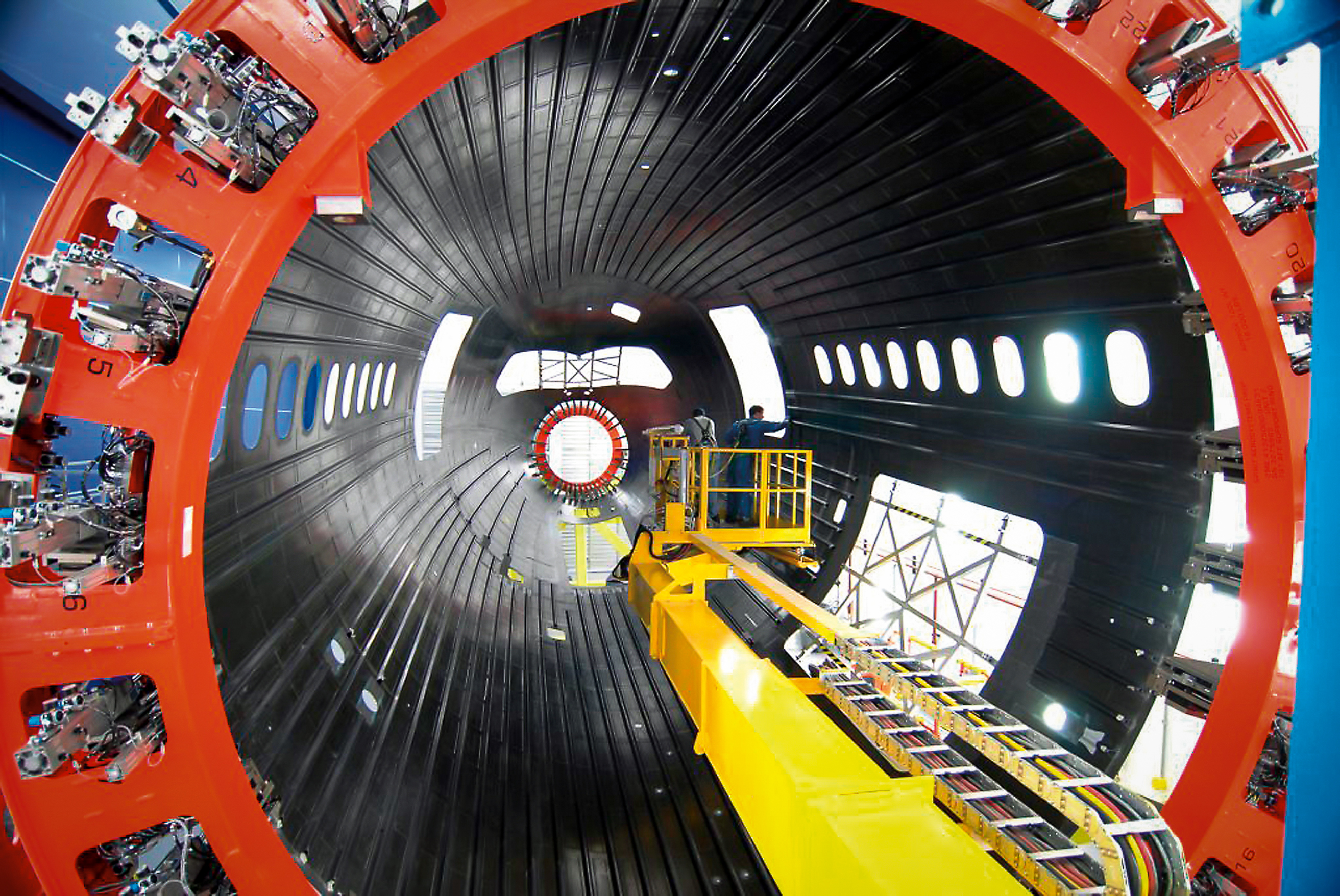
Large aircraft fuselage section under assembly inside a manufacturing facility as part of composite aircraft production work.
Boeing assembles a composite aircraft fuselage section in one of its production facilities. Composite materials are used in major portions of modern aircraft, including sections of the fuselage and wings on aircraft such as the Boeing 787. NASA’s HiCAM project aims to help accelerate manufacturing processes for future composite aircraft.
Boeing

NASA’s Hi-Rate Composite Aircraft Manufacturing (HiCAM) project brought together its full team of Advanced Composites Consortium partners for a 2026 spring review at NASA’s Langley Research Center in Hampton, Virginia.  

The meeting took place May 5-7, bringing together about 150 people from the consortium, a 22-member public-private partnership.  

The review gave NASA and industry partners a chance to look at recent progress and plan for the work ahead. NASA announced recent portfolio decisions, selecting technologies that can have the greatest impact on manufacturing rate for the next airplane program.   

During the meeting, teams reviewed the latest results from the project’s Development Phase and discussed early progress under Phase 2, known as the Demonstration Phase. This phase will scale up key manufacturing technologies in the coming years.  

A major part of the event included full-day workshops focused on assembly demonstrations of two large aircraft structures: the wing and fuselage. These sessions brought together NASA researchers, industry engineers, and partners to share updates, exchange ideas, and discuss long-term plans. Many teams said they noticed stronger collaboration and coordination across the group this year.  

That collaboration supports HiCAM’s goal of large-scale manufacturing demonstrations of a composite fuselage barrel and wing box in 2028 and 2029. These demonstrations represent major project milestones and will help show how advanced composite materials and processes could support faster, lower cost aircraft production.  

NASA and its partners continue to make steady progress toward the project’s goals. The project’s work could help pave the way for new manufacturing methods for lightweight composite structures that make future aircraft easier to build and more efficient to operate. 

Kimiko Booker
NASA Langley Research Center

Share

Details

Last Updated
Jun 04, 2026

Satellite maker Apex’s valuation rises to $2.3 billion after latest $200 million raise

5 June 2026 at 10:15
Apex assembly line

Apex has raised more than $200 million to expand in-house satellite production capabilities, announcing a funding round June 5 it says nearly doubled the four-year-old manufacturer’s valuation to $2.3 billion.

The post Satellite maker Apex’s valuation rises to $2.3 billion after latest $200 million raise appeared first on SpaceNews.

BYD says its cast aluminum frame is lighter, tougher, and safer than steel

2 June 2026 at 21:40

If you’re from Pittsburgh, you may want to sit down for this one: global EV sales leader BYD claims the aluminum frame that underpins its new Yangwang U8L SUV passes a brutal, 12 ton lift test – despite weighing over 100 lbs. less than a comparable steel frame.

❌