❌

Normal view

How African off-grid solar companies are using financing deals to land mainstream investors

31 July 2026 at 12:28


Landmark fundraising deals by two of Africa’s largest off-grid solar companies are raising hopes that private capital markets could become a major source of funding to help bring electricity to millions of homes lacking access to reliable power.

Georgia’s first ‘pop-up’ power plant for data centers faces scrutiny

31 July 2026 at 12:19


The project is under investigation for allegedly beginning construction before obtaining required air permits as regulators consider whether privately operated power plants can legally serve data centers.

Video: "An astonishing change" — farm pollution on the ballot in Iowa

30 July 2026 at 13:25


The New Lede managing editor Brian Bienkowski spoke with Keith Schneider, a senior editor and chief correspondent at Circle of Blue, about how severe water contamination from crop and livestock production and rising high rates of cancer have become key election year issues in Iowa.

First land-based wind farm in Virginia nears completion – raises concerns for golden eagles

30 July 2026 at 13:05


The wind farm will help Virginia reach its clean energy goals and bolster in-state power generation in the face of growing energy demand. But environmentalists and local landowners are worried about the project’s impact to the mountain ecosystem.

Environmental Research: Climate, fireside chat

21 July 2026 at 13:49

ERC, fireside chat webinar image


Environmental Research: Climate was launched in 2022, with the aim of uniting multidisciplinary communities. With a scope that is intentionally broad, the mission of the journal is to publish innovative research examining the causes, consequences, and solutions of climate variability and change. Since our launch, we have published more than 270 articles covering physical and biogeochemical processes that shape Earth’s climate across spatial and temporal scales; the human and ecological dimensions that shape climate-related risks and impacts; and the design, analysis and evaluation of climate mitigation, adaptation, and risk-management strategies and solutions. This webinar will explore the current state of climate research, including changes in the field over the last five years since the launch of the journal, and direct us toward the future.

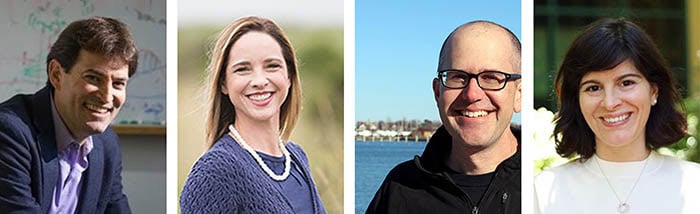
Left to right: Noah Diffenbaugh, Katharine Mach, Andrew Pershing, Inês Azevedo

Moderator: Noah Diffenbaugh, Stanford University
Noah Diffenbaugh is the William Wrigley Professor and Kimmelman Family Senior Fellow in Stanford’s Doerr School of Sustainability, and the Olivier Nomellini Family University Fellow in Undergraduate Education. His research is focused on understanding what aspects of the climate system most directly and acutely impact people and ecosystems. Noah has served as a Lead Author for the Intergovernmental Panel on Climate Change (IPCC), and as editor-in-chief of the peer-review journals Geophysical Research Letters and Environmental Research: Climate. He has provided testimony and scientific expertise to federal, state and local officials. Noah is an elected Fellow of the American Geophysical Union (AGU), a recipient of the James R. Holton Award and William Kaula Award from the AGU, and has been recognized as a Kavli Fellow by the U.S. National Academy of Sciences.

Katharine Mach, University of Miami
Katharine Mach is professor and chair of the Department of Environmental Science and Policy at the University of Miami Rosenstiel School of Marine, Atmospheric, & Earth Science. During spring 2025, she was the Coleman P. Burke Distinguished Visiting Professor at the Yale School of Environment. Her research assesses climate-related risks and response options to address increased flooding, extreme heat, wildfire and other hazards. Through innovative approaches to integrating evidence, she informs effective adaptations to the risks.

Katharine was the 2020 recipient of the Piers Sellers Prize for world-leading contribution to solution-focused climate research. She has served as a chapter author or lead in the Fourth through Sixth US National Climate Assessments and the IPCC Sixth Assessment Report and as a member of the National Academies Climate Security Roundtable. She serves as co-editor-in-chief for Climate Risk Management, an editorial board member for Oxford Open Climate Change and Environmental Research: Climate, and an advisory committee member for the Aspen Global Change Institute. Across all of her research projects, she engages in relevant policy processes and explores and discusses climate risk and adaptation with the media, the private sector, nongovernmental organizations and communities.

Andrew Pershing, Climate Central
As chief programme officer, Andrew Pershing, PhD, leads Climate Central’s climate science activity. His role includes bridging primary research and media analysis to amplify critical work on climate change and climate impacts and make it accessible to audiences around the world. As the director of attribution science and climate fingerprinting, Andrew is developing tools like the Climate Shift Index to quantify how climate change has increased the likelihood or severity of conditions in the atmosphere and ocean. He works closely with communications experts at Climate Central and our partners to help the media and others to incorporate this information into their content.

Andrew has led interdisciplinary research teams to study the impact of global warming on marine ecosystems in the northwest Atlantic. More recently, his work has focused on how climate trends interact with decisions that people make and on how marine ecosystems store and process carbon. As a communicator, Andrew has deep experience working with journalists to present climate science on air and in print.

Inês Azevedo, Stanford University
Inês M Lima Azevedo is a professor in the Energy Science & Engineering department at Stanford University. She is a senior fellow at both Stanford Woods Institute for the Environment and for Precourt Institute for Energy. She has a BSc in environmental engineering (2004) and a MSc in engineering policy and management of technology from IST-Portugal, and a PhD in engineering and public policy from Carnegie Mellon University (2009). Inês is passionate about solving problems that include environmental, technical, economic and policy issues, where traditional engineering approaches play an important role but cannot provide a complete answer. In particular, she is interested in assessing how energy systems are likely to evolve, which requires comprehensive knowledge of the technologies that can address future energy needs and the decision-making process followed by various agents in the economy.

About this journal
ERC journal cover

Environmental Research: Climate explores the causes, consequences, and solutions of climate variability and change, by uniting research communities across the entire spectrum of the climate system.

Editor-in-chief: Noah Diffenbaugh Stanford University, USA


The post Environmental Research: Climate, fireside chat appeared first on Physics World.

Does the Bullet Cluster contain a lot less dark matter than we thought?

8 July 2026 at 16:00

The Bullet Cluster of galaxies might only have half as much dark matter than scientists thought, or perhaps even none at all, according to a new look at observations of this immense collision of galaxies from the James Webb Space Telescope (JWST).

“Our results indicate that the required amount of additional unseen mass – dark matter – is reduced,” astrophysicist Dong Zhang of the University of Bonn, who led the study, tells Physics World.

The Bullet Cluster is a central battleground for proponents of alternative models of gravity seeking to usurp dark-matter theory. The cluster itself is actually two clusters of hundreds of galaxies that have collided head-on. In 2006 the Hubble Space Telescope mapped how the Bullet Cluster’s mass was warping space and creating gravitational lensing, and from this it was possible to infer where the dark matter in the cluster was relative to the galaxies themselves and the hot, X-ray emitting gas. While the galaxies and hot gas remained in the middle, the dark matter from both colliding clusters had passed through unhindered and is now on opposite sides – exactly as dark-matter theory predicted.

In 2025 the JWST observed the Bullet Cluster and the initial analysis, led by Sangjun Cha of Yonsei University, found that while the distribution of mass in the cluster is more complex than expected, it still supports the dark-matter model.

“Those JWST observations of the Bullet Cluster have sparked a lot of interest,” says astrophysicist Richard Massey of Durham University, who was not involved in the new study.

Counting stellar remnants

Astrophysicists led by Zhang have now made their own analysis of the JWST data and arrived at a very different conclusion, as they report in Physical Review D.

Zhang’s team aimed to precisely measure the total mass of not just the stars, but also of dark stellar remnants – white dwarfs, neutron stars and black holes formed when stars die – to see if these objects could account for the extra gravity attributed to dark matter. They found that there would be enough stellar remnants to reduce the amount of dark matter required by half, at least. Furthermore, applying MOND (modified Newtonian dynamics) to the cluster potentially removes the need for dark matter entirely.

They utilized a model called the integrated galaxy-wide initial mass function (IGIMF), which is a variation on the standard IMF that describes how a collapsing molecular cloud fragments into clumps that produce stars. The standard IMF favours low-mass over high-mass stars.

However, variations in chemical compositions, stellar radiation fields and the rate at which gas cools in a given environment mean that the IMF varies from galaxy to galaxy. The IGIMF is designed to get around this by integrating over the full stellar population of a galaxy, or in this case, an entire cluster of galaxies.

“The IGIMF framework was developed independently of MOND and is motivated by observational constraints related to star formation and stellar populations,” says Zhang.

One of the quirks of the IGIMF is that it predicts that in the early universe, more massive stars formed in giant elliptical galaxies than form in galaxies today, consequently producing more stellar remnants than what the standard IMF predicts. Such giant galaxies exist in the core of clusters such as the Bullet. Since massive stars leave behind massive remnants when they go supernova, the gravity of these remnants could account for a large amount of the dark matter. This is supported, says Zhang, by the abundance of heavy elements in some galaxies that’s hard to explain without invoking an early population of very massive stars.

When the quantity of stellar remnants predicted by the IGIMF is applied to the standard model of cosmology “it does not appear sufficient to account for the strong lensing mass in the central regions of the Bullet Cluster,” says Zhang. It is only when applying MOND that things begin to align, he adds.

Questioning the mass function

However, not everyone is convinced by the choice to use the IGIMF over the standard IMF.

“It’s kind of a neat theoretical framework, in which aspects that could produce a total IMF are broken down into separate mathematical terms that can be modelled individually,” says Massey. “But it’s also kind of irrelevant for this sort of empirical analysis, since mainstream analyses already assume that the IMF varies between galaxies, and even in different regions of a galaxy.”

Traditionally, estimating the total stellar mass of a galaxy is accomplished by taking spectra or multi-band photometry and employing a technique called “stellar population synthesis” that best-fits a galaxy’s light to a particular distribution of stellar masses, Massey explains.

“However, the emitted light can be dominated by the brightest, most massive stars,” he says, meaning that the far greater number of less massive stars has to be extrapolated from a galaxy’s stellar mass function, which is derived from the IMF while factoring in the galaxy’s age.

Stellar remnants are even more difficult to detect directly, hence the dependency on the IMF or IGIMF.

“Stellar remnants cannot generally be detected in external galaxies beyond the Milky Way and its satellites,” says Kathy Romer, an astrophysicist at the University of Sussex who studies galaxy clusters. “Exceptions would be via gravitational-wave events or ultra-luminous X-ray binaries, but those are only the tip of the iceberg, so estimates of the total contribution of stellar remnants will always be an extrapolation of what we measure in the Milky Way and Magellanic Clouds.”

Like Massey, who describes IGIMF as being “less mainstream”, Romer is also sceptical about the new results, but acknowledges that “there are some strong aspects to their paper” and that “bringing fresh perspectives and challenging the orthodoxy is essential to keep science moving forward”.

Massey also highlights recent work from a team led by Gregor Rihtarŝiĉ and including Douglas Clowe of Ohio University who led the original Hubble observations of the Bullet Cluster, and who are running simulations to try and refine their maps of dark matter in the cluster.

The post Does the Bullet Cluster contain a lot less dark matter than we thought? appeared first on Physics World.

Changes in structure and ionic resistance of lithium-ion battery graphite electrodes

8 July 2026 at 10:20

The fast-charging performance of lithium-ion batteries is strongly influenced by the structure of porous electrodes and its evolution during battery operation. In such electrodes, ionic transport is governed by the electrolyte conductivity as well as by the porosity, tortuosity and thickness of the electrode. The latter parameters undergo both reversible and irreversible changes, induced by the lithiation and delithiation of graphite particles and by the formation of the solid–electrolyte interphase (SEI).

We will discuss how SEI formation alters electrode thickness, porosity and tortuosity. Particular emphasis will be placed on how these structural changes depend on the initial electrode porosity and how SEI formation can be quantitatively linked to the evolution of transport properties.

Second, we will address state-of-charge–dependent effects. Graphite particle expansion during lithiation changes the pore structure, influencing electrode porosity, thickness and pore volume. It will be shown how these changes affect ionic resistance and electrolyte transport, and how they connect to macroscopic effects such as the recently described electrolyte-motion–induced salt inhomogeneity (EMSI).

Together, these insights provide a coherent picture of how SEI formation and state-of-charge-dependent expansion alter ionic transport in porous graphite anodes, offering guidance for electrode design and improved methodologies for realistic parameter determination used in battery modelling and fast-charging optimisation.

Lennart Reuter received his PhD from the Technical University of Munich (TUM) in June 2025 under the supervision of Hubert Gasteiger and is now a postdoctoral researcher at Uppsala University. His research centres on identifying and quantifying material and electrolyte decomposition processes in lithium-ion batteries. He implemented OEMS for gas analysis in the presence of volatile commercial electrolytes and developed a novel three-electrode cell for the operando detection of parasitic side reactions. In addition, he investigated structural and transport changes in porous electrodes during operation, including the characterisation of porous transport properties by electrochemical impedance spectroscopy (EIS).

Jonas Dickmanns is a PhD candidate at the Chair of Technical Electrochemistry, supervised by Hubert Gasteiger at the Technical University of Munich (TUM), focusing on advanced lithium-ion battery cell chemistry and anode materials. He received his MSc in chemistry from TUM, where he worked on the electrochemical characterisation of graphite. He later expanded his research to other anode materials, including microscale silicon and silicon/carbon composites. His work investigates key electrode processes such as solid–electrolyte interphase (SEI) formation, structural evolution of anodes, and electrolyte interactions. The goal of his research is to enhance the performance, stability and lifetime of next-generation lithium-ion batteries.

The post Changes in structure and ionic resistance of lithium-ion battery graphite electrodes appeared first on Physics World.

Beyond the data: art meets climate at the edge of the world

26 June 2026 at 15:00

“The most beautiful thing we can experience is the mysterious,” wrote Albert Einstein. “It is the source of all true art and science.” It is a reminder that wonder – particularly in the natural world – lies at the heart of both disciplines. When it comes to an issue as multifaceted and emotive as climate change, it feels only natural to turn to art as well as science to make sense of what is happening around us.

The latest episode of Physics World Stories brings together two artists doing exactly that. Host Andrew Glester speaks first with Tom Bailey, a performance and environmental artist from Bristol-based creative company Mechanimal. Bailey has recently returned from an extraordinary 600 kilometre journey through the Arctic borderlands — spanning Norway, Finland and Sweden — travelling by ski, sledge, foot and boat, and occasionally dressed as a reindeer.

Drone shot of artist Tom Bailey pulling a sled along an ice sheet in the Arctic
Arctic art Tom Bailey on his 600 km climate journey and performance tour in the Arctic borderlands. (Courtesy: Tom Bailey and Natasha Soonchild)

Travelling between festival performances, Bailey immersed himself in a region undergoing dramatic change: shifting weather patterns, transforming landscapes, and growing international interest in its mineral resources, raising urgent questions about governance and access. Central to his vision is a “more-than-human” perspective, advocating for nature to have formal representation in international decision-making, not merely as a resource to be managed, but as a presence with its own legitimate interests.

A climate video game with beautiful music

Composer Naomi Hart approaches the crisis from a different angle. After a conversation with her daughter about fears for the future left her saddened but resolute, she channelled that emotion into Save Progress – a short video game exploring how human connection can help us to think about the world and the choices ahead. In the podcast, Hart talks about her creative choices; the game combines an intentionally old-school design with specially composed synthesizer music. Save Progress takes around 10 minutes to play: give it a try.

  • To keep track of how physicists are investigating climate change and developing solutions, visit the Environment and Energy section of the Physics World website.

The post Beyond the data: art meets climate at the edge of the world appeared first on Physics World.

💾

Cosmic crisis averted as supernovae put dark energy back on track

23 June 2026 at 08:58

Through fresh analysis of supernovae data, a team of astronomers has discredited a recent study that suggested that dark energy has weakened since the early universe.

Led by Phil Wiseman at the UK’s University of Southampton, the team showed that the apparent weakening almost disappears after accounting for a known correlation between supernova brightness and galaxy mass. This latest work confirms that the universe’s expansion is accelerating – a discovery that bagged three astronomers the 2011 Nobel Prize for Physics.

Type 1a supernovae occur when a white dwarf accretes mass from a binary companion star. Eventually, it reaches a critical mass where the crushing weight of its gravity can no longer be supported by electron degeneracy pressure, triggering an explosion that can briefly outshine entire galaxies.

These events are especially valuable to cosmologists because white dwarfs always explode at the same critical mass – meaning type 1a supernovae always reach around the same peak brightness. As a result they are “standard candles”, whereby their distances from Earth is inferred by their apparently brightness. The rate at which a type 1A is moving away from us is given by the redshift of its light. By measuring the distance and motion of these objects, the rate of the universe’s expansion can be determined as a function of time.

Driving acceleration

Since the 1990s, researchers have observed thousands of type 1a supernovae. Contrary to expectations for a matter-dominated universe, these measurements revealed that the universe’s expansion is speeding up. This lead to the concept of dark energy – a hypothetical entity that is driving this acceleration.

But in 2025, a team of astronomers in South Korea, led by Junhyuk Son at Yonsei University, Seoul, made an observation that appeared to turn this long-standing picture on its head. “They claimed that a subtle correlation between the brightness of the supernova and the age of the galaxy it exploded in could, if left uncorrected, means that the overall measurements actually now indicate that the expansion is now slowing,” Wiseman explains. “In other words, that dark energy was strong billions of years in the past, but has subsequently weakened.”

In their study, Wiseman and his colleagues revisited the data used by Son’s team – accounting for a correction that the previous astronomers hadn’t applied. Regardless of redshift, the peak brightness of type 1a supernovae in lower-mass galaxies is known to be slightly fainter than those in higher-mass galaxies. Although the reasons for this correlation remain unclear, astronomers have routinely been correcting for it over the past 15 years.

Wiseman’s team applied the same correction – ensuring their calculated distances were unaffected by differences in galaxy mass. “We also used simulations, where we traced how the age of the exploding stars and the galaxies they explode in evolve with cosmic time,” Wiseman says.

Similar ages

With this correction applied, the claimed correlation between supernova brightness and host galaxy age became almost undetectable. “Even if we account for the prediction that the relationship between the supernova and the galaxy should change as we look further back in time, we end up with almost identical measurements of dark energy,” Wiseman continues. Their simulations also showed that supernova progenitor stars have exploded at consistently similar ages throughout cosmic history.

The results will likely come as a relief to many cosmologists, averting the dark energy crisis some had feared. All the same, the team says Son’s study provides a valuable test of existing approaches to measuring the universe’s expansion rate, given the limitations of current observational capabilities.

“In an ideal world, we think a correction based on the age of the galaxy would be slightly more accurate than using the galaxy mass, but these measurements are currently not available for more than a handful of supernova host galaxies in the distant universe,” Wiseman says. “Until then, a mass correction is adequate and the implication is that the universe is still accelerating due to dark energy.”

The research is described in Monthly Notices of the Royal Astronomical Society.

The post Cosmic crisis averted as supernovae put dark energy back on track appeared first on Physics World.

AI data centres’ electricity use nears country-scale levels, finds report

18 June 2026 at 12:00

Data centres that house AI infrastructure are on track by the end of the decade to consume nearly three times as much electricity annually as Pakistan, Bangladesh and Nigeria combined. That is according to a report published by the United Nations University Institute for Water, Environment and Health (UNU-INWEH), which also discovers that the water footprint of such centres could match the annual domestic needs of all 1.3 billion people in Sub-Saharan Africa by 2030.

For hundreds of millions of people, generative AI is now woven into their daily lives. ChatGPT processes 2.5 billion prompts each day and, by integrating AI into its search engine, Google processes billions of AI-assisted interactions.

Behind every virtual compute, however, stands sprawling data centres that operate thousands of high-performance processors. Data centres consume vast amounts of electricity and water to operate, cool servers and transmit data.

Day-to-day search queries account for 80-90% of data centres’ energy costs. An average text-based prompt consumes about 0.42 Watt-hours (Wh) of electricity. ChatGPT interactions alone result in 383 GWh per year — enough to cover the domestic electricity needs of nearly three million people in Sub-Saharan Africa.

As of late 2025, only 32 countries had AI-specialized data centres, with nearly half of global data centres located in the US. More than 150 countries, including most of Africa and South America, lack infrastructure to participate in the AI economy.

Those who benefit least from AI, however, often bear a disproportionate share of its cost. Vulnerable communities near data centres face air pollution, drought conditions, and land shortage.

Even regions in the Global South that are devoid of data centres are impacted by mineral extractions to build AI hardware. Such extractions are energy-intensive, deplete water, and pollute the environment.

A responsible ecosystem

The report finds that the land footprint of data centres could span an area roughly 10 times the size of Mexico City by the end of the decade. Additionally, it projects that 2.5 million metric tonnes of e-waste could be produced annually from AI hardware — equivalent to scrapping 250 Eiffel Towers each year.

 UNU-INWEH director Kaveh Madani says that the report is not “a case against artificial intelligence” adding that the technology is improving the lives of billions of people worldwide. “[The report] is a call for using it responsibly and addressing its unintended impacts proactively to make it sustainable and equitable,” adds Madani.

To build a responsible AI ecosystem, the report calls for a multilateral approach. AI developers should improve efficiency of design and transparently report their environmental footprint. International and national governance should engage local communities in siting decisions and enforce standardized environmental disclosure while investors should consider environmental impact in their due diligence.

For individuals, the report encourages users to avoid unnecessary use, choose the smallest model capable of the task and write concise prompts.

The post AI data centres’ electricity use nears country-scale levels, finds report appeared first on Physics World.

❌