❌

Normal view

Novas tarifas sobre importações nos EUA poderão afetar produção de iPhones

24 July 2026 at 18:25

O governo dos Estados Unidos aplicou uma tarifa de 10% para importações de cerca de 60 países, incluindo alguns dos territórios onde os produtos da Apple são montados.

Resultado de uma investigação conduzida pelo Representante de Comércio dos Estados Unidos (United States Trade Representative, ou USTR) sobre o possível uso de trabalho forçado na produção de bens, as novas medidas tributárias entram em vigor hoje, substituindo a tarifa geral de 10% sobre importações imposta pela administração de Donald Trump, que deixou de valer após decisão da Suprema Corte americana.

O memorando publicado pela Casa Branca prevê algumas exceções à aplicabilidade do imposto, isentando itens que causam impactos econômicos generalizados caso sejam tarifados, além de produtos que não possam ser produzidos em quantidade suficiente ou a preços competitivos nos EUA — o que hipoteticamente poderia ser uma brecha para a Apple, que poderia argumentar não ter capacidade de realocar a sua cadeia de suprimentos para o território americano sem comprometer os preços praticados.

O documento ainda prevê isenção das tarifas para produtos em que a medida não contribui de forma significativa para eliminar as práticas que motivaram sua elaboração.

É difícil afirmar com precisão como isso impactará os produtos da Apple, mas no âmbito das empresas impactadas pela medida, estão as operações da Foxconn, uma das principais parceiras da Maçã na montagem dos seus produtos. A empresa, vale lembrar, foi denunciada em 2025 por apresentar más condições de trabalho aos seus empregados durante a produção do iPhone 17, acarretando investigações das denúncias por parte da própria Apple.

Por tudo isso, é razoável afirmar que as isenções não deverão se aplicar aos produtos da Apple de imediato — e o CEO 1Chief executive officer, ou diretor executivo. da empresa, Tim Cook, poderá ter que entrar em campo novamente para negociar novos termos com o presidente Trump, antes mesmo de deixar o cargo para John Ternus.

via AppleInsider

Notas de rodapé

  • 1
    Chief executive officer, ou diretor executivo.

Will Ternus split AAPL? Apple stock split buzz returns near record highs

23 July 2026 at 15:00

Apple price target

With Apple shares trading near all-time highs around $326, fresh speculation about a potential stock split has resurfaced. While the company has not announced any plans, the upcoming leadership transition adds a new dimension to the discussion.

Apple announced in April 2026 that Tim Cook will step down as CEO on August 31 and transition to Executive Chairman, with John Ternus (currently Senior Vice President of Hardware Engineering) taking over as CEO effective September 1, 2026. This marks the most significant leadership change at Apple in over 15 years.

Could the CEO Transition Influence a Split?

Analysts and investors are debating whether the smooth handover could accelerate or delay a split:

• Potential catalyst: A new CEO often seeks early wins to build momentum. A stock split would be a low-risk, high-visibility move that signals confidence and appeals to retail investors — especially as Ternus begins his tenure.

• Likely timing: Most observers expect any decision to wait until after the transition settles (late 2026 or 2027), once Ternus has established his priorities around AI, hardware innovation, and Mac refreshes.

• Continuity advantage: With Cook remaining as Executive Chairman, the board is expected to maintain strong oversight, reducing any perceived risk around major shareholder-friendly actions.

Apple has not split its stock since the 4-for-1 in August 2020. With fractional-share trading now widespread, the urgency is lower than in the past, but a split could still broaden accessibility and create psychological tailwinds.

Apple’s stock has performed strongly in 2026, rebounding from a weaker 2025 and recently approaching record levels. Solid services growth, ongoing buybacks, and AI/hardware momentum (including upcoming Mac lineup overhauls) have supported the rally — all without a split.

Historically, Apple splits (1987, 2000, 2005, 2014, 2020) have often coincided with periods of optimism and growth. A future split under Ternus could similarly project confidence in the company’s long-term trajectory.

MacDailyNews Take: The Cook-to-Ternus transition is unlikely to hinder a stock split and could even encourage one as an early signal of confidence under the new leadership. That said, Apple tends to be deliberate, so any move would likely prioritize substance over optics.

While a split (even a modest 2-for-1 or 3-for-1) could project optimism and attract more retail interest, Apple’s fundamentals (robust cash reserves, ongoing innovation, and execution on AI/hardware roadmaps) appear to be driving the stock’s current momentum without one. Splits are cosmetic in terms of intrinsic value but have historically aligned with growth phases. Investors should watch for any board signals or SEC filings, but the lack of a split hasn’t held back the rebound in 2026.

Apple’s split history:

• June 16, 1987: 2-for-1
• June 21, 2000: 2-for-1
• February 28, 2005: 2-for-1
• June 9, 2014: 7-for-1
• August 31, 2020: 4-for-1


‎
Please help support MacDailyNews — and enjoy subscriber-only articles, comments, chat, and more — by subscribing to our Substack: macdailynews.substack.com. Thank you!

Support MacDailyNews at no extra cost to you by using this link to shop at Amazon.

The post Will Ternus split AAPL? Apple stock split buzz returns near record highs appeared first on MacDailyNews.

Apple Financial Statements: Products vs. Services

21 July 2026 at 21:27

John Gruber (Mastodon, 2):

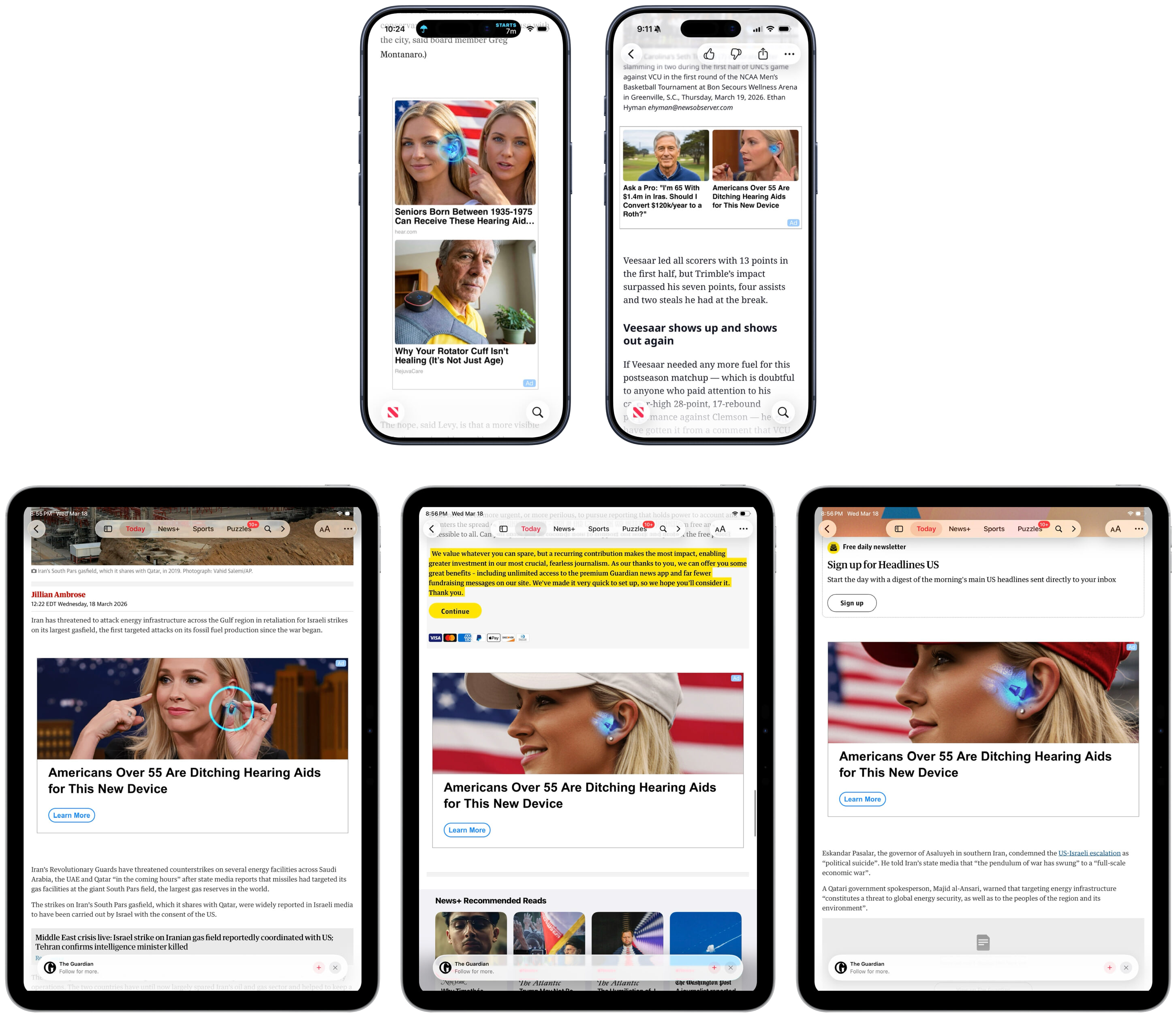
Some of [Cook’s letter] remains true, but has lost some truthiness — and truthiness matters. But some of it is no longer true, period. It’s no longer just “one small part” of Apple’s business that serves advertisers. Here in 2026, search results in the App Store not only show paid ads — frequently for casinos — but the search results are visually dominated by paid ads now that Apple has added a second ad to results. Apple News+ is a paid subscription that offers a genuinely great value for the number of paywalled publishers whose content it includes, but articles on the News app tend to include the weirdest AI-generated ads on the Internet. (How many young blond women am I supposed to believe need hearing aids?) And — at this writing, still “coming soon” — Apple is launching ads on Apple Maps. Apple Maps remains free of charge to use, so according to Tim Cook, we’re not the customer. We’re the product. Or, if you prefer, our frustration is the product.

[…]

The ratio of ads to organic results in App Store search — especially when measured in screen area — is clearly not aligned with Cook’s 2014 statement that “Our software and services are designed to make our devices better. Plain and simple.” Obviously not. App Store search today is designed primarily to generate more revenue for Apple. That’s not criminal, but it’s a change.

[…]

What gave Tim Cook’s privacy letter heft in 2014 wasn’t just the clarity of its plain language, but the fact that you didn’t have to take his word for it that the ads Apple showed you respected your privacy, because Apple didn’t show you ads in 2014. Apple today can’t say that.

[…]

John Ternus should return Apple’s privacy policy to its 2014 clarity. The trust Apple would earn from such a move would far out-value whatever revenue these ads pad to their already hefty and ever-increasing quarterly Services numbers.

I wish that were the case, but I fear this is kind of a Hotelling’s Law situation, where Apple can get most of the benefit by being just slightly better on this axis. Where else do its customers have to go?

Jeff Johnson (Mastodon):

In the second fiscal quarter of 2018, services generated $9 billion in revenue (net sales), whereas in Q2 2026, that amount had grown to $31 billion! In this blog post, I want to focus on understanding the relative financial importance of products and services for Apple.

[…]

In 2025, services were 42% of Apple gross margin. How does 26% of net sales become 42% of gross margin? The explanation is that services have a much lower cost of sales. The products gross margin was 37% of products net sales, while the services gross margin was an astonishing 75% of services net sales. In other words, Apple services are almost pure profit!

Does this 75% account for TV and movie production costs?

With persistent general inflation, consumers do not have unlimited money to spend on Apple products. At least in the near future, it’s reasonable to question how much further room is available for growth in profits from Apple products. To satisfy the demands of investors, Apple executives including CEO-elect John Ternus may be forced to rely even more than before on growth in services, which do not face as much pressure on cost of sales as hardware products.

Previously:

Apple evitou citar Jony Ive em processo contra a OpenAI

20 July 2026 at 13:36

Desde que a Apple levou a OpenAI aos tribunais por uma suposta violação de segredos industriais e propriedade intelectual, a ausência do nome de Jony Ive no processo tem sido motivo de especulações, considerando que o ex-executivo da Maçã e braço direito de Steve Jobs é uma peça relevante para o desenvolvimento de hardwares da dona do ChatGPT.

No ano passado, a startup de Ive, a io Products, foi adquirida pela OpenAI por US$6,5 bilhões. Desde então, o estúdio de design independente LoveFrom (também comandado pelo ex-Apple) passou a ser o espaço da gigante de inteligência artificial (IA) para a supervisão do design da sua linha de hardware. Nesse processo, mais de 400 funcionários trocaram a Maçã pela empresa de Sam Altman — entre eles, Tang Tan e Chang Liu, acusados de instruírem a revelação de protótipos da Maçã para quem estivesse em entrevista com a empresa de IA.

Para Mark Gurman, jornalista da Bloomberg, existem duas explicações lógicas para Ive ter ficado de fora das acusações: a ausência de provas que comprovem seu vínculo com o esquema e a sua relação de proximidade com a viúva de Jobs, Laurene Powell Jobs.

Jony Ive, Sam Altman e Laurene Powell Jobs

Próxima de Tim Cook e de outros executivos da empresa — além de manter uma relação de longa data com Ive —, ela continua circulando com naturalidade entre ambos os lados, tendo inclusive participado da última WWDC como convidada.

Laurene também é uma das principais investidoras dos projetos de Ive e esteve ao lado dele e de Altman quando os dois revelaram que o primeiro dispositivo de IA da OpenAI já estava em desenvolvimento. Para Gurman, esse conjunto de relações pode ter contribuído para evitar que o nome do ex-chefe de design da Apple fosse envolvido diretamente na disputa judicial, especialmente na ausência de evidências que o ligassem ao suposto vazamento de informações.

❌