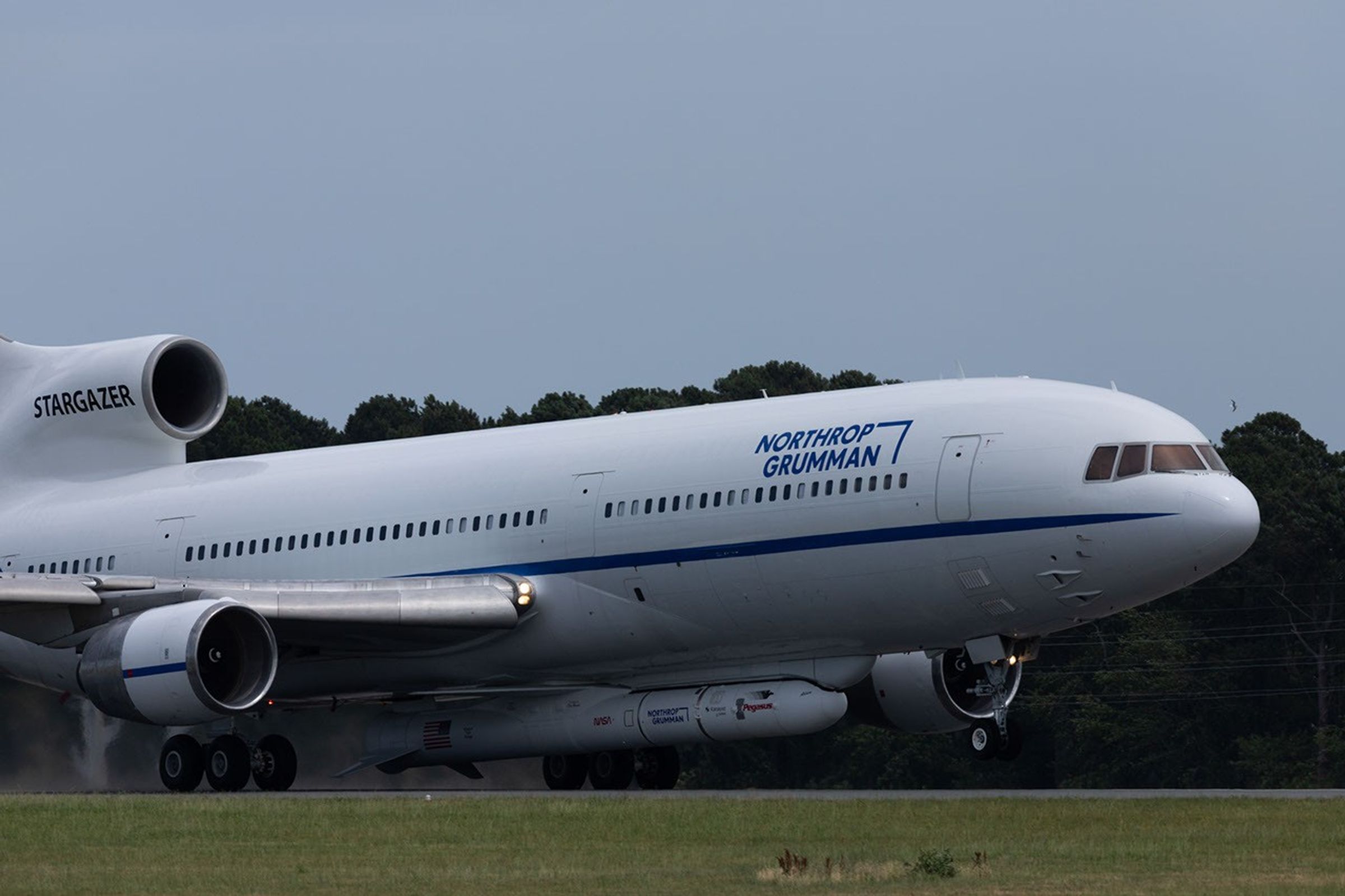
Northrop Grumman’s Stargazer took off Thursday, June 18, 2026, from NASA’s Wallops Flight Facility in Virginia. The modified L-1011 aircraft carried the company’s Pegasus XL rocket hosting LINK, a robotic servicing spacecraft from Katalyst Space. LINK will launch from the air-deployed Pegasus XL later this month on a mission to boost the orbit of NASA’s Neil Gehrels Swift Observatory.
NASA/Jeanette Kazmierczak
An airplane carrying a rocket loaded with a robotic spacecraft designed to raise NASA’s Neil Gehrels Swift Observatory departed the agency’s Wallops Flight Facility in Virginia on Thursday, June 18.
Stargazer, a modified L-1011 operated by Northrop Grumman, took off for Kwajalein Atoll, part of the Republic of the Marshall Islands in the South Pacific Ocean. Attached to the belly of the aircraft was one of the company’s Pegasus XL rockets with LINK inside.
NASA contracted Katalyst Space to design and build LINK to rendezvous and dock with Swift and lift it back to a higher altitude.
Spacecraft in low Earth orbit experience drag caused by our planet’s atmosphere, which gradually reduces their altitude if they do not have propulsion systems to counteract the effect.
Recent solar activity magnified this effect on Swift, which began to sink faster than anticipated.
Katalyst selected Northrop Grumman’s Pegasus XL launch vehicle as the best means of reaching Swift on a short timeline based on orbital and programmatic needs.
Stargazer will carry Pegasus and LINK to Kwajalein Atoll, part of the Republic of the Marshall Islands in the South Pacific Ocean with stopovers in California and Hawai’i.
NASA/Jamie Adkins
Later this month, Stargazer will carry the rocket to an altitude of around 40,000 feet before releasing it.
After several seconds in free-fall, Pegasus XL will fire the first of its three-stage rocket motors, delivering LINK into orbit in about 10 minutes.
NASA’s Fermi Mission Uncovers Possible Sibling Supernova Remnants
A new study of two supernova remnants, the debris left behind after stars explode, suggests the explosions came from stellar siblings that once orbited each other. The first star’s detonation sent its binary companion hurtling through space, and then, after traveling for thousands of years, the surviving star blew up too.
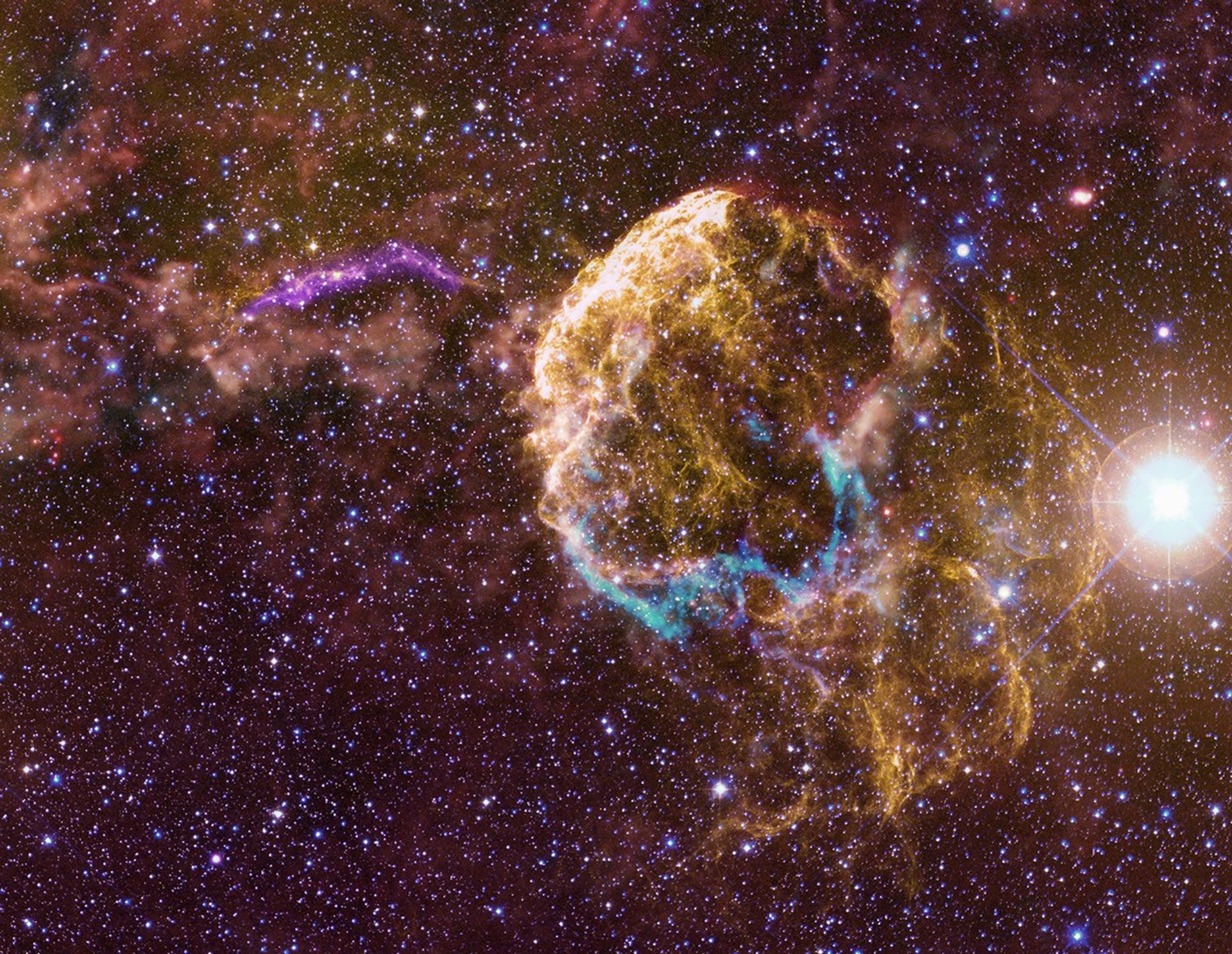
This multiwavelength scene shows the Jellyfish Nebula supernova remnant (right), the interstellar cloud it’s interacting with, and a distinctive curving filament to its upper left. The filament, which is shown here both in optical and ultraviolet (UV) light, is the visible part of an overlapping supernova remnant, G189.6+3.3, that is more prominent in radio and X-rays. Visible light is shown in yellow, UV from NASA’s Neil Gehrels Swift Observatory is shown in violet, and infrared light from NASA’s retired WISE (Wide-field Infrared Survey Explorer) mission appears in cyan, red, and orange. Both remnants are located about 6,000 light-years away in the constellation Gemini. The brilliant star at far right is Propus, also known as Eta Geminorum.
NASA Goddard Space Flight Center and M. Michailidis et al. 2026; optical: DSS; infrared: NASA/WISE/JPL-Caltech/UCLA; ultraviolet: NASA/Swift
“Using 16 years of data from NASA’s Fermi Gamma-ray Space Telescope, our analysis uncovered gamma rays associated with a supernova remnant that was hidden in the glare of its neighbor, the Jellyfish Nebula, one of the brightest gamma-ray-emitting supernova remnants known,” said Miltiadis Michailidis, a postdoctoral fellow in the physics department at Stanford University in California. “There are so many striking connections between the two remnants that we conclude they’re likely related, giving us the first known example of a binary system where both stars have undergone supernova explosions.”
Michailidis presented the findings Wednesday at the 248th meeting of the American Astronomical Society in Pasadena, California. A paper describing the results will appear in a future edition of Nature Communications.
The study focused on a faint supernova remnant called G189.6+3.3, which is mainly visible in X-rays. It is upstaged by its brighter and better-known neighbor, the Jellyfish Nebula (IC 443). The two star wrecks, both located in the constellation Gemini, appear to partially overlap as seen in X-rays. Recent X-ray evidence suggests that hot plasma likely associated with G189.6+3.3 may extend across the entire region, a hint that the overlap may be nearly total.
A massive star explodes when its energy-producing core runs out of fuel and collapses under its own weight, triggering an explosion that blows the star apart. The explosion’s shock wave encloses a hot cloud of debris that rapidly expands into space. So far, astronomers have cataloged about 300 supernova remnants in our galaxy.
The Fermi mission is part of NASA’s fleet of observatories monitoring the changing cosmos to help humanity better understand how the universe works. More than a decade ago, observations from Fermi’s LAT (Large Area Telescope) showed that the shock waves of supernova remnants accelerated particles to within a fraction of the speed of light, a process first proposed by physicist Enrico Fermi — the mission’s namesake — in 1949.
These high-speed particles, called cosmic rays, interact with interstellar gas to produce gamma rays, the highest-energy form of light. Protons make up 99% of cosmic ray particles. To prove that accelerated protons are responsible for the glow, astronomers search for a specific gamma-ray feature. When cosmic-ray protons smash into interstellar gas, they produce a short-lived particle called a neutral pion, which almost immediately decays into a pair of gamma rays. This emission occurs within a specific band of energies associated with the neutral pion’s mass and lies within the range detected by Fermi’s LAT instrument.
In 2013, Fermi observations proved that the Jellyfish Nebula, which is interacting with part of a glowing cloud of hydrogen gas known as Sharpless 249, produced gamma rays through this mechanism. Its neighbor, G189.6+3.3, was discovered in 1994 as part of an X-ray survey by the German-led ROSAT (Roentgen Satellite) mission.
A bright filament of gas lies between the overlapping remnants. New observations of this feature reveal that the shock wave from G189.6+3.3 slammed into dense interstellar gas there and dramatically slowed, key evidence that both remnants are interacting with the same cloud system.
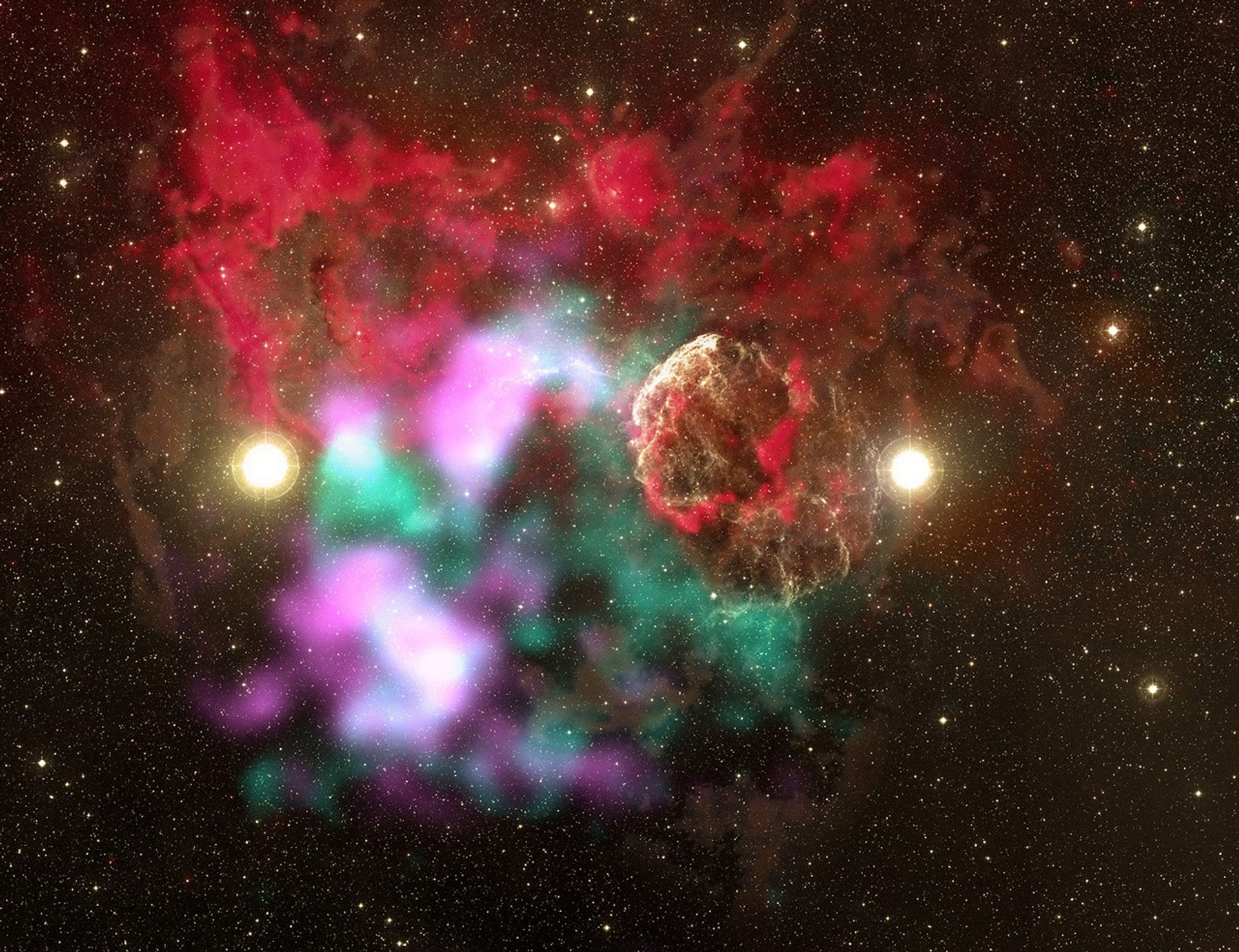
The well-known supernova remnant IC 443 (right) has an older, fainter neighbor (shown here in blue-green and magenta) called G189.6+3.3. A filament of gas between them, glowing in visible and ultraviolet light (violet arc at center), traces the neighbor’s shock wave and shows that both remnants are interacting with the same molecular cloud, shown in red, orange, brown for infrared and radio data and yellow for visible light. Blue-green shows X-rays from the fainter remnant, while magenta shows gamma rays with energies greater than 10 billion electron volts; for comparison, visible light has energies between about 2 and 3 electron volts. In this view, high-energy light from the much brighter IC 443 has been removed for clarity. Gamma-ray emission near the filament stems from protons accelerated in the supernova’s shock wave as it expands into the cloud.
NASA Goddard Space Flight Center and M. Michailidis et al. 2026; radio, MWISP and ESA/Planck; infrared: NASA/WISE/JPL-Caltech/UCLA; optical: DSS; ultraviolet: NASA/Swift; X-ray: SRG/eROSITA; gamma ray: NASA/DOE/Fermi LAT Collaboration
Astronomers think the Jellyfish Nebula is also a candidate PeVatron, a cosmic particle accelerator capable of boosting protons to energies so high they could nearly escape our galaxy. Such particles can produce gamma rays with trillions of times more energy than visible light. Finding a second particle accelerator near the Jellyfish Nebula could offer scientists new clues for how supernova remnants develop into PeVatrons.
“The overlapping remnants, a connecting gas filament, and the availability of data from Fermi and other facilities motivated us to delve into this complex but little-studied region,” said co-author Marianne Lemoine-Goumard, an astrophysicist at the French National Centre for Scientific Research (CNRS) based at the University of Bordeaux. “With Fermi’s LAT instrument, we found gamma-ray emission associated with accelerated protons in the northern part of the fainter remnant. If both remnants are interacting with the same structure, then they must share a common distance from us.”
The team concludes the remnants lie about 6,000 light-years away, their explosion centers are separated by roughly 40 light-years projected onto the plane of the sky, and the original stars may have been 20 or more times the Sun’s mass.
Estimates of the remnants’ ages vary widely, but the team concludes that the age of the Jellyfish Nebula is 8,000 to 9,000 years, while G189.6+3.3 is between 20,000 to 110,000 years old. This means the delay between the explosions could have extended for up to 100,000 years.
In addition, the team conducted computer simulations of a million massive binary systems. They show that systems where the stars orbit close enough to exchange matter and interact during their lives can readily produce dual supernova explosions with similar separations and time delays as those found for the remnants. The team also estimated that the chance of randomly encountering this combination of observed spatial alignment and compatible distances to be less than 1%, strongly supporting a physical association.
“The evidence we’ve compiled — including observations across the spectrum, the chemical and physical properties of the remnants, simulations, and more — paints a compelling picture of a dual supernova event,” said Michailidis.
This study identifies a unique possible example of a binary system where both stars exploded as supernovae and left behind separate, detectable supernova remnants. Astronomers think that most massive stars form in binary or multiple-star systems. The Jellyfish Nebula/G189.6+3.3 complex offers astronomers a rare opportunity to study how massive binary stars evolve, exchange matter, explode, and experience velocity changes — called kicks — induced by the supernova blast. It also provides a powerful new laboratory for understanding how coupled supernova remnants behave, including how they accelerate particles, generate gamma rays, and shape their surrounding environments.
“Fermi’s gamma-ray observations of supernova remnants continue to reveal the dynamic lives of stars,” said Elizabeth Hays, the Fermi project scientist at NASA’s Goddard Space Flight Center in Greenbelt, Maryland. “We can now connect the glowing remains of two massive stars to a powerful pair that evolved together over thousands of years.”
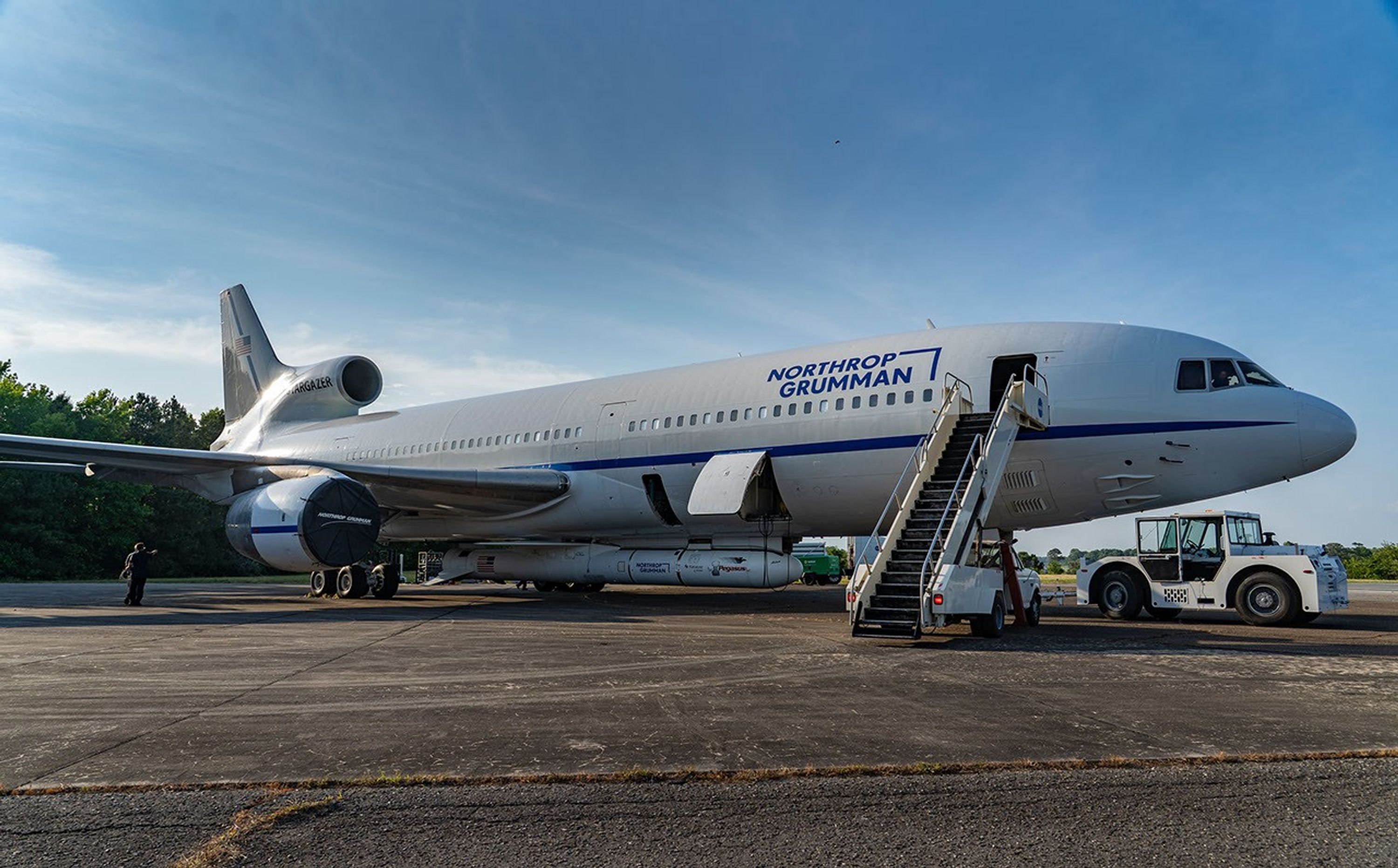
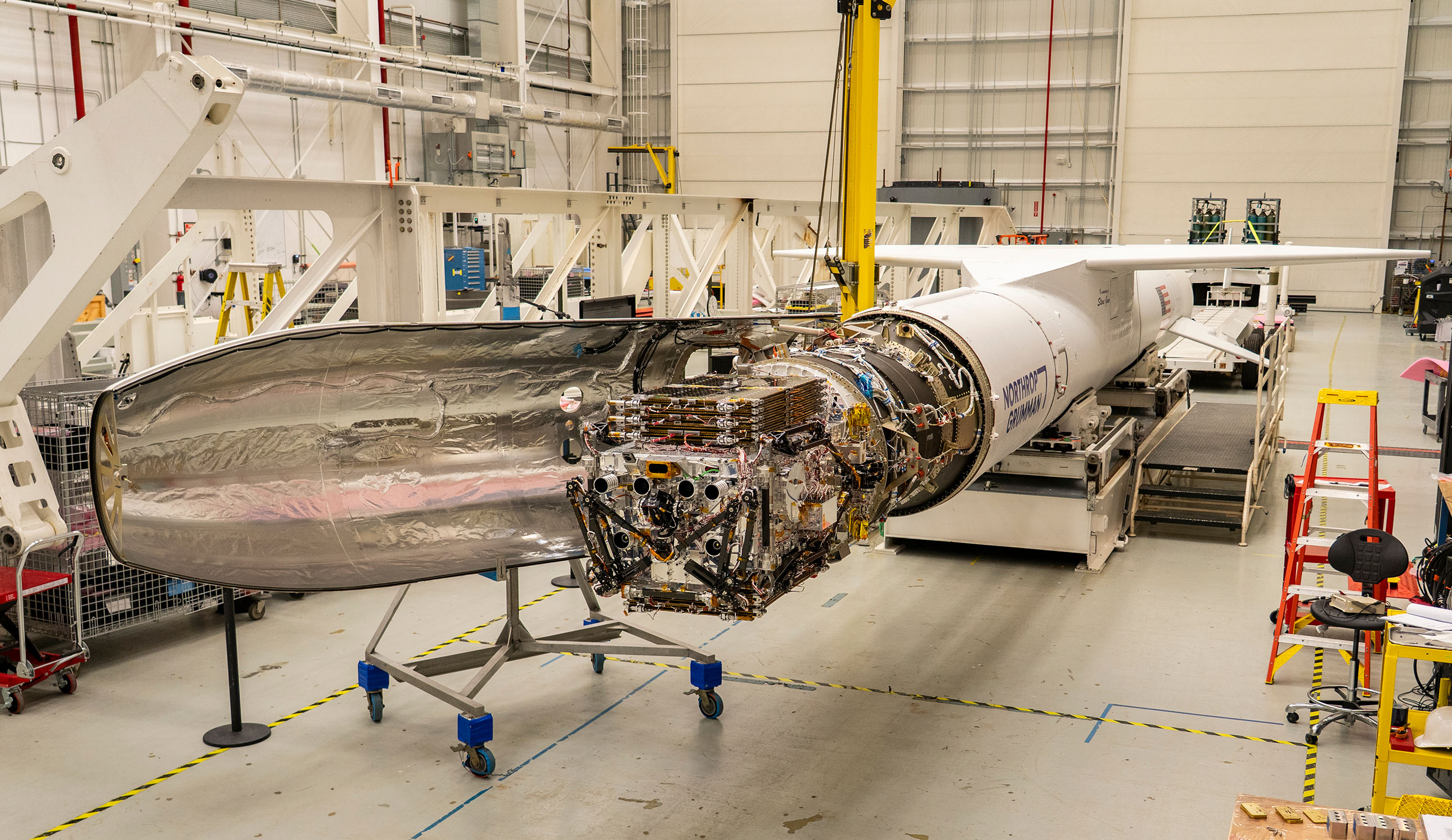
A Northrop Grumman Pegasus XL rocket is affixed to the bottom of the company’s Stargazer, a modified L-1011 aircraft, and ready for departure, as seen on June 12, 2026, at NASA’s Wallops Flight Facility in Virginia. Inside the rocket is Katalyst Space’s LINK robotic servicing spacecraft, which will launch to boost the orbit of NASA’s Neil Gehrels Swift Observatory.
NASA/Ron Beard
Engineers attached a Northrop Grumman Pegasus XL rocket to the company’s Stargazer aircraft at NASA’s Wallops Flight Facility in Virginia on Friday, June 12.
The rocket will carry LINK, a robotic servicing spacecraft from Katalyst Space, into orbit ahead of an attempt to boost NASA’s sinking Neil Gehrels Swift Observatory.
All spacecraft in low Earth orbit experience drag caused by our planet’s atmosphere, which gradually reduces their altitudes unless they have propulsion systems to counteract the effect.
A recent bout of solar activity magnified this effect on Swift, and its orbit has lowered faster than anticipated.
Katalyst selected Northrop Grumman’s Pegasus XL rocket as the best launch option for reaching the observatory in time for LINK to perform the boost procedure, based on the mission’s orbital and programmatic needs. Northrop Grumman will deploy the rocket using Stargazer, the company’s modified L-1011 airplane.
LINK will launch from Kwajalein Atoll, part of the Republic of the Marshall Islands in the South Pacific Ocean, later this month.
Katalyst Space’s LINK robotic servicing satellite awaits encapsulation inside a Northrop Grumman Pegasus XL on June 8, 2026, at NASA’s Wallops Flight Facility in Virginia. The rocket will carry LINK to space for an attempted orbital boost of NASA’s Neil Gehrels Swift Observatory.
Credit: NASA/Ron Beard
NASA will host an audio-only media teleconference at 11 a.m. EDT, Wednesday, June 17, to preview the Katalyst Space mission to boost the orbit of NASA’s Neil Gehrels Swift Observatory.
Katalyst’s robotic servicing spacecraft, called LINK, will attempt to rendezvous with Swift and raise its altitude, extending its science mission lifespan and advancing a key capability for the future of space exploration. The LINK spacecraft will launch on Northrop Grumman’s Pegasus XL rocket later this month from Kwajalein Atoll in the Marshall Islands.
Media interested in participating by phone must RSVP no later than two hours before the start of the call to Amy Barra at: amy.l.barra@nasa.gov. NASA’s media accreditation policy is available online.
Audio of the media teleconference will stream on the agency’s website at:
The Swift mission, which launched in 2004, leads NASA’s fleet of telescopes in studying changes in the high-energy universe, like gamma-ray bursts, which are the most powerful explosions in the cosmos. When a rapid, sudden event takes place in the sky, Swift serves as a “dispatcher,” providing critical information that allows other “first responder” missions to follow up to learn more about how the universe works.
After 21 years, Swift’s low Earth orbit has begun to rapidly decay because of increased solar activity. Rather than allowing the observatory to re-enter Earth’s atmosphere, as many missions do at the end of their lifetimes, NASA is using this opportunity to advance U.S. spacecraft servicing technology. In September 2025, NASA awarded a contract to Katalyst to mount a robotic servicing mission for Swift in less than a year. The mission will use LINK to rendezvous with Swift and boost it to a higher altitude, demonstrating a key capability for the future of space exploration. The mission is targeted for launch in June from Kwajalein Atoll, Marshall Islands.
Learn more about the mission to boost Swift’s orbit at:
Katalyst Space’s LINK robotic servicing satellite awaits encapsulation inside a Northrop Grumman Pegasus XL on June 8, 2026, at NASA’s Wallops Flight Facility in Virginia. The rocket will carry LINK to space for an attempted orbital boost of NASA’s Neil Gehrels Swift Observatory.
NASA/Ron Beard
Engineers completed installation of Katalyst Space’s LINK robotic servicing spacecraft into a Northrop Grumman Pegasus XL rocket on Tuesday, June 9, at NASA’s Wallops Flight Facility in Virginia. Launch is anticipated later this month.
Our planet’s atmosphere creates drag for spacecraft in low Earth orbit, gradually reducing their altitudes if they don’t have propulsion systems to counteract the effect.
Recent solar activity magnified this effect on Swift, and its orbit decayed faster than anticipated.
Katalyst’s Hunter Robertson prepares LINK ahead of it being attached to the Pegasus XL inside the Horizontal Integration Facility at NASA Wallops on June 6, 2026.
NASA/Ron Beard
Based on the orbital and programmatic needs of the mission, Katalyst selected the air-launched Pegasus XL as the best means of reaching the observatory in time to perform the boost maneuver.
Northrop Grumman will launch the rocket using Stargazer, its modified L-1011 aircraft.
Next, Northrop Grumman engineers will attach Pegasus XL to Stargazer, which will carry it from NASA Wallops to Kwajalein Atoll, part of the Republic of the Marshall Islands in the South Pacific Ocean, for launch.
The Neil Gehrels’ Swift Observatory is NASA’s astrophysics multitool, capable of quickly observing a wide range of cosmic objects in visible, ultraviolet, X-ray, and gamma-ray light. It launched as the Swift Gamma-ray Observatory on Nov. 20, 2004. In 2018, the agency renamed it in honor of Neil Gehrels, who helped develop the mission and served as its first principal investigator.
At launch, Swift was a first-of-its kind multiwavelength observatory designed to study gamma-ray bursts, the most powerful explosions in the cosmos, using its three telescopes.
The spacecraft, which was built by Northrop Grumman (formerly General Dynamics), is named after the bird for its ability to rapidly turn to study bursts and their afterglows, which has made it a key player in NASA’s fleet of spacecraft that participate in time-domain astronomy, the study of astronomical objects across various divisions of time, from microseconds to decades or more.
Swift is also important to multimessenger astronomy, which involves detecting light — the best-known astrophysical “messenger” — emitted from sources discovered by observatories sensitive to non-electromagnetic signals, like high-energy particles and space-time ripples called gravitational waves. It has contributed to the study of everything from comets in our solar system to black hole activity in distant galaxies.
In January 2025, the Swift team realized the spacecraft would re-enter the atmosphere in the summer of 2026. NASA decided to attempt to boost the observatory to advance U.S. private spacecraft servicing, demonstrating a key capability for the future of space exploration, and extend Swift’s scientific lifetime.
Lead NASA center:
Goddard Space Flight Center
Operations center:
Pennsylvania State University’s Eberly College of Science
Launch:
November 20, 2004
Wavelengths:
Visible, ultraviolet, X-ray, gamma-ray
Height:
18.5 feet (5.6 meters)
Weight:
3,200 pounds (1,470 kilograms)
Solar panel length:
13 feet (4 meters)
This infographic highlights some of the achievements of NASA’s Neil Gehrels Swift Observatory, which has become the agency’s astrophysics multitool since launching in 2004. The spacecraft studies a wide range of objects, from those near Earth, to stars, black holes, and gamma-ray bursts — the most powerful explosions in the cosmos.
NASA’s Goddard Space Flight Center
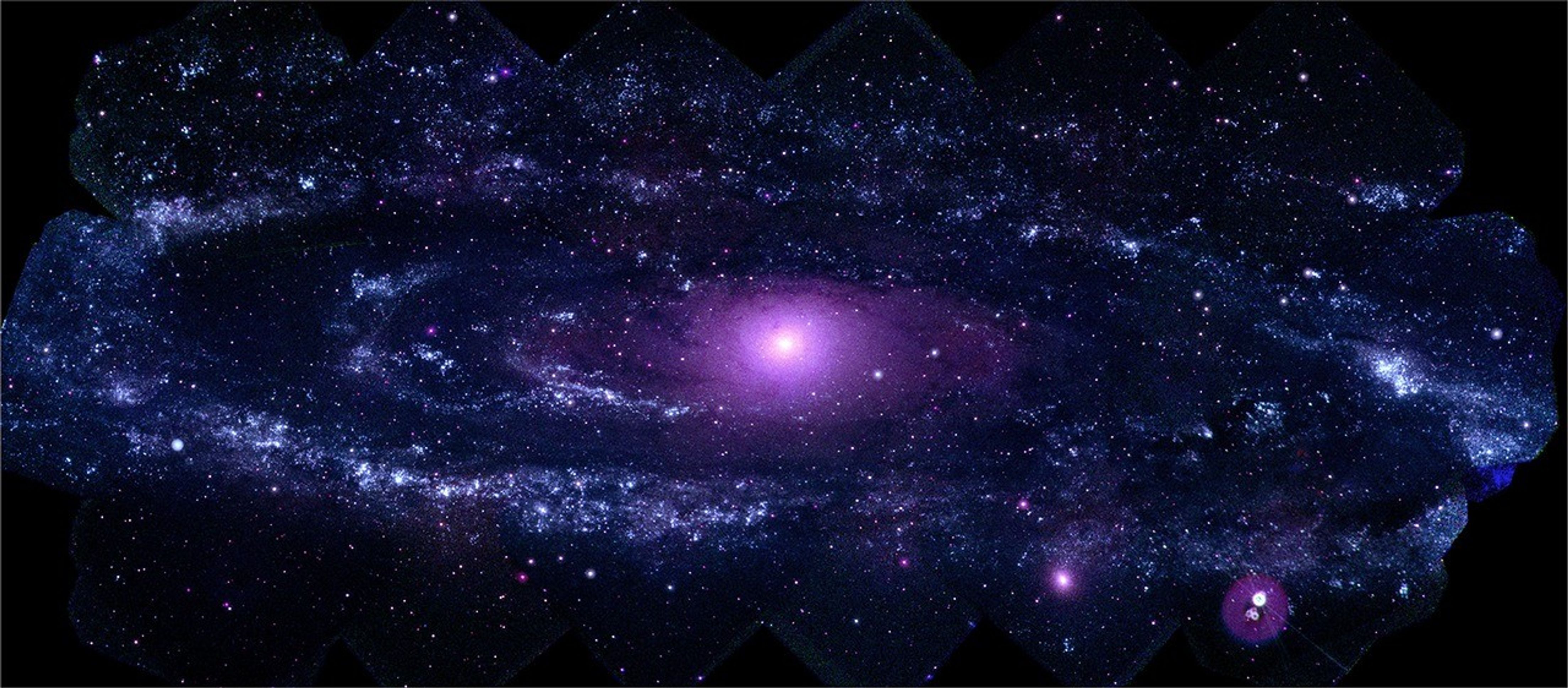
Swift viewed our neighboring spiral galaxy Andromeda, also called M31, in ultraviolet light. The image was made from 330 snapshots from Swift’s Ultraviolet/Optical Telescope. Some 20,000 ultraviolet sources are visible in the image, including M32, a small galaxy in orbit around M31. Dense clusters of hot, young, blue stars sparkle in the disk beyond the galaxy’s smooth, redder central bulge.
NASA/Swift/Stefan Immler (GSFC) and Erin Grand (UMCP)
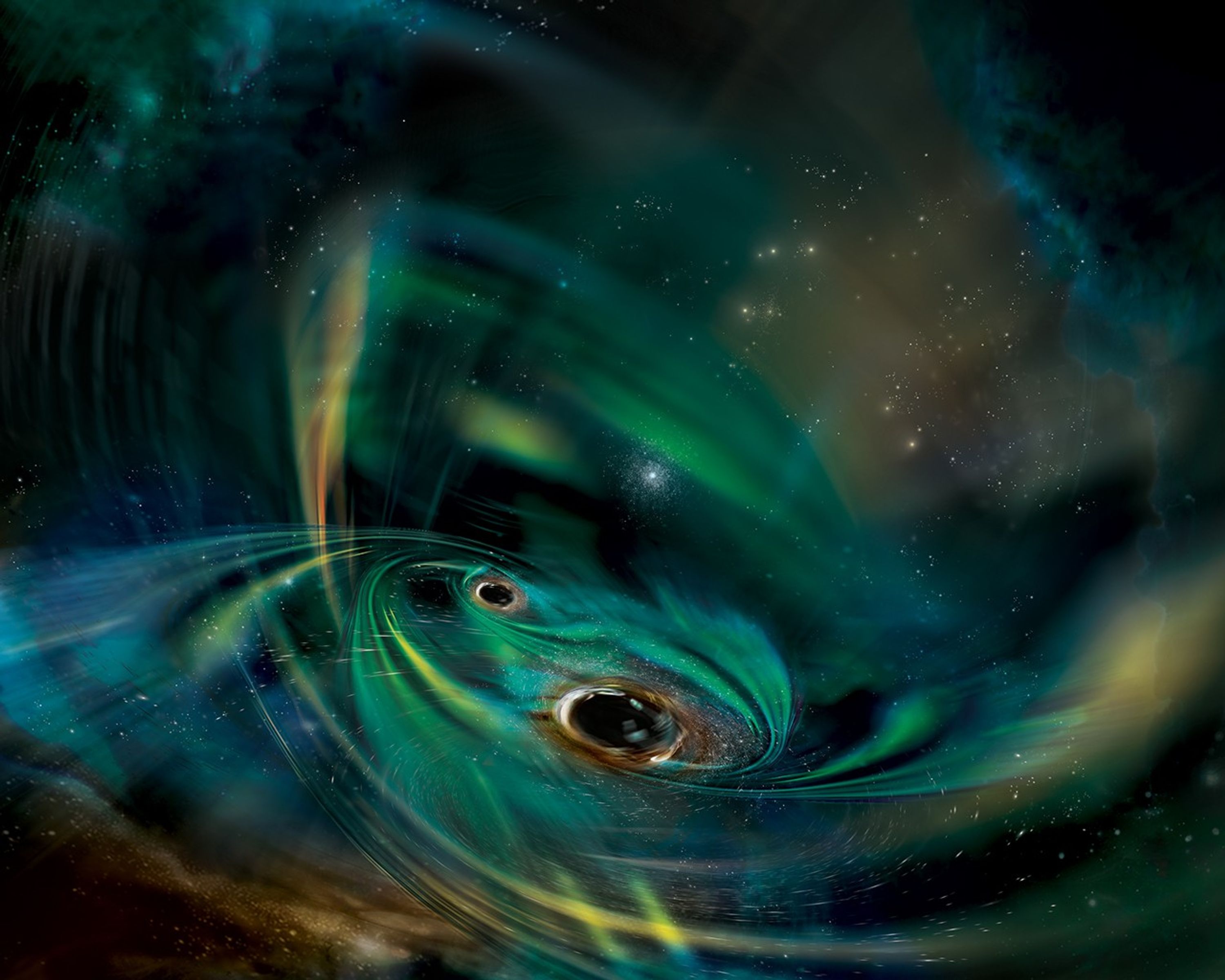
A pair of monster black holes swirl in a cloud of gas in this artist’s concept of AT 2021hdr, a recurring outburst studied by Swift and the Zwicky Transient Facility at Palomar Observatory in California.
NASA/Aurore Simonnet (Sonoma State University)
About LINK
NASA contracted Katalyst Space, in Flagstaff, Arizona, to boost Swift in September 2025. The company had one year to design, build, test, and launch its LINK robotic servicing spacecraft to meet, grab, and lift Swift.
The Katalyst team constructed LINK at its Broomfield, Colorado, facility and tested it there and at NASA’s Goddard Space Flight Center in Greenbelt, Maryland.
LINK will launch on a Northrop Grumman Pegasus XL rocket in June 2026. Once in space, the Katalyst team will spend several weeks checking out the satellite’s major systems, including power, navigation, and sensors.
Then LINK will approach Swift and complete a visual survey. The Katalyst team has identified several potential grab points, but after 20 years of wear and tear in space, those locations need to be verified with the Swift team before moving forward.
After the inspection is complete, LINK will use its three robotic arms to secure Swift before slowly boosting it to nearly its original orbit of around 370 miles (600 kilometers) over the course of several months. LINK’s three ion thrusters are powered by about 130 pounds (60 kilograms) of xenon gas.
Once the lift is complete, LINK will detach from Swift and re-enter Earth’s atmosphere.
Company:
Katalyst Space
Launch:
June 2026
Height:
5 feet (1.5 meters)
Weight:
935 pounds (425 kilograms)
Solar panel length:
20 feet (6 meters)
Propulsion:
Three xenon-fueled thrusters
Robotic arms:
Three, deployed after launch
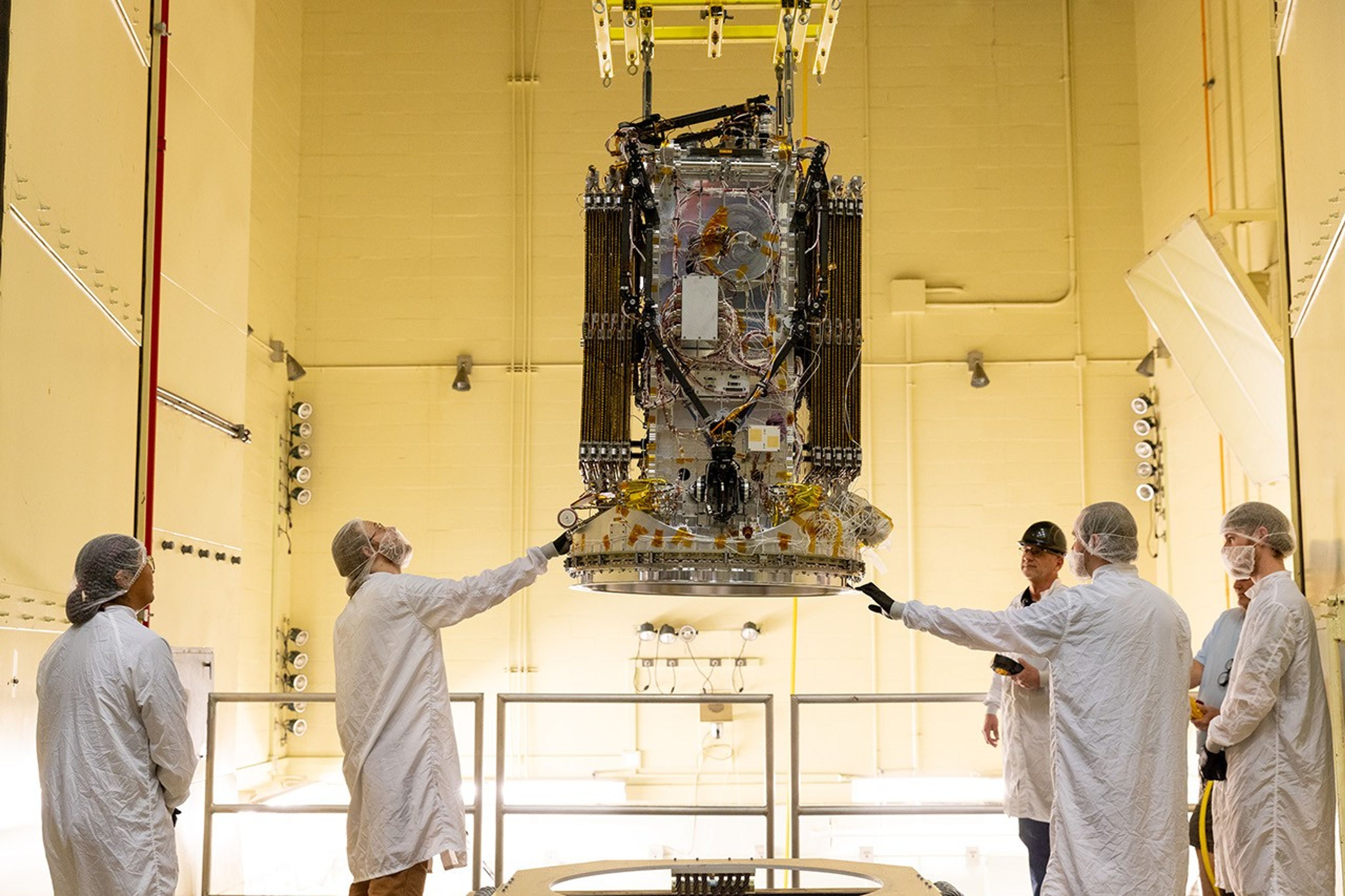
Engineers from Katalyst Space Technologies in Flagstaff, Ariz., stabilize their LINK robotic servicing spacecraft as it moves into a vibration chamber at NASA’s Goddard Space Flight Center in Greenbelt, Md., on April 15, 2026. The vibration chamber simulated the intense shaking LINK will experience during launch.
NASA/Scott Wiessinger
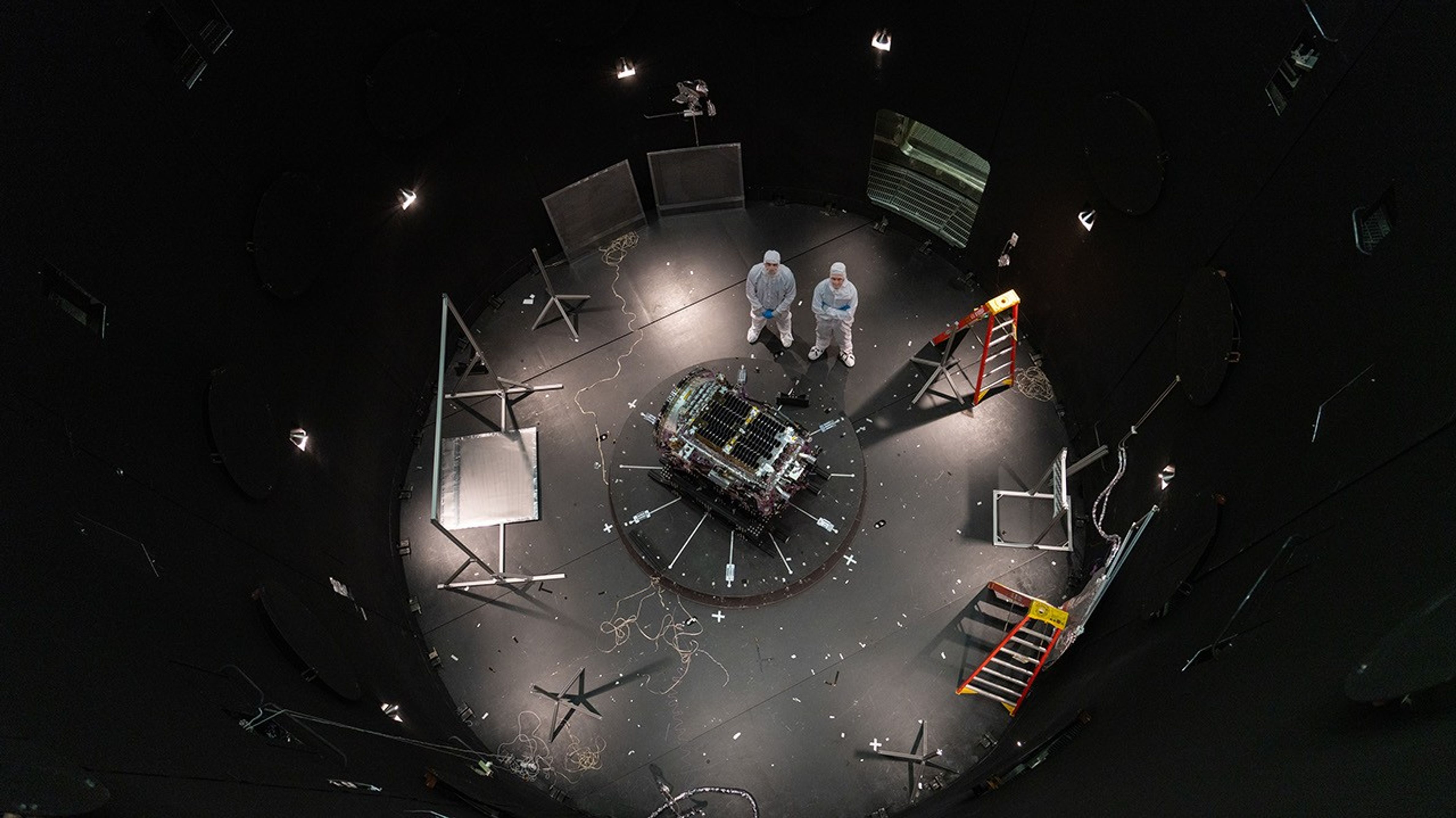
Kieran Wilson, LINK’s principal investigator at Katalyst, and Hunter Robertson, a space systems engineer at Katalyst, stand next to their spacecraft inside the SES (Space Environment Simulator) at NASA Goddard on April 17, 2026, ahead of thermal vacuum testing. During testing in the SES, LINK fired its three thrusters, deployed one of its three arms, and experienced space-like hot and cold temperatures.
NASA/Sophia Roberts
Engineers from Katalyst Space unpack LINK at NASA Goddard on April 14, 2026. The satellite underwent vibration and thermal testing ahead of launch in June.
NASA/Sophia Roberts
About Pegasus XL
The Pegasus XL was the first U.S. air-deployed orbital launch vehicle and the first commercially developed launcher. Originally produced by Orbital Sciences Corporation, the rockets are now operated by Northrop Grumman, which is headquartered in Falls Church, Virginia.
The Pegasus XL can carry payloads up to about 1,000 pounds (450 kilograms).
To launch the Pegasus XL, Northrop Grumman’s Stargazer, a modified L-1011 aircraft, carries the rocket to around 40,000 feet before releasing it. After several seconds in free-fall, the Pegasus XL fires the first of its three-stage rocket motors, typically delivering its payload into orbit in about 10 minutes.
Because Northrop Grumman can launch the Pegasus XL from almost anywhere in the world, Katalyst selected the rocket for deployment to reach Swift’s low-inclination orbit near the equator on the mission’s condensed timeline.
LINK will take off from above Kwajalein Atoll, part of the Republic of the Marshall Islands in the South Pacific Ocean.
Company:
Northrop Grumman
Length:
57 feet (17 meters)
Weight:
53,000 pounds (24,000 kilograms)
Payload weight:
Up to 1,000 pounds (450 kilograms)
Launch altitude:
40,000 feet
Launch location:
Kwajalein Atoll, Marshall Islands
Northrop Grumman’s modified L-1011 Stargazer takes off from Vandenberg Air Force Base in California on Oct. 1, 2019. The company’s Pegasus XL rocket, containing NASA’s ICON (Ionospheric Connection Explorer), is attached beneath the aircraft.
NASA/Randy Beaudoin
A technician completes final checks of NASA’s NuSTAR (Nuclear Spectroscopic Telescope Array) before the Pegasus payload fairing is secured around it ahead of the satellite’s launch in 2012.
NASA
Watch how a Pegasus XL rocket, dropped by Stargazer, carried NASA's Cyclone Global Navigation Satellite System into orbit.
Northrop Grumman
Swift Boost Mission Homepage
Get the highlights of the plan to lift NASA’s Swift.
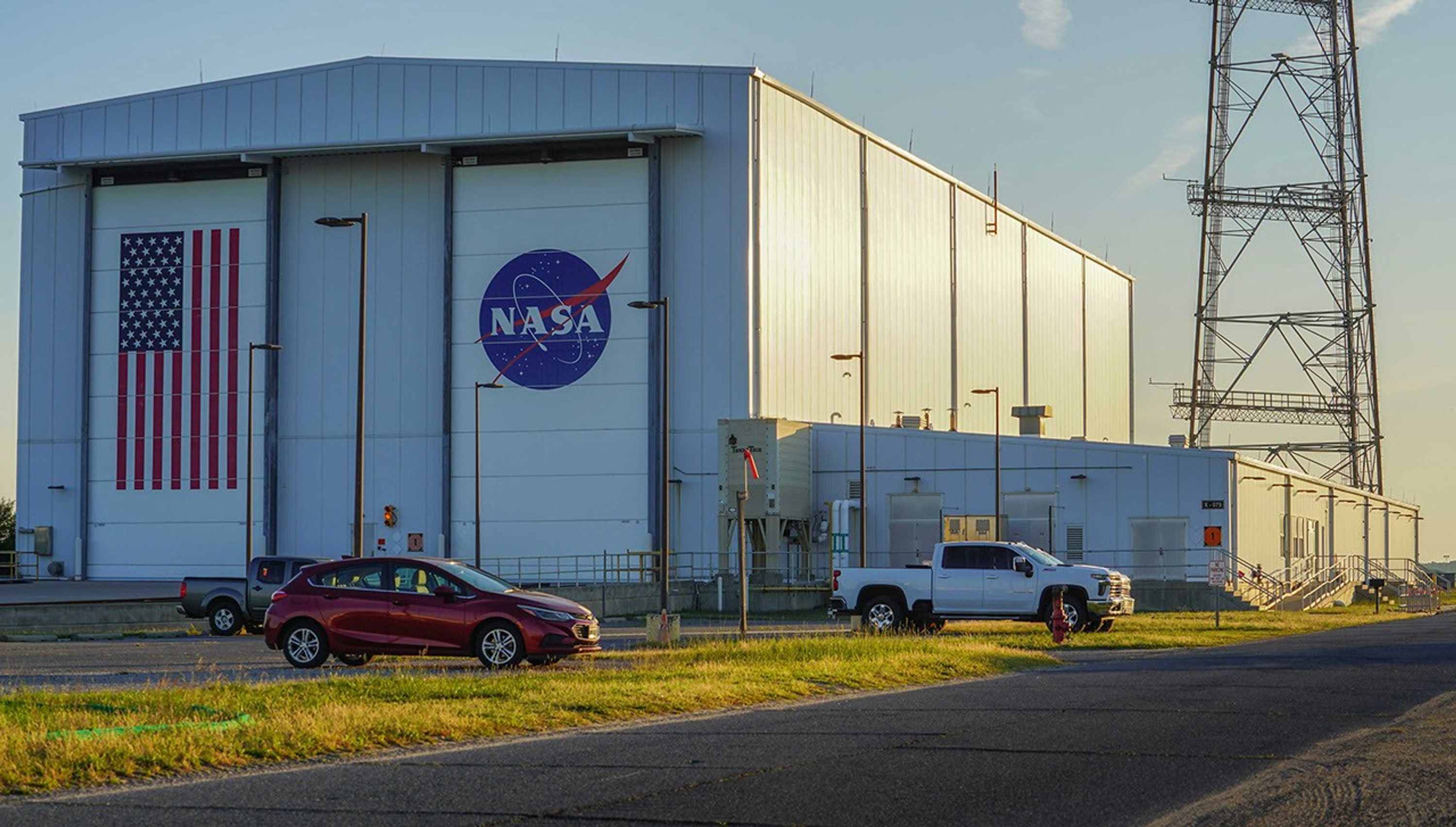
Northrop Grumman will load the LINK robotic servicing spacecraft from Katalyst Space into a Pegasus XL rocket at the Horizontal Integration Facility at NASA’s Wallops Flight Facility in Virginia, shown here. LINK arrived at Wallops on June 5, 2026, to begin integration.
NASA/Ron Beard
The LINK robotic servicing spacecraft, built by Katalyst Space and designed to capture and boost NASA’s Neil Gehrels Swift Observatory arrived at the agency’s Wallops Flight Facility in Virginia on Friday, June 5.
Inside NASA Wallops’ Horizontal Integration Facility, Northrop Grumman engineers will install the satellite into one of the company’s Pegasus XL rockets ahead of launch.
All spacecraft in low Earth orbit experience drag caused by our planet’s atmosphere. As a result, satellites without propulsion systems to counteract this effect gradually lose altitude and fall toward Earth.
Recent increased solar activity magnified the impact of atmospheric drag on Swift, causing it to sink faster than anticipated.
NASA contracted Katalyst to boost the 21-year-old observatory back to a higher altitude, pioneering a new servicing capability for the nation’s spacecraft fleet and allowing Swift to resume science observations.
After loading LINK into the Pegasus XL, Northrop Grumman will attach the rocket to the bottom of Stargazer, the company’s modified L-1011 aircraft.
Stargazer will deploy Pegasus XL from above Kwajalein Atoll, part of the Republic of the Marshall Islands in the South Pacific Ocean, later this month. The rocket will deliver the LINK spacecraft to an orbit where it can reach Swift.
As activities on the ground have raced to get LINK to Swift, the observatory team has been continuously making Swift’s orientation more aerodynamic to preserve altitude.
After more than two decades, the orbit of NASA’s Neil Gehrels Swift Observatory has entered a phase of rapid decay. While NASA could allow the observatory to re-enter Earth’s atmosphere, as many missions do at the ends of their lifetimes, this situation has presented an opportunity to advance American spacecraft servicing technology while also extending the life of a productive science mission. To accomplish this, NASA awarded the U.S. company Katalyst Space a contract in September 2025 to attempt to raise Swift’s orbit.
Engineers from Katalyst Space Technologies in Flagstaff, Ariz., stabilize their LINK robotic servicing spacecraft as it moves into a vibration chamber at NASA’s Goddard Space Flight Center in Greenbelt, Md., on April 15, 2026. The vibration chamber simulated the intense shaking LINK will experience during launch.
NASA/Scott Wiessinger
NASA studies how the Sun impacts the space environment, including objects in low Earth orbit, and recent increased solar activity has accelerated Swift’s decay. This has put NASA in a race against the clock before Swift re-enters Earth’s atmosphere in fall 2026. Katalyst’s robotic servicing spacecraft, LINK, will launch on its mission to boost Swift in June 2026 on Northrop Grumman’s Pegasus XL rocket.
Pegasus XL is an air-launched rocket that will be integrated with LINK at NASA’s Wallops Flight Facility in Virginia and then ferried underneath Northrop’s L-1011 carrier aircraft to the Reagan Test Range located on Kwajalein Atoll in the South Pacific for launch. By launching from Reagan Test Range, Pegasus will be able to deliver LINK directly into Swift’s orbit, where LINK will attempt to rendezvous with Swift and raise it to a higher altitude.
Northrop Grumman’s Stargazer, a modified L-1011 aircraft, soars upward after takeoff from Vandenberg Air Force Base in California. One of the company’s Pegasus XL rockets, carried beneath the aircraft as shown here, will launch Katalyst’s LINK spacecraft.
NASA/Randy Beaudoin
If this daring servicing mission is successful, it will be the first time a commercial robotic mission has captured a NASA spacecraft that is uncrewed and not originally designed to be serviced in space.
Swift studies gamma-ray bursts, the most powerful explosions in the universe, and other cosmic objects and events. In the more than two decades since its launch, Swift has become a key part of NASA’s strategy for studying fleeting and unpredictable changes in the sky from a variety of sources. With its versatility and rapid follow-up capabilities, Swift has enabled the discovery and localization of previously unknown cosmic targets. NASA then follows up these discoveries using different space telescopes, along with ground-based facilities from other agencies, to help us better understand how the universe works. By boosting Swift’s orbit, NASA will retain the observatory’s unique capabilities at a fraction of the cost of designing and building a new mission.
In anticipation of the boost, NASA temporarily suspended Swift science and modified its operations in a way that had never been done in the mission’s lifetime. This enabled controllers to keep the spacecraft in an orientation that minimizes drag effects and extends Swift’s time in orbit. To maximize the boost’s chances of success, Swift’s average altitude needs to be above about 185 miles (about 300 kilometers).
Mission Goals
Demonstrate NASA’s rapid-response capability and foster agile technology development to benefit current and future missions.
Advance U.S. private spacecraft servicing to demonstrate a key commercial capability for the future of space exploration and expand NASA’s use of servicing to a new and broader class of spacecraft.
Retain Swift’s unique capability to lead NASA’s fleet of space telescopes in studying changes in the high-energy universe using a cost-effective approach.
An artist’s concept of NASA’s Neil Gehrels Swift Observatory.
NASA’s Goddard Space Flight Center/Chris Smith (KBRwyle)
Swift boost facts
Contractor
Katalyst Space in Flagstaff, Arizona
Launch vehicle
Northrop Grumman’s Pegasus XL rocket
Launch location
Kwajalein Atoll, Marshall Islands
Launch date
June 2026
Servicing vehicle
Katalyst’s LINK spacecraft
A 880 pound (400 kilogram) small satellite
Uses three robotic arms to dock with Swift
Controlled rendezvous validated with a full-scale Swift model in a robotic testbed
Precision guidance, navigation, and control
Katalyst Space’s LINK spacecraft will take several months to complete the Swift orbit boost, as outlined in this timeline. In the artist’s concept, LINK is the smaller of the two spacecraft.
Katalyst Space and NASA’s Goddard Space Flight Center
This mosaic of M31 merges 330 individual images taken by the Ultraviolet/Optical Telescope aboard NASA’s Swift spacecraft. It is the highest-resolution image of the galaxy ever recorded in the ultraviolet. The image shows a region 200,000 light-years wide and 100,000 light-years high.
NASA/Swift/Stefan Immler (GSFC) and Erin Grand (UMCP)
Pennsylvania State University, Mullard Space Science Laboratory, University of Leicester, Brera Observatory, ASI Data Center, Los Alamos National Laboratory
Mission Management
Goddard Space Flight Center, Greenbelt, Maryland
Program Management
NASA’s Space Science Mission Operations
Mission Operations
Penn State Eberly College of Science, State College, Pennsylvania
In July 2004, technicians in Hangar AE at what is now Cape Canaveral Space Force Station, Fla., removed the final pieces of protective covering from the Swift spacecraft in preparation for its November 2004 launch.

 Login