Login
Dunes Sagebrush Lizard Stripped of Endangered Status by Judge
23 July 2026 at 13:36
The dunes sagebrush lizard, found only in the oil-rich Permian Basin, was classified as endangered two years ago.


© Adriana Loureiro Fernandez for The New York Times

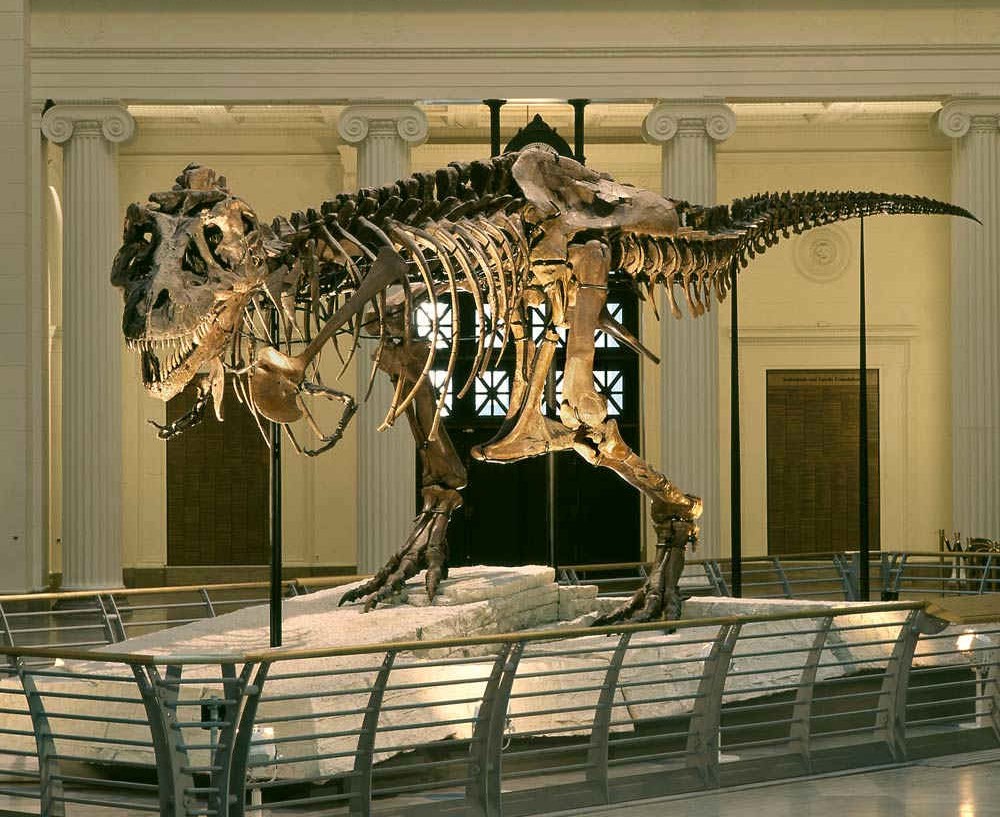
On July 14, 2026, "Gus," one of the most complete specimens of Tyrannosaurus rex, went to an as yet unidentified buyer for US$50.1 million. This auction at Sotheby's set a record for most valuable fossil ever sold. Another dinosaur has entered the luxury collectibles market, a reminder that even Earth's deepest history can be sold to the highest bidder.
To paleontologists like me, however, a fossil like "Gus" — excavated from the Hell Creek Formation in South Dakota over three years starting in 2021 by commercial collector Thomas Heitkamp and his team — is not a trophy or a work of art. It is an irreplaceable scientific archive. Fossils preserve evidence of evolution, extinction, growth, disease, injury and ancient ecosystems. They are finite, nonsubstitutable records of life’s history on Earth.
Science depends on independent verification of claims and healthy debate. Researchers must be able to revisit specimens, test earlier conclusions and ask new questions.
But once a scientifically important fossil enters a private collection, access for researchers is no longer guaranteed. Collectors typically sequester their fossils in their homes. Even when privately owned specimens are loaned to museums, the owners can change their minds, ending access at any time. This issue is especially of note when it comes to Tyrannosaurus rex; a 2025 study found that while there were 61 T. rex fossils in public trusts at that time, 71 were privately held.
That is why the Society of Vertebrate Paleontology, of which I'm a long-term member and president-elect, has long argued that scientifically significant vertebrate fossils belong in the public trust, curated in museums and universities that preserve them permanently, make them available for research and share them with the public.
Supporters of commercial fossil sales often argue that without sales to private collectors, specimens like "Gus" would remain buried or erode away. They’re right about one thing: Discovery matters. Many extraordinary fossils have been found by ranchers, hikers, amateur collectors and commercial excavators. Paleontology is accessible to everyone who has an eye for observing nature — you don't need to be an expert with academic credentials to make an important discovery.
But discovery is only the beginning. A fossil's scientific value depends on careful documentation of where it was found, the rocks surrounding it, and the plants and animals preserved alongside it. Those details allow scientists to reconstruct ancient ecosystems, understand how an animal lived and died, and interpret how its remains became fossilized. When that contextual information is incomplete or lost, much of the fossil's scientific value is lost as well.
Yet even discovery, excavation and publication barely scratch the surface of a fossil's scientific importance. The greatest scientific value of a specimen often comes decades later, when researchers ask new questions and apply new technologies that earlier generations never imagined. A specimen that seems fully studied today may yield surprising new information tomorrow, but only if it is still available for study.
Consider the iconic dinosaurs, including T. rex, Triceratops, Diplodocus and Stegosaurus, first collected more than a century ago. Early paleontologists could describe their shapes but had no way to dig deeper by peering inside the bones. Because those specimens were preserved in museum collections, later generations could revisit them with technologies that didn't exist when they were discovered.
Paleontologist Larry Witmer and his collaborators at Ohio University started using CT imaging 20 years ago to reconstruct the internal anatomy of historic dinosaur fossils without damaging them, based on how X-rays travel through specimens. Brain cavities, inner ears, air spaces, nerves and blood vessels became visible for the first time, revealing how dinosaurs balanced, heard, smelled and perceived their world.
Henry Fricke, Thomas Cullen and other geochemists have used isotopic signatures preserved in fossil teeth and eggshells to reconstruct dinosaur diets, migration patterns and body temperatures. This research has revealed how dinosaurs lived: what they ate, how they moved through ancient landscapes, and even how warm their bodies were.
More recently, molecular paleontologist Jasmina Wiemann and her collaborators have identified chemical traces preserved in fossil bone, eggshell and skin that reveal aspects of dinosaur biology unimaginable even a generation ago. Until now, paleontologists had no way to know details about metabolic rates and reproduction or the colors of skin, feathers and eggs.
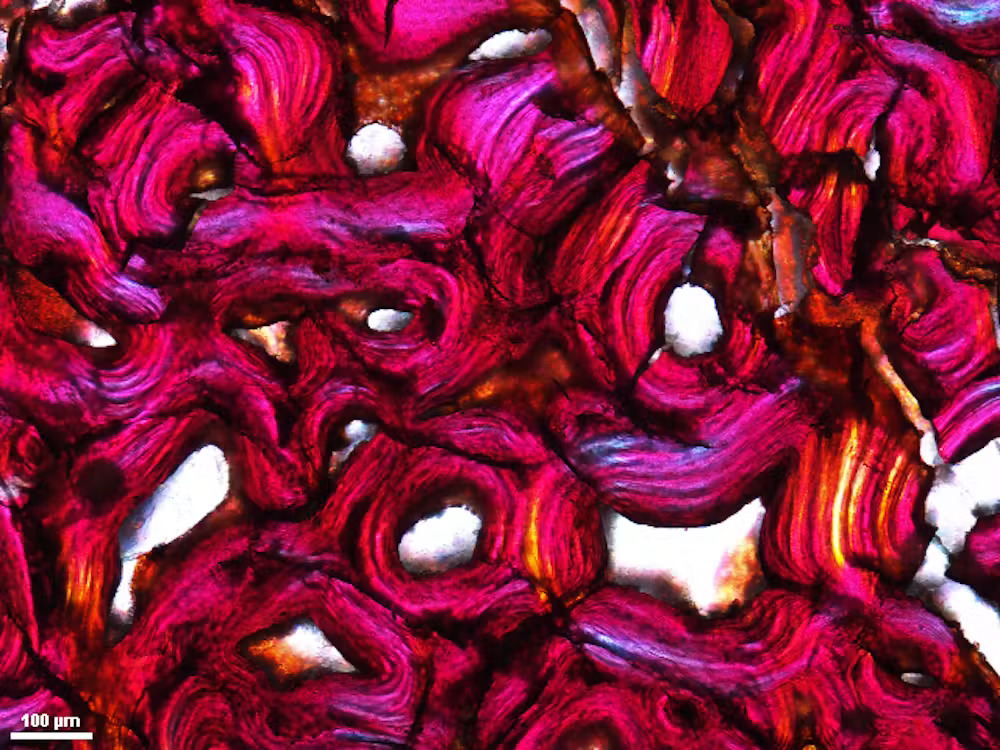
In my own research I use microscopes to uncover the hidden stories preserved inside dinosaur bones and teeth. Thin sections of fossil bones reveal that dinosaurs grew more like mammals and birds than like oversized reptiles. Microscopic modifications to bones capture traces of ancient scavenging, and tiny signatures deep inside baby dinosaur bones indicate the moment of hatching.
None of these discoveries would have been possible if the original fossils had vanished into inaccessible private collections.
Fossils are not static objects whose scientific value is exhausted once they are described. Their value grows as science advances, but only if future researchers can continue to examine the original specimens.
Of course, sometimes dinosaur fossils are rescued from obscurity through purchase and immediate deposition or donation to natural history museums. Some of the world's most important dinosaur fossils are accessible today because individuals, companies or organizations with the means to acquire extraordinary specimens recognized that they belong where scientists can continue to study them and where future generations can learn from them.
Purchasing a fossil in order to place it permanently in the public trust is fundamentally different from acquiring it as a private collectible: One expands access, the other leaves access uncertain.
But as fossil prices rise into the millions, museums increasingly cannot compete. The most significant fossils are no longer reliably entering public collections. Instead, they are becoming luxury assets whose market value supersedes their scientific value.
Dinosaurs belong to our shared natural heritage. They inspire wonder because they connect all of us to a world unimaginably older than our own. For me, the question raised by auctions like the one on July 14 of "Gus" is not who can afford to own these relics of the past. It is whether future generations have the chance to study and learn from them.
This edited article is republished from The Conversation under a Creative Commons license. Read the original article.
How much do you know about the king of the dinosaurs? Test your knowledge with our T. rex quiz!
© Dave Sanders for The New York Times
© Pool photo by Yui Mok
© Lenny Ignelzi/Associated Press
The first dinosaur found in Antarctica belonged to a group that included the largest animals ever to walk the planet, a new study finds.
A backbone from the 82 million-year-old giant was discovered more than 40 years ago, but at the time, researchers assumed it came from an ancient marine reptile. Now a new study, published June 29 in the journal Acta Palaeontologica Polonica, has revealed that it was actually a titanosaur — the group of long-necked sauropods that included the largest land animals on record.
"At first glance this appears to be an unremarkable fossil, but it holds an important place in the history of Antarctic exploration as the first dinosaur fossil found on the continent," study first author Paul Barrett, a paleontologist at the Natural History Museum in London, said in a statement.
While this fossil now holds the record for the first dinosaur fossil found in Antarctica, other dinosaur fossils were identified on the continent after its discovery, so it's not the only known Antarctic dinosaur. In fact, researchers have identified a variety of dinosaurs on Antarctica, with another sauropod fossil identified as a titanosaur in 2011.
The newly identified dinosaur was around 20 to 23 feet (6 to 7 meters) long. That's very small compared with the largest-known titanosaurs, which could grow up to 123 feet (37.5 m) long. However, as the fossil is just a fragment of a vertebra, researchers are unable to narrow down which species the Antarctic titanosaur belonged to, and it's possible that the individual was only a juvenile when it died.
Mike Thomson, a British Antarctic Survey geologist, found the fossil during an expedition to James Ross Island in 1985. The island, which has been the site of multiple dinosaur discoveries, is located off the northeastern Antarctic Peninsula, south of the 600-mile-wide (965 kilometers) Drake Passage that separates South America from Antarctica.
Antarctica is well known for its icy landscapes, but when titanosaurs roamed Earth, the continent was still attached to South America and full of temperate forests. Antarctica's dinosaurs were so far south that they would have lived in constant twilight during the winter months, according to a news article published by the Natural History Museum.
The authors of the new study identified the dinosaur using high-resolution CT scans, which enabled them to look inside the fossil. Dating back to the Cretaceous period (143 million to 66 million years ago), the titanosaur lived in the last age of the non-avian dinosaurs, before an enormous asteroid hit what is now Mexico's Yucatan Peninsula 66 million years ago and wiped them out.
The Antarctic titanosaur helps researchers better understand how dinosaurs spread across Earth's southern continents, which at the time were combined into a supercontinent called Gondwana. The presence of titanosaurs on Antarctica suggests that they may have used Antarctica to travel from what is now South America to New Zealand.
Other dinosaurs identified on Antarctica include small herbivores, armored ankylosaurs and bipedal predators like Imperobator, which would have shared the forests with the newly identified titanosaur. While researchers are beginning to piece together Antarctica's ancient ecosystems, they still have a lot to learn about the dinosaurs that lived there.
"There are likely many more dinosaurs to be discovered on the continent," Barrett said. "As climate change causes ice to retreat we may indeed find further evidence of this past biodiversity."
Never-before-seen fossils of newly hatched crocodile-like creatures are shining new light on how our aquatic ancestors conquered land.
Early four-limbed vertebrates (tetrapods), which would eventually give rise to humans, took their first steps on land in the Devonian period, some 419 million to 359 million years ago, marking one of the most important periods in the evolutionary history of animals.
Now, a new study published Thursday (June 18) in the journal Science has revealed that these early tetrapods were less like amphibians and more like us. Rather than having a tadpole phase in their development, as many amphibians do today, new evidence suggests that they were direct developers — growing from smaller to bigger versions of themselves, like their ancestors, humans and many other animals.
The study is an important contribution to our understanding of early tetrapods' reproductive developmental biology, said Tim Smithson, a visiting academic at the University of Cambridge who specializes in early tetrapods but was not involved in the study.
It suggests that the "earliest tetrapods that took those first steps on to land were able to rely on the successful reproductive and developmental strategies of their forebears," Smithson told Live Science in an email. "Direct development made life easier — one less thing to worry about!"
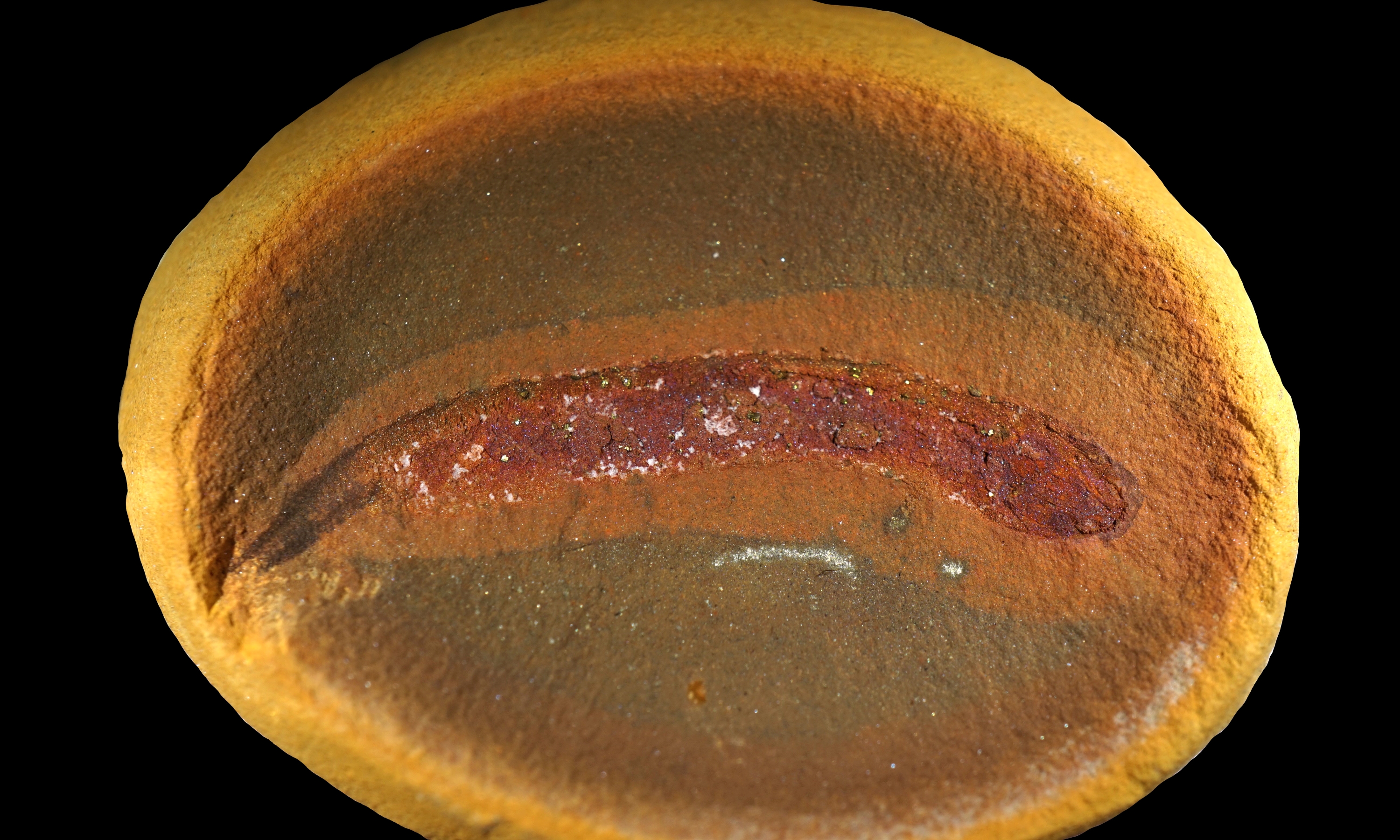
The new research was based partly on fossils from early land-dwelling predators called embolomeres. These animals looked like a cross between a crocodile and an eel and ruled river, lake and swamp habitats 350 million to 280 million years ago, during the Carboniferous and Permian periods. While these creatures could grow to more than 10 feet (3 meters) long as adults, the study unveils rare fossils from Mazon Creek, near Chicago, that preserved embolomeres as hatchlings that were days to a couple of weeks old.
"These are intimate details of the first moments of these animals' lives, and we've never seen that before for this entire part of the evolutionary tree," study co-author Jason Pardo, a postdoctoral fellow of evolutionary biology at Vilnius University in Lithuania and a research associate at the Field Museum in Chicago, told Live Science.
These fossils didn't show evidence of external gills and other tadpole-like features that the researchers would have expected from an early land dweller. The researchers then checked other fossils from before and during the "fin-to-limb transition" but found no evidence of an amphibian-like life cycle in those, either.
"For as long as we've understood evolution, we've assumed this story of how we made that transition from water to land," Pardo said. "We in fact have a completely different story."
A statement released by the Field Museum claimed that the study upends scientists' understanding of how animals conquered the land. However, the experts Live Science spoke to disagreed with this assertion.
"The Mazon Creek material is wonderful, the study is interesting and the interpretation of the fossils is sound, but I don't think the results are terribly surprising," Per Ahlberg, a professor of evolutionary organismal biology at Uppsala University in Sweden, told Live Science in an email.
Ahlberg, who was not involved in the new study, specializes in the early evolution of tetrapods. He noted that scientists knew some early tetrapods had a larval stage similar to that of modern salamanders — namely, those belonging to the group Temnospondyli, which he described as the ancestral stock of modern amphibians. However, he contends that this didn't mean scientists assumed every early tetrapod was the same.
"Nobody has been arguing in recent years that ALL early tetrapods had such a larval stage or that this was essential for enabling the transition to land," Ahlberg said. "I mean, I have been working right at the core of this research field for 40 years and I have never given it any thought."
In response, Pardo agreed that specialists in the field recognized that the data didn't support that early tetrapods had an amphibian-like development. However, he argued that even among specialists, assumptions were still made about metamorphosis — a major developmental transition, like a tadpole transforming into a frog — and amphibian-like bodies.
Study co-author Arjan Mann, an assistant curator of early tetrapods at the Field Museum, first saw the study's first baby embolomere fossil during a 2016 trip to the Field Museum while working on his doctorate. At the time, the fossil was a mystery.
Mann and Pardo mused over the fossil's identity for years before high-resolution scans with scanning electron microscopy at the Canadian Museum of Nature confirmed that the ancient creature was an embolomere, according to the museum's statement.
"I think Jason and I both knew we were onto something big, since fossils of this kind of animal and from this phase, and developmental state in early tetrapod evolution have never been found or studied before," Mann told Live Science in an email.
Along with the embolomeres, the researchers looked at megalichthyid fish from before the land transition and limbless, snake-like creatures known as aistopods from during the land transition. All showed signs of direct development, they said.
"I think the take home message of this study is that we should always challenge conventional wisdom in science, especially when these older ideas do not have substantial backing," Mann said.
The Cozumel dwarf fox, a rare species previously known only from secondhand reports and fossil records, has been discovered alive on Cozumel, a small Caribbean island off the eastern coast of the Yucatán Peninsula.
Researchers published the announcement in Neotropical Biology and Conservation, describing the rescue and identification of the rare dwarf fox before it was released back into the wild. They caution that this rare species, previously believed extinct, faces extreme danger from a host of threats.
As one of the rarest canids on the planet, the species had never before been documented alive by scientists. The Cozumel dwarf fox (Urocyon sp.) is a close relative of the gray fox (Urocyon cinereoargenteus), which is found on the Mexican mainland. After several millennia of isolation on the island—possibly predating Maya settlement—the Cozumel fox underwent insular dwarfism, evolving to only 60–80% the size of its mainland relatives.
Evidence for the animal has been remarkably scarce, and while subfossil remains provided conclusive proof that the species once existed, there had not even been a secondhand report since 2001, leading many researchers to assume it was extinct.
That changed on September 14, 2023, when members of the public reported a disoriented fox along a coastal highway near kilometer marker 29.
Responders from the Fundación de Parques y Museos de Cozumel recovered the animal and cared for it for three days while monitoring its health. On September 17, 2023, the fox was released into the Laguna Columbia State Reserve, where it would be protected from traffic and other hazards.
The sighting marks the first time the Cozumel fox has been formally documented by scientists and recognized as taxonomically distinct.
Although the sparse evidence of these creatures may not be enough to conclusively map their habitat, the researchers have some idea where the Cozumel fox typically resides.
“Historical sightings have been concentrated around the community of El Cedral and near the entrance of Punta Sur Ecological Park, which is where this photographic record also took place,” lead author Travis Bayer of Pathos Wildlife told The Debrief. “No sightings have ever been observed further north than El Cedral, which leads us to believe that may be the extent of their range on the island, which would also be very concerning due to the already limited space on an island.”
“If their home ranges are restricted to the Southern end of the island, they may have home ranges around 100 km2,” Bayer continued. “If they associate with only wetland/mangrove habitats, the size gets considerably smaller and more concerning for their conservation, as those habitats mainly only occur along the coastline and are at high risk for development for restaurants and resorts.”
Given that Cozumel is a popular tourist destination known for its beaches and resorts, it may seem surprising that an animal the size of a fox could remain undetected for so long. Bayer says part of the explanation lies in the island’s difficult terrain and the species’ elusive behavior.
“Cozumel is home to many different terrestrial ecosystems, many of which are not easily accessible either,” Bayer explained. “Habitats like the mangrove forests and wetlands are almost impenetrable to us, but to a fox, easily traversable.”
“Also, not that many people are out there looking for this animal, as the public awareness of it was extremely low, and the scientific investment was limited to one primary publication and a few brief mentions in others,” he added.
Additionally, the combination of grey foxes’ typical elusiveness, their nocturnal habits, and the highway cutting through their habitat being closed at night all combine to make the species easy to miss.
“In collaboration with a team of local biologists, led by Rafael Chacón, we have begun developing an emergency conservation action plan for the Cozumel fox aimed at locating remaining individuals, estimating population size, identifying critical habitat, and determining immediate threats,” Bayer said.
Ensuring that the species does not disappear again is now a top priority. Researchers consider the fox critically endangered, with its limited habitat threatened by development, invasive species, and natural disasters.
Several introduced animals also pose significant risks. These include invasive boas released during a 1971 film production that have since spread across the island. Domestic dogs and cats may also threaten the fox through competition, predation, or disease transmission. In addition, predators such as ocelots and margays were introduced as exotic pets before eventually being released into the wild.
“Using thermal drone surveys, large-scale camera trap networks, and other advanced monitoring technologies, we aim to rapidly generate the data needed to guide immediate conservation intervention,” Bayer said. “Simultaneously, we are collecting the evidence necessary to formally describe the animal as a new and distinct species deserving of critically endangered recognition and legal protections.”
“One of the most important takeaways from this research is that species can quietly disappear without the world even realizing they are gone,” Bayer concluded.
“We often think extinction is something dramatic and obvious, but in reality, it can happen gradually and silently, especially for rare species living in remote or understudied habitats.”
The paper, “First Photographic Evidence of an Insular Dwarf Fox (Urocyon sp.) on the Island of Cozumel, Mexico,” appeared in Neotropical Biology and Conservation on May 4, 2026.
Ryan Whalen covers science and technology for The Debrief. He holds an MA in History and a Master of Library and Information Science with a certificate in Data Science. He can be contacted at ryan@thedebrief.org, and follow him on Twitter @mdntwvlf.