Do Million-Light-Year-Long Galactic Jets Disprove the Bible on the Age of the Universe?


![]()
Many galaxies, including our own, have a central supermassive black hole. In certain galaxies, gas becomes ensnared in the black hole’s gravitational pull and collects in a disk that feeds the black hole, forming an active galactic nucleus (AGN). An AGN can feast on this disk of gas and dust for millions to billions of years — glowing across the electromagnetic spectrum, brandishing relativistic jets, and creating a brilliant, variable light show visible from billions of light-years away.
Today’s Monthly Roundup investigates the connection between AGNs and neutrinos, considers the question of AGN variability, and explores modeling techniques for relativistic environments.
Where do neutrinos — neutral, nearly massless elementary particles — come from? AGNs have emerged as one likely source; in 2022, the IceCube collaboration reported evidence for neutrinos from the nearby galaxy Messier 77, which hosts an X-ray-bright AGN, and earlier observations potentially linked a neutrino to the blazar TXS 0506+056.
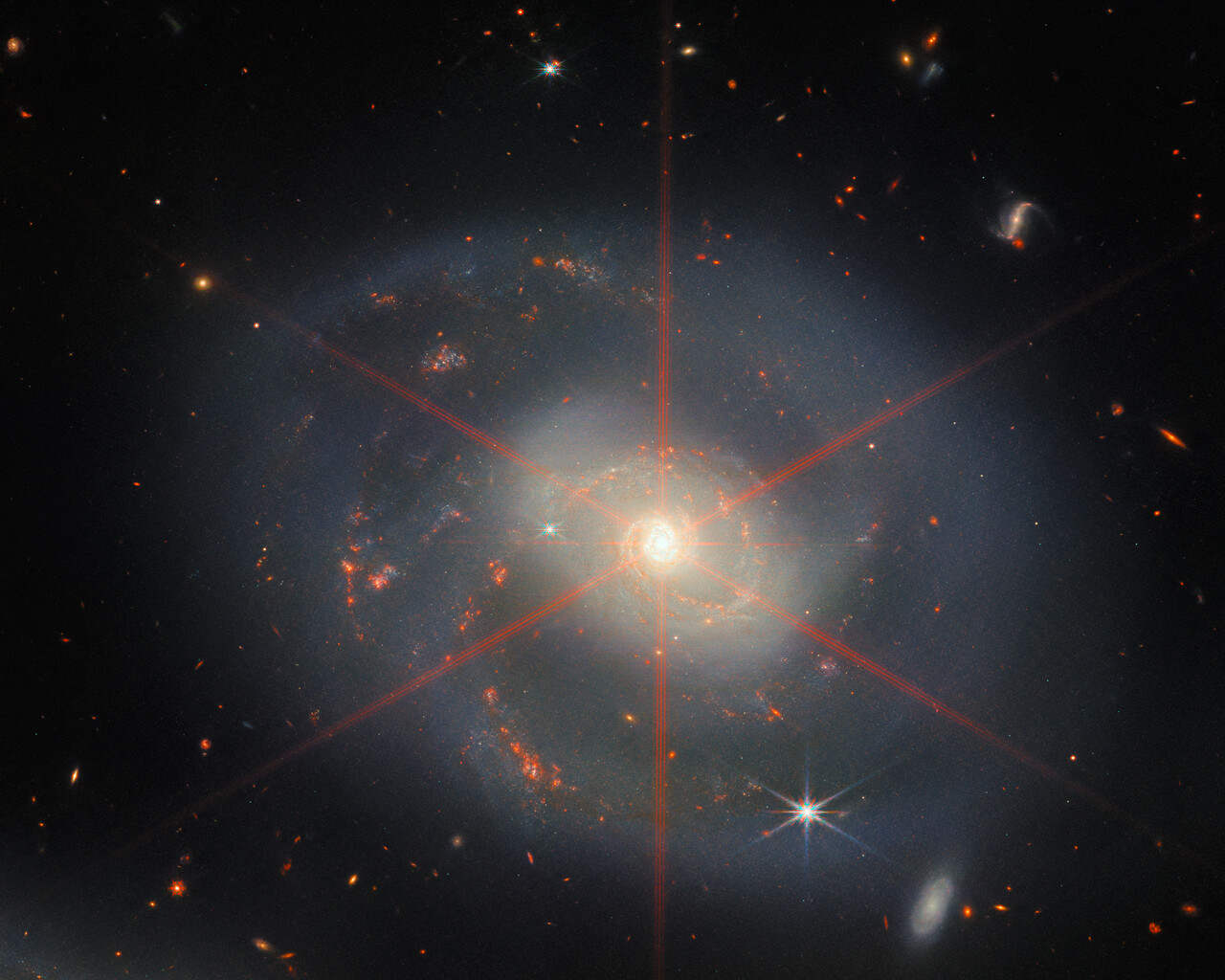
The spiral galaxy NGC 7469, shown here in this JWST image, contains an AGN that may be a source of neutrinos. [ESA/Webb, NASA & CSA, L. Armus, A. S. Evans; CC BY 4.0]
This result suggests that X-ray-bright AGNs are indeed a plausible source of neutrinos. As for the specific physical origin of these AGN-generated neutrinos, the data provide a few clues. The X-ray emission of an AGN is thought to arise from a billion-degree cloud of plasma called the corona. The interaction of coronal X-rays with high-energy protons is thought to produce neutrinos in the energy range of 1–10 teraelectronvolts — roughly the energies of the neutrinos associated with Messier 77 in this study. However, NGC 7469 was associated with neutrinos more energetic than this range, suggesting that not all AGN-produced neutrinos have a coronal origin. Thus, though the body of evidence suggesting that X-ray-bright AGN are a source of neutrinos, the precise mechanism through which these neutrinos are produced remains unknown.
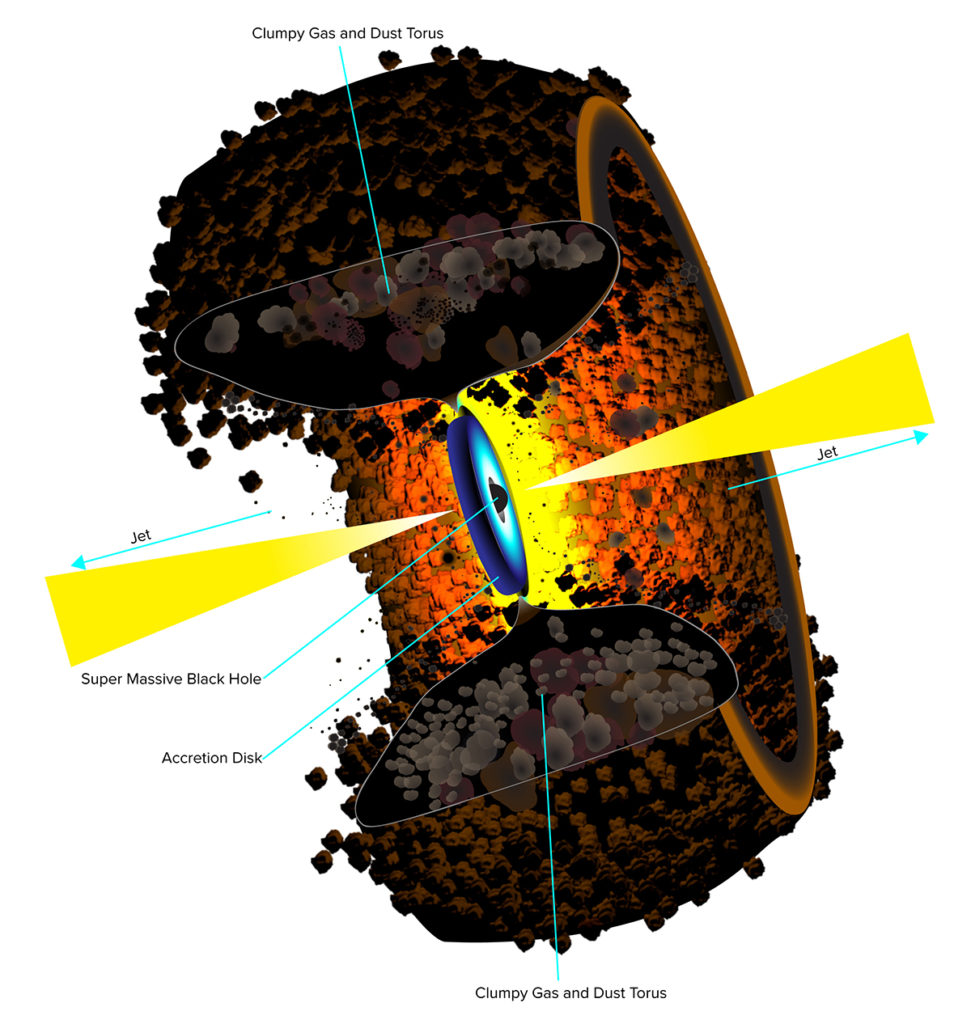
A diagram of the unified model of active galactic nuclei, showing an accretion disk, dusty torus, and jets. Click to enlarge. [B. Saxton NRAO/AUI/NSF; CC BY 4.0]
If there’s one constant when it comes to AGNs, it’s change; observations show that the emission from active galaxies varies on timescales from minutes to decades. Though both the accretion disk and the jet contribute to the overall multiwavelength behavior of an AGN, it’s not yet clear which of these structures is a greater contributor to an AGN’s variability.
Vineet Ojha (Peking University) and coauthors considered AGN variability at optical and mid-infrared wavelengths. Ojha’s team collected a sample of AGN that lie at similar redshifts and fall into one of three categories: narrow-line Seyfert 1 galaxies detected in gamma rays, narrow-line Seyfert 1 galaxies not detected in gamma rays, and broad-line Seyfert 1 galaxies detected in gamma rays. These three classes are distinguished by the presence or absence of relativistic jets as well as their accretion rate; gamma-ray-detected Seyfert 1s likely host jets, and narrow-line Seyfert 1s likely have higher accretion rates than broad-line Seyfert 1s.
Using optical data from the Zwicky Transient Facility and mid-infrared data from the Wide-field Infrared Survey Explorer, the team separated statistical wiggles from true variability and determined which sample of AGNs was most variable. They found that broad-line AGNs detected in gamma rays are the most variable, suggesting that jets are major contributors to AGN variability. Narrow-line AGNs detected in gamma rays are next in line, likely because these AGNs have jets but also have a strong thermal emission component from their accretion disks due to their high rate of accretion. Narrow-line AGNs not detected in gamma rays are the least variable, lacking a jet and dominated by thermal emission. Taken together, these results suggest that AGN variability is mostly jet driven, with some contribution from accretion disk instabilities.
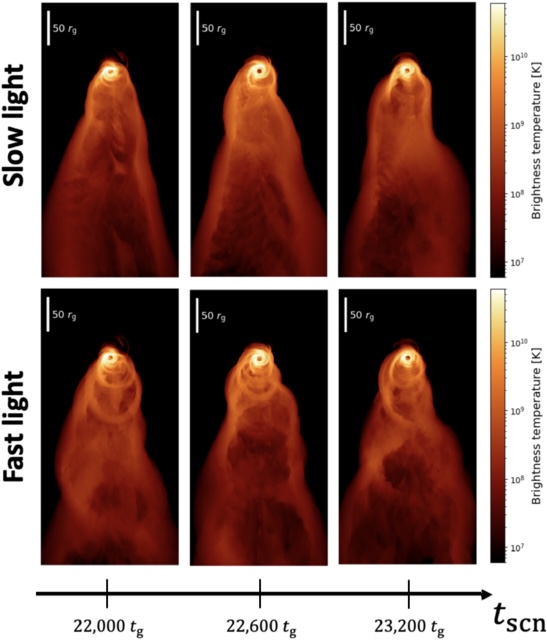
The galaxy Messier 87 (M87) hosts one of the most studied AGN jets. M87’s jet is visibly structured, and it exhibits superluminal motion, in which the relativistic plasma appears to move faster than the speed of light. Because the plasma accelerated by an AGN moves so quickly, researchers attempting to model this plasma may opt to use the slow-light approach, in which the evolution of the ambient plasma is modeled simultaneously with the propagation of light through the medium. Though more computationally intensive than the fast-light approach, in which photons zip through a static medium, slow-light techniques are needed in regions of relativistic flows or strong acceleration.
Comparison of the jet morphology from the slow-light (top row) and fast-light (bottom row) methods. [Adapted from Tsunetoe et al. 2026]
The team found that slow-light images tended to be smoother, lacking the looping, helical structures within the jet seen in fast-light images. Slow-light images show more evidence for the superluminal motion that is observed in relativistic jets like M87’s, as well as greater limb brightening and less wobbling motion. The team also investigated the effects of changing the black hole spin, finding greater wobbling in the jet for slow black hole spins and a straighter, wider jet for rapid black hole spins. Overall, Tsunetoe and coauthors found that the slow-light approach generated images that are more consistent with the properties of M87’s jet, demonstrating that the slow-light approach is necessary to capture the behavior of relativistic jets.
“Evidence for Neutrino Emission from X-Ray-Bright Active Galactic Nuclei with IceCube,” R. Abbasi et al 2026 ApJL 1000 L26. doi:10.3847/2041-8213/ae4aad
“The Relative Contributions of Accretion Disk Versus Jet to the Optical and Mid-Infrared Variability of Seyfert Galaxies,” Vineet Ojha et al 2025 ApJ 994 84. doi:10.3847/1538-4357/ae0a38
“Slow-Light Effect in the Jet-Launching Region of M87,” Yuh Tsunetoe et al 2026 ApJ 1000 29. doi:10.3847/1538-4357/ae43e7
The post Monthly Roundup: Investigating Active Galactic Nuclei appeared first on AAS Nova.
![]()
Editor’s Note: Astrobites is a graduate-student-run organization that digests astrophysical literature for undergraduate students. As part of the partnership between the AAS and astrobites, we occasionally repost astrobites content here at AAS Nova. We hope you enjoy this post from astrobites; the original can be viewed at astrobites.org.
Title: Jet-Mode Feedback in NGC 5972: Insights from Resolved MUSE, GMRT, and VLA Observations
Authors: Arshi Ali et al.
First Author’s Institution: Savitribai Phule Pune University
Status: Published in ApJ
Supermassive black holes are believed to reside at the centers of nearly all massive galaxies. As supermassive black holes accrete matter, they can release enormous amounts of energy in the form of radiation, winds, and relativistic jets — powering active galactic nuclei and influencing their host galaxies. This process, known as active galactic nucleus feedback, can regulate star formation and the properties of the gas in the interstellar medium, making it a key mechanism for shaping how galaxies form and evolve over cosmic time.
Of the many diverse manifestations of active galactic nuclei, radio “loud” galaxies stand out as powerful laboratories for studying feedback in action. Not only do these galaxies have characteristic [O III] emission lines, but they also host intense radio-emitting lobes of gas that extend well beyond the structure of the galaxy, indicative of jets. (Today’s article refers to these lobes as the extended emission-line region or EELR.)
Originally discovered by a schoolteacher, Voorwerp galaxies are a special category of radio galaxies that are candidate sites of active galactic nucleus activity in terms of their emission-line signatures. Moreover, they exhibit intriguing clouds of ionized gas that may have originated from jets. Figure 1 shows some examples of Voorwerp galaxies. Exploring these galaxies can shed light on how jets interact with the interstellar medium, a major player in active galactic nucleus feedback.
Figure 1: Voorwerp galaxies are compelling laboratories for exploring the interaction between jets and the interstellar medium. Examples are Hanny’s Voorwerp (left), NGC 5972 (middle), and the Teacup Quasar (right). [NASA, ESA, W. Keel (University of Alabama), and the Galaxy Zoo Team; NASA, ESA, and W. Keel (University of Alabama, Tuscaloosa); NASA, ESA, and W. Keel (University of Alabama, Tuscaloosa)]
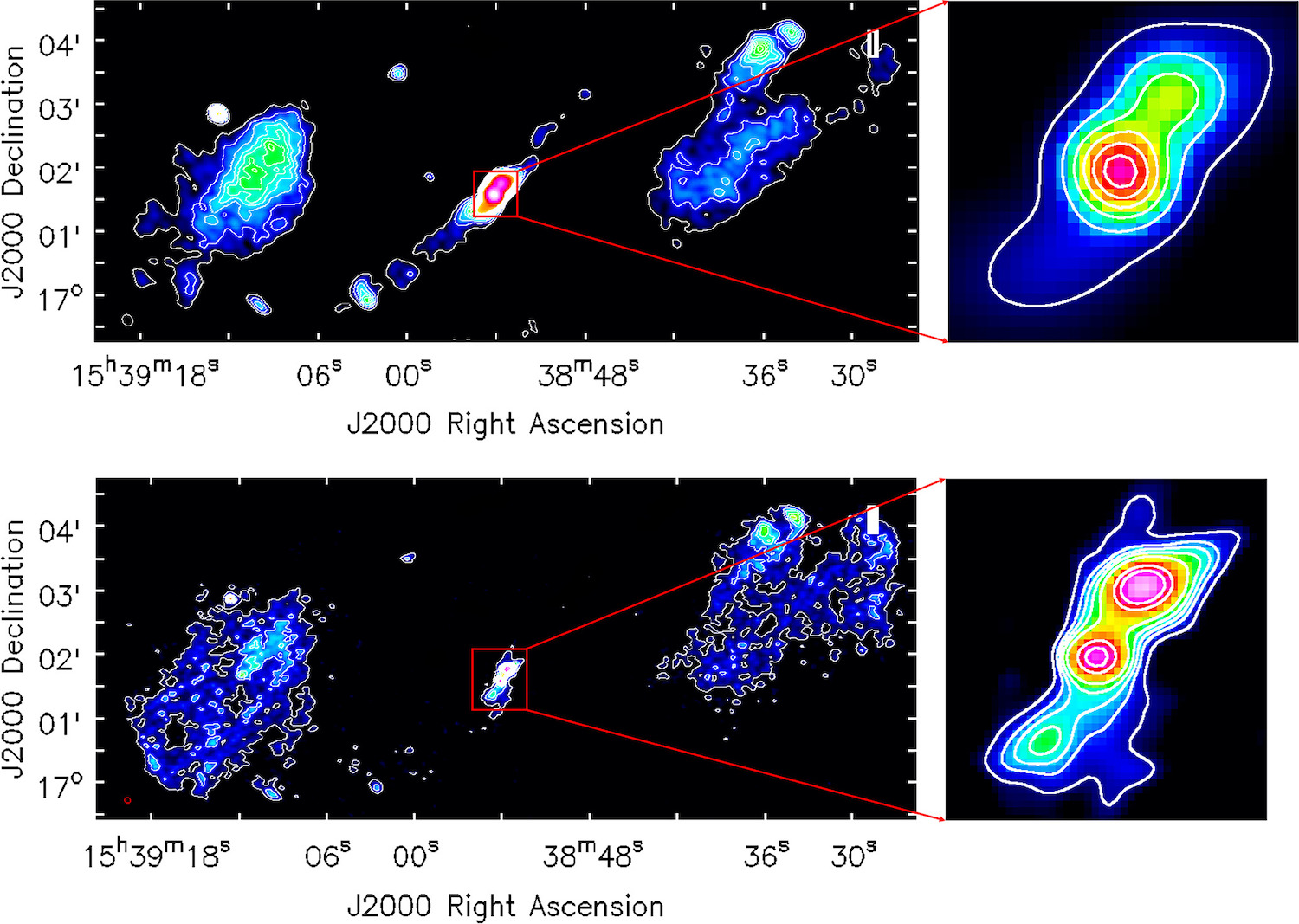
To study the interstellar medium of the Voorwerp galaxy, the authors combined observations from multiple instruments that probe different phases of the galaxy’s gas. Specifically, they used data from the Very Large Telescope (VLT), the Giant Metrewave Radio Telescope (GMRT), and the Very Large Array (VLA) to create maps of the ionized gas emission, allowing them to trace the structures and movement of the gas and jet material. Together, these datasets offer a comprehensive, multi-wavelength view of how the radio jet shaped the surrounding interstellar medium. The maps of NGC 5972, shown in Figure 2, display an impressive spiraling structure that could be the result of prolonged active galactic nucleus activity.
Figure 2: The radio emission of NGC 5972 reveals the extended helical, spiral structure of the ionized gas, where the inner jets are connected to the outer lobes (top: VLA, bottom: GMRT). This suggests that the intriguing shape of NGC 5972 could have originated from active galactic nucleus jets. [Ali et al. 2025]
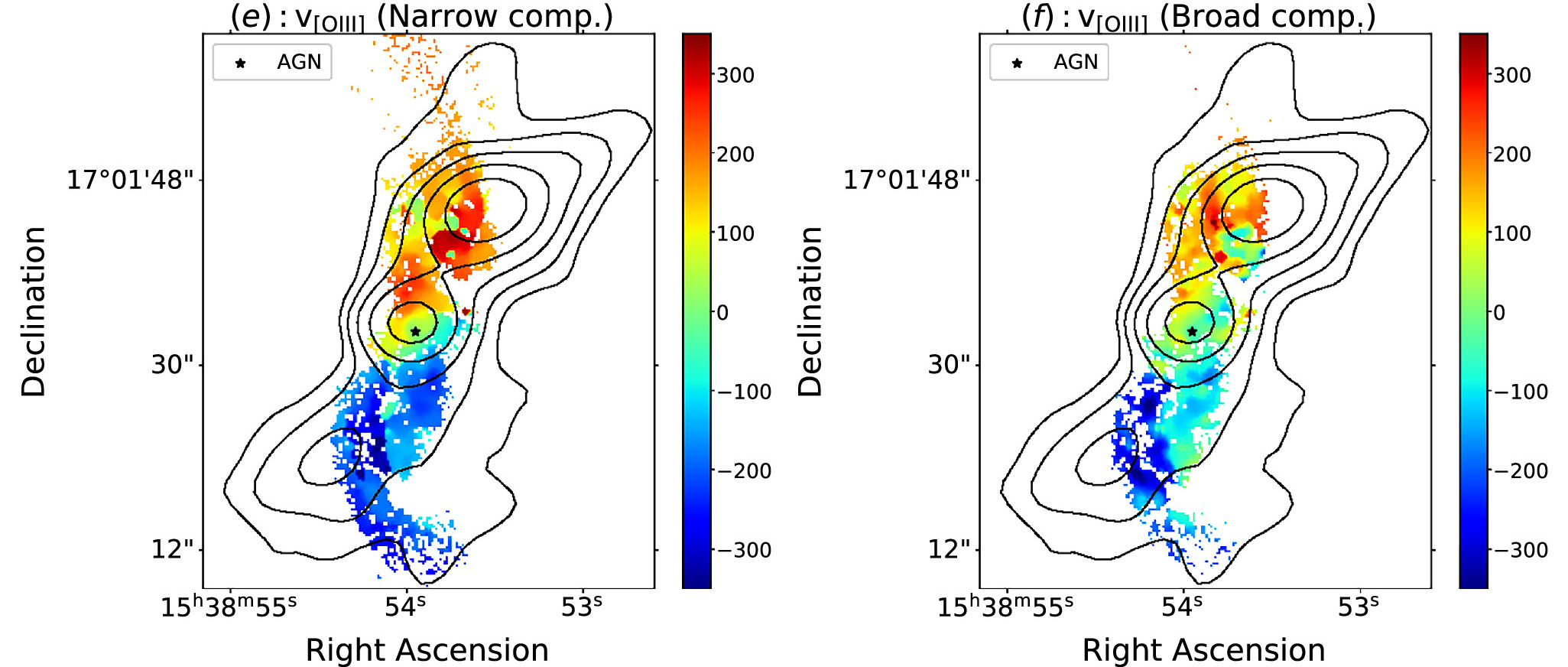
Figure 3: The velocity profiles of NGC 5972’s [O III] emission lines, a characteristic signature of the active galactic nucleus’s extended emission-line region. The velocities are aligned and enhanced along the jet axis, indicating that active galactic nucleus feedback influenced the gas by powering jets and outflows. [Adapted from Ali et al. 2025]
Figure 4: The left panel shows the ionizing sources of the gas in NGC 5972. While the gas along the jet axis is ionized by radiation from the active galactic nucleus (orange in the diagram), the regions transverse to the jet are ionized by shock waves (blue). Moreover, the gas in the jet regions is more turbulent, as shown in the right panel. [Adapted from Ali et al. 2025]
These findings suggest that jet-driven feedback plays a crucial role in shaping the extended emission-line region of NGC 5972 (see Figure 5 for a summary). The interaction between the radio jet and the surrounding gas not only sustains ionization but also influences the gas structure. To further unravel the jet’s impact, future high-resolution radio observations will be essential, providing deeper insights into how active galactic nucleus–driven jets function.
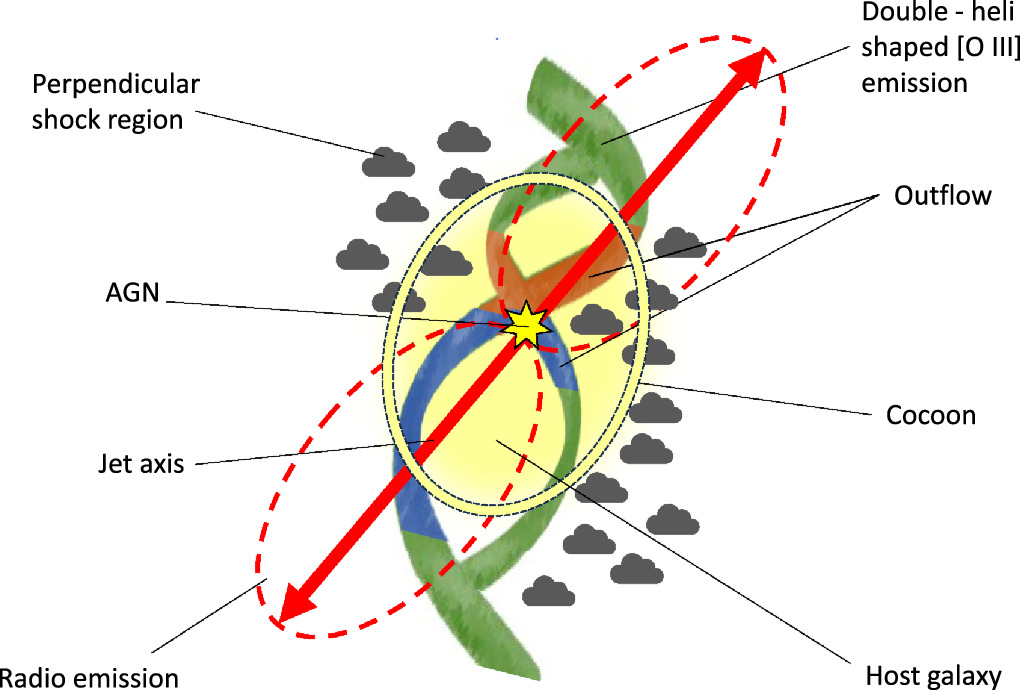
Figure 5: Cartoon schematic diagram showing various mechanisms at play in NGC 5972, including the active galactic nucleus jets, shocks, and outflows. [Ali et al. 2025]
Original astrobite edited by Alexandra Masegian.
About the author, Shalini Kurinchi-Vendhan:
After studying astrophysics and literature at Caltech, I moved onto a Fulbright Fellowship in Heidelberg, Germany. I’m passionate about using computer simulations to explore supermassive black holes and galaxy evolution—but I also love poetry and traveling.
The post Written in the Gas: Jet Feedback in a Voorwerp Galaxy appeared first on AAS Nova.
![]()
Editor’s Note: Astrobites is a graduate-student-run organization that digests astrophysical literature for undergraduate students. As part of the partnership between the AAS and astrobites, we occasionally repost astrobites content here at AAS Nova. We hope you enjoy this post from astrobites; the original can be viewed at astrobites.org.
Title: You Shall Not Pass! The Propagation of Low-/Moderate-Powered Jets Through a Turbulent Interstellar Medium
Authors: Olga Borodina et al.
First Author’s Institution: Center for Astrophysics | Harvard & Smithsonian
Status: Published in ApJ
The central black holes of some galaxies are surrounded by accretion disks of hot infalling gas. In cases when the accretion disk is massive and highly energetic, this central system forms an active galactic nucleus that outshines the rest of the galaxy. Active galactic nucleus feedback is the process of energetic interactions between the central supermassive black hole and its surroundings. Active galactic nuclei are essential for galaxy quenching, and correctly modeling their contribution is important for accurate cosmological simulations.
Active galactic nuclei release the energy from their accretion via winds, which are widespread outflows, and jets. Jets are collimated, fast outflows of baryonic matter that can spread out from hundreds to tens of thousands of parsecs from their origin. There’s a big range in power for jets, ranging from a low end of around 1038 erg/s to a high end of 1046 erg/s. For context, our Sun emits at about 1033 erg/s.
As jets pass through their host galaxy, they interact with the gas and dust of the interstellar medium. There isn’t a lot of observational evidence for what goes on in that interaction, as the scale of resolution needed is so small — on the order of parsecs within the galaxy. Cosmological simulations don’t model scales small enough to accurately simulate these interactions, and they instead rely on feedback models that implement the macroscale effects. This means we could be missing part of the picture. Today’s article considers galaxy-scale numeric models for jets passing through a turbulent interstellar medium to study how the jet is affected by the gas and dust.
To do this, the authors used the Arepo code, which has an adaptive mesh setup that improves the resolution in areas that need it. They set up a 2-kiloparsec-cubed box full of gas with properties based on real galaxies’ interstellar media. This study is unique compared to other works because the authors use a filamentary structure for the interstellar medium, while previous studies used a clumpy structure. This filamentary structure reflects our actual Milky Way’s interstellar medium and creates more low-density cavities for the jet to interact with. The authors studied three jet powers on the low to intermediate end, of 1038, 1040, and 1043 erg/s. This is also unique to the study, as many works look at higher-powered jets, which produce large-scale radio galaxies, despite lower powers being more common. The jets were launched along the x-axis and had a tracer set up to track their positions through time.
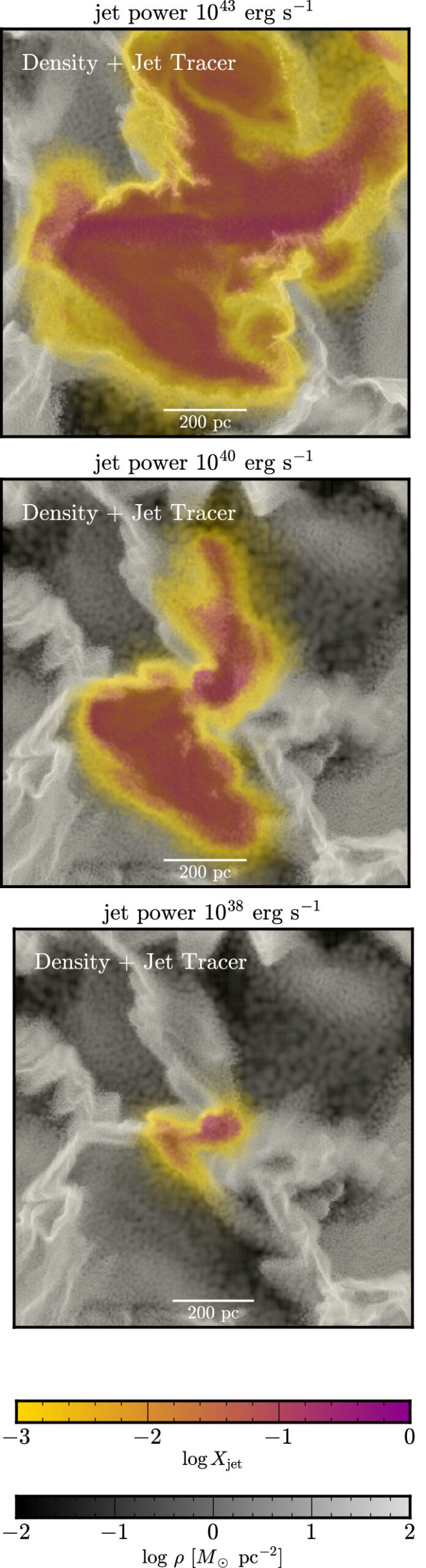
Figure 1: From top to bottom, the high to low power jets, which are traced in color against the background interstellar medium density in grayscale. The lower power jets are stalled by the interstellar medium and do not make it as far out in the simulation space. [Adapted from Borodina et al. 2025]
The highest-power jets, 1043 erg/s, were easily able to pass through the turbulent environment and reach the outer boundary of the simulation. They mostly traveled along the axis that the jet was launched along, with some lateral expansion.
The intermediate-power jets, 1040 erg/s, were highly disrupted and redirected from the axis they were launched along. The jets bent, filled the low-density cavities between the filaments, and produced bubble-like shapes. These jets did make it all the way to the simulation boundary, but at later times and not along the axis they were initialized on. These intermediate-power jets don’t have enough ram pressure — the pressure against the gas due to the jet’s motion — to push through the turbulent structure of the interstellar medium, and they have to fill pre-existing cavities rather than plowing their own. The authors developed an analytic model for the minimum energy needed for jets to be able to plow through the interstellar medium, at approximately 1041 erg/s.
The jets in the lowest-power case, 1038 erg/s, were stalled out by the interstellar medium within the first kiloparsec of travel. They couldn’t penetrate the higher-density regions of the interstellar medium the way the 1040 erg/s case could, and they couldn’t make it to lower-density cavities to expand into.
All three of these cases were slower and shorter than the same power of jets run in a non-turbulent simulation, with the most significant disruption in the lowest-powered jets. This work demonstrates that a turbulent interstellar medium–jet interaction can be the sole cause of observed asymmetric and bent active galactic nucleus jets. By improving our understanding of this small-scale interaction, the authors are contributing to making better active galactic nucleus feedback models in cosmological simulations.
Original astrobite edited by Ansh Gupta.
About the author, Lindsey Gordon:
Lindsey Gordon is a fourth-year PhD candidate at the University of Minnesota. She works on active galactic nucleus jets, radio relics, magnetohydrodynamics simulations, and how to use AI to study all those things better.
The post You Shall Not Pass! Active Galactic Nucleus Jets Through the Interstellar Medium appeared first on AAS Nova.
![]()
The first detailed image of a black hole, M87*, taken with the Event Horizon Telescope. [Adapted from EHT Collaboration et al. 2019]
Today’s Monthly Roundup explores three aspects of this supermassive black hole: how fast it spins, the properties of its relativistic jet, and the source of its powerful flares.
Spin is one of the fundamental parameters describing a black hole, along with mass and electric charge, and it’s a challenging quantity to measure. In a recent research article, Michael Drew (University of Central Lancashire) and collaborators used data from the Event Horizon Telescope from 2017 and 2018 to measure the spin of M87*. Their goal was to measure the angular momentum of the innermost region of the disk of material swirling around the black hole. For a 10-billion-year-old black hole like M87’s, the angular momentum of the inner reaches of the accretion disk is fundamentally linked to the spin of the black hole.
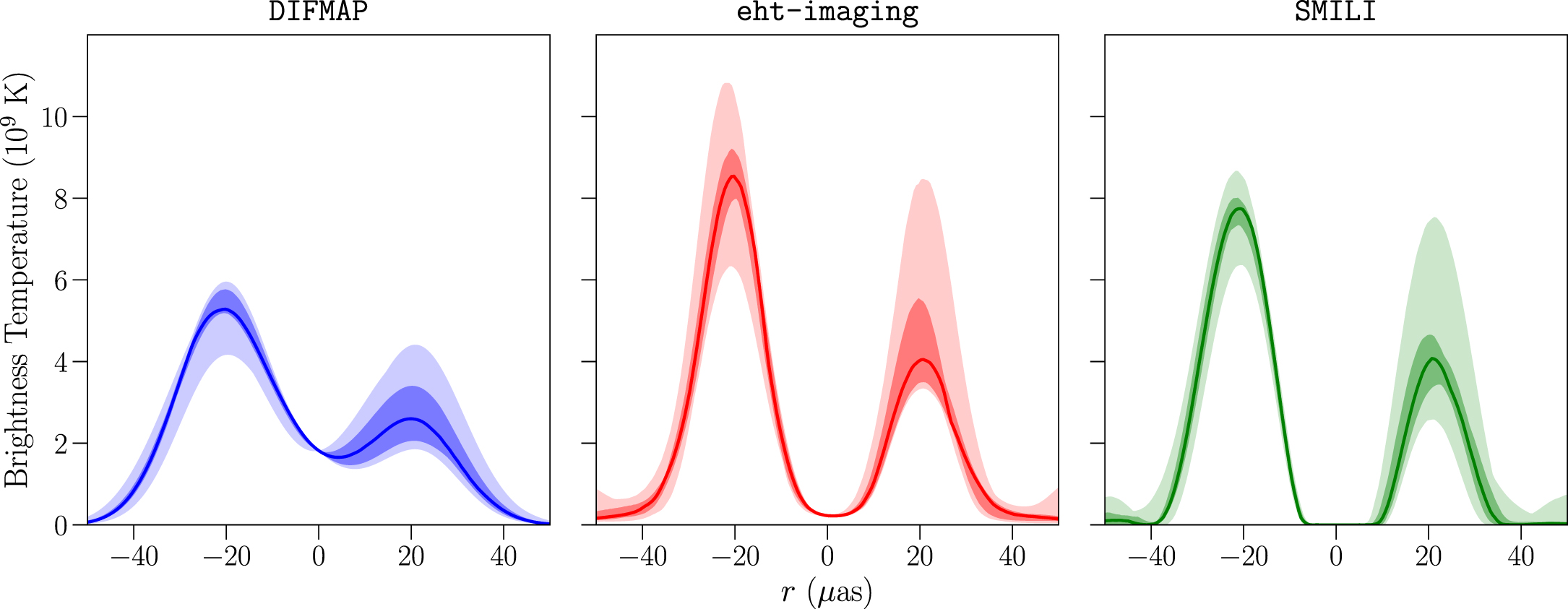
Radial brightness profiles of the Event Horizon Telescope images of M87*. The variation of the brightness of the ring is due in part to Doppler beaming. Click to enlarge. [Event Horizon Telescope Collaboration 2019]
This method returned a spin parameter of 0.8, which is within the broad range of previous estimates for M87*’s spin (0.1–0.98). Given certain assumptions made in this work, the team expects that this spin measurement is a lower limit on the black hole’s spin.
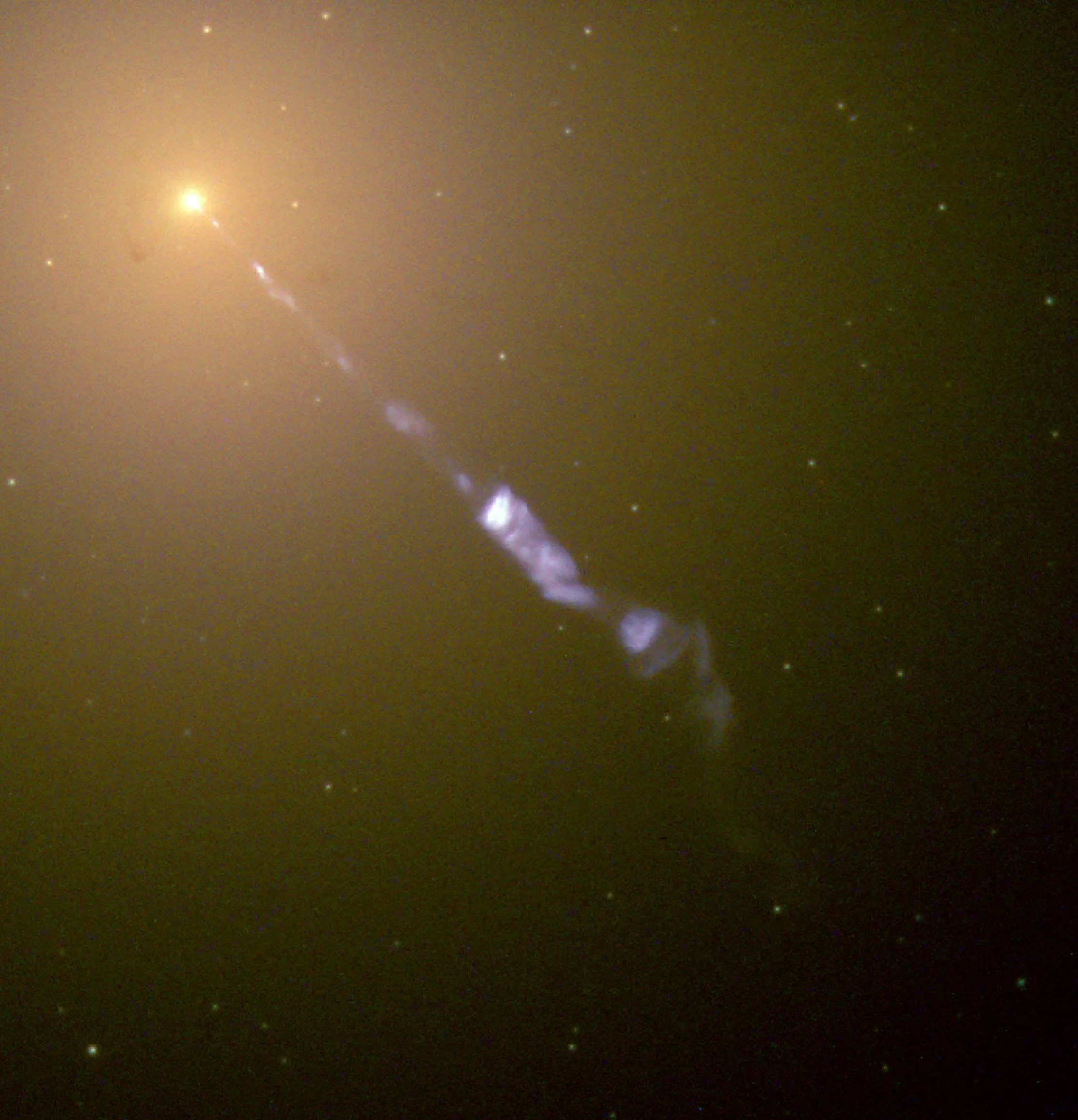
Closeup of Messier 87’s relativistic jet. [NASA and the Hubble Heritage Team (STScI/AURA)]
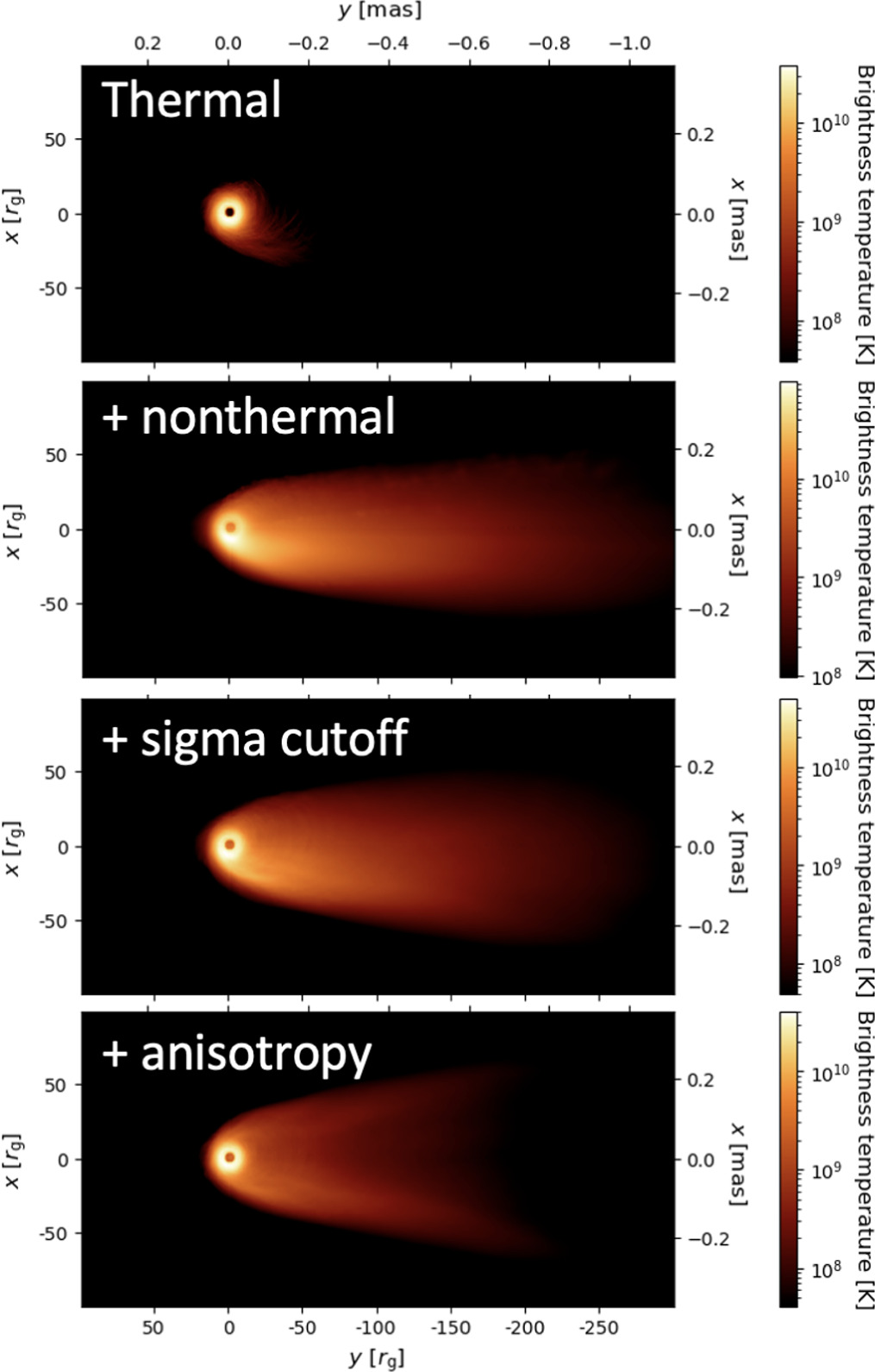
One of the most dramatic features of Messier 87 is its prominent jet. Researchers have noted that M87*’s jet exhibits limb brightening, meaning that the jet appears brighter along its edges than in its center. This characteristic is present throughout M87*’s jet, from close to the point at which it’s launched to far down its length, and is also seen in other black hole jets.
Demonstration of limb brightening in models that include an anisotropic electron distribution. [Tsunetoe et al. 2025]
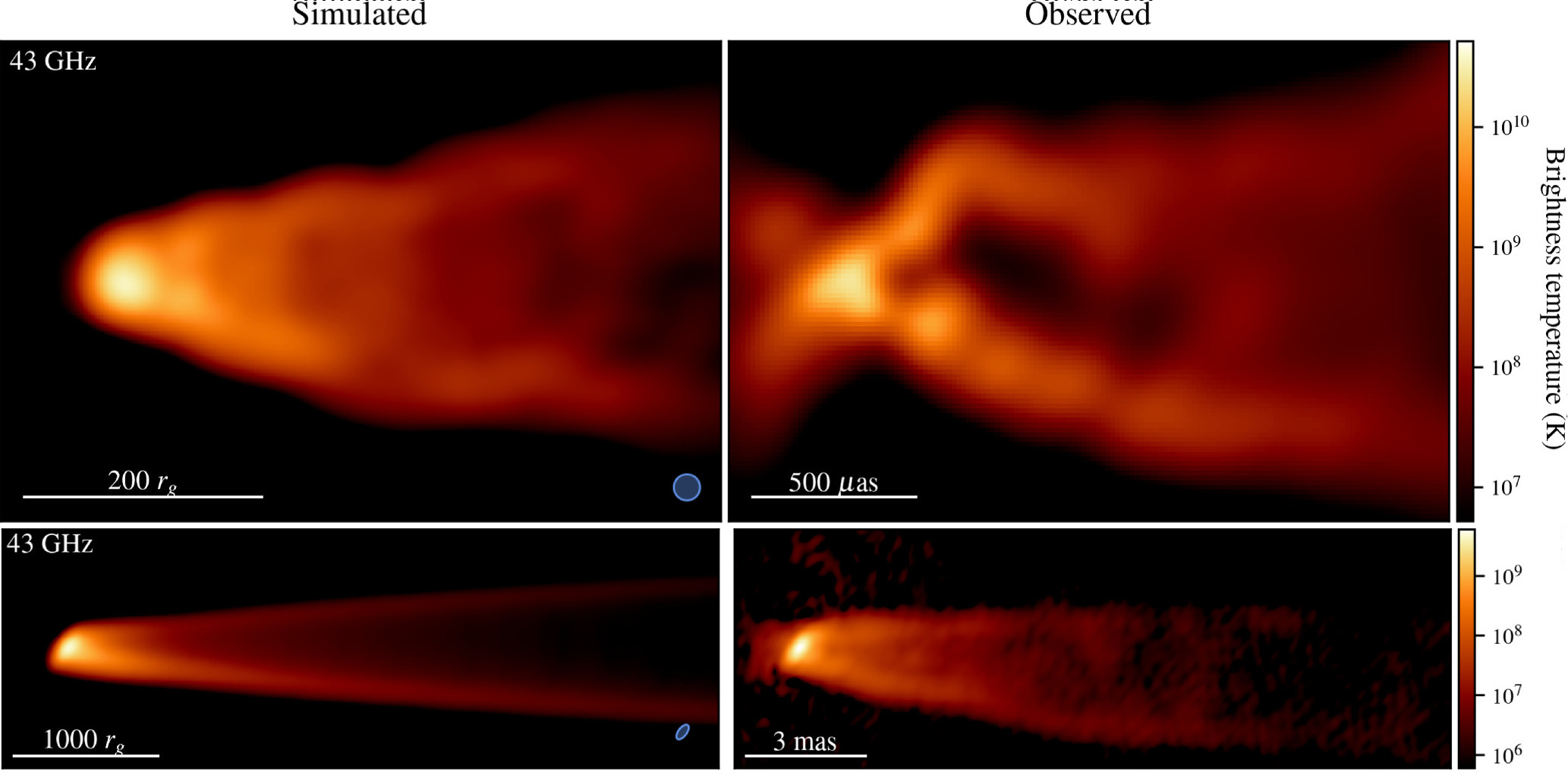
Tsunetoe’s team used both general relativistic magnetohydrodynamics (GRMHD) and general relativistic force-free electrodynamics (GRFFE) in their modeling. These two modeling techniques have different strengths and weaknesses: GRMHD allows time variations to be studied, but is only effective close to the black hole, while GRFFE applies at a large distance from the black hole, but can only give a time-averaged result. By combining these two methods, the authors were able to generate synthetic radio-frequency images of M87*’s jet and compare them to observations.
Simulated (left column) and observed (right column) jets. The top left shows the result from the GRMHD simulation and the bottom left shows the result from the GRFFE simulation. Note the difference in scale between the two simulations. Click to enlarge. [Adapted from Tsunetoe et al. 2025]
Like many accreting supermassive black holes, M87* exhibits flares of high-energy radiation. These flares are highly variable, sometimes lasting only a couple of days, which suggests that they arise very close to the black hole’s event horizon. Precisely how these flares are generated is still unknown, though magnetic reconnection, in which magnetic fields rearrange and release pent-up magnetic energy, is a strong candidate.
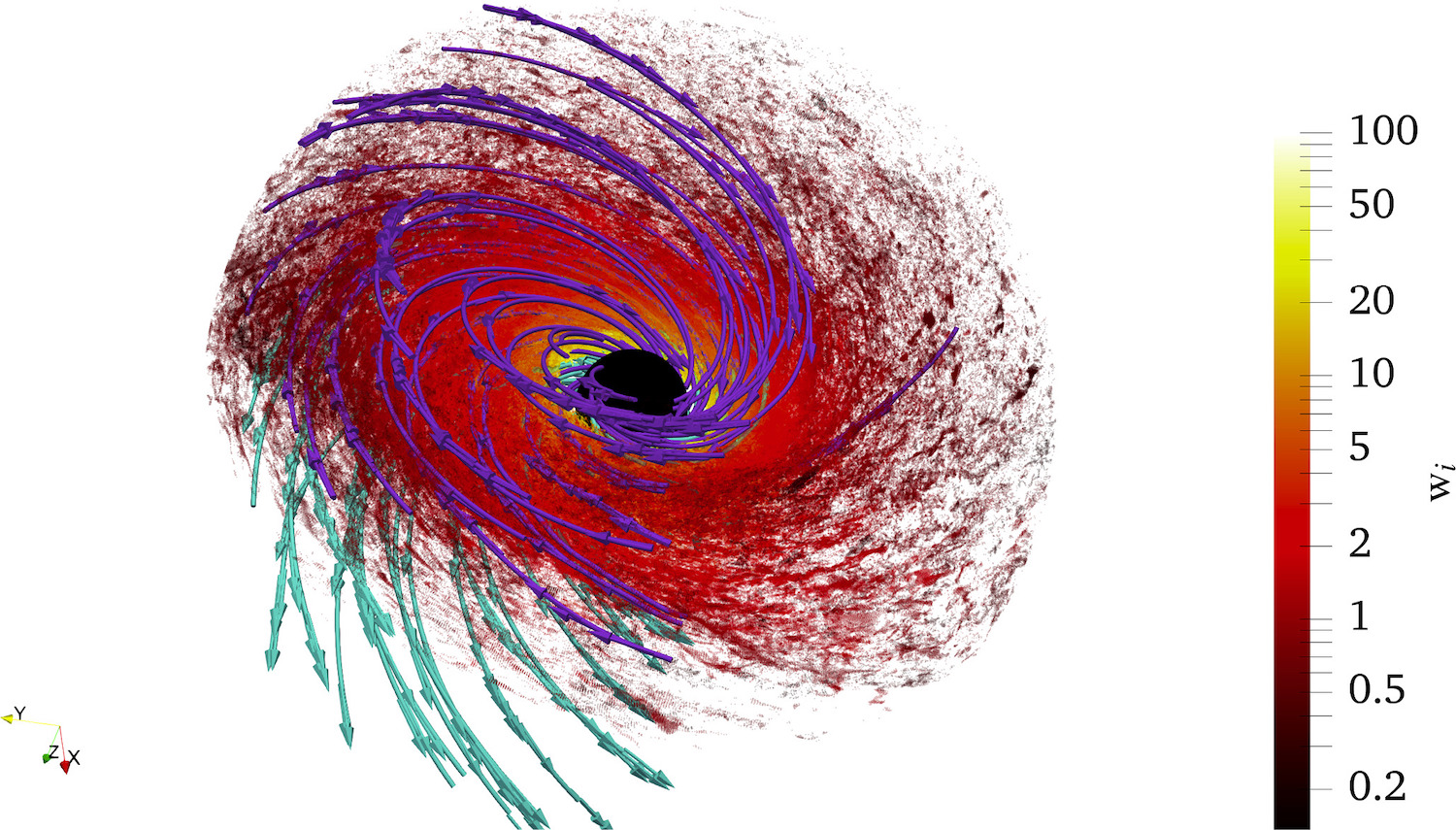
Recently, Siddhant Solanki (University of Maryland) and collaborators investigated the source of M87*’s flares by tracing the paths of photons through a general relativistic magnetohydrodynamics simulation of an accreting spinning supermassive black hole. The simulation captured the region close to the black hole where magnetic reconnection is thought to occur, potentially launching electron–positron pairs that kick background photons up to high energies, powering a flare.
Illustration of the origin of the simulated flare emission. The majority of the emission arises from very close to the black hole. The purple and cyan curves indicate magnetic field lines. [Solanki et al. 2025]
The timescales of the simulated flares were also instructive. While the simulated flares tended to last about 130 days, each flare was composed of multiple smaller subflares, which lasted roughly as long as the rapid, ~2-day flares seen from M87*. If these flares are truly subflares arrayed within a longer-duration flare, Solanki and collaborators noted, they should have different time variability at long and short wavelengths. This suggests a need for long-term, multiwavelength monitoring of M87* to clarify the source of its flares.
“New Estimates of the Spin and Accretion Rate of the Black Hole M87*,” Michael Drew et al 2025 ApJL 984 L31. doi:10.3847/2041-8213/adc90e
“Limb-Brightened Jet in M87 from Anisotropic Nonthermal Electrons,” Yuh Tsunetoe et al 2025 ApJ 984 35. doi:10.3847/1538-4357/adc37a
“Modeling of Lightcurves from Reconnection-Powered Very High-Energy Flares from M87*,” Siddhant Solanki et al 2025 ApJ 985 147. doi:10.3847/1538-4357/adcba9
The post Monthly Roundup: The Supermassive Black Hole of Messier 87 appeared first on AAS Nova.

![]()
New JWST observations provide a detailed look at the jets of four young stars, revealing shocks, mass loss, and wiggly behavior that hints at a hidden binary companion.
A portion of the Taurus star-forming region. [ESO/Digitized Sky Survey 2. Acknowledgement: Davide De Martin; CC BY 4.0]
The transformation from a turbulent cloud of hydrogen gas to a star circled by planets is complicated. As stars coalesce from their natal clouds, they gather gas from their surroundings and flatten it into a dense, dusty disk. While feeding on the gas from this disk, young stars launch powerful, narrow jets and broad, slower-moving winds. As accretion slows, planets begin to form, getting their start from clumps of dust grains.
In a recent research article, JWST observations give insight into the details of this process, illuminating the winds and jets of the disks surrounding young stars.
Naman Bajaj (Lunar and Planetary Laboratory, The University of Arizona) and collaborators investigated four protoplanetary disks with JWST’s Near Infrared Spectrograph (NIRSpec). The four disks — Tau 042021, HH 30, FS Tau B, and IRAS 04302 — reside in the Taurus star-forming region, which is 1–2 million years old and roughly 450 light-years away.
JWST images of the four disks as seen in a selection of emission lines. Green contour lines show the location of continuum emission. [Adapted from Bajaj et al. 2025]
Bajaj’s team identified more than 40 emission lines for each disk, allowing them to determine the properties of the jets, such as the density and shock speed. One important aspect that can be gleaned from these observations is an estimate of the mass carried away by the jets. Using three independent methods, the team found that jet mass-loss rates for the four disks was on average a billionth of a solar mass per year.
Observed locations of the center of the redshifted and blueshifted jets (circles) as well as a fit to a binary orbit model (green dashed line). [Bajaj et al. 2025]
Bajaj and coauthors presented a rich dataset that illuminates the behavior of jets from young stars, and their work isn’t yet done; this is the second research article the team has produced from these data, and more are in the works.
“Class I/II Jets with JWST: Mass-Loss Rates, Asymmetries, and Binary-Induced Wigglings,” Naman S. Bajaj et al 2025 AJ 169 296. doi:10.3847/1538-3881/adc73c
The post Winds, Jets, and Wigglings from Young Stars and Their Disks appeared first on AAS Nova.
![]()
Upgraded interferometers will give researchers a never-before-seen view of the jets of active supermassive black holes. By modeling what might be seen when these instruments come online, researchers have discovered a new way to measure black hole spin.
Closeup of Messier 87’s relativistic jet. [NASA and the Hubble Heritage Team (STScI/AURA)]
Some supermassive black holes produce relativistic particle jets that are thought to be powered by the black hole’s spin. This means that precise observations of black hole jets could provide a potential way to measure the spin of a black hole.
Planned and proposed interferometers will stretch observing baselines to great distances — even into space — to attain the high resolution necessary for this sensitive measurement. Building on the successes of the Event Horizon Telescope, a planet-spanning interferometer that has revealed images of the supermassive black holes at the center of the giant elliptical galaxy Messier 87 and the Milky Way, observatories like the Next-Generation Event Horizon Telescope and the Black Hole Explorer will advance our understanding of supermassive black holes and relativistic jets.
To learn what might be gleaned from future images of black holes and black hole jets, Zachary Gelles (Princeton University) and collaborators developed a model of a nearly face-on relativistic black hole jet, much like the jet from Messier 87’s black hole. The team’s model incorporates both general relativistic magnetohydrodynamics, which describes a magnetized fluid subjected to the rules of Einstein’s General Theory of Relativity, and force-free electrodynamics, which focuses on the dynamics of the system’s electromagnetic fields.
Ray-traced polarized image of a collimated black hole jet. The white bars show the direction of polarization, while the color scale shows the normalized intensity. Several abrupt changes in the polarization direction as a function of radius are visible. Click to enlarge. [Adapted from Gelles et al. 2025]
Gelles and coauthors demonstrated that one of these sudden polarization changes happens at the black hole’s light cylinder, or the radius at which the jet becomes relativistic and the magnetic field switches from being mostly poloidal to mostly azimuthal. Because the position of the light cylinder is dependent upon the spin of the black hole, measuring the location of this polarization swing allows for a measurement of the black hole’s spin.
This method has several potential advantages over other methods. Unlike the current leading method for measuring black hole spin, X-ray spectroscopy, this method applies to low-luminosity active black holes, which are thought to be common throughout the universe. And while the model includes a number of simplifications, the team asserts that incorporating features of more realistic jets, such as asymmetry, is unlikely to change the outcome.
Polarization direction as a function of impact parameter, showing the locations and causes of the abrupt changes in polarization angle. Click to enlarge. [Gelles et al. 2025]
Looking forward, Gelles’s team plans to continue their simulations, shoring up their predictions until they can be tested when future interferometers come online.
“Signatures of Black Hole Spin and Plasma Acceleration in Jet Polarimetry,” Z. Gelles et al 2025 ApJ 981 204. doi:10.3847/1538-4357/adb1aa
The post A New Way to Measure Black Hole Spin appeared first on AAS Nova.