❌

Normal view

Not a housekeeper, but a 'vilica': The many responsibilities of Roman-era female farm managers were overlooked by historians

18 July 2026 at 16:00

Female farm managers are hidden in plain sight in ancient Roman texts, mentioned in laws, literature and grave inscriptions across five centuries. Modern historians have generally assumed they were housekeepers, in charge of domestic tasks and household meals, and segregated from the productive business of the farm.

My new paper, published in the Journal of Roman Archaeology, challenges this assumption.

In fact, there is evidence to suggest that many Roman female farm managers supervised wine production and other processes vital to farming and profits.

A false lead

A farming manual written by the Roman writer Lucius Junius Moderatus Columella in the 1st century CE is a window to the roles of the female manager.

An upper class landowner himself, Columella lists the responsibilities of farm managers, who were probably enslaved. The male manager was termed the vilicus, and the female manager the vilica, terms derived from their roles at the "villa".

But many historians reading this text have been side-tracked by a false lead: Columella begins his section on the vilica with a long quote from the Greek philosopher Xenophon, who wrote in Athens more than four centuries earlier.

A statue of a woman in a toga with other scientists

A quote from Greek philosophy led many to misunderstand the roles women played in ancient Roman farming. (Image credit: Mahmoud Amer/Pexels)

The "natural" role of women, according to Xenophon, was to work indoors. Therefore in his discussion, the ideal upper-class married woman is depicted staying inside her town house to supervise the domestic work of the slaves.

The Greek writer is not discussing farm workers. In fact, Columella says four times that these ideas are not his own, but those of Xenophon, writing long ago.

Columella lists a completely different set of responsibilities for the vilica on a Roman farm: most importantly, the making of wine and olive oil, which were highly valuable commodities β€” the backbone of landowners' profits.

In his description of the vilica's duties, Columella includes the extraction of the juice from grapes during the harvest; adding flavorings and preservatives such as salt, wormwood, fennel or boiled grape-juice; and overseeing successful fermentation into wine.

According to Columella, the vilica also managed the processing of other farm products to make them long-lasting and profitable, such as turning inedible olives into olive oil for sale.

From archaeology we know that production of wine or oil, using huge machines in substantial buildings, could reach 50,000 to 100,000 litres per year, or even more. The vilica was therefore responsible for overseeing large-scale work essential to the operation of the estate.

Calling on the gods

Correct sacrifices to the gods were seen as vital to the success of the farm. Archaeology has uncovered altars for offerings in Roman wine-making buildings.

Wine-making in the Roman world was a precarious process, due to uncontrolled temperatures, bacteria or oxygenation. Wine could easily go moldy or turn into vinegar.

A striking element of Columella's account is that he includes carrying out offerings to avert such a disaster in his instructions for the female farm manager.

Looking for more clues

Other texts contain barely more than a mention of the vilica, revealing only her presence.

But we can still put together some clues.

Legal writings on inheritance, quoting the 1st century BCE jurist Trebatius, include her in the instrumentum fundi β€” whatever (including enslaved personnel) is required for productive work, gathering and preserving produce of the estate.

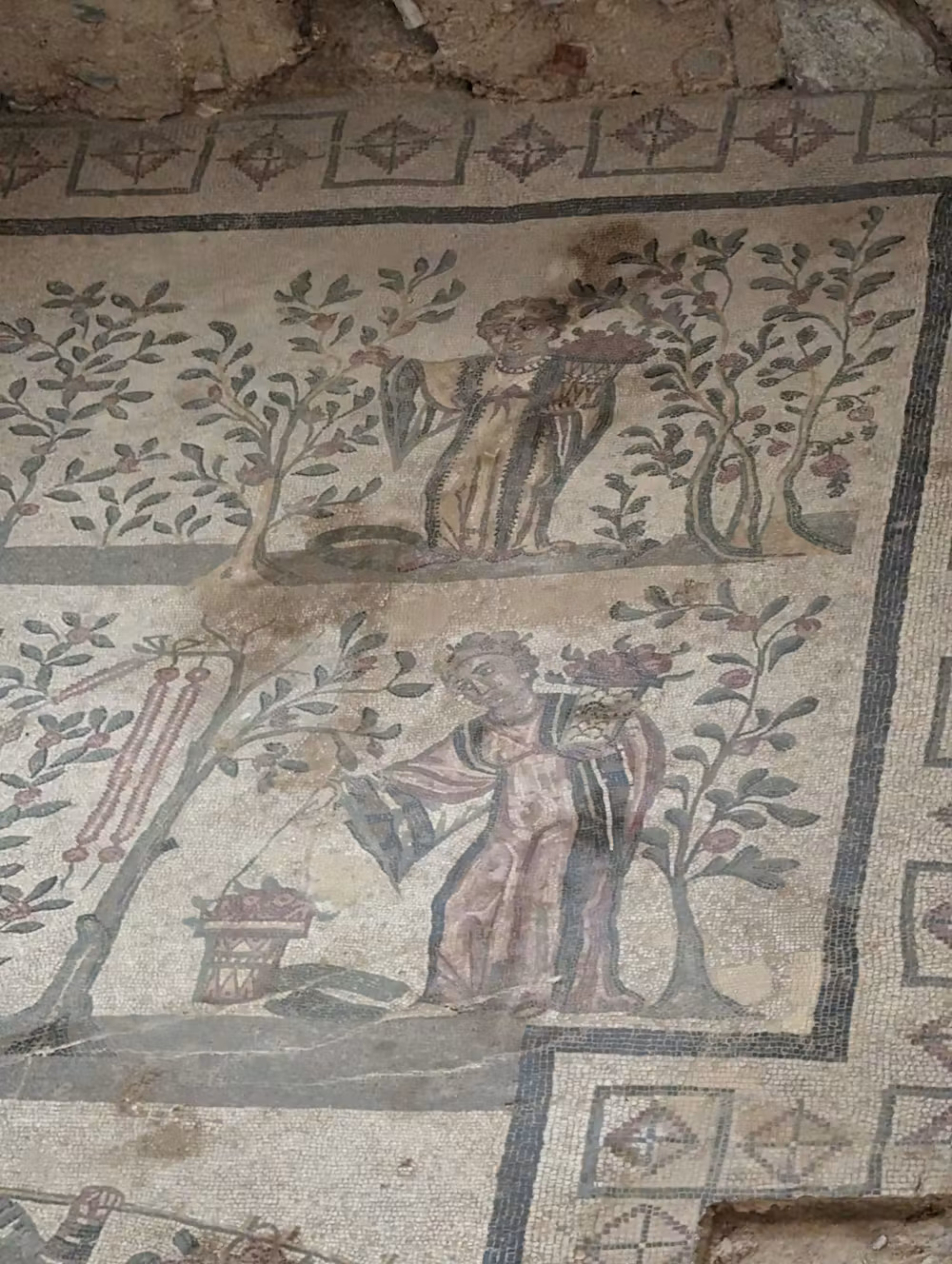
A close up of a mosaic of a woman in garden.

A mosaic shows Roman farm women at the Villa Romana del Casale, Sicily. (Image credit: Joe Lynch)

Another aristocratic landowner and writer, Cato the Elder, living two centuries before Columella, lists both the female and the male farm manager as essential staff for a vineyard or olive farm.

He devotes only one small section to outlining the female farm manager's tasks, but a close look shows these are not predominantly domestic. Cato includes keeping poultry and processing of seasonal farm products. Although he does include supervision of cleaning, this could refer to maintenance of work spaces such as stables and wine making buildings, an integral part of estate management – and also listed by Columella among the vilica's duties.

Cato also gives the vilica the responsibility for making sacrifices to the gods for the success of the farm. She must regularly offer garlands at the altar "for abundance", he writes.

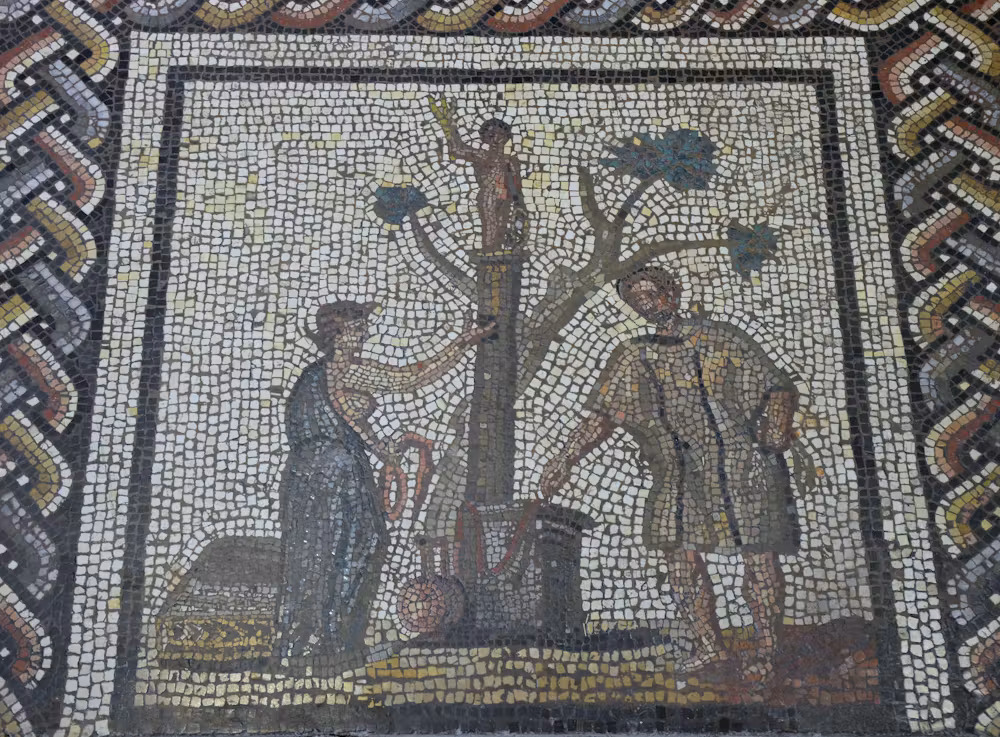
A Roman mosaic showing estate work in different seasons depicts a scene of sacrifices for abundant crops to the god Jupiter (in his Celtic form as a sky and weather god). A woman is shown holding an offering of garlands, just as Cato instructs. Beside her are a jug for wine offerings and a male figure.

A close up of a mosaic with people around a tree.

A woman is depicted at an altar holding the offering of garlands. Beside her is a jug for wine offerings and a male figure. (Image credit: Carole Raddato/MusΓ©e d'ArchΓ©ologie Nationale, Saint-Germain-en-Laye/Flickr,Β CC BY)

Perhaps this mosaic shows the vilica and vilicus, both essential to the success of annual harvests. While such images of female figures are rare, one fragmentary wall painting from Rome shows a female overseeing wine-making workers, just as Columella describes.

This combined body of evidence suggests we should expand outdated understandings of the roles that Roman women played in farm production, the dominant sector of ancient economies.

No vilica has left us an account of her work in her own words. But by paying careful attention to the evidence, we can hear an echo of her voice.

This edited article is republished from The Conversation under a Creative Commons license. Read the original article.

From Augustus to Nero, see how much you know about ancient Rome's famous leaders with our Roman emperor quiz!

2,000-year-old scrolls buried by Mount Vesuvius eruption finally deciphered with help from AI

29 June 2026 at 22:14

Nearly 2,000 years ago, Mount Vesuvius buried a vast collection of scrolls in ash and scorched them into solid black lumps. Now, without unrolling them, researchers have virtually read two of them —‬ and uncovered what may be a work by a well-known Stoic philosopher.

The breakthrough comes from the Vesuvius Challenge, an international research effort to digitally read the scrolls that were preserved when Pompeii and Herculaneum were buried by ash and pumice in A.D. 79. Papyrologists, who study and preserve the ancient manuscripts, announced June 25 that they had digitally unwrapped the surviving portion of one scroll, known as PHerc. 1667, revealing roughly 5 feet (1.5 meters) of continuous Greek text across 20 columns. Researchers also recovered more than 70 columns of text from a second scroll, PHerc. 172.

"For nearly two millennia, many of these texts have been physically preserved but intellectually inaccessible," Brent Seales, Vesuvius Challenge co-founder and a computer scientist at the University of Kentucky, said in a statement. "Today β€ͺ—‬ after years of interdisciplinary work combining advanced imaging, artificial intelligence, academic research and an innovation contest β€ͺ—‬ we are finally able to read them."

Over the past few years, Seales and his team have used a synchrotron to essentially X-ray inside the scrolls and detect the ink ancient Romans used to write. The letters are then studied by papyrologists, who translate the text.

Part of PHerc. 1667 was physically opened in the 1980s, but overlapping layers obscured the writing so badly that the scroll was given a readability score of zero, Federica Nicolardi, a papyrologist at the University of Naples Federico II, said in the statement.

The handwriting and text of PHerc. 1667 suggest the scroll dates to the second or third century B.C., making it one of the oldest scrolls in the Herculaneum collection. This early date means it could not have been authored by Philodemus of Gadara, the first-century-B.C. Epicurean philosopher whose writings dominated the Herculaneum library.

Experts think the text reads more like a Stoic treatise on ethics and human behavior, and it specifically mentions Aristocreon, the nephew and pupil of the influential Stoic philosopher Chrysippus. Very little of Chrysippus' own writing has survived, so if the attribution holds up, it would be a significant addition to the historical record of early Stoic thought.

In a separate discovery, researchers identified a new book title within scroll PHerc. 139. The end of the scroll references Philodemus' eighth book of "On Gods." While this treatise had previously been known to exist, the new discovery reveals the work extended across at least eight volumes. Experts plan to reexamine other texts in the Herculaneum collection for additional volumes that may belong to the same series.

More than 600 Herculaneum scrolls remain unopened. It's thought that the villa was once owned by the father-in-law of Julius Caesar.

How much do you know about the Roman town destroyed by Mount Vesuvius? Find out by taking our Pompeii quiz!

Lavish Roman villa discovered outside Rome's walls may have been frequented by Hadrian and Marcus Aurelius

A clandestine excavation on the outskirts of Rome has brought to light a "splendid villa" that may have belonged to a member of the Antonine imperial family, according to archaeologists with the Special Superintendency of Rome. The remains of the first-century villa, which was previously unknown to archaeologists, include frescoed walls and mosaic floors that showcase the elite social status of the owners.

The villa was discovered at Castel di Guido, a village about 12 miles (19 kilometers) west of the ancient city walls of Rome. In ancient times, the area was known as Lorium, and it was frequented by prestigious Roman families, including the Roman emperors Hadrian, Antoninus Pius and Marcus Aurelius.

In February, the local police were alerted to illegal excavations at Castel di Guido on government-owned land, according to a June 15 translated statement from the Italian Ministry of Culture's Special Superintendency of Rome. The unauthorized excavations had been undertaken with a backhoe, which made deep cuts into the villa and left huge piles of dirt.

Superintendency archaeologists led by Alessia Contino carried out emergency excavations to document and stabilize the architecture at the site.

"Thanks to the local report and prompt intervention, it was possible to identify part of a large, previously unknown Imperial-period villa and uncover a splendid array of decorations, as well as the discovery of a statue in fine white marble," Contino said in the statement.

The excavation revealed the atrium at the entrance of the villa, two rooms decorated with frescoes and mosaics, and several other spaces related to the agricultural activities of the large, rural house. The villa was likely built in the early first century and abandoned in the third century.

archaeologists work at an ancient Roman site revealing mosaic floors and frescoed walls of a villa
Italian Ministry of Culture / Special Superintendency of Rome
archaeologists work at an ancient Roman site revealing mosaic floors and frescoed walls of a villa
Italian Ministry of Culture / Special Superintendency of Rome
archaeologists work at an ancient Roman site revealing mosaic floors and frescoed walls of a villa
Italian Ministry of Culture / Special Superintendency of Rome
archaeologists work at an ancient Roman site revealing mosaic floors and frescoed walls of a villa
Italian Ministry of Culture / Special Superintendency of Rome
archaeologists work at an ancient Roman site revealing mosaic floors and frescoed walls of a villa
Italian Ministry of Culture / Special Superintendency of Rome
archaeologists work at an ancient Roman site revealing mosaic floors and frescoed walls of a villa
Italian Ministry of Culture / Special Superintendency of Rome
archaeologists work at an ancient Roman site revealing mosaic floors and frescoed walls of a villa
Italian Ministry of Culture / Special Superintendency of Rome
archaeologists work at an ancient Roman site revealing mosaic floors and frescoed walls of a villa
Italian Ministry of Culture / Special Superintendency of Rome
archaeologists work at an ancient Roman site revealing mosaic floors and frescoed walls of a villa
Italian Ministry of Culture / Special Superintendency of Rome
archaeologists work at an ancient Roman site revealing mosaic floors and frescoed walls of a villa
Italian Ministry of Culture / Special Superintendency of Rome
archaeologists work at an ancient Roman site revealing mosaic floors and frescoed walls of a villa
Italian Ministry of Culture / Special Superintendency of Rome
archaeologists work at an ancient Roman site revealing mosaic floors and frescoed walls of a villa
Italian Ministry of Culture / Special Superintendency of Rome

The atrium's central impluvium β€” a marble basin in the center of many ancient Roman houses that collected rainwater from an opening in the roof β€” was surrounded by a floor decorated with bands of black-and-white botanical and geometric mosaics. The rear wall of the room, about 5 feet (1.5 meters) of which was still preserved, was painted red as part of a fresco that featured multicolor panels with human figures and botanical elements.

Surrounding the large room were four smaller ones, three of which still have preserved mosaic floors. One room includes nine black-and-white geometric panels, another includes black octagons on a white background, and the third has black rectangles.

Within the villa's central basin, archaeologists found a broken statue, about 31 inches (80 centimeters) tall, depicting a bearded man wearing a short tunic and carrying a basket with birds and fruit. The statue may represent Silvanus, the Roman deity of woods and other uncultivated lands, who watched over domesticated flocks of animals. Silvanus was also a companion of Bacchus (known in Greek as Dionysus), the god of wine and ecstasy.

a fragmented marble sculpture of an ancient Roman deity (Silvanus) lies on a blue table

Archaeologists discovered a statue of the ancient Roman deity Silvanus, guardian of the flocks. (Image credit: Italian Ministry of Culture / Special Superintendency of Rome)

The scale of the villa and the quality of the mosaics and frescoes suggest that the villa's owners were Roman aristocrats and may have even been members of the imperial family, according to the statement. In the Roman Empire, elite families like the Aurelii and the Arrii β€” the paternal and maternal families of Antoninus Pius, who reigned from A.D. 138 to 161 β€” lived in Lorium. Ancient sources suggest that Antoninus Pius spent his childhood in Lorium, built his imperial palace there, and died there at age 74.

Lorium was also frequented by Emperor Hadrian, who adopted Antoninus Pius to make him his heir, and by Marcus Aurelius, who was Antoninus Pius' nephew, adopted son and son-in-law. Because of Lorium's strong connection to the Antonine imperial dynasty, numerous villas and ancient estates have previously been discovered in the region.

But the newly uncovered villa "is another important piece of the puzzle," Contino said, "opening up new perspectives for understanding and preserving our history-rich territory."

Further work on the villa and its artifacts will help archaeologists date the building more accurately and work out whether it was abandoned when the imperial household was relocated out of Lorium, according to the statement.

Although work on the villa has not been completed, the public has a chance to visit the newly excavated villa and its mosaics on June 20 through a free archaeological hike and guided tour organized by the Special Superintendency of Rome.

From Augustus to Nero, see how much you know about ancient Rome's famous leaders with our Roman emperor quiz!
❌