Dai 600 ai 2.000 metri quadrati, la gamma Navimow 2026 affronta prati di dimensioni e complessità diverse senza cavo perimetrale. E fino al 30 luglio, acquistando uno dei cinque modelli della promozione si riceve gratuitamente anche il Garage compatibile... Leggi tutto
Una gamma cromatica senza pari, maggiore efficienza energetica e immagini più confortevoli sono tra i principali benefici della nuova tecnologia RGB MiniLED di Hisense: tre serie, per portare il massimo della tecnologia a tutti... Leggi tutto
The president joined Republican officials who slammed the National Academies of Sciences for a chapter about climate science in an educational guide for judges.
The US military said it has launched its 10th consecutive round of strikes on Iran to force the reopening of the strait of Hormuz.
Earlier on Monday, Iran’s president said the country is in a “full-scale war” after the US expanded its aerial campaign and Tehran struck Washington’s Gulf allies, even as diplomats said talks to de-escalate were continuing.
A common culprit behind severe gum disease may also stiffen and narrow the heart's aortic valve, preliminary research suggests. This may help explain links between gum problems and poor heart health.
Now, researchers suggest that Porphyromonas gingivalis, one of the main bacteria involved in severe gum disease, may also contribute to calcific aortic valve disease (CAVD), a condition in which calcium builds up in the heart's aortic valve. The findings were presented in July at a meeting of the American Heart Association in Boston and have not been peer-reviewed yet.
Dr. Elena Aikawa, a professor of medicine at Harvard Medical School who was not involved in the study, said the findings "fit well with our current understanding of calcific aortic valve disease as an active, inflammation-driven disease rather than simply wear and tear of the valve."
Periodontal disease is likely just one contributor among many, rather than the sole cause of CAVD, she added. But the study does identify a biologically plausible pathway linking oral health to heart health that could open new opportunities for prevention and treatment.
How mouth bacteria harm the heart
CAVD affects millions of people worldwide, and there are no approved drugs that slow or stop its progression. As the disease worsens, people may develop fatigue, shortness of breath and chest pain, and in severe cases, they often require valve-replacement surgery.
Meanwhile, prior to the new research, it was known that bacteria and inflammatory signals from the mouth can sometimes enter the bloodstream and affect distant tissues, said Richard Lamont, chair of oral immunology and infectious diseases at the University of Louisville School of Dentistry, who was not involved in the study. Over time, these effects can accrue and gradually reshape how the immune system behaves, he said.
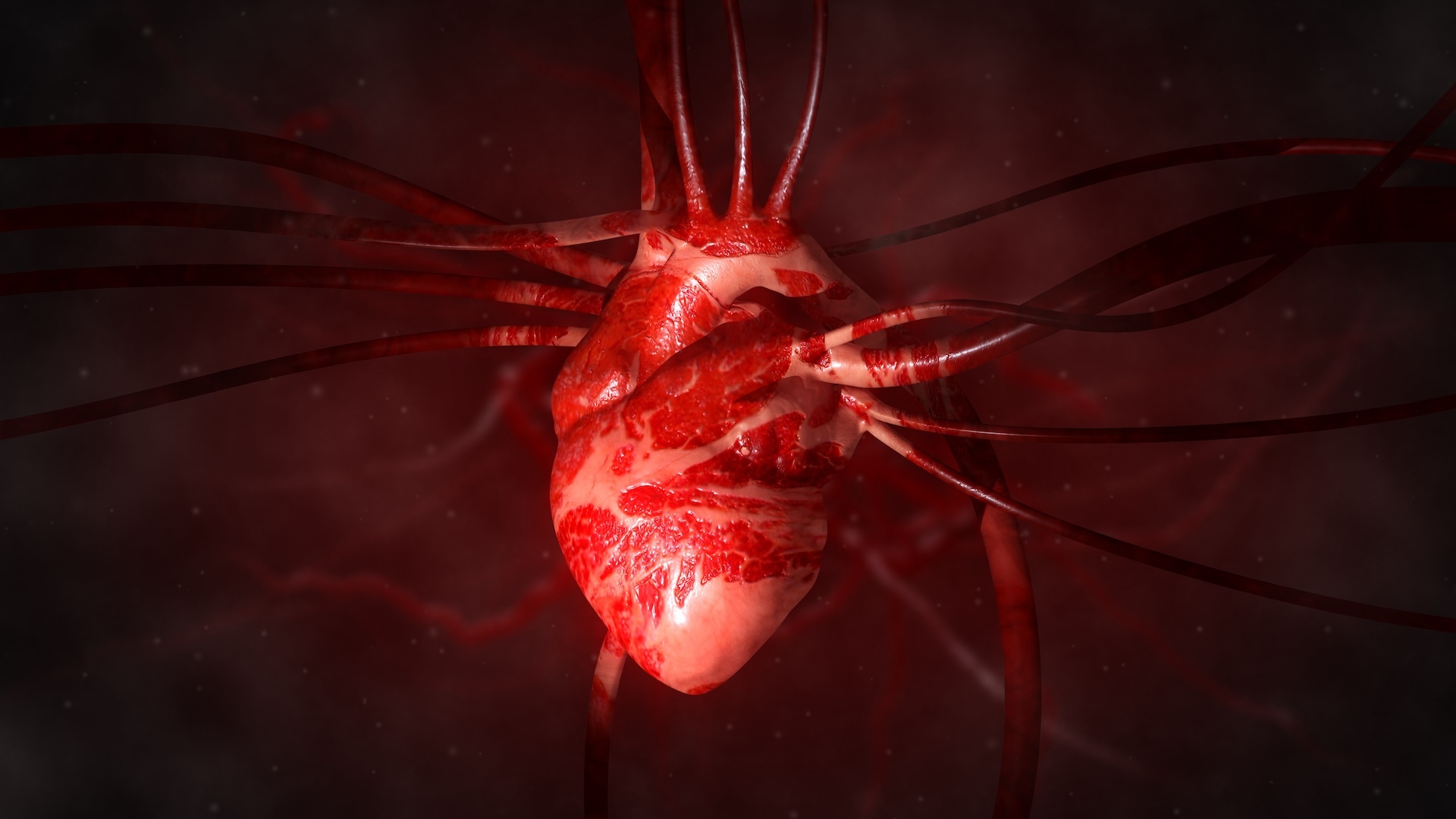
In CAVD, calcium builds up in the aortic valve, which connects the left side of the heart to the large artery that carries oxygen-rich blood to the body. (Image credit: Noctiluxx via Getty Images)
P. gingivalis is known to be particularly destructive to gum tissue, causing lots of inflammation, and it's been tied to cardiovascular disease in the past. To see if the bacterium might be directly impacting heart health, researchers at Fuwai Hospital in Beijing looked for P. gingivalis in aortic valve tissue removed during valve-replacement surgery. They compared this diseased tissue to valves that weren't calcified.
The calcified valves contained much higher levels of P. gingivalis DNA and proteins made by the bacterium. "P. gingivalis was about 30 times more abundant in calcified valves than in non-calcified valves," study first author Dr. Chenyang Li, a doctoral candidate at Fuwai Hospital, told Live Science in an email.
To test whether the bacteria might directly contribute to valve damage, Li and colleagues injected live P. gingivalis into the bloodstreams of healthy lab mice. The bacteria reached the animals' aortic valves, triggering inflammation, calcium buildup and narrowing of the valve.
"We were surprised to see valve calcification even in mice without high cholesterol," Li said. "This suggests P. gingivalis may directly contribute to valve disease, beyond traditional cardiovascular risk factors."
A comparison group of mice was given antibiotics before the injection and had less bacteria in their aortic valves and slower disease progression. Meanwhile, mice injected with dead P. gingivalis bacteria did not show any changes in their aortic valves.
The researchers traced the changes in the mice's hearts to interleukin-1 beta, a signalling molecule that normally helps the body fight infections. Exposure to P. gingivalis ramped up the production of this molecule, and in turn, the immune signal switched on genes that pushed healthy valve cells to behave more like bone-building cells, which is a hallmark of CAVD. This switch causes the cells to lay down calcium in the surrounding valve tissue.
When the scientists blocked interleukin-1 beta in some mice, the animals developed much less valve calcification even when the bacteria reached the valve. Lamont said that the mouse experiments strengthen the case that there's a biological mechanism directly linking gum and heart diseases. However, he cautioned that mice have very different oral microbiomes than humans, making it difficult to know whether the exact same process occurs in people.
That said, the team also saw the same pattern in human valve cells grown in the lab. Exposure to P. gingivalis increased inflammation and calcium buildup among the cells, while blocking interleukin-1 beta blunted those effects.
Both Aikawa and Lamont said more research is needed to confirm the relationship in humans. The findings give researchers a new pathway to explore for future treatments, raising questions of whether targeting inflammatory signals like interleukin-1 beta could help slow the progression of this widespread heart disease.
This article is for informational purposes only and is not meant to offer medical advice.
What do you know about the body's hardest-working muscle? Find out with our heart quiz!
Genetic prediction models are poised to revolutionize medicine. But because they have been trained on European DNA, they threaten to widen health care disparities.
During the Covid-19 pandemic, wastewater testing became a virus warning system. Now, scientists are using the approach to understand how communities eat.
After using the James Webb Space Telescope (JWST) to peer back toward the beginning of time, astronomers have proposed a radical new explanation for one of the universe's most flummoxing phenomena.
Little red dots (LRDs) are mysteriously compact, brilliant celestial objects found predominantly when the universe was less than 10% of its current age.
As revealed by JWST's unmatched infrared sensitivity, LRDs emerged incredibly early, only around 600 million years after the Big Bang, and then began disappearing about a billion years later.
Now, in a paper published in The Astrophysical Journal Letters, astronomers have proposed a novel formation mechanism for LRDs: They may be birthed by previously undiscovered celestial companions, whose intense ultraviolet (UV) radiation causes gas clouds to collapse into incredibly dense and exotic objects, like "black hole stars."
An illustration of a black hole star, or quasi-star, powered by a black hole surrounded by a cocoon of gas. (Image credit: (MPIA/HdA/T. Müller/A. de Graaff) via Wikimedia Commons)
"The most surprising aspect… is that these little red dots are not just 'red dots,' but there is a more complex emission nearby and around them," Josephine Baggen, an astronomer at Yale University and first author of the study, told Live Science in an email. "We think those what we call 'companions' are starlight."
Connecting the dots
In the study, the researchers compiled a sample of 83 LRDs, imaged with JWST, from ultradeep surveys. They found that 36 of the 83 LRDs, including over 80% of the brightest ones, hosted at least one companion that shined bright in blue-ish ultraviolet light; little red dots with little blue companions.
The LRDs sampled in this study. (Image credit: (Baggen et al., ApJL, 2026) )
These companions had masses ranging from hundreds of millions to billions that of the sun, suggesting that they may be star clusters or relatively small early galaxies, Baggen told Live Science.
These UV-spewing companions spurred the formation of LRDs from immense gas clouds, the team's new proposal states. Normally, cold molecular gas clouds fragment and condense into stars. But the intense UV irradiation from the companions halted the fragmentation process, potentially squeezing the gas clouds into supermassive stars that directly collapsed into black holes while skipping the explosive supernova stage that normally marks these stars' deaths.
This proposal helps to explain why LRDs appear bright in red optical light and UV wavelengths, with a dip between the two caused by the wavelengths of light absorbed by hydrogen gas. Rather than originating from a single object, the optical red light derives from the LRD, the UV light comes from its nearby companion, and the dip is thought to be caused by the dense cocoon of gas around the LRD.
As a result, the researchers suggested that all LRDs may have such partners but they may be too close together to be distinguished. Conversely, some companions may be separated by greater distances than the researchers accounted for in this study, requiring future observations to zoom out.
Intriguingly, this work may illuminate a couple of early-universe enigmas. First, the black holes manifesting from these interactions may be between 100,000 and 1 million solar masses, forming the "seeds" necessary to explain how ancient supermassive black holes grew so surprisingly massive so early in cosmic history.
Additionally, because LRDs may merge with the relatively small, UV-spewing galaxies that birthed them, this process may have created the impressively immense galaxies all around us today.
"We do think that this might be the birth of the supermassive black holes around these UV companions, born 'outside the galaxy,' [which] will eventually merge," Baggen told Live Science. "Whether this is what happened to the Milky Way in its earliest phases, we cannot really say, but it is plausible! There is still a lot of debate about how LRDs evolve and what they turn into at later times."
Sviluppato in sei mesi, il nuovo robot combina Physical AI, percezione di tocco, forza, temperatura e prossimità. La prima applicazione industriale nascerà con Fincantieri per la saldatura nei cantieri navali... Leggi tutto
Un SSD capiente e veloce a un prezzo più conveniente: l'unità Lexar da 1TB è tra le offerte Amazon del momento. Approfitta subito dello sconto Amazon per portartelo a casa a 152 euro... Leggi tutto
La Commissione Europea ha contestato alla piattaforma controlli insufficienti su contraffazioni, giocattoli pericolosi e cosmetici non conformi. Entro il 20 ottobre dovrà presentare un piano di intervento
... Leggi tutto
Il nuovo modello elettrico non proverà a imitare artificialmente il rumore di un motore: batteria, viola e basso tradurranno invece in musica il ritmo e il coinvolgimento dei V8 Bentley... Leggi tutto
It's long been debated what started the 1789 smallpox outbreak that devastated the Indigenous population in Australia. Now, a new modeling study has the likely answer: It was brought in 1788 by the "First Fleet" of British ships to settle Australia.
The finding is based on mathematical modeling of the disease's impact on Indigenous Australians and rejects a contrary idea that the outbreak originated through contact with Indonesian islanders fishing in the far North of the country.
Alan Williams — an archaeologist at the private firm EMM Consulting and co-author of the study, published July 9 in the journal Nature Human Behaviour — told Live Science that the likely source of the outbreak were vials of dried smallpox scabs that British medics kept for inoculations (a precursor of smallpox vaccines, which weren't invented by Edward Jenner until the 1790s).
Some historians had argued that the live smallpox virus could not have survived the eight-month ship journey from Portsmouth, England, to Botany Bay, south of what is now the modern city of Sydney, where the British ships first landed.
But the investigation showed that the vials of smallpox scabs may have been replenished during the voyage when the fleet stopped at either Cape Town, South Africa, or Rio de Janeiro, Brazil, only a few months earlier, Williams said.
The smallpox outbreak devastated Indigenous communities and contributed to the rapid demise of Indigenous Australian culture, he said. The study estimates approximately 220,000 people died from the disease, and that early-20th-century Australian authorities did not comprehend the true extent of the Indigenous population when they attempted to document historical accounts.
Mystery outbreak
Within a few decades of the British Royal Navy officer James Cook charting Australia, the British sent ships to settle the continent. The British "First Fleet" to Australia consisted of 11 ships: two naval vessels, six convict transports and three ships for provisions. The British claimed that Australia legally belonged to nobody. They soon left Botany Bay because the land and water there were poor, and they moved to Sydney Cove in Port Jackson, which is now part of modern Sydney. There, they raised the British flag, claiming the whole continent.
There were no signs of a smallpox outbreak among nearby Indigenous communities when the First Fleet arrived, but the disease took a devastating toll in the decades that followed. Because there were no recorded cases of smallpox on the fleet, it was argued that the disease must have arrived in Australia on the tropical north coast of the continent through contact with islanders from the Makassar region of Sulawesi, which is now part of Indonesia.
But the new computer modeling of the proposed north coast outbreak showed the disease could not have spread from there to Australia's Southeast. Among other issues, the two regions were separated by thousands of miles of uninhabited desert, Williams said. Meanwhile, modeling of the smallpox outbreak in Indigenous communities near Port Jackson indicated that the outbreak had originated there, the researchers found.
Co-author Matthew Cody Nitschke, an expert in computer modeling at Flinders University in Adelaide, told Live Science that it is now clear that the outbreak was very unlikely to have originated in the North; by contrast, "there is very strong evidence that it was the First Fleet."
At the time, disease theory was not known, so the spread of smallpox may have happened by accident, Williams said.
An Indigenous Australian man holds traditional weapons during a ceremonial dance in Laura Quinkan Dance Festival at Cape York, Australia. New estimates that the theoretical population capacity of Australia before the British arrival was up to 5 million Indigenous people. (Image credit: chameleonseye via Getty Images)
Revising earlier ideas
The new study in Nature Human Behaviour refers to a second study by the same researchers that is now being prepared for publication by the same journal. It proposes that there were up to 3 million Indigenous Australians at the time the First Fleet arrived — many more than the 300,000 or so proposed in some earlier studies.
That second study, based in part on archaeological investigations of early Indigenous Australian communities, suggests that the theoretical population capacity of Australia before the British arrival was up to 5 million people, especially in the resource-rich areas of the North and Southeast.
The former estimate of roughly 300,000 Indigenous Australians seems to have come from a study in the 1930s based only on their depleted numbers. "By the time people actually sat down and said how many people were here, we had 100 years of disease, frontier violence, and everything else going on," Williams said.
University of Tasmania historian Henry Reynolds, who was not involved in the studies, told Live Science that the research debunks the old idea that the smallpox outbreak started on the north coast. "The idea that it came from the North and arrived at exactly the time [as the First Fleet] was always improbable," he said.
Ann McGrath, a historian at the Australian National University in Canberra who was not involved in the work, agreed. "The strong interdisciplinary approach of this latest research convincingly refutes this, and it also provides a much expanded estimate of the Indigenous population prior to 1788," she said in an email.
The skeleton of a wolf or bat you admire at the natural history museum may look pristine, but it wasn't always that way — there's a good chance flesh-eating beetles helped prepare those bones for display. For decades, many museums have relied on colonies of dermestid beetles to strip soft tissue, like skin and muscles, from skeletons. Unlike the harsh chemicals that would otherwise be used for bone preparation, these beetles can be gentler and clean hard-to-reach areas. But these colonies are a hassle to keep up, and escaped beetles can even be dangerous for valuable museum specimens that don't need their skin removed. Now, researchers may have found an even better biological cleanup crew.
In a new study published July 1 in the journal PLOS One, scientists found that superworms (Zophobas morio) — large beetle larvae commonly sold as pet food — can clean skeletons just as effectively while offering practical advantages. The larvae removed soft tissue from animals ranging from tiny bats to a 9-pound (4.2 kilograms) wolf without damaging even the most delicate bones.
Two of the paper's authors, Niloofar Alaei Kakhki, a postdoctoral researcher at the State Museum of Natural History Stuttgart in Germany, and Morteza Monfared, a researcher at the Ferdowsi University of Mashhad in Iran, answered our questions via email about what makes superworms unique and how they could be used in laboratories and museums.
Kenna Hughes-Castleberry: Why are these critters called "superworms?" What makes them different from other beetle larvae?
Niloofar Alaei Kakhki and Morteza Monfared: Compared with the larvae of many other beetles, Zophobas morio larvae are much larger, which is one of the reasons they are so effective at removing soft tissue from bones.
What makes them truly unique, however, is their life cycle. Most beetle larvae pupate automatically once they reach the appropriate size. In contrast, superworms require an additional trigger: They must be isolated individually before they will pupate and develop into adult beetles. As long as they remain together in crowded conditions, they stay in the larval stage for several months.
This characteristic provides a major advantage for skeleton preparation. Because the larvae remain larvae for an extended period, they can be used repeatedly for cleaning specimens without rapidly developing into adult beetles. After each cleaning cycle, they can simply be fed a vegetable-based diet, allowed to recover, and then used again.
This also makes them safer than beetles commonly used for skeleton preparation, such as Dermestes. Adult dermestid beetles can reproduce, and females may lay eggs on — or even inside — skeletal specimens. If eggs or larvae are accidentally introduced into museum collections, they can become a serious pest and damage valuable specimens. Since superworms do not develop into adults unless they are intentionally isolated, this risk is greatly reduced, making the method safer for museum collections.
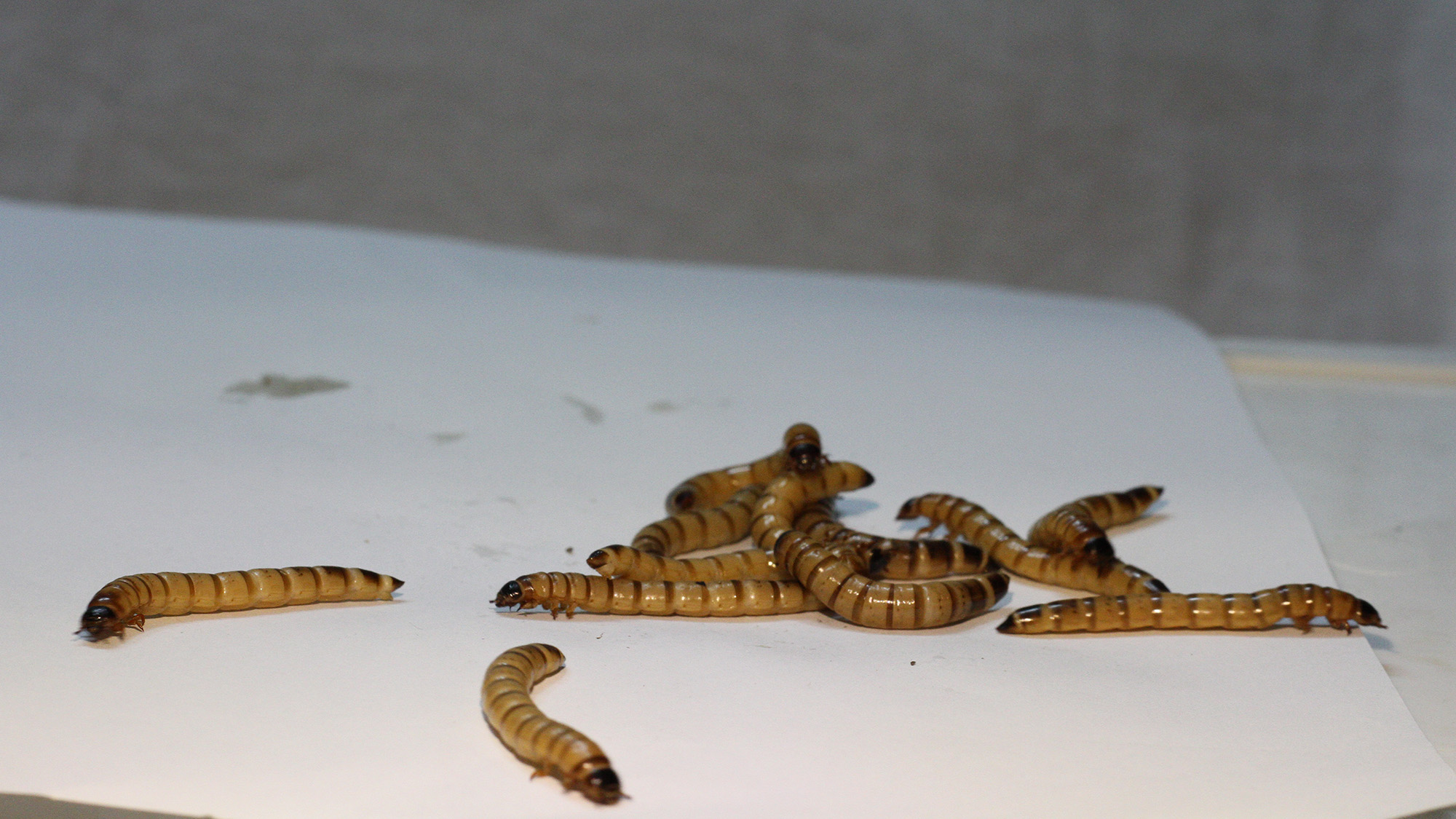
A group of superworms in their larval stage. (Image credit: Niloofar Alaei Kakhki and Morteza Monfared)
KHC: How did you figure out that the worms could clean the skeletons? Was that surprising?
NAK and MM: Several years ago, we started keeping a colony of Zophobas morio larvae (superworm) as live food for birds. As bird-watchers, we were often asked to help care for injured wild birds, so maintaining our own colony was more practical than purchasing larvae repeatedly. We fed the larvae mainly with vegetable scraps, such as cucumber, potato and banana peels.
One day, we ran out of vegetable waste. After lunch, we placed a leftover chicken bone with a small amount of meat still attached into the colony. To our surprise, the larvae gathered around it almost immediately and removed the remaining tissue with remarkable speed. Watching hundreds of larvae work together so efficiently was fascinating, and it immediately made us wonder whether they could be useful for something beyond animal feed.
At the same time, we were volunteering at the Zoology Museum of Ferdowsi University (ZMFUM), where preparing skeletal specimens was one of our regular responsibilities. We had experience with conventional preparation methods, including manual cleaning, boiling and burial. Although effective, these methods were often time-consuming and carried the risk of damaging delicate bones or losing small skeletal elements.
After observing how efficiently the larvae cleaned the chicken bone, we decided to test whether they could also prepare skeletal specimens. The first trials were remarkably successful. Within only a few hours, the larvae removed the soft tissues while leaving even delicate bones intact. Seeing the quality of the cleaned specimens was genuinely surprising and convinced us that this approach had real potential.
From that point on, whenever suitable animal specimens became available, we continued testing the method under different conditions, gradually refining it and optimizing the protocol. Over the following years, these observations evolved into the standardized, efficient and safe skeleton preparation method presented in our study. Yes, we were genuinely surprised. We already knew that superworms could consume a wide variety of organic materials, but we did not expect them to clean skeletons so quickly, so thoroughly, and with so little damage to even the most delicate bones.
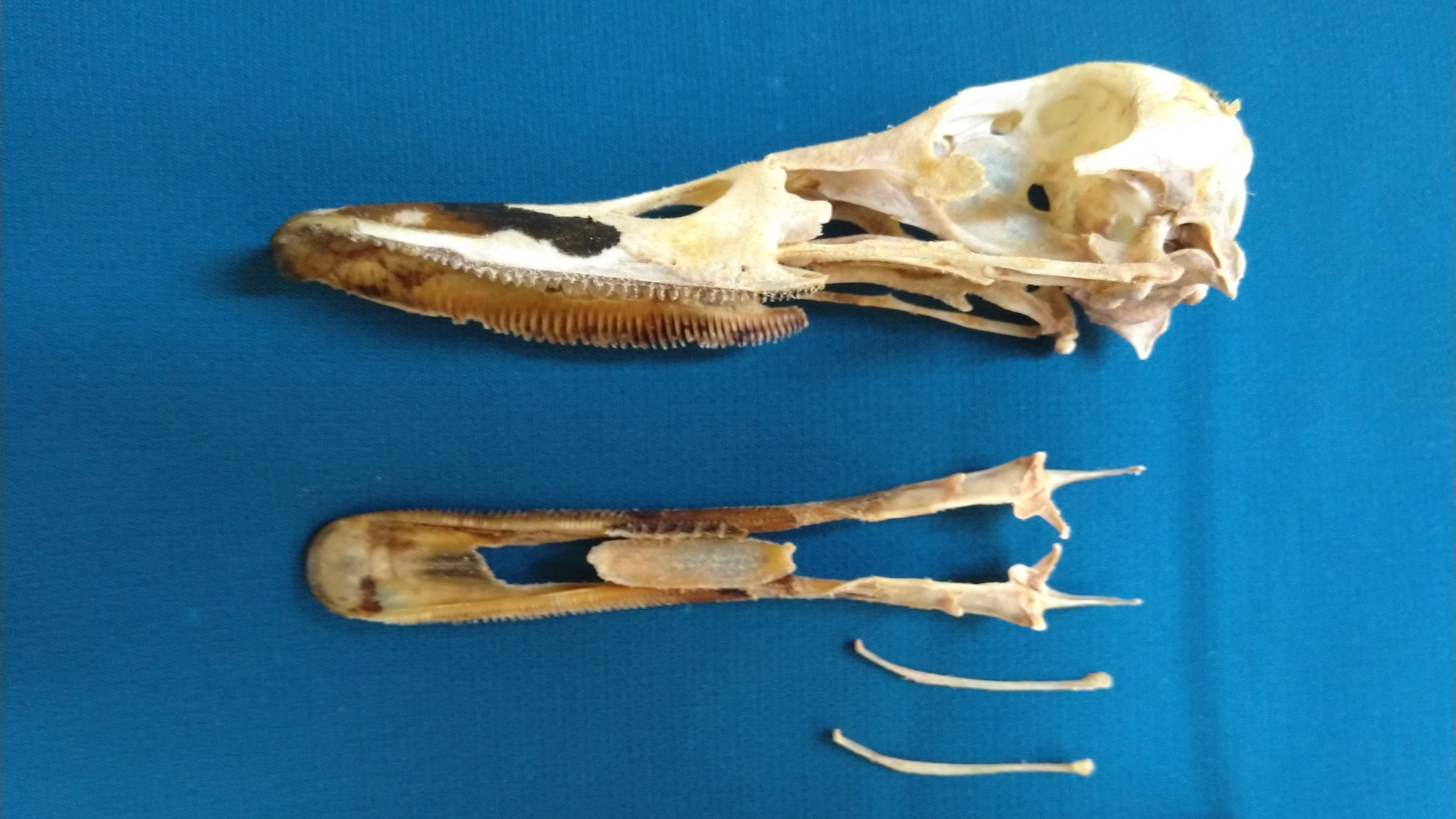
A delicate bird skull after being cleaned by superworms. (Image credit: Niloofar Alaei Kakhki and Morteza Monfared)
KHC: How do these superworms compare to other skeleton-cleaning products, like chemical cleaners? Are the worms better or worse at this task?
NAK and MM: Based on our experience, superworms offer several important advantages over existing skeleton preparation methods.
Compared with dermestid beetles, one of the biggest advantages is colony management. Because superworms only pupate when they are isolated individually, their life cycle can be controlled much more easily. As long as they are kept together, they remain as larvae and continue cleaning specimens. This greatly reduces the risk of accidentally introducing adult beetles or their eggs into museum collections, which is a major concern when working with dermestid beetles.
Compared with traditional methods such as boiling, manual cleaning or burial, the larvae also save a great deal of time and effort. Manual cleaning, especially for delicate specimens, can take many hours and always carries the risk of breaking or losing small bones. In contrast, the larvae can remove soft tissues efficiently while preserving even fragile skeletal elements.
Every preparation method has its own strengths and limitations, and the best choice depends on the type of specimen and the goals of the researcher. However, based on our experience using a wide range of preparation techniques, we believe that superworms provide an efficient, safe and practical alternative for many museum and research applications.
Rather than replacing every existing method, we see this technique as a valuable new tool that museums, universities and research laboratories can adopt and adapt according to their own needs.
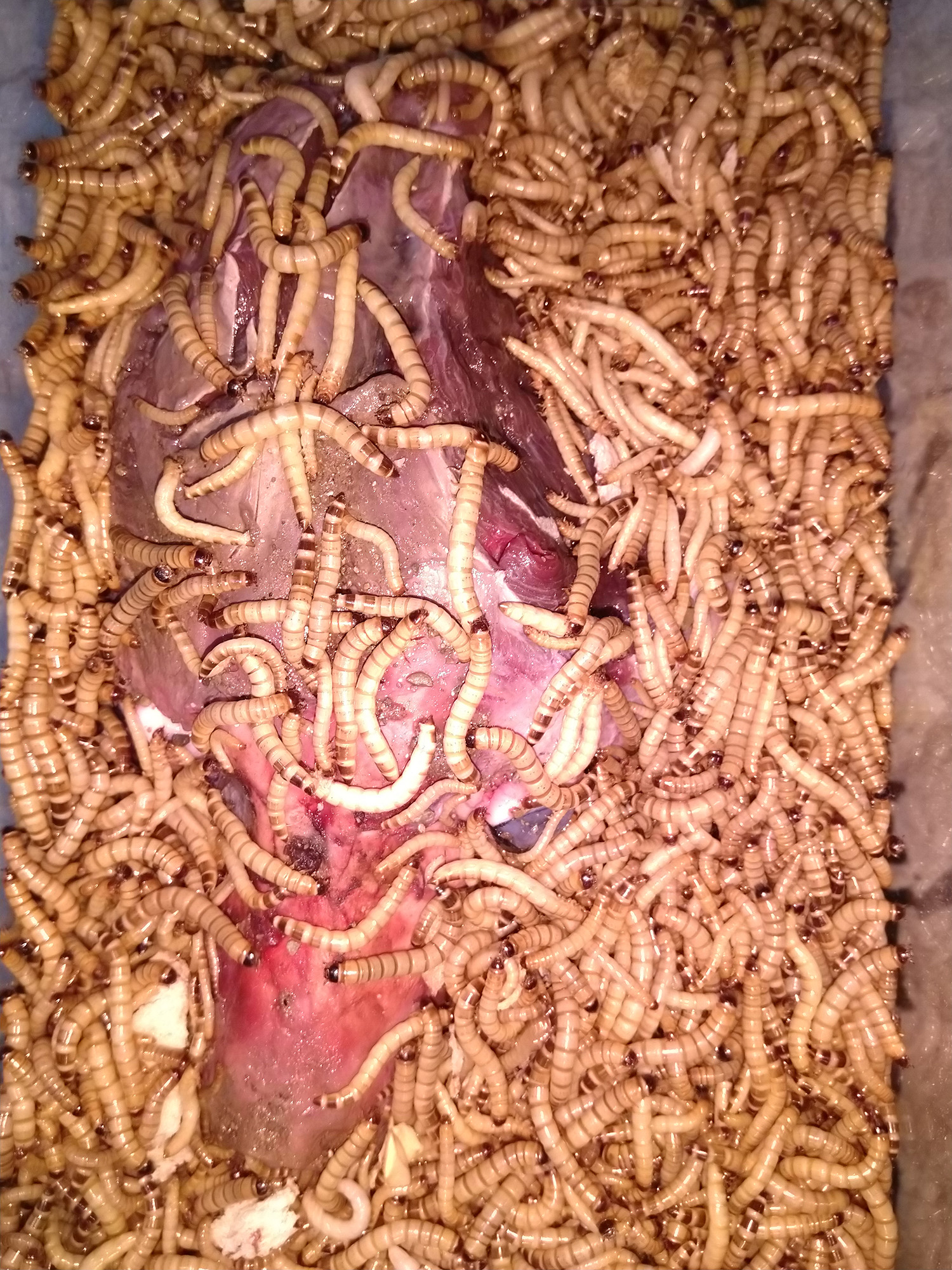
A wolf skull being "cleaned" by superworms. (Image credit: Niloofar Alaei Kakhki and Morteza Monfared)
KHC: On average, how much does it cost to use the worms?
NAK and MM: It is difficult to estimate an average cost because prices vary considerably between countries and suppliers. Rather than the initial purchase price, the long-term maintenance cost is what makes this method attractive.
A colony can be established from a relatively small number of superworms. Once the larvae reach the appropriate stage, a portion of them can be isolated to pupate and develop into adult beetles. These adults reproduce and generate new larvae, allowing the colony to become self-sustaining over time.
The equipment required is also quite simple. The colony can be maintained in plastic or glass containers with wheat bran as the bedding, at approximately 25 degrees Celsius [77 degrees Fahrenheit]. Between skeleton preparation cycles, the larvae can be fed inexpensive vegetable scraps, allowing them to recover before being used again. Larvae can remain in the larval stage for several months, meaning the same colony can be used repeatedly.
Another advantage is that the colony size can easily be adjusted to meet the needs of different users. A museum or laboratory processing a large number of specimens can maintain a larger colony, while smaller collections can operate with far fewer larvae.
Overall, we find the method is relatively inexpensive to establish and maintain, especially when compared with the time, labor and specialized facilities often required for traditional skeleton preparation methods.
KHC: Do you envision museums and laboratories implementing these superworm cleaners in the future? Why or why not? Is the cost worth it?
NAK and MM: We believe this method has the potential to be adopted by many museums, universities and research laboratories, particularly those that regularly prepare skeletal specimens.
One of its greatest advantages is that it combines efficiency, safety and relatively low operating costs. Compared with some traditional approaches, it requires only basic equipment and does not rely on expensive chemicals or specialized enzymatic treatments. This makes it especially attractive for smaller museums and institutions with limited resources.
We also see advantages in terms of colony management. Because the life cycle of superworms can be controlled, the risk of introducing damaging museum pests is much lower than with some other biological cleaning methods. At the same time, the larvae can be reused repeatedly over several months, making the system practical for long-term use.
Ultimately, whether this method is worthwhile depends on the needs of each institution. However, based on our experience, we believe it offers an excellent balance between cost, efficiency, safety and specimen quality. Perhaps one of the most rewarding aspects of this approach is that it works with a natural biological process rather than against it. Instead of relying on harsh treatments, the soft tissues become a food source that supports the growth of another organism, creating a sustainable cycle while producing clean skeletal specimens. We believe this is one of the most appealing aspects of the method.
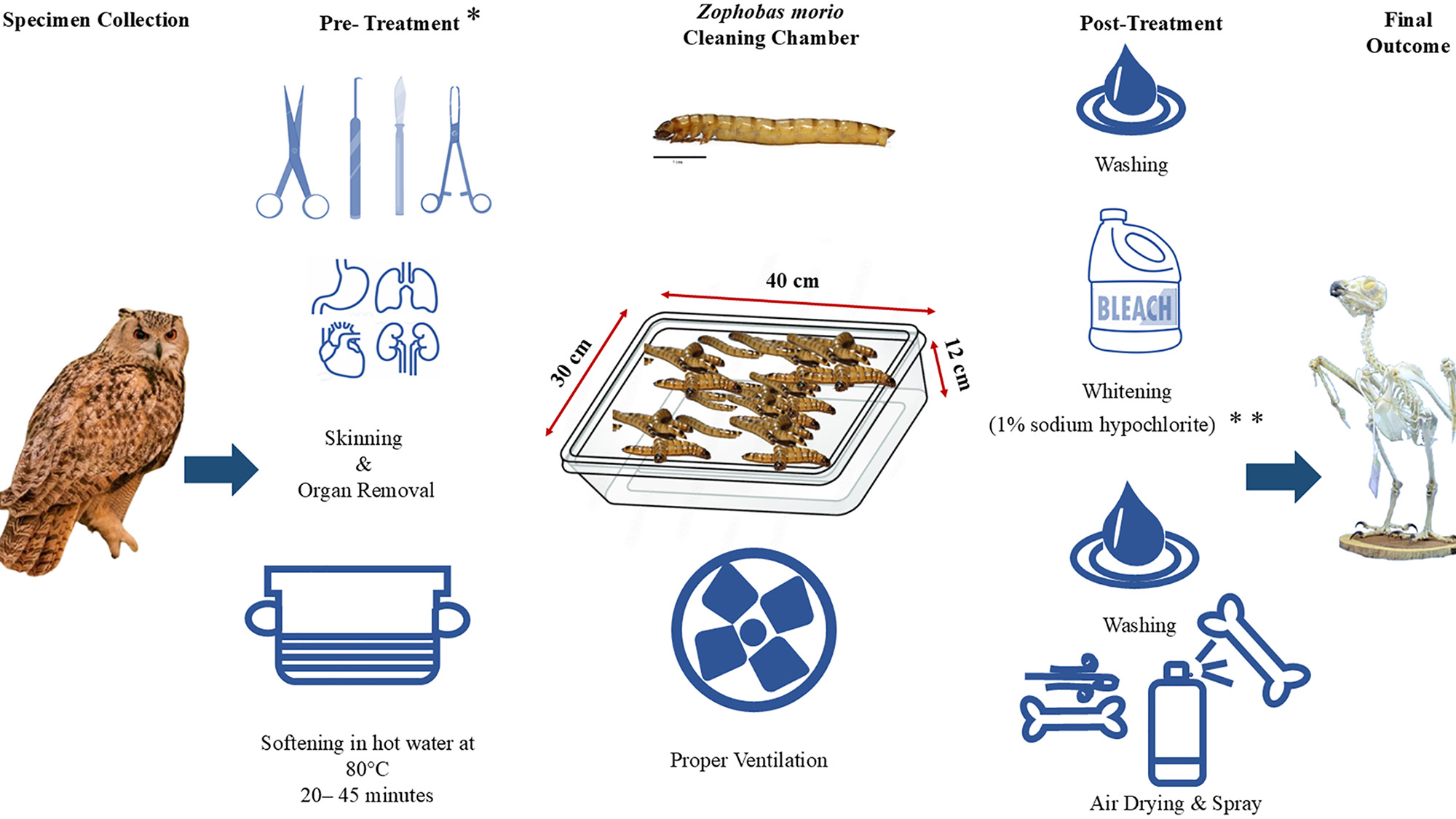
A diagram showing how the worms could be implemented in skeleton preparations. (Image credit: Rastekar et al., 2026, PLOS One, CC-BY 4.0)
KHC: Are there any fun stories from your research you can share?
NAK and MM: We have collected quite a few memorable stories over the years!
One of the funniest happened while we were experimenting with burial as a skeleton preparation method. We buried the head of a Persian onager (Equus hemionus) on the university campus. Unfortunately, the specimen had already begun to decompose and had a very strong smell. Even after it was buried, we knew exactly where it was because that part of the campus still smelled terrible. We avoided walking past it whenever possible, but anyone who happened to pass by immediately noticed the odor. At one point, campus security even came over to ask what we were doing, probably wondering why we were digging a hole and burying something on university grounds!
Another memorable story involved our superworms colony itself. In the early days, we kept the larvae in our office at the Zoology Museum (ZMFUM). Almost everyone who entered the room was startled by the sight of thousands of large larvae constantly moving around in their containers. Many people kept their distance at first. But over time, as we explained their biology and demonstrated how useful they were for our research, people's reactions changed. Some visitors even became genuinely interested in the colony, and a few who were initially afraid eventually asked to hold the larvae themselves.
Those moments reminded us that science is not only about experiments and data; it can also change the way people think about animals that are often misunderstood.
KHC: If there's one thing you want our readers to take away from your work, what would it be?
NAK and MM: If there is one message we hope readers take away from our work, it is that nature often has far more to offer than we initially realize.
Many organisms are known for a single, well-established application. Zophobas morio, for example, is widely recognized as animal feed and, more recently, for its ability to consume certain plastics. Our work shows that the same species can also provide an entirely different and unexpected solution to a practical problem in museum science.
This reminds us that the first known application of an organism is not necessarily its most valuable one. Sometimes, its second or even third application can have an even greater impact. Discovering those possibilities begins with curiosity, careful observation and a willingness to ask new questions.
This interview has been edited for length and clarity.
Il passaggio ravvicinato ha permesso alla missione NASA di sfruttare la gravità del pianeta, correggere la traiettoria e verificare fotocamere, magnetometro e spettrometro in vista dell’incontro del 2029... Leggi tutto
The medium-sized monkey with an orange-colored patch around its nose and mouth, known locally as Likweli, joins a very short list of newly identified African monkey species.
Dalle lavatrici compatte ai modelli con ampia capacità di carico, Amazon sconta lavatrici e lavasciuga. Abbiamo raccolto le offerte più interessanti del momento per aiutarti a trovare il modello giusto ... Leggi tutto
This wooden mask, which is decorated with human hair and a textile headband, adorned an Andean mummy up to a millennium ago. Made by an artist of the Chancay people, the mask was also painted red with the mercury-containing pigment cinnabar.
The Chancay were a pre-Inca people who lived along the central coast of Peru in the Late Intermediate Period (1000 to 1450). A common tradition among the Chancay was the funerary bundle — the end result of wrapping their dead in layers of textiles, vegetal material and animal skin. The bundle was then buried in a pit along with grave goods such as tools, food and figurines. Because the bodies were usually wrapped in a fetal position, however, it was not always clear exactly where the head was located once the bundle was complete.
According to The Walters Art Museum in Baltimore, which has this mask in its collection, "false heads" made from textiles or wood were sometimes tied onto the Chancay funerary bundles to act as a focal point for venerating the ancestor.
The mask is roughly life-size, measuring 12 by 8 inches (30.5 by 20.3 centimeters). Chancay funeral masks were not meant to be realistic. Instead, they had simplified features, such as the diamond-shaped eyes; triangular nose; and tiny, U-shaped smile on this mask. The wig was almost certainly made from human hair, according to a microscopic analysis The Walters Art Museum undertook in 2017.
The Chancay artist who made the mask painted it red using cinnabar, a toxic substance that is the brick-red form of mercury sulfide. Cinnabar was frequently used in Andean funerary rituals, and the color was associated with purification and commemoration rituals. But the mask was likely not placed on the outside of the bundle burial, as a patterned impression has been left on the cinnabar of this mask, probably from being wrapped in even more textiles, according to The Walters Art Museum.

 Login

 Dai 600 ai 2.000 metri quadrati, la gamma Navimow 2026 affronta prati di dimensioni e complessità diverse senza cavo perimetrale. E fino al 30 luglio, acquistando uno dei cinque modelli della promozione si riceve gratuitamente anche il Garage compatibile... Leggi tutto