A Copa do Mundo pode até ter acabado, mas o app Apple Sports segue ganhando novos recursos focados no esporte mais popular do planeta. A sua mais recente atualização (4.2), por exemplo, adiciona suporte a uma série de novas ligas de futebol, incluindo a tradicional Eredivisie, da Holanda.
Liberado hoje pela Maçã, o update torna possível acompanhar a temporada de equipes clássicas como AFC Ajax, PSV Eindhoven e Feyenoord Rotterdam, incluindo suas formações iniciais — algo que, de acordo com a companhia, também vale para “a maioria das ligas de futebol” presentes na ferramenta.
Além do “holandesão”, também chegaram ao Apple Sports a Primeira Liga da Bélgica, a Superliga da Dinamarca, a J1 League (do Japão), a Ekstraklasa (da Polônia), a Premiership (da Escócia) e a Superliga da Suíça.
Disponível no Brasil desde o início do ano, o Apple Sports é gratuito e pode ser instalado em iPhones com o iOS 18.0 ou mais recente. Além das principais ligas do futebol internacional (bem como outros esportes), ele também suporta a Série A do Campeonato Brasileiro.
a responsabilidade da Cibersegurança não pode continuar fechada no IT. Já não é apenas um tema tecnológico; é uma responsabilidade organizacional que exige envolvimento da gestão e capacidade de traduzir risco para a linguagem da decisão, avisa David Grave.
Last summer, astronomers were observing the near approach of a space object believed to be an asteroid that had been tracked since its discovery in 1998. However, in a surprising development, the object failed to appear where it was predicted to be after decades of observations.
Now, a team of researchers reports in a new study that this mysterious orbital body is no asteroid at all, but instead may be an elusive class of space objects that scientists are still working to fully understand.
The research, published in the journal Nature Astronomy, identifies the newly suspected reasons for this unexpected “dark” twist in the developing story of 1998 SH2, a celestial body once thought to be a common space rock that is now upending past thinking on how to protect Earth from potential impact risks.
1998 SH2’s August Surprise
Since its discovery in 1998, the object designated 1998 SH2 has been monitored by astronomers continuously, providing close to three decades of observations that inform us about its orbit, leaving what researchers thought would be little room for surprises.
That all changed last August as the anticipated return of 1998 SH2 approached. Based on radar observations, the object appeared to be absent from its expected orbital path—a mystery that initially baffled astronomers.
Eventually, once the near-Earth object was spotted again by Brazil’s Southern Observatory for Near Earth Asteroids Research, it had moved significantly beyond its expected path. But what could account for such an unusual display?
When AN Asteroid Goes “Dark”
Now, according to Jet Propulsion Lab and CalTech researcher Davide Farnocchia and colleagues, 1998 SH2 was likely steered off course as a result of jets of gas escaping from beneath the object’s surface—a phenomenon known as weak cometary outgassing—meaning that the suspected asteroid is actually probably a type of comet.
However, unlike most comets, this one showed none of the typical characteristics astronomers associate with them, including a glowing tail or coma. This helped to explain the confusion over its initial classification, and additional observations of layered composite imagery did finally reveal these features, albeit faintly.
This confirmation that the object was indeed releasing material meant that 1998 SH2 was a rare variety of space objects known as dark comets, enigmatic bodies whose subtle behavior falls somewhere between comets and asteroids.
Planetary Defense Implications
One of the more concerning aspects of the discovery involves 1998 SH2’s unexpected orbital shift, which presents the question of whether other suspected asteroids might turn out to be dark comets. If so, could any of these shifty space objects pose a risk to Earth?
Fortunately, Farnocchia and his colleagues say there is currently no indication that 1998 SH2 poses an impact threat to Earth in the foreseeable future. Still, the team’s findings do have important implications for planetary defense, since their findings underscore the possibility that additional near-Earth objects currently classified as asteroids may turn out to be hidden comets.
Given the unpredictable orbital shifts and changes in acceleration these objects display, challenges associated with identifying and tracking them could complicate long-term impact forecasts, and influence how future deflection missions are designed.
Fortunately, the team’s study also highlights beneficial findings, which include the possibility that a hidden population of dark comets could potentially resolve questions about how water was delivered throughout the early solar system, eventually making its way to a young planet Earth billions of years ago.
Additionally, such possibilities could help to explain past observations of enigmatic objects like ‘Oumuamua, the first confirmed interstellar object, whose detection in 2017 and unexplained acceleration during subsequent observations have fueled scientific debate over its origins for many years.
Micah Hanks is the Editor-in-Chief and Co-Founder of The Debrief. A longtime reporter on science, defense, and technology with a focus on space and astronomy, he can be reached atmicah@thedebrief.org. Follow him on X @MicahHanks, and at micahhanks.com.
PC, PS5, Xbox Series X/S, Nintendo Switch 2; Undercoders Colourful, counter-cultural and captivating – this rail riding game set in a dystopian Japan is as weird as it is exhilarating
Every now and again a game appears with a premise so outrageous you stop in your tracks to take it all in. Denshattack!, a game about kickflipping trains across a dystopian future Japan, is the epitome of this feeling. Set in a post climate disaster world, people have retreated to corporate-owned domed cities to live out their days in air-conditioned, ignorant comfort. Save for a handful of outcasts, the rest of the country is a mess of broken infrastructure, where rival gangs battle it out on the ruins of Japan’s famously extensive rail network. Naive upstart Emi has one goal: become the best Denshattacker there is, one sick nosegrind at a time.
Taking the idea of an on-rails platforming game to its extreme conclusion, developers Undercoders have combined the best bits of the Tony Hawk’s Pro Skater series – grinding, flipping and spinning through an entire dictionary of tricks – with the anti-establishment message behind Jet Set Radio. The rivals Emi encounters showcase the history of Japanese misfits, pitting you against ageing rockabillies and violent girl gangs without a shred of judgment.
Para João Barros, presidente da AI², um dos grandes desafios para a próxima década em Portugal é fazer evoluir o “sistema científico e tecnológico altamente fragmentado” para um ecossistema em que “todos os componentes estão profundamente interligados". A ideia é um dos objetivos da nova agência que funde a ANI e a FCT.
Using the Karl G. Jansky Very Large Array (VLA) s and the Five-hundred-meter Aperture Spherical Radio Telescope (FAST), astronomers have created the sharpest-ever radio maps of neutral hydrogen around the Orion Nebula.
Using the upgraded GRAVITY+ instrument on ESO’s Very Large Telescope Interferometer (VLTI), astronomers have measured the ratio of carbon isotopes in the atmosphere of the young exoplanet Beta Pictoris, offering new insights into how giant planets form.
A private seller in Littleton, Colorado has listed a brand-new 2027 Rivian R2 Performance on Cars.com for $79,900 — roughly $20,000 over what Rivian charges for the same vehicle.
The listing went up July 1, just weeks after Rivian started delivering the R2 to its first customers, and it comes with the kind of cover story flippers tend to lean on.
With the arrival of America’s 250th birthday this Independence Day weekend, NASA is marking the occasion with a patriotic-themed perspective on the cosmos.
While a patient is fully anesthetized and unresponsive, neurons in the hippocampus continue to process language, distinguish different types of words, and generate neural activity consistent with predicting upcoming words.
As America celebrates its 250th birthday, we look at technological revolutions that have shaped the country—and the AI revolution now poised to redefine its future.
Researchers have discovered a potentially habitable exoplanet just 25 light-years from Earth—but is its precarious location on the cosmic shore too dangerous for extraterrestrial life?
The Chinese Tianwen-2 mission has captured the first imagery of a space object that some astronomers are calling Earth’s “quasi-moon.”
The object was captured in images released by the China National Space Administration (CNSA), after its Tianwen-2 spacecraft reached the tiny asteroid 469219 Kamoʻoalewa. Initially discovered in 2016, the asteroid became the target of a sample return mission launched by China on 28 May 2025.
Officially the CNSA’s second mission under its Planetary Exploration of China Program, Tianwen-2 aims to return close to 100 grams of samples from the surface of the small object.
Earth’s Mysterious Quasi-Moons
Quasi-moons are the name astronomers have for small, very distant objects that do not impact our planet’s tides or possess other characteristics associated with our primary moon.
These objects are nonetheless considered moon-like because they remain in our celestial neighborhood for extended periods, providing unique opportunities for studying near-Earth objects (NEOs) like asteroids, and the impact things like solar radiation and gravity have on them.
Although Kamoʻoalewa (also known as asteroid 2016 HO3) is the most well-known of Earth’s quasi-moons, it is one of seven that are currently known to astronomers. Kamoʻoalewa’s orbit is technically also around the Sun, rather than Earth, although its synchronized path keeps it locked closely to Earth’s orbit, thereby justifying its recognition as a “quasi-satellite.”
The object’s size and distance make it an ideal target for studying NEOs, and China leaped at the opportunity with the CNSA’s Tianwen-2 mission.
Approaching a Quasi-Moon
The Tianwen-2 spacecraft is currently nearing 20 kilometers from the 130 to 330-foot space rock, according to a statement CNSA released on Monday.
Along with a mission update, the CNSA also released new images, which are the first to officially document the object’s appearance. According to current mission timelines, Tianwen-2 will remain in the vicinity of 469219 Kamoʻoalewa until next April, and by sometime in November 2027, its return capsule is expected to reach Earth.
After its study of 469219 Kamoʻoalewa, Tianwen-2 will then make its way with the aid of a gravity assist in the direction of the comet 311P/PANSTARRS, arriving in its vicinity by January 2035.
“Going forward, the probe will gradually conduct more detailed scientific explorations to obtain information on the asteroid’s shape, material composition, and internal structure,” read the CNSA’s statement on Monday.
The agency said its ongoing collection of information will help to provide “support for preparations for sampling,” and the spacecraft will spend the next several months conducting reconnaissance of the asteroid before its sample collection begins, which will combine high-speed maneuvers with the deployment of a specialized robotic arm.
Following their collection, the samples will be delivered to a recovery site in the Gobi Desert after dropping into Earth’s atmosphere in November 2027.
Micah Hanks is the Editor-in-Chief and Co-Founder of The Debrief. A longtime reporter on science, defense, and technology with a focus on space and astronomy, he can be reached atmicah@thedebrief.org. Follow him on X @MicahHanks, and at micahhanks.com.
Rivian has commenced an underwritten public offering of 75 million shares of common stock, a raise worth roughly $1.5 billion based on the stock’s recent price.
The capital raise lands just days after Rivian’s stock rallied on stronger-than-expected Q2 delivery results and a raised full-year outlook.
The Hayabusa2 spacecraft completed its flyby of the asteroid Torifune over the weekend, according to a statement issued by Japan’s space agency.
The intrepid Japan Aerospace Exploration Agency (JAXA) probe’s visit marks one of the closest approaches a spacecraft has ever made to a distant asteroid, and follows Hayabusa2’s successful 2020 mission to return samples from the asteroid Ryugu.
Information obtained during the flyby, which occurred on Sunday, may help to provide new insights into both the composition of these ancient space rocks drifting through our solar system, as well as how to defend our planet if one large enough to pose a significant risk were ever to make its way here.
Hayabusa2 completes a Historic Close Encounter
At approximately 6:30 p.m. Japan Standard Time on Sunday, Hayabusa2 passed the asteroid while traveling at speeds approaching 5 kilometers per second.
The recent achievement comprises part of the probe’s extended mission, which will include a future visit to the small asteroid 1998 KY26, which is expected to occur in 2031.
Infrared image of the asteroid Torifune, obtained by JAXA’s Hayabusa2 spacecraft on July 5, 2026 (Image Credit: JAXA)
Over the weekend, the spacecraft’s flyby of Torifune helped to showcase Hayabusa2’s orbital guidance systems, as well as its ability to monitor asteroids and collect data to aid in the protection against potentially dangerous near-Earth objects (NEOs) before they become a threat, the Japanese Timesreported.
Fortunately, asteroids with life-threatening potential only reach the Earth every few hundred years on average, and none currently being monitored by space agencies around the world are believed to represent any imminent threat.
Close Approach, not a Collision
One of the most difficult aspects of flybys like the one on Sunday involves the speeds at which spacecraft are moving, which can make avoiding a collision with the asteroid complicated. This is partly because of their dark coloration, which prevents visual confirmation of their location until just days before the flyby occurs, leaving only a small window for planning and preparation.
In a statement, Japan’s space agency said that these difficulties mean “that the flyby operation is similar to orbit-inducing technologies used to collide a spacecraft with an asteroid.”
If such technologies were to be used for planetary defense in the future, such a direct collision would be the goal, thereby aiming to set any potentially dangerous NEOs off course and keep Earth out of their line of fire.
Future Opportunities
In addition to the probe’s 2031 visit to 1998 KY26, JAXA officials say that additional opportunities for future reconnaissance will be likely, and that Sunday’s flyby served as an important dress rehearsal in that regard.
Additionally, data obtained from the flyby will be useful in helping JAXA officials and other space agencies around the world to know what to expect should a planetary defense effort become a requirement at any time in the future.
Once Hayabusa2 reaches 1998 KY26 in the early 2030s, it will mark the first time a spacecraft has engaged in close-range explorations of such an asteroid, which is currently estimated to be approximately 30 meters in diameter.
Micah Hanks is the Editor-in-Chief and Co-Founder of The Debrief. A longtime reporter on science, defense, and technology with a focus on space and astronomy, he can be reached atmicah@thedebrief.org. Follow him on X @MicahHanks, and at micahhanks.com.
Electricity powers the world, and electricians are the ones who get it where it needs to go. An electrician is an expert who is trained to make sure electrical systems and equipment are installed safely and working correctly. Electricians are involved in a variety of systems, including power, lighting, communications, and more – anything that needs electricity to run.
While electricians ensure systems and equipment have the power they need, electrical technicians focus on building, modifying, or testing electronic devices.
What are some of the different types of work electricians and electrical technicians do at NASA?
At NASA, electricians keep the lights on and the power flowing for rocket launches, scientific research, and everything in between. Their skills support engineers and scientists in building and testing spacecraft, aircraft, satellites, telescopes, and the equipment that makes human spaceflight possible. Electricians make sure all facilities and equipment have the power and functionality they need to be safe and ready to support NASA’s missions.
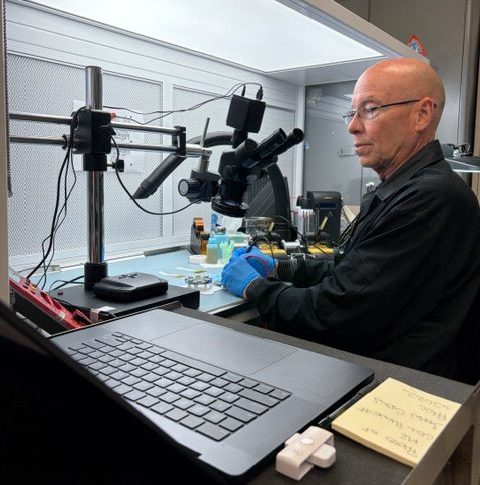
Electrical technicians at the agency help bring big ideas to life. They might build and wire control systems, connect tiny sensors to circuit boards, or write the software to make a device work in a specific way. They also test instruments in conditions that mimic space – extreme temperatures, intense vibrations, and even a vacuum – to make sure they will survive and perform well during their missions. Technicians use specialized tools, earn certifications, and work with incredible precision.
Being an electrician or electrical technician at NASA is careful, hands‑on work carried out with expertise. Because space hardware is headed to places like low-Earth orbit, the Moon, or even Mars, every detail has to be perfect.
What are the different certification levels for electricians?
The information below is a general overview of the career path of an electrician. Specific guidelines for these roles vary from state to state. It’s important to look up the license requirements in your state.
Apprentice electrician: This four-year job training program provides an entry into the industry. An apprentice works as an assistant to an experienced supervisor, gaining vital hands-on experience to move ahead as an electrician.
Journeyman electrician: A journeyman is an electrician who has finished an apprenticeship, then passed a test. At this stage, the electrician is licensed and allowed to work without supervision.
Master electrician: This is the highest certification possible for an electrician. Typically, a master electrician is someone who has completed approximately 4,000 hours as a journeyman, then passed a licensing exam. These electricians are qualified to work on complicated projects. They can also serve as supervisors for apprentices or journeymen following in their footsteps.
How can I become an electrician?
There are many options that provide the training needed to get started as an electrician or electrical technician.
Many community colleges, trade schools, and technical institutes offer a two-year program leading to an associate degree in electrical technology. Additionally, trade unions and apprenticeship programs provide real-world experience in the field.
Additionally, all branches of the U.S. military offer electronics training that may be transferrable to college credits or civilian certifications.
How can I start preparing today to become an electrician?
It’s never too early to set the stage for an electrifying career! In high school, you can take courses in math, science, and technical education. At the same time, you can start learning about basic electrical concepts such as circuitry and safety.
Begin researching associate degree programs and apprenticeship opportunities so you can consider which pathway seems right for you. Weighing these options now will help you understand program requirements and ensure you’re ready to take the next step.
You can also gain useful experience through part-time work, or shadowing electricians on the job.
What skills will I need to be a successful electrician?
Technical skills focus on the basics – how electricity works, how to stay safe, and how to read schematics and wiring diagrams. Some jobs also call for special hands‑on abilities, like soldering tiny components, putting together cables, or even having some familiarity with chemistry.
Being curious, open‑minded, and a good communicator matters, too. Any time you’re building or improving a device, you must understand who will use it and what they need it to do. Asking questions, sharing ideas, and being able to take feedback are essential to consistently building systems and devices that work well.
David McClaeb, electronic technician, NASA’s Goddard Space Flight Center in Greenbelt, Maryland
Advice from NASA electricians and electronic technicians
“As an aerospace technician, you have the opportunity to make a big difference. You can make a really big impact.” – Christopher Johnson, aerospace electrical engineering technician, NASA’s Kennedy Space Center in Florida
“What I wish I knew in high school is how many opportunities there are for electricians. I didn’t realize how big of a scale it really was. Everything needs electricity, and the sky’s the limit on what you can do with it. NASA needs electricians for everything from their testing campaigns to keeping their facilities running.” – Levi James, electrician apprentice, NASA’s Glenn Research Center at Armstrong Test Facility in Sandusky, Ohio
“It’s so gratifying when somebody comes in and says, ‘Hey, we want to build this, but it looks really difficult,’ and we say, ‘Yeah, it looks difficult, but we can do it’ – and we build it and then we hand it over to them, and then we’re on to the next thing. It’s a challenge, and I’m telling you, it is just so fun.” – David McClaeb, electronic technician, NASA’s Goddard Space Flight Center in Greenbelt, Maryland
At NASA, electricians keep the lights on and the power flowing for rocket launches, scientific research, and everything in between. Their skills support engi...

 Login